The United Nations Environment Programme (UNEP) says the recently launched Tropical Forest Forever Facility (TFFF) will cut methane emissions.
This is contained in a statement issued on Sunday, November 23, 2025, by the UNEP Executive Director, Mrs. Inger Andersen, on the closing of the 30th Conference of Parties in Belem, Brazil.
According to her, TFFF now stands at $6.7 billion and pursues rapid, high-impact measures such as cutting methane emissions.
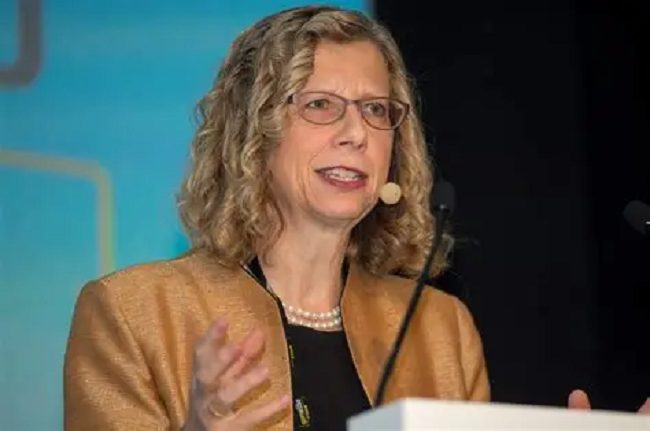
Inger Andersen, executive director of the United Nations Environment Programme (UNEP)
“The Action Agenda, the foundation to such an inclusive COP from the Brazil Presidency, saw unprecedented Indigenous Peoples leadership from the Amazon and across the world.
“This reinforced momentum is coming from all sources, including businesses, cities and regions, local communities, civil society, women, people of African descent, youth, and many more.
”UNEP will continue our work to support all partners who deliver the promise of the Paris Agreement, for people and for the planet,” Andersen said.
She explained that the talks in Belém had shown that the Paris Agreement is working and delivering results, including a call to triple adaptation finance by 2035.
”A Just transition mechanism to ensure the emerging green economy benefits everyone, and new dialogues on how trade can support climate-resilient economic transformation and how to integrate the protection of mountains into climate policy.
”UNEP science and data reinforce the significant size of the challenge ahead, but equally reinforces proven solutions exist and a pathway remains to meet our global commitments.
“No one is saying this will be easy or we are on track. We must do much more, move much faster, and stretch our collective ambition even further,” Andersen said.
According to her, countries should see their new national climate plans as a baseline to build on, not a ceiling for ambition.
“Keeping 1.5°C within reach requires an accelerating era of implementation at an unprecedented rate to deliver the benefits people deserve- affordable clean energy, good jobs, clean air, and a safer, more resilient future for all.
”And as escalating climate impacts continue to spare no nation, we have to better finance, implement and prioritise adaptation efforts.
“But COP30 also reinforced the growing global momentum, both in and outside of the negotiating halls, to transition away from fossil fuels as agreed in Dubai at COP28, halt deforestation,” Anderson said.
NNPC Limited has announced its financial performance for the full year ended 2024, reporting a Profit After Tax of ₦5.4 trillionon revenue of ₦45.1 trillion. The results, shared during its earnings call with analysts, underscore a year of strong operational delivery.
Building on this performance, the Company unveiled its strategic roadmap to drive sustained growth and support Nigeria’s energy transition through 2030. The plan prioritises increased oil and gas production and outlines a $60 billion investment pipeline across the energy value chain.
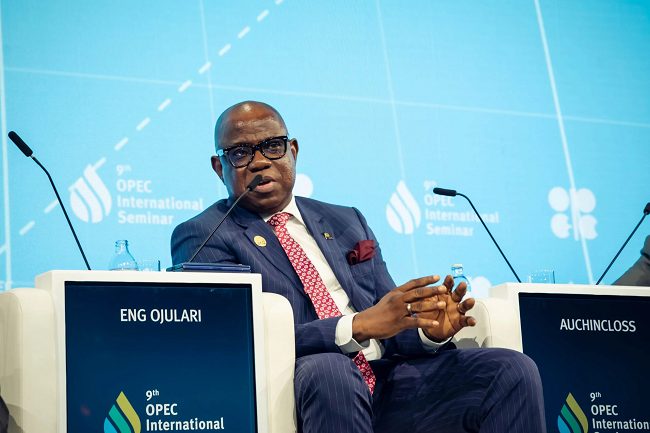
Bayo Ojulari, GCEO, National Petroleum Company (NNPC) Limited
Profit After Tax: ₦5.4 Trillion, 64% year-on-year growth
Earnings Per Share: ₦27.07, 64% year-on-year growth
“The earnings highlight the positive momentum of our ongoing transformation and the unwavering commitment of our workforce,” said Bashir Bayo Ojulari, Group Chief Executive Officer. “They offer a solid foundation for the ambitious growth ahead, in line with President Bola Ahmed Tinubu’s mandate, and reaffirm our commitment to delivering value to Nigerians.”
A Roadmap for Sustained Growth and Energy Security
NNPC Limited is accelerating investments across upstream operations, gas infrastructure, and clean energy to extend growth into the next decade. Key strategic targets include:
Increasing crude oil production to 2 million barrels per day (bpd) by 2027 and 3 million bpd by 2030.
Growing natural gas production to 10 bcf/d by 2027 and 12 bcf/d by 2030 and completing major gas infrastructure projects such as Ajaokuta-Kaduna-Kano (AKK), Escravos-Lagos Pipeline System (ELPS) and Obiafu-Obrikom-Oben (OB3) pipelines to strengthen domestic supply and regional integration.
Mobilising $60 billion in investments across the upstream, midstream, and downstream sectors by 2030.
“Our transformation is anchored on transparency, innovation, and disciplined growth,” Ojulari added. “We are positioning NNPC Limited as a globally competitive energy company capable of delivering sustainable returns while powering the future of Nigeria and Africa.”
NNPC Limited is Nigeria’s leading oil and gas company. Founded in 1977, the organisation underwent a major transformation in July 2022, becoming a fully commercial and profit-driven entity under the Petroleum Industry Act (PIA) of 2021. NNPC Limited plays a pivotal role across the entire oil and gas value chain, from exploration and production to refining and distribution, driving growth and energy security for Nigeria and the continent.
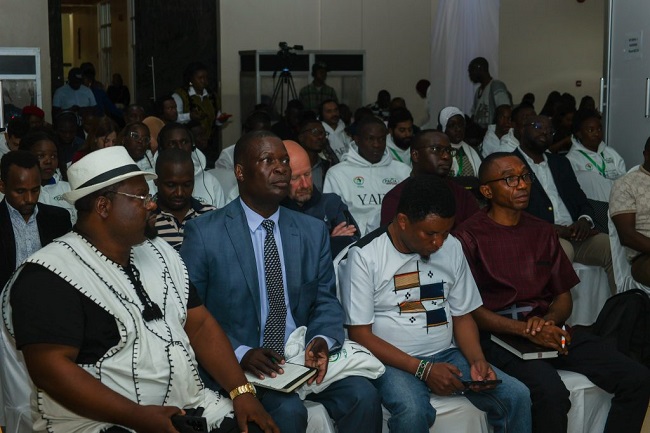
The Network of University Legal Aid Institutions (NULAI) Nigeria, on Monday, November 24, 2025, flagged off a National Moot Trial Competition on Environmental Justice and Climate Impact Litigation (EJCIL).
The group said that the launch is expedient, following climate change and worsening environmental challenges in Nigeria.
The inaugural competition is tagged: “Historical Wrongs and Contemporary Remedies.”
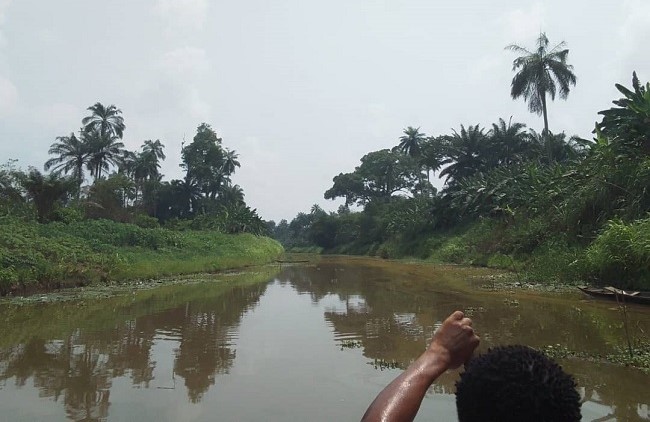
Obololi spill site
It was initiated by the International Working Group on Petroleum Pollution and Just Transition in the Niger Delta (IWG).
Speaking at the event, a founding member of the IWG, Prof. Engobo Emeseh of Aberystwyth University, UK, called for urgent action to tackle Nigeria’s environmental and climate crisis.
She identified years of oil pollution in the Niger Delta as well as Nigeria’s rising climate vulnerabilities and severe flooding, as being factors that have continued to deny communities access to justice.
According to her, the EJCIL moot competition will help to cultivate the next generation of lawyers.
“This will be by equipping emerging advocates with the skills and confidence to see, name, and challenge both historical and ongoing injustices against communities and the environment.
“By empowering young people to engage critically with the realities of environmental and climate justice, it strengthens the IWG’s mission to secure fair and long-term justice and accountability for the Niger Delta and beyond,” she said .
Also speaking, President of the Network of University Legal Aid Institutions (NULAI) Nigeria, Prof. Ernest Ojukwu (SAN), highlighted the importance of practical legal education.
According to him, the moot competition offers law students a unique chance to develop advocacy skills, while tackling real-world environmental and climate challenges.
He described the EJCIL initiative as timely, visionary and essential, for grooming lawyers equipped to drive justice and sustainability.
On his part, Dr. Pedi Obani of the University of Bradford, emphasised the role of young people in shaping environmental governance.
She said that the competition helps students to see the law not just as a tool for litigation, but as a means of transformation, accountability and community-focused justice.
Meanwhile, NULAI Executive Director, Mrs. Odi Lagi, said that the competition is open to undergraduate law students across the country.
She noted that it is designed to be inclusive and accessible to participants from all law faculties, regardless of curriculum differences.
According to her, the event comes at a critical time, when environmental and human rights issues are becoming central to global justice efforts.
The event was organised in collaboration with Gender Inclusive Climate Change Governance Initiative (GENCGOC), Human and Environmental Development Agenda (HEDA), NULAI, University of Bradford (UK), Aberystwyth University (UK) and Leigh Day (UK).
China’s legal domestic market for pangolin medicine products is a key driver of the global illegal trade and poaching of pangolins, a new briefing from the London-based Environmental Investigation Agency (EIA) demonstrates.
The judgments document the illegal trade of at least 42.7 tonnes of pangolin scales and 5,465 whole pangolins across 139 instances.
The Pangolin. Pangolins are believed to be the world’s most trafficked mammals
All eight recognised species of pangolins were recorded in illegal trade in China, with Sunda, giant and white-bellied pangolins figuring highest in terms of instances of illegal trade where species identification was provided.
African species were seized more frequently and in higher volumes of weight than Asian species.
All eight recognised species of pangolin face high risks of extinction, with the primary threats to their survival being poaching and trade in their meat, body parts and scales.
EIA Wildlife Campaigner, Erin Chong, said: “Although our analysis of the judgments shows that Chinese authorities appear to have advanced capabilities for the investigation and prosecution of pangolin crime and that the judiciary has also played an important role in combating it, there’s no escaping the clear connection between the country’s domestic trade in pangolins for traditional Chinese medicine and the high levels of international trafficking of pangolin specimens.
“As the 20th meeting of the Conference of the Parties (CoP20) to the Convention on International Trade in Endangered Species (CITES) gets under way in Uzbekistan this week, we strongly urge China to close its legal domestic market for pangolin medicine products and conduct targeted, evidence-led campaigns to reduce demand for pangolin specimens, in line with CITES recommendations.
“Given the huge size of the trade, we also recommend that CITES Standing Committee examines whether the contribution of this legal market to the global illegal trade of pangolins deserves attention as a compliance matter affecting the implementation of the Convention.”
A View from the Courts demonstrates that in the past decade or more, China has been the primary destination for both legal and illegal international trade of pangolins.
The judgments analysed indicate that the illegal trade of pangolins in China is both organised as well as opportunistic, with multiple judgments pointing to high levels of organisation in both the smuggling of pangolins into China as well as internal distribution within the country, which the report illustrates with examples and case studies.
Seventeen countries were involved as points of origin or transit in the smuggling of pangolin specimens, with Nigeria taking the highest position in terms of volume and Vietnam the highest for the number of smuggling incidents.
Several of the judgments provide a clear link between the smuggling and illegal trade of pangolins scales and their use for medicinal purposes in China, ranging from potentially small-scale personal use to the laundering of smuggled scales into legal supplies.
And a number of cases demonstrate the involvement of individuals, websites and companies associated with the traditional medicine business in pangolin crimes and smuggling. This includes the conviction of legal representatives and other employees of pharmaceutical companies for the illegal trade of pangolins.
Youth for Adaptation Finance (YAF) Africa Initiative, in a statement on COP30 outcome, says that Africa should not have to shoulder the escalating costs of climate impacts while receiving only a fraction of the support required to respond
The Youth for Adaptation Finance (YAF) Africa Initiative welcomes the progress made at COP30 on adaptation finance. At the same time, we must emphasise that the continent’s real needs remain far beyond what current commitments will deliver.
YAF Africa Initiative
The decision to increase adaptation finance to twice its current level by 2025 and to triple it by 2035 is a meaningful shift. For many years, adaptation has consistently received a small share of global climate finance, even though African countries face some of the most severe climate impacts anywhere in the world. The recognition of this imbalance is overdue and aligns with our call for more than doubling adaptation finance.
Despite this, the new pledges still fall short of what is required. Current estimates show that Africa needs between $52 billion and $88 billion each year by 2030 just to meet its adaptation needs. Actual finance flows are far below that range. Many African economies are already losing a significant portion of their annual growth due to droughts, floods, rising temperatures, and climate-related disruptions. In this context, the promised increase, while important, does not match the scale of the challenge.
For adaptation finance to serve its purpose, it must be transparent, predictable, and delivered in forms that do not worsen debt burdens. It must be guided by the priorities set out in national adaptation plans and other country-led processes. It must also be tracked carefully to ensure that the commitments translate into real resources reaching the communities that need them.
YAF Africa Initiative also emphasizes that young people are not passive recipients of adaptation efforts. We are active contributors who shape policies, monitor implementation, and hold decision- makers accountable. The outcomes of COP30 must create space for youth-led participation and oversight, particularly as countries move toward implementing the Global Goal on Adaptation and the New Collective Quantified Goal.
As preparations begin for COP31 and COP32, we call for a finance system that actually meets the needs on the ground, recognises Africa’s specific vulnerabilities and development priorities, and ensures that adaptation receives the attention and funding it deserves.
COP30 delivered progress, but not yet justice. Africa should not have to shoulder the escalating costs of climate impacts while receiving only a fraction of the support required to respond. YAF Africa Initiative will continue to advocate for adaptation finance that reflects the urgency of the moment and the realities of the continent.
African Locust bean, locally called “Dawadawa”, is a proteinous fruit used in spicy food among households in northern Nigeria. However, reports show that the burning of forests by counter-insurgency efforts to eliminate armed bandits who use such trees as fortresses when launching attacks on communities and flooding, are threatening the livelihoods associated with its fruits and endangering the widespread growth of the trees, and causing biodiversity loss
On a bright Saturday morning, 89-year-old Malam Gwadoddi Shehu sat in the corridor of his home in Gwadoddi village, Rabbah Local Government Area of Sokoto State, reflecting on the past.
The burning of forests by counter-insurgency efforts to eliminate armed bandits are threatening livelihoods
Even now, in his old age, he recalls his younger years as a farmer cultivating vast fields dotted with African locust bean trees. Those memories came alive as he spoke when Dataphyte visited in late September.
Memories of a Tree on the Brink
“I owned thirteen African locust trees back in those days because it was a pride for us as farmers. You are rated by the number of economic species your farmland has. But now they are all gone due to excessive flooding and the insecurity challenge facing our community,” said Mr. Shehu.
In Gwadoddi village, African locust trees were among other species considered as symbols of economic independence for farmers who own them. The history of its inheritance among households is also of pride.
Shuaibu Shehu, a farmer and son of the octogenarian, said the species is highly regarded as a source of income generation for households where the proceeds from the trees were used to support the family’s farming cultivation, which often funds the educational expenses of their children.
“When we were growing up, we were happy to see our parents earning from these trees, especially African locust trees. Our whole day was spent in plucking and drying the beans, which we gathered in bags to sell. We used to sell them to fund our education,” he said.
In recent years, Mr Shehu (Jr) explained that many of the economic trees traditionally passed down through families have been lost to flooding. He added that even more of these trees, especially those deep in the community’s forests, are now out of reach because the area has fallen under the control of armed bandits. “There were thirteen African locust bean trees in my father’s field. The flood took all of them,” he said.
Collateral Damage in the Fight Against Banditry
Insecurity is as much of an amplifier to the destruction of these trees as flooding is. Mr Shehu (Jr) also accounted that the military fight against armed bandits terrorising the communities by burning the sanctuary forests is fast decreasing the species and discourages farming.
Like Mr Shehu (Jr), Zubairu Auwal, a 40-year-old farmer, recounted that no more than ten of his ancestral trees have been destroyed due to military operations in the forests. Mr Auwal said, “These security agencies operating within these forests believed armed bandits were using the trees as fortresses before launching attacks.”
According to a report from the National Strategy for Combating Wildlife and Forest Crime in Nigeria (2022-2026), Nigeria is home to over 4,715 vascular plants, and likely many more undocumented species.
Since 2011, Sokoto, long known for its dry, semi-desert climate, has experienced a noticeable shift in weather patterns. Flood-prone areas have emerged, contributing to some of Nigeria’s worst flooding in a decade. What was once unusual has now become an almost yearly occurrence.
A recent study shows that rainfall in northern Nigeria has increased by about 63 per cent between 2007 and 2023. In 2024 alone, flooding affected 34 states, killed 603 people, displaced 1.3 million others, and destroyed more than 200,000 homes. Beyond the human toll, the flooding has further strained the country’s already fragile biodiversity.
The loss of locust bean trees has reduced the availability of fresh locust beans in local diets, forcing many households to rely more on manufactured seasoning cubes and powdered flavourings.
According to Adedayo Moses, a chef based in Sokoto, the locust bean condiment remains central to local cooking. “It is one of the most important ingredients for sauces and soups here, and it is traded in significant quantities across West Africa,” he said.
“You can make baby food, and the leaves can be boiled, mixed with cereal flour, and eaten as vegetables. Also, the flower buds are edible and added to salads and are traditionally consumed as fresh food by the locals,” Mr Moses said
Economic and Cultural Costs
Investigation revealed that the endangered species has forced the price of dried locust beans to increase beyond many locals’ reach, with a kilogram of locust beans sold for N3,500 ($2.43) against the former price of N2,800 ($1.95) as of October 2025.
Alhaji Aminu, a dealer in African locust beans, said a bag of dried locust beans (100kg) now costs between N75,000 ($52.23) in the market after transporting them from Niger state, where it is abundant in commercial quantities.
This year, unlike last year, the weather also affected the price of the crop, Aminu told Dataphyte. “The market is brisk. In retail, dried locust beans are being sold for up to N80,000 per 100 kg,” he said.
Abubakar Gidan-dawake, a farmer at Sokoto central market, also confirmed this. He said that in the past, merchants could obtain the dried seeds more cheaply, but the price has since soared due to their decline in rural communities. We get some of the produce now transported from either Niger or any Southern states like Osun and Oyo.”
Hajiya Salamatu Shuni, a housewife living in Sokoto, commented on the health benefits, stating that the local seasoning contains antioxidant properties and can help treat hypertension and eye problems. She said this is why many people explicitly use this seasoning in their meals.
Shehu Aliyu, an environmental activist, noted that the African locust is a multipurpose tree with seeds, pods, fruit pulp, and leaves that are edible and used as cooking or drinking ingredients.
“The tree is particularly valued for its fermentable seeds. They are fermented to prepare a condiment called “Dawadawa” among Hausa locals.” That has been the situation in my community, ” said Mr Aliyu, who also heads a Go-green project that advocates for tree planting.
The National President of the Botanical Society of Nigeria and Director, Centre for Biotechnology and Plant Tissue Culture at Usmanu Danfodiyo University, Sokoto, Professor Adamu Aliero, says tree species in Sokoto are being endangered. “One of them is flooding, which is not conducive for the Locust Trees because when attacked by fungus, bacteria, even the biggest trees can dry up suddenly.”
He also note that armed bandits have taken advantage of ungoverned forest to establish fortified enclaves over local communities and their ancient species trees, which has endangered most economic trees.
Military Denial and Civilian Realities
Ifeanyi Onwuzuruigbo, a forestry researcher who had studied extensively on the ungoverned forest spaces in Northern Nigeria, said, “In these territories, state authority is either completely absent or actively contested, eroding the state’s monopoly on legitimate violence or undermining its sovereign authority.”
This development, according to him, has prompted many locals to believe that the military-led counter operations in their communities contributed to the disappearance of these species, a claim the military denies.
But, the spokesman of the Nigerian Army 8 Division, Lt. Col Olaniyi Joseph Osoba, says the claim does not reflect the inner workings of the Nigerian Army, which operates under what it described as “strict Rules of Engagement (ROE).
“This is not true because such actions would be counterintuitive to our core mission, which is to secure communities and protect the livelihoods of the citizens we are sworn to defend.
“Our operations are targeted specifically at neutralising bandits and other criminal elements, while ensuring the safety and security of the civilian population,” Lt. Col Osoba stated in a message sent to Dataphyte.
However, Lt. Col Osoba’s response does not reflect the realities of the locals during Dataphyte’s visit to the area. Isah Umar Gwadoddi, a member of the local vigilante who has been assisting in the military-led operations in the area, said the military could have underplayed the situation.
“There have been burnings of forests perceived to be hideouts of some armed bandits. In those areas, we have lots of economic species like African locust trees and baobab. Most of them are inaccessible to the farmers, while others must have been lost as a result of the bush burning tactics of the operation,” he explained.
A military commander who spoke on the condition of anonymity said the latest push under Operation Forest Sanity III, a rolling clearance campaign designed to uproot terrorist and bandit enclaves that have long exploited Sokoto’s sprawling forest as a sanctuary. He adds that the campaign will persist “until all camps are dismantled and freedom of movement is restored. The military source collaborates with Nasir el-Rufai, a former governor of Kaduna, northwest state, urging the security operatives to “carpet bomb the forests” to wipe out bandits. “We can replant the trees after.”
However, a professor of agroforestry and forest management at Usmanu Danfodiyo University in Sokoto, Professor Abubakar Gwaram Bello, focuses his research on the African locust tree, warns that unless the ongoing insecurity is addressed promptly with military collaboration with communities and forestry researchers, many local tree species will remain at risk of endangerment.
“These criminals operate in the forest and establish their camps. On the other hand, the security agencies set such identified forests ablaze, and that automatically affects the economic trees in the areas,” Abubakar submitted.
By Tunde Omolehin
This story was produced as part of Dataphyte Foundation’s Biodiversity Media Initiative project, with support from Internews’ Earth Journalism Network
The President General of the Nigerian Union South Africa (NUSA), Mr. Smart Nwobi, says the G20 Summit presents a unique opportunity for African nations to articulate their development aspirations.
Nwobi, who said this in a statement in Abuja on Sunday, November 23, 2025, described the summit as a landmark moment for Africa, signalling the continent’s readiness to assume a decisive role in global economic governance and policymaking.
He also congratulated President Cyril Ramaphosa and the South African government for the historic hosting of the first-ever G20 Summit on African soil.
G20 Summit
“This historic summit is a testament to President Ramaphosa’s visionary leadership, strategic foresight and unwavering commitment to positioning Africa at the center of global discourse,” he said.
According to Nwobi, the hosting of the summit also underscores Africa’s capability to convene, influence and shape discussions that affect the world economy,climate action and sustainable development.
He further noted that South Africa’s successful hosting of the event reflected the continent’s growing geopolitical relevance.
Nwobi added that the hosting also reinforced the importance of cooperative approaches in tackling global challenges such as food insecurity, energy transition and inclusive economic growth.
“President Ramaphosa has sent a powerful message to the international community,” he said.
According to him, the summit indicated that Africa is not a bystander in global affairs but a proactive contributor with innovative solutions and untapped potential.
Nwobi said the outcomes of the summit would be instrumental in advancing Africa’s economic agenda.
He said the outcomes would also foster industrialisation, support digital transformation, and promote equitable growth across the continent.
Nwobi further expressed optimism that the summit would catalyse lasting partnerships between African nations and global stakeholders.
He said the summit would ensure that economic gains translate into tangible benefits for the people.
Nwobi commended South Africa’s exemplary organisation, hospitality and diplomatic leadership, saying it had set a benchmark for future continental engagements.
He reiterated NUSA’s support for Ramaphosa’s ongoing efforts to amplify Africa’s voice on the world stage.
“This historic event will be remembered as a defining milestone in Africa’s journey toward economic empowerment, global recognition and sustainable prosperity,” he stated.
The Nigerian Conservation Foundation (NCF) has tasked Nigerians on collaboration to beat plastic pollution.
The National Executive Council Chairman, NCF, Justice Bukola Adebiyi, made this known at the NCF Annual Green Ball 2025 in Lagos.
Adebiyi described plastic pollution as a serious menace that must be checked.
National Executive Council Chairman, NCF, Justice Bukola Adebiyi
“Globally, about 400 million tonnes of plastic are produced each year. Daily plastic waste is estimated to be about 1.1 million tonnes per day.
“This is with roughly 50 per cent being mismanaged and about one to two million tonnes entering our oceans yearly.
“Lagos generates about 13,000 tonnes of waste daily, out of which 15 to 20 per cent is plastic.
“We are enjoined to please join hands together to tackle this problem,” she said.
Adebiyi added that advocacy was the first step for people so that they could be educated.
“We need to be educated and then be able to educate others. We need to begin to adopt single-use plastics more and more.
“This will drastically reduce; you’ll be surprised by the amount of plastic bottles you generate just from drinking plastic-bottled water in your homes.
“We need to sort our waste, recycle, and bear in mind that recycling is not a permanent solution because not all plastics are actually recyclable and the cost of recycling is high.
“In our environment, particularly in Lagos, we don’t have enough companies that can recycle or who do recycle, so that is also a problem,” she said.
Adebiyi, who said that recycling was not a solution, added that it could only help if wastes were being sorted.
“Participate in cleanup events wherever we live, on our streets, in our estates, in our communities.
“Be conscious, be aware, try to buy in bulk so we minimise packaging.
“Advocate for legislation. Be mindful of personal care products because when we think of plastics, most of the time we’re looking more at the bottles.
“But what about all those containers when we buy our shampoos and we buy our creams? Be mindful of them because they have excessive plastic packages,” she said.
She advised Nigerians, especially Lagosians to buy things in bulk and decant into reusable containers made of glass.
“At NCF, we are committed to fighting this scourge amongst other environmental threats.
“Pollution management is one of the key pillars of NCF’s strategic plan that we developed for the next five years, 2025 to 2030.
“Please join us to stem this serious threat of plastic pollution which, if left unchecked, is likely to overrun us.
“With all this in mind, let us continue to build on the legacy and principles which NCF represents as laid down by our founding fathers which is encapsulated in our slogan for nature, for people, for Nigeria,” she said.
The Chairperson, Business Development Committee, NCF, Mrs. Dame Fatayi-Williams, while speaking with journalists, said the sooner everyone faced the reality of the day, of climate change and its problems, the better.
She added that the global south had less to contribute to climate change than the global north.
“You see what the Lagos Commissioner for Environment is doing, he is really up to the task, you see the way he is doing it in all those areas, that is clearing the gutters and pathways.
“If he does not talk about this plastic and these non-degradable things that are in the earth, in the drainage, then he’s not fit for purpose, but he’s doing the right thing by creating this awareness and banning it,” she said.
The NCF Director-General, Dr Joseph Onoja, said the annual green ball was used to create awareness and seek support for nature and environmental issues.
Onoja said that NCF could not do it alone, hence, the gathering of all its partners while calling for more people to join to work for nature and the environment.
The 30th UN Climate Conference (COP30) concluded on Saturday, November 22, 2025, in the Amazon with an empty deal that does not halt deforestation, phase out fossil fuels, or deliver climate finance at scale, according to the Centre for International Environmental Law (CIEL).
As the first climate negotiations to take place after the historic climate ruling by the International Court of Justice, COP30 laid bare a growing accountability gap between governments’ commitments and their legal obligations.
The COP30 deal offers the clearest recognition yet by the UN climate talks that states must uphold human rights in their climate action, but that acknowledgment is not matched by the ambition the moment demands. The lack of decisive progress at COP30 does not change the reality that States have clear legal obligations and are held accountable by people and by the courts.
COP30 closing plenary
As several denunciations of the compromised package in the final plenary made clear: business-as-usual negotiations are no longer an option: urgent solutions are needed to break the deadlocks that are blocking this process from delivering and to drive collective action towards a fast, fair, and funded fossil fuel phaseout and a just transition.
As the talks deadlocked on finance and fossil fuels, progress came from outside the negotiating rooms: A block of 24 countries resolved to work outside the UNFCCC to phase out oil, gas, and coal. Colombia and the Netherlands will co-host the First International Conference on Fossil Fuel Phaseout in April 2026, an initiative also endorsed by the Brazilian Presidency at the closing plenary. Separately, 18 States have expressed support for a Fossil Fuel Treaty, a binding mechanism to accelerate a just transition and a managed phaseout of oil, gas, and coal, also outside the UNFCCC.
In Belém, at what was alternately dubbed the “People’s COP,” the “COP of truth” and the “Implementation COP,” thousands of Indigenous Peoples, forest communities, and civil society groups confronted governments with undeniable climate reality and irrefutable climate solutions, demanding concrete action in line with science and the law: a fast and just transition to a fossil-free future, an end to deforestation, finance at the scale needed to meet the crisis, and reparations for climate harm.
“This is an empty deal. COP30 provides a stark reminder that the answers to the climate crisis do not lie inside the climate talks – they lie with the people and movements leading the way toward a just, equitable, fossil-free future. The science is settled, and the law is clear: we must keep fossil fuels in the ground and make polluters pay. While the country’s most responsible for pushing the planet to the brink point fingers, dig in their heels, and tighten their purse strings, the world burns. However big polluters may try to insulate themselves from responsibility or edit out the science, it does not place them above the law.
“That’s why governments committed to tackling the crisis at its source are uniting to move forward outside the UNFCCC – under the leadership of Colombia and Pacific Island states – to phase out fossil fuels rapidly, equitably, and in line with 1.5°C. The international conference on fossil fuel phaseout in Colombia next April is the first stop on the path to a livable future. A Fossil Fuel Treaty is the roadmap the world needs and leaders failed to deliver in Belem,” said Nikki Reisch, CIEL’s Director of Climate & Energy Programme.
“The truth at COP30, dubbed the ‘COP of Truth,’ is that countries are failing their legal duties. The International Court of Justice confirmed that keeping the temperature rise to below 1.5 °C is a legal benchmark. It’s not a slogan or words on paper, but a necessity for billions, and failure is measured in lives.
“Without a commitment to a full and equitable fossil fuel phaseout and adequate public climate finance, this COP30 deal disregards the law. Petrostates and industry lobbyists use the consensus rule to block action and ambition. We now need to reform the UNFCCC so the global majority can act, starting with conflict-of-interest rules and allowing majority voting,” said Erika Lennon, CIEL Senior Attorney.
“Multilateralism remains our best hope for a livable future – but it must prove it can move: decisions that phase out fossil fuels, protect human rights, and finance a just transition – free of corporate capture. When consensus becomes veto, we need rules that let the global majority act. That’s how multilateralism demonstrates impact – and changes outcomes,” said Rebecca Brown, CIEL’s President and CEO.
“At COP30, people on the front lines of the climate crisis were once again overlooked. The talks failed to provide a real plan to close the ambition and accountability gaps and offered no meaningful response to the fact that the world is not meeting its legal duty to limit warming to 1.5°C – as devastating climate impacts continue mounting. While the International Court of Justice recently affirmed that the people and communities facing that harm have a right to reparations, no steps were taken in Belém to scale up public finance for loss and damage, let alone to respect this right.
“As the climate crisis is escalating, those responsible – big polluters – need to be held accountable, and should pay up. Eyes now turn to the UN General Assembly, where a resolution spearheaded by Vanuatu will address the implementation of the Court’s findings,” said Lien Vandamme, CIEL Senior Campaigner Human Rights and Climate Change.
“COP30 witnessed a record number of lobbyists from the fossil fuel industry and carbon capture sector. With 531 Carbon Capture and Storage (CCS) lobbyists – surpassing the delegations of 62 nations – and over 1,600 fossil fuel lobbyists making up one in every 25 attendees, these industries deeply infiltrated the talks, pushing dangerous distractions like CCS and geoengineering. Yet, this unprecedented corporate capture has met fiercer resistance than ever with people and progressive governments – with science and law on their side – demanding a climate process that protects people and planet over profit,” said Lili Fuhr, CIEL’s Fossil Economy Director.
“The International Court of Justice (ICJ) set the legal benchmark; people set the moral one. What matters now is action that centers what frontline communities have called on for decades: phase out fossil fuels. The ICJ ruling outlined clearly that limiting fossil fuel production, consumption, licensing, and subsidisation is necessary to protect the climate system.
“The most important outcome of COP30 came outside the process, with Colombia and the Netherlands co-hosting the first diplomatic conference on fossil fuel phaseout next year – a complementary initiative also endorsed by the Brazilian Presidency at the closing plenary. The Fossil Fuel Non-Proliferation Treaty – now backed by 18 countries, led by Pacific states – remains the clearest path to a fast, fair, fully funded transition,” said Johanna Gusman, CIEL Senior Attorney.
“Despite States’ attempt to weaken gender equality, the long-overdue recognition of environmental human rights defenders within the UNFCCC process marks an essential step forward, which was finally achieved through the fights led by women, in all their diversity. Defenders are on the frontlines of climate action, even when fear, repression, or exclusion keep many of them from entering the negotiating rooms.
“This has been painfully evident at COP30, where Indigenous Peoples protesting for their rights faced the restrictions of a space that continues to shrink. The protection of environmental defenders is a legal obligation grounded in international law, stronger than any fragile political outcome and any restrictions of this COP and the one to come,” said Camilla Pollera, Human Rights and Climate Change Program Associate.
The COP30 conference in Belem, Brazil showed that climate cooperation is producing results that matter for people’s lives, with real benefits across African nations. Some 194 countries representing billions of people have said in one voice that the Paris Agreement on climate change is working and resolved to make it go further and faster.
Simon Stiell, Executive Secretary of the United Nations Climate Change, said: “We see progress in a new agreement on just transition, signaling that building climate resilience and the clean economy must also be fair, with every nation and every person able to share in its vast benefits.
“For the first time, 194 nations said in unison that the global transition to low greenhouse gas emissions and climate-resilience is irreversible and the trend of the future.”
African solidarity in endorsing COP32 in Ethiopia
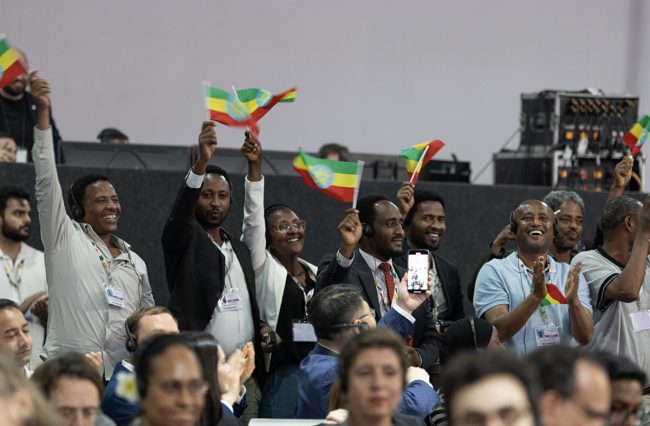
COP30 in the Amazon also delivered a major win for African climate leadership, as 194 countries unanimously endorsed Ethiopia’s proposal to host the COP32 global climate conference in 2027. The global endorsement followed the swift endorsement of the African Group of nations, whose turn it is to determine the location of the COP climate conference in 2027.
Stiell applauded the decision: “I warmly congratulate Ethiopia for stepping up to take this vital role on the world stage, building on its climate leadership to date, and I commend the Africa Group for reaching agreement inclusively and swiftly.
“This is more than a diplomatic milestone. It signals Africa’s growing role in shaping global climate action and championing solutions that drive growth, jobs, resilience, and secure and affordable energy for all.”
COP30 reaches historic agreement on adaptation finance
A major breakthrough for vulnerable nations came with the a collective commitment in Belem to work toward tripling adaptation finance. This is a significant step forward for Africa where climate change impacts are already threatening food security, health systems and infrastructure.
Tripling adaptation finance will help countries scale up climate-resilient agriculture, protect communities from floods and droughts, strengthen early warning systems, and support local development plans grounded in national priorities.
For many African nations, predictable and accessible adaptation finance is essential to safeguarding lives today and securing economic stability for the years ahead. The COP also reached agreement on a series of indicators to assess adaptation work.
Results from the COP30 Action Agenda
During COP30 the Brazilian Presidency and United Nations pushed for real economy progress through an Action Agenda. Key achievements include:
A trillion-dollar global pipeline for clean grids and energy storage, helping countries move toward reliable and affordable power.
$5.5 billion in new commitments for the Tropical Forests Forever Facility, with at least 20 percent flowing directly to local communities and Indigenous Peoples.
More than $9 billion in new investment across land and food systems, covering over 210 million hectares of land and reaching millions of farmers.
Nearly 438 million people worldwide are becoming more resilient to climate shocks under the Race to Resilience campaign.
These outcomes show how climate action is already delivering benefits in energy, food security, nature protection, and resilience. They also underscore the importance of ensuring Africa’s climate priorities remain central to global progress.