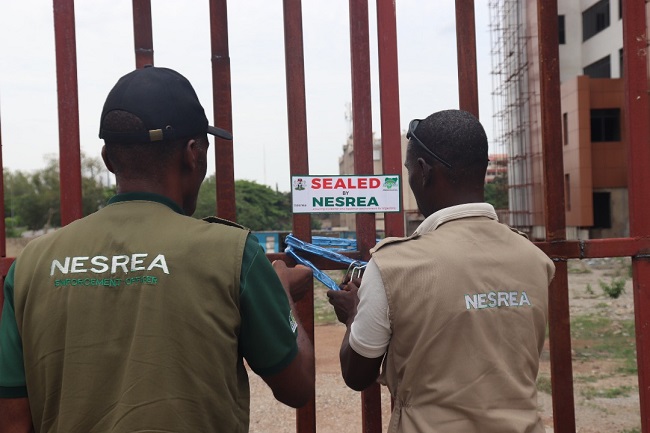
The National Environmental Standards and Regulations Enforcement Agency (NESREA), in collaboration with the Ogun State Ministry of Environment, has sealed six recycling facilities in Ogijo community in the state.
The facilities include Hanuchi Manufacturing Ltd, BPL Nigeria Ltd, Metal Manufacturing Nig. Ltd, Vendanta Nigeria Ltd, African Non-Ferrous Industrial Ltd, and True Metal Nig. Ltd.
According to a statement on Thursday, November 27, 2025, by Mrs. Nwamaka Ejiofor, NESREA’s Assistant Director of Press, they were shut down for failing to comply with the National Environmental (Battery Control) Regulations 2024.
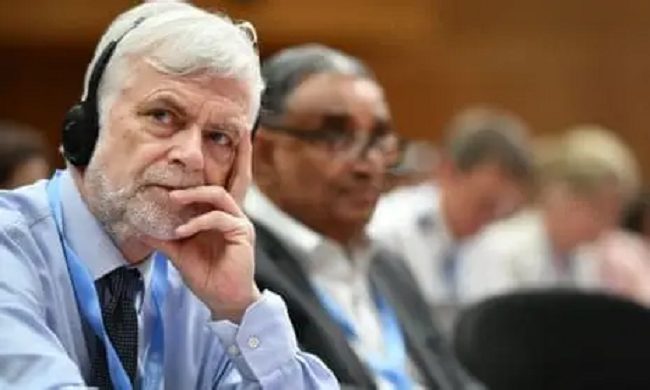
Dr Innocent Barikor, Director-General, NESREA
The statement added that the facilities also failed to adhere to the related protocol designed to ensure the safe management of Used Lead Acid Batteries (ULAB).
Ejiofor explained that the regulations and protocol are aimed at protecting public health and the environment from the hazards of improper battery recycling.
She added that the regulations were developed to ensure environmentally sound management of Used Lead Acid Batteries (ULAB) and safeguard public health.
“Under the protocol, the facilities committed to manage ULAB slag and base metal residue in a safe, environmentally sound, and socially responsible manner,” she said.
She added that the protocol also prioritises staff health and safety, including annual blood lead testing and the provision of Personal Protective Equipment (PPE).
Ejiofor noted that NESREA, in collaboration with the Ogun State Government and other partners, had conducted extensive assessments and sensitisation of operators on international best practices in the recycling sector.
She said the exercises were carried out under the Project for Responsible Battery and Metal Recycling (PROBAMET).
Meanwhile, NESREA has shut down Cornerstone, a facility managed by Istanbul Quarry in Dutse, Abuja.
According to Ejiofor, the facility was closed on Wednesday after flying rocks from a blasting operation injured staff and students of Graceland High School and damaged school property.
Ejiofor said students were writing exams around 12:30 pm when a loud bang sent rocks flying, destroying school buildings.
Eleven students and two staff were injured, with nearby shops also affected.
Glory Uboh, NESREA’s Deputy Director of Conservation Monitoring, said the closure was necessary because the quarry violated the National Environmental (Quarrying and Blasting Operations) Regulations 2013.
“What happened is life threatening, that was why we had to move in immediately to seal the facility,” Uboh said.
She added, “Cornerstone, managed by Istanbul Quarry, will be sanctioned because our preliminary investigation shows contradictions to quarry operating procedures and regulations.
“We will continue our investigations, and the facility will definitely be sanctioned in line with the National Environmental (Quarry and Blasting Operations) Regulations 2013.”
Stakeholders are expediting actions to conserve nature through Biodiversity Finance Initiative (BIOFIN) to sustain livelihoods in the country.
They made the commitment on Friday, November 28, 2025, in Abuja at the official launch of the Nigeria Biodiversity Finance Initiative (BIOFIN) in line with the National Biodiversity Strategy and Action Plan (NBSAP) with the theme: “Unlocking Private Sector Engagement for the implementation of the NBSAP”.
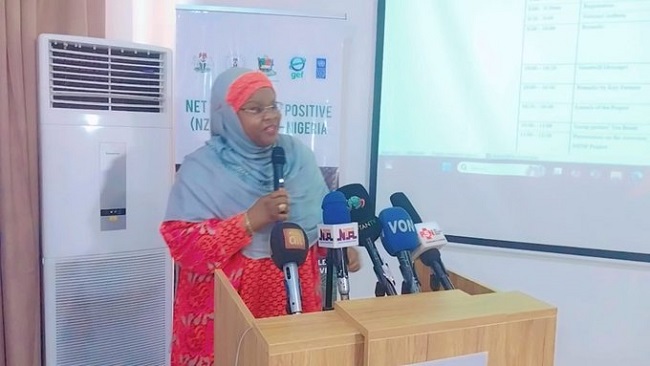
Mrs. Halima Bawa-Bwari, the Director of Forestry, Federal Ministry of Environment, said that Nigeria would take a decisive step toward securing the future of forests, ecosystems, and the invaluable biodiversity that sustains life and livelihoods across the nation.
Mrs. Halima Bawa-Bwari, the Director of Forestry, Federal Ministry of Environment
Bawa-Bwari, who was represented by Dr Awuyo Christopher, the Deputy Director of Forestry in the ministry, said forests are living systems that regulate the climate, protect watersheds, provide food and medicine, and serve as the backbone of rural economies.
“Yet, they face unprecedented pressures from unsustainable exploitation, land-use change, and climate variability.
“The urgency to act has never been greater. NBSAP provides us with a clear roadmap to conserve, sustainably use, and equitably share the benefits of biodiversity BIOFIN complements this vision by mobilising innovative financing solutions ensuring that our commitments are not only aspirational but achievable,” she said.
She said that, through BIOFIN, the federal government would bridge the financing gap for biodiversity conservation, strengthen partnerships between government, private sector, civil society, and local communities.
This, she added, would promote sustainable forestry practices that balance ecological integrity with economic growth, and empower communities as custodians of biodiversity, ensuring they benefit directly from conservation efforts.
“It may interest you to know that Nigeria has consistently demonstrated its commitment to biodiversity conservation.
“Through the NBSAP, our nation has pledged to integrate biodiversity financing into national development planning, strengthen institutional frameworks, and mobilise both domestic and international resources.
“This commitment is reflected in: Increased budgetary allocations to forestry and conservation programmes, partnerships with development partners to unlock innovative financing mechanisms.
“Mainstreaming biodiversity into key sectors such as agriculture, energy, and infrastructure, Community-driven initiatives that ensure local custodians benefit directly from conservation efforts,
“This initiative is not just about funding; it is about transforming the way we value nature. It is about recognising that investing in biodiversity is investing in our collective future, our health, our prosperity, and our resilience as a nation,” she said.
Mrs. Oluwasooto Ajayi of Africa Lead, Business For Nature, emphasised the need to unlock finance for the project to have an economy that recognises the foundation of biodiversity.
Mrs. Sikeade Egbuwalo, Biodiversity Desk Officer in the ministry, said that, through BIOFIN, Nigeria’s NBSAP can be adequately financed by mobilising more public and private sector investments, unlocking new revenue streams, and aligning economic incentives with conservation.
Mr. Eugene Itua Sustainability Expert, Natural Eco Capital, advocated for funding to enhance biodiversity for development in the country.
Country Director of ActionAid Nigeria, Mr. Andrew Mamedu, says the organisation’s 25-year journey has been driven by a commitment to challenge injustice, empower marginalised groups and promote inclusive, community-led development efforts across the country.
Mamedu said this on Thursday, November 27, 2025, at ActionAid’s 25th anniversary celebration in Abuja, where partners, board members and community representatives gathered to reflect on the organisation’s national impact, achievements and growth since its establishment.
“We began with a clear conviction that poverty is not natural and that exclusion must be dismantled,” he said, emphasising that the organisation remained firmly focused on addressing systemic barriers affecting vulnerable people nationwide.
Country Director of ActionAid Nigeria, Mr. Andrew Mamedu
According to him, true development is more than charity; it happens when power shifts from the privileged to the marginalised.
Mamedu reaffirming ActionAid’s commitment to transformative, rights-based development grounded in fairness, dignity, justice and community participation.
“We have chosen to stand with women denied their rights, youth denied their voices and communities denied opportunities,” he said, noting ActionAid’s consistent advocacy aimed at expanding inclusion, representation and social protection for disadvantaged groups.
“Our work spans all 36 states, from supporting more than two million smallholder women farmers to networks like the Civil Society Action Coalition on Education for All, which now has more than a thousand members nationwide.
“We have also championed women’s land rights, promoted sustainable agriculture, strengthened governance accountability and empowered young people to engage meaningfully in democracy,” he said, highlighting ActionAid’s broad-based interventions supporting inclusive national development.
Also speaking, Rabi Isma, Chair of the ActionAid Nigeria Board, said the 25-year milestone was both a celebration and a moment of reflection for an organisation committed to justice, community empowerment and sustainable national progress.
“Five years is a remarkable milestone in the lifetime of any organisation, and for ActionAid Nigeria, this is a moment to celebrate and reflect on our growth from a modest country programme to a full-fledged affiliate.
“At every stage, we have remained steadfast in our mission, working with people living in poverty and exclusion so they can claim their rights and live in dignity,” Isma said, reaffirming ActionAid’s development-focused mandate.
“Through partnerships, accountability and solidarity, ActionAid Nigeria has built a reputation of principled advocacy, people-centred development and feminist leadership,” she said.
Isma emphasised the organisation’s consistent approach to promoting equity and addressing structural inequalities.
“These are real stories of transformation that give meaning to our work and inspire us to continue,” she said, stressing the importance of sustained collaboration, community resilience and strategic interventions supporting long-term social impact.
In his remarks, former presidential candidate Mr Peter Obi congratulated ActionAid Nigeria on its 25th anniversary, stating he was delighted to celebrate the organisation’s 25 years of action, impact, service and unwavering national advocacy.
“Mine is a very simple message, to say big congratulations to this family, ActionAid, who are celebrating 25 years of action, impact, service and advocacy in our country.
“This anniversary is a celebration of purpose and of what can be achieved when an institution is committed to human capital, to a just society and to a fairer society, which we have all been part of,” Obi said.
The anniversary highlights included a book launch, presentation of awards to outstanding staff and partners, and a posthumous award to Mr. John Moru, who served as ActionAid’s Governance Team Leader in 2005.
The award was received by his wife, Abiemwense Moru, and daughter, Kylie John-Moru, who expressed gratitude to ActionAid Nigeria for the recognition of his work.
Meanwhile, the Minister of Information and National Orientation, Alhaji Mohammed Idris, has praised ActionAid Nigeria for its 25 years of action, service, and transformative work across Nigeria.
Idris gave the commendation at the 25th Anniversary of ActionAid Nigeria in Abuja.
This was contained in a statement issued by Idris’s Special Assistant on Media, Malam Rabiu Ibrahim, on Friday, November 28, in Abuja.
“For a quarter of a century, ActionAid has taken development to the frontlines, empowering women and girls, strengthening education, improving healthcare, advocating for governance reforms, supporting communities during crises, and amplifying the voices of the most vulnerable.
“ActionAid must be praised for its innumerable responses to challenging humanitarian situations and grassroots empowerment work that have shaped policy and community development in profound and measurable ways in Nigeria.
“Today, we gather to honour this legacy and to look toward the next chapter,” Idris said.
The minister highlighted two symbolic milestones at the event; the launch of the AAN@25 Legacy Book and the unveiling of the ActionAid building prototype.
He described them as “a strong signal of organisational growth and long-term presence in Nigeria.”
According to Idris, this forward-looking investment reflects ActionAid’s commitment to deepening its contribution to our nation over the next 25 years and beyond.
He stressed that such milestones deserved collective applause of all Nigerians.
On the misconceptions about Nigeria abroad, Idris stressed that the country was not a violator of religious freedom and reaffirmed that such freedoms were clearly guaranteed in the constitution.
He acknowledged the extant security challenges in the country but emphasised that government efforts were yielding positive results.
Idris cautioned against narratives that mischaracterise Nigeria and strain its relations with its partners, particularly the United States.
He urged civil society groups to help correct these misrepresentations by applying evidence-based insights into the Nigerian situation that allow them to take a constructive and leading role in reshaping the false narratives.
The minister reaffirmed the Federal Government’s commitment and responsibility to protecting all the citizens including children.
“Our children must be safe in their schools, safe in their communities, and safe in their homes.
“President Bola Tinubu recently declared a national emergency on security.
“The emergency measures include new recruitment into security agencies, support for state-level security outfits, and a push for legislative action towards establishing state police,” Idris said.
He described the declaration as a turning point in the fight against terrorism and banditry.
He called on CSOs to deepen their support for open governance, media freedom, digital literacy, and community development.
Idris affirmed that ActionAid’s contributions in these areas remained “complementary and invaluable” to national progress.
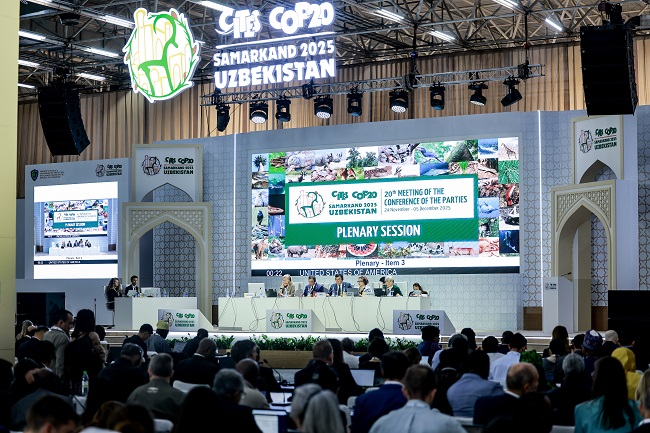
Once a vital artery of exchange across continents, the Silk Road is now the setting for a different kind of global dialogue: the future of the world’s wildlife: In a historic first for the Convention on International Trade in Endangered Species of Wild Fauna and Flora (CITES), the 20th meeting of the Conference of the Parties to CITES (CITES CoP20), known as the World Wildlife Conference, officially opened on Monday, November 24, 2025, in Samarkand, Uzbekistan, transforming the ancient Central Asian city into a centre of global conservation diplomacy.
Hosted by the National Committee on Ecology and Climate Change of the Republic of Uzbekistan, the opening ceremony featured vibrant traditional Uzbek music and dance performances. The segment underscored its pride in hosting this landmark event, bringing to life the official slogan of the meeting “CITES at 50 in Samarkand: Bridging Nature and People.”
CITES CoP20 plenary session
In his opening remarks, Mr. Aziz Abdukhakimov, Advisor to the President of the Republic of Uzbekistan, Chair of the National Committee on Ecology and Climate Change and CITES CoP20 President emphasised Uzbekistan’s prioritisation of the sustainable use of wildlife resources, stating: “The declaration of 2025 as the ‘Year of Environmental Protection and the Green Economy in Uzbekistan’ reflects our strategic commitment to environmental sustainability and to transitioning to a green, resource-efficient development model…Uzbekistan is confidently emerging as one of the leading countries in the region and globally in addressing environmental challenges.”
CITES Secretary-General, Ivonne Higuero, followed with an invitation to the nearly 3,000 participants to join her in celebrating 50 years since the Convention entered into force, remarking: “Samarkand, a city that for centuries stood as a crossroads of cultures, ideas, and trade, is a symbol of connection, dialogue, and cooperation – the very values that define CITES. We also celebrate five decades of tireless work by Parties to ensure that international trade in wild animals and plants does not threaten their survival. That principle is as relevant today as it was in 1975 – perhaps even more so.”
The Secretary-General also announced the Winners and Finalists of the CITES 50th Anniversary Photo Contest, whose photographs were submitted under four categories that called on the CITES global community of photographers to capture the essence of the Convention’s wild species of animals and plants, people, partnerships and youth perspectives.
The meeting moved swiftly through several foundational agenda items in preparation for the intensive negotiations to follow. Parties elected the Chair, Alternate Chair, and Vice-Chairs of the meeting, establishing the leadership that will guide the proceedings. They then adopted the agenda and Working Programme, setting the roadmap for the two weeks of discussion.
The plenary also reviewed and adopted the Rules of Procedure, laying out the framework for how decisions will be taken. It then proceeded to the admission of observers, ensuring broad and inclusive participation in the deliberations.
Attention then turned to reports from the Standing Committee, the Animals Committee and the Plants Committee. Delegates also considered proposals aimed at addressing the workload and enhancing the efficiency of the Convention by establishing a process under the permanent Committees, an issue of growing importance as the scope of CITES continues to expand.
Following the morning’s plenary discussions, delegations convened in the afternoon for regional meetings to agree on regional representation in the Standing Committee, laying the groundwork for coordination and consensus-building within and across regions as negotiations move forward.
With these initial procedural steps completed, CoP20 now begins the substantive phase of its work. Over the next two weeks, Parties will consider proposals to amend the CITES Appendices, examine the conservation status of a wide array of species, and review measures designed to enhance compliance, strengthen enforcement cooperation and advance the implementation of the CITES Strategic Vision 2030. Discussions will also touch on the sustainability of trade in key terrestrial and aquatic species, alongside efforts to reinforce reporting systems, improve national legislation, and address the gaps that threaten conservation outcomes.
With a shared sense of purpose filling the halls of the Silkroad Samarkand Expo Centre, CoP20 has begun – with the collective resolve to forge a more sustainable future for the world’s natural heritage.
The decisions made at Samarkand will reinforce global commitments to supporting the Kunming‑Montreal Global Biodiversity Framework (KMGBF) and the 2030 Agenda for Sustainable Development, and to bridging nature and people for generations to come.
The high-level closing plenary of the fourth Ministerial Meeting on Urbanisation and Climate Change marked a historic moment for cities and regions at COP30, bringing together ministers, mayors, governors, community leaders, and global partners to reaffirm the central role of urbanisation in accelerating climate action.
Co-hosted by the COP30 Presidency, Brazil’s Ministry of Cities and the United Nations Human Settlements Programme (UN-Habitat), the meeting brought together ministers, mayors, governors, civil society, and global partners to chart a course for multilevel implementation. Originally scheduled for a press conference, the event’s outcomes were shared directly from the plenary following a precautionary evacuation of the venue.
Executive Director of UN-Habitat, Ms. Anaclaudia Rossbach
The meeting marked the culmination of the Urban Days at COP30 and was organised in collaboration with UNFCCC, the Local2030 Coalition, the Local Governments and Municipal Authorities (LGMA) Constituency, CHAMP partners, and the Baku Continuity Coalition.
COP30 President Ambassador, André Corrêa do Lago, reaffirmed the need to place cities at the centre of climate negotiations, with particular emphasis on adaptation efforts.
UN-Habitat Executive Director, Anacláudia Rossbach, reaffirmed the critical role of local entities in implementing climate agreements. “We know that the goals of the Paris Agreement cannot be achieved without local, urban, and multilevel climate action – and without your commitment: governors, mayors, and communities,” she said.
Key outcomes of the meeting included:
Ministers and mayors agreed on concrete steps to strengthen coordination across national, regional, and local levels – including mechanisms to localise NDCs locally, expand access to climate finance, and scale up integrated action in cities.
New analysis from UN-Habitat shows cities are now at the heart of national climate plans (NDC 3.0), with the number of plans featuring strong urban content nearly doubling – and a clearer focus on implementation across housing, transport, and finance.
Participants called for greater role of local and regional governments as key partners in implementing the Paris Agreement goals and ensuring urban priorities are embedded in future climate action.
The meeting also highlighted the impact of ongoing initiatives such as CHAMP (Coalition for High Ambition Multilevel Partnerships), SURGe (Sustainable Urban Resilience for the Next Generation), and Multisectoral Actions Pathways (MAP) to Resilient and Healthy Cities, showing how coordinated urban action can accelerate climate results.
The closing plenary reaffirmed that cities and regions are indispensable to the implementation of NDCs 3.0 and to bridging the gap between global ambition and local action. By aligning the climate and urban agendas, participants charted a pathway for more equitable, inclusive, and resilient urban futures.
The outcomes of the Ministerial Meeting will inform the broader COP30 negotiation agenda and feed into global discussions leading up to the World Urban Forum in Baku, ensuring continuity across presidencies and reinforcing the call for sustained investment in cities and communities as engines of climate solutions.
The Green Climate Fund (GCF) concluded its activities at COP30 in Belém, Brazil, prepared to ramp up its operations to help implement the new global goal for adaptation finance.
Among the key COP30 outcomes were the decision to triple adaptation finance by 2035 and the confirmation of the broader goal to mobilise $1.3 trillion in climate finance per year by the same date. GCF’s efficiency reforms have already resulted in a record volume of programming in 2025, and the Fund is now well-positioned to scale up its operations to respond to the urgent need for adaptation and mitigation climate finance.
GCF began the conference – dubbed the “Implementation COP” – by showcasing its ability to deliver climate finance at scale, reflecting on a record year in which the Fund programmed $3.26 billion in new climate finance. GCF’s portfolio now includes 336 projects, representing $19.3 billion in GCF resources and $78.7 billion when expected co-financing is included.
GCF Executive Director, Mafalda Duarte
Several senior government officials – from both developed and developing countries – reaffirmed GCF’s central role in climate finance. Germany’s Minister for Economic Cooperation and Development, Reem Alabali Radovan, described GCF as a global hub where public trust meets private innovation.
“Together, we can make the second decade of the Green Climate Fund one of acceleration, leverage, and lasting impact,” she stated.
Ministers from Togo and Papua New Guinea also praised GCF’s contributions and called for continued collaboration to meet urgent climate needs.
Launch of investment platforms
At the conclusion of COP30, GCF showcased its support for a total of 15 new country and regional platforms, which were announced in collaboration with the Fund. With the announcement of the Brazil and Caribbean platforms a few months ago, GCF intends to support 17 such platforms. The platforms are set to drive country-led climate and nature-based solutions.
At a time when climate impacts are accelerating, and global finance is falling short, these announcements represent a significant and coordinated effort to support countries in leading the planning, financing, and delivery of their own climate action. The platforms will help governments turn national priorities into investable pipelines, deploy finance more effectively, and speed up the implementation of projects and policies. The platforms will be supported by GCF’s Readiness Programme, the world’s largest climate finance capacity building initiative.
GCF.10: A decade of climate impact
GCF support to the platforms will draw on many of the lessons in an overview of its GCF.10 Impact Report – titled “A decade of global climate: Building resilience, transforming lives” – unveiled at COP30. The report marks 10 years since the Fund’s first projects were approved in 2015, on the eve of the adoption of the Paris Agreement.
The GCF.10 Impact Report was launched at the high-level side event, “GCF.10: A decade of climate impact,” where GCF partners and stakeholders reflected on the scale and reach of GCF’s finance in pursuit of the Fund’s three main goals of delivering capital at scale, strengthening national institutions, and partnering for greater climate impact.
Programming news
One of the major new GCF partnerships announced at COP30 was the Climate Resilient Enduring Earth (CREE) initiative, a collaboration between the Nature Conservancy (TNC) and the World Wildlife Fund (WWF). GCF committed $2.4 million in Project Preparation Facility support (as part of a total $4.5 million in support from all partners) to develop proposals aimed at increasing the climate resilience of nature and people in Botswana, Namibia, Guatemala, and Bolivia.
CREE seeks to permanently conserve up to 85 million hectares of new land and water through the demarcation of new protected/ conserved areas and/ or greatly enhanced management of existing such areas. For perspective, this is larger than the combined size of the UK and France.
GCF signed a memorandum of understanding with Just Climate to mobilise private institutional capital for climate solutions in emerging markets. The Fund also signed project agreements with the Accredited Entities, the Asian Development Bank, and the International Finance Corporation, for the recently approved Glaciers to Farm Programme and the Resilient Water Infrastructure Facility, respectively.
The Fund launched its Locally Led Climate Action (LLCA) Framework and Guidance, which will boost locally led adaptation efforts. The Framework aligns GCF and partners on LLCA best practices to increase investments that support devolved decision-making and finance, local ownership and implementation, scalability and sustainable local capacities.
New commitments and collaborations
GCF joined the Belém Call to Action for the Congo Basin Forests and announced a commitment of $300 million over the next five years to protect one of the world’s most vital carbon sinks and biodiversity hubs. The commitment will consist of a mix of support and investment modalities for the Congo Basin, with a focus on six countries: Cameroon, the Central African Republic, the Democratic Republic of the Congo, the Republic of the Congo, Equatorial Guinea, and Gabon.
As an indication of GCF’s focus on enhancing its support for climate-vulnerable communities, the Fund reaffirmed its commitment to increasing access to climate finance for Indigenous Peoples. GCF also joined the Global Alliance Against Hunger and Poverty as the Belém Declaration on Hunger, Poverty, and Human-Centered Climate Action was adopted at COP.
In a landmark move towards greater coherence within the overall architecture of climate finance, GCF joined forces with the Climate Investment Funds (CIF), Global Environment Facility (GEF), and Adaptation Fund to launch the Multilateral Climate Funds Joint Results Report 2025. This initiative aligns shared result areas and indicators across mitigation, adaptation, energy, and nature, laying the groundwork for more transparent and collaborative climate finance delivery.
Moving forward
GCF approaches the start of its next fundraising cycle (replenishment) in late 2026, well-positioned to leverage its unique role as the primary operating entity of the financial mechanism under the United Nations Framework Convention on Climate Change (UNFCCC).
Its reforms have revamped the accreditation process, and improved efficiency and access to finance. As the Fund prepares to roll out a regional presence, it is set to move even closer to countries.
The Lagos State Government says it is intensifying waterfront development to position the city as an all-year-round tourist destination with new policies and infrastructure.
The Commissioner for Waterfront Infrastructure Development, Dayo Alebiosu, said this on the sidelines of a tourism event on Thursday, November 27, 2025, in Lagos.
The event, “Tourism Stakeholders Engagement Summit”, was organised by the Lagos State Ministry of Tourism, Arts and Culture.
Dignitaries at the tourism event on Thursday in Lagos
The theme is “Unlocking the Potential and Opportunities of Lagos Tourism: Collaboration and Partnership for a Greater Lagos”.
Alebiosu said the government aimed at making the Lagos experience stand out globally.
According to him, the government is giving ongoing reclamation projects more character so they can be more globally competitive.
He said the waterfront development would mirror global standards seen in other places like Dubai and Spain.
“There has to be a reason why people will visit Lagos all year round,” he said.
Alebiosu said the government was introducing new infrastructure, including the first boardwalk in Lagos, the first fish market undergoing renovation and high-capacity concrete pontoons.
“It hasn’t been done before. Now we just introduced that.
“So, just to mention a few, these are some of the things we’re looking at injecting into the system in order for the dynamics to change.”
A boardwalk is a walkway made of wooden boards, most commonly found along a beach or shore.
It provides a firm surface for pedestrians to walk on, especially over soft or wet ground like sand, and can also be built in natural areas like wetlands, marshes, or parks to allow access without disturbing the environment.
While pontoons are buoyant, flat-bottomed floats used to support a structure on water, commonly found on flat-decked boats, floating bridges, and seaplanes.
Alebiosu said the reforms were a blend of physical upgrades and new policies.
He explained that collaborating with the Ministry of Tourism was key, as it would give the projects more character and ensure the state achieved its intended service delivery.
Minister of Health and Social Welfare, Prof Ali Pate, civil society organisations (CSOs) and other stakeholders working in public health have rallied the Senate for an upward review and restructuring of the Sugar-Sweetened Beverage (SSB) Tax, calling for a shift from the current specific excise of N10 imposed on each litre of sugary drink to a stronger ad valorem, percentage-based system that raises the overall rate and secures dedicated revenue for strengthening Nigeria’s health sector.
Speaking during a public hearing in Abuja on Thursday, November 27, 2025, organised by the Senate Joint Committee on Finance, Customs and Excise, they said Nigeria was experiencing a surge in noncommunicable diseases (NCDs) linked to excessive consumption of sugary drinks and unhealthy diets, and that formerly rare diseases such as diabetes, stroke, obesity and heart diseases are now some of the leading causes of premature death.
Sugar-sweetened beverages
The public hearing was on a bill, sponsored by Senator Ipalibo Harry Banigo, titled “Bill for an Act to Amend Section 21(3) of the Customs, Excise Tariffs, Etc. (Consolidation) Act to Replace the Fixed Ten Naira (₦10) Per Litre Excise Duty on Non-Alcoholic, Carbonated Sugar-Sweetened Beverages with a Percent Levy Per Litre of the Retail Price, and to Provide for the Earmarking of a Portion of the Revenue for Health Promotion and Disease Prevention Programmes.”
In his remarks, Senator Adeniyi Adegbonmire (SAN), who represented Senate President Godswill Akpabio, described the bill as an important one in the interest of public health.
Echoing Senator Banigo’s debate, he said: “’This amendment is not merely fiscal in nature; it is a public health investment strategy that aligns taxation policy with our national health priorities. It proposes the restructuring of existing Excise Duty on sugar-sweetened beverages (SSBs), not to impose more burden on citizens, but to redirect part of the existing revenue to finance health-related programmes and infrastructure that will improve the well-being of Nigerians.”
He reinforced support for the Bill, saying, “Clearly, the N10 per litre excise is no longer realistic in the present-day Nigeria, not only from the value of the naira, but more importantly, the cost of providing health interventions for health-related challenges.”
Minister of Finance, Olawale Edun, who was represented by Bashir Abdulkadir, a Director of Technical Services, said the Ministry was aware of the bill and generally aligned with it.
However, the ministry drew attention to Section 13 of the Customs, Excise Tariffs, Etc. (Consolidation) Ac, saying it empowered the president as the sole authority to vary rates.
It argued that the ministry was already working on a comprehensive process that would cover SSBs and alcoholic drinks and urged the Senate to take note.
Responding, the Joint Committee asserted its power under the Constitution to hold public hearing and amend the law, adding this was a matter of national importance in the interest of public health that Nigerians had been calling for.
For Health Minister Pate and the CSOs, the situation is a public health crisis that requires urgent policy intervention, such as an effective SSB Tax and earmarking of same to strengthen the health sector, to stem the tide.
The Federal Government imposed the tax as a pro-health policy in 2021 to discourage excessive consumption of sugary drinks, tackle sugary drinks-linked NCDs, strengthen Nigeria’s ailing public health sector, and boost government revenue.
But Prof. Pate and the health sector stakeholders told the senate that the current N10 per litre tax, which came into effect when the average bottle of SSB was N150, has been eroded by inflation and is too minimal to affect Nigerians’ consumption of sugary drinks and protect public health.
They urged the legislature to amend the bill.
Prof. Pate, who backed the amendment with data from the World Health Organisation and other global health bodies, urged the lawmakers to set the SSB Tax at no less than 20 percent and to earmark at least 40 percent of the revenue for public health, saying it was in the interest of “230 million Nigerians”.
He said it would “create a valuable funding stream” and, citing the Philippines example, argued that it would aid Nigeria’s progress towards expanding Universal Health Coverage.
Corporate Accountability and public Participation Africa (CAPPA) made three recommendations to make the amendment more effective, including raising the tax to at least 50 percent of the retail price of sugary drinks.
In his presentation to the Senate committee, Akinbode Oluwafemi, CAPPA’s Executive Director, urged Nigeria to “Adopt a strong retail-price–based excise structure by setting the levy at 50 percent of the retail price, with an absolute minimum floor of 20 percent, in line with WHO guidance and the Bloomberg Task Force on Fiscal Policy for Health. This level is necessary to trigger meaningful reductions in consumption.
“Earmark revenues from the SSB tax for public health programmes, particularly for the prevention and management of non-communicable diseases, to ensure sustainable financing for population health.
“Establish a national monitoring and evaluation task force to oversee implementation, ensure compliance, track consumption trends, and measure the health and fiscal impact of Nigeria’s SSB tax policy.”
He added that the review of the excise on sugar-sweetened beverages is “constitutionally sound, legally justified, economically prudent, and aligned with Nigeria’s public-health obligations and international commitments. Nigeria can no longer rely on a fixed ₦10 duty that has lost its value and its purpose.”
According to him, a percentage-based levy that reflects real market prices is the only credible path to restoring the effectiveness of the policy and aligning it with global best practice.”
He added that, by adopting a benchmark rate of 50 percent of the retail price, with a non-negotiable minimum floor of 20 percent, “the National Assembly will ensure that the tax is strong enough to reduce consumption, stimulate industry reformulation, and generate measurable health gains.
“Equally important is the inclusion of clear earmarking provisions, so that a portion of the revenue is dedicated specifically to public-health promotion, NCD prevention, and the revitalisation of Nigeria’s fragile healthcare system.”
Others who spoke in favour of the amendment included the Civil Society Legislative Advocacy Centre (CISLAC), Nigerian Cancer Society, Diabetes Society of Nigeria, the National SSB Tax Coalition, the Healthy Food Policy Vanguard, the Nigerian Tobacco Control Alliance and CISLAC, Redeemers University, among others.
“We completely align ourselves with this amendment,” said the Vice President of the Diabetes Society of Nigeria, Dr. Mansur Ramalan, adding that Nigeria was experiencing a diabetes prevalence that had risen to about seven percent.
Dr Ramalan addressed concerns by the Ministry of Finance about the possible negative effects on government revenue, saying the reverse was the case, and government revenue “will increase by 200 percent.”
Over 600 experts appointed to the three Working Groups of the Intergovernmental Panel on Climate Change (IPCC) will gather in Paris from December 1 to 5, 2025, to begin the drafting of the IPCC’s Seventh Assessment Report (AR7).
Hosted by the French Government, through the Ministry of Ecological Transition, Biodiversity, Forestry, Sea and Fisheries, the Ministry of Education and Research and the Ministry for Europe and Foreign Affairs, this is the First Lead Author Meeting, held jointly by the three Working Groups.
Jim Skea, IPCC Chair
Authors from more than 100 countries will focus their work on the initial drafts of the three Working Group contributions to AR7 and cross-cutting topics. Bringing together authors from all three Working Groups in a single venue aims to enable the IPCC to take an ambitious qualitative leap in assessing key interdisciplinary questions related to climate change.
On Friday, November 28, a virtual media briefing will be held ahead of the official opening of the first Lead Author Meeting, which is taking place on Monday, December 1, 2025. Speakers include Gabriel Normand, diplomatic advisor to Monique Barbut, and Robert Vautard, Co-Chair of IPCC Working Group I.
The ceremonial opening of the First Lead Author Meeting will take place on Monday, December 1 and IPCC authors will be addressed by the Minister of Ecological Transition, Monique Barbut; the Mayor of Saint-Denis, Mathieu Hanotin; the Chair of the IPCC, Jim Skea; and the Secretary of the IPCC, Abdalah Mokssit.
Cancer care at the National Hospital, Abuja, received a major boost of $300,000 donation on Tuesday, November 25, 2025, by the Renaissance Africa Energy and its joint venture partners – Nigeria National Petroleum Company Limited; TotalEnergies; and Agip Energy and Natural Resources.
The donation will fund the Service License Agreement (SLA) that guarantees the continuous operation and maintenance of the world-class Linear Accelerator (LiNAC) radiotherapy machine earlier donated to the hospital by the joint venture in 2019.
Speaking at the donation event held at the hospital in Abuja, Managing Director and Chief Executive Officer of Renaissance, Mr. Tony Attah, noted that the intervention by the joint venture was critical at time that cancer was ravaging more Nigerians, with care cost rocketing by the day.
R – L: Lead, Community Relations, NUIMS, Uzo Ejidoh; Health Manager, Renaissance Africa Energy Company Limited; Dr. Akinwumi Fajola; VP, HR & Corporate Services, Olukayode Ogunleye; Managing Director and CEO, Tony Attah; GM, Relations & Sustainable Development, Igo Weli; Minister of Health, Prof. Muhammad Ali Pate; Head of Business Services, NUIMS, Nkechi Anaedobe; CMD National Hospital Abuja, Prof. Muhammad Raji Mahmud, and other staff of the health ministry… at the presentation of the $300,000 donation to the National Hospital Cancer Centre by the Renaissance Joint Venture in Abuja… on Tuesday
“Cancer remains a formidable challenge to public health in our nation. Behind the statistics are real people whose futures depend on timely access to affordable, world-class treatment. This is not charity; it is a pledge to safeguard the future of cancer care and ensure that the fight against cancer in Nigeria is not only sustained but won.”
Attah therefore described the donation as a strategic investment in the well-being of Nigerians and the resilience of the country’s health systems. “We commended Federal Government’s efforts to strengthen cancer care, and we invite other stakeholders to join forces in advancing innovation, collaboration, and patient support,” Attah said.
Receiving the donation, Nigeria’s Minister of Health and Social Welfare, Professor Muhammad Ali Pate, described the ministry’s collaboration with Renaissance and its joint venture partners as a good example of the public-private partnership needed to attract investment into health services for the benefit of Nigerians.
The minister said, “Cancer care remains a major challenge and affordability is critical. Renaissance generosity fits within our broader effort to revamp infrastructure and equipment for cancer treatment. The LiNAC machine has treated more than 2,000 patients, reduced the cost of care by 80 percent, and significantly shortened treatment time. This is a path we can build on.”
“This partnership is a good example that I hope other corporate giants can learn from—how private industry, with its own vision and stakeholders, finds it worthwhile to co-invest in improving Nigeria’s health system,” the minister said, adding: “Renaissance and its partners have not only provided this life-saving technology but are ensuring its uninterrupted operation. This commitment translates directly into lives saved and hope restored for thousands of patients. We look forward to deepening this partnership as we strive to make cancer care accessible to all Nigerians.”
Representing the Chief Upstream Investment Officer of NNPC Upstream Investment Management Services (NUIMS), the Head Business Services, Mrs. Nkechi Anaedobe, reiterated the joint venture’s commitment to sustaining cancer care infrastructure.
“This is more than just operational support; it is a strategic investment in accessible, high-quality healthcare. Our $300,000 donation will fund the Service Level Agreement for the LiNAC machine, ensuring timely maintenance, minimising downtime, and safeguarding compliance with medical standards. This commitment underscores our dedication to the long-term sustainability of cancer treatment services in Nigeria,” she said,
The Chief Medical Director of National Hospital Abuja, Prof. Muhammad Raji Mahmud, expressed gratitude for the continued support. “Cancer treatment is one of the most resource-intensive areas of healthcare, and sustaining advanced equipment like the LiNAC machine requires significant investment,” he said.
Renaissance Health Manager, Dr. Akinwunmi Fajola, said, “From the very beginning, we saw that the National Hospital was ready to work. They had the infrastructure, the commitment, and the vision. Through collaboration with our partners and the OEM, Elekta, we were able to deliver the LiNAC machine and achieve something excellent. Treatment time has dropped from about 15 minutes to just four minutes, and that’s a game-changer for patients.”
Since its installation in 2019, the LiNAC machine has transformed cancer treatment in Nigeria, reducing therapy costs by over 80%, cutting treatment time from 12 minutes to approximately two minutes, and providing care to more than 2,000 patients, including subsidised treatment for indigent patients.