Home Blog Page 8

Group lists three steps govts can take to cut energy bills

As volatile energy prices continue to spike, driven in part by geopolitical instability and gas market shocks, governments face an urgent challenge: how to bring down household energy bills immediately and protect their citizens from fossil-flation making everything more expensive.

The good news, according to environmental campaign group 350.org, is that short-term relief and long-term transition are not mutually exclusive. 

The group outlines three measures that could be implemented almost overnight.
TotalEnergies
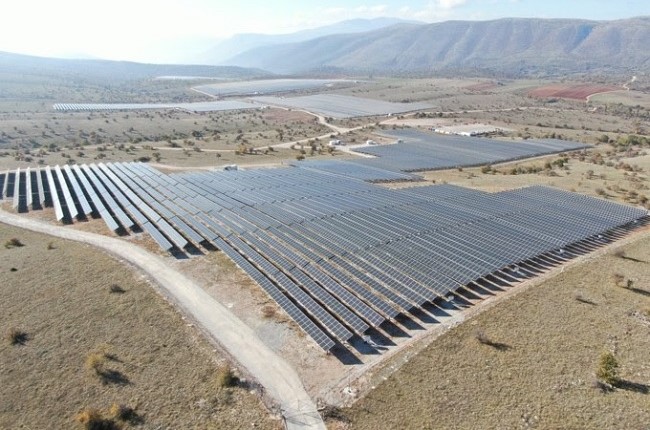
A TotalEnergies solar energy facility. Priority must go to distributed renewable energy solutions which are quick and easy to deploy

1. Tax Windfall Profits of Fossil Fuel Companies and Use Them to Support Households

Fossil fuel companies cashing in obscene profits during high fossil fuel prices should contribute to shielding consumers. Fossil fuel companies profit from this crisis. They should pay for the solution. A windfall tax can capture excess profits and redistribute them directly to consumers through measures such as targeted bill support, direct cash transfers to most affected sectors,  an expansion of existing free or heavily subsidised (“lifeline”) electricity tariffs to vulnerable households, and free public transportation.

Recycling windfall revenues into consumer protection helps avoid that outcome while keeping incentives for clean investment intact. The UK’s windfall tax on oil and gas producers raised around £12 billion in 2024, helping fund its Energy Price Guarantee, limiting average household bills during the crisis.

Anne Jellema, Chief Executive, 350.org, said: “This is about fairness and maintaining public trust. Right now, fossil fuel companies are making obscene profits while households struggle to pay their bills, and people can see that. Taxing these windfall profits and redirecting them to support households is essential to protect people and livelihoods.”

2. Decouple Electricity Prices from Gas

In many markets,such as the UK, Germany, Italy and Netherlands electricity prices are still tied to the cost of gas, even when much of the power comes from cheaper renewable sources like wind and solar. As a result, when gas prices spike, electricity bills rise unnecessarily. This is the case in Spain where the reduced influence of expensive fossil gas and coal power on the electricity market in Spain, driven by surging wind and solar, has turned the country into one of the cheapest power markets in Europe.

Governments can intervene through market reforms such as contracts for difference, regulated tariffs, or temporary price-setting mechanisms to ensure consumers benefit from lower-cost renewable energy.

Anne Jellema, Chief Executive, 350.org: “Decoupling electricity from gas prices is one of the most effective ways to stabilise bills. It protects households from global fossil fuel shocks and reflects the true, lower cost of renewable energy.

3. Decentralised Renewables

Governments should fast-track the just deployment of renewable energy in affected regions using emergency energy response funds, bilateral finance, and development support. Priority must go to distributed renewable energy solutions which are quick and easy to deploy. These can include off-grid solar and mini-grids for communities and essential infrastructure such as hospitals and schools, rooftop and balcony solar for households, and clean cooking solutions for smallholders. 

Emergency renewable funding must be redirected from fossil fuel emergency response budgets and existing bilateral aid, not create new debt instruments that will burden already-stressed countries. Equity, accessibility, and long-term sustainability must be ensured in decentralised renewable energy deployment, ultimately guaranteeing that these systems are owned and managed by communities.

Anne Jellema, Chief Executive, 350.org: “Relief today, means transition tomorrow, these measures are not a substitute for a green energy transition, they are a bridge. In the longer term, the only durable solution to energy price volatility is to accelerate the transition to homegrown, renewable energy. Investing in wind, solar, storage, and energy efficiency reduces dependence on imported fossil fuels and insulates economies from geopolitical shocks. It also addresses the root cause of the climate and biodiversity crisis.

“But the transition must be managed carefully. Without immediate relief, households and businesses will struggle, and support for change may erode as calls for reopening ‘national’ fossil fuel sources increase. By redistributing windfall and cutting energy bills, decoupling energy prices from gas governments can ease the pressure now while building a cleaner, more stable energy system for the future.

“The choice is not between affordability and sustainability. With the right strategy, we can, and must, deliver both.” 

Environmentalists kick as US agrees to pay TotalEnergies $1bn to drop offshore wind project

The Trump administration will pay $1 billion (€860 million) to the French energy giant TotalEnergies SE to walk away from two US offshore wind leases as it ramps up its campaign against offshore wind and other renewable energy.

TotalEnergies has agreed to what is essentially a refund of its leases for projects off the coasts of North Carolina and New York, and will invest the money in fossil fuel projects instead, according to their press statement.

TotalEnergies
TotalEnergies

“Considering that the development of offshore wind projects is not in the country’s interest, we have decided to renounce offshore wind development in the United States, in exchange for the reimbursement of the lease fees,” said Patrick Pouyanné, chairman of the board of directors and chief executive officer at TotalEnergies.

Pouyanné also said that the refunded lease fees will finance the construction of a liquefied natural gas plant in Texas and the development of its oil and gas activities, calling it a “more efficient use of capital” in the US.

After it makes those investments, TotalEnergies will be reimbursed up to the amount paid in lease purchases for offshore wind, according to the Department of the Interior.

TotalEnergies purchased a lease for its Carolina Long Bay project in 2022 for about $133 million (€115 million). It aimed to generate more than 1 gigawatt there, enough to power about 300,000 homes.

It purchased the lease off New York and New Jersey, also in 2022, for $795 million (€685 million).

This was planned as a larger project, with the potential to generate 3 gigawatts of clean energy to power nearly one million homes. TotalEnergies is involved in major offshore wind projects in Europe and Asia.

Trump administration intensifies push against wind energy projects

President Donald Trump’s administration has tried to halt offshore wind construction, but federal judges have repeatedly overturned those orders.

Last year, the Trump administration halted five major offshore wind plans, including Denmark’s Ørsted project, citing national security reasons.

Developers and states sued, and federal judges allowed all five projects to resume construction, effectively concluding that the government had not shown the risk was so imminent that construction must halt.

Concerning the current deal, the Interior Department hailed the “innovative agreement” with the French energy giant and said “the American people will no longer pay for ideological subsidies that benefited only the unreliable and costly offshore wind industry”.

“We welcome TotalEnergies’ commitment to developing projects that produce dependable, affordable power to lower Americans’ monthly bills,” Interior Secretary, Doug Burgum, said in a statement.

Environmental groups condemn deal

Environmental groups denounced the deal as an alternative way to block wind projects, with one group calling it a “billion-dollar bribe” to kill clean energy, and another describing the agreement as a “handout to polluters”.

“After losing again and again in court on his illegal stop-work orders, Trump has found another way to strangle offshore wind: pay them to walk away,” said Lena Moffitt, executive director of Evergreen Action.

Ted Kelly, clean energy director at the Environmental Defense Fund, called the proposed deal “an outrageous misuse of taxpayer dollars to prevent Americans from having clean, affordable power exactly when they need it most”.

East Coast states are building offshore wind because it boosts affordable electricity supply on the grid, even as natural gas prices are rising, Kelly concluded.

Campaign group 350.org has condemned the move as a reckless misuse of public funds that undermines clean energy progress and locks in future energy insecurity.

Anne Jellema, Chief Executive 350.org, said: “This is a billion-dollar handout to polluters. Instead of investing in affordable, homegrown renewable energy, the Trump administration is paying companies to walk away from clean power, and double down on fossil fuels that are driving wars, extreme weather and ever rising energy bills.

“It is nothing short of an insult to every American household that the government is funneling billions in public funds into the pockets of the oil and gas industry while citizens are being crushed by record-high utility costs. Using our hard-earned tax dollars to pay off fossil fuel companies after record high utility costs is a betrayal of the public trust and a direct blow to the economic security of millions who can no longer afford the price of corporate greed.”

The agreement would see TotalEnergies refunded for offshore wind leases off the coasts of North Carolina and New York, with the company planning to redirect investment into liquefied natural gas and expanded oil and gas production.

Fanny Petitbon, France Country Manager, 350.org: “The TotalEnergies-Trump alliance is a shameless victory lap for fossil fuel radicals who are determined to make us pay for expensive, outdated energy. Wind power is now consistently cheaper and more stable than gas. Rather than putting even more money in the pockets of Big Oil, governments should collect windfall taxes in order to cushion people’s bills and fund the transition to affordable renewables.”

The move follows repeated legal defeats for the administration’s attempts to halt offshore wind development, raising concerns that the payout is an attempt to sidestep court rulings and stall the sector by other means.

Rising tobacco deaths spark calls for urgent policy action in Malawi

0

As tobacco-related fatalities continue to rise, Drug Fight Malawi is urging the government to move beyond ratifying international treaties and begin strict enforcement of smoking regulations to protect the country’s youth.

Executive Director of Drug Fight Malawi, Nelson Baziwelo Zakeyu, has raised alarm over what he describes as a “silent epidemic” of tobacco-related deaths.

Citing data from the World Health Organisation (WHO), Zakeyu noted that thousands of Malawians are dying each year from smoke-related illnesses.

Tobacco smoking
Tobacco smoking

“The situation is not all that good. We see cases of drug use increasing. Our young people are smoking, and even adults are smoking in the presence of children and their wives,” said Zakeyu. “People are dying silently.”

Recent findings from the organisation indicate that tobacco use is linked to nearly 9,000 deaths in Malawi, with more than 4,400 deaths directly attributed to smoking-related complications.

A 27-year-old youth from Mzuzu, who requested anonymity, echoed Zakeyu’s concerns, recounting his personal struggle with smoking.

“My life is no longer the same. I was told by doctors that if I continue, I will die,” he said. “I stayed in the hospital for months, and my studies were disrupted.”

Malawi made a significant step in addressing tobacco harm by ratifying the WHO Framework Convention on Tobacco Control (FCTC) in 2023.

However, Drug Fight Malawi stresses that ratification alone is insufficient without implementation.

“The ratification of the Framework Convention on Tobacco Control on its own is not enough,” Zakeyu emphasised.

“We need to ensure that government adheres to the obligations set out in the convention.”

Zakeyu also expressed concern over the normalization of smoking in homes, warning that such practices expose children and young people to early addiction and long-term health risks.

Drug Fight Malawi, a non-governmental organisation focused on drug control and alcohol abuse prevention, says it is ready to complement government efforts by translating policy into tangible public health outcomes.

As Malawi moves forward post-ratification, civil society groups are calling for urgent action, including the enforcement of smoke-free environments and intensified public awareness campaigns.

By Tionge Hara, AfricaBrief

‘A hostage situation, not a trade deal’ – Campaigners flay EU-US trade talks

0

Campaigners at 350.org are raising concerns over ongoing EU–US trade negotiations, warning that the proposed agreement risks locking Europe into decades of fossil fuel dependency while exposing households to rising energy costs and geopolitical pressure.

The warning comes amid escalating pressure from the Trump administration, which has threatened to restrict gas supplies to Europe unless the deal is agreed without amendments.

Reports indicate the deal could include forced commitments for Europe to purchase up to $750 billion in U.S. energy, including oil and liquefied natural gas, at a time when governments should be accelerating the transition to clean, homegrown energy.

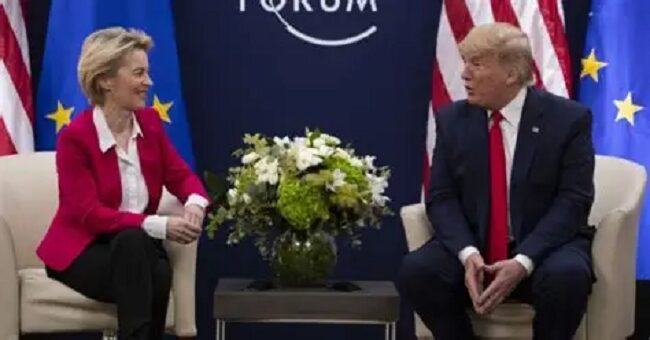
Leyen and Trump
President of the European Commission, Ursula von der Leyen, with US President, Donald Trump

Campaigners say the proposal risks repeating the mistakes of Europe’s past reliance on Russian gas, a dependency that triggered soaring prices and economic instability following the invasion of Ukraine.

Clémence Dubois, 350.org Global Campaign Manager, said: “This is not a trade deal; it is a hostage situation that will leave European households paying the ransom for years to come.

“Europe bled billions escaping Russian gas dependency. Now it is sprinting, eyes open, into the same trap. MEPs have a simple choice: ratify a deal that was never put to them democratically or assert that Parliament exists for exactly this moment.

“Russian gas or American gas, the pipeline changes but the dependency doesn’t. Bills will still be high and gas-addicted countries vulnerable. Renewable energy offers a clear alternative: wind and solar are already cheaper than gas in most of the world. They do not start wars; their prices do not spike when a shipping lane closes. The answer has been sitting here the whole time. The only scarce resource in this crisis is courage.”

Campaigners also raised alarm that the proposed deal could weaken key protections for European citizens, including environmental standards, food safety rules, and corporate accountability measures.

“The only way to ensure long-term energy security and stable bills is to end dependence on fossil fuels altogether. The technology is ready, the economics are clear, what’s missing is the political will,” added Dubois.

350.org called on European lawmakers to reject any agreement that deepens fossil fuel reliance or undermines public protections and instead prioritise investment in renewable energy and energy independence.

TAAT convenes strategic meeting to accelerate agricultural transformation across Africa

The Technologies for African Agricultural Transformation (TAAT) has convened a high-level Work Planning Meeting under its Phase II Addendum to strengthen the delivery of climate-smart agricultural technologies across Africa.

The meeting, which was held in Kigali, Rwanda, from March 23 to 24, 2026, with support from the African Development Bank (AfDB), brought together key stakeholders, including the International Institute of Tropical Agriculture (IITA), CGIAR Centres, Advanced Agricultural Research Institutes (AARIs), National Agricultural Research and Extension Systems (NARES), government representatives, private-sector actors, and development partners.

TAAT
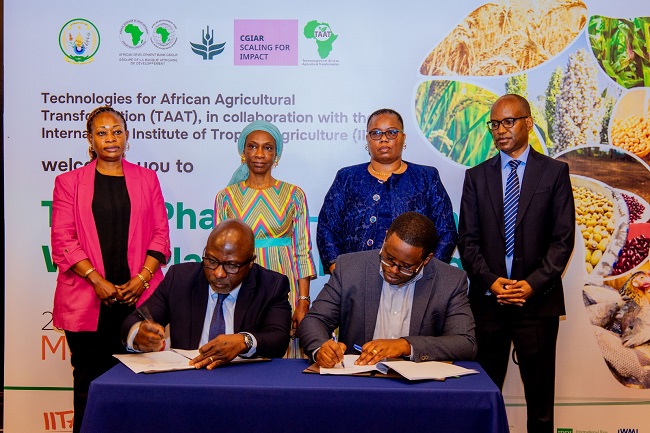
Signing the sub-grant agreement between the Government of the Republic of Rwanda, the African Development Bank, and the TAAT Programme

A major highlight of this phase is the implementation of a €5 million grant from Germany, administered through the African Development Bank’s Transition Support Facility (TSF Pillar IV). The funding will support activities in Rwanda, Uganda, Tanzania, Mozambique, Malawi, and Nigeria.

The Work Planning Meeting seeks to review and validate the Work Plan and Budget, finalise implementation arrangements, and strengthen collaboration among partners to ensure effective rollout of programme activities.

Key areas of focus include strengthening seed systems, building institutional and technical capacity, promoting youth engagement in agriculture, and expanding digital advisory solutions to enhance productivity and climate resilience.

Since its launch in 2018, TAAT has played a pivotal role in advancing Africa’s agricultural transformation by scaling proven technologies. The programme has supported the production of over 4,333 metric tonnes of breeder seeds, leading to more than 309,000 metric tonnes of certified seeds, significantly improving crop yields and farmer livelihoods across the continent.

The programme has integrated 71 cases of technologies into 14 large-scale projects and technical assistance into 21 projects across 24 countries, thereby influencing $857 million, and the integration of 136 cases of technologies into 18 large-scale projects across 21 countries, influencing $1.7 billion under the African Development Fund (ADF) concessional loans and grants window of the African Development Bank.

In his remarks at the opening and signing ceremonies, Mr. Innocent Musabyimana, the Chief Agricultural Technologies Officer at the African Development Bank, affirmed that TAAT remains central to delivering the African Development Bank Feed Africa vision.

“Strong partnerships are key to scaling agricultural transformation, and this meeting is about moving from planning to accelerated action,” Mr. Musabyimana said.

The representative of the IITA Management at the event and Country Representative for Rwanda, Mr. Matieyedou Konlambigue, applauded TAAT’s commitment to African food systems transformation, noting the production and dissemination of over 309,000 MT of certified seeds to millions of farmers across the continent.

“TAAT has demonstrated success in strengthening seed systems across Africa, and now we need to scale with speed, promote sustainability, and align implementation and accountability commitments to delivering measurable impact for farmers,” he added.

The acting Coordinator of the TAAT Programme Management Unit, Ms. Rachel Zozo, stated that the TAAT Phase II Addendum grant would focus on bolstering strategic investment in the six countries, with a view to building their capacity, resilience, and innovation, while addressing fragility concerns through strengthened food systems.

“Our priorities in this phase will be to strengthen seed systems and early generation seed (EGS) production, empower youth and institutions, scale digital agriculture solutions, and enhance collaboration across public and private sectors,” Ms. Zozo added.

Speaking on the importance of the initiative, stakeholders at the event emphasised that strengthening partnerships and investing in local capacity are critical to reducing Africa’s vulnerability to global agricultural shocks and ensuring long-term food security.

The meeting resulted in finalised implementation plans, strengthened partnerships, and a signed sub-grant agreement between the Government of the Republic of Rwanda, the African Development Bank, and the TAAT Programme, represented by the IITA.

The agreement which seeks to facilitate rapid execution of activities across all four components of TAAT II, with a strong focus on capacity building for key stakeholders in the six countries, will support strengthening the seed systems in the target countries, capacity building for National Agricultural Research Systems and the private sector to produce early generation seeds, technical capacity building for young professionals in National Agricultural Research Extension Institutions, and build target countries capacity in digital advisory solutions for extension, climate information and input distribution. 

Dr Solange Uwituze, the Minister of State in the Ministry of Agriculture, who signed on behalf of the government of Rwanda, welcomed the MoU, noting that it will help increase productivity through the Food Basket Sites initiated by the Ministry, as well as create youth employment in Rwanda.

“In line with our 2050 vision of Rwanda, which enhances food security among Rwandans, we should increase the agricultural productivity by 13 times from what we produce now. This requires us to adopt modern agronomic practices and improved technologies. That’s what this MoU is going to contribute to. Because it will help provide clean seeds and increase the capacities of local actors to practise agriculture on small lands but with increased productivity,” Dr Uwituze added.

Nigeria must build resource resilience, says Renaissance chairman

0

Amid persistent volatility in global energy markets, the Chairman of Renaissance Africa Energy Company Limited, Dr Layi Fatona, has urged the Nigerian government and corporate leaders to strengthen national and corporate resilience by diversifying across oil, gas and mineral resources.

Speaking at the 61st Annual International Conference and Exhibition of the Nigerian Mining and Geosciences Society (NMGS) in Uyo, Akwa Ibom State, Fatona, whose remarks were delivered on his behalf by Renaissance Vice-President for Exploration, Johnbosco Uche, warned that Nigeria must prepare for commodity cycles, shifting energy geopolitics, and rising security risks.

Dr Layi Fatona
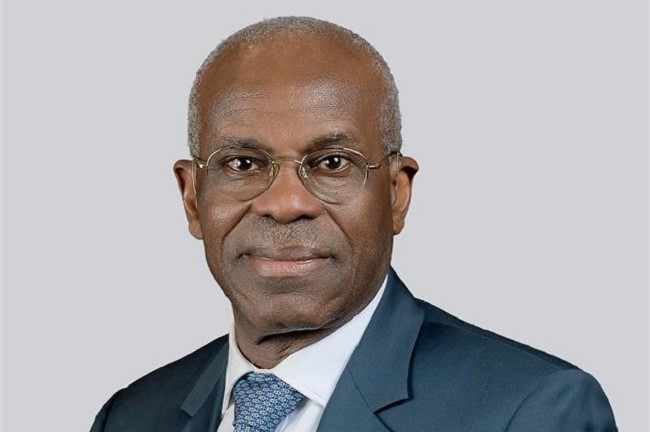
Chairman of the Board of Renaissance Africa Energy Company Limited, Dr. Layi Fatona

“Infrastructure must be designed to withstand economic, environmental and security shocks,” he said, aligning his message with the conference’s theme: “Optimising Efficiency, Sustainability and Resilience in Resource Management and Infrastructure Development.”

According to Fatona, the conference theme reflects both Nigeria’s current predicament and the future it must build in the context of an accelerating global energy transition.

Fatona argued that improving efficiency across the entire resource value chain, from exploration and development to production and market access, remains essential. He called for eliminating redundancies, reducing cycle times, and improving recovery rates. “Data‑driven decision‑making is central to unlocking efficiency gains,” he noted, adding that infrastructure remains a decisive enabler of value creation.

Resource endowment, he cautioned, offers little benefit without the supporting networks to monetise it.

“Resource wealth without infrastructure is stranded potential,” he said, urging investment in transport systems, processing facilities, gas networks and export corridors. Integrated planning across the oil, gas and mining sectors, he added, would unlock scale, reduce costs and deepen domestic value capture.

On sustainability, the Renaissance chairman argued that it must evolve beyond a compliance exercise to become an embedded strategic principle. Environmental stewardship, host‑community inclusion and responsible resource utilisation, he said, should form the foundation of Nigeria’s extractive industries.

“We must ensure that today’s extraction does not compromise tomorrow’s prosperity,” he said.

Fatona highlighted the transformative potential of emerging technologies, including digital subsurface modelling, artificial intelligence and automation, to improve safety, efficiency and recovery. Real‑time monitoring of infrastructure, he said, enhances reliability and reduces losses. Nigeria, he warned, must accelerate technological adoption if it hopes to remain globally competitive.

He commended President Bola Ahmed Tinubu’s administration for issuing executive orders aimed at improving the operating environment in the natural resources sector. These measures, he said, demonstrate a clear intent to prioritise the sustainable development of Nigeria’s resource base and strengthen the country’s industrialisation drive.

“In the sector in which I operate as Chairman of Renaissance, these actions continue to empower Nigerian operators and improve the ease of doing business,” he added. For a country with a rapidly growing population, abundant talent and vast natural resources, he described industrialisation as “a necessary vision.”

Fatona called on government, industry players and other stakeholders to intensify collaboration to ensure that Nigeria’s aspirations for industrial growth and economic diversification are fully realised.

Abuja technology forum to convene youth, CSOs, media

PROMAD, a civic innovation organisation, says it will convene a one-day Hybrid Youth, CSO & Media Roundtable on Youth, Technology and Development in Abuja as part of the Strengthening Participation, Accountability and Transparency in States (SPATS) initiative in North Central Nigeria.

In a statement issued on Tuesday, March 24, 2026, Joseph Akujuobi, PROMAD’s Communications Officer, said the roundtable would bring together young leaders, civil society organisations, media practitioners, policymakers, students, and technology innovators to explore how youth-driven innovation and civic technology can strengthen participatory governance, promote transparency, and accelerate development outcomes across the region and the entire country.

International Youth Day
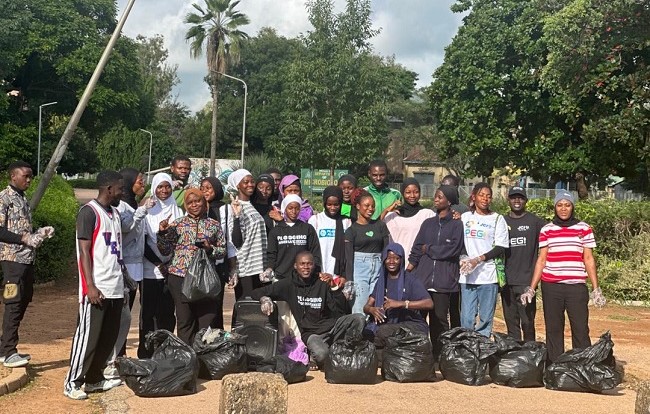
A cross section of youths during the cleanup at Plogging Nigeria, University of Nigeria, Nsukka

The organisation noted that as Nigeria continues to experience rapid digital transformation, the role of young people in shaping governance, policy innovation, and civic accountability has become increasingly critical.

“The roundtable aims to create a collaborative platform where youth voices, civic innovators, media professionals, and public institutions can jointly explore practical solutions that leverage technology for participatory governance and sustainable development.”

Speaking ahead of the event, the Founder and Executive Director of PROMAD, Daisi Omokungbe, noted that empowering young people with digital tools and platforms for civic participation is essential for strengthening participatory democratic governance and accountability in Nigeria.

“Young people are not just beneficiaries of development; they are drivers of innovation and transformation. Through this roundtable, we are bringing together youth leaders, civic actors, and the media to explore how technology can strengthen participatory, transparent, accountable, and inclusive governance across North Central Nigeria.”

The hybrid roundtable will feature keynote presentations, expert panel discussions, civic technology demonstrations, and collaborative breakout sessions designed to generate innovative ideas and practical recommendations for advancing youth participation and digital innovation in governance.

Omokungbe said PROMAD will launch its new AI-powered civic tech solutions aimed at promoting participatory and data-driven governance. According to him, participants will also have the opportunity to engage with civic technology solutions developed by PROMAD that enable citizens to participate in participatory budgeting, track public projects, strengthen transparency, and promote participatory governance.

The event is expected to attract participants from youth organisations, civil society groups, media institutions, government agencies, universities, and the technology ecosystem. Plans have been put in place for physical and virtual participation options to ensure broader inclusion and engagement.

The roundtable will further provide a platform for media professionals to deepen reporting on youth-led innovation, technology for development, and civic accountability, while fostering stronger partnerships between civil society organisations, innovators, and policymakers.

PROMAD Foundation invites youth leaders, journalists, civic tech innovators, development professionals, students, and public officials to register and participate in this important dialogue on the future of youth, technology, and development in Nigeria.

Nigeria unveils plan to lift 50m out of poverty by 2030

The Minister of Humanitarian Affairs and Poverty Reduction, Dr Bernard Doro, has inaugurated the “One Humanitarian-One Poverty Response System (OHOPRS)” aimed at lifting 50 million Nigerians out of poverty by 2030.

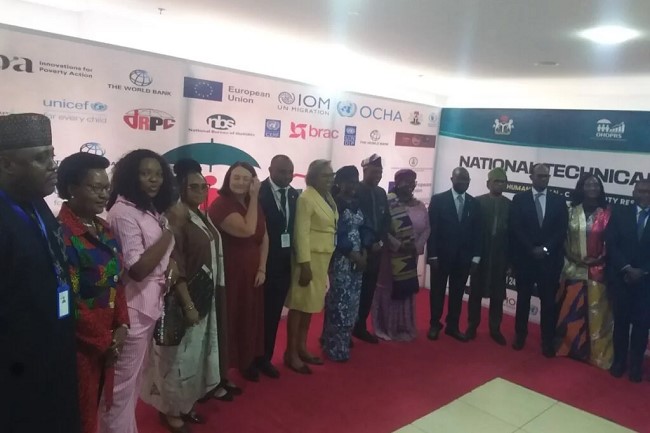
Doro unveiled the initiative at a National Technical Workshop for stakeholders in the humanitarian sector at the UN House on Tuesday, March 24, 2026, in Abuja.

The minister explained that the OHOPRS was unified national architecture for ending poverty in Nigeria, adding that over 63 per cent of Nigerians faced multidimensional poverty.

Poverty
Participants at the National Technical Workshop for stakeholders in the humanitarian sector at the UN House

He itemised the challenges facing the humanitarian activities as, structural gap-chronic fragmentation across MDAs, states, and local governments, visibility crisis, and coordination conflict.

“Others include Siloed Data, uncoordinated beneficiary registers, inefficient funding, duplicated efforts that fail to reach the last mile, fragmentation, lack of synergy, limited social proof/impact, stagnation and lack of a unified ‘Poverty Exit’ pathway.

“We have been managing poverty, not ending it. It is time for a paradigm shift.

“To end poverty, Nigeria does not lack interventions, but lack the systems to facilitate the effective actualisation of the interventions.”

According to him, OHOPRS is the new national backbone designed to merge and integrate humanitarian relief, long-term development, and social protection.

He noted that the system also aligned MDAs, state governments, and development partners, but lacked individuals from vulnerability to support, exit and growth.

“There is a clear national direction on the OHOPRS; President Bola Tinubu ‘s vision is uncompromising. The mandate is to lift 50 million Nigerians out of poverty by 2030.

“Also, to implement real-time, digital accountability, re-establish government-led coordination and align every stakeholder to a single national system.

“Meanwhile, the core principles are, one system, one register and one pathway; one National Data Backbone: the ‘Single Source of Truth’.

“One Unified Beneficiary System: No more “double-dipping” or exclusions, one Poverty Exit Pathway: A structured roadmap to self-reliance and one National Coordination Platform: Total alignment of all actors,” Doro said.

He further explained the OHOPRS’ architecture, poverty exit pathway, poverty intelligence lab, data-driven governance, evolution of the response, roles and responsibilities, expected national impact, and operationalisation of the vision.

“OHOPRS is more than a reform; it is Nigeria’s blueprint for lifting our people from poverty to prosperity.

“The focus is shifting from the ‘poverty line’ to the ‘prosperity ladder’. Yesterday, we managed the challenge. Today, we architect the end,” Doro said.

Also, the Minister of State, Ministry of Humanitarian Affairs and Poverty Reduction, Dr Tanko Sununu, said the OHOPRS aimed to synergise efforts across various sectors and agencies to ensure a coordinated response.

“When we have one response plan, it means we are going to have a way that everyone can put effort together, so that we can have a proper plan, execution, tracing, tracking, and then measurement of internal outcomes.

“By allowing humanitarian aid with long-term development goals, the programme can address the immediate survival needs while also focusing on sustainable social mobility,” Sununu said.

The organisations in attendance include International NGO Forum, European Union, UNOCHA, IOM UNICEF, ECHO, World Bank and other stakeholders from the subnational.

The organisations in attendance pledged their commitments and supports to the successful implementation of the OHOPRS initiated by the Humanitarian Affairs Ministry.

By Collins Yakubu-Hammer

Ikeja Electric cites generation drop for Lagos outages

Ikeja Electric (IE) says residents and businesses across Lagos are experiencing reduced electricity supply following a nationwide drop in power generation.

Mr. Kingsley Okotie, Head of Corporate Communications, IE, said this in an interview on Tuesday, March 24, 2026, in Lagos.

Okotie attributed the development to insufficient gas supply to thermal power plants, the country’s major source of electricity generation.

Power distribution
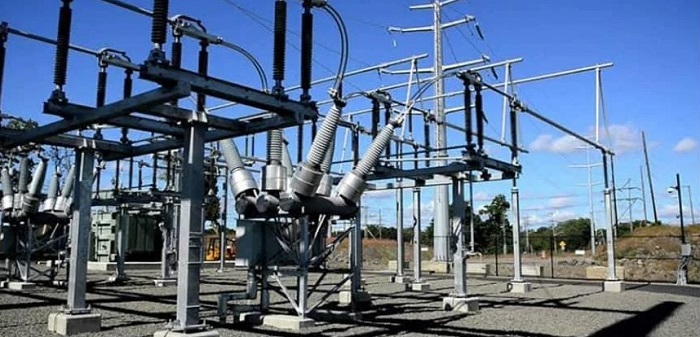
Power distribution infrastructure

“The ongoing reduction in electricity supply is largely due to a nationwide drop in power generation, caused by limited gas supply to thermal power plants.

“This has significantly reduced the energy available on the national grid and, consequently, the allocation to Ikeja Electric and other distribution companies,” he said.

He noted that the shortfall had affected electricity distribution to customers, resulting in intermittent outages and load shedding across its network.

Okotie, however, assured customers of the company’s commitment to equitable and efficient distribution of the limited power available.

“The management regrets the inconvenience caused and appreciates the patience and understanding of our customers during this period.

“We remain committed to distributing the available power as efficiently and equitably as possible,” he said.

The spokesman urged customers to remain patient as efforts continued at the national level to improve gas supply and stabilise power generation.

The development has worsened electricity challenges in Lagos, with residents and businesses lamenting poor supply.

Some residents, who spoke in separate interviews, said the situation had increased their dependence on generators and raised operating costs.

Mrs. Kemi Adebayo, a frozen food trader, said she relied heavily on generators to preserve her goods.

“I run my generator more than I use public power. If there is no light, my goods spoil. If I use fuel, I lose profit. Either way, I am losing,” she said.

Mr. Sani Ibrahim, a welder, described the situation as unsustainable.

“We spend more on diesel than on raw materials. Sometimes, customers leave because we cannot deliver on time,” he said.

Also, Mrs. Roseline George, a civil servant, said erratic power supply had worsened the impact of rising temperatures.

“It has been very hot, and there is no constant electricity supply. We rely on rechargeable fans and take plenty of water,” she said.

However, experts say persistent challenges, including gas supply shortages, recurring grid disturbances and sectoral debts, continue to limit electricity generation in the country.

They warn that unreliable power supply could further constrain productivity and economic growth if not urgently addressed.

By Yunus Yusuf

Kazakhstan to create protective forest belts to tackle desertification

Authorities in Kazakhstan on Tuesday, March 24, 2026, said they would establish a system of protective forest belts to counter land degradation and prevent the deterioration of soil fertility.

This was announced by the country’s Minister of Ecology and Natural Resources, Yerlan Nyssanbayev, at a government meeting, according to Kazinform, a partner of TV BRICS.

“It is important to emphasise that the implementation of the task to plant 2 billion trees will not be limited to this number; the work will continue.

Yerlan Nyssanbayev
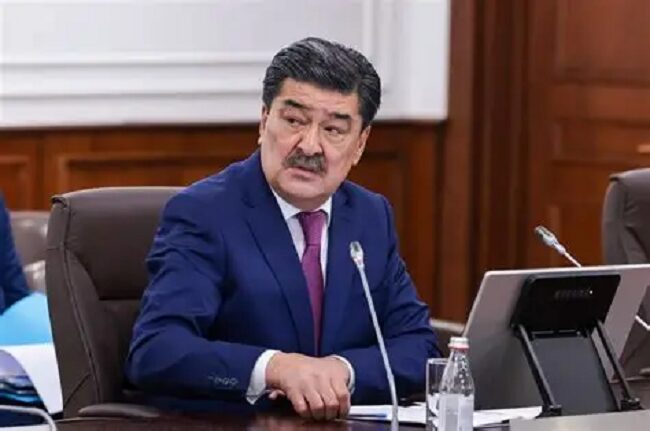
Kazakhstan Minister of Ecology and Natural Resources, Yerlan Nyssanbayev

“To prevent land degradation and counter desertification, work is beginning on the creation of a system of protective forest belts and barrier plantations,” the minister announced.

He emphasised that these tasks are particularly important in the context of climate change and the growing anthropogenic pressure on ecosystems.

According to Nyssanbayev, natural resources must be used with the long-term interests of society in mind; therefore, the ministry has adopted the comprehensive biodiversity conservation and sustainable use concept for 2026–2035.

Other countries and partners within the BRICS group are also taking measures to conserve green spaces and improve soil quality.

In Russia, since 2022, as part of the implementation of the Zemlya (Land) state programme, 3.3 million hectares of unused land have been brought into agricultural use.

According to the website of the Russian Ministry of Agriculture, by the end of 2025, the total area of land preserved through land improvement measures had reached 4.9 million hectares.

State support enables farmers to more actively implement projects aimed at improving land use efficiency, preserving soil fertility and protecting agricultural land from degradation.

Almost 50 per cent of costs are reimbursed for hydromelioration and hydraulic engineering works, and up to 90 per cent for phytomelioration and afforestation.

In Inner Mongolia in northern China, where several deserts are located, work is regularly carried out on afforestation and preventing desertification.

One of the measures against the encroachment of sand has been the laying of straw barriers.

In the city of Nusantara, currently under construction on the island of Kalimantan, to which the Indonesian authorities plan to relocate the national capital, efforts are being made to restore tropical forests.

The authorities have imposed a restriction on developers: 65 per cent of the city’s territory must be covered by forest.