30.8 C
Lagos
Monday, February 9, 2026
Home Blog Page 8

IBM SkillsBuild: YASIF to train 15,000 underprivileged Nigerians with digital skills

Young Advocates for a Sustainable and Inclusive Future (YASIF Nigeria) and its partners have announced plans to equip 15,000 young, underserved Nigerians as part of efforts to improve their participation in the digital and green economy.

The programme, which is part of IBM SkillsBuild Phase 2’s Reskilling Revolution Africa (RRA) initiative, will be carried out in partnership with IBM, the African Union (AU), and the International Association for Volunteer Effort (IAVE) as part of a larger continental effort to increase young people’s access to professional, digital, and sustainability-related skills throughout the nation.

IBM SkillsBuild
Beneficiaries of the IBM SkillsBuild initiative

In a press statement signed by the executive director and founder of YASIF Nigeria, Blessing Ewa, the organisation added that the programme provides structured and labour-market-relevant learning pathways via a digital platform that supports self-paced learning, tracks progress and awards internationally recognised IBM SkillsBuild digital credentials.

She hinted that YASIF Nigeria is implementing the SkillsBuild Phase 2 initiative following the successful completion of the programme’s pilot phase, which demonstrated strong learner uptake, gender inclusion, and measurable skills outcomes in Nigeria.

“Through the SkillsBuild Phase of Reskilling Revolution Africa, YASIF Nigeria is scaling a proven model for youth skills development that is grounded in evidence from the pilot phase and focused on measurable employability outcomes, while contributing to a broader continental effort to prepare young Africans for participation in the digital and green economies,” Ewa said.

The IBM SkillsBuild is currently being delivered across multiple countries, including Nigeria, South Africa, Kenya, and Ethiopia, with implementation adapted to local contexts while maintaining consistent quality standards. To date, the programme has demonstrated strong results, engaging tens of thousands of learners, achieving high female participation, recording tens of thousands of learning hours, and enabling thousands of learners to earn IBM SkillsBuild digital badges, confirming its effectiveness as a scalable, partner-driven model for building job-relevant skills and strengthening employability outcomes.

The RRA pilot phase, launched in October 2024, set out to engage 30,000 young Africans across Nigeria, Ethiopia, and South Africa. Nigeria exceeded its national pilot target by enrolling 12,061 unique learners on the IBM SkillsBuild platform, drawn largely from unemployed and underemployed youth, including students in tertiary and technical institutions. Female participation surpassed the minimum benchmark, contributing to an overall pilot outcome in which nearly 60 percent of learners were women.

Across the three pilot countries, learners collectively recorded almost 93,000 learning hours and earned close to 2,000 internationally recognised IBM SkillsBuild digital credentials, establishing a strong performance baseline for programme scale-up.

Building on these results, the SkillsBuild Phase expands both the scale and structure of programme delivery in Nigeria. Under Phase 2, YASIF Nigeria partnering with Emerging Communities and Little Gifted Hands Matter alongside other implementing partners, will coordinate the enrollment of 15,000 young Nigerians over a 12-month period, with at least 50 percent female participation.

Implementation will span Abuja, Lagos, Kaduna, Katsina, and Niger State, ensuring geographic spread and access for youth from diverse backgrounds. Learners will be onboarded in weekly cohorts through a blended learning model that combines IBM SkillsBuild’s online curriculum with in-person facilitation, coaching, and peer support delivered through trained volunteers and facilitators. This time, YASIF and her partners will be collaborating with various Ministries, Departments and Agencies (MDAs) as well as the private sector to enable successful outcomes.

Learning pathways were informed by a National survey and are aligned with labour-market demand and local context, with focus areas including climate change and green economy, digital marketing, artificial intelligence, web development, project management, entrepreneurship, and sustainability-related skills.

Programme performance is monitored through the SkillsBuild platform, with Nigeria targeting a minimum of 1,500 digital badges earned during Phase 2, representing at least 10 percent of enrolled learners achieving platform-recognised credentials.

In addition to skills training, YASIF Nigeria and its partners are implementing a structured employability and alumni support framework designed to extend programme impact beyond course completion. This includes career guidance services such as Curriculum Vitae (CV) development and interview preparation, partnerships with employment and job-placement organisations, and entrepreneurship training and mentorship for participants pursuing self-employment. A national alumni network will be maintained to support peer learning, collaboration, and continued access to employment and enterprise opportunities.

In her final words, the founder of YASIF Nigeria, submitted that volunteering remains a core component of the SkillsBuild Phase, with participants encouraged to apply newly acquired skills through community-based activities, peer learning support, and volunteer-led initiatives.

This, according to her, is because the integration of skills development and volunteering strengthens practical experience, supports job readiness, and reinforces the programme’s focus on inclusive development and community resilience.

By Etta Michael Bisong, Abuja

Nigeria’s Carbon Market Framework: From aspiration to infrastructure

0

For two decades, African carbon markets operated as extraction mechanisms where these projects were designed locally, credits certified abroad, and value captured elsewhere. Nigeria’s Carbon Market Framework, anchored in the Climate Change Act 2021 and operationalised through the National Council on Climate Change (NCCC), represents a fundamental departure. Not because it promises scale because projections always promise scale but because it introduces something carbon markets desperately need: institutional infrastructure.

Carbon markets fail without trust. Africa’s carbon credibility has been eroded by asymmetric transactions: international buyers purchase credits at discount rates while host communities see minimal revenue. Nigeria’s framework addresses this explicitly by establishing a National Carbon Registry under NCCC oversight, asserting sovereign control over credit issuance, ownership clarity, and benefit distribution.

Ayo Ogunlowo
Ayo Ogunlowo

The framework introduces three foundational shifts: legitimacy, participation, and intent.

The first shift is legitimacy through accountability. The framework mandates Free, Prior, and Informed Consent from communities, revenue-sharing agreements, and transparent benefit distribution as pre-conditions for credit issuance. A renewable energy project in Kano cannot bypass community engagement and credits won’t be registered without documented consent and agreed benefit structures. Nigeria doesn’t invent new standards; it aligns with existing international methodologies (Verra, Gold Standard, CDM) while retaining approval rights based on national priorities. Credits must be globally tradable but nationally governed.

The second shift is participation as the market deepens. Until now, carbon markets were export pipelines – credits produced locally, value realised elsewhere. Nigeria’s framework enables domestic participation. When Dangote Cement or Access Bank can purchase Nigerian-issued credits to offset emissions, carbon becomes a domestically tradable commodity, not just an export product.

Three participation forms emerge: voluntary corporate procurement where Nigerian companies pursuing net-zero commitments can source credits domestically, keeping capital within Nigeria while supporting local climate projects; financial sector engagement where banks and pension funds can treat carbon credits as collateralisable assets or integrate them into green finance portfolios; and compliance readiness where companies building carbon credit portfolios position themselves for potential future obligations, whether domestic or linked to export markets like the EU Carbon Border Adjustment Mechanism.

The third shift is intent as systemic integration. The framework embeds carbon trading into Nigeria’s Energy Transition Plan and Long-Term Low Emissions Development Strategy. Projects aren’t evaluated in isolation but as components of broader decarbonisation pathways. A methane capture project in Warri is assessed for alignment with gas flaring targets. A Cross River reforestation initiative contributes to Nigeria’s 30% forest cover commitment.

This systemic integration introduces sectoral pipelines: renewable energy displacement, waste management methane capture, REDD+ projects, industrial emissions optimisation. Developers know which sectors are prioritised. Verification bodies understand acceptable methodologies. Buyers anticipate credit volumes.

With projections of $3 billion annually by 2030, carbon is positioned as foreign exchange diversification. Nigeria flares 7-8 billion cubic meters of gas annually (worth $1-2 billion if captured). Converting waste into carbon credits while monetising gas creates dual revenue streams. Nigeria’s 30+ million households without reliable electricity create massive carbon credit potential if renewable mini-grids scale.

Nigeria has laid the rails. The test is whether the trains actually run. Carbon project development requires technical expertise most Nigerian states lack. Federal capacity-building programs targeting state environmental agencies are essential. Establish regional carbon hubs providing shared project development services.

Carbon markets depend on credible Monitoring, Reporting, and Verification. Nigeria needs investment in remote sensing, IoT sensors, and blockchain-based registries. Technology platforms that automate emissions tracking and provide audit trails transform MRV from manual to systematic.

Nigerian credits must avoid the 30-50% discount African credits face. Pursue bilateral recognition agreements with major carbon markets. Secure endorsement from the Integrity Council for the Voluntary Carbon Market. Quality certification removes buyer hesitation. Without enforcement mechanisms, benefit-sharing becomes performative. Establish escrow mechanisms where credit sale proceeds are held until community benefit distribution is verified. Empower communities to lodge complaints with NCCC.

Climate finance architecture fails Africa because the $100 billion annual pledge arrives as debt, not grants. Carbon markets offer performance-based finance: verified emissions reductions that buyers willingly purchase. Africa provides climate mitigation services with measurable value to global buyers pursuing net-zero commitments.

Nigeria positions carbon as an exportable service comparable to oil or gas. The difference: carbon is climate-aligned revenue, compatible with global decarbonisation trends. As fossil fuel demand declines, carbon credit demand rises.

Nigeria’s framework significance lies in timing and integration. As global carbon markets mature (voluntary markets projected to reach $50+ billion by 2030), Nigeria positions itself as a credible supplier. By embedding carbon trading within national climate policy and economic strategy, Nigeria signals that carbon is infrastructure. Success will be measured by whether, five years from now, Nigerian corporates routinely purchase domestic credits, international buyers trust Nigerian verification, communities report tangible benefits, and carbon revenue appears in federal budgets.

The fundamentals are in place. Now comes execution, enforcement, and earning trust one verified ton at a time.

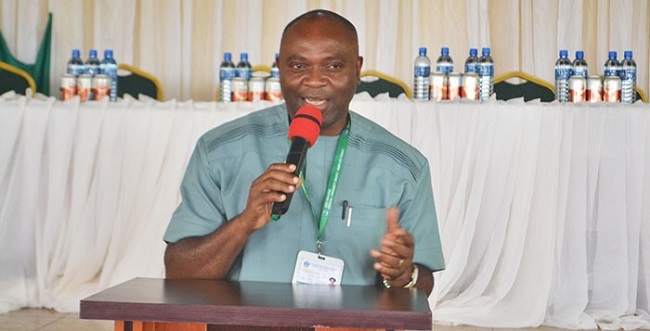
By Ayo Ogunlowo, Climate Tech Innovator & Founder, CarbonScope360, COO, Atunlo

Ogunlowo is Founder of CarbonScope360, a carbon emissions measurement platform, and Chief Operating Officer of Atunlo, which recycled 75 million plastic bottles and distributed ₦470 million to Nigerian communities in 2024. He has advised Access Bank on digital transformation and co-founded Omora, bridging blockchain and traditional finance

Advocate empowers displaced individuals to increase climate action

0

As part of efforts to encourage action against climate change, especially among Nigeria’s youth, three Internally Displaced Persons (IDPs) refuge camps located within the federal capital area have been empowered on the connection between human health and environmental protection.

This initiative, which was carried out under the Youth for One Health Project (YOHP) and funded through the SOS Villages Eco Champions Initiative, in partnership with UNODC Nigeria, UNICEF Generation Unlimited 9ja, CASS Educational Foundation, the FCTA Department of Public Health, the UNESCO Nigeria Youth Network, and Theirworld, mobilised 13 volunteers and directly impacted 150 young people (over 60% female) across these IDP refugee camps, namely Kuchingoro, Karamonjigi, and Durumi Area 1, to become eco-champions and public health campaigners.

YOHP
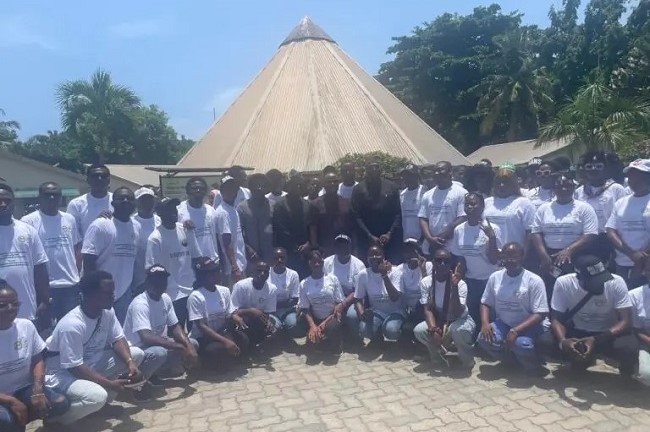
Participants at the Youth for One Heal Project (YOHP), which is supported by the SOS Villages Eco Champions Initiative and held in Abuja, the capital of Nigeria

From Friday, December 19, to Sunday, December 21, 2025, participants engaged in eco-literacy and health education workshops, creative arts for Sustainable Development Goals (SDGs), advocacy against wildlife crime, plastic recycling into eco-art, tree planting, and youth leadership development at one refugee camp every day.

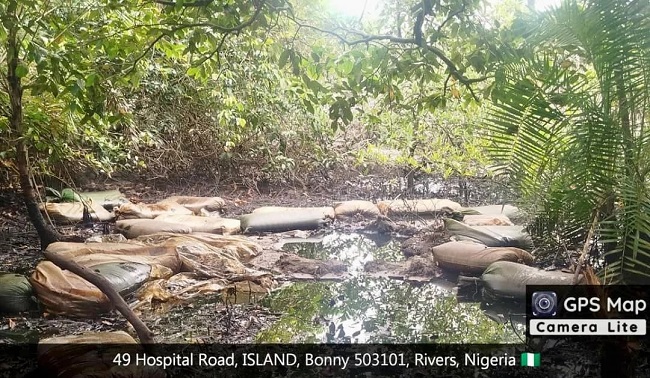
Pre- and post-test assessments showed a 45% increase in climate, health, and environmental knowledge among participating youths.  The results were tangible and immediate.  One hundred kilograms of plastic bottles were removed from camp environments and repurposed into biodiversity eco-art illustrating endangered species.

Additionally, 150 climate-action creative art murals were co-painted by the IDPs, giving the youths in the camp permanent learning tools promoting clean water, waste reduction, tree planting, and environmental hope. Nine fruit trees were planted and adopted by youths, contributing to long-term environmental quality and food sustainability, while 13 youth volunteer leaders were trained and mobilised to sustain activities through newly formed eco-clubs in each camp.

“The initiative placed young people at the centre of solutions through creative arts rather than the margins of aid,” Godwin Lasisi, the initiator of YOHP, said in response to the project’s impact on the participants.

“I can now take action to protect my environment and my health because I see the importance” Aisha, one of the participants, said.

Beyond the aforementioned numbers, he explained, lies a deeper impact. The public health specialist and SDGs champion added that displaced young people gained confidence, leadership skills, and a sense of ownership over their environment and health that empowered them to tell their stories, which were produced into a documentary.

According to him, the Youth for One Health Project represents a strategic scale-up of earlier models pioneered through the Interfaith Alliance for SDG Action Plan (IASAP) and the broader YOHP framework used to institutionalize the SDGs in secondary schools across Nigeria impacting over 20,000 young people.

Godwin Lasisi hinted that as Nigeria grapples with climate change, urban displacement, and public health challenges, this programme offers a compelling lesson because when young people are equipped with knowledge, creativity, and leadership opportunities, they become powerful agents of resilience.

“Scaling this model across more schools, IDP refugee camps, and vulnerable communities could mark a decisive step toward healthier environments, empowered youth, and sustainable development that truly leaves no one behind and accelerates the achievement of the SDGs and Africa Agenda 2063,” he stated.

By Etta Michael Bisong, Abuja

UN chief calls for renewed efforts on peace, sustainable development

0

UN Secretary-General, Antonio Guterres, has called for renewed efforts on peace, justice and sustainable development amid global tensions rising and “reckless actions” triggering dangerous consequences.

Guterres made this known while outlining his priorities for 2026 – the final year of his tenure.

“2026 is already shaping up to be a year of constant surprises and chaos,” he told journalists in New York.

António Guterres
UN Secretary-General, António Guterres

Guterres – who trained as a physicist before entering public life – said that during times of profound flux, he returns to fixed principles that explain how forces act.

Among them is Newton’s Third Law of Motion which states that, for every action, there is an equal and opposite reaction.

“As we begin this year, we are determined to choose actions that generate concrete and positive reactions,” he said.

“Reactions of peace, of justice, of responsibility, and of progress in our troubled times.”

Today, impunity is driving conflicts – fueling escalation, widening mistrust, and allowing powerful spoilers to enter from every direction.

“Meanwhile, the slashing of humanitarian aid is generating its own chain reactions of despair, displacement, and death,” as inequalities deepen.

He highlighted climate change – “the most literal and devastating illustration of Newton’s principle” – as actions that heat the planet trigger storms, wildfires, hurricanes, drought and rising seas.

The world is also witnessing “perhaps the greatest transfer of power of our times”, namely from governments to private tech companies.

“When technologies that shape behaviour, elections, markets, and even conflicts operate without guardrails, the reaction is not innovation, it is instability,” he warned.

These challenges are happening as systems for global problem-solving continue to reflect economic and power structures of 80 years ago and this must change.

“Our structures and institutions must reflect the complexity – and the opportunity – of these new times and realities,” he said.

“Global problems will not be solved by one power calling the shots. Nor will they be solved by two powers carving the world into rival spheres of influence.”

He stressed the importance of accelerating multipolarity – “one that is networked, inclusive by design, and capable of creating balance through partnerships” – but it alone does not guarantee stability or peace.

“For multipolarity to generate equilibrium, prosperity and peace, we need strong multilateral institutions where legitimacy is rooted in shared responsibility and shared values,” he said.

Additionally, in the pursuit of reform, “structures may be out of date – but values are not,” he said.

In this regard, the people who wrote the UN Charter “understood that the values enshrined in our founding documents were not lofty abstractions or idealistic hopes” but “the sine qua non of lasting peace and enduring justice.”

He said that “despite all the hurdles, the United Nations is acting to give life to our shared values” and will not give up.

“We are pushing for peace – just and sustainable peace rooted in international law. Peace that addresses root causes. Peace that endures beyond the signing of an agreement.”

The UN is also pressing to reform and strengthen the Security Council – “the one and only body with the Charter-mandated authority to act on peace and security on behalf of every country.”

Stating that there is no lasting peace without development, he highlighted action to speed up progress to achieve the  Sustainable Development Goals(SDGs) and reform the global financial architecture,

“That includes ending the crushing cycle of debt, tripling the lending capacity of multilateral development banks, and ensuring developing countries just participation and real influence in global financial institutions,” he said.

On climate action, he stressed the need for deep emissions cuts this decade along with a just and equitable transition from fossil fuels to renewable energy sources.

“We are demanding far greater support for countries already confronting climate catastrophe, expanded early warning systems, opportunities for nations rich in critical minerals to climb global value chains,” he said.

The UN is also working urgently towards a framework for technology governance, including through global dialogue, capacity support for developing countries and the new International Scientific Panel on Artificial Intelligence (AI).

The names of 40 proposed panel members will be submitted to the General Assembly soon.

Guterres has also called for the creation of a Global Fund on AI Capacity Development for developing countries, with a target of $3 billion.

“As we begin this year, we are determined to choose actions that generate concrete and positive reactions,” he said.

“Reactions of peace, of justice, of responsibility, and of progress in our troubled times.”

By Cecilia Ologunagba

Sachet alcohol ban: Over 5m jobs, N800bn investments at risk – ACCI

0

The Abuja Chamber of Commerce and Industry (ACCI) has warned that NAFDAC’s renewed ban on sachet and small bottle alcoholic drinks threatens over five million jobs.

The chamber said that the ban also puts N800 billion investments at risk.

Chief Emeka Obegolu, President of ACCI, said this while reacting to the ban on the production and sale of alcoholic beverages packaged in sachets and small bottles.

Emeka Obegolu
Chief Emeka Obegolu, President of ACCI

The reaction was contained in a statement issued by Mrs. Olayemi John-Mensah, the ACCI Media and Strategy Officer, on Friday, January 30, 2026, in Abuja.

Obegolu described the enforcement as economically disruptive and potentially damaging to investor’s confidence.

He said that, at this time, Nigeria required regulatory stability to sustain growth, protect livelihoods, and attract investment.

The Director-General of the NAFDAC, Prof. Mojisola Adeyeye, recently, banned the products, warning that easy access to them is turning Nigerian children into addicts.

According to Obegolu, while ACCI fully supports public health objectives, including the protection of minors and the promotion of responsible consumption, the current approach to enforcement is abrupt and raises concerns of regulatory inconsistency.

“The renewed enforcement contradicts existing government directives and legislative resolutions, including the directive issued by the Office of the Secretary to the Government of the Federation on December 15, 2025.

“The directive suspended the ban, as well as the resolution of the House of Representatives of March 14, 2024, calling for restraint and broader stakeholder consultation.”

He recalled that, in December 2018, NAFDAC, Federal Ministry of Health and Social Welfare, and Federal Competition and Consumer Protection Commission (FCCPC), entered into a five-year Memorandum of Understanding (MoU) with manufacturers on the issue.

He said that the MoU was to gradually phase out sachet and small-volume alcoholic beverages by January 31, 2024.

He said that the moratorium was later extended to December 2025 following sustained engagement with industry stakeholders.

“Despite these agreed transition timelines, the sudden enforcement has begun to disrupt legitimate businesses across the manufacturing, packaging, distribution, and retail value chains.

“The development has also unsettled existing investments and exposed millions of workers to potential job losses,” he said.

Obegolu said that an outright ban, without adequate transition measures, may inadvertently encourage proliferation of illicit and unregulated alcohol products, thereby undermining both public health goals and government revenue.

He said that effective regulation should focus on control, compliance, and enforcement, rather than outright prohibition.

“ACCI is calling for a further extension of the implementation deadline to December 2026, to allow manufacturers complete ongoing transition processes, restructure operations, and exhaust existing inventories without unnecessary economic shocks,” he said.

He called for the establishment of a multi-stakeholder implementation committee, comprising regulatory agencies, policymakers, organised private sector groups, and industry representatives to ensure coordinated, transparent, and practical execution of the policy.

According to him, such an inclusive framework will help balance public health protection with economic sustainability, safeguard investments, preserve jobs, and strengthen confidence in Nigeria’s regulatory environment.

Obegolu reaffirmed ACCI’s readiness to collaborate with NAFDAC, relevant ministries, the national assembly, and other stakeholders to achieve responsible regulation that protects consumers while sustaining enterprise growth and employment.

By Vivian Emoni

Kukah urges faith-based environmental action at NCF lecture

The multiplicity of environmental challenges confronting Nigeria – fueling socio-economic crises such as worsening insecurity, poverty and homelessness – demands urgent and holistic action by all stakeholders, with religious leaders playing a critical role.

This call was made on Friday, January 30, 2026, by the Catholic Bishop of Sokoto Diocese, Most Rev. Dr. Matthew Hassan Kukah, while delivering the 24th Chief S. L. Edu Memorial Lecture in Lagos.

The annual lecture is a flagship initiative of the Nigerian Conservation Foundation (NCF), supported by partners including Chevron, to raise public awareness on contemporary environmental concerns and promote practical solutions.

Chief S. L. Edu Memorial Lecture
The Catholic Bishop of Sokoto Diocese, Most Rev. Dr. Matthew Hassan Kukah, delivering the 24th Chief S. L. Edu Memorial Lecture in Lagos

Speaking on the theme, “To Have and to Hold: Faith and Care of the Environment,” Bishop Kukah said the earth was entrusted to humanity by God for safekeeping, not for destruction through pollution and reckless exploitation.

He lamented Nigeria’s weak environmental culture, which he said has encouraged abuse of nature and unrestrained exploitation of resources without regard for preservation. 

Kukah also criticised poor enforcement of environmental laws and accused some foreign interests of prioritising resource extraction in Africa with little concern for the environmental, health and socio-economic consequences.

In a lecture that drew sustained applause from the audience, the Bishop linked persistent conflicts in Africa to the exploitation of natural resources and warned against a system where a privileged few benefit while the majority suffer.

According to him, “The theme of this lecture is to speak to men and women of faith to understand that the earth – creation – has been given to us by God in custody and in trust. Protection and preservation of the environment are part of the mandate of our humanity because God made us co-creators with Him.”

He stressed that human existence, livelihoods and comfort depend on the environment, noting that reckless mining, oil drilling and other extractive activities contradict divine intent.

“Whatever God has given us was not meant for a particular class – politicians, businessmen or political parties. It has been given for the welfare of every citizen. Our responsibility is to distribute these resources equitably and efficiently so that no one in a richly endowed country like Nigeria goes to bed hungry,” he said.

Kukah added that environmental problems do not occur in isolation, describing unchecked mining without restitution as ecological injustice and a sin against future generations. He urged people to see themselves not as spectators in the environmental crisis, but as custodians with a moral obligation to protect ecosystems and livelihoods, especially in the face of flooding, desertification, climate change and species extinction.

The Catholic Archbishop of Lagos, His Grace Adewale Martins, who was the Special Guest of Honour, also underscored the urgency of decisive environmental action. He commended the NCF and the family of late Chief S. L. Edu for sustaining the lecture series.

“This is a time for us to be sorry for our cruelty against the earth and to change our ways. Care for the earth is not optional; it is mandatory,” Archbishop Martins said, noting that the Catholic Church has long prioritised environmental sustainability through dedicated groups and initiatives.

In a welcome address, the Chairman of the NCF National Executive Council (NEC), Justice Bukola Adebiyi, expressed delight at the large turnout and thanked the Guest Lecturer, Archbishop Martins, and other dignitaries for their presence. 

Speaking on behalf of the NCF President, Chief Philip Asiodu, she said the theme was timely, given the scale of environmental challenges and the need for action – especially from faith communities.

Justice Adebiyi described the memorial lecture as a vital awareness tool and reminded the public that conservation is a shared responsibility, not the government’s alone. 

She paid tribute to Late Chief S. L. Edu, founder of the NCF, and appreciated Chevron for sponsoring the lecture since inception and for supporting several other NCF programmes and projects.

The event, attended by NCF NEC members, students from secondary and tertiary institutions in Lagos, members of the Catholic Women Organisation, Muslim groups and other stakeholders, also featured the award of research grants to two PhD students – Arikpo Okoi Eteng and Ezekiel Temitayo Adedeji – as well as the presentation of a plaque to Bishop Kukah.

By Innocent Onoh

Stakeholders call for stronger action on methane accountability gaps

0

Stakeholders have called for  urgent action to close methane accountability gaps, warning that unchecked emissions threaten lives, degrade the environment and undermine Nigeria’s climate commitments.

They made the call on Thursday, January 29, 2026, in Abuja at a closed-door stakeholder dialogue and documentary screening on human cost of methane emissions in the Niger-Delta region.

The event was convened by the Natural Resource Governance Institute (NRGI) and the Centre for Journalism Innovation and Development (CJID).

Methane
Human emissions of methane are second only to carbon dioxide in contributing to global warming

The Stakeholders blame unaccountable methane emission, a highly potent greenhouse gas for the loss of many livelihoods, poor agriculture yield food, pollution and rising poverty in the affected areas.

In the documentary, Niger-Delta communities report rising respiratory illnesses, degraded farmlands and declining fish stocks linked to prolonged exposure to gas flaring and methane leaks.

Mrs. Ayibakuro Warder, a women leader from Ikarama community, Okordia clan of Yenagoa LGA in Bayelsa State, said climate change driven by methane emissions had negatively affected their livelihoods, particularly farming.

She said their farms barely produced enough to feed their families, while fishing, another primary source of livelihood, had suffered as gas flaring and methane emissions had polluted local waters, endangering fish.

“These are the only things we depend on at the village to train our children, to feed and to live on.

“We harvest very tiny tubers of cassava, which was not the case in the past,” she said.

The community leader said emissions had caused unfamiliar diseases, while the loss of livelihoods had fueled a rise in crime.

Similarly, Chief Zion Kientei, traditional leader of Lasukugbene in Southern Ijaw LGA, Bayelsa, lamented that two indigenous oil companies in his community had not conducted a comprehensive Environmental Impact Assessment (EIA) prior to commencing operations.

Chief Kientei, Chairman of the Council of Chiefs, emphasised that EIAs issued by the Federal Ministry of Environment were mandatory for major oil and gas projects to assess environmental and health risks before operations commenced.

He said that without EIAs, the companies lacked an environmental management plan for his community, putting residents at risk.

Earlier, the Country Manager of NGRI, Mrs. Tengi George-Ikoli, said stakeholders must take concerted action to reduce methane emissions, warning of their serious economic and health impacts.

George-Ikoli said the government should go beyond formulating regulatory policy to ensure enforcement, while urging increased collaboration amongst CSOs to promote adoption of best practices, amplify community voices alongside educating communities among others.

She stressed the importance of Nigeria establishing comprehensive emission monitoring systems before 2027 and urged oil and gas companies to disclose their methane emission data to OMP, NEITI and other relevant bodies.

According to her, the empowerment of regulatory bodies is crucial  to enable them to monitor compliance by companies.

She urged companies to deploy technologies to capture methane before it escapes, stressing that as the main component of natural gas, it can be used to generate electricity, heat, or fuel for industries and households.

“What oil and gas-producing communities are experiencing reflects a gap between policy ambition and outcomes on the ground.

“Nigeria has taken important steps, but the lived reality in many communities shows that methane remains a daily health and livelihood challenge.

“The documentary released by Policy Alert and We The People, with support from NRGI, captures these realities and underscores the need to strengthen monitoring, enforcement and accountability across the sector,” she said.

By Martha Agas

Stakeholders lead sensitisation to clean cooking technologies in Abia

Stakeholders in clean cooking, on Friday, January 30, 2026, held market fair and roadshow in Umuahia, Abia State, to demonstrate and sensitise residents to clean cooking technologies as part of the efforts to mitigate the effects of climate change.

The city-wide event, organised by the Nigerian Alliance for Clean Cooking, in collaboration with key stakeholders, ended at the Orie-Ugba Market, Umuahia.

During the demonstration, clean cooking vendors set up exhibition stands, displaying different stove types suitable for different household needs.

Biofuel clean cooking stove

The demonstrations showcased the efficiency, cleanliness, safety, and ease of using stoves.

It also provided a platform for an interface with market women and traders on how best the stoves could be utilised to achieve clean cooking.

The Commissioner for Environment, Mr. Philemon Ogbonna, who led the show, said that the essence was to increase public awareness on the dangers associated with traditional cooking methods and the urgent need for cleaner alternatives.

Ogbonna explained that clean cooking technologies are safer, healthier, and more affordable.

Ogbonna emphasised that traditional cooking methods often consume more household finances than people realise.

He said: “People need to be aware that the way they cook is not healthy for them.

“Clean cooking technologies reduce financial burden, are safe, good, and affordable.

“What many people did not know is that traditional cooking methods are actually draining their finances.”

A representative of Roshan Renewables, Ms. Precious Ikea, further said that although clean cooking stoves may require an upfront cost, they are significantly cheaper in the long run.

Ikea reiterated that the stoves are cheaper compared to the health expenses and environmental damage associated with traditional cooking methods, such as firewood and charcoal.

“The stoves are smokeless, environmentally-friendly, and affordable.

“They require fewer charcoal briquettes, are easy to operate, and pose no health risks to users,” he said.

By Leonard Okachie

Dangote Refinery affirms capacity to supply 75m litres of PMS, 25m litres of diesel, 20m litres of jet fuel daily

0

Dangote Petroleum Refinery has reaffirmed its capacity to supply fuel volumes significantly more than Nigeria’s estimated domestic consumption.

The refinery said it can supply 75 million litres of Premium Motor Spirit (PMS) daily against an estimated national consumption of 50 million litres, alongside 25 million litres of Automotive Gas Oil (AGO) compared with an estimated daily demand of 14 million litres. It also has the capacity to supply 20 million litres of aviation fuel daily, far above the estimated maximum domestic consumption of four million litres.

According to the refinery, the availability of volumes above prevailing demand provides critical supply buffers, enhances market stability and reduces reliance on imports, particularly during periods of peak demand or logistical disruption.

Dangote Refinery
Dangote Refinery

“The management of Dangote Petroleum Refinery would like to reiterate our capability to supply the underlisted petroleum products of the highest international quality standard to marketers and stakeholders,” the company said in a public notice, offering 75 million litres of Premium Motor Spirit (PMS), 25 million litres of Automotive Gas Oil (AGO) and 20 million litres of aviation fuel daily.

Industry analysts note that supplying above estimated consumption reduces the need for emergency imports, strengthens inventory cover and enhances the resilience of the domestic supply chain.

Dangote Petroleum Refinery also reaffirmed its commitment to full regulatory compliance and continued cooperation with the Nigerian Midstream and Downstream Petroleum Regulatory Authority (NMDPRA), stating that its supply approach is aligned with ongoing efforts to ensure market stability and orderly downstream operations.

The refinery said it remains fully engaged with regulators and industry stakeholders in support of Nigeria’s national energy security objectives, as the country deepens its transition from fuel import dependence to domestic refining.

It added that it continues to work closely with market participants to ensure that the benefits of local refining, including reliable supply, competitive pricing and improved market discipline are delivered consistently to consumers nationwide.

With domestic refining capacity expanding, stakeholders believe Nigeria is increasingly positioned to reduce foreign exchange exposure, improve supply security and strengthen downstream efficiency through locally refined petroleum products.

Why eliminating child marriage is key to seizing Africa’s demographic dividend

0

Africa’s future prosperity rests on its daughters

Africa is home to an estimated 160 million adolescent girls aged 10 to 19. They embody the energy, creativity and potential of the continent. It is undeniable that the “Africa we want”, as envisioned in the African Union’s Agenda 2063, cannot be achieved without the full participation of this group, which represents an essential component of the continent’s current and future workforce.

However, one of the most persistent obstacles to achieving this vision is the prevalence of child marriage and its negative impact on the productive capacities of children in Africa. Child marriage is among the most underestimated structural constraints that hinder the African continent’s ability to harness its demographic dividend.

Child marriage
Child marriage

Africa’s daughters are still being left behind

The statistics paint a worrying picture. According to the World Bank, in Africa (excluding North Africa), four out of 10 between the ages of 15 and 19 are neither in school, nor employed, nor married, nor mothers, compared to just over one in 10 boys. On average, nearly one-third (32%) of young women (15-24 years old) are not employed, are not pursuing any education, are not in any (NEETs), compared with 23% of boys in the same age group.

In Africa, 130 million women and girls were married before their 18th birthday, the highest rate to the world (UNICEF, 2025). The prevalence of child marriage varies across the continent. Central and West Africa bear a disproportionate share of this problem. But even North Africa, which has the lowest rate, although still significant, shows that this odious practice persists throughout the continent. In addition, nine of the 10 countries with the highest incidence of child marriage are in Africa.

The economic costs are considerable.

Child marriage is most often presented as a human rights violation or a social and health problem. and indeed, complications related to pregnancy and childbirth remain a major cause of death among adolescent girls. However, these tragic and most visible aspects are only part of the problem.

Less visibly, but child marriage is more common, associated with first pregnancies and effectively excludes girls from education and formal economic participation at a stage when investments in skills and learning are most cost-effective. In addition to limiting the future of individuals, this practice has major economic consequences for African countries and regions.

For Africa, as for some other developing countries, child marriage is a major economic distortion and unresolved. Child marriage distorts the accumulation of human capital and the distribution of labour, with major economic consequences for productivity and growth. Specifically:

  • Child marriage interrupts schooling, limits skills acquisition and hinders women’s participation in the labour market formal;
  • Girls who are married young are much more likely to work in unpaid care work or to end up in activities informal sectors with low productivity, with limited prospects for upward mobility.
  • Child marriage limits girls’ full integration into society by depriving them of their rights, identity and capacity to act. It creates dependency and hinders their leadership potential.

The consequences for African labour markets are particularly severe. Productive structural transformation requires a workforce that can move from low-productivity activities to higher value-added sectors, including manufacturing, modern services and the digital economy. When schooling and skills acquisition girls are interrupted, the supply of skilled labour for these sectors decreases. As a result, the incentives for entrepreneurs to create and develop productive enterprises are reduced. At the macroeconomic level, growth productivity, job creation in the formal sector and diversification into high value-added activities are reduced.

The economic costs of child marriage are passed on from generation to generation. This practice is closely linked to early and high fertility, increased maternal morbidity and mortality, and lower educational and health outcomes for children. If no action is taken, these social consequences lead to a decrease in of the human capital (education and health) of the next generation, thus reducing labour productivity and innovation. Ultimately, they are a persistent obstacle to fiscal sustainability, regional integration and growth inclusive.

These dynamics undermine Africa’s chances of reaping the benefits of its demographic dividend. While population growth While the continent’s active population is seen as a potential source of accelerated growth, provided adequate investment in health, education and job creation, child marriage is aggravated by the reduction in female employment in the formal sector. As a result, productivity gains are below potential, and risks related to demographic opportunities are turning into a major demographic crisis.

Despite its negative macroeconomic implications, child marriage is not taken into account in frameworks and discussions that underpin macroeconomic planning and policies in Africa. It is usually addressed through social or legal interventions, while macroeconomic strategies, industrial policies and tax frameworks are considered as if these human capital constraints were exogenous. This lack of communication leads to systematic underinvestment in one of the main impediments to Africa’s productivity.

Policymakers and the population at large need to rethink the issue of child marriage.

From an economic perspective, the case for investing in girls is compelling. The analyses show systematically that investments in girls’ education and health generate high returns on investment, increasing their lifetime earnings and boosting productivity. Closing the gender gap education, employment and decision-making could add up to US$1 trillion to Africa’s GDP by 2043. Estimates also suggest that every US dollar invested in the health, education and empowerment of adolescent girls can generate significant economic returns over time.

Turning evidence into effective policy will require a shift in approach: eliminating marriage The development of children must be considered as a central element of Africa’s economic strategy. Indicators related to education, employment and the burden of unpaid care work of adolescent girls must therefore be fully integrated into macroeconomic frameworks. labour market projections and productive capacity assessments.

In this context, addressing the problem of child marriage in Africa is an economic necessity, as the success of the continent’s transformation depends on full mobilisation the productive potential of its population. This requires sustained investment in girls, as economic actors and not simply as beneficiaries of social programs.

Africa needs to finance the future of its daughters, and measures such as strengthening domestic resource mobilisation, Gender-responsive budgeting and positive social and environmental impact bonds could make a significant contribution to this. In addition, policymakers should consider public spending to reduce child marriage and support the continuation of girls’ education as investment expenditure and not as simple social expenditure. This would align fiscal frameworks with long-term growth objectives.

Eliminating child marriage alone will not guarantee that Africa will achieve its development goals. However, if this trend is not taken into account, this structural barrier will continue to hamper productivity, competitiveness and the implementation of Agenda 2063.

Recognise that ending child marriage is as much an economic imperative as it is a would constitute an important step forward. It would also put girls’ empowerment where it belongs: at the heart of the continent’s development strategy and its quest for inclusive and sustainable growth.

By Zuzana Schwidrowski, Director of the Gender, Poverty and Social Policy Division, and Omolola Mary Lipede, Associate Researcher

×