Home Blog Page 8

One in five assessed soil species at risk of extinction, data needed for thousands more – Study

A new report led by Conservation International and IUCN, published on Wednesday, April 15, 2026, in Oryx, warns that over 40% of more than 8,500 soil‑dependent species are at risk of extinction or Data‑Deficient on The IUCN Red List of Threatened Species™.

Soil is central to human survival. Ninety‑five percent of the food humans consume depends on it, and healthy soil could store up to 27% of the carbon needed to keep global warming below two degrees Celsius. Yet despite its importance, many of the species that keep soil healthy are now at risk.

Orange Waxcap
The vulnerable Orange Waxcap

“Soil sustains many of the most essential parts of human life, yet we still have not sufficiently studied the thousands of species within it,” said Neil Cox, Manager of the Biodiversity Assessment Unit, a joint initiative of Conservation International and IUCN. “This study draws attention to the dire state of many soil‑dependent species, and we hope its publication spurs the increased focus and funding needed to understand how to conserve these species.”

Key findings: 

  • This study highlights the troubling reality that 20% of assessed soil species (at least 1,758 species) are at risk of extinction, according to the IUCN Red List;
  • The study also found that we lack sufficient data to determine the status of another 20% (1,722) of these assessed species;
  • Soil is home to about 59% of Earth’s species, yet there remains a major gap between the importance of these thousands of soil‑dependent organisms and what we know about them;
  • Soil biodiversity is underrepresented on the IUCN Red List of Threatened Species, the most comprehensive information source concerning the global extinction risk of species.

The knowledge gap around soil biodiversity poses a threat to one of Earth’s most vital resources. To urgently address it, the study recommends:

  • The establishment of an IUCN SSC Soil Biota Working Group to elevate and coordinate action on soil biodiversity;
  • That ties be strengthened between regional and global organisations working on soil biodiversity management;
  • More effective knowledge-sharing between IUCN, governments, landholders, and the public on the importance of soil conservation.

Without these species, we risk further degradation of the earth’s soil, which is vital to global agricultural production. Soil health underpins food systems worldwide, and the threat of soil degradation must be taken seriously for the sake of people, animals and the planet as a whole. 

“The IUCN Red List is a vital tool for understanding the health of global biodiversity, yet most soil species remain understudied or unlisted,” said Dr Gregory Mueller, author on the paper and Chair of the IUCN SSC Fungal Conservation Committee, whose members contributed to the paper. “Soil species shape so many parts of life on this planet – for example, fungi enable plants to take in nutrients and make decomposition possible, underpinning ecosystems. It is crucial that we give all soil species the attention they deserve and work to better understand and protect them.”

“Invertebrates are critical to soil health, with their roles in nutrient cycling and improving soil structure. With healthy biodiversity at the foundation of our agricultural systems, building systems to conserve these species is essential for food security,” said Dr Axel Hochkirch, Co-Chair of the IUCN SSC Invertebrate Conservation Committee.
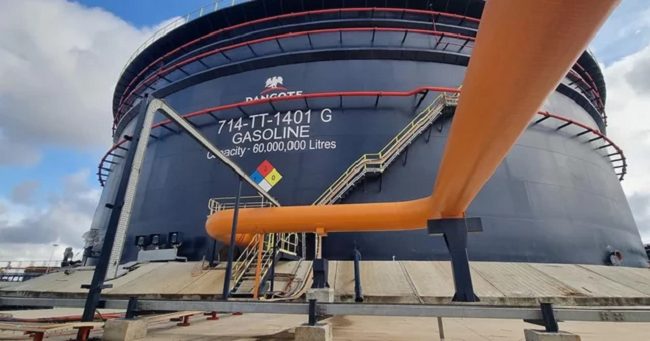
Dangote launches plan to sell 10% refinery stake via Pan-African IPO

0

The Dangote Group is moving forward with plans to sell a 10 per cent stake in its $20 billion, 650,000-barrel-per-day refinery through a landmark Pan-African Initial Public Offering (IPO) in 2026.

Alhaji Aliko Dangote made this known during an event organised by the Atlantic Council in Washington DC, on Thursday, April 16, 2026.

He said that the share sale would support long-term investments and deepen African capital market participation.

Dangote Refinery
Dangote Refinery

According to him, Dangote Petroleum Refinery and Petrochemicals FZE will pay dividends to shareholders in dollars after listing, although specific financial details of the planned offering were not disclosed.

Dangote said that the company has appointed Stanbic IBTC Capital Ltd., Vetiva Advisory Services Ltd. and FirstCap Ltd. as advisers for the proposed IPO.

He said that the share sale aligns with his broader strategy to invest about $40 billion over five years to scale operations across refining, fertiliser production and mining ventures in Africa.

Dangote said that the expansion plan includes quadrupling fertiliser output, increasing refinery capacity significantly, and establishing potash and phosphate plants in the Democratic Republic of Congo alongside copper refining projects in Zambia.

He said that 650,000 barrels-per-day refinery, Africa’s largest refinery, recently reached full operational capacity, coinciding with supply disruptions linked to tensions in the Middle East, which boosted demand for its petroleum products globally.

Dangote said that the facility has also emerged as a strategic supplier of jet fuel to Europe, reinforcing its growing relevance in international energy markets and enhancing Nigeria’s position in global refining and export chains.

Also speaking, the senior vice president of refining, chemicals and oil markets at consultancy Wood Mackenzie, Alan Gelder, said that the refinery was highly profitable.

He said that the rising export volumes and strong demand fundamentals across multiple product segments.

Gelder said that data indicated that diesel exports rose to about 79,500 barrels per day in April from 73,600 in March, while gasoline shipments declined to 50,100 barrels per day from nearly 102,400 previously.

By Nana Musa

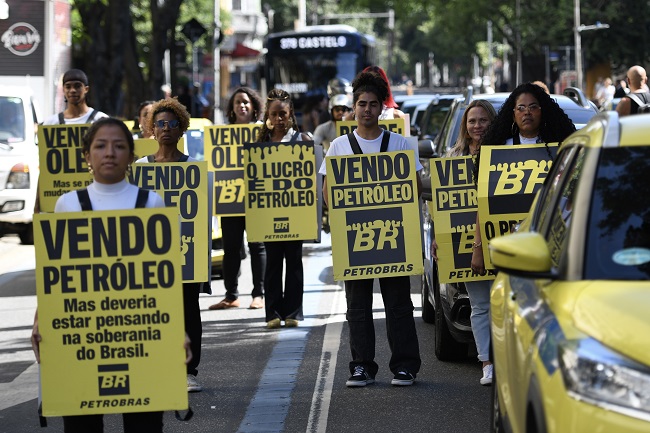
Climate justice: Activists protest as Brazilian Petrobras posts $22bn in profit

During Petrobras’s Annual General Meeting this Thursday, April 16, 2026, a group of civil society organisations protested outside the company’s building in Rio de Janeiro, Brazil, calling for a just energy transition and climate justice.

The company, which reported profits exceeding BRL 110 billion (US$ 22 billion) in 2025, is facing criticism for the contradiction of hiring numerous influencers to promote the company’s “just energy transition” while simultaneously cutting its budget for projects related to renewable energy sources.

Petrobras
Activists protest outside the company’s headquarters during the Annual General Meeting

In a statement released in March 2026, Petrobras president, Magda Chambriard, reinforced the company’s focus on expanding fossil fuel production: “2025 was extraordinary in terms of production. The increase in oil and gas volume allowed us to offset the effects of the drop in Brent and achieve robust financial results.”

The company’s astronomical profits are being announced less than 10 days before the start of the 1st International Conference on the Transition Away from Fossil Fuels, to be held April 24–29, 2026, in Santa Marta, Colombia. Contradictorily, Brazil is one of the leading actors at the event, as it continues to hold the Presidency of the UN Climate Conference (COP) through November of this year.

In its 2026–2030 Business Plan, Petrobras cut resources earmarked for the energy transition by 20%. The company has been out of step with the global commitments Brazil has already made to reduce emissions – maintaining plans to expand its exploration frontier toward the mouth of the Amazon River and other sedimentary basins along the country’s northern coast.

There are viable and profitable paths for Petrobras to leave fossil fuels behind. The position paper “The Petrobras We Need,” launched by the network Observatório do Clima in September 2025, proposes that Petrobras should diversify its core business and prioritize investments on low-carbon fuels instead of planning for new refineries. 

“They profit billions while we pay: as taxpayers, because we fund fossil fuel subsidies and the environmental damage caused by oil and gas extraction; as consumers, in our electricity, gas and fuel bills – which consume a large share of household income; and as citizens, with public budget increasingly needing to be reallocated to deal with losses caused by climate disasters instead of basic public needs as healthcare and education,” said João Cerqueira, Director of 350.org Brazil.

“Petrobras can and must lead more effective actions for the energy transition. It needs to internalise the gravity of the climate crisis and diversify its investments, with concrete action in renewable sources – not just narrative and communications efforts,” stated Suely Araújo, Public Policy Coordinator at Observatório do Clima.

“The attacks by the United States and Israel against Iran shattered the supposed ‘energy security’ associated with fossil fuels and exposed the financial urgency of the energy transition to guarantee countries’ sovereignty. Therefore, Petrobras’s plans to expand investments in fossil fuels – especially over areas of high environmental sensitivity, such as the mouth of the Amazon River – at the expense of renewable sources and low-carbon fuels, are a risk to the company’s own long-term economic and financial viability.

“Given the role Petrobras plays in the national economy, it is crucial that the company become an energy company, truly leading a just energy transition and leaving its oil past behind,” submitted Shigueo Watanabe Jr., researcher at ClimaInfo.

ECOWAS Bank, Guinea forge strategic partnership to accelerate economic transformation

0

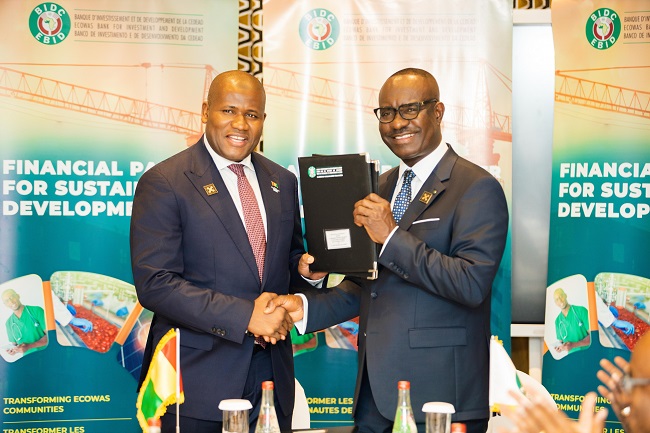
The ECOWAS Bank for Investment and Development (EBID) and the Republic of Guinea have formalised a Memorandum of Understanding (MoU) to strengthen cooperation in financing priority development projects in Guinea. The agreement was signed on April 8, 2026, in Accra, on the sidelines of the 24th Annual General Meeting of the Board of Governors of EBID.

The MoU was signed by Dr. George Agyekum Donkor, President and Chairman of the Board of Directors of EBID, and Ismael Nabé, Minister of Planning, Development and International Cooperation of the Republic of Guinea.

EBID
Dr. George Agyekum Donkor, President and Chairman of the Board of Directors of EBID, and Ismael Nabé, Minister of Planning, Development and International Cooperation of the Republic of Guinea

Under the agreement, EBID will support the financing of six priority projects with a total estimated value of over €310.5 million and $387.9 million within the framework of the Guinean National Development Plan – Simandou 2040. These projects span key socio-economic sectors, including transport infrastructure, renewable energy, agriculture, food security, land administration, and public sector modernisation.

The initiatives include the development of major road infrastructure in Conakry, agricultural mechanisation and poultry value chain programmes, land cadastre modernisation, and the construction of 80 megawatts of photovoltaic solar power plants across four regions.

Speaking at the ceremony, Dr. Donkor reaffirmed EBID’s commitment to supporting Guinea’s economic transformation through strategic, high-impact investments that promote inclusive growth, resilience, and regional integration.

“This MoU marks a key milestone in Guinea’s development agenda,” said Minister Nabé. “We value EBID’s strong partnership and look forward to swift implementation of these priority projects to deliver tangible impact for the people of Guinea.”

This partnership marks a significant milestone in EBID’s role as a trusted development partner to its Member States.

Court consolidates appeal process in South African offshore oil and gas case

0

The Green Connection and Natural Justice have welcomed the decision by the Supreme Court of Appeal (SCA) to defer a decision whether to grant leave to appeal and direct that a further leave to appeal application by Shell and the State be heard together with the merits of the appeal,  in a consolidated hearing, in the ongoing legal challenge against offshore oil and gas exploration in Block 5/6/7 off South Africa’s south-west coast.

According to The Green Connection’s Outreach Ambassador, Neville van Rooy, “By directing that the leave to appeal application and the full appeal be heard together, the Supreme Court of Appeal has created a single, consolidated process that goes beyond procedural efficiency.

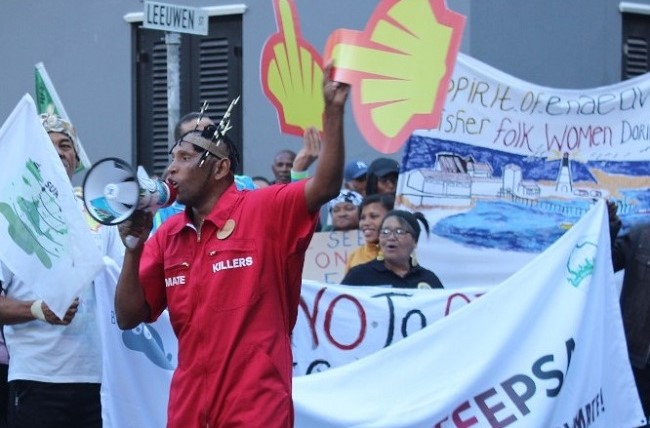
West Cape Protest
The Green Connection’s Community Outreach Coordinator, Neville van Rooy, leads the chants for ocean justice alongside coastal activists. Communities demand an end to fossil fuel exploration that threaten their livelihoods.

“It shortens the path to final accountability and ensures that the Court fully considers the substantive failures identified by the High Court – including the government’s failure to properly take into account the significant risks to the livelihoods of small‑scale fishers, and the resulting asymmetrical assessment of who bears the risks and who stands to benefit from offshore oil and gas exploration.”

“This case matters to all South Africans because it is essentially about good governance and because it will set a binding legal precedent on whether government decisions affecting the country’s environment, climate future, public finances and livelihoods must fully consider climate risks, environmental harm and meaningful public participation – or whether such decisions meet the required standards of lawfulness and accountability

“Moreover, amid a growing national debate on energy security, this case highlights a central reality of South Africa’s energy context, that local oil and gas production does not shield consumers from global market volatility. Sound governance should therefore prioritise transparent, evidence-based frameworks to model and guide South Africa’s long-term energy transition,” adds van Rooy.

Background to the Case

Following years of objections from coastal communities, small-scale fishers, civil society organisations and experts – who raised concerns about climate impacts, oil spill risks, transboundary harm and inadequate public participation – the Western Cape High Court in 2025 set aside the Environmental Authorisation granted for offshore drilling in Block 5/6/7. The Court found that the decision-making process was legally deficient, including failures to properly assess key environmental and socio-economic risks, and did not comply with the requirements of South Africa’s environmental laws.

In November 2025, the Western Cape High Court confirmed that the Environmental Authorisation for offshore drilling in Block 5/6/7 is unlawful and remains set aside, while granting the State and Shell limited leave to appeal on two issues only – the consideration of full lifecycle climate impacts and transboundary environmental harm.

After the High Court ruling, the State and Shell petitioned the Supreme Court of Appeal to expand the appeal to include additional grounds that had initially been refused permission to appeal – including failures related to public participation, socio-economic impacts and coastal law compliance. The present process before the Supreme Court of Appeal arises from that petition.

In February 2026, The Green Connection and Natural Justice filed their answering affidavit opposing efforts by the State and Shell to broaden the grounds of appeal in the Block 5/6/7 offshore drilling case. They reaffirmed that the matter concerns lawful decision making, environmental governance, climate accountability and the constitutional rights of coastal communities, and argued that the High Court had already found serious flaws in the environmental authorisation process that should not be reopened on appeal.

Key Legal Questions Before the Court

“At the heart of the case are questions about good governance and lawful decision-making. The Court must determine whether the Minister had (and considered) all the necessary and reliable information when granting the Environmental Authorisation for offshore oil and gas exploration. This includes information on environmental risks and the socio-economic importance of marine resources to coastal livelihoods.

“We contend that this information was incomplete or inadequately considered. The case also raises questions about whether communities were given meaningful opportunities to participate based on full and accurate information, and whether South Africa’s coastal and environmental laws were properly followed. These governance issues will now be considered together in a consolidated appeal process,” says van Rooy.

“Therefore, to be clear, this case is not about judges ‘deciding climate change’. It is about whether South African law was followed – specifically whether relevant climate, environmental and socio economic risks were lawfully and properly taken into account, as required,” he adds.

The matter is now progressing until the consolidated hearing of both the leave to appeal and the merits of the case, on a date still to be determined.

The Court has also directed that the related appeals brought by the State and Shell be heard together as one consolidated matter. The hearing date will be determined by the Supreme Court of Appeal, and is typically scheduled several months after the exchange of written arguments. Dates may change if there are delays, requests for extensions, or new directions by the Court.

“Importantly, the Environmental Authorisation for Block 5/6/7 remains set aside. No offshore drilling may lawfully proceed unless and until a valid authorisation is granted following a lawful process that complies with constitutional and environmental requirements,” concludes van Rooy.

The Green Connection and Natural Justice view the Supreme Court of Appeal’s decision as a vital step towards ensuring that the case is fully ventilated and that its implications for environmental governance, climate justice and coastal communities are properly considered.

The organisations and their small-scale fisher partners say they remain committed to defending South Africa’s oceans, protecting the rights and livelihoods of coastal communities, and upholding the good governance principle that decisions with long-term environmental and social consequences must withstand rigorous legal scrutiny.

Joe-Ezigbo unveils growth agenda to scale Falcon’s role in Nigeria’s gas economy

0

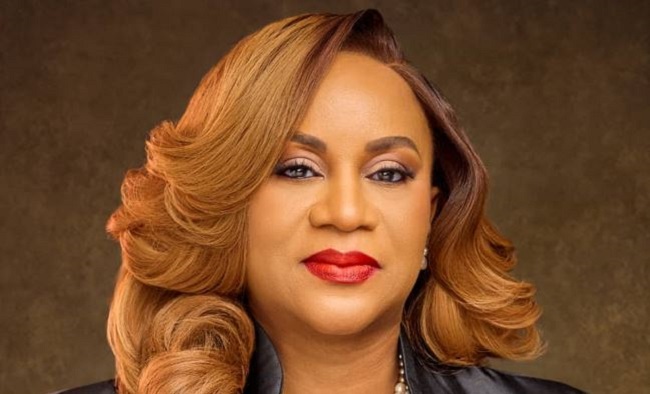
Chief Executive Officer of Falcon Corporation Limited, Audrey Joe-Ezigbo, has unveiled a strategic growth agenda to scale the company’s role in Nigeria’s gas economy and position it for leadership in Africa’s energy transition.

Her agenda comes at a pivotal moment for Nigeria’s energy sector, as the country intensifies efforts to deepen domestic gas utilisation, reduce reliance on more carbon-intensive fuels, and close critical infrastructure gaps that continue to constrain industrial growth and energy access.

Mrs. Joe-Ezigbo said Falcon would accelerate investments across the gas value chain, focusing on expanding infrastructure, strengthening partnerships, and delivering efficient, scalable energy solutions to industrial and commercial customers.

Audrey Joe-Ezigbo
Audrey Joe-Ezigbo, Chief Executive Officer of Falcon Corporation Limited

“Falcon has, for over 31 years, stood as a testament to resilience, excellence, and a deep commitment to Nigeria’s energy development. My focus is to build on this monumental legacy while accelerating our growth and expanding our impact across the energy value chain,” she said.

She noted that Nigeria’s economic growth ambitions remain closely tied to the availability of reliable and affordable energy, adding that bridging infrastructure deficits will be critical to unlocking productivity across key sectors.

“The opportunity before us is clear. Nigeria requires more connected infrastructure, more efficient energy delivery systems, and stronger private sector participation. Falcon is positioned to play a leading role in addressing these gaps by investing in infrastructure that powers industries, supports businesses, and drives inclusive economic growth,” Joe-Ezigbo stated.

Under her leadership, the company will also deepen its focus on cleaner energy solutions, leveraging Natural Gas as a transition fuel while exploring innovative approaches that improve efficiency and reduce environmental impact.

She reaffirmed that Falcon’s strategy will remain anchored in its core values of professionalism, integrity, innovation, leadership, ownership, teamwork, and sound corporate governance (P.I.I.L.O.T.S.), principles she described as critical to sustaining operational excellence and long-term value creation.

Joe-Ezigbo also emphasised the importance of people and organisational culture in delivering the company’s next phase of growth.

“Our people are the foundation of our success. Their expertise, discipline, and shared commitment to excellence will continue to define how we execute, innovate, and lead,” she said.

Joe-Ezigbo further stated that Environmental, Social, and Governance (ESG) considerations will remain central to Falcon’s operations, ensuring that growth is responsible, sustainable, and aligned with national development priorities.

2040 milestones that Europe must meet to achieve climate-neutrality by 2050

Energy, transport, heating and industrial transition: a major modelling study now provides EU-wide guidance with high sector detail on the required pace of transition to fossil-free technologies. The conclusion is encouraging: the EU Green Deal is realistic, and it will ultimately make the continent stronger and more independent from oil and gas crises.

The study was conducted at the Potsdam Institute for Climate Impact Research (PIK) and published in Nature Communications.

To understand the scope for useful policy measures, the research team focuses on how the EU can achieve its 2050 climate neutrality target at minimal cost. It draws on the accurate energy–economy–climate model REMIND, runs through a reference scenario – based on assumptions deemed to be most plausible – and then varies key assumptions: Where does the EU stand in terms of emissions reduction and energy efficiency in 2030?

Robert Pietzcker
PIK researcher and study co-author, Robert Pietzcker

How will the costs of wind and solar power develop by 2050? How available will hydrogen and synthetic fuels be as fossil-free sources of energy? Additionally, how much capacity can the EU create for removing CO₂ from the atmosphere to offset hard-to-avoid residual emissions?

One finding is that the EU climate transition, at minimal cost and under the most plausible scenario assumptions, would require a reduction of 2040 net greenhouse gas emissions by 86 percent, relative to 1990.

“This result is grounded in techno-economic optimisation of the EU’s transformation path, without looking at questions of fair global burden-sharing,” says PIK researcher and study co-author, Robert Pietzcker. 

The EU climate advisory board had recommended a 90 to 95 percent reduction based on considerations of both what is possible and what is fair globally. In doing so, the board had been drawing, among other things, on preliminary results from scenarios developed for the current study. The recommendation was taken up by the EU Commission’s proposal for a 90 percent reduction target.

In order to slightly reduce the pressure on member states, it was allowed that 5 percent reductions can come from projects outside the EU. “Our results now show that the resulting 85 percent EU-internal reductions are in line with a cost-effective transition to climate neutrality,” explains Pietzcker. 

Electricity generation from wind and solar must increase seven-fold

To achieve such a significant emissions reduction within just 14 years, the EU must double down on its achievements until now – having reduced greenhouse gas emissions by 37 percent in 2024, relative to 1990 – and further accelerate the transition. To guide future measures, the research team provides “milestones” for individual sectors by 2040 based on its model analysis. These are shown as a point value (representing the reference scenario under the most plausible assumptions) and as a “sensitivity range” (across the entire set of scenarios with the varied assumptions still deemed to be reasonable).

Two pillars of the transition are the expansion of renewable electricity, and the electrification of energy demands. In the reference pathway to climate neutrality, electricity generation from wind and solar will need to be seven times higher in 2040 than in the period from 2018 to 2022 (sensitivity range: four to eight times higher). The share of electricity in final energy consumption, which was fairly constant at 20 percent in the 2010s, will need to rise to 49 percent by 2040 (range: 45 to 59 percent). 

Although a sevenfold rise in wind and solar electricity by 2040 is ambitious, recent experience indicates that it may well be achievable: the required annual growth rate was already achieved over the period 2021–2025, driven by the policy response to the energy crisis. Similarly for electrification: the EU-wide share of battery-electric vehicles in car sales has increased from 2 percent in 2019 to 19 percent in 2025, with Norway and Denmark reaching sales shares above 80 percent.

Dependence on gas and oil imports falls by 60 percent

The study also provides milestones regarding the capture of CO₂ from the atmosphere and storing it permanently in geological formations – a capability that will be indispensable for climate neutrality, but which has so far been virtually non-existent. Carbon capture and storage capacity must rise by 26 (range: 16 to 30) percent annually between 2030 and 2040, reaching 188 (56 to 257) million tonnes of CO₂ annually

“The path to EU climate neutrality by 2050 is still feasible, as long as the EU now shapes the period up to 2040 with ambitious policies,” says Renato Rodrigues, PIK researcher and lead author of the study. “Successful decarbonisation can make the EU economically stronger and strategically more independent.”

This is because, in the reference scenario of the model analysis, demand for both natural gas and crude oil in 2040 is 60 percent lower than in the period from 2018 to 2022, Rodrigues explains.

“Although the EU might still need alternative energy imports – e.g. green hydrogen, ammonia, or e-fuels – the volumes would be much lower than current fossil fuels, reducing the EU’s reliance on offshore energy producers,” he says. 

Nigeria targets $2.3trn to bridge infrastructure gap

0

The Director-General of the Infrastructure Concession Regulatory Commission (ICRC), Dr Jobson Ewalefoh, says the country has intensified efforts to bridge its infrastructure deficit, estimated at $2.3 trillion between 2020 and 2043.

Ewalefoh said this during a sideline interview after the global infrastructure facility, A G20 initiative at the International Monetary Fund (IMF)/World Bank Spring Meetings, in Washington on Thursday, April 16, 2026.

He said that the country required about $100 billion annually for 23 years.

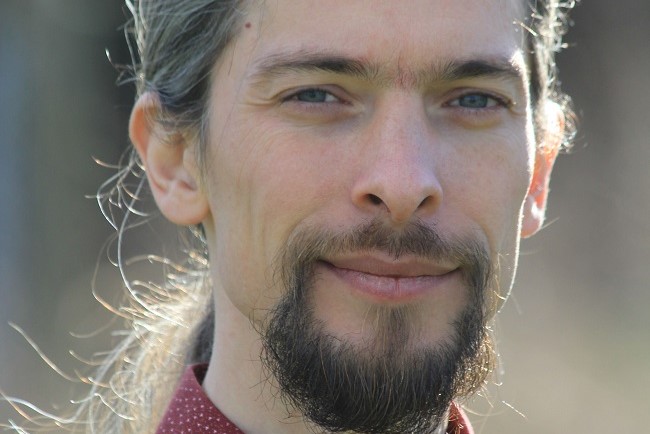
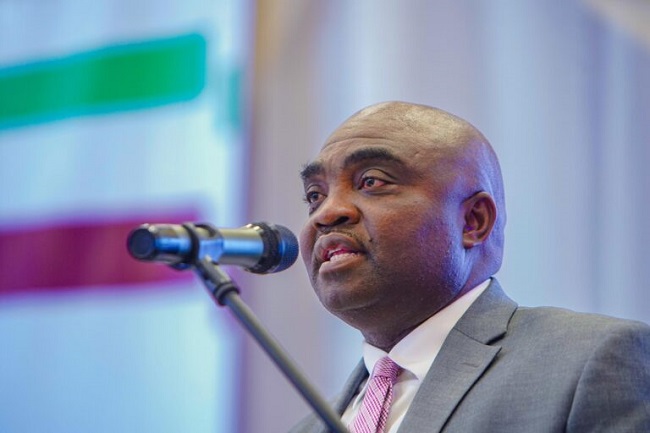
Jobson Ewalefoh
Director-General of the Infrastructure Concession Regulatory Commission (ICRC), Dr Jobson Ewalefoh

Ewalefoh said that budgetary allocations fell short, making private sector participation through Public-Private Partnerships (PPP) critical for infrastructure development nationwide.

He said Nigeria’s Infrastructure master plan projected 70 per cent private sector funding, stressing the need for bankable project pipelines, supported by institutions like the global infrastructure fund to mobilise investors globally.

According to him, discussions at the forum emphasised that PPP models must reflect local realities, including investment risks, political environment, and limited appetite for long-term capital in developing economies like Nigeria.

Ewalefoh said that Nigeria was positioning itself as a viable investment destination, citing a population of about 250 million and government reforms aimed at improving business climate and boosting investor confidence nationwide.

The D-G also assured investors of strong legal frameworks protecting investments, emphasising commitment to rule of law, contract sanctity, and policies designed to guarantee returns and reduce perceived risks in Nigeria.

Ewalefoh said that the energy and transport sectors were priority areas, requiring about 759 billion dollars and 595 billion dollars respectively.

He also cited ICT, agriculture, healthcare, and education as critical sectors needing substantial investment support.

According to him, the PPP offer solutions to funding constraints, reducing reliance on limited government budgets, while enabling sustainable infrastructure financing through long-term investment recovery mechanisms by private investors.

Ewalefoh said that ongoing engagements would unlock investment flows, accelerate project delivery, and position Nigeria to achieve its infrastructure goals through strategic collaboration with global investors and development partners.

He also commended President Bola Tinubu for all the reforms he initiated, especially for creating an enabling environment for PPP to flourish.

By Nana Musa

Dangote engages World Bank, IMF, US EXIM chiefs on investment drive

0

President/Chief Executive of Dangote Group, Aliko Dangote, held a series of high-level bilateral meetings with global financial leaders on the sidelines of the IMF World Bank Spring Meetings in Washington, D.C., as part of efforts to deepen investment flows and strengthen partnerships in Nigeria’s energy and industrial sectors.

Dangote also delivered the keynote address at the launch of the World Bank Group’s flagship global initiative, Water Forward, a programme aimed at repositioning water systems from basic social utilities into catalysts for industrialisation, job creation and large-scale economic growth across emerging and developing economies. He underscored the critical role of private sector investment and infrastructure in unlocking the economic value of water.

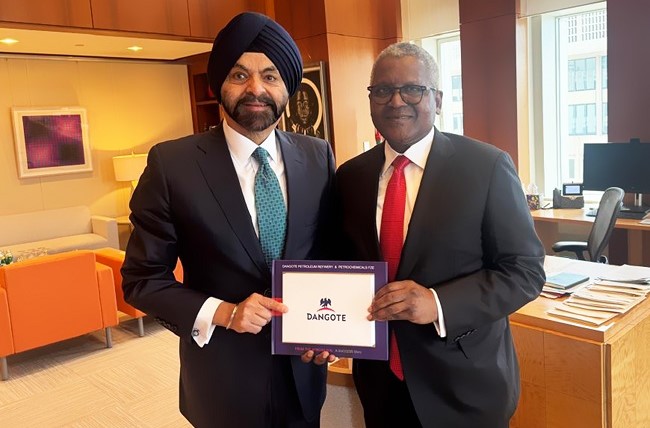
Aliko Dangote
President/Chief Executive, Dangote Group, Aliko Dangote, in a meeting with the President of the World Bank Group, Ajay Banga, at his office on the sidelines of the IMF World Bank Spring Meetings in Washington, D.C., United States, on April 14, 2026

The event drew a distinguished audience including heads of government, the Secretary-General of the United Nations, leaders of European development institutions, multilateral development partners, ministers of finance and economic planning from over 100 countries, central bank governors, global regulators, business executives and donor agencies, reflecting the scale and urgency of the initiative.

In separate engagements, Dangote met with the President of the World Bank Group, Ajay Banga, the Managing Director of the International Monetary Fund, Kristalina Georgieva, and the President and Chairman of the Export-Import Bank of the United States, John Jovanovic. Discussions focused on private sector-led growth, macroeconomic reforms and unlocking financing for large-scale infrastructure, trade expansion and industrial development across Nigeria and Africa.

The engagements come at a time of renewed momentum in Nigeria’s energy sector. The country became a net exporter of petrol in March 2026 for the first time in decades, as the Dangote Petroleum Refinery & Petrochemicals drove a shift from import dependence to local production. Data from Kpler shows Nigeria exported about 44,000 barrels per day of petrol during the month, slightly exceeding imports and resulting in a net surplus of roughly 3,000 barrels per day.

This milestone aligns with Dangote Group’s newly unveiled long-term growth strategy, “Vision 2030: Supercharging Dangote Group for Long Term Success,” a two-phase expansion programme spanning 2025–2028 and 2028–2030.

Under the plan, the Group aims to scale and optimise its existing operations while expanding capacity across key sectors. This includes increasing the capacity of the Dangote Petroleum Refinery from 650,000 barrels per day to 1.4 million barrels per day, as well as quadrupling fertiliser production from 3 million tonnes per annum to 12 million tonnes per annum, a move expected to position the company as the world’s largest producer of urea.

The strategy also outlines expansion across cement, rice and broader food production, alongside new investments in infrastructure such as ports and pipelines, gas, mining, data centres and power, identified as critical to Africa’s industrial transformation and digital resilience.

Analysts say the high-level meetings reinforce Dangote Group’s strategic positioning at the intersection of global capital and Africa’s industrial growth, amid increasing international focus on Nigeria’s economic reforms and rising refining capacity.

The IMF World Bank Spring Meetings convene policymakers, business leaders and development partners from across the globe to deliberate on economic outlook, financial stability and pathways for sustainable growth.

Cobalt mining in Congo: Dirty truth behind ‘clean’ electric cars

0

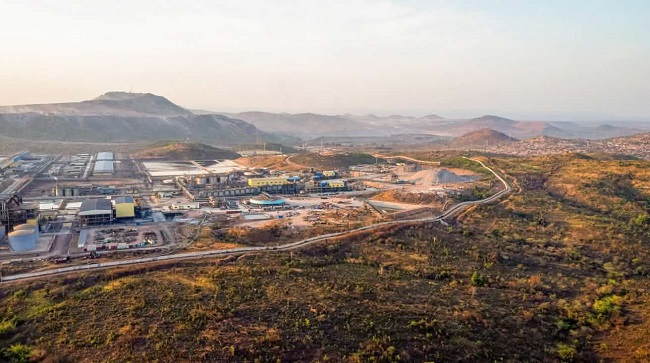
Electric cars are sold as clean. But, in southern Congo, communities near the Tenke Fungurume mine are breathing toxic air and reportedly paying with their health.

Women and children are especially affected. Reports describe nosebleeds, coughing up blood, miscarriages and forced displacement as cobalt extraction expands.

According to observers, the shift away from oil is increasingly becoming a toxic transition built on poisoned communities. BMW, Mercedes-Benz, Volkswagen and Stellantis are being urged to stop sourcing cobalt linked to this mine until the pollution is brought under control and people’s rights are respected.

Congo
Cobalt mining in Congo

The Rainforest Rescue group is leading the campaign and urging stakeholders to sign a petition to tell the carmakers that public health comes before profit.

The group stated: “The Democratic Republic of Congo (DRC) is by far the world’s largest cobalt producer, with more than 70 percent of the market. Without Congo’s cobalt, high-tech industries and the energy transition would stall. Manufacturers such as VW, BMW, and Mercedes rely on it.

“But the rush for cobalt, coltan, rare earths, gold, and bauxite has devastating consequences: Forests are cleared, landscapes plowed up, mountains levelled, rivers diverted, and air, water, and soil polluted. Working conditions are often dire, and exploitation is widespread.

“In eastern DRC, exploitation also fuels violence. In North and South Kivu, hundreds of thousands are fleeing and thousands dying.”

John Hayduska of Rainforest Rescue submitted that people in southern Congo’s “copper belt” are bearing the brunt.

“According to the study Toxic Transition by Environmental Investigation Agency US (EIA) and PremiCongo, the Tenke Fungurume (TFM) mine and the 30k processing plant emit sulfur dioxide (SO2far above safe or legal levels. Communities, especially children and women, suffer serious health problems, including vomiting blood, life-threatening respiratory infections, and stillbirths, while more than 10,000 people have lost their homes as the mine expands.”

EIA and PremiCongo hold Chinese CMOC Group Ltd (CMOC) – owner and operator of the Tenke Fungurume mine – responsible. 

CMOC’s cobalt is used by BMW, Mercedes, and Volkswagen for electric vehicles. 

EIA and PremiCongo presented the study to the companies named in it. The full statements from BMW, Mercedes-Benz, Stellantis, and TFM are available on the EIA website.

Hayduska added: “Automakers should not turn a blind eye when their demand for raw materials causes harm. Tell them to clean up their supply chains and stop purchasing cobalt from TFM until the pollution issue is resolved.”