26.6 C
Lagos
Monday, February 23, 2026
Home Blog Page 75

Court dismisses EACOP case on procedural grounds, shuts door on impacted communities

0

The East African Court of Justice (EACJ) Appellate Division on Wednesday, November 26, 2025, delivered its ruling in a high-stakes case challenging development of the East African Crude Oil Pipeline (EACOP).

Through the ruling, the judges upheld the decision by the First Instance Division of the EACJ which, in November 2023, dismissed a case filed by four East African civil society organisations (CSOs) in November 2020, much to the disappointment of the EACOP-Project Affected Persons (PAPs) who viewed the court as having shut the door of justice on them.

The Court ruled that the case filed by Natural Justice (Kenya), Africa Institute for Energy Governance (AFIEGO) Uganda, Centre for Food and Adequate Living (CEFROHT) Uganda, and the Centre for Strategic Litigation (Tanzania) fell outside the required filing period.

StopEACOP
The East African Court of Justice (EACJ) Appellate Division

The CSOs sought to stop the human rights, environmental, and climate impacts or risks associated with the EACOP project.

During Wednesday’s court session, judges at the Appellate Division of the EACJ observed that the First Instance Division did not err in ruling that the case by the CSOs was filed out of time.

The judges, who include Justice Nestor Kayobera, the president of the Appellate Division of the EACJ; Justice Anita Mugeni, the Vice President of the court; and Justice Kathurima M’Inot, agreed with the First Instance Division, noting that the EACJ does not have jurisdiction to hear the main case.

The other judges present in court included Justice Cheboriona Barishaki and Justice Omar Othman Makungu.

The judges however overturned the order issued by the First Instance Division awarding costs to the governments of Uganda and Tanzania, as well as to the Secretary General of the East African Community (EAC). The three are the parties against whom the CSOs filed the suit. 

While reading the ruling, Justice Kayobera observed as follows, “We have carefully considered the pleadings of the parties … (and) from the chronology of events [relating to signing of the EACOP agreements], any sane person would adduce that the reference (case filed by the CSOs) … runs afoul of the time limitation provision (in)  the EAC (East African Community) Treaty. The case is hereby dismissed”.

By upholding the ruling of First Instance Division, the judges dismissed the case by the CSOs on a narrow legal technicality in EAC laws which provides that cases filed outside a 60-day time limit are not heard by court.

Worth noting is that key agreements related to the EACOP were made public only years after they were signed. The case by the CSOs was based on EACOP-related agreements such as the Inter-Governmental Agreement (IGA) and Host Government Agreement (HGA).

The judges failed to consider when communities and CSOs actually became aware of the project’s impacts and EACOP agreements, effectively shutting the door on the case without examining any of the evidence.

“We strongly condemn the ruling made by the East African Court of Justice, which has told millions of people across the region that technicalities matter more than their lives, their land, and their future. That is not neutrality nor objectivity. It is a choice in favour of oil companies and the governments that serve them,” said Zaki Mamdoo, StopEACOP Campaign Coordinator.

The StopEACOP Coalition maintains that the decision to dismiss the case on procedural grounds prevents examination of the substantive issues including land compensation disputes, transboundary impacts, environmental impacts including impacts on water sources and protected areas, and the project’s overall alignment with the EAC Treaty on its commitments to sustainable development, the protection of human rights, and the responsible and ethical management of transboundary resources.

“In refusing to hear the harms of EACOP on a technical pretext the legitimacy of this Court now hangs by a thread, and history will have to decide whether it was a forum for justice or simply an office providing cover for corporate plunder,” continued Mamdoo.

Independent bodies, local and international civil society organisations have documented the negative impacts of the controversial EACOP project from irregular land acquisition processes, potential risks to the Lake Victoria basin that over 40 million people depend on to human rights violations.

Similar concerns have just been raised by civil society groups in the Democratic Republic of Congo (DRC) following disastrous pollution recently observed by local communities and subsequently corroborated by a scientific report published by Environmental Law Alliance Worldwide (ELAW), pertaining to cross-border oil developments in the region.

To that end, the CSOs in DRC under the banner “Our Land Without Oil” have taken their government, the government of Uganda, and the Secretary General of the EAC to the EACJ over an ecological disaster, disrupting the livelihoods of fisher communities in Lake Albert and Lake Edward as a result of lake asphyxiation and chemical contamination linked to oil activity in the region.

While the StopEACOP Coalition holds out hope for this legal effort, the dismissal of Wednesday’s case sends a chilling message to all those seeking regional remedies for regional harms: that even the highest court in the Community may refuse to hear evidence when powerful interests are at stake represents a gravely concerning injustice.

“We must insist that the Court, and all regional institutions, do better. We will continue to demand that they live up to their mandates. But this ruling also shows us that we cannot afford the illusion that these institutions will save us.

“Our survival depends on continuing the struggle on every front and with every tool available to us, organising in our communities, confronting financiers and insurers, challenging governments, and building a renewable energy future for our communities,” said Recheal Tugume, an EACOP-impacted community member from Hoima.

Mr. Dickens Kamugisha, the Chief Executive Officer of AFIEGO, stated, “The court’s decision is a setback for regional justice and the protection of vulnerable communities as well as biodiversity and our shared climate. The decision has left over 331 million East Africans at the mercy of greedy corporations, which pillage and destroy important ecosystems that communities depend on. The ruling is a travesty, but we remain determined to use all available strategies to protect people and nature.”

Ms. Elizabeth Kariuki, Hub Director – Nairobi Hub, Natural Justice, noted, “This ruling is devastating for the very people whose lives have been upended by EACOP – the families that lost their land and livelihoods, and the communities watching their ecosystems disappear. Today, the court has closed its doors to them. But we will not give up. We will continue to fight alongside communities to ensure that their suffering is not ignored.”

Mr. Cosmas Yiga, a project affected person from Uganda, added, “We have seen the oil curse. We, the PAPs, have been oppressed and we don’t expect any gain from the oil industry. And, as far as I see, let not any ordinary Ugandan expect anything good from the oil industry, besides oppression. Today is a sad day.”

IPBES begins 2nd Global Assessment in Paris

0

On Wednesday, November 26, 2025, at UNESCO in Paris, France welcomed over 100 leading global scientists as they embarked on the start of a vital new and authoritative multi-year assessment of the state of knowledge about global biodiversity and nature’s contributions to people.

The French Minister Delegate for Francophonie, International Partnerships and French Nationals Abroad, Eléonore Caroit, addressed the opening session of the first author meeting of the second global assessment of the Intergovernmental Platform on Biodiversity and Ecosystem Services (IPBES).

David-Obura
IPBES Chair, Dr. David-Obura

Minister Caroit reaffirmed France’s unwavering commitment to free, rigorous, independent science, as an essential component of the international efforts to tackle biodiversity loss and climate change, especially “at a time when science is under attack and is confronted with disinformation campaigns that undermine climate and environmental action”.

In 2019, the first IPBES Global Assessment alerted the world to the fact that 1 million species of plants and animals are already at risk of extinction, and ranked, for the first time ever, the direct drivers of biodiversity loss, setting a very high bar as one of the most impactful environmental reports ever launched.

IPBES Executive Secretary, Dr. Luthando Dziba, noted “how special this venue is because, in 2019, the IPBES Plenary approved the first Global Assessment here at UNESCO in Paris. That report was groundbreaking in both its reach and impact. It was welcomed by French President Macron at the Élysée Palace on the day it was launched and used that same week to help inform undertakings by the G7 under the French Presidency. The Report went on to underpin the targets set by Parties to the Convention on Biological Diversity in the Kunming-Montreal Global Biodiversity Framework, among its many outstanding achievements.”

Minister Caroit thanked IPBES and its expert authors for the major role of IPBES in producing knowledge essential for public decision-making and reiterated that France will continue to actively support the Platform and its scientific community.

Expected to be published in 2028, in time to inform the global stocktaking on the 2030 deadlines of the Sustainable Development Goals, Global Biodiversity Framework and the Paris Agreement on climate change, and to inform the post-2030 global biodiversity framework, the 2nd IPBES Global Assessment is now underway, with 117 world-leading experts from around the world as authors.

The assessment will assess progress towards the Global Goals and address critical gaps in the first Global Assessment, as well as emerging issues. These gaps and issues, for example, include the need for more comprehensive attention to oceans, and issues related to Indigenous Peoples and local communities will be comprehensively addressed, including multiple worldviews and values.

It will also consider somewhat neglected components of biodiversity and relevant social issues. The second global assessment will assess the different challenges, lessons learned and potential solutions within and among regions in a scientific and balanced manner.

IPBES Chair, Dr. David Obura, concluded: “This assessment brings together experts across the sciences and Indigenous and local knowledge systems, in an ambitious design to help governments and other stakeholders take stock on progress towards goals for 2030 and to shape the post-2030 global agendas on biodiversity and sustainability, to progress the global vision of living in harmony with nature.”

Dangote Group contracts SAIPEM, EIL, others for fertiliser expansion in Nigeria, Ethiopia

0

Dangote Group has announced a series of strategic technical partnerships to support the next phase of expansion of its fertiliser operations in Nigeria, as well as the development of new fertiliser plants in Ethiopia. These collaborations, according to the organisation, mark a significant step in its long-term plan to strengthen regional food security, enhance agricultural productivity, and deepen Africa’s position in the global fertiliser market.

Through these strategic partnerships, Dangote Group will increase its urea production capacity in Nigeria from the current three million metric tons to nine million metric tons annually. The existing facility operates two trains with a combined capacity of three million metric tons.

Dangote Group
Vice President, Oil and Gas, Dangote Industries Limited, Devakumar Edwin; President and Chief Executive of DIL, Aliko Dangote; Chief Operating Officer of Saipem’s Energy Carriers Line, Botta Fabrizio; and Managing Director of Saipem India Projects, Villa Stefano, during the signing of a partnership agreement in India on Wednesday, November 26, 2025

The expansion will introduce four additional trains, enabling the Group to meet the rising demand for high quality fertiliser across Africa and global markets.

In addition to the Nigerian expansion, the Group recently held the groundbreaking ceremony for a $2.5 billion fertiliser plant in Gode, Ethiopia. The facility is designed to produce three million metric tons of urea annually and represents a significant step in Dangote Group’s commitment to strengthening food security and industrial growth across the continent.

To deliver world class facilities and ensure the highest standards of technology, reliability, and operational efficiency, Dangote Group has entered into the following partnership agreements:

Topsoe

Topsoe will provide ammonia technology licensing and complete process design packages for six ammonia plants. Four of these plants will be located in Nigeria and two in Ethiopia. Topsoe is recognised globally for advanced ammonia process technologies that support efficient and environmentally responsible production.

Saipem

Saipem will deliver technology licensing and the full process design package for urea melt units across all six plants. This includes four units in Nigeria and two in Ethiopia. Saipem brings deep engineering expertise and decades of experience in fertiliser production systems.

Thyssenkrupp through UFT

Thyssenkrupp’s UFT division will supply the granulation technology license and complete process design package for granulation units in the six fertiliser plants. This will support the production of premium quality urea granules suited for domestic and international markets.

Engineers India Limited

Engineers India Limited has been appointed as project management consultant and engineering procurement and construction management consultant for the four fertiliser plants being developed by DFFZE in Lekki, Nigeria. Engineers India brings proven competence in large scale industrial engineering and project delivery.

“These partnerships reflect Dangote Group’s commitment to delivering high quality industrial assets that meet the most rigorous global standards. The planned expansion will significantly increase regional urea and ammonia production capacity, create new jobs, support agricultural value chains, and contribute to sustainable economic growth in Nigeria, Ethiopia, and across the continent,” submitted the organisation.

Dangote Group adds that it remains dedicated to building resilient industrial capacity, supporting national development priorities, and forging strong global collaborations that advance Africa’s long-term prosperity.

Nigeria can achieve global methane reduction target by 2030 – Ekpo

0

The Federal Government said on Tuesday, November 25, 2025, that the country can achieve the Global Methane Pledge target of a 30 per cent reduction in emissions by 2030.

Dr Ekperikpe Ekpo, Minister of State for Petroleum Resources (Gas), said this in Abuja at a two-day Sub-Saharan African Roundtable on Methane Emissions.

The event, organised by the International Energy Agency (IEA) in partnership with the Ministry of Petroleum Resources and the African Energy Commission (AFREC), had its theme as “Turning Methane Pledges into Action”.

Ekperikpe Ekpo
Minister of State Petroleum Resources (Gas), Mr Ekperikpe Ekpo

“Nigeria achieving the Global Methane Pledge target is realistic and economically advantageous for oil and gas producing countries,” he said.

Ekpo described methane as one of the most potent greenhouse gases accelerating global warming.

He highlighted Nigeria’s strength in methane management, noting that the country became the first African nation to publish a Methane Action Plan after recording major progress through sustained reductions in routine gas flaring and extensive mapping of flare sites.

He said the country had also recorded progress in advancement of the Nigerian Gas Flare Commercialisation Programme, deployment of leak detection and repair technologies, and expanded Liquefied Petroleum Gas (LPG) utilisation in households.

According to him, these actions, alongside ongoing gas infrastructure projects under the Decade of Gas Initiative demonstrate Nigeria’s commitment to environmental stewardship, economic diversification, improved energy access and public health.

Permanent Secretary, Ministry of Petroleum Resources, Dr Emeka Obi, described the roundtable as timely, especially as the world had shifted attention from broad climate declarations to measurable emission-reduction outcomes.

Obi said methane reduction was central to Nigeria’s environmental, economic and energy priorities.

“While Nigeria holds vast natural gas reserves, decades of flaring and venting have resulted in significant financial losses and environmental damage.”

He said the Federal Government was reversing the trend through strengthened regulatory frameworks under the Petroleum Industry Act (PIA), which prohibited unauthorised flaring and enhancing environmental oversight across the energy value chain.

”Nigeria’s updated Nationally Determined Contribution (NDC) under the Paris Agreement, demands that the country cut greenhouse gas emissions by up to 47 per cent by 2030 on a conditional basis, and 20 per cent unconditionally with international support.

“These commitments are not abstract targets, they are embedded in national programmes, policy reforms and infrastructure investments currently underway,” he said.

He urged African countries to leverage methane reduction as a development catalyst capable of delivering cleaner industries, improving public health, creating jobs, expanding energy access and attracting investment.

By Emmanuella Anokam

FCT Minister urged to reactivate environmental courts

0

To tackle the environmental challenges facing the nation’s capital, a non-governemental organisation (NGO) has called on the Minister of FCT, Nyesom Wike, to reactivate environmental court and tribunals.

The NGO, the CRUX Environmental Rights, Advocacy and Development Foundation (CERADF), stated this in a letter written to the minister.

The letter is titled, “Request for the Reactivation of Environmental Courts and Tribunals in the Federal Capital Territory (FCT), Abuja.”

Nyesom Wike
Minister of FCT, Nyesom Wike

It reads: “The CRUX Environmental Rights, Advocacy and Development Foundation (CERADF) respectfully presents this formal request for the reactivation and strengthening of dedicated Environmental Courts and Tribunals within the Federal Capital Territory (FCT).

“Specifically, we request the establishment of a central Environmental Court within the High Court of the FCT, as well as Environmental Tribunals across all six Area Councils.

“This call is made pursuant to relevant constitutional and statutory provisions and in recognition of the urgent environmental challenges confronting the nation’s capital.”

According to CERADF, the Abuja Environmental Protection Board (AEPB), established in 1997, introduced mobile courts in May 2022 to address environmental infractions.

It, however, said that these measures had proven inadequate for the scale and complexity of the environmental crisis now facing the FCT.

“Recent CERADF’s field monitoring across Gwarinpa, Utako, Mpape, Kubwa, Nyanya, Karu, Lugbe, Kuje, Apo Mechanic Village, and even parts of the Central Business District reveals widespread waste accumulation and poor sanitation.

“These conditions have resulted in: Overburdened AEPB and waste-management agencies; Blocked drainages and recurrent flooding; Increased rodent infestation and heightened public-health risks,” it said.

Besides, it said the situation had also resulted in “escalating pollution and offensive odours; reputational damage to Abuja as Nigeria’s administrative and diplomatic capital; weak enforcement due to slow court processes and insufficient deterrent penalties.”

CERADF said while public sensitisation efforts are ongoing, these cannot succeed without a dedicated judicial framework that would ensure speedy trials, consistent application of environmental laws, and firm sanctions for violators.

The NGO, therefore, gave some recommendations which include collaboration with the Chief Judge of the High Court of the FCT, among others.

By Taiye Agbaje

Lagos to unveil Greenhouse Gas Registry Q1, 2026

0

The Lagos State Government says it is on track to unveil the Lagos Greenhouse Gas Registry by the first quarter of 2026 as part of measures to reduce greenhouse gas emissions and promote a sustainable environment.

This, it said, would make Lagos the first African city to operate a functional, verifiable emissions registry.

The Lead Consultant, TPHG Technologies Ltd., Dr Mofoluso Fagbeja, disclosed this during the second stakeholders’ engagement on the Lagos GHG Registry held on Wednesday, November 26, 2025, in Lagos.

Tunde Ajayi
General Manager, Lagos State Environmental Protection Agency (LASEPA), Dr Tunde Ajayi

Fagbeja said the registry would serve as the central infrastructure for carbon accounting and future carbon trading activities in the state.

He said the state had made significant progress since the first engagement held last year, expanding participation to include a broader set of industry players, regulators and professional groups.

According to him, the development of the registry is not limited to technology but includes regulations, governance frameworks and operational guidelines already reviewed by national and state-level experts.

He said organisations such as NESREA, the Lagos State Ministry of Justice, Ministry of Environment and Water Resources, and sector-specific professionals had contributed to the reviewed documents.

Fagbeja said the next phase would involve sharing sector-specific data collection templates that would guide organisations on the type of emissions data required ahead of the platform’s launch.

He said the registry would cover major sectors including transport, commercial enterprises, waste management, industry and agriculture, but would not extend to individual households.

According to him, the registry will strengthen transparency, support the state’s energy transition goals and attract climate finance for organisations willing to decarbonise.

He said carbon trading would also become possible when emission limits are established, enabling organisations with lower emissions to trade with those exceeding their thresholds.

The General Manager, Lagos State Environmental Protection Agency (LASEPA), Dr Tunde Ajayi, said the initiative was essential for accountability and effective climate governance.

Ajayi said accurate measurement of emissions was the only way the state could track progress and implement responsible policies, likening it to the diagnostic processes in healthcare.

He described the engagement as an important step towards Lagos becoming the first African city to operate a functional greenhouse gas registry, adding that such a system would ultimately come with economic benefits.

Mrs. Ayodele Oso, Director, Air Quality and Emissions Control Unit, LASEPA, said the registry would provide a transparent and reliable system for tracking emissions across key sectors of the economy.

Oso said the initiative would strengthen environmental governance, improve climate reporting and enhance Lagos State’s sustainability profile.

She noted that the success of the registry depended heavily on the cooperation of industry players, regulators, technical experts and partner institutions.

Oso urged participants to work collectively to turn the registry from a policy design into a functional tool that supports the state’s climate resilience goals.

She said Lagos, as a rapidly growing megacity, carried both the responsibility and opportunity to lead Africa in responsible environmental stewardship.

Oso encouraged participants to be open-minded and contribute actively, adding that the future of the state’s environment depended on decisions made today.

The Lagos GHG Registry will serve as the foundation for future carbon market activities, climate finance mobilisation and improved environmental accountability across sectors in the state.

By Fabian Ekeruche

Minister pledges stronger partnerships for renewable energy

0

The Minister of Power, Mr. Adebayo Adelabu, has reaffirmed the Federal Government’s commitment to expanding clean and modern energy access across Nigeria.

He made the pledge at the ongoing two-day Renewable Energy Conference 2025 in Abuja on Wednesday, November 26, 2025.

Adelabu was represented by Mr. Metu Francis, Principal Electricity Engineer at the Ministry.

Renewable energy
Participants at the Renewable Energy Conference 2025 in Abuja

He said collaboration across the renewable energy value chain is essential as Nigeria expands local manufacturing, solar systems, mini-grids and climate-smart technologies.

“The Ministry remains committed to enabling policies, improved financing and support for industry players expanding clean electricity access,” he said.

He said this year’s theme aligns with the Ministry’s drive to deliver clean, reliable and affordable energy for all Nigerians.

Adelabu commended the Renewable Energy Association of Nigeria (REAN) for promoting collaboration, innovation and dialogue in the sector.

He said private-sector leadership, local manufacturing and community-driven solutions are vital to achieving national energy transition targets.

“Together, we can expand mini-grids, strengthen local capacity and support women, small businesses and underserved communities,” he said.

President of the Renewable Energy Association of Nigeria, Mr. Ayo Ademilua, said the association continues to drive strong advocacy and strategic partnerships.

He said members have established solar panel assembly plants in the North and South, supplying domestic and export markets.

He said these investments have increased investor confidence, foreign investment and strengthened the renewable energy value chain.

Ademilua said Nigeria still faces major energy access gaps, with 3.3 gigawatts far below the 9 gigawatt target for 2030.

He said millions of Nigerians still lack reliable electricity despite progress in the energy transition plan.

He called for predictable policies, stronger legislative engagement and full implementation of the Electricity Act 2023.

He said a Just Energy Transition must benefit rural communities, women, youths, small businesses and farmers.

Director-General of the Energy Commission of Nigeria (ECN), Dr Mustapha Abdullahi, represented by Mr. Halilu Sale, said the conference reflects Nigeria’s commitment to inclusive energy access.

He said strong public and private partnerships are essential for achieving universal access.

He said the Commission is building national capacity through its Energy Research Centres.

He added that decentralised renewable solutions, including mini-grids and standalone solar systems, are key to reaching underserved communities.

He said true energy access must empower households, businesses and youths through green jobs and local manufacturing.

By Patricia Amogu

Lagos reaffirms commitment for subnational climate leadership in Africa

0

The Lagos State Government (LASG) has reaffirmed its commitment to position as a model for subnational climate leadership in Africa.

The Commissioner for Environment and Water Resources, Mr. Tokunbo Wahab, said this in a statement signed and issued by the Director of Public Affairs, Mr. Kunle Adeshina, on Wednesday, November 26, 2025, in Lagos.

Wahab spoke at an Africa Climate Finance Summit held at the Mike Adenuga Centre, Ikoyi.

Tokunbo Wahab
Commissioner for Environment and Water Resources, Mr. Tokunbo Wahab

He said Lagos was deliberately creating an enabling environment for private capital to flow into green investments and build a robust pipeline of green businesses.

“The gap between climate challenges and sustainable opportunities is climate finance,” he said.

He noted that climate financing had become a key component of the development strategy of Lagos State.

Wahab said Lagos recently unveiled a strategic pathway to accelerate its climate ambitions and foster partnerships that unlock the state’s green potential.

He said Lagos by scientific data was known to be impacted by three climate impact drivers which were rising tides caused by sea level rise, flooded streets after heavy rain and hotter days.

This, he said, was a result of increasing temperature.

Wahab added that the socio-economic implications of climate-related disruptions underscore the urgency.

He said in addressing climate change challenges, the state in conjunction with C40 cities developed a five-year Lagos Climate Action Plan.

“This is a document that sets a clear pathway towards a low-carbon, climate-resilient future, with ambitious targets across critical sectors in energy, transport, waste and water.

“Complementing the Lagos Climate Action Plan is the Lagos Climate Adaptation and Resilience Plan, our long-term roadmap designed to strengthen the city’s resilience over the next decade,” he said.

By Olaitan Idris

WIEN positions women as strategic drivers of Nigeria’s energy future

0

The Women in Energy Network (WIEN) on Tuesday, November 25, 2025, outlined a bold, future-focused agenda at a pre-AGM media briefing in Lagos, placing emphasis on building a sustainable talent pipeline, reshaping policy conversations, and redefining the role of women across Nigeria’s rapidly evolving energy value chain.

Ahead of its 2025 Annual General Meeting scheduled for November 25, WIEN’s leadership highlighted how the organisation is shifting from simply creating opportunities for women to actively engineering pathways that connect young girls, early-career professionals, and senior executives into a cohesive ecosystem of advancement.

Women in Energy Network (WIEN)
L-R: Alternate Chair, WIEN 2025 Electoral Committee, Mrs. Nneka Obi; President, Mrs. Eyono Fatayi-Williams; Executive Secretary, Mrs. Asanimo Omezei; and Vice President, Upstream, Mrs. Ifeoma Ukabiala, at the Pre-2025 AGM Media Parley on Tuesday, November 25, 2025, in Lagos

WIEN President, Eyono Fatayi-Williams, said the network’s growth – now surpassing 1,008 lifetime members – signals not only expanded reach but a deepening commitment to structural influence.

“We’re no longer just participating in the energy sector – we are shaping it,” she told journalists. “From policy tables to international stages, WIEN has become a strategic voice advocating for the future of Nigeria’s energy workforce.”

A significant theme emerging from the briefing was WIEN’s intentional focus on the full talent spectrum, beginning with STEM education in primary and secondary schools.

WIEN Executive Secretary, Asanimo Omezi, outlined how the network is cultivating tomorrow’s female engineers, having reached more than 500 girls in Lagos, Port Harcourt, and Rivers State through hands-on STEM initiatives, mentorship engagements, and NLNG-supported outreach.

“Our philosophy is simple: if girls don’t enter STEM early, they don’t enter the energy workforce at all,” Omezi said.

The organisation is now developing a coordinated STEM impact framework – designed to align what schools need, what corporations can support, and what the sector demands by 2026.

Beyond STEM, WIEN expanded opportunities for emerging professionals with the WINs IWD Career Fair in Lagos and Port Harcourt, linking young women and collegiate members to employers such as Aradel Holdings and major regulatory bodies.

Corporate engagement also deepened, with WIEN welcoming TotalEnergies as its first International Oil Company member – a signal that gender inclusion is becoming a priority for top-tier industry players.

Another strategic front where WIEN is asserting influence is national policy engagement.

The network contributed at the NCDMB Stakeholders’ Engagement Forum, where discussions on Nigeria’s energy transition, local content strategy, and regulatory bottlenecks are increasingly shaping the sector’s direction.

WIEN’s role, Fatayi-Williams noted, is “not to observe policies – but to help inform them.”

The network also introduced the ETE Taxation Platform to help women-led energy businesses improve compliance – a barrier that often limits growth and access to opportunities.

Through strengthened structuring and the creation of sub-sector committees, WIEN is tailoring support to the realities of each energy segment.

WIEN Vice President (Upstream), Ifeoma Ukabiala, emphasised that while midstream and downstream sectors are seeing gradual improvements in female representation, upstream still requires deliberate, sector-wide effort.

“Upstream roles demand visibility, confidence, and sponsorship,” she said. “Women don’t just need opportunities – they need champions advocating for them in spaces they are not yet present.”

She called for mindset shifts among both men and women, stressing that confidence and sponsorship often determine who advances.

Agroween, IRF urge innovation to tackle Nigeria’s rising food crisis

0

The Intergenerational Rescue Foundation (IRF) has called for innovation to tackle Nigeria’s rising food crisis.

The foundation made the call at Agroween 2025: Agroween Recognition Awards (ARA) 2025; Food, Agriculture, and Innovation Festival, held on Tuesday, November 25, in Lagos.

Hunger and worsening food insecurity dominated discussions as the convener and experts called for urgent, community-driven and innovative solutions.

 Agroween Recognition Awards (ARA) 2025
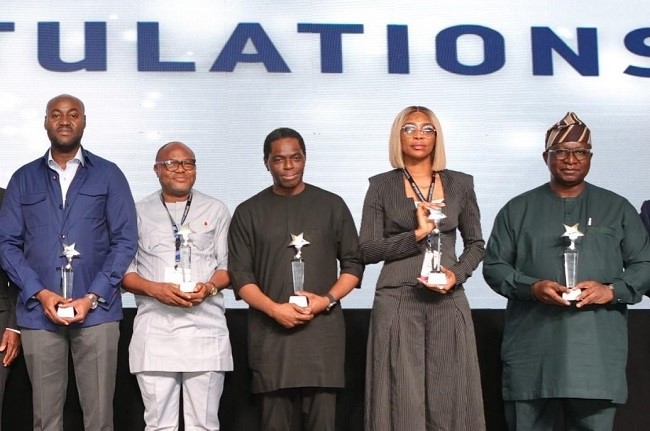
Dignitaries at the Agroween Recognition Awards (ARA) 2025

Mrs. Bimbola Aghahowa, IRF Chief Operating Officer, said hunger had become one of the world’s most pressing development challenges, with socioeconomic pressures often blamed on individuals instead of deeper governance failures and structural inequalities.

She cited FAO data showing 690 million people were hungry globally in 2020, adding that Nigeria remains among the worst affected, with about 50 million citizens facing severe food insecurity.

Aghahowa said hunger levels reached about 30 per cent in Lagos and as high as 40–50 per cent in parts of northern Nigeria.

She stressed the need for stronger collaboration among citizens, institutions and government.

She noted that the COVID-19 pandemic showed how quickly a health crisis could escalate into hunger, inspiring community interventions such as Agroween’s research-driven programmes and its “Food Not for Sale” food-rights framework.

According to her, Agroween promotes food as a universal human right rather than a commodity, running food pantries, composting workshops, research projects and its Rent-A-Lot farming scheme to strengthen community access and resilience.

Delivering a keynote address, Prof. Vide Adedayo, called for a radical shift in Nigeria’s food-production approach, insisting that traditional farming methods alone cannot meet rising demand or withstand climate and economic pressures.

Adedayo said food security requires availability, affordability, safety and access, warning that fragmented policies, climate shocks, low innovation, insecurity, labour shortages and post-harvest waste continue worsening Nigeria’s food system outcomes.

She noted that Nigeria wastes between 40 and 50 per cent of its produced food, even as millions struggle with hunger.

She added that agricultural exports from Nigeria suffer frequent rejection due to poor safety standards.

She urged Nigeria to embrace innovation such as digital tools, renewable energy, precision farming, indigenous knowledge systems and circular-economy practices to strengthen resilience and prepare for future population growth.

In his welcome address, Prof. Samuel Adejoh, Head of Social Work, UNILAG, said food insecurity is also a social-justice and national-security issue requiring long-term community empowerment and policy reforms.

Adejoh said Africa accounts for nearly one-third of global food-insecure persons, with Nigeria recording over 120 million food-insecure citizens and millions experiencing acute hunger across rural and urban communities.

He urged social workers, institutions and development partners to build innovative models that strengthen livelihoods, empower households and reduce dependency on relief-based interventions.

Stakeholders at a panel session agreed that Nigeria must adopt sustainable practices, strengthen collaboration and prioritise food equity to ensure that no citizen goes hungry in the face of mounting socioeconomic and climate pressures.

They reaffirmed commitment to building a just food system where innovation drives access, community participation improves resilience, and food is ultimately available not for sale, but for all Nigerians.

The climax of the event was the Agroween Recognition Award given to Prof. Desmond Majekodunmi, Prof. Vide Adedayo and Mrs. Funke Egbemode, to mention but a few.

The event also had compost training and workshop for students from various secondary schools.

By Fabian Ekeruche 

×