In response to escalating violent conflict involving Iran and the reported closure of the Strait of Hormuz, climate justice organisation, 350.org, has warned that the crisis exposes the costs of continued reliance on fossil fuels.
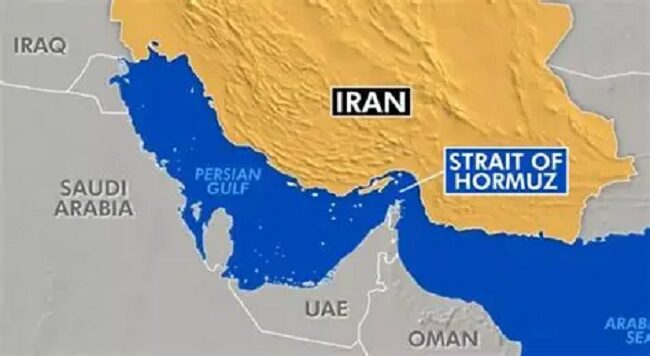
A strait between the Persian Gulf and the Gulf of Oman, the Strait of Hormuz provides the only sea passage from the Persian Gulf to the open ocean and is one of the world’s most strategically important choke points.
Iran holds the world’s third biggest oil reserves while Strait of Hormuz carries one-fifth of the world’s oil and gas supply – making it critical for the global economy and impacting people around the world and their household budgets.
Strait of Hormuz
Olivia Langhoff, Managing Director at 350.org, said: “The new war on Iran and the closure of the Strait of Hormuz lay bare the horrendous costs of a world chained to fossil fuels. When global energy security can be upended by a single flashpoint, it shows how unstable and risky our dependence on oil and gas is.
“Renewable energy provides home-grown power that remains secure and affordable regardless of geopolitical shocks.”
The price of crude oil has already risen 20% this year, and is expected to spike even more now. In 2022, energy and food price shocks triggered by the war in Ukraine pushed over 70 million people into poverty in the space of only three months, according to the United Nations Development Programme.
350.org is calling on governments to accelerate the transition away from fossil fuels and towards renewable energy that strengthens communities, protects the Earth, and reduces exposure to global instability.
“Once again, families will pay the price through fossil fuel-driven inflation: higher fuel costs, rising energy bills, and more expensive groceries as a consequence. All because of a system tied to a volatile, conflict-driven industry.
“Renewable energy offers a world-wide path to real and long-term energy security, one rooted in cooperation, resilience, and justice, rather than instability and violence,” Langhoff added.
A UN Body has approved the first credits to be issued under the UN carbon market established by the Paris Agreement.
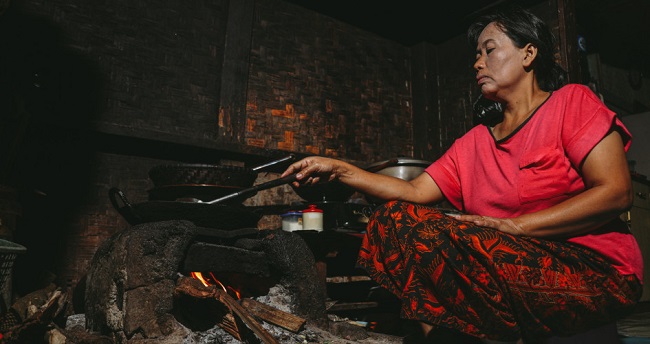
The approved activity is a clean‑cooking project in Myanmar, which distributes efficient cookstoves that reduce harmful household air pollution and lessen pressure on local forests.
UN Climate Change Executive Secretary, Simon Stiell, said: “Over two billion people globally are without access to clean cooking, which kills millions every year. Clean cooking protects health, saves forests, cuts emissions and helps empowers women and girls, who are typically hardest hit by household air pollution.
Old woman cooking with traditional stove. Traditional wood‑fired stoves like these are being replaced with cleaner, more efficient models
“The first credits to be issued through the UN carbon market under the Paris Agreement come from a clean‑cooking project, and they show how this mechanism can support solutions that make a big difference in people’s daily lives, as well as channeling finance to where it delivers real-life benefits on the ground.
“The opportunities presented by this UN carbon market across all regions are vast, particularly now that strong environmental safeguards, robust standards, and a clear system for redress are in place to ensure integrity, inclusiveness and efficiency.”
The project is coordinated with authorised participants from the Republic of Korea.
Credits authorised for use in Korea can be transferred to Korean entities for use in the Korean Emissions Trading System, contributing to the Republic of Korea’s Nationally Determined Contribution (NDC). The remainder will be used by Myanmar toward its own NDC.
Article 6.4 Supervisory Body Chair, Mkhuthazi Steleki, said: “This initial issuance reflects the careful application of the rules set by countries under the Paris Agreement. By applying updated values and more conservative calculations, the credited reductions are about 40 percent lower than what older systems would have issued. The result is consistent with environmental integrity requirements and ensures that each credited tonne genuinely represents a tonne reduced and contributes to the goals of the Paris Agreement.”
The project previously received a provisional issuance under the Clean Development Mechanism (CDM). Under the Paris Agreement Crediting Mechanism, updated values and more conservative calculations are applied, recognising earlier investments while ensuring credited reductions reflect the latest available science and information.
These adjustments result in credited reductions that are roughly 40 percent lower than under the CDM, ensuring the issued credits more closely reflect real‑world impact in the current context.
This sets the foundation for the mechanism’s broader role in supporting mitigation activities that deliver tangible community benefits.
Article 6.4 Supervisory Body Vice Chair, Jacqui Ruesga, said: “Starting with a clean‑cooking project is a fitting demonstration of where the demand and impact are what the Paris Agreement Crediting Mechanism can do: support activities that bring clear co-benefits for people, such as better indoor air quality, while reducing emissions.
“Last year we requested the use of an updated methodological approach, which means the credits issued are aligned with the best available information and a careful calculation of the reductions achieved. Our focus is on building confidence in this market from the outset, and this first issuance shows that the system is working as intended.”
This first issuance also responds to strong private‑sector demand for seeing the UN’s Paris‑aligned carbon market shift from design into real‑world operation.
Next steps
Approval remains subject to a 14‑day appeal period during which activity participants, the host country, and stakeholders directly affected by the project may submit an appeal.
Looking ahead, there is a growing pipeline of more than 165 host‑Party‑approved projects transitioning from the Clean Development Mechanism into the new Paris Agreement Crediting Mechanism. These activities span sectors such as waste management, energy, industry, agriculture and more, signaling that a wide range of real‑world climate projects across multiple regions are due to follow.
The Governor of Taraba State, Dr. Agbu Kefas, has officially flagged off the implementation of the Resettlement Action Plan (RAP) and the construction of the Bobboji Storm Water Flood Control Project in Jalingo, alongside the declaration of the Agro-Climatic Resilience in Semi-Arid Landscapes (ACReSAL) Unit into a full-fledged agency.
The programme featured two phases: a field visit to the Bobboji project site for the formal flag-off of the Storm Water Drainage Control Project, followed by a main ceremony at the Jolly Nyame Stadium.
R-L: Governor of Taraba State, Dr. Agbu Kefas; Minister of Environment, Alhaji Balarabe Abbas Lawal; World Bank Task Team Lead, Dr. Joy Iganya; and Commissioner of Environment and Climate Change, Taraba State, Hajiya Aishat A. Barde, at the flag-off of climate-smart agricultural inputs in Jalingo, Taraba State, on February 27, 2026
At the project site, the Commissioner of Environment and Climate Change and Chairperson of the ACReSAL Steering Committee, Hajiya Aishat A. Barde, described the Bobboji Storm Water Project to Gov. Kefas as a strategic intervention aimed at addressing persistent urban flooding, improving environmental sanitation, strengthening climate resilience, and enhancing adaptive capacity and sustainability within the Bobboji axis.
The World Bank Task Team Lead for ACReSAL, Dr. Joy Iganya Agene, stated that the initiative would create employment opportunities, strengthen security conditions, and economically empower communities within the Bobboji corridor. She emphasized that climate-smart investments simultaneously drive environmental resilience and local economic growth.
Speaking during the ceremony, the Minister of Environment, Balarabe Abbas Lawal, commended the Taraba State Government for aligning with national climate and environmental priorities. He noted that the project would significantly reduce flood risks and environmental hazards, while improving public safety and sanitation outcomes.
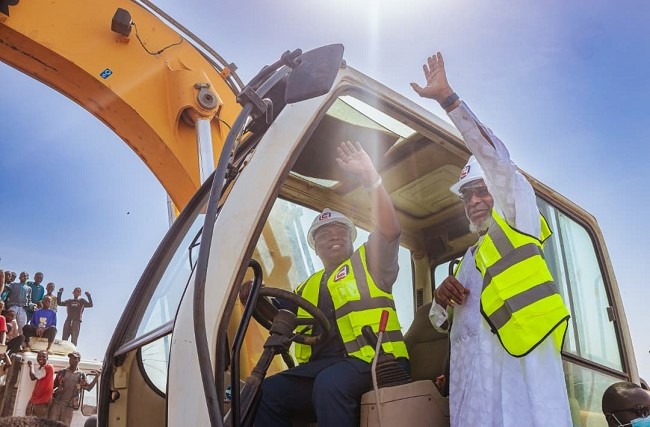
Governor of Taraba State, Dr. Agbu Kefas, and Minister of Environment, Alhaji Balarabe Abbas Lawal, during the flag-off event for the Implementation of the Resettlement Action Plan (RAP) and Construction of the Bobboji Stormwater Drainage Control Project in Jalingo, Taraba State
At the project site, Governor Kefas formally flagged off the implementation through a practical demonstration, signaling the commencement of construction and restoring hope to residents of the Bobboji neighbourhood.
The intervention is expected to address the recurring annual flooding that has resulted in displacement, as well as the loss of lives and livelihoods.
During the main event, Governor Kefas approved the upgrade of the ACReSAL Unit into the Taraba State Agro-Climatic and Watershed Management Agency (TARAWMA), thereby establishing a permanent institutional framework for watershed restoration, climate adaptation, and sustainable environmental management across the state.
Describing the occasion as a defining moment for Taraba State, the Governor expressed appreciation to the Minister and the World Bank team for their presence and continued support. He assured them of sustained collaboration and reaffirmed his administration’s commitment to strengthening partnerships aimed at reversing environmental degradation and advancing sustainable development.
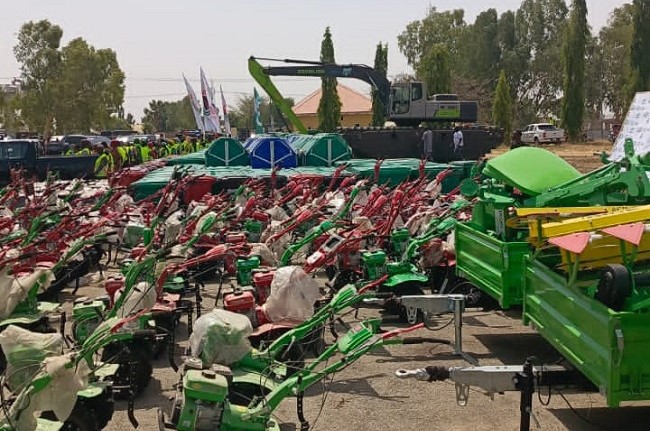
Some of the climate-smart assets displayed for distribution to community interest groups to enhance food security, flood control, and waste management in Taraba State
As part of the rollout, tractors, power tillers, water pumps, clean cooking stoves, and skip bins, were sumbolically distributed to farmers and communities to strengthen mechanised agriculture, improve waste management, and boost food security.
Compensation cheques were also presented to affected landowners under the Resettlement Action Plan (RAP), reaffirming the Governor’s commitment to fairness and responsible development.
Also speaking at the main ceremony, the Minister outlined further collaboration opportunities with Taraba State, including a proposed Rosewood Restoration Plan across Taraba, Cross River, and Benue states; implementation of the National Clean Cooking Policy to reduce deforestation; and support for waste-to-wealth initiatives under the Circular Economy Policy.
He emphasised the urgent need to protect Nigeria’s low forest cover and curb illegal logging, referencing the Federal Government’s ban on wood exports.
The Commissioner of Environment and Climate Change, Hajiya Aishat A. Barde, welcomed the Minister and other dignitaries, and highlighted the vital role of women in climate resilience.
She noted that while women are often among the most vulnerable to climate impacts, Governor Kefas recognises them as powerful agents of resilience.
She commended his appointment of a woman to lead the sector as a demonstration of inclusive and transformative leadership aligned with global best practices, and reaffirmed her commitment to climate justice, women-led solutions, and gender-responsive economic empowerment.
The Taraba ACReSAL Project Coordinator, Dr. Clement Giwa, presented progress on land restoration efforts, showcasing implementation milestones supported by geotechnical evidence and field data.
He disclosed that Taraba State achieved a 68% performance score at the World Bank Mid-Term Review held in Jos, Plateau State, in December 2025, reflecting steady progress under the programme.
The combined initiatives are said to reflect Governor Kefas’ visionary leadership and Taraba State’s firm commitment to climate action, inclusive growth, and sustainable environmental management.
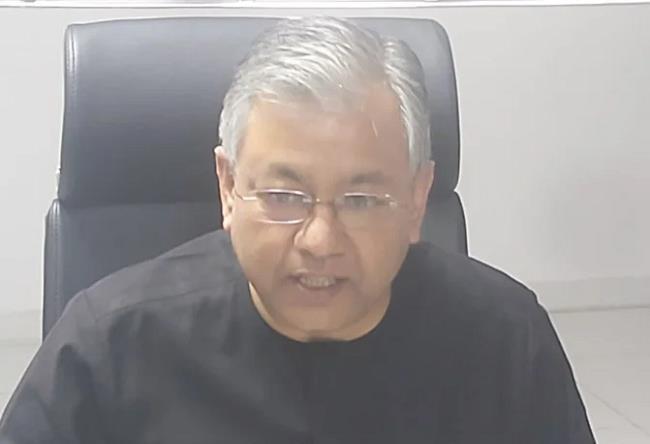
The Managing Director of NIPCO Gas Ltd., Mr. Nagendra Verma, says the 18-inch, 80-kilometre Sagamu–Ibadan natural gas pipeline has reached 80 per cent completion.
Verma disclosed this during an interactive session with energy correspondents on Friday, February 27, 2026, in Lagos.
He stated that the project is scheduled for delivery between June and July, reaffirming the company’s commitment to completing the strategic infrastructure within the projected timeline.
Nagendra Verma, Managing Director of NIPCO Gas Ltd.
According to him, the pipeline, being developed in partnership with NNPC Gas Marketing Ltd. (NGML), will significantly boost gas supply to industrial and commercial consumers in Ogun and Oyo states, as well as adjoining areas in the Southwest.
Verma described the Sagamu–Ibadan pipeline as a major milestone in Nigeria’s gas expansion drive, noting that it is expected to strengthen industrial productivity and enhance energy security.
“This critical infrastructure will improve manufacturing competitiveness, lower production costs for industries dependent on alternative fuels, and stimulate regional economic growth,” he said.
He added that given the project’s strategic importance to Southwest industrialisation and national energy security, the company sought the continued cooperation and support of relevant federal and state authorities to ensure seamless execution.
Verma explained that many manufacturers in the region currently rely on diesel and Low Pour Fuel Oil (LPFO), both of which are more expensive and subject to price volatility.
He noted that access to pipeline gas would provide a more stable, cost-effective and environmentally friendly alternative, enabling businesses to optimise operations and expand capacity.
Beyond the Ibadan corridor, he disclosed that NIPCO Gas, in collaboration with NGML, is also developing complementary gas distribution infrastructure from Sagamu to Abeokuta to deepen gas penetration across Ogun State.
The Sagamu–Abeokuta project, he said, is aimed at accelerating industrial growth by providing reliable gas supply to existing manufacturers while attracting fresh investments into the state.
He further noted that the initiative is projected to improve energy reliability, enhance operational efficiency for businesses and boost internally generated revenue through increased economic activity.
“The project continues to enjoy strong collaboration and support from the Ogun State Government, reflecting a shared commitment to energy-driven economic development and sustainable industrial expansion,” Verma added.
The Sagamu–Ibadan pipeline as strategic backbone infrastructure that will further consolidate Ogun and Oyo states as leading industrial hubs in the Southwest.
Improved access to natural gas is expected to drive growth across key sectors, including cement, food and beverage, steel, pharmaceuticals and agro-processing.
In a related development, Rural Electrification Agency (REA) has listed 500 projects in the 2026 budget to boost electricity supply in strategic public institutions and rural communities across the country.
Managing Director of the agency, Dr Abba Aliyu, made this known while addressing newsmen on the sidelines of the 2026 budget defence session organised by House Committee on Rural Electrification in Abuja on Friday.
He said that the total budget size for 2026 operations is N170 billion, out of which N100 billion had been approved for National Public Sector Solarisation.
The managing director said that the N100 billion targets provision of hybrid mini-grid for government agencies within and outside Abuja.
“In the National Hospital in Abuja, you can see our infrastructure, trying to provide reliable electricity to reduce the cost of electricity at the hospital.
“In the 2026 budget, we have a plan for over 500 different projects; a number of them are extension of grid for communities that are very close to the grid where we extend the grid, deploy transformers to power the communities.
“We have also a reasonable number of mini-grids for communities that are agrarian in nature or have cottage industries,” he said.
Aliyu said that the agency had also planned for mini-grids in an agricultural processing area in the 2026 budget.
“We also have plans for deployment of solar home system for sparsely populated communities. What we presented to the National Assembly is the details of this 500 projects that are to be executed,” he said.
Accounting for the 2024 budget, Aliyu said that the agency achieved 85 per cent budget performance.
He said that the agency had so far achieved 32 per cent of the 2025 budget in spite of the low release of funds experienced during the fiscal year.
Earlier, Chairman of the Committee, Rep. Mohammed Bukar (APC-Borno), said that after thorough deliberations and scrutiny, the committee was satisfied with the explanations provided and the documentation presented by the agency.
He said that measurable progress had been made in expanding energy access through off-grid and renewable energy interventions across rural communities, federal institutions and public sector establishments nationwide.
The lawmaker acknowledged the agency’s compliance with applicable procurement laws, fiduciary safeguards and development partner frameworks governing its operations.
He, however, said that the committee would embark on oversight visits for on-the-spot assessments, in line with constitutional demands.
“Legislative oversight is a critical pillar of accountability, and we will continue to ensure that the Rural Electrification Agency remains aligned with its statutory mandate and national development priorities.
“However, at this stage, we are satisfied that the agency is operating within its mandate and delivering tangible impact.
“We encourage the agency to sustain this momentum, as Nigeria advances its rural electrification and energy transition objectives.”
The Nigerian Independent System Operator (NISO) says power generation has dropped to approximately 4,300 megawatts due to inadequate gas supply to thermal generating stations.
The management of NISO disclosed this in a statement on Friday, February 27, 2026, in Abuja, warning that the reduced output directly affected electricity supply to distribution companies (DisCos).
According to the statement, thermal plants account for the majority of Nigeria’s generation mix, so any disruption in gas supply limits overall grid capacity and reduces energy allocation to DisCos.
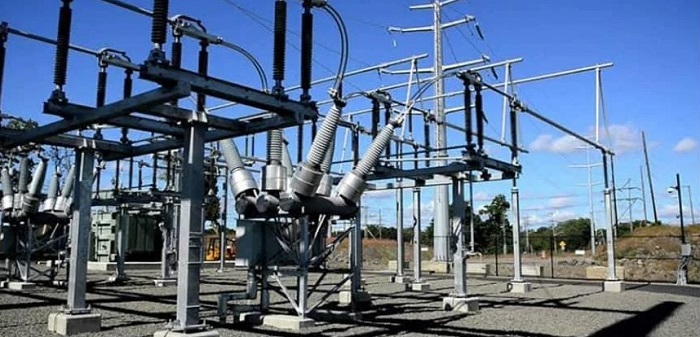
Power distribution infrastructure
“Operational data shows thermal power plants require about 1,629.75 million standard cubic feet (MMSCF) of gas per day to operate at optimal capacity, but actual supply as of Feb. 23 was only 692 MMSCF.
“This represents less than 43 per cent of the required volume, resulting in constrained generation output,” NISO said, adding that the shortfall is driving load shedding across the system.
The system operator noted that dispatching available energy followed the Nigerian Electricity Regulatory Commission (NERC) Multi-Year Tariff Order (MYTO) allocation percentages to maintain grid stability and prevent system disturbances.
NISO expressed regret for the inconvenience the situation might cause consumers and market participants and said it was working with stakeholders to restore full energy allocation as gas supply improved.
Meanwhile, the MainPower Electricity Distribution Ltd. (MEDL) says the recent drop in power supply across network in Enugu State is due to inadequate gas supply to thermal generating stations.
Its spokesman, Mr. Emeka Ezeh, made the disclosure in a statement in Enugu on Friday.
Ezeh said this development had reduced energy generation and allocation to the company.
“As a result of the decline in generation, the Nigerian Independent System Operator (NISO), in a bid to maintain grid stability and prevent system disturbances, is currently implementing load shedding across the national grid.
“This has impacted power availability to our network and by extension, our customers.
“We wish to assure our customers that this situation is not peculiar to MEDL, but a system-wide challenge arising from the current generation constraints.
“We are actively engaging with relevant stakeholders and remain hopeful that the gas supply issues will be resolved soon, leading to improved power supply,” he said.
He commended residents for their patience and understanding, adding, “we sincerely regret the inconvenience caused”.
MEDL is a subsidiary company of Enugu Electricity Distribution Company (EEDC).
The Nigerian Maritime Administration and Safety Agency (NIMASA) has pledged regulatory leadership and technical coordination to deliver a robust national maritime decarbonisation action plan.
The commitment was conveyed on Thursday, February 26, 2026, in Lagos during a national workshop on the IMO GreenVoyage2050 Project programme.
Director-General, Dr Dayo Mobereola, described the workshop as a critical step towards achieving the Federal Government’s blue economy and climate objectives.
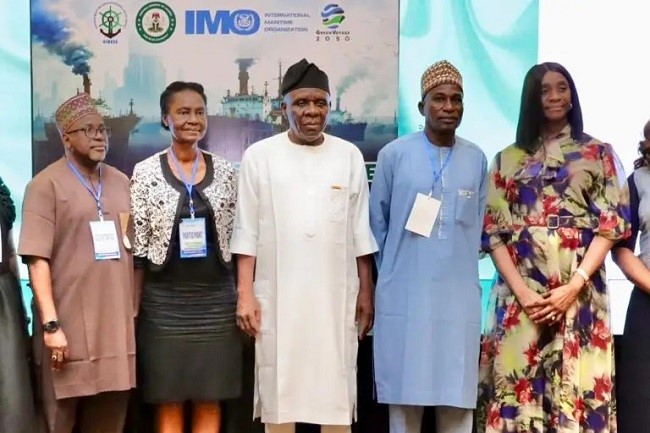
L-R: Kabiru Bello, Deputy Director, Marine Environment Management, MEM, Nigerian Maritime Administration and Safety Agency, NIMASA; Mrs Oritsematosan Edodo Emore, Nigeria Treasurer, Anglophone, Women in Maritime Organization of West and Central Africa, WIMOWCA; Mr Fatai Taiye Adeyemi Executive Director Operations, NIMASA; Dr John Ogwuche, representative of Minister of Marine and Blue Economy; and Dr Oma Offodile, Director, MEM, during the National Workshop on IMO GreenVoyage2050 programme in Lagos on Thursday
Mobereola, represented by Executive Director, Operations, Mr. Fatai Adeyemi, underscored the project’s importance in supporting developing countries to implement the IMO greenhouse gas strategy.
He said the emerging national action plan would reflect national realities, leverage existing capacity, address gaps and align with broader economic and environmental priorities.
“The transition is not merely about compliance with international obligations. It is about safeguarding the marine environment and national interest,” Mobereola said.
He added that the shift would protect public health, strengthen the blue economy and ensure Nigeria’s maritime industry remains competitive and future-ready.
Also speaking, Mrs. Astrid Dispert, Technical Manager of the IMO GreenVoyage2050 Project, stressed the initiative’s goal of advancing a coherent, globally aligned regulatory framework.
She emphasised NIMASA’s pivotal role in driving the project nationally and coordinating stakeholders toward effective maritime decarbonisation.
“The IMO GreenVoyage2050 Project provides technical expertise and institutional support to help countries develop and implement national action plans promoting sustainable shipping and clean technologies.
“Through this collaboration, the Federal Government is taking deliberate steps towards maritime decarbonisation and reinforcing its commitment to global climate goals,” she said.
The Benue State Government on Friday, February 27, 2026, flagged off a 90-megawatt waste-to-energy project aimed at generating electricity.
Performing the ceremony at Atumba Village, Guma Local Government Area of the state, Gov. Hyacinth Alia said the project would convert municipal and industrial solid waste into power and valuable by-products.
Alia said the facility would transform waste streams into electricity, alternative fuels, bio-fertiliser, methane-based products, and recyclable materials.
Gov. Hyacinth Alia of Benue State
Represented by his deputy, Dr Sam Ode, Alia said the project was capable of delivering long-term environmental, industrial, and energy transformation for Benue.
He said the project would provide employment for over 6,000 people, bring international expertise and technical innovation to the state’s infrastructure development.
Alia said it would also improve energy reliability, reduce power deficits, stimulate investment in energy-dependent sectors, and improve public health outcomes.
He urged the host community and all Benue indigenes to take ownership of the project.
He said the project represents a modern, technology-driven solution to waste management challenges, while simultaneously strengthening the state’s energy infrastructure.
The project is structured as a partnership between Sectorlead Ltd. and Benue State Government, to directly support public-private partnership (PPP) development.
The World Health Organisation (WHO) has certified Denmark for the elimination of mother-to-child transmission (EMTCT) of HIV and syphilis, recognising the country’s sustained commitment to ensuring every child is born free of these infections.
“The elimination of mother-to-child transmission of HIV and syphilis marks a major public health achievement for Denmark,” said Dr Tedros Adhanom Ghebreyesus, WHO Director-General. “This milestone demonstrates that with strong political commitment and consistent investment in primary care and integrated maternal and child health services, countries can protect every pregnant woman and newborn from these diseases.”
Sophie Løhde, Minister for the Interior and Health, Denmark
The validation, based on an assessment by WHO’s Regional Validation Committee in June 2025 and Global Validation Advisory Committee (GVAC) in August 2025, confirms that Denmark met all required targets from 2021 to 2024, including low transmission rates and high coverage of prenatal testing and treatment for pregnant women.
“As the first European Union country to achieve this public health milestone, Denmark’s success is a testament to the strength of its maternal health system and its long-standing commitment to reaching every pregnant woman with the care she needs,” said Dr Hans Henri P. Kluge, WHO Regional Director for Europe.
“Elimination means testing and treating at least 95 out of every 100 pregnant women – and keeping new infant infections below 50 per 100 000 births, year after year. Denmark has met these benchmarks through strong antenatal care, reliable data systems and respect for women’s rights. We will support Denmark as it works toward full triple elimination, when it adds hepatitis B,” added Kluge.
Reaching this milestone reflects decades of sustained commitment by clinical and public health professionals, underpinned by strong health systems and universal health coverage including integrated screening during pregnancy. Denmark’s exemplary data systems, robust laboratory capacity, and high human rights standards have been essential to this success.
“This validation by WHO is a proud moment for Denmark and the result of decades of work by our health-care professionals, midwives, and public health teams to ensure that every pregnant woman receives the screening and care she needs,” said Sophie Løhde, Minister for the Interior and Health, Denmark.
“Denmark’s universal health system – built on equal access for all – has been the foundation of this achievement. Being the first country in the European Union to reach this milestone is both an honour and a responsibility. We hope our experience can inspire and support other countries on their path to elimination, and we look forward to completing the journey with the addition of hepatitis B to achieve full triple elimination,” added Løhde.
Denmark’s experience demonstrates what is possible when rights‑based policies, high‑quality services, and strong data systems come together, providing a powerful model and motivator for other countries seeking to strengthen their EMTCT programmes. The country is also on track towards validating hepatitis B virus elimination. WHO is working with Denmark in advancing the triple elimination validation process.
Denmark joins 22 other countries and territories validated by WHO for the elimination of mother-to-child transmission of HIV, syphilis or hepatitis B virus, or certified on the path to elimination, along with Anguilla, Antigua and Barbuda, Armenia, Belarus, Belize, Bermuda, Brazil, Botswana, Cayman Islands, Cuba, Dominica, Jamaica, Malaysia, Maldives, Montserrat, Namibia, Oman, Republic of Moldova, Saint Vincent and the Grenadines, Sri Lanka, St. Kitts and Nevis, and Thailand.
The StopEACOP coalition has expressed concern over the issuance of a €1.5 billion bond for TotalEnergies by banks that had publicly distanced themselves from the controversial East African Crude Oil Pipeline (EACOP). The EACOP project has faced significant delays due to public pressure from coalition supporters and members who have highlighted the risks the project poses to financial institutions.
According to StopEACOP, all the banks that have participated in the issuance of the bond are among the more than 40 global banks that refused to finance the controversial project.
TotalEnergies
Société Générale publicly distanced itself from EACOP in 2021 while HSBC, Intesa Sanpaolo, J.P. Morgan, and Mizuho made the announcement in 2022. BBVA made the announcement late last year (2025). Consequently, TotalEnergies and other project backers have struggled to raise funds and have been forced to look internally, as reported in the latest risk brief from BankTrack. The new €1.5 billion bond, therefore, provides them with internal funds to complete the project.
“These banks want the PR benefit of saying that they won’t finance EACOP while quietly keeping TotalEnergies liquid through bond purchases. That’s effectively back-door pipeline funding dressed up in sustainability language. Finance capital is doing what it always does by protecting returns first, then hiring glossy reports to wash the oil and blood from the balance sheet,” said StopEACOP Campaign Coordinator, Zaki Mamdoo.
He added that bonds are the most straightforward way for TotalEnergies to self-finance the project because they come with no strings attached and can be diverted to any projects that banks would not publicly support or associate with, including EACOP or the other highly controversial Mozambique LNG project, for which TotalEnergies is facing allegations of complicity in war crimes, torture, and enforced disappearances.
“The coalition cannot understand how these banks justify their involvement in issuing these bonds to TotalEnergies when they are aware that these funds could be diverted to projects they have publicly stated they do not support, citing reasons ranging from ‘extreme risks to communities’ along the pipeline route to ‘unacceptable risks’ to critical natural habitats, with a specific focus on human rights and climate impact?” Mamdoo stated.
“When Total makes internal loans available to EACOP Ltd., the money raised through these bonds becomes part of the machinery pushing this project forward. Communities lose land and livelihoods, repression deepens, ecosystems are put at risk, and the climate crisis accelerates, but bankers still collect their fees and coupons like it’s just another investment opportunity,” said Rachael Tugume, one of the EACOP project-affected-people from Hoima.
StopEACOP added: “As TotalEnergies, CNOOC, and host governments discuss plans for first oil by July 2026 – though this target is unlikely to be met – the impacts of the EACOP project are no longer hypothetical. Cases of human rights violations continue unabated. At the beginning of last year (2025), we witnessed the weaponisation of the Ugandan judiciary to suppress opposition to the project, as activists were denied bail and kept in jail for months.
“This began with the 11 activists arrested for protesting KCB Bank Uganda’s involvement in EACOP, who spent three months in jail, and now eight other activists associated with a student climate movement are still in jail for nearly seven months after protesting Stanbic Bank Uganda’s involvement in the EACOP project.
“Meanwhile, project-affected individuals with land grievances cannot find justice in court as their files go missing while the government forcibly evicts them.”
Diana Nabiruma of Africa Institute for Energy Governance (AFIEGO) said: “It is time banks walked the talk. They profess values such as respect for human rights, support for biodiversity conservation and being climate leaders among others. Despite this, they provide support to companies that do not espouse those values. They support companies that cause grievous harm to people and nature. This must stop!”
The coalition therefore condemns these banks for their actions that enable the controversial pipeline.
“They must recognise that, for every billion they help TotalEnergies raise, they greenlight ongoing harm and must bear equal responsibility for the risks EACOP poses to the people, climate, and environment.
“TotalEnergies’ ability to raise €1.5 billion with the assistance of banks that had opposed its fossil fuel expansion projects creates a crisis of public confidence in the banking sector and its commitment to climate policies and ESG standards. If banks truly oppose EACOP, they should not just refuse the headline project finance while continuing to fund the company building it. They must stop propping up TotalEnergies altogether. Anything less is hypocrisy in pursuit of quick profits that will haunt the whole world,” added the coalition.
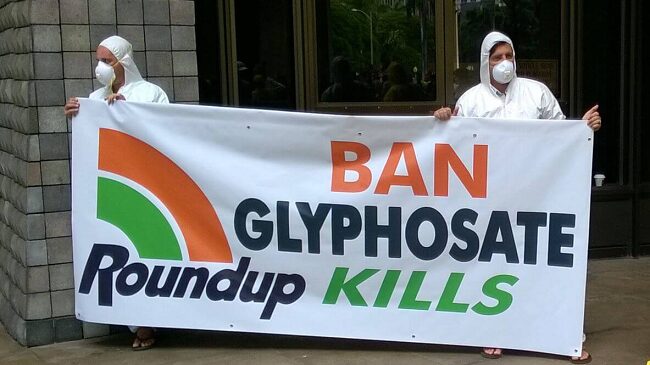
Through a formal, comprehensive, and urgent submission, the African Centre for Biodiversity (ACB) requests the Minister of Agriculture to deregister and ban glyphosate in South Africa, following new South African National Accreditation System (SANAS)-certified laboratory results showing glyphosate contamination in maize meal, wheat flour, bread, and baby cereal, with two products exceeding the legal default limit.
The ACB has also produced, for ease of reference, a briefing paper that unpacks the independent SANAS-certified laboratory results confirming that glyphosate and its toxic metabolite, aminomethylphosphonic acid (AMPA), are present in staple foods consumed daily by millions of South Africans, forming a core evidentiary component of the submission to the Minister.
Campaign against glyphosate
The submission cites the following core grounds:
New South African laboratory evidence confirms dietary exposure through staple and baby foods.
Major new international science, including the 2025 Global Glyphosate Study, shows carcinogenic effects at supposedly “safe” doses. The study shows statistically significant increases in tumours at levels regulators still claim are safe.
The historically-relied-upon Williams, Kroes, & Munro (2000) industry-aligned paper defending glyphosate’s safety has formally been retracted on grounds of ghost-writing and undisclosed conflicts. The study has been used extensively by regulators to justify glyphosate’s safety, and its removal vitiates a cornerstone of global regulatory reliance.
More than 192,000 lawsuits have been filed in the US, with US$6 billion in jury awards and over US$10–11 billion in settlements already paid. In February 2026, Bayer agreed to a US$7.25 billion national settlement to resolve current and future claims. This global legal fallout confirms that glyphosate-linked harms are being recognised and compensated in courts – and can no longer be dismissed as speculative.
Legal duties under the Constitution, the National Environmental Management Act (NEMA), and the Fertilizers, Farm Feeds, Agricultural Remedies and Stock Remedies Act 36 of 1947 (Act 36 of 1947) require action in the face of serious or irreversible harm.
ACB’s test results: glyphosate is in the foods South Africans eat daily
Impala Special Maize Meal: Glyphosate and AMPA (AMPA exceeded the default maximum residue limit (MRL))
Snowflake Wheat Flour: Glyphosate exceeded the default MRL
Sasko Premium White Bread: Trace glyphosate and AMPA
Cerelac baby cereal: Trace glyphosate
Glyphosate use on genetically modified (GM) herbicide-tolerant maize and within wheat production systems is resulting in residues that persist into final food products. Glyphosate and AMPA carry growing health concerns, with evidence linking them to cancer risks, endocrine disruption, and gut microbiome damage. AMPA is particularly worrying because it is highly persistent and has its own toxicological profile.
Their detection in everyday foods – including maize meal, bread, and baby cereal – means South Africans face continuous, involuntary exposure, including among infants and vulnerable households. Additionally, glyphosate use has been associated with a reduced nutritional profile of crops, further compounding the health burden on already stressed and vulnerable populations.
Zakiyya Ismail, ACB research coordinator, Pesticides, said: “The detection of glyphosate in Cerelac baby cereal is one of the most alarming findings. Infants are physiologically more vulnerable. The presence of glyphosate in baby cereal is unacceptable, unconscionable, and incompatible with South Africa’s Constitutional protections for children.”
ACB’s briefing explains that the AMPA exceedance in maize meal and the glyphosate exceedance in wheat flour highlight serious regulatory blind spots, where key residues are neither properly monitored nor effectively controlled. The briefing further emphasises that MRLs are not health-based safety standards. Rather, they are administrative thresholds designed to monitor compliance and facilitate trade, not to evaluate the real-world health risks associated with long-term dietary exposure.
As a result, MRLs fail to consider cumulative, chronic exposure, the combined effects of multiple residues, and the heightened vulnerability of infants and children, whose developing bodies are more susceptible to toxicants.
Mariam Mayet, Executive Director of the ACB, comments: “Our submission presents new test evidence, new global carcinogenicity findings, the collapse of the industry-funded safety narrative following the retraction of the 2000 Monsanto-linked paper, and massive global litigation, all of which make continued authorisation of glyphosate untenable. The government can no longer claim ignorance. The case for a ban is overwhelming.”
ACB calls for immediate government action
According to the group, South Africans deserve clean, safe, nourishing food – not chemical residues. “This is an opportunity for the Minister to act decisively to protect public health. Glyphosate must go!” it submitted.
In its submission to the Minister, the ACB demands:
Deregistration and prohibition of glyphosate under Act 36 of 1947.
Immediate restrictions on high-exposure uses (pre-harvest desiccation; public spaces).
Public advisories, specifically regarding baby foods.
A precautionary review of glyphosate-tolerant GM crop approvals to date.
A ban on future herbicide-tolerant GM crops.
A national phase-out plan with support for agroecological alternatives.