26.9 C
Lagos
Tuesday, March 10, 2026
Home Blog Page 57

Dangote Refinery denies shutdown rumours, confirms 50Sm PMS litres daily supply

0

Dangote Petroleum Refinery has rejected a circulating report claiming the refinery is shutting down for maintenance, describing the story as false and misleading.

In a statement released on Monday, January 5, 2026, the refinery emphasised that production remains ongoing, stable, and uninterrupted.

“Dangote Petroleum Refinery continues to operate at scale and retains the capacity to supply between 40 million and 50 million litres of Premium Motor Spirit (PMS) daily through January and February, subject solely to market demand,” the statement said.
Dangote Refinery
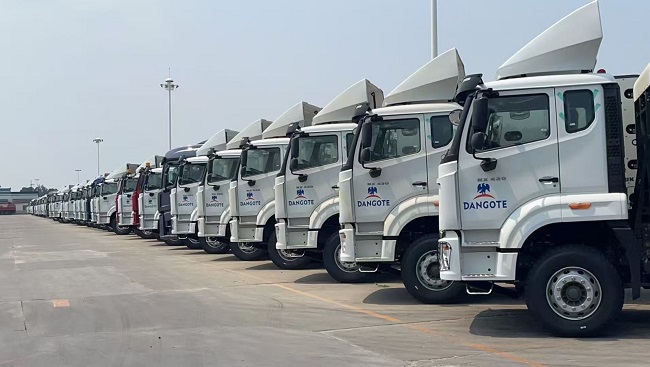
Dangote Refinery CNG trucks

It added that, on January 4, the refinery produced 50 million litres of PMS and evacuated 48 million litres via its gantry. “Current stock levels cover over 20 days of national consumption, effectively dispelling any concerns about supply.”

The refinery clarified that routine maintenance on specific units, including the Crude Distillation Unit (CDU) and Residual Fluid Catalytic Cracking (RFCC), does not interrupt overall production, owing to the sophisticated and integrated design of its processing units. Other critical units, such as the Naphtha Hydrotreater, CCR Reformer, and Hydrocracker, remain fully operational, producing PMS, Diesel (Automotive Gas Oil), and Jet A-1.

“Dangote Petroleum Refinery confirms that it has consistently maintained adequate PMS availability for the domestic market. From 16 December 2025 to date, the refinery has loaded between 31 million and 48 million litres of PMS daily from its gantry, in line with prevailing market demand. These volumes are fully verifiable against depot loading records maintained by the Nigerian Midstream and Downstream Petroleum Regulatory Authority (NMDPRA) in the normal course of its regulatory responsibilities,” the statement said.

The refinery also reaffirmed its ex-gantry price of N699 per litre for PMS, available to all marketers and bulk consumers. It encouraged filling stations, large-scale users, and institutional buyers to patronise locally refined products, which are more affordable, reliable, and of high quality, rather than relying on imported alternatives.

“By sourcing PMS locally at N699 per litre, marketers are better positioned to pass on price relief to consumers, enhance market stability, conserve foreign exchange, and support Nigeria’s broader economic recovery and energy security objectives,” the refinery said.

Dangote Petroleum Refinery accused fuel importers of promoting false reports to justify recent, unwarranted increases in petrol pump prices, noting that such actions run counter to national interest and impose unnecessary hardship on Nigerians. According to the refinery, without domestic refining, petrol prices could rise to as much as N1,400 per litre in a post-subsidy environment, highlighting the stabilising role of local production.

“Recent price movements further highlight an uncomfortable reality. In the absence of the Dangote Petroleum Refinery, fuel importers would continue to operate without restraint, with petrol prices potentially escalating to levels estimated at up to N1,400 per litre in a post-subsidy environment. The refinery’s operations have therefore served as a critical stabilising force in the downstream petroleum market,” the statement added.

Reiterating its commitment to energy security and market stability, the refinery said it would continue supplying high-quality petroleum products, maintaining steady availability, and supporting Nigeria’s broader economic growth. Stakeholders and the public were advised to disregard misinformation and rely on verified sources.

“Dangote Petroleum Refinery will continue to act in the national interest by supplying high-quality, locally refined petroleum products while supporting Nigeria’s economic stability, energy independence, and industrial growth,” it concluded.

Africa’s upstream future: Momentum builds, but investment discipline remains a hurdle

0

Two breakthrough offshore discoveries in Namibia in 2022 – one by Shell and one by TotalEnergies – marked an important milestone for the country’s future energy landscape and for Africa’s broader upstream ambitions.

The excitement generated by high-impact discoveries creates a ripple effect that benefits the entire continent. I’m convinced that the ongoing interest we’re seeing today in African exploration and production (E&P) stems in part from the major discoveries in Namibia, alongside recent successes in Côte d’Ivoire, Angola, and Egypt.

When you factor in advances in E&P technology, the promise of newly emerging basins, and the continued strength of Africa’s established producing regions, there are genuine reasons to feel confident about the future of African oil and gas.

Onshore drilling
Onshore drilling: Upstream activity in the oil industry

That sentiment is reflected in the African Energy Chamber’s 2026 Outlook Report, “The State of African Energy,” which projects renewed momentum in the continent’s upstream market during the next several years. According to the report, global E&P capital expenditure (capex) is forecast to reach approximately $504 billion by 2026, with Africa contributing about $41 billion.

Africa’s hydrocarbon production is expected to remain stable at roughly 11.4 million barrels of oil equivalent per day (boe/d) through 2026, and new projects are on track to increase output toward 13.6 million boe/d by 2030.

Yes, the report acknowledges that optimism is being tempered by caution. Keen to protect their balance sheets, investors are scrutinising opportunities closely. But overall, the potential for sustained upstream expansion is truly promising for African states with petroleum reserves. The key will be doing as much as possible to attract the capital needed to pursue the next wave of discoveries.

Frontier and Emerging Basins Signal Strong New Potential

As investors weigh their options, the most compelling signs of progress are coming from Africa’s frontier and emerging basins.

In Namibia’s Orange Sub-Basin, where more than 6 billion boe have been discovered in less than four years, operators are preparing the next wave of high-impact wells. Côte d’Ivoire, meanwhile, is seeing a surge of activity around its recent deepwater finds.

Egypt, which already has long history as a producing state, is experiencing fresh momentum in underexplored offshore acreage. Earlier this year, drilling in the Herodotus Basin confirmed gas at the Nefertari-1 well.

Even in Libya, where hydrocarbons have been produced for decades, frontier acreage remains. BP and Eni aim to spud the Matsola-1 ultra-deepwater gas prospect later this year. If it delivers, the well could pave the way for deeper Sirte Basin exploration and reduce geological risk across the broader Gulf of Sirte.

“The continent continues to offer up new frontiers, all of which may draw exploration capital,” our Outlook report notes. “Places to keep an eye on are the ultra-deepwater portion of the Congo Fan in Angola, the Gabon–Douala Deep Sea Basin offshore São Tomé and Príncipe, the Namibe Basin in Namibia and Angola, the Herodotus Basin offshore Egypt and the offshore portion of the Sirte Basin.

“Others that have already played host to exploration cycles may still present significant opportunities in a similar fashion to the Côte d’Ivoire-Tano Basin. One example is the MSGBC Basin, where over 9.5 Bboe was discovered between 2014 and 2019, but which is still viewed as immature in terms of exploration.”

Still, prospects alone are not enough. To translate discoveries into development, Africa must confront the operational and investment challenges that stand in the way.

Data, Imaging, and a New Era of African Prospecting

As encouraging as the upstream outlook is, Africa’s geology remains complex, and that complexity can shape how and where companies invest. In parts of West Africa, for example, thick layers of salt can distort seismic signals and make it difficult to identify potential reservoirs with confidence. And in the far south, strong offshore currents can interfere with seismic acquisition itself, degrading data quality and forcing operators to invest in more advanced imaging and noise-reduction technologies.

But as our Outlook report notes, technology is starting to change these dynamics. “Recent advancements in seismic acquisition, processing technologies, and drilling capabilities have enabled exploration efforts over the past decade to target more intricate prospects at greater depths in Africa as elsewhere,” it states.

These advances have been helping oil and gas companies de-risk prospects once considered too complex or too costly to pursue.

Emmanuelle Garinet, TotalEnergies’ vice president for exploration in Africa, has pointed to Namibia as a prime example of how high-resolution seismic imaging and advanced subsurface modeling can reshape exploration strategies. She noted that the company’s decision to drill the Venus prospect – which lies within the Namibian portion of the Orange Sub-Basin – was possible because the technical data provided enough confidence to reduce uncertainty ahead of drilling. The results validated that choice: the 2022 Venus-1 discovery, estimated at 1.5 to 2 billion barrels of recoverable oil, stands as the largest ever made in sub-Saharan Africa. Its scale has reshaped expectations for what may still be unlocked across the Orange Sub-Basin.

The trend is also visible offshore Angola, where better subsurface imaging and advanced drilling systems are opening deepwater and ultra-deepwater opportunities in heavily salt-influenced geology. Azule Energy aims to drill the Kianda prospect in late 2025. If the ultra-deepwater test succeeds, it could pave the way for exploration across a vast area – more than 30,000 square kilometres – previously viewed as high risk.

The Capital Challenge: Competing for Global Investment

But geological complexity isn’t the only factor shaping investment decisions. Political and security challenges persist in several countries – among them Nigeria, Mozambique, and the Democratic Republic of the Congo – and can materially affect both operations and capital flows. Add to that the lack of clarity around monetisation and industrialisation pathways, and it becomes clear why some investors remain cautious.

The Outlook report notes that upstream capital spending in Africa has risen consistently over the past three years as the sector recovers from the pandemic-related lows of 2020. Even so, worldwide investment growth has not kept pace with the strong cash flows generated by upstream operations. Analysts from firms like Wood Mackenzie and Deloitte all describe the same pattern: Companies are channeling a significant share of their cash flow into dividends, buybacks, and debt reduction instead of chasing growth at any cost.

In short, Africa is competing for capital at a time when global investors are more disciplined than ever.

In this environment, African states cannot simply assume that interest in our geology will translate into final investment decisions. We must move quickly to capitalise on today’s E&P appetite by reducing above-ground risks, providing clear monetisation and industrialisation pathways, and building stable, predictable frameworks that give investors the confidence to commit for the long term.

The window of opportunity is open, but it will not stay open forever.

By NJ Ayuk, Executive Chairman, African Energy Chamber

Farmers raise alarm over hippo attacks on farmlands in Gombe

Some farmers in Hinna Community, Yamaltu-Deba Local Government Area of Gombe State, have raised concerns over increasing hippopotamus attacks on their farmlands and livelihoods.

Mr. Zakari Ladan, Head of Farmers in Hinna Community, raised the alarm in an interview on Monday, January 5, 2026.

Ladan said persistent hippo attacks had resulted in huge losses, noting that the animals frequently destroyed crops and posed serious threats to residents.

Hippopotamus
Hippopotamus

He said the population of hippopotamuses in the area had grown to more than 40, wreaking havoc on farmlands and affecting both farmers and fishermen.

According to him, from Sept. 2025 to date, no fewer than 100 hectares of farmlands cultivating various crops and vegetables had been destroyed.

Ladan said crops affected included rice, beans, cabbage, maize, carrots, okro, sweet melon, watermelon, onions and other vegetables, with losses estimated at more than N180 million.

“We are seriously worried about the hippos in our community that are destroying our farmlands and livelihoods.

“Currently, the population of the animals has grown to more than 40. They are destroying our crops and killing people.

“From Sept. 2025 to date, three persons have been killed in my community, while three others who sustained serious injuries are currently hospitalised in Gombe.

“If you come to my community, you will see hippos moving freely on farmlands. A single hippo can destroy up to two hectares of farmland in one day.

“We are calling for help to protect our lives and livelihoods because we are losing a lot on a daily basis,” he said.

Another farmer, Malam Haruna Hinna, said his carrot and okro farm had been destroyed by hippos, adding that one hectare of carrot was valued at N1.7 million.

Hinna said farmers were helplessly losing their investments in spite of reporting the situation annually to the state government, non-governmental organisations and other relevant authorities.

“We need urgent support from both the federal and state governments. We are tired and financially exhausted,” he said.

Other farmers shared similar experiences and appealed to the government to support them with farm inputs to enable them to return to farming.

They also called on relevant stakeholders to support fishermen in the community to adopt fish farming as an alternative livelihood.

By Peter Uwumarogie

Foundation urges DNA preservation to save species

0

The Margo Abayomi Memorial Evergreen (MAMIE) Foundation has advocated preservation of animals’ DNA as a long-term scientific strategy to help regenerate species threatened with extinction globally amid biodiversity loss pressures worldwide today.

Dr Dayo Abayomi, co-founder of the foundation, made the call on Monday, January 5, 2026, in an interview in Abuja discussing conservation science, policy, sustainability and awareness.

Abayomi explained that conserving genetic material from endangered animals could enable scientists recreate species that might had disappeared as advances in biotechnology continued to evolve globally through research, innovation, collaboration efforts.

Prof. Akinola Abayomi
Founder of MAMIE Foundation, Prof. Akinola Abayomi

According to her, DNA represents the fundamental unit of life, carrying the complete blueprint that defines an organism and determines its development, function and reproduction across species, ecosystems and evolution broadly.

“If we can replicate the DNA system and maybe incorporate that result in another animal, you can reproduce that animal,” Abayomi said, explaining potential scientific applications of genetic replication techniques conceptually.

According to her, assuming the pangolin becomes extinct and its DNA has been preserved, that genetic material could be applied in scientific research.

 She underscored possibilities for endangered species recovery through conservation efforts.

Abayomi said science was developing and one could use that DNA in another animal to give birth to a pangolin.

She cited future scientific incubator possibilities similar to stored human eggs research.

“From eggs, we are moving down to the actual unit that generates life and that can copy itself until it produces itself,” Abayomi said, describing genetic research focus evolution over time.

She noted that similar scientific concepts already existed in practices such as the storage of human eggs and embryos, adding that research was gradually moving beyond cells to core genetic material.

“Scientists and anthropologists have, in some cases, extracted DNA from ancient bones, fossils and preserved biological materials to study or attempt regeneration,” she said, citing global research examples, experiments, discoveries worldwide.

She emphasised that without proactive conservation and DNA preservation, future generations would lack essential genetic resources needed for scientific breakthroughs and species regeneration efforts, innovation, resilience, sustainability, research, and planning globally.

She added that such initiatives were part of the mandate of the foundation, which was committed to long-term environmental sustainability and biodiversity protection through conservation, advocacy, education, partnerships, research programmes nationwide.

The foundation, made up of three siblings, is conserving the Emerald Forest Reserve, a small forest by a river in Ikoyi-Osun, Osun State as part of practical conservation efforts locally today.

According to Abayomi, the reserve serves as a biodiversity area and a practical step towards protecting wildlife and ecosystems threatened by deforestation and climate change impacts, habitat loss, erosion, flooding risks.

She called for better investment in conservation science, supportive policies and public awareness to ensure Nigeria did not lose its rich biodiversity heritage, ecosystems, wildlife, livelihoods, resilience, sustainability, development, and future generations.

By Ijeoma Olorunfemi

Oil fields dispute: Petroleum minister, others ordered to maintain status quo

0

The Federal High Court in Abuja, on Monday, January 5, 2026, ordered Mr. Heineken Lokpobiri, Minister of State for Petroleum Resources (Oil), and others to maintain status quo pending the hearing and determination of a case involving four oil fields.

Justice Emeka Nwite gave the order after Mr. Ambrose Unaeze, who appeared for the plaintiffs, Hi-Rev Oil Limited and Hi-Rev Exploration and Production Ltd, moved the application to the effect.

The 2nd and 3rd defendants in the suit, marked: FHC/ABJ/CS/2678/2025, are the Attorney-General of Federation (AGF) and Nigeria Upstream Petroleum Regulatory Commission (NUPRC).

Heineken Lokpobiri
Mr. Heineken Lokpobiri, Minister of State for Petroleum Resources (Oil)

Justice Nwite had, on Dec. 22, 2025, ordered the minister, the AGF and NUPRC to show cause why the reliefs of the plaintiffs in their motion ex-parte should not be granted.

The judge made the order after Unaeze moved the motion dated and filed on Dec. 11.

The oil and gas companies had sought an order of interim injunction restraining the defendants or whomsoever is acting on their behest from selling, assigning or allocating the Yorla South (Petroleum Prospecting Licence (PPL) 2A32 – OML 11) located in Rivers.

The order is to also restrain the defendants from allocating Akiapiri (PPL 2A48 – OML 25) located in Bayelsa; Diebu Creek East (OML 32) also located in Bayelsa; and Idiok (PPL 2A41 – OML 67) located in Akwa Ibom, “same being direct replacements for Utapate Oil Field (formerly part of OML 13) and OPL 2002, previously allocated to the plaintiff but was later withdrawn by the defendants, pending the hearing of the interlocutory application in this suit.”

Giving four grounds why their application should be granted, the lawyer said the companies were previously allocated the Utapate Oil Field (formerly part of OML 13) and OPL 2002, but were unreasonably withdrawn by the Federal Government.

He said parties had a settlement agreement for the replacement of the Utapate Oil Field, which was accepted or adopted and it became consent judgement.

Unaeze stated that the firms had taken substantial steps and offered consideration in respect of the grant of the licence to operate OPL and licence to establish a petroleum refinery.

He argued that the companies’ legal right is being threatened by the defendants, pursuant to the threat to sell or allocate the oil fields at Yorla South, Akiapiri, Diebu Creek East, and Idiok to third parties via the defendants’ offer to the public for round bid, hence, the need for the interim order.

Although the judge did not grant the order, he, however, ordered the defendants to appear on Monday, Jan. 5.

When the matter was called on Monday, Unaeze informed the court that an order was made for the defendants to show cause why their relief should not be granted.

The lawyer said the 1st and 3rd defendants (minister and NUPRC) just served on him their memorandum of conditional appearance, counter affidavit and preliminary objection in court and that he would need time to respond.

Unaeze, however, applied that the defendants, who were duly represented in court by their lawyers, should give an undertaking not to take any action that might affect the subject matter pending the hearing and determination of the case.

“This is because of the nature of the case and the risk the res (subject matter) may face before the next adjourned date,” he said.

Speaking, Oyinlade Koleoso, who appeared for the 2nd defendant (AGF), said they filed a counter affidavit and a preliminary objection, though they were yet to serve same.

When the judge asked him if he had filed affidavit to show cause, Koleose said he believed that the processes he had filed would take care of that.

The lawyer told the court that, based on Unaeze’s application, their submission was that the AGF was not in the position to allocate oil blocks.

The 3rd defendant (NUPRC)’s lawyer, J. A. Olugbade, disagreed with Unaeze’s application.

He said he opposed the plaintiffs lawyer’s prayer since he had already filed a counter affidavit and a preliminary objection.

B. J. Tabaya, counsel for the 1st defendant (minister), said he did not have the instruction of his client to make such undertaking sought by Unaeze.

“But when a case is in court, what are you supposed to do?” the judge asked Tabaya.

“Party will maintain status quo,” the lawyer responded.

“So go and tell your client that as far as this matter is before the court, parties should maintain status quo,” the judge said.

Delivering the ruling, Justice Nwite, who granted Unaeze’s application, ordered the parties to maintain status quo pending the hearing and determination of the matter.

The judge then adjourned the matter until Jan. 26 for hearing.

By Taiye Agbaje

Tinubu seeks Senate confirmation for NMDPRA, NUPRC board nominees

0

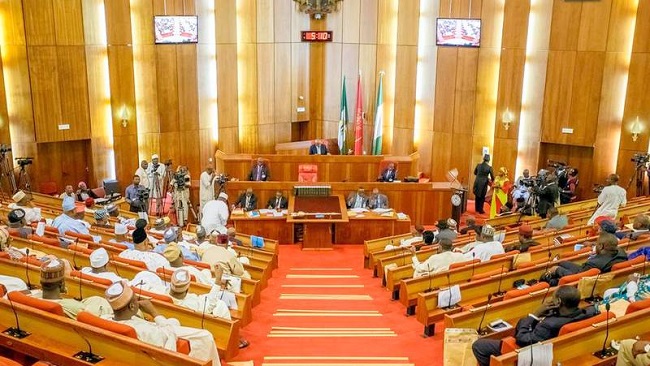
President Bola Tinubu has written to the Senate, seeking confirmation of 21 nominees for the boards of the Nigerian Midstream and Downstream Petroleum Regulatory Authority (NMDPRA) and the Nigerian Upstream Petroleum Regulatory Commission (NUPRC).

This is contained in a statement issued by Presidential Spokesperson, Mr. Bayo Onanuga, on Monday, January 5, 2026, in Abuja.

In the first letter, Tinubu nominated Sen. Magnus Abe as Chairman of the NUPRC Board.

The Nigerian Senate
The Nigerian Senate

Abe, who represented Rivers South-East Senatorial District for two terms, is a former board member of the Nigerian National Petroleum Corporation and currently chairs the National Agency for the Great Green Wall.

Other nominees for the NUPRC Board as non-executive commissioners are Mr. Paul Jezhi, a former Chairman of the Trade Union Congress in Kaduna State, and Mr. Sunday Babalola, a former Deputy Director of the defunct Department of Petroleum Resources.

The president also nominated executive commissioners to the board.

They include, Mr. Muhammed Lamido (Finance); Mr. Edu Inyang (Exploration and Acreage); Mr. Justin Ezeala (Economic Regulation and Strategic Planning); and Mr. Henry Oki (Development and Production).

Others are Mr. Indabawa Alka (Corporate Services and Administration); Mr. Mahmood Tijani (Health, Safety and Environment); and Ms. Olayemi Adeboyejo as Secretary/Legal Adviser.

Lamido and Adeboyejo were appointed in 2022 by former President Muhammadu Buhari, while Alka was appointed by President Tinubu in 2023. Inyang, Ezeala, Tijani, Babalola and Jezhi are new nominees.

In a second letter, President Tinubu nominated Mr. Adegbite Adeniji, a lawyer, as Chairman of the NMDPRA Board.

Adeniji has over 30 years’ experience in energy and natural resources and previously served as Special Technical Adviser to the Minister of State for Petroleum on upstream and gas matters.

He is currently the Managing Partner at ENR Advisory.

Also nominated as non-executive members are Chief Kenneth Kobani, a former Minister of State for Trade and former Secretary to the Rivers State Government, and Mrs. Asabe Ahmed.

Other nominees for the NMDPRA Board are Mr. Abiodun Adeniji (Executive Director, Finance); Mr. Francis Ogaree (Executive Director, Hydrocarbon); Mr. Oluwole Adama (Executive Director, Midstream and Downstream Gas Infrastructure); and Dr Mustapha Lamorde (Executive Director, Corporate Services and Administration).

Adama was appointed in 2024, while Adeniji and Lamorde were appointed in 2021 and Ogaree in 2022 by the late President Muhammadu Buhari.

Additional nominees are Mr. Yahaya Yinusa (Executive Director, Distribution Systems); Mr. Adeyemi Aminu (Executive Director, Corporate Services); Ms. Modie Ogechukwu (Executive Director, Economic Regulation and Strategic Planning); and Mr. Olawale Dawodu as Board Secretary/Legal Adviser.

The President urged the Senate to consider and approve the nominees expeditiously.

The request followed the recent confirmation by the Senate of Mrs. Oritsemeyiwa Eyesan as Chief Executive Officer of NUPRC and Saidu Mohammed as Chief Executive Officer of NMDPRA.

Tinubu charged all nominees to discharge their duties professionally in regulating Nigeria’s oil and gas sector.

By Muhyideen Jimoh

Turning LNG oversupply into opportunity: Why Africa’s gas future depends on infrastructure

0

Global Liquefied Natural Gas (LNG) supply is set to surge from 2027, driven by new projects and expanded production in the U.S. and Qatar. Bloomberg’s Global LNG Market Outlook 2030 forecasts global supply reaching 594 million tons by 2030 – a 42% increase from 2024 – with a projected 15-million-ton oversupply in international markets.

While geopolitical risks and potential project delays could shift this balance, the prospect of sustained LNG surplus poses a critical question for Africa: how can the continent strengthen domestic gas value chains to shield itself from global market volatility?

Tanzania LNG
Tanzania Liquefied Natural Gas (LNG) project

Rising African Demand Constrained by Infrastructure

Africa’s natural gas production is rising, with several new LNG projects coming online across the continent. North Africa currently produces two-thirds of the continent’s gas, but the African Energy Chamber’s (AEC) State of African Energy 2026 Outlook projects this share falling to 40% by 2035 as sub-Saharan output accelerates. By 2050, sub-Saharan LNG supply could quadruple, while African gas demand is expected to grow 60%, from 55 billion cubic meters (bcm) in 2020 to 90 bcm.

Despite this growing demand, most gas continues to be exported. The primary bottleneck is infrastructure: limited pipeline networks, underdeveloped transmission systems and insufficient processing and storage prevent gas from reaching domestic markets. As a result, LNG exports remain the most viable monetisation route, backed by international offtake contracts and financing structures.

Financing constraints further exacerbate the challenge, as domestic infrastructure projects require patient capital, government support and credit enhancements, which are often easier to secure for export-focused LNG developments. Addressing this imbalance will demand an infrastructure-led strategy that aligns production with domestic pipelines, power generation and regional interconnections.

New Projects Signal Momentum

Recent developments suggest positive momentum toward a more integrated African gas economy. In the LNG sector, countries are constructing terminals to support domestic and regional access, including projects at Richards Bay in South Africa and the Port of Nador in Morocco. Earlier this month, Ethiopia signed a landmark agreement to advance the Gas-by-Rail Economic Corridor Initiative, a 75,000-km freight railway system designed to carry LNG to more than 40 sub-Saharan nations, providing direct pathways to high-demand markets.

Cross-border and power generation infrastructure is also expanding. Several major pipeline projects are underway, including the $25 billion Nigeria-Morocco Gas Pipeline traversing 13 West African states, the Trans-Saharan Gas Pipeline connecting Nigeria to Algeria, and the $1.5 billion Mozambique-Zambia pipeline announced in 2025.

Senegal is developing a multi-phase gas network linking offshore production to power plants, industrial zones and urban areas, while Ghana plans five multi-purpose petrochemical plants, each producing 90,000 barrels per day of chemicals such as fertilisers and lubricants to support industrial and agricultural sectors.

A continental push toward gas-to-power is increasingly evident, supported by policy reform and efforts to expand electricity access. The AEC outlook projects natural gas supplying 45% of Africa’s power by 2050. Countries including Nigeria, South Africa, Angola, Senegal, Ghana and Mozambique have integrated gas-to-power goals into national strategies, aiming to translate rising gas production into reliable electricity, cleaner cooking solutions, and broad-based economic growth.

“Export projects alone will not secure Africa’s energy future. Strategic investment in gas infrastructure is what will determine whether rising production translates into electricity access, industrial capacity, and economic resilience,” states NJ Ayuk, Executive Chairman, AEC.

With domestic gas demand rising, infrastructure projects underway and export markets becoming increasingly competitive, African Energy Week 2026 offers a strategic forum to reposition gas not merely as an export commodity, but as a foundation for long-term energy security, industrial development and inclusive growth across the continent.

Drivers identified as concern heightens over butterfly decline in Nigeria

0

Butterflies are becoming less visible in Nigeria, and similar patterns are being recorded across many parts of the world. Environmental scientists widely recognise that declining butterfly populations are part of a broader global reduction in insect life linked to human activities. In Nigeria, butterfly decline is driven by the same pressures seen globally, including chemical exposure, loss of native plants, climate stress and weak biodiversity monitoring.

Despite their role as indicators of environmental health, butterflies receive little policy or research attention in Nigeria, unlike bees. Yet butterflies are part of a wider group of pollinators whose presence reflects ecosystem stability. Because they are highly sensitive to environmental change and closely tied to specific plants, butterflies are often among the first species to decline when ecosystems are under stress.

Butterfly
Butterfly

Butterflies are especially vulnerable to pesticides because of how they feed and reproduce. Caterpillars depend on specific host plants, and once these plants absorb chemical residues, the insects are exposed directly. In Nigeria, commonly affected host plants include cassava (Manihot esculenta), wild senna (Senna occidentalis), milkweed species (Calotropis procera) and passion vine (Passiflora foetida), all of which support different butterfly species at various stages of their life cycle. These plants are frequently sprayed with herbicides or removed entirely during land clearing.

The widespread use of pesticides is not unique to Nigeria. Globally, long-term ecological studies have linked increased chemical use in agriculture and urban spaces to sustained declines in insect populations, including butterflies and other pollinators. What distinguishes Nigeria is the scale of informal chemical use.

Agrochemicals are often sold without adequate labelling or guidance, and herbicides intended for farms are routinely applied along roadsides, drainage channels and residential plots. These areas may appear environmentally insignificant, but they often host native plants that support pollinators.

Nigeria regulates agrochemicals through the National Agency for Food and Drug Administration and Control (NAFDAC), yet environmental researchers note that enforcement gaps allow misuse to persist. Even approved chemicals can become harmful when applied indiscriminately or outside their intended settings. For butterflies and other pollinators, exposure at the larval stage is particularly damaging, reducing survival before populations can recover.

Habitat loss is another critical factor, though it is often misunderstood. Butterfly decline extends beyond disappearing forests. Many species depend on plants commonly regarded as weeds, such as Tridax procumbens, Chromolaena odorata and Aspilia africana, which provide nectar for adult butterflies and other insects. In urban and peri-urban Nigeria, these plants are routinely cleared during landscaping and sanitation exercises. The result is an environment that appears orderly but lacks the biological diversity pollinators need to survive.

Similar trends have been documented globally. In Europe and North America, long-term monitoring programmes show sustained butterfly declines associated with intensive land use, pesticide exposure and habitat simplification. In Africa, including Nigeria, comparable long-term data are largely absent.

However, local studies in protected areas indicate that butterfly diversity drops sharply where vegetation is disturbed. Scientists caution that the lack of national monitoring does not suggest stability; it highlights a blind spot in biodiversity governance.

Climate change adds further pressure. Butterflies and other pollinators are sensitive to temperature and rainfall patterns that influence breeding cycles and plant growth. Rising heat levels and increasingly unpredictable rainfall affect both insects and the vegetation they rely on. Global climate assessments consistently show that insects in tropical regions face heightened risk because they already operate close to their physiological limits.

Butterfly decline matters beyond conservation concerns. Butterflies contribute to pollination networks that support wild vegetables, medicinal plants and shrubs important for ecosystem balance and household resilience. Plants such as Ocimum gratissimum (scent leaf), Vernonia amygdalina (bitter leaf) and various wild legumes benefit from diverse insect pollination. As pollinator diversity declines, plant reproduction becomes less reliable, affecting food diversity and ecosystem stability.

Nigeria does not currently track butterfly populations at a national level, and insects are rarely included in environmental impact assessments. Globally, butterflies are widely used as indicator species because changes in their populations provide early signals of environmental degradation. Without similar monitoring in Nigeria, environmental damage is often recognised only after it becomes widespread.

Addressing butterfly and pollinator decline requires more than awareness. Environmental experts point to the need for stricter control of informal agrochemical markets, biodiversity-sensitive sanitation and land-clearing practices, and the inclusion of insects in environmental monitoring and impact assessments. Establishing basic national tracking for indicator species such as butterflies would provide early warnings and help guide land-use and chemical policies.

The pressures affecting butterflies in Nigeria mirror those driving insect losses worldwide, shaped locally by weak regulation, everyday land-use practices and limited data. Without deliberate changes in how chemicals are used, land is managed and biodiversity is monitored, butterfly decline will continue alongside broader environmental changes that affect ecosystems and livelihoods.

By Oyeyemi Abolade

NCDMB kickstarts content research challenge, promises awards

0

The Nigerian Content Development and Monitoring Board (NCDMB) in December 2025 commenced the Nigerian Content Research, Innovation and Technology Challenge 2025/2026 with a call on interested individuals, research institutions, academia, oil and gas industry suppliers, and members of the public with research innovations, to submit proposals for evaluation and admission into the NCDMB Technology Innovation and Incubation Centre (TIIC), Yenagoa, Bayelsa State.

The competition, which seeks to identify and develop new technologies to address specific challenges in the oil and gas industry and its linkage sectors, requires that proposals be in line with approved thematic areas and priority industry challenge, namely, Geological and Geophysical Studies, Local Materials Substitution Studies, Technology Development Studies, Health, Safety and Environmental Studies, Engineering Studies, and Renewable Energy.

Felix Omatsola Ogbe
Felix Omatsola Ogbe, head of the NCDMB

For Geological and Geophysical Studies, proposals have to focus on developing solutions related to exploration, big data, and real time logging data processing, while those for Local Materials Substitution Studies have to concentrate on sustainable materials for environmental remediation, materials for development of cryogenic technology for liquefied natural gas (LNG), refinery, and other applications, as well as local materials for ultra-high temperature pressure cementing.

For Technology Development Studies, the NCDMB requires innovation on denationalisation technology, application of Internet of Things to exploration and production, and condensate refining technology, while proposals for HSE Studies are expected to deal with carbon capture utilisation and storage technology to reduce greenhouse emission, depollution and produced water management system, and hydrogen production techniques to enhance carbon dioxide capture.

In respect of Engineering Studies, proposals are expected for developing technology solutions for enhanced oil recovery, refinery units technology to improve efficiency, laboratory analytical equipment for experiment and materials testing, and drilling technology, instrumentation, and control systems.

For Renewable Energy, proposals are expected from solar energy technologies, wind energy solutions, and energy storage systems, such as battery technologies, hydrogen storage, thermal storage, and molten salts.

The proposals, which should not be more than 1,500 words and to be submitted via email address (info@tiic.com.ng) not later than a month from the date of publication, are required to be in the following format: 1. Company/institution name 2. Thematic area 3. Title of innovation 4. Description of innovation 5. Objective, vision, mission 6. Team structure 7. Funding model and budget estimate 8. Marketing plan 9. Risk analysis.

At the first stage of the competition, the top 30 proposals will be selected and the teams assigned mentors to guide them towards developing a compelling demo and presentation. Proposals will be reduced to 10 at the second stage, and further reduced to five on the final day of the competition where the winners will be determined.

According to the Board, “the innovators will present their business pitches/demos to corporate venture capitalists to invest, drive innovation, and expand market reach, while helping emerging business grow.”

Prizes will be awarded to the top five winners of the competition in the form of cash, mentorship opportunities, and media coverage, while the top 10 participants will be onboarded into the TIIC at the Nigerian Content Tower for guidance and further development of their innovation to commercialisation.

Firm highlights role in Lagos-Calabar Coastal Highway project

The Lagos-based firm of Natural Eco Capital Limited (NEC) has disclosed that it played a central role in the actualisation of the Lagos–Calabar Coastal Highway project.

Apart from preparing the Environmental and Social Impact Assessment (ESIA) for the project, NEC disclosed in a statement that it obtained all required national regulatory approvals.

“Most notably the key approval from the Federal Ministry of Environment (FMEnv), thereby ensuring full legal compliance. The statutory disclosure process, managed transparently, promoted stakeholder engagement and accountability.

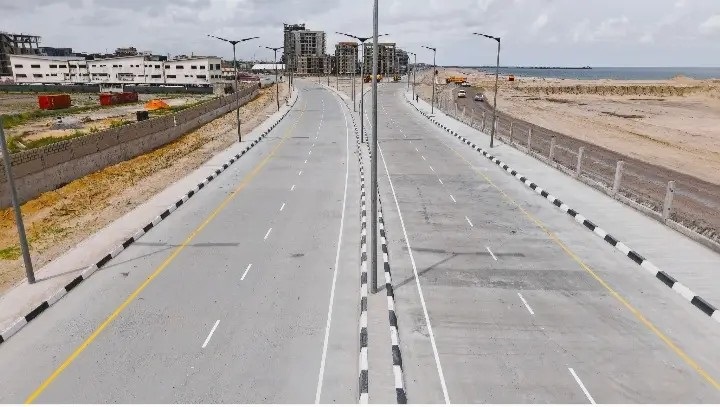
Lagos-Calabar Coastal Highway

“By delivering regulator-approved ESIAs, NEC established the indispensable legal and technical foundation upon which lenders could confidently conduct due diligence and advance financing discussions,” the firm stated.

Dr. Eugene Itua, CEO of NEC, explained: “Our mandate was to protect the project from regulatory risk and provide the legal foundation for financing. By securing approvals for both Section 1 and Section 2, we ensured the Lagos–Calabar Coastal Highway could move forward with confidence.”

He added that, after NEC secured regulatory approvals, Sky Kapital led the lender-focused aspects of the project.

“Sky Kapital adapted the project’s management plans to meet international lender frameworks, including the IFC Performance Standards. Their work aligned regulatory compliance with lender requirements, ensuring the project remains bankable and meets global safeguards. This approach enhances credibility, reduces risk, and accelerates financing discussions.

“This partnership ensures the Lagos–Calabar Coastal Highway is fully compliant with Nigerian law and aligned with international lender criteria, making it a secure and attractive investment. Congratulations to the Federal Government of Nigeria, the Federal Ministry of Works, and Hitech Construction Company on achieving this milestone,” disclosed Itua.

Meanwhile, President Bola Tinubu has welcomed the $1.26 billion funding agreement for the Lagos–Calabar Coastal Highway, calling it a transformative investment to address transport challenges, improve connectivity, and drive economic growth through new business and job opportunities along the corridor.

The Lagos–Calabar Coastal Highway, spanning over 700 km, is among West Africa’s most ambitious road projects. It is expected to facilitate regional trade and ease the movement of goods and people. The new funding is for Section 2 (47.5 km–104 km), a segment that has been politically sensitive and subject to public scrutiny.

×