Home Blog Page 51

Alcohol ban in small pack sizes to reduce underage drinking – NAFDAC

0

The Director-General, National Agency for Food and Drug Administration and Control (NAFDAC), Prof. Mojisola Adeyeye, says the ban on alcohol in small pack sizes remains the best solution to tackle the menace of underage drinking.

Adeyeye said this at a news conference in Abuja on Tuesday, March 3, 2026, to mark the commencement of enforcement of the ban on sachet alcoholic drinks nationwide.

The enforcement would be carried out by the NAFDAC, National Orientation Agency (NOA) and the Federal Competition and Consumer Protection Commission (FCCPC).

Mojisola Adeyeye
Prof. Mojisola Adeyeye, Director-General, National Agency for Food and Drug Administration and Control (NAFDAC)

The NAFDAC boss said restricting access to sachets and small volume bottles, which could be easily concealed, would limit children’s access to alcohol.

According to her, alcohol is one of the most widely used substances of abuse among youths.

Adeyeye said several studies showed a rapid increase in alcohol availability, production, importation and consumption across age groups in recent decades.

She added that the availability and easy access to alcohol had been identified as a contributory factor to the increasing alcohol consumption among minors.

Adeyeye recalled that, in 2018, the Association of Food and Beverage and Tobacco Employers (AFBTE) and the Distillers and Blenders Association of Nigeria (DBAN), which are part of NAFDAC council, reported NAFDAC management to the Ministry of Health and Social Welfare.

“In 2018, AFBTE and DBAN took NAFDAC to the Ministry of Health and Social Welfare that we were trying to reduce the concentration of alcohol in sachets. By that time, it was like 50 per cent in the sachet.

“DBAN and AFBTE said that their businesses would be destroyed. That was 2018. The then Prof. Pate, the Minister of Health, gave these trade groups five years to reorganise their business.

“On Feb.1, 2024, five years after, we started enforcement because our mandate is to regulate and control the manufacture, importation, exportation, distribution, advertisement, sale and use. Of seven regulated products, alcohol is part of food.

“They resisted us and they took us to the Committee on NAFDAC at the National Assembly, who told us to suspend what we were doing in 2024. It went back and forth throughout 2024. We couldn’t do what we were supposed to do.

“In December 2024, the then Minister, Prof. Pate,  said we should give an extra one year and we gave it,” she said.

The NAFDAC director-general said after the agency started enforcement following the order by the Senate, the trade groups also sought for another extension.

“However, in 2018, when this moratorium was given, we were also told to do a survey to even see the impact on our children. We did our survey in NAFDAC.

“The results were not pleasing to the disciplinary group. They said they want an independent survey. So, we had an independent survey. It was conducted in 2021 during the pandemic,” she said.

Adeyeye said the overall objective of the research was to undertake a national survey of consumers and retailers of alcohol, beverages and wines to determine the extent of alcohol abuse among the underage.

She said about 2,000 respondents were sampled across the six geopolitical zones, adding that the result was damning to the country.

Adeyeye said findings showed that 54.3 per cent of minors and underage obtained alcohol by themselves from various sources, while 49.9 per cent patronised retailers selling sachets and pet bottles.

The NAFDAC boss, who said 50 per cent of children drink alcohol, said findings further suggest that minors and underage also access alcoholic drinks from friends and relatives, as well as from social guardians.

“Of those who procure drinks for themselves, 47.2 per cent of minors and 48.8 per cent of underage procure drinks in sachets because it is easy to conceal.

“Whether you are a good parent or a bad parent, it doesn’t really matter. These sachets are easy to conceal and that is what NAFDAC has banned.

“The survey data revealed that 63.2 per cent of minors and 54 per cent of underage drink alcohol occasionally, while 44.3 per cent and 38.3 per cent of adults drink alcohol occasionally and daily respectively.

“So, they even drink it more than adults because it is easy to conceal. Additionally, 9.3 per cent of minors and 25.2 per cent of underage children consume alcoholic beverages.

“And 11.3 per cent of minors and 9.4 per cent of underage consume alcohol at least once a week. As young as nine years old in this survey consume alcohol,” she said.

According to her, most minors and underage buy alcohol for themselves. It’s about N50 to buy a sachet of alcohol. Some people have been made rich, but some children are losing their livelihoods and future.

“Some children are potential patients for liver cirrhosis, kidney failure, mental instability.

On the pattern of alcohol consumption and abuse by minors and underage, the survey findings revealed that about 11.7 per cent of underage children are ever engaged in binge drinking.

“This is mostly reported in Gombe. In terms of the most use of alcohol, it is Lagos and Rivers states.”

Adeyeye said NAFDAC expressed concern following its mandate aimed to ensure protection of public health, including children.

Speaking on its impact on health and brain development, she said alcohol could damage the hippocampus, memory centre in the brain and prefrontal cortex leading to permanent issues with learning, memory and impulse control.

According to her, underage drinking is linked to liver and kidney damage.Hypertension, disrupted hormone growth and increased cancer risk later in life.

This, she said, also increases risk of depression, anxiety and low self-esteem.

“Youth who begins drinking before age 15, the minors and underage in our study are 41 per cent more likely to become dependent on alcohol. And this study also shows that they graduate to start taking cocaine and other narcotics.

“It also has behavioural consequences as violence remains a major factor in youth suicides, homicides and motor vehicle crashes or accidents.

“Risky behaviour is strongly linked to unprotected sexual activity, unwanted pregnancies and sexually transmitted diseases,” she said.

According to her, it also contributes to academic problem because drinking often leads to lower grades, missed classes and impaired cognitive function.

“In our country, it is responsible for banditry. It is responsible for kidnapping. You cannot be in your right mind and point a gun at somebody. It starts from alcohol and then goes on to hard drugs.

“Because of all these, the Senate made its resolutions on Nov. 6, 2025, and were communicated to the Secretary to the Government of the Federation (SGF) on December 1, 2025.

“The resolutions urge NAFDAC not to grant further extension to the moratorium and to ensure immediate strict enforcement of the ban on such alcohol and alcohol in small bottles.

“It urges the Federal Ministry of Health and Social Welfare to support NAFDAC on the ban on such alcohol and alcohol in smaller volumes.

“It urges the Federal Ministry of Health and Social Welfare to release its national alcohol policy that includes prohibition of alcohol in sachets and small volume less than 200 mls.

“It urges the National Orientation Agency and NAFDAC to collaborate and intensify nationwide sensitisation of dangers of alcohol in sachets and small volume bottles,” she said.

Earlier, the Director, Corporate Affairs, FCCPC, Mr. Ondaje Ijagwu, said the commission would subject offenders in the food and drug sector to the offences and penalties based on the extant laws.

“So, by tomorrow, when we begin full enforcement, and which we must, we will not be asked questions as to why we are subjecting offenders to a certain kind of penalties and sanctions. Our sanctions are quite severe.

“By the time we begin implementation, and which we are commencing immediately, Nigerians would know,” Ijagwu said.

The Director-General of NOA, Malam Lanre Onilu, said the Federal Government, through NAFDAC, had banned the production and sale of alcohol in sachets and in PET or glass bottles below 200 millilitres, effective from Jan. 1, 2026.

According to Onilu, this decision is a deliberate public health intervention aimed at reducing underage access to cheap, high-concentration alcohol and curbing the alarming pattern of harmful consumption across our communities.

“This is why this collaboration is important. NAFDAC safeguards public health through regulation. FCCPC protects consumer rights and ensures responsible market practices.

“The National Orientation Agency mobilises citizens for behavioural change and national consciousness. Together, we are aligning regulation, consumer protection and public enlightenment to ensure that this policy achieves its intended impact,” he said.

By Deji Abdulwahab

Publisher declares for Lagos Island Constituency II House of Assembly seat ahead of 2027 poll

0

The Publisher of online news platform, August24news.com, Mr. Ajagbe Adeyemi Teslim, popularly known as “Omoatitebi”, has formally entered the political arena, declaring his intention to contest for the Lagos State House of Assembly seat representing Lagos Island Constituency II under the ruling All Progressives Congress (APC) ahead of the 2027 general elections.

Ajagbe made his aspiration public during a press conference held in Lagos on Thursday, March 26, 2026, attended by selected journalists, signalling his transition from the press gallery to the legislative chamber.

 Ajagbe Adeyemi Teslim
Ajagbe Adeyemi Teslim (right)

From the Newsroom to the Assembly Floor

A seasoned media entrepreneur with decades of political reporting experience in Lagos, Ajagbe cuts a distinctive figure among the emerging crop of aspirants. His declaration is fuelled, he says, by repeated calls from constituents – particularly the youths – who have experienced his grassroots leadership style firsthand.

“My humble self and my media platform have been reporting Lagos politics effectively, particularly the Lagos State House of Assembly, for decades,” Ajagbe told journalists at the event. “I am versatile about the Lagos State House of Assembly doctrine, politics and lawmaking. I have learnt the ropes of legislation in Lagos State, and I shall deliver perfectly without any lacuna.”

The journalist-turned-politician framed his legislative ambition as a civic duty – a way of “paying back to his community” – drawing on what he described as a wealth of experience in media, communications, and public exposure.

A Political Résumé Rooted in Grassroots Mobilisation

Ajagbe is no stranger to Lagos Island’s political landscape. He previously contested a Councillorship seat in Ward E3, Lagos Island East LCDA, and later served as the Special Adviser on Media and Digital Communications to the Executive Chairman of Lagos Island East LCDA, Muibi Alade Folawiyo – a role that deepened his immersion in local governance and party administration.

Beyond advisory roles, Ajagbe has left visible imprints on APC political culture in Lagos. He is credited as the architect of the 2011 Lagos Island APC Almanac, a landmark publication that profiled APC leaders, LGA executives, and ward chairmen across all 10 wards – a document widely used as a strategic guide during federal, state, and local government primaries.

He also conceived the celebrated Governance Advisory Council (GAC) Golden Frame, branded the Lagos GAC Frame, a curated political portrait of APC leaders from across the three Lagos senatorial districts. The frame was officially presented to Speaker of the Lagos State House of Assembly, Dr. Mudashiru Ajayi Obasa.

In a further demonstration of his advocacy for women in governance, Ajagbe also produced the 80 Distinguished Female Political Office Holders Frame in Lagos State, covering the period from 1999 to date – a project unveiled by Lagos First Lady, Dr. (Mrs.) Ibijoke Sanwo-Olu.

Another unique political achievement of Ajagbe is the Worldwide known Political Platform known as The Great Islanders, a loop that has all the world famous and powerful political gladiators in Lagos where Lagos and Nigeria Politics has been discussed where Ajagbe remains the sole administrator of the Loop.

Party Leaders Back His Candidacy

The declaration has attracted swift endorsements from within the APC fold in Lagos Island Constituency II. Both the Chairman of the APC Leadership Forum, Jide Damasio, and the newly elected APC Party Chairman for Lagos Island Constituency II, Ibrahim Ganiu, expressed strong support for the aspiring lawmaker.

“Ajagbe is no doubt a core party man – dedicated and loyal,” both officials said in a joint statement. “His aspiration is a welcome development in our party and in Lagos Island. It signifies that Islanders are well comfortable with the leadership style of the ruling APC, and that youths are motivated to work for the development and progress of our dear party.”

They further noted that Ajagbe had consistently deployed his professional platform – his pen and media channels – to champion the party’s message and advance Nigeria’s development.

A Race to Watch in 2027

As the 2027 electoral cycle begins to take shape, Ajagbe’s entry into the Lagos Island Constituency II race adds a compelling dimension to what is shaping up to be a highly competitive legislative contest. His background in journalism, coupled with his proximity to APC power structures in Lagos, positions him as a formidable presence in the emerging field of aspirants.

With the APC primary process yet to commence, political watchers in Lagos Island will be monitoring closely whether the pen-wielding publisher can convert media influence and grassroots goodwill into a winning legislative ticket.

EcoCirculate expands community-driven circular economy efforts to Ojokoro

The Office of Climate Change and Circular Economy (OCCE) has once again advanced Lagos State’s sustainability agenda with the 7th edition of its flagship programme, EcoCirculate, held in Ojokoro LCDA over the weekend.

Having now reached over 11 communities across Lagos State, EcoCirculate continues to scale grassroots-driven circular economy solutions, reinforcing OCCE’s commitment to responsible waste practices and inclusive environmental action. The Ojokoro edition convened over 500 residents, demonstrating the growing community ownership of sustainable waste management practices.

The 7th edition was implemented in collaboration with the leadership of Ojokoro Local Council Development Area, bringing together traditional leaders, partners, educators, waste value chain actors, and residents to promote improved waste sorting, resource recovery, and environmental awareness at the grassroots level.

EcoCirculate
Mrs. Titilayo Oshodi, Special Adviser to the Governor on Climate Change & Circular Economy (OCCE), gives opening speech at EcoCirculate Ojokoro

Representing the Lagos State Government, the Special Adviser on Climate Change and Circular Economy, Mrs. Titilayo Oshodi, emphasised that effective waste management extends beyond infrastructure and policy. While investments in collection systems, processing facilities, and regulatory frameworks remain critical, she noted that real progress is shaped by everyday household decisions.

“EcoCirculate continues to demonstrate the value of coordinated community action that strengthens local waste systems while creating meaningful opportunities around recycling and resource recovery,” she stated.

Royal Presence and Private Sector Leadership

The event reflected the collaborative spirit that defines OCCE’s programming. Traditional rulers, including Oba Adeshoga Williams Adeyoola, the Oba of Orile Alagbado, alongside Barr. Oluyemisi Rosiji, Executive Chairlady of Ojokoro LCDA; Olalekan Oyekunle, Vice Chairman; and Mrs. Titilayo Oshodi, Special Adviser to the Governor on Climate Change and Circular Economy, were joined by private-sector partners such as Refab Africa, DecarbonIQ, C21st Century, Gas247, FABE International Foundation, PAKAM, and TrashUsers.

Their collective participation underscored the strength of multi-stakeholder collaboration in advancing circular economy objectives and delivering measurable environmental impact across communities in Lagos State.

Educating the Next Generation

A major highlight of the Ojokoro edition was the active participation of primary school students and their teachers. In collaboration with FABE International Foundation, students engaged in hands-on learning sessions designed to deepen their understanding of circular economy principles. Live demonstrations showcased how discarded materials, such as used tyres, can be repurposed into functional furniture. Practical waste-sorting exercises reinforced the importance of separating recyclables from general waste, empowering young participants to become environmental ambassadors within their schools and households.

Speaking on the programme’s impact, Adefarakin Ifeoluwa, Project Lead of EcoCirculate Ojokoro, noted: “Through Eco-Circulate, we educate communities on how to sort waste, reduce pollution, and practice recycling in simple, everyday ways. We also work with waste pickers and recyclers, supporting their livelihoods while keeping our environment clean.”

Building on Measurable Progress

Since its inception in 2024, EcoCirculate has expanded steadily across multiple local government areas in Lagos State. To date, the programme has facilitated the collation of nearly 39 thousand tonnes of recoverable waste – including plastics, textiles, and cartons – across participating communities, with contributions from the Ojokoro edition further strengthening these outcomes.

Beyond the data, EcoCirculate represents a shift in perception: waste is no longer viewed merely as a disposal challenge, but as a resource capable of supporting green enterprise, economic opportunity, and improved neighbourhood conditions when properly managed. The initiative continues to strengthen collaboration between residents, recyclers, aggregators, and local authorities – translating awareness into tangible environmental and socio-economic benefits.

Strengthening Partnerships for Scaled Impact

OCCE reaffirmed its commitment to deepening partnerships across the public and private sectors to scale circular economy interventions that deliver long-term environmental and socio-economic value. Sustained collaboration, the Office noted, remains essential to building resilient waste systems capable of meeting the demands of a rapidly growing urban population.

With Ojokoro now part of the expanding EcoCirculate network, the focus shifts to sustaining momentum and broadening reach across Lagos State. OCCE remains committed to ensuring that the knowledge, skills, and awareness gained translate into sustained community-led action.

By fostering continued collaboration between residents, schools, partners, and local authorities, EcoCirculate aims to embed responsible waste practices into daily life – transforming environmental awareness into measurable community impact.

When communities, government, and partners work together, sustainable change is not only possible – it is achievable.

Study finds rising climate awareness, but women’s voices still sidelined

Malawian communities are increasingly aware of climate change and their rights in the face of its impacts, but women remain largely excluded from meaningful decision-making despite being routinely included in climate discussions, according to a new study by the Civil Society Network on Climate Change.

The findings were presented at a stakeholder validation workshop for the network’s endline study on knowledge, attitudes and practices related to climate injustices in Malawi. The workshop sought to validate recommendations and assess progress since a 2024 baseline assessment conducted in Dowa District.

Malawi
Some of the stakeholders during the validation workshop for the Endline Study on KAP

The research paints a picture of a country making strides in climate literacy while struggling to translate awareness into equitable participation – particularly for the women who bear a disproportionate burden of climate impacts.

Awareness up, equity lagging

The study was conducted under the Climate Justice Communities programme, a seven-district initiative launched in 2023 and implemented in Karonga, Salima, Machinga, Neno, Zomba, Phalombe and Chikwawa.

The programme, supported by the Scottish Government through DAI Global UK and Oxfam Malawi, is scheduled to conclude later this year.

While the research documented meaningful gains in community understanding of climate change issues and individual rights, it identified a persistent disconnect between women’s presence in climate discussions and their actual influence on outcomes.

Women are often invited to the table, the study found, but their perspectives are not adequately reflected in the policies and decisions that emerge from those conversations.

Time for government ownership

CISONECC National Coordinator, Julius Ng’oma, said the findings should compel the government to take a more active role in protecting citizens’ climate-related rights.

“It is time for the government to take ownership of the process of safeguarding communities in terms of human rights issues,” Ng’oma said.

He called for a more deliberate approach to translating the study’s recommendations into action, questioning at what level awareness efforts should be scaled.

“The Government of Malawi has a big role to play, since it represents the people. It must ensure that citizens’ rights are protected,” Ng’oma said.

Women demand a real seat at the table

Community representative, Anjiru Mlenga, from Liwonde in Machinga District stressed the importance of valuing women’s perspectives to achieve climate justice in Malawi.

This message resonated with the study’s central finding on the gap between inclusion and influence.

Fred Simwaka, deputy director in the Ministry of Gender, Community Development and Social Welfare, acknowledged the challenge and said the study is expected to improve the integration of women’s and marginalised groups’ voices in environmental decision-making.

Simwaka called for deliberate approaches, such as focus group discussion,s to ensure that both men’s and women’s perspectives are consolidated in shaping climate-related policies.

“It is crucial to ensure that women’s contributions are considered,” Simwaka said, signalling government awareness of the disparity even as advocates push for faster progress.

A closing window

With the Climate Justice Communities programme set to end later this year, the study’s findings carry added urgency.

The recommendations emerging from the validation workshop will help determine whether gains in climate awareness and rights literacy translate into lasting institutional change – or fade with the program’s conclusion.

For CISONECC and its partners, the message is clear: awareness without equity is an incomplete victory, and Malawi’s climate response will remain inadequate until the voices of its most vulnerable citizens carry real weight in the rooms where decisions are made.

By Abraham Bisayi, AfricaBrief

FCTA ratifies N7.3bn waste collection, management contracts

The Federal Capital Territory Administration (FCTA) has approved N7.3 billion contracts for the provision of waste collection and management services in four delineated districts of the Federal Capital City.

Chief Felix Obuah, Coordinator, Abuja Metropolitan Management Council, disclosed this while briefing journalists on the outcome of the FCT Executive Committee’s meeting presided by Minister Nyesom Wike in Abuja on Monday, March 2, 2026.

Obuah identified the districts as Durumi, Wuye, Mabushi and Jabi.

FCTA
Chief Felix Obuah, Coordinator, Abuja Metropolitan Management Council, briefing journalists in Abuja

He added that the executive committee also approved the supply of diesel to Wupa Basic Waste Treatment Plant for the period of two years.

“The total figure for the award of these four contracts amounted to N7.3 billion,” Obuah said.

The coordinator also said that the committee equally approved a contract for the procurement of food and non-food items to support flood-affected persons in FCT.

By Philip Yatai

Dangote targets steel, power, ports in new industrial push

0

President of Dangote Group, Aliko Dangote, has unveiled plans to expand into steel production, electricity generation and port development as part of a broader ambition to accelerate industrialisation across Africa.

Dangote, whose conglomerate spans cement, sugar, salt, fertiliser, and petrochemicals, said his long-term goal is to deepen Africa’s manufacturing base beyond oil refining and position the continent as a global industrial force.

His latest flagship project, the Dangote Petroleum Refinery & Petrochemicals, is now operational and producing about 650,000 barrels of refined products daily. He said output is expected to double within the next three years as expansion plans progress.

Aliko Dangote
Aliko Dangote

However, Dangote in a recent interview with The New York Times, indicated that refining is only one phase of a larger vision.

“We have to industrialise Africa,” he said, noting that his next focus areas include the steel industry, expanding access to electricity and building additional port infrastructure to support large scale manufacturing and trade.

Industry analysts say entry into steel would position the group in a sector critical to infrastructure, housing and heavy industry, while investments in power and ports could address two of Nigeria’s most persistent constraints to economic growth.

Dangote cited India’s Tata Group as a model for diversified industrial expansion, describing the conglomerate’s multi sector footprint as an example of how large scale manufacturing can transform emerging economies.

Beyond expansion, Dangote said job creation remains central to his strategy. With Nigeria projected to require between 40 and 50 million new jobs by 2030, he argued that large scale industrial projects are essential to absorbing the country’s growing youth population.

The refinery alone currently employs about 30,000 workers, approximately 80 per cent of them Nigerians. Expansion across new sectors is expected to raise total employment within the group to about 65,000.

Dangote also announced plans to list shares in the refinery on the Nigerian stock market, a move that would broaden local participation in the asset.

Despite progress, he acknowledged that infrastructure gaps and crude supply challenges remain obstacles. He has previously raised concerns about logistics bottlenecks and inefficiencies in the oil value chain that complicate feedstock supply to the refinery.

Nevertheless, Dangote said the group would continue to invest aggressively in sectors that reduce import dependence and retain economic value within Africa.

“Nobody dared to do it, so we did it,” he said, reiterating his belief that large scale private investment is key to transforming Nigeria’s industrial landscape.

With cement plants operating across multiple African countries and a refinery that has reshaped Nigeria’s downstream outlook, Dangote’s next push into steel, electricity and port infrastructure signals a new phase in his ambition to industrialise the continent.

Exploring global biodiversity issues tackled by IUCN

Overview: A Landmark Year for Biodiversity

The 12-month period from February 2025 to February 2026 was one of the most consequential in IUCN’s history.

Against a backdrop of rapidly accelerating species loss, ocean degradation, and the continuing triple planetary crisis of climate change, biodiversity decline, and pollution, IUCN published two landmark Red List updates, played a central role at the Third United Nations Ocean Conference (UNOC 3) in Nice (June 2025) and convened the IUCN World Conservation Congress in Abu Dhabi (October 9 to 15, 2025), the world’s largest and inclusive biodiversity summit, held every four years.

Grethel Aguilar
Dr Grethel Aguilar, IUCN Director General

The Congress assembled under the theme “Powering Transformative Conservation.” Members adopted a landmark 20-year Strategic Vision (“Unite for Nature on the Path to 2045”), a new IUCN Programme 2026–2029, and the Abu Dhabi Call to Action on Species Conservation, positioning biodiversity protection as the centrepiece of the global response to the triple planetary crisis of climate change, biodiversity loss, and pollution. Taken together, these events produced a clearer, more sobering picture of the global biodiversity emergency than at any previous point, alongside the most ambitious governance framework IUCN has ever adopted.

The data confirm that approximately 28% of all species ever assessed by IUCN across all groups from corals to fungi to birds now face extinction. Yet the Red List also carries a message of hope: IUCN’s 2025-2 update demonstrated that without conservation intervention, extinction rates for birds and mammals over the past 30 years would have been up to four times higher. Conservation works. The challenge is to scale it equitably and rapidly enough to avert the biodiversity tipping points now visible across multiple ecosystems simultaneously (IUCN, 2025c).

Key Global Biodiversity Issues Tackled by IUCN (2024–2025)

1. Coral Reef Crisis: 44% of Reef-Building Corals Now Threatened

At COP29 in Baku (November 2024), IUCN published the most comprehensive coral reassessment in 16 years, finding that 44% of all reef-building coral species globally are now threatened with extinction – up sharply from one third in 2008. The primary driver is ocean warming and bleaching, intensified by the ongoing fourth global coral bleaching event declared in 2024, which affected reefs across the Indo-Pacific, Atlantic, and Indian Oceans simultaneously. Atlantic coral species are particularly severely threatened, with annual severe bleaching events, pollution, and disease compounding thermal stress.

IUCN reiterated the finding that keeping global warming below 1.5°C is the single most important intervention for coral survival. IUCN also called for the expansion of Marine Protected Areas (MPAs) with thermal refugia characteristics as a complementary adaptation strategy, alongside accelerated fossil fuel phase-out.

2. Tree Extinction: 38% of the World’s Trees at Risk – First Global Assessment

October 2024 brought the publication of the first Global Tree Assessment, jointly led by Botanic Gardens Conservation International (BGCI) and the IUCN SSC Global Tree Specialist Group, involving over 1,000 experts. The assessment found that at least 16,425 of 47,282 assessed tree species (38%) are at risk of extinction, with threatened tree species now outnumbering all threatened birds, mammals, reptiles, and amphibians combined. The significance of this finding extends far beyond aesthetics: trees provide the structural and functional scaffolding of terrestrial ecosystems, regulating carbon storage, water cycling, soil stabilisation, microclimate buffering, and habitat provision for most terrestrial species.

The highest concentrations of threatened trees are on islands, where deforestation, invasive species, urban development, and climate-driven sea-level rise converge. South America, home to the greatest tree diversity on Earth, had 3,356 of 13,668 assessed species (24.5%) at risk, with most threats attributable to agricultural expansion (particularly for soya and cattle) and selective logging. IUCN identified seed banking, botanic garden conservation, and community stewardship as critical ex-situ safeguards while habitat protection and restoration are scaled up.

3. Bird Declines: More Than Half of All Bird Species Now in Decline

The IUCN Red List 2025-2 update revealed that more than half of all bird species globally are now in decline — a finding confirmed by BirdLife International, IUCN’s official Red List Authority for birds. The 2024 Red List saw 25 bird species uplisted to higher threat categories, including 16 migratory shorebird species whose global populations have declined by more than a third in recent decades, with rates of decline accelerating in several cases. Five species were reclassified as Extinct, including four Hawaiian honeycreepers.

Agriculture (impacting 73% of threatened bird species), logging (50%), invasive alien species (43%), and climate change (37%) were identified as the dominant drivers of bird population decline. The 2025-2 update additionally added nearly 100 threatened European bee species to the Red List, and revealed that threatened European butterfly species increased by 76% over the last decade, underscoring the severity of pollinator collapse.

4. Arctic Seal and Freshwater Species Under Escalating Threat

The 2025-2 Red List update documented that three Arctic seal species have moved closer to extinction, directly attributable to sea ice loss driven by climate change – a finding that reinforces the IUCN Arctic Biodiversity Assessment’s warnings about the disproportionate rate of warming in polar regions. Simultaneously, IUCN and partners have elevated the crisis of freshwater biodiversity: one in three freshwater fish species is now threatened with extinction globally, with water extraction, pollution, damming, invasive species, and climate-driven drought and flooding converging to degrade freshwater ecosystems faster than any other biome.

IUCN’s 2025 Congress elevated freshwater biodiversity protection as a specific programmatic priority, with measurable targets for the 2026–2029 IUCN Programme period and celebrated the release of juvenile Danube sturgeons in Europe as a tangible recovery milestone (IUCN, 2025a; 2025c).

5. Fungi: An Overlooked Kingdom in Crisis

The IUCN Red List 2025-1 update broke new ground by surpassing 1,000 fungal species assessed – an important milestone given that fungi represent an estimated 2.5 million species on Earth, yet have been almost entirely absent from global conservation monitoring. Of 1,300 fungi now assessed, at least 411 are at risk of extinction. The dominant threats are deforestation (putting 198 species at risk), agricultural and urban land conversion (threatening 279 species), and changing fire patterns in the United States, which have radically restructured forest habitats.

IUCN Director General, Dr Grethel Aguilar, described fungi as “the unsung heroes of life on Earth” whose underground networks underpin ecosystem resilience, carbon storage in soil, and agricultural productivity. Their loss represents an invisible but potentially catastrophic degradation of the ecological foundations on which all life depends.

The 2025 IUCN World Conservation Congress: Key Outcomes

The 2025 Congress in Abu Dhabi (October 9 to 15) was described by IUCN as the most action-oriented in the organisation’s history, uniting over 10,000 participants from governments, scientific institutions, Indigenous communities, businesses, and civil society under the theme “Powering Transformative Conservation.” The Congress adopted close to 150 binding motions covering biodiversity, climate, health, ecocide, plastic pollution, and ocean governance.

The Abu Dhabi Call to Action formally declared that “humanity has reached a critical point,” with nature facing escalating, converging crises from climate change, degradation, biodiversity loss, pollution, and inequity. The IUCN Programme 2026–2029 sets actionable, outcome-focused targets to guide all Union components toward measurable biodiversity impact, five years ahead of the 2030 GBF deadline.

One of the most significant findings presented at the Congress was the positive conservation evidence: the latest Red List data demonstrated that without active conservation over the past 30 years, extinction rates for birds and mammals would have been up to four times higher. The IUCN Green Status of Species assessment for tigers found that, while global tiger populations remain critically depleted relative to historical baselines, intensive conservation investment has demonstrably slowed the rate of depletion, evidence of a concept for what sustained, science-based conservation can achieve.

Critically, the Congress positioned the One Health framework — recognising the inseparability of human, animal, and ecosystem health – as a guiding principle for conservation action, citing the 2024 joint IUCN–WHO report on Nature-Based Solutions and pandemic prevention. The High Seas Treaty (Biodiversity Beyond National Jurisdiction, BBNJ) and the 30×30 protection target were reaffirmed as non-negotiable milestones for marine biodiversity governance.

Looking Ahead: Priorities for 2026

COP30, Belém (November 2026): IUCN will be a central voice at the UN Climate Conference in Brazil, pushing for Nature-Based Solutions (NbS), biodiversity-climate co-benefits, and acceleration of the GBF 30×30 milestones ahead of the 2030 deadline.

High Seas Treaty Entry into Force: With 50 ratifications achieved by July 2025 and entry into force at 60, the first high seas Marine Protected Areas could be designated within 2026 – the first time in history that fully protected areas have existed beyond national waters covering 61% of the ocean.

Fungi Assessment Scale-Up: IUCN has committed to accelerating fungal Red List assessments toward a target of 5,000 assessed species by 2030, with dedicated funding secured through the IUCN Programme 2026–2029.

Freshwater Biodiversity Emergency: IUCN’s 2026–2029 programme specifically targets freshwater systems, with new partnerships targeting restoration of 30% of degraded freshwater habitats aligned to GBF Target 2.

GBF Midpoint Review (2025–2026): The Kunming-Montreal GBF is approaching its first formal progress review cycle; IUCN Red List and STAR metrics will serve as the primary scientific evidence base for assessing whether nations are on track to halt and reverse biodiversity loss.

By Okali Kelechi David, Programme Officer, Monitoring and Evaluation, Nigerian Environmental Study Action Team (NEST), Ibadan

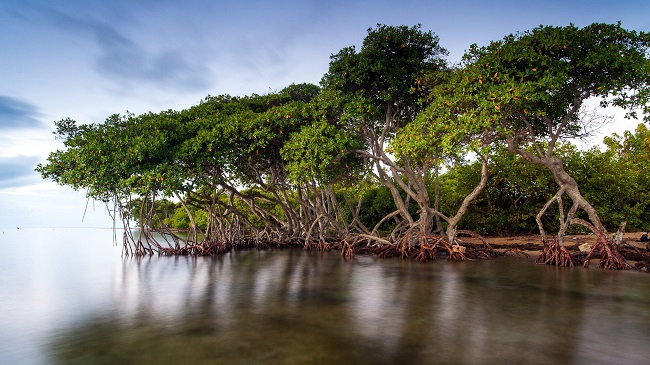
CSOs make case for protection of Cross River’s mangrove by forestry laws

A civil society organisation (CSO), We the People, has stressed the need for the Cross River’s mangrove forests to be fully protected under the state’s forestry laws.

Mr. Ken Henshaw, Executive Director of the organisation, made the call in Calabar on Monday, March 2, 2026, while reacting to the recommended review of the Cross River State Forestry Law, 2010.

It will be recalled that, in the last eight months, 19 environmental protection CSOs led by the organisation came together to review the Cross River Forestry Law 2010 and recommended stronger laws to protect the forests within the state.

Mangroves
Mangroves

Henshaw noted that mangroves were forests and not rainforests, and therefore should enjoy equal legal status and protection under the Forestry Commission framework.

He acknowledged challenges of mangrove forest protection such as firewood exploitation, but added that conservation rules must apply adequately to mangrove ecosystems.

According to him, community participation is embedded within procedures guiding forest reservation and management.

“The reviewed forestry law of the state enables the Forestry Commission to designate forests as reserves with stakeholder engagement.

“It introduced reforms supporting individuals and organisations seeking to restore degraded forests, particularly mangroves without bureaucratic bottlenecks.”

Henshaw explained that previous laws only recognised regeneration tied to future logging concessions, requiring 10-year management plans and heavy upfront payments.

He said that the recommended review of the Forestry Law created a category for conservation-driven restoration without logging intentions.

”Under the new framework, groups restoring mangroves need only submit management proposals for Forestry Commission approval.

”Once approved, such mangrove areas gain official protection, preventing illegal sales or encroachment by host communities.

“Following the reviewed law, restoration projects will now operate under the commission’s protection instead of relying solely on community goodwill.

“Also, the reform strengthens legal backing for mangrove conservation and shields restored areas from exploitation,” Henshaw said.

By Christian Njoku

NESREA seals Dai Jin Jia Quarry over environmental violations

The National Environmental Standards and Regulations Enforcement Agency (NESREA) has sealed Dai Jin Jia Quarry, Aco Village, Airport Road, Abuja, due to significant environmental violations.

Speaking with newsmen on Monday, March 2, 2026, after the exercise, the Director-General of NESREA, Prof. Innocent Barikor, said the measures were to reinforce the agency’s commitment to environmental safety and community protection.

Barikor, who was represented by Elijah Udofia, Director, Environmental Quality Control in the agency, said that a blasting operation had resulted in the unfortunate loss of a life on Feb. 25.

NESREA
Officials of the National Environmental Standards and Regulations Enforcement Agency (NESREA) during an Abuja enforcement operation

He said that the quarry was sealed in response to the grievous consequences of its operations.

“This action was taken in accordance with our agency’s commitment to uphold the highest environmental standards and ensure the safety of communities affected by such operations.

“It is distressing to see that in spite of the prior warnings and sealings, the facility chose to continue operations that not only violate National Environmental Regulations but also put lives at risk.

“In the face of this incident, we have taken immediate measures to reinforce our commitment to environmental safety and community protection,” he said.

Barikor recalled that the facility was previously sealed in 2025 due to significant environmental violations.

“The quarry has been sealed again, this time in response to the grievous consequences of its operations,” he said.

Barikor explained that preliminary investigation by officers of the Nigeria Police, Aco Division on Friday, revealed that the quarry did not have documented Blasting Operation Plan.

He said this was in violation of Regulation 17 of the National Environmental (Quarrying and Blasting Operations) Regulations 2013.

Barikor said the quarry could not produce documented Charge Load Density (CLD) (Quantity of Explosives) used for the blasting operation in violation of Regulation 23 of the National Environmental (Quarrying and Blasting Operations) Regulations 2013.

He said that the Warning Alarm System (Siren) of the quarry was faulty, as stated by the facility’s blaster during the investigation on Friday.

Barikor said this was in violation of Regulation 23, Section 6 of the National Environmental (Quarrying and Blasting Operations) Regulations 2013.

He assured the public that all responsible parties would be held accountable.

“This incident serves as a stark reminder of the critical importance of adherence to environmental regulations. We must prioritise not only compliance with laws but also the safety and well-being of our citizens.

“We urge all operators within the quarry sector and beyond to adhere strictly to the environmental standards set forth by NESREA.

“The safety of the environment and our communities cannot be compromised.

“We will continue to monitor compliance and take necessary actions against violators to ensure such tragedies do not occur in the future.

By Doris Esa