Home Blog Page 5

Enugu trains youth champions to ignite climate education in secondary schools

The Office of the Senior Adviser to the Governor of Enugu State on Climate Policy and Sustainable Development in collaboration with the Office of the First Lady of Enugu State, and the Enugu State Ministry of Environment and Climate Change, with support from the United Nations Children’s Education Fund (UNICEF) Enugu Field Office, has concluded a one week training for climate champions in Enugu State.

The immediate task of the trained Climate Champions is to implement the pilot phase of an intensive climate education campaign in selected secondary schools in the state. The sessions were hosted simultaneously at the Enugu State Secretariat and the ICT Centre of the University of Nigeria, Nsukka (UNN).
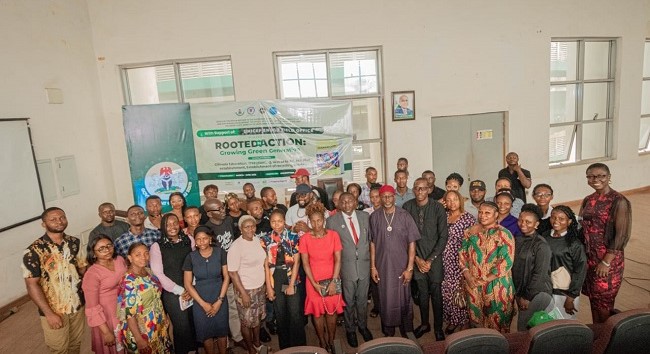
Enugu State climate champions
Participants at the in-person engagement

The programme, which combined four days of virtual sessions with a final day of in-person engagement, successfully equipped 40 Climate Champions between the ages of 18 and 25  including 20 teachers, with the knowledge and tools to deliver impactful climate education using the newly developed Climate Education Manual that was co-created through a collaborative process involving the Office of the Senior Adviser to the Enugu State Governor, alongside teachers and students across the State, ensuring that the training and knowledge reflects both global realities and local context.

The Climate Champions were trained to deliver lessons that are not only informative but also emotionally resonant, connecting rising temperatures and extreme weather patterns to everyday experiences within their respective communities.

In his keynote address, the Commissioner for Environment and Climate Change, Enugu State, Prof. Sam Ugwu, represented by the Permanent Secretary of the Ministry, Mr. Ozoemena Ezeh, emphasised the importance of early-stage climate education, which he said would help the younger generation mitigate climate change impacts and learn how to live a sustainable lifestyle.

“This is timely, as catching the young ones early will help them to understand the impacts of climate change and how to practice sustainability from a very young age,” he stated.

In his opening remark, the Senior Adviser to the Governor of Enugu State on Climate Policy and Sustainable Development, Professor Chukwumerije Okereke, congratulated the climate champions on being selected to carry out this important task and for completing the week-long training.
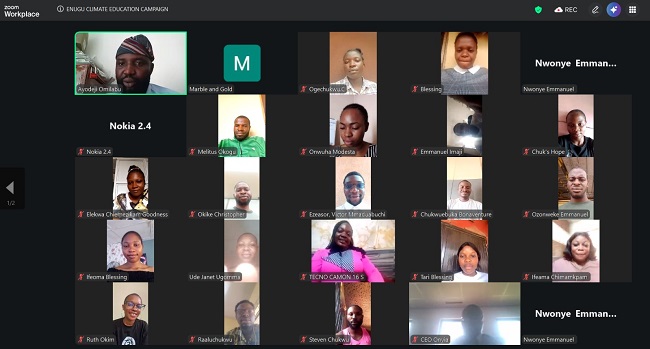
Enugu State climate champions
Virtual participants at the training session

He reminded them of the task ahead and the huge impact they are expected to make in the schools they will visit.

“Your job now is to take this deep knowledge that you have acquired into the classroom to instigate, to instill, and arouse curiosity among the students and the teachers that you will meet. To communicate with passion, clarity, and intent, so that they will not just get information and knowledge, but that they will become change agents themselves, people who carry the passion and the desire to communicate, but also to act on climate change.”

Prof. Okereke also appreciated the Governor of Enugu State, Barr. Peter Ndubuisi Mbah, for his disposition to support pro-climate change policies and the implementation of green transition projects, especially the massive investment in Green Smart Schools around Enugu State.

In his speech, the Youth Leader of the All Progressive Congress (APC), Enugu State, Basil Ojengwa, stated that training the youths to be advocates for climate action resonates with the green agenda of the current administration.

“Young people are at the heart of climate action. By equipping educators and advocates with the right tools, we are planting seeds of awareness that will grow into informed decisions, responsible behaviour, and sustainable communities,” he said.

Speaking on the importance of climate change teaching strategies, Mr. Arum Nnamdi, Director of the Department of Climate Change at Enugu State Ministry of Environment, encouraged participants to put into practice the knowledge they have acquired during the training, to ensure that the students become agents of change in their different homes and communities.

“You need to bring this knowledge down to the level of the students through storytelling, using natural and physical things the students can easily see and relate with,” he said.

The Ministry of Education represented by the Assistant Director, Strategic Communication, Centre for Experiential Learning and Innovation (CELI), Enugu State, Mr. Arum Sopuluchukwu Emmanuel, conveyed the unalloyed support of the Commissioner for Education, Prof. Ndubueze Mbah, reiterating the Commissioner’s commitment to advancing regenerative education in Enugu State through the Experiential Learning Pedagogy and the Smart Green Schools initiative as a transformative model aligned with the State’s climate agenda.

Participants described the training as transformative. Beyond knowledge acquisition, the majority of the participants displayed a renewed sense of purpose, an understanding that they are not just educators but catalysts for change.

Equipped with the Climate Education Manual, they are now set to move into secondary schools across Enugu State, where they will engage students through structured lessons, discussions, and climate-focused activities.

The initiative comes at a critical time when climate literacy remains low in many communities, despite the increasing visibility of climate-related challenges. By focusing on secondary schools, the programme aims to reach young minds at a formative stage, equipping them with the awareness and advocacy needed to navigate and respond to environmental challenges.

A hands-on workshop was also conducted by Dorsky Art World, a leading force in waste-to-art within Enugu State. The session provided participants with practical guidance on transforming plastic waste into compelling works of art, highlighting innovative approaches to sustainability through creative expression.

As these Climate Champions move into classrooms, the impact of the training is expected to transcend far beyond school walls, sparking conversations in homes, influencing community practices, and contributing to a broader culture of environmental responsibility within the state.

By Anieze Elochukwu and Ayodeji Omilabu (Office of the SA to the Governor on Climate Policy & SD)

SERAP urges Tinubu to probe ₦2.9bn missing in communications satellite, nuclear regulatory agencies

0

The Socio-Economic Rights and Accountability Project (SERAP) has urged President Bola Tinubu to direct Dr. Bosun Tijani, Minister of Communications, Innovation and Digital Economy, and the Management of both the Nigerian Communications Satellite Ltd (NIGCOMSAT) and the Nigerian Nuclear Regulatory Authority (NNRA) to account for and explain the whereabouts of the alleged missing or diverted ₦2.9 billion of public funds from NIGCOMSAT and NNRA.

SERAP urged him “to direct Mr. Lateef Fagbemi, SAN, the Attorney General of the Federation and Minister of Justice and anti-corruption agencies to investigate the alleged missing or diverted funds, and any other diverted public funds from the two agencies documented in previous annual reports by the Auditor-General.”

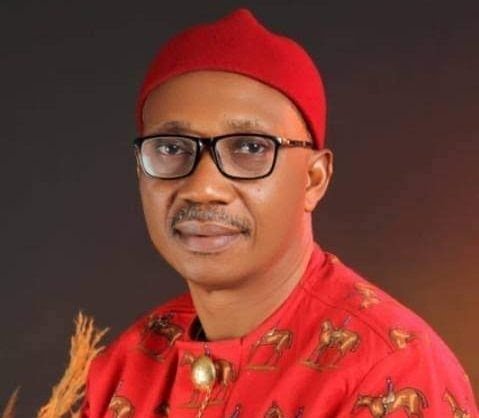
Bosun Tijani
Dr. Bosun Tijani, Minister of Communications, Innovation and Digital Economy

SERAP also urged him “to direct NIGCOMSAT to disclose the shareholders and beneficial owners of the company which collected ₦465 million in ‘unauthorised investment’ from the agency.”

SERAP said, “Anyone suspected to be responsible should face prosecution as appropriate, if there is sufficient admissible evidence, and any missing or diverted public funds should be fully recovered and remitted to the treasury.”

The grave allegations are documented in the latest annual report published by the Auditor-General on September 9, 2025.

In the letter dated April 11, 2026, and signed by SERAP deputy director, Kolawole Oluwadare, the organisation said: “These allegations, involving critical public institutions, represent a grave violation of the public trust and a fundamental breach of Nigeria’s anti-corruption laws and international obligations.”

SERAP said, “Accountability in NIGCOMSAT and NNRA is critical given their strategic roles in Nigeria’s digital economy and national safety systems. Mismanagement in these agencies not only wastes scarce public resources but also threatens national development, technological progress, and public safety.”

According to SERAP, “Ensuring accountability is therefore essential to protecting both Nigeria’s present and its future.”

The letter reads in part: “These grave allegations suggest a systemic pattern of financial mismanagement, opacity, and corruption within an agency entrusted with advancing Nigeria’s digital and communications infrastructure.

“The allegations also raise serious questions about compliance with basic financial regulations and procurement standards in an agency responsible for nuclear safety and public protection.”

“Any official or agency entrusted with public resources must be held to the highest standards of transparency and accountability. Nigerians have a right to know how their money is spent.

“We would be grateful if the recommended measures are taken within seven days of the receipt and/or publication of this letter. If we have not heard from you by then, SERAP shall consider appropriate legal actions to compel your government, NIGCOMSAT and NNRA to comply with our request in the public interest.

“These allegations, if left unaddressed, will continue to undermine public confidence in government institutions, weaken Nigeria’s anti-corruption framework, and deprive citizens of resources needed for development.

“The Nigerian Communications Satellite Ltd (NIGCOMSAT), Abuja failed to account for over ₦465 million [₦465,000,000.00], ‘being unauthorised investment in Gicell Wireless Ltd. NIGCOMSAT’ paid the ₦465 million for 200,000 ordinary shares in Gicell Wireless Ltd.

“Gicell Wireless ‘had an authorised share capital of One million ordinary shares of ₦1.00 each.’ The purported ‘strategic investment was made without the approvals of the Minister of Science and Technology and the Accountant-General of the Federation.’ NIGCOMSAT claimed that ‘the total capitalization of Gicell Wireless Ltd was US$500 million’, but without any documents and due process.

“There was also ‘no evidence that a competent Investment Analyst performed investment appraisal.’ Also, ‘the investment agreement revealed that the payment [consideration] was calculated based on a currency exchange rate of ₦130.00 to US$1.00’, but ‘the company is a wholly owned Nigerian company.’ The Auditor-General fears ‘the money (₦465 million) may have been diverted.’

“NIGCOMSAT also made ‘ineligible, irregular and wrong payments of over ₦3 million (₦3,122,690.00) to staff.’ The money was ‘spent on reimbursable expenses to staff’, but ‘without due process and any documents on what the payments were meant for.’ The Auditor-General fears ‘the money may have been diverted.’

“NIGCOMSAT made ‘irregular and wrong payment of rent of over ₦4.3 million (₦4,371,428.58) for Lagos regional office. A three-bedroom flat ‘situated at No Awolowo Road, Ikoyi, Lagos was leased to NIGCOMSAT as the Lessee and another consultant as the Lessor for the period of two years between 2016 to 2018 for ₦10,395.000.

“But ‘the payment was made to a wrong property agent.’ NIGCOMSAT ‘requested a refund of rent of ₦4,371,428.58 wrongly paid to a consultant,’ but ‘there was no evidence that the consultant refunded the money.’ The Auditor-General fears ‘the money may have been diverted.’

“NIGCOMSAT also ‘paid over ₦3.4 million (₦3,485,000.00) to its staff members between February and December 2020 for the installation of vertical curtains, media campaign, design of logo brand, production of business card for marketing staff, etc.’

“But ‘the payment was made without following due process and procurement procedures. The Auditor-General fears ‘the money may have been diverted.’ He wants the money recovered and remitted to the treasury.

“The Auditor-General noted that the above alleged diverted public funds by NIGCOMSAT covered the periods of January 2020 to December 2020.

“NIGCOMSAT reportedly failed to ‘remit over ₦507 million (₦507,980,087.33) of its internally generated revenue to the Consolidated Revenue Fund.’ The Auditor-General fears ‘the money may have been diverted.’ He wants ‘the money plus all accrued interests’ recovered and remitted to the treasury.

“NIGCOMSAT failed to account for ‘over ₦6 million (₦6,138,113.59) being payment for store items that were never supplied.’ The Auditor-General fears ‘the money may have been diverted.’ He wants the money recovered and remitted to the treasury.

“NIGCOMSAT also ‘irregularly transferred over ₦84 million (₦84,780,260.99) from REMITTA account to an account named Special Project account at different times during the year 2021,’ but ‘without any basis’.

“There was also ‘no evidence of how the transferred funds were spent or utilized, to validate the genuineness of the transferred funds.’  The Auditor-General fears ‘the money may have been diverted.’

“NIGCOMSAT failed to ‘recover debts totalling over ₦1.6 billion (₦1,686,453,686.00).’ Some of ‘the reported debts had been static for more than four years.’

“The Auditor-General wants ‘NIGCOMSAT to account for the money, provide the evidence of actions taken and the amount recovered out of the outstanding debts, and forward evidence of remittance.’

“NIGCOMSAT ‘failed to remit over ₦64 million (₦64,727,215.00) of statutory taxes deducted from payments made to various contractors and other beneficiaries as at December 31, 2020.’ The Auditor-General fears ‘the money may have been lost.’

“The Auditor-General noted that the above alleged diverted and lost public funds in NIGCOMSAT covered the periods of January 2021 to December 2021.

“The Nigerian Nuclear Regulatory Authority (NNRA), Abuja ‘paid over ₦4 million (₦4,350,400.00) for training of its officers in device optimisation and security, basic training for frontline officers between March and June 2021’, but ‘without any documents and evidence that the training actually took place.’

“The NNRA also ‘failed to provide any details such as the list of participants, attendance register, certificate of attendance, details of venue and programme completion reports.’ The Auditor-General fears ‘the money may have been diverted.’

“NNRA ‘paid over ₦16 million (₦16,736,675.00) for ICT equipment but without any approval. There ‘risks that the payments were for items not supplied.’ The Auditor-General fears ‘the money may have been lost.’

“NNRA also ‘paid over ₦33 million (₦33,480,898.00) for store items such as window blinds, solar inverters, branded mugs, purchase of diesel, etc’, but the items were never supplied. The Auditor-General fears ‘the money may have been diverted.’

“NNRA ‘paid over ₦15 million (₦15,026,098.00) for activities such as induction of SERVICOM desk officers, zonal sensitisation of NNRA staff, strategic revenue growth programme, coding of items, but without any documents.’ The Auditor-General fears ‘the money may have been diverted.’

“NNRA also ‘spent ₦1.5 million (₦1,500,000.00) as cash advance to a staff to purchase branded mugs for the agency, but without following the procurement procedures.’ The Auditor-General fears ‘the money may have been diverted.’

“The Auditor-General noted that the above alleged diverted and lost public funds in NNRA covered the periods of January 2021 to December 2021.

“NNRA also ‘paid over ₦9 million (₦9,097,125.00) to buy store items such as ribbons and films for the printing of ID cards, pumping machines, toner cartridges, etc, but without any documents. The ‘items were never supplied.’ The Auditor-General fears ‘the money may have been diverted.’

“NNRA ‘failed to retire over ₦6 million (₦6,501,163.43) of cash advances granted to six staff in 2022 for the purchase of various items, payment of electricity bills and servicing of meetings.’ The Auditor-General fears ‘the money may have been diverted.’

“NNRA ‘paid over ₦2 million (₦2,054,350.00) as course fees to two of its officers to participate in a programme on International Executive Development in Dubai but there was no evidence that the officers actually attended the training’. The Auditor-General fears ‘the money may have been lost.’”

“NNRA also ‘collected over ₦1.9 million (₦1,950,000.00) through Remita on behalf of the agency as penalty fees in 2022, but the amount was not recorded in the cashbook, resulting in the understatement of the agency’s revenue inflows for the 2022 financial year. There ‘were risks of loss of government revenue.’

“The Auditor-General wants NNRA ‘to account for the money and show evidence that the transactions have been recognised in the cashbook for the period under review or face sanctions relating to failure to collect and account for government revenue and gross misconduct.’

“The Auditor-General noted that the above alleged diverted and lost public funds in NNRA covered the periods of January 2022 to December 2022.”

IUCN welcomes roadmap to safeguard world’s migratory species corridors at CMS COP15

Following the historic adoption of the Samarkand Strategic Plan for Migratory Species 2024–2032, the 15th Conference of the Parties to the Convention on the Conservation of Migratory Species of Wild Animals (CMS COP15) in Campo Grande, Brazil, marked a decisive step forward by establishing a clear roadmap for the plan’s effective implementation.

While COP14 laid the political foundation, the outcomes in Brazil have turned global commitments into concrete mandates, defining critical points for monitoring, accountability and the transboundary cooperation necessary to safeguard the planet’s migratory corridors.

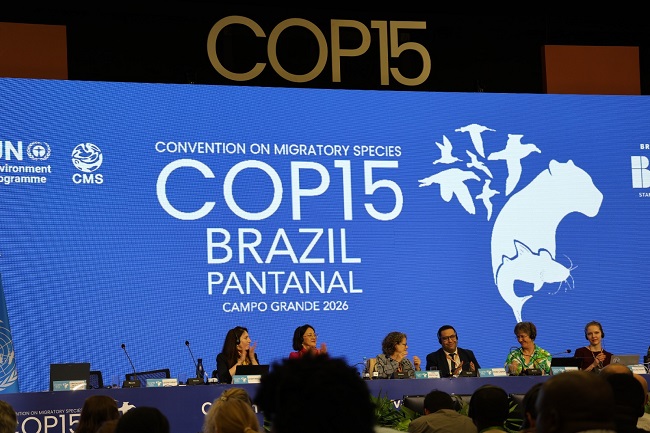
CMS COP15
Delegates at a session during CMS COP15 in Brazil. Photo credit: Qiulin Liu

From March 23 to 29, 2026, CMS COP15 brought together governments, international organisations, scientists, conservation NGOs, Indigenous Peoples and local communities under the theme “Connecting Nature to Sustain Life”. With over 130 Parties taking part in the negotiations, the conference addressed the increasing pressures from habitat degradation, fragmentation, overexploitation and climate change on species that depend on interconnected ecosystems across countries and continents.

From planning to action 

The adoption of a global roadmap to implement the Samarkand Strategic Plan was a major achievement, with Parties agreeing to integrate migratory species goals and targets into national biodiversity strategies and policies. To ensure accountability and measurable results, the CMS Secretariat was mandated to support implementation, monitoring and indicators, with progress to be reviewed at future COP meetings. 

IUCN contributed actively throughout the meeting and called on Parties to strengthen the conservation of migratory species, protect ecological connectivity and align efforts with the Global Biodiversity Framework. Parties agreed to these priorities, including by enhancing cooperation between the CMS and the Convention on Biological Diversity.

Gabriel Quijandría, IUCN Regional Director for South America, said: “These decisions ensure that the protection of wildlife is not an isolated effort, but a central component of biodiversity strategies at both global and national levels.

“IUCN stands ready to continue working with Parties, the CMS Secretariat and partners to support implementation, science-based action and concrete conservation results on the ground.”  

Vivek Menon, IUCN SSC Chair, said: “The successful implementation of the Samarkand Strategic Plan will depend on strong science, collaboration and expertise. The IUCN Species Survival Commission (IUCN SSC), through its global network of Specialist Groups, is committed to supporting Parties and the CMS with the best available knowledge, data and tools to guide conservation action.

“By bridging science, policy and practice, the SSC can help ensure that commitments made at CMS COP15 translate into effective results for migratory species across their entire range.”

Other key decisions and highlights

Other key outcomes include critical decisions on ecological connectivity, impact assessment for migratory species and transboundary conservation areas, reinforcing the importance of connected habitats and migration routes for biodiversity worldwide. In addition, a wide range of decisions address the major pressures affecting migratory species, with particularly strong outcomes on marine, freshwater and climate-related threats. Parties agreed to use science-based “Important Areas”, such as Key Biodiversity Areas, to guide marine spatial planning, protected areas and conservation action.  

Supported by IUCN, the conference also addressed renewable energy as a cross-cutting issue at the heart of a nature-positive energy transition, emphasising that renewable energy infrastructure must be carefully planned to avoid disrupting migratory paths. 

Outcomes for species conservation included the addition or upgrade of 40 species, subspecies and populations in CMS Appendices I and II, including the cheetah, striped hyena, giant otter, several shark species, freshwater fish and migratory birds. Finally, 15 new “Concerted Actions” were approved for species such as chimpanzees, dolphins, bats, sharks and seabirds, while 10 new or updated species-focused action plans were adopted.  

A key highlight of the High-Level Segment was the adoption of the Pantanal Declaration, which calls for stronger international cooperation, increased financial support and urgent action to address climate change, habitat loss, pollution and infrastructure impacts. The declaration also highlights the importance of wetlands – including Brazil’s Pantanal – as critical habitats for migratory species.

The outcomes of CMS COP15 strongly reinforce IUCN’s ongoing work across the Union, including the implementation of IUCN World Conservation Congress Resolutions on recognising ecological corridors, promoting wildlife-friendly infrastructure and strengthening transboundary conservation.

Accelerating ecosystem and migratory species conservation

Beyond the plenary, IUCN showcased how technical expertise translates into policy and on-the-ground action through over 10 side events and high-level sessions, covering four areas to accelerate ecosystem and migratory species conservation.

First, the Union highlighted the importance of strengthening multilevel governance by addressing global threats such as deep-sea mining and habitat loss, positioning wetlands as critical ecosystems for international cooperation. Second, it stressed how to scale digital innovation through strategic partnerships, such as the Tech4Nature initiative in Brazil, to promote evidence-based decision-making.

IUCN also emphasised the need to advance high-quality conservation by integrating the IUCN Green List and private reserves into territorial planning to ensure ecological connectivity and wildlife-friendly infrastructure. Through its engagement in the joint CITES–CMS African Carnivores Initiative (ACI), IUCN also highlighted the importance of coordinated, landscape-level conservation, strengthened transboundary cooperation, and mobilising partnerships and sustainable financing to scale up conservation action for African carnivores across their range.

Finally, IUCN showcased how it is empowering subnational leadership, where cities and local governments serve as a vital bridge to integrate migratory species into national biodiversity strategies.

Emperor penguin, Antarctic fur seal now endangered due to climate change – IUCN Red List

The emperor penguin and Antarctic fur seal are now both Endangered, according to The IUCN Red List of Threatened Species™.

Climate change in Antarctica is leading to changes in sea-ice that are projected to cause the emperor penguin population to halve by the 2080s, while reduced food availability has already driven a 50% reduction in the Antarctic fur seal population since 2000. The southern elephant seal is also now at risk of extinction, due to disease.

Dr Grethel Aguilar, IUCN Director General, said: “These important findings should spur us into action across all sectors and levels of society to decisively address climate change. The declines of the emperor penguin and Antarctic fur seal on the IUCN Red List are a wake-up call on the realities of climate change.

Emperor penguin
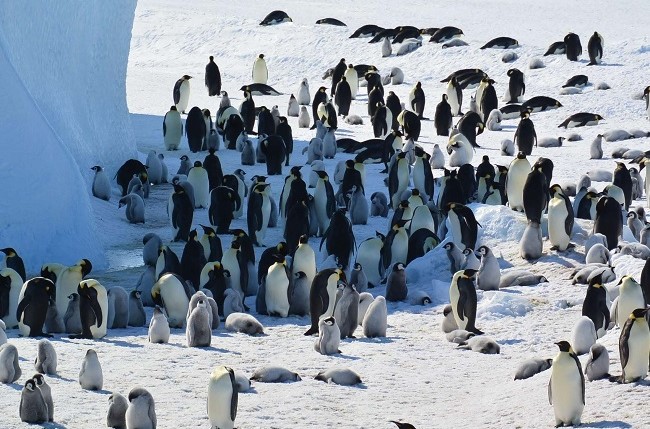
Emperor penguin chicks on Rothschild Island. The emperor penguin has moved from Near Threatened to Endangered on the IUCN Red List. Photo credit: Phillip Trathan

“As countries prepare to gather at the Antarctic Treaty Consultative Meeting in May, these assessments provide essential data to inform decisions regarding this majestic continent and its awe-inspiring wildlife. Antarctica’s role as our planet’s “frozen guardian” is irreplaceable – offering untold benefits to humans, stabilising the climate and providing refuge to unique wildlife.”

“Penguins are already among the most threatened birds on Earth. The emperor penguin’s move to Endangered is a stark warning: climate change is accelerating the extinction crisis before our eyes. Governments must act now to urgently decarbonise our economies,” said Martin Harper, CEO of BirdLife International, which coordinated the emperor penguin assessment as the authority for birds on the IUCN Red List.

The emperor penguin (Aptenodytes forsteri) has moved from Near Threatened to Endangered on the IUCN Red List, based on projections that its population will halve by the 2080s. Satellite images indicate a loss of around 10% of the population between 2009 and 2018 alone, equating to more than 20,000 adult penguins.

The primary driver is the early break-up and loss of sea-ice, which has reached record lows since 2016. Emperor penguins require fast ice – sea-ice that is “fastened” to the coastline, ocean floor or grounded icebergs – as habitat for their chicks and during their moulting season, when they are not waterproof. If the ice breaks up too early, the result can be deadly.

While it is challenging to convert observed tragedies – such as the collapse of a breeding colony into the sea before the chicks can swim – into population changes, population modelling considering a wide range of future climate scenarios shows that without abrupt and dramatic reductions in greenhouse gas emissions, emperor penguin populations will rapidly decline during this century.

Dr Philip Trathan, member of the IUCN SSC Penguin Specialist Group who worked on the emperor penguin Red List assessment, said: “After careful consideration of different possible threats, we concluded that human-induced climate change poses the most significant threat to emperor penguins. Early sea-ice break-up in spring is already affecting colonies around the Antarctic, and further changes in sea-ice will continue to affect their breeding, feeding and moulting habitat. Emperor penguins are a sentinel species that tell us about our changing world and how well we are controlling greenhouse gas emissions that lead to climate change.”

The Antarctic fur seal (Arctocephalus gazella) has moved from Least Concern to Endangered on the IUCN Red List, as its population has decreased by more than 50 per cent from an estimated 2,187,000 mature seals in 1999 to 944,000 in 2025. The ongoing decline is due to climate change, as rising ocean temperatures and shrinking sea-ice are pushing krill to greater ocean depths in search of colder water, reducing the availability of food for seals.

Krill shortages at South Georgia have reduced the survival of pups in their first year dramatically, leading to an ageing breeding population. Other threats, such as predation by killer whales and leopard seals and competition with recovering baleen whale populations targeting the same krill, are potentially also impacting this declining population.

The southern elephant seal (Mirounga leonina) has moved from Least Concern to Vulnerable on the IUCN Red List, following declines caused by Highly Pathogenic Avian Influenza (HPAI). There has been a significant increase in the prevalence of avian flu around the world since 2020, and it has spread to mammals. The disease has affected four of the five major subpopulations, killing more than 90 per cent of newborn pups in some colonies and seriously impacting adult females, which spend more time on the beaches than males.

There is growing concern that disease-related mortalities of marine mammals will increase with global warming – particularly in polar regions, where animals have not had much previous exposure to pathogens. Animals that live close together in colonies, such as southern elephant seals, are particularly hard-hit by diseases.

Dr Kit Kovacs, Co-Chair of the IUCN SSC Pinniped Specialist Group, said: “These assessments sound an alarm for all Antarctic seals, as we are concerned about how environmental changes are affecting all ice-dependent species. Monitoring of the effects of climate change in Antarctica is urgently needed. While logistically challenging and expensive to access this part of the world, the IUCN SSC Pinniped Specialist Group calls for the collection of more data on seals in the region by all of the Parties to the Treaty.”

The new assessments are available on the pre-publication page of the IUCN Red List. The new assessments will be published on the emperor penguin and seals’ species profiles as part of a broader Red List update later this year. The emperor penguin assessment was produced through the work of the IUCN SSC Penguin Specialist Group, in coordination with BirdLife International, the authority for birds on the IUCN Red List. The seal assessments were produced by the IUCN SSC Pinniped Specialist Group.

Dr Kathleen Flower, Vice President of Biodiversity Science at Conservation International, said: “These listings are not only sobering for two iconic animals; they reflect what is happening to penguins and seals globally. Their decline underscores how quickly ecosystems are being degraded and how the compounding impacts of warming accelerate food scarcity, emerging disease, and habitat loss.

“The result is rapidly increasing extinction risk for many species. The Red List is an essential tool, but it must be adequately resourced and strengthened with climate‑informed science to identify risks and help reduce climate‑driven extinctions.”

UN commends Benue on SDGs implementation model

The United Nations (UN) has commended the Benue State Government’s implementation of the Sustainable Development Goals (SDGs) model.

The UN Deputy Secretary General, Dr Amina Mohammed, gave the commendation at a stakeholders’ engagement meeting at Benue Government House in Makurdi, the state capital, on Friday, April 10, 2026.

She said Benue had a critical role to play, not only in feeding the country but also in generating livelihoods, enterprises and broader prosperity.

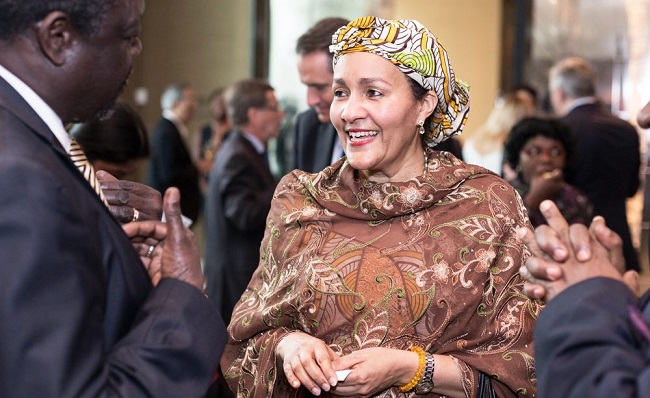
Amina Mohammed
Deputy Secretary-General of the UN, Amina J. Muhammed

She said that progress was being made in the state, though in a very difficult context.

‘’Insecurity has disrupted lives, weakened livelihoods, eroded trust and undermined the foundations for peace and development.

“The efforts being made to pursue durable solutions for displaced families, including through access to agricultural land and opportunities for self-reliance, reflect the kind of joined-up leadership this moment demands.

“This is how the SDGs are advanced in practice: through integrated action that connects humanitarian response to long-term development, restores agency, reduces dependency and leaves no one behind.

“With sustained leadership, stronger partnerships and continued investment in livelihoods and value chains, Benue is well placed to translate its assets into more inclusive and resilient growth.

“The UN stands ready to support these efforts in ways that are practical, coordinated and aligned behind State priorities,” she said.

Mohammed expressed her condolences to the families of those killed in the recent attacks in the state, including in Mbalom, in Gwer East LGA, and in Yeliwata.

She said the state required not only a response to security issues but also a broader commitment to peacebuilding.

According to her, this starts at the grassroots, strengthens early warning and response, rebuilds trust across communities, and creates the conditions for reconciliation.

She said for peace to thrive, there must be justice and accountability, adding that without them, peace remained fragile and reconciliation incomplete.

Mohammed promised to support the state in sustained investment in human capital, especially in children and young people.

“A resilient education system is therefore not only a social priority; it is a foundation for long-term peace, inclusion and recovery.

“We stand ready to work with Benue State to strengthen education data, planning and service delivery, including in hard-to-reach and displacement-affected areas,” she said.

In his remarks, Gov. Hyacinth Alia said Benue, as the food basket of the nation’s stability, was directly linked to the stability of Nigeria’s food systems and West Africa’s broader supply chains.

Alia noted that armed herders’ attacks had forced more than 500,000 persons out of their homes, thereby causing serious humanitarian crises in the state.

He said his administration had provided sustained support to internally displaced persons and developed shelters and critical infrastructure in affected communities for them.

‘’We launched durable solutions and allocated farmlands and facilitated the return of displaced households to productive life,” the governor said.

On the Yelewata attack, he said that, with support from Federal Government and other sources, they had built houses; provided water and education; and supported livelihoods and healthcare services.

“Your Excellency, Benue is ready. Ready to lead. Ready to partner and deliver results that matter, not just for our people, but as a model for Nigeria and the global community.

“What we seek is not charity, but collaboration. Not isolated projects, but integrated systems. Not temporary relief, but lasting transformation.

“Together, we can turn vulnerability into resilience, displacement into opportunity, and potential into prosperity. We invite the United Nations to walk this journey with us,” Alia said.

By Emmanuel Antswen

NESREA recommits to safer environment through carbon capture, utilisation

The National Environmental Standards and Regulations Enforcement Agency (NESREA) has reiterated its commitment to partner critical stakeholders towards promoting safer environment in carbon management.

The Director-General, Prof. Innocent Barikor, made the statement at the launch of a platform for carbon capture, utilisation and storage technology innovation in Port Harcourt on Thursday, April 9, 2026.

Barikor said that the platform was being co-launched by the Africa Carbon Management Technology and Innovation, Centre of Excellence, and the Clean Energy Ministerial Carbon Capture Utilisation and Storage (CCUS) Initiative.

Innocent Barikor
Dr Innocent Barikor, Director-General, National Environmental Standards and Regulations Enforcement Agency (NESERA)

The D-G stated that Port Harcourt was chosen for the launch following the high level oil and gas activities within its environment.

He said that the level of oil and gas activities in Port Harcourt environment made it an appropriate environment for carbon capture, utilisation and storage.

Barikor stated that there were extant government policies that provided strong background for carbon capture, utilisation and storage in the country.

“The Energy Transition, Climate Change and Restructure, and the 2021 Climate Change Framework are strong policies that support this innovation.

“When fully on stream, it will promote circular economy where what is not needed in the environment is converted to raw materials for industry growth.

“While carbon is harmful to human body, companies involved in cement, bottle and other items need it for production.

“This innovation will not only protect the environment, it will also boost the economy,” Barikor said.

Also speaking, Prof. Owunari Georgewill, the Vice Chancellor, University of Port Harcourt thanked NESREA and its partners for the initiative and described it as timely.

Georgewill decried the increase in carbon emissions, especially through solar powered electricity generation systems.

He commended respective stakeholders for their proactive steps towards ridding the environment of harmful carbon emission.

“Currently, solar powered electricity is an alternative electricity source, this university community alone has about 10.7 megawatts Ivory Solar Powerex plant, all these generate carbon.

“So effective storage of carbon must be worked out, otherwise, environmental pollution will become an epidemic in no distant time,” he said.

Mr. Juho Liponen, the Coordinator, Clean Energy Ministerial CCUS initiative, said that effective carbon capture, utilisation and storage were critical to promoting safer environment.

He stated that the organisation would collaborate with other critical stakeholders for the effective take-off the innovation.

By Ikuru Lizzy

Nigeria, UN to deepen partnership on women, youths’ empowerment

The Federal Government has reaffirmed commitment to strengthen its partnership with the United Nations (UN) to accelerate the empowerment of women and youths across the country.

Vice-President Kashim Shettima stated this when he received a delegation from the UN, led by its Assistant Secretary General on Youth Affairs, Dr Felipe Paullier, at the Presidential Villa, Abuja, on Friday, April 10, 2026.

Shettima explained that the partnership would be actualised through key initiatives under financial inclusion, skills development, peace and security and job creation among others.

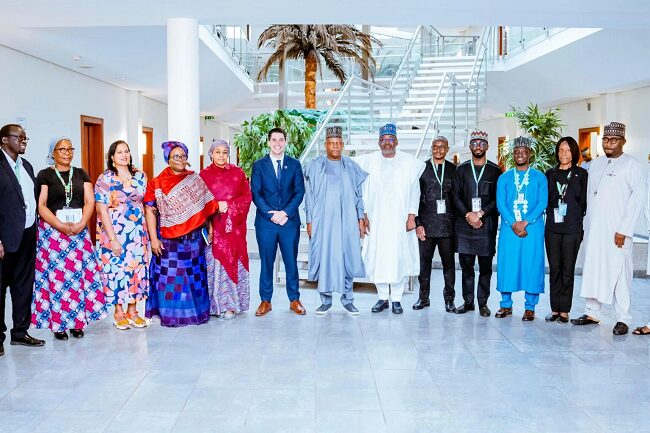
Kashim Shettima
Vice-President Kashim Shettima with a delegation from the UN

He said that President Bola Tinubu’s administration acknowledges the potential of the youth as the engine of change and growth.

“President Tinubu believes in gender equality and youth empowerment. Under his administration, the anticipated demographic bulge will be transformed into demographic dividends.

“On behalf of the President, I reaffirm this administration’s commitment to youth development.

“The youths are the backbone of every society’s transformation,” Shettima said.

He proposed the creation of institutional mechanisms in collaboration with the UN and other partners, to midwife the advancement of Nigeria’s objectives for youths and women.

Earlier, Paullier explained that the UN youth delegation was in the country to support the Federal Government’s development vision, in addition to the multi-level support provided by UN agencies in Nigeria.

He added that the visit to Nigeria was essential because of the country’s role as a global player in advancing the cause of young people.

Describing Nigeria as a “very vibrant country”, with young people at the heart of its vibrancy, Paullier added that the country “is on the right path to development.

“If relevant authorities continued to place Nigerian youths at the heart of critical decisions, development and innovation would be accelerated”.

He argued that advancing youth development requires gender equality, as well as access to employment and education.

He recalled that, in 2022, the UN General Assembly created a new office to oversee UN’s support for youths globally in several areas.

This, according to him, included the protection of human rights, training, and skills development.

By Salisu Sani Idris

NUPRC reforms unlock $10bn upstream investment

0

The Nigerian Upstream Petroleum Regulatory Commission (NUPRC) says recent reforms have unlocked over $10 billion in upstream oil and gas investment.

Mrs. Oritsemeyiwa Eyesan, the Chief Executive, NUPRC, spoke on Thursday, April 9, in Abuja at the Society of Petroleum Engineers Nigeria Council’s Oloibiri Lecture Series and Energy Forum 2026.

Eyesan said the commission had gazetted 19 regulations, with five more underway, covering critical areas of the upstream oil and gas industry.

Oritsemeyiwa Amanorisewo Eyesan
Mrs. Oritsemeyiwa Amanorisewo Eyesan, the Commission’s Chief Executive, NUPRC

She said the rules, developed with operators, service providers and investors, replaced discretion with clarity, reduced ambiguity and introduced defined timelines.

According to her, the reforms enabled investment and delivered results across key projects, including Bonga North, Ubeta and HI developments.

Eyesan said the Bonga North deepwater project advanced due to fiscal clarity and faster approvals under the Petroleum Industry Act and related Executive Orders.

“The predictable regulatory environment reduced investment risks and supported partners to take a multi-billion-dollar Final Investment Decision,” she said.

On Ubeta, Eyesan said the gas project benefited from fiscal incentives, streamlined licensing and transparent approval processes.

She said the reforms addressed long-standing bottlenecks, enabling faster execution and supporting Nigeria’s gas supply targets.

Eyesan added that the HI development was driven by a new asset stewardship framework and performance-based work programmes.

“The framework ensures sound reservoir management and improved recovery techniques to maximise value and deliver sustainable outcomes.

“Collectively, these projects represent over $10 billion in new upstream investment and highlight the importance of clear policy and firm regulation,” she added.

Eyesan said digitalisation was reshaping regulation, with the commission adopting a digital-first approach to approvals, reporting and compliance.

According to her, integrated platforms are improving speed, transparency, accountability and real-time visibility for industry operators.

She added that technologies such as digital twins, predictive maintenance and advanced analytics were boosting operational efficiency and asset performance.

Eyesan said the commission was designing regulations to promote data integrity, interoperability and standardisation.

“Such measures are essential to fostering innovation, strengthening investor confidence and sustaining competitiveness,” she said.

By Emmanuella Anokam

Tinubu inaugurates 60-megawatt gas turbine plants in Bayelsa

President Bola Tinubu on Friday, April 10, 2026, inaugurated 60-megawatt gas turbine plants at Elebele in Ogbia Local Government Area of Bayelsa State.

The president also inaugurated other projects implemented by the Gov. Douye Diri-led administration such as 630 metre Angiama-Oporoma Bridge, Sagbama/Ekeremor Road, and 2.9km Dual-Carriageway in Yenagoa, the state capital.

Speaking at a stakeholder meeting held at the Bayelsa Government House, Tinubu commended Diri for implementing the independent power project.

President Bola Tinubu
President Bola Tinubu in Bayelsa State

The president said that Bayelsa people deserved to see governance translated into physical development and better quality of life.

“We are all working hard. Independent power supply is a good thing. I assure Nigerians that they will have electricity to power their growth,” he said.

He urged the governor to implement more people-oriented projects, and pledged that the Federal Government would support his government to achieve more for the state.

Also speaking, Diri commended the president for the visit, and described him as a friend of Bayelsa people.

“We are confident that you will recognise the depth of our appreciation for taking time from your busy schedule to inaugurate these landmark projects.

“Your administration’s decisive policy interventions have paved the way for meaningful reforms in various sectors including power.

“This has enabled us to deliver on our pledge to establish a reliable, independent energy through the construction of these gas‑powered turbines.

“For us as a state, this is not just an achievement, it is a cause for thanksgiving and rejoicing,” he said.

The visit attracted the presence of notable personalities including former President Goodluck Jonathan.

By Shedrack Frank

Renewable energy not a threat to oil, says Renaissance MD

0

The Managing Director, Renaissance Africa Energy Limited, Mr. Tony Attah, says renewable energy does not pose any threat to oil and gas prospects.

Attah who made the expression on Friday, April 10, 2026, at the second Nigerian Content Academy virtual forum on the oil and gas sector, said that oil and renewable energy would complement each other.

He said that renewable energy would remain a part of the energy mix, and could not replace fossil fuels.

Tony Attah
Managing Director, Renaissance Africa Energy Limited, Mr. Tony Attah

“I am also a fan of renewable energy, every household should have a solar panel and batteries, but fossils will always be the dominant source of energy to power industries,” he said.

Attah said that the acquisition of Shell’s onshore and shallow water assets by Renaissance, a consortium of five indigenous firms, was transformational.

He said that raising money for the acquisition deal within the country without resorting to offshore lenders was a task that took creative approach.

The managing director expressed worry that Africa’s energy sector was financed by external sources and was not skewed to develop the African continent.

According to him, the feat achieved by Renaissance will inspire more investors to fund the energy sector.

Attah urged Nigerian entrepreneurs to lead the move towards developing African energy sector by looking inwards for indigenous capital.

He commended the Nigerian Content Development and Monitoring Board (NCDMB) for instituting the Nigerian Content Intervention Fund, and the Nigerian Content Development Fund to enhance local firm’s capacity to acquire assets.

The Renaissance boss said that the establishment of African Energy Bank was a development capable of unlocking the potentials of the African energy market.

By Nathan Nwakamma