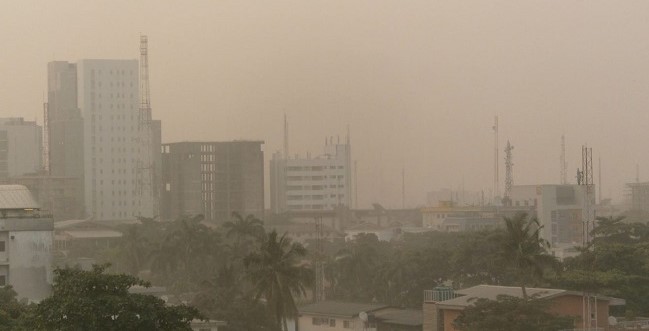
The Nigerian Meteorological Agency (NiMet) has predicted haze and sunshine from Wednesday, January 7 to Friday, January 9, 2026, across the country.
NiMet’s weather outlook released on Tuesday, January 6, in Abuja envisaged sunny and hazy skies over the northern region throughout the forecast period.
According to the agency, sunny and hazy skies are anticipated over the region throughout the forecast period.
Hazy weather
It anticipated sunny skies over the southern region with patches of clouds over the region and chances of isolated thunderstorms accompanied with light rains over parts of Bayelsa, Rivers, Akwa Ibom, and Cross River states later in the day.
”For Thursday, sunny and hazy skies are expected over the northern and central regions during the forecast period while sunny skies with patches of clouds are anticipated over the southern region.
”Chances of thunderstorms with light rains are expected over parts of Ogun, Lagos, Rivers, Bayelsa, Akwa Ibom, and Cross Rivers states during the morning hours.
”Later in the day, thunderstorms are anticipated over parts of Ondo, Ogun, Imo, Delta, Cross River, Akwa Ibom, Rivers and Bayelsa states,” it said.
According to NiMet, sunny and hazy skies are expected over the northern region on Friday during the morning hours with dust haze over the region during the afternoon and evening periods.
The agency envisaged sunny and hazy skies over the central region during the forecast period.
NiMet predicted cloudy skies over the southern region with sunny intervals over the region in the morning hours with chances of isolated thunderstorms and light over parts of Anambra, Imo, Abia, Edo, Bayelsa, Delta, Cross River, Akwa Ibom and Rivers states.
“Dust particles are in suspension over the North central region; the public should take necessary precaution.”
NiMet advised people with asthmatic health condition and other respiratory issues to be take heed of the present weather condition.
“Driving under rain should be with caution. Airline operators are advised to get airport-specific weather reports (flight documentation) from NiMet for effective planning in their operations.
“Residents are advised to stay informed through weather updates from NiMet. Visit our website www.nimet.gov.ng,” it said.
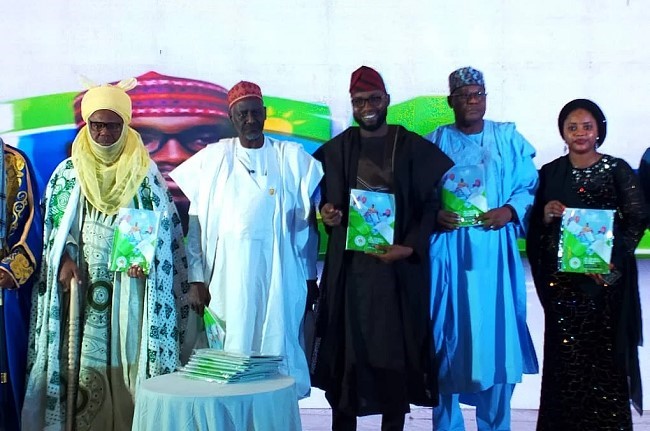
Kano State Commissioner for Environment and Climate Change, Dr Dahiru Hashim, says the state moved from 35th to fourth position in Nigeria’s Climate Governance Ranking within a year.
Hashim disclosed this on Wednesday, January 7, 2026, in Kano during an event to mark his one-year anniversary in office.
He said the improvement reflected focused leadership, deliberate institutional reforms and sustained collaboration across government institutions and development partners.
Kano State Government officials
The commissioner recalled that, in 2024, Kano was ranked 35th out of the 36 states in the country, a position he described as a reflection of long-standing institutional and systemic challenges.
“At the time, it was simply a troubling data point. I did not know then that I would soon be given the opportunity to play a role in changing that story,” he said.
According to Hashim, Kano’s current fourth position demonstrates that effective systems and coordinated governance can deliver measurable results when properly supported.
“This progress is not the achievement of one individual or one office. It is the result of institutions being allowed to function and people committing to their responsibilities,” he said.
He added that the state is determined to consolidate the gains, while aiming for the top position in the next climate governance ranking cycle.
The commissioner attributed the progress to the leadership of Gov. Abba Kabir Yusuf, whom he said positioned the environment sector as central to public welfare, safety and sustainable development.
Hashim said the governor’s leadership restored direction and coordination across institutions, while reinforcing a governance culture based on merit, accountability and responsibility.
He explained that, over the past year, the ministry concentrated on restoring systems, enhancing coordination, and implementing practical measures across sanitation, flood mitigation, erosion control, water access, afforestation, and climate policy development.
The commissioner commended the staff of the ministry and its agencies for their commitment, describing their contributions as critical to the achievements recorded.
He also acknowledged the support of development partners, including the UK Foreign, Commonwealth and Development Office (FCDO) through the Partnership for Agile Governance and Climate Engagement (PACE) Project, UNICEF and others.
Hashim emphasised that community participation remained central to sustainable environmental and climate action, noting that feedback and cooperation from residents across urban and rural areas informed planning and implementation.
The commissioner said a publication unveiled at the event documented the reforms, institutional improvements and lessons learned over the past year and would serve as a reference for sustaining progress.
For generations, December, January and February have meant one thing across much of Nigeria: harmattan. It was the season of dry, dusty winds blowing from the Sahara, cold mornings that sent people reaching for sweaters, cracked lips, dusty cars and hazy skies. Harmattan was so predictable that it shaped farming calendars, travel plans, health advice and even cultural memory.
Yet as 2025 ended and 2026 emerged, Nigerians are asking an unsettling question: “Where is the harmattan?”
The harmattan is a season in West Africa that occurs between the end of November and the middle of March. It is characterised by a dry and dusty northeasterly trade wind, of the same name, which blows from the Sahara over West Africa into the Gulf of Guinea.
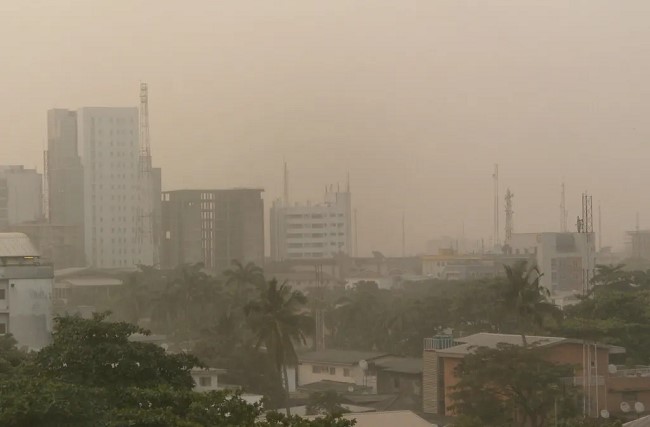
Harmattan
Instead of the familiar chilly mornings and dusty breeze, the country has been gripped by unusual heat. From the North to the South, the air feels heavy, hot and uncomfortable. Fans spin endlessly, air conditioners struggle, and people complain of heat rashes rather than cold-induced coughs. The expected seasonal shift simply did not arrive. And this absence should worry us.
The first question to ask is whether this is just a one-off anomaly or a symptom of a much deeper problem.
One possible explanation lies in climate change, a phenomenon many Nigerians still discuss as something distant or abstract. But climate change is no longer knocking at our door; it is already inside the house. Rising global temperatures are altering weather patterns worldwide, disrupting long-established seasonal cycles. Harmattan depends on specific atmospheric conditions: pressure systems, wind directions and temperature contrasts between the Sahara and the Gulf of Guinea. When these systems are disturbed, the harmattan winds weaken or fail to materialise altogether.
Across the globe, scientists have observed increasing irregularity in seasons: longer heatwaves, delayed rains, unexpected floods and shortened cold periods. Nigeria is not immune. If global warming continues to heat the atmosphere and oceans, traditional patterns like harmattan may become weaker, shorter or increasingly unpredictable.
Another possible factor is environmental degradation closer to home. The Sahara Desert, once the primary source of the dry, cold harmattan winds, is itself undergoing changes. Desertification, deforestation and land misuse across the Sahel have altered surface temperatures and wind dynamics. When vegetation is stripped and land becomes excessively degraded, it affects how heat is absorbed and released into the atmosphere, potentially disrupting the wind systems that drive harmattan.
Ironically, while desertification is expanding southwards, the very winds associated with the desert seem to be losing their bite.
Deforestation within Nigeria also deserves scrutiny. Forests play a critical role in regulating local and regional climates. Massive tree loss across the country, whether through logging, charcoal production or urban expansion, has reduced nature’s ability to cool the environment. Without adequate vegetation, heat builds up, humidity increases, and the cooling effects that once complemented harmattan conditions are diminished.
There is also the influence of urbanisation. Nigerian cities are expanding rapidly, replacing natural landscapes with concrete, asphalt and steel. These materials absorb and retain heat, creating what scientists call “urban heat islands.” In such environments, even when cooler winds attempt to flow in, their impact is reduced. The result is a persistent feeling of heat, even during periods that should otherwise be cool.
But beyond the science, the disappearance of harmattan has social and economic implications. Farmers rely on seasonal patterns to plan cultivation cycles. A disrupted harmattan can affect soil moisture, pest behaviour and crop yields. Public health is also affected. While harmattan often brings respiratory challenges, extreme heat introduces its own dangers: dehydration, heat stress and worsening cardiovascular conditions, especially among the elderly and children.
The absence of harmattan also raises concerns about water availability. Prolonged heat increases evaporation rates, dries up surface water faster and puts additional pressure on already strained water resources. In a country where access to clean water remains a challenge, this is no small matter.
The troubling part of this conversation is not just that harmattan appears to be fading, but that Nigeria seems largely unprepared for these shifts. Climate policy remains weak, poorly enforced or inconsistently implemented. Environmental education is limited, and long-term planning often takes a back seat to short-term political concerns.
If harmattan, one of the most predictable features of Nigeria’s climate, can disappear without warning, what else might we lose?
This moment should serve as a wake-up call. Government agencies, environmental experts and academic institutions must urgently study this anomaly, not dismiss it as coincidence. Nigerians deserve clear explanations backed by data, not silence. More importantly, the country must invest seriously in climate adaptation and mitigation: reforestation, sustainable land use, urban planning that reduces heat buildup, and public awareness campaigns about environmental responsibility.
The harmattan’s absence is not just about discomfort; it is a signal. Nature is telling us that the balance we once took for granted is shifting. Ignoring that signal may cost us far more than a cold December morning ever did.
If the harmattan can vanish quietly, then the real question is not “why is it hot?” The real question is: what kind of climate future are we walking into, and are we ready for it?
The Managing Director, Ogun State Waste Management Agency (OGWAMA), Mr. Abayomi Hunye, has stated that he will not compromise standard in the management of waste in the state.
This is contained in a statement by the agency made available to journalists in Abeokuta, the state capital, on Tuesday, January 6, 2026, in reaction to allegations levelled against Hunye by a group.
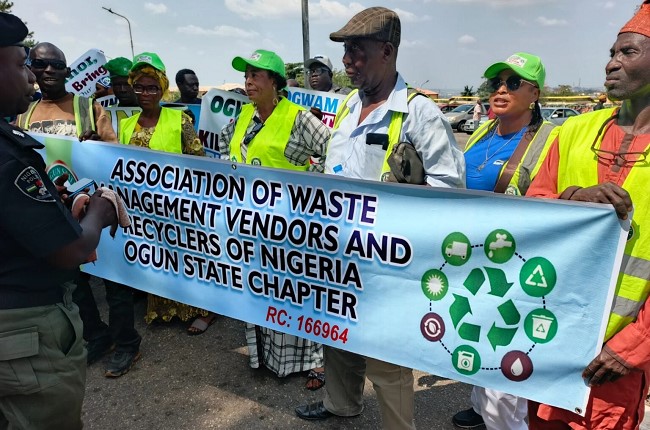
The group had on Monday in Abeokuta protested what they described as high-handedness and alleged extortion by the MD, who is also the Special Adviser to Gov. Dapo Abiodun on Environment.
The protesting members of the Ogun State Chapter of the Association of Waste Management Vendors and Recyclers of Nigeria
Hunye said that the individuals involved in the protest under the aegis of Association of Waste Management Vendors and Recyclers of Nigeria, Ogun State Chapter, were suspended by their own association on Nov. 20, 2023, long before he assumed office as the MD of OGWAMA.
He explained that there were several petitions written against the group to OGWAMA and other relevant security and oversight institutions by the leadership of their association.
The MD said that the suspension of these individuals by their association was based on allegations of fraud, misrepresentation, and forgery, which were duly documented.
“Upon assumption of office, I made it clear that OGWAMA would not aid, abet, or condone any form of illegality. My firm refusal to compromise institutional standards or shield wrongdoing is the real reason behind the current protest.
“It is quite surprising that I am accused of collecting from these individuals when all payments evidence reflected that those payments were made into the coffers of the Ogun State Government,” he said.
The OGWAMA boss opined that the agency, under his watch, had introduced impartial, transparent, and accountable operational policies
He added that the policies included the discontinuation of multiple and illegal registrations by individuals, a practice which the group vehemently opposed due to the benefits they previously derived from it.
Hunye stated that OGWAMA would continue to uphold the law and would neither tolerate nor overlook any illegal activities under any guise.
“I reassure the good people of Ogun State that I am a man of integrity, committed to transparency, due process, and the effective delivery of OGWAMA’s mandate. I will not, under any circumstance, compromise these principles.
“I urge the general public to disregard the claims and actions of this group of protesters, as their allegations are clearly aimed at pressuring the Agency to permit the continuation of practices that are illegal and against public interest.
“OGWAMA remains steadfast in its commitment to professionalism, environmental sustainability, and the collective good of Ogun state,” Hunye said.
The Nasarawa State Government on Tuesday, January 6, 2026, distributed another tranche of 50 tricycles and 10 cars to cooperatives, youth groups, and institutions as part of its empowerment scheme.
Dr Labaran Magaji, Secretary to the State Government (SSG), presented the vehicles to the beneficiaries in Lafia, the state capital.
Magaji said the empowerment scheme was meant to improve the socio-economic status of its citizens, and charged the beneficiaries to make good use of the vehicles to improve their lives.
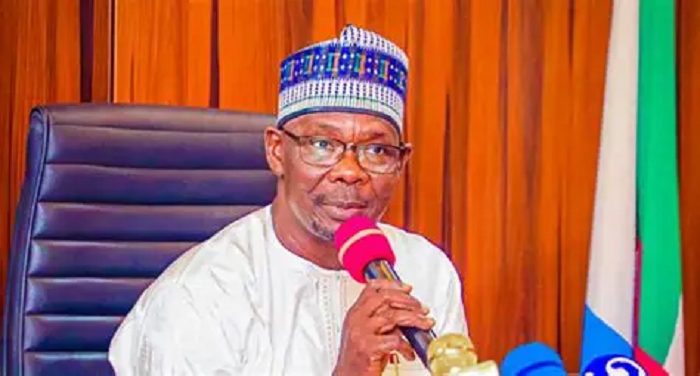
Abdullahi Audu Sule, Governor of Nasarawa State
He said that the electric vehicle empowerment scheme was a deliberate effort by the Gov. Abdullahi Sule-led administration to adopt clean energy.
“We are all aware of climate change and the need to sanitise our environment; it must start from somewhere; and that is why the call for renewable energy is really very important.
“It is against this background that the governor has taken the front line by first introducing the electric vehicle for all commissioners and members of the state executive council.
“I think it is the first of its kind in this country, ” he said.
The SSG charged the beneficiaries to maintain the vehicles for optimal performance as all accessories were provided, including charging plugs, charging points, and a maintenance office, located in the state.
Speaking on behalf of the beneficiaries, Prof. Nghargbu Kitso, Deputy Vice Chancellor, Research, Innovation and Linkages, Nasarawa State University Keffi, expressed appreciation to the government.
Kitso assured the governor that they would work hard to multiply the fortune of the scheme to benefit their members.
“As a learning institution that is also focused on innovative funding, we find this empowerment programme timely.
“Through our university consultancy services and cooperative societies, we will be able to multiply the fortunes of this kind of initiative, ” he said.
The Nasarawa government last year empowered various youth and women groups as well as institutions with over 100 electric cars and 50 tricycles as revolving loans.
The United Nations Resident and Humanitarian Coordinator in Nigeria, Mohamed Malick Fall, has called for stronger protection of civilians, civilian spaces and schools following a spate of attacks in Niger State, north-central Nigeria.
On January 3, 2026, more than 30 people were reportedly killed and an unspecified number abducted after an attack on a village market in Kasuwan Daji, Borgu Local Government Area (LGA), in Niger State. The assailants also set market stalls and nearby homes on fire.
Other concerning incidents were reported in Agwara LGA, also in Niger State, and in Kwara and Ondo states, with scores of reported casualties, including deaths and kidnappings.
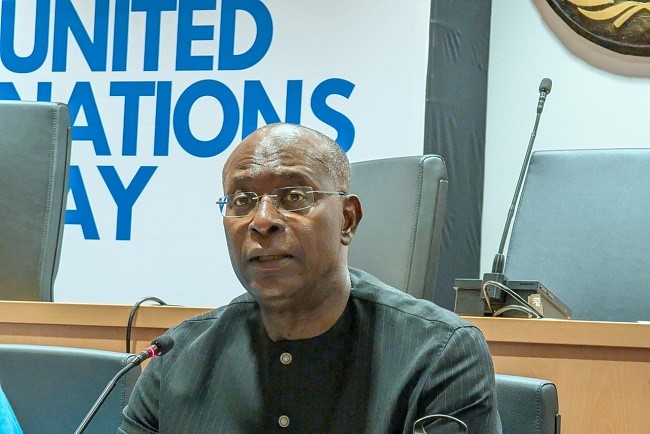
Mohamed Malick Fall, the UN Resident and Humanitarian Coordinator in Nigeria
Agwara LGA, in Niger State, is the location where more than 300 people – who have since been released – were abducted in November 2025 following an attack on Saint Mary’s Catholic School.
The attacks have been described as grave violations of human rights, including the right to life and the protection of civilians, particularly women and children, and undermine the right to education.
Fall said: “On behalf of the United Nations, I extend my deepest condolences to the families of those who lost their loved ones and wish the injured a swift recovery. I also call for the immediate release of all those abducted and urge authorities to ensure that the perpetrators are held accountable in line with national and international human rights standards.
“Students, schools, and education personnel must be protected from any form of attack. No child should ever be at risk while pursuing an education – a fundamental right for all children.”
In November 2025, the United Nations reiterated the need for the implementation of the Safe Schools Declaration in Nigeria to safeguard the civilian nature of schools and ensure children can learn safely, even in contexts of conflict and insecurity. These recent attacks seem to underscore the continued need for urgent action.
“The United Nations remains committed to working with government authorities to strengthen protection for civilians and promote safer learning environments,” added Fall.
Group Chief Branding and Communications, Dangote Group, Anthony Chiejina, has been named to the prestigious 2025 Influence 100, reaffirming his standing as one of the most consequential communications leaders in the world and the only Nigerian on this year’s list.
The recognition marks Chiejina’s fifth consecutive appearance on the global ranking, having previously been listed in 2021, 2022, 2023 and 2024, a rare distinction that underscores both consistency and sustained global relevance. His continued presence places him among an elite group of in-house communicators whose judgement, influence and strategic insight shape corporate reputation at the highest level.
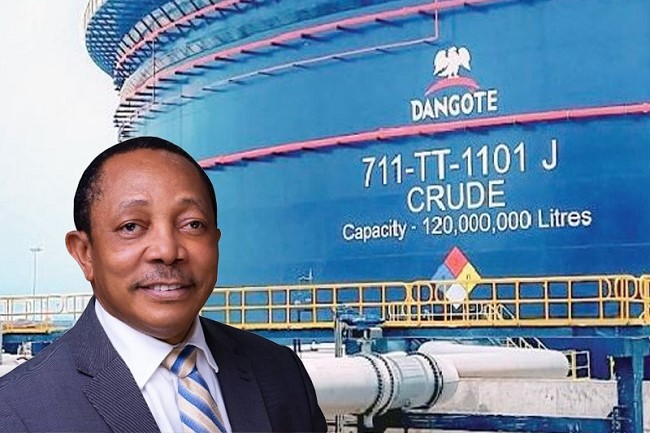
Anthony Chiejina
Published annually by PRovoke Media and now in its 13th year, the Influence 100 identifies the most impactful senior communications, corporate affairs and marketing executives worldwide. The 2025 list reflects a rapidly changing global environment in which communications has evolved from a support function into a core pillar of leadership, governance and trust building amid geopolitical uncertainty, technological disruption and heightened public scrutiny.
According to PRovoke Media, the leaders recognised this year demonstrate strategic clarity, cultural intelligence and the ability to guide organisations through complexity. Final selections are made by the publication’s senior editorial team through proprietary research and external nominations, assessed against organisational seniority and global reach, influence over agency partnerships and budgets, and contribution to thought leadership and industry direction. The list also prioritises gender balance, racial diversity and geographic representation.
According to the publication, Chiejina’s inclusion reflects his central role in shaping the reputation of Dangote Group, Africa’s largest industrial conglomerate. For over 15 years, he has overseen corporate communications across the group’s diverse portfolio, spanning cement, agriculture, energy, manufacturing and consumer goods. His stewardship has been instrumental in positioning Dangote as the continent’s most admired indigenous company and a symbol of African industrial ambition.
“As group head of corporate communications, he oversees external and internal reputation across multiple sectors spanning cement, agriculture, energy and consumer goods, and has helped steer the brand’s continued recognition as the most admired indigenous company on the continent,” it said.
Under his leadership, the group’s communications function has navigated complex regulatory environments, major industrial expansions and heightened global attention, particularly as Dangote deepens its footprint across Africa and advances sustainability and energy security initiatives.
Before joining Dangote Group, Chiejina held senior roles at Zenith Bank, Oceanic Bank, Seven Up Bottling Company, the African Economic Digest (AED) and African Concord, experiences that have given him deep insight into Nigeria’s political economy, financial markets and media landscape. That breadth of experience continues to inform Dangote Group’s engagement with stakeholders at home and abroad.
His sustained recognition on the Influence 100 highlights not only personal professional excellence, but also the growing visibility of African corporate leadership in global reputation management. As communications becomes increasingly central to how organisations lead and earn trust, Chiejina’s presence on the list reinforces Nigeria’s place in the global conversation shaping the future of the profession.
The 2025 Influence 100 includes 28 new entrants, alongside several high profile re entries by senior communications leaders who have since taken on expanded global roles. These include Michael Stewart, who moved from PwC to Unilever; Michael Gonda, from McDonald’s to Nike; and Sandy Rodriguez, also from McDonald’s to Eli Lilly.
This year’s list reflects a powerful cross section of communications leadership from some of the world’s most influential organisations, including Walmart, Apple, Shell, Microsoft, Nvidia, Nissan, Coca Cola, Google, Lufthansa, MTN, Emirates, Ford, Marriott, Tencent and Reliance Industries among others.
In total, 20 countries are represented, highlighting the global reach and strategic importance of senior in house communications leadership. Gender representation remains strong, with 58 women and 42 men featured, sustaining a female majority for the second consecutive year.
The 2025 Influence 100 is also the most highly educated cohort to date, with all honourees holding at least a first degree and 56 per cent possessing advanced qualifications, up sharply from previous years.
Professor Chinedum Nwajiuba has urged Nigerians to approach 2026 with realism, discipline and clarity of purpose, warning that the year will reward hard choices rather than comforting illusions.
In a New Year message titled “A Year of Multiple Graces and Blessings”, the professor of Agricultural Economics and former Vice Chancellor of Alex Ekwueme Federal University Ndufu Alike Ikwo said 2026 offers opportunities for progress only to those willing to confront reality and abandon pretence.
Professor Chinedum Nwajiuba
Reflecting on 2025, Nwajiuba described the year as one of promise that yielded tangible outcomes for people who stayed focused despite mounting economic and social pressures. He noted that many Nigerians experienced decisive interventions that reshaped personal and professional trajectories, even amid widespread hardship.
He said recent years have tested livelihoods and national confidence, creating uncertainty that has left many struggling to interpret the direction of the country. According to him, 2026 presents a chance for clarity, but only for those prepared to look closely and act deliberately.
Using a vivid metaphor, Nwajiuba likened the year to stirred water allowed to settle. Clarity, he said, does not appear automatically but becomes visible only to those with vision and patience. He stressed that discernment would separate progress from error in the months ahead.
The former vice chancellor also drew attention to events at the close of 2025, particularly foreign military actions on Nigerian soil, which he said forced a reassessment of national strength and sovereignty. He argued that the episode exposed long held assumptions and underlined the need for honest self-appraisal at both national and individual levels.
According to Nwajiuba, 2026 demands practicality rather than rhetoric. He expressed cautious optimism that the year could bring reduced insecurity, stronger economic activity and increased political engagement, provided leaders and citizens alike act with intention and restraint.
He maintained that progress would favour those who work strategically, build skills and resist frivolity. The year, he said, is not suited to wishful thinking or entitlement, but to learning, self improvement and sustained effort.
Nwajiuba encouraged Nigerians to combine prayer with vigilance, emphasising that effort must accompany faith. He concluded that the promise of multiple graces in 2026 rests on realistic planning, disciplined action and an unflinching view of present realities.
Following the decision of the Nigerian Environmental Study/ Action Team (NEST) Board at a meeting held on Wednesday, November 26, 2025, Professor Emmanuel Nzegbule has been appointed Executive Director at NEST. The appointment took effect from January 1, 2026.
Chairman of NEST, Prof. Chinedum Nwajiuba, made the disclosure in a statement.
Nwajiuba disclosed that the decision to appoint a new Executive was taken in May 2025, after a careful consideration of what is best for NEST.
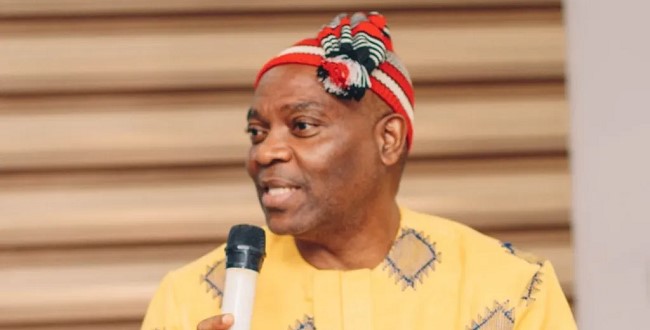
Prof. Emmanuel Nzegbule
Emmanuel Nzegbule, who takes up the appointment on a part-time basis, holds a doctorate degree and specialises in conservation ecology and environmental management. He has lectured in the university for many years.
According to Nwajiuba, Nzegbule previously held positions at NEST, including as a Senior Research Fellow and Board member. He led the implementation of national climate change response projects such as the Building Nigeria’s Response to Climate Change (BNRCC) and Climate Change Adaptation for Africa (CCAA) project.
Nzegbule has published many works on natural resources management, climate change solutions, and environmental governance. He is a fellow of the Leadership for Environment and Development (LEAD), UK, a member of the Shalom Club and the Nigerian Environmental Society (NES).
“We expect Prof. Nzegbule to take up this responsibility with his usual commitment to service,” said Nwajiuba.
The global economy is undergoing rapid transformation. From January 1, 2026, exports of selected carbon-intensive goods into the European Union will be subject to a carbon price under the Carbon Border Adjustment Mechanism (CBAM).
Officially framed as a climate instrument designed to prevent carbon leakage, CBAM in practice represents a profound reordering of global trade governance one with far-reaching implications for Africa’s industrial future.
At its core, CBAM redefines how competitiveness is determined in global markets. Competitiveness is no longer shaped primarily by productivity, cost efficiency, or technological capability. Instead, it is increasingly governed by regulatory carbon-intensity benchmarks designed, calibrated, and enforced in Europe.
Dr Okeh Austine Sadiq, lead author end Editor of the Carbon Free Africa Network
For African economies – many still in early or incomplete stages of industrialisation – this shift risks entrenching structural asymmetries rather than enabling a fair and development-aligned low-carbon transition. Decarbonisation is both necessary and unavoidable. The critical question, however, is how it is governed, who bears its costs, and whose development trajectories are constrained in the process. CBAM answers these questions in ways that expose the political economy of unequal decarbonisation.
Power, Governance, and Cost Shifting
CBAM operates by imposing a carbon price on imports equivalent to what European producers face under the EU Emissions Trading System. In theory, this is intended to “level the playing field.” In practice, it transfers the burden of adjustment onto exporting countries that neither designed the rules nor possess comparable fiscal, technological, or institutional capacity to comply with them.
For Africa, this is not a technical trade issue. It is a political economy problem concerning who governs decarbonisation and who pays for it. African exports of steel, aluminium, cement, fertilisers, electricity, and other energy-intensive products increasingly face non-tariff barriers rooted in emissions accounting, reporting, and verification systems that are costly to establish and maintain.
These compliance costs are rarely passed on to buyers in competitive markets. Instead, they are absorbed through price compression, declining margins, and reduced reinvestment capacity – directly undermining industrial competitiveness.
The asymmetry is structural. European industries have benefited from decades of industrial subsidies, infrastructure investment, and fossil-fuel-driven growth. African industries operate under conditions of constrained finance, infrastructure deficits, high energy costs, and limited access to clean technologies. Yet CBAM treats emissions intensity as a present-day technical attribute, stripped of its historical and developmental origins.
CBAM as a Disciplinary Trade Regime
Although presented as a climate measure, CBAM increasingly functions as a disciplinary trade instrument. Over time, its scope has expanded, reporting requirements have tightened, and verification demands have intensified. Proposals to extend CBAM to additional sectors and strengthen anti-circumvention rules further increase compliance pressures on exporters from the Global South. Crucially, this technical tightening has unfolded alongside political accommodations for European industry.
Debates on simplification, exemptions, and transitional relief have focused primarily on safeguarding internal competitiveness rather than easing the adjustment burden on external partners. This dual logic – rigour for outsiders, flexibility for insiders – reinforces perceptions of CBAM as a form of carbonised protectionism.
From a political economy perspective, CBAM allows Europe to advance its decarbonisation agenda while externalising a significant share of its transition costs. It internalises industrial benefits while shifting adjustment pressures onto economies with weaker bargaining power and negligible historical responsibility for climate change.
Africa’s Developmental Baseline of Low Emissions, High Vulnerability
Africa contributes less than 4 per cent of global greenhouse gas emissions, despite accounting for nearly 18 per cent of the world’s population. Average per-capita emissions remain below 1 tonne of CO₂ per year, compared to 7–8 tonnes in the EU and over 14 tonnes in the United States.
Yet Africa experiences disproportionate climate impacts, with climate-related shocks projected to reduce GDP growth in vulnerable economies by 2–5 per cent annually by mid-century. This mismatch between responsibility and vulnerability reflects not climate virtue, but under-industrialisation. Manufacturing accounts for roughly 11 per cent of Africa’s GDP, compared to over 20 per cent in East Asia, while Africa’s share of global manufacturing value added remains below 3 per cent – a figure that has stagnated for decades.
CBAM intervenes precisely as African countries seek to expand industrial capacity to absorb labour, diversify exports, and reduce commodity dependence. In this context, it risks constraining the very development pathways required for long-term resilience and climate ambition.
Unequal Trade Structures and Africa’s Peripheral Position
Africa’s integration into global trade remains structurally unequal. The continent accounts for approximately 3 per cent of global merchandise trade, exporting primarily raw materials and semi-processed goods while importing higher-value manufactured products. In Africa–EU trade, exports are heavily concentrated in energy, minerals, metals, and basic manufactures – sectors now directly exposed to CBAM.
This pattern reflects Africa’s peripheral insertion into the global economy: resource- and carbon-intensive production at the margins, with value addition, technology, and standard-setting power concentrated in the Global North. CBAM does not disrupt this structure. It reinforces it by penalising carbon intensity without addressing why carbon-intensive production dominates African exports in the first place.
Preliminary assessments suggest that CBAM could raise the effective cost of certain African exports to Europe by 10–30 per cent, depending on sector and emissions intensity. In already unequal markets, such shocks weaken industrial viability and risk locking Africa further into low-value, carbon-penalised trade roles.
Carbon Pricing as a Development-Blind Trade Policy
CBAM assumes that producers can respond to carbon prices by investing in cleaner technologies. This assumption collapses under African realities. Industrial decarbonisation requires reliable clean energy, long-term capital, and technological upgrading. Yet across Africa over 600 million people still lack access to electricity. Industrial borrowing costs commonly exceed 10–15 per cent, compared to near-zero real rates in Europe during much of the past decade. Unfortunately, clean industrial technologies are protected by intellectual property regimes that restrict diffusion.
Carbon intensity in African industry is therefore structural, not behavioural. It reflects energy systems shaped by colonial infrastructure, post-colonial underinvestment, and chronic fiscal constraints. CBAM nonetheless treats emissions intensity as a firm-level choice, transforming carbon pricing into a disciplinary mechanism that compels adjustment without enabling transition.
Africa’s Necessary Pathway
Africa’s response to CBAM cannot be limited to compliance. It must be developmental. The continent’s long-term climate and economic interests lie in green industrialisation—building manufacturing capacity aligned with low-carbon energy systems, regional value chains, and domestic demand. Green industrialisation is essential for job creation in a continent expected to add over 400 million people to its working-age population by 2050.
It will act as an avenue for export diversification beyond raw commodities. This will reduce exposure to climate-related trade shocks while also achieving mitigation without sacrificing development. This pathway is consistent with the Paris Agreement, which recognises that mitigation must occur in the context of sustainable development and poverty eradication.
The Agreement assumes differentiated transitions supported by finance, technology transfer, and capacity building—not uniform decarbonisation imposed through trade enforcement. However, CBAM, as currently designed, bypasses this logic. It accelerates decarbonisation where capacity already exists while constraining the industrial upgrading Africa requires to transition sustainably.
Finance, Technology, and the Equity Gap
A central weakness of CBAM is the absence of binding mechanisms to support industrial decarbonisation in exporting countries. There is no guarantee that revenues collected at Europe’s borders will be recycled into concessional finance for African industry. Without redistribution, CBAM becomes a one-way fiscal and regulatory transfer. This contradicts long-standing climate finance commitments.
Developed countries have consistently failed to mobilise the promised $100 billion annually for climate action. Finance for industrial decarbonisation particularly in hard-to-abate sectors remains scarce, fragmented, and skewed toward middle-income markets. Expecting African firms to decarbonise under these conditions is not climate ambition. It is cost shifting.
Implications for the Paris Agreement
If CBAM proliferates without equity safeguards, it risks undermining the Paris Agreement itself. Climate action enforced through unilateral trade measures erodes trust, fragments cooperation, and reintroduces coercion into what was designed as a cooperative regime. For Africa, the danger is clear: decarbonisation without industrialisation, compliance without competitiveness, and mitigation without development gains. Such outcomes are incompatible with a just transition and inconsistent with the spirit of Paris. An equitable climate regime must allow Africa to industrialise green not penalise it for not having done so already.
Contesting Carbonised Trade
CBAM crystallises a broader transformation: the carbonisation of global trade rules. Whether this transformation deepens inequality or enables shared transition depends on political choices still being made. For Africa, responding to CBAM requires more than technical adjustment. It demands collective political engagement, insistence on finance and technology as integral to trade-linked climate measures, and a continental strategy centred on green industrialisation. Absent these conditions, CBAM risks entrenching Africa’s peripheral status governing decarbonisation at the border while foreclosing development at the centre. That is not climate leadership. It is unequal decarbonisation.