Home Blog Page 47

Why Nigerians do not trust biosafety agency’s regulation of GMOs

0

The deployment of products of genetically modified organisms (GMOs) continues to raise concerns and resistance, not only in Nigeria but across the world among consumers, researchers, public health experts, food sovereignty campaigners and others. Nigeria’s National Biosafety Management Agency (NBMA) however, has continued to take on a defensive front on the matter rather than acknowledging and addressing critical concerns that are quite fundamental and evident.

This we believe comes from a mindset that assumes science and technology especially such as is approved by some foreign entities cannot be flawed and that Nigeria or Africa cannot make a headway in agriculture without without deploying biotechnology.

Bello Bawa Bwari
Bello Bawa Bwari, CEO/Director-General, National Biosafety Management Agency (NBMA)

A recent article in The Guardian titled “Nigeria Is Not Experimenting With GMOs, It Is Regulating Them”presents genetically engineered crops as a fait accompli and theNBMA as adequately defending Nigeria’s biosafety. The article almost reads like an NBMA public relations piece. The fact we must not forget is that  the agency is saddled with the  mandate to ensure that the practice of, and products from modern biotechnology do not harm human, animals, or plants health or the environment and they have said in the past that they are not set up to stop the deployment of GMOs but to regulate them.

This begs for an interrogation of what regulation actually means. Shouldn’t regulation mean that GMOs should be banned altogether if they pose significant risks to humans and the environment? The Precautionary Principle, a key principle of the Cartagena Protocol to which Nigeria is signatory, specifically advises caution and a halt in adoption of GMOs where there are threats to human and environmental safety.

One of the fundamental questions that the Nigerian government through the NBMA is yet to respond to is “where are the results of LONG TERM and INDEPENDENT/PEER REVIEWED risk assessment including feeding tests conducted that informs the safety of the four officially approved products for commercial planting in Nigeria and the 10 or more others approved for food, feed and processing?”

This is unarguably the surest way to build trust in the regulatory architecture, but such information is not on the website of the NBMA as of March 6, 2026. We cannot but say the country is experimenting with GMOs using Nigerians as test subjects with our soils/environment as the laboratory. This is clearly not the way to defend biosafety.

The loudest argument about the need for GMOs in Nigeria is that there is no other way to feed a burgeoning population. The fact that these artificial crops do not have a yield advantage over natural varieties when cultivated under similar conditions is simply overlooked. The overriding impetus for the broadcasting of the GMOs in Nigeria is the economic benefits the speculators and manufacturers of the seeds would reap, riding on their power and control over policy formulation and implementation.

Profit at what cost? Or is it true as an official of the All Farmers Association of Nigeria (AFAN) stated at a public hearing organised by the House of Representatives in December 2024 that “it is better to eat and die than not to eat and die”? Meaning that because Nigeria’s population is huge, we should keep deploying GMOs irrespective of the quality of the food and the long-term impacts whether social, health or environmental, as long as food is available.

But we must dig deeper even on the economic front. The cotton farmers who have planted GMOs for the longest time in Nigeria noted in 2024 that the GM Cotton (Bt Cotton) after three odd years of planting has not outperformed the conventional variety. They lamented that their soil was instead being degraded. This is possibly a result of the release of the CRY1Ab toxins (from Bacillus thuringiensis) in the Bt Cotton into the soils. Again, what cost are we willing to pay just to be in the league of countries deploying so-called cutting edge modern biotechnology in agriculture?

A second fundamental question that remains unanswered is who controls the GM seed market? This gives rise to several other questions: Who owns the intellectual property rights over the genetically modified seeds?  Here’s the catch: GMOs can and will contaminate our local varieties through cross pollination and other processes. What safeguards has the NBMA put in place to prevent gene transfer and contamination of Nigeria’s local seed varieties? Or are we content with depending solely on the intentional seed companies for seeds and for our subsistence in the long run?

A number of other countries have put in place total or partial bans on GMOs based on this risk of genetic contamination. In 2024, Mexico placed an indefinite ban on genetically engineered corn. The courts said that, from the evidence before it, genetically engineered corn posed “the risk of imminent harm to the environment.” Furthermore, they will “suspend all activities involving the planting of transgenic corn in the country and end the granting of permission for experimental and pilot commercial plantings.” This ruling provided a protection for the 20,000 varieties of corn grown in Mexico and Central America.

What are we doing to protect Nigeria’s genetic resources from GMOs contamination? Mexico is the centre of origin of maize and this reality places responsibility on her to protect natural maize varieties from the corruption of transgenic varieties. Nigeria is the centre of origin of beans/cowpea, and yet our farms and markets are open to insecticidal GMO beans.

On this note we encourage the government at all levels to invest in the setting up of seed banks to ensure the preservation of local and high performing indigenous seed varieties.

Nigerians reserve the right to choose their food. GMOs approved for commercial cultivation and sale are not labeled. Although we do not believe labelling will be effective considering our socio-economic context, the absence of labelling signals a disregard for the rights of consumers and an avoidance of responsibility on the part of the producers GMOs.

Releasing GMOs into the market without labels is against the spirit and intent of the biosafety law in Nigeria. This explains why the National Biosafety Management Agency (NBMA) Act lacks provision on strict liability.

Many Nigerians are consuming imported processed foods bought from supermarkets without any idea that they are made from the genetically modified organisms (GMOs). The manner in which these items are imported into the country needs to be interrogated. Although the National Biosafety Management Agency (NBMA) has said illegal importation of GMOs into the country is being checked, these products are abundant in our market shelves (over 50 different brands including cereals, vegetable oils, spices, ice-cream, cake mixes, etc) as revealed by a survey which Health of Mother Earth Foundation carried out across 10 Nigerian cities in 2018, 2019 and 2023.

We reinforce the call for a ban on GMOs in Nigeria. As recommended by the House of Representatives in 2024, no new GMOs should be approved in Nigeria pending a proper interrogation of the processes of approvals so far. We add that such an interrogation must include long term impacts on human and environmental health. The output of this exercise should be critically reviewed by independent scientists and other food system stakeholders.

Nigeria’s approach to tackling food insecurity should be such that address the root causes of the problem. We cannot overlook the poor budgetary allocation to agriculture or the heightened insecurity that keeps farmers out of farms or the lack of basic infrastructure or the poor extension service, etc, and claim to be addressing food insecurity.

It is time to transition back to agroecology -which simply means farming in line with nature and in the light of our socio-cultural, economic and ecological context. Farming that ensures that science recognises local knowledge and that it serves the interest of the people. We must promote and protect farming that assures food security but much better food sovereignty by ensuring shorter value chains/better access to food, improved livelihoods for smallholder farmers and a protection of the rights of peoples.

GMOs only attempt to address the symptoms of major underlying food system issues while increasing profit for their proponents. The price to pay in terms of ecological damage, loss of biodiversity, health and economic implications far outweigh any fickle advantages they may seem to have. It is time to decolonize our food systems.

People over profits!

By Nnimmo Bassey and Joyce Brown

Nnimmo Bassey is an Environmental Activist, Author/Poet and Executive Director at Health of Mother Earth Foundation

Joyce Brown is a Public Health Scientist, Food Sovereignty Campaigner, and Director of Programmes at Health of Mother Earth Foundation


Lagos assembly concludes probe into waterfront demolitions

The Lagos State House of Assembly has concluded its investigation into demolitions in three waterfront communities, with affected residents presenting differing demands.

Chairman of the ad hoc committee, Mr. Noheem Adams, disclosed this during a stakeholders’ meeting with representatives of the affected communities on Thursday, March 5, 2026, in Lagos.

The affected communities are Makoko, Sogunro and Oko-Agbon.

Makoko
Makoko demolition

Adams, who is also Majority Leader, said the committee would submit its findings and the communities’ positions to the Speaker and the 40-member assembly.

He expressed concern over the shifting positions of community representatives during the discussions.

Adams recalled that the communities had initially agreed to compensation but later changed their stance, describing the development as a setback to reconciliation efforts.

At the committee’s final meeting on Thursday, representatives of the three communities presented differing views on compensation and relocation for displaced residents.

The Alase of the Egun community in Makoko, Francis Agoyon, said affected residents should be permanently relocated rather than compensated.

Similarly, the Baale of Makoko, Chief Emmanuel Shemade, said residents preferred relocation to financial compensation.

However, he urged the government to clearly state where displaced residents would be relocated and define the demolition boundaries in Makoko, Sogunro and Oko-Agbon.

In contrast, Sogunro representative, Mr. Bola Ayande, said the community preferred financial compensation.

Ayande suggested that each affected resident should receive about ₦10 million, noting that an average bamboo house in the area costs about ₦4 million.

Vice Chairman of the Fishermen Association, Tobi Kalejaiye, said the situation had created anxiety among residents.

“The people are jittery about the situation. Whatever the traditional rulers say will be the final decision,” he said.

Leaders of the three communities, however, agreed that government should demolish any structures rebuilt on the affected sites.

Officials of the Lagos State Building Control Agency told the committee that some demolished structures had been reconstructed.

They requested permission from the assembly to remove the new constructions.

Earlier, the assembly directed the communities to form 10-member committees comprising women, youths, students and traditional leaders.

The move is aimed at resolving disputes and addressing the needs of displaced residents.

The three communities also submitted their reports to the Assembly Secretariat.

By Adekunle Williams

Innovator unveils tool to encourage careers in sustainable development

A free digital application called “Sustainability Career Pathfinder” has been launched by Comfort Apeh Francis, the United Nations and the African Union Youth Climate Innovator, to encourage young people to become interested in sustainable development projects and assist in creating jobs in the green transition plan.

The tool, which was introduced on Thursday, March 5, 2026, aims to increase the talent pipeline of gifted individuals entering the green economy, whether in policy, finance, technology, communications, or technical environmental jobs.

At a time when demand for sustainability talent is growing faster than supply, Ms. Apeh’s innovation has received positive early user review, with full impact data expected within the coming week.

Comfort Apeh Francis
Comfort Apeh Francis during an innovator pitch at the 2nd African Climate summit

According to the World Economic Forum report on November 14, 2025, the green transition globally is projected to impact 14.4 million jobs and create 9.6 million new jobs despite 2.4 million jobs becoming obsolete by 2030.

Speaking to EnviroNews after the launch, Ms. Apeh, the founder of GreenBridge Africa Innovation Ltd, said she was inspired to create the tool after taking a close observation of the way global policies are being implemented and new job paths created.

“I’m giving back by providing a tool I wish I had before now. I want more young people to get into technical roles, not just activism,” the innovator stated.

Among the difficulties she recalled was the fact that she was not an expert in software. Consequently, she had to hire a specialist to help with the design and development of the tool, which incurred significant costs that she could not afford.

“But with the help of AI tools, I was able to build and deploy this technology with no technical experience. It is proof that the barrier to building for climate should not be financial or technical,” she said.

By Nsikak Emmanuel Ekere

UN moves to ensure clean energy in Nigeria

The United Nations has advanced its clean energy drive in Nigeria by unveiling a solar power project designed to reduce electricity costs, cut carbon emissions and promote sustainable energy use.

UN Resident and Humanitarian Coordinator in Nigeria, Mohamed Fall, made this known during the switch-on ceremony of Phase I of the Greening of the UN House project, on Thursday, March 5, 2026, in Abuja.

He said that the initiative marked a step toward renewable energy adoption within the UN system.

UN Nigeria
Dignitaries at the switch-on ceremony of Phase I of the Greening of the UN House project, on Thursday, in Abuja

Fall said the solarisation project demonstrated the organisation’s commitment to sustainability, andd that it aligned with global efforts to transition from fossil fuels to renewable energy.

“In a few moments, with the flip of a switch, this building will begin running on sunlight.

“This is more than a technical milestone; it is a statement that the future of energy is already here,” he said.

According to him, Nigeria holds enormous renewable energy potential, particularly through solar power, noting that reliable electricity remains critical for economic growth, productivity and social development.

He said the UN was proud to support Nigeria’s efforts to expand renewable energy in line with the Electricity Act 2023 and the country’s climate commitments.

Fall added that Phase I of the project included “a 400 kilowatt-peak solar photovoltaic microgrid, expandable to 700 kilowatts, alongside 650 kilowatt-hours of lithium-ion battery storage to provide energy resilience.”

He said the system also features artificial intelligence driven energy management and Internet of Things digital monitoring to optimise power use and track system performance in real time.

The UN official explained that the solar installation would reduce annual electricity costs for the UN House by about 40 per cent, translating to savings of between 173 million naira and 216 million naira annually.

He added that the project would also cut grid electricity consumption by nearly one million kilowatt hours each year and reduce carbon emissions by approximately 300 tonnes annually.

Fall also said that the initiative reflected collaboration among various UN agencies operating within the common premises, and was implemented with technical support from the United Nations Development Programme.

Fall further said the UN planned to expand the initiative under Phase II, which will increase solar capacity toward 700 kilowatts and further reduce reliance on conventional grid power.

According to him, the long-term goal is to move the facility toward near complete clean energy autonomy, while encouraging similar projects across institutions in Nigeria.

In his remarks, the Managing Director of the Rural Electrification Agency, Mr Abba Aliyu, commended the UN for demonstrating that renewable energy solutions were both practical and economically viable.

Aliyu noted that Nigeria required an estimated 23 billion U.S dollars to electrify underserved and unserved communities across the country using the most cost effective approaches.

He said that initiatives, such as the UN solar project helped to demonstrate how clean energy can support socio-economic development and improve electricity access.

Also speaking, the Minister of Power, Mr Adebayo Adelabu, said the project aligned with Nigeria’s energy transition agenda and the government’s efforts to promote renewable energy and modernise the power sector.

Adelabu,  represented by the ministry’s Permanent Secretary, Mahmuda Mamman, also reaffirmed that the Federal Government remained committed to strengthening partnerships with development organisations to expand clean energy access nationwide.

“We recognise that a diversified energy mix, anchored on a renewable energy solution, is essential for long-term energy security,” he said.

Similarly, the Minister of Environment, Balarabe Lawal, described the initiative as an important step toward addressing climate change and promoting sustainable development.

Lawal said Nigeria must continue to adopt environmentally friendly energy solutions to reduce carbon emissions and protect the planet for future generations.

He expressed optimism that the project would inspire other institutions and organisations to adopt renewable energy technologies.

By Sarafina Christopher

Global warming has accelerated since 2015, says study

0

Global warming has accelerated since 2015, according to a new study by the Potsdam Institute for Climate Impact Research (PIK). Global warming is the long-term increase in Earth’s average surface temperature, primarily caused by human activities that release greenhouse gases into the atmosphere.

After accounting for known natural influences on global temperature, the research team detected a statistically significant acceleration of the warming trend for the first time.

Over the past 10 years, the estimated warming rate has been around 0.35°C per decade, depending on the dataset, compared with just under 0.2°C per decade on average from 1970 to 2015. This recent rate is higher than in any previous decade since the beginning of instrumental records in 1880.

Global warming
Global warming

“We can now demonstrate a strong and statistically significant acceleration of global warming since around 2015,” says Grant Foster, a US statistics expert and co-author of the study, which was published on Friday, March 6, 2026, in the scientific journal Geophysical Research Letters

“We filter out known natural influences in the observational data, so that the ‘noise’ is reduced, making the underlying long-term warming signal more clearly visible,” Foster added.

Short-term natural fluctuations in global temperature caused by El Niño, volcanic eruptions, and solar cycles can mask changes in the long-term rate of warming. In their data analysis, which is based on measurement data, the researchers work with five large, established global temperature data sets (NASA, NOAA, HadCRUT, Berkeley Earth, ERA5).

“The adjusted data show an acceleration of global warming since 2015 with a statistical certainty of over 98 percent, consistent across all data sets examined and independent of the analysis method chosen,” explains Stefan Rahmstorf, PIK researcher and lead author of the study.

Study examines statistical acceleration of warming, not its causes

After correcting for the effects of El Niño and the solar maximum, 2023 and 2024, which were exceptionally warm years, become somewhat cooler, but remain the two warmest years since the beginning of instrumental records. In all datasets, the acceleration begins to become apparent in 2013 or 2014. To test whether the warming rate has changed since the 1970s, the research team applied two statistical approaches: a quadratic trend analysis and a piecewise linear model that objectively determines the timing of any change in the warming rate.

The study does not investigate the specific causes of the observed acceleration. However, climate models show that an increasing rate of warming is fundamentally within the scope of current climate modelling, according to the authors.

“If the warming rate of the past 10 years continues, it would lead to a long-term exceedance of the 1.5°C limit of the Paris Agreement before 2030,” says Stefan Rahmstorf. “How quickly the Earth continues to warm ultimately depends on how rapidly we reduce global CO₂ emissions from fossil fuels to zero.”

Decline of migratory species of animal population worsens from 44% to 49% in two years – Report

An interim report which provides an update to the landmark State of the World’s Migratory Species (2024) warns that 49% of migratory species populations conserved by the global UN treaty are declining, (5% more in just two years), and 24% of species face extinction (2% more).

The new warnings are set to be presented to the 15th Meeting of the Conference of the Parties to the Convention on the Conservation of Migratory Species of Wild Animals (CMS COP15), a legally binding treaty of the United Nations, in Campo Grande, Brazil, from March 23 to 29, 2026.

The week-long COP is one of the most important global meetings for wildlife conservation. With high-level political attention from host-country Brazil, the meeting is set to tackle an ambitious set of actions addressing a vital aspect of the global biodiversity crisis. 

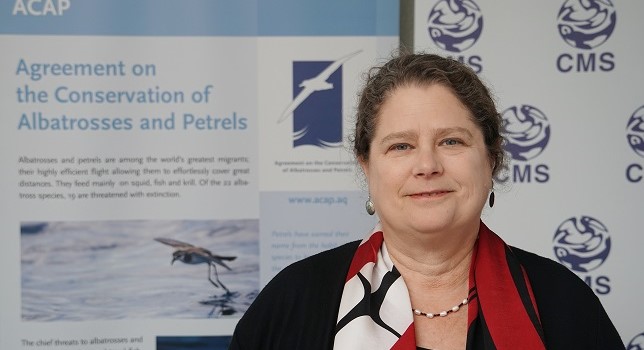
Amy Fraenkel
CMS Executive Secretary, Amy Fraenkel

Billions of individual aquatic, avian, and terrestrial wild animals migrate across lands, rivers, oceans and skies. They are essential to the well-functioning of nature and to human well-being, pollinating plants, transporting nutrients, regulating ecosystems, controlling pests, storing carbon and sustaining livelihoods and cultures worldwide. 

Their survival depends on coordinated action across the full length of their migratory routes, which can cross multiple national borders and even continents.

Developed for CMS by the UN Environment Programme World Conservation Monitoring Centre (UNEP-WCMC) and other contributors, the interim report tracks significant changes in the conservation status of migratory species and highlights emerging trends to provide new information focusing on:​

  • Recent significant changes in the conservation status of species listed under the Convention on Migratory Species (CMS-listed) since the 2024 baseline, based on data from the IUCN Red List of Threatened Species.
  • Newly reported population trends and changes in extinction risk documented in the scientific literature.

The report also underlines encouraging developments:​

  • Advances in mapping of migratory pathways to inform decision-making. Initiatives to map migrations are gathering momentum.​ This includes those spotlighted in the report – the Global Initiative on Ungulate Migration (GIUM), the Migratory Connectivity in the Ocean (MiCO) system, and BirdLife International’s work to identify and map six major marine flyways.
  • Progress in identifying and safeguarding important habitats and migratory corridors.
  • Recovery of some species through coordinated action.

Other key findings:

  • 26 CMS-listed species, including 18 migratory shorebirds, have moved to higher extinction risk categories.
  • Seven CMS-listed species have improved​​, including the saiga antelope, scimitar-horned oryx​, and Mediterranean monk seal​.
  • 9,372 ​Key Biodiversity Areas (KBAs) important for CMS-listed species​ have been identified.
  • 47% of the area covered by KBAs is not covered by protected and conserved areas​.
  • Progress has been made on filling gaps in knowledge on important habitats and migratory routes for sharks/rays and marine mammals, and new initiatives will identify areas for marine turtles.​
  • Despite some important successes, key indicators – such as the overall proportion of CMS-listed species with decreasing populations – are heading in the wrong direction. ​

The new report is based on the latest available data, including significant changes in conservation status, newly reported population trends, and recent progress in identifying and protecting critical habitats and migratory pathways.

This focused update provides Parties with the latest available evidence ahead of COP15 deliberations, helping to identify priority areas for action in advance of the next full report in 2029 at COP16. 

Overexploitation, and habitat loss and fragmentation, are the two greatest threats to migratory species worldwide, notes CMS Executive Secretary, Amy Fraenkel.

“The first global report was a wake-up call,” she said. “This interim update shows that the alarm is still sounding. Some species are responding to concerted conservation action, but too many continue to face mounting pressures across their migratory routes. We must respond to this evidence with coordinated and effective international action.”

The report underscores the need for action to improve the status of all migratory species listed on the Convention, but most urgently for the species listed on CMS Appendix I, where migratory species in danger of extinction throughout all or a significant portion of their range, are listed.

These 188 Appendix I species include terrestrial mammals (28), aquatic mammals (23), birds (103), reptiles (8), and fish (26).

Parties that are Range States to Appendix I-listed species are required to provide strict protection, including the prohibition of taking (such as hunting or capturing), protecting and restoring important habitats, and addressing obstacles that impede the species’ migration.

Among other measures, a Global Initiative on Taking of Migratory Species (GTI) is expected to be launched at COP15. The new CMS-initiated initiative is designed to help governments, experts and local communities to ensure that any taking of migratory species is legal, sustainable and safe. It focuses on new findings that the threat of taking for domestic use is far greater than international trade.

“If we intervene only at the point of crisis, we risk acting too late,” said Fraenkel. “By strengthening governance, monitoring, legislation and community engagement upstream, we can reduce pressure on these remarkable animals and put them on the path to lasting recovery.”

Building on a landmark baseline

The 2024 State of the World’s Migratory Species report marked the first comprehensive global assessment of migratory animals, covering the 1,189 species listed at that time in CMS Appendices I and II and its analysis is linked to over 3,000 additional migratory species.

It found that:

  • 70 CMS-listed species had become more endangered over the previous three decades, compared to just 14 that improved in status.
  • Migratory fish populations had declined by 90% on average since the 1970s and 97% of CMS-listed migratory fish species face extinction.
  • More than half of Key Biodiversity Areas important for CMS-listed species lacked protected status.

The interim report update ensures that governments at CMS COP15 have the most current scientific picture before them.

“We have a baseline. We have better tools. And we have growing public awareness,” Fraenkel said. “The question before governments at COP15 is straightforward: will we match this knowledge with the political will and investment needed to secure the future of the world’s migratory species?”

Regional workshop highlights Uruguay’s experience in phasing out dental amalgam

0

Uruguay shared its experience in phasing out dental amalgam with other Latin American countries in a regional workshop under the GEF dental amalgam project.

In 2018, Uruguay removed dental amalgam from the oral health services covered by the country’s Comprehensive Health Care Plan, and there have been no imports of dental amalgam since 2020.

Minamata Convention
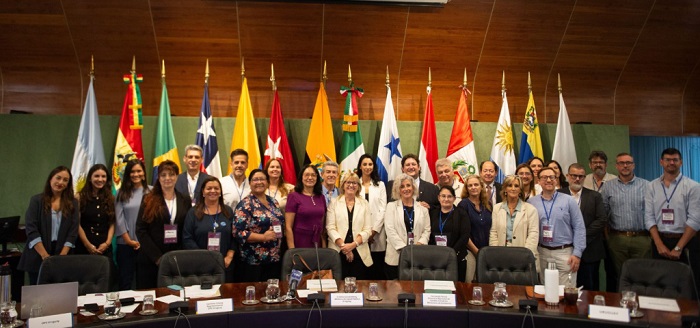
Participants at the Uruguay workshop on phasing out dental amalgam

The World Health Organisation (WHO) and the United Nations Environment Programme (UNEP), together with the Global Environment Facility (GEF), convened a meeting in Montevideo from March 4 and 5, 2026. Similar meetings will follow in Bangkok and Dakar later this year to conclude this global pilot project addressing dental amalgam.

The Minister of Public Health, Cristina Lustemberg, stated during the opening of the workshop that health policy should be guided by care and prevention, which she described as “the best tool”. She noted that reducing mercury-added products is an example of this approach.

“The sixth meeting of the Conference of the Parties (COP-6) agreed to phase out dental amalgam by 2034 and requested the Secretariat to develop guidance for national action plans for phase-out,” said Eisaku Toda, Senior Programme Management Officer of the Secretariat of the Minamata Convention, in his presentation in Spanish.

“The experience of Uruguay will provide an excellent example of a national action plan,” added Toda.

The hidden ROI of giving women power in agriculture

0

“Women hold the future of agriculture.”

Depending on where this is said, it can attract applause or scepticism. Beyond rhetoric, the more relevant question is whether our agri-food systems allow this statement to become reality.

Across Nigeria and many African countries, agriculture is woven into women’s daily lives. We all know a mother, aunt, cousin, or sister engaged in some form of agricultural activity from backyard poultry and vegetable gardening to small-scale agro-processing, aggregation, or informal trading. Women are present across value chains, from production to retail. Their labour sustains households and, collectively, underpins national food systems.

Latifah Abdulkarim
Latifah Abdulkarim

Yet when conversations about women’s inclusion arise, the question “What more do women need?” remains.

Data from the World Bank challenge common assumptions. Contrary to the claim that women provide 60–80% of agricultural labour in Africa, surveys show the average is closer to 40%, and in Nigeria, it is approximately 37%. The point is not to diminish women’s role, but to sharpen the conversation: women’s contribution is significant, yet their productivity and influence are constrained by structural barriers rather than capacity gaps.

Women do not need persuasion about agriculture’s productivity. They generate its economic value. The deeper issue is not whether women are present in agriculture, but whether their voices shape the rules governing systems and markets.

Participation Without Power

Women’s labour contributions are substantial, but their representation in formal decision-making remains limited. They are often underrepresented in cooperative leadership, producer associations, investment committees, and policy dialogues. This disconnect between lived realities and institutional responses undermines effectiveness.

When women farmers face disease outbreaks, input quality challenges, volatile markets, or constrained access to finance, these issues are often discussed about them rather than with them. Interventions can miss critical design insights: timing of extension services, affordability of inputs, repayment structures aligned with cash flow cycles, and training formats that accommodate unpaid care responsibilities.

Studies in the Journal of Applied Agricultural Economics and Policy Analysis show that cooperative membership significantly improves women’s empowerment outcomes in Nigeria, increasing access to networks, information, and collective bargaining power.

Inclusion is not simply fairness; it is a systems efficiency issue. When a significant segment of the production base lacks decision-making power, resource allocation becomes suboptimal. This is an economic imperative.

The Non-Linear Path

For many women, enterprise growth does not follow a linear trajectory. Gender norms shape opportunities in visible and subtle ways. A woman may pause or slow professional advancement during motherhood while absorbing disproportionate unpaid care responsibilities, while a man may intensify efforts to increase earning capacity when embracing fatherhood.

Economic pressures can push women into smallholder farming or micro-enterprises as supplementary income streams. What initially appears flexible can reveal structural constraints: limited capital, restricted market linkages, and minimal mentorship support.

For some women, agriculture is a strategic choice. For others, it is the most accessible economic option. In both cases, ambition exists. What differs is the structural support available to convert effort into scale.

Evidence from the International Institute of Tropical Agriculture shows that addressing constraints through improved inputs, extension services, and market access leads to measurable increases in productivity and income among Nigerian female farmers. Without mentorship, tailored finance, market exposure, and leadership pathways, many women remain concentrated in low-margin segments of value chains.

Give to Gain: A Systems Lens

The theme “Give to Gain” challenges us to rethink reciprocity in development ecosystems. If women are to gain income, enterprise resilience, and leadership influence, institutions must give more than symbolic recognition or quotas.

Giving means investing in practical, market-oriented knowledge systems responsive to women’s constraints. It means designing mentorship structures that move beyond one-off training toward sustained accompaniment. It requires financial products aligned with real production cycles. It demands intentional pathways for women to transition from participants to decision-makers within cooperatives, agribusinesses, and policy platforms.

It also means building structures with women, not merely for them.

The Food and Agriculture Organisation estimates that if women had equal access to productive resources, yields on their farms could increase by 20–30%, raising overall agricultural output in developing countries by up to 4%.

When we give women access to technical knowledge, they gain productivity. When we give them platforms to lead, systems gain accountability. When we give them mentorship, markets gain stronger enterprises. Returns ripple across households, communities, and value chains.

From Beneficiaries to Leaders

Framing women primarily as beneficiaries, while well-intentioned, reinforces passivity. Women in agri-food systems are economic actors operating within constraints. The shift required is from assistance to agency. Leadership is reflected in who negotiates prices, who influences input standards, who shapes cooperative governance, and who participates in policy formulation.

Where women gain structured support and leadership opportunities, effects extend beyond income. Household nutrition improves, reinvestment in education increases, and community resilience strengthens. These are predictable multipliers.

The Future of Agriculture

So, do women hold the future of agriculture?

A more precise framing: agriculture’s future depends on whether women are enabled to lead within it. Celebrating participation is not enough. We must interrogate programme design, financing models, institutional frameworks, and governance structures. Are they neutral, or do they exclude? Are women’s voices amplified where decisions are made, or only where labour is required?

The question is no longer whether women are capable of holding the future of agriculture.

The question is whether we are prepared to enable them to do so.

So now I ask you: Are you truly enabling women to hold the future of agriculture?

By Latifah Abdulkarim, Programme Lead at Sahel Consulting Agriculture and Nutrition Limited

Gas supply constraints continue to lower electricity generation – NISO

0

The Nigerian Independent System Operator (NISO) says the continued decline in electricity generation on the national grid is due to persistent gas supply constraints affecting several thermal power plants.

The management of NISO made this known in a statement in Abuja on Thursday, March 5, 2026.

It said: ”As at 5:00am of Thursday, total generation on the national grid stood at 3,940.53 Megawatts (MW), which was already below the expected capacity due to existing gas supply limitations.”

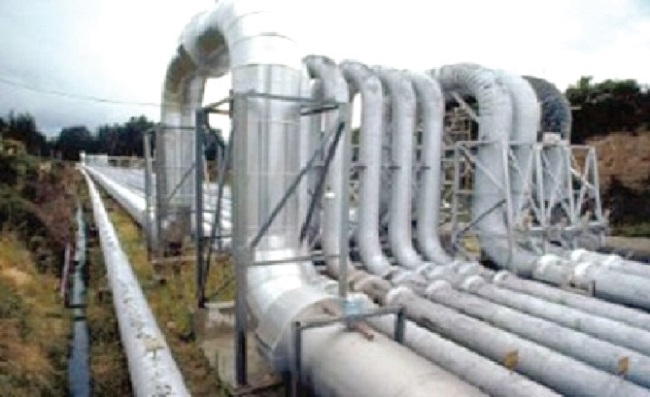
WAPCO gas pipeline
Gas pipeline

NISO said the drop in generation had impacted a number of generating stations.

It also said that between 6:00am and 8:00am several generating units were forced to shut down as a result of inadequate gas supply to the plants.

“This resulted in a cumulative reduction of approximately 292 MW in available generation on the grid during the period.

“Operational data as at Wednesday indicated that thermal power plants require approximately 1,588.61 million standard cubic feet (MMSCF) of gas per day to operate at optimal capacity.

“However, actual gas supply to these stations was approximately 652.92 MMSCF, representing about 40 per cent of the gas required for optimal generation,” it said.

The system operator said that these developments further reduced the total generation available for dispatch to the national grid and had contributed to the current generation inadequacy being experienced across the system.

NISO disclosed that it was actively working with the affected Power Generation Companies and relevant gas suppliers to closely monitor the situation and facilitate the restoration of generation as soon as gas supply to the affected plants stabilised.

It said that the system operator would continue to take necessary operational measures to maintain grid stability while managing the impact of the reduced generation on the network.

“NISO remains committed to keeping stakeholders and the public informed on developments affecting the national grid,” it said.

By Constance Athekame

Tinubu resolves OPL 245 dispute with ENI, unlocks deepwater investment

0

President Bola Tinubu on Thursday, March 5, 2026, announced the successful conclusion of a settlement agreement between the Federal Government, Eni and Nigerian Agip Exploration Limited over Oil Prospecting Licence (OPL) 245.

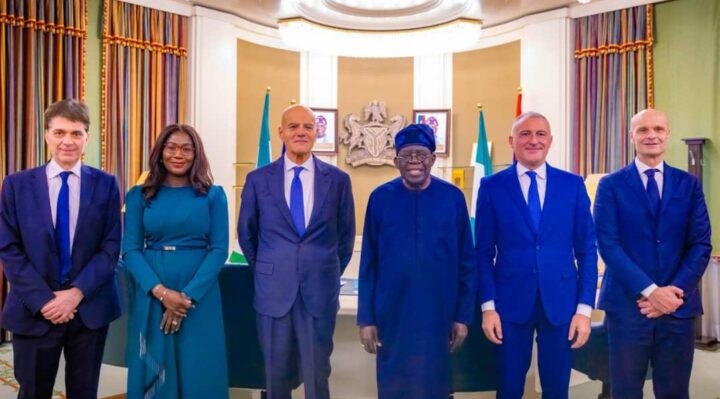
Tinubu announced the agreement at a meeting in his office attended by the Chief Executive Officer of Eni, Claudio Descalzi, and other senior officials.

Others present included Eni’s Chief Operating Officer, Guido Brusco; Head of Sub-Saharan Region, Mario Bello; and Managing Director of Nigerian Agip Exploration, Fabrizio Bolondi.

Bola Tinubu
President Bola Tinubu with the Chief Executive Officer of Eni, Claudio Descalzi, and other senior officials

This is contained in a statement issued by Presidential Spokesperson, Mr. Bayo Onanuga, on Thursday in Abuja.

The agreement brought to a close the long-standing dispute over OPL 245, paving the way for the development of one of Nigeria’s most significant deepwater resources.

The dispute, which lasted more than 15 years, had been widely regarded as one of the most prominent legacy issues in Nigeria’s oil sector.

With the settlement, the pathway is now clear for a Final Investment Decision on the Zabazaba–Etan deepwater project.

The project is expected to add about 150,000 barrels per day to Nigeria’s oil production capacity.

Tinubu described the agreement as a strategic milestone in the administration’s economic reform agenda.

“This resolution sends a clear signal to global investors that Nigeria is prepared to address legacy issues transparently and uphold the rule of law,” he said.

The President added that the settlement would help restore investor confidence and create a stable environment for long-term investment.

Earlier, the Special Adviser to the President on Energy, Olu Verheijen, said the revised agreement reflects reforms introduced under the Petroleum Industry Act.

“The revised terms provide investors with clarity and predictability while ensuring stronger value for the federation,” she said.

Tinubu commended institutions that contributed to the settlement, including the Nigerian Upstream Petroleum Regulatory Commission and NNPC Limited.

He said the resolution underscores the administration’s determination to unlock Nigeria’s energy assets and attract responsible investment into the sector.

By Muhyideen Jimoh