31.3 C
Lagos
Monday, March 2, 2026
Home Blog Page 43

Dangote Refinery plans capacity expansion to 1.4m bpd

0

The Dangote Petroleum Refinery has launched an expansion programme to more than double capacity from 650,000 barrels per day to 1.4 million within three years.

The Managing Director and Chief Executive Officer, Mr. David Bird, disclosed this on Wednesday, January 14, 2026, during an interactive media session in Lagos.

Bird said the expansion would use a “roofless replication” model, duplicating existing infrastructure to accelerate delivery without altering core engineering designs.

Dangote Petroleum Refinery
Managing Director and Chief Executive Officer, Mr. David Bird, with other Dangote Petroleum Refinery officials at the media session

“Once engineers start tinkering with designs, projects return to prolonged engineering stages. Our approach avoids that.

“We will not re-engineer or redesign. This allows us to move directly into procurement and construction,” Bird said.

He expressed confidence the expansion would be completed within three years, citing extensive preparatory work already carried out at the Lekki site.

Bird said procurement of long-lead items would begin immediately, with completion targeted for the first quarter of 2026.

He added that site preparation and piling works were expected to begin before the end of January 2026.

“The remarkable thing about this site is the foresight of Aliko Dangote.

“The land has already been reclaimed, raised and prepared. Much of the pre-investment that delays projects has already been done,” he said.

Bird said steelwork for the expansion could begin emerging before the end of the year, reinforcing confidence in the project timeline.

He said the refinery would continue prioritising local capacity development by upskilling Nigerian workers and deepening domestic technical expertise.

On operations, Bird said the refinery imports 100 per cent of its crude feedstock by sea, enabling it to process diverse crude grades.

“This is not a traditional refinery tied to a single pipeline or crude stream.

“We can process Nigerian grades, alternative crudes, intermediate feedstocks and blending components. That flexibility guarantees security of supply,” Bird said.

He said advanced conversion units, described as the plant’s “moneymakers”, enable production of high-quality fuels meeting market specifications.

In spite of not operating at full capacity, Bird said the refinery consistently delivers products safely and reliably, even during planned maintenance.

“We have built enough resilience to take individual units offline and still meet market demand,” he said.

Bird said the refinery supplied over 50 million litres of Premium Motor Spirit daily throughout the festive season.

He disclosed current PMS production of between 50 and 52 million litres daily, with average truck-out volumes of about 50 million litres.

On the naira-for-crude policy, Bird said discussions were ongoing with NNPC Ltd. to increase crude supply under the arrangement.

He urged stronger implementation by government and regulators.

“Effective execution of the naira-for-crude policy is critical to boosting domestic refining, stabilising fuel prices and easing operational pressures,” Bird said.

Bird, an Australian and former Shell executive, assumes office in July 2025.

His appointment marks a strategic shift as the refinery scales operations and consolidates its role in Africa’s energy landscape.

Bird brings over 17 years’ global experience, with senior roles across Australia, Singapore and the United States.

He previously served as Vice President of Shell’s Prelude Floating LNG Project and supported commissioning of the Motiva Refinery in Texas.

In Singapore, he managed Shell’s largest Asian refinery, overseeing over 500,000 bpd and major expansion projects.

He also served as Senior Vice President at Santos Ltd and most recently as Chief Executive Officer of OQ8 in Muscat, Oman.

Industry analysts say Bird’s experience positions him strongly to lead Dangote Refinery, seen as central to Nigeria’s industrial revival and energy security goals.

By Yunus Yusuf

Niger Delta summit partners Caverton to advance safe, climate-friendly water transport

0

The Niger Delta Blue Economy Investment Summit has initiated a strategic partnership with Caverton Marine to promote safer, more efficient, and climate-friendly marine transportation across the Niger Delta.

The collaboration, announced following a high-level engagement between the Summit’s organising committee and Caverton Marine in Lagos, is aimed at addressing persistent safety challenges on the region’s waterways while accelerating the adoption of modern, low-emission passenger vessels.

Caverton Marine, an indigenous boat manufacturing and marine logistics company, has gained national recognition for its role in transforming water transportation in Lagos through public-private partnerships, including the recent delivery of world-class passenger ferries for the Lagos State Government.

Summit
Summit Co-convener, Dr. Uche Igwe (right), in a warm exchange with the Managing Director of Caverton Marine, Mr. Olubode Makanjuola

Speaking after the meeting, Cedric Ogwu, a member of the Summit’s organising committee, said the engagement was driven by the need to replicate proven models of success in the Niger Delta.

“We are encouraged by the visible improvements in water transportation and passenger safety in Lagos and by the role Caverton has played in achieving those outcomes. The Summit provides a platform to explore how similar solutions can be deployed across the Niger Delta, where water transport is not optional but essential,” he said.

Ogwu noted that the Summit will serve as a convening space for governments, investors, and operators to scale infrastructure that reduces accidents, improves commuter confidence, and supports sustainable economic activity in coastal communities.

Responding, the Managing Director of Caverton Offshore Group, Mr. Bode Makanjuola, welcomed the partnership and described the Summit as a timely intervention.

“The vision behind this Summit is ambitious, and we are keen to be part of it. Caverton is already working with some states in the Niger Delta, but there is room to do much more,” he said.

Makanjuola disclosed that the company now manufactures passenger boats that meet global safety and quality standards, including fully electric ferries designed to lower operating costs and reduce environmental impact over the long term.

“Many accidents on our waterways are preventable, often linked to equipment failure and substandard vessels. By deploying certified boats built to international specifications, these risks can be significantly reduced,” he added.

Also commenting, Co-convener of the Summit, Dr. Uche Igwe, said Caverton’s entry into electric ferry manufacturing aligns strongly with global energy transition goals.

“The development of fully electric ferries presents a major opportunity for the Niger Delta. It supports climate mitigation, reduces carbon emissions, and positions the region to attract green investment into marine transportation,” he said.

The Niger Delta Blue Economy Investment Summit will hold from February 9 to 11, 2026, at Four Points by Sheraton Hotel, Ikot Ekpene, Akwa Ibom State. The event will bring together policymakers, investors, industry leaders, and development partners to unlock investment opportunities across the region’s blue economy.

Attendance by high-level speakers and resource persons, including former Prime Minister of Tunisia, Mehdi Jomaa, has been confirmed.

Fossil fuel phaseout urgent as 1.5°C target likely to be passed by 2030

0

A new report by the Copernicus Climate Change Service shows that 2025 was the third hottest year on record, marking the first time that a three-year period has exceeded the 1.5°C limit. Experts warn that, based on the current rate of warming, the 1.5°C heating threshold will likely be breached by the end of 2030, or over a decade earlier than predicted.

The report notes that air temperature over global land areas was second warmest, while the Antarctic saw its warmest annual temperature on record. Temperature rise in 2025 was mainly due to “the build-up of greenhouse gases in the atmosphere, from continued emissions and reduced uptake of carbon dioxide by natural sinks” – underscoring the urgent need for a fossil fuel phaseout.

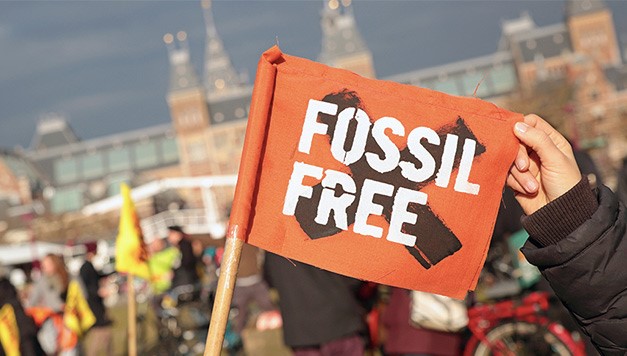
Fossil fuel
Fossil fuel divestment campaign

Just two weeks into 2026, wildfires ravaged parts of Australia and Argentina, and South Africa, a snowstorm brought disruption in Europe, and floodwaters inundated Indonesia.

Savio Carvalho, 350.org Managing Director for Campaigns and Networks, said: “Another year in the top three hottest on record, and communities everywhere are feeling it. Extreme weather isn’t rare anymore – it’s driving up food prices, insurance premiums, water shortages, and upending daily life across the globe.

“Governments know fossil fuels are the cause of climate breakdown, yet they keep stalling on the transition. We don’t have the luxury of wasting time or taking side paths – we are running out of time. We need to do what’s right now: a global phase out of fossil fuels is urgent. We already have the renewable energy solutions we need – what’s missing is the political will. We can prevent the worst if we act now.”

Fenton Lutunatabua, 350.org Programme Manager Pacific & Caribbean, said: “We cannot afford to let the 1.5-degree target slip away. We literally cannot afford the financial cost of it. In the Pacific, climate disasters are costing us billions of dollars in recovery and rebuilding. A world beyond 1.5 degrees would devastate our resources even more. The cost of this trajectory extends beyond finances; it threatens the very existence of our people. Entire villages in Fiji are being uprooted and relocated, losing connection to traditional lands and fishing grounds.

“Atoll nations like Tuvalu and the Marshall Islands are grappling with both adaptation and addressing the reality of potential forced migration. To give up on 1.5 degrees is to say that any of these realities are acceptable. Every fraction of a degree we can save is a chance at a livable future for our people. We can only do that by moving beyond fossil fuels as rapidly as possible.” 

Meanwhile, Indonesia experienced some of the worst climate-fueled disasters in 2025. More than 1,100 lives were lost in Sumatra after a rare tropical cyclone triggered flash floods, while 18 were killed in Bali’s worst flooding in decades. Bali flood victims, including a 350.org organiser, are suing the Indonesian government for damages, following an International Court of Justice ruling on state accountability for climate harms. 

Suriadi Darmoko, 350.org Organiser and plaintiff in Bali climate lawsuit, said: “Entire communities are still buried in mud. Thousands of families are still grieving and struggling to have their basic needs met. We refuse to be treated as mere climate disaster victims. Our leaders have kept the world hooked on fossil fuels even as they knew decades ago it would lead to such tragedies.

“The Indonesian government must honour its commitments to limit temperature rise below 1.5 C and take immediate action to phase out fossil fuels. Science and justice is on our side – we’ll make sure that big polluters pay for climate devastation.”

Barrister Nwamaka: Professor Gambari commiserates with the Chigbo family

0

Founder and chairman of the Savannah Centre for Diplomacy, Democracy & Development, and former Chief of Staff to President Muhammadu Buhari, Prof. Ibrahim A. Gambari, has commiserated with Maureen Chigbo and her family on the tragic loss of her elder sister, Barrister Nwamaka Chigbo, on January 5, 2026.

The condolence letter, personally signed by Prof. Gambari and addressed to Dr Maureen Chigbo, was dated January 12, 2026.

“I sincerely sympathise with you and your family on this huge and irreplaceable loss. I want to take solace in the knowledge that your sister has lived her life in accordance with the teachings of Jesus Christ and has touched so many lives with her benevolence,” said Gambari, who was also former Permanent Representative of the Federal Republic of Nigeria to the United Nations and former Under Secretary-General and Head of the United Nations Department of Political Affairs.

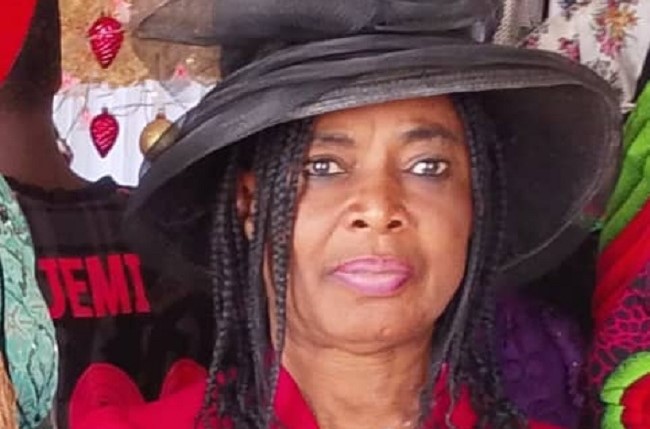
Princess Nwamaka Mediatrix Chigbo
The late Princess Nwamaka Mediatrix Chigbo

He prayed for Nwamaka’s soul to rest in peace, adding: “And may the Lord give you and the family the fortitude to bear this pain.”

Realnews reports that the family of Princess Nwamaka Mediatrix Chigbo, an Abuja-based lawyer, sadly announced her brutal death at the hands of still-to-be-identified kidnappers in the Nigerian Federal Capital Territory on Monday, January 5, 2026.

Before her abduction, Barrister Nwamaka was on the phone with her sister Anthonia, who briefly interrupted the call to attend to a client. When she reverted, the barrister’s phone was still live, and Anthonia could hear her sister’s distress cry before the phone suddenly went dead and unreachable.

Anthonia alerted her elder sister, Maureen Chigbo, and other family members, who called the lawyer’s number repeatedly to reach her or her abductors to no avail.

When a call finally went through, a male voice rained curses in English and Hausa language, saying: “Thunder fire you there, send three million Naira or else we will kill her.”

The captors gave no further details and abruptly terminated subsequent calls. Barrister Nwamaka’s family later tried to contact the Police Force Public Relations Officer and left a text message on her phone. They were referred to two police complaint numbers.

The family equally sent a distress text and WhatsApp message to the Inspector General of Police (IGP), and also contacted the FCT Police Commissioner, who immediately linked them up to the Commander of the Scorpion Squad, in charge of kidnapping in Abuja.

The Commander later called to inform the family that the police were tracking the kidnappers, who were said to be “in motion and would likely drop the lawyer off once they might have collected the ransom.” 

The kidnappers never initiated any calls, and when Nwamaka’s family members reached them through her phone for clarification on how the ransom would be paid, they only heard the lawyer screaming in pain, “I am dying. …save me, please send the money, I am dying,” before the phone finally went dead again.

The family maintained contact with the Police Commander throughout Monday night to follow up on the rescue operation.

At 4 am on Tuesday, January 6, when Maureen called the Commander, he expressed surprise that the lawyer had not called or returned home. He then promised to escalate the rescue operation. 

The Commander later called to inform the family that “a lady had been found in a critical condition” and taken to an Abuja specialist hospital. He requested that Nwamaka’s picture be sent for identification purposes.

Maureen immediately took a flight from Lagos to Abuja and, on reaching the hospital, saw her sister’s lifeless body in the mortuary with bruises, swollen eyes, and a cracked skull, all signs of a tortured death.

The Chigbo family has met with the Police authorities, who assured them that the case was under investigation and that the culprits would be apprehended. 

Nwamaka was an active member and former treasurer of the Nigerian Bar Association, Abuja, member of the International Federation of Women Lawyers (IFWL), FIDA and Global Association of Female Lawyers (GAFA). She was a former President of Catholic Lawyers Association, Abuja. 

An ardent Catholic, Nwamaka authored a book on Infant Jesus, and until death was the vice president of the Infant Jesus Association, member of the Mother of Perpetual Help Catholic Group among other religious groups.

The family expresses its gratitude to the Police for their efforts and cooperation so far, and urges the force to ensure that justice is served in Nwamaka’s case.

The family also wishes to thank Nwamaka’s friends, colleagues and well-wishers for their support and prayers. Her funeral arrangements will be announced as soon as possible.

TotalEnergies divests interest in Renaissance JV

0

TotalEnergies has announced the signing of an agreement with Vaaris for the sale of its 10% non-operated interest in the Renaissance Joint Venture (formerly SPDC JV) in Nigeria, for a total consideration of $800 million. The transaction is subject to customary closing conditions and regulatory approvals.

The Renaissance JV, comprising NNPC Ltd (55%), Renaissance Africa Energy Company Ltd (30%, operator), TotalEnergies EP Nigeria (10%), and Agip Energy and Natural Resources Nigeria (5%), holds 18 licenses in the Niger Delta region.

TotalEnergies
TotalEnergies

Under the agreement, TotalEnergies will transfer its 10% interest in 15 oil-producing licenses and three gas-producing licenses to Vaaris. TotalEnergies will retain full economic interest in the gas licenses, ensuring continued support for Nigeria LNG, which currently sources 50% of its gas supply from these assets.

TotalEnergies continues its portfolio reshuffling in Nigeria after key milestones achieved in 2025 focusing on operated assets:  entry in PPL2000/2001 offshore exploration in August 2025, the increase of stakes in OPL257 and the sale of non-operated OML118 both in November 2025.

TotalEnergies says it is committed to support the country strategy to grow production in Nigeria: onshore along the gas value chain as demonstrated by the FID of Ubeta gas project in 2024 on OML58 and offshore oil and gas.

Overhauling Nigeria’s emergency response mechanism

The Christmas Eve fire outbreak at a 25-storey building on Lagos Island has once again thrust Nigeria’s emergency response system into the public spotlight.

It has also renewed concerns over the country’s preparedness for large-scale disasters.

According to the Lagos State Emergency Management Agency (LASEMA), the inferno at the Great Nigeria Insurance building claimed three lives and left at least 12 others injured, while goods worth millions of naira were destroyed.

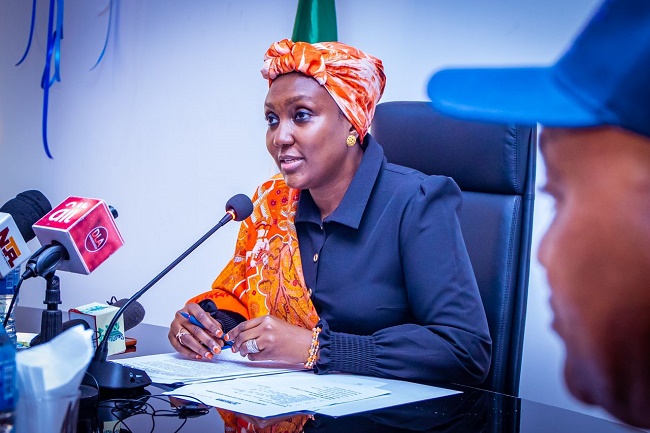
Zubaida Umar
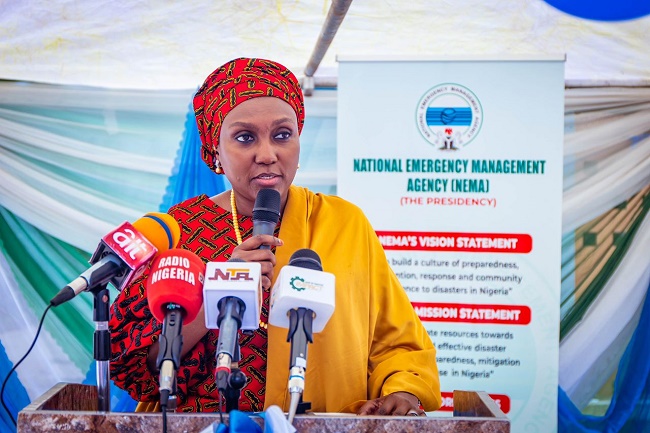
Director-General of NEMA, Zubaida Umar

Disturbingly, the bodies of the deceased were only recovered from the rubble four days after the incident; an outcome that has fuelled public criticism.

This is not an isolated case.

Previous fire incidents, including the blaze that displaced traders at the Tejuosho Market in Yaba, Lagos, were similarly met with complaints from victims over delayed and poorly coordinated responses.

Beyond fire outbreaks, other emergency situations have also exposed systemic weaknesses.

On Dec. 29, a tragic road crash involving British-Nigerian boxer Anthony Joshua at the Sagamu end of the Lagos–Ibadan Expressway claimed the lives of two of his friends.

Although dissimilar in nature, the handling of the aftermath attracted widespread criticism, especially over the timeliness and efficiency of emergency services.

Against this backdrop, experts describe Nigeria’s emergency response landscape in 2025 as one of mixed fortunes.

On the one hand, it has been marked by catastrophic failures; on the other, by the gradual emergence of technology-driven solutions.

Albeit the existence of a formal institutional framework under the National Emergency Management Agency (NEMA), analysts argue that the system remains dangerously reactive rather than proactive.

Dr Adeleke Pitan, an emergency response expert, notes that the current approach often waits for disasters to occur before mobilising resources, instead of using predictive data to pre-position assets in high-risk locations.

He emphasised that the first 60 minutes following a traumatic incident; the so-called ‘Golden Hour’, is critical to survival.

However, in Nigeria, this window is frequently lost to traffic congestion, weak communication systems and the absence of decentralised response units.

The devastating floods in Mokwa, Niger State, in May 2025 underscore this challenge.

The disaster left 159 people dead and nearly 100 others missing.

NEMA said it had issued early warnings ahead of the flooding, working in collaboration with the Nigerian Meteorological Agency (NiMet) and the Nigeria Hydrological Services Agency (NIHSA).

“In collaboration with NiMet and NIHSA, NEMA’s early warning systems involved disseminating seasonal climate predictions and real-time flood alerts via radio, television, social media and town criers,” the agency said.

Nevertheless, analysts such as Richard Davies argue that early warnings alone are insufficient when local emergency infrastructure lacks the capacity to respond.

Citing a joint assessment by the International Organisation for Migration (IOM), NEMA and partners, Davies said 3,018 individuals across 503 households were directly affected by the Mokwa floods.

“Of these, 1,590 people were displaced, while 1,428 remained in damaged or flooded homes. At least 265 houses were destroyed and a further 20 were severely damaged,” he said.

Beyond weak local capacity, limited resources remain a major constraint for emergency responders.

A recent publication by Emergency Response Africa (ERA) revealed that, as of early 2025, Lagos State reportedly had only one functional heavy-duty crane dedicated to major rescue operations.

“Many critical tools such as cranes, earthmovers and fire trucks have exceeded their operational lifespan,” the report stated.

“As of 2024, the state reportedly had just one functional crane for major rescue operations, which is grossly inadequate for a megacity of over 20 million people.

“Compounding the problem, spare parts for these ageing machines are increasingly difficult to source, as some models are no longer in production.

“This forces LASEMA to depend on private contractors for critical equipment; an option that is both costly and unreliable,” ERA added.

The healthcare technology firm also identified low public awareness, shortages of skilled emergency personnel and fragmented coordination among response agencies as persistent challenges.

Experts argue that effective emergency management must begin long before disasters occur, through strict regulatory enforcement.

They stress that agencies such as state ministries of physical planning must be fully integrated into the emergency response chain to prevent avoidable incidents.

They cite the Ojodu-Berger building collapse of April 2025, which left one person dead and 13 others trapped.

Investigations later revealed that the structure had undergone unauthorised modifications.

More broadly, analysts observe that disaster management in Nigeria is frequently hampered by weak coordination among federal, state and local institutions.

To address this, they advocate the creation of a unified digital dashboard to enable real-time inter-agency coordination, alongside the full implementation of a functional national ‘112’ emergency helpline.

Public–private partnerships are also gaining attention.

For instance, collaborations with firms such as ERA deploy GPS-enabled routing systems to dispatch the nearest available ambulance, helping to bypass referral delays that often prove fatal.

NEMA’s Director-General, Mrs. Zubaida Umar, has consistently called for a fundamental shift in thinking; from reaction to prediction.

“Emergency management can no longer be reactive; it must be predictive, preventive and participatory.

“Our citizens should not encounter us only when disaster strikes. They should see us every day, building safer communities, raising awareness and ensuring preparedness,” she said.

Experts say this shift must be backed by investment in physical mitigation measures such as dams, embankments and improved drainage systems, rather than allocating the bulk of resources to post-disaster relief.

Similarly, long-term recovery efforts should move beyond the distribution of relief materials to rebuilding climate-resilient housing and restoring farmlands after floods.

As part of a broader overhaul, analysts also argue that Nigeria must abandon the practice of waiting for emergency fund approvals after disasters occur.

Instead, they recommend the establishment of dedicated, pre-approved state-level emergency funds that can be accessed immediately once a disaster is declared.

This, they say, would require states to halt the diversion of ecological funds and ensure that every local government area maintains a trained Community-Based First Responder network.

Finally, experts call for a comprehensive review of the National Disaster Response Plan to reflect modern emergency response strategies and clearly define the roles and call-out procedures of all stakeholders.

By Kayode Adebiyi, News Agency of Nigeria (NAN)

Waste cooking oil can power Nigeria’s energy transition – Expert

A Don, Dr Esther Babatunde, says waste cooking oil generated by restaurants and households across Nigeria can be converted into high-quality biodiesel capable of powering generators, trucks and industrial equipment.

Babatunde, a Senior Lecturer in the Department of Chemical Engineering, University of Ilorin, disclosed this in an interview on Tuesday, January 13, 2026, in Lagos.

While speaking on her research findings on renewable energy and waste valorisation, she said that biodiesel obtained from waste cooking oil could reduce energy costs, pollution and fuel imports.

waste cooking oil
waste cooking oil

Waste valorisation is defined as the process of reusing, recycling, composting, or converting waste into useful products, such as chemicals and fuels, by transforming discarded materials into raw materials or energy sources.

Babatunde, who is also a Postdoctoral Research Fellow at the University of Johannesburg, South Africa, noted that Nigeria’s hospitality sector produced large volumes of waste cooking oil annually.

She noted that much of these waste cooking oils are improperly disposed of, despite its potential as a renewable fuel feedstock.

“What many people regard as useless waste is actually a valuable resource.

“Used cooking oil can be converted into biodiesel that can power generators, trucks and industrial equipment, while also reducing environmental pollution.

“Nigeria produces over 100,000 tonnes of waste cooking oil every year from hotels, bukas and fast-food outlets, especially in urban centres like Abuja, Lagos and Port Harcourt.

“This is not sludge; it is a feedstock goldmine for renewable diesel.

“At a time when we export crude oil but still depend on imported fuels due to weak refining capacity, biodiesel from waste oil offers a local, sustainable and affordable alternative,” she said.

The postdoctoral researcher explained that biodiesel was produced from waste cooking oil through a chemical process known as transesterification, which involves combining the oil with methanol in the presence of a catalyst.

“In our laboratory at the University of Ilorin, we replicated industrial-scale experiments using waste oil collected from campus cafeterias.

“Under optimal conditions of 60 degrees Celsius, a 12:1 methanol-to-oil ratio and just three per cent catalyst loading, we achieved a biodiesel yield of 97.6 per cent that met ASTM standards.

“This is not rocket science. It is chemical engineering adapted to Nigerian realities, using locally sourced materials, including catalysts derived from waste and natural resources.

“Unlike biodiesel produced from edible oils such as palm or soybean, waste cooking oil avoids the food-versus-fuel debate and significantly lowers production costs,” she said.

On environmental benefits, Babatunde said biodiesel burns cleaner than petroleum and diesel, and could significantly improve air quality in Nigerian cities.

According to her, biodiesel reduces particulate matter emissions by about 50 per cent and cuts greenhouse gas emissions by up to 78 per cent over its lifecycle.

She explained that this could be transformative in cities choked by fumes from generators, diesel buses, etc.

“Repeated frying raises the acid value of cooking oil, but with proper pre-treatment, this degraded oil actually becomes ideal for biodiesel production.

“Diverting waste cooking oil from drains and landfills also prevents water pollution and methane emissions, aligning with the United Nations Sustainable Development Goal 7 on clean and affordable energy,” Babatunde said.

She disclosed that pilot biodiesel projects are already yielding positive results in parts of the country.

“A small plant in Ogun State processes about 5,000 litres of waste oil daily.

“It now powers local vehicle fleets and has reduced diesel imports in that area by roughly 20 per cent,” she said.

According to her, biodiesel from waste cooking oil could be produced at about 52 cents per litre, nearly half the cost of imported diesel.

Babatunde said: “This makes it a lifeline for small-scale farmers, transporters and off-grid communities.

“With cooperatives collecting waste oil from street vendors, especially in places like Kano and Enugu, local fuel production can drive both economic growth and energy security.

“Jobs will emerge across the value chain – collectors, technicians, processors and marketers – while communities gain access to affordable, locally produced fuel,” she added.

Babatunde, however, identified weak policy implementation, poor waste collection systems and low public awareness as major obstacles.

“Nigeria’s 2007 Biofuel Policy targeted a 10 per cent blending rate by 2015, but inconsistent enforcement and inadequate infrastructure have stalled progress.

“Many restaurateurs still see waste cooking oil as worthless and dump it indiscriminately. With the right incentives, such as tax breaks and subsidised small-scale processors, this attitude can change,” she added.

She urged government to integrate waste cooking oil utilisation into the National Energy Master Plan and called on universities to lead training and extension programmes.

“These challenges are not barriers; they are opportunities. With research support, policy backing and community engagement, biodiesel from waste oil can become a key player in Nigeria’s alternative energy mix,” Babatunde said.

She concluded that although biodiesel was not a cure-all, it represented a realistic step toward a cleaner and more resilient energy future for Nigeria.

“Climate change, declining global oil demand and rising energy costs demand pragmatic solutions. With a blend of chemistry and community effort, we can turn today’s waste into tomorrow’s fuel,” she said.

By Fabian Ekeruche

Tinubu positions Nigeria as climate, green energy hub at ADSW 2026

0

President Bola Tinubu on Tuesday, January 13, 2026, positioned Nigeria as a prime destination for climate and green energy investment, unveiling sweeping reforms at the 2026 Abu Dhabi Sustainability Week (ADSW).

Tinubu spoke during a high-level session of the summit in Abu Dhabi, attended by global leaders, investors, policymakers and development partners.

He thanked the organisers and the United Arab Emirates for convening the global platform, describing ADSW as critical to shaping the future of sustainable development.

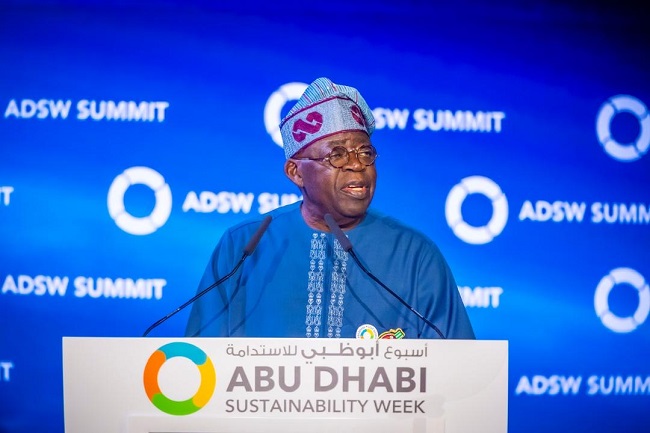
President Bola Tinubu
President Bola Tinubu at 2025 ADSW Summit

He said, “The theme of this year’s summit underscores the urgency and integration required to drive sustainable transitions across finance, technology, energy and human capital.”

Tinubu said climate action must now be integrated with economic growth, health, food security and energy governance across nations.

He added, “At this defining moment in history, Nigeria stands with the global community, aligning climate action with energy access, economic growth, job creation and social inclusion.”

Tinubu stressed that sustainability requires all systems to move together, including policy, finance, infrastructure, nature and human capital.

He said, “Climate action must succeed and grow. Developing countries require equitable climate finance, accessible technologies and robust capacity building.”

The president said Nigeria had taken concrete regulatory steps to strengthen climate governance and investor confidence.

He said the government adopted the National Carbon Market Activation Policy and launched a National Carbon Registry to improve emissions reporting and verification.

Tinubu said Nigeria was modernising its energy architecture to translate climate ambition into measurable impact.

He added, “The Electricity Act of 2023 now provides for decentralised and inclusive energy delivery.”

He said the reforms were expanding access to sustainable power for rural communities, off-grid health facilities, schools, markets and underserved populations.

Tinubu said the country was deploying advanced technologies to improve efficiency and accelerate clean energy delivery nationwide.

The president added, “The adoption of artificial intelligence to optimise efficiency is no longer a future concept.”

He said Nigeria was actively seeking partnerships that promote technology transfer, innovation and knowledge exchange.

The president said climate and green industrialisation investments were central to Nigeria’s development strategy.

He disclosed that Nigeria had launched a climate and green industrialisation investment framework to unlock up to 30 billion dollars annually in climate finance.

Tinubu said Nigeria was deepening access to green finance through multiple investment platforms.

“Our climate investment platform targets 500 million dollars for climate-resilient infrastructure,” the president added.

He said Nigeria’s national climate platform aimed to support two billion dollars in capital investments, stating that Nigeria’s green bond programme demonstrated strong global investor confidence.

According to him, Nigeria’s sovereign green bond had attracted significant oversubscription from international investors.

The president said Nigeria’s Energy Transition Plan integrates climate mitigation, industrial growth and social development into one framework.

He said the plan targeted net-zero emissions while delivering universal energy access and economic expansion.

Tinubu said pilot electric mobility projects and national energy efficiency programmes were already underway.

He said, “Nation-building requires hard work, sacrifice and focused leadership.”

Tinubu said Nigeria’s reforms signalled readiness to work with global partners to drive sustainable development outcomes.

“As your partner, Nigeria is open for investment, collaboration and shared prosperity,” he said.

By Muhyideen Jimoh

NiMet inaugurates AI team to advance weather forecasts

0

The Nigerian Meteorological Agency (NiMet) has inaugurated an Artificial Intelligent (AI) research and integration team to advance weather forecasting innovation.

NiMet’s Director-General, Prof. Charles Anosike, in a statement in Abuja on Tuesday, January 13, 2026, said the move was part of the Agency’s drive to strengthen innovation, digital transformation, and service delivery in meteorological and climate services.

According to him, the inauguration underscores NiMet’s commitment to complement decades of physics-based forecasting with emerging AI-driven approaches.

Prof. Charles Anosike
NiMet Director-General, Prof. Charles Anosike

This, he said, was in line with the Federal Government’s digital transformation agenda and the ongoing modernisation of meteorological services in Nigeria.

“The newly constituted technical team is tasked with identifying opportunities, standards, and best practices for the application of artificial intelligence in meteorology, and with driving the integration of AI-based tools into NiMet’s operational forecasting systems.

“The initiative is expected to enhance the speed, accuracy, and accessibility of weather predictions through hybrid AI–traditional forecasting models,” NiMet’s D-G said.

According to him, building internal AI capacity is critical to sustaining NiMet’s leadership in technological innovation among government agencies.

He said that emerging technologies were responsibly deployed to support aviation safety, agriculture, disaster risk reduction, and national development.

”Members of the AI Research and Integration Team were drawn from across the Agency’s units, reflecting a multidisciplinary approach to innovation.

“The inauguration marks another milestone in NiMet’s ongoing efforts to leverage digital technologies and research-driven solutions to deliver world-class meteorological services in Nigeria,” he said.

By Gabriel Agbeja

Fashola writes foreword to new book on Renewable Energy Law in Nigeria

Former Minister of Power, Works and Housing and Former Governor of Lagos State, Babatunde Raji Fashola (SAN), has authored the foreword to a new book titled “Renewable Energy: Law and Policy in Nigeria – A Crosscutting Perspective”, written by legal scholar, Dr. Bitrus Joseph Bulama.

In the foreword dated May 1, 2025, Fashola describes the 12-chapter book as a timely and seminal contribution to the study of Nigeria’s renewable energy legal and policy framework. He notes that although international efforts to promote renewable energy date back to the Montreal Protocol of 1987, the sector only began to gain traction in Nigeria about a decade later.

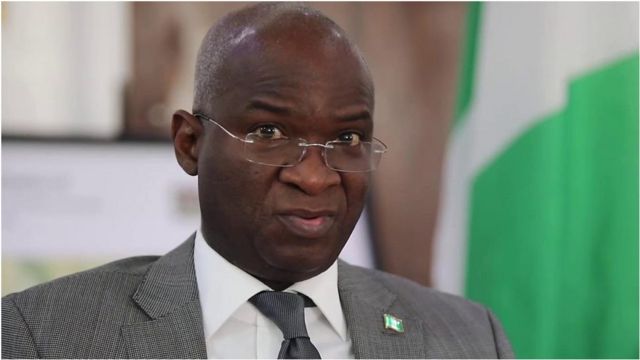
Babatunde Fashola
Babatunde Fashola, former Minister of Works and Housing

He traces the evolution of Nigeria’s power sector, referencing the coming into force of the 1999 Constitution and the enactment of the Electric Power Sector Reform Act in 2005, which ended the government’s monopoly and initiated deregulation. Reflecting on his assumption of office in November 2015 under President Muhammadu Buhari, Fashola explains that the Ministry of Power was in transition following the privatization of electricity generation and distribution networks in 2013 by the Goodluck Jonathan administration.

According to him, the Ministry relinquished generation and distribution assets to private owners, along with over 5,000 staff, leaving it with fewer than 1,000 personnel and a mandate focused largely on policy formulation. From that point, the Ministry and its leadership shifted from being power providers to policy enablers.

Fashola recalls that policies and programmes became the primary instruments available to improve energy supply. He cites the presentation of what he describes as Nigeria’s first published Energy Mix Document, committing the country to 30 per cent renewable energy within a projected 30-gigawatt capacity by 2030. This was followed by the Renewable Energy and Energy Efficiency Policy in 2015, the Mini-Grid Regulations in 2016, and the Building Energy Efficiency Code in 2017. He explains that this background informed his decision to accept Dr. Bulama’s invitation to write the foreword to the book.

According to Fashola, the book offers a comprehensive account of Nigeria’s renewable energy sector, beginning with a historical overview dating back to 1896, when the first power station was built in Lagos with an installed capacity of 60 kilowatts. He highlights Chapter Four for its detailed examination of the legal, policy, and institutional frameworks governing the renewable energy sector in Nigeria.

Fashola identifies Chapter Five as the core of the book, noting its discussion of challenges confronting renewable energy development in the country. Drawing from his experience supervising the sector, he states that he shares many of the author’s views on these challenges, some of which were addressed through the Power Sector Recovery Programme developed during his tenure.

The foreword also references the establishment of public institutions such as the Rural Electrification Agency, Nigerian Bulk Electricity Trading Plc, the Transmission Company of Nigeria, the Energy Commission of Nigeria, and the National Council on Climate Change as evidence of government political will. Fashola further mentions a contemporaneous budgetary appropriation for solar panel installation at the Presidency in 2025 as another demonstration of the government’s commitment to renewable energy leadership.

In his assessment, Fashola suggests that extensive but undocumented investments in renewable energy by households and businesses may mean that renewables already contribute more than 30 per cent of Nigeria’s national energy consumption. He notes that the book addresses the role of law in promoting investment in renewable energy in Chapter Six, and examines the relationship between law, development, and access to electricity in Chapter Seven.

Commending Dr. Bulama’s scholarly approach, Fashola states that the author successfully presents complex industry concepts in clear and accessible language. He describes the book as a practical resource for policymakers, legal professionals, energy practitioners, researchers, opinion leaders, and environmental advocates interested in the interaction between law, policy, and energy in Nigeria.

The over 900-page book is published by Bar and Bench Publishers, Abuja. It is positioned as a comprehensive reference for academics, researchers, policymakers, legal practitioners, regulatory agencies, energy developers, investors, students, and others seeking to navigate Nigeria’s renewable energy regulatory landscape. Fashola concludes by recommending the book to readers seeking to understand the emerging field of renewable energy law in Nigeria. It will be presented to the public on February 11, 2026.

Dr. Bulama is a highly accomplished legal practitioner, researcher, author, and policy analyst with a distinguished career spanning over two decades. He holds a Ph.D. in Law with a strong bias for Energy and Natural Resources Law.

His master’s degree is in Petroleum Law and policy from the prestigious Centre for Energy, Petroleum and Mineral Law and Policy, University of Dundee, UK; while his first degree in law is from the University of Jos, Nigeria. He was called to the Nigerian Bar in 2003 after successfully completing the Nigerian Law School with a Second Class, Upper Division.

He is currently an Assistant Professor of Law at the American University Nigeria, Yola. A dedicated advocate for environmental and climate justice, he is the convener, Initiative for Climate Action and Advocacy, a not-for-profit organization that advocates for environmental and climate justice.

Dr. B. J. Bulama is a highly accomplished individual with a strong background in law, energy, and environmental advocacy. His expertise and experience make him a valuable asset in his field.

By Ogunsakin Mustapha, Gavel International

×