The Ministry of Environment and Water Resources has alerted residents of possible flooding and strong winds as rainy season begins, urging preparedness and compliance with environmental regulations.
The Commissioner for Environment, Mr. Tokunbo Wahab, made this known in a news conference with journalists at the Ministry of the Environment in Lagos.
Wahab also gave the warming on Seasonal Climate Predictions and its socio-economic implications for the state.
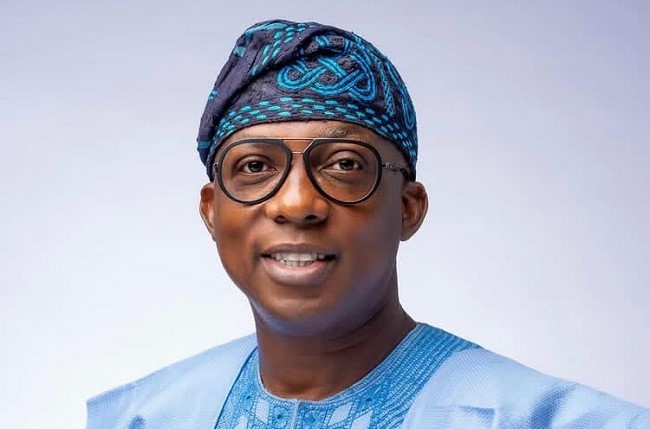
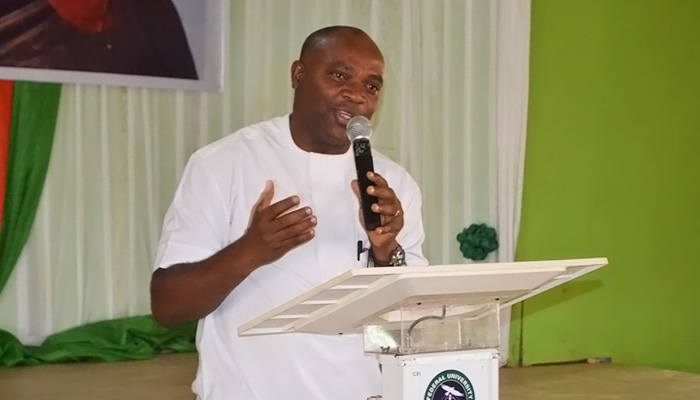
Lagos State Commissioner for the Environment and Water Resources, Tokunbo Wahab
He said the predictions were based on the forecasts released on Feb. 10, 2026, by the Nigerian Meteorological Agency (NiMet), which indicated expected rainfall patterns, temperature changes, and other weather parameters across the country.
According to him, the state conducts the briefing annually as part of efforts to inform residents and prepare them for the expected impact of the rainy season and related weather events.
The commissioner said the 2026 prediction was based on a projected weak La Nina and a neutral phase of the El Nino Southern Oscillation (ENSO), which could influence rainfall patterns.
A weak La Niña (cold phase) features slightly cooler-than-normal pacific waters, causing minor shifts in rainfall and weaker global impacts, such as reduced Atlantic hurricane activity.
An ENSO-neutral phase is the normal state with no extreme, favouring typical seasonal weather patterns.
Wahab said the forecast indicated an early to normal onset of the rainy season, normal to late cessation, and normal to above-normal rainfall across the state.
He added that temperatures were expected to be above normal between March and May.
“Year 2026 is predicted to start with a weak La Nina in January, while the neutral phase of ENSO is expected to persist within the first six to eight months of the year.
“This suggests an early onset of the rainy season, longer-than-normal duration, and delayed end of the rainy season in Lagos.
“As a result, above normal rainfall amounts are anticipated in the first peak of the rainy season, while normal rainfall amounts are expected in the second peak of the rainy season.
“The rainy season is expected to start as early as the last week of March, while the end of season is expected in the first week of December. Also, the average annual rainfall amount predicted is 1650 and 3030 mm,” he said.
The commissioner said rainfall was expected to begin on March 31 in Ikeja with a cessation date of December 2 and an estimated annual rainfall of 1,932 mm.
He added that Badagry was projected to experience rainfall from March 28 to December 3, with an annual rainfall of about 2,010 mm.
He said Ikorodu was expected to record rainfall from March 31 to December 2 with about 1,935 mm, while Lagos Island was projected to have rainfall from March 30 to December 2 with about 1,968 mm.
He added that Epe was expected to record rainfall from March 29 to December 3, with an annual rainfall of about 1,984 mm.
According to him, the average rainfall expected across the state’s 20 Local Government Areas is about 1,965 mm.
Wahab said Lagos and neighbouring Ogun State were likely to experience above-normal rainfall.
He warned that heavy rainfall could lead to flooding in some parts of the state, while strong winds at the onset and end of the rainy season could pose risks to lives and property.
He noted that thunderstorms and heavy rains might disrupt commercial activities and cause flight delays.
The commissioner said the state government had strengthened its monitoring system through its network of weather and river gauge stations to improve preparedness for weather and flood-related incidents.
He added that the ministry was collaborating with NiMet on seasonal climate predictions to provide early warning tools for farmers, planners, and businesses likely to be affected by rainfall patterns.
Wahab said the state had intensified flood control measures, including year-round drainage maintenance and sustainable solid waste management.
He said the government was also maintaining strong collaboration with the Ogun-Oshun River Basin Development Authority to regulate water release from the Oyan Dam in order to prevent flooding along downstream sections of the Ogun river.
According to him, low-lying communities such as Agiliti, Agboyi, Itowolo, and Ajegunle are closely monitored due to the possibility of flooding from the Ogun river.
Wahab also said the Lagos State Signage and Advertisement Agency had been placed on alert to ensure compliance with safety regulations for billboards and telecommunications masts in view of expected strong winds.
He added that emergency response and traffic management agencies had been placed on high alert to reduce the impact of thunderstorms and heavy rainfall.
The commissioner appealed to residents to desist from indiscriminate dumping of refuse and construction on drainage channels, noting that such practices contribute significantly to flooding.
He urged residents living along flood plains in areas such as Owode, Iwaya, Makoko, Badia, Ijora, Isaalu, Pota, and Shibiri to remain vigilant and be prepared to relocate to safer areas if necessary.
Wahab also urged motorists to observe speed limits during the rainy season to avoid accidents.
He also appealed to residents to regularly clear drains around their homes to ensure the free flow of storm water and support government efforts to prevent flooding across the state.
From March 9 to 10, 2026, the city of Yaoundé in Cameroon hosted the Central Africa regional caucus of the pan-African organisation, United Cities and Local Governments of Africa (UCLG Africa). The meeting was organised by The United Councils and Cities of Cameroon (CVUC/UCCC), under the auspices of the Ministry of Decentralisation and Local Development (MINDDEVEL).
The opening of the proceedings was presided over by Georges Elanga Obam, Minister of Decentralisation and Local Development. Delegates from Chad, Gabon, Congo, Sao Tome and Principe, and Cameroon took part in the discussions, both in person and online.
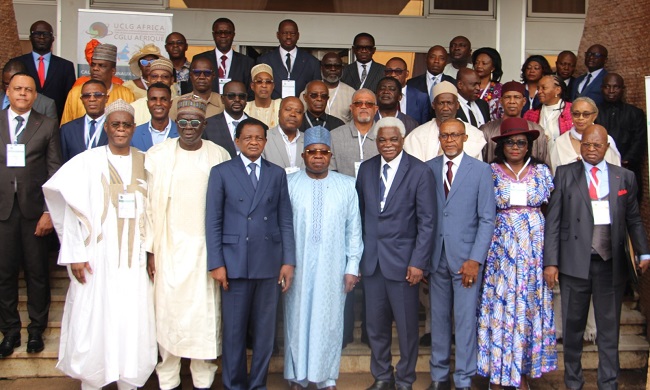
Participants at the Central Africa regional caucus of the United Cities and Local Governments of Africa (UCLG Africa).
The Network of Local Elected Women of Africa (REFELA), the Network of Young Elected Local Officials of Africa (YELO), the Forum of African Regions (FORAF) via the Association of Regions of Cameroon, and the Special Fund for Equipment and Inter-municipal Intervention (FEICOM) also made essential contributions to the discussions.
Regional caucuses are strategic platforms for reflection on the positioning of UCLG Africa and its members. These meetings are key stages in the electoral process of UCLG Africa and UCLG World, and aim to: analyse regional issues and Africa’s contribution to global local governance; define a common political position on the implementation of the African Union’s Agenda 2063 and the United Nations’ global agendas; designate candidates from each region to the various governing bodies of the two organisations.
In his opening speech, Mr. Obam, urged the Central Africa caucus to harmonise its positions ahead of the organisation’s next General Assembly.
“The items on the agenda of the UCLG Africa Elective General Assembly, scheduled for 23 to 25 March in Nouakchott, are of the utmost importance. It is therefore imperative that Central Africa harmonise its views on issues relating to: the organisation’s general secretariat; updating the priorities of the 2021-2030 strategic plan; redefining the expectations of local authorities in Central Africa; and strengthening their role as credible interlocutors for States, international institutions and technical and financial partners,” he stated.
The Minister also paid a glowing tribute to Mr. Jean Pierre Elong Mbassi, outgoing Secretary General of UCLG Africa.
“On behalf of the highest authorities of the State, I would like to pay him a profound tribute for his unparalleled commitment to the development of local areas. Mr. ELONG MBASSI, son of Cameroon, you have become the adopted son of the 54 African states, or at least of all African countries that promote local democracy, bottom-up territorial development and citizen participation. You leave a lasting mark on the continent, whose territories and elected officials you know almost entirely.”
The Minister then offered warm congratulations to the incoming Secretary General of UCLG Africa.
“To you, Mr. François Menguele, the next Secretary General, please accept the congratulations of the Cameroonian decentralisation family on your appointment. You have a great mission ahead of you, as you are succeeding a giant, but we know you are capable. You can count on your country to support you,” he said.
In his welcome address, read by his representative, the Mayor of Yaoundé,Mr. Luc Messi Atangana, expressed the honour and privilege of hosting the Central Africa Regional Caucus in Cameroon’s political capital. He emphasised that Yaoundé is now establishing itself as a “major centre for deliberation” on decentralisation, offering a conducive environment for strategic reflection and the sharing of experiences between local authorities.
Proceedings
The proceedings were chaired by Mr. Augustin Tamba, President of CVUC/UCCC, who was appointed by the Mayor of Libreville, Mr. Pierre Mathieu Obame Etoughe, Vice-President of UCLG Africa for the Central Africa region.
Delegates from Central Africa reviewed the situation, challenges and prospects for UCLG Africa. A historical overview highlighted the region’s leading role in the organisation’s origins. It was during the Africities 2003 summit in Yaoundé that the ambition to bring together the continent’s local government associations so that they could speak with one voice was born. After consolidating this unity, UCLG Africa played a decisive role in the drafting of the African Charter on the Values and Principles of Decentralisation, Local Governance and Local Development, which was adopted by the Heads of State of the African Union at their Summit held on 27 June 2014 in Malabo, Equatorial Guinea.
This Charter will become a legal instrument of the AU after ratification by 15 member states. The incoming Secretary General of UCLG Africa has committed to stepping up the advocacy needed to obtain the seven remaining ratifications for the Charter to enter into force as a legal instrument of the AU.
Caucus participants actively advocated for the systemic territorialisation of national, regional and continental public policies. They called for placing local and regional authorities in Central Africa at the heart of the implementation of major international agendas, including the United Nations 2030 Agenda for Sustainable Development Goals (SDGs), the Paris Agreement on climate change and the African Union’s Agenda 2063.
Considering the challenges, issues and prospects facing UCLG Africa, the caucus made recommendations, particularly in the areas of climate resilience, financing and access to basic services.
The caucus proposed, in particular, that UCLG Africa should promote closer ties between local and regional authorities in the region and regional economic communities (CEMAC and ECCAS) so that the latter takes into account the concerns of local and regional authorities in defining and implementing their policies and strategies.
Members expressed strong expectations for intra-regional decentralised cooperation, with a view to creating twinning arrangements, technical partnerships, peer reviews and learning opportunities, and thematic alliances between cities, municipalities and regions in Central Africa. They welcomed the establishment by the Kingdom of Morocco of the African Fund for Support to International Decentralised Cooperation (FACDI) and praised its positive impact on accelerating South-South decentralised cooperation between Moroccan local authorities and their counterparts in other African countries, including those in Central Africa.
The caucus requested that the concept of ‘production commune’ initiated by CVUC/UCCC in Cameroon be developed throughout the region and beyond, with the aim of making local authorities key economic players, contributing to the establishment of the conditions necessary for the creation and development of productive activities based on the potential of the territories, the creation and diversification of value chains for these productive activities, the creation of sustainable jobs, and the reduction of dependence on imports. The caucus emphasised the need to roll out training programmes for urban and local government professions, making more effective use of UCLG Africa’s African Local Government Academy (ALGA).
The Caucus called for the immediate operationalisation of the UCLG Africa Regional Office for the Central Africa Region. In this regard, the Caucus renewed its confidence in the city of Libreville (Gabon) to host this office and requested that the necessary steps in this regard be communicated as soon as possible to the UCLG Africa General Secretariat.
The second day of the caucus was devoted to electoral processes, with the nomination of candidates from Central Africa to the governing bodies of UCLG Africa and UCLG World. The United Councils and Cities of Cameroon (CVUC/UCCC) have been appointed as Vice-Presidents of UCLG Africa for the Central Africa region.
The caucus did not propose any candidates for the positions open at UCLG World level.
In his closing remarks, Mr Augustin Tamba, President of CVUC/UCCC, expressed his satisfaction with the smooth running of the proceedings.
“This caucus provided an opportunity to revitalise the governing bodies of UCLG Africa in order to secure a prominent place for Central Africa within the organisation and the global organisation UCLG World. In a rather turbulent political and economic world, we must position ourselves, and local authorities must take responsibility for acting and acting together,” he said.
Shell Nigeria Exploration and Production Company Limited (SNEPCo) has completed the turnaround maintenance on the Bonga Floating, Production Storage and Offloading (FPSO) vessel, leading to resumption of production at Nigeria’s premier deepwater field on March 6, 2026.
According to the organisation, the project was delivered 11 days ahead of schedule and without any safety incident. SNEPCo’s described the development as a reflection of “longstanding commitment to operational excellence and asset integrity”.
Bonga Floating Production Storage and Offloading (FPSO)
“Completing the turnaround safely and ahead of schedule is a testament to the dedication and professionalism of our Nigerian workforce and the helpful support of our partners,” SNEPCo Managing Director, Ronald Adams, said. “The achievement not only secures the long‑term integrity of the Bonga FPSO but also positions us strongly for the successful delivery of the Bonga North project, which will leverage the improved reliability of the FPSO.”
The exercise, which began on February 1, 2026, is said to highlight SNEPCo’s leading role in advancing deep‑water expertise in Nigeria. Of the 55 companies involved in the execution, 43 were wholly Nigerian. Additionally, eight of the 12 international service providers maintain operational bases in Nigeria, contributing to knowledge transfer and increased local investments.
More than 1,000 personnel worked offshore during the turnaround, with over 95% being Nigerians involved in maintenance, engineering, operations, inspection and construction. Thousands more supported activities from onshore locations, reflecting the depth of Nigerian capability in offshore oil and gas operations.
Adams added: “We acknowledge the support of several stakeholders towards the successful execution of the exercise, including the NNPC Upstream Investment Management Services (NUIMS), the Nigerian Upstream Petroleum Regulatory Commission (NUPRC), the Nigerian Content Development and Monitoring Board (NCDMB) and our partners.”
The Cross River State House of Assembly has passed a bill prohibiting open defecation.
The bill aims to outlaw open defecation in public places and encourage the use of proper toilet facilities statewide with a view to improve sanitation and protect public health across the state.
The lawmakers approved the bill after considering a report by the House Committee on Water Resources and Sanitation presented by its Chairman, Kingsley Ntui, representing Etung State Constituency on Thursday, March 12, 2026.
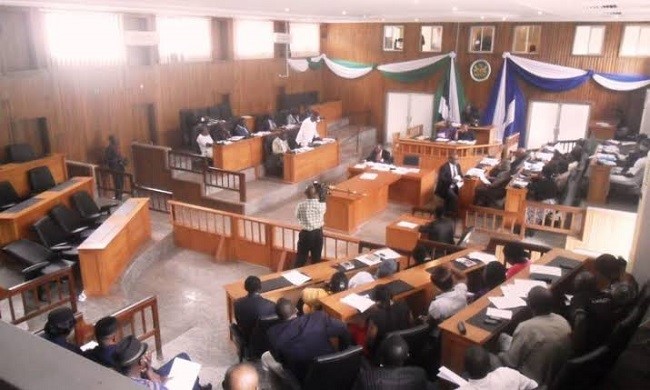
Cross River State House of Assembly
Ntui said that about 47 million Nigerians still practiced open defecation, adding that the practice contributed to water-borne diseases such as cholera, diarrhoea and typhoid.
He commended the state government’s efforts in ending open defecation and urged lawmakers to support sanitation initiatives in their constituencies.
According to him, with support from United Nations International Children’s Emergency Fund (UNICEF) and Self Help Africa, eight Local Government Areas (LGAs) in the state have been declared open defecation-free.
“However, some key challenges to achieving full open defecation-free status include poor sanitation infrastructure, limited access to clean water, poverty and low public awareness.”
Contributing, lawmakers said the bill aligned with national and global initiatives aimed at eliminating open defecation.
They said that the law would improve environmental cleanliness and promote the overall well-being of residents of the state.
On his part, Speaker, of the house, Mr. Elvert Ayambem, commended the committee for its work and expressed satisfaction with the bill’s passage.
Ayambem said the law would help create a cleaner environment and reaffirmed the Assembly’s commitment to people-oriented legislation that would improve resident’s welfare.
The bill is in line with the Federal Government’s Water, Sanitation and Hygiene (WASH) programmes aimed at safe water, sanitation and hygiene services by 2030.
It is also aimed at making communities Open Defecation Free (ODF).
In a related development, the Lagos State Government, through its Anti-Open Defecation Squad, apprehended five individuals on Thursday during an early morning enforcement operation at Ebute Ero and surrounding areas of Lagos Island.
The Commissioner for Environment and Water Resources, Mr. Tokunbo Wahab, confirmed this in a post shared on his X handle: @tokunbo_wahab.
Wahab said that the operation was carried out to curb open defecation and other environmental nuisances, adding that the squad targeted locations identified as hotspots for environmental violations within the area.
“The enforcement team arrested five defaulters during the exercise.
“The suspects were taken to the enforcement office at Sura-Simpson for further investigation,’’ he said.
The commissioner said that the offenders would subsequently be transferred to the headquarters of the Lagos State Environmental Sanitation Corps (LAGESC) in Oshodi for prosecution in accordance with existing environmental laws in the state.
He reiterated the state government’s commitment to maintaining environmental sanitation, and urged residents to comply with sanitation regulations to promote a cleaner and healthier environment.
Gov. Babajide Sanwo-Olu of Lagos State has launched an electronic system that will simplify the process of obtaining physical planning permits in the state.
Mr. Kehinde Osinaike, General Manager, Lagos State Physical Planning Permit Authority (LASPPPA), said this in a statement issued by the ministry’s Director, Public Affairs, Mrs. Abimbola Emdin-Umeh, on Thursday, March 12, 2026.
He said the new platform, known as the Electronic Physical Planning Permit Processing System (EPPPS), was introduced by LASPPPA to modernise and speed up the approval of building permits in the state.
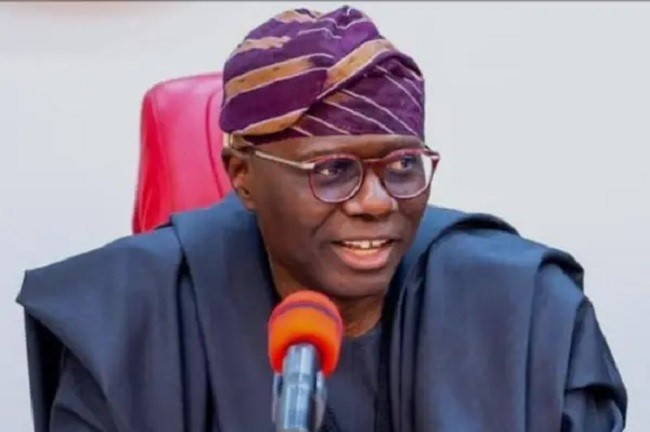
Gov. Babajide Sanwo-Olu of Lagos State
He said the system would allow residents, property developers and other stakeholders to apply for planning permits and process their applications online from any location.
According to him, the digital platform is expected to make the permit approval process faster and easier, while reducing delays often associated with manual processing.
Osinaike noted that the iniitative was also designed to improve transparency, efficiency and accountability in physical planning administration.
He added that it would ensure building developments comply with approved regulations and planning standards.
The general manager said the platform was a reflection of the administration’s commitment to using technology to improve service delivery.
Osinaike urged residents, developers and investors to take advantage of the system by submitting their planning permit applications through the online platform.
He added that the initiative was part of efforts by the state government to build a smart and digitally driven governance system capable of meeting the needs of the state’s growing population.
Director-General, Forestry Research Institute of Nigeria (FRIN), Prof. Zacharia Yaduma, says Nigeria is strengthening policy and legal frameworks to promote the sustainability of biosphere reserves and support ecological research.
Yaduma, stated this while presenting the National Report on the implementation of the MAB programme in Nigeria, at the ongoing 8th AfriMAB General Assembly in Zambia.
Biosphere reserves are sites for testing interdisciplinary approaches to understanding and managing changes and interactions between social and ecological systems, including conflict prevention and management of biodiversity.
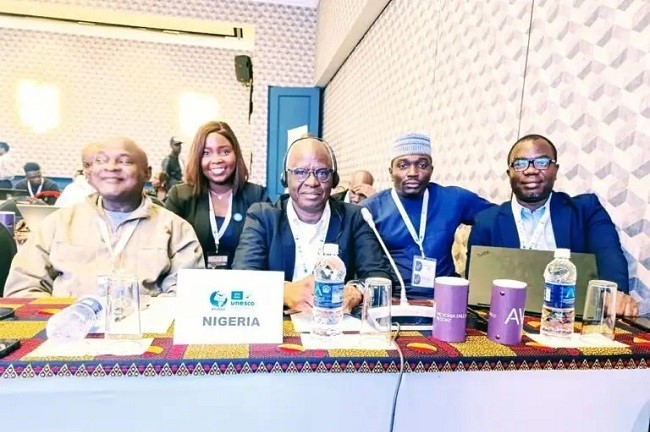
Members of the Nigerian delegation to the 8th AfriMAB General Assembly in Zambia
The 8th AfriMAB General Assembly, organised by the Government of Zambia and UNESCO, is ongoing in Zambia from March 9 to March 13, 2026.
A statement issued to newsmen in Ibadan on Thursday, March 12 by Idara Udoh, Media Aide to the director-general of FRIN, quoted Yaduma as saying that Nigeria had recorded notable achievements in biodiversity conservation.
The theme of the event is: “Harnessing Africa’s Natural Resources Through Ecosystem-Friendly Technologies.”
Yaduma said that the event aimed to explore innovative approaches to sustainable resource use, particularly in mining and quarrying activities.
It also seeks to give participants the opportunity to exchange knowledge and solutions to strengthen sustainable resource management, biodiversity conservation and community resilience across Africa’s biosphere reserves.
According to him, Nigeria’s achievements include ecological restoration of degraded areas in Omo and Oban Biosphere Reserves and biodiversity business initiatives in Omo, Oban, and Shere Hills Reserves.
“Some other notable achievements include training of 4,700 beneficiaries in green economy and biodiversity business concepts, establishing biodiversity businesses in Omo, Oban, and Shere Hills Reserves and designating Shere Hills as a Biosphere Reserve.
“MAB Youth Network has also been inaugurated. These efforts align with the Lima and Hangzhou Strategic Actions Plans respectively,” he said.
Also, Zambia’s Minister of Technology and Science, Mr. Felix Mutati, in his remarks, said that Africa’s rapidly growing population makes it increasingly important to adopt innovative approaches that support sustainable land use and ecosystem conservation.
Mutati, represented by Minister of Tourism, Rodney Sikumba, said priority should be given to responsible use of natural resources, adoption of ecosystem-friendly technologies, and efficient natural capital accounting to better understand the value of Africa’s environmental assets.
He called for stronger regional cooperation and greater involvement of young people, describing Africa’s youth as a key driver of innovation in environmental protection.
The outgoing AfriMAB Bureau Chair, Telesphore Ngonga of Rwanda, commended the Zambian Government and the Zambia National Commission for UNESCO for hosting the Assembly.
Ngonga said that since the 7th General Assembly held in Rwanda three years ago, the AfriMAB network has expanded its work from policy dialogue to practical ecosystem restoration initiatives across the continent.
“These initiatives include support for the Great Green Wall in the Sahel region, restoration of mountain ecosystems in East Africa, and mangrove rehabilitation along West Africa’s coastlines,” he said.
Ngonga added that the network has also strengthened the integration of indigenous knowledge systems in conservation programmes and promoted cooperation among transboundary biosphere reserves.
However, he cautioned that challenges remain, including limited funding for conservation activities, security concerns in protected areas, and increasing human-wildlife conflicts.
Also, Ms. Moira Ng’uni, the Senior Programme Officer for Communications at the Zambia National Commission for UNESCO, reaffirmed the government’s commitment to responsible natural resource governance.
Ng’uni highlighted several initiatives being implemented through UNESCO partnerships, including youth communication programmes, community-based environmental awareness campaigns, and projects aimed at strengthening climate resilience.
Other delegates from Nigeria include the Conservator General, National Park Service, Dr Ibrahim Musa-Goni; Prof. Tayo Oyelowo, Desk Officer, MAB Secretariat, FRIN; Mr. Bello Nuhu, National Park Service; and Ms. Ofure Blessed Aikhakhomon, UNESCO, Abuja Office.
Türkiye has decided to phase out single-use plastics in line with the European Union’s acquis, aiming to further contribute to its environmental progress.
The Ministry of Environment, Urbanisation, and Climate Change is finalising a new regulation modeled after the EU’s Single-Use Plastics (SUP) directive.
This was adopted in 2019 to prevent and reduce the impact of certain plastic products on the environment and human health.
Single-use plastics
The ban aims to significantly reduce plastic pollution by prohibiting common disposable items, such as plastic cutlery (forks, knives, spoons, and chopsticks), plates, straws, and plastic-stemmed cotton buds.
Currently in the draft stage, the regulation is expected to take effect by the end of the year following consultations with industry leaders and NGOs.
The policy encourages a shift toward sustainable alternatives made from glass, porcelain, wood, and cardboard.
The ministry estimates an annual reduction of 1.5 million tons of carbon emissions and savings of approximately $44 million in waste management costs.
Future phases of the initiative will introduce stricter labeling requirements and consumption targets for composite beverage cups, food containers, wet wipes, and all types of plastic bags used for shipping.
This follows 2022 data showing that Türkiye consumed over 700,000 tons of single-use plastics.
Public sentiment strongly supports the transition.
A joint survey by the ministry and the Turkish Statistical Institute (TurkStat) found that over 76 per cent of citizens favour restrictions on disposable plastics, while 80 per cent support a shift toward reusable materials like metal and ceramic.
This high level of public support aligns with Türkiye’s National Circular Economy Strategy and Action Plan, which was officially announced and entered into force on Oct. 20, 2025.
This roadmap specifically targets the reduction of single-use plastics, marine litter, and microplastics across the country through 2028.
In a related development, Türkiye has announced that it will release 11.6 million barrels of crude oil from its strategic reserves as part of the International Energy Agency’s largest-ever coordinated stockpile release.
The country’s Energy and Natural Resources Minister, Alparslan Bayraktar, said on Thursday.
A national oil stock committee approved the release, which will take place gradually over 90 days, Bayraktar said during a visit to a coal mine in the Black Sea province of Zonguldak.
“We decided to release 11.6 million barrels from our strategic reserves in support of the IEA’s coordinated release of 400 million barrels,” he told reporters.
IEA earlier on Wednesday recommended that members release a combined 400 million barrels from national stockpiles the largest coordinated action in the agency’s history.
According to Executive Director, Fatih Birol, IEA has 32 member countries and 13 association countries representing roughly 75 per cent of global energy demand.
The coordinated release came amid conflict in the Middle East that has drastically reduced oil flows through the Strait of Hormuz including imports from Iran.
Recycling is one answer to the growth in plastic waste but treating “wash water” used to clean recycled plastic before re-use can produce safer recycled plastics, according to a new study.
The U.S. Environmental Protection Agency (EPA) has set a goal to achieve a plastic recycling rate of up to 50% by 2030 which would involve an 8- to 10-fold increase in recycling efforts to meet the challenge.
Plastic packaging waste streams generally contain different polymers and impurities including paper, organic residues, adhesives, metals, glass and inks. The contaminants and the additives present in these polymers include plasticizers, antioxidants, colorants, light and heat stabilizers, lubricants, antistatic agents, slip compounds, heavy metals and other chemicals.
The study was prepared by Iowa State University researchers
A new study by Iowa State University researchers examines various techniques for washing post-consumer plastics before they are re-used and identifies potential chemicals of concern. The research was supported by IAFNS’ Food Packaging Safety & Sustainability Committee.
The study focuses on contaminants in post-consumer polypropylene wash water with the aim of making recycling processes more effective, sustainable and safer by lowering potential exposure to harmful chemicals. Polypropylene is a versatile plastic that is used for a wide range of applications including food packaging and consumer products.
Mechanical recycling is one of the most widely used processes for plastic waste, enabling reuse of raw materials. But this involves sorting and washing to reduce the presence of impurities. Cold water, sometimes in combination with caustic or surfactant chemicals, is used for washing off debris and residues from raw plastics slated for recycling. Hot water can be applied to remove more stubborn contaminants that stick to plastic waste.
However, during the process, wash water can become contaminated with various substances including oils, greases, suspended solids and organic pollutants. These can be potentially detrimental to human health and the environment if not treated and addressed. Effective wash water treatment can produce safer recycled plastics.
According to the paper, “there appear to be limited international or national legal quality requirements for water used in post-consumer plastic waste washing.” Polypropylene was selected for this study as it’s a material frequently used in food packages like tubs, carryout bags and stackable crates.
The study also looks at different washing methods and their potential to generate contamination in closed-loop wash water systems. Finally, it presents a framework for future research to understand potential wash water risks from recycling processes.
Results from the study indicated that DCHP (Dicyclohexyl phthalate) and DEHP (di(2-ethylhexyl) phthalate) were the most prominent high-concern contaminants in polypropylene wash water, while other phthalates and bisphenols were not detectable. The researchers also concluded that surfactant concentration changes as more material was processed indicating that monitoring is required to maintain cleaning performance and minimize potential health and environmental risks.
According to the authors, “These findings suggest that implementing surfactant-caustic washing and ultrasonication applications can bring a higher cleaning effect in recycled plastic but generate more contaminated wash water, requiring further treatment.”
Removal of contaminants from post-consumer recycling feedstocks is necessary to manufacture safe and high-quality packaging materials. This study demonstrated that some contaminants can be transferred to the wash water and mitigation strategies are needed to maintain overall sustainability of plastics recycling.
The StopEACOP Coalition is calling out TotalEnergies’ attempts to sanitise its public image through claims of an “independent assessment” of the controversial land acquisition programme linked to the Tilenga project which will rely on the East African Crude Oil Pipeline (EACOP) to transport the crude oil to the global market.
TotalEnergies reportedly commissioned the Canadian firm, Land & People Planning Ltd, to conduct the assessment in the districts of Buliisa, Hoima, and Kikuube. The independence of the report is questionable, alleges StopEACOP Campaign, adding that the assessment concludes that TotalEnergies covered all core components of the land acquisition programme and demonstrated its commitment to transparency and continuous improvement.
TotalEnergies
TotalEnergies, added the group, also mentions in passing that the original assessor withdrew for health reasons and they appointed the Canadian firm as a replacement without demonstrating how they involved key stakeholders or reassured the public of the transparency in this process, given previous accusations of undue influence over the consultants they employ.
“This report is less of an independent evaluation than it is a reputation-laundering exercise which tries to clear TotalEnergies in the face of community testimony exposing a broken livelihood restoration programme. For the company to claim the Tilenga land process is ready for closure even while project-affected people are consistently going to court over unjust compensation is outrageous. Our message to lenders, insurers and the backers of Total is that they should not mistake this sham assessment for real due diligence.” said Zaki Mamdoo, StopEACOP Campaign Coordinator.
According to him, the report fails to mention the coercion, threats, and intimidation project-affected people have been subjected to by the Ugandan government, who are partners in the project, and Total’s employees and subcontractors, to release their land for the Tilenga project. Indeed, the case of 42 families from Buliisa district who were evicted by court order before receiving compensation to make way for the Tilenga Project, has been well documented.
“Courts in Uganda are used as boogeymen when it comes to oil project-affected people. The people report that they are told by sub-contractors working on behalf of Total and its partners that they must give away their land at a pittance. The people are informed that if they refuse low and unfair compensation, they will be taken to courts where they have no chances of winning cases.
“Indeed, while the organisation I work for is supporting many oil-affected people to defend their land rights through courts, we see bias and a lack of willingness by courts to dispense justice to oil-affected people including the sick, the elderly and other vulnerable groups,” said Diana Nabiruma of Uganda’s Africa Institute for Energy Governance (AFIEGO).
“In February 2026, AFIEGO published a research report that assessed compliance to the EACOP livelihood restoration commitments. The report showed that there were major gaps in the implementation of the livelihood restoration commitments, and the affected people believe that if these are not remedied, they will not be restored to their pre-displacement socio-economic conditions. Independent assessments by civil society and other actors are necessary if credible information on Uganda’s oil industry is to be shared,” added Nabiruma.
The coalition also notes that the timing of this report is suspect, considering TotalEnergies is facing an ongoing case in a Paris Civil Court where the court ordered they release documents they had withheld, including market studies on compensation rates conducted by TotalEnergies’ subcontractors, minutes from its Human Rights Steering Committee and a report on the impact of flooding resulting from their Tilenga project.
“Analysis of the court-ordered disclosure reveals numerous instances of non-compliance with international standards, in particular IFC Performance Standard 5, despite TotalEnergies’ public claims that it aligns with it,” said Camille Grandperrin, legal officer at Friends of the Earth France.
StopEACOP Campaign added: “TotalEnergies’ assessment report action plan only mentions 4,954 project-affected-people, which is a small fraction compared to the more than 100,000 people affected across both the Tilenga Project and EACOP. Isolating Tilenga’s land acquisition from the wider oil infrastructure it feeds into, therefore, gives a misleading impression of the number of people impacted. Even if the scope of the assessment was strictly on Tilenga Project, the numbers in this report are way low and are inconsistent with other reports.
“In addition, there is no mention of how the flooding caused by the construction of the Tilenga Central Processing Facility has been captured and addressed. This report is a sham and in bad taste, considering the well documented testimonies of project-affected-people – from restrictions of their land use before compensation, which impacts their livelihood to the arrests and intimidation of activists and land defenders who speak out on their behalf. This report should be dismissed.”
The StopEACOP Coalition is an alliance of local groups, communities, and African and global organisations calling for a stop to the proposed pipeline and associated oil fields at Tilenga and Kingfisher in the Buliisa and Nwoya districts of Uganda, within the Lake Albert region.
A presentation by Prof Chinedum Nwajiuba at the Maiden National Conference of the Faculty of Social and Management Sciences, Alvan Ikoku Federal University of Education, Owerri, Imo State, on Thursday, March 12, 2026
The theme of this conference, “Rethinking Values and Priorities for Sustainable Development: Balancing Security, Economic Growth and Environmental Protection in Nigeria,” is a very powerful one, with multi-dimensional possibilities as regards conceptualization. Being asked to contribute to this via a Lead paper, I was given the freedom to interpret it as I saw fit.
I have crafted a title, posed as the question: “When the Post-WW2 Order Falls, can Peripheral States like Nigeria Survive?”
Former Vice-Chancellor, Alex Ekwueme Federal University, Ndufu Alike Ikwo (AE-FUNAI), Professor Chinedum Nwajiuba
Preamble
Before delving into the kernel of my presentation, permit me a short preamble that recognises that we are in a university, and it may have become necessary that, as often as we can, we must reflect on the conditions of our universities, and how we contribute to the evolution of society and humanity, via our triple mandate of teaching/learning, research and community service. May our universities never act
as if forgetting the meaning, the idea, and the culture of the university. May we not be anything less than institutions of excellence. May we be conscious of the ivory on the tower. May we not be collaborators in the demystification of the crimson comb on the head of the cock, the university.
Introduction
The theme of this conference, “Rethinking Values and Priorities for Sustainable Development: Balancing Security, Economic Growth and Environmental Protection in Nigeria”, has packed and woven very important keywords, which, standing alone or interrelated, are very germane. In dealing with this, a spatial component has been clearly defined, to the extent that Nigeria is specified. It does have a temporal component, but not as clearly stated. We will try doing that.
In reflecting on the theme, an imperceptible matter is the framework under which much of development has been pursued in Nigeria (and most countries in Africa) since her independence, and even the preceding colonial era. That framework is the world order that emerged after the Second World War.
That is to say that a rethinking of values and priorities for sustainable development, focused on balancing security, economic growth, and environmental protection in Nigeria, is located within a temporal framework of a world order defined following the end of the Second World War in 1945.
This framework has several components, institutions, and rules that govern world security, the economy, including financing and trade, among others. The belief is that this was designed to ensure peace, stability, and economic cooperation through a rules-based system, led by the United States. Key elements included the creation of the United Nations (UN) for collective security, the Bretton Woods institutions (IMF/World Bank) for economic stability, and the promotion of democracy.
This framework is evidently under severe threat of disintegration. This has informed the topic we have crafted, “When the Post-WW2 Order Falls, can Peripheral States like Nigeria Survive?” The central issue is, if the current stress on the world order in
which Nigeria emerged and has operated falls, can Nigeria and similar states in the peripheries of the world order survive?
Survival here has to be seen in the context of the keywords in the theme. These include Nigeria’s values, developing sustainably, security, economic growth, and protection of her environment.
Very critical is a word employed in the title, “Rethinking”. Thinking, in relation to the other words in the title, is a responsibility of the elite, as has been historically demonstrated. These ranges from the intellectual elite to the economic, spiritual, and other elites, up to the political and governing elite.
The political and governing elite appears to seat atop all other elites, and has capacity and responsibility to influence the emergence, conduct and performance of all other elites, and therefore the current situation and future of Nigeria, and indeed all other countries.
The political and governing elite may even choose to influence the reportage and interpretation of the past, and the history of the country, which begins to manifest as positive or negative socialisation of a mass of the people of the country, and therefore the future trajectory of the country. This may indeed have been the case with Nigeria and her history.
The reality is that the majority of Nigerians are mired in multidimensional poverty, so the issues of interest in this paper are not of primary interest to them; their main concern being daily survival. One illustration: a very poor person dealing with daily survival would not be interested in environmental protection, let us say forest preservation, if he needs to cut down trees to find fuel wood to cook whatever he finds to eat.
The theme of this conference seems to assume that there are persons in the business of thinking, and may then be willing to rethink. Perhaps there are persons who may be engaged with thinking, critical thinking, and not mere imagining. Ideally one group that such an assumption should stand a chance of validation should be the academia.
I give another illustration, maybe somewhat embarrassing: In many serious circles, the expectation is that university academics are elites, indeed intellectual elites who would have time to think and rethink the conduct and performance of our universities, for example, over the quality of their products in terms of their graduates and their research.
The intellectual elite in Nigeria may also have become nominal in this responsibility, not engaged in any critical thinking, whether incapable or by choice, and may have become “de-elited”, so that they may also not have the privilege of thinking and re-thinking even their own conditions. Why this has emerged is debatable.
Suffice it to add that a country without an elite consensus of national values is on shaky ground. A country without a critical, thinking, patriotic, and enlightened elite has feet of clay when action is required.
Charged with the denaturing of the intellectual elites, as represented by university academia, are the governing and political elites. As a consequence, on several parameters of development, whether sustainable or not, it is questioned whether our society is progressing or retrogressing.
An illustration: if by 1960, Owerri city and many rural communities had pipe-borne water, but today, after six decades, the children and grandchildren and great grandchildren of the generations that achieved pipe-borne water have never seen such, then it becomes clear the nature of development we have achieved, and may be asked to think and rethink to sustain.
We will now briefly look at the world order created after World War 2, and how it seems to be unravelling, after which we will examine the other parameters of development, and the peripherality of Nigeria and similar states that may seek to survive in this changing world order. In doing this, we shall acknowledge that so far this paper has been positioned at the macro level. We will also present a few micro examples of the relevance of the issues.
Historically, this dominance was political through incorporating the periphery into colonial empires, but from the second half of the 20th Century, economic factors became the key drivers. Most high-level economic activities and innovations are located in the core, with the periphery subjugated to processes conferring a lower added value, such as resource extraction and labour-intensive manufacturing.
A distinguishing characteristic of the periphery from the core is the dominance of their economies by resource extraction and export of raw materials. Nigeria has been, and remains solidly in this category.
A few countries have emerged since the 1970s into what may be described as the semi-periphery, with improvements in economic development (China, South Korea, Brazil, Malaysia, etc.). This is in line with Wallerstein’s World-Systems Theory, which classifies the world into core, semi-periphery, and periphery (https://www.researchgate.net/publication/49615339_IMMANUEL_WALLERSTEIN%27S_WORLD_SYSTEM_THEORY).
Inherent in these classifications is a consolidation into raw materials countries and industrialised countries. In many schools of thought, and fundamentally in the dealings of the Bretton woods institutions – the World Bank and the IMF – and as seen by the essentials of the policy prescriptions they had for countries in the periphery, for instance in the era of the Structural Adjustment Programmes (SAP), seem to be influenced by this classification. That is, countries in the periphery should supply produce in form of raw materials and natural resources to countries in the core, who may in return sale products from those produces to the peripheries, and may offer aides and assistance to sustain the peripheries at a stable but low-level equilibrium.
Assistance may come in the form of offer of security including military bases, intelligence, equipment and facilities, sustenance of the governing class, even if extracted wealth of the countries of the peripheries are kept in private accounts in financial platforms of the core, and if in difficulties with the public finances of the peripheries may be availed loans, grants, etc.
This classification may not be static as shifts may occur, with some countries migrating to semi-peripherals. Some recent examples of these are China, Brazil, and India. A look at these three countries shows that they are also the core of the new
economic block emerging as BRIC – Brazil, Russia, India, and China, and then with South Africa joining, metamorphosing into BRICS. Nigeria was not considered for the core of the BRICS, and even in the first wave of expansions, Nigeria is not in there. Nigeria was only admitted as a partner country in January 2025, and by this, may attend some special sessions. In effect, Nigeria is peripheral even to BRICS.
The continued peripherality of Nigeria and most African countries
Why have Nigeria and most of Africa continued to be peripheral to the world order? The answer to this is multi-dimensional. There are several long-term historical and current factors for this. Among these factors, two would seem to be more fundamental.
The first is the inherited colonial state structures, which Africans have agreed should be kept. The second is the poor-quality leadership and governance elite. On these two hang all other possible factors driving the continued pitiable conditions of development, insecurity, etc., in Nigeria and most of Africa.
Indeed, these two factors are interrelated. It is the common internal contradiction of African states, different from states in Europe, and elsewhere, that makes the emergence of a national elite consensus of values and priorities nearly impossible. These therefore festers the emergence of unpatriotic political and governing elites, and contending centripetal and centrifugal forces that sustains a low-level circle of underdevelopment and comfort in the company of periphery countries.
Similarly, poor quality political and governing elites sustain the burden of the colonial state structures, predominantly because of lack of vision, confidence, and loyalty to the choices of the core. Something the Igbo will summarize as “Anu Oke ju m akpa, kporo nne m”, transliterated as “If you give me sufficient rat meat, you may take my mother”.
These two factors – the colonial state structures, and poor quality political and governing elites, commonly unpatriotic, lacking in capacity for critical thinking, and often unenlightened – jointly create a condition in which national thinking and rethinking is alien, and therefore unable/unwilling to priorities sustainable development, balancing security, economic growth and environmental Protection.
It is against this background that Nigeria and most of Africa have to confront an emerging new world order, different from the post-World War 2 order. It is even doubtful if a significant proportion of elites of all hues in Nigeria, perceive or understand the changing global geopolitical landscape and the risks which peripheral countries like Nigeria are facing, and will face in the years ahead. Before looking at this emerging challenge, we need to see the some elements of the world order established after the Second World War, which has been the frame for the effort at development in Nigeria and most of Africa.
Key elements of the post-World War 2 order
The post-World War 2 order was primarily designed by the United States, and a few of her allies, with its most critical establishments headquartered in the United States. Among these are the United Nations (UN) for collective security, and the Bretton Woods institutions (IMF/World Bank) (https://www.sociostudies.org/almanac/articles/evolution_of_world_order).
United States leadership passed through the era of the bipolar world with a contending but less influential role by the USSR, to the era following the end of the USSR and the emergence of a world dominated by the United States. At the height of this, the United States, through its strong international engagement using multiple approaches, a key one of which is USAID, and other aide platforms, then her most strategic tool as the largest funder of the UN system, including institutions like the World Health organisation (WHO). Today, that is changing. The United States is withdrawing from these.
At the same time, the United States is manifesting tendencies that are contrary to the world’s acceptance of its leadership in global security. Among these being a seeming non-restraint in the use of her awesome military powers.
How United States military activities in Nigeria, and possibly neighbouring mineral rich countries in the Sahel, plays out for Nigeria and other countries in the periphery is not clear. How the withdrawal of the United States from the Paris Climate Agreement, and participation in the United Nations Framework Convention on Climate Change (UNFCCC) Conference of Parties (COP) on climate change is not yet understood. How these will impact on key countries such as China and Russia is not still understood.
How pressures on the global use of the US Dollar and payment platforms in response to signals form the Unted states, by her historical allies such as Canada, United Kingdom, Australia, etc. is not yet clear. How all these will impact on countries in the periphery like Nigeria and her peers is also not yet clear. We can only say that the world, and importantly the peripheries are in for uncertainties.
Key elements of the United States recent policies with implications for Nigeria
Among these would be the withdrawal of funding for programmes that have implications for Nigeria’s sustainable development and security. Specifically, the withdrawal from funding for health, education, agriculture, and climate change has serious implications for several government programmes, as well as some by non- governmental organizations.
Without these supports, the services they provide Nigerians in the concerned sectors are under several challenges. All these have adverse implications for these services, especially priorities for sustainable development and the balancing of security, economic growth, and environmental protection in Nigeria.
Pathways for Nigeria’s survival
Countries like Nigeria were shaped to operate within a system of defined global trade rules, western-led financial institutions, development loans, oil markets, and multilateral cooperation. Now there seems a shift towards power being more self- interested. Global cooperation is weaker and more focused on personal, rather than general interest.
Global trade has become more political, with the World Trade Organisation (WTO), under pressure. Debt is rising. Climate rules are not the same. The world can be said to be less stable, more divided, and has more uncertainties.
Two factors have been identified as defining the conditions of Nigeria and her inability to address the issues in the theme – Rethinking priorities for Sustainable
Development: Balancing Security, Economic Growth and Environmental Protection in Nigeria. These are the inherited state structure and the poor quality of the political and governance elite.
The first, that is inherited state structures in Africa, including Nigeria, which act as internal disturbances and distractions of both her leadership and the followership. These have led to unending decades of instability and insecurity, which are not consistent with development.
The second, that is poor quality leadership and governance, is well acknowledged. It is this that has ensured that Nigeria and other countries in most of Africa are unable to reach their potential frontiers as defined by the colonial inherited state structures.
Conclusion
With so much global uncertainties concerning the world order under which we merged as a country, and which we have been used to, what should Nigeria be doing to survive? What is a country without a patriotic, enlightened and thinking elite?
If we are to stand any chance of rethinking sustainable development and the related issues of insecurity with economic development simultaneously happening with environmental protection, we will require enlightened leadership and governance elite.
That leads me to something I have hoped would be done by researchers. Why have Nigeria and most of Africa been ruled/governed by men who manifest elements of underdeveloped minds prancing about the political space and governance? Perhaps they do not create them in the mode of Nnamdi Azikiwe and Michael Okpara anymore.
There seems to be an absence of philosopher kings and nation builders with sights set on enlightened horizons. It is justifiable to research the quality of political leadership we have seen in Nigeria, especially since 1999. Some years ago, I suggested to my wife, who is a professor of sociology of education, to do this, without success.
Take for instance the degradation of the intellectual elite as represented by the universities, by the political and governing elite. There are several hypotheses on the attitude of the political class to universities in Nigeria. Can the hypothesis that the political class is dominated by those who were weak students and have grudges against the university be validated?
Were they a priori supposed to lead society if they came mostly from the weakest of primary, secondary, and university students, those who often ran afoul of the rules, were sent away on suspension, and “ate” their school fees?
How many of those constituting the current class of political and governing elites were class monitors and prefects: an indicator of foundation for leadership? Please note that serious countries in the world understand that the leadership recruitment process is not a joke.
It may also have become necessary to revise our theories of development and emphasise quality and responsible political leadership as perhaps an overriding factor. Can we have that in the curriculum and teach our students this?
Prof Chinedum Nwajiuba is former Vice-Chancellor (February 2016 – 10 February 2021), Alex Ekwueme Federal University Ndufu-Alike; Chairman, Board of Directors, Nigerian Environmental Study/Action Team (NEST); and chair of the West African Science Service Centre on Climate Change and Adapted Land Use (WASCAL) Governing Board and Nigeria’s representative on the Board