27.3 C
Lagos
Friday, March 6, 2026
Home Blog Page 40

Osinbajo, González to co-chair new global effort on development cooperation amid aid cuts

0

In Davos this January, two former senior government officials, Nigeria’s ex–Vice President Yemi Osinbajo and former Spanish Foreign Minister Arancha González Laya, signalled a push to rethink how the world approaches development cooperation, as long-standing models come under growing strain.

The backdrop was unmistakable. Aid budgets are tightening. Trust in multilateral institutions is eroding. And the pressures facing developing countries from rising debt and climate shocks to conflict and fragility – are outpacing the systems designed to support them.

Speaking at the World Economic Forum, González announced the launch of the Future of Development Cooperation Coalition, a new, independent initiative aimed at reassessing how countries work together on development in an increasingly complex global landscape.

Osinbajo and Gonzalez
Nigeria’s ex–Vice President Yemi Osinbajo (top) and former Spanish Foreign Minister Arancha González Laya

“The past year has been defined by contraction and difficult choices,” González said. “But 2026 needs to be about something more ambitious, building a credible vision for cooperation that works across governments, the private sector and civil society, and puts countries’ priorities at the centre.”

González will co-chair the Coalition alongside Osinbajo, bringing perspectives from both advanced and emerging economies to a debate that has often struggled to reconcile global ambition with national realities.

For Osinbajo, the issue is efficient. “Development cooperation is not abstract,” he said. “It shapes whether economies can create jobs, whether children stay in school, and whether communities can recover after disasters.” He argued that the moment demands a shift away from a narrow focus on aid toward broader partnerships that support long-term economic transformation.

The case for change is underscored by shifting financial realities. While official development assistance now exceeds $200 billion annually, it accounts for less than 10 per cent of total financial flows to developing countries. Many countries today act simultaneously as recipients, investors, innovators and providers of support. Public policy, private capital, civil society action and global public goods are increasingly interconnected, often without coordination.

At the same time, pressures on the system are mounting. More than 50 countries are facing serious debt challenges. Climate shocks are intensifying. Conflict and fragility are spreading, while geopolitical tensions are making international cooperation more difficult, just as collective action is most needed.

The Coalition says it is not focused on incremental reform. Over the next year, it plans to step back and confront more fundamental questions: what development cooperation should achieve today, who it should serve, and how it can deliver results at scale.

Beginning in early 2026, the group will engage governments, international institutions, private-sector leaders, civil society organisations, and young people across regions. It aims to identify misalignments in current approaches and propose practical recommendations for reform.

While development cooperation has delivered significant gains over the past six decades, helping lift hundreds of millions out of extreme poverty and improving access to health and education, those achievements are increasingly under threat as old models struggle to adapt to new realities.

The Future of Development Cooperation Coalition emerged from discussions at the Financing for Development Conference in Seville in mid-2025. Its organisers say its approach is grounded in consultation and shared ownership, rather than top-down prescription.

As global challenges intensify and traditional frameworks falter, the Coalition is positioning itself as a space to rethink cooperation from the ground up, starting with listening and asking what needs to change to make development efforts work better for the people they are meant to serve.

Makoko demolition: Organisation appeals to Lagos on resettlement

The Kreative Arts Foundation for Community Engagement (KafComE) has appealed to the Lagos State Government to halt ongoing demolition of the Makoko Community to save residents from homelessness.

Founder of the non-governmental organisation (NGO), Mr. Willie Workman, made the appeal in a statement on Thursday, January 22, 2026, in Lagos.

Makoko, a waterfront community in Lagos, had faced demolitions since December 2025.

Makoko
A displaced Makoko resident

The state government had said that the exercise was necessary to remove structures on power-line setbacks.

Gov. Babajide Sanwo-Olu had justified the demolition of structures in the community, on grounds that same was aimed at averting tragedy.

The governor stated that the demolition was for the overriding public interest, adding that many residents of the community had built shanties under high-tension wires.

Meanwhile, In a statement on Thursday, the organisation noted that the exercise had left many homeless.

According to Workman, the United Nation’s (UN) Universal Declaration of Human Rights, Article 25, safeguards the right of individuals to a standard of living, including housing.

He consequently appealed to government to back the demolition exercise, with adequate compensation, or resettlement of the residents.

“The government should prioritise humane resettlement and compensation,” he said.

Workman underscored the need for the state government to acknowledge the community’s right to adequate housing, just like the UN’s guidelines on development-based displacement.

He urged government to ensure provision of alternative housing for residents, as well as protection for vulnerable groups in the community.

By Lilian U. Okoro

Australia: Fossil fuel phaseout, not extreme weather, should be our ‘norm’

0

A new study by World Weather Attribution released on Thursday, January 22, 2026, reveals that fossil fuel emissions made the Australian wildfires this month five times more likely. Scientists say that extreme weather is fast “becoming the norm,” warning that without drastic emission cuts, similar heatwaves can be expected every other year by the end of the century. 

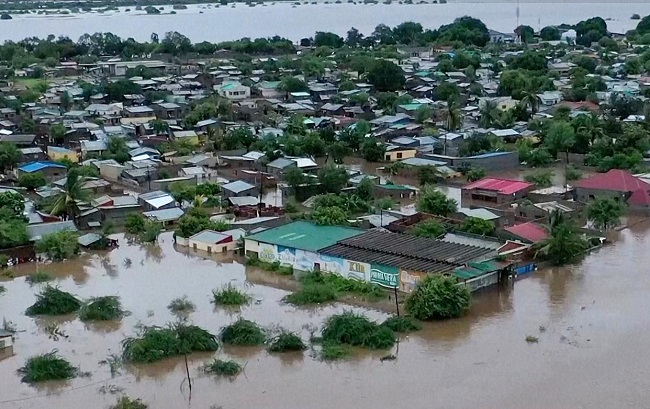
Meanwhile, severe rainfall and flooding in South Africa, Mozambique and Zimbabwe killed hundreds and displaced more than 200,000 from their homes this week – as new data shows that just 32 fossil fuel companies are responsible for more than half of global emissions.

Mozambique
Flooding in Mozambique

Savio Carvalho, 350.org Managing Director for Campaigns and Networks, said: “The contrast is stark and disturbing. The world’s richest gather in Davos to pay lip service to protecting ‘planetary boundaries’ while avoiding mention of climate change and the fossil fuel phaseout that we need to stop its worst impacts. At the same time, communities living in poverty across Southern Africa are being washed out.

“Climate-driven death and destruction should never be accepted as inevitable. At COP30, more than 80 countries already agreed to chart a roadmap to transition away from fossil fuels. This momentum must be seized. Phasing out fossil fuels, not extreme weather, should be our norm.” 

Jacynta Fa’amau, 350.org Pacific Campaigner, said: “Australia needs to understand that the situation will only get worse if we allow this runaway train that is the fossil fuel industry to continue. As a Samoan living in Australia, I know the reality of intensifying climate disasters. Just as the tropical cyclones grow in strength in the Pacific, so do the heatwaves here in Australia.

“In my home city of Melbourne, temperatures went over 44ºC, and devastating bushfires in Victoria pushed us to declare a state of disaster. Alarm bells should be ringing, and the floodlights should be pointed at the coal and gas industry.”

Alia Kajee, 350.org South Africa Campaigner, said: “This disaster is a wake-up call we can no longer ignore. As the continent’s largest emitter, South Africa bears a responsibility to stop fuelling climate instability that threatens our survival and that of our neighbours. Acknowledging our role is the first step. True climate justice demands that we come up with a concrete plan to urgently phase out fossil fuels.

“We need accessible resources directed right down to the local level. Local governments should not just be left to cope with disasters but should be supported and funded to build resilience and harness renewable energy. Moving from coal to renewables is critical for our survival. But it must be a just transition, one that is anchored in public finance, ensures dignified jobs and safeguards human rights.” 

Harmful investments outpace nature protection by 30 to 1 – UNEP report

For every $1 the world invests in protecting nature, it spends $30 on destroying it.

This stark imbalance is the central finding of a new UN Environment Programme (UNEP) report released on Thursday, January 22, 2026.

It calls for a major shift in global financing of nature-based solutions and phasing out harmful investments to deliver high returns, reduce risk exposure, and enhance resilience.

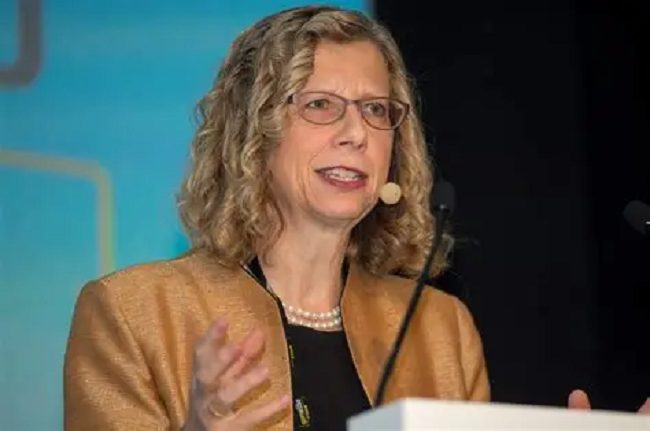
Inger Andersen
Inger Andersen, executive director of the United Nations Environment Programme (UNEP)

The State of Finance for Nature 2026 which uses data for 2023 – finds: 

$7.3 trillion in total nature-negative finance flows 

  • with $4.9 trillion from private sources highly concentrated in a few sectors: utilities, industrials, energy, and basic materials) and
  • public environmentally harmful subsidies to fossil fuels, agriculture, water, transport and construction of $2.4 trillion in 2023
  • $220 billion in NbS finance flows, with close to 90% coming from public sources reflecting a steady rise in domestic and international support for NbS.
  • Private investment in NbS amounted to only $23.4 billion – 10 per cent of total NbS investments. Business and finance have yet to invest at scale in NbS despite the growing awareness of dependencies, risks, and opportunities related to nature.
  • NbS investments need to grow 2.5 times to $571 billion per year by 2030. This constitutes just 0.5% of global GDP (in 2024). 

“If you follow the money, you see the size of challenge ahead of us. We can either invest into nature’s destruction or power its recovery – there is no middle ground,” said Inger Andersen, Executive Director of UNEP. “While financing nature-based solutions crawls forward, harmful investments and subsidies are surging ahead. This report offers leaders a clear roadmap to reverse this trend and work with nature, rather than against it.”

Since reforming and repurposing private and public capital flows is the most powerful tool to shift markets toward sustainability, the report introduces a new Nature Transition X-Curve, a framework designed to help policymakers and businesses sequence reforms and scale up high-integrity NbS across all sectors of the economy.

The framework charts a path for phasing out harmful subsidies and destructive investment in entrenched systems of production, while simultaneously scaling up NbS and nature-positive investments. It offers specific options to public and private sector businesses across the supply chain. 

“The world’s financial flows need an urgent shift – from degrading the environment to investments in nature-based solutions,” said Reem Alabali-Radovan, Minister for Economic Cooperation and Development, Germany. “The private sector plays a key role in this. German development policy supports partner countries in valuing their natural capital so that it can be taken into account in key policy decisions. This can lead the way to a sustainable and future-proof economy.” 

The Nature Transition X-Curve also offers roadmaps to meet the challenge of a “trillion-dollar nature transition economy”. The report highlights examples of how this is already being applied by governments and business leaders around the world: Greening urban areas to counter heat-island effects and improving liveability for citizens; embedding nature in road and energy infrastructure; producing emissions-negative building materials using carbon dioxide.

A crucial principle in nature-positive investments is to ground them in local ecological, cultural, and social contexts, while ensuring their inclusivity and equity.

Group enlightens women on climate smart agriculture in Kano

0

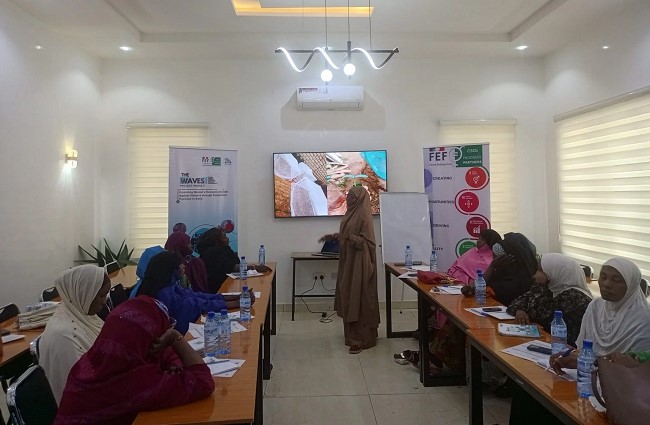
Bridge Connect Africa Initiative (BCAI), on Thursday, January 22, 2026, empowered 16 women in Kano on Climate Smart Agriculture (CSA) adaptation to promote their economic growth.

The training also aims to strengthen their households on food security amid climate challenges.

The two-day Training of Trainers (ToT) was organised under Phase II of the Women Against Violence Empowered through Sustainability (WAVES) Project.

Women
Participants at the training

The training was supported by the French Embassy Fund for Civil Society Organisations (FEF-CSOs).

Speaking at the event, the WAVES Project Lead, Mr. Nathan Bako, said the initiative was designed to enhance women knowledge and capacity to disseminate CSA practices within their communities and scale-up the adoption of resilient food production systems.

“Participants have already mastered practical skills in bed and sack cultivation of cucumber and okra, they  have successfully replicated these practices.

“This advanced workshop aimed to equip a core subset of women with the facilitation skills, simplified technical knowledge, and confidence to become community CSA champions.

“They will be empowered to conduct their own ‘step-down’ trainings, disseminating adaptable, low-resource CSA techniques to wider circles of women in their communities, thereby scaling up home-based food production and climate resilience,” Bako said.

Also speaking, the Programmes Associate of BCAI and Programme Manager of the project, Hajiya Ruqayya Abdulhadi, said the 16 women were drawn from eight clusters across the state.

She explained that the participants were selected from an earlier group of 50 women who benefited from the project’s foundational training.

“The participants are expected to return to their communities to train at least 20 other women each.

“It means the workshop is expected to reach about 200 women in total,” she said.

Abdulhadi expressed confidence that the women would make significant impact in their communities by promoting sustainable agricultural practices and reduce gender-based violence.

Hajiya Fatima Muftau a facilitator, who spoke on: “Soul and Nutrient Management, Water Management, Crop Management, as well as Monitoring and Evaluation”, encouraged the women to perform excellently.

Speaking on behalf of the participants, Hajiya Zainab Magaji-Suleiman from Tarauni Local Government Area (LGA) commended BCAI for the initiative, describing it as timely and impactful.

She said the training had exposed her to climate-smart agriculture practices she previously lacked knowledge about, adding that she would step-down the training in her community.

“The training has helped me understand how to improve my livelihood through CSA. I can now produce homemade fertiliser.

“I have successfully planted okra and cucumber, which I consume with my family.

“I intend to plant more okra, cucumber and red bell pepper in my next farming cycle to expand my business,” she said.

By Ramatu Garba

MEMAN seeks PIA-driven reforms to boost downstream

0

The Major Energies Marketers Association of Nigeria (MEMAN) has urged the Federal Government to fast-track policy and structural reforms in the downstream petroleum sector.

Mr. Clement Isong, Executive Secretary, MEMAN, said in an interview on Thursday, January 22, 2026, in Lagos that this would unlock investment, deepen competition and stabilise fuel distribution.

He said that this would also align policies strictly with the Petroleum Industry Act (PIA) would deliver a transparent, efficient and investor-friendly market.

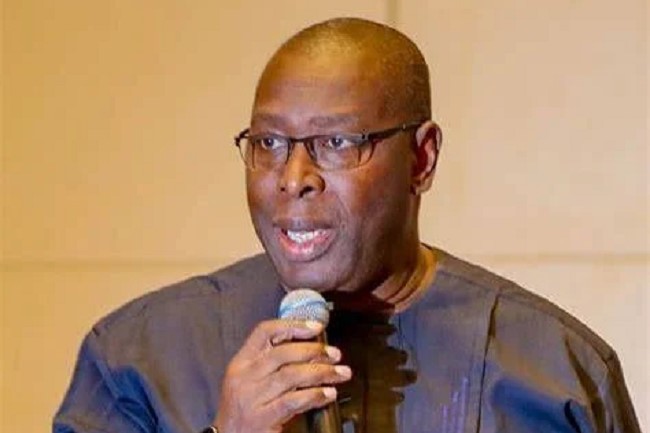
Clement Isong
Mr. Clement Isong, Executive Secretary, MEMAN

Isong said MEMAN was pushing for reforms that guarantee a level playing field for all operators, strengthen efficiency across the value chain and entrench global best-practice health, safety and environmental standards.

He stressed that clear timelines and predictable regulatory oversight were essential to restoring investor confidence and improving the resilience of Nigeria’s energy distribution system.

“PIA-consistent policy outcomes are critical if Nigeria is to attract long-term investment and protect end users.

“Certainty, transparency and coordination are the foundations of a downstream market that works for both investors and consumers,” Isong said.

He said this year, MEMAN’s priorities would centre on stronger stakeholder coordination, deliberate management of ongoing sector transitions and full operationalisation of the PIA.

According to him, key actions include clarifying leadership and coordination roles, sequencing reforms to minimise disruptions and ensuring affordability for consumers during the transition.

He said effective implementation of the PIA must translate into a predictable market environment that supports sustainable investment while safeguarding consumer interests.

Reflecting on 2025, Isong identified the convergence of multiple transitions across the downstream value chain as the sector’s biggest challenge.

He explained that regulators, government institutions, operators and consumers were adjusting simultaneously, creating uncertainty and uneven reform outcomes.

“This has been a steep learning curve for the industry,” he said.

Isong added that MEMAN members responded by intensifying stakeholder engagement, making targeted operational adjustments and consistently advocating coordinated and predictable reform implementation.

He expressed optimism that sustained collaboration and policy clarity would position Nigeria’s downstream petroleum sector to emerge stronger, more efficient and better equipped to meet the country’s long-term energy needs.

Hippos on rampage, destroy 17 farmlands in Gombe community

A bloat of hippos went on rampage, on Tuesday night, invaded and destroyed large farmlands in Hinna Community in Yamaltu/Deba LGA of Gombe State.

The affected farmers narrated their ordeal in separate interviews on Thursday, January 22, 2026, saying that the beasts entered their farms and destroyed their crops, most of which were reportedly due for harvesting.

They described the incident as a serious threat to food security and their livelihoods.

Hippos
Hippos

The head of farmers in the community, Mr. Zakari Ladan, described the persistent bestial attacks without government’s help as “frustrating”.

Ladan regretted that many of his members were losing their investments on a daily basis.

He said that more than 17 farmlands, totalling about 14 hectares, with different crops, including maize, rice, tomato, pepper, water and sweet melon, carrot, and okro, amongst others, were destroyed.

He put the value of their loss at almost N7 million, saying that most of the destroyed crops were due for harvest in a couple of days.

“We are tired of these hippos, coming out of the river to invade our farms, located as far as two kilometres away.

“The attack has become a trend and for years we have suffered without government’s help whatsoever.

“You can imagine losing 14 hectares of crops in one night, that’s to tell you the large population of the hippos in our community and the negative impact on food security.

“We need urgent assistance because many farmers were affected and farming is their only means of livelihood,” Ladan said.

A maize farmer, Malam Mohammed Zengina, whose farmland was also attacked, said he lost over one-and-a-half hectares of maize and other vegetables to the hippos in one night.

Zengina said he lost nearly N800,000 to the attack, adding that his crops would have been due for harvesting in two weeks’ time.

He appealed to the state government to come to his aid, saying that he couldn’t continue with farming without support because he had yet to recover from similar attacks in the past.

A cluster head of rice farmers in the community, Bello Mohammed, said that his group pooled N150,000, which they pay hunters monthly to guard their 20-hectare rice farms.

Mohammed regretted that, in spite of the security arrangement, the dangerous beasts still invaded their farmlands.

Other farmers also shared similar tales of how the hippos invaded their farmlands and destroyed their crops.

When contacted, Dr Barnabas Malle, the Gombe State Commissioner of Agriculture and Animal Husbandry and Cooperatives, said that the state government was aware of the attack.

Malle said that an official from the ministry had gone to assess the level of destruction and report back for proper action.

He said that a comprehensive report would be submitted to Gov. Inuwa Yahaya for consideration.

He urged the affected farmers to exercise patience, saying that the State Government was looking into the matter and will come to their aid.

“We will analyse the report and see the extent of the destruction and decide if it is for compensation, or the one we can refer to the State Emergency Management Agency,” Malle said.

By Peter Uwumarogie

Trump’s ‘Board of Peace’ risks undermining international cooperation, UN system – Group

0

The Donald Trump administration has unveiled plans for a “Board of Peace” reportedly offering permanent membership in exchange for billion-dollar payments.

Amid mixed global reactions to the development, climate justice organisation, 350.org, has frowned at the proposal, warning that it represents a dangerous attempt to monetise global governance and sideline existing international institutions.

350.org said the initiative threatens to undermine the United Nations and the principles of cooperation, legitimacy and equality between nations at a moment of escalating climate, economic and security crises.

Donald Trump
US President Donald Trump addresses the 80th United Nations General Assembly

Andreas Sieber, Head of Policy 350.org, said: “This initiative is like handing the fire brigade to the arsonists. An administration that fuels fossil expansion, withdraws from international agreements and threatens the use of force cannot credibly present itself as a guarantor of peace. You cannot burn down global cooperation and then sell tickets to rebuild it.

“This administration’s approach to global governance resembles a dangerous parody: international law treated as optional; fossil fuel expansion pursued at any cost, and authoritarian leaders courted while multilateral institutions are undermined. 350.org’s recent analysis shows 81% of global oil reserves now lie within the United States’ sphere of influence, exposing countries dependent on oil to acute geopolitical risks and price shocks amid escalating US threats and military interventions.”

Since the beginning of 2026, the US president has:

  • Signed executive orders withdrawing the United States from 66 international organisations including the Framework Convention on Climate Change – a treaty that underpins all international efforts to combat global warming.
  • Launched a military intervention in Venezuela, home to some of the world’s largest oil reserves.
  • Issued explicit threats toward Greenland, Cuba, Colombia and Mexico, signalling a widening effort to bring global oil and gas supplies under US control ( as recently released date from 350 and Zero Carbon Analytics demonstrates)

350.org warned that these moves reveal a clear pattern: the replacement of diplomacy with coercion, and cooperation with extraction-driven imperialism.

“Undermining the UN while auctioning off ‘peace’ to the highest bidder is not leadership, it is global governance by extortion,” 350.org added. “At a moment of overlapping crises, climate breakdown, war, inequality and displacement ,the world needs more cooperation, not billionaire-led breakaway clubs.”

350.org callied on governments to recommit to strengthening multilateral institutions, including the United Nations system, rather than legitimising parallel structures that concentrate power, exclude most of the world, and erode decades of hard-won international norms.

Ekiti tasks farmers with adherence to official advisories on planting

The Ekiti State Government has urged farmers across communities in Ekiti to be cautious of the early rainfalls, adding that it does not signal a commencement of the planting season.

The government urged farmers to abide by official advisories, before commencement of planting.

The State Commissioner for Agriculture and Food Security, Mr. Ebenezer Boluwade, gave the advice in a statement made available on Wednesday, January 21, 2026, in Ado-Ekiti, the state capital.

Biodun Oyebanji
Governor Biodun Oyebanji of Ekiti State

He warned farmers against rushing to plant, following the recent pattern of rainfall, noting that premature planting could result in the loss of crops.

He said that the State Government, in collaboration with the Nigerian Meteorological Agency (NiMet), would continue to provide accurate and timely agro-meteorological information, to guide farmers on appropriate planting periods.

According to him, the advisory would also offer measures to mitigate climate change-induced risks in the agricultural sector.

The Commissioner explained that NiMet is statutorily responsible for providing weather and climate information, critical to economic development, safety of lives and property, as well as early warnings on climate-related disasters.

He noted that such services were essential for informed agricultural decision-making in the state.

Boluwade added that the partnership between the Ekiti State Government and NiMet, co-financed by the state, was aimed at enhancing agricultural productivity.

He said that it was also aimed at increasing farmers’ incomes, and promoting food security, particularly among rural farming households.

According to him, both parties were committed to improving crop yields and farming systems, through climate change adaptation strategies, to ensure sustainable agricultural and economic development across the state.

The Commissioner commended Gov. Biodun Oyebanji for his consistent support to farmers and policies aimed at safeguarding the state’s food supply chain.

He urged farmers to remain patient, adhere to official advisories, and await further guidance from the ministry and NiMet, before commencing planting activities.

By Idowu Ariwodola

PlastoGas: YabaTech gets French Embassy backing to drive plastic waste-to-energy project

The French Embassy says Yaba College of Technology’s (YabaTech) PlastoGas Project will drive capacity building, research, and awareness on proper plastic waste management and sustainability.

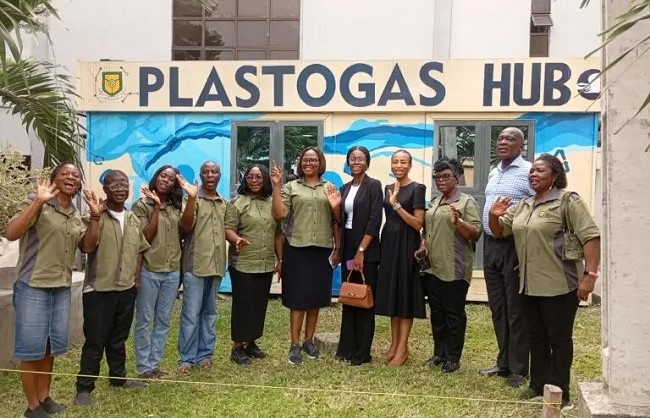
PlastoGas Hub is an initiative that converts plastic waste into gas through an innovative waste-to-energy process, supported by the French Embassy Fund (FEF), Weircapacity Ltd., 7Up Bottling Company, and other partners.

Mr. Pierre Andriamampianina, the Deputy Director, Cooperation and Cultural Department, French Embassy, and Scientific and Higher Education Attaché, made this known during the inauguration of the YabaTech PlastoGas Hub on Wednesday, January 21, 2026.

PlastoGas Hub
Yaba Tech PlastoGas Hub

He said the PlastoGas Hub was both a recycling facility and a centre for learning, innovation, and knowledge transfer, linking environmental responsibility with education and practical solutions.

Andriamampianina noted that the Embassy anticipated the hub’s contributions to waste management innovation, clean energy solutions, capacity building, and hands-on learning for the campus and wider community.

He reaffirmed the French Embassy’s commitment to supporting sustainable development, innovation, and institutional collaboration, expressing hope that the initiative would grow and inspire similar projects.

Andriamampianina was represented at the event by Eno-Obong Sampson, Project Coordinator, French Embassy Fund (FEF) in Nigeria.

In her address, Dr Lauretta Ofodile, Team Lead of the YabaTech PlastoGas Hub, highlighted the project’s role in advancing research, innovation, and student engagement in sustainable waste-to-energy solutions.

Ofodile explained that the YabaTech PlastoGas Hub would promote responsible plastic waste collection through smart systems, convert plastic waste into usable energy resources, and serve as a training and research hub for students, artisans and innovators.

“The PlastoGas Hub was conceived as an integrated solution that brings together smart plastic collection, recycling, gasification, training and community engagement.

“From the very beginning, our goal has been clear: to move beyond waste management and into value creation, capacity building and climate-conscious innovation.

She pointed out stakeholders who supported as including the Lagos State Waste Management Authority (LAWMA); Yaba, Shomolu and Bariga Local Council Development Areas, and Green Minds Environmental Foundation, amongst others,

The Project Manager, Weircapacity Ltd., Uzoechi Blessing, described PlastoGas as an innovative response to plastic waste challenges, promoting clean energy, sustainability, and circular economy principles within the academia.

She commended YabaTech’s leadership for embracing forward-looking solutions and praised the dedication and technical capacity of the project team throughout its implementation and monitoring.

Blessing expressed confidence that the PlastoGas Project would serve as a model for other institutions and significantly improve sustainable waste management practices in Nigeria.

Earlier, the YabaTech Rector, Dr Ibraheem Abdul, said the innovation advanced environmental sustainability, strengthened energy security, supported circular economy principles, and created pathways for meaningful community development.

Abdul described PlastoGas as a natural extension of YabaTech’s legacy, aligning with priorities of research-driven innovation, environmental sustainability, and industry-relevant skills development.

He urged students and researchers to adopt bold, interdisciplinary thinking, stressing that sustainability was an essential responsibility, while underscoring the value of strategic academic-industry-international partnerships.

The rector applauded the French Embassy and its Fund (FEF), and the Science and Higher Education Attaché for their financial support and confidence in YabaTech’s researchers.

Abdul, who was represented by Mr Femi Lawal, the institution’s Deputy Rector (Administration), said the collaboration demonstrated the power of international cooperation in addressing shared global challenges.

By Millicent Ifeanyichukwu

×