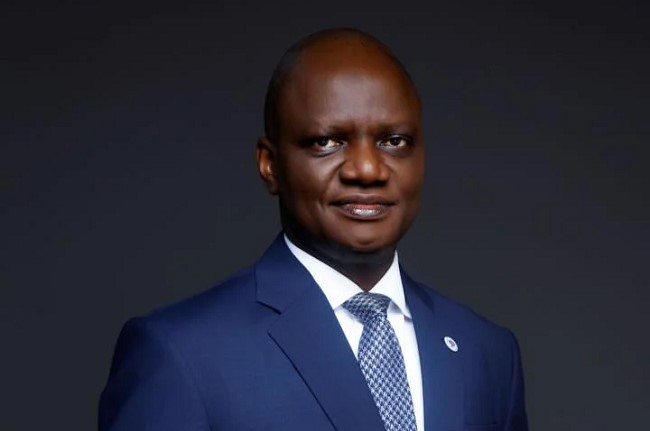
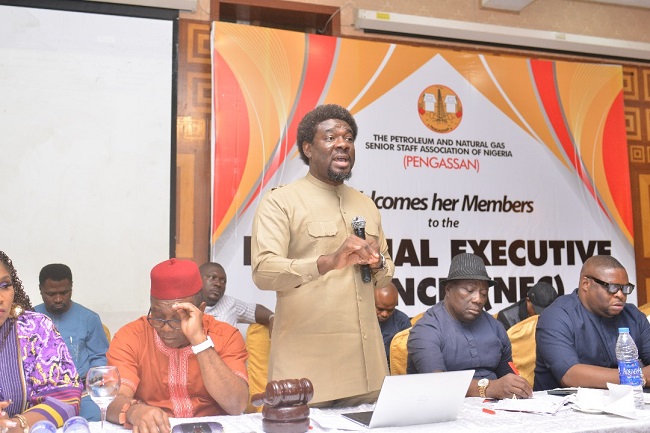
The Managing Director, Ogun State Waste Management Agency (OGWAMA), Mr. Abayomi Hunye, has stated that he will not compromise standard in the management of waste in the state.
This is contained in a statement by the agency made available to journalists in Abeokuta, the state capital, on Tuesday, January 6, 2026, in reaction to allegations levelled against Hunye by a group.
The group had on Monday in Abeokuta protested what they described as high-handedness and alleged extortion by the MD, who is also the Special Adviser to Gov. Dapo Abiodun on Environment.
The protesting members of the Ogun State Chapter of the Association of Waste Management Vendors and Recyclers of Nigeria
Hunye said that the individuals involved in the protest under the aegis of Association of Waste Management Vendors and Recyclers of Nigeria, Ogun State Chapter, were suspended by their own association on Nov. 20, 2023, long before he assumed office as the MD of OGWAMA.
He explained that there were several petitions written against the group to OGWAMA and other relevant security and oversight institutions by the leadership of their association.
The MD said that the suspension of these individuals by their association was based on allegations of fraud, misrepresentation, and forgery, which were duly documented.
“Upon assumption of office, I made it clear that OGWAMA would not aid, abet, or condone any form of illegality. My firm refusal to compromise institutional standards or shield wrongdoing is the real reason behind the current protest.
“It is quite surprising that I am accused of collecting from these individuals when all payments evidence reflected that those payments were made into the coffers of the Ogun State Government,” he said.
The OGWAMA boss opined that the agency, under his watch, had introduced impartial, transparent, and accountable operational policies
He added that the policies included the discontinuation of multiple and illegal registrations by individuals, a practice which the group vehemently opposed due to the benefits they previously derived from it.
Hunye stated that OGWAMA would continue to uphold the law and would neither tolerate nor overlook any illegal activities under any guise.
“I reassure the good people of Ogun State that I am a man of integrity, committed to transparency, due process, and the effective delivery of OGWAMA’s mandate. I will not, under any circumstance, compromise these principles.
“I urge the general public to disregard the claims and actions of this group of protesters, as their allegations are clearly aimed at pressuring the Agency to permit the continuation of practices that are illegal and against public interest.
“OGWAMA remains steadfast in its commitment to professionalism, environmental sustainability, and the collective good of Ogun state,” Hunye said.
The Nasarawa State Government on Tuesday, January 6, 2026, distributed another tranche of 50 tricycles and 10 cars to cooperatives, youth groups, and institutions as part of its empowerment scheme.
Dr Labaran Magaji, Secretary to the State Government (SSG), presented the vehicles to the beneficiaries in Lafia, the state capital.
Magaji said the empowerment scheme was meant to improve the socio-economic status of its citizens, and charged the beneficiaries to make good use of the vehicles to improve their lives.
Abdullahi Audu Sule, Governor of Nasarawa State
He said that the electric vehicle empowerment scheme was a deliberate effort by the Gov. Abdullahi Sule-led administration to adopt clean energy.
“We are all aware of climate change and the need to sanitise our environment; it must start from somewhere; and that is why the call for renewable energy is really very important.
“It is against this background that the governor has taken the front line by first introducing the electric vehicle for all commissioners and members of the state executive council.
“I think it is the first of its kind in this country, ” he said.
The SSG charged the beneficiaries to maintain the vehicles for optimal performance as all accessories were provided, including charging plugs, charging points, and a maintenance office, located in the state.
Speaking on behalf of the beneficiaries, Prof. Nghargbu Kitso, Deputy Vice Chancellor, Research, Innovation and Linkages, Nasarawa State University Keffi, expressed appreciation to the government.
Kitso assured the governor that they would work hard to multiply the fortune of the scheme to benefit their members.
“As a learning institution that is also focused on innovative funding, we find this empowerment programme timely.
“Through our university consultancy services and cooperative societies, we will be able to multiply the fortunes of this kind of initiative, ” he said.
The Nasarawa government last year empowered various youth and women groups as well as institutions with over 100 electric cars and 50 tricycles as revolving loans.
The United Nations Resident and Humanitarian Coordinator in Nigeria, Mohamed Malick Fall, has called for stronger protection of civilians, civilian spaces and schools following a spate of attacks in Niger State, north-central Nigeria.
On January 3, 2026, more than 30 people were reportedly killed and an unspecified number abducted after an attack on a village market in Kasuwan Daji, Borgu Local Government Area (LGA), in Niger State. The assailants also set market stalls and nearby homes on fire.
Other concerning incidents were reported in Agwara LGA, also in Niger State, and in Kwara and Ondo states, with scores of reported casualties, including deaths and kidnappings.
Mohamed Malick Fall, the UN Resident and Humanitarian Coordinator in Nigeria
Agwara LGA, in Niger State, is the location where more than 300 people – who have since been released – were abducted in November 2025 following an attack on Saint Mary’s Catholic School.
The attacks have been described as grave violations of human rights, including the right to life and the protection of civilians, particularly women and children, and undermine the right to education.
Fall said: “On behalf of the United Nations, I extend my deepest condolences to the families of those who lost their loved ones and wish the injured a swift recovery. I also call for the immediate release of all those abducted and urge authorities to ensure that the perpetrators are held accountable in line with national and international human rights standards.
“Students, schools, and education personnel must be protected from any form of attack. No child should ever be at risk while pursuing an education – a fundamental right for all children.”
In November 2025, the United Nations reiterated the need for the implementation of the Safe Schools Declaration in Nigeria to safeguard the civilian nature of schools and ensure children can learn safely, even in contexts of conflict and insecurity. These recent attacks seem to underscore the continued need for urgent action.
“The United Nations remains committed to working with government authorities to strengthen protection for civilians and promote safer learning environments,” added Fall.
Group Chief Branding and Communications, Dangote Group, Anthony Chiejina, has been named to the prestigious 2025 Influence 100, reaffirming his standing as one of the most consequential communications leaders in the world and the only Nigerian on this year’s list.
The recognition marks Chiejina’s fifth consecutive appearance on the global ranking, having previously been listed in 2021, 2022, 2023 and 2024, a rare distinction that underscores both consistency and sustained global relevance. His continued presence places him among an elite group of in-house communicators whose judgement, influence and strategic insight shape corporate reputation at the highest level.
Anthony Chiejina
Published annually by PRovoke Media and now in its 13th year, the Influence 100 identifies the most impactful senior communications, corporate affairs and marketing executives worldwide. The 2025 list reflects a rapidly changing global environment in which communications has evolved from a support function into a core pillar of leadership, governance and trust building amid geopolitical uncertainty, technological disruption and heightened public scrutiny.
According to PRovoke Media, the leaders recognised this year demonstrate strategic clarity, cultural intelligence and the ability to guide organisations through complexity. Final selections are made by the publication’s senior editorial team through proprietary research and external nominations, assessed against organisational seniority and global reach, influence over agency partnerships and budgets, and contribution to thought leadership and industry direction. The list also prioritises gender balance, racial diversity and geographic representation.
According to the publication, Chiejina’s inclusion reflects his central role in shaping the reputation of Dangote Group, Africa’s largest industrial conglomerate. For over 15 years, he has overseen corporate communications across the group’s diverse portfolio, spanning cement, agriculture, energy, manufacturing and consumer goods. His stewardship has been instrumental in positioning Dangote as the continent’s most admired indigenous company and a symbol of African industrial ambition.
“As group head of corporate communications, he oversees external and internal reputation across multiple sectors spanning cement, agriculture, energy and consumer goods, and has helped steer the brand’s continued recognition as the most admired indigenous company on the continent,” it said.
Under his leadership, the group’s communications function has navigated complex regulatory environments, major industrial expansions and heightened global attention, particularly as Dangote deepens its footprint across Africa and advances sustainability and energy security initiatives.
Before joining Dangote Group, Chiejina held senior roles at Zenith Bank, Oceanic Bank, Seven Up Bottling Company, the African Economic Digest (AED) and African Concord, experiences that have given him deep insight into Nigeria’s political economy, financial markets and media landscape. That breadth of experience continues to inform Dangote Group’s engagement with stakeholders at home and abroad.
His sustained recognition on the Influence 100 highlights not only personal professional excellence, but also the growing visibility of African corporate leadership in global reputation management. As communications becomes increasingly central to how organisations lead and earn trust, Chiejina’s presence on the list reinforces Nigeria’s place in the global conversation shaping the future of the profession.
The 2025 Influence 100 includes 28 new entrants, alongside several high profile re entries by senior communications leaders who have since taken on expanded global roles. These include Michael Stewart, who moved from PwC to Unilever; Michael Gonda, from McDonald’s to Nike; and Sandy Rodriguez, also from McDonald’s to Eli Lilly.
This year’s list reflects a powerful cross section of communications leadership from some of the world’s most influential organisations, including Walmart, Apple, Shell, Microsoft, Nvidia, Nissan, Coca Cola, Google, Lufthansa, MTN, Emirates, Ford, Marriott, Tencent and Reliance Industries among others.
In total, 20 countries are represented, highlighting the global reach and strategic importance of senior in house communications leadership. Gender representation remains strong, with 58 women and 42 men featured, sustaining a female majority for the second consecutive year.
The 2025 Influence 100 is also the most highly educated cohort to date, with all honourees holding at least a first degree and 56 per cent possessing advanced qualifications, up sharply from previous years.
Professor Chinedum Nwajiuba has urged Nigerians to approach 2026 with realism, discipline and clarity of purpose, warning that the year will reward hard choices rather than comforting illusions.
In a New Year message titled “A Year of Multiple Graces and Blessings”, the professor of Agricultural Economics and former Vice Chancellor of Alex Ekwueme Federal University Ndufu Alike Ikwo said 2026 offers opportunities for progress only to those willing to confront reality and abandon pretence.
Professor Chinedum Nwajiuba
Reflecting on 2025, Nwajiuba described the year as one of promise that yielded tangible outcomes for people who stayed focused despite mounting economic and social pressures. He noted that many Nigerians experienced decisive interventions that reshaped personal and professional trajectories, even amid widespread hardship.
He said recent years have tested livelihoods and national confidence, creating uncertainty that has left many struggling to interpret the direction of the country. According to him, 2026 presents a chance for clarity, but only for those prepared to look closely and act deliberately.
Using a vivid metaphor, Nwajiuba likened the year to stirred water allowed to settle. Clarity, he said, does not appear automatically but becomes visible only to those with vision and patience. He stressed that discernment would separate progress from error in the months ahead.
The former vice chancellor also drew attention to events at the close of 2025, particularly foreign military actions on Nigerian soil, which he said forced a reassessment of national strength and sovereignty. He argued that the episode exposed long held assumptions and underlined the need for honest self-appraisal at both national and individual levels.
According to Nwajiuba, 2026 demands practicality rather than rhetoric. He expressed cautious optimism that the year could bring reduced insecurity, stronger economic activity and increased political engagement, provided leaders and citizens alike act with intention and restraint.
He maintained that progress would favour those who work strategically, build skills and resist frivolity. The year, he said, is not suited to wishful thinking or entitlement, but to learning, self improvement and sustained effort.
Nwajiuba encouraged Nigerians to combine prayer with vigilance, emphasising that effort must accompany faith. He concluded that the promise of multiple graces in 2026 rests on realistic planning, disciplined action and an unflinching view of present realities.
Following the decision of the Nigerian Environmental Study/ Action Team (NEST) Board at a meeting held on Wednesday, November 26, 2025, Professor Emmanuel Nzegbule has been appointed Executive Director at NEST. The appointment took effect from January 1, 2026.
Chairman of NEST, Prof. Chinedum Nwajiuba, made the disclosure in a statement.
Nwajiuba disclosed that the decision to appoint a new Executive was taken in May 2025, after a careful consideration of what is best for NEST.
Prof. Emmanuel Nzegbule
Emmanuel Nzegbule, who takes up the appointment on a part-time basis, holds a doctorate degree and specialises in conservation ecology and environmental management. He has lectured in the university for many years.
According to Nwajiuba, Nzegbule previously held positions at NEST, including as a Senior Research Fellow and Board member. He led the implementation of national climate change response projects such as the Building Nigeria’s Response to Climate Change (BNRCC) and Climate Change Adaptation for Africa (CCAA) project.
Nzegbule has published many works on natural resources management, climate change solutions, and environmental governance. He is a fellow of the Leadership for Environment and Development (LEAD), UK, a member of the Shalom Club and the Nigerian Environmental Society (NES).
“We expect Prof. Nzegbule to take up this responsibility with his usual commitment to service,” said Nwajiuba.
The global economy is undergoing rapid transformation. From January 1, 2026, exports of selected carbon-intensive goods into the European Union will be subject to a carbon price under the Carbon Border Adjustment Mechanism (CBAM).
Officially framed as a climate instrument designed to prevent carbon leakage, CBAM in practice represents a profound reordering of global trade governance one with far-reaching implications for Africa’s industrial future.
At its core, CBAM redefines how competitiveness is determined in global markets. Competitiveness is no longer shaped primarily by productivity, cost efficiency, or technological capability. Instead, it is increasingly governed by regulatory carbon-intensity benchmarks designed, calibrated, and enforced in Europe.
Dr Okeh Austine Sadiq, lead author end Editor of the Carbon Free Africa Network
For African economies – many still in early or incomplete stages of industrialisation – this shift risks entrenching structural asymmetries rather than enabling a fair and development-aligned low-carbon transition. Decarbonisation is both necessary and unavoidable. The critical question, however, is how it is governed, who bears its costs, and whose development trajectories are constrained in the process. CBAM answers these questions in ways that expose the political economy of unequal decarbonisation.
Power, Governance, and Cost Shifting
CBAM operates by imposing a carbon price on imports equivalent to what European producers face under the EU Emissions Trading System. In theory, this is intended to “level the playing field.” In practice, it transfers the burden of adjustment onto exporting countries that neither designed the rules nor possess comparable fiscal, technological, or institutional capacity to comply with them.
For Africa, this is not a technical trade issue. It is a political economy problem concerning who governs decarbonisation and who pays for it. African exports of steel, aluminium, cement, fertilisers, electricity, and other energy-intensive products increasingly face non-tariff barriers rooted in emissions accounting, reporting, and verification systems that are costly to establish and maintain.
These compliance costs are rarely passed on to buyers in competitive markets. Instead, they are absorbed through price compression, declining margins, and reduced reinvestment capacity – directly undermining industrial competitiveness.
The asymmetry is structural. European industries have benefited from decades of industrial subsidies, infrastructure investment, and fossil-fuel-driven growth. African industries operate under conditions of constrained finance, infrastructure deficits, high energy costs, and limited access to clean technologies. Yet CBAM treats emissions intensity as a present-day technical attribute, stripped of its historical and developmental origins.
CBAM as a Disciplinary Trade Regime
Although presented as a climate measure, CBAM increasingly functions as a disciplinary trade instrument. Over time, its scope has expanded, reporting requirements have tightened, and verification demands have intensified. Proposals to extend CBAM to additional sectors and strengthen anti-circumvention rules further increase compliance pressures on exporters from the Global South. Crucially, this technical tightening has unfolded alongside political accommodations for European industry.
Debates on simplification, exemptions, and transitional relief have focused primarily on safeguarding internal competitiveness rather than easing the adjustment burden on external partners. This dual logic – rigour for outsiders, flexibility for insiders – reinforces perceptions of CBAM as a form of carbonised protectionism.
From a political economy perspective, CBAM allows Europe to advance its decarbonisation agenda while externalising a significant share of its transition costs. It internalises industrial benefits while shifting adjustment pressures onto economies with weaker bargaining power and negligible historical responsibility for climate change.
Africa’s Developmental Baseline of Low Emissions, High Vulnerability
Africa contributes less than 4 per cent of global greenhouse gas emissions, despite accounting for nearly 18 per cent of the world’s population. Average per-capita emissions remain below 1 tonne of CO₂ per year, compared to 7–8 tonnes in the EU and over 14 tonnes in the United States.
Yet Africa experiences disproportionate climate impacts, with climate-related shocks projected to reduce GDP growth in vulnerable economies by 2–5 per cent annually by mid-century. This mismatch between responsibility and vulnerability reflects not climate virtue, but under-industrialisation. Manufacturing accounts for roughly 11 per cent of Africa’s GDP, compared to over 20 per cent in East Asia, while Africa’s share of global manufacturing value added remains below 3 per cent – a figure that has stagnated for decades.
CBAM intervenes precisely as African countries seek to expand industrial capacity to absorb labour, diversify exports, and reduce commodity dependence. In this context, it risks constraining the very development pathways required for long-term resilience and climate ambition.
Unequal Trade Structures and Africa’s Peripheral Position
Africa’s integration into global trade remains structurally unequal. The continent accounts for approximately 3 per cent of global merchandise trade, exporting primarily raw materials and semi-processed goods while importing higher-value manufactured products. In Africa–EU trade, exports are heavily concentrated in energy, minerals, metals, and basic manufactures – sectors now directly exposed to CBAM.
This pattern reflects Africa’s peripheral insertion into the global economy: resource- and carbon-intensive production at the margins, with value addition, technology, and standard-setting power concentrated in the Global North. CBAM does not disrupt this structure. It reinforces it by penalising carbon intensity without addressing why carbon-intensive production dominates African exports in the first place.
Preliminary assessments suggest that CBAM could raise the effective cost of certain African exports to Europe by 10–30 per cent, depending on sector and emissions intensity. In already unequal markets, such shocks weaken industrial viability and risk locking Africa further into low-value, carbon-penalised trade roles.
Carbon Pricing as a Development-Blind Trade Policy
CBAM assumes that producers can respond to carbon prices by investing in cleaner technologies. This assumption collapses under African realities. Industrial decarbonisation requires reliable clean energy, long-term capital, and technological upgrading. Yet across Africa over 600 million people still lack access to electricity. Industrial borrowing costs commonly exceed 10–15 per cent, compared to near-zero real rates in Europe during much of the past decade. Unfortunately, clean industrial technologies are protected by intellectual property regimes that restrict diffusion.
Carbon intensity in African industry is therefore structural, not behavioural. It reflects energy systems shaped by colonial infrastructure, post-colonial underinvestment, and chronic fiscal constraints. CBAM nonetheless treats emissions intensity as a firm-level choice, transforming carbon pricing into a disciplinary mechanism that compels adjustment without enabling transition.
Africa’s Necessary Pathway
Africa’s response to CBAM cannot be limited to compliance. It must be developmental. The continent’s long-term climate and economic interests lie in green industrialisation—building manufacturing capacity aligned with low-carbon energy systems, regional value chains, and domestic demand. Green industrialisation is essential for job creation in a continent expected to add over 400 million people to its working-age population by 2050.
It will act as an avenue for export diversification beyond raw commodities. This will reduce exposure to climate-related trade shocks while also achieving mitigation without sacrificing development. This pathway is consistent with the Paris Agreement, which recognises that mitigation must occur in the context of sustainable development and poverty eradication.
The Agreement assumes differentiated transitions supported by finance, technology transfer, and capacity building—not uniform decarbonisation imposed through trade enforcement. However, CBAM, as currently designed, bypasses this logic. It accelerates decarbonisation where capacity already exists while constraining the industrial upgrading Africa requires to transition sustainably.
Finance, Technology, and the Equity Gap
A central weakness of CBAM is the absence of binding mechanisms to support industrial decarbonisation in exporting countries. There is no guarantee that revenues collected at Europe’s borders will be recycled into concessional finance for African industry. Without redistribution, CBAM becomes a one-way fiscal and regulatory transfer. This contradicts long-standing climate finance commitments.
Developed countries have consistently failed to mobilise the promised $100 billion annually for climate action. Finance for industrial decarbonisation particularly in hard-to-abate sectors remains scarce, fragmented, and skewed toward middle-income markets. Expecting African firms to decarbonise under these conditions is not climate ambition. It is cost shifting.
Implications for the Paris Agreement
If CBAM proliferates without equity safeguards, it risks undermining the Paris Agreement itself. Climate action enforced through unilateral trade measures erodes trust, fragments cooperation, and reintroduces coercion into what was designed as a cooperative regime. For Africa, the danger is clear: decarbonisation without industrialisation, compliance without competitiveness, and mitigation without development gains. Such outcomes are incompatible with a just transition and inconsistent with the spirit of Paris. An equitable climate regime must allow Africa to industrialise green not penalise it for not having done so already.
Contesting Carbonised Trade
CBAM crystallises a broader transformation: the carbonisation of global trade rules. Whether this transformation deepens inequality or enables shared transition depends on political choices still being made. For Africa, responding to CBAM requires more than technical adjustment. It demands collective political engagement, insistence on finance and technology as integral to trade-linked climate measures, and a continental strategy centred on green industrialisation. Absent these conditions, CBAM risks entrenching Africa’s peripheral status governing decarbonisation at the border while foreclosing development at the centre. That is not climate leadership. It is unequal decarbonisation.
Worried and moved by the unending terrorism in Nigeria, I was recently compelled to investigate the menace, using my crystal ball. From the revelation, some high-ranking individuals are fueling the widespread terrorism-induced bloodbath through betrayal and tacit support.
And except there is a unified response driven by sincerity, patriotism and unbiasedness, devoid of religious and ethnic prejudices, Nigeria will be brought to its knees by terrorist’s groups with jihadist agenda.
I am not a clairvoyant, but I have a crystal ball which I occasionally consult when I am eager to forecast the future. I have never doubted the accuracy of my crystal ball due to outcome of previous results. This forms the basis of my concern and fear for Nigeria, a country that had once showed great promises, could become a victim of traitors and systems contradictions.
Dr. Mike Owhoko
In my crystal ball, I see terrorism draped in jihadism with ultimate goal to establish Islamic Caliphate in Nigeria. There is a covert design aimed at spreading Islamic authority and influence across the country, and what is playing out is a script to deliver this plan. Current outlook for control of economic and political power is accidental, and not the underlining motive. It is a carefully guided intent by the traitors.
This underscores the reason for the underground conspiracy by some powerful Islamic extremists to weaken capacity of government to fight terrorism, implicitly, exposing the country to complex risks with streaming effect of sliding into an Afghanistan’s experience. Afghanistan is currently ruled by the Talibans, reputed for terrorism and human rights violations. Though a long-term plan, the goal is aimed at making Nigeria an Islamic country, using Sharia law as driver.
Unarguably, the introduction of Sharia law in 12 northern states of Zamfara, Sokoto, Kano, Bauchi, Katsina, Jigawa, Borno, Kaduna, Yobe, Gombe and Niger, has encouraged Islamic extremism, and provided the framework for promotion of jihadism in Nigeria. Islamic extremists, particularly those of Fulani extraction, believe Sharia law should be extended to other parts of the country through Jihad, even though it undermines Nigeria’s secular status.
This ambition emboldens Fulani Islamic extremists and other terrorist groups to move into communities to maim, kill, dislodge and dispossess inhabitants of their ancestral homes and lands. Until Sharia law is abolished, Islamic terrorism in Nigeria will not abate.
Trailer load of Fulani youths together with some persons suspected to be from the Sahel, being transported and dropped off in large numbers in bushes of various communities across the country, particularly in the southern part of Nigeria, is part of the overall plot. These youths with no visible education and skills, carry out various crimes from their hidden locations, including kidnapping and rape, and most times, forcefully converting their victims to Islam.
In my crystal ball, I see some notable traditional rulers, Islamic clerics, politicians, businessmen and influential personalities from the north as benefactors, providing support for jihadist agenda in a coded fashion. The Nigerian Army is also not immune to insider traitors who secretly volunteer classified information to advance Sharia scheme.
As a ploy to gather sympathy, I see some of these sponsors and sympathisers appealing to sentiments by downplaying the gravity of crime of these terrorist groups and portraying them as bandits and insurgents fighting for religious obligations. This position is expected to be canvassed and sustained in various social media platforms in the time ahead.
A few of these collaborators are also secretly working with some external groups with leanings to Islamic State in Iraq and Syria (ISIS). It is ISIS’ agenda to push its ideology and influence across some key African countries, including Nigeria.
Besides, I see the conspirators not giving up in their attempts to frustrate government’s efforts at defeating terrorism. Targeting and killing of Christians, and some Muslims who hold contrary view of Islam, is part of grand design to blackmail government into submission and expand Islamic hegemony in Nigeria. It is also their plans to leverage strategic alliance with some Sahel groups to attain mutual goals.
Notwithstanding the recent United States’ bombing of terrorists’ cells in Sokoto State, I see terrorists’ organisations expanding their bases and networks beyond current operational holds in the north and making incursion into the southern parts of the country. I also see emergence of new splinter groups from Boko Haram and Islamic State West Africa Province (ISWAP), while Ansaru, Fulani Islamic extremists, Mahmuda and Lakurawa, will remain united with common agenda for territorial expansion.
Major manifestations in my crystal ball are reminiscent of the events that happened during the administration of former President Goodluck Jonathan. While in power, Jonathan had said that Boko Haram members and sympathisers were in almost every level of his government. In an interview with the Voice of America (VOA) in 2015, he further disclosed that Boko Haram had links with international extremist groups like ISIS in the Middle East where they were undergoing training.
When President Jonathan made these remark, Nigerians glossed over it, believing that, as President and Commander-in-Chief of the Armed Forces of Nigeria, he had the powers to deal with the terrorist groups. Unfortunately, his government was encumbered by entrenched Islamic interests, resulting largely to failure to conquer the Islamic extremists.
Since it was within Jonathan’s constitutional responsibility to protect lives and properties, why did he not move proactively and swiftly in identifying and encircling the Boko Haram elements in his government? Evidently, Jonathan was overwhelmed by the domineering influence of Islamic stalwarts, both in and outside his government.
The former President failed to exercise the will and political courage to confront the monsters, owing to offence-aversion to avoid likely blackmail and sabotage by some powerful northerners. This encouraged Boko Haram’s influence to fester in his government. Unfortunately, he learned in a hard way, following the kidnap of Chibok girls, which was obviously orchestrated to humiliate and bring down his government.
With the Chibok experience and the on-going terrorism attacks in the country, I have often wondered why government, with all its contraptions, including intelligence network and security formations, would allow these Islamic moles in government, despite implications on Nigeria’s sovereignty?
With my knowledge of Political Science, I know for a fact that government is the supreme entity with overall authority over the people, with primary purpose to provide security and welfare. In absolute terms, there is nothing a government in power cannot do, except to literally turn a man to a woman, and vice versa.
So, why the waiver of some persons from the weight of the law, making government to look like institutional weakling? In the absence of compromise, government has the capacity to identify and track activities of terrorists.
Late General Sanni Abacha might not have become Head of State through democratic means, but he understood the risk posed by saboteurs in and outside government. To achieve stability, he identified and punished persons considered as threat to government, irrespective of status. Abacha believed that once insurrection had lasted more than 72 hours, there was insider’s collaboration fueled by political motive.
For government, there should be no sacred cows and individuals with blue blood, as the law is sacrosanct. Government’s current seeming fatigue to contain and deal with these Islamic fundamentalists, is rooted in overwhelming influence enjoyed by radical Islamic adherents in government. They should be fished out.
For too long, government has exhibited cowardice in the face of growing crimes against Nigerians by a few entrenched Islamic extremists. Seeking external help to save lives and properties, is not a sign of weakness, but diplomatic courage. The recent intelligence cooperation between the Federal Government and the United States, resulting in airstrikes of terrorists in the North-West region is commendable. The government must leverage all available external opportunities to defeat this jihadist scheme.
Nigeria is a secular state and a plural society with over 250 ethnic groups. There must be freedom of religion devoid of discrimination, just as no one ethnic group has the authority to encroach into other peoples’ ancestral land and violently take possession. This must stop.
Therefore, President Ahmed Bola Tinubu must demonstrate courage to identify and deal with the sympathisers, financiers and sponsors of these Islamic terror groups, otherwise, he risks facing the Jonathan’s fate, and possibly, dismemberment of Nigeria.
Dr. Mike Owhoko is a Lagos-based public policy analyst, author, and journalist. He can be reached at www.mikeowhoko.com, and followed on X {formerly Twitter} @michaelowhoko
January marks International Zero Waste Month, a growing global observance that calls for systemic action from governments, industries, and all sectors to reduce waste at its source and prevent pollution.
The movement began in the Philippines in 2012 through the Zero Waste Youth Initiative and was formally recognised in 2014 with Presidential Proclamation No. 760, which promotes designing and managing products and processes to systematically avoid and eliminate the volume and toxicity of waste and materials, while conserving and recovering resources instead of indiscriminately disposing or burning them.
Since 2023, environmental organisations led by the Global Alliance for Incinerator Alternatives (GAIA) have helped expand the campaign internationally, making zero waste a shared advocacy across countries, sectors, and communities.
International Zero Waste Month 2026
This year’s observance of International Zero Waste Month also coincides with the 25th anniversary of Republic Act No. 9003, or the Ecological Solid Waste Management Act, enacted on January 26, 2001, which provides the national framework for integrated solid waste management based on resource conservation and recovery. More than two decades on, persistent challenges such as improper waste disposal, infrastructure constraints, and gaps in public awareness underscore the need to strengthen and fully implement the law.
According to DENR reports, the Philippines generates 2.7 million tons of plastic waste annually, contributing to the 61,000 metric tons of solid waste produced daily – enough to fill 37 Olympic-sized swimming pools. This includes 163 million plastic sachets, 48 million shopping bags, and 45 million thin-film bags. Alarmingly, only a third of this waste ends up in landfills, while 35% is discarded into the ocean.
“Zero Waste is a goal that is ethical, economical, efficient, and visionary, guiding industries, governments, and communities to prioritise upstream solutions – reducing production, designing products responsibly, and minimising waste at its source – while recognising that recycling and other downstream measures remain essential,” said Jam Lorenzo, Deputy Executive Director of BAN Toxics.
The group emphasised that the country should adopt the principle of Zero Waste across all sectors, focusing on policies and practices that prevent waste generation before it occurs. By prioritising upstream solutions, the country can conserve natural resources, protect ecosystems, and create sustainable production and consumption systems, complementing downstream strategies like recycling, recovery, and safe disposal.
Meanwhile, at the community level, BAN Toxics suggests practical Zero Waste approaches that can help reduce waste, promote sustainable production and consumption, and create a safer, healthier environment at home and in the neighborhood:
Segregate Your Waste
Segregating waste at home is the first step toward a Zero Waste approach. Separate recyclables, compostables, biodegradables, and hazardous items to conserve resources, reduce landfill dumping, and prevent toxic contamination and pollution.
Refuse Single-Use Plastics, Switch to Reusables
Say “no” to plastic bags, straws, and disposable utensils, and bring reusable alternatives whenever possible. Use bayongs, mesh, or cloth produce bags for fruits and vegetables, and carry metal straws and reusable utensils for take-out orders. Replace plastic wrap and disposable containers with glass or stainless-steel food storage, which keeps food fresh without generating waste or absorbing odors. Consistently adopting these practices can prevent hundreds of single-use plastics from entering the waste stream.
Compost Kitchen Waste and Non-Recyclables
Biodegradable waste makes up a significant portion of household garbage. Compost vegetable peels, fruit scraps, coffee grounds, and eggshells. Tear non-recyclable items like food cartons, paper napkins, tissue paper, pizza boxes, and paper egg cartons into small pieces and add them to the compost bin. The resulting compost can be used in home gardens, potted plants, or community composting programmes.
Support Eco-Friendly Refilling Stores or Plastic-Free Sari-Sari Stores
Refilling stores and plastic-free sari-sari stores are zero-waste shops where you bring your own containers to fill with bulk goods like food, cleaning supplies, and personal care items. They reduce single-use plastics and packaging while offering sustainable alternatives for everyday essentials.
Make Your Own Cleaning Products
Replace household cleaners with simple ingredients like vinegar, baking soda, and lemon. Natural cleaners cost less, reduce plastic bottles, and eliminate harsh chemicals. A basic all-purpose cleaner of equal parts water and vinegar with a few drops of essential oil works for most tasks.
Choose Environmentally Friendly Products
Select products made from natural or recycled materials, such as bamboo, organic cotton, or native leaves. Choose items that reduce waste, like steel bottles and cloth bags, energy-efficient options like LED bulbs or solar devices, non-toxic household cleaners, and chemical-free personal care products.
Practice Mindful Meal Planning
Plan meals weekly, shop with a list, and use what you have before buying more. Store food properly to extend freshness and repurpose leftovers to reduce food waste.
Repair, Repurpose, and Donate
Before discarding items, consider if they can be repaired, repurposed, or given to someone who needs them. Learn basic repair skills such as sewing buttons, patching clothes, or fixing small appliances. Transform old t-shirts into cleaning rags, glass jars into storage containers, and worn towels into washable cleaning cloths. Donate usable items you no longer need instead of throwing them away. These practices extend product lifespans and keep materials in circulation.
Replace Disposables with Sustainable Alternatives
Examine your daily routine for disposable items you can replace with reusable alternatives. Use cloth handkerchiefs instead of tissues, washable menstrual products instead of disposables, rechargeable batteries instead of single-use, and real dishes for gatherings instead of paper plates and cups. Small changes like these may seem minor, but together they prevent large amounts of waste.
BAN Toxics emphasises that transitioning to zero-waste habits does not require perfection. Individuals and communities can start with one or two manageable changes and gradually add more as these practices become routine. Focusing on progress over perfection, even reducing waste by 20% can make a meaningful difference.
The organisation stresses that the Zero Waste journey is ultimately about being more intentional with resources, reconnecting with what we consume, and recognizing that individual and collective choices shape the environment.
As Africa moves into 2026, the continent is quietly becoming one of the most consequential battlegrounds for the future of tobacco harm reduction. With a fast-growing population, limited healthcare capacity, and millions of adult smokers, policy decisions taken in the next year will determine whether smoking declines rapidly or remains entrenched for decades.
Across the continent, tobacco control is strengthening. Taxes are rising, smoke-free laws are expanding, and public awareness of smoking harms is improving. Yet one reality remains unchanged: cigarettes still dominate nicotine consumption. The question for 2026 is whether African governments will begin to actively enable safer alternatives or continue regulating all nicotine as if risk were equal.
Residue from tobacco smoke can end up in indoor air even in nonsmoking spaces
A Shift from ‘Control Only’ to Risk-Proportionate Policy
In 2026, the most important trend to watch is the growing tension between traditional tobacco control and modern harm-reduction approaches. While many African countries remain cautious about vaping, heated tobacco, and oral nicotine products, regulatory silence is no longer sustainable. These products are already in the market, legally or otherwise.
Policymakers are increasingly confronted with a choice: regulate safer nicotine products to displace smoking, or leave adult smokers with only combustible options while illicit markets expand.
Countries that adopt risk-proportionate regulation, distinguishing cigarettes from significantly lower-risk alternatives, will likely see faster declines in smoking prevalence and reduced long-term healthcare costs.
Country Signals to Watch in 2026
South Africa will remain the regional bellwether. Its proposed tobacco legislation could set a precedent for how emerging nicotine products are treated across Southern Africa. Whether the law differentiates risk levels or regulates all products identically will be closely watched by regulators, industry, and advocates alike.
Kenya represents a market of opportunity constrained by policy uncertainty. Vaping and oral nicotine products exist but remain expensive and inconsistently regulated. In 2026, tax reform and clearer product standards could unlock harm reduction as a genuine smoking-cessation pathway rather than a niche consumer option.
Nigeria, Africa’s largest market, remains largely unregulated when it comes to novel nicotine products. This regulatory vacuum presents both risk and opportunity. A science-based framework could rapidly position Nigeria as a continental leader in pragmatic tobacco control, or, if delayed, allow informal markets to dominate.
Zambia highlights the challenge of over-restriction. High taxes or bans on safer alternatives may protect public health in theory, but in practice risk preserving cigarette dominance. In 2026, pressure will grow for evidence-based reassessment.
The Bottom Line
Africa’s tobacco control story is no longer just about reducing smoking, it is about how fast and how effectively that reduction happens. Tobacco harm reduction is not a replacement for tobacco control; it is its most underused accelerator.
In 2026, the countries that move beyond ideology and regulate nicotine based on risk will define the next chapter of African public health. Those that do not may find that cigarettes remain the default, not by choice, but by policy design.