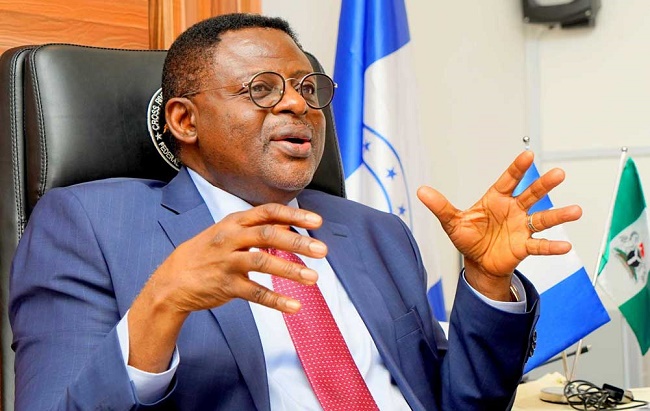
The House of Representatives committee on Renewable Energy has mandated the Managing Director, Rural Electrification Agency (REA), Abba Aliyu, to appear before the committee in person on Tuesday, March 2, 2026.
The Chairman of the committee, Rep. Afam Ogene, gave the mandate during an investigative hearing in Abuja on Wednesday, February 25.
Ogene, who cautioned against trivialising official duties, directed the agency to send a written response on issues raised by the committee and present it within 48 hours.
“We as lawmakers are elected to hold public officers accountable in line with sections 88 and 89 of the 1999 constitution as amended,” he said.
Earlier, a member of the committee, Rep. Kwamoti Laori, representing Demsa/Numan/Lamurde, Adamawa State, described the failure of the REA MD to appear before it as highly disrespectful.
Laori said that such act of disrespect must not be condoned any more as he called for a warrant of arrest to be issued through the Inspector General of Police.
Also speaking, a member of the committee, Rep. Shina Oyedeji, representing Iseyin/Itesiwaju/Kajola/Iwajowa constituency, Oyo State, expressed the imperatives of giving account stewardship by public officers.
According to him, the MD of REA has no excuse not to appear in person here in view of the huge amount of money in terms of grants and others involved.
Meanwhile, The Executive Director, Cooperate Services, Rural Electrification Agency (REA), Mr. Gboyega Ayoade, pleaded with the Committee to give the MD some time to appear before it.
Ayoade, who tendered an unreserved apology on behalf of the Agency, said that the absence of the MD was not deliberate or meant to disrespect the committee.
The Rural Electrification Agency (REA) is the Federal Government agency established to enhance electricity access in unserved and underserved rural communities.
The aim of the Agency is to uplift more than 100 million Nigerians from energy poverty.
Civil society organisations (CSOs) in Cross River State have declared as obsolete the state’s forestry laws, citing this as reason for the lack of sustainable afforestation culture.
The 19 CSOs, after a six-month review of the Cross River Forestry Law 2010, called for urgent reforms to curb deforestation, strengthen institutions and empower forest communities.
Addressing a news conference on Wednesday, February 25, 2026, in Calabar, the state capital, representatives of the organisations said that fault lines were identified, and recommendations made to amend the law.
Governor Prince Bassey Edet Otu of Cross River State
Mr. Ken Henshaw, Executive Director of We the People, identified commercial agriculture among others as major drivers of deforestation in the state.
Henshaw said the recent cocoa boom triggered massive forest clearing, warning that monoculture plantations were creating “green deserts” with little biodiversity or livelihood value.
He argued that cocoa, largely grown for export, should not justify destruction of indigenous forests, stressing that standing forests offer greater long-term economic benefits.
“Climate finance, carbon sequestration and ecotourism provide more sustainable revenue opportunities than logging, if backed by sound policies.
“I fault Cross River’s Forestry Law 2010 for treating communities as passive recipients of government decisions rather than active stakeholders in forest governance,” Henshaw said.
He added that the proposed review should allocate seats to community representatives and academics on the board of the Forestry Commission to strengthen transparency and expertise.
Also, Dr Martin Ergot, founder of Padic Africa, said that the reform sought to reposition the Forestry Commission with clear mandates for reforestation, regeneration and afforestation.
Ergot noted that existing penalties for forest offences were weak and enforcement institutions often failed to act against illegal loggers.
He stressed that communities must benefit directly from forest resources and be involved in decision-making processes affecting their ancestral lands.
Similarly, Mr. Nelson Ofem, a former member of the Cross River House of Assembly, said that the Forestry Commission needed to harmonise policy proposals, adopt a legal framework that prioritises sustainability, accountability and community participation.
He appealed to the media to sustain advocacy on the protection of the state’s forest until comprehensive reforms were undertaken to protect Cross River’s forests for future generations.
The Federal Government has unveiled a Greenhouse Gas (GHG) Emissions Reduction Initiative aimed at strengthening environmental health governance, improving emissions monitoring and protecting public health.
Dr Yakubu Baba, Registrar of the Environmental Health Council of Nigeria (EHCON), said at the unveiling on Tuesday, February 24, 2026, in Abuja that the initiative would also support Nigeria’s Nationally Determined Contributions (NDCs) and advance sustainable development.
Baba explained that the project, known as Oxygen Fuel Energy, had the potential to reduce carbon emissions by up to 70 per cent.
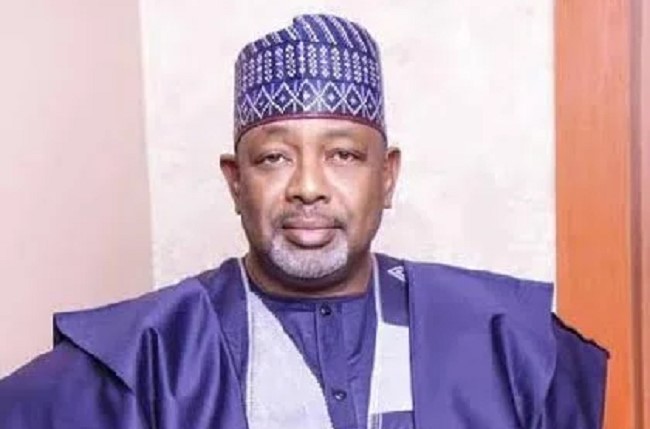
Dr Yakubu Baba, Registrar of the Environmental Health Council of Nigeria (EHCON)
“The aim of the initiative is to achieve cleaner air, reduce smoke and particulate matter, lower greenhouse gases and improve fuel efficiency, resulting in economic savings for businesses,” he said.
He described it as an environmental solution that also made economic sense.
According to him, the programme is being implemented under the National Air Quality Programme of the Federal Ministry of Environment, in line with the provisions of the National Environmental Health Practice Regulations, 2024.
Baba added that the initiative aligned with the environmental sustainability goals of President Bola Tinubu’s Renewed Hope Agenda.
Speaking with newsmen shortly after the event, he said the project demonstrated Nigeria’s commitment to protecting citizens’ health and safeguarding the environment while fulfilling global climate obligations.
He identified climate change as a present public health emergency, linking air pollution and greenhouse gas emissions to respiratory diseases, cardiovascular conditions, cancer and adverse pregnancy outcomes.
“Clean air is not a luxury. This initiative represents a proactive way to prevent diseases and reduce the healthcare burden on communities,” he said.
Baba noted that the programme supported national climate policies and relevant Sustainable Development Goals, especially those related to health, energy and sustainable cities.
He added that reducing emissions from oil usage would help Nigeria meet international commitments while protecting domestic resources.
The registrar called on transport unions, oil marketers, fleet operators, manufacturers, and state and local governments to embrace the initiative as a shared national responsibility.
Speaking for an hour and 48 minutes on Tuesday, February 24, US President, Donald Trump, delivered a full-throated defence of his first year back in office in his 2026 State of the Union address, touting his record on immigration, the economy, tariffs and more.
The president claimed responsibility for a “turnaround for the ages” while calling on Congress to enact several of his administration’s initiatives.
Among several submissions, he announced his administration has made agreements with major tech companies that will allow them to construct power plants for data centres that power artificial intelligence, with the goal of avoiding price spikes for electricity in surrounding communities.
President Trump concludes his remarks during the State of the Union address in the House chamber of the U.S. Capitol in Washington, D.C., on Feb. 24, 2026. Photo credit: ANDREW CABALLERO-REYNOLDS / AFP via Getty Images
“Many Americans are also concerned that energy demand from AI data centres could unfairly drive up their electric utility bills,” Mr. Trump said. “Tonight, I’m pleased to announce that I have negotiated the new ‘rate payer protection pledge.'”
The president said “we’re telling the major tech companies that they have the obligation to provide for their own power needs” so that “no one’s prices will go up.”
“This is a unique strategy never used in this country before,” Mr. Trump said. “We have an old grid – it could never handle the kind of numbers, the amount of electricity that’s needed. So, I’m telling them they can build their own plant, they’ve got to produce their own electricity.”
Responding, observers say that Trump’s “Golden Age” rhetoric masks a hard truth: his administration’s defence of fossil fuels is costing everyday people, who face soaring energy bills and ever-higher utility debt.
Environment campaign group, 350.org, pointed out that while President Trump boasted of record-high oil and gas production during his first year, he has failed to fulfill his campaign promise to cut energy prices by half.
On the contrary, added the group, average electricity prices over the past year in the US have risen by 6.7%, according to an analysis of data by the Energy Information Administration. Meanwhile, around 21 million American families were in arrears on their utility bills, with the average overdue amount climbing by nearly a third since 2023, according to the National Energy Assistance Directors Association.
Experts say that the increase in electricity prices is driven by rising LNG exports, delayed closure of costly coal plants, AI-driven energy demands, blocking of solar and wind projects, and elimination of energy-efficiency tax credits.
350.org called President Trump’s so-called “ratepayer protection pledges” asking AI data centres to provide their own power as a “theatrical stunt” with no enforceable mechanism, and which risks ramping up costly fossil fuel production to meet unchecked energy demand.
“It is a Golden Age – but only for fossil fuel companies that poured $96 million into the Trump administration. For the millions of Americans who cannot afford to pay their energy bills, it is like heading back to the dark ages. The Trump administration cannot claim to stand for American consumers while blocking progress in renewables, the cheapest form of energy available today. It cannot champion affordability while doubling down on a highly volatile gas market anddriving conflicts that inevitably increase energy prices everywhere,” Anne Jellema, 350.org executive director, said.
350.org also cites a recent poll that shows 97% of nearly 1,500 business executives across 15 major global economies support the transition away from fossil fuels to renewable energy, citing competitive edge and long-term energy security.
“Trump’s bravado cannot disguise the fundamental insecurity at the heart of his administration: fossil fuels are increasingly unviable, and even businesses want to move on. Around the world, people are demanding and building a clean, affordable energy future, with or without the US government,” Jellema added.
Lagos State farmers have expressed joy over the World Bank proposed $500 million loan to the Nigerian agriculture sector, while calling for appropriate implementation.
The agriculture experts made the call in separate interviews on Wednesday, February 25, 2026, in Lagos.
The World Bank plans to approve a new $500 million loan to Nigeria in March 2026.
Abubakar Kyari, Minister of Agriculture and Food Security
The fund will be disbursed to improve agriculture, increase food production, strengthen value chains, and create jobs in different states.
The entire $500 million will come from the International Development Association, which is the World Bank’s arm that gives low-interest loans to developing countries.
With the Federal Government as a borrower, the project will be carried out by the Federal Ministry of Agriculture and Food Security and participating states.
Reacting to the proposed loan, the acting Chairman of the All Farmers Association of Nigeria (AFAN), Lagos State Chapter, Mr. Shakin Agbayewa, who described the loan as a welcome development, called for transparency in its implementation.
“We are excited to hear about the proposed World Bank loan, the truth of the matter is that with the high rate of inflation and the cost of securing loans in Nigeria, this loan is coming at the right time and it cannot be overemphasised.
“However, our concern is the implementation and execution of the loan when approved.
“If the loan is implemented and executed properly, it should boost local agriculture production because the truth is that nobody, no sector or even a country, can survive without a loan.
“So, when we see a World Bank coming to assist us, maybe at a very reduced interest rate or a zero interest rate, that will serve as a big boost in the Nigerian agriculture sector across all boards.
“From inputs to logistics, to production, or processing, and value addition, the loan is a very good initiative for the sector,” Agbayewa said.
He said the farmers were afraid of execution and implementation of the loans.
“The fear is execution and implementation of the loans. We want to urge the Ministry of Agriculture or whoever is responsible to disburse the loan to go through AFAN, as a national chapter, that is the umbrella body of all farmers in Nigeria.
“This is because AFAN has a structure, from the national to the state, to zonal coordinators and local government chapters that work as far as the structure.
“And we have all our members in the different commodities and produce sectors that can benefit from the loan.That way the loan will be well targeted to enable us mitigate or fight food insecurity.
“The loan will help because our banks in Nigeria are not wired or billed towards agricultural loans. So, if you now see someone offering us the olive branch for the sector, I think it is a work of development.
“We just hope that it gets to the farmers and is well implemented,” he said.
On his part, an agriculture analyst and farmer, Mr. Omotunde Banjoko, called for transparency in the disbursement of the loan.
“This World Bank loan is workable if disbursed appropriately, but the challenge is always how it is disbursed, so we wait until we see the full details.
“The question we ask is how have these funds been used because in the past they will tell you that the funds are directed towards areas where they are having security issues in the North.
“Most of the interventions have always been going in that direction. What we have noticed is that most times, the loan is not entirely for all farmers in Nigeria. It is always directed towards specific subsectors at times.
“So, we want to get the details to know what area they are targeting. There has always not been transparency in all these funding. So, we have $500 million but I am not sure even $1 million goes to the farmers.
“We want to wait till we get the full details of how the loan will be shared. We want to know which sector they are targeting, and then we’ll look at what method they want to use for implementation.
“We are just worried about the implementation,” Banjoko said.
Australian and Indian scientists say they have launched a research collaboration using artificial intelligence (AI) and genome editing to help protect rice crops from rising global temperatures.
The project, “Designer crops: engineering thermo tolerance for agricultural productivity,” is led by Australia’s Monash University in partnership with India’s National Institute for Plant Genome.
The Research under the Australia-India Strategic Research Fund is worth 3.76 million Australian dollars ($2.67 million), according to a Monash statement.
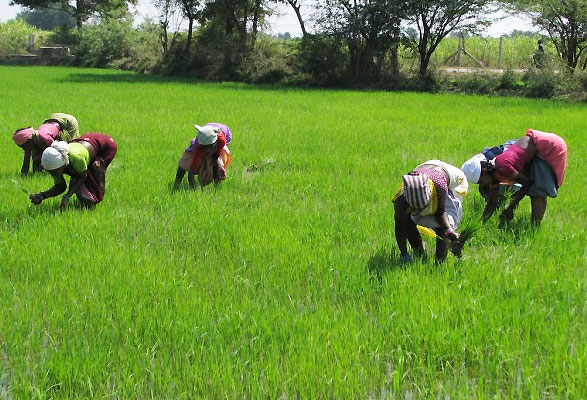
Rice farming
Researchers will use AI and CRISPR-based genome editing to identify how plant proteins respond to heat stress and make precise genetic changes to improve thermo tolerance, it said, adding promising lines will be tested in diverse environments to evaluate performance and productivity.
The project aimed to deliver practical solutions for farmers facing a changing climate, said Monash Professor Sureshkumar Balasubramanian.
“As global temperatures rise, crops like rice are increasingly exposed to heat stress that can dramatically reduce yields,” he said.
Sridevi Sureshkumar from Monash School of Biological Sciences said the theoretical designer crops will be a league above modified crops already in use around the world.
“Now that we have been able to identify exactly which elements within the plants are temperature-responsive, we can genetically manipulate them with greater accuracy,” she said.
The Anambra State Command of Nigeria Security and Civil Defence Corps (NSCDC) says it will collaborate with key stakeholders to curb illegal activities and promote operational safety in the oil and gas sector.
It said the partnership would involve the National Union of Petroleum and Natural Gas Workers – Liquefied Petroleum Gas Retailers Association (NUPENG-LPGAR) and petroleum retailers.
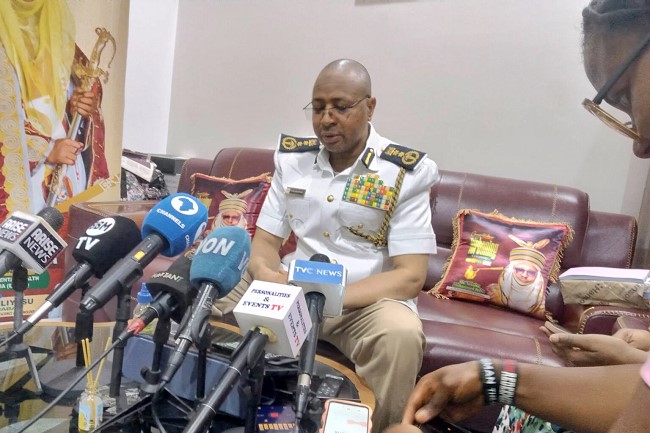
Mr. Edwin Okadigbo, the Head, Media and Tactical Operations, NSCDC Anambra Command, in a statement on Tuesday, February 24, 2026, quoted Mr. Maku Olatunde, NSCDC Commandant in Anambra, as saying this in Awka, the state capital.
NSCDC Commandant, Anambra State, Maku Olatunde
He spoke during a courtesy visit by the Executive of NUPENG-LPGAR, Anambra Chapter, led by Mr. Tochukwu Ngini, its chairman.
Okadigbo said the collaboration was to promote safety and prevent unethical practices in gas storage, sales, and distribution.
He emphasised the importance of collaboration in addressing the challenge posed by unregistered gas retailers in the state.
Olatunde urged LPG retailers to prioritise safety measures and avoid practices that risk lives and property.
He said agencies such as NSCDC would not shy away from their responsibility of ensuring sanity in the oil and gas sector.
Ngini expressed concern over the circulation of substandard cylinders and the hazardous presence of high-propane LPG, which he said posed risks to both operators and consumers.
Ngini pledged the union’s cooperation to promote safety and security in the sector.
He also frowned at some sharp practices of unregistered gas retailers operating outside the NUPENG regulatory framework which posed risks to members of the public.
“We are here to solicit and perfect arrangements with the NSCDC in conducting joint enforcement operations against unregistered gas retailers.
“Also, we want to see and ensure maximum compliance with best practices, and protect the public,” he said.
Green hydrogen is considered to be an important part of the global climate transition, especially as a fuel and energy carrier for heavy transport and industry. However, large-scale green hydrogen production requires sustainable ways of managing water resources to avoid giving rise to water shortages and conflicts with agriculture over access.
This has been shown in a study from Chalmers University of Technology in Sweden, that connects local water supply with a range of scenarios for future hydrogen needs in Europe.
Replacing fossil fuels with hydrogen in the heavy-duty automotive and industrial sectors has the potential to greatly reduce emissions of the greenhouse gas carbon dioxide. This is especially true if the hydrogen gas is “green”, meaning that it is produced by electrolysis, a process whereby water is spit into hydrogen and oxygen using renewable electricity.
Joel Löfving, doctoral student, Department of Mechanics and Maritime Sciences, Chalmers University of Technology, Sweden
A new study from Chalmers shows that planning where hydrogen will be manufactured, and the use of new technology solutions, is vital in order to avoid the large-scale production of green hydrogen leading to local water shortages in some parts of Europe.
In the study, published in Nature Sustainability, the researchers were able to explore different scenarios for how Europe’s hydrogen production might affect water resources, electricity prices and land use in 2050 – a year by which many countries have agreed to reduce their carbon emissions, which could mean the widespread use of hydrogen technology.
“Water is a resource that is often taken for granted in the energy transition. Our study is unique because we have connected the local perspective to the European perspective. We can show that even if hydrogen production does not require very much water in total compared to say agriculture, the local effects can be significant. This is because it’s better to produce hydrogen in close proximity to industry and access to renewable electricity, which generally means areas where water resources are already under strain.
“The conclusion is not that hydrogen production should be avoided, but that we must understand different perspectives and cooperate on many different levels – between government agencies, industry and local communities – to plan for the local effects of the transition,” says Joel Löfving, doctoral student at the Division of Transport, Energy and Environment at Chalmers.
Sörmland and Roslagen are high-risk areas
If hydrogen starts being widely used in industry and transport, the water supply might be severely impacted in multiple regions if the choice is to produce hydrogen locally, which is advantageous for economic reasons. For Sweden, it is anticipated that the water supply in the Sörmland and Roslagen regions, for example, is going to be hard pressed even without hydrogen production in 2050.
“In Sörmland there is already a steel mill and a refinery. If they were to switch to hydrogen and use local water sources to produce it, this could exacerbate the projected water shortage. Also, in the Roslagen region northeast of Stockholm, we can see that it might be difficult to source local water for the production of green hydrogen, and in the Bohuslän region on the Swedish west coast, and parts of Norrland in the north, large-scale hydrogen production could increase water withdrawal by more than 50 per cent. Although the water supply there is considered to be good, there is a risk that this production could have a significant impact on the natural environment,” he says.
The study analysed over 700 local water sub-basins in Europe, and similar patterns to those seen in Sweden could be identified in multiple locations. In southern and central Europe, where favourable conditions for generating electricity with solar and wind power make green hydrogen production particularly attractive, access to water is estimated to be very limited by 2050, as local water resources are already under strain and vulnerable to climate change. Major industry clusters in Spain, Germany, France and the Netherlands, for example, could thus face a conflict with agriculture, for example, over water resources.
“There are many potential conflicts around water as a resource, but also many solutions, such as seawater desalination or the reuse of water from wastewater treatment plants. There are also interesting synergies, as the oxygen that remains from the hydrogen production could be used in the processes that treat the wastewater. Hydrogen has great potential to contribute to the climate transition, but we need to find sustainable ways to manage water resources – for the production of fuel and for agriculture,” says Löfving.
Electricity prices impacted less than expected
In addition to water use, the researchers studied how a large-scale hydrogen economy could affect Europe’s electricity prices. By plugging the hydrogen model into Chalmers’ Multinode model – a model developed for optimising the costs of Europe’s energy system in different scenarios – they were able to estimate changes in electricity prices between different regions.
The results show that electricity demand increases significantly in line with the amount of hydrogen produced, since it takes a lot of electricity to replace the energy in fossil fuels. Despite this, the results show that the impact on average electricity prices in Europe is relatively small.
In regions with good access to renewable energy sources, such as northern Europe, the price impact is the smallest. In southern Europe, where some regions are dependent on a higher proportion of electricity from gas or nuclear power, for example, bigger price increases were seen.
“Electricity prices are a sensitive issue, but our modeling shows that increased investment in electricity production for producing hydrogen does not necessarily lead to higher prices for consumers. This is an important message to decision-makers – to cope with the energy transition, all fossil-free energy sources are needed, and we must have the courage to invest in new, green electricity production,” says Löfving.
Broad patterns and local consequences
Large-scale green hydrogen production would require a big expansion of solar and wind power. But the expansion would only take up a few per cent of the land currently used for agriculture, according to the study. And this area is significantly less than would be required to replace the same amount of energy with biofuels.
The researchers argue that, taken together, the results provide an important holistic perspective on Europe’s energy transition. Previous studies have often focused on either local effects or effects at overarching system levels, but rarely combined both.
“It was this connection that we wanted to make. If we are going to build the future’s energy system, we need to understand both the broad patterns and the local consequences. By considering risks, we will be able to manage them and thus create more certainty for investments in green technology,” says Löfving.
Green hydrogen
Produced by electrolysis when water is split into hydrogen and oxygen using electricity. The electricity used must come from renewable sources such as solar, wind or hydro power for the hydrogen to be labelled “green”.
Experts have urged the government to rethink its decision to completely ban the importation of solar panels into the country. This reconsideration is essential for Nigeria to reduce its reliance on foreign technology in tackling its energy crisis and disrupting the already fragile foundation that the nation’s energy system relies on.
They made the demand at a national stakeholders engagement hosted by the Global Initiative for Food Security and Ecosystem Preservation (GIFSEP) on Tuesday, February 24, 2026, in Abuja, arguing that if the decision is not carefully reconsidered, it will result in an increase in the cost of this equipment, depriving many Nigerians of access to energy.
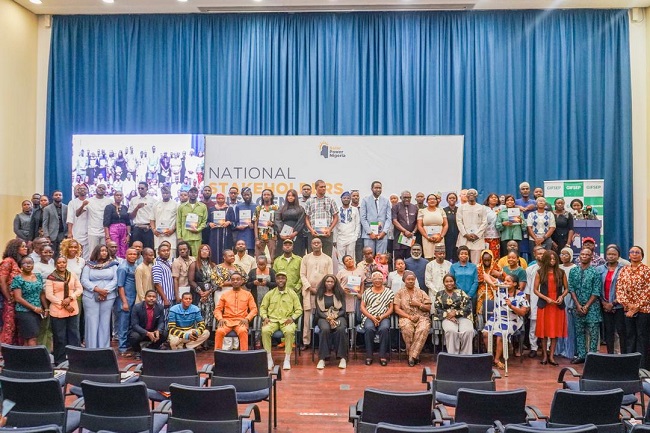
Participants during the national stakeholders engagement on solar power in Nigeria hosted by GIFSEP in Abuja
Banning solar imports now, according to Dr. David Terungwa, GIFSEP’s Executive Director, would be like removing lifelines in a crisis.
He continued by explaining that Nigeria is not yet prepared for a complete ban on solar panel imports and that such a policy, if implemented, would probably aggravate energy poverty, hinder the adoption of renewable energy, and harm homes and businesses.
So, the GIFSEP boss suggested that what Nigeria needs now is a clean energy policy that offers incentives for local solar production and promotes local assembly and manufacturing, as well as affordable financing for clean energy systems.
“Slow the Ban, let’s get some basic things right before a blanket ban,” he appealed.
Dr. Terengwa urged state governors to take advantage of the Electricity Act 2023, which aims to restructure the electricity sector by promoting decentralised generation, incentivising renewable energy investment, and giving state governments more regulatory authority over electricity supply.
From a legislative and policy perspective, Nigeria’s path forward should be deliberate and phased, according to Terseer Ugbor, the Deputy Chairman of the House Committee on Environment.
This path, he noted, should include a structured localisation roadmap that gradually increases capacity, ranging from assembly to component production and eventually to complete manufacture, allowing the industry to grow sustainably while providing uninterrupted access.
The lawmaker said that maintaining policy coherence across the energy, trade, industrial, and climate sectors will continue to be crucial, necessitating ongoing cooperation between development partners, the private sector, government institutions, and civil society.
“Nigeria must position itself not only as a consumer of renewable technologies but as a producer and innovator within Africa’s clean energy future,” Hon. Ugbor stated, urging that this proposed transition to clean energy must be guided by evidence, inclusiveness, and long-term thinking to ensure that industrial growth and energy access advance together and not in conflict.
According to Joseph Ibrahim, Campaign Director of the Secure Energy Project, any immediate ban on solar panel imports will be perceived as a “protectionist shock” that will most likely result in a 15% – 25% price increase and a rise in counterfeit or “rebadged” panels.
While he agrees that a tariff based policy will offer competitive preference, he also cautioned that it may not provide enough stability for long-term growth.
Consequently, he recommended a phased restriction as the most viable pathway for the country.
“Achieving a self-sustaining solar hub requires a strategic policy framework focused on incubation rather than exclusion,” Ibrahim asserts.
The event, themed “Accelerating Nigeria’s Clean Energy Transition”, was attended by industry participants such as government officials, civil society groups, journalists, and development partners. The launch of a report titled “Readiness of Nigeria for a Ban on Importation of Solar Panels” was the programme’s high point.
The International Union for Conservation of Nature (IUCN) and CGIAR have signed a Memorandum of Understanding (MoU) to deepen cooperation on transforming global food and agricultural systems, as climate change and biodiversity loss intensify pressure on livelihoods worldwide.
The agreement commits the two organisations to collaborate on nature-positive production landscapes, ecosystem restoration and the transformation of food systems that sustain both people and biodiversity.
An estimated 1 billion people globally depend directly on nature for their livelihoods through farming, fishing and forestry. Food security and rural economies, the organisations said, are closely tied to healthy ecosystems, making the partnership a strategic step toward integrating conservation and agricultural productivity.
Dr Grethel Aguilar, IUCN Director General
Under the MoU, IUCN and CGIAR will scale up work on multifunctional landscapes, land restoration, sustainable farming and livestock systems, climate resilience and water resource management.
The partnership also includes joint policy advocacy, biodiversity-friendly value chains, knowledge generation and support for implementation of the Rio Conventions on climate change, biodiversity and desertification.
“Nature is the foundation of our food systems and of human well-being itself,” said Grethel Aguilar, director general of IUCN. She described the partnership as critical to advancing “nature-positive agriculture – where production works with nature, not against it.”
Ismahane Elouafi, executive managing director of CGIAR, said the agreement underscores the need for cooperation to address “complex and increasingly interlinked global challenges,” adding that combining scientific innovation with conservation expertise would accelerate sustainable agriculture and biodiversity protection.
The partnership builds on complementary strengths. CGIAR, established in 1971, is the world’s largest agricultural innovation network, providing scientific research and tools to improve food, land and water systems.
IUCN brings policy reach, convening power and technical expertise through its global commissions and membership.
At the 2025 IUCN World Conservation Congress, IUCN members approved a 20-year strategic vision that includes a mandate to support the transformation of food and agricultural systems.
Members also adopted 17 resolutions on the topic, including Resolution 002, which calls for accelerating action toward nature-positive, sustainable agriculture and food systems.
Together, the organisations say, the new agreement aims to bridge science, policy and practice – moving beyond isolated projects toward coordinated, scalable solutions capable of addressing the intertwined crises of climate change, biodiversity loss and food insecurity.