The Office of the Special Adviser to the Governor on Climate Change and Circular Economy (OCCE), Lagos State, will convene industry leaders, sustainability professionals, and private sector stakeholders at EcoNexus 3.0, a high-level engagement focused on unlocking the financial value of climate and circular economy actions within industry.
The event, themed “Beyond Compliance: Monetising Climate and Circular Actions for Industries,” will take place on Tuesday, March 24, 2026, on Victoria Island, Lagos.
EcoNexus 3.0 builds on the successes of previous editions of the platform, which have brought together industry actors and sustainability leaders to explore practical approaches to climate accountability and circular economy opportunities within the private sector.
Mrs. Titilayo Oshodi, Special Adviser to the Governor on Climate Change & Circular Economy (OCCE)
According to Titilayo Oshodi, Special Adviser to the Governor of Lagos on Climate Change and Circular Economy, this year’s edition introduces a new dimension to the conversation by spotlighting an area that many organisations have historically overlooked. The ability to translate sustainability and climate actions into measurable economic and financial value is the next frontier that will scale action and responsibilities.
While many companies are already implementing initiatives such as energy efficiency improvements, waste reduction, recycling systems, and responsible sourcing practices, the financial implications and opportunities embedded within these actions often remain untapped.
“Through EcoNexus 3.0, we are introducing a new approach to help industries move beyond regulatory compliance and begin to recognise, structure, and monetise the sustainability and circular economy initiatives they are already implementing.
“During the session, we will also be showcasing innovative tools and solutions that can enable organisations to measure, manage, and optimise their climate and circularity performance. We will be introducing DecarbonIQ, a platform that supports organisations in understanding and managing their carbon emissions and circularity footprint as part of OCCE’s broader effort to equip industry with practical sustainability solutions,” Oshodi explained.
EcoNexus 3.0 programme will also include a dedicated session exploring business and economic opportunities for women within the sustainability and circular economy sectors, aligning with the broader global conversations around International Women’s Day and recognising the growing role of women professionals in shaping sustainability and ESG leadership across industries.
EcoNexus represents an important step in strengthening collaboration between government and industry as Lagos continues to position itself as a leader in climate action and circular economy innovation in Africa.
The event is expected to bring together senior private sector leaders, sustainability practitioners, and policy stakeholders to explore practical pathways for integrating profitability with climate responsibility.
According to the organisers, participation in the event is strictly by invitation.
Food occupies a central place in our culture. It plays a key role in religious/social activities and is a major marker of the passage of times and seasons. It is a celebration. Food unites people and families and marks one’s acceptance in a home, family, or community. Food is not just an object thrown into the stomach to quench hunger.
Not surprisingly, food varieties mark the peculiarity of ethnic nations and cultures. A tour of food varieties in a nation tells tales of the diversity of peoples in such nations.
Over time and due to cross boundary interactions, certain foods have been adopted across nations. In Nigeria one can find restaurants serving amala, ofe nsala, banga, afang soup and edikangikong virtually anywhere you go to.
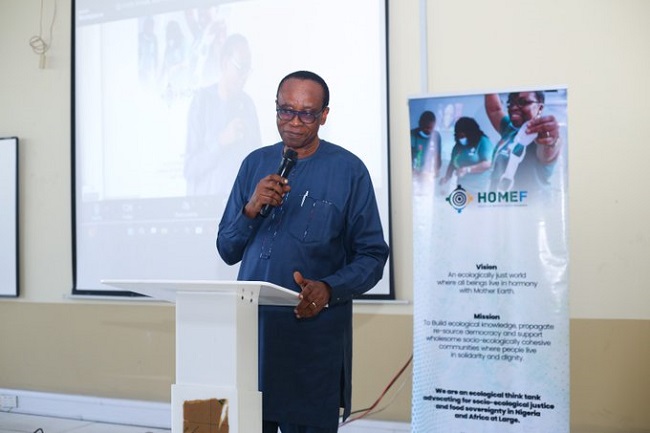
Nnimmo Bassey
Internationally you are likely to find Chinese or Indian curry in most countries. And the idea of an English breakfast is taken for granted. The spread of food and the adoption of some have been spurred by commerce, colonialism and other factors.
Food and humanitarian aid were weaponised during the Biafra-Nigerian war and deeply impacted the diet and wellbeing of the people in the then Eastern Nigeria. I recall seeing that after the war, families ate less nutritious foods and those who were lucky ate more of eba made from cassava, the poor man’s crop. That was clearly attributable to displacement, blockages, destruction of livelihoods and other causes of poverty occasioned by the fratricidal war. Distended bellies were not signs of overeating, but often of kwashiokor.
Knowing that food is the anchor on which our culture is built, we must remind ourselves that for our people agriculture is a way of life, not just a business. Any policy or law that prohibits seed sharing is basically aimed at disrupting solidarity in our communities and replacing our communal power structures with ones built on exploitation, profiteering, poverty and hunger.
Food travels. Tastes are cultivated. Taste buds adjust to what is fashionable. This has birthed the fast or junk food and the related junk culture. Fast foods caught on quickly because humans have become addicted to instant gratification. We want freshly made food but cannot wait for it for 30 minutes at the restaurant. So we all make a quick dash for the “food is ready” shop. To ensure the food is attractive the fast food outlets are brightly coloured, brightly lit and totally surrounded by music so loud your wrist watch warns that staying there for extended periods will lead to permanent hearing impairment.
To keep you from pondering the food set before you, there are big screens in every direction offering you soccer, wrestling, music, violent news and war movies. Distracted and deafened we gulp the foods, enjoy the colours and sounds and go away with a load of heavy metals, colourings and other loads in our guts.
When top politicians make a show of eating junk foods, and gulp litres of sugary beverages, they send a powerful but wrong message that obviously deviant junk culture is hip.
Our worries do not end with fast foods. We are equally assailed by the rush of Frankenstein foods produced through genetic engineering. Many of such products are imported without queries into Nigeria. Some of the genetically modified (GM) crops are already in our farms, markets and dining tables.
Those approving them swear they are safe for human consumption. We are served doses of insecticide as the GMOs are fabricated to kill certain pests. If junk foods birth junk culture, certainly genetically modified foods will produce transgenic cultures.
The biggest factor pushing these food cultures around the world is geopolitical in nature. Hegemonic control of cultural products go beyond movies and sink their claws into our food systems. Poverty, wars, debt, cultural manipulations open the way for food colonialism to take root. It is a power play arena and requires conscious efforts to halt, overcome and reverse.
Decolonising our food systems requires that we liberate our tongues and taste buds. It requires that we recover lost varieties. It requires that we reject GMOs. It requires that we preserve and share indigenous seeds and celebrate our foods. It requires that we expose the underlying market forces driving and influencing food system governance solely to their benefit and to the detriment of small holder farmers who feed the world and the attendant environmental and socio-cultural impacts.
We must critically examine the root causes or main drivers of hunger in Nigeria/Africa and resist its weaponisation to entrench a culture that does little or nothing to improve food systems but instead maximise profit for a handful of enterprises.
Who benefits from Hunger? Is hunger solely a question of productivity? Does hunger persist because farmers are not producing enough, even though in climes like Nigeria almost half of food produced goes to waste? How do global market relations and policies affect the rights of local food producers or their power to compete? These are pertinent questions that require deliberate attention and responses if our governments are serious about addressing hunger or food insecurity.
This session of our Sustain-Ability Academy brings to fore these questions amongst others and recommends critical recalibration of our food systems to ensure fairness and justice, resilience and sustain-ability.
Bassey made these remarks at the Sustain-Ability Academy on Food, Power and the Politics of Hunger hosted by Health of Mother Earth Foundation and the Centre of Politics, University of Port Harcourt, on Thursday, March 19, 2026
There is a quiet epidemic running alongside Nigeria’s more publicised health crises. It does not arrive in sudden outbreaks or make international emergency headlines. It builds slowly, meal by meal, sip by sip, until it arrives as a stroke at the age of 45, a diabetes diagnosis at 38 years, a hypertension prescription that a household cannot reasonably afford.
Non-communicable diseases now account for 29 percent of all deaths in Nigeria. Cardiovascular diseases, type 2 diabetes, stroke, and diet-related cancers are rising rapidly among a population that should be at its most productive stage of life. In these circumstances, the burden falls heavily on working-class and poor Nigerians in both urban and rural communities, many of whom do not realise they are ill until treatment becomes difficult and financially ruinous.
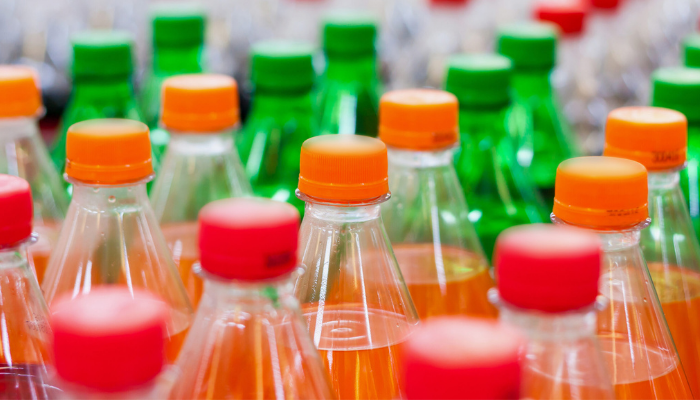
Sugar-sweetened beverages
It is tempting to largely interpret this crisis through the language of personal responsibility. Nigerians, we are told, must simply eat better. The trouble with this argument is that it ignores the architecture of the modern food environment. Nigerians are not merely making bad choices. They are navigating a marketplace carefully designed to produce those choices.
Over the past two decades, the country’s food landscape has been transformed by an aggressive expansion of ultra processed products high in sugar, salt and chemical additives. These products are strategically placed in spaces where daily life unfolds. A commuter stops at a bus stop and easily finds a cold sugary drink within arm’s reach. A child stops at a school kiosk and buys packaged snacks. A mother shopping for provisions walks through aisles filled with brightly packaged instant foods. Overtime the effect adds up. What once felt as an occasional treat slowly becomes routine.
The corporations behind this transformation understand the psychology of markets extremely well. In addition to strategically positioning these products in very space, they also invest in marketing narratives that tie consumers’ emotions to consumption. They manufacture stories that insert their brands and products in family moments, cultural celebrations and belonging.
A recent monitoring of festive season marketing by Corporate Accountability and Public Participation Africa (CAPPA) illustrates the scale of this effort. During the 2025 holiday period in Nigeria, beverage and food companies flooded television, billboards and digital platforms with imagery linking celebration to heavy consumption of sugar laden drinks and processed meals.
Children occupy a particularly valuable place within this marketing strategy. Brand loyalty that begins early can persist for decades. Companies therefore invest heavily in environments where children gather and where regulatory oversight is minimal. Schools, churches, and public parks become subtle marketing arenas through sponsored events, free samples and branded materials. In such settings the line between community engagement and commercial promotion dissolves. Corporate philanthropy also plays a part. Donations to schools, park renovations or community events allow companies to present themselves as benefactors while expanding brand presence in spaces that would otherwise be restricted.
The Regulatory Vacuum
The tragedy is that Nigeria’s regulatory system has struggled to keep pace with these sophisticated commercial tactics. The country introduced an excise tax on sugar sweetened beverages (SSB) in 2021 while its implementation began in 2022. The levy stands at ten naira (N10) per litre on carbonated sugary drinks and beverages. Even at the moment of introduction, the rate was modest. Inflation has since reduced the real value of the tax to the point where it has little measurable impact on consumption patterns.
Public health research worldwide, including guidance from the World Health Organisation (WHO), shows that meaningful reductions in sugary drink consumption occur when taxes raise prices by about 50 percent. Nigeria’s current tax, set at roughly three to four percent of the retail price, barely changes what consumers pay at the counter. The result is predictable. The policy exists on paper but has little effect in practice. This wide gap between what public health evidence recommends and what Nigeria actually enforces reflects not just a weak tax design but also a failure of political resolve in the face of well organised industry lobbying.
Other regulatory tools remain stalled in similar ways. Front-of-pack warning labels that allow consumers to easily and quickly identify products high in sugar or sodium are still under discussion. Countries that have implemented such labels have seen rapid behavioural shifts. Chile introduced mandatory black octagon warning symbols in 2016 and saw a 24 percent reduction in sugary drink purchases within the first year. Nigeria is still debating.
Meanwhile the marketing environment continues to evolve faster than regulation. Child-directed marketing rules do not cover digital platforms, influencer content, AI-generated campaigns, prize-linked promotions, or CSR-mediated access to schools. The National Agency for Food and Drug Administration and Control’s (NAFDAC’s) mandate, as currently written, does not extend to festive activations, music festival brand integrations, or the occupation of public parks
What Must Happen Now?
Nigeria faces a choice that is both economic and moral. The country can continue to treat diet-related diseases as an unfortunate side effect of development. Or it can recognise that the modern food system operates according to powerful commercial incentives that require deliberate public regulation
Evidence based responses already exist. Raising the excise tax on sugar sweetened beverages to a level capable of influencing consumption would align Nigeria with global public health standards. Mandatory front-of-pack warning labels would provide immediate transparency to consumers standing in front of store shelves. Clear restrictions on marketing directed at children would protect the environments where young people learn their earliest food habits.
None of these policies are radical. Variations of them operate in countries as politically diverse such as Chile, Mexico, Brazil, the United Kingdom, and across the European Union. They are endorsed by WHO, the World Heart Federation, and every major global NCD authority. They are proportionate, implementable, and long overdue for Nigeria.
By Humphrey Ukeajah, healthy food advocate and Industry Monitoring Officer at Corporate Accountability and Public Participation Africa (CAPPA), Abuja
The Alliance for Water Stewardship (AWS) on Wednesday, March 18, 2026, announced the launch of Version 3.0 of the International Water Stewardship Standard, giving companies a strengthened framework to manage growing water risks and disclosure demands.
The globally recognised AWS Standard was launched at an in-person event at Suntory World Headquarters in Tokyo, ahead of UN World Water Day on March 22, which this year again highlights the urgency of protecting freshwater resources for people, nature and economies.
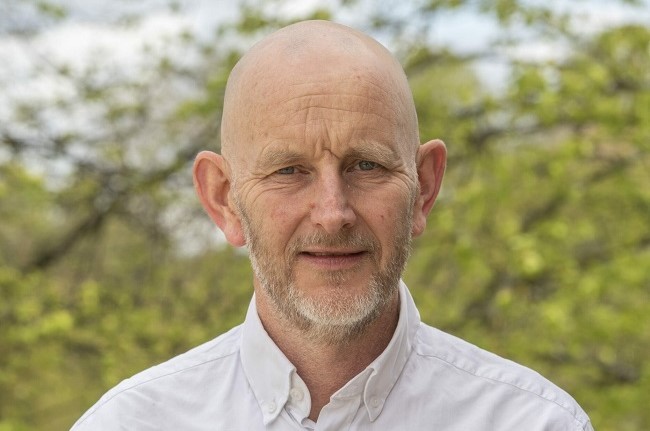
Adrian Sym, Chief Executive Officer of the Alliance for Water Stewardship
Water risk and regulation on the rise
Global water risks are accelerating. Floods, droughts and water pollution are impacting production, logistics and communities across every region. One in five companies now reports significant water related supply chain risks with tens of billions of dollars of value at risk, while a growing share of global GDP is generated in regions facing high water risk. Environmental risks, including extreme weather and ecosystem decline, remain among the most severe global threats over the next decade.
“Water is now a board level risk as water related shocks are already disrupting supply chains and undermining business continuity,” said Adrian Sym, Chief Executive Officer of the Alliance for Water Stewardship. “The newly revised AWS Standard 3.0 provides a practical and trusted framework for companies in any sector to act on those risks, work with others in their catchments, and through third party certification, show investors, regulators and communities that their claims of good water stewardship are real.”
At the same time, regulators and standard setters are tightening expectations around environmental claims and water reporting. The EU Corporate Sustainability Reporting Directive (CSRD) and related European Sustainability Reporting Standards (ESRS), including ESRS E3 Water, as well as evolving rules in the UK and other jurisdictions, require companies to demonstrate robust management of environmental impacts and dependencies.
Certification to the AWS Standard 3.0 is carried out by independent third party auditors. Certified sites report benefits including improved relationships with local communities and authorities, increased investor confidence, enhanced brand reputation, better water quality and balance, groundwater recharge, new habitats and lower costs through reduced water use and greater efficiency.
James Dalton, Global Director, Water and Wetlands at the International Union for Conservation of Nature (IUCN), said: “Healthy rivers, aquifers and wetlands are critical natural infrastructure for climate resilience, food security and human well-being. By aligning corporate action with catchment scale priorities, AWS Standard Version 3.0 can help businesses contribute to restoring and protecting these systems, while also managing their own risks and dependencies on water.”
What is new in Version 3.0
Version 3.0 of the AWS Standard builds on a decade of implementation and evidence. In 2023, AWS reviewed Version 2.0 and, based on a global survey, decided to undertake a major revision. Between 2024 and 2025, AWS conducted two rounds of global public consultation and received more than 3,000 comments from over 100 organisations and individuals. The revised Standard 3.0 was adopted by AWS Members in December 2025, with 93 percent of votes in favour.
An independent evaluation of Version 2.0 found that use of the AWS Standard delivers clear social, environmental and economic benefits, from better community engagement and groundwater recharge, to improved access to WASH, new habitats and job creation linked to more reliable water flows.
“WaterAid welcomes AWS Standard 3.0, which reaffirms safe water, sanitation and hygiene as a core pillar of credible water stewardship,” said Emma Clarke, Senior Private Sector Advisor at WaterAid. “The new Standard offers clearer, more streamlined requirements and stronger alignment with climate resilience and catchment health – enabling organisations to deliver more reliable, equitable and sustainable WASH outcomes for communities.”
A growing group of global brands across multiple sectors are already using or engaging with the AWS Standard, underlining its relevance for mainstream business. They include consumer goods and food companies such as Nestle, Diageo, Unilever, The Coca Cola Company and Suntory Holdings Limited, technology businesses such as Apple, Cisco, Samsung, healthcare companies Haleon and AstraZeneca, retailers such as Primark and automotive manufacturers such as Audi.
“We are already seeing the impacts of climate change through water, from disappearing rivers and wetlands to more frequent floods and droughts,” said Alexis Morgan, Global Water Stewardship Lead at WWF. “The AWS Standard helps companies move beyond narrow water efficiency and look at the whole catchment to help safeguard the freshwater ecosystems we all rely on. As a supporter from the beginning, WWF is pleased to see the launch of the AWS Standard V3.0, which refines the current gold standard for water stewardship by streamlining requirements and strengthening alignment with other sustainability priorities.”
As the world marks UN World Water Day and World Water Day week, AWS is calling on companies, investors and financial institutions in all regions to put water at the centre of their climate and nature strategies. Organisations are invited to visit www.a4ws.org, download the AWS Standard Version 3.0, join an online launch webinar and contact AWS to explore how to begin or accelerate their water stewardship journey and move towards certification across priority sites and supply chains.
James Dalton, Global Director, Water and Wetlands at the International Union for Conservation of Nature (IUCN), said: “Healthy rivers, aquifers and wetlands are critical natural infrastructure for climate resilience, food security and human well-being. By aligning corporate action with catchment scale priorities, AWS Standard Version 3.0 can help businesses contribute to restoring and protecting these systems, while also managing their own risks and dependencies on water.”
Alexis Morgan, Global Water Stewardship Lead, WWF: “We are already seeing the impacts of climate change through water, from disappearing rivers and wetlands to more frequent floods and droughts. The AWS Standard helps companies move beyond narrow water efficiency and look at the whole catchment to help safeguard the freshwater ecosystems we all rely on. As a supporter from the beginning, WWF is pleased to see the launch of the AWS Standard V3.0, which refines the current gold standard for water stewardship by streamlining requirements and strengthening alignment with other sustainability priorities.”
Emilio Tenuta, SVP & Chief Sustainability Officer, Ecolab: “AWS Version 3.0 represents a positive step forward for water stewardship. Its clearer structure and sharper expectations help translate ambition into action, especially at the catchment level. From our initial review, the standard aligns closely with how we already approach water stewardship at Ecolab – grounded in engagement, transparency, and disciplined execution.”
Siân Chapman, Global Head of Corporate Affairs & Sustainability at Nestlé Waters & Premium Beverages: “As one of the earliest adopters of the AWS Standard, we’ve witnessed firsthand how it has evolved to elevate water stewardship around the world. Having now achieved our commitment to certify all Nestlé Waters bottling sites, we know the real challenge is making credible water stewardship accessible and actionable for a wider range of users without compromising rigour. That’s why we’re excited about AWS Standard V3.0 – its more pragmatic, streamlined approach will help drive broader adoption and, ultimately, greater impact where it matters most.”
Lourens Meijer, Global Water Stewardship Lead, Unilever: “Water sits at the heart of our business, our communities, and the ecosystems we rely on. The AWS Standard Version 3.0 strengthens the global benchmark for credible water stewardship, and its clearer focus on resilience, ecosystems, and collective action supports Unilever’s ambition to deliver consistent, high‑quality outcomes for people, nature, in the many watersheds where we operate.”
Scott Oram, Global Water Lead, Sustainability Team, Haleon: “Water is vital resource that is essential to everything we do – we are dependent on it, from sourcing raw materials to manufacturing and how consumers use our products. We recognise that working towards good water stewardship and resilient local water systems supports good health, and the safe, reliable access to clean water underpins effective self-care.
“By certifying to the AWS Standard, we’re going beyond compliance to true water stewardship. This means using local catchment insights and working with partners to reduce our footprint and strengthen resilience in water-stressed regions.
“From our manufacturing sites to our wider value chain, we’re committed to managing water responsibly and equitably, so that people everywhere can look after their everyday health.”
Michael Alexander, Global Head of Environment, Diageo: “We welcome AWS Standard Version 3.0. By strengthening the impact of water stewardship, it better aligns with our climate resilience and water strategy which is closely aligned with our business priorities. With AWS-certified sites in Scotland and India, we value the greater clarity and scalability in Version 3.0. It will help us drive consistent, high-quality water stewardship across very different operating environments.”
Emma Clarke, Senior Private Sector Advisor, WaterAid: “WaterAid welcomes AWS Standard 3.0, which reaffirms safe water, sanitation and hygiene as a core pillar of credible water stewardship while offering clearer, more streamlined requirements and stronger alignment with climate resilience and catchment health – enabling organisations to deliver more reliable, equitable and sustainable WASH outcomes for communities.”
Stephanie Finkbeiner, Head of Sustainability / CSR, EDEKA: “Water‑related risks in agricultural supply chains originate at the catchment level and can only be effectively addressed through active stakeholder engagement. The AWS Standard 3.0 reinforces this approach by placing local collaboration, clear governance structures, and measurable impact at its core. As a long‑standing member of the Alliance for Water Stewardship, we explicitly welcome this advancement.”
Nathalie Sémoroz, Deputy Head of Division, Swiss Agency for Development and Cooperation (SDC): “The AWS standard provides an effective framework for companies to responsibly manage water and independently verify it.”
Junhwa Lee, EVP and Head of Global EHS office, Device Experience (DX) Division, Samsung Electronics: Samsung Electronics welcomes the launch of the enhanced AWS Standard V3.0, which will help strengthen our long‑standing commitment to credible water stewardship. Building on our continued attainment of AWS Platinum certification -the highest level of standard- we look forward to advancing purposeful, impact‑driven action on water conservation and biodiversity, working in collaboration with local communities.”
Acting on intelligence provided by the London-based Environmental Investigation Agency (EIA), Zambian law enforcement agents raided a house in the capital Lusaka on Monday, March 9, 2026, and arrested nine Zambians, including an individual from the Democratic Republic of Congo (DRC), allegedly involved in the illegal wildlife trade.
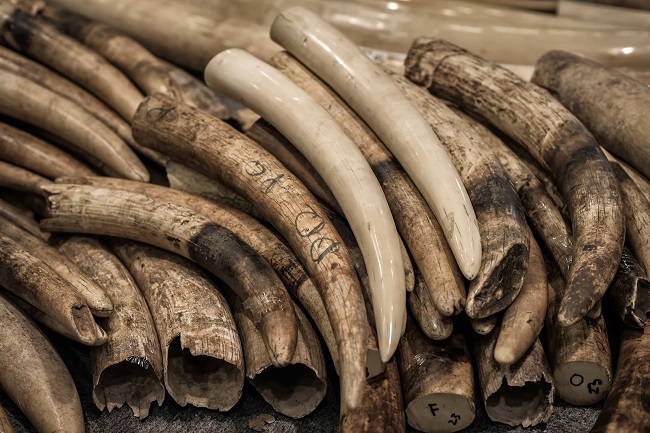
Officers from the Department of National Parks and Wildlife (DNPW) seized just under 550kg of ivory, which they found in the property, along with ivory seized in a follow-up operation.
Their action marks the successful conclusion to an operation that has been several months in the making and has disrupted an alleged international ivory trafficking syndicate operating with impunity across the Southern African region for many years.
Ivory tusks
“This operation is one small part of a broader initiative to address alleged organised criminal networks operating in the Southern African region, spanning many countries and involving many nationalities,” said EIA Executive Director, Mary Rice.
“But it demonstrates what can be achieved when intelligence-led investigations and information are applied in a targeted and strategic manner and we congratulate the DNPW for providing an excellent example of a strong enforcement response.”
EIA has been involved in investigating, documenting and exposing illegal wildlife trafficking networks operating across Africa for more than 40 years and wherever possible provides actionable intelligence to the relevant authorities to assist in the disruption of the criminal groups stealing their resources and exploiting weak governance and corrupt individuals involved in the trade.
“Unfortunately, Zambia has a long history of being exploited by criminal networks who have often operated with impunity and implicating the country in large ivory seizures as far back as 2002, so this decisive, well-executed operation is particularly welcome,” added Rice.
“These networks exploit any lack of political will and weak enforcement. They are facilitated by corrupt officials and marginalised communities who are criminalised to supply their trade and they have allegedly been orchestrating poaching expeditions into Botswana to source ivory, which they then traffic out through neighboring countries such as Namibia and Angola.”
EIA says it will be closely following the resulting legal action against the suspects.
A new European collaboration cluster, INVEST4CLIMATE, has been launched to strengthen innovative financing and investment strategies for climate adaptation and mitigation.
The initiative brings together three Horizon Europe projects, BLOSSOM, CLIMINVEST and RISE-IN, to bridge the gap between climate action, public policy, and financial investment.
By aligning research, testing innovative financial models, and working closely with cities and stakeholders, the cluster aims to accelerate the deployment of bankable climate solutions across Europe.
Birmingham, UK, where one of the demonstrations will take place
Funded from the European Climate, Infrastructure and Environment Executive Agency (CINEA) and Horizon Europe, the collaboration aims to maximise the impact of European research and innovation funding by coordinating efforts across projects focused on climate finance, investment readiness, and the implementation of climate adaptation and mitigation solutions.
Climate action increasingly requires solutions that are environmentally effective but also financially viable and scalable. However, many promising climate initiatives struggle to move from concept to implementation due to gaps between public planning, technical innovation, and private investment. By working together as a cluster, the three projects will align methodologies, exchange knowledge, and strengthen connections between cities, financial actors, policymakers, and researchers.
The cluster brings together projects with distinct yet complementary approaches to enabling climate action through innovative financial and governance frameworks:
BLOSSOM focuses on creating a systemic approach to connect public authorities with private financial partners, including banks, insurers, and investors. Through Living Labs and Communities of Practice, the project develops and tests innovative financing schemes and investment models for climate adaptation and mitigation. Demonstrations will take place in Birmingham (UK), Lisbon (Portugal), and Kielce (Poland), with additional replication cases in other European regions.
CLIMINVEST contributes its expertise in mobilising sustainable finance for climate action. Focusing on bankable-by-design (BbD) solutions the project supports private investors and public authorities with the tools required to design climate adaptation projects that are both effective in impact and financially sustainable. CLIMINVEST demostrations will take place in Thessaly (Spain), Amathouda (Cyprus), with replicators in Asturias (Spain), Ventimiglia (Italy), and Trikala (Greece)
RISE-IN introduces a groundbreaking framework linking environmental resilience with financial viability. The project focuses on nature-based solutions for flood risk management and develops the Bankability Readiness Level (BRL), a novel metric designed to assess and enhance the investment potential of climate-resilient interventions. Using cities as living laboratories, RISE-IN will demonstrate its approach in Cesena (Italy), Christchurch (New Zealand), and Póvoa de Varzim (Portugal), with replication sites in Ghent (Belgium), Zhytomyr (Ukraine), and Kadıköy (Türkiye).
Through this collaboration, the cluster will promote joint knowledge exchange, coordinated outreach and dissemination activities, and shared engagement with stakeholders from the financial sector, local authorities, and innovation ecosystems. By aligning efforts across the projects, the initiative aims to support the development of practical pathways for financing climate solutions, helping cities and regions move from planning to implementation.
Ultimately, the cluster seeks to strengthen Europe’s capacity to deliver resilient, investment-ready climate solutions, ensuring that environmental innovation is supported by robust financial strategies and scalable models.
Armed with clipboards and cameras, the scientists from the Baekdudaegan National Arboretum climbed slowly up a steep hillside in Uljin, a county in the mountainous east of the Republic of Korea, inspecting and assessing small green trees that stood out amid a landscape charred by fire.
“Right here, the tree growing best is kalopanax,” team leader, Tae-Im Heo said, referring to Kalopanax septemlobus, a fast-growing species native to the Republic of Korea also known as the prickly castor oil tree.
“The reason we planted kalopanax is because the young shoots are harvested by residents as a wild edible plant,” she said. “Even in seemingly barren land, it grows well, helping restore the vegetation and also contributing to residents’ livelihoods.”
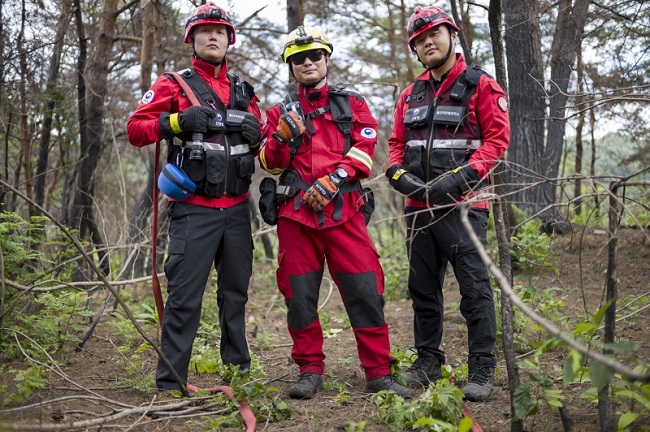
Firefighters for the Korea Forest Service perform a practice drill in Uljin. Photo credit: Todd Brown / UNEP
The holistic approach and future-proofing methods are at the heart of the Republic of Korea’s efforts to revitalize forests after fire. This has earned the country the status of a World Restoration Flagship, an award bestowed by the United Nations to inspire large-scale action to revive critical ecosystems around the globe.
“Devastating forest fires around the world are one of the most shocking demonstrations of how our climate is changing,” said Natalia Alekseeva, Coordinator of the UN Decade on Ecosystem Restoration at the UN Environment Programme (UNEP). “Creative initiatives like this show that, by anticipating the future, restoration can give nature the resilience to keep delivering its priceless benefits for generations to come.”
A resilient approach
Fanned by drought and strong winds, the month-long blaze in Uljin destroyed an estimated 20,000 hectares of forest along with dozens of homes and farms before firefighters backed by soldiers and helicopters could bring it under control.
While no lives were lost, there was anguish over the harm done to the region’s famed red pine forests, especially in protected areas holding centuries-old specimens, and the matsutake mushrooms that grow among them – a national delicacy and an important source of income for many rural households.
The fire also triggered a debate about how to carry out restoration in a way that respects traditions and the needs of local people while making forests more resilient. While residents in Uljin wanted to re-plant the familiar and easily available but fire-prone pines, civil society groups pressed for a more ecological approach that addressed growing climate-driven risks.
“We started to see calls to move beyond a standard tree-planting approach to a more rational restoration method that takes the surrounding ecosystem into account,” said Shin Jaesoo, Deputy Director at the Korea Forest Service.
Meeting local needs
To find a solution, experts, civil society groups and residents joined government officials in a novel governance arrangement to design and steer the project. After completing a detailed assessment of the forest ecosystem and the damage it had suffered, the stakeholders jointly developed a five-year masterplan to revive about 4,700 hectares of forest with high conservation value by 2027.
A priority was re-vegetating areas left vulnerable to soil erosion and landslides, especially near residential areas, including with species favoured by residents including gingko and fir – work that was completed in 2023.
To protect the wider forest from future conflagrations, the plan also includes planting belts of fire-resistant native broad-leaved tree species. However, most of the land is being left to regenerate naturally, with scientists closely monitoring progress, reflecting how forest restoration in the country is shifting from single-species plantations toward more resilient approaches.
“Where recovery is slow or disaster risk is high, we plan to intervene ecologically and manage those spots,” Shin said.
The decision-making model adopted in Uljin has since been replicated in other fire-affected locations, including the Jirisan National Park in the south of the country, and Inwangsan Mountain Urban National Park in the capital, Seoul.
Sustaining impact
To generate enough seedlings for Uljin and other restoration areas, the Korea Forest Service has established two Native Plant Supply Centres, with four more planned. The centres produce saplings of resilient native species such as oak using seed gathered near the affected areas, meaning they are well adapted to local conditions. Local growers have been contracted to supplement production, creating jobs and income.
Authorities also aim to establish a National Uljin Forest Ecological Institute to support education, research and tourism related to restoration of forest fire–damaged areas and to raise awareness about fire prevention.
To further support local livelihoods, officials are also exploring and promoting alternative forest products, including tuckahoe, a fungus used in traditional medicine, as well as kalopanax.
Predicting the future
As the impact of climate change on forests and other ecosystems grows, Heo of the Baekdudaegan National Arboretum said it was vital to foster the fire-resistant forests of the future.
In Uljin, the institute has been tasked with monitoring the recovery of the vegetation and the survival rates of planted trees until at least 2037 – 10 years after the end of the active restoration phase – so that the approach can be adjusted, if necessary, and to deepen scientific understanding of what works best.
“Restoring this damaged land means we must walk a path no-one has gone before,” Heo said. “There’s no right answer. So, we need to try it in practice, evaluate it, and then be able to forecast what lies ahead.”
West Africa’s downstream petroleum sector is proving resilient in spite of escalating geopolitical tensions, industry leaders declared during a high-level webinar convened on Tuesday, March 17, 2026.
The forum, hosted by Major Energies Marketers Association of Nigeria (MEMAN) with S&P Global Energy, examined Middle East tensions, supply security risks, and Nigeria’s transition to a deregulated downstream regime.
According to the speakers, the global oil market remains fragile, with disruptions to Iranian output and threats around the Strait of Hormuz unsettling supply chains and pricing stability.
MEMAN Chairman, Huub Stokman, described the crisis as a “double-edged reality” shaping opportunities for producers while intensifying pressure on downstream operators and consumers.
“While it creates opportunities for producers, it exerts immense pressure on downstream operators and, ultimately, consumers,” Stokman said.
He noted rising volatility, surging shipping and insurance costs, and rapid shifts in sourcing as countries scrambled to secure alternative crude supplies.
According to him, Nigeria stands at a strategic crossroads, with potential to emerge as a reliable global energy partner if structural bottlenecks are addressed decisively.
He cited pipeline insecurity, regulatory opacity, and infrastructure deficits as key constraints limiting Nigeria’s ability to fully capitalise on current market dynamics.
He highlighted domestic refining growth, especially the Dangote Refinery, as a buffer against shocks, though warning of risks linked to supply concentration.
In spite of improvements, Stokman said domestic fuel prices remained tied to global trends, with adjustment delays often driven by inventory cycles and working capital pressures.
He disclosed that Nigeria maintained over 30 days of petrol supply, with NNPC Ltd. continuing to act as supplier of last resort.
From a global perspective, S&P Global’s Gary Clark warned refined product markets are tightening amid rising margins for diesel and jet fuel.
Clark attributed the surge to supply disruptions and heightened risk premiums, alongside costly vessel diversions around the Cape of Good Hope.
He said these detours were tightening supply further and inflating freight costs, particularly across European markets already under strain.
Stanislas Drochon, Head of Fuels and Refining, S&P Global Energy, warned Sub-Saharan Africa remained highly vulnerable due to import dependence, weak refining capacity, and limited storage infrastructure.
“Energy security is not just about supply. It is about reliability, affordability, and accessibility, requiring sustained investment across the entire value chain,” Drochon said.
On Nigeria’s deregulation path, Joe Nwakwue, CEO, Zera Advisory and Consulting Ltd., described the shift as necessary but turbulent, marked by price volatility and structural realignment.
He said expanding domestic refining would not shield prices from international benchmarks, stressing the need for a transparent and competitive market framework.
The session, moderated by MEMAN Executive Secretary, Clement Isong, ended with consensus that resilience will depend on policy consistency and infrastructure investment.
Participants agreed that while short-term volatility is inevitable, Nigeria’s reforms could transform uncertainty into long-term stability and growth.
The Italian Ambassador to Nigeria, Roberto Mengoni, says Nigeria ranks among the world’s most dynamic urban environments, driven by rapid city growth, innovation, and expanding opportunities in architecture and design sectors.
He added that the country’s cities were also witnessing increased focus on sustainable urban development, creating new possibilities for infrastructure expansion, improved living standards, and innovative solutions to evolving urban challenges.
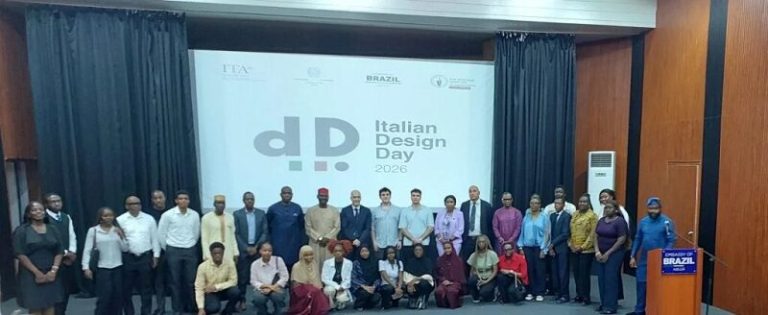
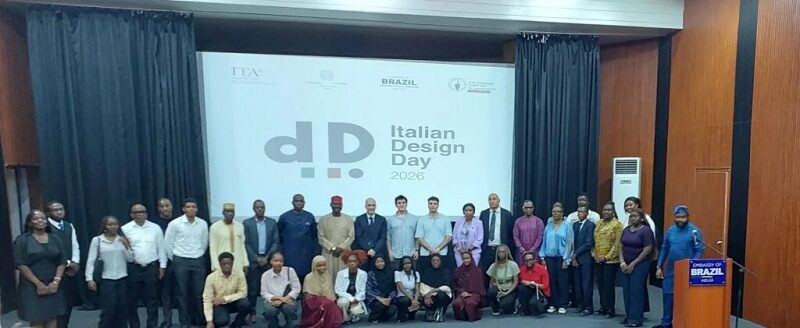
Mengoni made this known on Wednesday, March 18, 2026, in Abuja at the inaugural Italian Design Day, organised with the Nigerian Institute of Architects (NIA).
Roberto Mengoni, Italian Ambassador to Nigeria; Yemi Shola-Adebiyi, Chairperson, Nigerian Institute of Architects; with staff and students of University of Abuja, Nile University of Nigeria, and Baze University Abuja
He said initiatives like Italian Design Day enabled the embassy to showcase a key element of Italian culture, highlighting the country’s longstanding tradition of excellence in architecture, design, and creative industries globally.
Mengoni added that the event promoted dialogue beyond Italy, noting the country’s global reputation in architecture and design built on a unique blend of creativity, craftsmanship, and strong industrial collaboration over decades.
He noted that Italian architects, designers, and companies had consistently collaborated to produce buildings and objects that combined functionality, innovation, and aesthetic value, setting global standards across architecture, interior, and industrial design sectors.
Citing Renzo Piano, he said architecture carried responsibility, stressing that rapid urbanisation worldwide presented complex challenges, including sustainability, housing deficits, mobility concerns, and the need to improve quality public spaces in cities.
He said countries like Nigeria were central to the global shift, as cities such as Abuja and Lagos continued expanding while emerging as hubs of innovation, creativity, and entrepreneurship.
Yemi Shola-Adebiyi, Chairperson of NIA, said the collaboration offered students valuable international exposure, enabling engagement with renowned Italian architects during the programme.
She added that the initiative also strengthened professional learning through direct interaction and shared expertise, enhancing students’ knowledge, skills, and global perspective in architecture and related design fields.
She added that the initiative equipped students with practical knowledge and skills gained during the three-day event, while fostering collaboration and professional exchange between Nigerian students and visiting architects from Italy.
According to her, the programme is a welcome development and marks the first time the Italian Design Day is being hosted in Abuja, providing a platform to build meaningful partnerships and creative synergies.
She explained that although the event was in its tenth edition and usually held in Lagos, stakeholders ensured it was brought to Abuja to extend its benefits to architecture students in the capital.
Shola-Adebiyi said the first day featured a masterclass involving university students already mentored by the institute, adding that established mentorship programmes ensured continuous training and early professional development for aspiring architects.
She explained that mentors engaged students during their academic years to strengthen their skills before internships, noting that earlier evaluation methods had limited impact compared to the current hands-on mentorship approach adopted by the institute.
The report added that visiting architects from Parasite 2.0 Studio delivered presentations exploring the transformation of temporary spaces into permanent architectural solutions, highlighting innovative and experimental design approaches.
Students later engaged the visiting architects in interactive sessions, asking questions and exchanging ideas, while participants included students from University of Abuja, Nile University of Nigeria, and Baze University Abuja.
Environment stakeholders have called for stronger collaboration, policy enforcement and public participation to improve waste management in Lagos State.
The call was made at the 2026 Forum of the Property and Environment Writers Association of Nigeria (PEWAN) on Wednesday, March 18, in Lagos.
In her welcome address, PEWAN Chairman, Mrs. Okwy Iroegbu-Chikezie, stressed the need for improved funding, effective monitoring and community participation in waste reduction efforts.
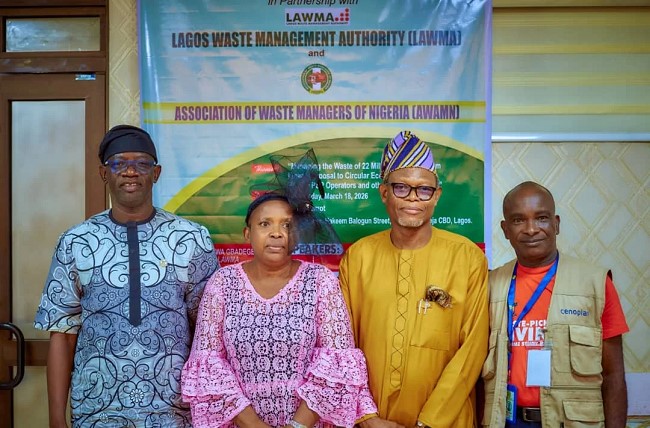
L-R: Executive Director, Finance, LAWMA, Mr. Kunle Adebiyi, PEWAN Chairman, Mrs Okwy Iroegbu-Chikezie; Dr Olugbenga Adebola, President of the Association of Waste Managers of Nigeria (AWAMN); and Comrade Friday Oky, President, Asspciation of Scraps and Waste Pickers of Lagos (ASWOL), at the PEWAN 2026 Forum, in Lagos
Iroegbu-Chikezie emphasised that partnerships with the private sector and local communities were critical to improving waste management outcomes and enhancing quality of life.
The Managing Director of the Lagos Waste Management Authority (LAWMA), Dr Muyiwa Gbadegesin, said managing waste requires shared responsibility among government, operators and residents.
Gbadegesin, represented by the Executive Director, Finance, Mr. Kunle Adebiyi, described waste management as critical to public health, environmental sustainability and flood control.
He said over 450 Private Sector Participant (PSP) operators handle household waste collection across the state under LAWMA’s regulatory framework.
According to him, indiscriminate dumping and patronage of illegal cart pushers undermine waste management efforts and contribute to flooding.
He added that Lagos was promoting waste sorting, recycling and resource recovery to improve efficiency and create economic value.
Also speaking, Dr Olugbenga Adebola, the President of the Association of Waste Managers of Nigeria (AWAMN), stressed the need for sustained collaboration among stakeholders.
Adebola described waste management as a collective responsibility, noting that effective waste handling was directly linked to public health and environmental safety.
He explained that poor waste management contributes to diseases such as malaria, cholera and lassa fever through blocked drainage, pest infestation and environmental pollution.
Adebola warned that open burning of waste releases toxic and carcinogenic substances, posing serious health risks, including respiratory illnesses and cancer.
He also highlighted the dangers of plastic waste, noting that mismanaged plastics break down into microplastics that contaminate water bodies and enter the food chain.
Adebola said Lagos generates over 20,000 metric tonnes of waste daily, driven by rapid urbanisation and population growth.
He identified key challenges as inadequate infrastructure, weak policy implementation, poor waste segregation and limited funding.
According to him, inefficient landfill systems and lack of functional material recovery facilities further limit effective waste processing.
He called for increased investment in waste infrastructure, including modern recycling systems and material recovery facilities.
Adebola also advocated the formalisation of informal waste collectors to improve efficiency and inclusiveness in the waste management value chain.
He urged government to provide enabling policies and long-term financing to attract private sector participation in the industry.
He stressed the need for consistent policy implementation and public education to promote responsible waste disposal practices.
The stakeholders expressed optimism that outcomes from the forum would support efforts to achieve a cleaner and more sustainable Lagos.
They also urged continuous engagement among key actors to address environmental challenges in the state.