Global Liquefied Natural Gas (LNG) supply is set to surge from 2027, driven by new projects and expanded production in the U.S. and Qatar. Bloomberg’s Global LNG Market Outlook 2030 forecasts global supply reaching 594 million tons by 2030 – a 42% increase from 2024 – with a projected 15-million-ton oversupply in international markets.
While geopolitical risks and potential project delays could shift this balance, the prospect of sustained LNG surplus poses a critical question for Africa: how can the continent strengthen domestic gas value chains to shield itself from global market volatility?
Tanzania Liquefied Natural Gas (LNG) project
Rising African Demand Constrained by Infrastructure
Africa’s natural gas production is rising, with several new LNG projects coming online across the continent. North Africa currently produces two-thirds of the continent’s gas, but the African Energy Chamber’s (AEC) State of African Energy 2026 Outlook projects this share falling to 40% by 2035 as sub-Saharan output accelerates. By 2050, sub-Saharan LNG supply could quadruple, while African gas demand is expected to grow 60%, from 55 billion cubic meters (bcm) in 2020 to 90 bcm.
Despite this growing demand, most gas continues to be exported. The primary bottleneck is infrastructure: limited pipeline networks, underdeveloped transmission systems and insufficient processing and storage prevent gas from reaching domestic markets. As a result, LNG exports remain the most viable monetisation route, backed by international offtake contracts and financing structures.
Financing constraints further exacerbate the challenge, as domestic infrastructure projects require patient capital, government support and credit enhancements, which are often easier to secure for export-focused LNG developments. Addressing this imbalance will demand an infrastructure-led strategy that aligns production with domestic pipelines, power generation and regional interconnections.
New Projects Signal Momentum
Recent developments suggest positive momentum toward a more integrated African gas economy. In the LNG sector, countries are constructing terminals to support domestic and regional access, including projects at Richards Bay in South Africa and the Port of Nador in Morocco. Earlier this month, Ethiopia signed a landmark agreement to advance the Gas-by-Rail Economic Corridor Initiative, a 75,000-km freight railway system designed to carry LNG to more than 40 sub-Saharan nations, providing direct pathways to high-demand markets.
Cross-border and power generation infrastructure is also expanding. Several major pipeline projects are underway, including the $25 billion Nigeria-Morocco Gas Pipeline traversing 13 West African states, the Trans-Saharan Gas Pipeline connecting Nigeria to Algeria, and the $1.5 billion Mozambique-Zambia pipeline announced in 2025.
Senegal is developing a multi-phase gas network linking offshore production to power plants, industrial zones and urban areas, while Ghana plans five multi-purpose petrochemical plants, each producing 90,000 barrels per day of chemicals such as fertilisers and lubricants to support industrial and agricultural sectors.
A continental push toward gas-to-power is increasingly evident, supported by policy reform and efforts to expand electricity access. The AEC outlook projects natural gas supplying 45% of Africa’s power by 2050. Countries including Nigeria, South Africa, Angola, Senegal, Ghana and Mozambique have integrated gas-to-power goals into national strategies, aiming to translate rising gas production into reliable electricity, cleaner cooking solutions, and broad-based economic growth.
“Export projects alone will not secure Africa’s energy future. Strategic investment in gas infrastructure is what will determine whether rising production translates into electricity access, industrial capacity, and economic resilience,” states NJ Ayuk, Executive Chairman, AEC.
With domestic gas demand rising, infrastructure projects underway and export markets becoming increasingly competitive, African Energy Week 2026 offers a strategic forum to reposition gas not merely as an export commodity, but as a foundation for long-term energy security, industrial development and inclusive growth across the continent.
Butterflies are becoming less visible in Nigeria, and similar patterns are being recorded across many parts of the world. Environmental scientists widely recognise that declining butterfly populations are part of a broader global reduction in insect life linked to human activities. In Nigeria, butterfly decline is driven by the same pressures seen globally, including chemical exposure, loss of native plants, climate stress and weak biodiversity monitoring.
Despite their role as indicators of environmental health, butterflies receive little policy or research attention in Nigeria, unlike bees. Yet butterflies are part of a wider group of pollinators whose presence reflects ecosystem stability. Because they are highly sensitive to environmental change and closely tied to specific plants, butterflies are often among the first species to decline when ecosystems are under stress.
Butterfly
Butterflies are especially vulnerable to pesticides because of how they feed and reproduce. Caterpillars depend on specific host plants, and once these plants absorb chemical residues, the insects are exposed directly. In Nigeria, commonly affected host plants include cassava (Manihot esculenta), wild senna (Senna occidentalis), milkweed species (Calotropis procera) and passion vine (Passiflora foetida), all of which support different butterfly species at various stages of their life cycle. These plants are frequently sprayed with herbicides or removed entirely during land clearing.
The widespread use of pesticides is not unique to Nigeria. Globally, long-term ecological studies have linked increased chemical use in agriculture and urban spaces to sustained declines in insect populations, including butterflies and other pollinators. What distinguishes Nigeria is the scale of informal chemical use.
Agrochemicals are often sold without adequate labelling or guidance, and herbicides intended for farms are routinely applied along roadsides, drainage channels and residential plots. These areas may appear environmentally insignificant, but they often host native plants that support pollinators.
Nigeria regulates agrochemicals through the National Agency for Food and Drug Administration and Control (NAFDAC), yet environmental researchers note that enforcement gaps allow misuse to persist. Even approved chemicals can become harmful when applied indiscriminately or outside their intended settings. For butterflies and other pollinators, exposure at the larval stage is particularly damaging, reducing survival before populations can recover.
Habitat loss is another critical factor, though it is often misunderstood. Butterfly decline extends beyond disappearing forests. Many species depend on plants commonly regarded as weeds, such as Tridax procumbens, Chromolaena odorata and Aspilia africana, which provide nectar for adult butterflies and other insects. In urban and peri-urban Nigeria, these plants are routinely cleared during landscaping and sanitation exercises. The result is an environment that appears orderly but lacks the biological diversity pollinators need to survive.
Similar trends have been documented globally. In Europe and North America, long-term monitoring programmes show sustained butterfly declines associated with intensive land use, pesticide exposure and habitat simplification. In Africa, including Nigeria, comparable long-term data are largely absent.
However, local studies in protected areas indicate that butterfly diversity drops sharply where vegetation is disturbed. Scientists caution that the lack of national monitoring does not suggest stability; it highlights a blind spot in biodiversity governance.
Climate change adds further pressure. Butterflies and other pollinators are sensitive to temperature and rainfall patterns that influence breeding cycles and plant growth. Rising heat levels and increasingly unpredictable rainfall affect both insects and the vegetation they rely on. Global climate assessments consistently show that insects in tropical regions face heightened risk because they already operate close to their physiological limits.
Butterfly decline matters beyond conservation concerns. Butterflies contribute to pollination networks that support wild vegetables, medicinal plants and shrubs important for ecosystem balance and household resilience. Plants such as Ocimum gratissimum (scent leaf), Vernonia amygdalina (bitter leaf) and various wild legumes benefit from diverse insect pollination. As pollinator diversity declines, plant reproduction becomes less reliable, affecting food diversity and ecosystem stability.
Nigeria does not currently track butterfly populations at a national level, and insects are rarely included in environmental impact assessments. Globally, butterflies are widely used as indicator species because changes in their populations provide early signals of environmental degradation. Without similar monitoring in Nigeria, environmental damage is often recognised only after it becomes widespread.
Addressing butterfly and pollinator decline requires more than awareness. Environmental experts point to the need for stricter control of informal agrochemical markets, biodiversity-sensitive sanitation and land-clearing practices, and the inclusion of insects in environmental monitoring and impact assessments. Establishing basic national tracking for indicator species such as butterflies would provide early warnings and help guide land-use and chemical policies.
The pressures affecting butterflies in Nigeria mirror those driving insect losses worldwide, shaped locally by weak regulation, everyday land-use practices and limited data. Without deliberate changes in how chemicals are used, land is managed and biodiversity is monitored, butterfly decline will continue alongside broader environmental changes that affect ecosystems and livelihoods.
The Nigerian Content Development and Monitoring Board (NCDMB) in December 2025 commenced the Nigerian Content Research, Innovation and Technology Challenge 2025/2026 with a call on interested individuals, research institutions, academia, oil and gas industry suppliers, and members of the public with research innovations, to submit proposals for evaluation and admission into the NCDMB Technology Innovation and Incubation Centre (TIIC), Yenagoa, Bayelsa State.
The competition, which seeks to identify and develop new technologies to address specific challenges in the oil and gas industry and its linkage sectors, requires that proposals be in line with approved thematic areas and priority industry challenge, namely, Geological and Geophysical Studies, Local Materials Substitution Studies, Technology Development Studies, Health, Safety and Environmental Studies, Engineering Studies, and Renewable Energy.
Felix Omatsola Ogbe, head of the NCDMB
For Geological and Geophysical Studies, proposals have to focus on developing solutions related to exploration, big data, and real time logging data processing, while those for Local Materials Substitution Studies have to concentrate on sustainable materials for environmental remediation, materials for development of cryogenic technology for liquefied natural gas (LNG), refinery, and other applications, as well as local materials for ultra-high temperature pressure cementing.
For Technology Development Studies, the NCDMB requires innovation on denationalisation technology, application of Internet of Things to exploration and production, and condensate refining technology, while proposals for HSE Studies are expected to deal with carbon capture utilisation and storage technology to reduce greenhouse emission, depollution and produced water management system, and hydrogen production techniques to enhance carbon dioxide capture.
In respect of Engineering Studies, proposals are expected for developing technology solutions for enhanced oil recovery, refinery units technology to improve efficiency, laboratory analytical equipment for experiment and materials testing, and drilling technology, instrumentation, and control systems.
For Renewable Energy, proposals are expected from solar energy technologies, wind energy solutions, and energy storage systems, such as battery technologies, hydrogen storage, thermal storage, and molten salts.
The proposals, which should not be more than 1,500 words and to be submitted via email address (info@tiic.com.ng) not later than a month from the date of publication, are required to be in the following format: 1. Company/institution name 2. Thematic area 3. Title of innovation 4. Description of innovation 5. Objective, vision, mission 6. Team structure 7. Funding model and budget estimate 8. Marketing plan 9. Risk analysis.
At the first stage of the competition, the top 30 proposals will be selected and the teams assigned mentors to guide them towards developing a compelling demo and presentation. Proposals will be reduced to 10 at the second stage, and further reduced to five on the final day of the competition where the winners will be determined.
According to the Board, “the innovators will present their business pitches/demos to corporate venture capitalists to invest, drive innovation, and expand market reach, while helping emerging business grow.”
Prizes will be awarded to the top five winners of the competition in the form of cash, mentorship opportunities, and media coverage, while the top 10 participants will be onboarded into the TIIC at the Nigerian Content Tower for guidance and further development of their innovation to commercialisation.
The Lagos-based firm of Natural Eco Capital Limited (NEC) has disclosed that it played a central role in the actualisation of the Lagos–Calabar Coastal Highway project.
Apart from preparing the Environmental and Social Impact Assessment (ESIA) for the project, NEC disclosed in a statement that it obtained all required national regulatory approvals.
“Most notably the key approval from the Federal Ministry of Environment (FMEnv), thereby ensuring full legal compliance. The statutory disclosure process, managed transparently, promoted stakeholder engagement and accountability.
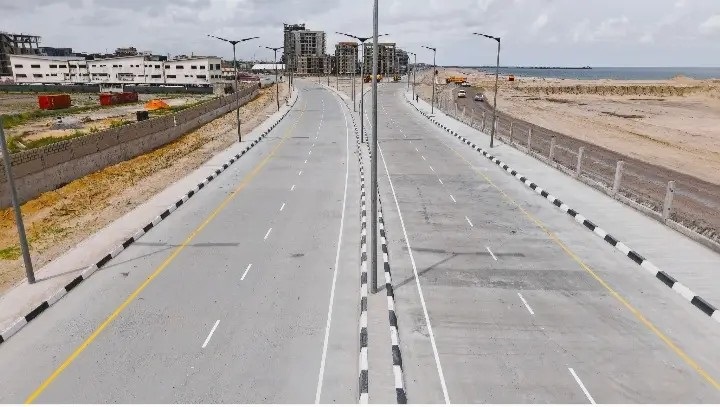
Lagos-Calabar Coastal Highway
“By delivering regulator-approved ESIAs, NEC established the indispensable legal and technical foundation upon which lenders could confidently conduct due diligence and advance financing discussions,” the firm stated.
Dr. Eugene Itua, CEO of NEC, explained: “Our mandate was to protect the project from regulatory risk and provide the legal foundation for financing. By securing approvals for both Section 1 and Section 2, we ensured the Lagos–Calabar Coastal Highway could move forward with confidence.”
He added that, after NEC secured regulatory approvals, Sky Kapital led the lender-focused aspects of the project.
“Sky Kapital adapted the project’s management plans to meet international lender frameworks, including the IFC Performance Standards. Their work aligned regulatory compliance with lender requirements, ensuring the project remains bankable and meets global safeguards. This approach enhances credibility, reduces risk, and accelerates financing discussions.
“This partnership ensures the Lagos–Calabar Coastal Highway is fully compliant with Nigerian law and aligned with international lender criteria, making it a secure and attractive investment. Congratulations to the Federal Government of Nigeria, the Federal Ministry of Works, and Hitech Construction Company on achieving this milestone,” disclosed Itua.
Meanwhile, President Bola Tinubu has welcomed the $1.26 billion funding agreement for the Lagos–Calabar Coastal Highway, calling it a transformative investment to address transport challenges, improve connectivity, and drive economic growth through new business and job opportunities along the corridor.
The Lagos–Calabar Coastal Highway, spanning over 700 km, is among West Africa’s most ambitious road projects. It is expected to facilitate regional trade and ease the movement of goods and people. The new funding is for Section 2 (47.5 km–104 km), a segment that has been politically sensitive and subject to public scrutiny.
Socio-Economic Rights and Accountability Project (SERAP) has urged President Bola Tinubu “to direct the Attorney General of the Federation and Minister of Justice, Mr. Lateef Fagbemi (SAN), and appropriate anti-corruption agencies to promptly probe the allegations that over N128 billion of public funds are missing or diverted from the Ministry of Power and the Nigerian Bulk Electricity Trading (NBET) Plc., Abuja.”
The allegations are documented in the latest annual report published by the Auditor-General on September 9, 2025.
SERAP said, “Anyone suspected to be responsible should face prosecution as appropriate, if there is sufficient admissible evidence, and any missing or diverted public funds should be fully recovered and remitted to the treasury.”
Minister of Power, Chief Adebayo Adelabu
SERAP urged him to “use any recovered diverted funds to fund the deficit in the 2026 budget and to ease Nigeria’s crippling debt crisis.”
In the letter dated January 3, 2026, and signed by SERAP deputy director, Kolawole Oluwadare, the organisation said: “Nigerians continue to pay the price for the widespread and grand corruption in the power sector. There is a legitimate public interest in ensuring justice and accountability for these grave allegations.”
SERAP said, “Tackling corruption in the power sector would go a long way in addressing the persistent breakdown of transmission lines in the country, and improving access of Nigerians to regular and uninterrupted electricity supply.”
According to SERAP, “These allegations suggest a grave violation of the public trust, the Nigerian Constitution 1999 (as amended), the country’s anticorruption legislation and international anticorruption obligations.”
The letter reads in part: “According to the recently published 2022 audited report by the Auditor-General of the Federation, the Federal Ministry of Power failed to account for over N4.4 billion [N4,404,647,938.53] ‘transferred to Mambilla, Zungeru and Kashimbilla project accounts by the Ministry.
“There was ‘no evidence of how the funds were expended.’ The Auditor-General fears ‘the money may have been diverted.’ He wants the money recovered and remitted to the treasury.
“The Ministry also paid over N95 billion [N95,415,183,701.83] to ‘some contractors for various projects.’ But ‘there was no document on the payments, and no evidence that the projects existed and were executed.’ The Auditor-General fears ‘the money may have been diverted.’ He wants the money recovered.
“The Ministry paid over N33 million (N33,557,959.00) ‘for foreign travels’, but ‘without any approvals.’ The money ‘was paid as estacode, flight tickets, visa fees and other allowances to enable the minister and his aides to attend the World Utilities Congress at Abu Dhabi and Huawei innovation land exhibition in Dubai.
“The travels ‘were never approved by the Secretary to the Government of the Federation or the Head of Civil Service.’ The Auditor-General fears ‘the money may have been diverted.’ He wants the money recovered and remitted to the treasury.
“The Ministry failed to account for over N230 million [N230,795,255.27] being ‘expenditure on the GIGMIS platform.’ The Auditor-General fears ‘the money may have been diverted.’ He wants the money recovered and remitted to the treasury.
“The Ministry also paid over N282 million (N282,672,576.53) as ‘non-personal advances to various staff of the ministry for the procurement of goods and services.’ But the ‘payments were beyond the statutory threshold of N200,000.00.’ The Auditor-General fears ‘the money may have been diverted.’ He wants the money recovered.
“The Nigerian Bulk Electricity Trading Plc., (NBET) Abuja also ‘irregularly awarded contracts for over N427 million (N427,491,866.16). There was ‘no evidence of advert placements in the procurement journal’.”
“The Auditor-General fears ‘the contracts may have been awarded to incompetent contractors’, resulting in ‘loss of government funds.’ He wants the money recovered and remitted to the treasury.
“NBET ‘irregularly transferred over N7 billion [N7,620,840,000.00] into purported sub-accounts of unnamed beneficiaries.’ There was also ‘no authority for such payment, contrary to the Financial Regulations.’”
“NBET claimed it paid over N9.3 billion [N9,336,986,697.17] to Egbin Power PLC ‘as outstanding payment on GenCos for Power Sector Reform Programme.’ But there ‘was no document to authenticate the genuineness of the transactions.’ The Auditor-General fears ‘the money may have been diverted.’ He wants the money recovered.
“NBET paid over N8 billion (N8,027,355,487.20) ‘to some beneficiaries’ but ‘without entering the transaction into the payment vouchers register and the vote book.’ The Auditor-General fears ‘the money may have been diverted and misapplied.’ He wants the money recovered and remitted to the treasury.
“NBET also reportedly ‘awarded contracts of over N420 million [N420,665,525.65] to eleven ineligible consultants.’ The payments ‘were for various consultancy services such as technical support on power plant capacity testing of 5 power plants.’ But there was ‘no evidence that the services paid for were rendered.’
“The ‘engagement of the consultants also failed to meet due process as required by the Procurement Act.’ The Auditor-General fears ‘the money may have been diverted.’ He wants the money recovered and remitted to the treasury.
“NBET also failed to account for ‘payments of over N45 million [N45,851,647.92] as contingency, logistics and security charges for six contracts.’ The payments were ‘made without any application from the contractors and without any approval.
“There was ‘no breakdown of the expenditure’. The Auditor-General fears ‘the money may have been diverted’ or the payments ‘may be for work not done.’ He wants the money recovered and remitted to the treasury.”
“NBET spent over N61 million [N61,775,659.75] from the capital vote on consultancy services but without any provision made for it in the approved capital budget of the company.’ The ‘payments were also made without any approval for virement.’ The Auditor-General fears ‘the money may have been diverted’ or ‘may have been misapplied.’ He wants the money refunded to the treasury.
“NBET also ‘irregularly awarded contract of over N39 million [N39,661,081.83] for the supply and installation of a video conferencing solution to the NBET office.’ But ‘there was no evidence of any work done.
“The same contract ‘was re-awarded to another contractor without any open competitive bidding, such as advertisement, quotations, and financial bid evaluation.’ There was also ‘no evidence that any job was completed.’ The Auditor-General fears ‘the money may have been diverted’ or the payments ‘may be for work not done.’
“NBET ‘paid over N49 million (N49,995,000.00) for the supply of three units of Toyota Corolla, 2019 model’, but the contract was awarded without any approval.’ There was ‘no Bureau of Public Procurement approval, minutes of tenders board approvals and technical and financial evaluation reports.’”
“NBET also ‘paid over N8 million (N8,744,186.05) as legal fees to a legal practitioner.’ But the payment was ‘without the approval of the Minister of Justice and Attorney General of the Federation.’ The Auditor-General wants the money recovered and remitted to the treasury.”
“NBET also ‘irregularly paid over N8.9 million [N8,928,000.00] for the professional development program of five officers working in the organization.’ The payment ‘was made as reimbursement of the balance of the course fee.’ The Auditor-General fears ‘the money may have been diverted.’ He wants the money recovered.
“NBET also spent over N1 billion (N1,100,279,895.20) ‘as extra-budgetary spending’, but without any approval from the Minister of Finance and the National Assembly.’ The Auditor-General fears ‘the money may have been misappropriated and misapplied.’ He wants the money refunded and remitted to the treasury.
“NBET also ‘paid over N110 million (N110,556,502.00) to companies and retail supermarkets for staff to pick items and promotion packages for Easter and Salah between 2021 and 2022.’ The payments ‘were made without any document.’ The Auditor-General fears ‘the money may have been diverted.’
“We would be grateful if the recommended measures are taken within seven days of the receipt and/or publication of this letter. If we have not heard from you by then, SERAP shall consider appropriate legal actions to compel your government to comply with our request in the public interest.”
“Section 13 of the Nigerian Constitution imposes clear responsibility on your government to conform to, observe and apply the provisions of Chapter 2 of the constitution.”
“Section 15(5) imposes the responsibility on your government to abolish all corrupt practices and abuse of power.”
“Under Section 16(1) of the Constitution, your government has a responsibility to ‘secure the maximum welfare, freedom and happiness of every citizen on the basis of social justice and equality of status and opportunity.’
“Section 16(2) further provides that, ‘the material resources of the nation are harnessed and distributed as best as possible to serve the common good.’
“Article 26 of the UN Convention against Corruption which Nigeria has ratified requires your government to ensure ‘effective, proportionate and dissuasive sanctions’ including criminal and non-criminal sanctions, in cases of grand corruption.
“Article 26 complements the more general requirement of article 30, paragraph 1, that sanctions must take into account the gravity of the corruption allegations.”
As we enter a new year, the questions that fill our markets, our homes, and our places of work are clear and urgent. They are questions about the price of food, about security in our communities, and about the direction in which our country is headed. It is the duty of this office, the Ministry of Information and National Orientation, to speak to these questions directly, clearly, and with respect for every Nigerian bearing the weight of this moment.
The last 31 months have been a period of foundational, often difficult, transformation. Our bold reforms, beginning with the necessary but painful decisions on subsidies and exchange rates, were engineered to break a cycle of economic stagnation and secure a future of sustainable prosperity. This path was never promised to be easy, but it was promised to be honest and purposeful.
Minister of Information and National Orientation, Mohammed Idris
Today, the first green shoots of that promised stability are visible. December 2025 marked the 13th consecutive month of expansion in business activity. Multinational firms are re-evaluating Nigeria with serious intent. Our GDP is growing, inflation is declining, and our external reserves are strengthening. These are not mere statistics for reports; they are the essential groundwork upon which lasting improvement in everyday life is built.
However, a nation is not governed by indices alone. A nation is governed through trust, forged in the clear communication of both struggle and progress. My role is to be a steady voice for this administration, to explain our ambitions and our actions.
Upon this emerging macroeconomic stability, we have prioritised layering direct interventions that touch lives. The student loan programme (NELFUND) is opening doors. The Presidential CNG initiative is aimed at reducing transport costs. Programmes like LEEP, the Jubilee Fellows, and the 3MTT are designed to put skills and opportunity directly into the hands of our youth. In agriculture, a historic recapitalisation of the Bank of Agriculture and new mechanisation programs are deployed to combat food insecurity at its root.
We are also pushing ambitious infrastructure. The Coastal Highway, the Sokoto-Badagry Expressway, the AKK Gas Pipeline, and new rail lines, to unite our economy and reduce the costs embedded in our geography.
In security, a new architecture is being rolled out. We are investing heavily in recruitment, equipment, and international cooperation to finally turn the tide against terrorism and banditry. The recent rescue of our abducted students in Kebbi and Niger states, respectively, is a testament to this relentless focus, and we remain steadfast until every Nigerian feels safe.
I acknowledge the fatigue that comes with endurance. The anxiety over prices, the worry for loved ones, and the desire for quicker results are all valid feelings; they are the human context of governance. This administration hears you. Our resolve is to accelerate the pace at which these reforms translate into tangible, widespread relief.
This is why in 2026, our “Budget of Consolidation, Renewed Resilience and Shared Prosperity” is critical. It is a commitment to double down on what is working, to solidify gains, and to ensure that the shared prosperity we speak of becomes a lived reality for more Nigerians, faster.
But nation-building is a covenant. We, in government, commit to lead with clarity, to deploy resources with integrity, and to communicate with constancy. We commit to face the people, to account for our stewardship, and to explain our path. In return, the civic strength of our nation, our collective will to pay taxes, to protect public goods, to engage constructively, and to reject the divisive pull of mischaracterisation and disinformation is what will ultimately secure our shared future.
This office, under my watch, shall be accountable and purposeful. It will remain a responsible, accessible, and truthful channel between the government and you, the people. We will explain, we will defend, we will listen, and we will report. You will continually and sustainably see and hear from this ministry, a clear voice of accountability for the government’s whole agenda.
President Bola Ahmed Tinubu, GCFR, has never been one to be fazed by problems or challenges. His approach has consistently been calm and decisive – turning difficulties into opportunities to do things better and more efficiently. Our recent engagements as a government with the United States bear witness to this approach. Under the President’s leadership, we turned a tense period into an opportunity to deepen bilateral relations with the US and to ramp up our anti-insurgency efforts.
But even as we acknowledge the gains we have made, we do not seek to live in the past. Our eyes are firmly focused on what lies ahead and on how tomorrow must improve on today. For us, every moment in the present is an opportunity to double down on what is working, so that we can reap the full benefits of reform.
The journey ahead demands our collective patience and our shared resolve. The easy politics of division and noise will persist, but the hard work of building a Nigeria that works for all must prevail. We have laid a new foundation. Now, we must build the house together.
I wish every Nigerian a peaceful and productive year ahead.
By Mohammed Idris (fnipr), Minister of Information and National Orientation
The Federal High Court in Abuja has ordered the Nigeria National Petroleum Company Limited (NNPC Ltd) to supply information regarding the emergency $3 billion “crude-for-cash” loan obtained by the company from the African Export-Import Bank (Afreximbank) to the applicant, HEDA Resource Centre.
Delivering judgment in Suit No. FHC/ABJ/CS/1631/2023, brought on behalf of HEDA by Barr. Seidu Mohammed, Justice Emeka Nwite ruled in favour of HEDA’s request for an order of mandamus, directing NNPC Limited to provide detailed information about the loan.
Specifically, the Court ordered NNPC Limited to disclose the anticipated benefits of the $3 billion crude oil loan to the Nigeria National Petroleum Company Limited and the Nigerian economy as a whole, as well as the potential economic implications of the loan, encompassing both short-term and long-term effects on the Nigerian economy.
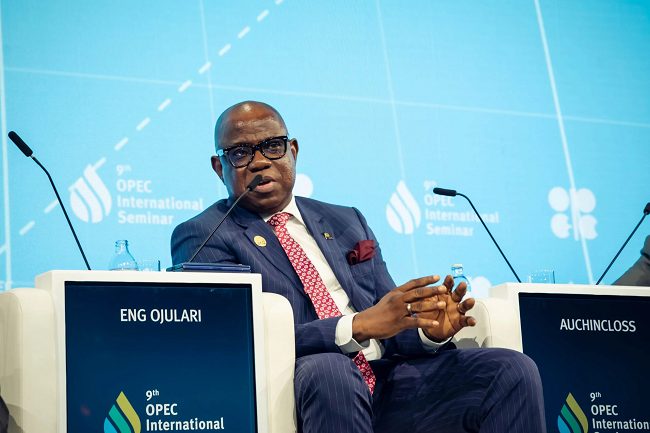
Bayo Ojulari, GCEO, National Petroleum Company (NNPC) Limited
The Court further ordered clarification on the specific oil grades or categories used in negotiating the loan exchange; the exchange rate applied under the terms of the agreement for crude oil repayment; and the quality of the oil being sold or used as collateral for the loan.
The Court held that the information sought is simple and harmless, and that the Nigeria National Petroleum Company Limited has no valid reason to deny HEDA access to the information under the Freedom of Information Act.
“The Court does not agree that the disclosure of this simple information has the effect of harming any third-party interest in any way or affecting any contractual negotiation, most especially when there is nothing before the Court to show the harm it would cause.
“Moreover, Section 15(4) of the FOI Act, assuming without conceding that disclosure has the capacity to harm any third-party interest, gives this Court the power to weigh the harm against the public interest.
“The Court is of the view that, due to the nature of the transaction which has great economic impact on Nigerians, and the fact that the oil sector is the major backbone of the Nigerian economy, the Court cannot, in all honesty, decline the request of the applicant.”
Reacting to the judgment, HEDA’s Chairman, Mr. Olanrewaju Suraju, described the decision as a major win for transparency and accountability in the oil and gas sector of Nigeria.
“The judgement marks another milestone in HEDA’s demand for financial and projects transparency in the NNPC Limited.It also sets a precedent for public access to information on government projects and loan agreements. We expect the Nigeria National Petroleum Company Limited to comply fully with the Court’s order and provide the required information in a timely manner.”
HEDA also calls on all stakeholders, including the media and civil society organisations, to join in demanding accountability from public institutions and to support the fight against corruption and financial recklessness.
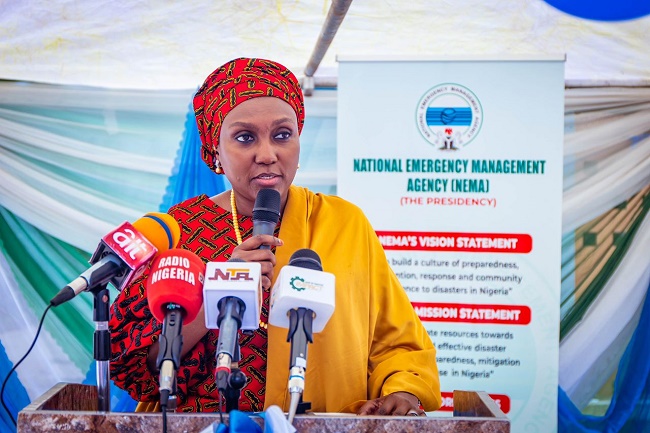
The National Emergency Management Agency (NEMA) has urged flood-affected communities to adopt improved environmental practices and disaster risk reduction, describing it as a new national response paradigm.
Mrs. Zubaida Umar, NEMA Director-General, gave the charge on Wednesday, December 31, 2025, while distributing relief materials to victims in Ogoja and Yala Local Government Areas, Cross River.
Represented by Mr. Victor Akpakpan, Head of Relief and Rehabilitation, Uyo Operations Office, Umar said prevention and preparedness must guide community responses to recurring climate-related disasters.
Director-General of NEMA, Zubaida Umar
She said, “Responsible waste disposal, drainage maintenance and early warnings will reduce losses and save lives when floods strike our communities.”
Umar sympathised with affected residents, explaining that the intervention aimed to cushion flood impacts recorded earlier this year and support recovery across the devastated communities.
Beneficiaries were seen departing distribution centres with assorted food items, expressing relief as assistance reached households struggling after months of displacement and livelihood disruption.
Mr. Godwin Offiono, representing Ogoja/Yala Federal Constituency, thanked the Federal Government and NEMA, saying the support was “deeply appreciated by our people.”
Offiono said the constituency suffered severe flooding during the rainy season, destroying homes, roads and farmlands, and worsening food insecurity for vulnerable rural families.
He added, “The assistance is timely, but sustained support is essential to rebuild livelihoods and strengthen resilience against future floods.”
Speaking for beneficiaries, Mrs. Igbang Ebiamu commended the Federal Government, NEMA and Cross River Government for the relief, describing it as “a lifeline.”
Ebiamu appealed for additional assistance from all tiers of government, noting that many victims still require shelter, seeds and tools to restart farming.
Items distributed included 300 bags each of rice and garri, 150 cartons of spaghetti, vegetable oil, tomato paste, seasoning and iodised salt.
The Nigerian Infectious Diseases Society (NIDS) has called for strengthened intersectoral collaboration to improve prevention, detection and control of infectious diseases following resolutions reached at its 16th Annual General Meeting and Conference.
The recommendation is contained in a communiqué issued at the end of the NIDS conference in Kaduna and made available to newsmen in Abuja on Friday, January 2, 2026, by the society’s President, Dr Mahmood Dalhat.
The communiqué said the conference theme was “Resilient Health Systems in a Changing World,” focusing on confronting emerging and endemic infectious disease threats in Nigeria amid global, environmental and socioeconomic challenges.
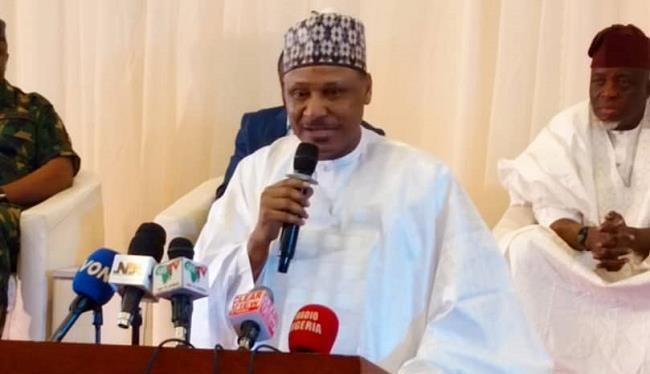
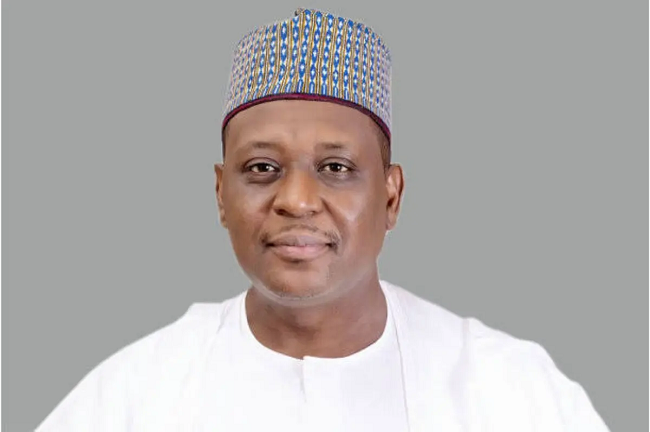
Muhammad Ali Pate, the Coordinating Minister of Health & Social Welfare
It listed subthemes including reimagining infectious disease control, global health financing constraints, advancing HIV care with long-acting antiretrovirals, driving vaccine self-reliance through manufacturing, and examining climate change impacts on disease re-emergence.
The conference emphasised urgent intersectoral collaboration among NIDS, government agencies, development partners, academia and the private sector to better position Nigeria for effective prevention, detection and response to infectious disease threats.
It highlighted artificial intelligence as a critical tool for closing gaps in data science, research and development for vaccines and medicines, healthcare planning, surveillance, and evidence-based decision making nationwide systems capacity.
The communique recommended increased domestic funding for surveillance, laboratory strengthening, outbreak preparedness, workforce development, decentralised healthcare delivery, strategic purchasing, and improved governance and coordination at national and subnational levels across Nigeria.
It urged adoption of innovative financing, including public–private partnerships and health security trust funds, to expand local manufacturing of vaccines, diagnostics and therapeutics while reducing donor dependence through sustainable budgetary commitments.
The conference called for sustained investment in biotechnology, regulatory reforms, faster approvals, phased rollout of long-acting antiretroviral therapies, equitable access strategies, and strengthened One Health and antimicrobial resistance action plan implementation.
It also advocated climate-sensitive surveillance, stronger interministerial coordination, stakeholder engagement, and partnerships with donors and research institutions, appreciating Kaduna State’s support and reaffirming NIDS commitment to infectious prevention, diagnosis and treatment.
Lagos State Commissioner for Waterfront and Infrastructure Development, Mr. Dayo Alebiosu, says the state’s waterfront agenda is driven by law, vision and effective planning.
Alebiosu said on Friday, January 2, 2026, that the agenda was not driven by political considerations or personal connections.
He spoke with journalists on Lagos State waterfront development, regulation and planning.
Mr. Ekundayo Alebiosu, Lagos State Commissioner for Waterfront Infrastructure and Development
The official said that competence and intent, rather than sentiments or politics, had guided government decisions in the sector.
“Waterfront is a technical space. Our focus is on law, planning and development.
“It is not about politics or where anyone comes from,” he said.
He cautioned against attempts to politicise professional appointments and policy decisions.
Alebiosu, a former member of the Federal House of Representatives, said there were opportunities across the state and they should be approached with vision rather than suspicion.
“There is water in Kosofe. If development can happen in Ilashe, it can happen elsewhere,” he said.
The commissioner said that areas such as Ilashe transformed through deliberate planning and investment.
Alebiosu said he focused on long-term impact.
“The mind is the most fertile ground in the world; whatever you drop there will grow,” he said.
The commissioner emphasised the need to separate humanitarian interventions from political interests.
“We must also separate issues of governance from political interests. “I prefer quiet humanitarian interventions to public display.
“Why would you come to me privately for help and then I turn around to publicise it? That does not make sense to me,” he said.
According to him, the state now adopts an evidence-based approach to assistance.
“We now raise funds collectively, engage directly and ask for proof that the need is real,” he said.
Alebiosu urged constructive criticisms and discouraged deliberate provocation and destructive criticisms.
He reaffirmed the commitment of Lagos State Government to lawful waterfront development, responsible governance and interventions driven by intent, accountability and long-term value.