Home Blog Page 33

Group to South Africans on Human Rights Day: You matter, you can make a difference

As South Africa prepares to commemorate Human Rights Day 2026, The Green Connection is reminding citizens – especially those who may feel unheard or powerless – that their voices matter.

The organisation’s 25-year legacy of eco-justice victories demonstrates that when ordinary people unite to defend their rights and their environment, meaningful change is possible.

“Many people feel overwhelmed by decisions made far from their communities, even when those decisions threaten their wellbeing or the environment, they depend on,” says The Green Connection’s Founder and Strategic Lead, Liziwe McDaid.
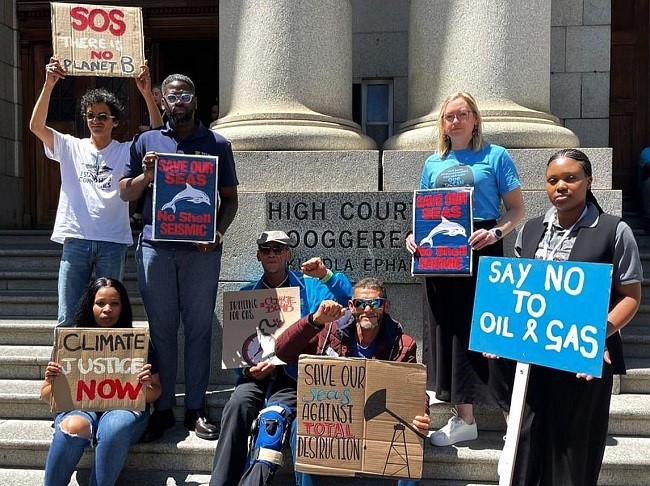
The Green Connection
Supported by The Green Connection, small‑scale fishers and coastal communities continue raising their voices to protect their livelihoods and the future of our coastline

“However, our experience shows that when people are properly informed and meaningfully involved, decisions are far more likely to serve the public interest. Human Rights Day reminds us that when people raise their voices collectively, everybody wins. Every person has the power to protect their future,” says McDaid.

The Green Connection recently marked 25 years of community-led activism and environmental governance advocacy. Over this period, the eco-justice organisation has worked alongside coastal communities, small-scale fishers, youth, legal partners and civil society organisations to help reshape national conversations around public participation, fossil fuels and South Africa’s energy future – proving that people-powered action is not only possible, but transformative.

Ordinary People Making Extraordinary Impact

“Over the past five years alone, South Africans from vulnerable and often overlooked communities have helped secure significant environmental and social justice victories. These achievements were not driven by wealth or political influence, but by courage, unity and determination,” says Neville van Rooy, The Green Connection’s Outreach Ambassador.

In the Western and Eastern Cape, communities successfully challenged Karpowerships’ gas-to-power proposal, exposing major flaws in environmental governance and helping to prevent long-term, gas contracts that could have become extremely costly and may have likely placed the greatest burden on low-income households.

Small-scale fishers also successfully challenged Searcher’s proposed seismic blasting, affirming the rights of Indigenous fishing communities to be recognised and respected. In another victory, communities halted TEEPSA’s oil and gas exploration in Block 5/6/7, reinforcing the constitutional right to a healthy environment and meaningful public participation.

“These wins are not just about stopping harmful projects. They are about restoring dignity, defending livelihoods, and ensuring that ways of life passed down through generations are protected. They show that when communities stand together, we can reshape our country for the better.”

Building Confidence, Leadership and Hope

Through initiatives such as its Legacy Programme, Bridges Programme, and the Koeksister Project, The Green Connection continues to strengthen community leadership and deepen collaboration to build resilience and economic independence. These programmes – which prioritise small-scale fishers and women and youth in coastal communities – help ensure that those most affected by environmental decisions are informed, empowered and confident in asserting their rights.

According to The Green Connection’s Advocacy Lead, Lisa Makaula, the organisation has also commissioned three research papers to deepen public understanding of the choices shaping South Africa’s energy transition. These studies explore the potential of offshore renewable energy, the future of the transport sector, and how rising global demand for critical minerals may affect communities on the ground.

Makaula says, “Our aim is simple: to ensure that ordinary people have access to clear, credible information so they can actively participate in decisions that shape their lives, livelihoods and environment. A just transition cannot be built on outdated fuel standards, harmful technologies or governance systems that sideline communities.

“Justice must guide every step of the transition, and no community should be left behind or harmed as we see in Limpopo and KwaZulu-Natal, where unprecedented floods have displaced families, and in the Eastern Cape, where persistent drought has left many without reliable water security.”

As the country marks Human Rights Day, The Green Connection calls on all South Africans to stand firm in defending their rights, their environment and each other. The victories won by communities over the past years show that when ordinary people unite, they can take on powerful interests and win. Their resilience is a clear reminder that collective action has always been one of South Africa’s greatest strengths.

Reactions trail Brazil’s plan to reduce CO2 emissions by up to 67% by 2035

0

The Brazilian government launched the Climate Plan on Monday, March 16, 2026, in Brasília, a document that guides both the country and society in addressing the climate crisis.

It outlines mitigation and adaptation actions for Brazil to transition to a low-carbon economy that is sustainable from a socio-environmental perspective.

The main goal of the plan is to reduce carbon dioxide emissions by 59 percent to 67 percent by 2035, relative to 2005 levels. This reduction will pave the way for Brazil to achieve net-zero greenhouse gas emissions by 2050.

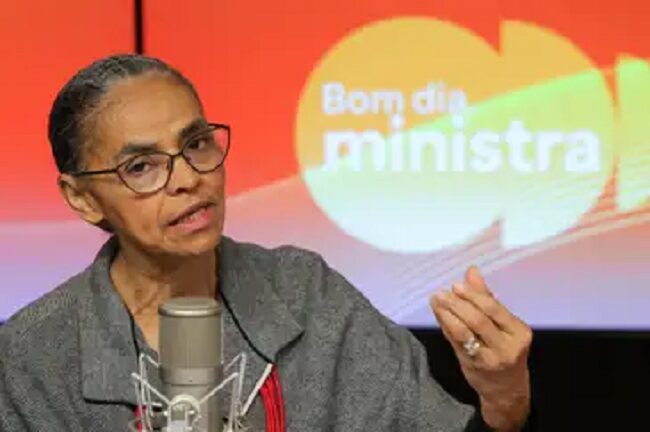
Marina Silva
Brazil’s Environment and Climate Change Minister, Marina Silva. Photo credit: Fabio Rodrigues-Pozzebom/ Agência Brasil

The plan’s development began in 2023, involved 24,000 participants, and produced approximately 5,000 proposals, which were synthesised and selected by the Interministerial Committee on Climate Change (CIM), composed of 25 ministries.

Climate emergency

“We had a process with broad participation from civil society,” noted Environment and Climate Change Minister Marina Silva.

According to her, “the Climate Plan will guide the government’s actions on adaptation and mitigation” and will help reorient actions on development agendas.

“We are living through a very serious climate emergency,” said Minister Marina Silva. “The Climate Plan is the government’s main strategy to address the climate problems that are already affecting us,” she added, referring to events such as extreme droughts and floods in the Amazon, and heavy rains with landslides in Minas Gerais, which caused 70 deaths.

Funding

Funding for the Climate Plan will come from Eco Invest Brasil (private investments), national and international cooperation through the Brazil Platform for Climate Investments and Ecological Transformation (BIP), and the National Climate Change Fund (Climate Fund), operated by the National Bank for Economic and Social Development (BNDES). This year, the Climate Fund will have over BRL 33 billion available.

In response to Brazil unveiling its updated national climate plan, 350.org welcomed progress on tackling deforestation but warned the plan falls short of the urgent action needed to phase out fossil fuels and tackle the growing fuel crisis engulfing Brazil.

The new plan, the first update since 2008, sets out Brazil’s pathway to cut emissions by up to 67% by 2035 and reach net zero by 2050, with a continued focus on ending deforestation, a major driver of emissions in the Amazon. However, campaigners say the plan lacks the ambition needed to rapidly transition away from oil, gas and coal, particularly as Brazil remains one of the world’s top emitters.

João Henrique, Brazil team lead at 350.org, says: “The current hike in diesel prices makes it explicit: fossil fuels are unstable and unreliable. When problems happen – like a war we have no control over – it’s everyday people who pay the price while big corporations cash in at our expense. This shows focusing on land use is not enough. Brazil needs to commit to a full fossil fuels phase out, sooner rather than later.

“Brazil’s renewed focus on ending deforestation is critical and welcome. But transitioning away from fossil fuels and fully embracing Brazil’s vast renewable energy potential is essential to bring down costs, reduce inequality and build a resilient energy system. Governments must move beyond broad commitments and deliver clear, time-bound roadmaps to end fossil fuel production and use.”

Brazil’s plan has been praised for its broader scope and inclusion of adaptation measures, but civil society groups have highlighted the lack of concrete steps to drive the structural economic transformation needed to meet global climate goals.

Henrique adds: “The lack of a clear fossil fuel phaseout roadmap comes at a time when Brazil’s energy system is already under pressure. With electricity prices around R$130/MWh and lower-income households spending up to 18% of their income on energy, the need for a fair and accelerated transition has never been clearer.

“However, when it comes to fossil fuels, Brazil’s Climate Plan does not respond to this challenge – on the contrary, it reinforces existing contradictions. The science is clear, there is no pathway to 1.5°C without a rapid and just phaseout of oil, gas and coal. Countries like Brazil have a crucial role to play, and that means aligning climate plans with a full transition away from fossil fuels.”

The announcement comes ahead of the first global conference on phasing out fossil fuels holding from April 24 to 29, 2026, and hosted by the governments of Colombia and the Netherlands, where pressure is mounting on major economies to commit to clear timelines to end fossil fuel production.

NESREA receives pangolins in Kano, Akwa Ibom

The National Environmental Standards and Regulations Enforcement Agency (NESREA) says pangolins handed over to the agency in Kano and Akwa Ibom states indicate growing public awareness and support for wildlife conservation in Nigeria.

Mrs. Nwamaka Ejiofor, NESREA’s Assistant Director of Press, said this in a statement issued on Monday, March 16, 2026, in Abuja.

Ejiofor said a local hunter, Imo Etim, in Akwa Ibom discovered two pangolins caught in his traps meant for grass-cutters.

pangolins
The Pangolin. Pangolins are believed to be the world’s most trafficked mammals

She said the hunter immediately notified Prof. Olajumoke Morenikeji of the Pangolin Conservation Guild Nigeria (PCGN).

According to her, one of the pangolins later died, while the hunter handed over both animals to NESREA officials led by the State Coordinator, Mr. Mfon Nkanang.

She said the pangolins were subsequently transferred to the National Park Service.

Ejiofor also disclosed that officers of the Kano/Jigawa Area Command of the Nigerian Customs Service handed over two live pangolins and one dead pangolin to NESREA.

She said the animals were suspected to be part of an illegal wildlife trade.

According to her, NESREA officials led by an Assistant Director, Mr. Ismaila Anamoh, received the pangolins.

She said the animals were later taken to the Kano Zoological Garden office.

Ejiofor added that the pangolins were received by Hafsah Adam, a representative of the Kano State Zoological and Wildlife Management Agency (KAZOWMA).

Reacting to the incidents, NESREA Director-General, Prof. Innocent Barikor, commended the actions of the Akwa Ibom hunter and the collaborative efforts of security agencies in Kano.

Barikor said the incidents reflected growing awareness about the protection of endangered wildlife species.

“In Akwa Ibom, when the hunter realised the animals were pangolins, he did not attempt to sell them.

“Instead, he contacted the appropriate authorities and handed them over. This is a major gain for conservation in Nigeria,” he said.

Barikor also attributed the success in Kano to strong inter-agency collaboration in tackling wildlife trafficking.

He warned that wildlife trafficking, whether conducted physically or through social media platforms, remained a criminal offence.

According to him, the crime is prohibited under the Endangered Species Act and the National Environmental (Control of Endangered Species in Domestic and International Trade) Regulations 2025.

Barikor reaffirmed NESREA’s commitment to enforcing environmental laws and protecting endangered species.

He urged members of the public to support conservation efforts by reporting wildlife crimes to the relevant authorities.

By Doris Esa

Minister orders demolition of estate illegally built on green area in Abuja

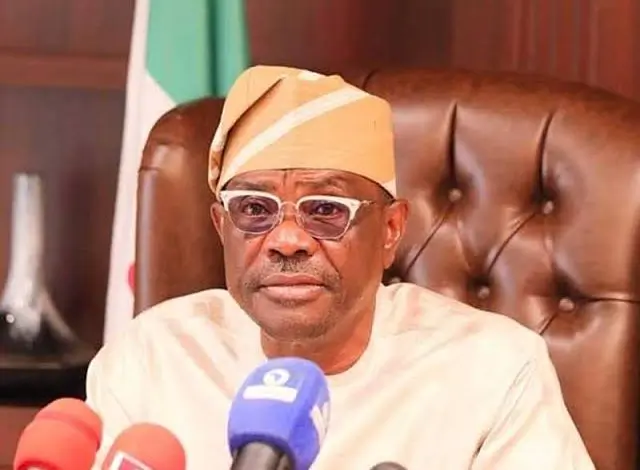
Minister of the Federal Capital Territory (FCT), Nyesom Wike, has ordered the demolition of an estate illegally built on a green area in Guzape, Abuja.

Wike gave the order during routine inspection of ongoing projects in Abuja on Monday, March 16, 2026.

He explained that the plot was initially allocated for Park and Recreation but was converted into residential without approval.

Nyesom Wike
Minister of FCT, Nyesom Wike

He said that beyond demolishing the estate, the allocation would be revoked, adding that the FCT Administration would strictly enforce planning regulations in line with Abuja Master Plan.

The Minister warned that the government would not tolerate deliberate violations of land-use approvals.

He lamented that many developers deliberately flout planning laws because they believe government officials would eventually leave office, allowing them to regularise illegal developments.

“People think that government will come and go and they will continue what they are doing. We will not allow that here. It does not matter who is involved; we will do the right thing.

“This place was given for Park and Recreation not for the development of an estate. But from what you have seen, they are developing it into an estate, which is a clear violation.

“We will not allow that,” he said.

Wike noted that some developers have taken advantage of bureaucratic loopholes and sometimes connive with insiders within government agencies to obtain approvals for illegal projects.

He said that while some civil servants may be involved, “it will not stop us from doing what is right”.

Speaking on inspected projects, the Minister said that the move was to assess the progress of major projects expected to be inaugurated to celebrate President Bola Tinubu third year in office.

On the road network linking the Renewed Hope City in Karsana to Kubwa, Wike said that significant progress has been recorded and expressed optimism that it would be ready for inauguration.

Wike also inspected Arteria Road N16 from Ring Road II to Ring road III, linking Jahi and Gwarimpa.

He described the quality of work as “impressive” and expressed confidence that the project would be completed by the end of May.

The Minister equally inspected the Airport Road to Kuje Highway as well as the Kuje Road to Gwagwalada and expressed satisfaction with the pace and quality of work so far.

According to Wike, road construction remains central to the Administration’s broader transportation strategy for the FCT.

“You cannot have a good transport system without connectivity and a strong road network. When there is good road infrastructure, transport becomes easy and efficient,” he said.

The Minister reiterated the Administration’s commitment to continue to enforce planning regulations while delivering infrastructure that improves mobility and opens up communities across the FCT.

By Philip Yatai

Women solicit investments in gender-responsive water governance

0

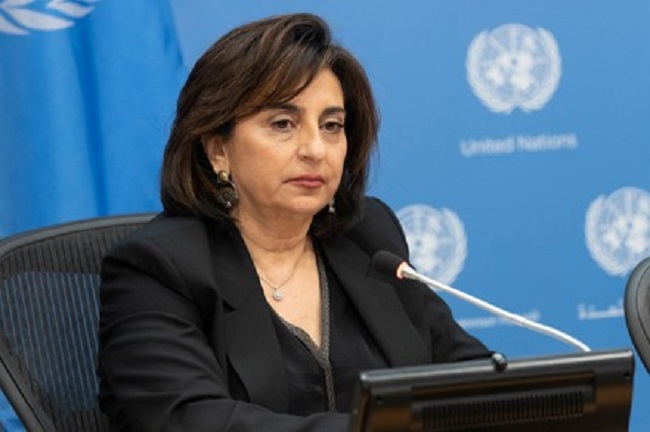
The Executive Director, UN Women, Sima Bahous, has urged governments worldwide to invest in gender-responsive water governance, financing, and services toward ensuring that no woman or girl is left behind.

Bahous stated this in her message for World Water Day released on the sidelines of the ongoing 70th Session of the Commission on the Status of Women (CSW) on Monday, March 16, 2026, in New York.

World Water Day is an annual United Nations observance day held on March 22 that highlights the importance of fresh water. The day is used to advocate for the sustainable management of freshwater resources.

Sima Bahous
UN Women Executive Director, Sima Bahous. Photo credit: Lev Radin/Pacific Press/Shutterstock

“We must invest in gender-responsive water governance, financing, and services; and ensure that no woman or girl is left behind.

“Water can be a force for equality, resilience, and prosperity. Together, let us make it so: for all women and girls, for communities, and for generations to come,’’ she said.

According to her, 2026  World Water Day with the theme: “Water and Gender Equality – Where water flows, equality grows,” is a call for a transformative, rights-based approach that places women’s leadership at the centre of water solutions.

Bahous said in a world shaped by climate change, growing inequalities, and increasing pressure on natural resources, water lies at the heart of our shared future.

“Water is essential for life, health, food, and livelihoods.

“Yet for billions of people, access to safe water and sanitation remains out of reach. And while the global water crisis affects everyone, it does not affect everyone equally,’’ she said.

The UN women chief further said that women and girls bear the greatest impacts of the unequal access to and scarcity of water.

“Every day, they spend millions of hours collecting water, caring for families, and managing scarcity, often at the cost of their education, income, health, and safety. When water is unsafe or unavailable, inequalities deepen and opportunities disappear.

“This reality was already recognised thirty years ago in the Beijing Declaration and Platform for Action, which underscored the central role of women in environmental sustainability and called for their full participation in the management and safeguarding of natural resources, including water.

“Today, those commitments are more urgent than ever,” she said.

The Executive Director added that women are not only the most affected by water crisis but are also powerful agents of change.

By Cecilia Ologunagba

Mixed reactions trail proposed reintroduction of Lagos monthly sanitation

Stakeholders in the waste management sector have expressed support and raised concerns over the proposed reintroduction of the monthly environmental sanitation exercise in Lagos State.

The stakeholders spoke in separate interviews on Tuesday, March 17, 2026, in Lagos.

Dr Olubenga Adebola, the National President, Association of Waste Managers of Nigeria, said members fully support the initiative recently flagged off by the state government.

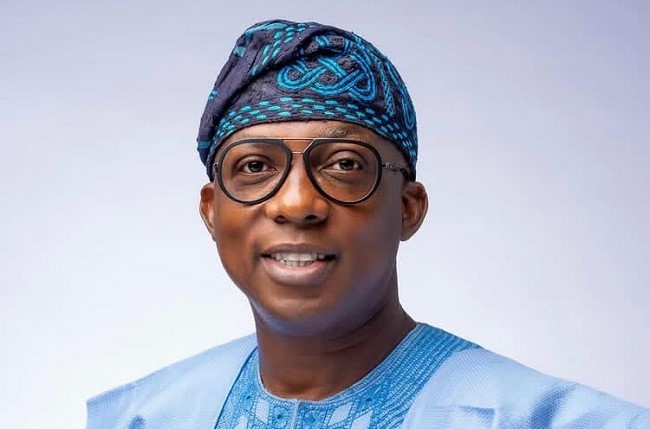
Tokunbo Wahab
Lagos State Commissioner for the Environment and Water Resources, Tokunbo Wahab

Adebola commended Gov. Babajide Sanwo-Olu; Environment Commissioner, Tokunbo Wahab; and LAWMA Managing Director, Muyiwa Gbadegesin, for the move.

He described the exercise as timely, stressing that it would promote environmental cleanliness and improve public health awareness among residents.

Adebola, however, identified funding as a key concern, noting that all waste generated during the exercise must be evacuated, regardless of payment status.

He explained that current waste management follows a pay-as-you-go system, which may differ during the sanitation exercise.

According to him, stakeholders must agree on a funding model to ensure seamless evacuation of waste generated during the exercise.

Adebola also stressed the need for accessible dumpsites to enable operators to dispose of waste promptly and efficiently.

He urged government to ensure dumpsites are operational before the official commencement on April 25, 2026.

Adebola called for cost-reflective tariffs, noting that operational costs have increased while service charges have remained unchanged since 2022.

He emphasised the need for public enlightenment, urging residents to take ownership of environmental sanitation for sustainable impact.

Mr. Franklyn Adebisi, the Coordinator, Waste Pickers Association of Nigeria, Lagos, described the reintroduction as a welcome development.

Adebisi said the initiative would help restore cleanliness across Lagos, urging stakeholders to ensure effective implementation.

He said waste collected should be promptly evacuated to avoid clogging roads and drainage systems.

He also called for fairness and professionalism among enforcement agencies during the exercise.

However, the Executive Director, Renevlyn Development Initiative, Mr. Philip Jakpor, raised concerns about restricting movement for sanitation purposes.

Jakpor questioned the effectiveness of such measures, advocating for modern, integrated waste management systems.

He called for strategies focused on waste reduction, recycling, and reuse, rather than periodic sanitation exercises.

Mr. Friday Oku, the President, Association of Scrap and Wastepickers of Lagos, expressed support for policies promoting environmental cleanliness.

Oku said such initiatives would encourage circular economy practices and enhance waste resource recovery in the state.

The monthly environmental sanitation exercise in Lagos was, until 2016, a mandatory statewide cleanup held on the last Saturday of every month, with restriction of movement to promote public hygiene.

However, in March 2015, a Federal High Court ruled that the restriction of movement during the exercise was unconstitutional, citing violation of citizens’ fundamental rights.

Following the ruling, the state government under Akinwunmi Ambode formally suspended the exercise in November 2016, opting instead for structured waste management systems.

Between 2016 and 2025, authorities relied on continuous waste collection and private sector participation, amid persistent challenges such as indiscriminate refuse disposal and clogged drainage.

Rising environmental concerns and flooding in recent years prompted renewed calls for the exercise’s return.

Consequently, the state government in 2026 announced its reintroduction, with a modified approach that removes movement restrictions and emphasises voluntary compliance.

By Fabian Ekeruche

NUPRC notifies pre-qualified applicants for 2025 licensing round

0

The Nigerian Upstream Petroleum Regulatory Commission (NUPRC) says it has completed the pre-qualification stage of the 2025 oil Licensing Round and notified successful pre-qualified applicants accordingly.

A statement by Eniola Akinkuotu, Head, Media and Strategic Communication, on Tuesday, March 17, 2026, in Abuja, said the pre-qualification was done on March 16, in line with the 2025 Licensing Round Guidelines.

“With the pre-qualification stage now successfully completed, the Commission will from March 17 permit successful applicants to lease data in preparation for the technical and commercial bid submissions.

Oritsemeyiwa Eyesan
Commission Chief Executive, Nigerian Upstream Petroleum Regulatory Commission (NUPRC), Mrs. Oritsemeyiwa Eyesan

“Please note that the pre-qualified applicants are mandated to lease data only from the two data sources (as applicable) and upload evidence of payment as a prerequisite to the submission of bids.

“For more details, visit the licensing round portal: https://br2025.nuprc.gov.ng/,” Akinkuotu said.

A licensing round is a process by which the government grants oil and gas exploration and production rights to companies through a competitive bidding process.

In December 2025, the NUPRC opened bidding for 50 oil and gas blocks, aiming to attract 10 billion dollars in investment.

The 50 blocks comprise 15 onshore assets, 19 shallow water assets, 15 frontier assets and one deep water asset.

By Emmanuella Anokam

Oyo alerts residents to weather outlook, end to indiscriminate dumping of waste

The Oyo State Government has advised residents to adhere strictly to its advisories on flooding to safeguard lives and property as the rainy season approaches.

This is contained in a statement issued on Tuesday, March 17, 2026, in Ibadan, the state capital, by the Commissioner for Environment and Natural Resources, Mr. Ademola Aderinto.

Aderinto said the state government would continue to put proactive measures in place to prevent flooding and mitigate its impact across the state.

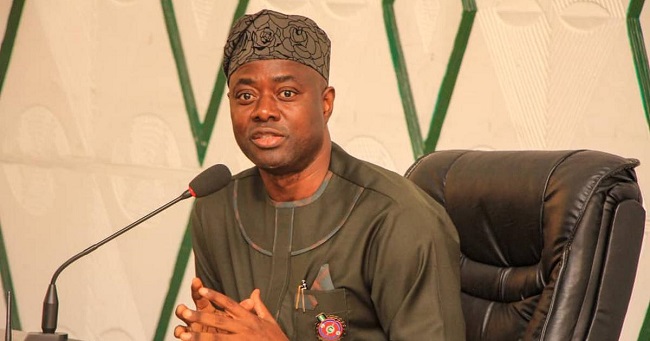
Seyi Makinde
Gov. Seyi Makinde of Oyo State

He said his ministry was working closely with the Oyo State Emergency Management Agency (SEMA) and utilising flood early warning systems installed through the World Bank-supported Ibadan Urban Flood Management Project.

Aderinto also said that the Ministry had intensified the clearing of waterways, drainage channels and rivers in different parts of the state, destilting drains of obstructions that could hinder the free flow of water.

According to the commissioner, the exercise commenced during the dry season and will continue until the rains set in.

He maintained that the state had consistently implemented preventive environmental measures, which have helped reduce the incidence of severe flooding in recent years.

Aderinto advised residents living along riverbanks, waterways and other flood-prone areas to relocate to safer locations ahead of the rainy season in order to avoid putting their lives and property at risk.

The commissioner equally admonished residents to abide with the advisories, “stay informed through official channels, and report any illegal developments or obstructions along waterways”.

He further advised farmers to heed the advisory of the Nigerian Meteorological Agency (NiMet), which had predicted perennial rainfall in 2026.

“Though with intermittent dry spells, and the changing climate pattern may affect planting cycles and crop production,” he noted.

Aderinto cautioned farmers against rushing to plant during early rainfall, urging them to wait for official guidance from government and relevant agencies before commencing planting activities.

Similarly, the Oyo State Government has advised residents to stop the open defecation and indiscriminate dumping of waste in streams and waterways in order not to weaken the impact of erosion control.

The Commissioner for Environment and Natural Resources, Mr. Ademola Aderinto, gave the advice on Monday, March 16, 2026, after conclusion of the final inspection of proposed project sites under the Nigeria Erosion and Watershed Management Project- European Investment Bank (NEWMAP-EIB) intervention.

A statement by the ministry said that sites visited during the inspection included Aborerin Stream in Eruwa (Ibarapa East Local Government Area), Fedomu Stream in Igbeti (Olorunsogo Local Government Area), and erosion sites within Ladoke Akintola University of Technology (LAUTECH), Ogbomoso.

The inspection exercise forms part of the concluding activities ahead of the commencement of the NEWMAP-EIB intervention project across the state.

Aderinto said that the intervention would bring long-awaited relief to communities grappling with erosion and environmental degradation, adding that Oyo state has now met the key requirements for the take-off of the project.

“The sites are located across the three senatorial zones of the state, paving the way for the commencement of construction works,” he said.

The commissioner said that the successful completion of the preparatory processes was made possible through support of  Gov. Seyi Makinde whose administration has prioritised tackling erosion challenges, strengthening climate change adaptation, and improving environmental sustainability.

Aderinto assured residents of the affected communities that with the completion of all required processes, the NEWMAP-EIB project was set to move into the implementation phase.

He also emphasised the need for sustained community cooperation to ensure the success and long-term sustainability of the project.

The Commissioner was accompanied on the inspection visit by the Project Coordinator, Mr  Tayo Ayoade, and members of the Oyo State Project Management Unit (OYO NEWMAP-EIB).

By David Adeoye and Olatunde Ajayi

UNCCD COP17: Desertification summit to focus on healthy land for resilience, stability, prosperity

Five months ahead of the seventeenth session of the Conference of the Parties (COP17), Mongolia and the United Nations Convention to Combat Desertification (UNCCD) on Tuesday, March 17, 2026, unveiled the thematic days and action agenda for the conference, to be held in Ulaanbaatar from August 17 to 28 under the theme “Restoring Land, Restoring Hope”.

Delegates from UNCCD’s 197 Parties will join scientists, businesses and land stewards in Ulaanbaatar for COP17 to advance action for healthy land as a cornerstone of global resilience, stability and prosperity.

Scaled-up finance for land restoration and drought resilience, alongside the future of the world’s rangelands and pastoralists, will shape the COP17 agenda, with the conference aimed at translating global commitments into measurable progress on the ground. As the first of the three Rio Conventions COPs – on land, biodiversity and climate – meeting this year, UNCCD COP17 will set the pace for the rest of 2026 and beyond. 

Yasmine Fouad
UNCCD Executive Secretary, Yasmine Fouad

UNCCD Executive Secretary, Yasmine Fouad, said: “Over the past decade, countries have committed to restoring one billion hectares of degraded land by 2030 and more than 70 now have national drought plans. COP17 is our opportunity to turn these commitments into real change on the ground.

“That means mobilising finance at scale for land restoration and drought resilience, investing in preparedness rather than costly crisis response and recognising rangelands as vital assets for economies, cultures and climate. The thematic days and action agenda for COP17 reflect a simple truth: healthy land underpins food security, water availability, economic resilience and stability everywhere – and the time to act is now.” 

Mongolia’s Minister of Environment and Climate Change, Batbaatar Bat, stated: “For the Government of Mongolia, the Riyadh–Ulaanbaatar Action Agenda is a strategic, participatory framework to mobilise citizens, businesses, cities and all stakeholders to restore critical ecosystems, including rangelands and agricultural lands. It drives investment in the land–water nexus and strengthens drought resilience. We call on leaders from all sectors to join us at COP17 to accelerate solutions for resilient economies and societies.” 

To help focus discussions and mobilise action, COP17 will feature thematic days dedicated to key priorities on the global land and drought agenda. These will bridge political decisions with real-world solutions, making everyone part of a powerful Action Agenda to advance land restoration and drought resilience. The four thematic days planed for COP17 are:

  • Finance (August 24): Restoring land at scale requires around $1billion dollars per day, but current funding falls far short. Finance Day will bring together ministers of finance, development banks and the private sector to help close this gap and unlock large-scale investment. 
  • Water (August 25): By 2050, three out of four people worldwide are projected to face drought. Water Day will advance proactive drought risk management and strengthen cooperation on the integrated management of water resources. 
  • Land and People (August 26): Rangelands support the livelihoods of some 500 million people but remain among the most undervalued ecosystems globally. Land and People Day will place the voices of land stewards at the heart of discussions, highlighting the perspectives of Indigenous Peoples, local communities, pastoralists, youth, women and civil society organisations. 
  • Food Systems and Soil Health (August27): By 2050, the world will need to produce at least 50 per cent more food, even as food systems remain the leading driver of land degradation globally. Food Systems and Soil Health Day will connect soil restoration to food security, agricultural productivity and the livelihoods of farming communities. 

“The thematic days of COP17 are designed to focus global attention where it matters most – on the solutions and partnerships needed to restore land, strengthen drought resilience and support the people who take care of our ecosystems. By bringing together governments, scientists, businesses, local and pastoralist communities as well as Indigenous Peoples around shared priorities, we aim to move from commitments to implementation and help ensure that healthy land continues to sustain communities, economies and ecosystems for generations to come,” added Executive Secretary, Fouad. 

Powering Nigeria’s future: A review of ministers since 1999 and today’s reform agenda

Since the return to democratic governance in Nigeria in 1999, the Ministry of Power has remained one of the most consequential portfolios in the federal cabinet. Electricity is the backbone of economic growth, industrial productivity, and national development. Over the past two and a half decades, several distinguished leaders have steered the sector through complex reforms, infrastructure deficits, and evolving market realities.

Among those who held the mantle are respected figures such as Bola Ige, Barth Nnaji, Liyel Imoke, and Babatunde Raji Fashola. Each brought unique perspectives and reforms to the sector, laying the groundwork for the transformation Nigeria continues to pursue today.

Adebayo Adelabu
Minister of Power, Mr Adebayo Adelabu

Today, the sector is being steered by the current Minister of Power, Adebayo Adelabu, whose reform-driven approach has sparked fresh conversations about the future of electricity in Africa’s largest economy.

A Look Back: The Reform Efforts of Past Power Ministers

The Visionary Beginnings: Bola Ige

The late Chief Bola Ige served as one of the earliest Ministers of Power in the Fourth Republic. His tenure focused largely on restoring public confidence in a power system that had deteriorated after years of military rule. Although his time in office was tragically cut short, he helped initiate discussions around restructuring the electricity sector and modernizing the national grid.

The Reform Architect: Barth Nnaji

Professor Barth Nnaji played a pivotal role during one of the most defining periods of the power sector. As minister, he helped drive the privatization process of the generation and distribution companies that emerged from the unbundling of the Power Holding Company of Nigeria (PHCN). His work helped establish the foundation for Nigeria’s current electricity market structure.

Administrative Stabilization: Liyel Imoke

During his time overseeing the sector before becoming governor, Liyel Imoke focused on administrative coordination and project supervision. His leadership contributed to stabilising ongoing generation projects and reinforcing federal oversight during a period of policy transition.

Infrastructure and Market Coordination: Babatunde Raji Fashola

Former Lagos governor Babatunde Raji Fashola served as Minister of Power, Works and Housing during a period of integrated infrastructure management. His tenure emphasised transmission expansion, financial interventions for distribution companies, and coordination between electricity supply and broader national infrastructure projects.

While these ministers made notable contributions, the Nigerian power sector has remained a work in progress, requiring continuous reform, investment, and policy innovation.

The Adelabu Era: A New Reform Momentum

Under the leadership of Adebayo Adelabu, the ministry has pursued a broad and multidimensional reform strategy aimed at addressing long-standing structural issues in the electricity ecosystem.

Observers of the sector note several areas where the current administration’s efforts have expanded beyond previous frameworks.

 1. Legislative and Policy Reforms

One of the defining features of the current minister’s tenure has been the acceleration of legislative alignment with Nigeria’s evolving electricity market. Working within the framework of the Electricity Act and related policies, the ministry has promoted greater decentralisation, enabling states and private investors to participate more actively in electricity generation and distribution.

This policy direction is widely viewed as a turning point toward a more competitive and flexible power market.

 2. Market and Tariff Reforms

Another major focus has been tariff restructuring aimed at improving cost recovery while protecting vulnerable consumers. By promoting a more transparent tariff system tied to service delivery, the ministry seeks to attract investment and reduce the financial fragility that has long plagued the electricity market.

While tariff reforms often generate public debate, industry analysts acknowledge that sustainable electricity systems require financially viable market structures.

 3. Transmission and Distribution Infrastructure Expansion

A significant component of the minister’s agenda has been the strengthening of Nigeria’s transmission and distribution backbone.

Transmission capacity expansion, grid modernisation initiatives, and improved coordination with distribution companies have all been prioritised. These efforts aim to reduce bottlenecks that have historically prevented generated electricity from reaching consumers.

 4. Energy Transition and Renewable Expansion

In line with global energy trends, the ministry has also increased focus on renewable energy and energy transition strategies. Through collaborations with agencies such as the Rural Electrification Agency, distributed solar systems and mini-grid solutions are being deployed to electrify underserved rural communities.

This distributed energy model has the potential to bring electricity to millions who remain outside the national grid.

 5. Human Capacity Development

Human capital development has also emerged as a key priority. The ministry has placed renewed emphasis on strengthening training programs at the National Power Training Institute of Nigeria (NAPTIN), ensuring that engineers, technicians, and power sector professionals possess the skills required for modern electricity systems.

A stronger technical workforce is essential to sustaining long-term reforms.

 6. Local Content and Manufacturing Development

Another notable initiative has been the push for local manufacturing within the renewable energy ecosystem. The minister has promoted policies encouraging domestic production of solar panels, batteries, and electricity meters.

This strategy not only supports energy access but also stimulates industrial development and job creation within Nigeria.

Navigating Political Headwinds

In recent months, the minister has faced waves of criticism in sections of the media and political space. However, supporters argue that much of the negative publicity may be connected to emerging political dynamics ahead of the 2027 electoral cycle.

With increasing speculation about his political ambitions in Oyo State, analysts note that both internal party rivals and opposition figures may seek to shape public narratives around his performance.

In political environments where reform policies – especially tariff adjustments – can be unpopular in the short term, ministers often face criticism despite long-term strategic goals.

A Possible Future Beyond the Power Ministry

Looking ahead to the 2027 elections, many political observers believe that Adebayo Adelabu possesses several attributes that could position him strongly should he pursue the governorship of Oyo State.

Several factors stand out:

 1. Technocratic Leadership Experience

His stewardship of one of the most complex federal ministries has required navigating policy, economics, infrastructure management, and stakeholder negotiations.

 2. Reform-Oriented Governance

His emphasis on structural reforms – legislative, market, and infrastructural – reflects a governance style focused on long-term solutions rather than short-term political gains.

 3. Economic Development Perspective

Energy reform is deeply connected to economic growth. Experience in managing such a critical sector provides insights valuable for state-level industrial development.

 4. Institutional Capacity Building

His focus on human capacity development and local manufacturing demonstrates an appreciation for sustainable development through skills and industry.

 5. Strategic Vision for Energy and Industrialization

A leader who understands the link between electricity access and economic productivity can play a transformative role at the state level.

 Conclusion: Powering Reform, Shaping the Future

The story of Nigeria’s electricity sector since 1999 is one of gradual reform, evolving policy frameworks, and persistent challenges. From the early reform visions of leaders like Bola Ige to the privatization era driven by Barth Nnaji and the infrastructural coordination efforts of Babatunde Raji Fashola, each administration has contributed to shaping the sector.

Today, under Adebayo Adelabu, the ministry is pursuing an ambitious mix of market reform, infrastructure investment, renewable energy expansion, and human capital development.

While the full impact of these reforms will unfold over time, one reality is increasingly clear: Nigeria’s energy future will depend on sustained leadership, policy continuity, and bold structural transformation.

And for leaders willing to navigate that challenge, the opportunity to shape both national infrastructure and political legacy remains immense.

By Adedayo Olowoniyi, Chief Technical Adviser to Minister of Power, Chief Adebayo Adelabu