President of Dangote Group, Aliko Dangote, has unveiled plans to expand into steel production, electricity generation and port development as part of a broader ambition to accelerate industrialisation across Africa.
Dangote, whose conglomerate spans cement, sugar, salt, fertiliser, and petrochemicals, said his long-term goal is to deepen Africa’s manufacturing base beyond oil refining and position the continent as a global industrial force.
His latest flagship project, the Dangote Petroleum Refinery & Petrochemicals, is now operational and producing about 650,000 barrels of refined products daily. He said output is expected to double within the next three years as expansion plans progress.
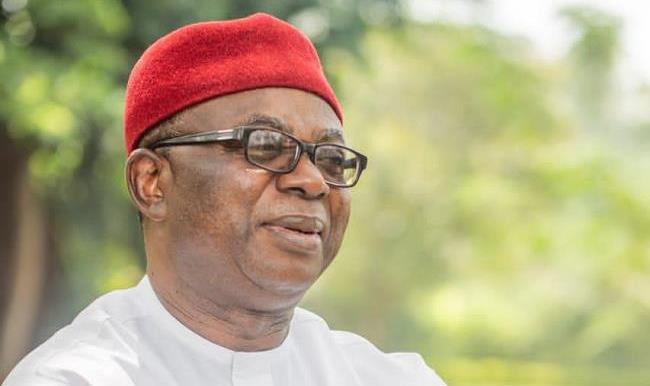
Aliko Dangote
However, Dangote in a recent interview with The New York Times, indicated that refining is only one phase of a larger vision.
“We have to industrialise Africa,” he said, noting that his next focus areas include the steel industry, expanding access to electricity and building additional port infrastructure to support large scale manufacturing and trade.
Industry analysts say entry into steel would position the group in a sector critical to infrastructure, housing and heavy industry, while investments in power and ports could address two of Nigeria’s most persistent constraints to economic growth.
Dangote cited India’s Tata Group as a model for diversified industrial expansion, describing the conglomerate’s multi sector footprint as an example of how large scale manufacturing can transform emerging economies.
Beyond expansion, Dangote said job creation remains central to his strategy. With Nigeria projected to require between 40 and 50 million new jobs by 2030, he argued that large scale industrial projects are essential to absorbing the country’s growing youth population.
The refinery alone currently employs about 30,000 workers, approximately 80 per cent of them Nigerians. Expansion across new sectors is expected to raise total employment within the group to about 65,000.
Dangote also announced plans to list shares in the refinery on the Nigerian stock market, a move that would broaden local participation in the asset.
Despite progress, he acknowledged that infrastructure gaps and crude supply challenges remain obstacles. He has previously raised concerns about logistics bottlenecks and inefficiencies in the oil value chain that complicate feedstock supply to the refinery.
Nevertheless, Dangote said the group would continue to invest aggressively in sectors that reduce import dependence and retain economic value within Africa.
“Nobody dared to do it, so we did it,” he said, reiterating his belief that large scale private investment is key to transforming Nigeria’s industrial landscape.
With cement plants operating across multiple African countries and a refinery that has reshaped Nigeria’s downstream outlook, Dangote’s next push into steel, electricity and port infrastructure signals a new phase in his ambition to industrialise the continent.
The 12-month period from February 2025 to February 2026 was one of the most consequential in IUCN’s history.
Against a backdrop of rapidly accelerating species loss, ocean degradation, and the continuing triple planetary crisis of climate change, biodiversity decline, and pollution, IUCN published two landmark Red List updates, played a central role at the Third United Nations Ocean Conference (UNOC 3) in Nice (June 2025) and convened the IUCN World Conservation Congress in Abu Dhabi (October 9 to 15, 2025), the world’s largest and inclusive biodiversity summit, held every four years.
Dr Grethel Aguilar, IUCN Director General
The Congress assembled under the theme “Powering Transformative Conservation.” Members adopted a landmark 20-year Strategic Vision (“Unite for Nature on the Path to 2045”), a new IUCN Programme 2026–2029, and the Abu Dhabi Call to Action on Species Conservation, positioning biodiversity protection as the centrepiece of the global response to the triple planetary crisis of climate change, biodiversity loss, and pollution. Taken together, these events produced a clearer, more sobering picture of the global biodiversity emergency than at any previous point, alongside the most ambitious governance framework IUCN has ever adopted.
The data confirm that approximately 28% of all species ever assessed by IUCN across all groups from corals to fungi to birds now face extinction. Yet the Red List also carries a message of hope: IUCN’s 2025-2 update demonstrated that without conservation intervention, extinction rates for birds and mammals over the past 30 years would have been up to four times higher. Conservation works. The challenge is to scale it equitably and rapidly enough to avert the biodiversity tipping points now visible across multiple ecosystems simultaneously (IUCN, 2025c).
Key Global Biodiversity Issues Tackled by IUCN (2024–2025)
1. Coral Reef Crisis: 44% of Reef-Building Corals Now Threatened
At COP29 in Baku (November 2024), IUCN published the most comprehensive coral reassessment in 16 years, finding that 44% of all reef-building coral species globally are now threatened with extinction – up sharply from one third in 2008. The primary driver is ocean warming and bleaching, intensified by the ongoing fourth global coral bleaching event declared in 2024, which affected reefs across the Indo-Pacific, Atlantic, and Indian Oceans simultaneously. Atlantic coral species are particularly severely threatened, with annual severe bleaching events, pollution, and disease compounding thermal stress.
IUCN reiterated the finding that keeping global warming below 1.5°C is the single most important intervention for coral survival. IUCN also called for the expansion of Marine Protected Areas (MPAs) with thermal refugia characteristics as a complementary adaptation strategy, alongside accelerated fossil fuel phase-out.
2. Tree Extinction: 38% of the World’s Trees at Risk – First Global Assessment
October 2024 brought the publication of the first Global Tree Assessment, jointly led by Botanic Gardens Conservation International (BGCI) and the IUCN SSC Global Tree Specialist Group, involving over 1,000 experts. The assessment found that at least 16,425 of 47,282 assessed tree species (38%) are at risk of extinction, with threatened tree species now outnumbering all threatened birds, mammals, reptiles, and amphibians combined. The significance of this finding extends far beyond aesthetics: trees provide the structural and functional scaffolding of terrestrial ecosystems, regulating carbon storage, water cycling, soil stabilisation, microclimate buffering, and habitat provision for most terrestrial species.
The highest concentrations of threatened trees are on islands, where deforestation, invasive species, urban development, and climate-driven sea-level rise converge. South America, home to the greatest tree diversity on Earth, had 3,356 of 13,668 assessed species (24.5%) at risk, with most threats attributable to agricultural expansion (particularly for soya and cattle) and selective logging. IUCN identified seed banking, botanic garden conservation, and community stewardship as critical ex-situ safeguards while habitat protection and restoration are scaled up.
3. Bird Declines: More Than Half of All Bird Species Now in Decline
The IUCN Red List 2025-2 update revealed that more than half of all bird species globally are now in decline — a finding confirmed by BirdLife International, IUCN’s official Red List Authority for birds. The 2024 Red List saw 25 bird species uplisted to higher threat categories, including 16 migratory shorebird species whose global populations have declined by more than a third in recent decades, with rates of decline accelerating in several cases. Five species were reclassified as Extinct, including four Hawaiian honeycreepers.
Agriculture (impacting 73% of threatened bird species), logging (50%), invasive alien species (43%), and climate change (37%) were identified as the dominant drivers of bird population decline. The 2025-2 update additionally added nearly 100 threatened European bee species to the Red List, and revealed that threatened European butterfly species increased by 76% over the last decade, underscoring the severity of pollinator collapse.
4. Arctic Seal and Freshwater Species Under Escalating Threat
The 2025-2 Red List update documented that three Arctic seal species have moved closer to extinction, directly attributable to sea ice loss driven by climate change – a finding that reinforces the IUCN Arctic Biodiversity Assessment’s warnings about the disproportionate rate of warming in polar regions. Simultaneously, IUCN and partners have elevated the crisis of freshwater biodiversity: one in three freshwater fish species is now threatened with extinction globally, with water extraction, pollution, damming, invasive species, and climate-driven drought and flooding converging to degrade freshwater ecosystems faster than any other biome.
IUCN’s 2025 Congress elevated freshwater biodiversity protection as a specific programmatic priority, with measurable targets for the 2026–2029 IUCN Programme period and celebrated the release of juvenile Danube sturgeons in Europe as a tangible recovery milestone (IUCN, 2025a; 2025c).
5. Fungi: An Overlooked Kingdom in Crisis
The IUCN Red List 2025-1 update broke new ground by surpassing 1,000 fungal species assessed – an important milestone given that fungi represent an estimated 2.5 million species on Earth, yet have been almost entirely absent from global conservation monitoring. Of 1,300 fungi now assessed, at least 411 are at risk of extinction. The dominant threats are deforestation (putting 198 species at risk), agricultural and urban land conversion (threatening 279 species), and changing fire patterns in the United States, which have radically restructured forest habitats.
IUCN Director General, Dr Grethel Aguilar, described fungi as “the unsung heroes of life on Earth” whose underground networks underpin ecosystem resilience, carbon storage in soil, and agricultural productivity. Their loss represents an invisible but potentially catastrophic degradation of the ecological foundations on which all life depends.
The 2025 IUCN World Conservation Congress: Key Outcomes
The 2025 Congress in Abu Dhabi (October 9 to 15) was described by IUCN as the most action-oriented in the organisation’s history, uniting over 10,000 participants from governments, scientific institutions, Indigenous communities, businesses, and civil society under the theme “Powering Transformative Conservation.” The Congress adopted close to 150 binding motions covering biodiversity, climate, health, ecocide, plastic pollution, and ocean governance.
The Abu Dhabi Call to Action formally declared that “humanity has reached a critical point,” with nature facing escalating, converging crises from climate change, degradation, biodiversity loss, pollution, and inequity. The IUCN Programme 2026–2029 sets actionable, outcome-focused targets to guide all Union components toward measurable biodiversity impact, five years ahead of the 2030 GBF deadline.
One of the most significant findings presented at the Congress was the positive conservation evidence: the latest Red List data demonstrated that without active conservation over the past 30 years, extinction rates for birds and mammals would have been up to four times higher. The IUCN Green Status of Species assessment for tigers found that, while global tiger populations remain critically depleted relative to historical baselines, intensive conservation investment has demonstrably slowed the rate of depletion, evidence of a concept for what sustained, science-based conservation can achieve.
Critically, the Congress positioned the One Health framework — recognising the inseparability of human, animal, and ecosystem health – as a guiding principle for conservation action, citing the 2024 joint IUCN–WHO report on Nature-Based Solutions and pandemic prevention. The High Seas Treaty (Biodiversity Beyond National Jurisdiction, BBNJ) and the 30×30 protection target were reaffirmed as non-negotiable milestones for marine biodiversity governance.
Looking Ahead: Priorities for 2026
• COP30, Belém (November 2026): IUCN will be a central voice at the UN Climate Conference in Brazil, pushing for Nature-Based Solutions (NbS), biodiversity-climate co-benefits, and acceleration of the GBF 30×30 milestones ahead of the 2030 deadline.
• High Seas Treaty Entry into Force: With 50 ratifications achieved by July 2025 and entry into force at 60, the first high seas Marine Protected Areas could be designated within 2026 – the first time in history that fully protected areas have existed beyond national waters covering 61% of the ocean.
• Fungi Assessment Scale-Up: IUCN has committed to accelerating fungal Red List assessments toward a target of 5,000 assessed species by 2030, with dedicated funding secured through the IUCN Programme 2026–2029.
• Freshwater Biodiversity Emergency: IUCN’s 2026–2029 programme specifically targets freshwater systems, with new partnerships targeting restoration of 30% of degraded freshwater habitats aligned to GBF Target 2.
• GBF Midpoint Review (2025–2026): The Kunming-Montreal GBF is approaching its first formal progress review cycle; IUCN Red List and STAR metrics will serve as the primary scientific evidence base for assessing whether nations are on track to halt and reverse biodiversity loss.
By Okali Kelechi David, Programme Officer, Monitoring and Evaluation, Nigerian Environmental Study Action Team (NEST), Ibadan
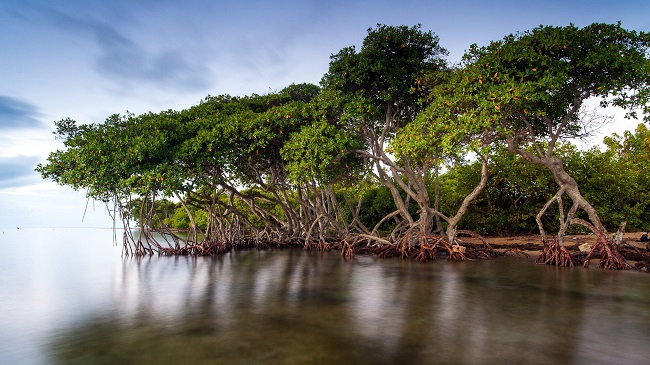
A civil society organisation (CSO), We the People, has stressed the need for the Cross River’s mangrove forests to be fully protected under the state’s forestry laws.
Mr. Ken Henshaw, Executive Director of the organisation, made the call in Calabar on Monday, March 2, 2026, while reacting to the recommended review of the Cross River State Forestry Law, 2010.
It will be recalled that, in the last eight months, 19 environmental protection CSOs led by the organisation came together to review the Cross River Forestry Law 2010 and recommended stronger laws to protect the forests within the state.
Mangroves
Henshaw noted that mangroves were forests and not rainforests, and therefore should enjoy equal legal status and protection under the Forestry Commission framework.
He acknowledged challenges of mangrove forest protection such as firewood exploitation, but added that conservation rules must apply adequately to mangrove ecosystems.
According to him, community participation is embedded within procedures guiding forest reservation and management.
“The reviewed forestry law of the state enables the Forestry Commission to designate forests as reserves with stakeholder engagement.
“It introduced reforms supporting individuals and organisations seeking to restore degraded forests, particularly mangroves without bureaucratic bottlenecks.”
Henshaw explained that previous laws only recognised regeneration tied to future logging concessions, requiring 10-year management plans and heavy upfront payments.
He said that the recommended review of the Forestry Law created a category for conservation-driven restoration without logging intentions.
”Under the new framework, groups restoring mangroves need only submit management proposals for Forestry Commission approval.
”Once approved, such mangrove areas gain official protection, preventing illegal sales or encroachment by host communities.
“Following the reviewed law, restoration projects will now operate under the commission’s protection instead of relying solely on community goodwill.
“Also, the reform strengthens legal backing for mangrove conservation and shields restored areas from exploitation,” Henshaw said.
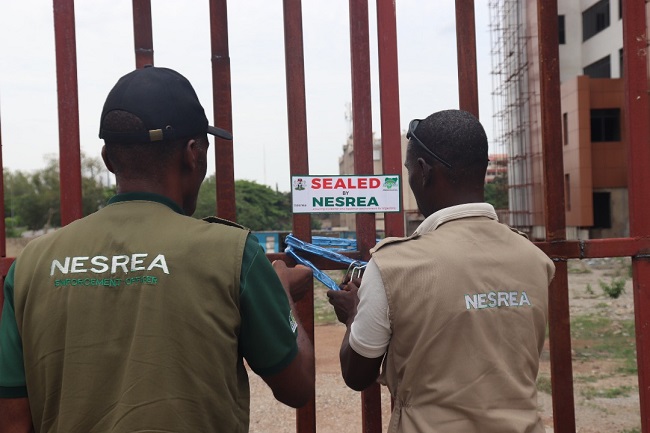
The National Environmental Standards and Regulations Enforcement Agency (NESREA) has sealed Dai Jin Jia Quarry, Aco Village, Airport Road, Abuja, due to significant environmental violations.
Speaking with newsmen on Monday, March 2, 2026, after the exercise, the Director-General of NESREA, Prof. Innocent Barikor, said the measures were to reinforce the agency’s commitment to environmental safety and community protection.
Barikor, who was represented by Elijah Udofia, Director, Environmental Quality Control in the agency, said that a blasting operation had resulted in the unfortunate loss of a life on Feb. 25.
Officials of the National Environmental Standards and Regulations Enforcement Agency (NESREA) during an Abuja enforcement operation
He said that the quarry was sealed in response to the grievous consequences of its operations.
“This action was taken in accordance with our agency’s commitment to uphold the highest environmental standards and ensure the safety of communities affected by such operations.
“It is distressing to see that in spite of the prior warnings and sealings, the facility chose to continue operations that not only violate National Environmental Regulations but also put lives at risk.
“In the face of this incident, we have taken immediate measures to reinforce our commitment to environmental safety and community protection,” he said.
Barikor recalled that the facility was previously sealed in 2025 due to significant environmental violations.
“The quarry has been sealed again, this time in response to the grievous consequences of its operations,” he said.
Barikor explained that preliminary investigation by officers of the Nigeria Police, Aco Division on Friday, revealed that the quarry did not have documented Blasting Operation Plan.
He said this was in violation of Regulation 17 of the National Environmental (Quarrying and Blasting Operations) Regulations 2013.
Barikor said the quarry could not produce documented Charge Load Density (CLD) (Quantity of Explosives) used for the blasting operation in violation of Regulation 23 of the National Environmental (Quarrying and Blasting Operations) Regulations 2013.
He said that the Warning Alarm System (Siren) of the quarry was faulty, as stated by the facility’s blaster during the investigation on Friday.
Barikor said this was in violation of Regulation 23, Section 6 of the National Environmental (Quarrying and Blasting Operations) Regulations 2013.
He assured the public that all responsible parties would be held accountable.
“This incident serves as a stark reminder of the critical importance of adherence to environmental regulations. We must prioritise not only compliance with laws but also the safety and well-being of our citizens.
“We urge all operators within the quarry sector and beyond to adhere strictly to the environmental standards set forth by NESREA.
“The safety of the environment and our communities cannot be compromised.
“We will continue to monitor compliance and take necessary actions against violators to ensure such tragedies do not occur in the future.
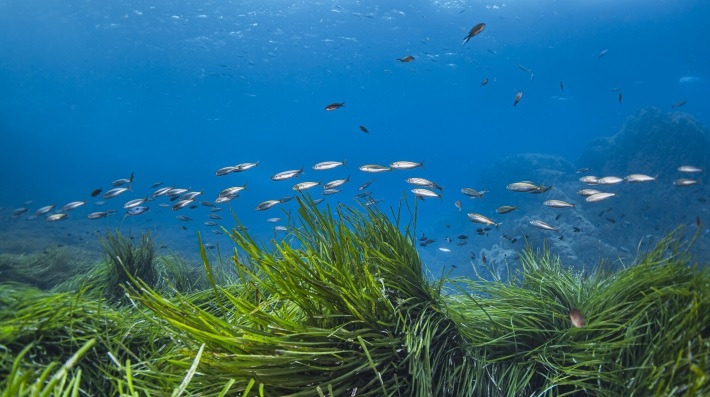
Seagrasses are one of the most widespread marine ecosystems on Earth, covering around 300,000 square kilometresof seabed in 159 countries.
Monochromatic seagrass meadows may not be as colourful as coral reefs or as mysterious as mangrove forests. But they are havens for fish, protect coasts from storms and are key stores of carbon, making them some of the world’s most valuable natural spaces.
Despite their importance, these ecosystems are in danger. A football field worth of seagrass disappears every 30 minutes and an estimated 7 per cent of meadows are being lost worldwide per year. Ocean acidification, coastal development and rising ocean temperatures due to climate change are the prime drivers of seagrass loss.
Seagrass
To raise awareness about the threats to these ecosystems, the United Nations has designated March 1 as World Seagrass Day.
“The seagrass ecosystem is a perfect example of nature in action, where habitats and the delicate web of life are intertwined in perfect harmony,” said Leticia Carvalho, who formerly led the Marine and Freshwater Branch of the United Nations Environment Programme (UNEP).
“On this, International Seagrass Day, let us shine a light on the magic of seagrass meadows and the species, human and non-human alike, who depend on them,” she added.
Carvalho said the world must prioritise timely, ambitious and coordinated actions that conserve, restore and sustainably manage seagrasses. As that happens, countries need to ensure that local communities, who have been living in harmony with nature for thousands of years, benefit. Ramping up these efforts is integral to reaching the Paris Agreement and many of the United Nations’ Sustainable Development Goals, said Carvalho.
Seagrass also considered crucial for helping countries meet the goals of the Rio Conventions, which are the three primary global agreements tackling climate change, biodiversity loss and land degradation. In order to achieve the targets of each and secure an environmentally sustainable future, UNEP’s latest State of Finance for Nature report estimates a need for US$29 billion dollars in annual investment in seagrass beds.
Here are five surprising ways seagrasses can safeguard wildlife, benefit people and help lay the groundwork for a more sustainable future.
Seagrass is a haven for marine species
Seagrass meadows are nurseries for 20 per cent of the world’s largest fisheries, found a 2020 report from UNEP and partners titled Out of the Blue: The Value of Seagrass to the Environment and to People. The survival of many species, such as turtles, seahorses, manatees and dugongs, depend on these meadows.
Thanks to its leafy underwater canopy, seagrass also provides shelter for countless small invertebrates, such as crabs and shrimp, as well as many species of algae and bacteria.
Seagrass filters water for corals, a biodiversity hotspot
Often called “nature’s water filter”, seagrass meadows were described as a super ecosystem in the Out of the Blue report. They help clean water by trapping carbon-rich sediments and absorbing nutrients and pathogens. Seagrass-dominated systems oxygenate water through photosynthesis, improving water quality and stoking coral growth.
Seagrass meadows create biodiversity hotspots by providing habitat and nutrients for countless species.
Due to its sensitivity to a range of stressors and contaminants, seagrass is an early indicator of the ecological health of coastal areas. When seagrass suffers, so does biodiversity.
Seagrass supports fisheries and livelihoods around the world
Seagrass is similar to terrestrial plants in that it has leaves, flowers, seeds, roots, and connective tissues. As such, it is an important food source for fish, octopuses, shrimp, oysters, clams and squid, underpinning fisheries that support hundreds of millions of people around the world, according to the Out of the Blue report.
In Tanzania, for instance, a decline in seagrass was found to have a negative impact on the livelihoods of women who collect invertebrates, such as clams, sea snails and sea urchins.
Seagrass is important for non-marine species, too
During their autumn migration, some geese and ducks graze on seagrasses poking out from coastal sediments. Other birds forage for invertebrates in the often shallow waters that surround the plants.
In December 2022, world leaders agreed to the Montreal-Kunming Global Biodiversity Framework, a pact designed to protect the diversity of life on Earth and ward off a looming extinction crisis. Carvalho said that as countries develop their national targets under the agreement, they must include protection for seagrass meadows.
“Seagrass meadows support a stunning array of life and safeguarding them is vital if we’re going to meet our global goals on biodiversity – and we have to,” she said.
Seagrass is an antidote to climate change
Often referred to as a type of blue forest, seagrass meadows, much like their terrestrial counterparts, help to counter climate change. Even though these meadows cover only 0.1 per cent of the ocean floor, they are highly efficient carbon sinks, storing up to 18 per cent of the world’s oceanic carbon, found the Out of the Blue report.
Seagrass also acts as the first line of defense along coasts by reducing wave energy, protecting people from the increasing risk of floods and storms.
The UN Decade on Ecosystem Restoration 2021–2030, led by the United Nations Environment Programme, the Food and Agriculture Organisation of the United Nations and partners, covers terrestrial as well as coastal and marine ecosystems. A global call to action, it will draw together political support, scientific research and financial muscle to massively scale up restoration.
A herd of wild horses ran into the new reserve in the Sumava Protected Landscape Area in the mountain range of the same name on the borders of the Czech Republic with Germany and Austria. They came to the site on the Blanice River from the “European Serengeti” reserve of large herbivores located in the former Milovice military training area not far from Prague.
“The meadow was one of few in the area not to undergo reclamation in the 1970s and 1980s, which is why the knotweed, burnet, devil’s bit, rampion, cornflower and other plants that grow here have survived in the surrounding area mostly only at the edges of the forests. I suppose that dusky large blue and scarce large blue butterflies live in a part of the area. The corncrake nested here after a long time this year,” said Michal Horejsi, founder of the reserve, describing the new site for wild horses.
Wild horses
“I want to utilise horses here to boost and increase biodiversity in the location. I don’t want to use machinery, as I’m convinced that I’d damage the existing relationships,” Horejsi added.
The reserve was set up in a record-breaking short time. Its founder established the first contact with European Serengeti in October, and the territory was already ready for a group of large ungulates at the end of November.
“We managed to capture the wild horses in the European Serengeti only in late December. By then the access roads were covered in ice due to a sharp change in weather, so the carriers couldn’t reach the captured animals. They only succeeded after several weeks,” said Dalibor Dostal, director of the conservation organisation European Wildlife, which founded the Milovice reserve in cooperation with scientists in 2015, describing the complications encountered in transporting the wild horses to the new reserve.
Large ungulates are helping to restore rare types of countryside at 16 sites in the Czech Republic, with a total area of over 700 hectares. They restore biodiversity, contribute to climate protection and carbon sequestration in soil as well as soil restoration.
They also play an important role in the creation of the public’s relationship with nature and are a financially efficient tool for tending large expanses of the landscape.
Climate change and natural climate variability are the major causes of weather extremes such as heavy rainfall. There have been reports from multiple ecological zones in Nigeria, indicating rainfall events in December 2025 through February 2026. These situations hint at an increasing crisis of rainfall variability that is imposing an increasingly severe humanitarian, economic, and ecological toll on one of Africa’s most populous nations.
Regional climate variability is driven by anomalies in the large-scale ocean and atmospheric circulations that modify regional atmospheric transport (Schwing et al., 2010). A result of this increased climate variability is the increased flooding events experienced in recent times.
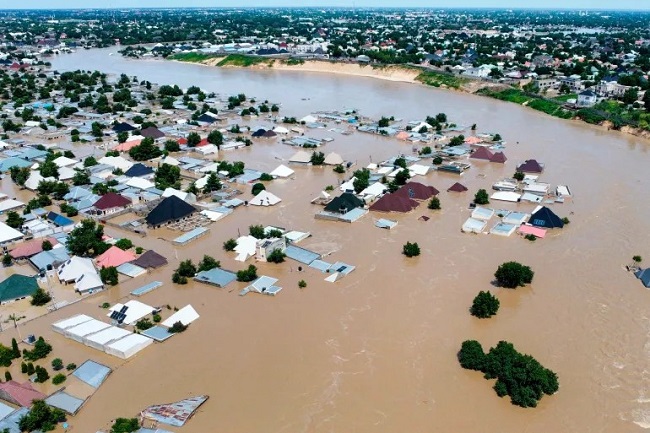
Flooding in Nigeria
Flooding is the most frequent, most lethal, and most economically destructive natural hazard in Nigeria, its frequency and severity are increasing measurably under anthropogenic climate change. Nigeria ranks 60th on the 2025 World Risk Index among 193 nations, with flood exposure scores ranging from 40.97 to 100.00 at sub-national level.
As Africa’s most populous nation with a population exceeding 220 million, the stakes of inadequate flood management are extraordinary: floods destroy livelihoods, contaminate water supplies, trigger disease outbreaks, devastate agricultural output that accounts for over 31% of GDP, and deepen the poverty of communities already living on the margins.
The scientific evidence linking this escalating hazard to climate change is now robust and formally quantified. The World Weather Attribution (WWA) network – an international consortium of climate scientists using probabilistic attribution methods – confirmed in October 2024 that human-driven climate change made seasonal downpours across the Niger and Lake Chad basins 5-20% more intense, directly contributing to the humanitarian catastrophe that killed 1,200 Nigerians and displaced 1.2 million in 2024.
WWA researcher Joyce Kimutai noted that “Africa has contributed a tiny amount of carbon emissions globally but is being hit the hardest by extreme weather”. At the current trajectory of global warming, “spells of heavy summer rainfall” in the Niger and Lake Chad basins could become annual events if global temperatures reach 2°C above pre-industrial levels – a threshold that climate models project could be crossed as early as the 2050s.
This article provides a comprehensive scientific analysis of Nigeria’s flooding and rainfall variability crisis, integrating attribution science, long-term observational data, and disaster impact assessments to examine the causes, manifestations, and consequences of extreme flooding, and to propose evidence-based responses aligned with the Sendai Framework for Disaster Risk Reduction 2015–2030 and the United Nations Sustainable Development Goals.
Rainfall Variability and Intensification
Nigeria is a country in West Africa that is characterised by a wide variety of ecoregions. shares borders with Cameroon, Chad, Niger, Benin, and the Atlantic Ocean. There are two major rainfall seasons in Nigeria – the dry season (typically from November to March) and the rainy season (typically from April to October). The north and south seasonal migration of the Inter-tropical Convergence Zone (ITCZ) following changes in the region of maximum diabatic heating in addition to sea surface temperature anomalies (SSTa) at the adjacent oceans are among the principal factors that control the seasonal rainfall variability in Nigeria.
The south-eastern states receive the highest annual precipitation (>3,000 mm/year) due to moisture-laden airstreams from the Atlantic and orographic effects of the Cameroon Highlands, while the north-east receives the least (<500 mm/year) under the influence of dry north-easterly Harmattan winds from the Sahara. Within this spatial framework, however, the critical trend of the past four decades is not merely towards greater total precipitation, but towards greater within-season variability, with rainfall increasingly concentrated in shorter, more intense bursts interleaved with extended dry spells.
The attribution of specific extreme rainfall events to anthropogenic climate change has advanced substantially through probabilistic event attribution (PEA) methods. The fundamental approach compares the probability of an event occurring in the observed climate with its probability in a counterfactual climate reconstructed without human influence, using ensembles of climate model simulations.
For Nigeria and the wider Niger-Lake Chad basin, WWA’s 2022 attribution study found that climate change, driven primarily by fossil fuel combustion increasing atmospheric CO₂ and associated radiative forcing had made similar heavy rainfall events no longer rare: an event return period that was once once-in-10-years now occurs on a recurrence interval of approximately 3-5 years in the current 1.3°C warmer world.
Borno State provides a particularly well-documented case study. Long-term meteorological records show that between 1961 and 1990, peak August precipitation reached 193.51 mm; by the 1991-2020 baseline, temperatures had increased from a January mean of 22.78°C to an April mean of 33.07°C, while precipitation patterns show a clear shift towards more intense short-duration events, precisely the conditions that overwhelmed drainage systems and contributed to the catastrophic September 2024 flooding.
The August-September 2024 rainfall across Borno triggered the collapse of the Alau Dam, affecting over 200,000 people, causing 230 deaths, and displacing an estimated 600,000 residents of Maiduguri the largest city in north-eastern Nigeria.
Compound Drivers: Climate Change, Infrastructure Failure and Government Deficits
Nigeria’s flooding crisis cannot be understood through the climate signal alone; it is a compound hazard in which climate-intensified rainfall interacts with infrastructure, governance, and land-use factors to produce catastrophic outcomes. Dam operations, both within Nigeria and in upstream countries constitute a major proximate driver of catastrophic flooding. The most egregious transboundary example is the Lagdo Dam in northern Cameroon, whose water releases during peak discharge periods have repeatedly triggered devastating floods in the downstream Niger and Benue river basins in Nigeria.
The 2012 floods – Nigeria’s worst in over 40 years, affecting more than 7 million people, displacing 2.1 million, and destroying over 5,900 houses across 32 states – were directly attributed to the combination of heavy rainfall and Lagdo Dam releases.
Within Nigeria, the Jebba Hydroelectric Power Station dam on the Niger River has caused at least six flooding events in downstream Mokwa communities – including the fatal April 2025 event that killed 13 people and destroyed over 10,000 hectares of paddy farms, just six weeks before the catastrophic May 2025 flash flood.
The pattern of repeated flooding from the same dam constitutes a governance failure as much as a natural disaster: communities and dam operators coexist within the same regulatory framework yet release management protocols evidently fail to protect downstream settlements from predictable, seasonal inundation.
Beyond dam operations, land-use change is a critical amplifier of flood risk. Nigeria has experienced significant deforestation, losing approximately 11% of its forest cover between 2000 and 2020 which reduces the natural capacity of catchments to infiltrate and retain rainfall, increasing surface runoff velocity and peak discharge volumes. In upstream areas feeding the Niger River basin, agricultural expansion, fuelwood collection, and charcoal production have stripped riparian vegetation that previously buffered floodwaters.
Rapid and largely unplanned urbanisation compounds the deforestation effect by replacing permeable natural surfaces with impermeable concrete and asphalt, dramatically increasing the speed and volume of stormwater reaching drainage systems. The Nigeria Hydrological Services Agency (NIHSA) classified major areas of Lagos State including Agege, Alimosho, Ikorodu, Lagos Island, and Eti-Osa, as high flood risk in 2025, acknowledging a measurable increase in rainfall frequency and intensity in the southern region.
Lagos, with an estimated population of 15-21 million and among the fastest-growing megacities in the world, epitomises the collision of climate intensification and urban governance failure: inadequate storm drainage designed for historical precipitation norms, uncontrolled floodplain development, drainage channels blocked by solid waste, and a built environment covering surfaces that once naturally attenuated runoff. Similar dynamics have been documented in Port Harcourt, Ibadan, Kano, and Abuja, each city experiencing worsening urban flooding as drainage infrastructure fails to keep pace with population growth and climate change.
The public health consequences of Nigeria’s flooding crisis are severe, multi-dimensional, and disproportionately borne by children, women, the elderly, and people with disabilities. Flooding directly disrupts water supply and sanitation infrastructure, contaminating drinking water sources with faecal matter, sewage, and chemical pollutants which create conditions for rapid outbreak propagation of cholera, diarrhoea, typhoid fever, and hepatitis A.
Flooded environments additionally create ideal breeding conditions for Aedes aegypti and Anopheles mosquitoes, the respective vectors for dengue/Zika/yellow fever and malaria by generating stagnant water pools in abandoned containers, depression pools, and partially inundated structures. Studies in Ajegunle, Lagos, found that waterborne diseases including diarrhoea, cholera, dysentery, and typhoid were the dominant post-flood health burden, killing mainly children in affected neighbourhoods.
Early Warning, and the Adaptation Imperative
Nigeria has developed a multi-agency flood early warning architecture involving the Nigerian Meteorological Agency (NiMet), the Nigeria Hydrological Services Agency (NIHSA), and the National Emergency Management Agency (NEMA), supplemented since 2025 by community-based flood forecasting pilots. In 2025, NEMA issued multiple advance warnings for Niger State including Mokwa citing it as one of 30 states at high flood risk and warning that 15 million Nigerians faced high flood risk across 1,200 communities. These warnings were disseminated through radio, television, social media, and community town criers.
Yet the May 2025 Mokwa disaster that claimed an estimated 500 lives despite advance warnings exposes the critical gap between hazard forecasting and disaster prevention: early warning systems, however technically capable, cannot protect communities that lack the physical infrastructure, economic resources, or institutional authority to act on warnings effectively.
Addressing Nigeria’s flooding crisis demands a paradigm shift from reactive emergency response to proactive, evidence-based climate adaptation, a transition explicitly called for by both NIHSA’s 2025 Flood Outlook and the Sendai Framework for Disaster Risk Reduction 2015-2030.
Conclusion
Nigeria’s flooding and rainfall variability crisis is not an anomaly or a manageable annual inconvenience: it is a scientifically documented and accelerating climate emergency. The attribution science is clear, human-caused climate change has made extreme rainfall in the Niger and Lake Chad basins 5-20% more intense, transforming once-rare 10-year events into near-annual occurrences. Long-term observational data document a statistically significant intensification of extreme precipitation across south-western and north-central Nigeria.
Crucially, climate change does not act alone: it interacts with and amplifies the consequences of inadequate drainage infrastructure, unregulated floodplain development, transboundary dam management failures, deforestation, urban sprawl, and a governance architecture that remains structurally oriented towards response rather than prevention.
Addressing this crisis therefore requires simultaneous action on multiple fronts: climate mitigation to limit further warming in line with SDG 13; adaptation investment in infrastructure, early warning, and green nature-based solutions; binding transboundary water governance; and structural poverty reduction to lower the vulnerability of the communities that suffer most when floodwaters rise.
Nigeria possesses the technical expertise and the financial capacity to implement these solutions.
By Okali Kelechi David, Programme Officer, Monitoring and Evaluation, Nigerian Environmental Study Action Team (NEST), Ibadan
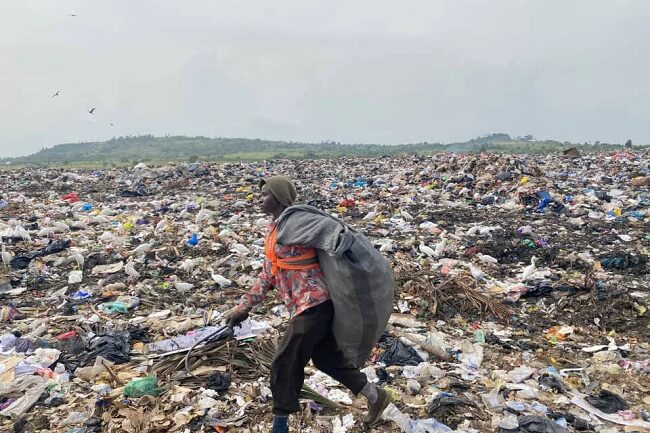
Waste pickers in Lagos have called for formal recognition and inclusion in Nigeria’s circular economy drive.
Mr. Friday Oku, President of the Association of Scraps and Wastepickers of Lagos (ASWOL), made the call on Sunday, March 1, 2026, to commemorate International Waste Pickers’ Day.
The theme for the 2026 International Waste Pickers’ Day is “Zero Waste and Circular Economy Initiative: No Sustainability without Waste Pickers.”
Waste picker
Oku said sustainability was impossible without waste pickers.
According to him, they recover, sort, and return valuable materials to productive use daily.
He said: “Our activities reduce landfill pressure, prevent pollution, conserve resources, and support climate action.”
He added that waste pickers practiced the circular economy long before it became a global concept.
However, he lamented that many waste pickers operated without formal recognition, social protection, or safe working conditions.
Oku urged governments and private sector stakeholders to recognise waste pickers as environmental service providers.
He also called for inclusive waste policies, occupational safety measures, fair compensation, and greater participation in formal waste management systems.
He reiterated that zero waste could not be achieved through policy alone, but through the people driving daily environmental action.
ASWOL is affiliated with the International Alliance of Waste Pickers.
The member representing the South East on the Governing Board of the North East Development Commission (NEDC), Sam Ifeanyi Onuigbo, has reaffirmed his support for President Bola Ahmed Tinubu’s reform agenda, describing the creation and strengthening of regional development commissions as a “historic step toward equitable national growth.”
Speaking during an interactive session, Onuigbo – an experienced legislator and development advocate – outlined the expected benefits of the newly invigorated regional development framework and weighed in on national politics ahead of the 2027 elections.
Onuigbo traced the roots of regional development initiatives to Nigeria’s First Republic, referencing the impactful work of the Eastern Nigeria Development Corporation, which he said played a key role in infrastructural and industrial expansion in the old Eastern Region.
Rep. Sam Onuigbo
He cited landmark projects such as the establishment of the University of Nigeria, Nsukka, and the development of industrial layouts that stimulated economic growth in the early 1960s.
According to him, President Tinubu’s revitalisation of regional commissions reflects an understanding of history and a commitment to correcting long-standing developmental gaps.
“The North East Development Commission is addressing devastations caused by insurgency, particularly the Boko Haram crisis,” Onuigbo explained. “Beyond reconstruction, it is tackling ecological challenges like desertification, climate change impacts, and educational deficits.”
He added that similar commissions across Nigeria’s geopolitical zones – covering the North East, North West, South West, and South East – are expected to drive grassroots development while contributing to overall national progress.
Turning to the evolving political landscape, Onuigbo noted that realignments across the country are being driven by what he described as “verifiable accomplishments” of the Tinubu administration.
He observed that three of the five South East states – Ebonyi, Imo, and Enugu – are currently aligned with the ruling party, the All Progressives Congress (APC), and predicted that more states could follow suit.
“Our people are pragmatic,” he said. “They are seeing federal presence in infrastructure, security appointments, and economic reforms. Realignment is a natural response to visible progress.”
Onuigbo pointed to federal road projects such as the reconstruction of the Enugu–Port Harcourt and Enugu–Onitsha highways, as well as the planned development of an airport in Abia State, as tangible evidence of increased federal attention to the region.
He also highlighted the restoration of previously delisted academic programmes at the Michael Okpara University of Agriculture, Umudike, describing it as a demonstration of the administration’s responsiveness to advocacy efforts.
Onuigbo commended Babagana Umara Zulum for supporting the implementation of the Supreme Court judgment granting financial autonomy to local governments.
He argued that direct allocation of funds to local councils would enhance grassroots development, improve rural infrastructure, and strengthen local security intelligence networks.
“Local government autonomy is critical for market development, rural roads, agriculture, and security at the grassroots,” he said. “When funds are released directly, the impact is immediate and visible.”
He urged other governors to respect and implement the Supreme Court’s ruling, noting that many had themselves benefited from judicial pronouncements validating their mandates.
Defending the administration’s economic policies, Onuigbo described the removal of fuel subsidy as a “bold but necessary decision” that has significantly increased federal and state revenues.
He noted improvements in fiscal allocations to states, declining inflationary pressures, and greater foreign exchange stability as signs of economic recovery.
“Governors are no longer struggling to pay salaries,” he said. “Revenue has multiplied compared to previous years.”
He also referenced major infrastructure initiatives such as the proposed coastal highway and inter-regional road corridors, which he believes will enhance trade connectivity and economic integration.
Onuigbo concluded by emphasising that regional development commissions are not merely political structures but strategic instruments for correcting historical imbalances and fostering inclusive growth.
“We are building from different regions but with a common national focus,” he said. “If we sustain these reforms, future generations will look back and recognize this period as a turning point in Nigeria’s development journey.”
As political alignments continue to shift ahead of 2027, Onuigbo remains confident that visible governance outcomes will shape electoral decisions – particularly in the South East – where he believes growing federal engagement is already influencing public perception.
The Nigerian Content Development and Monitoring Board (NCDMB) has enjoined operators in the midstream segment of the oil and gas industry to comply with the Nigerian Oil and Gas Industry Content Development (NOGICD) Act 2010, or risk attracting sanctions, including project withdrawal, suspension and criminal prosecution.
The Board also reaffirmed that obtaining the Nigerian Content Equipment Certificates (NCEC) attracts zero processing fees, and it had banned the use of middlemen in all its transactions and confirmed that expired or misapplied NCECs will lead to automatic disqualification from tenders.
These positions anchored the NCDMB Sensitisation Workshop for Midstream Companies and Stakeholders, held on Friday, February 27, 2026, in Lagos, as the Board deployed a five-directorate technical team to deepen compliance awareness across Nigeria’s fast-expanding midstream segment.
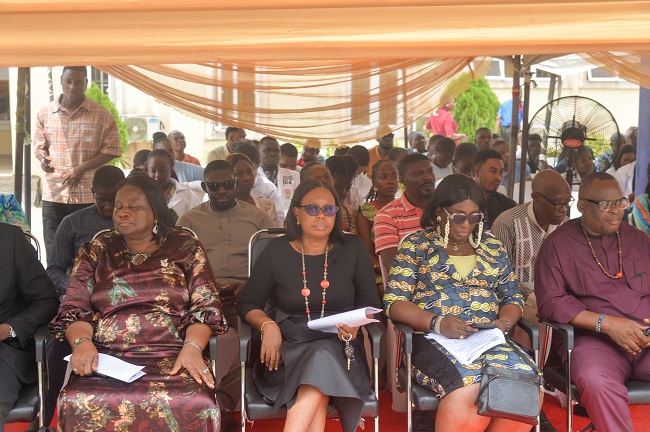
Dignitaries at the commissioning of the Clinical Skills and Simulation Laboratory at the Bayelsa Medical University
Organised by the Monitoring and Evaluation Directorate and supported by the Project Certification and Authorisation Directorate, Capacity Building Directorate and Planning, Research and Statistics Directorate, the workshop was themed, ‘Compliance with the Provisions of the NOGICD Act 2010: The Path to Industrialisation’.
Opening the workshop, the Acting Director of Monitoring and Evaluation, NCDMB, Mr. Omomehin Ajimijaye, said the decision to host the Lagos leg of the engagement underscored the Board’s commitment to extending Nigerian content enforcement beyond the upstream sector and the Niger Delta region.
“Today’s workshop is one of the key platforms for deepening engagement with the midstream sector. We are not focused only on the upstream sector. We are also doing our best to ensure that our midstream and downstream stakeholders are carried along in the quest for Nigerian content value expansion, and for the economic progress and energy security of our country,” he said.
Conveying the appreciation of the Executive Secretary of NCDMB, Felix Omatsola Ogbe, he thanked participants for honouring the invitation at short notice, describing them as strategic partners in the Board’s national mandate.
Ajimijaye outlined four objectives of the engagement: deepening understanding of the NOGICD Act; clarifying statutory reporting templates; addressing midstream-specific compliance challenges; and strengthening collaboration between the Board and industry players.
“Your feedback is crucial as we move towards our collective goal of raising Nigerian content to 70 per cent. This journey requires partnership and mutual understanding,” Ajimijaye added.
The Director of Capacity Building, Abayomi Bamidele, said, “The Act mandates all operators and contractors to prioritise Nigerian employment and training,” noting that any project or contract valued at $1m and above must submit an Employment and Training Plan for Board approval.
He explained the NCDMB Field Readiness Initiative, designed to bridge workforce gaps created by retirements and emigration of some personnel, and open the oil and gas sector to OND, HND and BSc holders via the NOGIC JQS portal.
Bamidele reiterated that NCEC processing is completely free, middlemen are prohibited, and companies must own, not lease, certified equipment.
Delivering a detailed technical presentation, the Supervisor, Project Certification and Authorisation Directorate, Mr. Elvis Ogede, explained that every operator was statutorily required to submit a Nigerian Content Plan in line with Sections 7 and 8 of the Act.
“With respect to your scope of work, we expect you to set targets. These targets are achievable, not just aspirations – with the capacity that exists in-country,” Ogede said.
He explained that operators must engage the Board at five mandatory points, including Nigerian Content Plan submission; approval of selective or sole-source contracting strategies; review of invitation-to-tender documents; participation in bid openings; and submission of technical and commercial evaluation reports before issuance of the Nigerian Content Compliance Commitment.
Clarifying recent changes, Ogede stressed that the NCCC was not a certificate of past compliance but a binding commitment.
“It is not a certificate that you have complied. It is a commitment – what you are going to do – and you will be monitored against it,” he said.
He also warned that Memoranda of Association could no longer substitute for valid NCEC, that expired NCECs are disqualifying, and that service-specific certification is mandatory.
“Nobody should expect to use a consultancy NCEC for fabrication work and then complain when disqualified,” he added.
The Deputy Manager, Midstream Monitoring Division, Mr. Damola Aderibigbe, outlined the Board’s monitoring framework, which spans performance, compliance and intervention monitoring across upstream, midstream and downstream operations.
“We do not just monitor activities – we measure performance against commitment,” he said.
He listed 14 statutory reports required from companies and warned that late or incomplete submissions remained the most common compliance failures.
Aderibigbe stressed that engineering firms must hold corporate COREN accreditation, not just individual staff certification.
“If you fall short of the law, remediation will be required, suspension may follow, legal action can be taken, and projects can be withdrawn. But the Board is a business enabler – we want compliance, not conflict,” he said.
The Supervisor, Planning, Research and Statistics Directorate, Mr. Emmanuel Paulker, said that the NOGIC JQS portal had registered 406,000 individuals and 11,445 companies, including 115 operators, though much of the midstream sector remains outside the system.
He said 1,603 expatriate quota applications had been processed, with 1,417 approvals, generating 13,833 employment commitments, and warned that companies must obtain NCDMB’s approval before approaching the Federal Ministry of Interior.
“Anything outside that process is a contravention of the law,” Paulker said.
Delivering the vote of thanks, the Supervisor, Midstream Monitoring Division, Engr. Pius Waritimi, reiterated that compliance commitments are binding and encouraged stakeholders to engage the Board early.
“We want everyone here to join the NCCF and the Sectoral Working Groups, where industry concerns can be addressed constructively,” he said.
Meanwhile, a state-of-the-art Clinical Skills and Simulation Laboratory, fully equipped by the NCDMB, was on Friday, February 27, 2026, commissioned at the Bayelsa Medical University (BMU), Yenagoa, with the goal of positioning the institution to align with global best practices in medical education, and “strengthening local capacity in Bayelsa State and Nigeria at large.”
Equipment provided include high-fidelity adult and pediatric patient simulators, laparoscopic training systems, obstetric trainers, advanced life support mannequins, consultation cubicles, and audio-visual learning systems, all of which the university authorities claimed would enable students to “learn, make mistakes, and perfect their life-saving skills in a zero-risk environment before they ever touch a human patient.”
Speaking at the commissioning ceremony at the Clinical Skills Acquisition Centre, BMU Main Campus, the Executive Secretary of the NCDMB, Felix Omatsola Ogbe, said that capacity building is “not just about oil and gas; it is about ecosystems,” and that the industry does not operate in isolation. He listed health care, education, engineering, and logistics, among others, as sectors with linkage to the oil and gas industry.
He noted that “Simulation-based learning is now the global standard in medical education” and that it allows students to acquire hands-on clinical skills, improves decision-making, and builds confidence in a controlled safe environment before engaging the blue patient.
Represented by Mr. Ene Ette, Acting Director, Planning, Research and Statistics (PRS) of the Board, the Executive Secretary commended the Management of BMU and partner organisations for their collaboration, professionalism, and shared vision, pointing out that the upgraded laboratory is a strategic investment in human capacity and capital development and a practical demonstration of how policy can translate into measurable impact.
In his welcome address, the Vice Chancellor of the institution, Professor Dimie Ogoina, noted that the event was not just the commissioning of a building or unveiling of medical equipment, it was about “securing the future of healthcare in Bayelsa State, the Niger Delta, and Nigeria at large.” He said words could not adequately express his profound gratitude to the Management of the NCDMB.
He recalled that when he assumed office as Vice Chancellor in 2025, he shared his vision, encapsulated in what he termed A.S.P.I.R.E. Agenda, to transform Bayelsa Medical University into a globally recognised leader in medical education, research, and innovation, driven by technology and excellence. “Today,” he remarked, “as we look at this world-class facility, we are seeing the ASPIRE Agenda come to life.”
To the Executive Secretary and the entire Management of the NCDMB, he declared: “You have provided us with the very best – from advanced patient simulators and CPR mannequins to essential surgical and diagnostic kits,” noting that by equipping the lab to such a standard, the Board was “directly contributing to the reduction of medical errors, the improvement of patient safety, and the development of indigenous healthcare professionals who will serve our communities and our industries.”
“We are not just training doctors for today, we are nurturing digital-age physicians capable of competing on the global stage,” he emphasised.
Professor Ogoina also appreciated the Bayelsa State Governor, Senator Douye Diri, and the Commissioners for Health and Education, for the unwavering support and for creating an enabling environment that allows partnerships like the one with NCDMB and its partner organisations to thrive.
In a similar vein, the Provost of the College of Medicine, Bayelsa Medical University, Professor Philip Eyimina, expressed profound gratitude to the NCDMB for its foresight and generosity in equipping the University Clinical Skills and Simulation Laboratory, and to the Bayelsa State Government for continued commitment to strengthening healthcare and education in the State.
He pointed out that the newly upgraded laboratory played a significant role in the institution’s recent accreditation verification exercise. According to him, “The presence of a functional, well-equipped Clinical Skills Laboratory strongly affirmed our readiness to deliver high-quality medical education in line with national standards.”
According to him, “In this laboratory, our students will learn essential competencies – history taking, physical examination, suturing, intravenous access, cardiopulmonary resuscitation, obstetric skills, and emergency response – while developing critical thinking, teamwork, and communication skills.”
In a special address, the State Governor, Senator Douye Diri, who is the Visitor to the University, lauded the NCDMB for providing facilities which he described as remarkable. He recalled the aspiration of the Vice Chancellor to make BMU “a leading university in medicine,” noting that “What the NCDMB has done is clearly a demonstration of going with that vision to market this university to the entire world.”
Represented by the State Commissioner for Education, Dr. Gentle Emelah, the Governor declared that the institution has the firm support of the State Government as it strives for high academic standards and global reckoning.
In a goodwill message, the Pro-chancellor of the University, Professor Tarilah Tebepah, said while the Governing Council was considering the vision of BMU becoming globally known as a leader in medical education, producing very sound innovative healthcare professionals, it never lost sight of the fact that a lot of technology, equipment and funding would be required.
He thanked the NCDMB profusely, while pleading that it should continue to identify with the institution as it grapples with resource-related challenges.
The event was concluded with a tour of key units of the state-of-the-art Clinical Skills and Simulation Laboratory, which include a Virtual Reality Station, Paediatric and Airway Management Stations, EGG and Patient Monitoring Station, IV Fluids Administration and Cannulation Station, and a Demonstration Hall.