The Oyo State Government has phased out large waste bins placed along major roads and market places, as a measure to boost the image of the state.
Commissioner for Environment and Natural Resources, Mr. Ademola Aderinto, made this known on Tuesday, March 24, 2026, at the inauguration of the Oyo SSS (Oyo Sọrọ Soke S’ita) whistle‑blower scheme in Oluyole Local Government Area.
Aderinto said that the bins, which are emptied daily at a cost running into millions of naira, had become permanent eyesore.
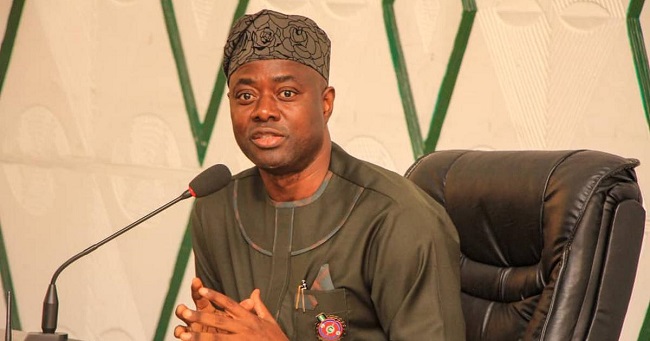
Gov. Seyi Makinde of Oyo State
“It is not befitting for our image. The money spent evacuating them could fund infrastructural development, health and education,” he said.
The commissioner said that the new initiative would also reward anyone who reports indiscriminate refuse dumping with one‑fifth of the offender’s fine, which carries a minimum of ₦50,000.
“Reports are treated anonymously but must be backed by concrete evidence; sanctions include fines, community service and imprisonment,” Aderinto said.
Also, Mr. Adetunji Lam-Adesina, Chief Executive Officer, Alluvia Unique Concept and Consultant Waste Management System, Oluyole Local Government area, said that the scheme could be likened to community policing, “but in this case it is for sanitation.
“If we don’t want things to deteriorate further, we should take this seriously.
“Without a clean and tidy environment, we are joking with so many things; our health, socio-economic activities, people will not come and invest.
“We as pacesetters should lead by example. Ibadan is a major city, and we should be able to live by global standards.
“It is just like community policing. People should ensure their neighbours are doing the right thing by telling the government and the reporter would be kept anonymous.
“Everyone that decides to be a whistleblower can be guaranteed of safety,” Lam-Adesina said
He solicited for all hands to be on deck to ensure a clean and safe environment in Oyo State.
Also, Chief Adeyemi Ojo, Chairman, Community Development Committee, Oluyole LGA, and Mr. Saheed Bayonle Ayedade, Agric Supervisor in the LGA, called on residents to take ownership of a cleaner environment.
Maize, rice and cassava drive more deforestation than major export-oriented crops like cocoa, coffee, and rubber.
This has been shown by researchers from Chalmers University of Technology, Sweden, in the most comprehensive global survey of how different commodities are causing deforestation.
The study confirms the major impact of meat production but reveals several overlooked drivers of deforestation.
Maize and cassava plants
Food production is the main cause of deforestation in the world, but until now there has not been any detailed mapping of which crops affect deforestation in which countries.
Chandrakant Singh, researcher at Chalmers University of Technology, is the lead author of a new study that addresses this knowledge gap. He has developed the Deforestation Driver and Carbon Emissions (DeDuCE) model, together with his colleague Martin Persson, who has extensive experience researching which agricultural commodities drive deforestation. The model links agricultural products with data on deforestation globally.
“Deforestation’s links to food production have long been studied, but have often focused on some products, such as beef, soybeans and palm oil, which are well known in the context of deforestation; and some countries in the world, such as Brazil or Indonesia. In our study, we’ve combined extensive satellite data on land use with agriculture statistics in a way that gives us the most comprehensive and accurate picture yet of what is driving deforestation worldwide,” says Singh.
The model covers 179 countries and 184 commodities. It shows that a total of 122 million hectares of forest have disappeared due to agriculture-driven deforestation during the period 2001–2022, of which more than 80 per cent has been lost in the tropics. The study confirms what we previously knew about the main drivers of deforestation: clearing forests to create pasture for meat production, as well as producing major export commodities such as soybeans and palm oil. But the study also contributes some more unexpected results.
Staples a strong driver of deforestation
The mapping shows that locally produced and consumed staple crops have a greater impact on deforestation than many major export commodities. Staple crops such as maize, rice and cassava together are responsible for about 11 percent of all agriculture-driven deforestation, while the figure for cocoa, coffee and rubber combined is less than 5 per cent.
Unlike many other commodities, such as palm oil in South-East Asia and soybeans in South America, deforestation linked to staple crops is not concentrated to specific regions, but is distributed across large parts of the globe.
“The debate on deforestation has circulated a lot around how people in rich countries like ours cause deforestation with our commodities imports, and this is absolutely important to get to grips with. But we mustn’t forget that a large proportion of deforestation is driven by agricultural production for domestic markets. So to really reduce deforestation, we must also take action in the producer countries,” says Martin Persson.
The researchers hope that their results can provide important decision support for government agencies and companies wanting to take action to reduce deforestation.
“Our data shows where the risks are and where initiatives are needed most. The goal is for the model to connect researchers, decision-makers, companies and civil society,” says Singh.
Emissions from deforestation lower than anticipated
The study also provides a detailed picture of the carbon dioxide emissions that deforestation associated with agricultural and forestry products causes. Farmers and cattle ranchers often clear forested land by burning it, which means that the carbon stored in the vegetation is emitted as carbon dioxide.
These emissions are estimated at around 41 billion tonnes of carbon dioxide between 2001 and 2022, or on average close to 2 billion tonnes per year. This is a much lower figure than in previous global compilations, where annual carbon dioxide emissions have been estimated at more than twice these figures. According to Dr. Singh, the difference can be explained by the fact that their study has used a finer-scale attribution method than those used in the previous calculations.
“But even if the figure is lower than previous estimates, agriculture-driven deforestation still causes around 5 per cent of the world’s total carbon dioxide emissions,” he says.
Improving the model further the goal
The researchers estimate that the model will be expanded to include non-food commodities in the future.
“We see a need to broaden the analysis beyond food and agriculture. One example is the mining and energy sector, which is a major driver of both direct and indirect deforestation. By broadening the analysis, we can get a more complete picture of which economic activities are putting pressure on forests around the world,” says Singh.
Rising sea surface temperatures in coastal waters are driving 50 to 64 percent of the increase in large-scale humid heatwaves, according to new research.
The study, from researchers at the Potsdam Institute for Climate Impact Research (PIK), Princeton University and Sun Yat-sen University, implies that coastal sea surface temperatures could be a potential early warning indicator for widespread humid heat extremes.
Humid heatwaves have intensified rapidly in recent decades and are projected to worsen, raising the risk of heat-related mortality. Previous research has indicated that even healthy people can succumb to wet bulb temperatures – a measure combining heat and humidity – above 31.5°C, when the body is no longer able to cool itself by sweating.
Coastal waters
However, the widespread occurrence of humid heatwaves across large regions, like the 2023 heatwave in Asia, has so far remained poorly understood.
“We see a strong link between warming coastal waters and clustered hot, humid extreme events, especially in the tropics, where oceans supply more moisture to the atmosphere, which is then transported to land, amplifying the heat,” says lead author and PIK scientist Fenying Cai. “In regions further from the equator, combined land-ocean warming, linked to large-scale atmospheric wave patterns, also plays an important role.”
Analysing climate data from 1982 to 2023 using a complex network approach, the international research team uncovered strong land-ocean linkages. For example, warming Indian Ocean waters are closely tied to rising humid heat risks in South Asia and the Middle East, while tropical North Atlantic Ocean warming intensifies risks in northern South America. The study also shows that these ocean influences are stronger for large-scale events than for isolated local heatwaves.
“Better understanding these land-ocean interactions can help to improve climate adaptation strategies. Crucially, coastal sea surface temperatures emerge as a potential early warning indicator for widespread humid heat extremes,” says co-author and PIK scientist, Jürgen Kurths.
The European Union (EU)’s vast experience on multilevel governance and partnerships indicates how climate pledges can turn into real-world results through closer cooperation with cities and regions, according to a new report launched by the Global Covenant of Mayors for Climate & Energy (GCoM) and C40 Cities.
The report documents how European institutions, as well as national, regional and local governments across the EU are engaging to design, finance and deliver climate action on the ground.
The report, “The European Multilevel Governance Story: Evidence on CHAMP-aligned Implementation in Practice,” identifies tangible examples from the EU and across European countries to show how empowering cities facilitates the implementation of climate and energy policies locally.
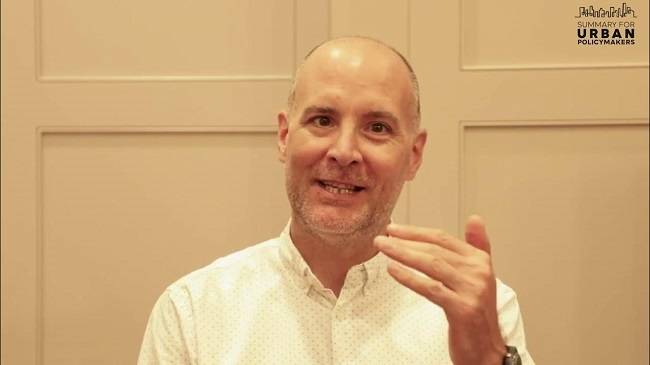
Andy Deacon, Co-Managing Director of the Global Covenant of Mayors for Climate & Energy (GCoM)
It collects existing evidence on how the European model of multilevel governance is helping translate national and global climate targets into on-the-ground projects, investments and emission reductions, while offering an inspiration for other countries aligned with the Coalition for High Ambition Multilevel Partnerships (CHAMP).
The findings come as the European Union has joined the CHAMP Coalition as its 78th endorser, marking a significant step in strengthening global cooperation between national and subnational governments. Launched at COP28, the coalition aims to accelerate climate ambition by recognising the central role of cities and regions in delivering national climate goals.
Laurence Graff, Adviser for Multi-level Climate Action, representing the European Commission, said:“Across the European Union, multilevel partnerships and active cooperation among various levels of government are essential to designing and delivering climate action on the ground. The EU works closely with Member States, cities and regions because effective climate action depends on all levels of government moving in the same direction, helping one another for a coherent and effective delivery. By strengthening cooperation, sharing expertise and supporting investment in local solutions, we are turning European climate ambition into real transformation for communities.”
From Spain to Sweden: the European path to local climate implementation
The report highlights a sample among successful multi-level partnership initiatives in the EU and the Member States. These examples illustrate how the EU’s multilevel governance structures, partnerships, and initiatives are crucial to deliver its climate and energy goals in a just and inclusive way.
Germany has since COP30 been announced as co-chair of CHAMP alongside Brazil under the coalition’s new governance structure. The country’s commitment to empowering local climate action is reflected in its National Climate Initiative, which since 2008 has invested €2.2 billion in more than 60,000 local projects and mobilised nearly €7 billion in total investments;
Denmark is on track to become the first country where nearly all municipalities have climate plans aligned with the Paris Agreement, with the support of the DK2020 project and the Climate Alliance. Adding together their emission reduction targets, the Danish local governments aim to help reduce emissions by 76% by 2030, exceeding the national target of 70% reduction;
In Croatia and Portugal multilevel climate and energy dialogues mandated under the European Governance Regulation, with the support of the European funded NECPlatform project, have been used to engage with local governments and discuss how to improve coordination, financing access, and implementation capacity; In France, they were used to develop recommendations for improving existing institutional processes to become more inclusive, transparent and effective.
Italy’s regions, including Emilia-Romagna and Apulia, are acting as key intermediaries, helping municipalities design and implement local climate plans at scale;
Spain’s CitiES2030 platform is accelerating climate neutrality in cities, bringing together the national government, cities, businesses, and academia for learning, collaboration, and project implementation.;
Sweden’s Viable Cities programme works with 48 cities and 6 national agencies to accelerate the climate transition in cities toward climate neutrality by 2030, pioneering innovative collaboration models.
A multilevel partnership model
The report finds that, based on the EU experience, strong policy frameworks, dedicated support for cities and regions, and structured cooperation across all levels of government are needed to ensure cities are empowered to contribute to the delivery of national climate goals.
Andy Deacon, Co-Managing Director of the Global Covenant of Mayors for Climate & Energy (GCoM), said: “The EU’s experience shows that multilevel governance is not a theory, but a proven model for delivering climate action on the ground. It demonstrates that strong policy frameworks, combined with empowered cities and regions, structured cooperation, and dedicated access to finance, can unlock faster and more effective implementation.
“It also highlights the critical role of regional governments, local government associations, and technical partners in bridging national ambition with local delivery. As countries around the world move to implement their climate commitments, the examples in this report provide an inspiration on how multilevel partnerships can turn climate goals into tangible results.”
As the CHAMP Coalition enters its implementation phase, the EU’s experience can offer concrete examples for countries seeking to strengthen cooperation with subnational governments. Empowering cities and regions can help close implementation gaps and deliver faster climate progress worldwide.
C40 Cities and the Global Covenant of Mayors for Climate & Energy (GCoM) have announced the first 34 cities and two states in Brazil selected to receive technical and finance-structuring support for climate action projects under the Brazil Mutirão Programme.
The selected projects focus primarily on urban mobility, waste management, and climate budgeting, with 11 cities in the Amazon region, underscoring its central role in Brazil’s climate agenda following COP30. Six of these Amazonian cities will also receive support to develop Climate Action Plans.
Supported by Bloomberg Philanthropies, the Brazil Mutirão Programme helps local governments turn climate ambition into action by mobilising technical expertise, strengthening institutional coordination, and improving cooperation between Brazil’s national government and local governments to deliver high-impact solutions where they matter most: in cities.
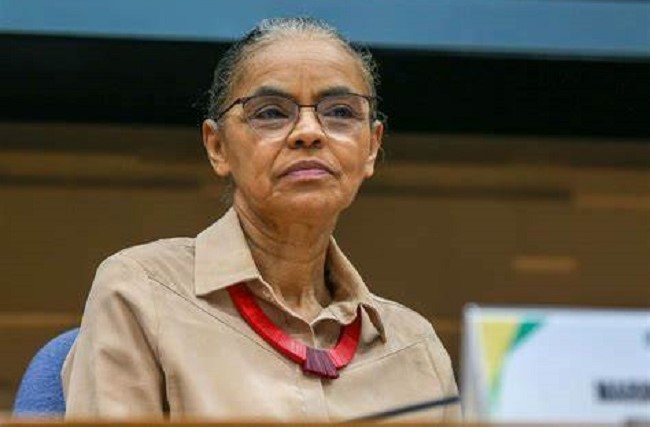
Ms. Marina Silva, Minister of the Environment and Climate Change of Brazil
The announcement was made during the General Assembly of the National Front of Mayors in Curitiba. Overall, the programme reflects the diversity of Brazil’s territory, bringing together cities of different sizes and all geographic regions, spanning 19 states across the country. Among the selected cities are Curitiba, Rio de Janeiro, São Paulo, Salvador, Fortaleza, Belo Horizonte, and Belém, host of COP30 last year. Two states were also selected: Pernambuco and Rio Grande do Sul.
The first cities and regions announced will develop climate projects primarily focused on electric mobility, sustainable mobility and organic waste management. Initiatives include the revitalisation and pedestrianisation of Belém’s historic commercial centre through the Belo Centro urban mobility project; the electrification of Belo Horizonte’s bus system with the deployment of 100 electric buses and charging infrastructure; composting initiatives in Curitiba and the Amazonian city of Ananindeua expected to reduce around 5,000 tons of CO₂e methane emissions annually; and a food waste reduction initiative in the state of Rio Grande do Sul that will expand food bank refrigeration and processing capacity, preventing more than 240 tons of edible food waste per year.
Across all announced projects, cities and regions are expected to deliver significant climate and urban development outcomes. Urban mobility initiatives include the deployment of approximately 600 electric buses, at least three charging terminals, more than 200 km of cycling infrastructure, 16 km of dedicated bus lanes, nine complete streets or urban parks, and the revitalisation of at least three neighborhoods.
Waste management projects are expected to enable the treatment of approximately 20,000 tons of organic waste per year, potentially avoiding up to 35,000 tons of CO₂e in methane emissions annually.
Strengthening Climate Action in the Amazon
Eleven cities in the Amazon region are participating in the Brazil Mutirão Programme, reflecting the region’s strategic importance for Brazil’s climate agenda and COP30’s legacy. The programme combines support for climate planning with the development of concrete implementation-ready projects.
Six cities – Barcarena, Altamira, Cáceres, Boa Vista, Parintins, and Rio Branco – will receive support to strengthen local climate governance and develop Climate Action Plans, helping municipalities build the institutional capacity needed to address climate risks while advancing sustainable urban development.
In parallel, other Amazonian cities will advance sector-specific climate projects. Benevides and Ananindeua will structure organic waste management initiatives to reduce methane emissions and strengthen circular economy solutions. Belém and Porto Velho will implement sustainable urban mobility projects, including public transport improvements and the electrification of urban fleets.
By combining planning with implementation support, the Mutirão Programme strengthens the role of Amazonian cities as key actors in protecting the region’s ecosystems while improving residents’ quality of life. Protecting the forest also depends on resilient, sustainable cities, where climate planning, infrastructure investment, and inclusive development reduce vulnerability to floods, droughts, and extreme climate events.
Through stronger governance, improved data use, and the development of climate action strategies, the initiative positions Amazonian cities not only as guardians of a globally critical biome but also as laboratories for sustainable urban development that can inform climate action across Brazil and beyond.
Michael R. Bloomberg, UN Special Envoy on Climate Ambition and Solutions and founder of Bloomberg Philanthropies, said: “Cities continue to make important strides fighting climate change, and Brazilian mayors are helping to lead the way with projects that cut emissions, strengthen local infrastructure, and create economic opportunity for communities. By providing cities and states with technical support and data, and by building partnerships across all levels of government, this initiative can help Brazil speed up progress and offer a blueprint that countries around the world can follow.”
Ana Toni, COP30 CEO, said: “Cities are where the fight against climate change is won or lost, and mayors are proving that local leadership can turn climate ambition into real progress for people. By bringing together national and local governments around shared data and proven solutions, this initiative shows how multilevel partnerships can deliver climate action at scale, offering a practical blueprint that countries around the world can follow.”
Sebastião Melo, Mayor of Porto Alegre and President of the National Front of Mayors (FNP), said: “We advocate for a national plan that recognises regional and local specificities and is supported by public investment and strong partnerships. Life happens in cities, and the partnership between the National Front of Mayors (FNP), C40 Cities, and the Global Covenant of Mayors shows the importance of bringing leaders together to move beyond rhetoric and make real progress.
“It is in municipalities that citizens most strongly feel the impacts of climate change, and for that very reason, action must also start there. This strategic effort led by FNP is particularly important because it engages cities of all sizes, across every region of Brazil, demonstrating that local governments play a decisive role in turning commitments into action and improving people’s lives.”
The Mayor of the City of Curitiba, Eduardo Pimentel, said: “When cities and partners work together, climate commitments move beyond rhetoric and become concrete results in people’s daily lives. Climate action happens in cities, where people live and where the impacts of climate change are felt first. Curitiba is proud of its pioneering trajectory in urban sustainability and innovative mobility.
“Throughout our history, we have learned that addressing climate challenges requires cooperation, innovation, and the ability to implement practical solutions. As a member city of C40, we remain committed to leading by example and strengthening partnerships that enable us to accelerate solutions and build cities that are more resilient, sustainable, and prepared for the future.”
Andy Deacon, co-Managing Director of the Global Covenant of Mayors for Climate & Energy (GCoM) and Managing Director Multi Level Partnerships, said: “Climate action moves faster and delivers greater impact when national and local governments work together. The Brazil Mutirão Programme shows how multilevel partnerships can turn ambition into implementation by equipping cities and regions with the tools, data, and financing pathways they need to deliver solutions on the ground. By bringing together mayors, national institutions, and global partners, Brazil is demonstrating how collaborative governance can accelerate climate action at scale and more: creating a model that other countries can follow.”
Mark Watts, Executive Director of C40 Cities, said: “Mayors across Brazil are stepping up with bold ideas to tackle the climate crisis while improving everyday life for their residents. The Brazil Mutirão Programme is about connecting cities with the technical expertise and partnerships to accelerate plans into action, from cleaner transport systems to smarter waste solutions. By backing city leadership, Brazil is helping demonstrate how local action can drive national and global climate progress.”
First Cohort of Selected Cities and Regions for the Brazil Mutirão Programme
Urban Mobility projects
Rio de Janeiro (Rio de Janeiro)
Salvador (Bahia)
Fortaleza (Ceará)
Belém (Pará)
Belo Horizonte (Minas Gerais)
Caxias do Sul (Rio Grande do Sul)
Contagem (Minas Gerais)
Maranguape (Ceará)
Montes Claros (Minas Gerais)
Porto Velho (Rondônia)
State of Pernambuco
Serra (Espírito Santo)
Waste Management projects
Curitiba (Paraná)
Ananindeua (Pará)
Aracati (Ceará)
Beberibe (Ceará)
Benevides (Pará)
Carinhanha (Bahia)
State of Rio Grande do Sul
Cascavel (Ceará)
Florianópolis (Santa Catarina)
Fortim (Ceará)
Guaxupé (Minas Gerais)
Maracaju (Mato Grosso do Sul)
Pindoretama (Ceará)
Porto Alegre (Rio Grande do Sul)
Recife (Pernambuco)
Rio Branco (Acre)
São Bento do Sul (Santa Catarina)
Climate Action Plans in Amazon Cities
Altamira (Pará)
Barcarena (Pará)
Boa Vista (Roraima)
Cáceres (Mato Grosso do Sul)
Parintins (Amazonas)
Rio Branco (Acre)
Climate Budgeting
São Paulo (São Paulo)
Campinas (São Paulo)
Rio de Janeiro (Rio de Janeiro)
Curitiba (Paraná)
Salvador (Bahia)
Fortaleza (Ceará)
Recife (Pernambuco)
Mutirão Brazil Programme
The Brazil Mutirão Programme is a national initiative led by C40 Cities and the Global Covenant of Mayors for Climate & Energy (GCoM), with support from Bloomberg Philanthropies, to accelerate the implementation of urban climate solutions across Brazil.
Launched in November 2025 at the COP30 Local Leaders Forum in Rio de Janeiro, the programme mobilises technical expertise, institutional coordination, and strategic partnerships to help cities move from climate ambition to implementation-ready projects.
Through workstreams focused on Urban Mobility, Waste Management, Climate Finance, Access to Climate Data, Climate Budgeting, Inclusive Climate Action, Climate Action Planning in the Amazon, and Climate Diplomacy, the programme supports municipalities in developing bankable project pipelines and strengthening local climate governance.
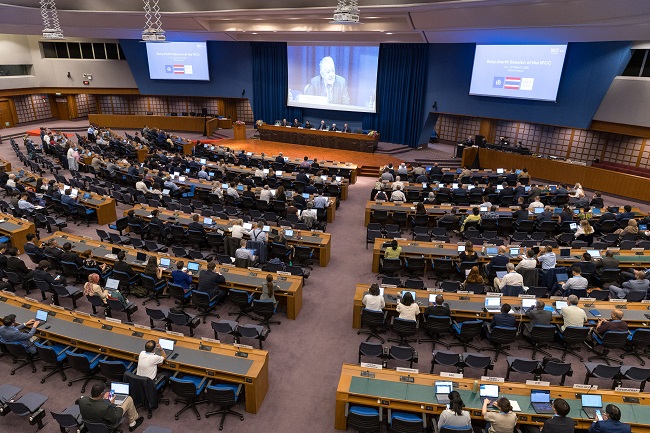
The Intergovernmental Panel on Climate Change (IPCC) began its Sixty‑fourth Plenary Session at the United Nations Economic and Social Commission for Asia and the Pacific (UNESCAP) in Bangkok, Thailand, on Tuesday, March 24, 2026.
Nearly 300 delegates representing IPCC member governments and observer organisations from around the world gathered to advance IPCC’s planned work in the seventh assessment cycle. The session is scheduled from March 24 to 27, 2026.
A key agenda item for this Session is the review of the Principles and Procedures that govern the work of the IPCC, which are subject to review every five years.
The IPCC began its Sixty‑fourth Plenary Session on Tuesday in Thailand
With the Panel now more than two and a half years into the seventh assessment cycle, IPCC Chair, Jim Skea, invited member governments to initiate this review at this plenary session and strengthen how the IPCC conducts its business.
“The principles and procedures governing our work are vital in safeguarding IPCC’s ability to deliver comprehensive, neutral, objective, transparent, inclusive, and scientifically robust assessments,” said IPCC Chair Jim Skea during his opening remarks. “The Panel can seize the opportunity presented at this plenary to give this important matter its full and undivided attention,” he added.
During the four-day meeting, the Panel will also discuss raising funds for the IPCC Trust Fund, the work programme of its Task Group for Data Support for Climate Change Assessments, and will consider new observer organisations, among other items. The Panel will also receive progress updates from different parts of the IPCC and various products of the seventh assessment cycle.
The IPCC’s seventh assessment cycle formally began in July 2023 and will culminate in the release of the Synthesis Report to the Seventh Assessment Report (AR7) in 2029. In this cycle, the IPCC will prepare the AR7, comprising three Working Group contributions and a Synthesis Report, and update the 1994 Technical Guidelines for Assessing Climate Change Impact and Adaptation.
The Panel will also produce a Special Report on Climate Change and Cities, the Methodology Report on Short-Lived Climate Forcers and the Methodology Report on Carbon Dioxide Removal Technologies, Carbon Capture, Utilisation and Storage.
During the opening ceremony, delegates were welcomed by the Permanent Secretary of Thailand’s Ministry of Natural Resources and Environment Raweewan Bhuridej. The Plenary was also addressed by the IPCC Chair Jim Skea and the Deputy Secretary General of the World Meteorological Organisation, Ko Barrett.
The opening ceremony also included video messages from Inger Andersen, Executive Director of the UN Environment Programme, and Simon Stiell, the Executive Director of the United Nations Framework Convention on Climate Change.
The European Union (EU) delegation to Nigeria and ECOWAS has announced the roll-out support of €288 million to Nigeria’s healthcare, agriculture, finance, migration, climate and digital public infrastructure sectors.
The delegation made the announcement at the EU-Nigeria Ministerial news conference in Abuja, to announce the roll-out funds for grant and support for the Nigerian economic sector.
The announcement was done under the new commitment of the EU-Nigeria Partnership.
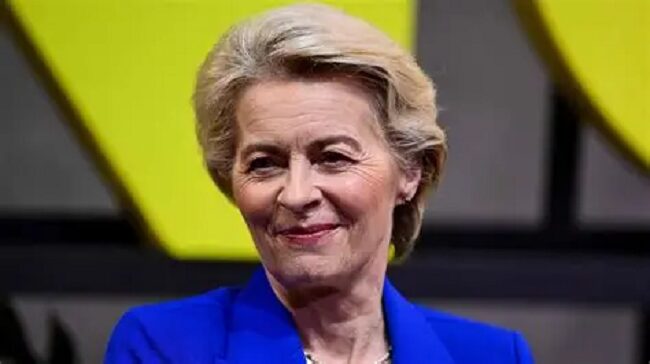
Ursula von der Leyen, President of the European Commission
Mr. Stefano Signore, Director General, International Partnerships, European Commission, said that the project represented the acceleration in investment that EU was supporting as part of its Global Gateway Strategies.
Signore said that though much had been done, more was expected to be delivered through the global gate-way strategies.
He said that health and agriculture stood out in this respect as they join forces to improve standards, infrastructure and local manufacturing and inclusion.
He said that the bloc was committing to stronger cooperation on sustainable migration by providing better life options to returnee migrants.
Earlier, Mr. Abubakar Bagudu, Minister of Budget and Economic Planning, said that the event was built on the strong momentum generated at the 2023 EU-Nigeria Strategic Dialogue, which represented a significant milestone.
Bagudu said that it had elevated the mutual engagement and formally launched the EU’S Global Gateway Strategy in Nigeria.
He said that the moment signalled a deepening of ties and a shared commitment to a modern partnership anchored on mutual respect, shared prosperity, and sustainable investment.
“Our engagement has continued to evolve toward a more investment-drive, result-oriented and impact-focused framework that reflects both our ambitions and the realities of a rapidly changing global economy.
“Nigeria remains firmly committed to deepening this strategic relationship. Under President Bola Tinubu’s leadership, we are implementing bold and far-reaching macroeconomic reforms.
“These reforms aim at stabilising the economy, strengthening fiscal sustainability, and creating an enabling environment for private sector-led growth.
“They include efforts to improve revenue mobilisation, enhance transparency in public financial management, rationalise expenditures, and strengthen the efficiency of our foreign exchange market,’’ he said.
Bagudu, represented by Dr Doris Anite-Uzoka, Minister of State, Budget and Economic Planning, said that collectively, they were laying the ground work for a more competitive, resilient, and inclusive economy.
Dr Olasupo Olusi, the Managing Director/CEO Bank of Industry (BoI), said that the synergy demonstrated how strategic partnership could channel long-term investment into Nigeria’s most critical sector.
According to him, through the partnership with the European investment Bank, targeted, long-term financing are being into two priority sectors, healthcare and agriculture.
He said that the sectors were central to Tinubu’s agenda for national resilience and inclusive growth.
Mr. Jarno Syrjaia, the Under Secretary of State for Foreign Trade, Finland, said that Finland assumed the lead role in the new Team Europe Initiative.
Syrjaia said that it was to Strengthen Nigeria’s Digital Public Services and support the three million Technical Talents (3MTT).
He said that his government was proud to announce its responsibility to enhance Nigeria’s digital public services and advance inclusive digital skills.
He said that Finland’s development and training company, HAUS, would lead the implementation in partnership with Estonia’s development agency, ESTDEV, to bring together European expertise in digital government and public-sector innovation.
Mr. Uche Amaonwu, Country Director, Gates Foundation, said that supporting health manufacturing was critical to shared strategic goals.
Amaonwu said that the foundation was glad to work together with its partners who lead the way in mobilising financing for African healthcare players.
He said that it was encouraging to see that the work was translating into concrete investment in Nigeria through the BoI facility.
“We congratulate the BoI and PVAC for mobilising this innovative facility that will serve the real financing needs of Nigerian health manufacturers,’’ he said.
Out of the €288 million, €23 million is for grant support for the Nigerian DPI.
“€108 million is for the recent signatures of €22 million grant and €86 million loan to the Nigerian Government.
Furthermore, €50 million is for the recent signature of a lending Facility to the Bank of Industry to boost the development of healthcare manufacturing project in Nigeria.
Also, €5 million is for a grant supporting training in health, pharma and nutrition sectors.
Others are €85 million in a recent signature of a lending facility to the BoI to support on-lending operations in favour of agri-businesses in selected value chains, in particular dairy and cocoa.
€1 million is for an upcoming launch of a Twinning project with the Ministry of Agriculture, to bring in public sector climate/agriculture experts from Austria, Czech Republic and Latvia.
“€16 million will be for an additional contribution to support Nigeria’s efforts in improving and strengthening the sustainability of its migration governance framework.
This will focus on reintegrating of returning migrants and countering trafficking in human beings (THB) and smuggling of migrants (SoM).
TotalEnergies has signed settlement agreements with the United States Department of the Interior (DOI) to relinquish its Carolina Long Bay lease (Lease OCS-A 0545) and its New York Bight lease (Lease OCS-A 0538), both awarded in 2022, along with its partners. As a result, TotalEnergies will no longer develop offshore wind projects in the United States.
Under the terms of the settlement, TotalEnergies will recover the lease fees paid and will invest an equal amount in the development of U.S. Gas & Power production and exports.
TotalEnergies
TotalEnergies’ studies on these leases have shown that offshore wind developments in the United States, unlike those in Europe, are costly and might have a negative impact on power affordability for U.S. consumers. Since other technologies are available to meet the growing demand for electricity in the United States in a more affordable way, TotalEnergies considers there is no need to allocate capital to this technology in the U.S.
“TotalEnergies is pleased to sign these settlement agreements with the DOI and to support the Administration’s Energy Policy. Considering that the development of offshore wind projects is not in the country’s interest, we have decided to renounce offshore wind development in the United States, in exchange for the reimbursement of the lease fees,” said Patrick Pouyanné, Chairman of the Board of Directors and Chief Executive Officer of TotalEnergies.
“Furthermore, these agreements, under which we will reinvest the refunded lease fees to finance the construction of the 29 Mt Rio Grande LNG plant and the development of our oil and gas activities, allows us to support the development of U.S. gas production and export. These investments will contribute to supplying Europe with much-needed LNG from the U.S. and provide gas for U.S. data center development. We believe this is a more efficient use of capital in the United States,” added Pouyanné.
TotalEnergies has also signed recently a Letter of Intent (LOI) with Glenfarne, lead developer of the Alaska LNG project, for the long-term offtake of 2 million tons per year (Mtpa) of liquefied natural gas (LNG) over 20 years, subject to the project’s final investment decision.
TotalEnergies is deploying its integrated energy model across the United States, where it has been active since 1957. Since 2022, TotalEnergies has invested nearly $12 billion in the U.S. to accelerate development in oil, LNG, and electricity.
TotalEnergies is integrated throughout the LNG value chain, with upstream gas production assets in Texas and offshore U.S.
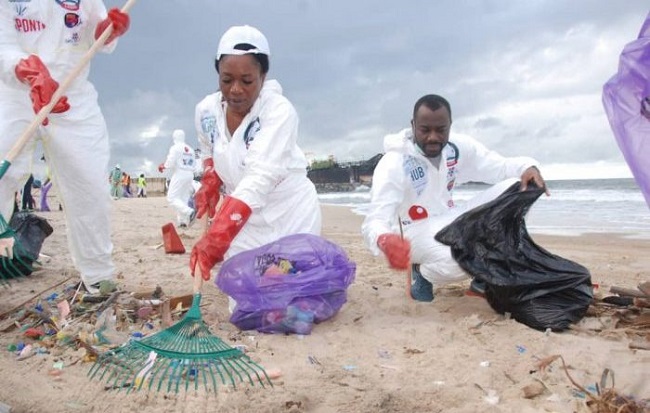
Ahead of Earth Month, Ocean Conservancy is launching a free, publicly available website, WildlifeImpactCalculator.org, to enable people who clean up beaches and waterways worldwide to determine how many marine animals they are helping protect with their efforts.
“Every piece of plastic cleaned up from our beaches and waterways is one less threat to the life of a marine animal,” said Ocean Conservancy’s Senior Director of Conservation Cleanups Allison Schutes. “Our calculator shows just how much of a difference a cleanup can make for these amazing creatures.”
These types of plastic are among the most commonly found items polluting beaches and waterways worldwide by the millions of volunteers who have taken part in Ocean Conservancy’s International Coastal Cleanup (ICC) over its 40-year history.
Underlying the Wildlife Impact Calculator is award-winningpeer-reviewed research led by Ocean Conservancy scientists and published last November in Proceedings of the National Academy of Sciences (PNAS) that quantifies the deadly dose of macroplastics (plastic pieces larger than 5mm) ingested by seabirds, sea turtles, and marine mammals.
“We wanted to make the science as easy to understand as possible and give people the ability to measure the difference they can make,” said Ocean Conservancy’s Manager of Ocean Plastics Research Dr. Erin Murphy, lead co-author of the study underlying the Wildlife Impact Calculator.
“The models informing the calculator look at amounts of plastic in terms of pieces, but how does that relate to items that people are picking up off of beaches? That’s what we wanted to show.”
Like the research, the Wildlife Impact Calculator does not capture the full threat plastic pollution poses to ocean wildlife, since macroplastic ingestion is just one way animals are affected. Other impacts include entanglement as well as the long-term cumulative effects of microplastic ingestion, or exposure to toxic chemicals that leach from plastics when in the ocean.
An estimated 11 million metric tons of plastic flow into the ocean each year – one of the most pervasive global threats to ocean health. Scientists have documented that some 1,300 species across ocean ecosystems – from plankton to whales – ingest plastics, too often with deadly consequences.
In addition to organizing cleanups to reduce harm from plastics already in the environment, Ocean Conservancy advocates for solutions to plastic pollution that prevent it from reaching beaches and waterways in the first place. Ocean Conservancy has advocated for a number of plastics policies at the local, state, federal and international levels such as California’s SB54, Florida’s balloon release ban, the Farewell to Foam Act, the UN Plastics Treaty, and more.
“We hope that the Wildlife Impact Calculator will inspire people to take action not only by joining their local cleanup efforts but by supporting work to prevent plastic from becoming pollution in the first place,” said Dr. Britta Baechler, Ocean Conservancy’s director of ocean plastics research.
UN Secretary General, Antonio Guterres, has called on women to accelerate progress on water and sanitation for all.
Guterres made the call on Monday, March 23, 2026, in his message to mark the World Water Day.
World Water Day is an annual United Nations observance day held on March 22 that highlights the importance of fresh water.
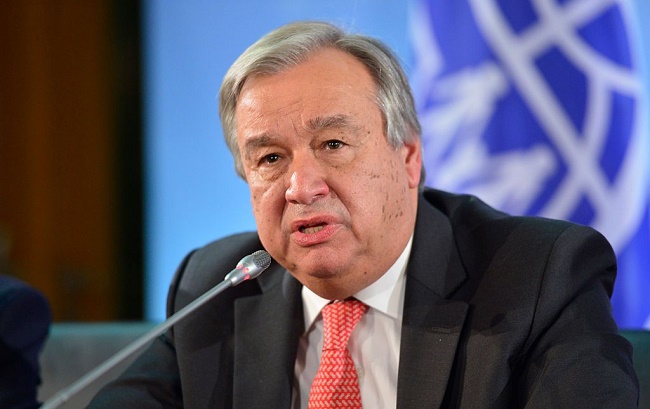
UN Secretary-General, António Guterres
The day is used to advocate for the sustainable management of freshwater resources.
The 2026 World Water Day with the theme: “Water and Gender Equality – Where water flows, equality grows,” is a call for a transformative, rights-based approach that places women’s leadership at the centre of water solutions.
The UN chief said too often, water has been a source of conflict but noted it could also unite people and be a contributor to peace.
“This year’s UN Water Conference will bring the world together to accelerate progress on water and sanitation for all.
“Together, let’s make water a force for gender equality, and let the benefits flow to every community in the world,’’ he said.
According to him, this year’s World Water Day reminds us that safe water and sanitation play a critical role in supporting the rights and health of women and girls.
“When access is lacking, it’s women and girls who pay the highest toll, relying on unsafe toilets; caring for family members made sick from contaminated water; and spending hours each day retrieving water from crowded communal sources – a chore that keeps many girls home from school.
“This year’s theme points to the solution: ‘Where water flows, equality grows.’
“It’s time for governments to scale up investment and strengthen national water and sanitation systems, through improved delivery capacities, workforce training and reliable financing.”
The UN chief further said that developed countries must share the technologies, expertise and financing required to build safe, sustainable and resilient water and sanitation infrastructure.