27.5 C
Lagos
Thursday, January 1, 2026
Home Blog Page 30

GCF leaves COP30 ready to ramp up climate finance

0

The Green Climate Fund (GCF) concluded its activities at COP30 in Belém, Brazil, prepared to ramp up its operations to help implement the new global goal for adaptation finance.

Among the key COP30 outcomes were the decision to triple adaptation finance by 2035 and the confirmation of the broader goal to mobilise $1.3 trillion in climate finance per year by the same date. GCF’s efficiency reforms have already resulted in a record volume of programming in 2025, and the Fund is now well-positioned to scale up its operations to respond to the urgent need for adaptation and mitigation climate finance.

GCF began the conference – dubbed the “Implementation COP” – by showcasing its ability to deliver climate finance at scale, reflecting on a record year in which the Fund programmed $3.26 billion in new climate finance. GCF’s portfolio now includes 336 projects, representing $19.3 billion in GCF resources and $78.7 billion when expected co-financing is included.

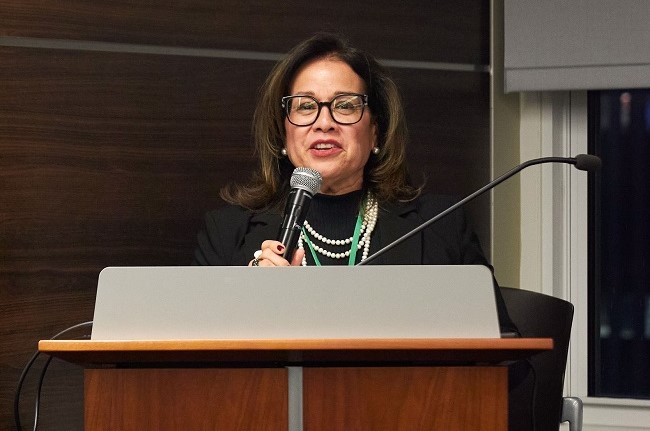
Mafalda Duarte
GCF Executive Director, Mafalda Duarte

Several senior government officials – from both developed and developing countries – reaffirmed GCF’s central role in climate finance. Germany’s Minister for Economic Cooperation and Development, Reem Alabali Radovan, described GCF as a global hub where public trust meets private innovation.

“Together, we can make the second decade of the Green Climate Fund one of acceleration, leverage, and lasting impact,” she stated.

Ministers from Togo and Papua New Guinea also praised GCF’s contributions and called for continued collaboration to meet urgent climate needs.

Launch of investment platforms

At the conclusion of COP30, GCF showcased its support for a total of 15 new country and regional platforms, which were announced in collaboration with the Fund. With the announcement of the Brazil and Caribbean platforms a few months ago, GCF intends to support 17 such platforms. The platforms are set to drive country-led climate and nature-based solutions.

At a time when climate impacts are accelerating, and global finance is falling short, these announcements represent a significant and coordinated effort to support countries in leading the planning, financing, and delivery of their own climate action. The platforms will help governments turn national priorities into investable pipelines, deploy finance more effectively, and speed up the implementation of projects and policies. The platforms will be supported by GCF’s Readiness Programme, the world’s largest climate finance capacity building initiative.

GCF.10: A decade of climate impact

GCF support to the platforms will draw on many of the lessons in an overview of its GCF.10 Impact Report – titled “A decade of global climate: Building resilience, transforming lives” – unveiled at COP30. The report marks 10 years since the Fund’s first projects were approved in 2015, on the eve of the adoption of the Paris Agreement.

The GCF.10 Impact Report was launched at the high-level side event, “GCF.10: A decade of climate impact,” where GCF partners and stakeholders reflected on the scale and reach of GCF’s finance in pursuit of the Fund’s three main goals of delivering capital at scale, strengthening national institutions, and partnering for greater climate impact.

Programming news

One of the major new GCF partnerships announced at COP30 was the Climate Resilient Enduring Earth (CREE) initiative, a collaboration between the Nature Conservancy (TNC) and the World Wildlife Fund (WWF). GCF committed $2.4 million in Project Preparation Facility support (as part of a total $4.5 million in support from all partners) to develop proposals aimed at increasing the climate resilience of nature and people in Botswana, Namibia, Guatemala, and Bolivia.

CREE seeks to permanently conserve up to 85 million hectares of new land and water through the demarcation of new protected/ conserved areas and/ or greatly enhanced management of existing such areas. For perspective, this is larger than the combined size of the UK and France.

GCF signed a memorandum of understanding with Just Climate to mobilise private institutional capital for climate solutions in emerging markets. The Fund also signed project agreements with the Accredited Entities, the Asian Development Bank, and the International Finance Corporation, for the recently approved Glaciers to Farm Programme and the Resilient Water Infrastructure Facility, respectively.

The Fund launched its Locally Led Climate Action (LLCA) Framework and Guidance, which will boost locally led adaptation efforts. The Framework aligns GCF and partners on LLCA best practices to increase investments that support devolved decision-making and finance, local ownership and implementation, scalability and sustainable local capacities. 

New commitments and collaborations

GCF joined the Belém Call to Action for the Congo Basin Forests and announced a commitment of $300 million over the next five years to protect one of the world’s most vital carbon sinks and biodiversity hubs. The commitment will consist of a mix of support and investment modalities for the Congo Basin, with a focus on six countries: Cameroon, the Central African Republic, the Democratic Republic of the Congo, the Republic of the Congo, Equatorial Guinea, and Gabon.

As an indication of GCF’s focus on enhancing its support for climate-vulnerable communities, the Fund reaffirmed its commitment to increasing access to climate finance for Indigenous Peoples. GCF also joined the Global Alliance Against Hunger and Poverty as the Belém Declaration on Hunger, Poverty, and Human-Centered Climate Action was adopted at COP.

In a landmark move towards greater coherence within the overall architecture of climate finance, GCF joined forces with the Climate Investment Funds (CIF), Global Environment Facility (GEF), and Adaptation Fund to launch the Multilateral Climate Funds Joint Results Report 2025. This initiative aligns shared result areas and indicators across mitigation, adaptation, energy, and nature, laying the groundwork for more transparent and collaborative climate finance delivery.

Moving forward

GCF approaches the start of its next fundraising cycle (replenishment) in late 2026, well-positioned to leverage its unique role as the primary operating entity of the financial mechanism under the United Nations Framework Convention on Climate Change (UNFCCC).

Its reforms have revamped the accreditation process, and improved efficiency and access to finance. As the Fund prepares to roll out a regional presence, it is set to move even closer to countries.

Lagos targets global waterfront appeal with new policies, infrastructure

The Lagos State Government says it is intensifying waterfront development to position the city as an all-year-round tourist destination with new policies and infrastructure.

The Commissioner for Waterfront Infrastructure Development, Dayo Alebiosu, said this on the sidelines of a tourism event on Thursday, November 27, 2025, in Lagos.

The event, “Tourism Stakeholders Engagement Summit”, was organised by the Lagos State Ministry of Tourism, Arts and Culture.

Lagos tourism
Dignitaries at the tourism event on Thursday in Lagos

The theme is “Unlocking the Potential and Opportunities of Lagos Tourism: Collaboration and Partnership for a Greater Lagos”.

Alebiosu said the government aimed at making the Lagos experience stand out globally.

According to him, the government is giving ongoing reclamation projects more character so they can be more globally competitive.

He said the waterfront development would mirror global standards seen in other places like Dubai and Spain.

“There has to be a reason why people will visit Lagos all year round,” he said.

Alebiosu said the government was introducing new infrastructure, including the first boardwalk in Lagos, the first fish market undergoing renovation and high-capacity concrete pontoons.

“It hasn’t been done before. Now we just introduced that.

“So, just to mention a few, these are some of the things we’re looking at injecting into the system in order for the dynamics to change.”

A boardwalk is a walkway made of wooden boards, most commonly found along a beach or shore.

It provides a firm surface for pedestrians to walk on, especially over soft or wet ground like sand, and can also be built in natural areas like wetlands, marshes, or parks to allow access without disturbing the environment.

While pontoons are buoyant, flat-bottomed floats used to support a structure on water, commonly found on flat-decked boats, floating bridges, and seaplanes.

Alebiosu said the reforms were a blend of physical upgrades and new policies.

He explained that collaborating with the Ministry of Tourism was key, as it would give the projects more character and ensure the state achieved its intended service delivery.

By Joan Odafe

Minister, CAPPA, CISLAC, others back Senate’s move to review, earmark SSB Tax

0

Minister of Health and Social Welfare, Prof Ali Pate, civil society organisations (CSOs) and other stakeholders working in public health have rallied the Senate for an upward review and restructuring of the Sugar-Sweetened Beverage (SSB) Tax, calling for a shift from the current specific excise of N10 imposed on each litre of sugary drink to a stronger ad valorem, percentage-based system that raises the overall rate and secures dedicated revenue for strengthening Nigeria’s health sector.

Speaking during a public hearing in Abuja on Thursday, November 27, 2025, organised by the Senate Joint Committee on Finance, Customs and Excise, they said Nigeria was experiencing a surge in noncommunicable diseases (NCDs) linked to excessive consumption of sugary drinks and unhealthy diets, and that formerly rare diseases such as diabetes, stroke, obesity and heart diseases are now some of the leading causes of premature death.

Sugar-sweetened beverages

The public hearing was on a bill, sponsored by Senator Ipalibo Harry Banigo, titled “Bill for an Act to Amend Section 21(3) of the Customs, Excise Tariffs, Etc. (Consolidation) Act to Replace the Fixed Ten Naira (₦10) Per Litre Excise Duty on Non-Alcoholic, Carbonated Sugar-Sweetened Beverages with a Percent Levy Per Litre of the Retail Price, and to Provide for the Earmarking of a Portion of the Revenue for Health Promotion and Disease Prevention Programmes.”

In his remarks, Senator Adeniyi Adegbonmire (SAN), who represented Senate President Godswill Akpabio, described the bill as an important one in the interest of public health.

Echoing Senator Banigo’s debate, he said: “’This amendment is not merely fiscal in nature; it is a public health investment strategy that aligns taxation policy with our national health priorities. It proposes the restructuring of existing Excise Duty on sugar-sweetened beverages (SSBs), not to impose more burden on citizens, but to redirect part of the existing revenue to finance health-related programmes and infrastructure that will improve the well-being of Nigerians.”

He reinforced support for the Bill, saying, “Clearly, the N10 per litre excise is no longer realistic in the present-day Nigeria, not only from the value of the naira, but more importantly, the cost of providing health interventions for health-related challenges.”

Minister of Finance, Olawale Edun, who was represented by Bashir Abdulkadir, a Director of Technical Services, said the Ministry was aware of the bill and generally aligned with it.

However, the ministry drew attention to Section 13 of the Customs, Excise Tariffs, Etc. (Consolidation) Ac, saying it empowered the president as the sole authority to vary rates.

It argued that the ministry was already working on a comprehensive process that would cover SSBs and alcoholic drinks and urged the Senate to take note.

Responding, the Joint Committee asserted its power under the Constitution to hold public hearing and amend the law, adding this was a matter of national importance in the interest of public health that Nigerians had been calling for.

For Health Minister Pate and the CSOs, the situation is a public health crisis that requires urgent policy intervention, such as an effective SSB Tax and earmarking of same to strengthen the health sector, to stem the tide.

The Federal Government imposed the tax as a pro-health policy in 2021 to discourage excessive consumption of sugary drinks, tackle sugary drinks-linked NCDs, strengthen Nigeria’s ailing public health sector, and boost government revenue.

But Prof. Pate and the health sector stakeholders told the senate that the current N10 per litre tax, which came into effect when the average bottle of SSB was N150, has been eroded by inflation and is too minimal to affect Nigerians’ consumption of sugary drinks and protect public health.

They urged the legislature to amend the bill.

Prof. Pate, who backed the amendment with data from the World Health Organisation and other global health bodies, urged the lawmakers to set the SSB Tax at no less than 20 percent and to earmark at least 40 percent of the revenue for public health, saying it was in the interest of “230 million Nigerians”.

He said it would “create a valuable funding stream” and, citing the Philippines example, argued that it would aid Nigeria’s progress towards expanding Universal Health Coverage.

Corporate Accountability and public Participation Africa (CAPPA) made three recommendations to make the amendment more effective, including raising the tax to at least 50 percent of the retail price of sugary drinks.

In his presentation to the Senate committee, Akinbode Oluwafemi, CAPPA’s Executive Director, urged Nigeria to “Adopt a strong retail-price–based excise structure by setting the levy at 50 percent of the retail price, with an absolute minimum floor of 20 percent, in line with WHO guidance and the Bloomberg Task Force on Fiscal Policy for Health. This level is necessary to trigger meaningful reductions in consumption.

“Earmark revenues from the SSB tax for public health programmes, particularly for the prevention and management of non-communicable diseases, to ensure sustainable financing for population health.

“Establish a national monitoring and evaluation task force to oversee implementation, ensure compliance, track consumption trends, and measure the health and fiscal impact of Nigeria’s SSB tax policy.”

He added that the review of the excise on sugar-sweetened beverages is “constitutionally sound, legally justified, economically prudent, and aligned with Nigeria’s public-health obligations and international commitments. Nigeria can no longer rely on a fixed ₦10 duty that has lost its value and its purpose.”

According to him, a percentage-based levy that reflects real market prices is the only credible path to restoring the effectiveness of the policy and aligning it with global best practice.”

He added that, by adopting a benchmark rate of 50 percent of the retail price, with a non-negotiable minimum floor of 20 percent, “the National Assembly will ensure that the tax is strong enough to reduce consumption, stimulate industry reformulation, and generate measurable health gains.

“Equally important is the inclusion of clear earmarking provisions, so that a portion of the revenue is dedicated specifically to public-health promotion, NCD prevention, and the revitalisation of Nigeria’s fragile healthcare system.”

Others who spoke in favour of the amendment included the Civil Society Legislative Advocacy Centre (CISLAC), Nigerian Cancer Society, Diabetes Society of Nigeria, the National SSB Tax Coalition, the Healthy Food Policy Vanguard, the Nigerian Tobacco Control Alliance and CISLAC, Redeemers University, among others.

“We completely align ourselves with this amendment,” said the Vice President of the Diabetes Society of Nigeria, Dr. Mansur Ramalan, adding that Nigeria was experiencing a diabetes prevalence that had risen to about seven percent.

Dr Ramalan addressed concerns by the Ministry of Finance about the possible negative effects on government revenue, saying the reverse was the case, and government revenue “will increase by 200 percent.”

IPCC authors gather in Paris to begin Seventh Assessment Report

0

Over 600 experts appointed to the three Working Groups of the Intergovernmental Panel on Climate Change (IPCC) will gather in Paris from December 1 to 5, 2025, to begin the drafting of the IPCC’s Seventh Assessment Report (AR7).

Hosted by the French Government, through the Ministry of Ecological Transition, Biodiversity, Forestry, Sea and Fisheries, the Ministry of Education and Research and the Ministry for Europe and Foreign Affairs, this is the First Lead Author Meeting, held jointly by the three Working Groups.

Jim Skea
Jim Skea, IPCC Chair

Authors from more than 100 countries will focus their work on the initial drafts of the three Working Group contributions to AR7 and cross-cutting topics. Bringing together authors from all three Working Groups in a single venue aims to enable the IPCC to take an ambitious qualitative leap in assessing key interdisciplinary questions related to climate change.

On Friday, November 28, a virtual media briefing will be held ahead of the official opening of the first Lead Author Meeting, which is taking place on Monday, December 1, 2025. Speakers include Gabriel Normand, diplomatic advisor to Monique Barbut, and Robert Vautard, Co-Chair of IPCC Working Group I.

The ceremonial opening of the First Lead Author Meeting will take place on Monday, December 1 and IPCC authors will be addressed by the Minister of Ecological Transition, Monique Barbut; the Mayor of Saint-Denis, Mathieu Hanotin; the Chair of the IPCC, Jim Skea; and the Secretary of the IPCC, Abdalah Mokssit.

Renaissance boosts cancer care with $300,000 donation

0

Cancer care at the National Hospital, Abuja, received a major boost of $300,000 donation on Tuesday, November 25, 2025, by the Renaissance Africa Energy and its joint venture partners – Nigeria National Petroleum Company Limited; TotalEnergies; and Agip Energy and Natural Resources.

The donation will fund the Service License Agreement (SLA) that guarantees the continuous operation and maintenance of the world-class Linear Accelerator (LiNAC) radiotherapy machine earlier donated to the hospital by the joint venture in 2019.

Speaking at the donation event held at the hospital in Abuja, Managing Director and Chief Executive Officer of Renaissance, Mr. Tony Attah, noted that the intervention by the joint venture was critical at time that cancer was ravaging more Nigerians, with care cost rocketing by the day.

Renaissance
R – L: Lead, Community Relations, NUIMS, Uzo Ejidoh; Health Manager, Renaissance Africa Energy Company Limited; Dr. Akinwumi Fajola; VP, HR & Corporate Services, Olukayode Ogunleye; Managing Director and CEO, Tony Attah; GM, Relations & Sustainable Development, Igo Weli; Minister of Health, Prof. Muhammad Ali Pate; Head of Business Services, NUIMS, Nkechi Anaedobe; CMD National Hospital Abuja, Prof. Muhammad Raji Mahmud, and other staff of the health ministry… at the presentation of the $300,000 donation to the National Hospital Cancer Centre by the Renaissance Joint Venture in Abuja… on Tuesday

“Cancer remains a formidable challenge to public health in our nation. Behind the statistics are real people whose futures depend on timely access to affordable, world-class treatment. This is not charity; it is a pledge to safeguard the future of cancer care and ensure that the fight against cancer in Nigeria is not only sustained but won.”

Attah therefore described the donation as a strategic investment in the well-being of Nigerians and the resilience of the country’s health systems. “We commended Federal Government’s efforts to strengthen cancer care, and we invite other stakeholders to join forces in advancing innovation, collaboration, and patient support,” Attah said.

Receiving the donation, Nigeria’s Minister of Health and Social Welfare, Professor Muhammad Ali Pate, described the ministry’s collaboration with Renaissance and its joint venture partners as a good example of the public-private partnership needed to attract investment into health services for the benefit of Nigerians.

The minister said, “Cancer care remains a major challenge and affordability is critical. Renaissance generosity fits within our broader effort to revamp infrastructure and equipment for cancer treatment. The LiNAC machine has treated more than 2,000 patients, reduced the cost of care by 80 percent, and significantly shortened treatment time. This is a path we can build on.”

“This partnership is a good example that I hope other corporate giants can learn from—how private industry, with its own vision and stakeholders, finds it worthwhile to co-invest in improving Nigeria’s health system,” the minister said, adding: “Renaissance and its partners have not only provided this life-saving technology but are ensuring its uninterrupted operation. This commitment translates directly into lives saved and hope restored for thousands of patients. We look forward to deepening this partnership as we strive to make cancer care accessible to all Nigerians.”

Representing the Chief Upstream Investment Officer of NNPC Upstream Investment Management Services (NUIMS), the Head Business Services, Mrs. Nkechi Anaedobe, reiterated the joint venture’s commitment to sustaining cancer care infrastructure.

“This is more than just operational support; it is a strategic investment in accessible, high-quality healthcare. Our $300,000 donation will fund the Service Level Agreement for the LiNAC machine, ensuring timely maintenance, minimising downtime, and safeguarding compliance with medical standards. This commitment underscores our dedication to the long-term sustainability of cancer treatment services in Nigeria,” she said,

The Chief Medical Director of National Hospital Abuja, Prof. Muhammad Raji Mahmud, expressed gratitude for the continued support. “Cancer treatment is one of the most resource-intensive areas of healthcare, and sustaining advanced equipment like the LiNAC machine requires significant investment,” he said.

Renaissance Health Manager, Dr. Akinwunmi Fajola, said, “From the very beginning, we saw that the National Hospital was ready to work. They had the infrastructure, the commitment, and the vision. Through collaboration with our partners and the OEM, Elekta, we were able to deliver the LiNAC machine and achieve something excellent. Treatment time has dropped from about 15 minutes to just four minutes, and that’s a game-changer for patients.”

Since its installation in 2019, the LiNAC machine has transformed cancer treatment in Nigeria, reducing therapy costs by over 80%, cutting treatment time from 12 minutes to approximately two minutes, and providing care to more than 2,000 patients, including subsidised treatment for indigent patients.

NLNG, NCDMB to collaborate in asset intervention programme

0

Nigeria LNG Limited (NLNG) and the Nigerian Content Development and Monitoring Board (NCDMB) engaged in productive discussions towards collaboration in support of NLNG’s planned revamp and enhancement of key operational facilities in Trains 1 to 6 of the NLNG Plant.

The initiative is aimed at improving asset performance and overall productivity.

This took place during the Nigerian Content Stakeholders Retreat hosted last week at NLNG’s operational base at Finima, Bonny Island, Rivers State.

NCDMB
The presentation of awards to outstanding companies and individuals for their contributions to Nigerian Content development in Nigeria

During the retreat, the General Manager Production, NLNG, Nnamdi Anowi, outlined the company’s revamp programme named “Accelerated Asset Intervention (AAI).” He explained that the initiative is expected to commence in 2026 and will require NCDMB’s support and relevant approvals to enable timely execution. According to him, the AAI programme is intended to overhaul the Trains and Common Facilities, which are key to operations.

“The goal is to implement predictive maintenance and continue to deliver sustainable top quartile and reliability performance, continue to deliver gas and value to the country and retain NLNG’s position as the best company in the country,” he said.

Responding, the Executive Secretary of NCDMB, Felix Omatsola Ogbe, represented by the Director of Capacity Building, NCDMB, Abayomi Bamidele, pledged NCDMB’s support for NLNG’s plans, in line with the existing close collaboration between the organizations and NCDMB’s role as a regulator and business enabler in the oil and gas industry.

He remarked that NCDMB and NLNG had collaborated successfully to develop the first Service Level Agreement (SLA) between an operating company and a regulator in the Nigerian oil and gas industry and are currently working on other technical capacity building initiatives.

He recalled that NCDMB granted accelerated approvals for key projects in the NLNG Train 7, which enabled the project to commence in 2020 at the height of COVID-19 pandemic. NCDMB equally granted speedy approvals and support for the new gas projects, which will provide feedstock for Train 7, he stated.

The Executive Secretary emphasised the need for NLNG to optimise Nigerian content and utilise in-country capacities in the proposed packages, in line with the provisions of the Nigerian Oil and Gas Industry Content Development (NOGICD) Act.

Speaking later at the Award Gala Dinner marking the formal conclusion of the Nigerian Content Stakeholders Retreat and Appreciation Night 2025, the Executive Secretary commended NLNG for the giant strides it had recorded with the Train-7 Project. He expressed delight that the Train-7 Project currently employs thousands of workers, describing it as a huge contribution to the nation’s economy.

Dr. Ernest Nwapa, pioneer Executive Secretary of the NCDMB, noted that NLNG’s leadership in local content development goes back many years, recalling that the company stood out as an early “icon of Nigerian Content” because of its voluntary compliance. He added that NLNG also commissioned the industry’s first skills gap analysis, promptly circulating the findings to guide stakeholders and policymakers on priority capacity-building needs to strengthen in-country value addition.

He also commended the NCDMB for remarkable success in implementation of the NOGICD Act and achievements made so far.

The climax of the event was the presentation of awards to outstanding companies and individuals for their contributions to Nigerian Content development in Nigeria. They include NCDMB for Nigerian Content Business Enabler Award; Promat Coating Limited, for Train 7 Award for Local Manufacturing and Procurement; EVOMEC Global Services Limited and ARCO Worldwide Services for Overall Best Nigerian Content Compliant Contractor, technical and non-technical respectively; Seflam SGL Limited, for Nigerian Content Diversity and Inclusion Award, among others.

Group sensitises Lagos market women to clean cooking energy

0

A non-governmental organisation (NGO), Earth and Sustainability Initiative (ESI), has intensified its community advocacy campaign to promote clean cooking energy among women in low-income and rural communities across Lagos State.

The NGO organised an outreach programme at Agboju Market on Thursday, November 27, 2025, in Lagos.

The ESI Programme Director, Mrs. Ebere Akwuebue, said the organisation has been educating women on the dangers of unsafe cooking practices.

Ebere Akwuebue
ESI Programme Director, Mrs. Ebere Akwuebue

Akwuebue said many households still rely on charcoal, firewood, sawdust and other solid fuels that pose serious health risks and contribute significantly to environmental pollution and climate change.

She said the advocacy aims to simplify information on climate change, highlight health implications of traditional cooking methods, and enlighten women on available cleaner alternatives.

According to her, communities visited by the ESI have expressed strong interest in transitioning to cleaner cooking technologies but are often hindered by limited access and affordability.

Akwuebue said the NGO partnered with Solar Sisters last year to distribute clean cookstoves.

She disclosed that the NGO would explore further collaboration with private and public sector stakeholders to expand access.

She added that the organisation is considering a  pay-as-you-go model to enable women acquire clean cookstoves through small instalment payments.

“This approach can serve as a low-hanging fruit in reducing emissions, building awareness and supporting Nigeria’s drive toward achieving net-zero targets,” she said.

Akwuebue disclosed that ESI currently works directly with community leaders to secure access and mobilise households but hopes to formalise partnerships with relevant government agencies in future engagements.

She said more than 100 women participated in the training, adding that past outreaches in the last three years recorded attendance ranging from 150 to 200 participants per community.

Akwuebue said the clean cookstoves demonstrated during the event use reduced quantities of briquettes or charcoal, are insulated and burn more efficiently than traditional open-fire pots.

Also speaking, Mrs. Margret Ibekwe, who represented the market leadership of the host community, commended the initiative for bringing the sensitisation to grassroots women.

Ibekwe said the demonstration exposed many women to clean cookstoves for the first time, adding that the devices would help reduce smoke pollution and promote healthier cooking environments.

She encouraged women to adopt the technology, saying it would improve household well-being while contributing to safer and cleaner communities.

By Fabian Ekeruche

AfDB, UN agencies raise alarm over climate-driven insecurity in Africa

0

The African Development Bank (AfDB), United Nations agencies and the African Union have warned that climate change is accelerating insecurity and fragility across Africa.

The AfDB in a statement on its website, said the institutions called for urgent and coordinated global action to address the growing crisis.

Speaking at a roundtable on the sidelines of COP30 in Belém, climate and security experts said Africa was now facing some of the world’s most severe climate-linked threats.

Al Hamndou Dorsouma
AfDB Manager of Climate Change and Green Growth, Al Hamndou Dorsouma

They said this included terrorism, inter-community clashes and forced displacement.

Dr Al Hamndou Dorsouma, Manager for Climate Change and Green Growth at the AfDB, said the continent was already overwhelmed by the combined burden of climate shocks and insecurity.

“Climate change is amplifying conflict and fragility on the continent.

“In 2024 alone, climate disasters caused 9.8 million new internal displacements in Africa, showing how deeply interconnected climate risks and forced mobility are,” he said.

He said that dwindling rainfall and water shortages had disrupted pastoral migration routes, worsening clashes across regions such as Ethiopia, Darfur, Kenya, Nigeria and the Sahel.

Dorsouma said the AfDB was scaling up support through its Strategy for Addressing Fragility and Building Resilience, Transition Support Facility, and the Climate Change and Green Growth Framework for 2030.

He added that the Bank’s Climate Action Window, launched in 2023 with about $450 million, had already backed 59 climate projects in fragile countries.

“Every dollar invested in climate adaptation and resilience generates a return of between $2 and $10.

“There is therefore the need for greater investment in early warning systems and adaptation measures,” he said.

Ms. Nazanine Moshiri, Senior Advisor on Climate, Peace and Strategic Partnerships at the Berghof Foundation, emphasised the importance of peace.

She said: “There can be no implementation of climate projects without peace; we cannot fight climate change without peace”.

Abdi Fidar, Director of the Climate Prediction and Applications Centre at IGAD, said many fragile areas do not benefit from climate finance, making it harder to separate the climate security nexus.

Charles Mwangi, Head of Programmes at the Pan-African Climate Justice Alliance, emphasised the role of civil society, saying communities closest to the crisis must shape national and continental policy.

The side event, themed “Adapting for Stability – Scaling Partnerships for Peace and Climate Resilience in Africa,” was convened by the UN Office to the African Union (UNOAU).

It was co-hosted by the UN Economic Commission for Africa (ECA), and the African Union Commission (AUC).

Participants urged governments and development partners to scale up partnerships to build a more climate-resilient and peaceful Africa.

By Lucy Ogalue

Oxfam, partners celebrate five years of climate governance programmes in Nigeria

0

Oxfam in Nigeria, on Thursday, November 27, 2025, marked the close-out of its five-year Power of Voices, Fair for All (F4A) and African Activists for Climate Justice (AACJ) programmes in Nigeria.

Oxfam Country Director, John Makina, at the occasion in Abuja, described the programmes as “a journey of courage, partnership and transformation.”

Makina said that the initiatives demonstrated the power of communities, when equipped, to “speak, act and lead” in governance, climate justice and economic accountability.

John Makina
Oxfam Nigeria Country Director, John Makina

He said that the journey had been more than a development intervention.

“It has been a collective effort to shift power, amplify voices and place citizens where they rightfully belong – at the centre of governance, climate justice and economic accountability in Nigeria,” he said.

Makina highlighted key achievements of the programmes to include cultivation of 15,500 seedlings through community nurseries and distribution of 3,500 clean cooking stoves in Bauchi State to reduce emissions and improve health.

He stated that 256 community volunteers, including persons with disabilities (PWDs), were also trained in briquette production and other nature-based solutions.

“Oxfam also supported the development of new climate laws, unlocked ₦15.5 billion in local climate financing and expanded climate-smart livelihoods, such as bee-keeping, briquette production and tree planting.

“Women beneficiaries reportedly earned between ₦150,000 and ₦300,000 through climate-friendly enterprises.

“The programmes reached more than 10 million Nigerians through the “Follow the Money” media platforms, while civic participation was strengthened through Freedom of Information coalitions, youth civic clubs and improved security commitments from the police,” he said.

Makina added that the initiative also trained 500 journalists in climate reporting, mobilised 664 citizens through the Africa Climate Caravan and empowered PWDs to participate independently in agriculture and community governance.

He expressed appreciation to some implementing partners, such as Civil Society Legislative Advocacy Centre (CISLAC), Connected Development (CODE) and BudgIT Foundation, among others, saying that their support and dedication contributed to the success of the initiatives.

The country director also commended the Government of The Netherlands for funding the project.

Speaking on behalf of the partners, CISLAC’s Executive Director, Auwal Rafsanjani, said the programmes delivered “transformative reforms, bold advocacy and unprecedented community-led impact” across Nigeria.

Rafsanjani noted that the projects strengthened tax justice campaigns, boosted transparency in the extractive sector, improved compliance with beneficial ownership rules and expanded state-level advocacy platforms.

He said that sustained civil advocacy also helped in shaping the passage of four new tax laws and contributing to government’s approval of over 1 billion dollar for the upgrade of major ports.

Rafsanjani stressed that although donor funding had ended, the responsibility to sustain the gains now rests with Nigerians.

“The work must continue because inequalities, corruption and climate challenges remain,” he said.

While giving an overview of the project, the Programme Manager of Oxfam, Henry Ushie, said it built regulatory frameworks that mobilised communities to be proactive in demanding for the three per cent meant for them by companies.

“They were also empowered to access the money and demand for accountability and transparency on how the money was deployed, ensuring that it was ploughed back into the communities,” Ushie said.

The event featured the launch of a documentary and magazine capturing the project’s milestones.

By Perpetua Onuegbu

UK, Lagos unite to advance disability inclusion, gender equality

0

The British Deputy High Commission and the Lagos State Office for Disability Affairs (LASODA) on Wednesday, November 26, 2025, hosted a landmark event in Lagos, spotlighting the importance of disability inclusion and gender equality as part of the global 16 Days of Activism Against Gender-Based Violence and the International Day of Persons with Disabilities (IDPD).

Hosted by the British Deputy High Commissioner, Mr. Jonny Baxter, the event underscored a shared and unwavering commitment to advancing the rights, dignity, and full participation of persons with disabilities, particularly women and girls across Lagos State and beyond.

Disability Inclusion
L-R: Nigerian Presidential Fiscal Policy and Tax Reforms Implementation Committee, Mr. Tolu Adegbie; Permanent Secretary, Lagos State Ministry of Youth & Social Development, Pharm. Mrs. Toyin Oke-Osanyintolu; British Deputy High Commissioner, Mr. Jonny Baxter; General Manager, Lagos State Office of Disability Affairs (LASODA), Mrs. Adenike Oyetunde-Lawal; Founder/Executive Director, Live Abundantly, Dr. Ama Onyerinma; Hon. Commissioner, Lagos State Ministry of Youth and Social Development, Mr. Mobolaji Ogunlende and Senior Advisor Institutional Funding, Sightsavers, Mrs. Jumoke Alagbe… at the 16 Days of Activism 2025 and International Day of Persons Living with Disabilities, in Lagos

Under the theme “Breaking Barriers, Building Bridges: A Unified Stand for the Rights of Women and Girls with Disabilities,” discussions focused on the unique challenges faced by women and girls with disabilities, including heightened risks of violence and discrimination, while celebrating their resilience and leadership.

British Deputy High Commissioner in Lagos, Mr. Jonny Baxter, said: “The UK is proud to partner with Lagos State in advancing disability inclusion and gender equality. Today’s event is not just dialogue; it is a decisive call to action. Women and girls with disabilities face heightened risks of violence and discrimination, and tackling these challenges demands unwavering collaboration, commitment, and courage. Together, we can create a society where every person, regardless of ability, is empowered to lead and succeed.”

General Manager of LASODA, Adenike Oyetunde-Lawal, said: “This collaboration with the British High Commission is a significant step forward in our mission to create a truly inclusive and accessible Lagos. By aligning the 16 Days of Activism with the International Day for Persons with Disabilities, we send a powerful message that the rights of women and girls with disabilities are non-negotiable. We are committed to breaking down barriers and ensuring their full participation in all aspects of social, economic, and political life.”

Commissioner for Youth and Social Development, Mr. Mobolaji Ogunende, said: “Our youth and social development agenda is rooted in inclusion and equality. This partnership with the British High Commission and LASODA sends a clear message: no one should be left behind. Women and girls with disabilities deserve not only protection but opportunities to thrive. Together, we are building systems that dismantle barriers and create a Lagos where every individual can contribute and lead.”

The high-level forum convened government officials, diplomats, disability advocates, civil society organisations, development partners, and media stakeholders. The programme featured keynote addresses, panel discussions on inclusive policies, and powerful testimonies, fostering dialogue on actionable strategies to combat violence and enhance accessibility.

×