Home Blog Page 3

Nigeria, IFAD train stakeholders to unlock climate finance

The Federal Government and the International Fund for Agricultural Development (IFAD) have commenced capacity building for stakeholders to scale up climate finance mobilisation under the Value Chain Development Programme in Northern Nigeria (VCN).

The initiative is aimed at strengthening the ability of federal and state actors to access and deploy climate finance for resilient agri-food systems.

The VCN, co-financed by the Federal Government, IFAD and the French Development Agency (AFD), seeks to promote nutrition-sensitive, socially inclusive and sustainable agricultural value chain development across participating northern states, with a strong focus on climate resilience.
Dede Ekoue
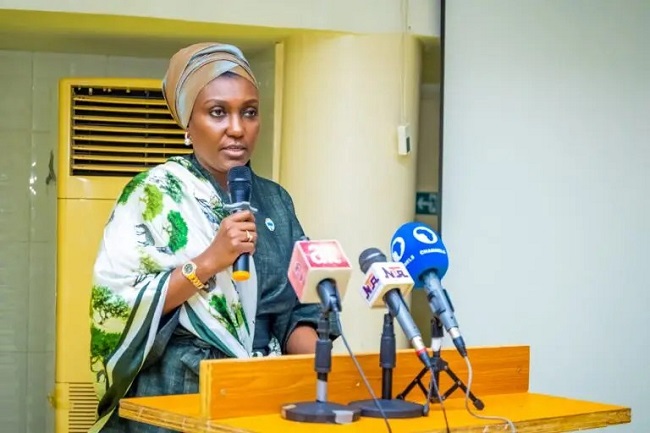
Dede Ekoue, IFAD Country Director

Speaking at a workshop titled “Capacity Building on Climate Resilience for Agri-food Systems Transformation in Northern Nigeria” on Wednesday, May 6, 2026, in Abuja, IFAD Country Director, Ms. Dede Ekoue, said the training would enhance participants’ capacity to identify and leverage climate finance opportunities.

The workshop was organised by the Federal Ministry of Agriculture and Food Security (FMAFS) in collaboration with IFAD, the Global Centre on Adaptation (GCA) and the Joint SDG Fund.

Ekoue said the goal was to build a shared and practical understanding among stakeholders on climate risks, adaptation strategies; including digital climate services and climate finance.

According to her, the initiative is also designed to foster coordinated implementation of climate-resilient interventions and strengthen climate finance mobilisation under the VCN.

“It is to build a solid foundation for climate resilience and transform current momentum into a community of practice.

“It ensures that every actor is empowered to turn VCN planned investments into opportunities for sustainable resilience of agri-food systems to climate shocks,” she said.

She said Northern Nigeria’s agricultural value chains remain vital to the economy but face growing pressure from climate shocks and environmental degradation.

Ekoue stressed the importance of grounding interventions in Climate Risk and Vulnerability Assessment (CRAVA).

“Our interventions cannot be based on guesswork. They must be anchored in CRAVA.

“CRAVA identifies the most fragile landscapes and vulnerable crops, ensuring that every naira spent under the VCN goes into climate-proofed interventions,” she said.

She added that VCN investments would provide initial funding for climate-resilient interventions, while climate finance would be key to sustaining and scaling impact.

“By integrating CRAVA-led adaptation, we are de-risking Northern Nigeria for future large-scale climate financing and demonstrating that our value chains are sustainable and economically viable,” she said.

Also speaking, Mrs. Olubunmi Iluromi, Director, Federal Department of Development Partners Projects (FMAFS), said the workshop followed a recent high-level engagement on the VCN joint roadmap for accelerated implementation.

She said the training was a practical step to ensure institutions and technical teams are equipped to deliver climate-resilient outcomes.

“The VCN programme is being implemented at a time when climate change is no longer a distant risk, but a present reality, manifesting through droughts, floods, heat stress and land degradation,” she said.

Iluromi noted that CRAVA provides an opportunity to move from general awareness to actionable, value chain-specific adaptation measures.

“Mobilising climate finance is not only about accessing resources, but also about strengthening institutional readiness, improving investment planning and demonstrating results that attract further support,” she said.

She emphasised the need for strong coordination among federal and state governments, as well as across ministries, departments and agencies.

Dr Oluyede Ajayi, Global Lead, Food Security Programme at the Global Centre on Adaptation (GCA), said the organisation supports governments and international financing institutions to integrate climate adaptation into large-scale agricultural investments.

According to him, GCA provides technical assistance, climate risk analytics and co-designed adaptation solutions across projects.

He said the support includes climate-resilient livestock systems, improved crop production, agroforestry development, and digital climate advisory services.

The initiative is part of broader efforts to strengthen resilience, boost productivity and attract sustainable climate financing into Nigeria’s agricultural sector.

By Felicia Imohimi

UNCCD COP17: Türkiye embarks on Silk Road Caravan 2026

A group of international pastoralists, experts, and representatives of the United Nations Convention to Combat Desertification (UNCCD) is embarking on the Silk Road Caravan 2026, a multi-country journey across Eurasia highlighting the importance of rangelands and pastoralist communities. The journey begins in Türkiye (from May 6 to 15, 2026) and is part of a global campaign in support of the International Year of Rangelands and Pastoralists 2026.

Travelling across key regions of Türkiye, the Caravan will engage with local communities, visit rangelands and land restoration sites, and document stories of resilience, land stewardship, and sustainable livelihoods. The journey will continue through several countries along the historic Silk Road, culminating at the UNCCD COP17 in Ulaanbaatar, Mongolia, in August 2026. 

Silk Road Caravan
Silk Road Caravan

The journey across Türkiye includes visits to Erzurum, Malatya, Gaziantep and Antalya, featuring: 

  • High-altitude pastoralist sites and pasture visits 
  • Post-disaster rural recovery and land restoration initiatives 
  • Cultural heritage locations linked to the historic Silk Road 
  • Engagements with local communities and pastoralist groups 

An official launch ceremony of the Silk Road Caravan will take place in Antalya on May 13, 2026, bringing together international participants, government representatives, UN partners, and media. Speakers include: UNCCD Executive Secretary, Yasmine Fouad; UNCCD Goodwill Ambassador, Inna Modja; Representatives of Türkiye, Saudi Arabia and Mongolia; and Representatives of pastoralist communities.

For centuries, caravans travelling on the Silk Road carried not only goods, but also ideas, cultures and knowledge between civilizations. The Silk Road Caravan seeks to revive that spirit of connection, sharing stories of people working to restore land, protect ecosystems and sustain pastoral ways of life in regions where culture, land and climate are deeply intertwined.

The Silk Road Caravan is a flagship UNCCD campaign linking COP16 in Riyadh (2024) to COP17 in Ulaanbaatar (2026), in support of the International Year of Rangelands and Pastoralists 2026. This symbolic and physical caravan journey across Eurasian countries will shine a light on rangeland ecosystems and the pastoral communities that have shaped life along these routes for generations.

It aims to raise awareness of the critical role of rangelands, which cover more than half of the Earth’s land surface and support two billion people globally. Through a combination of field visits, storytelling, and a documentary film, the initiative highlights both the challenges of land degradation and the solutions emerging from local communities. 

NEMA mobilises stakeholders for disaster preparedness, response

The National Emergency Management Agency (NEMA) has emphasised the need for synergy and proactiveness among disaster managers to boost disaster preparedness, mitigation, and response.

Mr Kadiri Olanrewaju, Head of Operations, NEMA South-West Zonal Office, Ibadan, gave the charge during a stakeholders’ engagement on disaster preparedness and response, on Tuesday, May 5, 2026, in Ibadan.

Zubaida Umar
Director-General of NEMA, Mrs. Zubaida Umar

He said that the engagement became necessary following predictions by the Nigerian Meteorological Agency (NiMet) of possible heavy rainfall in parts of the state, as well as recent accidents and fire incidents recorded by the agency.

According to him, the meeting was aimed at rubbing minds with critical stakeholders in disaster management to assess and improve their level of preparedness.

“It also provided a platform to discuss equipment holdings of key agencies, mitigative measures, and practicable solutions to prevalent emergency situations within Oyo State and its environs,” he said.

Olanrewaju appreciated the participants for their turnout, commended them for their robust contributions, and urged them to develop actionable plans for disaster management at their respective levels.

“Disaster management is everybody’s business, and all hands must be on deck to mitigate identified emergency situations in the state through sensitisation and awareness creation,” he said.

The Director-General of NEMA, Mrs. Umar Zubaida, represented by the South-West Zonal Director, Mr. Akiode Saheed, emphasised the need for collective effort, information sharing, and early warning actions by stakeholders for effective response.

He also highlighted the importance of periodic reviews and data sharing for proper coordination.

Participants at the event commended NEMA for the initiative, brought their expertise to bear, and described the programme as timely, saying it would spur stakeholders into action.

In attendance were representatives of the Oyo State Emergency Management Agency (SEMA), Nigerian Security and Civil Defence Corps (NSCDC), Federal Road Safety Corps (FRSC), Oyo State Fire Service.

Others included Federal Fire Service (FFS), National Orientation Agency (NOA), State Ministry of Health, State Ministry of Environment, and media organisations.

Oyo introduces daily environmental sanitation exercise

The Oyo State Government has introduced a daily environmental sanitation exercise monitoring and enforcement system to ensure a cleaner and healthier environment across the state.

The Oyo State Government has introduced a daily environmental sanitation exercise

Mr Ademola Aderinto, the Commissioner for Environment and Natural Resources, disclosed this during a news conference in Ibadan on Tuesday, May 5, 2026, to mark his first 100 days in office.

Aderinto explained that the Ministry has shifted from the traditional monthly environmental sanitation exercise to a more proactive system that encourages residents to take responsibility for maintaining cleanliness on a daily basis.

He noted that the exercise would be monitored and enforced by environmental health officers

“We are now enforcing daily environmental sanitation. Our officers will be on the field every day to ensure compliance, cleanliness must become a daily responsibility,” he said.

To strengthen operations, the commissioner disclosed that the Ministry re-engaged 930 environmental vanguards, sweepers, and waste packers.

“It also procured two brand new compactor trucks with the support of Gov. Seyi Makinde, to enhance waste evacuation.”

Highlighting  the ministry ‘s achievements, Aderinto said it expanded its impact through strategic workforce deployment and innovation.

The commissioner added that the 930 environmental personnel had been structured to improve enforcement and sanitation coverage.

He said that the sweepers would now work twice daily to ensure cleaner roads across the state.

Aderinto further said that the sweepers would henceforth benefit from enrollment in the Oyo State Health Insurance Scheme.

“The ministry also launched the ‘Oyo Soro Soke (Oyo SSS)’, an  Environmental Whistleblower platform accessible via mobile applications and WhatsApp, which empower residents to report violations and promote community participation in environmental governance.

“In addition, the ministry strengthened its operational capacity by introducing a first of its kind waste segregation system across government offices, and initiated Public Private Partnerships for the construction of modern public toilets,” he said.

Aderinto expressed gratitude to the governor for the opportunity to serve, assuring that the confidence reposed in him would not be misplaced.

He also appreciated members of the Executive Council for their strong inter-ministrative collaboration, as well as the Permanent Secretary Dr Sunday Ojelabi for his support.

Highlighting other achievements, the commissioner noted the improved media engagement by the ministry, with regular news conference and public advisories on issues such as flooding, heat waves, cholera, and lassa fever.

He further said that the ministry has regulated charcoal production through a structured framework.

“The ministry has also intensified efforts to end open defecation, strengthen interventions against diseases through inspections and environmental monitoring,” the commissioner said.

Aderinto assured residents that the ministry would sustain and build on these gains.

“The future of our environment in Oyo State is bright. What we have achieved in 100 days is only the beginning,” he said.

Foundation warns of deepening urban planning crisis, calls for urgent reforms

The Nathaniel Atebije Foundation for Planning Advocacy (NAFPA), has called for immediate national attention to the deepening crisis in urban and regional planning across Nigeria.

NAFPA founder, Nathaniel Atebije, made the call during a news conference heralding the Maiden Annual Lecture on Tuesday, May 5, 2026, in Abuja.

Atebije warned that continued neglect of structured development threatened sustainability, safety, and human dignity.

Atebije Foundation Lecture in Abuja

According to him, urban planning or physical planning is not a luxury but a necessity in places where people want to grow sustainably.

“When planning is ignored, cities become disordered, unsafe, inefficient and unjust. Unfortunately, this trajectory is the experience across many parts of Nigeria today.”

He highlighted urban and regional planning challenges to include neglect of physical planning for human settlements, weak enforcement of existing plans, impunity in land use violations, marginalisation of indigenous planning consultants, destruction of green areas in Abuja, and inadequate urban infrastructure.

He said many towns and settlements continue to expand without approved layouts, resulting in chaotic growth patterns that were difficult and expensive to correct.

He added that even in areas where master-plans existed particularly in Abuja, implementation remained weak.

Atebije cited inadequate manpower, poor funding, and lack of political will as key factors undermining enforcement, allowing violations to go unchecked.

He highlighted a growing trend of development on restricted lands, including floodplains and green areas, often driven by political interference and profit motives.

According to him, in Abuja, this has led to the steady erosion of the city’s original master-plan, once designed to reflect a balance between urban development and environmental preservation.

”Particular alarming is the destruction of designated green spaces in the capital city, making Abuja to lose its ecological zones to residential and commercial developments, raising concerns about environmental sustainability and urban livability.

”The implications of these are far-reaching, and include declining living standards, increased environmental risks, housing shortages, and reduced economic productivity in urban centers.

“Preservation of green areas in Abuja should be noted by the immediate reversal of converted green spaces and other violated land uses, restoration and protection of existing parks and open spaces and strict adherence to the Abuja Master Plan,” he added.

He also called on governments at all levels, private real estate developers and stakeholders to enforce mandatory preparation of master-plans and other levels of physical development planning.

He said this would enable all settlements and spaces have approved physical development plans.

“Government should prioritise planning as a precondition for development, legislating all physical development plans into law in order to make them binding and difficult to change or violate at will.

“Government should also strengthen development control by recruiting and training qualified planning personnel and providing adequate resources for enforcement.

“Planning authorities must be protected from political interference, with enforcement of sanctions against violations instituted,’’ he said.

Atebije called for the promotion of indigenous professionals, urging authorities to give preference to qualified Nigerian consultants in planning projects in compliance with the Executive Order No. 5.

He also called for institutional coordination through clear definition of roles among planning agencies and improved collaboration between federal, state, and local authorities.

He further called for the establishment of the National Urban and Regional Planning Commission without delay to enhance coordination.

He said that the Office of the Town Planner General of the Federation be established to focus the executive on plan implementation and ensure compliance with standards and professional practice regulations.

Lagos intensifies climate change, road safety education in public schools

0

 Lagos State Government has intensified climate change and road safety education in public secondary schools to promote  production of disciplined, environmentally-responsible and safety-conscious students.

The state Commissioner for Basic and Secondary Education, Mr. Jamiu Alli-Balogun, gave the assurance on Tuesday, May 5, 2026, in Lagos.

He spoke at a sensitisation programme on: “Climate Change, Environmental Sustainability, Road Safety and Interpretation of Road Signs for Teachers and Students”.

Lagos
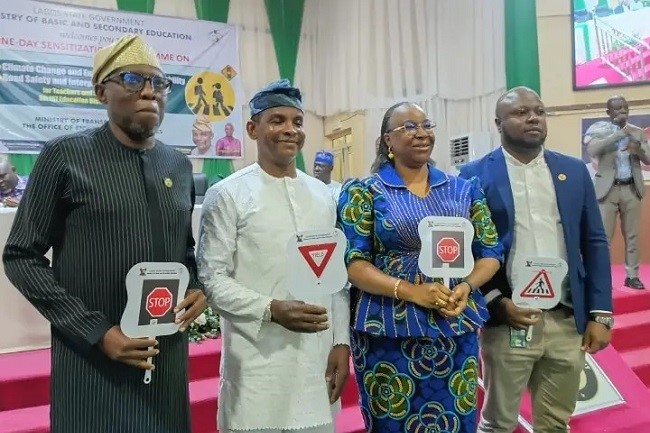
From left: Mr Ojuwuro Olasunkami from Lagos State Ministry of Transportation, Mr Jamiu Alli-Balogun, Commissioner, Ministry of Basic and Secondary Education; Abisola Dokunmu-Adegbite, Permanent Secretary in the ministry; and Mr Abass Mohammed from Office of Environmental Services, Lagos State, at a sensitisation programme on Climate Change and road safety

The event held at Alausa, Ikeja, with key education stakeholders in attendance.

Alli-Balogun said education extended beyond classroom learning, stressing the need for holistic training that would build responsible citizens for national development.

The commissioner said that Lagos, a coastal city, had continued to experience  climate change effects such as flooding and heatwaves.

He said that the situation made environmental awareness and road safety education essential in the state.

“As a government, we remain committed to environmental awareness and safety education in schools.

“We must raise students who are not only academically sound but also conscious of their environments and personal safety.

“Road safety requires discipline, alertness and strict adherence to traffic rules, especially in a rapidly-growing city such as Lagos where mobility and human activities are constantly increasing,” he said.

Earlier, the Permanent Secretary in the ministry, Mrs. Abisola Dokunmu-Adegbite, said that sustainable impact of the education would depend on consistent behavioural change among students and teachers.

According to Dokunmu-Adegbite, true progress is achieved when knowledge is translated into daily habits that promote responsibility, environmental awareness and  protection of lives within schools and communities.

“Lasting change is achieved when knowledge becomes a daily practice, shaping responsible actions that safeguard lives and secure the environment for tomorrow,” the permanent secretary said.

She said that teachers and students must take responsibility for reinforcing what would be taught, ensuring that road safety and environmental sustainability  would become  lifestyles.

The one-day sensitisation programme was organised by the ministry in collaboration with the state Ministry of Transport and the Office of Environmental Services in Lagos State.

The event brought together students, teachers and key education stakeholders in the state, including the tutor-general and permanent secretaries.

By Millicent Ifeanyichukwu

Climate vulnerability: Govt integrating conflict sensitivity, peacebuilding into NAP

The Federal Government is integrating conflict sensitivity and peacebuilding into the National Adaptation Plan (NAP) to address climate vulnerabilities that fuel instability.

Dr Salihu Usman, the Permanent Secretary of the Ministry of Environment, said this at the Peer Learning Forum on the NAP process in Conflict-Affected Countries in Abuja on Tuesday, May 5, 2026.

“Doing so in conflict-affected and peace building contexts require strategies for conflict-sensitive adaptation planning.

Balarabe Lawal
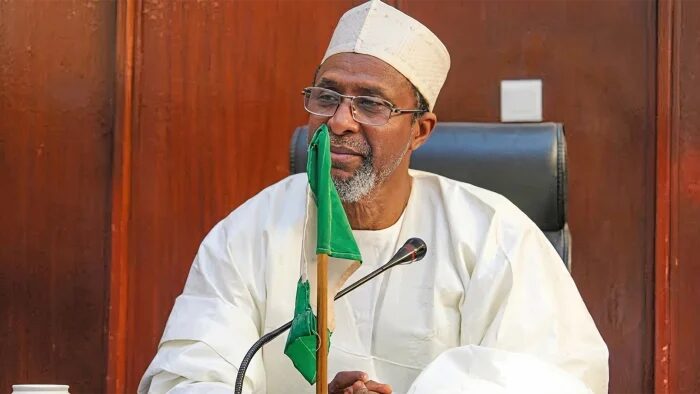
Malam Balarabe Lawal, the Minister of Environment

He said that the local conflict dynamics associated with climate change would this understanding to tackle such dynamics, address climate vulnerabilities, and promote peace.

“An important issue that was considered in the NAP process is Conflict-Sensitivity and Peacebuilding.

“Conflicts such as farmer-herder crises, cattle rustling, banditry among others, which currently threatens the security of our country can be linked to climate change.

“Links between climate change and fragility means that it would be a mistake to ignore medium and long-term adaptation needs in these peace building contexts,” Usman said.

He stated that while climate change and conflict are often compounding challenges, adapting to the impacts of climate change can be an effective way of breaking this cycle by improving social well-being and addressing root drivers of fragility.

“Adaptation strategies and options should be implemented through the ‘eye’ of conflict sensitivity.

“It is important that Conflict Sensitivity and Peacebuilding issues be integrated into the NAP process because its implementation will also reach conflict-prone areas,” he said.

Usman worried that climate change impacts are on the rise daily with unprecedented and extreme weather conditions being experienced all around the world.

“Urgent solutions are required before ‘it gets out of hand’ resulting in uncontrollable loss of livelihoods and biodiversity.

“Adapting to climate change means taking action to prepare for and adjust to both the current effects of climate change and the predicted impacts in the future.

“Nigeria’s NAP, supported by the Green Climate Fund, is building on the identified thematic areas in the National Adaptation Strategy & Plan of Action.

“A key activity in the process was the conduct of a Climate Risk and Vulnerability Assessment to identify communities’ vulnerabilities and suggest possible adaption options to address these challenges,” he said.

Dr Iniobong Abiola-Awe Director, Climate Change Department in the ministry, said that climate change impacts are on the rise globally and Nigeria is not exempted.

“Extreme weather events and climate variability are impacting many sectors, key infrastructure, biodiversity among others and is causing security challenges.

“These impacts are projected to become even more severe under future climate change scenarios.

“While efforts are on to mitigate the effect of climate change, the need for adaptation is also very important so that we can adjust our systems and operations to these effects without affecting our daily activities nor jeopardising our security,” she retriated.

Mr. Alec Crawford, Director, Nature for Resilience International Institute for Sustainable Development NAP Global Network Secretariat, said that the NAP Global Network was founded over 10 years ago to support countries to plan and implement their adaptation priorities.

“We are meeting at a time when the interaction between climate risks, war and conflict is no longer abstract.

“In many of your contexts, climate change impacts are unfolding alongside insecurity, violence, displacement, and pressure on institutions,” he said.

Crawford said that the meeting has important implications for national adaptation plan processes, or NAP processes. NAP processes are often framed as technical exercises.

“But they are essential vehicles for countries to identify and address countries’ medium and long-term priorities for adapting to climate change in an inclusive and effective manner.

“They also involve choices about resource allocation, and about which risks and vulnerabilities are addressed. At the same time, they depend on coordination across parts of government that do not always work closely together.

“In conflict-affected contexts, this is particularly complicated; adaptation is competing with a host of other urgent priorities for funding, attention and political capital,” he said.

The forum brings together African countries representatives, peacebuilding experts and partners to bridge climate adaptation with security.

It focuses on adapting NAP processes to fragile settings and integrating conflict-sensitive approaches into climate resilience efforts.

By Abigael Joshua

UNN to demolish shanties, illegal structures to restore master plan

0

The University of Nigeria Nsukka (UNN) says it is set to restore the original Master Plan of the university to promote environmental sanity in line with global best practices.

Dr Okey Ekwelem, the Chairman, Office of the Vice-chancellor Committee on Restoration of UNN Master Plan, who is also Director of Physical Planning in UNN, disclosed this in Nsukka, Enugu State, on Tuesday, May 5, 2026, while briefing newsmen.

Members of the committee present during the briefing included Aaron Agbo, Director of Housing and Accommodation and Mr. Nweke Egede, Director of Works.

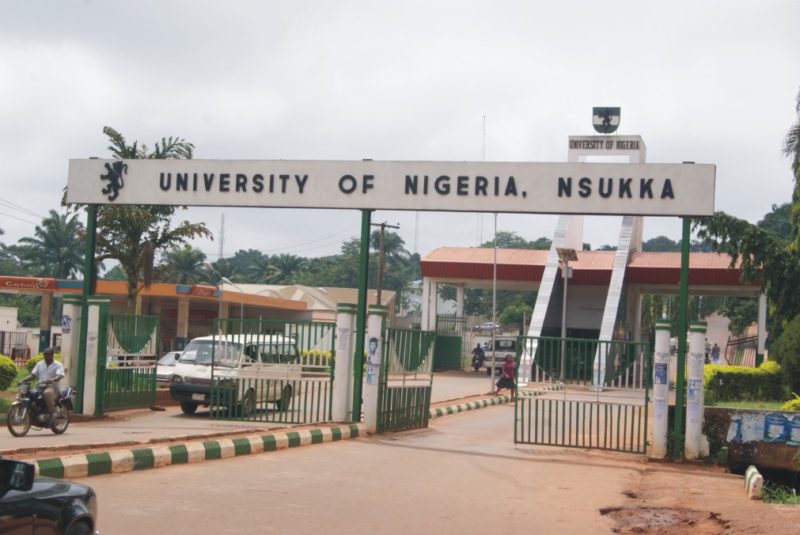
University of Nigeria, Nsukka
University of Nigeria, Nsukka, Enugu State

Others were Mr. Ambrose Okeh, acting Chief Security Officer and Mr. Agha Egwu, Acting Public Relations Officer.

Ekwelem said the committee had already informed owners of shops attached to the university fences, illegal structures and shanties inside the university to remove them before May 2, 2026 or have them demolished.

“We have informed them that in an effort to restore UNN Master Plan and green areas, that demolition of all illegal structures situated inside and around the university fences will commence from May 6.

“This action follows an earlier notice issued on March 4, 2026, directing all occupants of such unauthorised structures to vacate the area before April 2, 2026.

“The deadline was further extended to May 2, 2026; the university has given adequate time to ensure full compliance by those affected.

“The University’s Directorate of Community Relations also recently engaged with some of the occupants of the areas to inform them about the management’s plan to restore the areas to its original master plan,” he said

He explained that the present administration of Prof Simon Ortuanya, the Vice-chancellor, was geared to bring the university to its past glory.

“As a foremost academic institution, UNN is committed to maintaining a serene, orderly, and aesthetically pleasing environment befitting a world-class university.

“The Management therefore appeals to all concerned persons to cooperate fully with this exercise in the interest of safety, order, and sustainable campus development,” he said.

The chairman of the Committee also disclosed that the university had mapped out designated spaces within its premises to accommodate legitimate retail businesses.

He urged individuals and business owners that would be affected by the demolition to take advantage of these approved spaces by the university management for their commercial activities.

By Hilary Akalugwu

NUPRC releases DCSO report for Q1 2026

The Nigerian Upstream Petroleum Regulatory Commission (NUPRC) has released the statistics on the enforcement of the Domestic Crude Supply Obligation (DCSO) in accordance with the provisions of the Petroleum Industry Act.

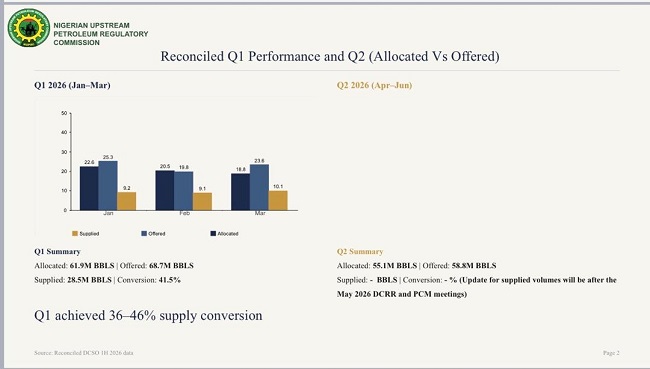
A summary of the monthly allocation shows that 61.9 million barrels of crude oil were allocated to domestic refineries during the quarter, while producers collectively offered a higher volume of 68.7 million barrels.

However, actual supply to local refineries was 28.5 million barrels, translating to a supply conversion rate of 36-46 per cent as of the end of the first quarter (Q1) 2026.

NUPRC
NUPRC reconciled Q1 performance and Q2

A breakdown of the DCSO month by month reveals that in the month of January, following consultations with stakeholders, including crude oil producers, the Commission mandated producers to supply 22.6 million barrels to the local refiners.

Producers exceeded expectations, offering 25.3 million barrels, representing a rise of 11.9 per cent, or an additional 2.7 million barrels, in the month. However, 9.2 million barrels were ultimately supplied to local refiners.

In February, the Commission, in discharging its DCSO, allocated 20.5 million barrels to local refineries, but producers offered slightly less at 19.8 million barrels, missing the target by 700,000 barrels. Actual supply was down at 9.1 million barrels.

In March, there was a modest improvement in deliveries, which rose to 10.1 million barrels, up from 9.2 million barrels in January and 9.1 million barrels in February. During the same period, DCSO allocations stood at 18.8 million barrels, while producers offered a significantly higher 23.6 million barrels, representing an excess of 4.8 million barrels or 25.5 per cent.

The shortfall between volumes offered and actual deliveries has been attributed primarily to pricing gaps between producers and domestic refiners. The Commission emphasised that the current framework operates on a “willing buyer, willing seller” basis, which continues to shape transaction outcomes.

Despite these developments, the Commission reaffirmed its commitment to achieving the government’s objective of energy sufficiency. Leveraging the framework of the PIA, 2021, the Commission aims to sustain recent gains in crude oil production while continuously refining the DCSO methodology to enhance transparency, efficiency, ensuring that local refineries are supplied as committed.

OTC 2026: Nigeria targets zero gas flaring by 2030 as NUPRC chief preaches energy renaissance

Nigeria’s oil and gas sector is in the middle of a “quiet but far-reaching transformation,” driven by local firms, zero-flare targets, and ambitions to lead Africa’s energy future, regulators told investors on Monday, May 4, at the 2026 Offshore Technology Conference (OTC).

The Commission Chief Executive, Nigerian Upstream Petroleum Regulatory Commission (NUPRC), Mrs. Oritsemeyiwa Eyesan, made this known on Monday at the Nigerian Pavilion of OTC 2026 in Houston, Texas. 

OTC 2026
L-R: Wole Ogunsanya, Chairman of the Petroleum Technology Association of Nigeria (PETAN); Mrs. Oritsemeyiwa Eyesan, Commission Chief Executive (CCE), Nigerian Upstream Petroleum Regulatory Commission (NUPRC); Adedapo Segun, Chief Financial Officer, NNPCL; and Adegbite Falade, Managing Director and Chief Executive Officer (MD/CEO) of Aradel Holdings Plc, at the opening session of Nigerian Pavillion at the 2026 Offshore Technology Conference (OTC), hosted by PETAN in Houston, Texas

The Nigerian Pavilion was organised by the Petroleum Technology Association of Nigeria (PETAN) with the 2026 edition themed: “Africa’s Energy Transformation: Scaling Investment, Technology, and Local Capacity for Sustainable Growth.”

The NUPRC boss said indigenous companies, climate goals, and policy reform are reshaping the industry from the ground up.  

“Today, nearly 100 Nigerian companies are operating in the sector. That is phenomenal,” Eyesan said at the PETAN-organised Nigerian Pavilion. The shift marks a move away from decades of dominance by a handful of international oil companies toward local firms driving exploration, production, and tech adoption.

 Her remarks highlight a significant shift from an era dominated by a handful of international oil companies to one where indigenous firms are increasingly shaping the industry’s direction.

She said that at the core of her agenda is a dual target of eliminating gas flaring by 2030 and achieving net-zero emissions by 2060.

She disclosed that gas flaring has already dropped below 10 per cent, with firm plans to eradicate it completely.

“We are not just penalising flaring. We are commercialising it,” Eyesan said, explaining that flare sites are being concessioned to firms capable of converting wasted gas into usable energy.

She said that the initiative is expected to generate up to three gigawatts of electricity.

She expressed confidence that Nigeria’s decarbonisation goals are achievable, emphasising a pragmatic transition that integrates cleaner technologies rather than abandoning hydrocarbons altogether.

According to her, some offshore facilities already deploy solar energy, while carbon capture, utilisation, and storage projects are under consideration.

Eyesan described the Petroleum Industry Act (PIA) as a “game changer” that has improved regulatory clarity and competitiveness while noting that continuous policy adjustments are necessary to remain globally attractive.

“The government has been responsive. We constantly evaluate our position and adjust to attract and retain investment,” she said.

She stressed that the Commission remains committed to enabling business while enforcing compliance, adding that collaboration is not confrontation, and will define engagement with industry players.

Looking beyond Nigeria, Eyesan said the country is well-positioned to drive Africa’s broader energy development.

“Nigeria is a major player, but I see us as a beacon for Africa. We have the resources to expand energy access, reduce energy poverty, and support industrialisation across the continent,” she said.

On investment opportunities, she revealed strong interest in Nigeria’s 2025 bid round.

“We have about 50 assets on offer and nearly 300 applicants. That tells you the opportunities are significant, and the story will change rapidly,” she added.

She also pointed to reforms in the downstream sector, noting that the removal of fuel subsidies has accelerated the adoption of alternative fuels such as compressed natural gas (CNG), with further growth expected as domestic gas infrastructure expands.

In his remarks, Mr. Wole Ogunsanya, Chairman of PETAN, said Nigeria’s participation at the conference demonstrates resilience despite global uncertainty and challenges.

“Even in these trying moments, not just in the United States but globally, we ensured Nigeria was represented,” Ogunsanya said.

“We engaged extensively to support delegates’ participation, and the outcome is encouraging.”

He noted that the strong presence of key stakeholders reflects a shared commitment to boosting production and strengthening the country’s energy security.

Ogunsanya added that Nigeria is approaching a major refining milestone, with projections of up to one million barrels per day in operational refining capacity, positioning the country to reduce import dependence and meet domestic demand more effectively.