Home Blog Page 3

From transit hub to global model: How Nigeria gave pangolins a fighting chance

0

The world came to Samarkand, Uzbekistan, to learn from Nigeria’s experience.

The occasion was CITES CoP20, the once-every-three-years global conference where governments decide how to protect endangered species by regulating international wildlife trade – held in Samarkand late last year. In the audience, officials from dozens of countries gathered to learn what works in combating wildlife trafficking. And on stage were officials from the Nigerian government and Wildlife Justice Commission, there to share their expertise.

Nigeria’s experience offers hard-earned lessons in protecting pangolins, one of the world’s most trafficked animals.

The pangolin
The pangolin

For too long, pangolins have been pushed towards extinction by sophisticated criminal networks that traffic them as a high-value commodity. Not long ago, Nigeria sat at the centre of that illegal trade. Today, it stands as proof that wildlife trafficking networks can be disrupted, not merely by seizing shipments, but by breaking the routes traffickers rely on, arresting those who organise the trade, and making the business too risky to continue. Pangolins now have a fighting chance.

Between 2016 and 2019, Nigeria was one of the world’s largest hubs for pangolin trafficking, linked to more than half of all major global seizures and serving as a key transit point for pangolin scales bound for Asia. Thousands of Nigeria’s pangolins were trapped, killed, and exported by highly organised transnational criminal networks.

Traditional enforcement approaches – focused primarily on intercepting shipments—were not enough. What was required was a fundamental shift.

That shift began with a bold partnership between the Nigeria Customs Service (NCS) and the Wildlife Justice Commission, grounded in intelligence-led enforcement. Together, we moved beyond pursuing seizures and instead focused on disrupting the criminal networks trafficking pangolin scales out of Nigeria. We systematically infiltrated supply chains,
NCS-WJC
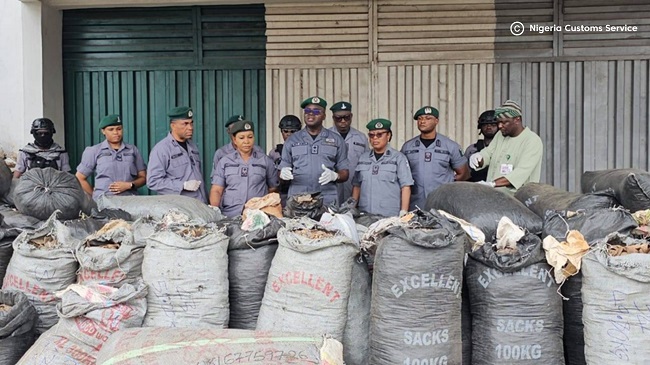
Nigeria Customs Service (NCS) officials presenting to the media the seizure on April 2025, following a major joint NCS-WJC operation in which five suspects were arrested, and 3.765 tonnes of pangolin scales were seized

identified kingpins, and supported law enforcement action where it would cause the greatest damage: at the very top of the criminal hierarchy.

The results have been transformative – and measurable.

Between July 2021 and December 2025, Nigerian authorities, supported by Wildlife Justice intelligence, seized 25.3 tonnes of pangolin scales, representing an estimated 135,000 pangolins. Twenty ground operations led to 42 arrests and 15 convictions. During this period, 91% of all pangolin seizures in Nigeria involved Wildlife Justice intelligence support.

But the real impact goes far beyond the numbers. The statistics, striking as they are, tell only part of the story.

Trafficking routes from Nigeria have collapsed. For more than three years, no major reported pangolin scale shipments originating from Nigeria have been intercepted at Asian seaports. Market prices have dropped as traffickers have abandoned this criminal activity. Wildlife trafficking from Nigeria is now viewed by criminals as a high-risk activity. This shift is visible even inside criminal networks. As one trafficker texted: “U know that this business is not like before and people are really after us.” The trafficker was right: we saw this text because his phone was seized when he was arrested.

These outcomes were made possible by the strategic leadership and commitment of the NCS, whose willingness to embrace intelligence-led enforcement has set a new benchmark for high-risk transit countries.

In 2022, this partnership led to the arrest of a Vietnamese kingpin and his key associates, central figures in pangolin and ivory trafficking, whose convictions in 2023 sent a clear signal that wildlife crime would no longer be tolerated. In 2025, Nigerian authorities arrested a Chinese national linked to the largest global pangolin scale seizure since 2020, following a months-long investigation.

Nigeria’s leadership was showcased on the global stage in Samarkand, where the Government of Nigeria and Wildlife Justice co-hosted a high-level event, Enforcement in Action. Senior officials from the Nigerian government, UNODC, and Wildlife Justice shared their expertise, explaining how intelligence-led investigations, financial analysis, and strong partnerships are delivering measurable reductions in wildlife trafficking. In the audience, dozens of officials from around the world took notes.

They learned how, with the support of the Wildlife Justice Commission, Nigeria has strengthened financial investigations, enhanced analytical capacity, and dismantled transnational wildlife trafficking networks.They learned that species are not saved by chance – they are saved by strategy.

They learned that by targeting the kingpins who orchestrate wildlife crime, following the money, and sustaining long-term intelligence-led investigations, enforcement agencies can dismantle even the most entrenched criminal networks.

Nigeria’s success proves that this approach works, and that it can be replicated elsewhere. Today, the Wildlife Justice model of partnering with government authorities is being applied to confront trafficking in ivory, rhino horn, marine species, and exotic pets across Africa and beyond. Our success is also reshaping international policy discussions by demonstrating that wildlife trafficking must be addressed as serious organised crime.

Nigeria’s experience offers hope – not just for pangolins, but for countless species threatened by organised wildlife crime. Nigeria has hard-earned lessons to share. For the rest of the world, it is a call to action.

By Bashir Adewale Adeniyi, Comptroller-General, Nigeria Customs Service and Olivia Swaak-Goldman, Executive Director, Wildlife Justice Commission
Rebuilding futures: VCDF, Lagos, SEEPCO revitalise Obele community schools

0

Efforts to improve public education infrastructure in Nigeria received a significant boost on March 25, 2026, as the Vcare for Development Foundation (VCDF), in partnership with the Lagos State Ministry of Basic and Secondary Education and supported by Sterling Oil Exploration and Energy Production Company Limited (SEEPCO), delivered a comprehensive rehabilitation of Obele Community Senior and Junior Secondary Schools in Surulere.

Across Nigeria, deteriorating school facilities, from overcrowded classrooms to inadequate sanitation, continue to negatively affect learning outcomes. The Obele Community Schools, a microcosm of such inadequacy – made up of the Primary, Junior and Secondary Schools – have for years laboured under inadequate teaching conditions with aging and dilapidated infrastructure.

Obele Community Schools
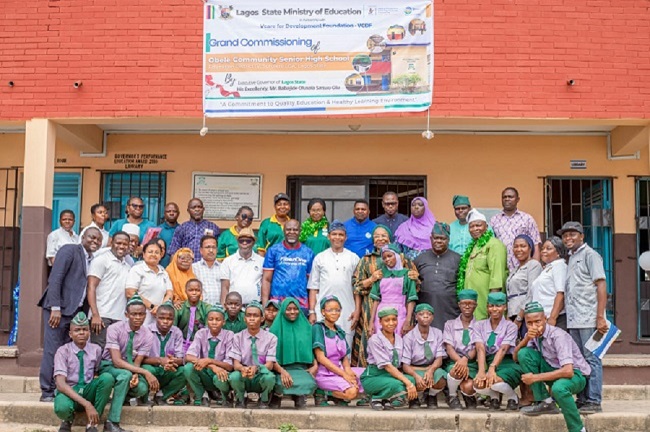
Participants at commissioning of the rehabilitated Obele community schools

The Obele community schools rehabilitation project therefore represents a targeted response to these challenges, demonstrating how partnerships between government, development organisations, and the private sector can improve access to quality education.

The intervention, implemented under VCDF’s Model School Initiative (MSI), reflects a growing emphasis on collaborative, impact-driven solutions to address longstanding infrastructure deficits in Nigeria’s education sector.

At the official handover ceremony, stakeholders from government, the education sector, and the host community gathered to mark the completion of the upgraded facilities.

The Commissioner for Basic and Secondary Education, Mr. Jamiu Tolani Alli-Balogun, described the project as aligned with Lagos State’s broader development priorities, noting that improved learning environments are essential for student performance, well-being, and retention.

He commended VCDF and its partners for supporting the state’s vision of safe, inclusive, and conducive learning spaces, emphasising that sustained collaboration will be critical to addressing infrastructure gaps across Lagos.

Similarly, the Permanent Secretary of the Ministry of Basic and Secondary Education, Mrs. Abisola Dokunmu-Adegbite, urged the students and school administrators to ensure proper use and maintenance of the upgraded facilities.

VCDF’s National Programme Manager, James Olabi Odey, said the Obele intervention is part of a broader effort to expand access to quality education nationwide. According to him, the Model School Initiative has already reached over 28,000 beneficiaries across Lagos, Delta, and Akwa Ibom states.

He highlighted the role of private sector support, noting that SEEPCO’s involvement demonstrates how corporate social responsibility can be effectively aligned with community development priorities.

Key Upgrades Delivered

The rehabilitation project delivered significant infrastructure and facility upgrades:

Obele Senior High School:

  • Renovation of 14 classrooms, 13 offices, and stores
  • Construction and equipping of three science laboratories (Physics, Chemistry, Biology)
  • Roof replacement for a one-storey classroom block
  • Provision of 150 laboratory stools, 100 student desks, and teaching boards
  • Construction of new sanitation facilities and walkways

Obele Junior School:

  • Renovation of eight classrooms and 10 offices
  • Library upgrade with study cubicles, shelves, and seating
  • Provision of desks, teachers’ furniture, and ceiling fans
  • Installation of a water system and improved sanitation

The MSI initiative aligns with the United Nations Sustainable Development Goal 4, which promotes inclusive and equitable quality education.

Various speakers including the Chairman of Surulere Local Government, Sulaimon Bamidele Yusuf, noted that while infrastructure upgrades are critical, long-term impact will depend on maintenance, community ownership, and accountability.

For residents of Obele, the transformation goes beyond physical improvements. Community leaders and education stakeholders present at the handover described the project as a major shift from previously deteriorating conditions, highlighting its potential to enhance both teaching and learning outcomes.

Improved school environments, they noted, can influence not only academic performance but also broader social and economic development within communities.

As Lagos continues to grow, initiatives like the Obele school rehabilitation underscore the importance of strategic partnerships in building resilient and inclusive education systems.

Also present at the event were Olusegun Osinaike, Tutor-General/Permanent Secretary, Education District IV; and Mrs. Florence Bolodeoku, Chairman of the Surulere Chapter of the All-Nigeria Confederation of Principals of Secondary Schools (ANCOPSS).

Decade of Gas: Nigeria’s gas production surges to 7.5bcf/d, targets 12bcf/d by 2030 – Ubong

0

The Coordinating Director of the Decade of Gas Secretariat, Mr. Ed Ubong, has disclosed that Nigeria’s gas production rose from approximately 6.8 billion cubic feet per day in 2023 to 7.5 billion cubic feet per day in 2025.

Speaking at the Decade of Gas and World Bank Ministerial Roundtable and workshop in Abuja, Ubong attributed the growth to strong collaboration among government institutions, regulators, investors, and industry players.

He stated that Nigeria has reaffirmed its ambition to significantly scale up gas production and deepen regional energy cooperation, with a target of delivering up to 12 billion cubic feet (bcf) of gas per day into the market by 2030.

Ed Ubong
Mr. Ed Ubong

He underscored the importance of collaboration among African nations, development partners, and private investors in unlocking the continent’s gas potential.

Ubong acknowledged the presence of African leaders and stakeholders, including the Ministers from across the continent, representatives of the World Bank, and Sponsors the Decade of Gas Secretariat. 

He also recognised key regulators such as the Nigerian Midstream and Downstream Petroleum Regulatory Authority (NMDPRA) and the Nigerian Upstream Petroleum Regulatory Commission (NUPRC), the Chairman of PiCNG, and more than 60 project sponsors participating in the event.

According to him, these stakeholders are expected to play a pivotal role in advancing funding discussions, particularly with the World Bank, to accelerate gas infrastructure and development projects across Africa.

Ubong outlined the objectives of the roundtable, noting that the session would feature presentations on Africa’s gas landscape, including insights from global consulting firm McKinsey, followed by workshop discussions focused on collaboration between the World Bank and project sponsors. 

The event also includes thematic sessions aimed at identifying practical strategies for efficient gas transportation across the continent to meet growing energy demands.

Tracing the origins of Nigeria’s current gas drive, Ubong recalled that the Federal Government declared 2021 to 2030 as the “Decade of Gas,” marking a strategic shift toward gas as a central pillar of the country’s energy mix. 

He noted that President Bola Ahmed Tinubu has consistently championed gas as a driver of economic growth under the vision of “Gas for Nigeria’s Prosperity,” while the Minister of State for Petroleum Resources (Gas) continues to engage stakeholders to strengthen the value chain.

He explained that a dedicated Secretariat was fully established in 2023 to coordinate implementation, focusing on unlocking Nigeria’s vast gas reserves, stimulating demand through credible off-takers, expanding infrastructure, ensuring competitive pricing, and building human capacity across the sector.

Ubong identified gas-to-power and the expansion of domestic liquefied petroleum gas (LPG) usage as two priority areas. He said the gas-to-power initiative is aimed at improving electricity supply, while increased LPG adoption seeks to replace firewood and charcoal, thereby improving public health and environmental sustainability.

He added that several upstream operators have taken Final Investment Decisions (FIDs) on major gas projects, with additional investments expected in the near future, signalling sustained momentum in the sector.

To enhance coordination, Ubong revealed that over 215 gas demand projects are currently tracked within NMDPRA centralised database, enabling more efficient planning and execution. 

The Coordinator stressed that accountability mechanisms have also been strengthened, with stakeholders monitored on project delivery and progress.

“We continue to ask a critical question across the ecosystem – what support is required to move projects forward and unlock value for Nigeria?” he said.

Ubong further explained that a structured governance framework has been adopted, bringing together government agencies, regulators, and industry leaders at the executive level, supported by technical workstreams to ensure consistent implementation.

Looking beyond Nigeria, he said the country is positioning itself as a catalyst for a regional gas ecosystem across West Africa. He stressed that achieving this vision would require alignment among countries on supply strategies, demand projections, and infrastructure development.

He highlighted the need for gas pipelines capable of bidirectional flow to enhance flexibility and reliability, noting that projects such as the African Atlantic Gas Pipeline would play a transformative role in connecting regional markets.

On infrastructure, Ubong disclosed that Nigeria has identified 16 critical pipeline projects requiring an estimated $22 billion in investment, emphasising the need for robust public-private partnerships to deliver them.

He also reiterated Nigeria’s commitment to environmental sustainability, noting that efforts are underway to curb gas flaring as production increases, in line with global environmental standards.

The power sector, he said, remains central to the gas agenda, requiring close coordination among key ministries, including Power and Finance, as well as industry operators to ensure reliable electricity supply.

On domestic consumption, Ubong said Nigeria plans to increase LPG usage from 1.8 million tonnes per annum to 3 million tonnes by 2030. As part of this strategy, over five million gas cylinders are expected to be distributed nationwide to encourage the transition to cleaner cooking energy.

He concluded that while significant progress has been made over the past three years, sustained collaboration remains critical to achieving Nigeria’s gas ambitions and broader energy security goals.

“This platform provides an opportunity to deepen partnerships, strengthen regional cooperation, and accelerate delivery,” Ubong said. “Africa’s energy future depends on our ability to work together across borders, institutions, and value chains to achieve shared prosperity.”

TechnoServe, Coca-Cola Foundation launch PReP 2.0 to help scale plastic recycling in Nigeria

Building on the success of the first phase of the Plastic Recycling Program in Southern Nigeria (PReP), international nonprofit, TechnoServe, has launched the Plastic Recycling Programme in Nigeria PReP 2.0, with funding from The Coca-Cola Foundation. This new phase is aimed at continuing to develop an inclusive recycling system, strengthening livelihoods, and supporting more sustainable environmental solutions across Nigeria.

According to the United Nations Industrial Development Organisation (UNIDO), Nigeria generates approximately 2.5 million metric tons of plastic waste annually, with Lagos producing about 13,000 metric tons of solid waste daily. Much of this ends up in waterways and communities, posing severe environmental and health risks. Through the PReP initiative, what was once seen as waste has become a source of income, employment, and environmental renewal for thousands of Nigerians.

Coca Cola
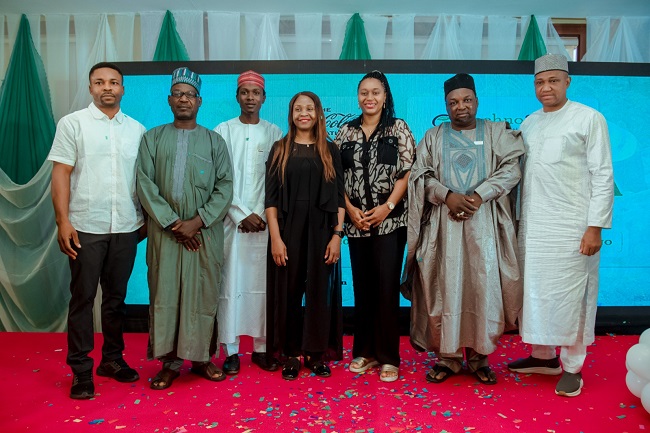
L-R: Mr. Cajetan Okeke, General Secretary, Recyclers Association (RAN); Malam Ladan Ajumawa Acting Permanent Secretary, Kano State Ministry of Planning and Budget; Mallam Umar Dahiru, Representative, Kano State Refuse Management and Sanitation Board (REMASAB); Mrs. Adesuwa Akinboro, Country Director, TechnoServe; Nwamaka Onyemelukwe, Senior Director, Public Affairs, Communication & Sustainability, Coca-Cola Nigeria; Salisu Ali Yarima, President Waste Pickers Association of Nigeria (WAPAN); and Alhaji Abba Danguguwa, Permanent Secretary of the Kano State Ministry of Science, Technology and Innovation at the launch of Plastic Recycling Program PReP 2.0 in Kano recently

Since its inception, PReP has transformed the recycling landscape in Lagos and Anambra, diverting over 59,000metric tons of plastic waste, creating and improving 10,000 livelihoods, and building a vibrant network of 51 aggregators who now drive more inclusive growth and sustainability in the recycling sector. The programme has provided equipment, training and working capital support, empowering women and youth-led enterprises to lead in developing a robust recycling value chain.

“These achievements represent not just statistics, but powerful stories of resilience and transformation,” said Adesuwa Akinboro, Nigeria Country Director, TechnoServe. “Aggregators and collectors are now operating as business owners, improving their livelihoods and helping their communities while keeping plastic waste out of the environment.”

The launch of PReP 2.0 marks a new chapter in Nigeria’s journey toward a sustainable recycling economy. Expanding operations to Kano State, alongside Anambra and Lagos, this new phase will aim to create and improve an additional 2,400 jobs and divert 32,000 metric tons of plastic waste from the environment.

The initiative aims to build a more profitable, inclusive, and environmentally sustainable recycling industry by:

  • Strengthening collaboration between market actors to help ensure fair, efficient, and safe recycling practices.
  • Creating a cadre of business-oriented players, to increase recovery and recycling efficiency.
  • Expanding partnerships with financial institutions, local governments, and private sector actors to unlock financing and create enabling conditions for growth.

“At The Coca-Cola Foundation, we’re focused on supporting environmental sustainability and empowering communities,” said Carlos Pagoaga, President of The Coca-Cola Foundation. “Through initiatives like PReP 2.0, we are proud to deepen our impact, reducing plastic waste, cutting emissions, and supporting thousands of livelihoods across Nigeria as we work toward a cleaner and more inclusive future.”

The programme will also promote gender inclusion, environmental education, and behavior change communication so that women and youth can continue to play central roles in driving local recycling innovations.

As Nigeria strives to achieve its sustainability and environmental goals, Prep 2.0 stands as a model for how public-private partnerships can turn challenges into economic opportunities, advancing both community well-being and resilience.

40 migratory animal species receive new, upgraded protection at close of UN meeting in Brazil

Confronted with stark new evidence that many migratory species are moving closer to extinction, governments at a major UN wildlife conservation meeting on Sunday, March 29, 2026, agreed on expanded conservation efforts, including new or enhanced treaty protections for 40 species and populations of birds, aquatic wildlife, and terrestrial animals.

Meeting in Brazil, Parties to the Convention on the Conservation of Migratory Species of Wild Animals (CMS) adopted several measures to strengthen global or regional conservation efforts of such iconic species as the cheetah, striped hyena, snowy owl, giant otter, great hammerhead shark, and several shorebird species facing steep population declines. 

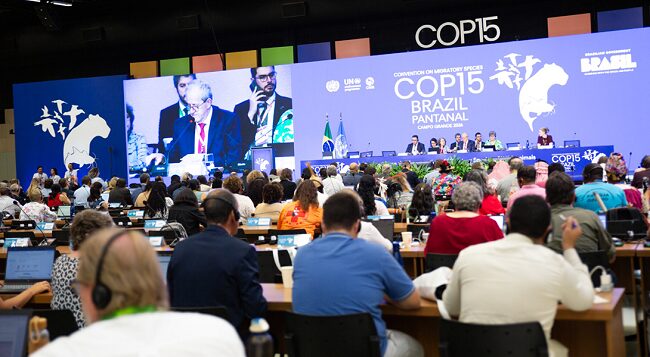
CMS COP15
Delegates at CMS COP15 in Brazil

Parties agreed to list the 40 additional species or populations of species on CMS Appendices I (species in danger of extinction) or II (species in need of coordinated international action), which now include over 1,200 unique species under the 47-year-old Convention.

They also approved multi-species conservation plans in key regions such as the Amazon.

The week-long CMS COP15 opened with new findings that key indicators for many treaty-protected species continue to trend downward, reinforcing warnings that habitat loss, overexploitation, and infrastructure barriers are accelerating declines across species that traverse national borders.

The conference also highlighted a growing need to address threats such as deep-sea mining, climate change, plastic pollution, underwater noise, illegal wildlife killing, fisheries bycatch, and marine pollution.

CMS COP15 began with strong political and scientific warnings: migratory species are in accelerating decline and international cooperation is required to effectively respond.

  • The State of the World’s Migratory Species: Interim Report (2026) report underlined that key biodiversity indicators are trending negatively, with rising extinction risk and population declines
  • Scientific and political leaders, including Presidents Luiz Inácio Lula da Silva of Brazil and Santiago Peña of Paraguay, underlined threats such as habitat fragmentation, bycatch, illegal killing, and infrastructure barriers
  • Parties emphasised ecological connectivity, international cooperation, expanded partnerships with CITES, IPBES, and other multilateral agreements
  • There was a strong push to integrate Indigenous and local knowledge into scientific considerations, with a parallel debate on how to balance scientific rigor with multiple knowledge systems

Said CMS Executive Secretary, Amy Fraenkel: “We came to Campo Grande knowing that the populations of half the species protected under this treaty are in decline. We leave with stronger protections and more ambitious plans but the species themselves are not waiting for our next meeting. Implementation has to begin tomorrow. Expanded protections for striped hyena, snowy owls, giant otters, great hammerhead sharks, and many more, demonstrate that nations can act when the science is clear. Our duty now is to close the distance between what we’ve agreed and what happens on the ground for these animals.”

Said João Paulo Capobianco, Chair of COP15 and Executive Secretary, Ministry of the Environment and Climate Change, Brazil; “We protect species that may never remain within our borders. We invest in a natural heritage we do not own, but are all responsible for. In doing so, we give concrete meaning to global solidarity, recognizing that migratory species transcend nations, jurisdictions, and generations. From the Pantanal to the Arctic, from the oceans to the savannas, migratory species connect our planet in ways no political map ever could. They remind us that ecological integrity depends on continuity on flows that must remain alive, uninterrupted, and resilient.”

With the conclusion of COP15, the Government of Brazil now holds the mantle of the CMS COP Presidency and will carry the momentum from this meeting into the next three years, not only in South America but also for all regions of the world, for the conservation of migratory species and their habitats.

CAPPA urges govt to increase tobacco control budget

0

The Corporate Accountability and Public Participation Africa (CAPPA) has renewed its call on the Federal Government to significantly increase budgetary allocation for tobacco control.

CAPPA’s Executive Director, Akinbode Oluwafemi, made the call in a statement signed by Robert Egbe, Media and Communications Officer, CAPPA, on Sunday, March 29, 2026, in Abuja.

Oluwafemi said that Nigeria’s current budgetary allocation remained grossly inadequate to address the growing public health threat posed by tobacco and emerging nicotine products.

Tobacco
Tobacco

He urged the government to raise the annual tobacco control allocation to at least N300 million and ensure sustained increases in subsequent budgets.

He said that current funding levels fell far short of what is required to effectively implement the National Tobacco Control Act (NTCA) 2015.

Meanwhile, CAPPA’s has highlighted how international tobacco and allied companies are exploiting policy gaps to flood the Nigerian market with highly addictive novel products.

The highlight is contained in its new report, “New Smoke Trap: New and Emerging Nicotine and Tobacco Products, Youth Exposure and Policy Gaps in Nigeria”.

Oluwafemi said that the products included electronic cigarettes, vapes, and other smokeless nicotine devices, targeted at young Nigerians.

He sais that the rapid spread of these products, combined with weak enforcement and limited funding posed a serious public health risk.

“We are dealing with a fast-changing nicotine market that is clearly targeting young people.

“Without adequate funding for regulation, enforcement and public education, the country risks a new wave of addiction,” he said.

According to him, tobacco use remains a leading cause of preventable death in Nigeria, responsible for nearly 30,000 deaths annually. 

Citing data from the Centre for the Study of the Economies of Africa (CSEA), the CAPPA boss warned of the economic burden of tobacco and nicotine.

He said that Nigerians spent over N526 billion treating tobacco-related diseases in 2019 alone.

He said that in spite of these costs, Nigeria has continued to underfund tobacco control efforts.

“This is limiting critical activities such as public awareness campaigns, enforcement of smoke-free regulations, monitoring of industry practices, enforcement of existing regulations, and research into emerging trends,” he said.

Oluwafemi said that the Tobacco Control Fund (TCF), established under the NTCA to support these efforts, was yet to be fully operationalised and remained under-resourced.

“The TCF was designed as a sustainable financing mechanism to protect Nigerians from the harms of tobacco.

“However, without adequate budgetary allocation and full operationalisation, it can not deliver on its mandate,” Oluwafemi said.

He said that increased investment would enable key bodies to carry out their statutory responsibilities.

He listed the bodies to include the National Tobacco Control Committee (NATOCC) and Tobacco Control Unit in the Federal Ministry of Health and Social Welfare

According to him, the responsibilities include nationwide sensitisation campaigns, compliance monitoring, enforcement of advertising bans, and prosecution of violations.

The CAPPA boss also emphasised the need for sustained investment in alternative livelihoods for tobacco farmers, noting that transitioning to safer and more sustainable crops required technical support, training, and financial backing.

Drawing from its new report, he said that tobacco companies were intensifying their marketing efforts on digital platforms, using influencers, lifestyle branding, and misleading harm-reduction claims to attract young users.

“This is a deliberate strategy to recruit new users and replace those lost to tobacco-related diseases.

“Government must respond by strengthening regulation and backing it with adequate funding required for enforcement,” Oluwafemi said. 

In addition to increased budgetary allocation, he reiterated the call for stronger fiscal and regulatory measures.

These measures include raising tobacco taxes to at least 100 per cent, and ring-fencing a portion of the revenue for public health interventions and tobacco control programmes.

Oluwafemi urged policymakers to treat tobacco control as a public health priority.

He said that failure to act decisively would continue to strain Nigeria’s health system, deepen poverty, and expose millions, especially young people, to preventable diseases.

“Investing in tobacco control will save lives, reduce healthcare costs and protect the next generation from addiction,” he added.

By Deji Abdulwahab

Over $100bn lost to oil and gas price spikes in first month of Iran war – Analysis

0

One month after the start of the Iran war, new analysis from 350.org shows that over $100 billion has been siphoned from ordinary people to oil and gas companies due to soaring energy prices.

In addition to the horrific loss of human life, campaigners say the crisis highlights how dependence on fossil fuels enriches the few at the expense of the many. The analysis estimates that rising oil and gas prices have already cost consumers and businesses an additional $104.2–$111.6 billion. Impacts have been sharp and immediate, from textile factory layoffs in Bangladesh, to fuel rationing in Kenya, to a looming recession in the United States.

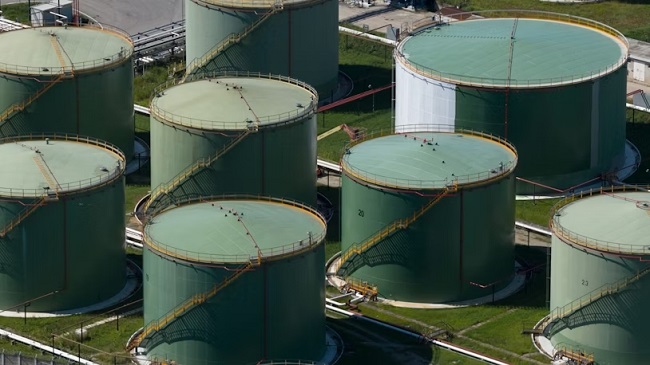
Oil reserve
Oil reserve

The 350.org analysis calculates losses from price spikes using weighted oil and gas price averages over the first month of the war, combined with global consumption levels and adjustments for uncertainty, such as reduced demand and rationing in response to rising prices.

It does not yet include wider knock-on effects, such as rising fertiliser and food costs, declines in economic output and employment, or broader inflation driven by fossil fuel price volatility. As a result, the true economic damage is likely significantly higher than the losses from oil and gas prices alone.

The $111 billion lost to higher oil and gas prices alone could instead build enough solar power to supply around 40 million households in high-consumption countries, or about 150 million households in lower-consumption contexts.

This figure is also roughly equivalent to current annual international climate finance – public and private funding provided by developed countries to developing countries under the UN Climate Convention and the Paris Agreement.

Anne Jellema, Chief Executive of 350.org, said: “On top of the incalculable suffering of families and communities torn apart by the war, ordinary people around the world are paying an extraordinary price through fossil fuel-driven energy spikes. Over $100 billion has gone straight into the pockets of fossil fuel companies, while families struggle to afford energy and basic necessities. The case for windfall taxes has never been clearer.”

The organisation warns that, without urgent intervention, the impacts will deepen, particularly for lower-income households and countries already facing economic strain.

“Next month, governments will gather in Colombia to discuss how to end the era of oil, gas and coal. No more procrastination: our leaders must seize this moment to adopt binding targets to phase out fossil fuels and ramp up investment in a clean, safe energy future for all.”

350.org is calling on governments to tax the fossil fuel industry’s windfall profits in order to protect households from soaring prices. The group says that part of this revenue should be used to subsidise access to fast-deploying renewable solutions, such as rooftop and community solar and electric vehicles.

It emphasises that investing in renewables is the most effective way to stabilise prices, strengthen energy security, and shield economies from future crises. 350.org is also urging governments to agree on binding plans to replace oil, gas and coal with homegrown renewable energy, for example, through a Fossil Fuel Non-Proliferation Treaty.

Marine flyways: Major breakthrough in global ocean conservation

In what looks like a landmark decision adopted on Sunday, March 29, 2026, in Brazil, governments at the fifteenth Conference of the Parties to the Convention on Migratory Species (CMS COP15) formally recognised marine flyways for the first time. Scientists describe this as one of the most significant advances in ocean conservation in a generation. 

What Marine Flyways Reveal 

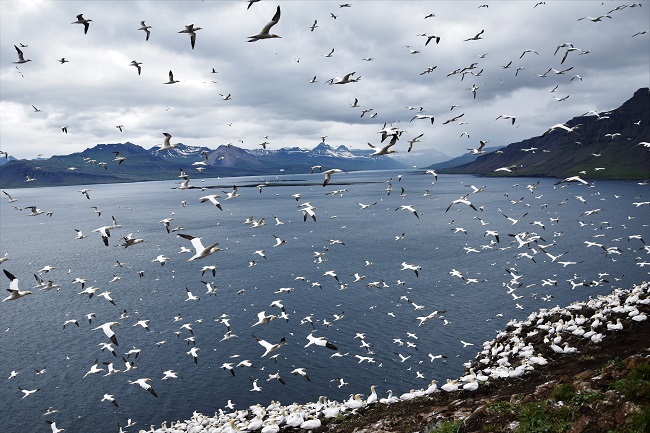
Marine flyways are vast migration highways across the open ocean, used by more than 150 seabird species across 54 countries. Despite their resilience, 42% of these species are globally threatened and more than half are declining. 

Marine Flyways
Northern gannet colony Skrudur Iceland Photo credit: Beth Clark

Dr Tammy Davies, Marine Science Coordinator at BirdLife International, says: “Seabirds are indicators of ocean health. When seabirds struggle, it is because the ocean itself is under strain. They are a highly visible dipstick for our ocean’s health.” 

New Science, New Urgency 

Research from BirdLife International identifies globally important sites, or Key Biodiversity Areas, across these flyways. These highlight where conservation action is most urgently needed. The threats facing seabirds are global and relentless, from invasive species to climate change. No single country can solve these challenges alone. 

A Transformative Global Framework 

The CMS resolution establishes marine flyways as a global conservation framework. It is built on a simple but transformative principle: shared routes require shared responsibility. 

Marine flyways now provide a structure for countries and stakeholders to coordinate priorities, mobilise finance and deliver action. This includes new marine protected areas, invasive species eradication on breeding islands and safer fishing practices. 

Prof Dr Aline Kühl Stenzel, Senior Policy Manager, Marine at BirdLife International, says: “Without coordinated action at an ocean basin scale, we will lose many of these species within our lifetimes. Marine flyways show us that the ocean is a single, interconnected system and its protection depends on cooperation at a scale we have never attempted before.” 

Strengthening Global Agreements 

The new framework supports major global agreements including the Kunming Montreal Global Biodiversity Framework, Regional Seas Conventions and the new High Seas Treaty. It gives governments a shared language, shared priorities and shared accountability. 

From health systems to health sovereignty across Africa, Eastern Mediterranean

0

Recently, I attended the African Union Summit in Addis Ababa, which brings together Member States from both the WHO African Region (AFR) and the Eastern Mediterranean Region (EMR). The discussions highlighted a structural shift in global health: health systems are operating within the context of geopolitical fragmentation, prolonged crises and increasingly constrained and volatile external financing.

Official development assistance (ODA) for health is contracting sharply, decreasing by 9% in real terms in 2024, with the Organisation for Economic Co-operation and Development (OECD) projecting a further decline of 9-17% in 2025. At the same time, structural dependence remains high: in half of the low-income countries in sub-Saharan Africa, external financing accounts for one-third or more of total health expenditure.

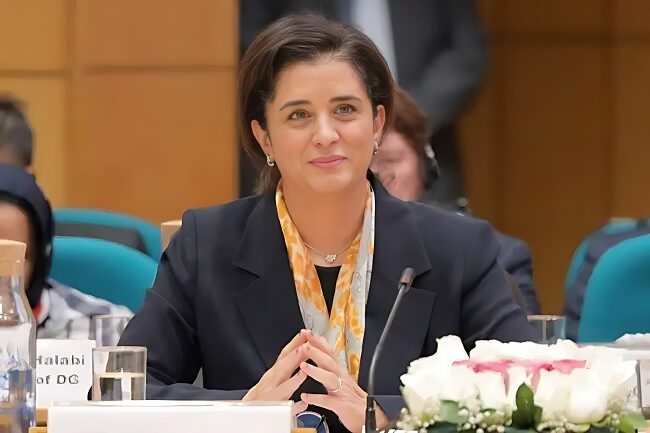
Dr. Hanan Balkhy
Dr Hanan Hassan Balkhy will serve as Regional Director for the Eastern Mediterranean

In parts of the Eastern Mediterranean Region – particularly the conflict-affected settings – essential health services continue to rely heavily on externally financed humanitarian assistance. These realities heighten the urgency to strengthen national institutions while deepening structured cooperation between regions that share epidemiologic risks.

Health sovereignty, in this context, must be understood as institutional capacity. It is not confined to domestic production of vaccines or medicines. It encompasses the ability to finance and govern essential services sustainably, regulate medical products, maintain resilient supply chains, generate and share surveillance data, and respond to emergencies without systemic collapse. Sovereignty rests on durable systems.

The African and the Eastern Mediterranean regions are experiencing converging crises – conflict, displacement, climate shocks, economic strain and recurrent disease outbreaks, which unfold simultaneously rather than sequentially. In several EMR countries, prolonged conflict and large-scale displacement have placed extraordinary strain on health systems, and in such settings, hospitals and primary care facilities are not only providers of care but also anchors of social stability. When systems fracture, instability often follows.

The polio incidence illustrates the indivisibility of health security across regions. Although the African Region has been certified as free of wild poliovirus, circulating vaccine-derived poliovirus outbreaks continue in many of the countries. In the Horn of Africa and Yemen, for example, transmission has demonstrated clear epidemiological linkages between the two regions. Whenever cross-border coordination weakens – whether due to insecurity, population movement or immunisation campaign quality gaps – transmission resurges.

Viruses exploit fragmentation. WHO has been supporting interministerial coordination across the Horn of Africa and Yemen to strengthen synchronised campaigns, improve surveillance quality and address persistent implementation gaps. Eradication will depend on urgency as well as on sustained improvements in campaign quality, shared environmental surveillance and collective accountability. In this context, cooperation will reduce collective risk while fragmentation will amplify it.

The same logic applies to malaria, neglected tropical diseases and waterborne disease outbreaks. Vector ecology, climate patterns, increasing biological threats, and human mobility do not align with administrative boundaries. In malaria-endemic corridors linking the Sahel, the Horn of Africa and parts of the Arabian Peninsula, cross-border coordination on policies, surveillance, integrated vector control, treatment protocols, and monitoring of drug resistance and biological threats is essential to move towards elimination and prevent resurgence. Sustainable progress requires embedding disease control within strong primary health care systems, reinforced water and sanitation programmes, effective surveillance, and community ownership and engagement. Vertical gains are fragile without system integration.

Primary health care is central to health sovereignty. For millions of people across AFR and EMR, primary health care remains the first – and often only – point of contact with the health system. Yet, services remain fragmented, with limited integration across the life-course, and there is uneven adoption of digital technologies. Strengthening primary care through integrated service packages, workforce development, streamlined referral systems and accountable data platforms creates shock absorbers that protect populations when crises converge.

WHO and the Africa Centres for Disease Control and Prevention (Africa CDC) are increasingly aligning support across surveillance, emergency preparedness, workforce development, and regulatory strengthening in countries connected by cross-border transmission – particularly across the Horn of Africa, the Sahel and the Red Sea corridor linking AFR and EMR Member States. By coordinating across regions, the partnership reduces fragmentation and strengthens collective resilience against transnational health threats.

The ongoing negotiations on pathogen access and benefit-sharing (PABS) under the WHO Pandemic Agreement further illustrate the link between sovereignty and cooperation. AFR and EMR countries were among the hardest hit by the COVID-19 pandemic – in terms of health system strain and delayed access to vaccines, diagnostics and therapeutics. The pandemic exposed weaknesses in pathogen and genetic sequence data sharing and revealed profound inequities in access to countermeasures.

For AFR and EMR Member States, active and coordinated participation in the PABS negotiations is essential. The final framework must reflect the realities of countries with limited manufacturing capacity, fragile supply chains and recurrent disease outbreaks, linking rapid pathogen sharing to fair and equitable benefit distribution.

Ultimately, health sovereignty and interregional cooperation are mutually reinforcing. Sovereignty requires strong national institutions, skilled health workforces and accountable governance. Yet in an interconnected world, it is consolidated through deliberate collaboration across regions that share epidemiologic corridors and structural vulnerabilities.

AFR and EMR are not peripheral to global health governance; they are central testing grounds for its resilience. If health systems can withstand compound stress in these regions – conflict, climate shocks, displacement and infectious threats – then the architecture of global health is robust. If not, redesign is required. Health sovereignty can only be achieved through institutional strength aligned with structured and sustained inter-regional cooperation.

By Dr Hanan Hassan Balkhy, WHO Regional Director for the Eastern Mediterranean

Idle water schemes, not funding, main challenge in Cross River’s WASH sector – Stakeholders

Concerns over the proliferation of abandoned and non-functional water projects dominated discussions as the Cross River State Government and its partners shifted focus from funding gaps to the urgent need to revive existing infrastructure in the water, sanitation and hygiene (WASH) sector.

At the end of a two-day draft presentation and review of the state’s WASH Financing Strategy in Calabar, the state capital, stakeholders acknowledged that while financing remains important, poor maintenance and weak sustainability frameworks have left over 200 water schemes idle across the state.

The Commissioner for Water Resources, Bassey Mensah, said the continued neglect of completed water projects poses a bigger threat to access than the absence of new funding.

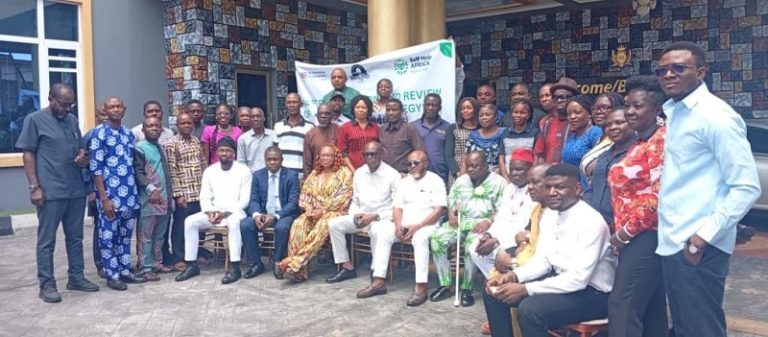
WASH
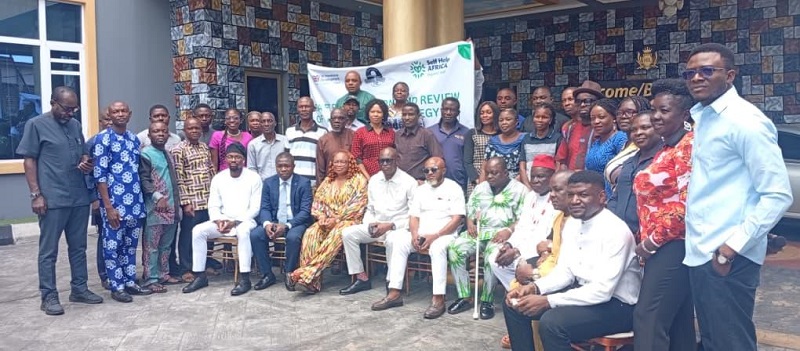
Participants at the draft presentation and review of the state’s WASH Financing Strategy in Calabar

He lamented that several boreholes and water facilities, including those funded by international donors, have become redundant due to lack of maintenance and unreliable power supply.

According to him, the state must prioritise making existing investments functional before seeking fresh funds.

“Inasmuch as water is not running in our communities, I cannot rest. We cannot abandon existing water schemes for Abuja engagements,” he said.

Mensah disclosed that the government is considering the conversion of dormant water facilities to solar-powered systems, especially in rural communities and schools, to ensure consistent water supply.

He added that the intervention would also target schools for girls, noting that access to water is closely linked to improved health and school attendance among female students.

Stakeholders at the meeting emphasised that sustainable financing models must go beyond government budgeting and incorporate private sector participation to ensure continuity.

Managing Director of Ekondo Microfinance Bank, Charles Abiola, said financial institutions have a critical role to play in supporting WASH-related enterprises and services.

He noted that the bank, in collaboration with development partners, has introduced financial products tailored to water, sanitation and hygiene businesses.

Abiola stressed that investments in WASH are not only socially beneficial but also economically viable when structured properly.

Also speaking, a representative of In-line Informatics Limited, Emmanuel Ami-Okhani, warned that any financing strategy that is disconnected from market realities would fail to deliver long-term impact.

He called for broader stakeholder inclusion, including microfinance institutions, service providers and end users, in designing workable funding frameworks.

According to him, sustainability in the WASH sector depends largely on the ability of users to pay for and maintain services over time.

Participants at the meeting agreed on the need to rehabilitate abandoned water schemes, strengthen maintenance systems and develop financing models that integrate public and private sector contributions.

They noted that aligning infrastructure development with sustainable financing and community ownership would be key to improving access to clean water and sanitation across Cross River State.

By Stina Ezin, Calabar