Environmental campaign group, 350.org, has lauded the announcement of a two-week ceasefire between the United States and Iran as a first step, which it says raises concerns over its fragility and limited scope, and leaves the risk of persistently high fossil fuel prices.
According to the organisation, “Fossilflation” – or inflation caused by volatile and rising prices of oil and gas – is still likely to continue, due to the fragility of the ceasefire arrangement and extensively damaged fossil fuel infrastructure. 350.org said that governments must use this opportunity to double down on efforts to protect people from oil and price shocks and accelerate the shift away from fossil fuels.
Oil reserve
The campaigners calculated that price spikes due to the Iran war have cost consumers and businesses an additional $104.2–$111.6 billion in the first month of the war alone. They called on governments to tax the windfall profits of fossil fuel companies and to use revenues to directly support consumers and ramp up the deployment of renewable energy.
Andreas Sieber, 350.org Head of Political Strategy, said: “Even if the Strait of Hormuz reopens and the ceasefire holds, oil and gas prices will stay above pre-war levels and consumers will pay. Volatility remains high, and supply will stay tight due to infrastructure damage and inventory rebuilding. LNG markets are still exposed, with few alternatives to Hormuz.
“This will deepen energy poverty, hunger and inequality. Protecting people means prioritising resilience and affordability now. The ceasefire must become permanent and extend across the whole region. This is not a temporary shock but a structural crisis. The only lasting answer is to replace volatile fossil fuels with homegrown, affordable renewable energy.”
Shell Nigeria Exploration and Production Company Limited (SNEPCo) and the Nigerian National Petroleum Company Limited (NNPC) have donated an Endobronchial Ultrasound (EBUS) system and a Body Plethysmograph to the University of Lagos Teaching Hospital (LUTH), enabling one of Nigeria’s foremost health institutions to provide advanced diagnostics in pulmonary or respiratory care.
The EBUS system will enable doctors to perform real-time guided biopsies and accurately stage lung cancer – an essential step in determining treatment options and timelines. The Body Plethysmograph facilitates better diagnosis of asthma, restrictive lung diseases and related ailments.
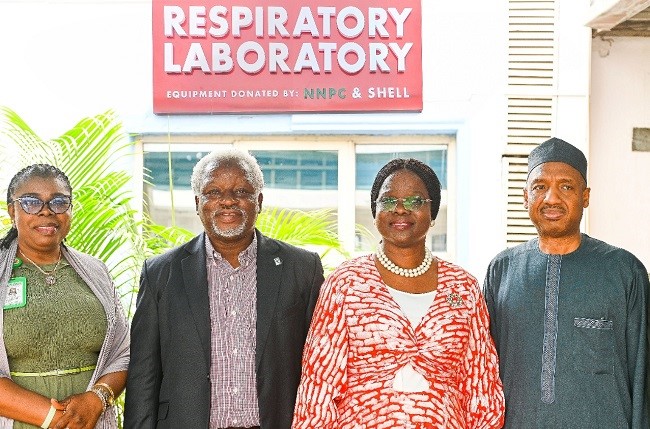
L-R: Director Administration, Lagos University Teaching Hospital (LUTH), Ms Omolola Fakeye; Deputy Chaiman, Medical Advisory Committee, LUTH, Prof. Babawale T. Bello; Manager, External Relations, NNPC Upstream Investment Management Services (NUIMS), Edith Bunmi-Lawson and Shell Nigeria Exploration and Production Company Limited (SNEPCo), Abubakar Ahmed during the donation at University of Lagos Teaching Hospital (LUTH)
“This is more than a donation – it is a shift,” said SNEPCo Managing Director, Ronald Adams, at the ceremony, in a speech read by Abubakar Ahmed, General Manager, Communications.
“It is a shift from constrained diagnostics to evidence-based, technology-enabled respiratory care. It empowers clinicians to practice medicine at the full height of their training and builds institutional capacity that will shape Nigeria’s healthcare landscape for generations,” added Adams.
In a speech, Chief Upstream Investment Officer, NNPC Upstream Investment Management Services (NUIMS), Olanrewaju Igandan, represented by Deputy Manager, External Relations, Edith Bunmi-Lawson, said: “This initiative reflects our belief that sustainable national development goes beyond energy production. It is about improving lives, building resilient institutions and investing in systems that endure.”
The Chief Medical Director, Professor Wasiu Lanre Adeyemo, who was represented by Deputy Chaiman, Medical Advisory Committee of LUTH, Prof. Babawale, described the donation “as a landmark event that provides access to highly specialised Pulmonology care in the public healthcare sector in Nigeria.”
He added: “This donation not only makes advanced Pulmonology care available but also makes it more affordable and convenient to access for Nigerians. We are extremely grateful for your generosity, foresightedness, commitment and trust in our hospital and its Management.”
In addition to boosting respiratory care, the donation will also enable LUTH to become a Pulmonology centre of excellence where patients can access world-class care and trainees in the field can acquire skills, even as the hospital actively participates in Pulmonology research.
The donation is part of a wide range of social investments by SNEPCo/NNPC and co-venturers in education, health and human capital development.
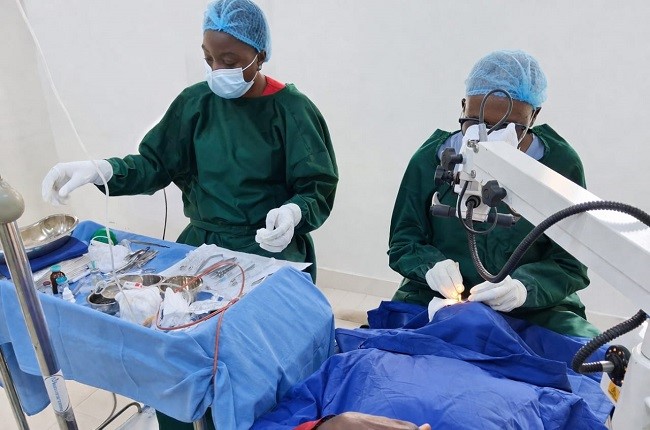
The bright surgical lights at the Cataract Surgery Unit extension in Central Hospital, Kwale in Delta State, beamed brighter as Vcare for Development Foundation (VCDF)’s team restored vision to patients. This marked the start of free cataract surgeries conducted by VCDF’s eye surgery team.
The 2024 Nigeria National Eye Health Survey highlights that cataracts cause 44% of blindness cases in Nigeria, where over 1.1 million people live with vision impairment. In Delta State, untreated cataracts affect more than 25,000 residents.
A patient undergoing free cataract surgery by VCDF’s team
In response, Vcare for Development Foundation (VCDF) partnered with the Delta State Ministry of Health and signed a Memorandum of Understanding (MoU) to commence surgeries at the Cataract Surgery Unit (CSU) under the Sustainable Primary Eye Care Services (SPECS) Programme. The SPECS – Cataract Surgery Unit is fully supported by Sterling Exploration and Energy Production Company Limited (SEEPCO).
Leading to cataract surgeries done, training on primary care service delivery was done to strengthen health workers’ capacity and public health system. It is noteworthy that 87 health workers were trained and 2,447 people were screened during 62 screening camps held in Delta State.
On February 26, 2026, VCDF successfully conducted its first cataract surgeries at Central Hospital Kwale, serving beneficiaries from Ndokwa East and Ndokwa West communities of Delta State.
The SPECS-CSU surgery process is well organized. VCDF’s health team conducts patient screenings in the communities and transports them to the CSU, where certified ophthalmologists conduct pre-operative assessments and perform free cataract surgeries. After surgery, patients receive medications and protective eye shields. Follow-up visits are arranged for all patients to ensure optimal recovery and care.
The outreach for cataract surgeries has attracted large participation from both young and elderly residents seeking eye screenings, treatment, and surgical care services in Delta. Key participants highlight the real impact on the community.
High Chief Godwin Ifeanyi Edema, a senior community Chief from Utagba-Ogbe Kingdom in Kwale, shared: ‘‘VCDF has brought specialized eye care directly to our people. The impact is immediate and life changing. ’’
Emeke Odigili, a beneficiary, shared: “I had almost lost hope of seeing clearly again. Today, I had free cataract surgery. I am grateful to VCDF.”
Dr. Ernest Ogbedo, an Ophthalmologist at VCDF’s SPECS-CSU, added: “Cataract remains one of the leading causes of avoidable blindness, and timely surgery can completely restore vision. To date, the team has conducted 113 successful surgeries in Delta State.’’
Philip Ukemezia, VCDF’s Programmes Manager, said: “Today marks a major milestone for VCDF as we restore sight and dignity to residents of nine LGAs of Akwa Ibom, and Delta. VCDF has leveraged SEEPCO’s corporate social responsibility efforts to screen 11,858 and over 1,070 successful cataract and pterygium surgeries. VCDF has plans to provide free eye surgery services in neighboring LGAs and states.
The commencement of free cataract surgeries by VCDF’s team in Delta reaffirms the foundation’s commitment to delivering accessible, high-quality, and sustainable eye health services in Nigeria.
The Nigerian National Petroleum Company (NNPC) Limited has commenced export of its new crude grade – Cawthorne, marking a significant milestone in the company’s drive to increase Nigeria’s crude oil production and expand its portfolio of globally competitive export streams.
Cawthorne blend crude, the latest addition to Nigeria’s basket of crude grades, has an API gravity of 36.4, placing it firmly within the light, sweet category – comparable to Bonny Light, and highly valued in the global market for its superior petrol and diesel yields.
NNPC Ltd confirms that on Sunday, April 5, 2026, the Cawthorne blend crude, which was loaded on an MT Eburones vessel, headed to The Netherlands, and unto the global market.
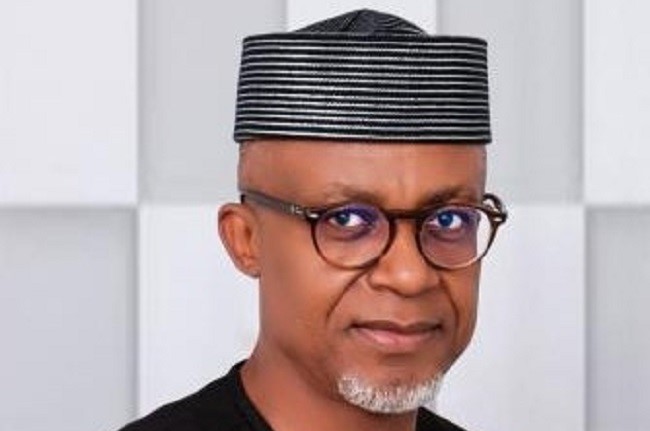
Bayp Ojulari, Group CEO of the NNPC
The maiden 950,000 barrels cargo was exported via the Cawthorne Floating Storage and Offloading (FSO) vessel. Strategically located offshore Bonny, Rivers State, the FSO enhances crude evacuation from OML 18 and strengthens Nigeria’s export reliability, operational efficiency, and overall energy security.
The introduction of Cawthorne to the international market underscores NNPC Ltd’s deliberate strategy to unlock value from its asset base, deepen market competitiveness, and support the Presidential mandate of scaling crude oil production to three million barrels per day and gas output to 12 billion cubic feet per day by 2030.
The launch of the Cawthorne grade builds on recent additions such as Nembe and Utapate, reflecting a sustained and structured approach by NNPC Ltd to optimise production, expand market offerings, and reinforce Nigeria’s position in the global crude oil market.
Commenting on the development, the Group Chief Executive Officer of NNPC Ltd, Bashir Bayo Ojulari, commended President Bola Ahmed Tinubu’s policy direction and sector reforms and the tremendous collaboration shown by OML 18 partners, the Nigeria Upstream Petroleum Regulatory Commission (NUPRC) and other stakeholders towards achieving the milestone.
Stressing that NNPC Ltd is focused on deepening partnerships, strengthening operational discipline and deploying innovative solutions to ensure sustainable growth and energy security for the nation, Ojulari also reaffirmed the Company’s commitment to disciplined execution and value delivery.
“This milestone reflects the direction we have set for NNPC Limited—one anchored on execution, partnership, and value creation. We are moving decisively from resource potential to resource monetisation, ensuring that every asset delivers measurable commercial outcomes.
“The successful export of the Cawthorne crude grade is not an isolated achievement; it is part of a broader, deliberate strategy to grow production, deepen market relevance, and strengthen Nigeria’s position as a reliable global energy supplier. We remain firmly focused on delivering sustainable growth in line with national objectives and global market expectations,” he added.
NNPC Limited says it will continue to leverage innovation, strategic partnerships, and operational discipline to unlock the full value of Nigeria’s hydrocarbon resources while ensuring Nigeria’s long-term energy security and economic growth.
Environmental activists have adopted humour as a strategic tool to confront Nigeria’s growing ecological crisis.
The activists insisted that traditional advocacy approaches are no longer sufficient to spur meaningful action.
The Health of Mother Earth Foundation (HOMEF) spearheaded the initiative by organising a one-day eco-comedy show on Tuesday, April 7, 2026, in Benin.
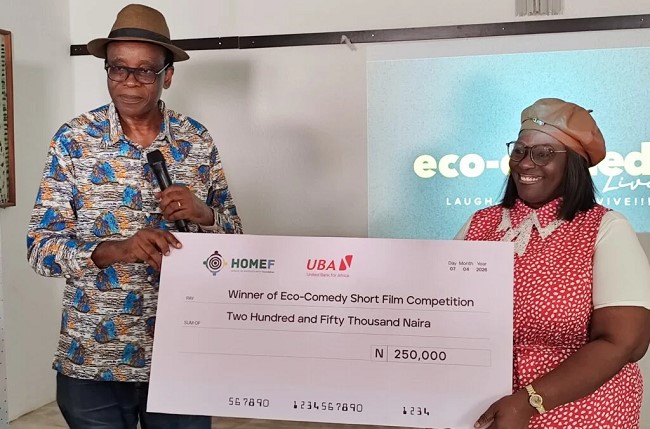
Nnimmo Bassey, Executive Director, HOMEF (left), presenting a dummy cheque to Cynthia Bright
At the event, stakeholders highlighted the power of humour to engage the public, simplify complex environmental issues, and sustain advocacy efforts.
The Executive Director of HOMEF, Nnimmo Bassey, said the initiative was in response to rising frustration among citizens and environmental campaigners over slow progress.
“The environmental challenges in Nigeria are so many and so severe that people are getting tired of merely complaining.
“Even those campaigning for environmental justice are beginning to wonder if change is possible,” he said.
Bassey explained that HOMEF deliberately introduced eco-comedy to reshape environmental conversations and attract attention in new ways.
“Eco-comedy is not just about making people laugh. When people laugh about an issue, they also reflect on it. It becomes a tool for awareness and action,” he said.
He added that humour could help bridge the gap between advocacy and policy response.
“Sometimes, it is difficult to know whether government is listening. But humour can capture attention and make people see what they would normally ignore,” he said.
Bassey also cautioned against trivialising serious environmental concerns, including debates around genetically modified organisms.
“These are issues of life. They affect us in many dimensions and should not be treated casually,” he said.
Also speaking, Mariann Bassey-Olsson of the Environmental Rights Action said activists now rely on humour to cope with the pressures of sustained advocacy.
“We are laughing on purpose because if we don’t, this work will overwhelm us.
“The issues we deal with are heavy, and without joy, the movement cannot survive,” she said.
She described eco-comedy as both a communication and survival tool.
“Humour allows us to tell the truth, expose injustice, and remain human in the struggle. “One good joke can achieve what a 40-page report cannot,” she said.
Bassey-Olsson warned that losing morale could weaken advocacy movements.
“If we lose our joy, we risk losing the movement.
“Laughter helps us reconnect and keep going,” she added.
The event also featured an eco-comedy short film competition, where Cynthia Bright emerged winner and received a N250,000 prize.
Participants said integrating creativity into advocacy could boost public engagement and help drive meaningful action on environmental issues.
Eight countries forming the core of the OPEC+ group of oil producers have voiced concern over Iran’s attacks on energy infrastructure as oil shortages persist amid the war in the Middle East.
“Restoring damaged energy assets to full capacity is both costly and takes a long time, thereby affecting overall supply availability,” the countries said in a joint statement after an online meeting.
They also highlighted the “critical importance of safeguarding international maritime routes to ensure the uninterrupted flow of energy” – a reference to the Strait of Hormuz, which Iran has effectively blocked in reaction to U.S.-Israeli attacks
OPEC
The group – consisting of Saudi Arabia, Russia, Iraq, the United Arab Emirates, Kuwait, Kazakhstan, Algeria, and Oman – said they would increase oil production in May by 206,000 barrels per day.
Given the blockade of the Strait of Hormuz, through which around 20 per cent of global oil trade passes, the move is more symbolic than practical, as the oil market faces a supply problem rather than a production shortage.
Much of the available oil supply is currently going to Asia, namely China, Japan and South Korea, according to Carsten Fritsch, an analyst at Germany’s Commerzbank.
“Asia is currently sucking everything up like a vacuum cleaner,” he said.
U.S. President Donald Trump has urged countries facing shortages to source oil from the United States.
However, the impact of this on global prices remains uncertain, as they are determined by global supply, which has been restricted due to the war.
According to figures from the International Energy Agency in March, countries in the Gulf region have reduced their daily oil production by at least 10 million barrels, or nearly 10 per cent of global demand, citing limited storage capacity for oil that cannot pass through the Strait of Hormuz.
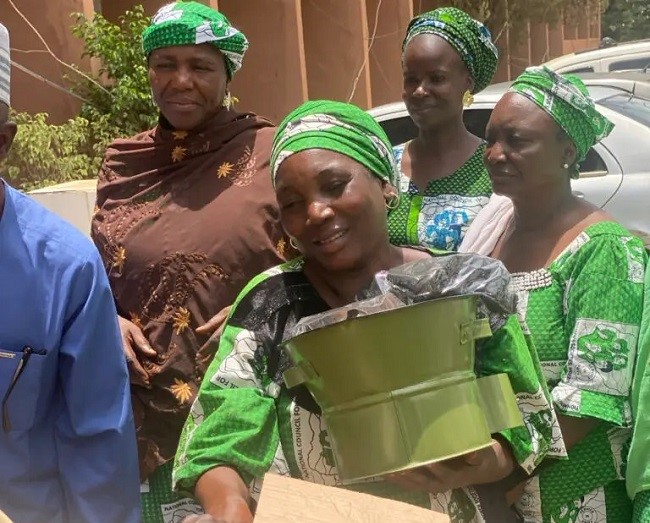
The Kaduna State Government, in collaboration with the Federal Ministry of Environment, has flagged off the distribution of clean cooking stoves to residents to promote environmental sustainability and improve public health.
Abubakar Buba, Commissioner for Environment and Natural Resources, on Tuesday, April 7, 2026, in Kaduna, the state capital, said the initiative was aimed at addressing climate change and environmental degradation in the state.
According to him, the adoption of clean cooking stoves will reduce deforestation, indoor air pollution and carbon emissions associated with traditional cooking methods.
Distribution of clean cooking stoves to Kaduna residents
Represented by Ahmed Abdullahi, Director, Administration and Finance in the ministry, Buba said the programme aligned with the environmental sustainability agenda of Gov. Uba Sani.
He described the initiative as a major step toward climate resilience, environmental protection and sustainable livelihood in the state.
“We appreciate the Federal Ministry of Environment for this gesture, which will address environmental and public health challenges linked to unsafe cooking practices,” he said.
Abdurrahman Bashir, Director, Climate Change Department, Federal Ministry of Environment, said the campaign was part of the Presidential Initiative on Climate Change Mitigation and Adaptation.
Bashir noted that traditional cooking methods contribute significantly to indoor air pollution and deforestation.
He added that the National Clean Cooking Policy aims to expand access to clean energy by 2030.
He said the campaign would sensitise communities, build capacity and promote safer cooking practices.
Bashir urged the beneficiaries to adopt and maintain the stoves properly.
Some of the beneficiaries described the initiative as a relief that would improve their health and reduce household expenses.
Nafisatu Bello said the stoves would eliminate exposure to harmful smoke and reduce cooking costs.
“I no longer have to worry about inhaling smoke while cooking. It will improve my health and save time and money,” she said.
Another beneficiary, Esther Anthony said that the initiative had empowered women to adopt safer cooking practices and protect the environment.
“We have learned the dangers of smoke inhalation and the need to reduce carbon emissions.
“We are grateful to the Federal and state governments for this support,” she said.
Stakeholders in the environmental sector have explored the potential of a new Environmental Impact Assessment (EIA) initiative in Nigeria.
The stakeholders said this at the Inclusive Environment Nigeria Workshop organised by the University of Derby, Renevlyn Development Initiative and the Environmental Defenders Network on Tuesday, April 7, 2026, in Lagos.
The initiative aims to address long-standing issues of community exclusion and environmental injustice in development projects across the country.
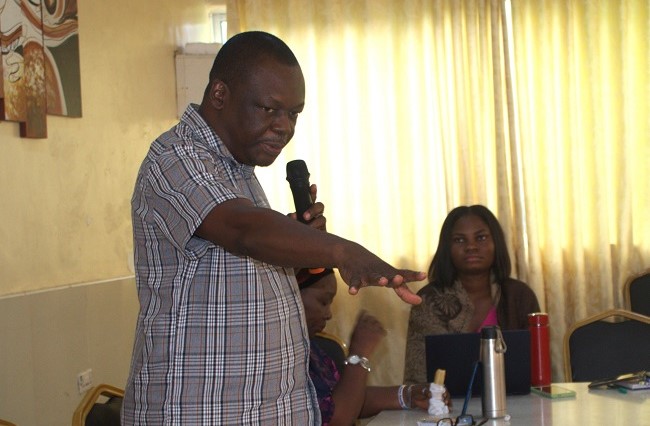
Executive Director of Renevlyn Development Initiative, Mr. Philip Jakpor, moderating the session
It is anchored on findings from a 12-month research led by Dr Eghosa Ekhator of the University of Derby and other scholars.
The 2023 research adopted co-production principles through extensive engagement with communities and key stakeholders.
The outcome is the Inclusive Environments (Environmental Justice) Framework designed to promote equitable environmental decision-making.
Speaking at the workshop, Ekhator said the framework provides a structured approach for inclusive and accountable environmental governance.
He said the tool draws from equality impact assessment models but tailored for environmental sustainability challenges.
Ekhator added that the framework is flexible and can be adapted to different national and institutional contexts, including Nigeria.
The Executive Director of Renevlyn Development Initiative, Mr. Philip Jakpor, who moderated the hybrid workshop, said the failure to involve communities in decision-making around development projects remains a “sore point” nationwide.
Jakpor noted that although EIAs are legally required for projects with significant environmental impact – such as oil and gas exploration, mining, and large-scale construction – implementation in Nigeria is often flawed.
“Community people are supposed to be part and parcel of the process. Their views should inform whether a project goes forward or not.
“Where projects must proceed despite concerns, safeguards should be agreed upon with the communities,” Jakpor said.
He, however, lamented that in practice, communities are largely sidelined.
“What we see in Nigeria is limited or no community involvement in EIA processes and a total lack of transparency by project implementers. In many cases, the so-called EIA reports cannot even be found,” he said.
Jakpor cited several examples across the country – from the Niger Delta to northern mining regions – where communities claim projects were imposed on them without consultation.
“The process is treated as a mere formality. Companies only inform communities instead of engaging them as stakeholders whose views matter,” he added.
He stressed that the exclusion of communities makes it difficult for them to seek justice when their environmental rights are violated, noting that companies are rarely penalised for breaching EIA requirements.
“These gaps are largely responsible for the environmental degradation we see across the country,” Jakpor said.
Also speaking, an Ogoni environmental activist, Chief Eric Dooh, decried what he described as a long-standing conspiracy between government authorities and oil companies, which has left host communities to bear the brunt of environmental damage.
Dooh said there was little or no consultation with communities before the commencement of oil exploration activities in Ogoniland.
“There were no discussions with the people who own the environment. What we saw was a high-level arrangement between the government and companies, without considering the impact on communities,” he said.
Dooh recounted his personal journey in environmental advocacy, which began after taking over from his father, who had initiated legal battles against oil companies over environmental pollution.
“My father had taken Shell to court several times. When he became too weak, I took over the struggle. It has not been easy – seeking justice in Nigeria is very difficult,” he said.
He noted that decades of oil exploration have devastated the local economy, which once thrived on fishing and farming.
“That environment sustained us before – it supported fishing and farming. Today, it is destroyed. We have lost so much,” he lamented.
The activist called for a more inclusive approach to resource management, urging the government and companies to actively involve communities in decision-making processes.
“If development must continue, then communities must be carried along. They should be involved in project planning, empowerment programmes, and environmental management.
That is the only way to ensure peace and sustainability,” he said.
The workshop brought together policymakers, academics, community representatives and civil society organisations.
Participants called for stronger collaboration among government, civil society and host communities.
They stressed that development must not marginalise vulnerable populations but ensure equitable outcomes.
In December 2024, São Tomé and Príncipe officially graduated from the category of least developed countries (LDCs). Shortly after, in December 2025, the Gulf of Guinea archipelago presented in Brussels a national sustainable development strategy through 2040 and an integrated National Financing Framework (INFF).
This dual signal, graduation and roadmap, positions this island state of 235,000 inhabitants as a structured partner for private investors, climate finance actors and public-private partnership stakeholders. Four sectors are targeted: biodiversity, blue economy, premium cocoa and ecotourism.
Carlos Vila Nova, President, São Tomé and Príncipe
An unprecedented financing framework for a small island state
Graduating from LDC status represents a major transition for São Tomé and Príncipe: it comes with a reduction in international aid and heightened budgetary constraints. The country responds with an approach that is unprecedented at this scale: aligning public and private capital, climate finance and development finance within a single framework. The National Strategy 2026–2040 and the INFF together form the foundation of this structured proposal to international partners.
The first country entirely designated a UNESCO Biosphere Reserve
São Tomé and Príncipe is the first country in the world where 100% of the national territory has been designated a UNESCO Biosphere Reserve. Not a park, not a region, but the entire country. This status is not a marketing label: it defines a governance framework in which economic activity is designed to reconcile growth and conservation. For investors, it provides long-term visibility rooted in sustainability, independent of shifting political cycles. The country also hosts one of the most singular island ecosystems in the world, with endemic flora and fauna holding strong potential for bioprospecting, nature-based solutions and climate research.
A 160,000 km² EEZ as a lever for the economy
While São Tomé and Príncipe’s land territory is modest, its exclusive economic zone (EEZ) covers approximately 160,000 square kilometres of ocean, nearly 160 times the size of its land surface. Located along major Atlantic routes, the archipelago oversees waters that have remained largely intact. The blue economy, encompassing sustainable fishing, marine sciences, biotechnology, ocean data services and offshore renewable energy, is identified as one of the most undercapitalised pillars of future global growth. São Tomé and Príncipe is positioning itself to develop this resource within sustainable models from the outset.
Premium cocoa: value over volume
São Tomé and Príncipe produces cocoa recognised for its exceptional quality, with output estimated at around 4,000 tonnes. In volume terms, the country remains a small player. Yet on European markets now shaped by anti-deforestation regulations, carbon accounting and traceability requirements, the position is differentiating. The identified lever is not the export of raw beans, but the creation of local value: premium chocolate, traceable brands, agrotourism, and partnerships that reward quality over volume.
Ecotourism: a preserved model, a value chain to structure
No cruise terminals, no artificialised coastlines. São Tomé and Príncipe remains untouched by mass tourism. The strategy focuses on high unit-value models: boutique hospitality, conservation-based tourism and scientific travel, where returns are measured in decades rather than seasons. For investors exposed to the volatility of saturated destinations, the opportunity lies in structuring an ecotourism value chain before the destination is discovered.
Political stability as a foundation
In a region often viewed through the lens of risk, São Tomé and Príncipe stands out for its tradition of stable democracy and orderly transfers of power. This political context forms the foundation on which the investment proposal presented in Brussels in December 2025 is built.
The Executive Committee of the pan-African organisation United Cities and Local Governments of Africa (UCLG Africa) has officially appointed Mr. François Menguelé as Secretary General.
Following a rigorous and competitive international recruitment process launched in September 2025, Mr. Menguelé stood out among the three finalists during interviews in January 2026. He succeeds Mr. Jean Pierre Elong Mbassi, following his official assumption of office on March 19, 2026, on the eve of the organisation’s elective General Assembly held from March 23 to 25, 2026, in Nouakchott, Mauritania.
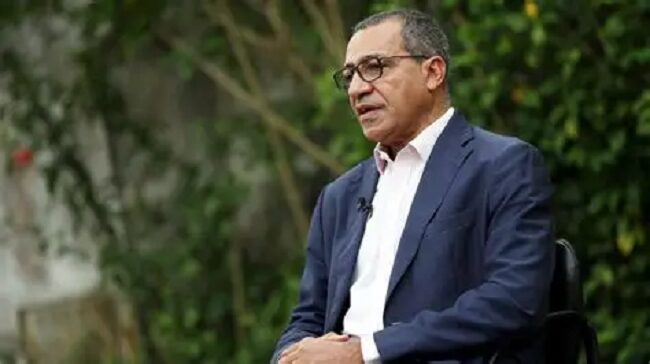
Mr. François Menguelé, Secretary General, UCLG Africa
The new Secretary General is firmly committed to restoring UCLG Africa’s reputation.
“We will work to ensure that our organisation regains its former prestige. My ambition is for African local governments to be recognised as leading actors, both within the architecture of pan-African governance and on the global multilateral stage. The goal is also to enable our youth to regain hope and play their rightful role in shaping their future,” he said following the General Assembly.
Biography of Mr. François Menguelé
A recognised expert, practitioner, and passionate theorist in the field of sustainable development, Mr. François Menguelé has an exemplary academic and professional background.
He holds a master’s degree in Urban Engineering and Regional Planning from the Technical University of Dortmund (Germany), and has also attended a Master of Business Administration (MBA) programme at the University of the Free State in Bloemfontein (South Africa) and earned a specialist degree in Public Affairs Management from Quadriga University in Berlin. As a holder of the “Net Zero Carbon Emissions Leader” (CNZ™) certification, he is also accredited by the Chartered Institute of Professional Certifications based in Singapore.
With 30 years of experience, he has led long-term assignments on behalf of GIZ, the European Union, and the African Union in numerous countries (Ghana, Côte d’Ivoire, South Africa, Cameroon, Mali, Egypt, and Togo).
Notable achievements
Urban policies: He played a key role in shaping South Africa’s post-apartheid urban renewal and housing policies, helping to build 12,000 decent homes for low-income households.
Pan-African institutional frameworks : As facilitator of the ministerial conferences, he played a central role in the establishment of the AU Specialized Technical Committee on Urban Development (STC08) and in the adoption of the African Charter on Decentralization and the Niamey Convention on Cross-Border Cooperation.
Key Areas of Expertise : His areas of expertise include institutional development in the panafrican context, decentralization, local governance, resilience to climate change, sustainable urban development, local economic development, and regional integration.
Awards
He was knighted as Chevalier de l’Ordre National de la Valeur (in 2015) by the President of the Republic of Cameroon, and he also holds an honorary doctorate conferred by the CVPT in Tunis and the IARPA. Since March 2026, Mr. François Menguelé has been managing the General Secretariat of UCLG Africa, headquartered in Rabat, Morocco.