Home Blog Page 3

Senate approves $516.3m loan for Sokoto-Badagry Superhighway project

The Senate has approved $516,333,700 syndicated financing facility for the construction of Sokoto-Badagry Superhighway.

This followed the consideration and adoption of the report of the Senate Committee on Local and Foreign Debts during plenary on Wednesday, April 29, 2026.

The approval followed a letter from President Bola Tinubu dated April 20, requesting legislative backing for external borrowing in line with the provisions of the Debt Management Office Establishment Act 2011 and the Fiscal Responsibility Act 2007.
Godswill Akpabio
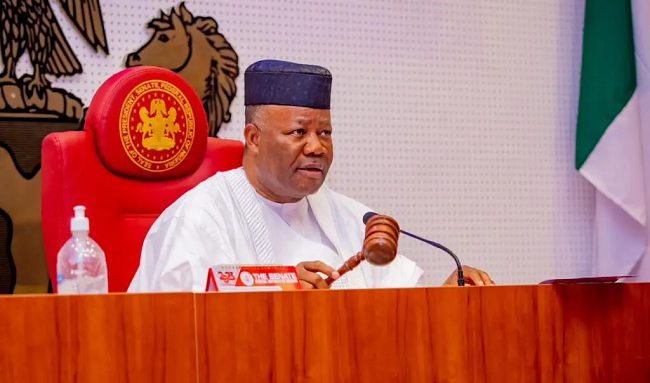
Senate President, Godswill Akpabio

The request was referred to the Senate Committee on Local and Foreign Debt on April 23.

The committee subsequently presented its report recommending approval of the loan.

Sen. Adamu Aliero (APC-Kebbi) presented the report on behalf of the committee’s chairman, Sen. Aliyu Wamakko (APC-Sokoto).

He explained that the facility would finance Section One, Phase One (A and B1) of the highway, covering about 120 kilometres, as part of a broader corridor expected to span approximately 1,000 kilometres from Sokoto to Badagry.

The lawmaker noted that the project was strategically designed to enhance national connectivity by linking Sokoto, Kebbi, Niger, Kwara, Oyo, Ogun and Lagos states.

He described it as a major infrastructure initiative aimed at improving trade, transportation efficiency and national integration.

Aliero further stated that the project would reduce travel time, lower logistics costs, improve access between agricultural zones and markets and strengthen supply chains across key sectors, including agriculture and manufacturing.

According to him, the financing arrangement is structured as a syndicated facility provided by Deutsche Bank, with partial credit enhancement support from the Islamic Corporation for the Insurance of Investment and Export Credit.

He said that the facility has a tenor of nine years, including a grace period of up to three years, with an interest rate benchmarked at CME SOFR plus 5.35 per cent per annum.

The senator also noted that although the loan would add to Nigeria’s external debt stock, it was tied to long-term capital development projects expected to generate significant economic returns.

Following the presentation of the report, the request was subjected to debate by the senators, with many of them describing the project as a strategic infrastructure link capable of boosting economic growth across geo-political zones.

Sen. Mohammed Monguno (APC-Borno) argued that the project would unlock agricultural and transport value chains, while reducing unemployment and insecurity along the corridor.

Deputy Senate President, Jibrin Barau, emphasised its national integration benefits, noting that it would connect the northern and southern parts of the country more efficiently.

Sen. Adetokunbo Abiru (APC-Lagos) referenced previous loan approvals that had yet to be fully disbursed due to global financial constraints, arguing that the current arrangement provided an alternative funding structure for ongoing projects.

Ruling on the motion, the Senate President, Godswill Akpabio, put the recommendation to a voice vote and it was overwhelmingly adopted.

The senate, thereafter, approved the $516.3 million syndicated loan for the phase one, section one (A and B1) of the project and mandated strict oversight by relevant committees.

The upper chamber also directed quarterly reporting by the Federal Ministry of Finance, Debt Management Office, and Federal Ministry of Works as well as submission of the financing agreement within 30 days.

The lawmakers further stressed the need for transparency, competitive procurement and periodic project evaluation to ensure value for money and timely delivery.

Following the approval, the request now awaits transmission to the executive for final processing and implementation.

By Naomi Sharang
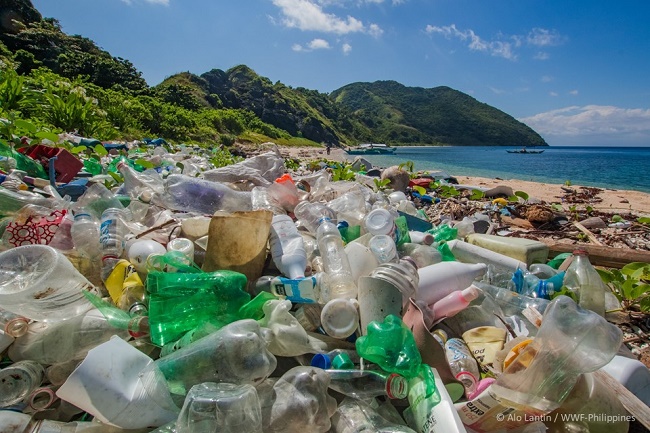
Australian scientists use sunlight to convert plastic waste into clean fuels

Australian scientists are developing solar-powered technologies to convert plastic waste into clean fuels, offering potential solution to both pollution and energy challenges.

The research explores how sunlight-driven processes can transform discarded plastics into hydrogen, syngas and other industrial chemicals, offering a pathway toward a more sustainable, circular economy, the Australian study revealed on Wednesday.

Global plastic production exceeds 460 million tonnes annually, with large volumes leaking into the environment, according to the research.

Philippines
Plastic waste pollution

The research also highlights the rich carbon and hydrogen content of plastics, which it adds that it can be repurposed as an untapped resource rather than waste.

The process, known as solar-driven photoreforming, uses light-activated photocatalysts to break down plastics at relatively low temperatures.

“These reactions can produce hydrogen, a clean fuel with zero emissions at the point of use, as well as other valuable chemicals used in industry,” the study, published in Chem Catalysis, shows.

Compared with conventional water-based hydrogen production, plastic photoreforming is more energy-efficient because plastics are easier to oxidise and potentially easier to scale, researchers said.

However, they cautioned that significant challenges remain, including the complexity of mixed plastic waste, catalyst durability and the energy-intensive purification steps.

“With continued innovation, we believe solar-powered plastic-to-fuel technologies could play a key role in building a sustainable, low-carbon future,” said Adelaide University PhD candidate, Lu Xiao, who led the study.

ECA seeks coordinated action to advance SDGs, Agenda 2063

The Executive Secretary, Economic Commission for Africa (ECA), Claver Gatete, has called for coordinated and transformative action to advance Africa’s development goals.

Gatete made the call in his opening address at the 12th Africa Regional Forum on Sustainable Development (ARFSD-12) in Addis Ababa monitired virtually.

He said the continent must accelerate progress towards the 2030 Agenda and the African Union’s Agenda 2063.

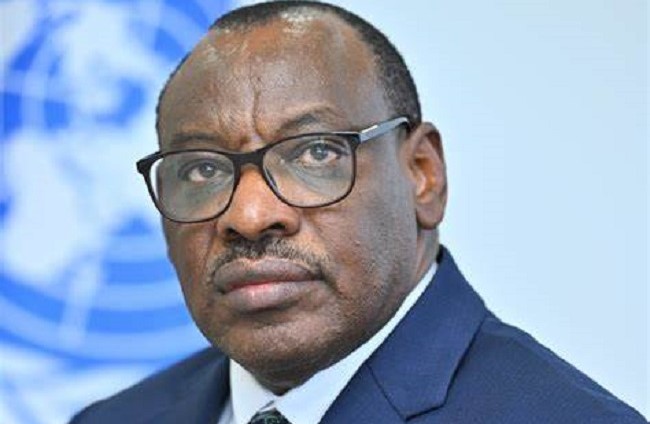
Claver Gatete
Claver Gatete, Under-Secretary-General and Executive Secretary of the UN Economic Commission for Africa (ECA)

According to him, Africa faces slowing global growth, rising inequalities, climate shocks and mounting fiscal pressures.

He said that geopolitical tensions were also affecting global stability and development prospects.

Gatete said these challenges should not limit ambition but inspire innovation and stronger commitment to solutions.

He commended Ethiopia for hosting the forum and its leadership in advancing climate action.

Gatete said that Ethiopia’s Green Legacy Initiative had resulted in the planting of billions of trees.

He said that the country had made significant progress in renewable energy and climate-smart agriculture.

The ECA executive secretary said climate change was already affecting food security, water availability and infrastructure across Africa.

He said that climate action and sustainable development must be pursued together while urging African countries to move from sector-based planning to integrated systems approaches.

Gatete further reiterated the need to shift from policy discussions to large-scale implemrntation, saying that foundational services such as water, energy and infrastructure must be treated as economic assets.

He called for increased financing, including private sector investment, to close Africa’s infrastructure gap and highlighted the importance of urbanisation, saying cities must be leveraged for jobs and productivity.

The ECA boss called for alignment of digital and green transitions to drive sustainable growth, adding that strong institutions, data and regional cooperation were key to delivering results.

He said Africa’s main challenge was not lack of frameworks but implementation at scale.

Gatete then reaffirmed the commitment of the commission to support member states with policy advice and partnerships.

He urged stakeholders to use the forum to move from “diagnosis to delivery” in achieving development goals.

By Lucy Ogalue

Kano to plant 10m trees to mitigate climate change 

The Kano State Government has announced plans to distribute 10 million tree seedlings for planting across the state, as part of efforts to improve the environment and mitigate the effects of climate change.

The Commissioner for Environment and Climate Change, Dahir Muhammad-Hashim, disclosed this during an inspection visit to tree nurseries in Gwarzo and Dawakin Kudu Local Government Areas.

He said the seedlings to be distributed include moringa, baobab, lemon, neem, mango, orange, and locust bean trees which are expected to be planted within communities.

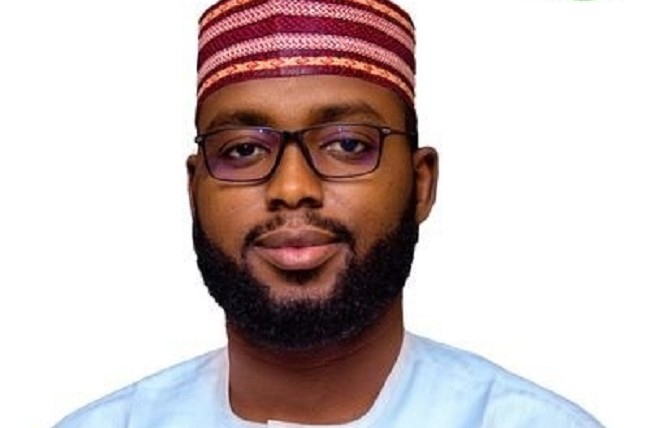
Dr. Dahir M. Hashim
Dr. Dahir M. Hashim, Commissioner, Ministry of Environment and Climate Change, Kano State

According to the commissioner, the initiative is being implemented under the leadership of Governor Abba Kabir-Yusuf which has committed to ensuring a cleaner and healthier environment.

Muhammad-Hashim called on community groups and schools to take advantage of the programme by applying through designated forms or contacting the ministry to obtain seedlings for planting in their respective areas.

The commissioner added that the initiative forms part of the government’s broader strategy to improve the wellbeing of residents and protect the environment across Kano State.

By Bashir Bello

Mixed reactions trail Lagos solar approval policy

Some Lagos residents on Tuesday, April 28, 2026, expressed divergent views on a directive by the state government requiring its approval before external alterations and solar panel installations on its housing estates.

The policy, which applies specifically to Lagos State Government-owned estates, is aimed at regulating structural changes, ensuring safety, and maintaining uniformity across housing schemes managed by the state.

A construction expert, Mr. Ayotunde Bally, described the policy as having both benefits and drawbacks.

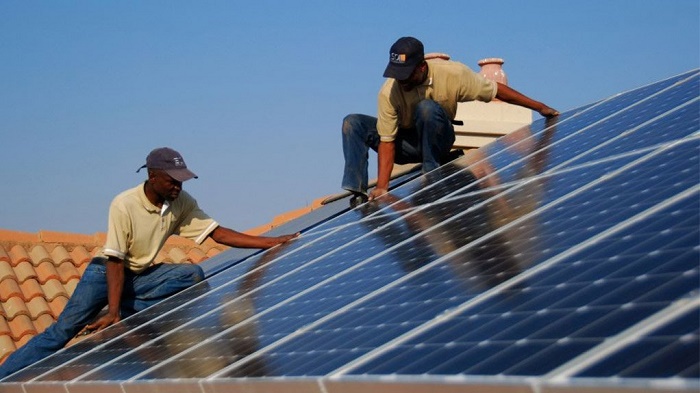
Solar panels installation

Bally said that the policy appeared to be aimed at strengthening control over standards, safety and revenue within government-owned housing estates and the wider real estate sector.

“This new policy is less about restrictions and more about the government trying to regain control over standards, safety and revenue,” he said.

He said that from a structural and safety perspective, the concerns raised by the government were valid.

“There are legitimate concerns around structural capacity as well as fire risks arising from poor installation. These are valid considerations and should matter to serious developers,” he said.

Bally, however, said that from a developer’s standpoint, the policy was a mixed bag and, in some areas, counterproductive.

He expressed concern over the likely practical implications of the policy on homeowners and developers.

“It will slow down property usability for buyers, add friction to an already expensive real estate market, and discourage renewable energy adoption, particularly solar, which should ideally be encouraged to address energy poverty.

“It also creates room for bureaucratic delays and unofficial costs,” he said.

He urged the state government to consider reducing or removing fees associated with solar installations to promote the use of alternative energy.

“While the government is positioning this policy as a safety measure, it should consider heavily discounting or completely removing fees related to solar installations in order to encourage alternative energy consumption,” he said.

Some residents also expressed concerns over what they described as additional bureaucracy due to the policy.

They said that the policy could complicate efforts to adopt alternative power sources in a city with inconsistent electricity supply.

A resident of a Lagos State-owned estate in Alimosho, who preferred anonymity, said that approval of solar installations on such estates should be simple.

“We are trying to solve our electricity problems. If approvals take too long or cost too much, they defeat the purpose,” the resident said.

Mr. Silas Iheoma, a resident of Jakande Estate, Isolo, however, supported the policy, saying it would help to prevent poorly executed modifications that could pose risks to occupants.

According to him, the policy will preserve the aesthetic value and structural orderliness of government estates.

The government has emphasised that the policy is not intended to restrict occupants but to ensure that all structural changes comply with safety standards and estate management regulations.

Stakeholders have called for a balanced approach that will protect infrastructure and encourage innovation, particularly in  adopting renewable energy solutions such as solar power.

By Lydia Chigozie-Ngwakwe

UAE to exit OPEC, OPEC+ from May 1

0

The United Arab Emirates (UAE) said on Tuesday, April 28, 2026, that it would withdraw from the Organisation of the Petroleum Exporting Countries (OPEC) and the wider OPEC+ alliance, with effect from May 1, 2026.

The decision reflects the UAE’s long-term strategic and economic vision of evolving energy profile, including accelerated investment in domestic energy production, said Dubai local media report.

It follows a comprehensive review of the UAE’s production policy and its current and future capacity, the report said.

OPEC
OPEC

“This would be based on the UAE’s national interest and commitment to contributing effectively to meeting the market’s pressing needs,” the report added.

The UAE would continue to act as a responsible and reliable energy supplier, bringing additional production to the market in a gradual and measured manner in line with demand and market conditions.

The Emirates also reaffirmed its commitment to investing across the energy value chain, including oil and gas, renewables and low-carbon solutions, and to working with partners to ensure stable global supply.

NESREA seals 30 Abuja construction sites over environmental violations

0

The National Environmental Standards and Regulations Enforcement Agency (NESREA) has sealed 30 construction sites in the FCT for violating provisions of the National Environmental (Construction Sector) Regulations, 2011.

The affected facilities include Primgate Reality in Wuye, XTadok Nigeria Limited in Wuye, and Samdus Limited in Asokoro District, among others.

Speaking with newsmen after the exercise, the Director-General of NESREA, Prof. Innocent Barikor, expressed concern over poor compliance with environmental regulations by operators in the construction sector.

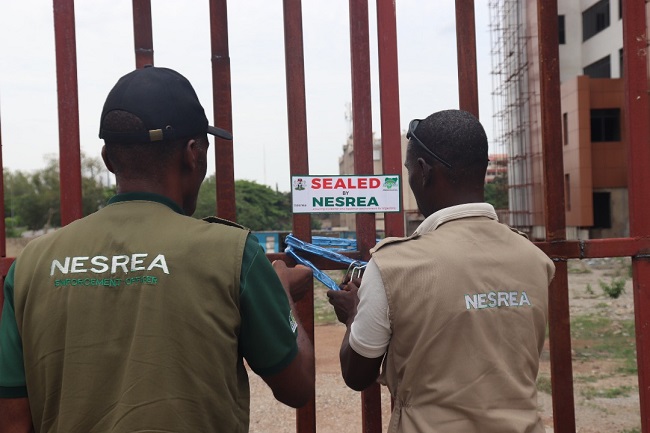
NESREA
Officials of the National Environmental Standards and Regulations Enforcement Agency (NESREA) during an enforcement operation

Barikor, who was represented by Mr. Elijah Udofia, Director of Environmental Quality Control, said the violations were uncovered during routine inspections and compliance monitoring across the FCT.

According to him, the affected facilities failed to meet regulatory requirements, especially in environmental documentation and responsiveness to compliance directives.

“These facilities demonstrated unwillingness to fully comply with regulatory requirements relating to environmental documentation and engagement,” he said.

He explained that the enforcement action was taken to halt environmentally non-compliant activities, compel adherence to regulations, and ensure corrective measures are implemented within stipulated timelines.

Barikor noted that while the construction sector remains vital to national development, it must be effectively regulated to mitigate risks such as poor waste management, construction on floodplains and environmentally sensitive areas, as well as uncontrolled dust emissions.

“Where regulatory communication is clear, time-bound and evidence-based, failure to respond constitutes a serious breach of compliance obligations and poses risks to both the environment and public health,” he said.

He stressed that the regulations were designed to prevent environmental harm and ensure responsible construction practices from the outset.

“Environmental compliance is not optional,” Barikor warned.

The NESREA boss assured that the agency would continue to enforce environmental laws fairly and consistently nationwide.

“Let this enforcement serve as a clear directive. NESREA will continue to enforce environmental regulations rigorously, particularly where non-compliance poses risks to the environment and public health,” he added.

He called on stakeholders to cooperate with the agency to improve environmental performance in the construction sector.

By Doris Esa

ARFSD-12: Transferring climate burden to Africa is unjust – PACJA

How can Africa elevate climate finance justice by ensuring transparent, equitable and accountable use of both domestic and international resources?

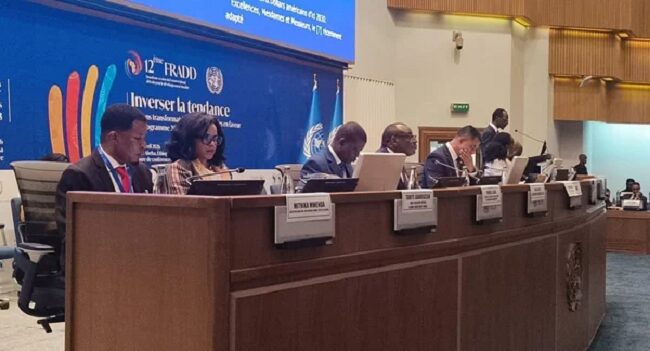
This query was raised by Dr Mithika Mwenda, Executive Director of the Pan African Climate Justice Alliance (PACJA), as he threw a challenge to the global community during the second day of the 12th Africa Regional Forum on Sustainable Development (ARFSD-12) taking place in Addis Ababa, Ethiopia.

Dr Mwenda joined a panel discussion of panellists, including the Executive Secretary of UNECA, the COP32 Presidency, AGN Chair, among other guests, who discussed “Unlocking climate finance for sustainable development in Africa”.

PACJA
Dr Mithika Mwenda, Executive Director of the Pan African Climate Justice Alliance (PACJA) (left), at the 12th Africa Regional Forum on Sustainable Development (ARFSD-12) taking place in Addis Ababa, Ethiopia

In his intervention, he noted that if the world is truly serious about climate justice, three major problems in the current system must be urgently addressed.

“Looking back at the Climate Finance Responsibility, the UNFCCC and Paris Agreement are dotted with the Common but Differentiated Responsibilities and Respective Capacity (CBDR-RC) principle, which acknowledges that all nations must address climate change, but developed countries bear greater responsibility due to their historical emission and higher capacity. The principle dictates that climate actions should be tailored to national circumstances.”

Pointing to CBDR-RC, Dr Mwenda said that the first challenge is the gradual weakening of the principle of the common but differentiated Responsibilities and respective capacities (CBDR-RC) principle under UNFCCC. He said that African continues to see climate finance delivered mainly as loans instead of grants, commitments that are unpredictable, and growing pressure for African countries to finance their own survival.

He stressed that Africa must demand climate finance that is public, grant-based, sufficient and reliable, especially for adaptation. He emphasised that development and climate justice cannot be separated.

Africa is carrying the crisis it did not create

Africa contributes least to the global emissions, and in the current context, the continent is being asked to decarbonise faster than its stage of development allows. This also forces it to absorb worsening climate shocks and navigate financial systems designed elsewhere. Dr Mwenda described this as the second injustice of transferring the climate burden to Africa.

“The question is not whether Africa should act, because Africa is already acting. The real question is why Africa is being asked to carry a disproportionate share of the cost,” Dr Mwenda said.

He continued calling for more concessional finance, simplified access to funding, and global trade and energy rules that do not disadvantage African economies.

Financing Based on Needs, not Donor Priorities

African Climate activists have been pointing out that African countries know what they need in line with the local context. Hinting at that, Dr Mwenda said that this remains a challenge as the current Climate Finance system prioritises what is profitable, low-risk, or aligned with donor interests rather than what African Communities truly need.

 He argued that justice requires a needs-based Approach, one that asks what African countries require to adapt, build resilience, protect livelihoods, and achieve sustainable development.

He urged African countries to push for stronger commitments under the New Collective Quantified Goal (NCQG) on climate finance, ensuring resources align with national priorities and reach local communities directly, especially women and grassroots actors.

Mother Earth Day: Five ways to save the environment – UNEP

It is easy to get discouraged by the state of the planet.  

Humanity is breaking all the wrong records on global warming. Fragile ecosystems face enormous pressure. Dirty air and chemical pollution threaten our land, ocean and health.  

But International Mother Earth Day, observed on Wednesday, April 22, 2026, is a reminder that there is a lot we can do as individuals to tackle environmental crises like climate change, nature, land and biodiversity loss, and pollution and waste.  

WED
Clean-up

To help you in that quest, the United Nations Environment Programme (UNEP) has developed toolkits for taking action on a range of environmental issues. Here is what those documents recommend.  

1. Revive the ecosystems that sustain us

Did you know that globally over 2 billion hectares of land are degraded? Or that the number and duration of droughts has risen by 29 per cent since 2000? Finding solutions to these global problems is crucial. That is why World Environment Day on June 5 is focusing on land restoration, desertification and drought resilience.

The Ecosystem Restoration Playbook: A Practical Guide to Healing the Planet describes approaches to restoring eight important types of ecosystems – forests, farmlands, grassland and savannahs, rivers and lakes, oceans and coasts, towns and cities, peatlands, and mountains. By taking these recommended actions, you can become part of a #GenerationRestoration!  

2. Make some noise about climate change

The world is in the grip of a climate emergency, a “code red for humanity,” according to the UN Secretary-General. Unless humanity reins in greenhouse gas emissions, warming could reach a catastrophic 2.8°C this century.  

The United Nations’ Act Now campaign shows how everyday people can cut their carbon footprint by doing simple things, like eating more plants, switching to LED lights and walking instead of driving. The campaign also dives into how citizens can urge governments and businesses to deliver the kind of systemic change needed to avoid a full-blown climate catastrophe. 

3. Conquer the global mountain of plastic

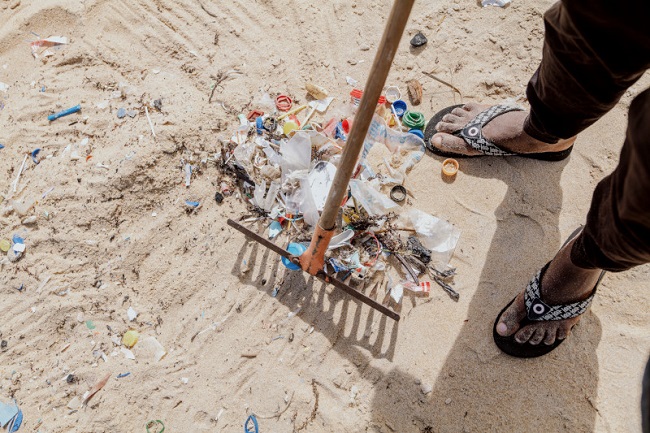
Plastic is everywhere you look. It is in our clothing, household appliances, children’s toys, food packaging, medical devices…the list goes on. While plastic has many uses, plastic pollution is proving disastrous for the planet, swamping lakes, rivers, the soil and the ocean. 

UNEP’s Gameplan: It’s time to beat plastic pollution toolkit sets out what individuals can do to help end this environmental scourge. Its recommendations include cutting down on single-use plastic and supporting brands that are developing plastic alternatives. 

4. Banish dirty air from the skies

More than 99 per cent of the global population breathes unsafe air. Air pollution is the biggest environmental health risk of our time, causing an estimated 8 million premature deaths every year.  

This UNEP interactive guide details how you can help make the air cleaner. Some of the pointers are remarkably simple, like walking a little more, recycling non-organic trash and avoiding single-use plastic where possible.

5. Get tree planting right

Trees are amazing. They capture carbon from the atmosphere, protect and fertilize soils, provide a source of firewood and timber, and shelter many animals, birds and insects. No wonder tree planting, to restore ecosystems and counter climate change, has become so popular. But it is not as simple as it sounds.

For example, planting the wrong trees in the wrong places can harm biodiversity and lead to all sorts of unintended consequences. UNEP’s crash course on Tree planting and ecosystem restoration sets out five basic rules for getting the process right.  

Efforts to eliminate hepatitis delivers gains ahead 2030 targets – WHO

0

Global efforts to combat viral hepatitis are delivering measurable progress in reducing infections and deaths, but the disease remains a major global health challenge, according to a new World Health Organisation (WHO) report released on Tuesday, April 28, 2026, at the World Hepatitis Summit holding in Bangkok, Thailand.

Viral hepatitis B and C – the two infections responsible for 95% of hepatitis-related deaths worldwide – claimed 1.34 million lives in 2024, the latest data show. At the same time, transmission continues, with more than 4900 new infections every day, or 1.8 million each year.

The 2026 Global hepatitis report documents significant gains made since 2015. The annual number of new hepatitis B infections has dropped by 32% and hepatitis C-related deaths have fallen by 12% globally. Hepatitis B prevalence among children under five has also decreased to 0.6%, with 85 countries achieving or surpassing the 2030 target of 0.1%.

Tedros Ghebreyesus
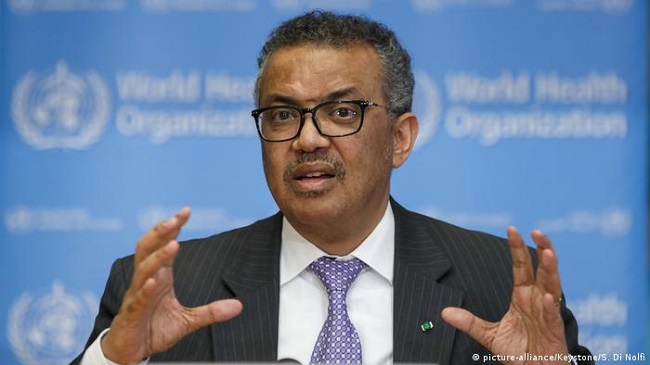
Dr. Tedros Adhanom Ghebreyesus, Director-General, World Health Organisation (WHO)

These achievements reflect the impact of sustained, coordinated global and national action following the adoption of WHO viral hepatitis elimination targets by Member States at the World Health Assembly in 2016. However, the report warns that current rates of progress are insufficient to meet all 2030 elimination targets, underscoring the urgent need to accelerate prevention, testing, and treatment efforts worldwide.

“Around the world, countries are showing that eliminating hepatitis is not a pipedream, it’s possible with sustained political commitment, backed by reliable domestic financing,” said Dr Tedros Adhanom Ghebreyesus, WHO Director-General.

“At the same time, this report shows that progress is too slow and uneven. Many people remain undiagnosed and untreated due to stigma, weak health systems and inequitable access to care. While we have the tools to eliminate hepatitis as a public health threat, urgent scale-up of prevention, diagnosis and treatment is needed if the world is to meet the 2030 targets,” added Ghebreyesus.

Global burden and gaps in response

Updated WHO estimates indicate that 287 million people were living with chronic hepatitis B or C infection in 2024.

That year, 0.9 million people were newly infected with hepatitis B. The WHO African Region accounted for 68% of new hepatitis B infections, yet only 17% of newborns in the region received the hepatitis B birth-dose vaccination.

A further 0.9 million hepatitis C infections were recorded in 2024. People who inject drugs accounted for 44% of new infections, highlighting the urgent need for stronger harm reduction services and safe injection practices.

Of the 240 million people with chronic hepatitis B in 2024, fewer than 5% were receiving treatment. Only 20% of people with hepatitis C have been treated since 2015, when a new 12-week treatment with a cure rate of about 95% became available.

As a result of limited access to prevention and care, in 2024 an estimated 1.1 million people died from hepatitis B and 240 000 from hepatitis C. Liver cirrhosis and hepatocellular carcinoma were the main causes of hepatitis related deaths. A large share of hepatitis B-related deaths occurred in the African and Western Pacific Regions.

Ten countries – Bangladesh, China, Ethiopia, Ghana, India, Indonesia, Nigeria, the Philippines, South Africa and Viet Nam – accounted for 69% of hepatitis B related deaths worldwide in 2024. Hepatitis C-related deaths are more geographically dispersed. In 2024, 10 countries accounted for 58% of the global total: China, India, Indonesia, Japan, Nigeria, Pakistan, the Russian Federation, South Africa, the United States of America and Viet Nam.

Proven solutions

Despite these challenges, progress in countries such as Egypt, Georgia, Rwanda, and the United Kingdom demonstrates that eliminating hepatitis as a public health problem is achievable with sustained commitment and investment.

Highly effective tools are already available:

  • hepatitis B vaccine protects more than 95% of vaccinated people against both acute and chronic infections;
  • long-term antiviral treatment for hepatitis B can help effectively manage chronic infection and prevent severe liver disease; and
  • hepatitis C short-course curative therapy lasting 8-12 weeks can cure more than 95% of infections.

“The data shows that progress is possible but also reveals where we are falling short. Every missed diagnosis and untreated infection due to chronic viral hepatitis represents a preventable death,” said Dr Tereza Kasaeva, Director, WHO Department for HIV, TB, Hepatitis and Sexually Transmitted Infections. “Countries must move faster to integrate hepatitis services for people living with hepatitis B and C into primary care, and to reach the communities most affected.”

The report identifies priority actions to accelerate hepatis elimination as a public health threat. These include scaling up treatment for chronic hepatitis B infection, particularly in the WHO African and Western Pacific regions, and expanding access to hepatitis C treatment in the WHO Eastern Mediterranean Region.

It also calls for stronger political commitment and financing, improved coverage of hepatitis B birth-dose vaccination and expanded antiviral prophylaxis to prevent mother-to-child transmission of HBV infection, particularly in the WHO African Region.

In addition, the report emphasises the need to improve injection safety in both health-care settings and community practices, including through strengthened harm reduction services for people who inject drugs.