The Nigerian National Petroleum Company Limited, (NNPC Ltd.) says it has successfully contained the fire outbreak on a section of the Escravos-Lagos Pipeline System (ELPS) in South-West Warri, Delta State.
The Chief Corporate Communications Officer of NNPC Ltd., Andy Odeh, confirmed this in a statement on Sunday, December 14, 2025.
The NNPC Limited had confirmed an incident involving an explosion reported at about 17:50 hours on Wednesday near Tebijor, Okpele, and Ikpopo communities in Gbaramatu Kingdom, Delta.
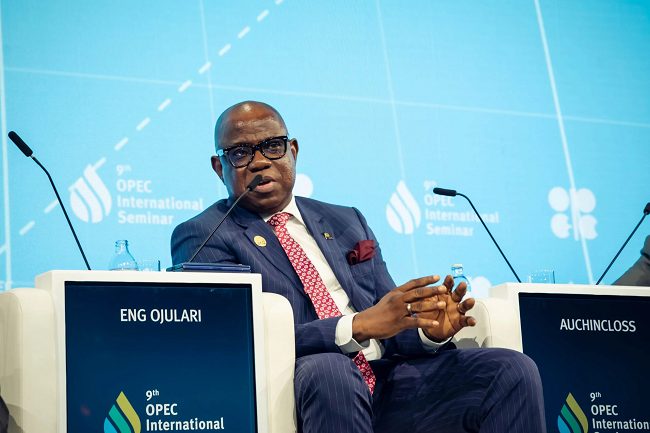
Bayo Ojulari, GCEO, National Petroleum Company (NNPC) Limited
Odeh said coordinated containment measures had been successfully executed, ensuring the safety of host communities, personnel, and the environment.
“All relevant pipeline sections have been safely and securely isolated,” he said.
Odeh said a joint preliminary inspection involving NNPC Limited, the Nigeria Midstream and Downstream Petroleum Regulatory Authority (NMDPRA) technical teams, and maintenance contractors had been conducted at the affected site.
He said the NNPC Gas Infrastructure Company (NGIC), the operator of the network, had activated its Business Continuity Plan to manage the impact on all affected stakeholders, including shippers and suppliers.
“NNPC Ltd continues to maintain open communication with host communities, state authorities, and other critical stakeholders, and appreciates their sustained support and cooperation.
“The company remains committed to the safety of its host communities, the protection of the environment, and the reliability of its operations across all assets,” he said.
At COP30, held in Belém, Brazil from November 10 to 21, 2025, the African Development Bank Group introduced a new, more interactive way to showcase its climate solutions by hosting informal, coffee-style dialogues that allowed participants to engage directly with Bank experts.
The discussions focused on accelerating sustainable and resilient development as Africa faces the threat of climate change.
Al-Hamndou Dorsouma, the Bank Group’s Climate and Green Growth Division Manager, opened the discussions. He explained that African countries, despite contributing less than four percent of global emissions, are experiencing rising temperatures, extreme weather events and increasing vulnerability.
Davinah Milenge, the Bank Group’s Chief Programme Coordinator for Climate Change and Green Growth, talks with participants about the Bank’s special climate initiatives
The Bank Group was also represented by Davinah Milenge, Chief Programme Coordinator for Climate Change and Green Growth, who outlined Bank Group special initiatives, including relating to the circular economy in Africa.
Gareth Phillips, Manager for Climate and Environmental Finance, described the Bank’s green finance initiatives with a particular focus on the African Green Banks Initiative.
Meanwhile, James Kinyangi, Coordinator of the ClimDev Special Fund and the Climate Action Window, captivated audiences with a presentation on these two financing windows.
Also, Arona Soumaré, the Bank’s Chief Regional Specialist on Climate Change for West Africa, led a dialogue on the institution’s climate activities in the region, which is considered a global climate change hot spots. Soumare addressed, in particular, the Bank’s commitment to creating synergies between the Rio Conventions on climate, biodiversity, and desertification.
The Bank representatives fielded several questions and comments. Reilo Idagiza Sirali and Lydia Wanjo, two Kenyan visitors, praised the “original idea” behind this session. “It was as if we had met over coffee to discuss serious issues about the future of the planet,” said Wanjo.
“It was very interesting – I learned a lot about the just energy transition, nationally determined contributions (NDCs) and the Bank’s measures on the circular economy,” said Maria Micah Maua, a member of the Kenyan youth delegation to COP30.
“At the African Development Bank, our role is to help unlock this potential through integrated and transformative action,” said Dorsouma.
He noted that under the leadership of President Sidi Ould Tah, the Bank Group has just adopted a new strategic direction centred on ‘Four Cardinal Points, which are improving access to capital to unlock Africa’s financial potential and increase investment; reforming and strengthening financial systems to build resilience and increase the continent’s influence; harnessing Africa’s demographic transformation through innovation, skills and job creation, particularly for the green transition; and building climate-resilient infrastructure and value chains to ensure long-term sustainable growth.
Doursouma said, “the initiatives we are discussing today – the circular economy, climate information services and green finance – contribute directly to these priority areas and illustrate how the Bank integrates innovation, information and investment to drive large-scale climate action.”
The Global Environment Facility (GEF) Consultation with civil society organisations (CSOs) took place on Friday, December 12, 2025, ahead of the 70th Meeting of the GEF Council. It provided an opportunity for GEF Council members, the GEF Secretariat, and civil society leaders and representatives to reflect on progress toward the ninth replenishment cycle (GEF-9) and to consider how a whole-of-society approach can be embedded across GEF-9.
Opening the meeting, Gabriella Richardson Temm, Lead, Small Grants Programme, GEF, underscored the importance of the consultation, noting that it is the final meeting during the GEF-8 cycle. She emphasised that the discussions would provide an opportunity to consider how to strengthen whole-of-society implementation under GEF-9 and inform the GEF-9 replenishment meeting scheduled for January 2026.
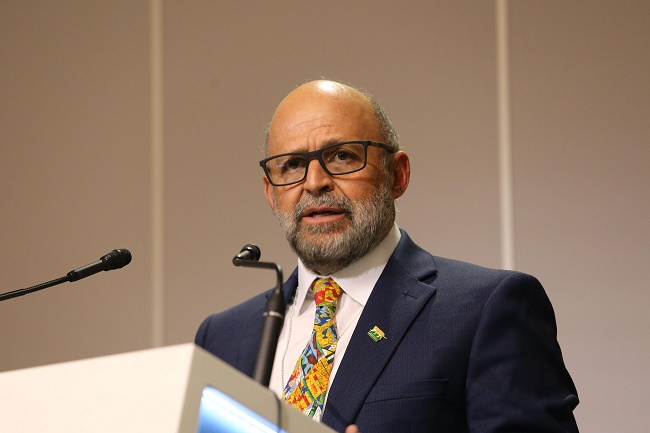
Carlos Manuel Rodriguez, GEF CEO and Chairperson
Adriana Moreira, Lead, Partnerships Division, GEF, then provided a stocktaking of GEF-8 approaches and targeted programmes, emphasising increased engagement with, and participation of, CSOs. She discussed the “substantially transformed” Small Grants Programme (SGP), highlighting strong success in expanding the choice of GEF implementing agencies and its innovative new approaches, such as the CSO Challenge programme and Microfinancing Initiative.
Sagar Aryal, Head, Technical Subcommittee, CSO Network, provided an overview and reflection on the GEF-9 whole-of-society approach, drawing on discussions from the CSO Consultations held in May 2025 and the Whole-of-Society Talks organised by the GEF CSO Network. He underscored convergence from these discussions that “whole of society” must be more than a paper commitment: it should operate as a practical delivery engine, moving beyond consultation and towards implementation.
Aryal highlighted that while GEF-9 signals strong policy ambition around a whole-of-society approach, greater commitment is needed to translate this into delivery. He identified persistent gaps, pointing to declining support for CSO-led projects, barriers to access for grassroots actors, and insufficient empowerment of IPLCs. He called for predictable and adequate funding, stronger representation of whole-of-society actors in decision-making, and clearer mechanisms to match GEF-9 ambitions with budgetary allocations.
Facilitated Conversation Between Civil Society Negotiators and GEF Replenishment and Council Members
Moderated by Aryal, the session focused on facilitating access to finance for civil society, IPLCs, women, and youth during GEF-9. Richard Bontjer, GEF Council Member, Australia, highlighted the importance of a whole-of-society approach in achieving environmental and development targets, and of Indigenous Peoples’ knowledge in curbing biodiversity loss. He praised the SGP’s effectiveness in engaging civil society and called for increased financial allocation for it.
Bontjer noted that none of the GEF Implementing Agencies are Indigenous-led and proposed: enhancing the effectiveness of existing Implementing Agencies in working with Indigenous Peoples; and selectively expanding the GEF partnership by bringing in new Agencies with expertise in collaborating with IPLCs. In line with GEF-9’s goal to increase risk appetite, he supported encouraging civil society to bring their projects forward to develop innovative approaches.
Referencing recent GEF performance reports, he noted: GEF’s comparative advantages in supporting collaboration across multilateral agencies in the environmental and climate space; increased co-financing mobilization, stressing that more ambitious steps are needed; and concern that only 59% of projects show broad adoption.
Hoda Elshawadfy, GEF Replenishment Member, Egypt, called for increased financing for the SGP to support the inclusion of civil society and local communities throughout project lifecycles. She highlighted the need to balance the needs of the country and civil society, noting that her country dedicated 20% of its allocation directly to the SGP.
To advance civil society participation under GEF-9, she proposed setting clear roles and expectations across partnerships and providing capacity building and support to non-governmental organisations. Finally, she called for increased private sector participation and efforts to achieve gender balance.
Faizal Parish, Chair, GEF CSO Network, underscored the significance of traditional knowledge in addressing the triple planetary crisis. While highlighting the value of existing mechanisms such as the SGP and ICI, he stressed the need to empower civil society across the entire GEF programme and portfolio.
Parish noted that the ICI was oversubscribed by more than 80 times, reflecting significant unmet demand, and called for increasing the replenishment target from $5.4 to 7.5 billion to keep up with funding needs. He indicated that a higher risk-tolerance approach can empower local communities and civil society and support experimentation, necessary for discovering innovative and high-impact approaches.
Carlos Manuel Rodríguez, CEO and Chairperson, GEF, underscored the importance of increasing CSO involvement, stating that, for the GEF to achieve its institutional mandate, it must work with everyone who is part of the solution. He stressed that CSOs set an expectation for the sustainability of GEF’s investments and portfolios. He stated that there must be a clear role and expectation for what CSO engagement will look like, noting that a whole-of-society approach will guide comprehensive CSO inclusion and utilisation.
Rodríguez urged the expansion and simplification of finance for community-led actions, emphasising that GEF-9 represents a transition toward a more effective model of cooperation that can demonstrate the value of a whole-of-society approach. He noted that combining whole-of-society and whole-of-government approaches will help sustain GEF programming over time. Acknowledging that internal dynamics may differ for GEF-10, he stressed the importance of placing non-state actors at the centre of GEF action now.
In the subsequent discussion, speakers responded to questions and comments from participants. Rodríguez underscored the SGP’s role in piloting a whole-of-society approach and highlighted emerging windows of opportunity, such as blended finance. On accessing GEF funds for civil society, he recommended engaging with operational focal points and building a relationship with them, noting there is now a budget line to support their work.
On supporting the vision of youth and improving collaboration with the CSO network, Parish said a key reform for countries is the establishment of national steering committees for the GEF, and that CSO representation on these is needed. This reform, he noted, is already underway and in place in some countries. He highlighted the importance of recognising that IPLCs have the right to self-determination.
Closing the meeting, Rodríguez stressed that the GEF must recognise the role of CSOs in leading solutions, with governments and the private sector complementing these efforts to achieve progress.
The Nigerian Meteorological Agency (NiMet) has predicted sunny and hazy weather conditions from Sunday, December 14 to Tuesday, December 16, 2025, across the country.
NiMet’s weather outlook released on Sunday in Abuja envisaged a sunny and hazy atmosphere over the northern region during the forecast period.
According to it, slight dust haze is expected over the central region throughout the forecast period.
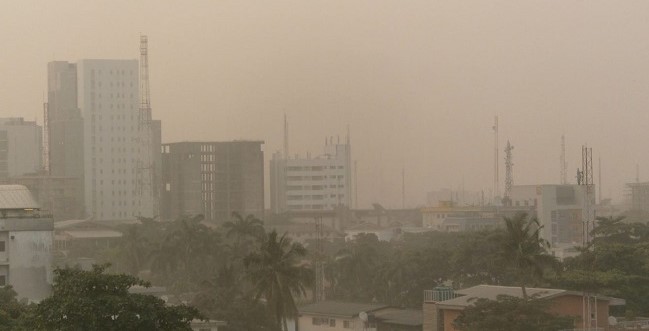
Hazy weather
The agency anticipated a cloudy atmosphere with some hours of sunshine over the southern region during the morning period.
NiMet forecast isolated thunderstorms over parts of Rivers, Bayelsa, Cross River, Lagos and Akwa Ibom states in the southern later in the day.
“On Monday, moderate dust haze atmosphere is anticipated over the northern region throughout the forecast period. Slight dust haze is expected over the central region during the forecast period.
“Cloudy atmosphere with a few hours of sunshine is anticipated over the southern region with prospects of isolated thunderstorms over parts of Bayelsa, Akwa Ibom, Cross River and Rivers states during the morning hours,” it said.
It predicted cloudy atmosphere later in the day with intervals of sunshine over the southern region.
According to the agency, moderate dust haze is anticipated over the northern region throughout the forecast period on Tuesday.
It envisaged a sunny and hazy atmosphere over the central region throughout the forecast period.
It forecast cloudy atmosphere over the southern region during the morning hours.
The agency predicted isolated thunderstorms with light rains over parts of Anambra, Imo, Ogun, Ondo, Bayelsa, Akwa Ibom, Cross River, Lagos, Delta and Rivers states.
NiMet urged the public to take necessary precaution as dust particles could be in suspension over the northern region.
“People with asthmatic health condition and other respiratory issues should be cautious of the present weather condition.
“Driving under rain should be with caution.
“Airline operators are advised to get airport-specific weather reports (flight documentation) from NiMet for effective planning in their operations.
“Residents are advised to stay informed through weather updates from NiMet. Visit our website (www.nimet.gov.ng),” it said.
How does the Convention on International Trade in Endangered Species of Wild Fauna and Flora (CITES) operate in practice? What underpins the CITES permit system, the scientific and legal acquisition assessments that guide decisions, and the structure of the CITES Appendices? How do the roles of national CITES authorities differ from those of the CITES Secretariat?
These are just some of the questions that can be answered by taking the new CITES online courses launched at the 20th World Wildlife Conference.
At a side event in the margins of the 20th meeting of the Conference of the Parties to CITES (CoP20) that took place in Samarkand, Uzbekistan, from November 24 to December 5, 2025, the CITES Secretariat announced the launch of two new e-learning courses.
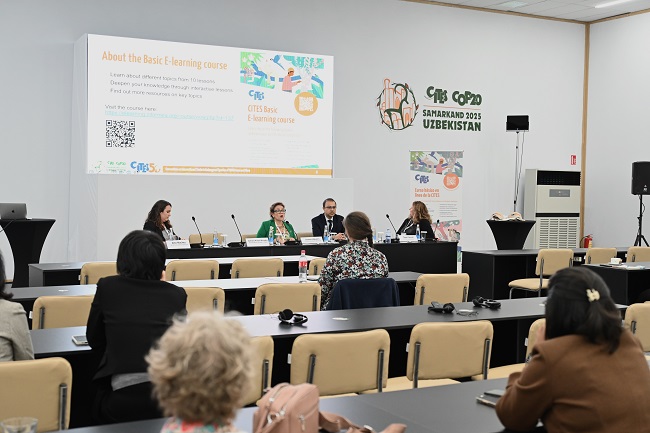
The side event in the margins of the 20th meeting of the Conference of the Parties to CITES (CoP20) held in Samarkand, Uzbekistan
The CITES Basic e-Learning Course and the CITES e-Learning Course on the Amendment of Appendices I and II are interactive, self-paced tools designed to support Parties, enforcement authorities, non-governmental organizations, academia, the youth, and the broader conservation community in understanding and implementing the Convention more effectively. Both courses are hosted on the United Nations Environment Programme (UNEP) InforMEA knowledge management platform, which provides a central hub for knowledge-sharing across multilateral environmental agreements.
Opening the side event at CoP20, CITES Secretary-General, Ivonne Higuero, emphasised the importance of digital transformation in strengthening knowledge management and global cooperation, by stating: “These courses come at a particularly meaningful moment, as we celebrate the 50th anniversary of CITES, marking a major step forward in making CITES knowledge more accessible, inclusive, and impactful for all Parties.
“These new e-learning tools will help strengthen global cooperation and support our shared commitment to conserving biodiversity in line with the Kunming-Montreal Global Biodiversity Framework, the 2030 Agenda for Sustainable Development and CITES Strategi Vision.”
The side event featured an interactive quiz with event participants, a walk-through of the online platform and demonstrations of the new courses on topics including:
CITES authorities
Regulation of trade in specimens of CITES-listed species and the CITES permit system
Exemptions and other special provisions
Non-Detriment Findings
Proposals to Amend the CITES Appendices
CITES enforcement
These new digital tools are expected to play a critical role in building capacity among Parties and stakeholders, particularly in regions where resources for training and implementation are limited.
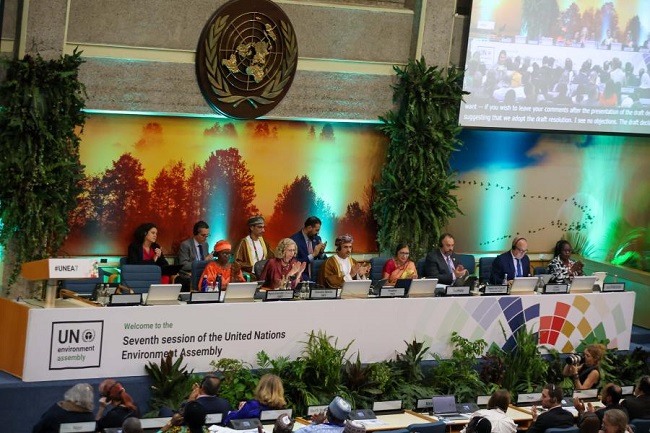
The seventh session of the UN Environment Assembly (UNEA-7) concluded on Friday, December 12, 2025, with Member States delivering 11 resolutions, three decisions and a Ministerial Declaration aiming to advance solutions for a more resilient planet.
More than 6,000 people – representing 186 countries – registered for the week-long Assembly held at the UN Environment Programme (UNEP) headquarters in Nairobi, focused on advancing solutions to tackle the triple planetary crisis of climate change, nature, biodiversity loss and land degradation, and pollution and waste.
A view of the dais during the UNEA-7 closing plenary. Photo credit: ENB-IISD / Anastasia Rodopoulou
The UNEA-7 resolutions move forward the work of Member States on safeguarding coral reefs, on the sound management of the minerals and metals essential to the energy transition, on the sound management of chemicals and waste, on the sustainable use of Artificial Intelligence, and on finding sustainable solutions through sport. Other resolutions adopted focus on international cooperation to combat wildfires, strengthening work on the environmental dimension of antimicrobial resistance, protecting glaciers, and addressing sargassum seaweed blooms and more.
“What has been achieved here proves that this bridge is indeed capable of carrying the world’s ambitions towards a better future,” said bdullah bin Ali Al-Amri, President of Oman’s Environment Authority and President of UNEA-7.
“The conclusion of this session doesn’t mean the end of our mission. The measure of our success will not be limited to what we’ve adopted on paper, no matter how important and strategic, but by what we will see on the ground in terms of cleaner air, cleaner water, restored ecosystems, sustainable ecosystems, green job opportunities and more resilient societies capable of facing the challenges of the future,” he added.
The UNEA-7 Ministerial Declaration commits to bold actions that drive sustainable solutions, to implementing obligations under multilateral environmental agreements and frameworks, and to advancing equitable and inclusive participation in all efforts.
In her UNEA-7 closing remarks, Inger Andersen, UNEP’s Executive Director, called on Member States to make their full contributions so that UNEP can deliver results and impact.
“You will now return to the world outside the negotiation halls. A world in which – let us not forget amid our euphoria – people are dying, homes and livelihoods are being destroyed, economies are being damaged, and inequity is growing because action on environmental challenges has not been fast or strong enough,” Ms. Andersen said.
“Yes, you have brightened the beacon and better lit the path forward. But we must now, together, hurry down this path to make good on our collective promise to deliver real solutions for a resilient planet and resilient people,” she added.
UNEA-7 held the second Multilateral Environmental Agreements (MEA) Day, dedicated to the international agreements addressing the most pressing environmental issues of global or regional concern, which are critical instruments of international environmental governance and international environmental law.
The seventh edition of the Global Environment Outlook was also released at UNEA-7; the report is the most comprehensive assessment of the global environment ever undertaken. The assessment found that investing in a stable climate, healthy nature and land, and a pollution-free planet can deliver trillions in additional global GDP, avoid millions of deaths and lift hundreds of millions of people out of poverty and hunger.
The Assembly was preceded by a Youth Environment Assembly – bringing together more than 1,000 young delegates to advocate for the inclusion, empowerment, and meaningful participation of young people in global environmental governance – and by a Cities and Regions Summit that highlighted the critical role of local and regional governments in delivering integrated solutions and driving transformative environmental change from the ground up.
At the 21st Global Major Groups and Stakeholders Forum, members of civil society exchanged perspectives on addressing significant environmental issues among themselves, with representatives from Member States, and with UNEP.
A host of UNEP’s Goodwill Ambassadors joined UNEA-7 to reinforce messages on solutions to some of the world’s most pressing issues – UNEP’s Patron of the Oceans and endurance swimmer Lewis Pugh climbed Mount Kenya, which holds one of the last three glacier sites in Africa – and is expected to lose all of its ice within the next five years, while Tanzanian hip hop artist Frida Amani, UNEP’s Advocate for Ecosystem Restoration – performed a new song, Resilience, at the High-Level Segment alongside the Kenya Boys Choir.
UNEA-7 also elected a new President to preside over UNEA-8: Matthew Samuda, Minister of Water, Environment and Climate Change.
“Our voices carry the weight of communities on the frontlines of climate impacts – communities that cannot afford delay and do not have the luxury of indifference,” Samuda said. “As President, I pledge to foster an Assembly marked by inclusivity, transparency, and practical action. We must work to strengthen the science-policy interface, scale up financing for adaptation and resilience, and accelerate the transition to sustainable production and consumption systems. And we must do so while ensuring that no state – large or small – feels excluded from the solutions we craft.”
Member states set the date for the next UN Environment Assembly (UNEA-8) from December 6 to 10, 2027, at the UNEP Headquarters in Nairobi.
Adopted by Parties at COP30, the Belém Gender Action Plan (GAP) for 2026–2034 marks a new chapter for equality, ambition and inclusion in climate policy and action. It places gender equality at the heart of climate action – from safer participation to stronger data, finance, and technology.
Its adoption reflects the collective work of Parties and observers, standing as a powerful testament to multilateralism and to the shared commitment to advance inclusive and ambitious climate action.
The Belém GAP is designed to drive sustained, long-term gender-responsive climate policy and action, implementing the vision of the enhanced Lima work programme on gender. Spanning 2026 to 2034, it establishes a nine-year framework with built-in learning and accountability through regular reporting and a mid-term review in 2029.
Through its 27 activities and 98 deliverables,the plan will drive concrete action at every level. It calls on governments, UN entities, civil society, and other relevant organisations to work collectively to drive implementation – from the global to the local level.
No one-size-fits-all approach
Recognising that climate change impacts people differently, the Belém GAP places a strong emphasis on “multidimensional factors.”For the first time, it explicitly references women and girls of African descent; women environmental defenders; migrant women; women smallholder farmers; women from rural and remote communities; and women with disabilities. It also deepens the discussion on the role of men and boys as allies in advancing both gender equality and climate action.
Safer spaces, better evidence, stronger systems
The Belém GAP promotes greater coherence in mainstreaming gender across the UNFCCC architecture and beyond – from the Global Stocktake and Just Transition to the Intergovernmental Panel on Climate Change and the Rio Conventions, as well as across conference organisation and the secretariat’s own operations.
The plan outlines concrete actions to strengthen the evidence base for gender-responsive climate policies, including work on the nexus of climate and:
Care work
Health
Violence against women and girls
Safety and protection mechanisms for women
Nature-based solutions and ecosystem-based adaptation
From commitment to implementation
The Belém GAP promotes gender-responsive climate finance, technology development, and capacity-building, while encouraging inclusive leadership and meaningful public engagement. It further strengthens the link between gender and the six elements of Action for Climate Empowerment (ACE): education, training, public awareness, public access to information, public participation, and international cooperation. The plan also enhances monitoring and voluntary reporting, including by Parties.
A new chapter for gender and climate
The Belém GAP is not an endpoint – it is a launchpad for accelerated progress. It represents the shared ambition of Parties, observers and partners to make gender equality a foundation for stronger, fairer and more resilient societies.
The Belém GAP sets the direction. Implementation begins now.
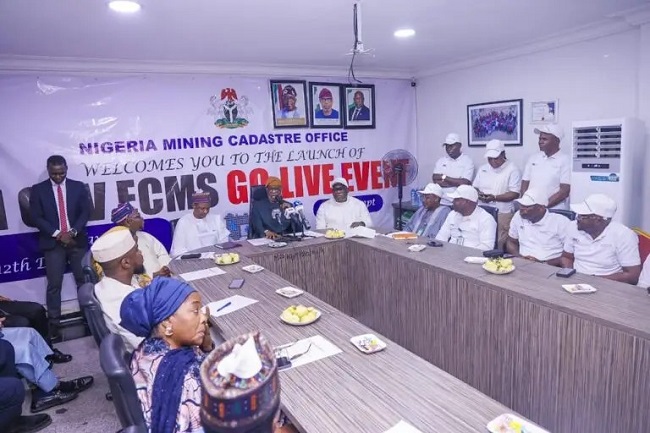
The Ministry of Solid Minerals Development has generated over N50 billion IGR for 2025, surpassing the N38 billion recorded in 2024.
The Minister, Mr. Dele Alake, confirmed this on Friday, December 12, 2025, while unveiling the One-Gov Cloud digitisation project at the Mining Cadastre Office (MCO) headquarters in Abuja.
He said the One-Gov Cloud platform would help agencies move from paper-based to automated systems, supporting secure and efficient operations.
Mr. Dele Alake, Minister of Solid Minerals Development, speaking at the launch of 1-Gov Cloud for the Mining Cadastre Office, on Friday at the Cadastre’s Headquarters in Abuja
Alake said sector reforms, driven by digital tools and new policies, had positioned the ministry for threefold revenue growth across its agencies.
He noted that the MCO generated N30 billion for 2025, compared with N12 billion in 2024, attributing the rise to innovation and commitment.
“That is the trajectory we have set for the sector. Mines inspectorate revenue is up, and other revenue departments have also improved.
“Last year, we recorded about N38 billion. This year, we have crossed N50 billion already, and we are still counting,” he said.
Alake described the launch of the One-Gov Cloud as a milestone, saying digital reforms were vital to stronger service delivery and government efficiency.
He said sustainability of the reforms required the right attitude and nationwide mental reorientation to protect and maximise the tools.
According to him, high-end digital equipment demands careful handling to avoid damage and protect the investment.
The minister praised the MCO and urged Galaxy Backbone to resolve early challenges quickly to support seamless operations.
MCO Managing Director, Obadiah Nkom, said the agency’s N30 billion revenue for 2025 reflected sector-wide reforms and strong ministerial backing.
He said the support had earned the MCO recognition from public and private bodies, including awards for innovation and digitisation.
Nkom thanked Galaxy Backbone for its technical support, which ensured the successful deployment of the One-Gov system.
Galaxy Backbone Managing Director, Prof Ibrahim Adeyanju, said the MCO was the first department in the ministry to go live on the platform.
He said the agency would continue to support the MCO through training and technical assistance to enhance the system’s value.
Adeyanju described the One-Gov Enterprise Content Management System as a secure tool that strengthens record keeping and improves workflow transparency.
Kano State Governor, Alhaji Abba Yusuf, Minister of Housing and Urban Development, Alhaji Ahmed Dangiwa, and other African leaders won awards at the Africa Housing Awards in Abuja.
The 7th Africa Housing Awards celebrated public and private sector leaders driving sustainable housing and infrastructure development across Africa.
Gov. Yusuf was named Housing and Infrastructure-Friendly Governor of the Year for policies supporting mass housing delivery and urban renewal initiatives.
Dignitaries at the Africa Housing Awards, in Abuja
The organisers described Yusuf as “the people’s governor,” citing his commitment to inclusive housing and openness to innovative construction solutions.
Dangiwa emerged Africa’s Most Transformational Minister of Housing and Urban Development 2025 for reforms targeting affordability, local materials and private sector participation.
Speaking at the event, Dangiwa said, “We are repositioning the housing sector to ensure decent and affordable homes for Nigerians.”
He added, “Our reforms focus on reducing construction costs and unlocking housing finance for low- and middle-income earners.”
Dangiwa disclosed that a committee had been constituted to verify national housing data and was close to submitting its report.
According to him, housing data would be based on credible population figures and other national parameters.
“Housing data is not as speculative as often portrayed. The committee is coming up with more reliable and verifiable data,” he said.
Some 52 individuals, organisations, government bodies and initiatives were honoured across three categories.
Namibia’s Minister of Urban and Rural Development, Mr. James Sankwasa, received Minister for Housing of the Year 2025.
Sankwasa said, “Africa has reached a point where it must recognise and celebrate its own development efforts.”
Nigeria’s Minister of Finance and Coordinating Minister of the Economy, Mr. Wale Edun, won Housing Finance Minister of the Year 2025.
Edun was recognised for supporting housing finance reforms and strengthening macroeconomic policies impacting mortgage accessibility.
Sen. Victor Umeh emerged Housing Senator of the Year 2025 for sustained legislative advocacy on housing and infrastructure development.
Umeh said, “What stands out for me is the number of youths being recognised at this event.”
He added, “Instead of waiting for white-collar jobs, young Nigerians are investing in real estate development.”
Umeh thanked the convener, saying the award reflected legislative commitment to inclusive housing policies.
Other individual awardees included Dr Armstrong Takang, Housing Finance Personality of the Year, and Mrs. Uzoamaka Onukwubiri, Africa’s Real Estate CEO of the Year.
Dr Umar Sani also received recognition under the female category for contributions to the housing sector.
Corporate awards went to BUA Cement as Fastest Growing Cement Company of the Year 2025.
Teibitat was honoured as Emerging Real Estate Brand of the Year 2025 for innovation and market growth.
Convener of the awards, Mr. Festus Adebayo, said recognition promotes collaboration and accelerates sectoral innovation.
Adebayo said, “These awards encourage inclusive policies and stronger partnerships for sustainable housing development.”
The event featured keynote addresses, cultural performances, networking sessions and award presentations.
The International Fund for Agricultural Development (IFAD) has called for intensified efforts by governments and other stakeholders in scaling-up water-related infrastructure for sustainable productivity, resilience, and climate adaptation.
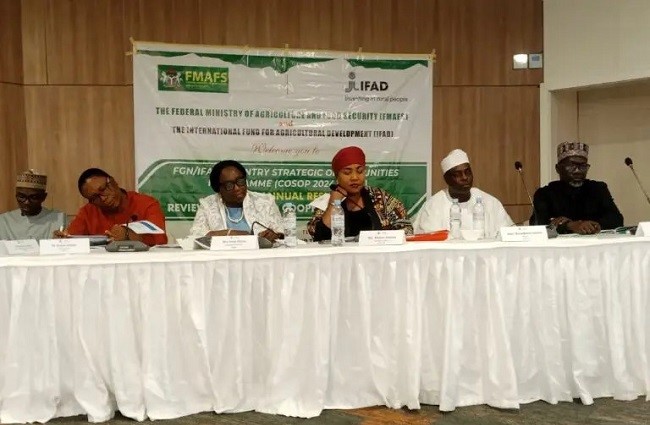
Mrs. Dede Ekoue, IFAD Country Director, made the call at the Federal Government/IFAD Second Annual Review of the Country Strategic Opportunities Programme (COSOP) 2024 to 2029 on Friday, December 12, 2025, in Abuja.
Ekoue said that COSOP, which was adopted by the Federal Government, development partners and other stakeholders in 2024, aimed at improving food and nutrition security, while addressing the underlying drivers of fragility.
Stakeholders at the COSOP review meeting in Abuja on Friday. Photo credit: NAN
She said it was also meant to promote inclusive and resilient growth of Nigeria’s rural economy through a market-driven transformation of the agrifood system.
Ekoue, who said that water infrastructure remained critical to productivity, resilience, and climate adaptation, identified it paucity as a major impediment towards achieving the 2024 to 2029 COSOP targets
Ekoue said that Nigeria’s agrifood was constrained by low productivity capacities of small holders, weak integration of small holders into value chains, food insecurity and malnutrition.
Other challenges, according to her, include persistent rural poverty, high dependence on food imports and multidimensional fragility like conflict, climate and environmental degradation.
Ekoue said that the review provided a timely opportunity to assess progress toward the targets collectively set by stakeholders for 2029.
“COSOP was developed following extensive consultations under the leadership and coordination of the Federal Ministry of Agriculture and Food Security (FMAFS) in collaboration with the Federal Ministry of Finance and key national and development partners.
“The meeting is to examine the continued relevance of COSOP, assess the progress achieved over the past two years, and identify areas where further improvements and strategic adjustments are required.
“This reflective process will enable us to leverage emerging opportunities and ensure a steady and accelerated pace toward achieving our shared objectives.
“The portfolio is demonstrating strong overall progress toward achieving the 2029 COSOP targets,” she said.
The country director outlined one of the achievements of COSOP as sustained support to rural producers’ organisations and their members.
She emphasised that the achievement has strengthened collective action and market participation.
Ekoue said the annual review of COSOP would help to identify ways to enhance these results in 2026.
“We commend the Federal Government of Nigeria for its strong focus on modernising the agrifood sector through digitalisation, including the significant progress made towards establishing the National Digital Farmer Registry.
“These efforts are critical enablers for inclusive service delivery, transparency, and scale,” she said.