Home Blog Page 220

COP30 Presidency’s sixth letter: Countries urged to heed Correa do Lago’s initiative to respond to climate ambition gap

The incoming COP30 Presidency on Tuesday, August 19, 2025, issued its sixth letter, setting clear expectations for countries to deliver new 2035 climate targets or Nationally Determined Contributions (NDCs) ahead of the UN General Assembly this September and the UN’s synthesis report this October.

The letter, endorsed by André Aranha Correa do Lago, COP30 President Designate, underscores that NDCs are the clearest demonstration of governments’ commitment to their people.
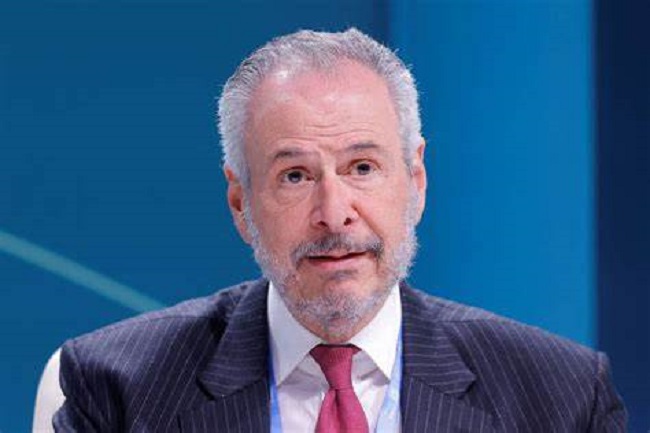
Andre Correa do Lago
COP30 President, Andre Correa do Lago

With four-fifths of Parties yet to submit, the Presidency warns of a foreseeable climate ambition gap and launches consultations on how to respond collectively. COP30, adds the Presidency, will be a critical moment to close this gap and align action with the 1.5°C limit. 

In a reaction, Andreas Sieber, Associate Director of Policy and Campaigns at 350.org, said: “The COP30 Presidency’s call to close the ambition gap is not just overdue, it’s a last warning. Major emitters like China, the EU, and Australia are preparing to unveil new climate targets, but the truth is clear: the pledges we’ve seen so far are nowhere near enough to match the scale of the climate crisis.

“The world is on track for catastrophe if this shortfall is not confronted head-on. The Brazilian COP Presidency must force a real course correction at COP30, one that keeps 1.5°C alive. Every day of delay isn’t just lost time, it’s another step deeper into climate chaos.”

Sixth Letter from the COP30 Presidency:

August 19th, 2025

In further advancing our Global Mutirão against climate change, the Brazilian incoming Presidency of the 30th session of the Conference of the Parties (COP30) of the United Nations Framework Convention on Climate Change (UNFCCC) presents its sixth letter to the international community – Parties and non-Party stakeholders – this time focused on preparations for COP30 itself.

In this letter, I will reflect on the 62nd sessions of the UNFCCC Subsidiary Body for Scientific and Technological Advice (SBSTA) and the Subsidiary Body for Implementation (SBI) of the UNFCCC (SB62), which took place in Bonn, Germany, from 16 to 26 June 2025. Based on what the incoming Presidency heard from Parties in Bonn, I present below the next steps on our way forward with a view to COP30.

In my third letter, I invited negotiators to engage as co-builders of a global infrastructure of trust, by working together in a task-force mode to ensure significant progress in SB62. The June Bonn sessions reached satisfactory results that can pave the way to successful outcomes at COP30, including on outstanding negotiating issues related to (i) the Global Goal on Adaptation (GGA) indicators under the UAE–Belém Work Programme, (ii) the UAE Dialogue on implementing the Global Stocktake (GST) outcomes, and (iii) the UAE Just Transition Work Programme (JTWP).

The incoming Presidency deeply appreciates the invaluable leadership of the COP29 Presidency and of the SB Chairs, without which the progress achieved in Bonn would not have been possible. I feel privileged to count on your partnership and guidance with a view to COP30. I also thank all delegates, observers, and Secretariat staff who demonstrated extraordinary dedication and engagement in moving forward our collective work within the subsidiary bodies.

Though the results of SB62 were not ideal, our collective work in Bonn was not business as usual either. Our process did show that together we have shifted gears towards accelerating results for further intersessional work and subsequent formal consideration by the COP, the Meeting of the Parties to the Kyoto Protocol (CMP), and the Meeting of the Parties to the Paris Agreement (CMA). Most importantly, SB62 sent clear signals around the unwavering commitment by all Parties to multilateralism and to the climate change regime we have built together since our Convention was opened for signature 33 years ago at the 1992 United Nations Conference on Environment and Development (Earth Summit), in Rio de Janeiro, Brazil.

In 2025, the international community will be coming back to Brazil bearing the weight of great responsibility. Back in 1992, no one could have imagined we would achieve so much – and yet find ourselves today so close to frustrating the ultimate objective of the Convention, to prevent dangerous human interference with the climate system.

The task of honoring the legacy we have built together in previous COP sessions rests on the shoulders of us all – from COP1 in Berlin in 1995 and COP3 in Kyoto in 1997 to COP21 in Paris in 2015. It is now up to us to take the next step at COP30, following the historic conclusion of the first Global Stocktake (GST) under the Paris Agreement at COP28 in Dubai in 2023, and the finalization at COP29 in Baku of both the Paris Rulebook and the last remaining negotiating mandate from COP21 – the New Collective Quantified Goal on climate finance (NCQG). Carrying this legacy forward is our collective responsibility. We must take the next step at COP30.

COP30 is a moment to celebrate the ten-year anniversary of the Paris Agreement. Throughout its first decade, the Paris Agreement has shown both efficiency and resilience. The treaty is working. Its ambition and implementation cycle are fully in motion. Yet, global warming is now occurring much faster than scientific projections had indicated in 2015. At the same time, geopolitical and economic obstacles are raising new challenges to international cooperation – including under the climate regime.

Guided by equity and the best available science, we must now unite to unleash the next wave of ambitious climate action. We have no choice but to achieve exponential progress through concrete results. The science is clear: humanity’s ability to win the fight against climate change in the long run depends on the choices we make today – and how we act upon them over the next five years.

During SB62, I conducted consultations with all negotiating groups of Parties. I thank you for your engagement, openness, and trust. My team and I are genuinely dedicated to ensuring a fair, inclusive, transparent, and predictable process with a view to COP30. With the humility required by the complexity of the task before us, I will continue to need your creativity in finding new solutions to new challenges, as well as your constant and honest feedback from now until November to shape the outcomes of COP30.

COP30 is not about the incoming COP30 Presidency, nor about our delegations individually. COP30 is about the collective work we all need to deliver. It is about present and future generations. As I referred to in my fifth letter of 12 August 2025, the UNFCCC is ultimately about people. People are at stake. My team and I are driven by a strong sense of purpose that comes from a deep understanding that COP30 will carry implications that go far beyond the conference itself as an event. I invite all delegates to join the incoming Presidency in this purpose.

It is not up to the incoming COP30 Presidency to make history. It is up to us all to respond appropriately to the historical context we are living in. As the incoming steward of our process, I understand that we will all be judged – now and in the future – by how successful we are in honoring and preserving the legacy of our predecessors, whilst making the way for its further expansion from negotiation rooms to cabinet, board, and living rooms.

To all Parties to the Convention, the Kyoto Protocol, and the Paris Agreement, please be assured that the incoming COP30 Presidency is determined to serve as a vessel for your will to emerge in a balanced and coherent manner. Collective intelligence and procedural rigor will be safeguarded for a legitimate and truly effective process, as bias and short-term thinking would risk impairing the sustainability of our results in the longer term.

In protecting our Party-driven process, I remain committed to impartiality in raising our collective ambition. Humankind cannot afford further delay due to potential shortcomings in trust and cooperation, as COP30 marks the midway point of the decade the best available science assesses as critical to our efforts to limit the temperature increase to 1.5 °C and thus significantly reduce the risks and impacts of climate change. Every fraction of a degree and every year over 1.5 °C matter towards keeping the ultimate objective of the Convention alive.

What we heard from Parties at SB62

At SB62, the incoming COP 30 Presidency listened carefully to you, the Parties, that COP30 must respond to how our nationally determined contributions (NDCs) in aggregate effectively promise humanity a safe, prosperous, and sustainable future. I have also noted outstanding divergences on the form and scope of our response to the NDCs and the synthesis report to be published by the UNFCCC Secretariat in October. Those divergences can and must be bridged, and I am determined to provide all conditions for frank, open, and creative dialogue towards this end.

Far from representing mere climate targets for 2035, our NDCs represent the vision of our shared future. They are vehicles of cooperation, enabling us to realize this vision together. If the image shown by our integrated NDCs turns out disappointing, it is our collective responsibility to convert it into a picture that will ensure a livable planet, protect all economies, and improve living standards and life opportunities for all peoples, for all generations – a picture that will make our children proud, relieved, and hopeful for their own future.

As we crossed the 100-day mark before COP30, around four-fifths (4/5) of the membership of the Paris Agreement have yet to come forward with new 2035 NDCs. Parties know how important it is that the UNFCCC receive NDCs in time to be reflected in the synthesis report. No action is a stronger demonstration of commitment to multilateralism and to the climate regime than the NDCs our countries present as a national determination to contribute to the Paris Agreement. First and foremost, NDCs are demonstrations of governments’ commitments to their people. The high-level event to be organized by the United Nations Secretary-General on 24 September 2025, on the margins of the 80th session of the UN General Assembly (UNGA80), will provide a major platform for countries that have yet to do so to unveil new 2035 targets as their ultimate show of support for COP30, to the multilateral climate regime, and to a more prosperous future.

At SB62, the incoming Presidency undertook consultations with the COP29 Presidency on the ‘Baku to Belém Roadmap to 1.3T’, aiming at scaling up climate finance to developing country Parties. The incoming Presidency equally listened to many Parties’ concerns about their ability to engage in ambitious climate actions when there are frustrations related to climate finance and to measures that impact international trade. We heard, moreover, expectations from some Parties regarding synergies among climate, biodiversity, desertification, and sustainable development, as well as the implementation of global calls for efforts towards halting and reversing deforestation and forest degradation by 2030, and for accelerating the global energy transition – including on tripling renewable energy capacity globally, doubling the global average annual rate of energy efficiency improvements, and transitioning away from fossil fuels in energy systems, in a just, orderly, and equitable manner. We have similarly noted some views that COP30 should reflect on the first cycle of Biennial Transparency Reports (BTRs), National Adaptation Plans (NAPs), and loss and damage. As with NDCs, these issues are all relevant, but they do not all appear as individual agenda items for discussion in Belem.

COP30 Presidency Consultations

To ensure our work around such issues is strongly grounded in an inclusive, transparent and predictable process with a view to COP30, I am immediately launching incoming “COP30 Presidency Consultations” throughout the intersessional period to advance progress that would otherwise be left for the two weeks of the COP. The consultations during the intersessional period will be undertaken in coordination with the COP29 Presidency and the SB Chairs, who will be fundamental to success in Belem. Over previous COPs, Presidency Consultations have proven to be a uniquely effective mode of work in addressing issues of high political profile, as well as deadlocks in technical discussions, while ensuring inclusiveness and transparency. We hope incoming COP30 Presidency Consultations will provide space for Parties to channel priorities that are not currently covered under formal agenda items.

I encourage Parties to use these incoming Presidency Consultations if they feel they need to raise matters that are not covered by the provisional agendas of COP30, CMP20, CMA7, and SB63. These consultations can also address proposed items already added to agendas for which consensus is anticipated to be challenging. We should all aim for the smooth adoption of the agendas and the launch of work at COP30 and SB63, and I encourage Parties to refrain from introducing potentially contentious new agenda items that could further burden the process or detract from agreed priorities.

Our incoming COP30 Presidency Consultations will start in the coming weeks with an online session with all Parties, where I hope to collect preliminary views on the form and content of our response to the NDCs and the Synthesis Report to be published by the Secretariat in October. I will also be collecting views on additional issues that Parties believe deserve attention alongside our collective response to the NDCs Synthesis Report. Detailed information on the first online session of the intersessional incoming Presidency Consultations will be communicated soon by the Secretariat. As many Parties pointed out, we do not seek to prejudge the second GST or undertake an intermediate assessment. Rather, we will be seeking to enhance implementation.

Based on that initial exchange, we will then hold two subsequent in-person incoming COP30 Presidency Consultations with all negotiating groups and other Parties. The first incoming Presidency Consultation will take place on 25 September 2025, in New York, on the margins of UNGA80. The second will take place on 15 October, in Brasília, following the Pre-COP High-Level Ministerial Meeting. Related information will be communicated by the Secretariat. Online sessions with all Parties, admitted observers, and constituencies will be held after each in-person incoming Presidency Consultations. We ask Parties to plan accordingly in advance.

After the online session following the Pre-COP, consultations can continue virtually during the intersessional period and in-person during the pre-sessional week with negotiating groups and other Parties towards the smooth adoption of the agendas and the launch of work.

At COP30 itself, I will resume Presidency Consultations from 10 November 2025.

In parallel to incoming Presidency Consultations, I will rely on the ministerial pairs to support additional consultations on five major building blocks for the COP30 final deliverables: mitigation, adaptation, means of implementation, just transition, and the GST. More information on the designation of ministerial pairs will be forthcoming.

Against a background in which climate urgency interacts with compounding geopolitical and socioeconomic challenges, the incoming Presidency hopes we remain guided from now to November by three interconnected priorities: (1) to reinforce multilateralism and the climate change regime under the UNFCCC, (2) to connect the climate regime to people’s real lives, and (3) to accelerate the implementation of the Paris Agreement by stimulating action and structural adjustments across all institutions that can contribute to it.

Let us work jointly, in the spirit of the Global Mutirão, to ensure COP30 is remembered as the moment the world chose unity over division, action over delay, and legacy over inertia – changing by choice, together.

André Aranha Correa do Lago
COP30 President Designate

Environmental destruction in Africa: People’s Tribunal to hold TotalEnergies accountable

0

Communities and climate justice movements across the continent have mobilised under the Kick Total Out of Africa Week of Action, highlighting the extensive harm allegedly caused by TotalEnergies’ fossil fuel projects in Africa.

From grassroots assemblies to public demonstrations, activists have drawn attention to the company’s supposedly devastating record and amplified a growing call for accountability and a just energy transition.

TotalEnergies
TotalEnergies

Communities have raised urgent concerns, including:

  • Forced displacement and militarisation linked to major fossil fuel projects such as the East African Crude Oil Pipeline (EACOP).
  • Widespread environmental degradation through oil spills, gas flaring, and ecosystem destruction.
  • Escalating health and livelihood crises in communities impacted by extractive operations.
  • The urgent need for reparations and investment in community-owned renewable energy solutions.

TotalEnergies’ Ongoing Pattern of Exploitation

“TotalEnergies has become synonymous with extractive exploitation in Africa, pursuing oil and gas projects that enrich shareholders while deepening poverty, inequality, and ecological collapse. The company’s relentless expansion, despite the climate crisis, exemplifies corporate greed that disregards human rights and the environment,” submitted activist group 350.org.

In a landmark decision last week, the South African High Court rejected TotalEnergies’ application for offshore drilling rights, recognising the significant risks to marine biodiversity, climate, and coastal livelihoods. The ruling, according to 350.org, underscores both the legitimacy of community resistance and the unsustainability of fossil fuel expansion.

The People’s Tribunal: A Platform for Justice

On Friday, August 22, 2025, African communities and civil society organisations will convene the People’s Tribunal against TotalEnergies, a public forum designed to hear testimonies, present evidence, and build the case against the company in the court of public opinion.

While symbolic, the Tribunal is seen as a powerful act of resistance, giving voice to those most affected and demanding justice, reparations, and an accelerated transition towards clean, community-controlled energy.

Kaduna begins 200,000 metres drainage desilting to curb flooding

The Kaduna State Government on Thursday, August 21, 2025, commenced desilting of 200,000 metres of drainages to tackle flooding across the state.

Mr. Abubakar Buba, Commissioner for Environment and Natural Resources, stated this while flagging off “Dredging and expansion of River Kaduna and desilting of drainages” in Kaduna, the state capital.

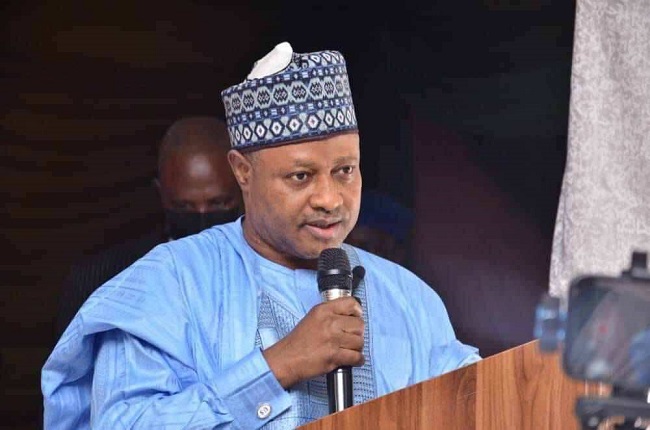
Uba Sani
Gov. Uba Sani of Kaduna State

Represented by Mrs. Linda Yakubu, Permanent Secretary of the Ministry, the commissioner said that the exercise, supported by the Agro-Climatic Resilience in Semi-Arid Landscapes (ACReSAL), would cover Kaduna, Zaria and Kafanchan.

“Last year we cleared 160,000 metres of drainages. This year, we increased it to 200,000 metres to expand coverage and protect more communities,” he said.

Buba explained that Sabon Tasha was chosen for the flag-off due to flash floods recorded in the area.

“Government has provided the drainages, but citizens must keep them free from refuse to allow water flow.

“Dumping refuse at median separators is an eyesore and exposes residents to disease outbreaks,” he added.

In her remarks, Mrs. Ikramat Umar, Assistant Chief, Disaster Reduction Unit, National Emergency Management Agency (NEMA), said disaster management required collective responsibility.

“Government has shown commitment; residents must stop dumping waste into drainages,” she said.

Similarly, Mrs. Rahama Suleiman, Head of Environment, Climate and Energy, National Orientation Agency (NOA), commended the state government for the initiative.

“We are also sensitising communities across the state on the dangers of dumping refuse in waterways and the need to keep drainages clean,” she said.

On his part, Michael Augustin, Coordinator, Concerned Sabon Tasha Youth, pledged support for the exercise.

“We will work with the government taskforce to stop traders from turning road dividers into refuse dumps,” he said.

By Ezra Musa

Africa could become ‘renewable superpower’, says Guterres

0

Africa has everything it takes to become a “renewable superpower”, UN head Antonio Guterres said on Thursday, August 21, 2025, as he called for greater investment in green energy across the resource-rich continent.

Guterres spoke at a three-day development conference in Japan attended by African leaders, where Tokyo is offering itself as an alternative to China as African nations reel from a debt crisis exacerbated by Western aid cuts, conflict and climate change.

Antonio Guterres
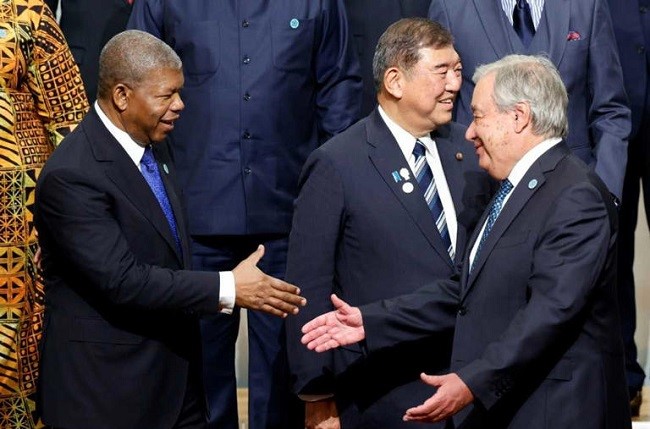
Angolan President Joao Lourenco (L) greets UN Secretary-General Antonio Guterres (R) during the 9th Tokyo International Conference on African Development in Japan. Photo credit: Franck ROBICHON / POOL/AFP

“We must mobilise finance and technology, so that Africa’s natural wealth benefits African people, we must build a thriving renewables and manufacturing base across the continent,” Guterres said at the Tokyo International Conference on African Development (TICAD).

“Green power in Africa lowers energy costs, diversifies supply chains and accelerates decarbonisation for everyone.”

China has invested heavily in Africa over the past decade, with its companies there signing deals worth hundreds of billions of dollars to finance shipping ports, railways, roads and other projects under Beijing’s Belt and Road global infrastructure initiative.

But new lending is drying up, and developing countries are grappling with a “tidal wave” of debt to both China and international private creditors, the Lowy Institute, an Australian think tank, said in May.

African countries have also seen Western aid slashed, in particular due to President Donald Trump’s dismantling of the US Agency for International Development (USAID).

Guterres warned in his speech in the Japanese port city of Yokohama that “debt must not drown development” and that Africa needed increased concessional finance and greater lending capacity from multilateral development banks.

He also urged greater investment in climate solutions.

“Africa has everything it takes to become a renewable superpower, from solar and wind to the critical minerals that power new technology,” he said.

Attendees at TICAD included Nigerian President Bola Tinubu, South African President Cyril Ramaphosa and Kenyan President William Ruto.

Ruto said on social media platform X that Kenya was in talks with Japanese automaker Toyota for the provision of 5,000 “e-mobility vehicles” as part of the country’s “commitment to clean energy”.

In his opening address at the forum on Wednesday, Japan’s Prime Minister Shigeru Ishiba announced a plan to train 30,000 people in artificial intelligence in Africa over three years and to study the idea of a Japan-Africa Economic Partnership.

Before the meeting kicked off, Ishiba also announced a vision for a distribution network that links African and Indian Ocean nations.

Both Tinubu and Ramaphosa, speaking on X, said they wanted a shift from aid to investment partnerships.

Group pushes for stronger climate justice collaboration in Nasarawa

The Beacon Youth Initiative (BYI), in partnership with Education as a Vaccine (EVA), has called for stronger collaboration with the Nasarawa State Ministry of Youth and Sports Development to promote climate justice.

The initiative’s Executive Director, Mr. Emmanuel-Envoh Okolo, announced this when he led the Climate Justice Clubs from three secondary schools on an advocacy visit to the ministry on Thursday, August 21, 2025, in Lafia, the state capital.

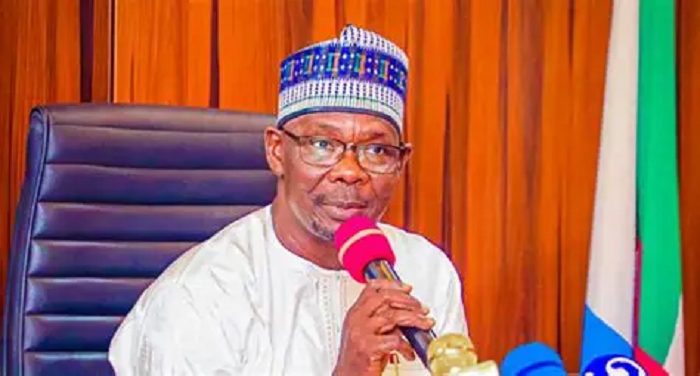
Abdullahi Audu Sule
Abdullahi Audu Sule, Governor of Nasarawa State

Okolo said BYI led the climate justice clubs, mainly girls from Government Secondary Schools Ombi 1, Azuba Bashayi, and Shabu, to demand critical ASKs from the Ministry for Youth and Sports Development.

Okolo said BYI led climate justice clubs, mostly girls from three secondary schools – Ombi 1, Azuba Bashayi, and Shabu – to present key demands to the ministry.

He added that over the past four years, BYI, in partnership with EVA and others, had promoted climate justice in Nasarawa, raised awareness, and built the capacity of young women and women with disabilities.

“As part of the programme, we are able to establish a Climate Justice Club in three secondary schools in Nasarawa State, with most the students being girls.

“Our selection is based on the fact that women, young girls, and women with disabilities are disproportionately impacted by climate change.

“We were able to expose the students to what climate change is about, the causes, mitigation, and adaptation, and how they can develop locally led solutions to climate change in their communities.

“I am excited to share with you that these students can now plant trees on their own, create awareness on climate change, and impact knowledge on their fellow students as well as their peers in the community,” he said.

According to him, BYI and partners are keen on amplifying the voices of these women, putting them in the right position where they can demand their rights regarding climate design, implementation, and monitoring and evaluation of programmes.

“As we know climate change is here with us, and action is all that we need now.

“So, the essence of their visit to this ministry today is to demand critical ‘ASKs toward climate change mitigation and adaptation in Nasarawa State,” he said.

Students from government secondary schools demanded more climate funding, teacher training, adoption of the Understanding Climate Change Handbook, and inclusive expansion of climate justice clubs.

In response, Commissioner for Youth and Sports Development, Mr. Yakubu Kwanta, who pledged the ministry’s commitment to prioritising climate change and women’s issues, promised support toward realising the students’ demands.

Kwanta was represented by the Permanent Secretary in the ministry, Dr Ibrahim-Adamu Alhassan.

“We need to be deliberate and intentional in bringing young women and girls on board, and the only way to do that is to co-sign with them, co-plan with them, co-implement with them, and co-evaluate with them.

“I am very excited listening to these young girls. You must saturate your schools with the right knowledge and skills, then we scale up the club beyond three schools to all the schools in Nasarawa State.

“Thinking climate is thinking about the world, we only have one world we have to protect it so that it can serve us.

“It behoves us that when trees are falling, new ones are planted, we should use earth resources with a sense of responsibility.”

Kwanta said the ministry would craft activities like awareness creation and tree planting and make provisions for other issues raised at the ministry level in the 2026 budget to ensure climate justice in Nasarawa State.

By Oboh Linus

No climate justice without social justice – NLC

The Nigeria Labour Congress (NLC) has declared that climate justice cannot be realised without social and economic justice for workers.

Mr. Joe Ajaero, President of the NLC, stated this at the launch of two publications on climate policies, organised in collaboration with the International Labour Organisation (ILO) on Thursday, August 21, 3035, in Abuja.

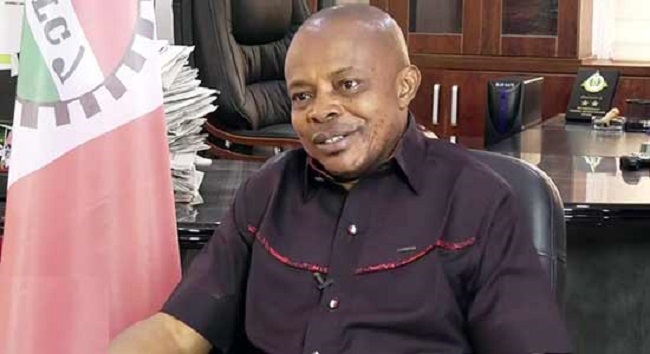
Joe Ajaero
Joe Ajaero, NLC President

The publications included “The Nigeria Labour Congress Policy Paper on Nigeria’s Nationally Determined Contribution (NDC) 3.0” and “The Nigerian Workers’ Charter of Demands on Just Transition”.

Ajaero expressed concern that Nigeria’s earlier Nationally Determined Contributions (NDC 1.0 and 2.0) failed to capture workers’ interests.

He said that trade unions, labour standards, and decent work must remain central to NDC 3.0.

According to him, climate change is fundamentally a workplace issue, as it directly threatens jobs and workers’ health.

“Therefore, decent work, fair wages, and social protection must guide Nigeria’s Just Transition framework,” he said.

The NLC president commended both local and international partners for supporting the publications, and urged workers and activists to use them as tools for advocacy.

He, however, cautioned that workers must “organise, not agonise” in the struggle for climate and social justice in Nigeria.

In her remarks, Mrs. Omotenioye Majekodunmi, Director-General of the Nigerian National Council on Climate Change (NCCC), praised the NLC and ILO for their efforts.

Majedkodumi, who was represented by Mrs. Jummai Vandu, a Climate Change Specialist, described the NDC 3.0 as a strategic investment plan aligned with Nigeria’s National Development Plan and global climate targets.

She explained that NDC 3.0 provides clear emission reduction targets, promotes renewable energy, and embeds labour rights, ensuring that social dialogue and worker protection remain central to Nigeria’s climate transition.

Majekodumi reiterated NCCC`s commitment to implement transparent carbon market frameworks, operationalise the Climate Change Fund, and provide social safety nets and retraining programmes to guarantee a just transition for Nigerian workers.

Also speaking, Ms. Inviolata Chinyangarara, ILO Senior Specialist, commended the NLC for producing the advocacy documents.

She noted their importance in integrating workers’ concerns into Nigeria’s climate change response and sustainable development agenda.

Chinyangarara said the publications would enrich national discourse, ensuring workers are protected throughout Nigeria’s transition to a low-carbon economy while promoting decent work, social protection, and equal opportunities.

She stressed the need to prioritise job creation, skills development, and capacity building, particularly for vulnerable groups, so that no worker is left behind in Nigeria’s climate transition.

The specialist pledged the ILO’s continued support through engagement in NDC revisions, Just Transition guidelines, and international knowledge sharing, adding that Nigeria’s example should inspire other African nations.

Mr. Ezekiel Adudu, Director of Special Duties and Projects at the Ministry of Labour and Employment, described the policy paper as a blueprint for an inclusive transition, emphasising that no worker should be excluded.

Adudu reaffirmed the government’s commitment, under the Renewed Hope Agenda, to partner with international bodies in ensuring that climate policies promote sustainable practices and protect workers’ rights across all sectors of the economy.

By Joan Nwagwu

Petroleum technologists honour Shell boss with Award of Excellence

0

The Petroleum Technology Association of Nigeria (PETAN) on Wednesday, August 20, 2025, presented an Award of Excellence to the Managing Director of Shell Nigeria Exploration and Production Company Ltd (SNEPCo) Ronald Adams, even as it commended Shell for supporting Nigerian content development in the energy industry.

The award, which was handed over by PETAN Chairman, Wole Ogunsanya, during a courtesy call at SNEPCo office, describes the managing director as an “astute and visionary technocrat,” in apparent reference to his efforts to sustain the achievements of SNEPCo in deep-water production since he came into the role in October last year.

SNEPCo
L-R: General Manager, Deepwater Oil, Shell Nigeria Exploration and Production Company Limited (SNEPCo) Iyke Nnoaham; SNEPCo’s Managing Director, Ronald Adams; Executive Chairman, Petroleum Technology Association of Nigeria (PETAN), Wole Ogunsanya and PETAN’s Vice Chairman, Obidike Uzu during a courtesy visit to Shell Headquarters at Eko Atlantic in Lagos

Ogunsanya said on Shell’s efforts to grow Nigerian content: “The history of local content in Nigeria is Shell. Apart from the fact that most of the people in the industry are ex-Shell, for some of us that work with the service companies, Shell gave us jobs that enabled us to build capacity. Shell has continued to play this role and PETAN remains ready to continue collaborating with Shell to raise local capacity.”

Adams expressed gratitude for the award, and commended PETAN member companies for contributing to the success of SNEPCo operations at Bonga “from first oil in 2005 to the production of the 1 billionth barrel in 2023.”

He said that investments by IOCs and independent producers in the energy industry would deliver lasting impact when organisations like PETAN leverage their experience and expertise for the overall development of the sector.

PETAN comprises over 100 indigenous technical oilfield service companies, with cumulative annual revenues running into millions of dollars. The organisation celebrated its 30th anniversary last year.

ITREALMS Media joins PREVENT Alliance to address e-waste, promote sustainable best practices

ITREALMS Media has officially joined the PREVENT Waste Alliance, a global network of organisations committed to minimising waste, eliminating pollutants, and maximising the reutilisation of resources in the economy.

Anika Schumann on behalf of the global Secretariat of the PREVENT Waste Alliance based in Bonn, Germany, confirmed ITREALMS Media’s membership via email, stating: “First of all, I would like to officially inform you that your membership has been confirmed by the Steering Committee and that your organisation is a member of the PREVENT Waste Alliance now. Welcome!”

Remmy Nweke
Ogbuefi Remmy Nweke, Lead Consulting Strategist/Group Executive Editor at ITREALMS Media

As a member of the PREVENT Alliance, ITREALMS Media will work closely with the alliance to promote sustainability and reduce waste.

According to Ogbuefi Remmy Nweke, Lead Consulting Strategist/Group Executive Editor at ITREALMS Media, “We believe that our membership in this esteemed alliance will enhance our capacity to address environmental challenges and provide opportunities for collaboration and knowledge sharing with like-minded organisations.”

Nweke further said, “We are excited to join the PREVENT Alliance and work with other members to promote sustainability and reduce waste. We believe that our collective efforts will have a significant impact on the environment and contribute to a more circular economy.”

The PREVENT Alliance focuses on various areas, including plastics, e-waste, organic waste, and circular economy, among others. ITREALMS Media looks forward to engaging with the alliance’s working groups and contributing to the development of innovative solutions to waste management challenges.

ITREALMS Media, through ITREALMS E-Waste Dialogue initiative since 2020, aims to raise awareness about the environmental and health impacts of electronic waste, promote sustainable e-waste management practices, and advocate for policies and regulations that support a circular economy.

Uzbekistan unveils official slogan for CITES CoP20

0

With less than 100 days remaining until the opening of the 20th meeting of the Conference of the Parties to the Convention on International Trade in Endangered Species of Wild Fauna and Flora (CITES CoP20) or World Wildlife Conference, the countdown has officially begun. On Wednesday, August 20, 2025, the host country Uzbekistan unveiled the official slogan for the landmark event: “CITES at 50 in Samarkand: Bridging Nature and People.”

The slogan reflects both a historic milestone – marking the 50th anniversary of the Convention – and the unique role that Samarkand will play as a meeting point of civilisations, cultures, and conservation efforts. Set to take place from November 24 to December 5, 2025, CITES CoP20 is expected to bring together thousands of scientific, legal, enforcement and trade experts representing governments, intergovernmental organisations, non-governmental organisations, private sector entities, youth networks and more from across the globe.

Ms. Ivonne Higuero CITES
CITES Secretary-General, Ivonne Higuero

The announcement was made in Tashkent by Mr. Aziz Abdukhakimov, Minister of Ecology, Environmental Protection and Climate Change of the Republic of Uzbekistan, who emphasised the deeper meaning behind the chosen phrase.

“This is more than a slogan. It encapsulates our vision for the future – where conservation is not seen as separate from people, but as a shared path forward,” said Mr. Abdukhakimov. “Samarkand, with its centuries-old tradition of connecting East and West, will serve as a fitting venue to celebrate CITES’ 50-year journey and shape its course for the years to come.”

The unveiling comes on the heels of Uzbekistan’s recent launch of the CoP20 logo, which drew global praise for blending natural symbols like the Argali and Rhodiola semenovii with Samarkand’s iconic and historical architecture. Together, the logo and the new slogan place a clear focus on the link between biodiversity and sustainable use – a core principle of the CITES framework.

Ms. Ivonne Higuero, CITES Secretary-General, welcomed the announcement: “As we mark half a century of international collaboration through CITES, this slogan captures the spirit of CITES and the role it plays in bringing 184 countries and the European Union to promote co-existence between people and wildlife interlinking science and policy and conserving these species of animals and plants for future generations.

“It reminds us that effective conservation of wild fauna and flora must be grounded in dialogue, shared purpose, and practical action. We thank Uzbekistan for offering not only a location for our next CoP, but a powerful message to guide it.”

As the 20th World Wildlife Conference, CITES CoP20 is especially significant: beyond commemorating the 50th anniversary of the Convention, it arrives at a time of intensifying pressures on wildlife due to habitat loss, overexploitation, wildlife crime, all exacerbated by the triple planetary crisis of climate change, pollution and biodiversity loss. Decisions taken in Samarkand will influence global wildlife policy for years to come, including potential amendments to species listings and strengthening implementation measures.

Uzbekistan’s hosting of CoP20 also represents a growing recognition of Central Asia’s vital role in global biodiversity conservation. Samarkand, one of the oldest continuously inhabited cities in the world, offers a backdrop of stunning historical significance and unique wildlife such as the Caspian monitor, the Eurasian scops owl and the Turkestan lynx.

As the world looks toward November, preparations are accelerating. Proposals for amendments to the CITES Appendices have been submitted, the CoP20 agenda is taking shape, and Samarkand is preparing to open its gates to a global community united by a common cause.

For CITES, for Uzbekistan, and for the planet, the road to CoP20 is well underway – with less than 100 days left to a historic gathering that promises to not only bridge nature and people but also strengthen the Convention’s achievement of its Strategic Vision – for a world where all international wildlife trade is legal and sustainable. 

Govt commits to providing tertiary institutions mini grids by 2026

The Federal Government on Wednesday, August 20, 2025, in Lagos assured Nigerians that it would make tertiary institutions in the country energy sufficient by 2026 through provision of mini grids.

The Minister of Education, Mr. Tunji Alausa, gave the assurance at the inauguration of a newly constructed Olatunji Bello Auditorium at the Lagos State University (LASU), Epe Campus.

Tunji Alausa
Minister of Education, Mr. Tunji Alausa

The auditorium was provided by Mr. Olatunji Bello, a former Commissioner for Environment in Lagos State, and husband of LASU Vice Chancellor, Prof. Ibiyemi Olatunji-Bello.

Alausa said that provision of the mini grids was a commitment by President Bola Tinubu to  students, universities and other tertiary  institutions.

“By this time next year, literally all tertiary institutions in the country will have mini-grids that will make them energy sufficient.

“With energy sufficiency, we would unleash the capabilities of our youths in the area of research, technology and everything they do.

“Join me in thanking President Tinubu for his commitment to education development,” he said.

Alausa said that a five-megawatt mini-grid had already been approved for LASU’s Epe Campus.

He added that the Tertiary Education Trust Fund  (TETFund) would donate 11MW mini grid for the main campus of LASU at Ojo.

The minister praised Olatunji Bello for building the 550-seat ultra-modern auditorium, saying that it was a testament to how committed Nigerian could be in shaping institutions and inspiring generations.

Lagos State Gov., Babajide Sanwo-Olu, who inaugurated the auditorium, praised Bello for fulfilling his promise to invest in education.

“This edifice is more than a building; it is a beacon of knowledge, creativity, cultural exchange and intellectual engagement,” Sanwo-Olu said.

Sanwo-Olu said that, in the next 60 days, his administration would inaugurate the largest university library in Nigeria at the Ojo Campus of LASU.

He said that the library would be inaugurated alongside other facilities.

“We remain resolute in our commitment to strengthening LASU’s place as Nigeria’s foremost state university.

“With projects such as these, our vision of a globally-competitive institution is within reach,” he added.

In his goodwill message, a former Ogun State Governor, Chief Olusegun Osoba, described Bello’s action as a demonstration of gratitude and selflessness.

According to him, many Nigerians spend hundreds of millions of Naira  on parties for milestone birthdays, but Bello decided to channel resources into a project that will benefit the education sector  and the general  society.

Osoba described Bello as a man of honour who had remained committed to services to humanity and education development. 

In his address, Bello said that the gesture was his way of investing in posterity.

“The government alone cannot do it. Private individuals who have the means should invest in public tertiary education to create more opportunities.

“When God gives you a vision, God will also provide the means in miraculous ways.

“God’s miracle, sometimes, comes by having some brilliant ideas suddenly deposited in your mind,” he said.

He noted that construction of the auditorium began in 2021 with the support of  his friends, who converted their intended birthday gifts into cash donations for the purpose.

Bello said that he remained committed to providing the facility and even sold his property to ensure its completion.

Bello urged LASU students to make maximum use of the facility.

Earlier, the Vice-Chancellor of LASU, Prof. Ibiyemi Olatunji-Bello, said that the facility represented more than architectural beauty.

“It is a strategic investment in academic excellence and institutional identity.

“It reinforces the fundamental truth that when we invest in education, we invest in tomorrow’s leaders.

“Bello has, through word and deed, inscribed his name in the permanent record of LASU’s growth story.

“This is making infrastructure  available and accessible for seamless academic and administrative operations,” she said.

She said that her administration had made  strategic investments in expanding and upgrading facilities at the Epe campus of LASU. 

“This includes construction of Iraye Gate House, completion of the first phase comprehensive fencing and proper demarcation between the campus and the adjoining Nigerian Army Barracks.”

She thanked her husband for providing the auditorium, giving that assurance that the facility would be optimally utilised, meticulously maintained and deeply cherished.

By Henry Oladele