BFA Global and FSD Africa on Thursday, March 26, 2026, announced $273,000 in follow-on funding and venture-building support for four early-stage alumni of previous Triggering Exponential Climate Action (TECA) venture-building programme cohorts.
The four early-stage small and growing businesses (SGBs) had previously participated in the TECA programme, which seeks to grow climate solutions from concept to investment, fostering resilience and protecting the most vulnerable communities in East Africa.
The small and growing businesses have demonstrated early traction in advancing solutions in clean energy, cold storage, carbon market access, and food systems.
Tyler Ferdinand, Director of the TECA programme at BFA Global
The new financial support will provide these businesses with operational capital to scale, as well as technical support, including operational guidance, model refinement, and investment-readiness preparation. The businesses are already making waves in improving the lives of East Africans, especially in the energy and agriculture sectors.
The four are:
Africa Renewables Katalyst (ARK) connects East African renewable energy developers to global renewable energy certificate markets through data systems, verification services, and market access tools.
Plas-tech Energies converts plastic waste into clean cooking gas and distributes it through refillable cylinders, offering a safer, more affordable alternative to charcoal and kerosene.
Samaking operates a solar-powered cold chain infrastructure and a decentralised fish distribution network that reduces post-harvest losses and strengthens market stability for small traders, particularly women.
Sunwave provides solar-powered ice production and cold storage solutions designed to reduce post-harvest losses and increase incomes for small-scale fishers and fish traders
Such financial support is especially critical for early-stage businesses that have proven their viability but need more capital to reach commercial readiness and scale, a stage typically associated with constrained capital.
A report by Sightline Climate shows, for instance, that in 2025, early-stage deal counts fell by roughly 20 per cent to a five-year low, as investors concentrated capital into fewer companies. This shift has made follow-on capital harder to secure, particularly in emerging markets.
“Early-stage climate ventures face a critical funding cliff just as they are ready to grow,” said Tyler Ferdinand, Director of the TECA programme at BFA Global. “Our follow-on support gives them the capital, time, tools, and evidence base they need to build credible, investable businesses that improve resilience in vulnerable communities.”
Mary Kashangaki, Early-Stage Finance Manager at FSD Africa, added: “At FSD Africa, we have for years supported novel financing structures for small and growing businesses, especially those building resilience against climate change in Africa. We are proud to partner with BFA Global to provide additional support to these deserving businesses doing such important work.
“Access to capital, especially for this category of businesses, remains challenging, yet they are the majority and provide most employment on the continent. As an organisation that works to make finance work for Africa, enhancing flows to small and growing businesses and tackling climate change remain key priorities for us.”
In line with Agenda 2063, the Opportunity Africa initiative has launched its Creative Council, bringing together Africa’s leading communications, media and marketing leaders to advance a narrative that contributes to building The Africa We Want.
It is a pan-African platform and movement designed to shift how the world sees Africa and how Africa sees itself, by amplifying the people, stories and institutions already shifting perceptions. It is a shared platform that brands, institutions and storytellers can align around to communicate a stronger, more unified story of Africa.
Moky Makura, Executive Director of Africa No Filter and co-chair of the Creative Council
At a time when the global order is shifting and competition for capital, influence and attention is intensifying, perception matters as much as facts. For Africa, image is no longer a soft issue. It is a strategic one. The Creative Council has been established to help ensure Africa is defined by those building it.
The Council brings together senior leaders who have shaped narratives at national, regional and global levels. Their role is to guide the creative direction of the initiative, connect it to their continent-wide networks and ensure the initiative remains credible, relevant and culturally resonant across markets.
“This is exactly the kind of collaboration Africa needs to shape a narrative that reflects our aspirations under Agenda 2063 and builds The Africa We Want. In line with the mandate of the African Union Commission’s Information and Communication Directorate, this work will strengthen how we communicate the Union’s priorities and amplify Africa’s voice. We encourage more partners to join this growing movement,” said Faith Adhiambo, Communication Officer, Agenda 2063 African Union.
“It is a privilege for Africa No Filter to serve as secretariat and help steward this forward. It is unprecedented to see this level of expertise and collaboration coming together to build the narrative infrastructure Africa needs to reframe the continent,” said Moky Makura, Executive Director of Africa No Filter and co-chair of the Council.
Initial members of the Creative Council include senior leaders from TRACE, Africa Practice, the African Union, Brand South Africa, IC Publications, Alpha Media Holdings, X3M Ideas and other leading institutions across the continent.
A Lagos-based non-governmental organisation (NGO), Renevlyn Development Initiative (RDI) has, enlightened women journalists on illegal logging activities and climate induced deforestation in Ekuri, Cross River State.
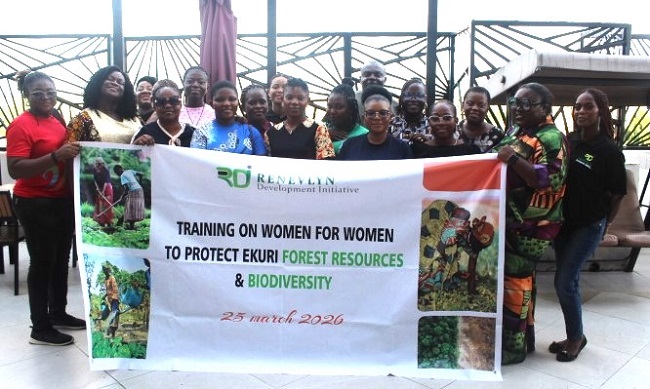
The training, themed “Women for Women to protect Ekuri forest and biodiversity”, held on Wednesday, March 25, 2026, in Calabar, the Cross River State capital, with women from the impacted communities in attendance.
According to RDI, the training aimed to build the capacity of women journalists to confidently report on the impact of logging activities on women to engender policy response and also connect women on the frontlines of impacts of illegal logging with journalists so that their concerns are given adequate coverage in news reports and articles.
Participants at the training in Calabar, Cross River State
In her welcome words, RDI Project officer, Linda Amadi, said that Illegal logging activities in Ekuri forest has been in the news and that the reports are unmistaken in describing the state of the once pristine forest which unfortunately is now a shadow of what it used to be.
Amadi noted however that the challenges that the women contend with as they play the role of providers in Ekuri are hardly captured in news reports when impacts of illegal logging are reported.
She said that despite forming the largest population that suffers the socio-economic situation in Ekuri, in the decision-making processes concerning the forest the Ekuri women are hardly mentioned or consulted.
According to her, The Global Forest Watch recently alerted that illegal logging activities has cost Ekuri and the environs the loss of more than 540 square miles of its tree cover as at 2024, even as she added that reports indicate that more than 200 truckloads of timber and other exotic wood leave Ekuri every day and efforts by the locals to halt the practice is met with harassment and brute force by security personnel hired by the logging merchants.
She pointed out: “Women in Ekuri are mainly farmers who depend on the forest resources for food and medicine but due to illegal logging activities that have ravaged the once pristine forest they are unable to access the forest for their basic needs. When it is inevitable, the women wander far into the forest in search of fuel wood, medicinal plants and other necessities to take care of their families. These tasks that are socially imposed on them make them vulnerable to harassment.”
Speaking on “Reporting women and illegal logging: What is the missing coverage?”, an international journalist, Vanessa Adie Offiong, said that journalists most often engage in armchair reporting on matters that concern illegal logging because they do not have the funding to visit such places.
Offiong opined that a journalist who knows his/her onions could look at stories concerning the gradual disappearance of particular fruits or foods that are indigenous to a particular community and use that as entry point to a big story.
She said that a very good story would, for instance, be a day with a woman in Ekuri, which would include following the daily chores of the woman including the distance she covers in the forest trying to cater for the home.
She encouraged journalists to identify funding sources to execute such stories so as to make the desired impact of bringing change to impacted women and communities.
Dr. Chioma Okonkwo, an environmental biochemist at University of Port Harcourt, in her presentation on “Impacts of illegal logging on biodiversity and food sovereignty”, explained the impacts of illegal logging on food sovereignty, food security, alerting that these issues are often overlooked when illegal logging is discussed.
Okonkwo re-echoed Offiong’s position that particular seeds and fruits and shrubs in places like Ekuri have become scarce or totally unavailable due to the reckless plundering of the forest. She went on to cite a recent report which showed that an estimated 91,000 tons of timber leave Cross River State annually due to illegal logging.
She also argued that the situation puts additional burdens on women who are typically farmers in affected communities like Ekuri.
Sharing similar stories on the environmental challenges women face in South Africa and how they fare, Ndivile Mokena of Gender CC-South Africa explained that, due to sustained advocacy, women in South Africa are increasingly recognised as key custodians of natural resources, driving urban forestry, biodiversity conservation, and shaping policy pathways.
Mokoena said that climate change and urbanisation are the real issues in South Africa reshaping cities, and that the leadership of women is reshaping environmental management by blending community action, science, and governance.
Explaining the role of the media in advancing the role of women, she opined that the journalists must amplify women’s grassroots leadership stories and expose gaps in policy implementation and resource allocations. They must also promote solutions and drive accountability by holding policymakers to gender and climate commitments.
Another discussion on “Connected Struggles – The Plight of Environmental and Land Rights Defenders” was led by Javier Garate, Senior US Policy Advisor – Land and Environmental Defenders at Global Witness, who explained that the media is crucial in documenting the impact of illegal logging and mining activities in Africa.
He pointed out that Global Witness documented the dire situation in Ekuri in 2025 and observed the same patterns of threats faced by women land and environment defenders in Chile, a South American country and many other Global South countries.
Some of the familiar patterns he said that the organisation noticed include cases of threats to activists, exploitative laws that criminalise agitation for environmental justice and the use of social media to bully activists.
He recommended more independent news stories of the situation in impacted communities, in view of the close collaboration of the state and extractive firms and their prioritisation of profits over the people.
In his intervention on “Exploring Policy and Legal Options in Addressing Illegal Logging in Ekuri: The CRS Forestry Law Deficiencies”, Asigbe Anakan of Cypress Global Health explained that Illegal logging is a pervasive problem, causing enormous damage to forests, local communities, and the economies of producer countries.
He listed some of the deficiencies in the laws in Cross River to include weak enforcement of existing laws, Lack of government accountability and possible complicity, Violation of community forest rights, Poor coordination between institutions, and inadequate monitoring and surveillance. Others are policy loopholes and access problems, weak protection for forest defenders, lack of economic alternatives, absence of strong penalties and deterrence, and poor integration of community-based forest management.
Asigbe revealed that Illegal logging is a driving force for a number of environmental issues such as deforestation, soil erosion and biodiversity loss which can drive larger-scale environmental crises such as climate change and other forms of environmental degradation.
For women in Ekuri, he recommended that they ensure women participation in every decision-making stage regarding logging with focus on handling illegal logging problems within their community forest. They must also engage in political activities to ensure their voices are heard and demands driven to sustainable logical conclusions.
Because of the global nature of the Ekuri campaign against illegal logging, he recommended that the fight against illegal logging should no longer be only in the forest but also online so that they can become some of the most powerful voices in that digital space promoting #saveEkuriForest, #womenforforst or #stopillegallogging, among others.
Augustina Todo, a journalist who had visited Ekuri several times, used the opportunity to recount her perception of the environment in Ekuri and the particular state of the women. She also revealed that some exotic animal species, especially the birds have started disappearing due to the activities of the loggers.
At the event, five women from Ekuri had the opportunity to tell their stories. Agatha Chris Egot explained that the training represents the first time Ekuri women would be given the opportunity to speak of their plight.
According to her, “The situation in Ekuri is serious and no government institution or even non-governmental oganisation has approached us to attend a formal meeting to air our views. This is a learning opportunity for us so that we can go back home and mobilize other women.”
The highpoint of the training was the agreement by the participants to form a network christened “Women4Women Network on Forest and Biodiversity” and a decision of the Ekuri women to petition the Cross River State House of Assembly on their plight and the way forward.
Director-General of the Nigerian Meteorological Agency (NiMet), Prof. Charles Anosike, has urged the private sector to increase investment in advancing weather and climate services across Nigeria and the wider region.
Anosike made the call during his opening remarks on Wednesday, March 25, 2026, in Abuja at the World Meteorological Day celebration themed “Observing Today, Protecting Tomorrow,” highlighting the critical role of timely and accurate weather information.
According to him, the private sector can strengthen meteorological observation systems by investing in weather stations, remote sensing technologies, data analytics platforms, AI weather models, and innovative observation tools complementing national networks globally.
Director-General of the Nigerian Meteorological Agency (NiMet), Prof. Charles Anosike (right), speaking at the at the World Meteorological Day celebration in Abuja
“We recognise that public-private collaboration is essential to achieving a robust and sustainable national observation system.
“Strategic partnerships promote shared investment, improve data exchange, and encourage innovations in meteorological observation technologies.
“’Observing Today, Protecting Tomorrow’ is more than a theme; it is a call to action.
“Investing today in data and systems safeguards our future, ensuring accurate forecasts and stronger climate resilience,” Anosike added.
He said that every weather station installed and every observation collected nowadays enhanced understanding of atmospheric dynamics for decades and strengthened predictability of future weather and climate events.
Anosike emphasised that weather and climate observations form the backbone of meteorology, stating that accurate forecasts, early warnings, and climate outlooks all depended on timely, reliable data from land, water, air, and space.
He said NiMet continued to expand and modernise Nigeria’s meteorological infrastructure, including surface and upper-air observation networks, satellite data reception systems, and automatic weather stations critical for forecasting and climate monitoring.
“These observations support safer aviation operations, improved agricultural planning, better disaster preparedness, maritime safety, and informed decision-making across all sectors of the economy.
“In line with the WMO Voluntary Cooperation Programme, NiMet provides Peer Advisory services to Liberia, Niger, Somalia, and Burkina Faso on the Systematic Observations Financing Facility, producing technical documentation, analysis, and recommendations to strengthen their observational capacity.”
In spite of these strides, Anosike stated that current demands on meteorological services were greater than ever due to climate change, which increased the frequency and intensity of extreme weather events and shortened the lifespan of monitoring equipment.
He explained that governments, communities, and businesses relied on timely weather information to protect lives, safeguard infrastructure, and sustained economic activities, highlighting the urgent need for accurate meteorological data.
Citing the Nigeria Climate 2025 report, he said extreme daytime temperatures (≥40°C) were recorded across 23 cities, with the northwest and northeast experiencing the most intense heat, including 100 days above 40°C in Nguru, Yobe State.
“Flood events are also increasing in frequency and intensity nationwide. Quality observation information is essential for anticipating these events and guiding response efforts,” Anosike said.
He added that technological innovations, growing knowledge, and expanding markets made private sector participation viable, with governments providing policy support, incentives, and tax breaks for investment in climate services.
“I call on industry leaders, technology innovators, research institutions, financial institutions, and development partners to collaborate with NiMet in expanding Nigeria’s meteorological observation capabilities.
“As we celebrate World Meteorological Day, let us reaffirm our commitment to strengthening observations, deepening partnerships, and investing in science that protects our present and preserves our future,” Anosike said.
The World Meteorological Day is commemorated globally every March 23 to celebrate the establishment of the World Meteorological Organisation and highlight achievements in weather and climate science.
The day provides an opportunity to reflect on how meteorological services safeguard lives, support sustainable development, and strengthen economic resilience across nations worldwide.
A chieftain of All Progressives Congress (APC) in Abia State, Chief Sam Onuigbo, says he wants to become senator to contribute his quota to the nation’s economic and political development.
Onuigbo said in Abuja on Wednesday, March 25, 2026, that he would invest his rich legislative and administrative experience into his responsibilities if elected to the Senate.
Onuigbo is seeking election into the upper legislative chamber to represent Abia Central Senatorial District.
Rep. Sam Onuigbo
He had previously represented Ikwuano/Umuahia South/Umuahia North Federal Constituency in the House of Representatives during which he championed the passage of the Climate Change Bill which was signed into an Act.
“I say these with every sense of modesty, but most importantly to put it on record that the mandate I seek as senator is not for selfish aggrandisement.
“Rather, I feel elated that I am not only doubly qualified to serve our zone as senator, but also confident to bring you honour and accomplished representation.
“I am bold to say that my journey to the Nigerian Senate is to invest my rich experience and reflect hope as encapsulated in the Renewed Hope Agenda of our leader, President Bola Ahmed Tinubu,” he said.
Onuigbo said at this point in its history, Nigeria required selfless leaders and those with the intellectual capacity to graft laws that would make the country stand out among comity of nations.
He recalled that during his time at the House of Representatives, he facilitated the rehabilitation of the failed sections of the Umuahia-Ikwuano-Ikot Ekpene federal road.
He said he also facilitated the design of the Umuahia-Umudike 16 Kilometres Dualisation Project with an interchange from Amachara to Ossa Ibeku.
Onuigbo said he also facilitated the construction of a Federal Secretariat in Abia and erosion control work at Ukwudara Amankwo Ezeleke, Amachara, Umuopara in Umuahia South Local Government Area, among others.
Brazil has launched an ambitious pilot project to replace diesel with a renewable biofuel across its municipal vehicle fleet, marking a significant step towards cleaner urban transport.
Metrópoles, a partner of TV BRICS, reports that the initiative is being implemented in Passo Fundo, located in the state of Rio Grande do Sul.
According to the news source, local authorities are testing how public vehicles perform when powered by a biofuel derived from renewable sources such as soy, animal fats and used cooking oil.
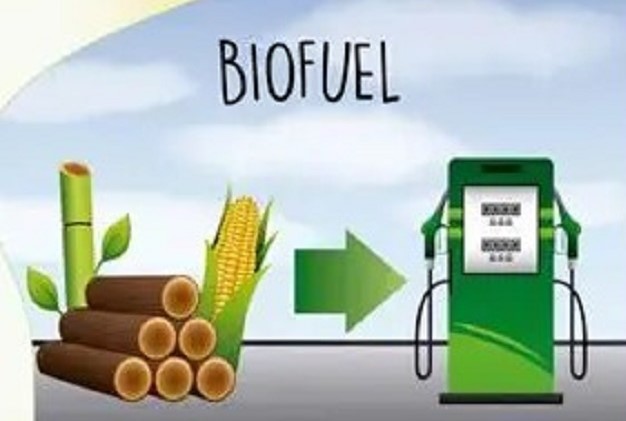
Biofuel
The trial will initially involve 17 vehicles and heavy machines, including buses, trucks and municipal equipment.
The long-term goal is to expand the use of the biofuel across most diesel-powered vehicles in the city, with the potential to fully replace fossil fuels in the future.
Local officials said that the initiative was part of a broader strategy to reduce air pollution, lower greenhouse gas emissions and improve quality of life for residents.
If successful, the project could position Passo Fundo as a model for sustainable urban transport and support wider adoption of renewable fuels in other regions.
Unlike conventional biodiesel, which is often blended with fossil fuels, the new biofuel being tested is designed to be used in its pure form.
This allows for a more substantial reduction in emissions and offers a cleaner alternative to traditional diesel.
Another advantage is that the fuel can be used in existing diesel engines without requiring technical modifications, simplifying its implementation across public fleets.
The production process also benefits from the availability of raw materials in the region, particularly soy, which is widely cultivated in southern Brazil.
Experts believe that the adoption of renewable biofuels could significantly reduce greenhouse gas emissions, contributing to climate mitigation efforts.
In addition, the use of recycled materials such as used cooking oil supports more sustainable resource management.
Sustainability professionals, industry leaders and private sector stakeholders gathered in Lagos on Tuesday, March 24, 2026, in an attempt to unlock the financial value of climate and circular economy actions within the industry.
At EcoNexus 3.0, convened courtesy of the Office of the Special Adviser to the Governor on Climate Change and Circular Economy (OCCE), Lagos State, industry actors explored practical approaches to climate accountability and circular economy opportunities. The forum was themed “Beyond Compliance: Monetising Climate and Circular Actions for Industries.”
Mrs. Titilayo Oshodi, Special Adviser on Climate Change & Circular Economy, in a welcome address, described this as being about moving from effort to evidence, evidence to verification, and verification to financial value.
Mrs. Titilayo Oshodi, Special Adviser on Climate Change & Circular Economy, Lagos State, speaking at EcoNexus 3.0
“Because when done right, climate action is not a cost centre, it is a revenue stream, a balance sheet asset, and a driver of long-term resilience,” she stated, adding that, across sectors, organisations are already embedding sustainability into their operations.
Oshodi listed organisations like Lafarge Africa, Dangote Group, Oando Clean Energy Limited, Nestlé Nigeria, Seven-Up Bottling Company, MTN Nigeria, PAKAM Technology, Impact Investors Foundation, Access Bank and Keystone Bank as active sector players.
According to her, they are converting plastics, industrial by-products, and agricultural waste into alternative fuels; advancing biodegradable solutions by transforming organic and sachet waste into compostable materials and bioenergy; driving plastic recovery, recycling initiatives, and more sustainable packaging systems; optimising energy use across infrastructure and integrating sustainability into large-scale operations; digitising waste collection systems, improving traceability, and strengthening material recovery value chains; mobilising capital toward sustainable enterprises; and, financing green projects, enabling access to green finance, supporting sustainable lending frameworks, and creating pathways for businesses to scale verified climate solutions.
But she emphasised that some of these initiatives have remained invincible, unverified and unmonnetised, adding: “That is the gap that we are here to close.”
“How do we measure this impact accurately, verify it credibly, and convert it into real economic value? This is where digital Measurement, Reporting, and Verification – MRV becomes critical.
“All these initiatives, whether it is converting industrial waste into fuel, recovering plastics, digitising recycling systems, optimising energy use, or financing green projects, reach their full potential only when they are digitally captured, monitored, and reported within a structured MRV framework.”
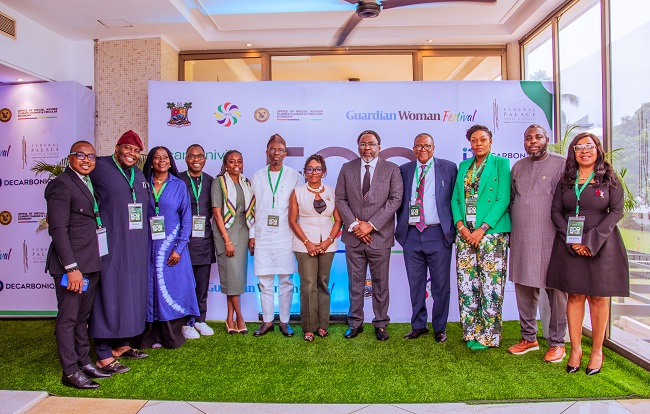
Some dignitaries at EcoNexus 3.0
Accurate measurement, according to her, ensures that every tonne of waste recovered, every unit of energy saved, and every emission reduced is properly quantified, giving organisations real visibility into their impact and performance.
Credible verification, she added, entails structuring data in a way that meets global standards such as the GHG Protocol, IFRS S2, and TCFD, making sustainability efforts auditable, transparent, and globally recognised.
Creates tangible value, Oshodi disclosed, involves turning verified results into carbon credits, circular economy credits, or performance-based incentives.
“For example, Lafarge Africa monetises emission reductions from alternative fuel usage, Oando Clean Energy generates verified credits from biodegradable waste conversions, and Nestlé Nigeria monetises recovered plastics. Through this approach, sustainability stops being just compliance; it becomes a measurable, verifiable, and monetisable strategic asset,” she stressed.
She described EcoNexus 3.0 as a platform for transformation.
“It is an opportunity to unlock real value and drive change within organisations. The future belongs to organisations that measure with precision, verify with integrity, and monetise with confidence,” Oshodi emphasised.
Mr Abiola Oshunniyi, Global Development Tri-Sector Strategist, in a presentation on “ESG Frameworks & Corporate Sustainability Performance”, stressed that ESG value is not created in reports, but, rather, created when data, decisions, and systems align across sectors.
ESG, according to him, is the cost of staying in business, and monetising it is the competitive advantage.
“Nigeria possesses a unique opportunity: not to catch up to legacy global compliance models, but to leapfrog directly into a performance-driven ESG economy,” Oshunniyi said, adding that, in the next decade, ESG will be the cost of staying in business.
“The real advantage will belong to those who integrate it, measure it, and monetise it,” he added.
Dr Adebola Odunsi, Chief Executive Officer, Carbonivity Limited, in a presentation titled “Beyond Compliance: Monetising Climate & Circular Actions for Industry”, lamented that organisaions are already executing interventions like waste recovery, energy efficiency, sustainability reporting and supply chain optimisation, but are not translating them into carbon assets, climate finance and foreign exchange revenue.
He stated that carbon is now traded like oil ($/barrel), cocoa ($/tonne) and metals ($/ounce), adding that carbon credits are tradable, measurable, certifiable and revenue-generating.
“Carbon can be held, sold, forward-contracted and securitised. Carbon is no longer external to business – it is a financial asset class,” disclosed Odunsi.
He described Climate change as a carbon management problem, as carbon – existing naturally in the atmosphere as Carbon dioxide (CO₂), Methane (CH₄) and Nitrous oxide (N₂O) – traps heat and causes global warming.
Funke Shobanjo, Chief Operating Officer, FBNQuest Merchant Bank, is of the view that sustainability has moved: from compliance to capital allocation, from reporting to revenue potential, and from participation to value capture.
According to her value is not being captured because it is neither structured, measured, nor monetised.
“If it is not structured, it is not monetisable,” she added, pointing out that structure is what makes activity investable, as it converts effort into value.
“Funders do not finance intention. They finance structure,” Shobanjo emphsised.
She advised financial institutions to fund aggregated pipelines, use ESG data in credit assessment, and develop blended finance structures
She asked government to standardise ESG reporting frameworks, de-risk green investments, and enable policy clarity.
Shobanjo urged development partners to support pipeline development, provide technical assistance, and co-invest to unlock scale.
According to her, women are already active across sectors and value chains, often active at execution level, but not at value capture level.
“Compliance is the minimum. Value capture is the opportunity,” she summarised.
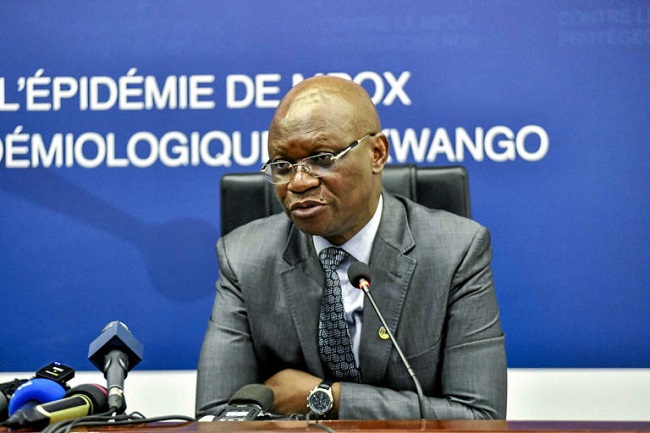
Following the release of the Environmental Investigation Agency (EIA) and PremiCongo’s groundbreaking report Toxic Transition, and allegations that the world’s largest cobalt producer, CMOC Group Ltd. (CMOC), has polluted the air and caused a health crisis in the Democratic Republic of Congo (DRC), the government of DRC has announced that a government-led inspection will soon take place at the Tenke Fungurume mine.
EIA and PremiCongo commend the DRC government’s response and offer our full cooperation, including sharing our database of 1,200+ medical records documenting the health crisis in Fungurume, and an independently commissioned study demonstrating air pollution allegedly caused by CMOC’s subsidiary, Tenke Fungurume Mining. EIA looks forward to supporting the DRC government’s initiative, as it has done for 7+ years in Gabon, with the development of the most advanced national timber traceability system in the Congo Basin.
Dr Samuel Roger Kamba, DR Congo Minister of Public Health, Hygiene and Social Welfare
EIA and PremiCongo will also request to be invited to support the field mission as independent observers. A rigorous and transparent inspection, including the collection, publication, and analysis of active monitoring data on sulfur dioxide (SO2) emissions for the years 2023 and 2024, is crucial, as TFM recently admitted for the first time, after having denied it for almost two years, that the company was indeed responsible for spikes in emissions of toxic gas emission in 2023 and 2024.
The company’s admissions and the government’s acknowledgement of allegations that TFM’s mining activities poisoned families near the mine is an important step forward, as explained by Christian Bwenda, Coordinator of PremiCongo: “This is a victory for the communities and people who have resisted and raised this environmental problem for years. It is time now for our government to do their part and shed light on the health crisis and the pollution caused by TFM in Manomapia, Kabombwa, and other areas.”
Key findings from EIA’s investigation include the fact that – according to the analysis of 1,200+ medical records – dozens of families living next to the new “30k” processing plant sought medical treatment for nosebleeds, coughing up blood, and severe respiratory illness. These symptoms are consistent with SO2 exposure, and with longstanding complaints by community members dating back to the commissioning of the 30k plant.
Independent air monitoring commissioned by EIA found SO2 levels in the Manomapia neighborhood exceeding World Health Organisation guidelines on multiple occasions between September 2024 and January 2025, including levels that remained above safe thresholds for several hours at a time.
According to EIA’s investigation, more than 12,000 people have been displaced by TFM’s expansion since 2022. Residents told investigators they received as little as US$60 in compensation, and residents alleged that their standard of living had declined. They also explained that they were asked to sign relocation agreements before being told how much they would receive. TFM allegedly kept the only copy of the signed contracts.
In their public response to EIA’s finding, TFM appears to try to cast doubts on the validity of EIA’s findings and conclusions, including the existence of a public health crisis in Manomapia and the existence of SO2 emissions above international safety standards. EIA offers in-depth answers to TFM’s critique in a dedicated response available here.
The elements brought forward by TFM do not amount to any robust counterargument. EIA fully stands by its findings and conclusions, and looks forward to open, serious, and transparent discussions on SO2 monitoring with the company, with the participation of independent experts.
As TFM insinuates the possibility of legal action against EIA, it is worth recalling that, according to DRC Mining Code (article 285 ter), TFM is “liable in the event of direct or indirect contamination resulting from mining activities that have an impact on human health and/or lead to environmental degradation, particularly in the form of water, soil, and air pollution, and cause harm to humans, fauna, and flora.”
“The health and wellbeing of entire communities is at stake here. TFM claims its own monitoring shows compliance. We call on TFM to publish its complete daily SO2 monitoring data – right now, publicly, in full,” says Alexander von Bismarck, Executive Director of EIA. While disclosure of SO2 monitoring data by TFM is necessary, it is not sufficient to guarantee residents’ safety. For that, EIA is supporting the emergence of a community-led air monitoring program that will bring transparency to the other side of TFM”s fence.
The growing awareness of the issue in DRC and the swift decision to intervene from the DRC government contrast with the silence from automakers, including BMW Group, Mercedes-Benz, Volkswagen, and Stellantis, who according to EIA’s investigation have relied on TFM’s cobalt for years.
Pragmatic solutions to the pollution crisis are also available on the demand side – automakers could support community-led monitoring, participate in multistakeholder initiatives, and change their due diligence practices to prevent and mitigate the environmental and human rights harms allegedly caused in DRC.
“The precautionary principle must prevail from the mine to the automaker while the government, the company, and communities are all trying to understand the impacts of TFM’s operations,” says von Bismarck.
As volatile energy prices continue to spike, driven in part by geopolitical instability and gas market shocks, governments face an urgent challenge: how to bring down household energy bills immediately and protect their citizens from fossil-flation making everything more expensive.
The good news, according to environmental campaign group 350.org, is that short-term relief and long-term transition are not mutually exclusive.
The group outlines three measures that could be implemented almost overnight.
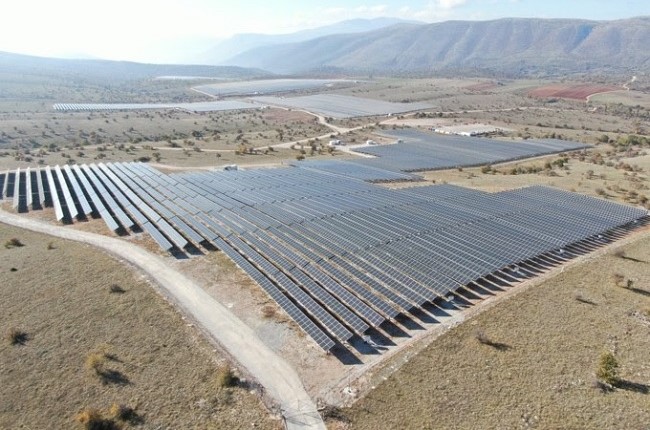
A TotalEnergies solar energy facility. Priority must go to distributed renewable energy solutions which are quick and easy to deploy
1. Tax Windfall Profits of Fossil Fuel Companies and Use Them to Support Households
Fossil fuel companies cashing in obscene profits during high fossil fuel prices should contribute to shielding consumers. Fossil fuel companies profit from this crisis. They should pay for the solution. A windfall tax can capture excess profits and redistribute them directly to consumers through measures such as targeted bill support, direct cash transfers to most affected sectors, an expansion of existing free or heavily subsidised (“lifeline”) electricity tariffs to vulnerable households, and free public transportation.
Recycling windfall revenues into consumer protection helps avoid that outcome while keeping incentives for clean investment intact. The UK’s windfall tax on oil and gas producers raised around £12 billion in 2024, helping fund its Energy Price Guarantee, limiting average household bills during the crisis.
Anne Jellema, Chief Executive, 350.org, said: “This is about fairness and maintaining public trust. Right now, fossil fuel companies are making obscene profits while households struggle to pay their bills, and people can see that. Taxing these windfall profits and redirecting them to support households is essential to protect people and livelihoods.”
2. Decouple Electricity Prices from Gas
In many markets,such as the UK, Germany, Italy and Netherlands electricity prices are still tied to the cost of gas, even when much of the power comes from cheaper renewable sources like wind and solar. As a result, when gas prices spike, electricity bills rise unnecessarily. This is the case in Spain where the reduced influence of expensive fossil gas and coal power on the electricity market in Spain, driven by surging wind and solar, has turned the country into one of the cheapest power markets in Europe.
Governments can intervene through market reforms such as contracts for difference, regulated tariffs, or temporary price-setting mechanisms to ensure consumers benefit from lower-cost renewable energy.
Anne Jellema, Chief Executive, 350.org: “Decoupling electricity from gas prices is one of the most effective ways to stabilise bills. It protects households from global fossil fuel shocks and reflects the true, lower cost of renewable energy.
3. Decentralised Renewables
Governments should fast-track the just deployment of renewable energy in affected regions using emergency energy response funds, bilateral finance, and development support. Priority must go to distributed renewable energy solutions which are quick and easy to deploy. These can include off-grid solar and mini-grids for communities and essential infrastructure such as hospitals and schools, rooftop and balcony solar for households, and clean cooking solutions for smallholders.
Emergency renewable funding must be redirected from fossil fuel emergency response budgets and existing bilateral aid, not create new debt instruments that will burden already-stressed countries. Equity, accessibility, and long-term sustainability must be ensured in decentralised renewable energy deployment, ultimately guaranteeing that these systems are owned and managed by communities.
Anne Jellema, Chief Executive, 350.org: “Relief today, means transition tomorrow, these measures are not a substitute for a green energy transition, they are a bridge. In the longer term, the only durable solution to energy price volatility is to accelerate the transition to homegrown, renewable energy. Investing in wind, solar, storage, and energy efficiency reduces dependence on imported fossil fuels and insulates economies from geopolitical shocks. It also addresses the root cause of the climate and biodiversity crisis.
“But the transition must be managed carefully. Without immediate relief, households and businesses will struggle, and support for change may erode as calls for reopening ‘national’ fossil fuel sources increase. By redistributing windfall and cutting energy bills, decoupling energy prices from gas governments can ease the pressure now while building a cleaner, more stable energy system for the future.
“The choice is not between affordability and sustainability. With the right strategy, we can, and must, deliver both.”
The Trump administration will pay $1 billion (€860 million) to the French energy giant TotalEnergies SE to walk away from two US offshore wind leases as it ramps up its campaign against offshore wind and other renewable energy.
TotalEnergies has agreed to what is essentially a refund of its leases for projects off the coasts of North Carolina and New York, and will invest the money in fossil fuel projects instead, according to their press statement.
TotalEnergies
“Considering that the development of offshore wind projects is not in the country’s interest, we have decided to renounce offshore wind development in the United States, in exchange for the reimbursement of the lease fees,” said Patrick Pouyanné, chairman of the board of directors and chief executive officer at TotalEnergies.
Pouyanné also said that the refunded lease fees will finance the construction of a liquefied natural gas plant in Texas and the development of its oil and gas activities, calling it a “more efficient use of capital” in the US.
After it makes those investments, TotalEnergies will be reimbursed up to the amount paid in lease purchases for offshore wind, according to the Department of the Interior.
TotalEnergies purchased a lease for its Carolina Long Bay project in 2022 for about $133 million (€115 million). It aimed to generate more than 1 gigawatt there, enough to power about 300,000 homes.
It purchased the lease off New York and New Jersey, also in 2022, for $795 million (€685 million).
This was planned as a larger project, with the potential to generate 3 gigawatts of clean energy to power nearly one million homes. TotalEnergies is involved in major offshore wind projects in Europe and Asia.
Trump administration intensifies push against wind energy projects
President Donald Trump’s administration has tried to halt offshore wind construction, but federal judges have repeatedly overturned those orders.
Last year, the Trump administration halted five major offshore wind plans, including Denmark’s Ørsted project, citing national security reasons.
Developers and states sued, and federal judges allowed all five projects to resume construction, effectively concluding that the government had not shown the risk was so imminent that construction must halt.
Concerning the current deal, the Interior Department hailed the “innovative agreement” with the French energy giant and said “the American people will no longer pay for ideological subsidies that benefited only the unreliable and costly offshore wind industry”.
“We welcome TotalEnergies’ commitment to developing projects that produce dependable, affordable power to lower Americans’ monthly bills,” Interior Secretary, Doug Burgum, said in a statement.
Environmental groups condemn deal
Environmental groups denounced the deal as an alternative way to block wind projects, with one group calling it a “billion-dollar bribe” to kill clean energy, and another describing the agreement as a “handout to polluters”.
“After losing again and again in court on his illegal stop-work orders, Trump has found another way to strangle offshore wind: pay them to walk away,” said Lena Moffitt, executive director of Evergreen Action.
Ted Kelly, clean energy director at the Environmental Defense Fund, called the proposed deal “an outrageous misuse of taxpayer dollars to prevent Americans from having clean, affordable power exactly when they need it most”.
East Coast states are building offshore wind because it boosts affordable electricity supply on the grid, even as natural gas prices are rising, Kelly concluded.
Campaign group 350.org has condemned the move as a reckless misuse of public funds that undermines clean energy progress and locks in future energy insecurity.
Anne Jellema, Chief Executive 350.org, said: “This is a billion-dollar handout to polluters. Instead of investing in affordable, homegrown renewable energy, the Trump administration is paying companies to walk away from clean power, and double down on fossil fuels that are driving wars, extreme weather and ever rising energy bills.
“It is nothing short of an insult to every American household that the government is funneling billions in public funds into the pockets of the oil and gas industry while citizens are being crushed by record-high utility costs. Using our hard-earned tax dollars to pay off fossil fuel companies after record high utility costs is a betrayal of the public trust and a direct blow to the economic security of millions who can no longer afford the price of corporate greed.”
The agreement would see TotalEnergies refunded for offshore wind leases off the coasts of North Carolina and New York, with the company planning to redirect investment into liquefied natural gas and expanded oil and gas production.
Fanny Petitbon, France Country Manager, 350.org: “The TotalEnergies-Trump alliance is a shameless victory lap for fossil fuel radicals who are determined to make us pay for expensive, outdated energy. Wind power is now consistently cheaper and more stable than gas. Rather than putting even more money in the pockets of Big Oil, governments should collect windfall taxes in order to cushion people’s bills and fund the transition to affordable renewables.”
The move follows repeated legal defeats for the administration’s attempts to halt offshore wind development, raising concerns that the payout is an attempt to sidestep court rulings and stall the sector by other means.