Home Blog Page 22

Family receives death benefit from Ohanaeze Ndigbo North Carolina insurance programme   

The Ohanaeze Ndigbo of North Carolina Cultural Group Benefits (ONNCCGB) has paid out its first-ever insurance death benefit to the family of a deceased Nigerian woman as part of initiatives to enhance the provision of community services to Nigerians living in North Carolina.

The payment was made in July 2025 by the organisation through its insurer, the Hartford’s Group, one of the biggest insurance companies in the United States. This deliberate and intentional community service marked the characteristic of the Ohanaeze Ndigbo Executive Committee, which led the organisation from 2017 to 2019, when the insurance scheme was introduced.
Ohanaeze Ndigbo
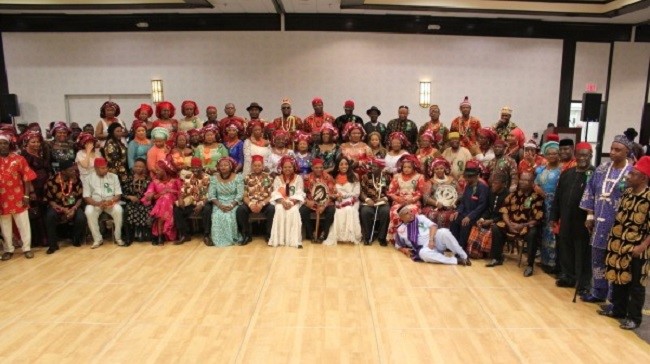
Members of the Ohanaeze Ndigbo in North Carolina

In a press release issued by ONNCCGB and signed by Barrister Nwachukwu Okafor, the insurance claimant, Mrs. Onyinyechi Onuigbo, thanked the establishment for the wonderful and seamless claim experience.

Mrs. Onuigbo, who registered her mother in the scheme, said the claim procedure went smoothly.

“Hello. The insurance company paid us on time,” she said in a thank you message to the organisation, explaining that the entire process took about three weeks because she had to send her mother’s passport to immigration for cancellation.

“Though our mother died in Nigeria that did not stop or delay the payment. Excellent job, we were so happy,” she added.

Speaking about the historic accomplishment, former President of the group, Barrister Nwachukwu Okafor, revealed that in 2017, the Executive Committee of Ohanaeze Ndigbo of North Carolina, under his leadership, began the process of establishing an insurance programme to help immigrant Nigerian families in providing their deceased family members with a dignified funeral.

According to him, Nigerians celebrate their dead and, in most circumstances, prefer to bring their deceased relatives’ remains back to Nigeria for burial. This custom, he elaborated, has become a burden for many families.

He bemoaned the fact that the Nigerian community turned to taxing themselves every time someone passed away in an attempt to address the problem, a system that has remained onerous and unsustainable to this day.

Barrister Okafor noted that the above problem prompted the Executive Committee of Ohanaeze Ndigbo to develop and establish a sustainable programme to ensure that participants receive death benefits when they die.

All Nigerian families residing in North Carolina are eligible to enroll in the Ohanaeze Ndigbo of North Carolina Insurance Programme, which offers term life insurance for a minimum monthly charge of $13 for adults and 60 cents for children.

On its third anniversary, the programme admitted members of Yoruba United, and it is today a living example of a collaborative effort among Nigerians in North Carolina. Enrollment will begin in September 2026, and Nigerian residents in North Carolina are invited to participate.

By Etta Michael Bisong, Abuja
Heirs Energies drives African entrepreneurship, invests $10m in 2,000 startups

0

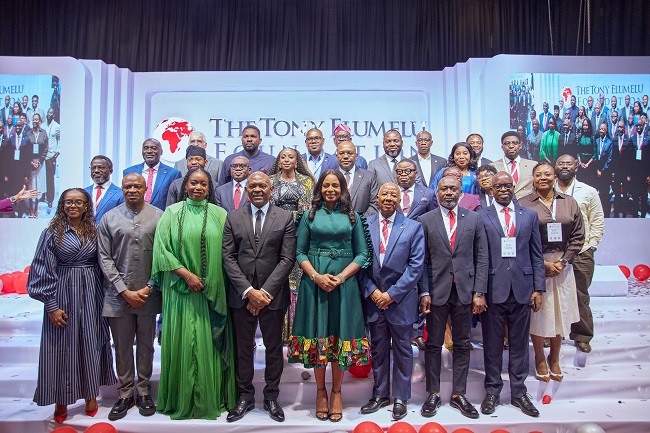
Heirs Energies is supporting the Tony Elumelu Foundation’s (TEF) 2026 cohort of 3,200 African entrepreneurs, helping to drive enterprise growth and job creation across the continent.

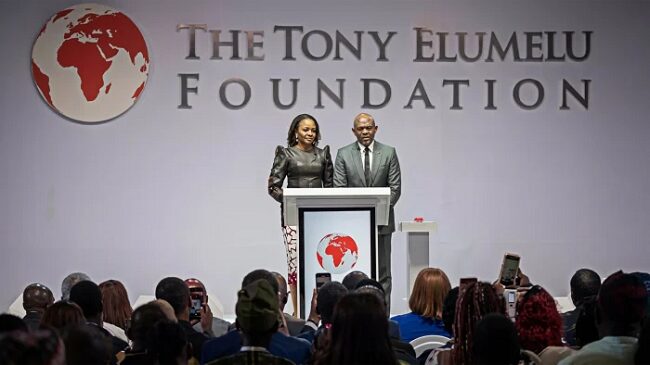
The entrepreneurs, drawn from all 54 African countries, were selected from more than 265,000 applicants and unveiled in Abuja on Sunday, March 22, 2026, by TEF Founder and Chairman, Tony O. Elumelu. The scale of applications highlights both the depth of entrepreneurial activity across Africa and the growing demand for early-stage capital and business support.

“The future of Africa will be built by Africans who create businesses, generate jobs and solve the challenges of our continent,” Elumelu said. “Empowering entrepreneurs remains the most sustainable path to economic transformation.”

Heirs Energies
Heirs Energies is supporting the Tony Elumelu Foundation’s (TEF) 2026 cohort of 3,200 African entrepreneurs

Heirs Energies said its support forms part of a broader strategy to link energy development with economic expansion, particularly in regions where access to capital, infrastructure and opportunity remains uneven.

Speaking at the event, Chief Executive Officer, Osayande Igiehon, said the company is positioning its operations to deliver both energy supply and long-term economic value.

“Sustainable energy development must be matched by sustained investment in people and enterprise,” Igiehon said. “Our partnership with the Tony Elumelu Foundation reflects a deliberate effort to expand opportunity while strengthening the communities in which we operate.”

Operating in OML 17 in the Niger Delta, Heirs Energies continues to deliver targeted interventions across enterprise development, education, healthcare and infrastructure.

To date, the company has:

  • Empowered over 500 youths through skills acquisition and enterprise development programmes
  • Supported over 1,621 students through educational grants
  • Reached more than 18,000 people through medical outreach programmes
  • Delivered over 135 community infrastructure projects, with additional projects at advanced stages of completion

Beyond its host communities, Heirs Energies supplies gas into Nigeria’s domestic network, enabling over 350MW of electricity generation – powering homes, schools and industries, and supporting broader economic activity.

Through its partnership with TEF, Heirs Energies has committed over $10 million to support 2,000 African entrepreneurs across two programme cycles.

In 2025, the company supported 1,000 entrepreneurs, with 40% from the Niger Delta, including over 150 from Rivers State.

In 2026, Heirs Energies is supporting another 1,000 entrepreneurs, with 50% from the Niger Delta, deepening its focus on its host region.

Women account for 48% of beneficiaries, reflecting a strong commitment to inclusive growth.

Within Nigeria, impact is concentrated in the Niger Delta, particularly in Rivers State and surrounding communities, alongside broader participation across the country and other African markets.

Across Africa, youth unemployment and limited access to financing continue to constrain business growth, despite rising entrepreneurial activity. Programmes such as TEF play a critical role in bridging this gap, combining capital with mentorship and training.

Heirs Energies said its continued collaboration with TEF reflects a shared focus on enterprise development, job creation and broader economic participation across the continent.

Nigeria’s leadership at UN climate shipping talks is a solution to domestic challenges

In Africa we know all too well that decisions made far away can have a significant impact on us at home.

This certainly is the case when it comes to ongoing talks on global shipping climate action at the UN’s International Maritime Organisation (IMO) in London.

While the discussion on decarbonising shipping may seem distant from everyday life in Nigeria, they will shape the future of an industry that carries nearly all the food, energy, and goods Nigeria and other African countries deeply depend on.

Olumide Idowu
Olumide Idowu, Executive Director, ICCDI Africa

The outcome at the IMO will inevitably influence our economic development, environmental sustainability, and food security.

As Africa’s largest economy and a leading voice for climate action, Nigeria has the responsibility to ensure an outcome at the IMO that helps advance Africa’s green development and economic transformation.

What’s on the table of the IMO’s meeting in April is IMO’s Net-Zero Framework, a carbon price mechanism designed to reduce shipping’s emissions while generating up to $15 billion of annual revenues by 2030. For Africa, this represents a major opportunity that we cannot miss.

The IMO’s multi-billion-dollar fund could power a new era of sustainable development: from expanding Nigeria’s solar energy infrastructure and modernizing the Port of Lagos, West Africa’s trade hub, to generating green jobs at scale. Far beyond Nigeria, the maritime transition could become a driver of investment, innovation, and sustainable growth across the whole continent.

That’s why Nigeria must seize this opportunity by showing up in April with clarity, purpose, and leadership and push for African countries to have equitable access to these critical resources.

But decarbonisation without safeguards comes with risks.

One of the pathways currently being explored to reduce shipping emissions is biofuels derived from food crops such as palm oil and soy. While their name might sound as if these fuels were “clean” and “green,” the reality is that they can be responsible for higher emissions than fossil fuels and their large-scale use could create terrible unintended consequences.

Nigeria already depends heavily on food imports, especially vegetable oils, essential to household consumption. If shipping begins competing with food markets for these same crops, global prices could significantly rise. For millions of Nigerian families already facing high food inflation, such price increases would be a heavy blow to their pockets.

Unfortunately, the risks are not limited to food markets alone. Expanding crop-based biofuel production can also intensify pressure on land, especially for small-scale farmers, potentially leading to deforestation and biodiversity loss. All across Africa, where agriculture remains central to livelihoods and food systems, these pressures could undermine both environmental sustainability and households’ income stability.

The next steps are clear and will require countries like Nigeria to engage early, speak clearly and act decisively. First, Nigeria must ensure that the Net-Zero Framework remains protective of vulnerable economies and untouched ahead of its adoption in November. Second, our country must champion safeguards against the use of food-based biofuels that could threaten food security and land sustainability.

Too often, African nations enter global negotiations divided or underrepresented. Nigeria has the diplomatic relations, economic weight and moral authority to help unify the continent behind ambitious climate action. Now it is time to bring African voices together.

By Olumide Idowu, Executive Director, ICCDI Africa

Dangote Refinery sells 12 PMS cargoes to Ghana, Cameroon, Tanzania, Togo, Côte d’Ivoire

0

The Dangote Petroleum Refinery has strengthened Nigeria’s presence in the regional energy market with the successful sales of 12 cargoes, by traders, totaling 456,000 tonnes (456KT) of refined petroleum products.

The shipments by traders, destined for countries such as Cote d’Ivoire, Cameroon, Tanzania, Ghana and Togo represent the refinery’s export of Premium Motor Spirit (PMS) since achieving 650,000 barrels a day capacity in February 2026.

The products were sold on a FOB (Free on Board) basis to the end international traders for deliveries to the above-identified countries of export.

Dangote Refinery and Petrochemicals

This accomplishment underscores the Dangote Refinery’s capability to not only meet but exceed Nigeria’s domestic fuel demands.

It also demonstrates the refinery’s growing role in supplying high-quality Euro 5 gasoline and diesel to West Africa – a region long underserved and historically regarded as a dumping ground for lower-quality fuels, and other regions which have become destinations of exports.

By supplying neighbouring and other economies, the Dangote Refinery is expected to contribute to enhance energy security in West, East and Central Africa, reducing logistics and supply chain delays associated with long-distance fuel imports, lowering cost pressures on regional fuel markets through proximity sourcing and as well as building stronger trade relations between Nigeria and key African economies.

Minister wants regional energy hubs established to boost cross-border mining

0

The Minister of Solid Minerals Development, Dele Alake, has called for the establishment of regional energy hubs as a strategic pathway to accelerate cross-border mining industrialisation.

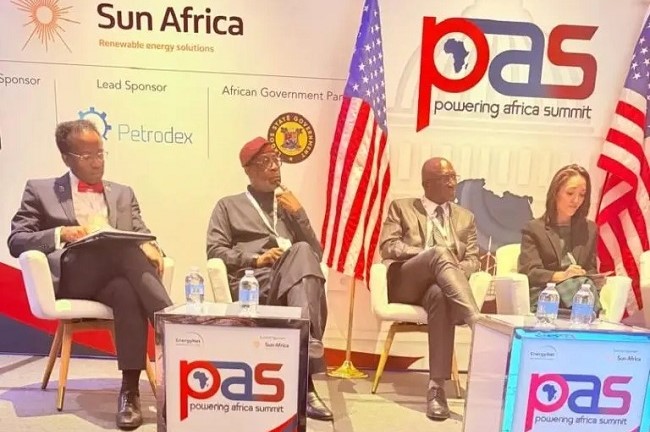
Alake made the call while speaking at a panel session themed “Critical Minerals in Africa: Meeting Global Demand” on the sidelines of the 11th Powering Africa Summit (PAS) in Washington, D.C., United States.

The Minister’s Special Assistant on Media, Segun Tomori, made this known in a statement on Sunday, March 22, 2026, in Abuja.

Dele Alake
From right: Landry Signe, Senior Fellow, The Brookings Institution and Executive Director, Thunderbird School of Global Management, Minister of Solid Minerals Development, Dele Alake, Guinean Minister of Energy, Sekou Camara; Senior Vice President, Global Head of Origination, U.S. Export-Import Bank (EXIM), Sarah Whitten during a panel session themed ‘Critical Minerals In Africa: Meeting Global Demand’ on the sidelines of the Powering Africa Summit, Washington DC, USA

He charged the U.S. and African nations to prioritise the establishment of the hubs, which he described as crucial to strengthen the supply chain of critical minerals essential for the global energy transition.

He said that sustainable partnerships with Africa remained the fastest route to meeting rising global demand for critical minerals.

The minister called for the development of regional industrial corridors similar to the Lobito Corridor.

According to him, similar belts, such as the Lagos to Abidjan corridor, spanning Nigeria, Benin, Togo, Ghana, and Côte d’Ivoire, as well as the Walvis Bay Corridor linking Southern and Central Africa to global markets, could unlock vast mineral potential across the continent.

The minister said such corridors would serve as economic catalysts through driving infrastructure development, enhancing energy access and promoting regional integration.

“The development of nuclear power in one West African country, for instance, can service an entire corridor.

“With that in place, local beneficiation, technology transfer, manufacturing and cross-border industrialisation will naturally follow.

“If three to five such corridors are developed in Africa, we would significantly advance industrialisation across the continent, creating a win-win outcome for both Africa and the West,” he said.

Alake added that strengthened governance structures, improved regulatory frameworks, digitisation of licensing processes and enhanced ease of doing business had repositioned Nigeria’s mining sector as a key driver of economic diversification.

He said reforms introduced by President Bola Tinubu’s administration over the past three years had guaranteed secure tenure for mineral title holders, thereby providing the long-term stability required for investment decisions.

He stressed that the government was scaling up the generation of scientific, internationally certified geological data to support informed decision-making by local and international investors.

The minister acknowledged the challenges in the sector, including insecurity, but said significant progress had been achieved in addressing the situation through the establishment of mining marshals.

According to him, more than 350 suspected illegal miners, including foreign nationals, have been arrested within a year, while over 150 are currently being prosecuted, signalling that Nigeria means business.

He said Nigeria was open to genuine investors who were required to strictly comply with local laws and regulations.

He listed key incentives for investors to include tax waivers on imported mining equipment and full repatriation of profits after due payment of royalties and taxes.

“We have successfully de-risked and sanitised the mining environment, making it conducive to Foreign Direct Investment (FDI).

“Within the last two and a half years, we have attracted over 2.6 billion dollars in FDI into the sector,” he said.

The PAS is an annual high-level international energy conference that focuses on strengthening the U.S. and Africa energy partnership.

The summit serves as a platform for dialogue on critical issues such as energy infrastructure development, investment strategies and the role of critical minerals in supporting the global energy transition.

The 11th edition of PAS focused on the theme “Powering the US-Africa Partnership: Energy Infrastructure, Critical Minerals and Investment Strategies”.

By Martha Agas

Elumelu Foundation commits $16m to empowering additional 3,200 young African entrepreneurs

0

The Tony Elumelu Foundation (TEF) on Sunday, March 22, unveiled 3,200 new beneficiaries with 5,000 dollars empowerment grant for young African entrepreneurs in its 2026 cohort.

The Foundation said that the entrepreneurs would be funded via Heirs Holdings Group Companies, the European Commission, Seme City Development Agency, DEG, the German Development Agency, and the IKEA Foundation.

It listed other partners to include UNICEF, the Dutch Government, UNDP and the Rwandan Ministry of Youth and Arts.

Tony Elumelu Foundation

The Founder of TEF, Mr. Tony Elumelu, said that the foundation’s work was vital in providing access to funding, mentorship, coaching, training, and resources, to catalyse entrepreneurial businesses.

Elumelu said that the idea was to further job creation, poverty alleviation and inclusive economic empowerment across the African continent.

“We are doing this because we want to live through our mantra and our mission of democratising love, democratising prosperity, and most importantly, being important and part of the communities where we operate.

“The more prosperity we spread and we share, the more young Africans we mobilise, realising that one person alone can not change Africa. It is not money we have in our bank account that matters at the end of the day.

“The better thing to do is to help, put in place a mechanism to continue to spread prosperity, to make sure that some do not have do not suffer,.

“The best we can do is to support young entrepreneurs. So, to our 3,200 beneficiaries, I say congratulations. But more importantly, we need you to please succeed. Your success will make a difference,” he said.

He commended President Bola Tinubu for creating the enabling environment for economic empowerment to thrive, and for his commitment to the young entrepreneurs, and the Small and Medium-sized Enterprises (SMEs).

Also speaking, Somachi Chris-Asoluka, the Chief Executive Officer (CEO) of TEF, said that the foundation had disbursed over 100 million dollars to 24,000 young men and women, who started and scaled businesses across Africa, since its inception 2015.

Chris-Asoluka said that the entrepreneurs had collectively created 1.5 million jobs, and generated $4.2 billion in revenue, lifting 3.1 million Africans above the poverty line.

According to her, 4.1 million households have been positively impacted.

“We have seen entrepreneurs become employers; we have seen founders become leaders that are driving innovation and prosperity across the different communities.

“We all know that entrepreneurship is an uphill journey. We know that entrepreneurs will need mentors who have worn those shoes, who are able to counsel, nurture and guide them,” she said.

The TEF CEO thanked the Tokyo Web Foundation for providing mentors who used their knowledge, insight and wisdom to support the young entrepreneurs.

She said that TEF would disburse over $16 million to support, train, fund, coach and mentor the 3,200 selected young African entrepreneurs from across the continent.

She said that agriculture remained a huge sector the entrepreneurs invested in.

“Another huge sector is retail. There is also AI, ICT, and tech. So, entrepreneurs are already thinking around how to build massive businesses in artificial intelligence.

“We also see huge interest in green economy, waste recycling, and obviously education and healthcare keep coming up tops,” she said.

The high point of the event was the introduction of six highest-flying alumni of the programme from the Democratic Republic of Congo, South Africa, Kenya, Algeria, Mali and Nigeria to the audience.

They were said to have transformed the funding, training, mentorship and coaching into leading businesses across the continent.

By Kadiri Abdulrahman

Centre flags rising fake news, insecurity, political distrust shaping Nigeria’s pre-election climate

0

The Centre for Crisis Communication (CCC) has raised fresh concerns over a dangerous convergence of insecurity, political distrust, and disinformation across Nigeria’s information ecosystem, warning that the trend is already shaping public sentiment ahead of the 2027 general elections.

In its latest new media and social listening analysis, the Centre reported a growing mix of public emotions – ranging from grief over persistent insecurity to anger at perceived leadership gaps – combined with a countercurrent of government support. CCC described this blend as a “volatile compound sentiment” spreading across digital and traditional platforms.

Mohammed Idris
Minister of Information and National Orientation, Mohammed Idris

The study relied on PRrev, an automated AI driven media monitoring and social listening tool developed by IMPR, complemented by human intelligence. It tracked narratives across mainstream and social media relating to security incidents, political developments, economic pressures, religious and ethnic tensions, human rights concerns, misinformation, electoral manipulation, hate speech, and conflict early warning signals. The brief also incorporated regional community listening insights and an assessment of disinformation patterns affecting Nigeria’s socio political landscape.

The 42 page report, produced for Crisis Communication Hub (CCH) stakeholders, analysed conversations on X (formerly Twitter), Facebook, WhatsApp groups, online news platforms, and diaspora driven forums. It found that recent national events are increasingly triggering volatile public reactions shaped by both factual developments and coordinated falsehoods.

A key focus of the analysis was the March 16, 2026, triple suicide bombing in Maiduguri, which occurred just as President Bola Ahmed Tinubu departed for an official visit to the United Kingdom from March 17 to 19. CCC said the overlap of these events created what analysts termed a “leadership legitimacy strain,” with competing narratives dominating public discourse.

One of the strongest narratives online argued that national leaders should prioritise domestic crises over foreign engagements. CCC noted that this sentiment quickly evolved from political commentary into a “viral moral judgement,” blurring the line between opinion and fact.

A major highlight of the report was the uncovering of a high impact disinformation campaign tied to the unfolding events. CCC revealed that PRNigeria’s fact checking team detected a fabricated statement falsely attributed to U.S. President Donald Trump, purportedly criticising President Bola Ahmed Tinubu over his trip to the United Kingdom following the Maiduguri suicide bombings. The fake statement spread rapidly across social media, garnering more than 500,000 views and over 5,200 reposts before corrective information could gain comparable visibility.

CCC warned that the speed, reach, and coordination behind the false narrative reflect the growing sophistication of disinformation networks operating within Nigeria’s digital space.

“The incident represents one of the most consequential disinformation spikes in Nigeria’s emerging 2027 pre election environment,” the report stated.

The analysis also highlighted a widening gap between official communication and public perception, especially during national crises. CCC observed that delayed or inconsistent government responses often create information vacuums quickly filled by speculation, misinformation, and emotionally charged narratives. In today’s hyperconnected environment, the report stressed, timeliness, clarity, and credibility of official communication are critical to shaping public trust.

CCC identified five dominant narrative streams shaping public discourse: leadership accountability versus political loyalty; national security concerns versus diplomatic priorities; public grief amplified by digital outrage; diaspora driven narratives influencing domestic perception; and disinformation campaigns exploiting emotional vulnerabilities.

The Centre warned that the intersection of insecurity, distrust, and disinformation poses a significant threat to national cohesion as political activities intensify ahead of the 2027 elections. CCC cautioned that unchecked fake news could deepen divisions, erode institutional credibility, and undermine democratic processes.

The report called for urgent reforms in Nigeria’s crisis communication architecture, including real-time digital monitoring systems, strengthened fact-checking mechanisms, improved inter-agency coordination, and strategic engagement with media and digital influencers. It also urged stakeholders to prioritise media literacy and public awareness to help citizens identify and resist false information.

CCC concluded that the current media environment offers a preview of the challenges likely to define Nigeria’s pre-election landscape. “The convergence of insecurity, political narratives, and digital misinformation is no longer incidental – it is systemic,” the report warned.

It stressed that without proactive intervention, Nigeria could face a deeper crisis of public trust as the election season approaches. The findings underscore the urgent need for credible, transparent, and technology-driven communication strategies to safeguard national stability in the digital age.

NCDMB boss upbeat about Yenagoa Radisson Hotel, as Edison Corporation promises world-class services

0

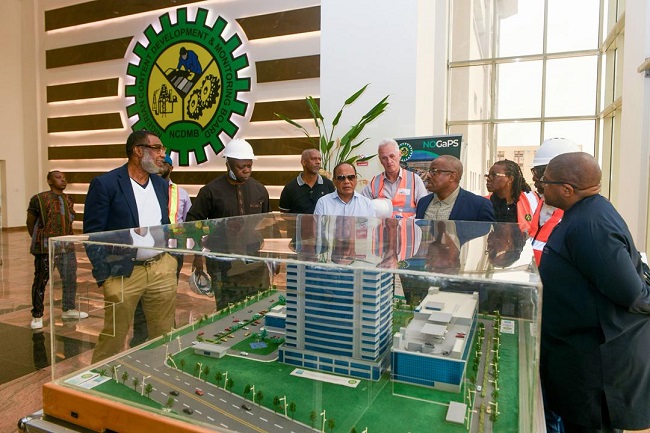
The Executive Secretary of the Nigerian Content Development and Monitoring Board (NCDMB), Felix Omatsola Ogbe, has expressed confidence that the five-star Radisson Hotel and Conference Centre, Yenagoa, Bayelsa State, will be completed and commissioned in December 2026, just as South Africa’s Edison Corporation, incorporating Radisson Hotels Group, assured of world-class services.

Addressing visiting top executives of Edison Corporation and Megastar Technical and Construction Company, at the conclusion of a one-day project management tour and workshop at the Nigerian Content Tower (NCT), Swali, Yenagoa, on Friday, March 20, 2026, Ogbe described the hospitality facility as a top priority project to the Board, whose progress he would be “following up every day, every week.”

NCDMB
Officials of NCDMB, Edison Corporation and Megastar Technical and Construction Company during the project management tour and workshop

“This project is critical to the Board, critical to Yenagoa, and to Bayelsa State and Nigeria,” he stated, adding, “With this hotel becoming functional at the end of the year, I believe there will be tourism in Bayelsa State; and that’s one of my dreams.” According to him, “When I took up this job (as Executive Secretary in December 2024), I said I must make this hotel work.”

He commended the team from Edison Corporation and the project contractor, Megastar Technical and Construction Company, for the quality and pace of work, and reminded its Management that much responsibility rests on the company for delivery on schedule.

Ogbe said, “Most of the critical aspects of the project have been resolved in terms of mark-up room, scope of work in terms of financing and contracting strategies,” and that he was sure all hands would be on deck to ensure that work proceeded unhampered.

In his own remarks, the Chief Executive Officer of Edison Corporation, Mr. Vivian Reddy, said the team from Edison Hotel Group was very excited to have come into a contractual arrangement with the NCDMB, assuring that “Radisson Hotel and Conference Centre, Yenagoa, will put this place on the world map.”

According to him, “What is so important with the group Radisson International is that, if anyone around the world looks for Radisson Yenagoa, they will see this place pop up, and it’s going to help to uplift the area in terms of visitors and tourism.”

In a brief interaction with media men, he said, “Our role is to make sure we deliver a world-class quality hotel; from start to finish, we will open the hotel; we will furnish it.” He disclosed that his company is working with the main contractor to make sure the facility meets world-class standards.

On how the contractual deal with the NCDMB got finally sealed, he noted that it took great efforts. According to him, “Getting Radisson in here wasn’t easy: It took months and months – in fact over one and a half years – of discussions and thousands of pages of documentation.”

He pointed out that such rigorous processes were not without gains. In his words, “When a group like Radisson, one of the largest hotel groups in the world, decide and commit that they will come in here, it actually is a mark of confidence in the area.”      

The Edison boss, who is reputed to be the first South African businessman to lead a high-level business delegation from that country to Nigeria during the tenure of President Thabo Mbeki in 1999, was full of commendation for the NCDMB boss, describing him as “a great visionary, an excellent leader.”

“His vision and dream are going to become a reality,” he assured, adding, “We’re going to help him and make it – and it’s going to be the best hotel in this region.”

He also commended the project contractors and professional teams involved, stating that his team has every confidence in their technical competence.

On the team of Edison Corporation and Radisson International were Brian Sibusiso Mpono and Govindasami Monogren, among others.

The Radisson Hotel and Conference Centre, Yenagoa, as the NCDMB explained in a statement by the General Manager, Corporate Communications Division, Dr. Obinna Ezeobi, is designed to meet global five-star standards and is expected to serve as a strategic hub for industry conferences, investor engagements, and high-level business meetings, thereby boosting economic activities in Bayelsa State and the Niger Delta.

North African power could be Europe’s next energy lever

As Europe seeks diversified and lower-carbon energy supplies, emerging electricity interconnections and gas infrastructure across North Africa – including Libya’s grid ambitions – are drawing investor attention ahead of the Invest in African Energy Forum in Paris

For decades, Europe’s energy relationship with North Africa has centered primarily on hydrocarbons – Algerian pipeline gas, Libyan oil and LNG shipments from the Mediterranean basin. At the same time, another energy link is gaining momentum: electricity.

With growing renewable capacity, expanding transmission networks and new cross-Mediterranean interconnectors under development, North Africa’s power sector is emerging as a strategic complement to Europe’s energy system.

National grid
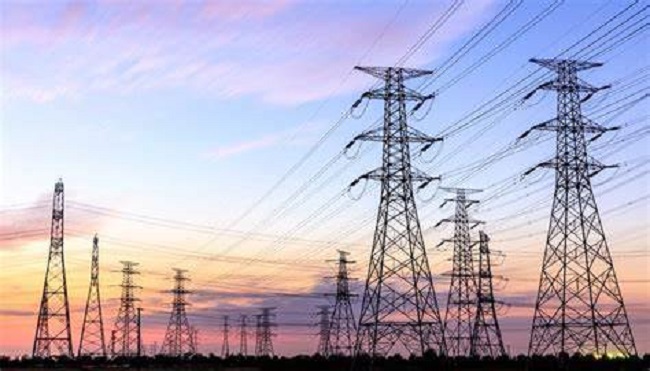
Power grid lines

The trend is already visible in major infrastructure projects linking the two regions. The ELMED interconnector, a planned high-voltage subsea cable connecting Tunisia to Sicily, will allow bidirectional electricity flows between the African and European grids when it comes online later this decade. The project will transmit up to 600 MW of power through a 220-km cable, helping integrate North African electricity markets with Europe and enabling exports when surplus generation is available.

Libya’s Untapped Electricity Potential

Libya’s electricity sector remains largely domestically focused today, but the country sits at the centre of a potential North African power corridor. Discussions between Libya, Algeria and Tunisia have already explored an “electric corridor” project linking their grids, a step that could eventually connect with broader Mediterranean power systems feeding into Europe.

Such initiatives would allow electricity generated in North Africa – whether from gas-fired plants, renewables or hybrid systems – to flow across borders and ultimately toward European markets. For Libya in particular, electricity exports could complement its longstanding role as a hydrocarbon supplier to Europe.

The country already holds substantial gas resources and power-generation capacity, much of which is fueled by domestic natural gas. With targeted investment in grid modernisation, renewable integration and regional transmission infrastructure, Libya could evolve into a flexible power exporter within a wider Mediterranean electricity market.

Complementing LNG With Power

Electricity trade does not replace Africa’s LNG expansion – it complements it. Across the continent, gas developments in countries such as Mozambique, Senegal-Mauritania and Nigeria are strengthening Africa’s position in global LNG supply chains.

North Africa’s electricity ambitions add another layer to this energy relationship. Gas-fired generation can provide stable baseload power for export through cross-Mediterranean cables, while renewables help reduce emissions intensity and align with Europe’s decarbonisation targets.

For European buyers facing volatile energy markets and geopolitical supply risks, this hybrid model – LNG imports paired with electricity interconnections – offers diversification across both fuels and delivery systems.

New Opportunities for Energy Investors

These developments are set to inform discussions at the upcoming Invest in African Energy Forum (IAE) in Paris, where government officials, utilities and infrastructure investors will assess emerging cross-border energy opportunities. Participation from the Renewable Energy Authority of Libya, including Chairman Dr. Abdulsalam Elansari, signals growing Libyan interest in positioning the country within this evolving regional power landscape.

For investors, the appeal lies not only in generation projects but also in the infrastructure connecting them: high-voltage transmission lines, subsea cables, storage systems and grid modernization.

Electricity trade between North Africa and Europe remains at an early stage, but the foundations are forming rapidly. As Europe accelerates its search for diversified and lower-carbon energy sources, North Africa’s combination of gas resources, solar potential and geographic proximity could transform the region into a strategic electricity partner.

If the current wave of interconnectors and regional grid initiatives succeeds, the Mediterranean may soon carry not only pipelines and LNG tankers – but high-voltage power as well. And for investors gathering in Paris, that emerging electricity corridor could become one of the most compelling energy stories linking Africa and Europe.

NiMet forecasts three-day sunshine, cloudiness nationwide

The Nigerian Meteorological Agency (NiMet) has predicted sunshine and cloudiness from Sunday, March 22 to Tuesday, March 24, 2026, across the country.

The weather outlook released by NiMet on Saturday, March 21 in Abuja envisaged sunny skies over the northern region throughout the forecast period.

According to the agency, sunny skies with patches of clouds are expected over the North Central region throughout the day.

cloudy weather
Cloudy weather

It forecast isolated thunderstorms with or without rain over parts of Kogi, Niger, the Federal Capital Territory, Nasarawa and Kwara states during the day.

Cloudy conditions with intervals of sunshine are anticipated across the southern region, with prospects of isolated thunderstorms accompanied by light rain over parts of Lagos, Ondo, Ogun, Delta and Cross River states during the morning hours.

Later in the day, thunderstorms with moderate rain are expected over parts of Ondo, Ogun, Ekiti, Osun, Edo, Imo, Enugu, Abia, Anambra, Bayelsa, Rivers, Akwa Ibom and Delta states.

According to the agency, sunny skies are anticipated over the northern region throughout the forecast period on Monday, with prospects of isolated thunderstorms over parts of southern Taraba State.

NiMet predicted sunny skies over the North Central region with patches of clouds, with chances of thunderstorms accompanied by light rain over parts of Kogi and Nasarawa states in the morning period.

It added that isolated thunderstorms with moderate rain are expected over parts of Benue State later in the day.

Cloudy conditions with intervals of sunshine are anticipated across the southern region, with prospects of isolated thunderstorms accompanied by light rain over parts of Bayelsa, Akwa Ibom, Ondo, Delta, Lagos, Ogun, Edo and Cross River states during the morning hours.

Later in the day, thunderstorms with moderate rain are expected over parts of Lagos, Ondo, Ogun, Ekiti, Osun, Oyo, Imo, Enugu, Abia, Anambra, Ebonyi, Edo, Bayelsa, Rivers, Akwa Ibom, Cross River and Delta states.

NiMet predicted sunny skies over the northern region on Tuesday during the forecast period.

According to the agency, sunny skies with patches of clouds are anticipated across the North Central region during the morning hours.

Later in the day, isolated thunderstorms with light rain are expected over parts of the Federal Capital Territory, Plateau and Niger states.

Cloudy conditions with intervals of sunshine are anticipated across the southern region, with prospects of isolated thunderstorms accompanied by light rain over parts of Lagos, Rivers, Akwa Ibom, Bayelsa, Delta, Edo and Cross River states during the morning hours.

Later in the day, thunderstorms with moderate rain are expected over parts of Ondo, Edo, Imo, Bayelsa and Delta states.

According to the agency, strong winds may precede thunderstorms in areas where they are likely to occur; hence, the public is advised to take adequate precautions.

It further advised the public to ensure that loose objects are secured to avoid collisions.

“Driving under heavy rain should be avoided. Disconnect electrical appliances from sockets. Stay away from tall trees to avoid impact from falling branches and broken trees.

“Temperatures are expected to remain high, causing thermal discomfort. The public is advised to wear breathable clothing, stay in well-ventilated environments and remain hydrated.

“Airline operators are advised to obtain airport-specific weather reports (flight documentation) from NiMet for effective operational planning,” it said.

The agency urged residents to stay informed through weather updates from NiMet via its website: www.nimet.gov.ng.

By Gabriel Agbeja