Home Blog Page 218

Dangote Refinery materially reshaping regional oil flows – MEMAN

0

 Commissioning of the Dangote Petroleum Refinery in Lagos is materially reshaping regional flows but does not eliminate import dependence.

This formed one of the key takeaways by participants at a webinar held on Tuesday, August 26, 2025, courtesy of the Major Energies Marketers Association of Nigeria (MEMAN) and S&P Global Commodity Insights (Platts).

Dangote Refinery gate

Themed: “West Africa Fuels Landscape: Market Fundamentals and Geopolitical Drivers”, the virtual session examined how global geopolitics, changing trade flows and new regional refining capacity are reshaping West Africa’s refined products landscape.

Discussions focused on the impact of the Dangote refinery commissioning, shifting export channels from Europe, the role of Lomé as a flexible trading hub, recent price shocks including a Dangote FCC outage, and methodological innovations to better reflect how material trades in the Gulf of Guinea.

While stating that refinery outages remain major price drivers and that Lomé functions as a growing marginal hub providing flexible small clip supply and supporting price discovery, discussants concluded that policy stability, transparent regulation and investor confidence are critical to attract downstream investment that will strengthen supply resilience and influence domestic prices.

The webinar had opened with a safety briefing from Kingsley Ojimba, MEMAN Jetty Superintendent, covering remote event hygiene and question protocols, including chat and raise hand functions.

    MEMAN Chairman, Mr. Huub Stokman, framed the event as timely following Nigeria’s move to full fuel price deregulation, emphasising that rising local refining capacity changes the supply landscape and that MEMAN would support market transparency, benchmarking and coordinated stakeholder engagement during the transition.

    Gary Clark, Associate Editorial Director for EMEA Clean Refined Products at S&P Global Commodity Insights, speaking on “Current Supply, Demand, and Pricing Dynamics in Europe and West Africa”, discussed gasoline, diesel, and jet fuel markets, and stressed supply resilience in the face of geopolitical disruption, including effects from Russia, Ukraine and tensions in the Middle East. He highlighted weaker European demand fundamentals such as inflation and slower growth.

    Clark noted that Dangote’s ramp up has reshaped flows, retaining much gasoil in West Africa and exporting some jet fuel internationally, which reduces but does not eliminate import dependence. He also noted that outages and maintenance can quickly reintroduce import needs and market volatility.

    Mrs. Ogechi Nkwoji, Head, Economic Intelligence Research and Regulation at MEMAN, speaking on “Demystifying the Lomé Petroleum Market”, presented the ex-Lomé hub as a pragmatic offshore trading solution that evolved from onshore bottlenecks and declining domestic refinery performance.

    She added that large cargoes are discharged into floating storage off Togo and sold in smaller 5 to 20 kiloton parcels to regional buyers, chiefly Nigerian marketers.

    Matthew Tracey-Cook, Senior Price Reporter, EMEA Gasoline & West Africa Refined Products, S&P Global Community Insights, speaking on “Gasoline outlook”, reviewed European gasoline trends, seasonal quality premiums for summer blends and the links between European dynamics and West African markets. He observed that crack spreads have been softer relative to the post COVID and Russia Ukraine period, driven in part by reduced transatlantic arbitrage and lower exports to West Africa following Dangote’s commissioning.

    Tracey-Cook highlighted a sharp rally in gasoline cracks in August after an FCC outage at Dangote, with implied cracks moving from about thirteen dollars per barrel to above seventeen dollars per barrel. This episode underscored how Dangote outages can have outsized impacts on Atlantic basin product balances and prompt market backwardation.

    MEMAN’s CEO and Executive Secretary, Mr. Clement Isong, reaffirmed MEMAN’s commitment to leverage the partnership with S&P Global Commodity Insights for ongoing media education and stakeholder engagement on pricing and product flows.

    The Gambia achieves national consensus on landmark Climate Change Bill, Policy

    0

    Stakeholders from across The Gambia have unanimously validated the nation’s draft National Climate Change Bill and an accompanying National Climate Change Policy, marking a historic milestone in the country’s commitment to building a climate-resilient future.

    The validation occurred following a comprehensive two-day national workshop held from August 18 to 19, 2025, at the Sir Dawda Kairaba Jawara International Conference Centre.

    Gambia
    Participants at the workshop to validate The Gambia’s draft National Climate Change Bill and National Climate Change Policy

    The new integrated framework provides a legal and strategic roadmap to address the nation’s climate vulnerabilities, from sea-level rise to coastal erosion, while charting a path towards a just, green, and blue economy. The Bill establishes a robust legal architecture, while the Policy outlines a clear, five-pillar strategy for implementation.

    In her opening remarks, the Minister of Environment, Climate Change, and Natural Resources (MECCNAR), Ms. Rohey John Manjang, emphasised the framework’s importance.

    “These frameworks are not just documents; they are our national pledge to strengthen resilience and achieve The Gambia’s ambitious climate targets,” she stated, commending the inclusive process and the “crucial role of Natural Eco Capital, the lead consultant, for delivering the drafts despite a very tight deadline.”

    The validation is the culmination of an extensive consultation process involving government ministries, international partners like the World Bank and the International Monetary Fund, and civil society organisations.

    A cornerstone of the new legislation is its focus on decentralised action, ensuring that climate action is community-led and locally relevant.

    Mr. Lamine Jammeh, Director of the Climate Change Secretariat, underscored the principles guiding the framework.

    “A just transition, which places the needs of Gambians at the forefront, is a non-negotiable principle,” he said. “Our participation in carbon markets must safeguard national interests with transparency and equity.”

    The drafting process received financial support from the World Bank-funded West Africa Coastal Areas Management Programme (WACA). Dr. Muhammed L. Sanyang, WACA Project Manager, hailed the workshop as a “significant achievement for climate governance” and reaffirmed the World Bank’s “unwavering commitment” to supporting the implementation of these landmark frameworks.

    Key features of the validated bill include a streamlined governance structure, the creation of a Directorate of Climate Finance, legal safeguards, including a Climate Change Division of the Environmental Tribunal, and a mandate to develop a legal framework for carbon rights to attract responsible investment.

    With the validation complete, the bill will be presented to the Cabinet and the National Assembly for enactment into law.

    By Rantiola Akinola, Natural Eco Capital

    All On chairman urges bold investments to bridge energy gap in Nigeria

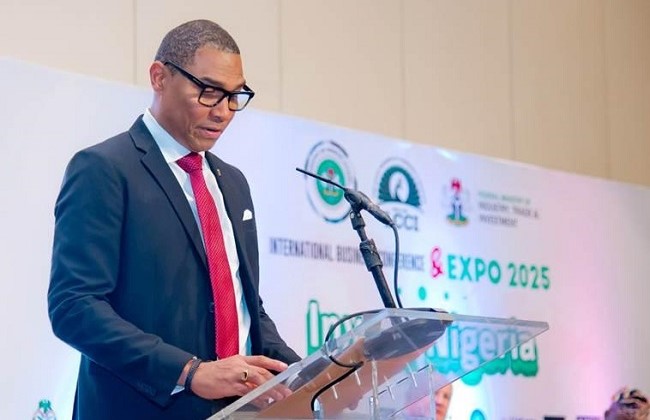
    Nigeria needs bold investments to address the energy deficit that affects millions of households and industries, Chairman of off-grid impact investment company All On, and Managing Director of Shell Nigeria Exploration and Production Company Ltd (SNEPCo), Ronald Adams, said on Wednesday, August 27, 2025, while addressing business leaders at the 2025 International Business Conference & Expo of the Lagos Chamber of Commerce and Industry (LCCI).

    Adams, who assumed the role of All On Board Chairman last month, quoted statistics showing that over 80 million Nigerians lacked access to reliable electricity.

    All On
    Ronald Adams, Board Chairman of All On and Managing Director of Shell Nigeria Exploration and Production Company Ltd (SNEPCo) delivering a speech at the Lagos State Chamber of Commerce and Industry (LCCI), 2025 International Business Conference & Expo in Lagos

    “The consequences of the deficit are far-reaching: stifled productivity, limited access to quality healthcare and education and stunted economic potentials,” he said.

    But Adams was optimistic that, with the right policies and investments, the deficit could translate to a $10–20 billion market opportunity, especially in off-grid energy solutions such as mini-grids, solar home systems and clean cooking technologies.

    He said that All On, which was established by Shell in 2016, had achieved over 50 direct investments, committed over $40 million and supported ventures that have brought clean energy to over 1.2 million Nigerians across 190 underserved communities across the country.

    Adams called for more investments, highlighting the importance of strategic collaborations not just in energy, but across agriculture, digital technology, manufacturing, infrastructure and financial services. He commended efforts to attract foreign investment, including the launch of Investopedia, a digital platform showcasing opportunities across the 36 states.

    He added: “We invite local and international investors to seize the moment and help unlock the full potentials of Nigeria’s renewable energy market. Together, we can build a future that is inclusive, sustainable, and resilient.”

    Initiative launches in Nigeria to tackle growing threat from extreme heat

    TECA Heat Action Wave (THAW), a new initiative to address Nigeria’s escalating extreme heat crisis, was launched on Wednesday, August 27, 2025, by BFA Global, FSD Africa, ClimateWorks Foundation, and the UK’s Foreign, Commonwealth & Development Office (FCDO) Nigeria.

    Together, the coalition has committed $1.1 million to support 12 early-stage ventures developing innovative solutions to protect climate-vulnerable communities from the growing impacts of extreme and chronic heat.

    heat wave
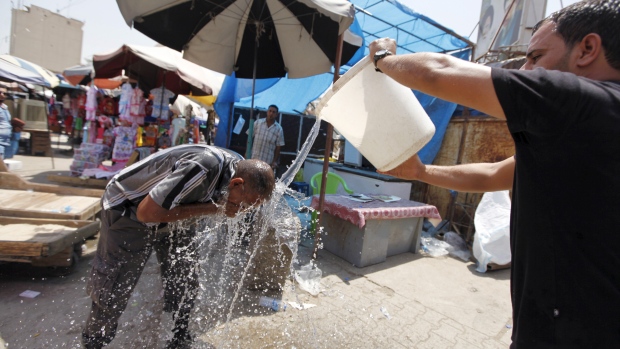
    Above-danger heat stress: A man cools off amid searing heatwave

    Extreme heat events are now at least 10 times more likely in West Africa due to human-caused global warming. In Nigeria, millions of jobs and livelihoods are already at risk, with more than 60% of the population regularly exposed to dangerous heatwaves. Urban settlements like Lagos, Kano, and Abuja now experience heat indices above 50°C during peak months.

    “Extreme heat represents perhaps the most overlooked consequence of climate change affecting Africa today,” said Juliet Munro, Early-Stage Finance Director at FSD Africa. “It’s not only a public health emergency, but a threat to livelihoods, productivity, and long-term economic resilience. Through this initiative, we’re making a strategic investment in African-led innovation, supporting scalable, context-specific solutions that deliver real impact where it’s needed most.”

    THAW will support 12 early-stage ventures developing market-driven early warning tools, innovative financial instruments such as parametric heat insurance, emergency-centric finance tech, and ecosystem enablers and builders – tools and services that help individuals and small businesses operate more safely and efficiently in rising heat, preferably integrating early warning systems or fintech solutions.

    Selected entrepreneurs will receive seed capital, venture-building support, and expert-led sprints on user research, product design, business modeling, and fundraising. Each startup will be matched with an embedded venture builder who will join their team to accelerate execution and strategy. Entrepreneurs will also gain access to a suite of technical specialists, female-focused mentorship, and local consultants to support prototyping and market testing.

    “Addressing the impacts of extreme heat requires bold, market-led innovation, and that’s exactly what this initiative delivers. By supporting local entrepreneurs to develop viable, scalable solutions, we’re strengthening the role of the private sector in driving climate resilience. FCDO is proud to back this partnership, which puts Nigerian-led innovation at the centre of solving one of the region’s most pressing climate adaptation challenges,” said Temi Akinrinade, Private Sector Development Advisor at FCDO Nigeria.

    “Extreme heat is silently eroding lives, productivity, and economic opportunity,” said Tyler Ferdinand, TECA Director at BFA Global. “Through TECA, we’re not only funding ventures, we’re embedding the strategic support, networks, and capital they need to transform survival into resilience.”

    “The world is racing against a closing window of time for investing in the ability of communities to withstand and recover from climate shocks. Adaptation is not only a response, but also a strategy for economic security, market stability, and shared prosperity in a warming world,” said Jessica Brown, Senior Director of Adaptation and Resilience at ClimateWorks Foundation.

    The program will run through mid-2026, culminating in demo days and investor events. High-performing ventures may qualify for reinvestment and tailored follow-on support through 2027.

    Implemented by BFA Global in partnership with FSD Africa, TECA is a venture-building program designed to spark exponential climate action by sourcing and accelerating bold, locally grounded solutions to emerging climate threats. This new heat-focused initiative reinforces TECA’s commitment to inclusive entrepreneurship, gender-intentional design, and transformational funding, positioning Nigeria as a hub for scalable, investable climate innovations.

    Burkina Faso lauded for terminating ‘Target Malaria’ project

    The Coalition for Monitoring Biotechnology Activities (CVAB) welcomed, albeit with relief and satisfaction, the decision of the government of Burkina Faso to end Target Malaria project activities throughout the national territory.

    “This wise, responsible, and historic decision marks an important step in preserving the scientific and health sovereignty of our country, Burkina Faso. It also demonstrates the authorities’ willingness to opt for solutions that respect public health, the environment, and citizens’ choices,” the group stated.

    Malaria
    Malaria is a serious mosquito-borne infectious disease caused by the Plasmodium parasite, primarily transmitted through the bites of infected female Anopheles mosquitoes

    The CVAB reaffirms that malaria is a national tragedy, causing grief to thousands of families each year. It hopes that the Burkinabe government will intensify the development and implementation of safe, inclusive, and proven public policies for the eradication of the disease.

    “Several countries have succeeded in being certified malaria-free thanks to reliable and proven methods. Burkina Faso can also meet this challenge with strategies adapted to its realities.”

    The CVAB expresses its deep gratitude to all those who, directly or indirectly, contributed to ensuring that the voice of civil society was heard in this process.

    Target Malaria is a research consortium led by Imperial College London, which receives core funding from the Bill and Melinda Gates Foundation to apparently eradicate Malaria in Africa. The first phase of its project in Burkina Faso has been a failure, involving the release of GM mosquitoes.

    “We have witnessed strained human capacity on the part of regulatory authorities; a lack of experience, transparency, and compliance with the Convention on Biological Diversity and Cartagena Protocol; and, most disturbing, alleged human rights violations.

    “Free, Prior, Informed Consent interventions by the project included the use of intimidation and fear, driving conflict and dividing communities based on false promises. The limited public participation, dubious tactics, and silencing of communities illustrate its failure to ensure genuine, Free, Prior, and Informed Consent,” submitted CVAB.

    Framing the future: Conservation and connection through a camera lens

    0

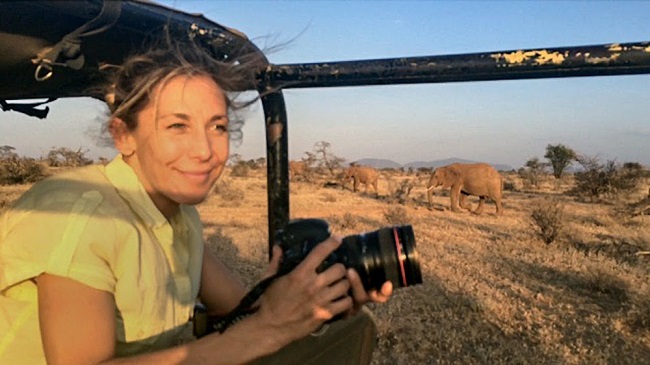
    The Elephant Protection Initiative (EPI) Foundation friend of the month for August is Georgina Goodwin, an award-winning documentary photographer based in Nairobi, Kenya. Whether documenting refugee children in Tanzania, post-election violence in Kenya, or community conservation in northern Kenya, Georgina uses her lens to spotlight resilience, truth, and hope

    Georgina Goodwin
    Georgina Goodwin

    Could you tell us a bit about your upbringing and the work you do?

    I grew up in Kenya surrounded by wide skies, wildlife, and stories of people deeply connected to the land. Those early experiences instilled in me a profound respect for both nature and community. Today, I work as a documentary photographer and storyteller, focusing on conservation, environment, and human rights across East and Central Africa. My work weaves together photography, short film clips, and narrative to connect audiences with the urgent need to protect both people and the planet.

    Please share more about how your passion took shape and perhaps a defining moment when you realised photography was your calling.

    Photography began for me as a way of holding onto fleeting moments of beauty and connection. But very quickly, it grew into a tool for advocacy. The defining moment came when I was documenting Kenya’s 2007 elections; I continued to take photos during the post-election violence, where many times I witnessed atrocities that would otherwise have gone undocumented had I not captured them with my camera.

    My images became part of the ‘Kenya Burning’ exhibition, which toured the country months later, helping Kenyans to see what happened and commit to “never again”. My images were shortlisted for the Prix Bayeux Calvados War Correspondence Award in 2008. I knew then the power of photography for impact and change. That was when I knew this was not just a career, but my calling.

    Since then, I’ve used my photography as a tool for positive change for social issues, fundraising for cancer and women’s health, and for the environment, where communities see the value of keeping their land for wildlife, and their conservation decisions are providing for a brighter future. I also contribute my images to online print sales with proceeds that give back to conservation initiatives across Africa. When I look back at my 20-year career, I see repeatedly how an image can do more than document; it can move people to care, to act, and to imagine new possibilities.

    At its core, how do you distinguish documentary photography from other genres, and what does this medium allow you to express that others don’t?

    Documentary photography is grounded in truth and authenticity. It’s not staged, and it doesn’t seek perfection. Instead, it seeks honesty. Unlike other genres, it allows me to express complexity: joy and struggle, resilience and fragility, humanity and wildness. It gives space for nuance, which is essential in telling the layered stories of both people and ecosystems. It also connects me to the space where I feel grounded and serious about telling important stories from our world. 

    Can you share a moment when one of your wildlife photographs directly contributed to awareness or action for conservation?

    One example that stays with me is a photograph I took for the front cover of Conservation International’s 3D virtual reality film “My Africa”, of a Samburu girl called Naltwasha and a young, orphaned elephant Shaba, at Reteti Elephant Sanctuary in northern Kenya. The image shows them meeting for the first time and was used for the front cover of the film, directly reflecting and amplifying its message – to bring viewers up close and personal with community conservation in northern Kenya.

    Since the release of the film in April 2018, this image has been used to exemplify gentleness, community-led conservation and our connection with nature. Most recently, it has become a part of the curated “Prints for Nature” fine art print collection, with proceeds going to Conservation International.

    From your work on refugee children in Tanzania to capturing conservation stories like Reteti Elephant Sanctuary, how do you balance the emotional intensity of social issues with showing resilience, hope, and connection?

    The balance lies in seeing the whole story. Yes, there is struggle and loss, which can be challenging not only to capture but to manage emotionally. There is also strength, dignity, and wisdom. I aim to photograph people and wildlife not only in their vulnerability but in their resilience. This not only helps to keep me grounded in my hope to reconnect people back to nature and the planet, but also creates stories that empower rather than diminish, that invite compassion rather than pity, and that highlight solutions rather than despair.

    What have been some of the highlights in this journey?

    Highlights for me are often not about awards or exhibitions but about the people and places I’ve had the privilege to work with. In Tides of Protection along Kenya’s coast, it is the community, the rangers and the seaweed-farming women who show me about resilience and adaptation in the face of climate change. In the Mara, it is Maasai elders who remind and show me how conservation can be rooted in indigenous wisdom. These encounters continuously inspire me and shape not just my work, but who I am.

    Your photographs have won many awards and been seen across the world. How have these platforms shaped your reach, and do they influence your sense of responsibility as a visual storyteller?

    These platforms have amplified the voices of people and places I photograph, far beyond what I could have imagined. To see my work from western Kenya highlighting ‘safe water’ on a billboard in Times Square or my conservation images in the Louvre and as far as Japan and Colombia is humbling because it means these stories are reaching the world. With that visibility comes responsibility: to always tell stories ethically, with dignity, and to spark not just awareness but real change.

    How do you nurture emerging African storytellers, particularly women, and what advice do you offer to help them find their voice?

    I believe mentorship is one of the most powerful forms of conservation. By equipping young storytellers, especially women, with skills, confidence, and networks, I can help ensure that the next generation of stories will be told by those who are closest and who live those stories every day. My advice is simple: stay rooted in truth. Your voice matters, your perspective is unique, and the world needs your stories. Photography is not just about seeing, it’s about being seen and helping others to be seen.

    UKNIAF, Nigerian Governors’ Forum advance electricity reform with nationwide workshop series

    The United Kingdom Nigeria Infrastructure Advisory Facility (UKNIAF), in partnership with the Nigerian Governors’ Forum (NGF), wrapped up a major national initiative to support State-led electricity market reforms. The State Learning Workshop Series focused on Electricity Market Development, Integrated Resource Planning (IRP) and energy modelling software.

    Workshops in Lagos, Calabar Kano and Jos have been successfully completed, drawing participants from all the 36 States and the FCT and setting a strong precedent for what lies ahead. These sessions equipped policymakers, regulators and stakeholders with the tools to design robust, sustainable and investor-ready electricity markets at the State level, in line with the provisions of the Electricity Act 2023.

    State Electricity Workshop
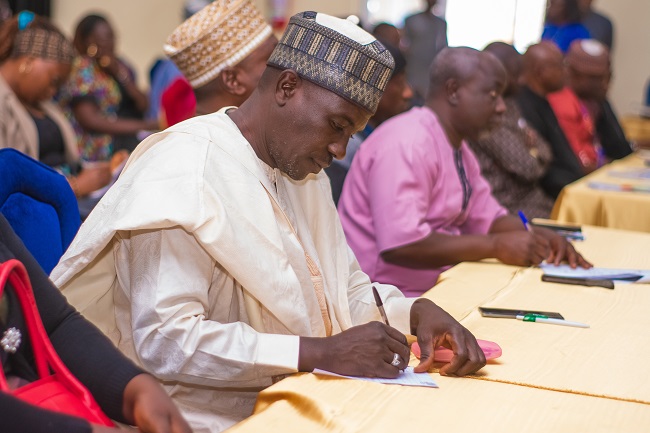
    Participants at the State Electricity Workshop in Jos

    Reflecting on the significance of this initiative, Mr. Chijioke Chuku, Director-Legal/Head Power Desk at the Nigerian Governors’ Forum, stated: “Nigeria’s electricity future depends on the capacity of our States to lead with vision, clarity, and technical precision. Through the workshop series, we are equipping States not just with knowledge, but with the confidence to take charge of their electricity markets. The NGF is proud to partner with UKNIAF in ensuring that the promise of the Electricity Act 2023 becomes a lived reality across the country.”

    The sessions in the State Learning Workshops covered:

    1. The legal and regulatory pathways for setting up State Electricity Markets;
    2. Commercial models for private sector investment;
    3. Integration of State plans into Nigeria’s National IRP;
    4. Practical training on the software platform for energy modelling.

    The initiative drew from lessons learned in the course of UKNIAF’s work supporting the Akwa Ibom, Enugu, and Oyo State Governments – early movers in electricity market development – in setting up their markets. It also drew from experience gained in the course of UKNIAF providing technical support to the Federal Ministry of Power in drafting both the National Integrated Electricity Policy and Nigeria’s first National Integrated Resource Plan, both of which were approved very recently.

    With States now empowered by the Electricity Act 2023, the series is seen as a timely and strategic effort to ensure capacity, coordination, and sustainability in Nigeria’s decentralised energy landscape.

    85 Nigerians receive UK Chevening and Commonwealth Scholarships

    0

    The UK Government has awarded 85 Nigerians the prestigious Chevening and Commonwealth scholarships to study a wide range of master’s degrees and PhD programmes in the UK in 2025.

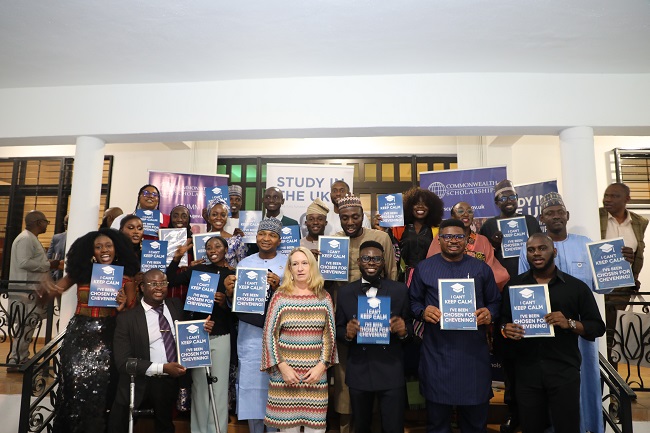
    This year, 39 scholars and 1 fellow received the Chevening scholarships, while 45 scholars have been awarded the Commonwealth scholarship so far. A pre-departure ceremony was held in Abuja on Wednesday, August 27, 2025, for scholars based in Abuja and environs, while a similar ceremony will hold in Lagos in September, for scholars in Lagos and nearby cities.

    UK Chevening and Commonwealth Scholarships
    Beneficiaries of the UK Chevening and Commonwealth Scholarships

    At the Abuja pre-departure reception, the British Deputy High Commissioner, Mrs. Gill Lever, congratulated beneficiaries who succeeded in securing a scholarship through the highly competitive application and interview process. 

    Speaking at the ceremony, the British Deputy High Commissioner, Mrs Gill Lever said: “We are proud to see another batch of scholars depart over the next few weeks for the UK knowing that they will come back and add to a very strong Chevening network in Nigeria.

    “They will return with a lasting positive disposition towards the UK, acting as ambassadors by sharing their understanding of systems, policies, and life in the UK– and then bringing those experiences back to Nigeria and doing great things while creating a positive change in this country and the world.” 

    Speaking at the Reception, Director Programmes, British Council Nigeria, Chikodi Onyemerela, said: “As you leave for the United Kingdom for further studies, you carry with you not only your personal aspirations but also the hopes of your communities and the promise of contributing to Nigeria’s future. We are confident that the knowledge, skills, and networks you will acquire in the UK will return as seeds of innovation, leadership, and progress for our nation, particularly, at this phase of its development.” 

    Chevening fellow, Tijjanni Mukaddas, who will study at the Oxford Centre of Islamic Studies, said: “I feel truly humbled and grateful that with over 18 million Nigerian children denied education, the Chevening Fellowship enables me to craft impactful policies that will integrate them into education. It’s a dream come true; I’m honoured to embark on this journey at Oxford University.” 

    Commonwealth scholar, Cynthia Okoli, who will study at the Royal Veterinary College (RVC) and London School of Hygiene and Tropical Medicine (LSHTM), said: “I look forward to developing my interpersonal and professional skills, as well as building lasting friendships and networks that cut across disciplines and cultures through the Commonwealth Scholarship Commission (CSC) events and interactions with classmates and faculties from both schools. These experiences will broaden my perspective and strengthen my ability to work effectively in multidisciplinary settings.” 

    NDC 3.0: Make financing practical, accessible to states – Niger Environment Commissioner

    A respected subnational climate change leader and conservation champion, Yakubu Kolo, has provided reflections on Nigeria’s Nationally Determined Contributions (NDC 3.0) and how states hold a central role in both design and implementation, calling for access to finance for states.

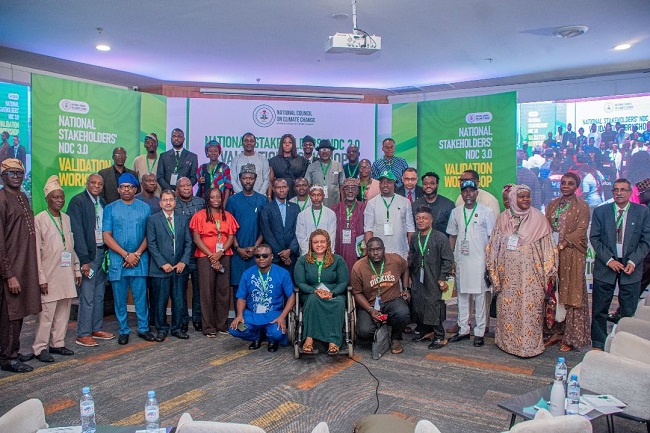
    He made this call at the National Stakeholders’ NDC 3.0 validation workshop organised by the National Council on Climate Change (NCCC) to present update of Nigeria’s NDCs in preparation for the National Executive’s approval and eventual submission to the United Nations Framework Convention on Climate Change (UNFCCC), held in-person and online on August 27, 2025, with stakeholders from across multiple sectors in attendance.

    National Stakeholders’ NDC 3.0 validation workshop
    Participants at the National Stakeholders’ NDC 3.0 validation workshop in Abuja

    The Nigerian NDC 3.0 provides a comprehensive update to the 2021 submission, developed through a rigorous whole-of-government and whole-of-society process to ensure the needs of a broad range of stakeholders were addressed.

    Kolo, Commissioner for Environment and Climate Change, Niger State, while speaking at the validation workshop, acknowledged that the process of developing NDC 3.0 has shown committed efforts to course-correct and be inclusive, participatory, and people-centered.

    “State governments were given the opportunity to provide input which we gladly participated in. We therefore hold the process in high esteem to reflect clarity and transparency in its targets, policies and measures and on cross-cutting issues and actions and it must therefore go beyond the rituals of getting input without an ounce of them reflected in the final document,” he said.

    Kolo noted that the Nigerian NDC 3.0 must set clear ambition that reflects leadership, embed stronger adaptation strategies, and ensure financing is both practical and accessible to states.

    He stated further: “As the September submission deadline approaches, it must also align ambition with implementation, setting clear targets that are not just impressive on paper but actionable on the ground.”

    While concluding his speech as the representative of the subnational governments, Kolo affirmed that the NDC must be ambitious, inclusive, and credible, and must reflect the important contributions of the subnational as the burden bearer of climate change vulnerabilities.

    “Anything less would betray our people’s yearnings and squander our chance to lead Africa toward a climate-resilient future,” he concluded.

    The NDC validation workshop convened stakeholders from across the country as part of the process to finalise Nigeria’s NDC 3.0 before submitting to the UNFCCC. The workshop had representatives from United Nations Development Programme (UNDP), Africa Development Bank (AfDB), United Nations Children’s Fund (UNICEF), Youth Constituency, German Corporation for International Cooperation (GIZ), United Nation Women, Global Disability Green Initiatives (GDGI), International Labour Organisation (ILO), the Foreign, Commonwealth & Development Office (FCDO), as well as NGOs/CSOs.

    By Ugochukwu Uzuegbu, Communication Specialist, SPP

    GMOs: We won’t poison our own people – Govt

    The Federal Government has clarified that the introduction of Genetically Modified Organisms (GMOs) and their products in Nigeria is not intended to poison citizens but to strengthen food security and improve nutrition.

    Dr Rose Gidado, Director of the Agricultural Biotechnology Department at the National Biotechnology Research and Development Agency (NBRDA), said this on Wednesday, August 27, 2025, during a sensitisation workshop in Abuja.

    GMOs
    Participants at the sensitisation workshop for directorate officers of the Federal Ministry of Health and Social Welfare, held on Wednesday in Abuja

    The workshop was organised for directorate officers of the Federal Ministry of Health and Social Welfare (FMOH/SW) to enhance their understanding of biotechnology and its role in national food security.

    The event was organised by the Open Forum on Agricultural Biotechnology (OFAB), Nigerian Chapter, in collaboration with NBRDA.

    Gidado said the perception that GMOs were harmful or poisonous was misleading and unfounded.

    She stressed that Nigerian scientists involved in the field were responsible professionals who would never endanger the lives of fellow citizens.

    “We cannot give poison to our own people.

    “Many of us, and the professors working in this field, are Nigerians, responsible scientists who are also consumers,” she said.

    She added that GMOs had a 30-year history of safe use in more than 45 countries.

    Nigeria, she noted, was adopting the technology with all safety precautions in place.

    “Safety is never compromised. Our National Biosafety Management Agency (NBMA) was established to regulate biotechnology practice in the country,” she assured.

    Dr Angarawai Ignatius of the International Crops Research Institute for the Semi-Arid Tropics (ICRISAT-NG) emphasised that, with shrinking land resources and a growing population, biotechnology offered sustainable solutions for increasing food production.

    He explained that genetic modification strengthened weak traits in crops, making them more resistant to diseases, pests, and climate stress, without posing risks to human health.

    Prof. Abdullahi Mustapha, Director-General of NBRDA, represented by Dr Oyedele Julius, Director, Environmental Biotechnology and Bioconservation Department, stated that Nigeria’s research and regulatory frameworks were aligned with international scientific standards.

    He noted the country had already approved insect-resistant and drought-tolerant maize varieties to address climate and pest challenges.

    “Health, nutrition, and economic resilience are closely linked. Reduced crop losses mean a more stable food supply, lower prices, and fewer nutrition shocks.

    “The safe deployment of biotechnology aligns with President Bola Tinubu’s Renewed Hope Agenda on food security and economic revival,” he said.

    He added that the use of fewer pesticides also protected rural communities and agricultural workers.

    Nigeria’s framework for biotechnology, he said, is “robust, transparent, and science-driven,” involving partnerships with national research bodies, biosafety agencies, and global partners.

    Mrs. Olubunmi Aribeana, Director of Food and Drug Services at FMOH/SW, represented by Dr John Atanda, said the workshop was aimed at enhancing participants’ understanding of biotechnology, biosafety protocols, and the implications for national food security.

    She stressed the ministry’s commitment to ensure that biotech products underwent rigorous risk assessments, including allergenicity, nutritional profile, long-term health impact, and environmental safety, before approval.

    “Every GMO product will follow standard regulatory procedures such as labelling and traceability to reinforce consumer trust,” she added.

    Prof. Emmanuel Kwon-Ndung of the Federal University, Lafia, acknowledged that some resistance to GMOs stemmed from scientists themselves, but often not based on scientific evidence.

    “Much of the opposition is rooted in political, ethical, or social concerns. We need to keep communicating the science to dispel these misconceptions,” he said.

    The workshop is expected to improve awareness and understanding of modern biotechnology and biosafety among ministry officers.

    It also aims to build public confidence in Nigeria’s regulatory processes and promote evidence-based policymaking in health and agriculture.

    The debate over GMOs comes at a time of rising food insecurity in Nigeria.

    With the population projected to grow well beyond the current estimate of more than 240 million, experts argue that traditional farming methods alone may not meet future food demands.

    Biotechnology is being promoted as a viable solution to increase yields, reduce losses, and adapt to climate-related pressures.

    By Folasade Akpan