The official cars used by Germany’s top political echelon release significantly more climate-damaging carbon dioxide emissions than the average vehicle driven by citizens, a new analysis suggests.
Only 87 of the country’s top 238 politicians drive an electric vehicle, according to a ranking by the Environmental Action Germany (DUH) group released on Tuesday, August 19, 2025.
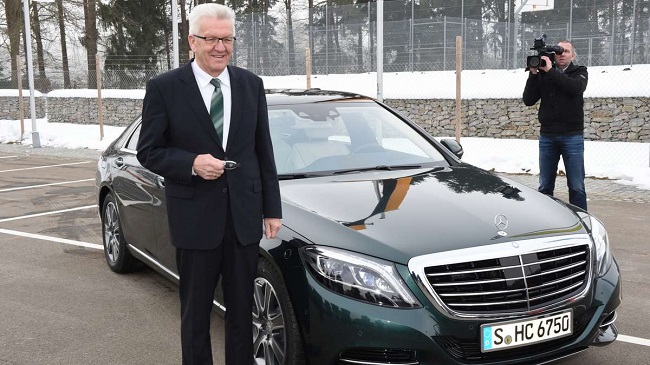
Winfried Kretschmann, Governor of Baden-Württemberg State, stands by his fully electric car
“In spite of the advancing climate crisis, there are no signs of a consistent switch to fuel-efficient official cars in Cabinet even after the change of government,” the organisation said.
However, the analysis found that the use of fully electric cars at the federal level has risen slightly from 50 per cent to 57 per cent compared to the previous year.
The DUH figures came with some caveats however.
For example, the ranking was based on the assumption that plug-in hybrids were only used in combustion mode.
While studies suggested that this was often the case, the authors did not examine the specific driving behaviour of top politicians and their drivers.
In addition, only one vehicle was listed for each politician, but many have several cars at their disposal.
Four out of Germany’s 11 federal ministers drove a fully electric car while seven others use a plug-in hybrid.
The official car used by Chancellor Friedrich Merz and some other top Cabinet members has been excluded from the analysis as they are armoured, making them significantly heavier.
Among the premiers of Germany’s 16 states, only Winfried Kretschmann, a Green politician who governs the south-western state of Baden-Württemberg, drives a fully electric car.
Major Energies Marketers Association of Nigeria (MEMAN) has warned that Nigeria cannot afford to be left behind in the global shift to clean mobility, calling for urgent collaboration to fast-track Electric Vehicle (EV) adoption.
Its Executive Secretary, Mr. Clement Isong, gave the warning during an online webinar titled “Accelerating Electric Mobility Adoption in Nigeria by Unlocking Downstream Potential” on Monday, August 18, 2025.
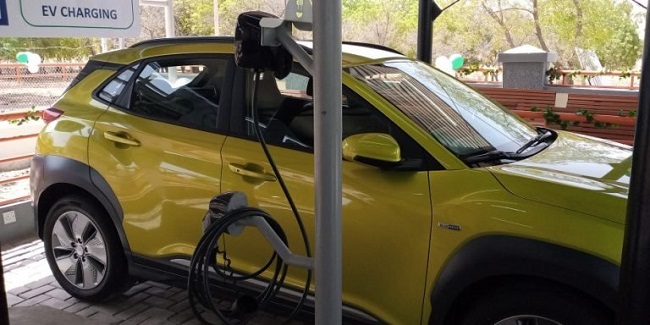
Electric Vehicle charging station
Isong said that the association had already taken practical steps by installing 12 EV charging and battery-swapping stations alongside five aftersales facilities across the country.
“Collaboration among regulators, investors, and private sector stakeholders is critical to building a viable EV ecosystem in Nigeria.
“MEMAN remains committed to fostering dialogue and innovation in the downstream sector,” Isong said.
He said that with transportation accounting for 28 per cent of Nigeria’s greenhouse gas emissions and rising fuel prices burdening households and businesses.
Dr Mukaila Oseni, Director of Operations, Nigerian Midstream and Downstream Petroleum Regulatory Authority (NMDPRA), cited the International Energy Agency’s forecast that the number of EVs worldwide will rise to 145 million by 2030.
“Nigeria must diversify its energy mix, lower transportation costs in the long run, and reduce carbon emissions.
“EV adoption is no longer optional. It is essential,” Oseni said.
He, however, admitted challenges remain: high upfront vehicle costs, weak charging infrastructure, unreliable grid power, and low consumer awareness.
Oseni added that NMDPRA had been reviewing regulatory policies to encourage private investment, technology adoption, and innovative business models.
He further urged stakeholders to leverage the nation’s vast fuel retail network as future charging hubs, while also considering interim options such as compressed natural gas (CNG) and liquefied petroleum gas (LPG) as cleaner alternatives.
The webinar, hosted by MEMAN’s Competency Centre, highlighted financing models, local vehicle assembly, and consumer education as critical tools to make EVs accessible and affordable.
With the world moving rapidly towards electrified transport, participants agreed on one point: Nigeria must act decisively to embed EVs in its energy transition strategy or risk being left behind.
Chief Executive Officer of Heirs Energies, Mr. Osa Igiehon, has urged Africa to define its energy future by leveraging its hydrocarbons and renewable resources.
In a statement on Monday, August 18, 2025, Igiehon affirmed Heirs Energies’ commitment to Africa’s energy sufficiency through active participation in global energy forums and strategic industry collaborations.
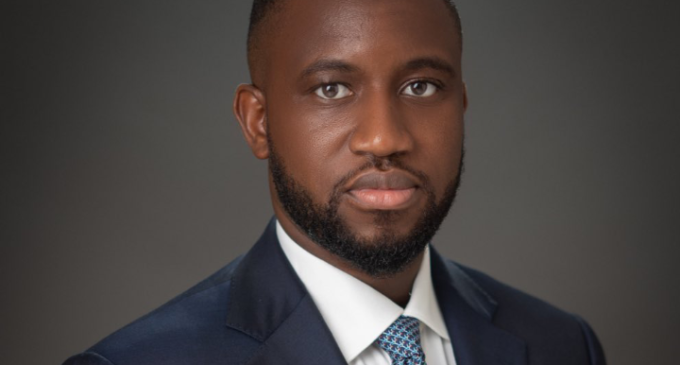
Chief Executive Officer of Heirs Energies, Mr. Osa Igiehon
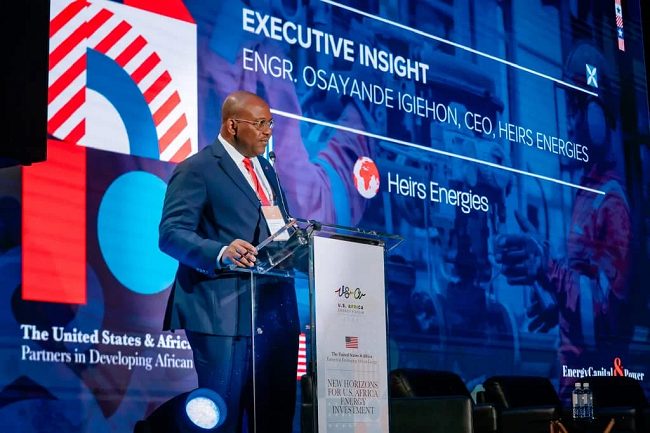
He cited the company’s impactful presence at two landmark events: the U.S.–Africa Energy Forum (USAEF) in Houston, Texas, and the Namibia International Oil & Gas Conference 2025.
At both events, Heirs Energies showcased its responsible strategy to harness Africa’s natural resources, ensuring energy security, driving industrialisation, and fostering shared prosperity across the continent.
At the USAEF, Igiehon joined energy leaders and policymakers in discussions on the future of U.S.–Africa energy cooperation and sustainable development partnerships.
“At Heirs Energies, we are committed to energy sufficiency for millions, while prioritising sustainability, innovation, and local capacity building as pillars of our growth,” he said.
He noted that the forum enabled deeper engagement with U.S. investors, technology providers, and agencies on financing and innovation to accelerate Africa’s path towards energy independence.
Following the USAEF, Heirs Energies advanced its engagement to Namibia, one of Africa’s most promising frontier markets for oil and gas development.
Igiehon joined a high-profile panel with international and regional operators, sharing perspectives on building responsible, inclusive, and sustainable energy industries across Africa.
Reflecting on Namibia’s opportunities, he stated: “This visit marks the start of a long-term partnership, with more collaborations ahead to boost Namibia’s energy development.”
He added that Heirs Energies’ participation underscores its evolution from a Nigerian operator to a pan-African leader balancing commercial success with societal impact.
According to him, these engagements embody Africapitalism, championed by the company’s founder, Mr Tony Elumelu, which advocates private-sector leadership in driving Africa’s development.
Igiehon reaffirmed Heirs Energies as Africa’s leading indigenous-owned integrated energy company, dedicated to meeting the continent’s needs while aligning with global sustainability goals.
“With innovation, environmental responsibility, and community development at our core, Heirs Energies is positioned to lead Africa’s energy transformation towards a prosperous future,” he added.
The Lagos Water Corporation (LWC) has clarified the move behind its Public Private Partnership (PPP) pilot initiative announced recently to expand access of potable water in the state.
This is contained in a statement signed by the Managing Director, LWC, Mr Mukhtaar Tijani, on Monday, August 18, 2025, in Lagos.
Managing Director of the Lagos Water Corporation (LWC), Muktaar Tijani
Six civil society organisations (CSOs) had criticised the LWC on its PPP initiative calling it privatisation of water.
Tijani described the initiative as a Public-Private Partnership model designed to attract private sector investment, efficiency, and expertise.
He said the state government would retain the regulatory oversight to ensure fairness.
Tijani said the proposed initiative was not privatisation – defined as a transfer of ownership and control from public to private hands.
“The state government cannot solely undertake all infrastructural projects, given their enormous and capital-intensive nature.
“The PPP model is a collaborative mechanism to scale up water supply, ensure reliability, and deliver sustainable services to over 22 million Lagos residents,” Tijani said.
He explained that its recent stakeholders’ engagement was open and inclusive, with blanket invitations extended across non-governmental organisations, development partners, and private operators.
“The process was not geographically selective, ensuring broad participation,” Tijani said.
He noted that while most stakeholders supported the PPP model for Lagos’ 48 mini-waterworks, the Corporate Accountability & Public Participation Africa (CAPPA) declined its invitation.
“In its response, CAPPA cited procedural concerns and differences in principles, stressing that its non-participation was a deliberate choice,” Tijani said.
He cited successful PPPs in water services across Africa – in Rwanda, South Africa, Uganda, Morocco, Egypt, and Malawi – as evidence that the model can work effectively when properly regulated.
The managing director announced the completion of the Akilo Waterworks rehabilitation project jointly executed by the Lagos State Government and WaterAid, to be inaugurated in September.
“This project stands as a positive example of what PPPs can achieve in Lagos’ water sector.
“Our ongoing engagements aim to build trust and deepen public understanding of PPP dynamics in utilities like water supply.
“The goal remains the same: improved access, capacity, and service delivery for all Lagosians,” Tijani said.
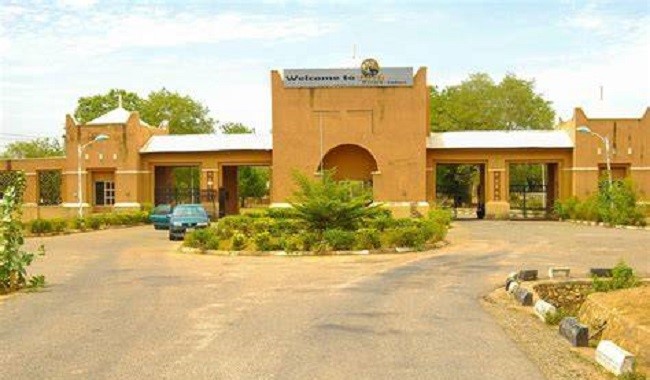
The Yankari Game Reserve, one of Nigeria’s premier national parks, has been engrossed in numerous challenges threatening its survival.
These challenges range from poaching, insecurity, climate change to lack of investments and political commitments.
Yankari Game Reserve
Located in the southern part of Bauchi State, the myriad of challenges bedeviling the park is gradually pushing it to a state of total decline and extinction of its wildlife population.
Sprawling across more than 2,200 square kilometres of pristine savannah, Yankari is a magnet for local and international visitors; its rare wildlife, breathtaking landscapes and iconic Wikki Warm Springs made it a household name.
In the 1970s and 1980s, the reserve recorded up to 20,000 visitors annually, boosting Bauchi’s economy and putting it firmly on the global tourism map.
Today, the picture is starkly different: wildlife numbers have dwindled, facilities have fallen into disrepair, and tourist arrivals plummeted.
Roads within the reserve are poorly maintained, game-viewing infrastructure is failing, and insecurity in surrounding communities has scared away potential visitors.
Elephants, lions, buffaloes, antelopes, baboons, and other species still roam Yankari, but conservationists warn that their survival is under threat.
Poachers, often armed with sophisticated weapons, continue to hunt with impunity, targeting elephants for ivory, killing antelopes for bush-meat, and feeding the illegal wildlife trade.
The human threat extends beyond poaching; banditry, cattle rustling, and farmer-herder clashes in nearby communities have spilled into areas bordering the reserve, creating a climate of fear.
Tour operators say bookings have sharply declined in the past three years.
Dr Ismail Bala, an Environmentalist and Conservation Advocate, said that the foremost game reserve was at a breaking point.
“The ecosystem is collapsing slowly and unless urgent steps are taken, the reserve may lose its value, as a major tourist destination,” he said.
Mr Samuel Garba, a long-time stakeholder in Yankari’s tourism business, said that the reserve used to receive hundreds of tourists during festive periods.
“Now, bookings are rare; people do not feel safe,” Garba said.
Observers say the ripple effects on the local economy are severe.
For decades, the reserve supported hundreds of jobs: tour guides, drivers, artisans, food vendors, and craft sellers.
Now, many have abandoned their trades or migrated to cities in search of work.
Tourism expert Dr, Sambo Audu, believes the situation calls for a coordinated, multi-agency rescue effort.
“We need stronger wildlife protection laws, improved security, and active community engagement.
“Sustainable tourism policies that empower locals are essential; without urgent intervention, Yankari risks becoming a relic of its past glory, a wildlife haven silenced by bullets and fear,” Audu said.
Meanwhile, the Gov. Bala Mohammed-led Bauchi State Government says it is determined to reverse the decline and reposition Yankari as Nigeria’s leading ecotourism destination.
Under the newly established Bauchi State Tourism Development Corporation law, several measures have been rolled out to boost security, improve facilities, and strengthen conservation partnerships.
Dr Mohammed Nasir, Managing Director and Conservator General of the corporation, said the government was taking a multi-pronged approach such as installation of 24/7 solar-powered lighting across the reserve.
“The steps include the procurement of new vehicles and modern patrol kits for rangers, as well as joint security patrols involving police, other agencies and vigilante groups.
“Installation of virtual surveillance equipment to monitor activities within the reserve and refurbishment of tourist facilities at Wikki Warm Springs, including upgraded toilets and changing rooms.”
Nasir said rangers had also undergone advanced training through the Agro-Climatic Resilience in Semi-Arid Landscape (ACReSAL) project.
“Partnerships with the Wildlife Conservation Society (WCS), the North East Development Commission (NEDC), and ACReSAL have brought donations of firearms, binoculars, uniforms, and other patrol equipment.
“These interventions are already producing encouraging signs.
“We have elephants giving birth in the reserve again, which means they feel safe; we are creating an enabling environment where the reserve can once again generate significant revenue for the state,” Nasir said.
A conservationist, Daniel Katanga, said that in spite of the renewed commitment, restoring Yankari to its former glory would take time, consistent funding, and strong community involvement.
“Beyond protecting wildlife, local residents must see tangible benefits from conservation efforts to become active partners in safeguarding the reserve.
“For now, the reserve stands at a crossroads, its survival depending on whether government promises translate into sustained action.
“Without it, the rustling grasslands, the trumpeting elephants, and the crystal waters of Wikki Warm Springs may soon become little more than fading memories of a paradise lost,’’ he said.
A report by ACReSAL, says the intervention to salvage Yankari is not just about providing equipment – it is about long-term change.
“All maintenance and repair costs have been incorporated into the Bauchi State Ministry of Tourism and Culture’s budget, ensuring that the improvements at Yankari are here to stay.
“A Baseline Study and a 10-year (2025-2035) Management Plan are being developed to ensure that Yankari remains a leading ecological and tourist destination for years to come.
“This Yankari story shows that with the right tools, training, and support, even the most neglected places can be revitalised,” it said.
From the foregoing, stakeholders believe that with the political will and efficient management, Yankari can be revamped and kept on its feet again.
German farmers are increasingly planting soybeans in response to recurring droughts, with cultivation expanding by nearly 157 per cent from 2016 to 2024, the Federal Statistical Office said on Tuesday, August 19, 2025.
In 2024, around 4,500 farms cultivated soybeans on a total of 40,500 hectares.
Soybean cultivation
In 2016, the first year the crop was tracked, the number was around 2,400 farms and just under 15,800 hectares.
By comparison, wheat remained vastly more dominant, with about 2.6 million hectares under cultivation in 2024.
Soybeans are considered resilient to dry conditions and can be processed into oil and animal feed.
Farmers have also expanded the acreage that can be irrigated during dry spells.
It noted that between 2009 and 2022, irrigable land increased by nearly a quarter, reaching 791,800 hectares.
That figure still represented only 4.8per cent of Germany’s total farmland.
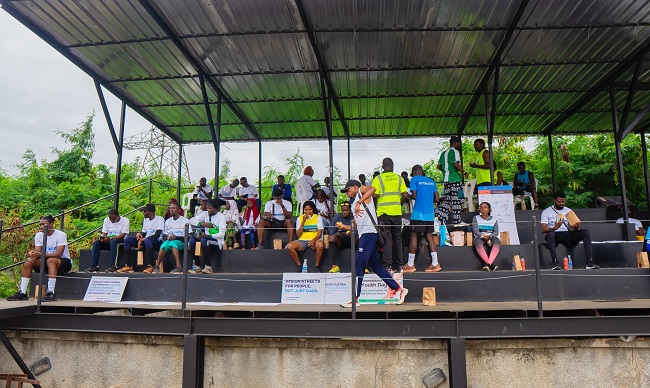
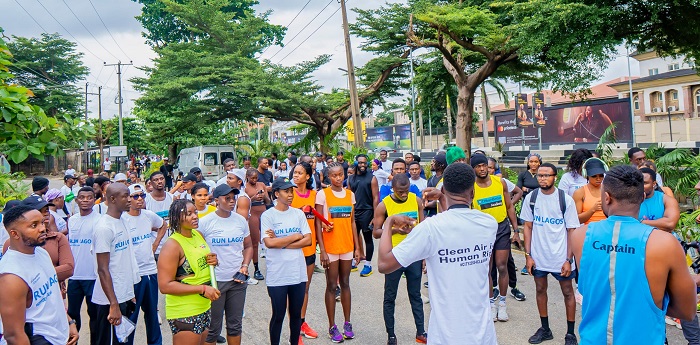
On Saturday,August 16, 2025, ICCDI Africa came alive with energy and purpose as more than 400 young people and community members gathered for the Sports for Climate Justice event. The groundbreaking initiative used the power of sports to call attention to air pollution, climate change, and the urgent need for environmental justice.
The event featured a 6K Clean Air Advocacy Walk + Run, relay races with local run clubs, cycling activities, and inclusive fun games for all ages. Beyond the movement, participants engaged in conversations on the impacts of air pollution and the role of youth in shaping a sustainable future.
Participants at the Sports for Climate Justice event in Lagos
“The unmatched energy of today’s event shows that sports can be more than recreation – it can be a force for advocacy and change,” said Yinka Olayemi.
Key highlights of the day included:
6K Run & Walk for Clean Air – Advocating for healthier communities and climate justice.
Cycling for Sustainability – Showcasing green transport as a solution to pollution.
Games & Engagement – Fostering inclusivity while raising awareness.
Dialogue Sessions – Empowering youth voices in shaping climate solutions.
The initiative not only spotlighted the dangers of air pollution but also encouraged sustainable lifestyle choices such as cycling, walking, and running as eco-friendly alternatives. It also strengthened youth networks and advocacy movements in Nigeria, reaffirming that collective action can lead to healthier, climate-resilient communities.
With unmatched spirit and unity, Sports for Climate Justice proved that when young people run, cycle, and play for a cause, the future gets brighter.
By Olumide Idowu, Executive Director, ICCDI Africa
The Federal Government through the Ozone Office of the Federal Ministry of Environment (FMOE) has reaffirmed its commitment to phasing out ozone-depleting substances by expanding training and certification programmes for refrigeration and air-conditioning (RAC) technicians nationwide.
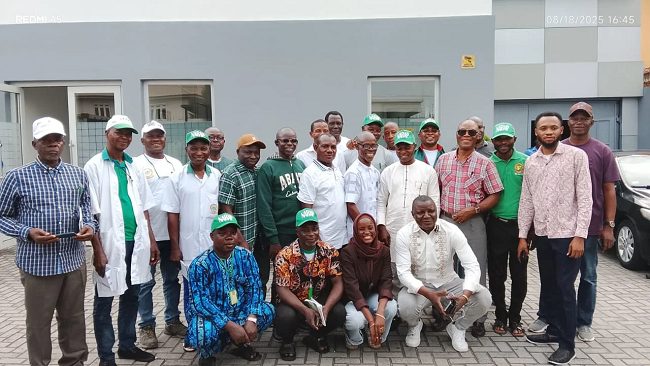
The training was organised by the Ozone Office of the FMOE in partnership with the Sustainable Research and Action for Environmental Development (SRADeV Nigeria) with the support of the United Nations Development Programme (UNDP).
Speaking during the training session at Cool Plus Training Centre, Lagos, the Director/National Ozone Officer, Mr. Idris Abdullahi, highlighted Nigeria’s steady progress under the Multilateral Fund-supported Hydrochlorofluorocarbons Phase-Out Management Plan (HPMP) Stage II Project.
Represented by Mr. Nurudeen Mahmud, Assistant Chief Chemical Enginneer, Ozone Office, Abdullahi said the RAC sector remained a key focus, as hydrochlorofluorocarbons (HCFCs) – especially HCFC-22 – widely used as refrigerants in the servicing of cooling equipment.
According to him, the Federal Government is promoting a transition to hydrocarbon refrigerants, which are ozone- and climate-friendly alternatives to HCFCs.
He, however, emphasised that the safe handling and professional certification of technicians were critical due to their flammable nature.
“With support from the Multilateral Fund of the Montreal Protocol and in collaboration with UNDP, we have upgraded over 20 training centres nationwide – including in Lagos, Port Harcourt, and Kano – with modern tools and equipment.
“This is to enable us to train and certify RAC technicians on the safe use of hydrocarbon refrigerants,” Abdullahi said.
He noted that only technicians who meet professional and safety standards would be certified.
He said the training was designed to reduce fire hazards, ensure compliance with international standards, and strengthen Nigeria’s transition to environmentally sustainable cooling solutions.
He reaffirmed the ministry’s long-standing partnership with the National Association of Refrigeration and Air-conditioning Practitioners (NARAP) and local collaborators such as SRADeV Nigeria.
He added that the cooperation between government, private sector, and professional associations remains vital to achieving Nigeria’s obligations under multilateral environmental agreements.
The Executive Director of SREDeV Nigeria, Dr Leslie Adogame, in a goodwill message, stressed the importance of technicians in the sector.
Adogame was represented at the event by the Programmes and Project Officer, Mr. Olumide Ogunleye.
“Technicians are at the heart of this transformation. Your expertise directly impacts the performance, safety, and environmental outcomes of cooling systems.
“This workshop is more than a technical session – it is a cornerstone in building national capacity and strengthening Nigeria’s commitment to sustainability.
“Without trained and certified technicians, the shift to low-global warming potential refrigerants cannot be achieved safely or effectively,” Adogame said.
He commended the Federal Ninistry of Environment and partners for supporting technicians with the skills needed to implement the Kigali Amendment to the Montreal Protocol.
He urged the Federal Government to integrate trained and certified technicians into decision-making processes while professionalising the RAC sector in Nigeria.
Also speaking, Comrade Ahmed Ibrahim, NARAP National President, represented by the Secretary-General, Mr. Wasiu Abiodun, said the certification programme came at the right time.
“Our members are fully committed to aligning with global best practices and Nigeria’s national plan to phase out ozone-depleting substances.
“Safety is paramount in our profession – we handle flammable refrigerants and electrical equipment daily. This training reinforces the need for safety first,” Ibrahim said.
Also, the Lagos State Coordinator of NARAP, Mr. Okelola Abiodun, described the training as an important step in improving efficiency and professionalism across the industry.
“The future is bright because the quality of training and certification we are receiving will transform our practice and strengthen compliance with international environmental standards,” Abiodun said.
The workshop ended with renewed commitments from technicians, government, and professional bodies to deepen collaboration, enhance public awareness, and ensure that Nigeria’s RAC sector transitions safely and sustainably towards ozone- and climate-friendly technologies.
The Federal Ministry of Works has deployed advanced engineering solutions, including geotextiles and rock layering, to tackle an ocean threat on the Lagos-Calabar Coastal Highway under construction.
Minister of Works, Sen. Dave Umahi, gave the assurance on Monday, August 18, 2025, during a tour of some roads and bridge projects in Lagos State.
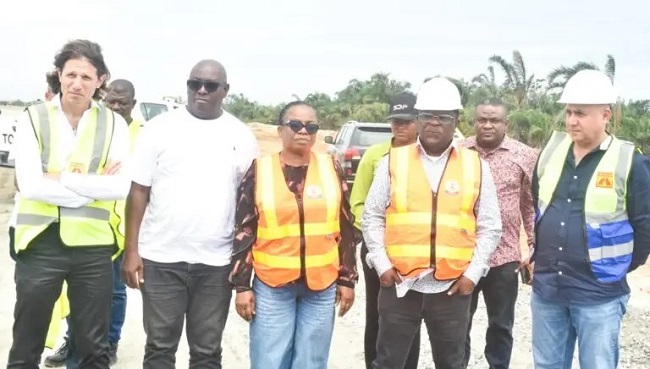
Minister of Works, Sen. Dave Umahi (second right) on a tour in Lagos
Umahi said that the ocean nearly broke into the carriageway at kilometre 14.6, posing a threat to the highway project.
He said that the ministry deployed advanced engineering solutions for reinforcement on the section.
“This additional work was not anticipated and has eaten into the project’s contingency fund,” he said.
The minister said that failure to address the matter could negatively affect the entire project.
He commended the project contractor and supervisors for a swift response that saved the highway from ocean encroachment.
Umahi has dismissed social media reports alleging lack of drainage systems on the Lagos-Calabar Coastal Highway under construction.
Umahi said that the coastal highway project included 750km dual underground drainage systems.
“People say there is no drainage system. I don’t know why people take much delight in false information. It is very damaging.
“We have 750km of underground drainage system by two, which is 1500km. You can see the pipes,” Umahi said.
He praised the contractor handling the project, Hitech Construction Ltd., and the project supervisors for ensuring safety and durability of the coastal highway.
The Lagos-Calabar Coastal Highway is 750km long.
The highway is a major infrastructure project designed to connect Lagos to Calabar, passing through nine coastal states.
The highway construction began in March 2024 with the first phase of the project which covers 47.47km within Lagos.
The project will feature a six-lane highway, concrete construction with a flood-resistant design, and solar-powered streetlights.
It will also feature a train system, modern toll gates and closed circuit television surveillance, among others.
The project aims to improve connectivity, reduce travel time and boost economic activities.
Umahi said his presentation to the Federal Executive Council about Lagos bridges was distorted on social media.
He said in Lagos that the misrepresentation led to speculations and even mockery by ill-informed members of the public.
Umahi urged the public to rely on verified government updates instead of social media misinformation.
He said that both Third Mainland and Carter bridges had been under technical review since 2013.
He emphasised that saltwater penetration, illegal sand mining and rusting of piles had worsened their structural defects.
The minister said that technical inspections of Lagos bridges in 2013, 2019 and 2023 showed deterioration under water.
”Specialist contractors and consultants reported that Carter Bridge’s defects were advancing exponentially.
”Findings revealed heavy corrosion, pile weakening and sand erosion due to neglect and illegal dredging,” he said.
According to Umahi, bridge construction experts have advised that Carter Bridge should be demolished and replaced.
He said that stakeholders and contractors agreed that replacement was safer and more cost-effective than repairs.
“If we repair Carter Bridge for another 50 years, it is going to take N389 billion but to construct a brand-new bridge that will also increase the span for navigation will cost about N359 billion.
“That is what they said to us. That is Berger’s own estimates. We didn’t call for bidding, we called for information,” he said.
He said that he had not given the Federal Executive Council any figure for approval.
“We have not presented any figure for approval, we have given them the idea of what Berger sent, and we say we don’t trust that figure.
“If they are more than six or seven people that quoted, we can begin to trust.”
Umahi, however, said that experts did not recommend demolition of the Third Mainland Bridge.
He noted that the surface repairs on the Third Mainland Bridge had been completed.
He gave the assurance that monitoring and maintenance would continue on the bridge to avoid further deterioration.
”Specialist contractors and independent diving consultants confirmed stability for now,” he said.
The Minister reiterated Federal Government’s commitment to ensuring public safety on all federal bridges.
President Bola Ahmed Tinubu says Nigeria is poised to deliver clean and sustainable energy solutions not just in-country but also across Africa and beyond.
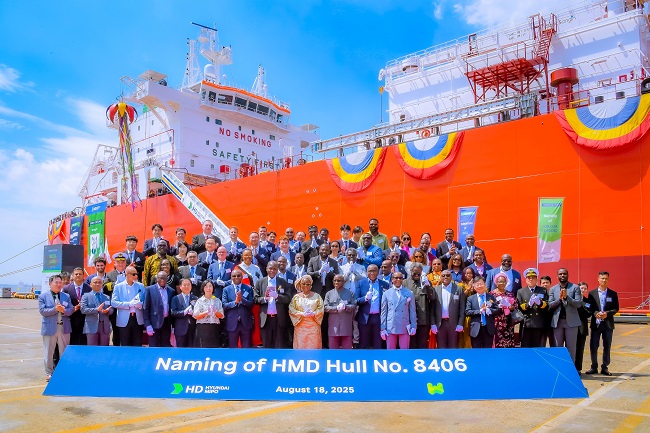
The President made the remarks on Monday, August 18, 2025, at the commissioning ceremony of a 40,000 cubic meters (CBM) Liquefied Petroleum Gas (LPG) vessel, christened “MT Iyaloja (Lagos),” in Ulsan, South Korea.
Dignitaries at the naming ceremony of the 40,000 cubic metres (CBM) WAGL Energy Limited’s Liquiefied Petroleum Gas (LPG) vessel in Ulsan, South Korea, on Monday, August 18, 2025
The vessel, owned by WAGL Energy Limited (an NNPC Ltd./Sahara Group Joint Venture) is a dual-fuel, fully refrigerated LPG carrier. This latest addition brings WAGL’s total LPG vessel capacity to 162,000 CBM. Other vessels in the fleet include MT Africa Gas, MT Sahara Gas, MT BaruMK, and MT Sapet.
Represented by the Minister of State for Petroleum Resources (Gas), Ekperikpe Ekpo, the President commended WAGL Energy Limited, NNPC Limited and Sahara Group, for their strategic foresight, technical excellence and unwavering dedication to expanding Africa’s role in the global clean energy value-chain.
In his remarks, Group Chief Executive Officer (GCEO) of NNPC Ltd., Bashir Bayo Ojulari, described WAGL’s LPG Vessel as a great addition to gas development efforts in Nigeria.
The GCEO, who was represented by the Executive Vice President, Gas, Power & New Energy, Mr. Olalekan Ogunleye, added that the vessel would be crucial in realising the impact of gas in Nigeria’s economic development.
According to him, NNPC Ltd. is deepening its commitment to ensure LPG affordability, availability and access, nationwide.
“NNPC Ltd. is proud to be a major shareholder in this indigenous Company which in addition to the newly commissioned MT Iyaloja (Lagos), owns four other LPG vessels in its growing fleet, delivering over 6 million MT of LPG across West Africa over the last five years,” he added.
Also speaking, WAGL’s Chairman/Executive Director at Sahara Group, Mr. Temitope Shonubi, noted that the company’s expansion demonstrates its vision of responsibly driving efforts aimed at bridging the continent’s critical energy infrastructure gap.”
“The addition of MT Iyaloja (Lagos) embodies the spirit of progress and empowerment championed by the iconic Alhaja Abibatu Mogaji, whose legacy we honour. Sahara Group is proud of its partnership with NNPC Ltd. and reaffirms its commitment to partnerships that drive energy access in Africa,” he added.
WAGL’s Managing Director, Mr. Mohammed Sani Bello, stressed that the company is dedicated to expanding its integrated supply network across the entire energy value chain.
“WAGL already has plans to further expand the fleet within the next two years with the addition of a Small Gas Carrier and a Very Large Gas Carrier (VLGC),” he added.
The symbolic ribbon cutting of MT Iyaloja (Lagos) named in honour of Alhaja Abibatu Mogaji, MFR, (the late mother of President Bola Ahmed Tinubu), was performed by her grand-daughter, the Iyaloja-General of Nigeria, Alhaja Folasade Mujidat Tinubu-Ojo.