The United Kingdom Nigeria Infrastructure Advisory Facility (UKNIAF), in partnership with the Nigerian Governors’ Forum (NGF), wrapped up a major national initiative to support State-led electricity market reforms. The State Learning Workshop Series focused on Electricity Market Development, Integrated Resource Planning (IRP) and energy modelling software.
Workshops in Lagos, Calabar Kano and Jos have been successfully completed, drawing participants from all the 36 States and the FCT and setting a strong precedent for what lies ahead. These sessions equipped policymakers, regulators and stakeholders with the tools to design robust, sustainable and investor-ready electricity markets at the State level, in line with the provisions of the Electricity Act 2023.
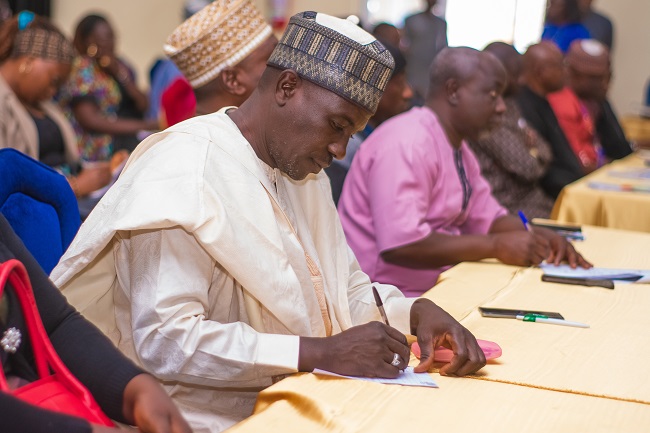
Participants at the State Electricity Workshop in Jos
Reflecting on the significance of this initiative, Mr. Chijioke Chuku, Director-Legal/Head Power Desk at the Nigerian Governors’ Forum, stated: “Nigeria’s electricity future depends on the capacity of our States to lead with vision, clarity, and technical precision. Through the workshop series, we are equipping States not just with knowledge, but with the confidence to take charge of their electricity markets. The NGF is proud to partner with UKNIAF in ensuring that the promise of the Electricity Act 2023 becomes a lived reality across the country.”
The sessions in the State Learning Workshops covered:
The legal and regulatory pathways for setting up State Electricity Markets;
Commercial models for private sector investment;
Integration of State plans into Nigeria’s National IRP;
Practical training on the software platform for energy modelling.
The initiative drew from lessons learned in the course of UKNIAF’s work supporting the Akwa Ibom, Enugu, and Oyo State Governments – early movers in electricity market development – in setting up their markets. It also drew from experience gained in the course of UKNIAF providing technical support to the Federal Ministry of Power in drafting both the National Integrated Electricity Policy and Nigeria’s first National Integrated Resource Plan, both of which were approved very recently.
With States now empowered by the Electricity Act 2023, the series is seen as a timely and strategic effort to ensure capacity, coordination, and sustainability in Nigeria’s decentralised energy landscape.
The UK Government has awarded 85 Nigerians the prestigious Chevening and Commonwealth scholarships to study a wide range of master’s degrees and PhD programmes in the UK in 2025.
This year, 39 scholars and 1 fellow received the Chevening scholarships, while 45 scholars have been awarded the Commonwealth scholarship so far. A pre-departure ceremony was held in Abuja on Wednesday, August 27, 2025, for scholars based in Abuja and environs, while a similar ceremony will hold in Lagos in September, for scholars in Lagos and nearby cities.
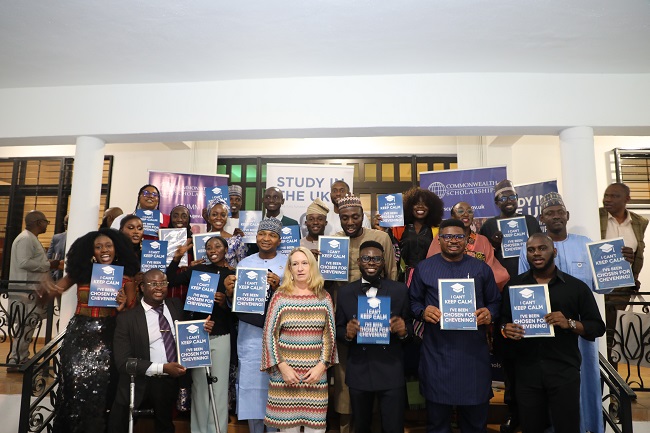
Beneficiaries of the UK Chevening and Commonwealth Scholarships
At the Abuja pre-departure reception, the British Deputy High Commissioner, Mrs. Gill Lever, congratulated beneficiaries who succeeded in securing a scholarship through the highly competitive application and interview process.
Speaking at the ceremony, the British Deputy High Commissioner, Mrs Gill Lever said: “We are proud to see another batch of scholars depart over the next few weeks for the UK knowing that they will come back and add to a very strong Chevening network in Nigeria.
“They will return with a lasting positive disposition towards the UK, acting as ambassadors by sharing their understanding of systems, policies, and life in the UK– and then bringing those experiences back to Nigeria and doing great things while creating a positive change in this country and the world.”
Speaking at the Reception, Director Programmes, British Council Nigeria, Chikodi Onyemerela, said: “As you leave for the United Kingdom for further studies, you carry with you not only your personal aspirations but also the hopes of your communities and the promise of contributing to Nigeria’s future. We are confident that the knowledge, skills, and networks you will acquire in the UK will return as seeds of innovation, leadership, and progress for our nation, particularly, at this phase of its development.”
Chevening fellow, Tijjanni Mukaddas, who will study at the Oxford Centre of Islamic Studies, said: “I feel truly humbled and grateful that with over 18 million Nigerian children denied education, the Chevening Fellowship enables me to craft impactful policies that will integrate them into education. It’s a dream come true; I’m honoured to embark on this journey at Oxford University.”
Commonwealth scholar, Cynthia Okoli, who will study at the Royal Veterinary College (RVC) and London School of Hygiene and Tropical Medicine (LSHTM), said: “I look forward to developing my interpersonal and professional skills, as well as building lasting friendships and networks that cut across disciplines and cultures through the Commonwealth Scholarship Commission (CSC) events and interactions with classmates and faculties from both schools. These experiences will broaden my perspective and strengthen my ability to work effectively in multidisciplinary settings.”
A respected subnational climate change leader and conservation champion, Yakubu Kolo, has provided reflections on Nigeria’s Nationally Determined Contributions (NDC 3.0) and how states hold a central role in both design and implementation, calling for access to finance for states.
He made this call at the National Stakeholders’ NDC 3.0 validation workshop organised by the National Council on Climate Change (NCCC) to present update of Nigeria’s NDCs in preparation for the National Executive’s approval and eventual submission to the United Nations Framework Convention on Climate Change (UNFCCC), held in-person and online on August 27, 2025, with stakeholders from across multiple sectors in attendance.
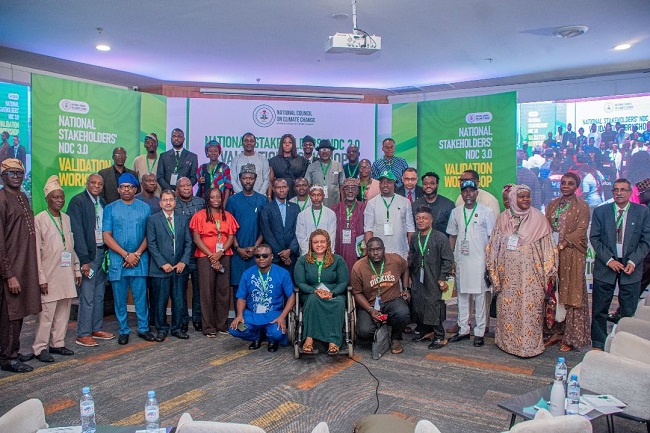
Participants at the National Stakeholders’ NDC 3.0 validation workshop in Abuja
The Nigerian NDC 3.0 provides a comprehensive update to the 2021 submission, developed through a rigorous whole-of-government and whole-of-society process to ensure the needs of a broad range of stakeholders were addressed.
Kolo, Commissioner for Environment and Climate Change, Niger State, while speaking at the validation workshop, acknowledged that the process of developing NDC 3.0 has shown committed efforts to course-correct and be inclusive, participatory, and people-centered.
“State governments were given the opportunity to provide input which we gladly participated in. We therefore hold the process in high esteem to reflect clarity and transparency in its targets, policies and measures and on cross-cutting issues and actions and it must therefore go beyond the rituals of getting input without an ounce of them reflected in the final document,” he said.
He stated further: “As the September submission deadline approaches, it must also align ambition with implementation, setting clear targets that are not just impressive on paper but actionable on the ground.”
While concluding his speech as the representative of the subnational governments, Kolo affirmed that the NDC must be ambitious, inclusive, and credible, and must reflect the important contributions of the subnational as the burden bearer of climate change vulnerabilities.
“Anything less would betray our people’s yearnings and squander our chance to lead Africa toward a climate-resilient future,” he concluded.
The NDC validation workshop convened stakeholders from across the country as part of the process to finalise Nigeria’s NDC 3.0 before submitting to the UNFCCC. The workshop had representatives from United Nations Development Programme (UNDP), Africa Development Bank (AfDB), United Nations Children’s Fund (UNICEF), Youth Constituency, German Corporation for International Cooperation (GIZ), United Nation Women, Global Disability Green Initiatives (GDGI), International Labour Organisation (ILO), the Foreign, Commonwealth & Development Office (FCDO), as well as NGOs/CSOs.
By Ugochukwu Uzuegbu, Communication Specialist, SPP
The Federal Government has clarified that the introduction of Genetically Modified Organisms (GMOs) and their products in Nigeria is not intended to poison citizens but to strengthen food security and improve nutrition.
Dr Rose Gidado, Director of the Agricultural Biotechnology Department at the National Biotechnology Research and Development Agency (NBRDA), said this on Wednesday, August 27, 2025, during a sensitisation workshop in Abuja.
Participants at the sensitisation workshop for directorate officers of the Federal Ministry of Health and Social Welfare, held on Wednesday in Abuja
The workshop was organised for directorate officers of the Federal Ministry of Health and Social Welfare (FMOH/SW) to enhance their understanding of biotechnology and its role in national food security.
The event was organised by the Open Forum on Agricultural Biotechnology (OFAB), Nigerian Chapter, in collaboration with NBRDA.
Gidado said the perception that GMOs were harmful or poisonous was misleading and unfounded.
She stressed that Nigerian scientists involved in the field were responsible professionals who would never endanger the lives of fellow citizens.
“We cannot give poison to our own people.
“Many of us, and the professors working in this field, are Nigerians, responsible scientists who are also consumers,” she said.
She added that GMOs had a 30-year history of safe use in more than 45 countries.
Nigeria, she noted, was adopting the technology with all safety precautions in place.
“Safety is never compromised. Our National Biosafety Management Agency (NBMA) was established to regulate biotechnology practice in the country,” she assured.
Dr Angarawai Ignatius of the International Crops Research Institute for the Semi-Arid Tropics (ICRISAT-NG) emphasised that, with shrinking land resources and a growing population, biotechnology offered sustainable solutions for increasing food production.
He explained that genetic modification strengthened weak traits in crops, making them more resistant to diseases, pests, and climate stress, without posing risks to human health.
Prof. Abdullahi Mustapha, Director-General of NBRDA, represented by Dr Oyedele Julius, Director, Environmental Biotechnology and Bioconservation Department, stated that Nigeria’s research and regulatory frameworks were aligned with international scientific standards.
He noted the country had already approved insect-resistant and drought-tolerant maize varieties to address climate and pest challenges.
“Health, nutrition, and economic resilience are closely linked. Reduced crop losses mean a more stable food supply, lower prices, and fewer nutrition shocks.
“The safe deployment of biotechnology aligns with President Bola Tinubu’s Renewed Hope Agenda on food security and economic revival,” he said.
He added that the use of fewer pesticides also protected rural communities and agricultural workers.
Nigeria’s framework for biotechnology, he said, is “robust, transparent, and science-driven,” involving partnerships with national research bodies, biosafety agencies, and global partners.
Mrs. Olubunmi Aribeana, Director of Food and Drug Services at FMOH/SW, represented by Dr John Atanda, said the workshop was aimed at enhancing participants’ understanding of biotechnology, biosafety protocols, and the implications for national food security.
She stressed the ministry’s commitment to ensure that biotech products underwent rigorous risk assessments, including allergenicity, nutritional profile, long-term health impact, and environmental safety, before approval.
“Every GMO product will follow standard regulatory procedures such as labelling and traceability to reinforce consumer trust,” she added.
Prof. Emmanuel Kwon-Ndung of the Federal University, Lafia, acknowledged that some resistance to GMOs stemmed from scientists themselves, but often not based on scientific evidence.
“Much of the opposition is rooted in political, ethical, or social concerns. We need to keep communicating the science to dispel these misconceptions,” he said.
The workshop is expected to improve awareness and understanding of modern biotechnology and biosafety among ministry officers.
It also aims to build public confidence in Nigeria’s regulatory processes and promote evidence-based policymaking in health and agriculture.
The debate over GMOs comes at a time of rising food insecurity in Nigeria.
With the population projected to grow well beyond the current estimate of more than 240 million, experts argue that traditional farming methods alone may not meet future food demands.
Biotechnology is being promoted as a viable solution to increase yields, reduce losses, and adapt to climate-related pressures.
Stakeholders in Abuja on Wednesday, August 27, 2025, called for urgent action to mitigate the impacts of climate change on human health, stressing the need for eco-friendly health facilities across Nigeria.
They made the call at a Health and Climate Change Workshop organised by the Climate and Sustainable Development Network (CSDevNet), a non-governmental organisation.
Participants at the CSDevNet Health and Climate Change Workshop in Abuja
The forum brought together policymakers, development partners and experts to develop strategies for safeguarding health systems against climate shocks.
Mr. Mohammed Mohammed, Deputy Director at the National Primary Health Care Development Agency (NPHCDA), underscored the importance of climate-friendly health facilities in tackling emerging challenges.
“We are creating an enabling environment to make sure those health facilities are climate friendly,” he said, adding that the agency had been training health workers to strengthen resilience in the health sector.
Mr. Steve Abuh, National Network Coordinator for CSDevNet, said the workshop was designed to explore ways stakeholders could address health-related climate challenges before they escalate into disasters.
“The aim is to move into concrete actions that would bring people out of shocks caused by climate change,” he explained.
Abuh expressed optimism that discussions at the workshop would lead to the development of a prototype climate-smart health model that could serve Abuja and be replicated across the country.
On his part, Dr Samuel Jinadu, Health and Climate Change Thematic Lead at CSDevNet, outlined climate change as one of the most significant health challenges of the 21st century.
“It affects health directly through extreme weather and indirectly through food security, migration and infectious diseases,” he said.
“Climate change adaptation means adjusting natural or human systems in response to actual or expected climate impacts, with the aim of moderating harm, reducing vulnerabilities or taking advantage of potential opportunities.”
Similarly, Mrs. Elona Erezi, a representative of CSDevNet, advised that more healthcare facilities in Nigeria should be made eco-friendly to withstand climate-related health risks.
According to her, ensuring resilient, sustainable and climate-smart healthcare systems will be key to protecting vulnerable communities and reducing the burden of disease.
Stakeholders on Wednesday, August 27, 2025, validated Nigeria’s Nationally Determined Contribution (NDC) 3.0 document aimed at reducing greenhouse gas emissions while strengthening resilience against the impacts of climate change.
The validation workshop, which held in Abuja, had the theme “Driving Ambition, Strengthening Action and Aligning with the Paris Agreement and Global Stocktake”.
A view of participants at the validation workshop of Nigeria’s Nationally Determined Contribution (NDC) 3.0 document, in Abuja
It brought together policymakers, development partners and stakeholders from across sectors to shape Nigeria’s climate action pathway.
Mrs. Teni Majekodunmi, Director-General of the National Council on Climate Change (NCCC), said the NDC 3.0 is the cornerstone of Nigeria’s national efforts under the Paris Agreement.
According to her, the document is a collective commitment to reducing emissions while building resilience against the adverse impacts of climate change.
“The NDC 3.0 seeks to build on the gains of the previous versions, incorporate recent developments in climate science and policy, and align with our Long-Term Low Emission Development Strategy and the Nigeria Energy Transition Plan among other frameworks.
“We recognise that climate action is not the responsibility of government alone. It demands the active participation of all stakeholders,” Majekodunmi said.
She explained that the final document must reflect national priorities, technological capacity, and financial realities, while ensuring that Nigeria’s transition is just and equitable.
Majekodunmi added that Nigeria’s NDC 3.0 outlines a major financing gap that must be addressed if the country is to meet its targets.
She emphasised that access to clean energy technologies such as solar, wind, hydro and hydrogen is critical, alongside energy efficiency measures across industries and households.
“This validation workshop is an opportunity to ensure that Nigeria’s NDC 3.0 is inclusive, realistic, ambitious and implementable.
“Our inputs must be guided by evidence, inspired by shared values, and united by a vision for a climate-resilient Nigeria,” she said.
Mrs. Varsha Redkar-Palepu, Resident Representative of the UN Development Programme (UNDP) in Nigeria, said the validation of NDC 3.0 reflects Nigeria’s commitment to climate action and its leadership in shaping a sustainable future for Africa and the world.
She said that, globally, NDCs are the cornerstone of the Paris Agreement and represent each country’s highest possible ambition in reducing emissions, updated every five years as part of global climate progress.
“In a time when multilateralism is under strain, the NDC process reminds us that climate change knows no borders. Only through cooperation can we overcome this existential threat.
“Africa, though contributing the least to global emissions, remains disproportionately vulnerable to climate shocks. Yet, it is also a continent of immense potential, rich in natural resources, youthful energy and innovative spirit.
“Nigeria, as the largest economy and most populous nation in Africa, carries a unique responsibility and opportunity to lead by example,” she said.
Redkar-Palepu added that NDC 3.0 prioritises renewable energy, agriculture, forestry and water while promoting climate-smart solutions that create jobs and protect vulnerable communities.
She called the document “a roadmap for green growth, climate justice and sustainable development”, noting that UNDP remains committed to supporting Nigeria with climate finance, institutional capacity and delivery of results.
Mr. Ibrahim Shelleng, Special Adviser to the President on Climate Finance and Stakeholder Engagement, said the NDC 3.0 represents Nigeria’s pathway to green growth, resilience and inclusive development.
“The version of the NDC is also designed to respond to the outcomes of the first global stocktake under the Paris Agreement. It is not just a climate commitment but a developmental blueprint.
“It reflects our national priorities in energy transition, agriculture, waste management and resilient infrastructure,” Shelleng said.
He noted that the workshop was a step towards harmonising Nigeria’s environmental commitments with its national vision, adding that the document would shape the country’s journey to a low-carbon and climate-resilient future.
Also speaking, Mr. Duke Benjamin, Cluster Coordinator of GIZ Nigeria, pledged the support of Germany for Nigeria’s NDC 3.0 implementation, calling it vital for sustainable growth and strengthened collaboration between the two countries.
Niklas Ruf and Jana Spiller from Germany received the prestigious Stockholm Junior Water Prize 2025 for their work on developing a scalable flood warning system for small streams. Crown Princess Victoria of Sweden presented the winners with their award during a ceremony at Stockholm City Hall part of World Water Week in Stockholm.
Flooding is an increasing concern worldwide, with more frequent and larger floods affecting communities. Yet on smaller streams, real-time data is often lacking, limiting the possibility of early warnings. Over four years of work, Ruf and Spiller created a network of sensors linked to an app that provides live alerts to both experts and the public. Their system is already being scaled up across their region in consultation with multiple partners.
Crown Princess Victoria of Sweden presenting Niklas Ruf and Jana Spiller from Germany the prestigious Stockholm Junior Water Prize 2025
The Jury noted that the project “addresses a critical challenge we are seeing around the globe: more frequent and bigger floods. Yet on smaller streams, we often lack the data needed to provide real-time warnings. The students have not only built a functioning system and an app that notifies experts and the public, but they are also already working to scale this system across their region in consultation with numerous partners.”
When asked how it felt to win, Niklas Ruf admitted: “I didn’t expect it at all. There were so many really good projects. I thought we were just here to have a good time and then go back home.”
Jana Spilleradded: “Every project here is just amazing. Some were in areas like chemistry and biology that I didn’t even fully understand, but they were so impressive. That’s why it was such a big surprise for us.”
On what they hope decision-makers and industry leaders will take away from their work, the team reflected: “Of course, what we are doing is building something to tackle the consequences of climate change. But the ideal solution would be if there were no climate change to begin with.”
Diploma of Excellence – Türkiye
The Diploma of Excellence was awarded to Kagan Mehmet Ozkok from Türkiye for pioneering work that combines AI and water efficiency. By training artificial intelligence on the sound of leaking water, Ozkok built and deployed two prototypes to detect leaks in public spaces. Tested under real conditions, the prototypes demonstrated significant water savings and are now being developed further in collaboration with local government for possible city-wide implementation.
The Jury stated: “This year’s diploma of excellence recognises how data, AI and action come together. Training AI based on the sound of leaking water, this student has demonstrated a powerful and practical approach to tackling urban water loss.”
People’s Choice Award – United Kingdom
The People’s Choice Award, voted on by the global public, went to Divyasri Kothapalli from the United Kingdom for her project Sun-based water distillation system.
This research project presents the development of a low-cost solar water distillation system designed to improve access to clean drinking water in off-grid and rural communities. Using a Fresnel lens to focus sunlight onto a metal boiling pot, the resulting steam passes through food-grade silicone tubing and condenses into clean water. The system operates without electricity, avoiding additional carbon emissions.
Kothapalli conducted three experiments where the independent variables included initial water volume, light intensity, and natural weather conditions. The system produced consistent yields even in moderate climates such as the UK, showing its promise for broader application.
“Innovation is paving the way to a more water-secure world, and the next generation is accelerating progress. The Stockholm Junior Water Prize competitors are an inspiring example of the ingenuity and passion young innovators bring to the table. On behalf of Xylem, I’d like to congratulate all those who took part in this year’s competition,” said Claudia Toussaint, Chief People and Sustainability Officer at Xylem.
“Xylem is proud to invest in the young innovators of the Stockholm Junior Water Prize. They are already shaping the future as the next generation of water problem-solvers. Together, we have the opportunity to empower communities everywhere to create a more water-secure world,” Toussaint added.
A year of flood-focused excellence
This year, both Water Prizes highlighted flooding: the Stockholm Junior Water Prize went to German students Niklas Ruf and Jana Spiller for their innovative flood warning system, while the Stockholm Water Prize will be awarded to Austrian professor Günter Blöschl, the world’s leading flood hydrologist. Together, their work underscores the urgency of addressing flood risks – from local innovations to global science.
The Renevlyn Development Initiative (RDI) has urged the Permanent Representative of Nigeria to the United Nations and the Nigeria delegation to recommend stronger language on alcohol harms in the UN Political Declaration on Noncommunicable Diseases and Mental Health so that it fulfills its promise to accelerate prevention and promote well-being worldwide.
The call is part of a global initiative by member groups of Movendi International, the largest independent global movement for development through alcohol prevention, to ensure that the UN Political Declaration on NCDs and Mental Health includes high-impact, evidence-based alcohol policy solutions.
Alcoholic beverages
According to RDI, alcohol harm is a major but under-addressed driver of NCDs and mental health conditions, even as it added that the current draft falls behind previously agreed language and ambitions for accelerating action on alcohol harm as a public health priority and misses critical opportunities for coherent, science-based action.
In the letter, RDI said that Nigeria, like other governments, now has the chance to restore clarity, ambition, and impact to alcohol policy within the declaration.
Addressing the Permanent Representative, RDI is asking for the Nigerian delegation to advance six concrete, constructive improvements which include:
Replace ‘harmful use of alcohol’ with ‘alcohol harm’ or ‘per capita alcohol consumption’ for clarity and scientific accuracy;
Retain the two alcohol policy best buys on availability limits and advertising bans, and include the missing SAFER interventions: screening and brief interventions as well as driving under the influence of alcohol counter-measures;
Include alcohol screening and brief interventions among treatment and prevention commitments;
Reinserting the 80% taxation target for alcohol and tobacco;
Introduce language acknowledging and protecting against alcohol industry interference and the commercial determinants of health; and
Align the declaration with the ambition, momentum, and global consensus of the Global Alcohol Action Plan to accelerate alcohol policy action by addressing alcohol harm as public health priority: Include fast-track action for alcohol policy.
RDI Executive Director, Philip Jakpor, said that the voice of the Permanent Representative and the Nigerian delegation can ensure that the declaration reflects both scientific evidence and global commitments – delivering measurable progress in protecting health, preventing disease, and safeguarding the right to well-being for all.
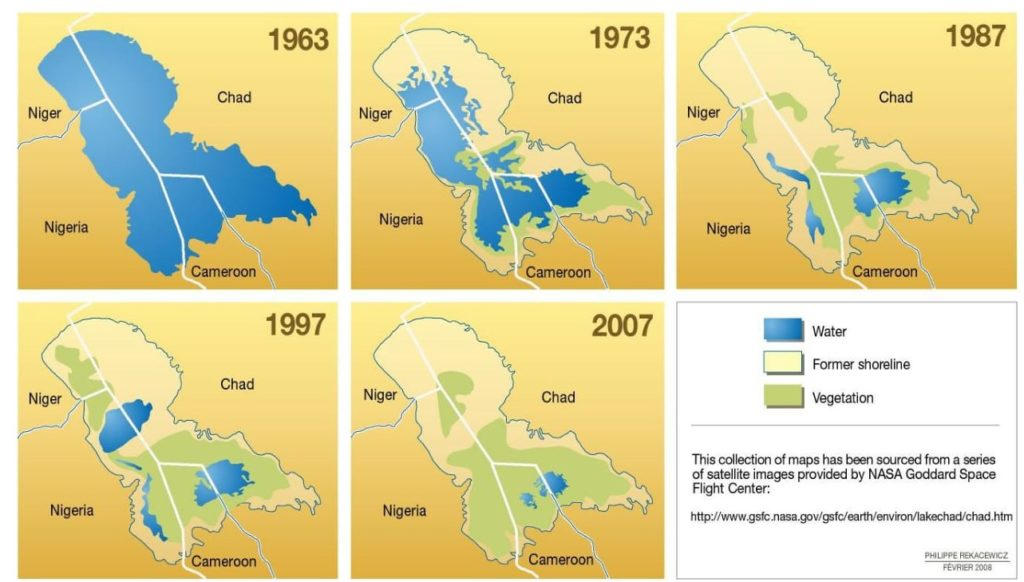
There are more than 100 million lakes dotting the planet, according to one prominent study.
But many aren’t what they used to be. From Bolivia to South Africa and beyond, climate change, pollution and over-abstraction are drastically changing these bodies of water. Many have dwindled to nothing. Others are bursting their banks. Some have even turned green.
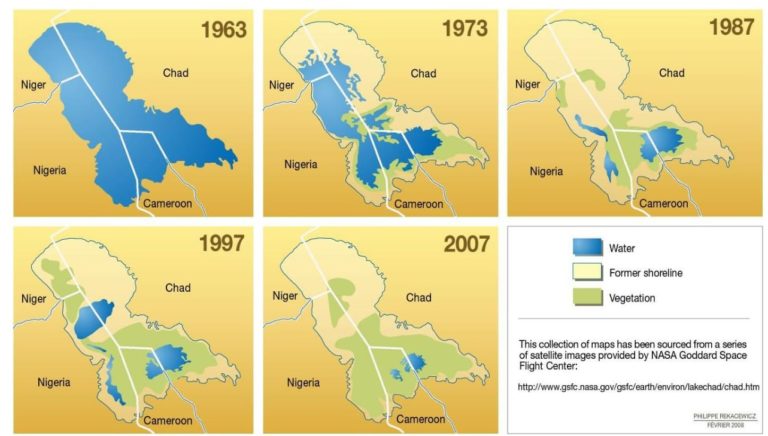
The climate variability impact on Lake Chad has also worsened the abundance and conservation status of biodiversity. Photo credit: UNEP
“Today, some of the world’s best-known and most important lakes are a shadow of what they were just a few decades ago,” says Dianna Kopansky, the head of the Freshwater Ecosystems and Wetlands Unit of the United Nations Environment Programme (UNEP). “We need to reverse this decline. If we don’t, it could be calamitous for the hundreds of millions of people who rely on lakes for their survival.”
Ahead of the first World Lake Day, observed on Wednesday, August 27, 2025, here’s a closer look at the biggest threats to the world’s lakes – and what can be done about them.
Climate Change
A global panel of climate experts has found that climate change is destabilising the hydrological cycle, the finely tuned system that distributes water around the world. Rising temperatures, they say, is intensifying evaporation and shifting rainfall patterns. In some places this is increasing the chances of lake-shrinking droughts, like one that nearly deprived Cape Town, South Africa – home to 4.7 million people – of water.
In other places, increased evaporation coupled with higher air temperatures is leading to more intense rainstorms, causing lakes to burst their banks. That’s a future that may even befall the world’s largest desert basin, Kenya’s Lake Turkana. A UNEP study found it will likely see an increase in flooding in the coming decades, threatening the 15 million people who live along its shore.
Meanwhile, in many mountainous areas, skyrocketing temperatures are raising the risks of what are known as glacial-lake outbursts. These potentially catastrophic floods can happen when the ice holding back a lake melts, sending water cascading downhill.
Over-abstraction
As damaging as climate change has been, Kopansky says it often pales in comparison to what humans have done to lakes by siphoning away their waters faster than they can be replenished – a process known as over-abstraction.
This can take many forms. Sometimes, water is diverted from lakes – and equally damaging, their tributaries – to supply cities. Other times, it’s used to power hydroelectric dams. Often, it’s taken to irrigate farmland.
Central Asia’s Aral Sea is the poster child for irrigation-led decline; once the fourth-largest lake in the world, has withered dramatically since its tributaries were diverted in the 1960s. But this is happening all over the world, including in the high plains of Bolivia. Here, what was once the country’s second-largest lake, Lake Poopo, has been reduced to a barren salt flat by a devastating combination of water diversions and climate change.
A 2024 report by UNEP and UN-Water found that surface water bodies, including lakes, are shrinking or being lost entirely in 364 basins worldwide – nearly 3 per cent of all basins. An estimated 93.1 million people live in those areas.
Pollution
Pollution, experts say, is a mounting threat to the world’s lakes and the communities that surround them. Especially problematic for people and lake-dwelling animals are raw sewage and farm runoff. Along with injecting pathogens and pesticides into lakes, these sources of pollution also often contain phosphorus and nitrogen. At high enough levels, these nutrients can kill fish, feed toxic algal blooms and starve lakes of oxygen, creating so-called dead zones hostile to aquatic life.
That’s what some scientists believe may be happening in Lake Victoria, Africa’s biggest lake, where a surge in a certain type of bacteria has turned waters green.
At the same time, increased evaporation, over-abstraction, rising precipitation and hotter temperatures can also worsen water quality.
UNEP tracks the water quality of 4,000 large lakes around the world. More than one-quarter are becoming increasingly turbid, or cloudy, and almost 15 per cent are experiencing a rise in organic matter. Those are two telltale signs of pollution from sources like cities, farms and factories.
“These kinds of numbers should be a wakeup call,” says Kopansky. “We can’t continue to treat lakes like dumping grounds.”
The solutions
Lakes provide 90 per cent of the world’s surface fresh water and, together with the rivers that feed them, support the livelihoods of an estimated 60 million people. Kopansky says it’s not too late to reverse the fortunes of many of the world’s flagging lakes. To do that, she says countries can do three major things:
Advance what’s known as integrated water resources management, a planning process that balances the use of water across various sectors, like industry and farming, in ways that improve lives without compromising the long-term health of ecosystems;
Take a basin-level approach to water management and pollution control, involving local and Indigenous groups, the private sector, farmers and other stakeholders to address the challenges facing lakes; and
Invest in data collection monitoring for lakes and invest in applying it, so that problems like pollution can be caught before they reach crisis levels.
Protecting the world’s lakes is a key part of the Kunming-Montreal Global Biodiversity Framework, an international agreement to safeguard the natural world. The accord calls on countries to conserve and restore 30 per cent of inland waters, which includes lakes, by 2030.
“The good news is that we have the knowledge and the technology to turn this situation around,” says Kopansky. “What we really need is the will to start treating all our lakes like the precious resources they are.”
An international team of scientists has found that a promising African swine fever (ASF) vaccine can protect pigs against some strains of the virus but offers little or no protection against others. The findings point to the need for region-specific vaccines to tackle one of the world’s most devastating animal diseases.
The research, led by the U.S. Department of Agriculture’s (USDA) Plum Island Animal Disease Centre and the International Livestock Research Institute (ILRI), tested a commercial live-attenuated vaccine candidate, ASFV-G-ΔI177L, against several African swine fever virus (ASFV) strains collected from across Africa. Results showed that while the vaccine was highly effective against certain strains, its performance varied widely depending on the virus type.
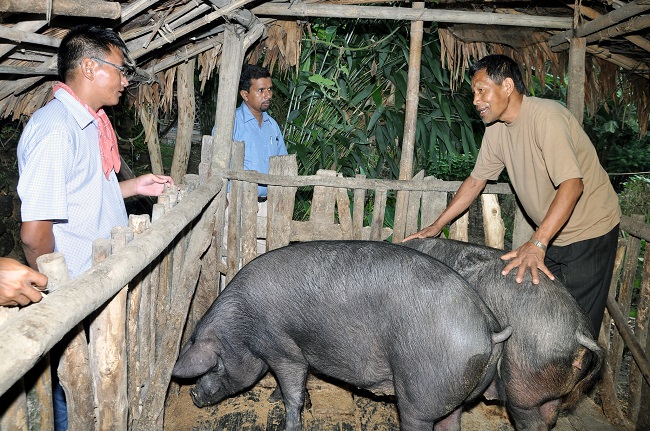
African swine fever (ASF) vaccine can protect pigs against some strains of the virus
A global threat to pigs and livelihoods
ASF is a highly contagious and often fatal disease affecting domestic and wild boars, with no global commercially licensed vaccine available. The disease is endemic in many parts of Africa and, over recent years, outbreaks have devastated pig populations in Africa, Asia and Europe, causing severe economic losses, threatening food security, and undermining the livelihoods of communities reliant on pig farming as pork is widely consumed animal protein.
Smallholder farmers in low- and middle-income countries (LMICs), who primarily raise pigs in backyard systems, are heavily affected by ASF with women and young people particularly vulnerable. Beyond LMICs, the spread of ASF poses a major threat to North America. In the United States, the swine industry is a cornerstone of the economy, generating more than $27 billion in gross cash receipts in 2023. Similarly, Canada’s pig industry contributed CAD 6.3 billion in 2024, highlighting the region’s significant economic exposure
What the study found
Strong protection – Pigs vaccinated and exposed to the same strain used to make the vaccine stayed healthy, while unvaccinated pigs quickly succumbed to disease.
Partial protection – About 80% of vaccinated pigs survived when challenged with a genetically different strain isolated in Ghana.
No protection – The vaccine failed against several other genetically distinct strains from Malawi, Kenya, South Africa and Uganda, despite triggering strong immune responses.
Rethinking vaccine strategies
The results highlight that the traditional method of classifying ASF viruses by a single gene (p72) is not enough to predict whether a vaccine will work. Two viruses with identical p72 sequences – Georgia2010 and Pret4 – produced very different results in vaccinated pigs.
USDA scientists have developed a new classification method that analyses the virus’s entire set of protein-coding genes, offering a more precise way to match vaccines to regional virus types.
Although much further corroborative experimental work is needed, the classification developed will likely be the only available rational approach for deciding vaccination procedures to control and manage ASFV outbreaks’ said Manuel Borca, USDA scientist.
“This research reinforces the need to rethink our ASF vaccine strategies,” said Anna Lacasta, ILRI Senior Scientist. “A one-size-fits-all solution is unlikely. We need targeted vaccines aligned with the regional virus biotypes to maximise protection and control outbreaks. There is need to support the development and licensing of vaccines based on circulating ASFV biotypes.”
The team recommends continued research into matching vaccines to virus types, as well as exploring new vaccine designs that could provide broader protection against ASF.