Home Blog Page 2055

Global Handwashing Day: Protecting health towards a sustainable future

Nature Uchenna Obiakor, Coordinator, YouthWASH Africa, in this piece to celebrate the 2017 Global Handwashing Day (GHD), writes that the theme for this year’s event is conceptualised to emphasise how handwashing protects health, and offers mankind the opportunity to build a sustainable future
Anthony-Lake
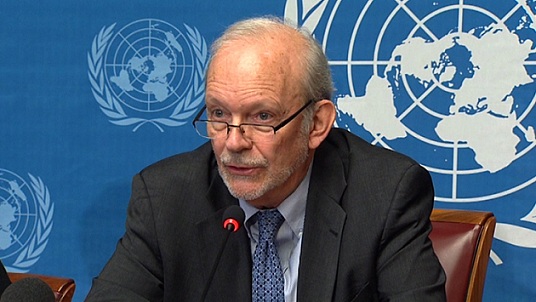
Anthony Kirsopp Lake, Executive Director of the United Nations Children’s Fund (UNICEF)

“Our Hands, Our Future” is the theme for the 2017 Global Handwashing Day (GHD) which is celebrated on October 15 every year since 2008 when it was adopted by the United Nations General Assembly. It is a day set aside to promote a global culture of handwashing with soap and raise awareness on the benefits of the practice.

The theme for this year’s event is conceptualised to emphasise how handwashing protects our health, and offers us the opportunity to build a sustainable future. Handwashing with soap before eating and after using the toilet has severally proven to be the best preventive approach to healthy living. It is considered as the most cost effective way to mitigate diseases such as cholera, pneumonia, diarrhea, typhoid fever and can save more lives than any single vaccine or medical intervention. Good handwashing practice also plays a pivotal role in implementing the Sustainable Development Goals (SDGs) by contributing to improve well-being and reduce poverty.

According to UNICEF/WHO, almost a third (29%) of hospitals and clinics in Nigeria do not have access to clean water and the same percentage does not have safe toilets. The report also shows that one in six (16%) health care facilities do not have anywhere to wash hands with soap.

A separate study conducted by “WASHWatch” observed that over 60, 000 children below the age of five in Nigeria die from diarrhea diseases caused by the country’s poor levels of access to WASH facilities.

The global status of another document released by WHO in 2015 reported that 15% of patients develop one or more infectious in hospitals. Also, UNICEF in 2010 highlighted that 272 million school days are missed due to diarrhea infection each year.

We must ensure that our children have access to handwashing facilities at school and at home, and teach them good handwashing habits to keep them on track for a healthy future. But, these benefits can only be achieved if handwashing is constantly practiced.

UNICEF is funding the National Task Group on Sanitation to engage YouthWASH in strengthening the capacity of NYSC members to activate and sustain EHCs in schools. In line with this goal, 60 NYSC members, 20 volunteers, 60 Hygiene Education Teachers, and 30 Community Health Education Workers have been trained on hygiene promotion in the six area councils under the FCT.

A symbolic handwashing event is expected to be performed by school children during assembly time in 100 schools across the six area councils. These activities are geared towards taking the campaign beyond the commemoration day and help strengthen the introduction of WASH Friendly School Project as part of our sustainability mechanism to foster hygiene practices in our communities and world at large. The NYSC members are expected to adopt and carry out weekly hygiene and sanitation activities in these schools with the objective of ensuring that these schools take ownership of the process to foster WASH education as well as strengthen school-community relationship.

We have approached the Sustainable Development Goals (SDGs) office to launch the Adopt a School Project. This initiative is targeted at stakeholders particularly the private sector and donor agencies to help provide WASH facilities as their Cooperate Social Responsibility (CSR) in these schools.

Furthermore, we have received approval to partner with the FCT Area Councils Services Secretariat (ACSS) on grass root mobilization and support for effective citizens engagement. We are also working with the FCT Universal Basic Education Board to ensure the successful implementation of the EHCs in the six area councils across the nation’s capital.

Access to water and hygiene is a right issue, not a privilege or charity as largely perceived especially among the political class that sees it as a campaign tool. There is urgent need to strengthen local government institutions at all levels, as well as harmonise the activities of the different coordinating bodies for maximum productivity.

Promoting handwashing practices doesn’t just mean making sure people have access to hygiene facilities; they must also be utilised because the benefits of handwashing depend on people washing their hands consistently at critical times. Choosing hand washing is choosing health which is important to our future. Good hygiene practices must be a habit which requires choosing to perform them not only on Global Handwashing Day, but on regular basis every day.


Port Harcourt hosts energy, green technology conference

0

The Garden City of Port Harcourt in River State is set to host the Energy and New Green Technology Conference with the theme: ‘The Future of Hydrocarbon  Industry in the New Age of Green Technology’ between November 28 and 30, 2017 at the Hotel Presidential.

Port Harcourt
Port Harcourt

The event will provide a platform for articulating a proactive response to the seemingly irreversible disruption to the hydrocarbon industry, according to Alfe City Company Ltd, the organisers.

Among key speakers expected at the event that will attract major stakeholders in the economy are Prof. W.J. Okowa, Dr. Eddie Wikina, Prof. P. A.  Olomola, Prof. R A. Olowe, Engr. Don Boham and Dr. Adebayo Adedokun.

The conference with provision for exhibition of new green technology products and services and Regulators Clinic is targeted at participants from Oil & Gas Companies; Petrochemical Companies; Services Companies; Financial Institutions; Regulators; Federal Government; State Government; Oil Producing Areas Development Authorities; and Insurance Companies.

Among the sub-themes of the conference which industry experts will do justice to include: “A perspective on the evolution of the hydrocarbon Industry and its role in the industrialised global economy”, “The recent emergence e of the new green technology and its potential impact on the future of the energy trade”, “The direct cost of the new green technology industry on economies like Nigeria that are almost wholly reliant on the hydrocarbon Industry”, “Managing the immediate to short term effects of the new green technology on the economies of countries like Nigeria whose economic prospects are tied to the fate of the hydrocarbon Industry”, “The roles of government and regulators in managing the transition from a hydrocarbon based economy to a new green technology environment”, and “Deciding on a new template and business module in a green technology economy”.

According to Mr Soji Adeleye , Chief Executive Officer, Alfe City Company, “one of the most important decisions being discussed right now at both the policy level and corporate headquarters across the Globe is what to make of the inevitability of the new green technology and potential demise of the energy trade as we know it.

“In the case of economies like Nigeria that hitherto had relied almost exclusively on hydrocarbon industry for their economic survival, the issue is existential.

“This conference will bring this existential discussion into focus for three days. Distinguished experts in the sector and renowned economists are scheduled to bring their considerable wealth of Industry experience to bear on the subject with a view to channelling a way forward.”

He listed other objectives of the conference to include, exploring the role hydrocarbon energy has played in the global economy industrialisation; exploring the politics of oil and the emergence of the new green technology; channelling a part for a possible coexistence of hydrocarbon business and the new green technology; for bringing industry operators, regulators, government, and other industries together for a look at the future of the hydrocarbon Economy.

The Alfe City boss said: “The global collapse of the crude oil market in the recent time demands a rigorous analysis particularly in a place like Nigeria that derives almost all of her foreign exchange earnings exclusively from hydrocarbon.

“This specialist conference would attempt to put into focus the role hydrocarbon energy has played and continue to play in the world economy. It would also consider the critical circumstances of countries like Nigeria that did not leverage the considerable wealth accumulated from oil to diversify their economy.

“The technical content will be handled by seasoned international experts in the industry who are expected to proffer plausible solutions for industry operators, government and regulators on how best to confront the inevitable transition to the new green technology.”

Economic recovery: Environment Council to unlock investment opportunities in sector

0

Arising from the challenges occasioned by the recent economic recession experienced in the country, government is seeking to diversify the economy by unlocking the opportunities in the environment sector. The economic downturn has been attributed to the nation’s reliance on oil as its single foreign exchange earner.

 Ibrahim Usman Jibril
Environment Minister of State, Ibrahim Usman Jibril, during the media briefing

This year’s edition – and the 11th in the series – of the National Council for Environment will address the issue, in the light of government’s policy thrust. The forum is themed: “Unlocking the Investment opportunities in the Environment sector towards Nigeria’s Economic Recovery, Diversification Growth and Sustainable Development”.

Environment Minister of State, Ibrahim Usman Jibril, who made the submission in Abuja on Friday, October 13, 2017 at a media briefing, said: “Globally, the green economy has become a veritable tool for economic growth and diversification in countries that are not even as endowed with natural resources as ours. It has become a fulcrum of national economic advancement as it cuts across every aspects of a nation’s economy. Our challenge at this point is how to harness and leverage on the huge opportunities in the environment sector.

“With proper harnessing and leveraging on our natural resources, the root of our economic recovery will be faster when we consciously support the green economy by investing in the environment sector to increase other sources of revenue in the Nigeria economy. These opportunities include repositioning of the National Agency for Great Green Wall (GGW), Environment Sound of Chemicals Management, Watershed Management, Renewable Energy, Eco-Tourism, Green Bond, Afforestation/Reforestation, Implementation of the UNEP Report and the Hydrocarbon Pollution Remediation Project.

The minister noted that, since his assumption in office, government has vigorously pursued and sensitised the Nigerian citizens towards going green and achieving toxic-free environment.

“It is my sincere wish that, after this National Council meeting, the decisions reached will be such that is capable of re-engineering the sector to expand the frontiers to meaningfully contribute to a speedy economic recovery,” stated, adding:

“In spite of the challenging times, this government has demonstrated complete political will and commitment in the cause of reviving the ‘Nigerian Project’ by dealing with immediate issues of improving security, tracking corruption, and revitalising the national economy. It is in the light of this that government recently launched the Economic Recovery and Growth Plan (ERGP), 2017-2020 economic blue print.

“Pursuant to the ERGP’s policy objectives on the Environment Sector, our deliberations during the council meeting would be guided by our present challenges, aspirations and the policy direction and focus encapsulated in the Economic Recovery and Growth Plan (ERGP), which defines and determines the new narrative and vision of the present administration for the sector. To this end, I urge our distinguished delegates to the meeting to be objective when considering the merits and demerits of submitted Council Memoranda by applying the stated criteria especially as they relate to the ERGP set targets.”

The 11th National Council on Environment (NCE) holds from Monday, October 16 to Wednesday, October 18, 2017 in Abeokuta, Ogun State.

‘MV Esperanza’ arrives Cameroon, seeks Congo Basin forest protection

0

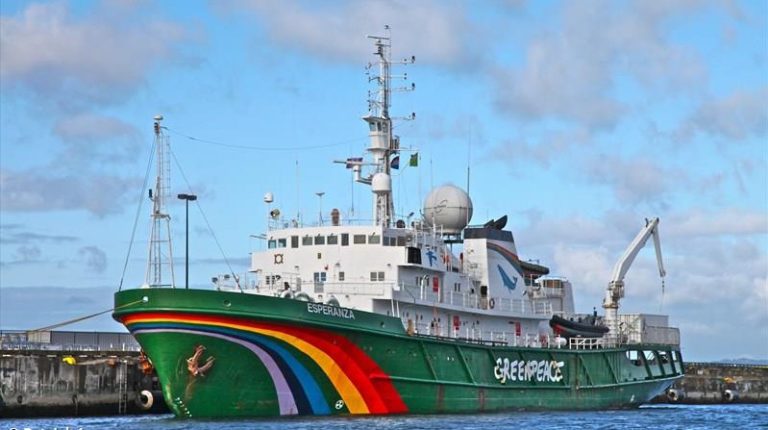
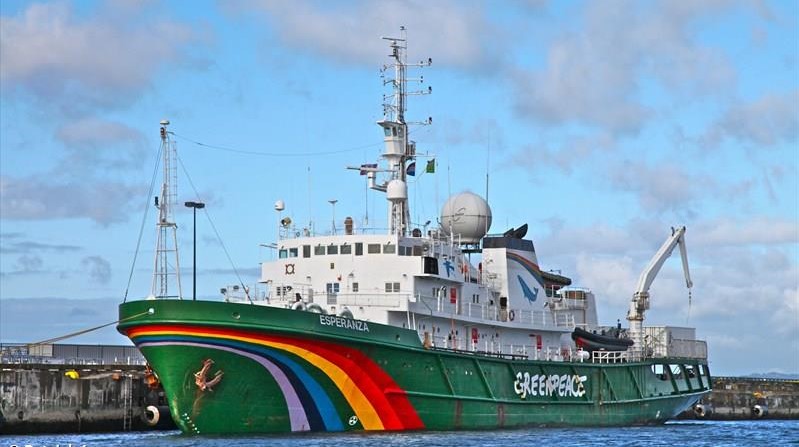
The Greenpeace ship, “MV Esperanza”, on Friday, October 13, 2017 docked at the port of Douala in Cameroon on the first leg of its tour in Central Africa. For four weeks, the Esperanza will sail through the waters of Cameroon, the Democratic Republic of Congo (DRC) and the Republic of Congo to engage with local communities and raise awareness on the importance of the Congo Basin forest. The tour has been named “Give the Congo Basin forest a chance”.

MV Esperanza
MV Esperanza

“By bringing our ship to Central Africa and in Cameroon for the first time, Greenpeace Africa seeks to emphasise its commitment to working with local communities and stakeholders in addressing issues of industrial agriculture and logging that have plagued the Congo Basin region for decades,” said Lindlyn Moma, Greenpeace Africa Programme Director.

The Congo Basin forest is the second largest rainforest in the world. More than 75 million people and a wide range of endangered species depend on it for survival. However, logging and exploitative agribusiness has often contributed to forest loss and land grabbing. This often means local and indigenous communities loss the customary rights to their lands to logging companies.

During the ship tour, local communities will undertake a range of activities to show their support for the protection of the Congo Basin forest. Greenpeace Africa will seek to amplify these voices locally and internationally. The voices of these communities will be heard in the form of traditional dances, forest fashion parade and a wish tree capturing wishes of communities for their forest. These wishes will be handed to world leaders meeting in Bonn, Germany during the COP23 climate change conference. Open boats and guided tours of the ship will also be available to the public.

“We are excited about the opportunity to engage with Cameroonians on the issue of forest protection. Forest destruction is a major threat to the global environment which depends on the Congo Basin forest to regulate carbon compound in our atmosphere. It is imperative that collaboration between the states be reinforced to promote land use planning. We also must encourage ecotourism and community forestry to guarantee the protection of our forest for present and future generations,” said Sylvie Djacbou, Greenpeace Africa  Forest Campaigner.

For the next four weeks, Greenpeace’s Esperanza will host stakeholders in the region to increase the urgency required to deal with the current unsustainable approach to forest management. These activities will also help imbue a sense of pride and conservation in the youths of the region.

Biosafety agency donates relief materials to victims of terror attacks

0

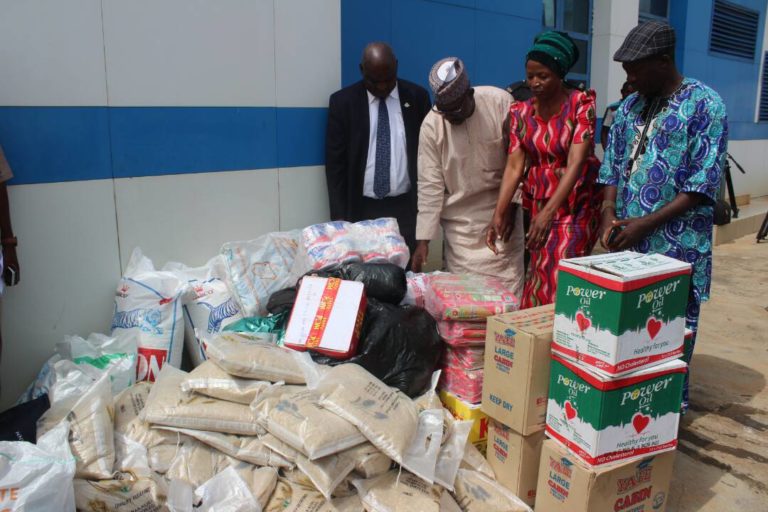
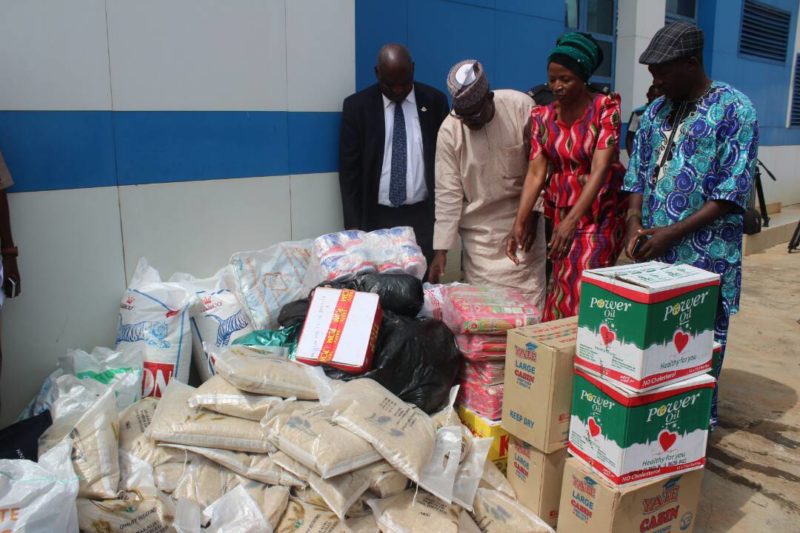
The National Biosafety Management Agency (NBMA) has donated some food items and relief materials to victims of terrorism and insurgency in the country.

NBMA
DG/CEO, NBMA, Dr. Rufus Ebegba (second left), presenting relief materials to the Executive Director, Victims Support Fund, Sunday Ochoche

Director General/Chief Executive Officer of the NBMA, Dr Rufus Ebegba, while handing over the items to the Executive Director, Victims Support Fund (VSF), Sunday Ochoche in Abuja on Thursday, October 12 2017, said the issues of victims of terrorism and natural disaster in the country have been on the front burner of public discuss for some time and the staff of the Agency saw the need to extend a helping hand to the victims.

The DG/CEO stated that the agency has donated, not out of affluence, but to show support to their brothers who are victims and also appeal to and encourage other Nigerians to join the Federal Government in giving aid and support to victims in need.

Dr Ebegba said: “The National Biosafety Management Agency is a regulatory agency and it is part of our social responsibility to help Nigerians in need. That is why the entire staff of the agency deemed it fit to contribute funds to alleviate the sufferings of our brothers and sisters displaced by insurgency in the country.”

Ochoche appreciated the staff of NBMA for making donations from their own pockets without any support from the government despite the current economic challenges in the country, noting that every hand is needed to show support to the victims just as NBMA has done.

He assured that every item donated would be handed over to the victims. He however commended the relative peace that has returned to the North-Eastern region of the country and urged those displaced to go back home and go about their businesses.

Espinosa to Potsdam climate scientists: ‘We need you’

0

Hundreds of millions of people will be affected by climate change impacts and their implications for health or migration already within the next few decades, sectors that so far often get overlooked in this context. This is one of the insights of the Impacts World Conference organised by the Potsdam Institute for Climate Impact Research (PIK) in Germany this week.

patricia-espinosa
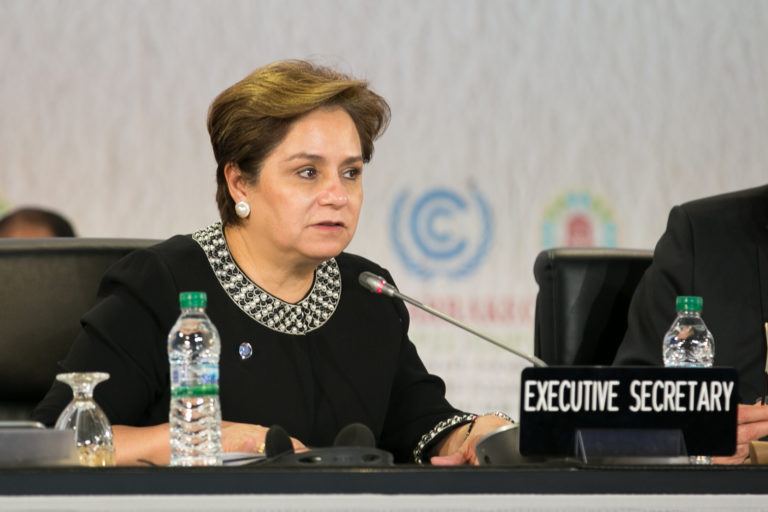
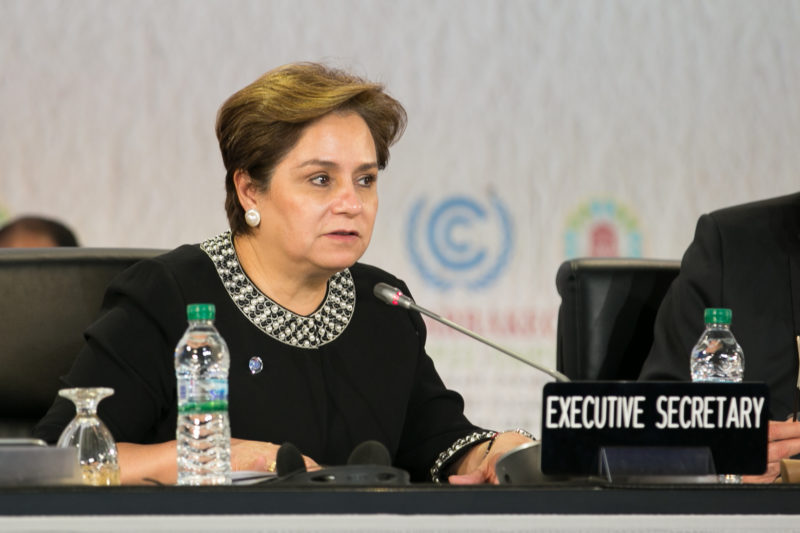
Patricia Espinosa, executive secretary of the UNFCCC

About 500 scientists from 67 countries gathered at the conference with the title “Counting the true costs of climate change” to push climate impact research to the next level by better integrating socio-economic factors. At the same time, the institute celebrated its 25th anniversary hosting this meeting of the global impacts research community, in the spirit of its mission followed for a quarter century: further advancing scientific progress and communicating insights to stakeholders.

“We need you,” Patricia Espinosa, Executive Secretary of the United Nations Framework Convention on Climate Change (UNFCCC), addressed the scientists assembled at the conference. On the occasion of the 25th anniversary, she highlighted the outstanding role of the Potsdam Institute’s scientists and its founding director, Hans Joachim Schellnhuber:

“It is hard to describe just how important your contributions are to humankind,” she said. “Our struggle is not about ideology, it is about urgency and about wellbeing. We have a lot of work ahead.” Espinosa is one of the driving forces behind the UN climate summit to be held in Bonn in less than a month, the first since the US has announced to withdraw from the historic Paris Agreement on climate stabilisation.

Unabated global warming would cause high economical costs, but also damages that cannot be counted in Dollars or Euros, the conference showed. The researchers identified scientific challenges still lying ahead – like better understanding the processes behind climate-induced migration following for instance extreme events such as droughts, or longer-term destabilisation of livelihoods – to integrate them into the next generation of comprehensive computer simulations of possible futures under different climate change scenarios. Possible effects on health, like productivity losses of parts of the workforce as well as warming related kidney and lung malfunctions, were also discussed intensely.

“With its interdisciplinary research, PIK has an outstanding value for Brandenburg,” said the state’s Minister for Science, Research and Cultural Affairs, Martina Münch. She called PIK “an extraordinary institute”.  Just like the UN climate chief she added: “We really need you and your research!”

Thomas Rachel, Parliamentary State Secretary of the German Federal Ministry of Education and Research stressed that, today, some political forces are trying to distort or deny science. “Those who ignore the science will fail in the long term – only those who face the facts will be successful. The scientific community has to be very clear about this,” he said.

Addressing PIK he added: “For many years you have been setting standards – climate policies have to be based on solid science.” Together, the state of Brandenburg and the Federal Government of Germany are the main funders of PIK. “This money is well invested,” Rachel said.

“Climate change is risk number one,” said Klaus von Klitzing, Nobel Laureate for Physics, praising the participants of the conference for their relentless work. He contributed to the appeal by 79 Nobel Laureates that helped in making the historical Paris climate summit a success. He quoted the first man on the moon, astronaut Neil Armstrong, who said that seen from outer space, Earth looks fragile. “Maybe all politicians should be shot to the moon before taking office,” von Klitzing said jokingly.

Poor countries are hit hardest by most of the impacts of climate change. “We’ve come a long way – but today it is acknowledged that climate change and development are closely linked,” said Leena Srivastava from The Energy and Resource Institute in India. “Energy is at the centre of the sustainability challenge.”

The ambitious renewables target in India brought down prices of solar and wind power below prices of power from coal, she pointed out. Yet, even if greenhouse gas emissions are limited, huge adaptation efforts are needed to enable sustainable development.

“It is really gratifying to see that the cream of the global research community exploring climate change impacts is coming together in Potsdam for the second time now, after our 2013 conference,” said PIK’s director, Hans Joachim Schellnhuber. “The results of this meeting now will become a major influence on the forthcoming IPCC reports.”

The co-chair of the working group on climate impacts of the Intergovernmental Panel on Climate Change (IPCC), Hans-Otto Pörtner, was scheduled to join the conference on Friday. “There have been many days in my live when I thought all is lost,” said Schellnhuber. “But after this anniversary celebration and the wonderful contributions of friends and allies I know that we’re going to save the world.”

African Local Governments to examine informal economy, climate change

0

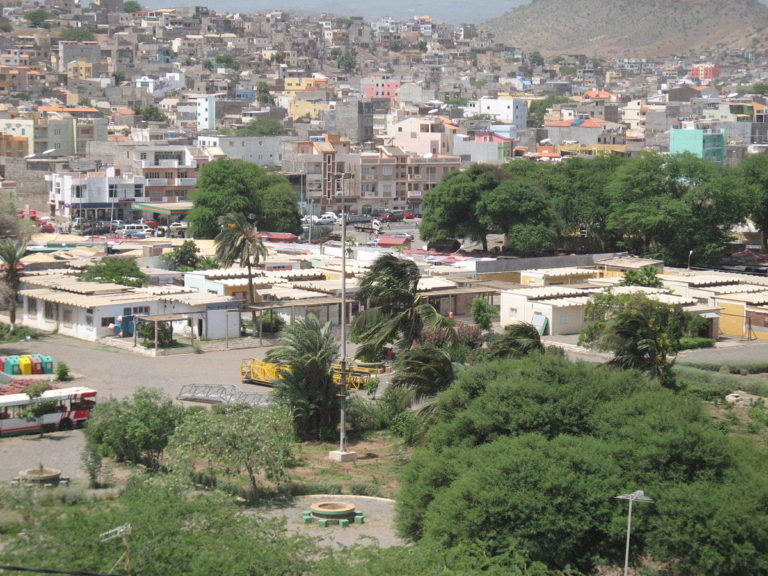
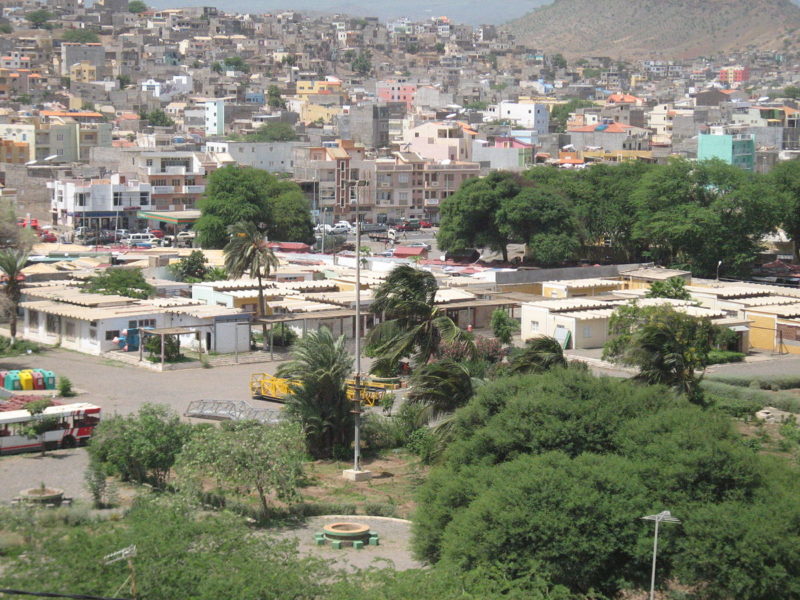
The City of Praia in Cape Verde will host the 4th World Forum on Local Economic Development (LED), scheduled to hold from Tuesday, October 17 to Friday, October 20, 2017.

Praia
Praia, Cape Verde

Over 1,500 participants from 120 countries are expected to attend the meeting organised by the United Nations Development Programme (UNDP), United Cities and Local Government (UCLG), International Labor Organisation (ILO), The Andalusian Fund of Municipalities for International Solidarity) (FAMSI) and ORU-FOGAR.

The UCLG Africa, the umbrella organisation of local governments on the continent, will participate in the event with a delegation led by the Secretary General, Mr. Jean Pierre Elong Mbassi.

The forum will be a venue for exchange on local economic development. The theme of the 4th edition is “The contributions of local economic development to the implementation of the 2030 development programme.” It aims to provide guidance and principles for action to implement SDG 8: Promote sustained, inclusive and sustainable economic growth, full and productive employment and decent work for all and SDG 17: Partnerships for the goals.

The organising committee’s presentation sheet specifies that a special emphasis will be placed on the reduction of inequalities through local economic development.

The event will witness the participation of the President of the Republic of Cape Verde; the Prime Minister of Cape Verde; ministers from Ivory Coast, Angola, Mauritania and Bolivia, as well as numerous local and regional elected officials from Africa and other parts of the world.

During the forum, UCLG Africa will organise two sessions on October 18, 2017; the first of which is entitled, “Climate Change and LED: How to mitigate the effects of Climate Change while promoting Local Economic Development.” This will focus on the economic opportunities that climate change offers to people, including the poorest, building on the good practices of some African cities, notably Porto-Novo with the Songhai project implemented in Benin and on the experience of the 11 pilot cities, parties to the Covenant of Mayors for sub-Saharan Africa.

The second session entitled, “Informal economy between regularisation and access during transitional phases,” will highlight the issues that need to be addressed with regard to the integration of the informal sector into the local economic development strategies and solutions provided by local governments in Africa and elsewhere.

Ebonyi gov commends ICPC for upholding human rights

0

The Independent Corrupt Practices and Other Related Offence Commission (ICPC) has been commended for upholding the tenets of human rights in its operations in the fight against corruption in Nigeria.

David Nweze Umahi
Governor of Ebonyi State, David Nweze Umahi

Governor of Ebonyi State, David Nweze Umahi, made the commendation while declaring open a two-day workshop organised by the Anti-Corruption Academy of Nigeria (ACAN), for top local government officials of Ebonyi State held at ICPC headquarters in Abuja.

Speaking further at the event tagged “Anti-Corruption, Ethics and Integrity Training for Officials of Ebonyi State Local Government Council”, Governor Umahi expressed his appreciation of ICPC’s meticulous investigations and adherence to due process by not detaining suspects arbitrarily or subjecting them to media trials.

He also praised the Commission’s preventive approach in the fight against corruption, noting that it was proactive and more enduring in results.

According to him, the trainings organised by ICPC for government officials in Nigeria would go a long way in ensuring that corruption was prevented rather than allowing it to happen and lead to the waste of the nation’s resources in the prosecution of corruption cases.

The Governor urged Nigerians to practice and uphold integrity saying “when integrity is lost, everything is lost”. He added that the practice of integrity by leaders would ensure that the dividends of democracy would be delivered to the masses and the future of Nigeria is secured.

Gov. Umahi encouraged ACAN to develop a curriculum of study with ethics as the major theme and offered Ebonyi State University to be used as a pilot institution for the curriculum.

Speaking at the opening ceremony of the workshop, the Acting Chairman of ICPC, Abdullahi Bako, said ACAN was established with the aim of curbing corruption in Nigeria, adding that through training, good governance and development would be achieved at the grassroots.

Bako explained that the plan of ICPC is to use the various training modules of the anti-corruption academy to change the perception of Nigeria as being corrupt.

The ICPC Acting Chairman added that the Commission was ready to partner with state chief executives like the Governor of Ebonyi State, who are willing to fight corruption in their respective states.

Commissioner for Local Government and Chieftaincy Affairs of Ebonyi State, Mr. Samuel Okoronkwo, in his address commended the state governor for his “zero tolerance to corruption” and the opportunity given to local government officials to be trained on ethics, which he said would boost anti-corruption drive in the state.

The Chairman of Fiscal Responsibility Commission in Ebonyi State, Nwigwe Vincent, who also spoke in the same vein, urged participants to use the opportunity to be conversant with anti-corruption laws.

The Speaker of Ebonyi State House of Assembly, Rt. Hon. Francis Nwifuru, in his address said Governor Umahi’s approval of the training for local government functionaries in the state would promote integrity and assured that participants would abide by the principles of integrity and accountability

In his address, the Provost of ACAN, Professor Sola Akinrinade, said the Governor of Ebonyi State had displayed an uncommon commitment to the anti-corruption campaign by being the first governor to be physically present at a training held for local government functionaries by ACAN.

He advised participants at the workshop to ensure that they made use of whatever they learnt to promote the fight against corruption.

Bako presented educational materials and a plaque to Governor Umahi and also appointed him as Anti-Corruption Chief Commander.

IGP seeks restraining order against Senate Committee from investigating him

0

The Inspector General of Police (IGP), Ibrahim Idris, has demanded an order of the FCT High Court restraining the Senate Committee set up for the investigation of allegations against him from hearing or reaching a decision.

Ibrahim Idris
Inspector General of Police (IGP), Ibrahim Idris

The fundamental rights enforcement suit, which was filed yesterday by his lawyers: Charles Ogoli, Emmanuel Anene and Solomon Ayangkong Ikongshul, joined Senate President Bukola Saraki and the Senate of the Federal Republic of Nigeria as respondents in the matter.

The IGP also wants the court to restrain the Senate President, Bukola Saraki, and the entire Senate from receiving and discussing any report submitted to it by the said committee.

The IGP stated that one Senator Isa Misau, while raising matter of urgent national importance between September and October 2017 accused him of mounting road blocks across Nigeria with the purpose of extorting money from unsuspecting motorists.

He also stated that the said senator, in his motion, also accused him of collecting illegal fees by way of security protections given to corporate organisations, eminent citizens and oil companies running into billions of Naira.

IGP Idris also stated that Misau accused him of having “unwholesome relationship with female officers in the force.”

He further stated that, “without the first Respondent having regard to the relevant constitutional requirements in respect of the 2nd Respondent’s role in investigations of allegations, he in reaction to these frivolous allegations quickly constituted a committee consisting members of the 2nd Respondent to look into the matter.”

A date has not been fixed for hearing in the matter.

By Chinyere Obia

Supreme Court to decide Dasuki’s bail appeal Jan 25

0

The Supreme Court has fixed January 25, 2018, to decide on the bail appeal filed by former National Security Adviser, Colonel Sambo Dasuki (retired).

Supreme-Court-of-Nigeria
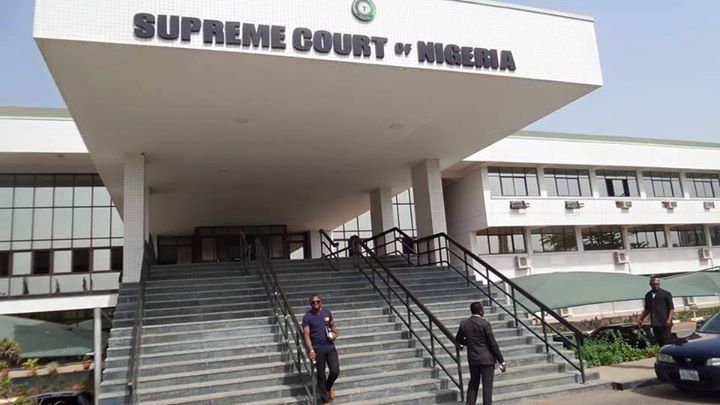
Supreme Court of Nigeria

The appeal hinged on the alleged refusal of Federal Government to obey bail orders granted Dasuki by three different courts in the country.

The apex court fixed the January 2018 date yesterday after counsel to Dasuki, Joseph Daudu (SAN) and counsel to the Federal Government, Rotimi Jacobs (SAN), regularised all processes they filed in respect of the suit so as to set the stage for hearing.

Justice Datijo Mohammed, who led four other Justices at the proceedings, adjourned the matter till the appointed date after clearing all hurdles on the substantive matter.

Dasuki has been in the custody of the Department of State Security (DSS), since December 29, 2015.

In the instant appeal, he is praying the Supreme Court for an order compelling the Federal government to obey the bail granted him by courts in the three different charges brought against him by the same Federal government.

In the alternative, he wants the apex court to stop his trial at both the Federal High Court and the Federal Capital Territory High Courts, pending the time the government will allow him to enjoy the bail granted him, and enable him prepare adequately for his defence in the three separate criminal charges against him.

In his brief of argument settled by Joseph Daudu and Ahmed Raji both Senior Advocates of Nigeria, Dasuki recalled that sometime in 2015, he was arraigned before a Federal High Court, Abuja, on charges of unlawful possession of firearms and money laundering.

The appellant claimed that based on his applications, he was admitted to bail on various conditions by the Federal High Court to enable him prepare for his defence for which he subsequently met all the bail conditions.

The ex-NSA also claimed that he was thereafter taken to two FCT High Courts with separate charges on money laundering, conspiracy and breach of trust, and that on the strength of his application, justices Hussein Baba Yusuf and Peter Affem in their separate decisions admitted him to bail in compliance with the law, to enable him have adequate preparation for his defence in the criminal charges against him.

The appellant further claimed that on December 29, 2015, at the Kuje Prisons, and shortly after perfecting the third bail conditions, the operatives of DSS swooped on him and took him to their custody without fresh charges, thereby disobeying the court orders on the bail matter.

He further claimed that the Economic Community of West African States (ECOWAS) Court in a judgment delivered by Justice Friday C. Nwoke, ordered his immediate release since 2016, in a suit for enforcement of fundamental rights he instituted against the Federal Government, and that up till now, the decision of the regional court has not been obeyed.

He therefore prayed the apex court for an order compelling the respondent to obey all orders in respect of his bail to enable him have unfettered access to his legal team for the purpose of defending himself in the criminal charges slammed on him.

But the respondent in the brief of argument settled by Jacobs, maintained that all orders in respect of the bail granted the appellant by the three high courts have been obeyed at the point of his release at Kuje Prisons, after perfecting the bail conditions on December 29, 2015.

He therefore prayed the court to dismiss the claim of the appellant, adding that the respondent has legally obeyed all orders on the bail issue.

The apex court is expected to determine the issue on January 25, 2018.

By Chinyere Obia