Renaissance Africa Energy Company Ltd. says it is on track to hit a production target of 300,000 barrels per day (bpd) by January 2026, following recent operational gains and facility upgrades.
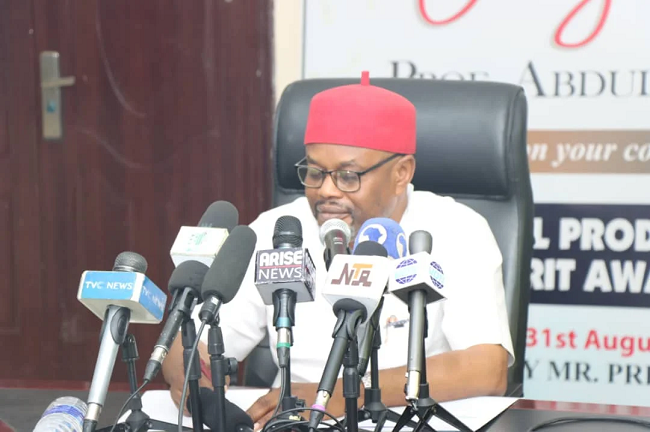
Dr Mesh Maichibi, Chief Production Officer at Renaissance, disclosed this on Friday, August 22, 2025, at a two-day 20th Annual Lecture and Award Ceremony of the Nigerian Society of Engineers (NSE), Port Harcourt Branch.
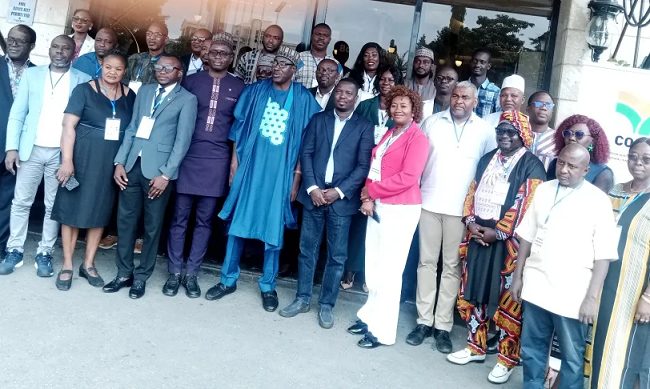
Members of the Nigerian Society of Engineers (NSE) during the union’s 20th annual lecture and award ceremony in Port Harcourt, on Friday
Delivering a lecture on “Transition Management: The Renaissance Case Study,” Maichibi highlighted the company’s rapid progress since acquiring assets from Shell Petroleum Development Company (SPDC) in March.
He stated that Renaissance currently produced about 230,000 bpd and was preparing to activate three additional facilities before the end of the year to meet its target.
“At the point of acquisition in March, production stood at 100,000 bpd. Currently, we are producing 230,000 bpd, and we are confident of reaching 300,000 bpd by January 2026.
“We have a solid strategy to achieve this target. We know the crude locations, understand the challenges, and are implementing the right mechanisms to deliver results,” Maichibi said.
He identified Belama flow station as one of the company’s high-capacity assets, capable of producing 25,000 bpd, noting that restarting such facilities alongside other wells would significantly boost output.
Maichibi said that Renaissance had increased production by more than 100 per cent within months of taking over operations, and was addressing sectoral challenges, including disruptions by non-state actors.
According to him, the company is positioning itself to become Africa’s largest energy firm.
“Change should be embraced. As we move forward, we must constantly evaluate our actions and adjust to ensure we are doing the right thing,” Maichibi said.
The chief production officer also underlined the company’s commitment to capacity building and local content development.
“Eighty per cent of our operations are executed by contractors, whom we now refer to as partners.
“We are investing in their development and training young graduates to take over leadership roles in the future,” he said.
Maichibi noted that Nigeria’s vast crude oil reserves demanded long-term planning and skilled manpower, hence the need to groom the next generation of energy professionals.
Earlier, Mrs. Idaeresoari Ateke, Chairman of the NSE Port Harcourt Branch, reaffirmed the union’s commitment to professional excellence and mentorship.
She said the annual lecture and awards remained a cornerstone of the branch’s calendar, honouring outstanding contributions to engineering while fostering intergenerational knowledge transfer.
The ceremony featured keynote presentations, award recognitions, and tributes to past leaders of the branch.
No doubt, Nigerian scientists are making global contributions in various fields of science and technology.
They have particularly excelled in areas like biotechnology, space research, and Information Communication Technology (ICT).
Chief Uche Nnaji, Minister of Innovation, Science and Technology
Their contributions range from groundbreaking research and technological innovations to developing solutions for local and global challenges.
The Nigerian Government, on its part, has been actively promoting Science, Technology and Innovation (STI) through various initiatives, including development of STI policies.
President Bola Tinubu’s Renewed Hope Agenda emphasises STI as a growth engine for the nation with a view to fostering innovation and technological development.
Also, recently, the Minister of Innovation, Science, and Technology, Dr Uche Nnaji, said Nigeria was working towards modeling robust policy frameworks to foster collaboration among academia, industry, and government.
“Our goal is to position Nigeria as a global leader in research and innovation; achieving this requires robust partnerships with international organisations, collaboration with leading research institutions, and showcasing Nigeria’s achievements on the global stage.
“By becoming a hub for impactful research, we can attract investments, build capacity, and develop solutions that address not just local but global challenges.
“In line with the Renewed Hope Agenda championed by the Tinubu administration, I want to reaffirm the government’s commitment to leveraging science, technology, and innovation to achieve economic diversification, industrialisation, and digital transformation,’’ he said.
Nigerians are making headlines in science and technology due to a combination of factors which include government initiatives, individual achievements, and growing investment in the sector.
One of such Nigerians is Dr Abraham Isah, an Environmental Biologist and Research Scientist, who has achieved global breakthrough in biotechnology research, pushing the boundary of scientific understanding and innovation.
Isah has joined the league of outstanding Nigerian scientists like Dr Festus Anagwu, who developed a high-performance, recyclable, and self-healing vitrimeric resin during his Doctorate degree (PhD) at Cranfield University.
On May 2, it was reported that Anagwu’s work on the novel resin had become part of a European aerospace project called PLAEIDES.
Isah’s ground breaking research marked a significant milestone in Nigeria’s agricultural biotechnology landscape, potentially impacting global agriculture.
The Biotechnology Society of Nigeria (BSN) and the University of Abuja both lauded and celebrated his remarkable achievement.
Prof. Sylvia Uzochukwu, President of Biotechnology Society of Nigeria (BSN), in a congratulatory message, said Isah’s PhD research work on the “Integrative Proteometabolomic and Ecotoxicogenomic Analysis of the Single-Line Transgenic Cowpea,’’ was pioneering.
According to her, the work stands out as a pioneering five-year study with seven international publications and two notable international conference presentations which yielded significant findings.
She said the remarkable achievement not only advanced scientific knowledge, but also bolsters Nigeria’s leadership in agricultural biotechnology.
Highlighting key objectives of the findings, Uzochukwu said that in protein expression analysis, the research identified substantial changes in protein expression with a fold-change threshold of >1.2 or <0.83.
Both expressions represent a logical condition involving numerical values.
The BSN president said functional classification mapped biological roles of deferentially abundant proteins via Gene Ontology (GO) omics.
Another objective was metabolomics perturbations, which investigated potential metabolic effects from the Cry1Ab transgene.
Cry1Ab transgene is a genetic construct that encodes a protein derived from the bacterium Bacillus thuringiensis (Bt).
This protein is part of the Cry (crystal) toxins family, which is known for its insecticidal properties.
Cry1Ab is widely used in genetically modified crops, such as Biotech (Bt) cotton and Bt corn, which have been engineered to express this protein.
Other objectives mentioned as achievable by Isah’s work were non-target organism (NTO) Impact, which assessed structural changes in arthropod communities from Cry1Ab exposure.
Evolutionary dynamics compared evolutionary patterns between transgenic and non-transgenic cowpea.
Environmental variation analysis conducted elemental profiling to analyse environmental impact.
The BSN President said that Isah’s work contributed to knowledge in various ways, representing a landmark in Nigeria’s agricultural biotechnology.
“This study offers an integrated omics approach, the first globally to combine proteomic, metabolomic and ecotoxicogenomic assessments for environmental evaluation of pod borer resistant (PBR) cowpea.
“Isah’s work also provides critical biodiversity insights, adding crucial data on the impact of transgenic crops on non-target organisms, thereby enriching our understanding of ecological effects in field conditions.
“It confirms the molecular stability of Cry1Ab in PBR cowpea, that it does not induce significant molecular changes which supports its environmental stability.
“It also establishes a Nigeria-specific risk assessment framework, and introduces an innovative molecular-ecological methodology for transgenic crop evaluation,’’ the BSN president said.
Prof. Lar Patricia Manko, Vice Chancellor (VC), University of Abuja, said at a Public Lecture on Agricultural Biotechnology, that Isah’s work was a shining example of the institution’s legacy in biotechnology.
“This research, completed here at the University of Abuja, was the first of its kind globally to integrate the consequences of proteometabolomic changes with biodiversity outcomes in Pod Borer Resistant transgenic cowpea.
“Part of its findings has been published in the highly reputable journal Peer J, earning widespread acclaim.’’
The vice-chancellor hinted that Isah’s pioneering work received global recognition when it was honored with a prestigious award at the World-renowned International Society for Biosafety Research (ISBR) symposium in St. Louis, Missouri, USA.
She said the study’s innovative approach significantly enhanced global discussions on the safety of genetically modified (GM) crops.
Accordingly, that it has provided critical insights into how transgenic crops like the Pod Borer Resistant Cowpea (genetically modified, insect resistant beans) can be both environmentally safe and agriculturally transformative.
Manko noted that Isah’s research offered a robust framework for assessing the ecological impact of GM crops, influencing policy and scientific discourse worldwide.
“Today, his work continues to inspire confidence in the adoption of biotechnology, ensuring that small-holder farmers can cultivate resilient crops without compromising biodiversity,’’ Manko said.
Isah’s contributions also align with Nigeria’s national goals, and the Comprehensive Africa Agriculture Development Programme(CAADP) post Malabor strategy for 2025 -2026.
Stakeholders say there is need for continued investment in research and partnership to build on this type of feat in order to position Nigeria as a leader in agricultural innovation.
By Sylvester Thompson, News Agency of Nigeria (NAN)
Wildlife crime, including the poaching of elephants for illegal trade in ivory, continues to pose a severe threat to biodiversity, the rule of law, and local livelihoods, in some parts of the world. Tackling this transnational challenge requires strong partnerships and sustained capacity-building, so as to enable frontline personnel and institutions to collect, share, and act on reliable data that underpins effective law enforcement and conservation strategies.
Since April 2024, the Monitoring the Illegal Killing of Elephants Programme of the Convention on International Trade in Endangered Species of Wild Fauna and Flora (CITES MIKE Programme) has partnered with the École de Faune de Garoua, Cameroon, Central Africa’s premier conservation training institution for over four decades. This collaboration focuses on equipping rangers and park managers to collect and analyze elephant mortality data and monitor poaching trends.
The poaching of elephants for illegal trade in ivory continues to pose a severe threat to biodiversity
Participants learn to accurately record elephant mortality data – including the type and cause of death, detection method, age and sex of the elephant before death, and the presence or absence of tusks – engaging in practical exercises for using standardized protocols and applying crime scene management techniques that preserve evidence for court proceedings.
Over 200 individuals, including MIKE focal points, park wardens, and rangers, have been trained across 15 MIKE sites in the sub-region. The training is now delivered regularly to trainee rangers, ensuring rangers build their skills in CITES MIKE data collection during their education.
CITES Secretary-General Ivonne Higuero said, “As CITES Parties prepare to meet in Samarkand, Uzbekistan for the 20th Conference of the Parties (CoP20) in November this year, training in elephant mortality monitoring continues to be critical. Accurate, reliable and comparable data from the field empowers decision-makers to craft stronger policies and gives frontline conservation stewards the tools to protect not only elephants, but also other threatened species and the ecosystems that sustain them – particularly in the Congo Basin, where poaching pressures remain high.”
With over 20 years of data collection and reporting, range States in the Congo Basin have contributed to building a robust database that not only informs global analyses of poaching trends but also serves as a critical resource for conservation areas. This data supports the development of effective anti-poaching strategies, enhances site-level management and inform global decision-making by CITES Parties on the conservation of African elephants.
According to a recent CITES MIKE report on the latest Proportion of Illegally Killed Elephants (PIKE) data, which calculates the number of illegally killed elephants found divided by the total number of elephant carcasses encountered, the sub-region reported an average PIKE of 0.58, which remain high compared to the other sub-regions in the continent: 0.3 in Eastern Africa, 0.25 in Southern Africa and 0.48 in West Africa.
As elephant poaching in the Congo Basin is driven largely by the illegal ivory and bushmeat trade, there is a pressing need for smarter, more targeted surveillance strategies to conserve remaining populations. Data-driven surveillance and best-practice management are critical to conserving the remaining populations. Through a partnership with the École de Faune de Garoua, targeted training has helped strengthen capacity to combat poaching in the region.
The programme introduced participants to Ranger-Based Monitoring (RBM) and real-time operations, equipping them with practical tools to improve anti-poaching responses. By optimizing RBM to meet management needs and leveraging new technologies, the training has enhanced the ability of frontline staff and managers to detect, prevent, and respond to wildlife crime more effectively.
This partnership with the École de Faune de Garoua also strengthens regional collaboration by bringing together rangers from Cameroon, the Central African Republic (CAR), the Republic of Congo, the Democratic Republic of Congo, Equatorial Guinea, and Gabon to share experiences using real-time operations and the challenges they face, exchange best practices, and coordinate efforts against transboundary wildlife crime.
“This training has allowed me to connect with fellow rangers from neighboring countries, with whom we share the same forest and face the same challenges. Now that we know each other, communication is easier, and information sharing and collaboration are much more effective. Building these connections is essential to fighting poaching in the Tri-National de la Sangha landscape,” said Claver Modiki, ranger at Dzanga-Sangha National Park, CAR.
By embedding CITES MIKE trainings into foundational ranger programs and equipping future rangers early in their careers, the initiative ensures long-term sustainability and scalability of conservation efforts across the sub-region.
The École de Faune de Garoua now boasts a team of instructors with specialised expertise in CITES MIKE protocols and advanced anti-poaching techniques, positioning the school as a regional hub for conservation excellence.
The Petroleum and Natural Gas Senior Staff Association of Nigeria (PENGASSAN) has identified the reasons why the Nigeria’s state-owned refineries are failing.
The association said that the refineries are not failing because Nigerians lack the skills, but as a result of political interference which denied workers the tools, resources, and enabling environment to deliver effectively.
Port Harcourt Refinery
Mr. Festus Osifo, the association’s President who stated this on Friday, August 22, 2025, at the ongoing 4th PENGASSAN and Labour Summit (PEALS 2025), also identified widespread corruption and mismanagement as reasons for the failure of the refineries.
The three-day summit holding in Abuja is themed “Building a Resilient Oil and Gas Sector in Nigeria: Advancing HSE, ESG, Investment and Incremental Production”.
Osifo said Nigeria’s energy future require more than skilled manpower and there is the urgent need for tools, policy stability, and supportive reforms to drive growth in the energy sector.
According to him, during the COVID-19 pandemic, Nigerian workers successfully operated offshore platforms after expatriates departed.
He said the development had proven that the country possessed skilled manpower capable of sustaining global-standard energy production without disruption.
According to Osifo, policy inconsistencies and political interference undermine investor confidence and cripple the nation’s oil and gas sector.
He also expressed concerns over frequent changes to petroleum laws, warning they discourage vital investments.
He added that predictability in fiscal regimes is key to attracting petrodollar into Nigeria’s economy and long-term infrastructure development.
“We must have an industry that investors can predict in five or ten years. Constantly changing policies will only chase away investors and delay sectoral growth,” he said.
On training, Osifo urged both indigenous and international operators to prioritise worker capacity building.
He said it would ensure that Nigerians remain globally competitive and prepared for the changing demands of the energy and labour markets.
In a goodwill message the Secretary General of the Trade Union Congress (TUC), Mr Nuhu Toro, commended PENGASSAN’s foresight, describing the summit as a model platform for strategic dialogue in the energy sector.
“This summit, is a testament to the foresight and strategic thinking required to navigate industry dynamics and their implications for organised labour,” he said.
Toro urged other unions under the TUC to emulate PENGASSAN’s initiative.
He said that modern engagement, dialogue, and innovation remain vital tools for advancing workers’ welfare and strengthening collective bargaining power.
The Director-General, National Emergency Management Agency (NEMA), Mrs. Zubaida Umar, has directed all field offices covering communities along the River Niger to step up advocacy and mobilisation efforts.
Umar’s directive is contained in a statement issued on Friday, August 22, 2025, in Abuja.
Director-General of NEMA, Zubaida Umar
According to her, the directive is given following alerts of rising water levels in the upstream of the river in the Republic of Benin.
“Residents in Kebbi, Niger, and Kwara states, which share borders with Benin Republic, are particularly at risk and are advised to take necessary precautions.
”NEMA offices have been instructed to sensitise communities to remain vigilant and advise residents in high-risk flood plains to evacuate to safer, higher grounds,” she said.
The director-general urged state governments to strengthen their Emergency Management Agencies (SEMAs) and Local Emergency Management Committees (LEMCs) in activating contingency plans and preparedness measures.
Umar reaffirmed NEMA’s commitment to coordinated actions aimed at safeguarding lives and livelihoods along the River Niger.
“The agency is working to mitigate the potential impact of this year’s flooding and protect communities at risk,” she said.
States most vulnerable to flooding are Kebbi, Niger and Kwara, owing to their proximity to the Benin Republic and their location along the River Niger.
Residents in high-risk areas are advised to stay up-to-date with the latest information on flood warnings and evacuation instructions.
Such states should have a plan in place in case of flooding, including evacuation routes and emergency contact numbers.
States likely to be affected by flood have been advised to follow instructions from NEMA and local authorities to ensure safety.
In a related development, hte Enugu State Emergency Management Agency (SEMA) says it has stockpiled relief and shelter materials ahead of an imminent flooding in some parts of the state.
The Head of SEMA in the state, Mrs. Chinasa Mbah, disclosed this at a news briefing in Enugu on Friday.
Mbah said that the state had stocked food, non food materials, daily consumables and shelter materials such as foams and blankets, among others.
Mbah said that the State Government had taken all the necessary precautionary measures to ensure that flooding and the attendant losses did not occur in the state.
She said that on receipt of the predictions from both the Nigeria Meteorological Agency and Nigerian Hydrological Service Agency, SEMA first declared “Operations Desilt all Drainages” in all the Local Government Areas.
According to her, the operation was totally successful as we got the buy-in of the council chairmen and traditional rulers of communities in the state for the campaign.
“We also embarked on flood mitigation sensitisation among the communities in the council areas already identified as susceptible to flood.
“We currently run radio jingles in different radio stations in native language for expansion of the dissemination of early warning information and precautionary mechanisms.
“We are equally re-inaugurating Local Emergency Management Committee (LEMC) in each community in each council area.
“SEMA has trained the LEMC officials to enhance their efficiency and prompt response in case of any flooding and other emergencies in various communities.”
Mbah said that SEMA had been working in partnership with the National Emergency Management Agency (NEMA) in interacting with other critical stakeholders on flooding preparedness programmes.
“SEMA staff, every last Monday of the month, undergo in-house training to enhance their operational capacity towards achieving disaster risk reduction both on flooding and any other emergencies in the state,” she said.
Enugu State has yet to record any flooding this year.
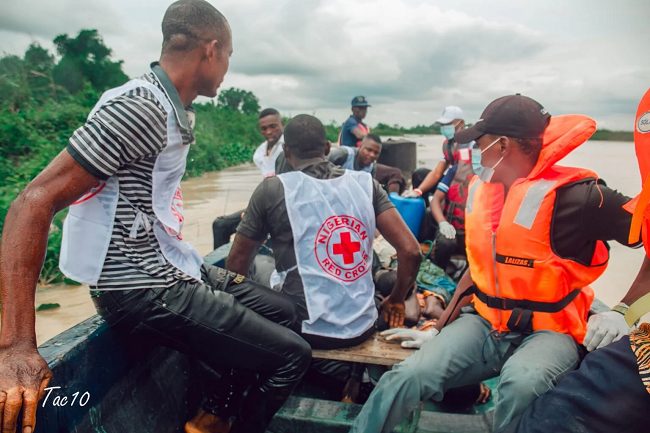
Survivors of the devastating floods of 2012, 2022, and 2024 in Anambra, on Friday, August 22, 2025, recounted their experiences during a community flood preparedness simulation by the Red Cross Society.
The event, held in Inoma Community in Anambra West Local Government Area, brought together residents, who still continue to grapple with the aftermath of annual flooding.
The community flood preparedness simulation by the Red Cross Society
The repeated incidents took many lives, destroyed homes and ravaged farmlands.
The drill, one of 12 simulations under the Italian Government-funded Flood Resilience Project, aimed to improve community preparedness and emergency response readiness in flood-prone areas.
A survivor and youth leader in Inoma, Mr. Francis Odotule, recounted how flood washed away his entire farm business.
“Flood has damaged our farmlands, livestock and livelihoods. What Red Cross is doing today is a big relief.
“We appeal to government and agencies to sustain this support because our survival depends on it,” he said.
Another survivor, Mrs. Ndidiamaka Iroegbu, a mother of four, said she lost everything – her home, farm, and livestock, adding that she had never felt so helpless in her life.
“We relocated to makeshift camps set up for the displaced.
“Sometimes, there will be food shortage. We also face poor sanitation and the risk of disease outbreaks
“But we appreciate Red Cross for this intervention.
“The training will help us better prepare for future emergencies,” Iroegbu said.
A farmer, Mrs Maureen Omataala, described how flood has repeatedly turned life upside down in the community.
“I am a farmer, but since 2012, flood has been ravaging our communities.
“Whenever flood comes, it submerges our houses, destroys our crops and sweeps away property worth millions naira.
“Many times, we escape by climbing rooftops or flee with boats.
“Today’s simulation has taught us safety measures and how to be first responders before help arrives,” she said.
Speaking during the exercise, Anambra Branch Secretary of Red Cross, Mr. Kingsley Okoye, said the exercise underscored the importance of proper planning and community training.
Okoye said the simulation aimed to strengthen local resilience and equip vulnerable communities with life-saving skills, as climate-related disasters grow increasingly frequent and severe.
“This simulation is both a success and a learning opportunity.
“It demonstrates the critical role of first responders in reducing disaster impact.
“With teamwork and collaboration, lives can be saved and losses reduced,” Okoye said.
Also addressing the community, Mrs. Idarabo Ekanem, the Senior Disaster Management Officer and Project Manager, Flood Recovery and Resilience Project, talked on the broader aim of the exercise.
“The project is ongoing in 12 states, including Anambra.
“Our goal is to improve resilience by sensitising communities to what to do before, during and after floods.
“We are also renovating public facilities, strengthening water plants and providing financial and technical support to reduce vulnerability,” Ekanem said.
The exercise recreated a realistic flood emergency scenario, such as early warning broadcasts, community engagement and distribution of relief items.
Others are rapid evacuation drills, boat-led search, underwater search and rescue as well as first aid response and transportation of casualties with ambulance.
Africa is set to add 1.2 million barrels per day (bpd) of new refining capacity by 2030, marking one of the fastest downstream expansions globally, according to the newly released 2025 OPEC World Oil Outlook. This medium-term growth – led by landmark projects in Nigeria, Angola and Uganda – signals a turning point for the continent’s energy sovereignty and investment attractiveness.
At the forefront of Africa’s refining expansion is Nigeria’s 650,000-bpd Dangote Refinery, which began operations in 2024 and is already reshaping regional fuel trade dynamics. Further developments include the 200,000-bpd Akwa Ibom Refinery, also in Nigeria, and Angola’s state-driven push to bring online the 200,000-bpd Lobito Refinery and 100,000-bpd Soyo Refinery by 2030.
Dangote Refinery
Uganda’s refining ambitions are taking shape with a 60,000-bpd facility in Hoima, part of the country’s broader Lake Albert basin development plan. Meanwhile, modular refinery projects in Ghana, Guinea-Conakry, the Republic of Congo and additional sites in Nigeria are enabling incremental but scalable capacity builds in markets where infrastructure and financing hurdles persist.
In North Africa, Algeria (Hassi Messaoud), Libya (Ubari) and Egypt (Soukhna) are all advancing refinery projects aimed at capturing higher margins, improving domestic supply security and reducing dependency on imports of refined petroleum products.
According to OPEC, Africa will need over $40 billion in refining investments by 2030 to meet its mid-decade objectives. Beyond 2030, the figure climbs steeply – requiring an additional $60+ billion for refinery construction, modernization and secondary processing capacity upgrades. This opens a $100 billion investment window for project developers, institutional investors, sovereign wealth funds and energy-focused private equity. With nearly 86% of global refinery additions through 2050 concentrated in the Asia-Pacific, Africa and the Middle East, Africa is increasingly seen as a high-growth frontier.
The 2025 edition of African Energy Week (AEW): Invest in African Energies in Cape Town will provide a platform for governments, operators and financiers to align on next-phase refinery projects, policy incentives and deal pipelines. As host countries seek to reduce costly imports and capture more value from domestic crude, AEW offers an ideal venue for matchmaking capital with opportunity.
Additionally, Africa’s rising domestic consumption of crude – forecast to reach 4.5 million bpd by 2050 from just 1.8 million bpd in 2024 – further underlines the case for investing in downstream infrastructure. This consumption shift, in turn, is expected to reduce Africa’s crude exports by over one million bpd by 2050, emphasising a structural pivot toward internal value chains.
Africa’s medium-term refining expansion reflects both a technical development and strategic inflection point. If the continent seizes this momentum, it can move beyond being a raw crude exporter to becoming a competitive, resilient and integrated energy producer. With $100 billion in refining investment needs projected through 2050 and billions in trade deficits to reverse, the time to bet on the African downstream sector is now.
Nigeria has reaffirmed its commitment to deepening strategic alliances with Japan and other international partners during the Ninth Tokyo International Conference on African Development (TICAD 9) in Yokohama, Japan.
The Nigerian delegation, led by President Bola Ahmed Tinubu, participated in high-level engagements that prioritised power, infrastructure, and industrial transformation as critical levers for sustainable development.
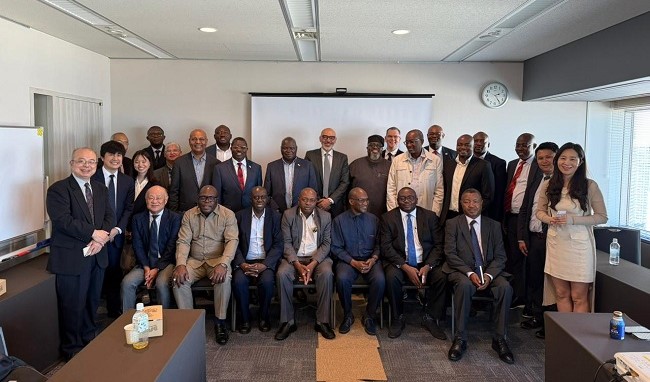
Minister of Power, Chief Adebayo Adelabu, with members of the Nigerian delegation and Japanese stakeholders at TICAD 9
Speaking at the summit, President Tinubu emphasised that Nigeria’s participation at TICAD 9 was not about trade exhibitions, but about forging strategic, outcome-driven partnerships that would deliver tangible results for the Nigerian people.
He stressed that Nigeria is deliberately shifting from planning to implementation, from agreements to delivery, and from promises to measurable results.
At TICAD 9, the Minister of Power, Chief Adebayo Adelabu, who was part of the national delegation, held high-level engagements with Japanese stakeholders, including Toshiba, Hitachi, Japan’s Transmission & Distribution Corporation, and Energy Exchange corporations, focusing on transmission infrastructure, operational efficiency, and strategies to reduce system losses.
These engagements built on the recent Federal Executive Council approvals for counterpart funding of ₦19,083,192,805.30 to catalyse a loan funding of $238 million from the Japan International Cooperation Agency (JICA).
This loan funding will support the expansion of the national grid with the addition of 102.95km of new 330kV double circuit (DC) line, 104.59km of new 132kV double circuit (DC) line, four 330/132/33kV substations, two132/33kv substations, two 330kV line bays extension, two 132kV line bays extension, and one 132kV Substation.
During this engagement, the Minister also announced that Nigeria is advancing a $190 million renewable energy loan facility supported by the Japan International Cooperation Agency (JICA), designed to scale distributed renewable energy solutions across underserved communities.
This builds on the recently launched $750 million World Bank Distributed Access through Renewable Energy Scale-up (DARES) programme under the Mission 300 Compact, which aims to bring clean and reliable electricity to more than 17 million Nigerians.
In parallel, three substations funded by JICA through a $32 million grant are set for commissioning in Apo (FCT), Keffi (Nasarawa State), and Apapa (Lagos State). These projects will directly strengthen supply reliability to households, businesses, and industrial clusters, including critical facilities such as the Lagos Port and surrounding industrial areas.
In addition, through the partnership with JICA, the National Power Training Institute of Nigeria (NAPTIN) has commissioned a state-of-the-art training equipment in Abuja to strengthen the skills of distribution engineers and tackle network losses. This facility is designed to deepen local expertise and promote long-term sustainability in sector operations through capacity development which remains a cornerstone of Nigeria’s power sector strategy.
Speaking during a panel session titled “HICKARE Africa: Harnessing Innovation, Co-creation, and Knowledge for Accessible and Resilient Energy for Africa,” Minister Adelabu highlighted Nigeria’s current energy realities, noting that only 55–60 percent of the country’s population of over 200 million has access to electricity, much of which remains unreliable.
He explained that the Federal Government is addressing this gap by expanding grid access in urban areas while simultaneously accelerating off-grid solutions, including solar mini-grids and standalone systems, for rural and peri-urban communities.
Despite persistent challenges such as limited access to affordable capital, cost barriers for rural households, and under-utilisation of productive-use equipment, Minister Adelabu reaffirmed the government’s commitment to overcoming these obstacles through supportive policies, strategic private-sector partnerships, and local manufacturing of renewable energy components.
The Minister of Power expressed deep appreciation to JICA and the Government of Japan for their long-standing support to the Nigeria’s power sector, recognizing JICA as a reliable partner in advancing the country’s energy transition and expanding access to reliable, affordable, and sustainable electricity.
Minister Adelabu highlighted JICA’s contributions across infrastructure development, technical studies, training, and renewable energy financing and expressed optimism for further strengthened collaboration and partnership between the Governments of Japan and the Federal Government of Nigeria.
Stakeholders on Thursday, August 21, 2025, converged on Abuja to develop skills to tackle climate change and its impact on agricultural growth in West and Central Africa.
They made this known at a two-day regional workshop on the revitalisation of the West and Central Africa Community of Practice (CoP) on foresight analysis.
Participants at the regional workshop on the revitalisation of the West and Central Africa Community of Practice (CoP)
Dr Alcade Segnon, a Scientist at the Alliance Biodiversity and International Centre for Tropical Agriculture (CIAT), said that climate change is propelling additional challenges to the agriculture and food system in the region.
“And in the future, if enough actions are not taken the challenge will be worse, with more impact so there is a need to take into account the current project, develop and implement policy in the region.
“This is why foresight analysis is relevant and we are building the capacity together with our partners in the West and Central African Council for Agricultural Research and Development (CORAF),’’ he said.
Segnon expressed optimism that with the new skill acquired, trainees would be able to mainstream foresight analysis and implement research programmes and policies in the region.
“So that this will help to take into account not only adaptation but also future uncertainty arising for climate change as well as non-climatic drivers such as population growth and environmental degradation,’’ he stated.
Similarly, Dr Abubakar Dabban, Executive Secretary, Agricultural Research Council of Nigeria (ARCN), noted that the importance of tools and methodologies to aid planning, execution, monitoring and control within the system could not be overemphasised.
“It is a fundamental pillar of strategic approach to agricultural research and development, this workshop marks yet another milestone in our collaborative journey as it represents the second major training initiative we have hosted together within the last 12 months.
“Let me assure you that the council remains committed to fostering a collaborative and innovative culture within the foresight community to drive meaningful change in our system,’’ he said.
Dabban urged stakeholders to champion the integration of the tools into operations to support strategic planning and anticipate future challenges.
“This will empower us to move beyond a reactive approach to proactively identify emerging trends, assess potential risks and develop resistance strategies that address the complex uncertainties facing our agricultural system.
“At the regional level, foresight analysis has proven instrumental in helping West and Central Africa’s agricultural research system aligned with regional development practice and priorities and goals.
“Through this workshop, we have the opportunity to strengthen our community of practice deepening our technical capability and partnership that will drive sustainable agricultural transformation across West and Central Africa,’’ he said.
The executive secretary noted that foresight analysis would foster cultural ecosystem and appealed to CORAF for increase in the training of Nigerians to frontier almost 8,000 or more than 1,000 so that the Nigerian ecosystem in general can be accommodated.
Also, Mr. Moumini Savadogo, Executive Director, CORAF, said that the importance of foresight analysis is mainly to prevent and anticipate all risks related to agriculture.
Savadogo, who was represented by Dr Esaie Kpadonou, a Soil Scientist and Climate Change Expert at CORAF, said that the foresight analysis would revitalise the community by adding new members.
“CORAF is covering 23 countries in West and Central Africa with our partners, mainly the Alliance of Bio-based Genome International and Council for Agricultural Research and Development,’’ he said.
The Miners Association of Nigeria (MAN) says Nigeria’s gold, limestone, and bitumen production is increasing, contributing significantly to local economic growth and job creation.
Mr. Dele Ayankale, the National President of MAN, made the announcement on Thursday, August 21, 2025, in Abuja during a news conference to officially inaugurate the 10th edition of Nigeria Mining Week, scheduled for October.
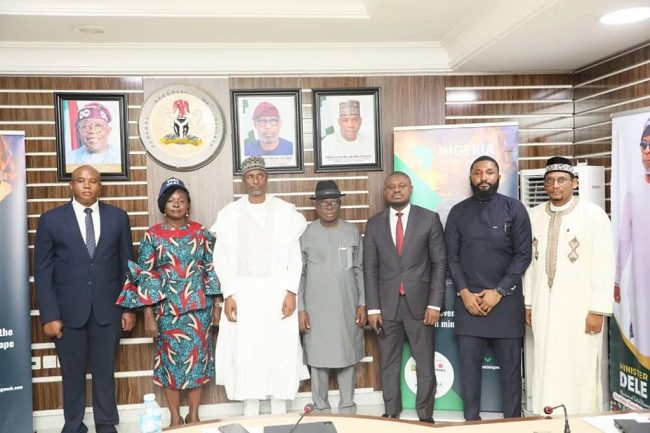
From left: VUKA Group’s Samukelo Madlabane; Dr Esther Udo; Faruk Yabo; MAN President Dele Ayankale; PwC’s Habeeb Jayeilola; and others at the Nigeria Mining Week inauguration in Abuja on Thursday
The Nigeria Mining Week is organised by MAN in partnership with PricewaterhouseCoopers (PwC) and the VUKA Group.
The 2025 edition, themed “Mining from Progress to Global Relevance,” will take place from October 15 to 17.
Ayankale attributed the production growth to previous editions of the mining week, describing the event as a key platform for fostering innovative ideas that drove sectoral development.
He said over the past nine years, the annual conference had led discussions shaping Nigeria’s solid minerals sector, facilitating the introduction of emerging global technologies and policy reforms that had improved the ease of doing business.
He also noted that mining companies were increasingly adopting modern technologies and sustainable practices to enhance efficiency, reduce environmental impact, and boost community engagement.
According to him, the conference serves as a collaborative platform for government, investors, operators, service providers, sponsors, partners, and civil society to strategise on sustainable mining growth.
Ayankale said the 10th anniversary edition would further enhance dialogue, partnerships, and investment opportunities.
“It offers a chance to showcase technological innovation, sustainability, and business excellence across the mining value chain.”
He stressed that collaboration with critical stakeholders had been vital in shaping policies, improving operational standards, and building trust within the sector.
“During this edition, we will promote initiatives that encourage investment, improve safety, support artisanal and small-scale miners, and ensure compliance with global best practices.
“The event will also feature deal rooms, technical workshops, and strategic forums to facilitate practical solutions and direct engagement between operators and investors,” he said.
Inaugurating the 2025 Nigeria Mining Week, the Minister of Solid Minerals Development, Dr Dele Alake, highlighted the event’s role in showcasing the sector’s potential to local and international stakeholders.
He was represented by the ministry’s Permanent Secretary, Mr. Faruk Yabo, who reaffirmed the government’s commitment to positioning Nigeria as a prime destination for mining investment.
He emphasised Nigeria’s vast mineral wealth, with more than 44 distinct minerals, positioning the country as a prime investment destination in Africa.
Alake said the event would bring together policymakers, financiers, miners, explorers, technology providers, and development partners to review the past decade’s progress.
He added that the forum would help set the tone for the future and strengthen Nigeria’s standing in the global mining community.
Mr Samukelo Madlabane, Event Director, Mining at VUKA Group, stated that the conference would also focus on unlocking investment opportunities in related sectors such as power, steel, and infrastructure.
Madlabane said new features for the 10th edition included a steel forum, women in extractive industries forum, gold and West Africa forum, and the Kaduna Mining Development Company (KMDC) deal room.
He said the conference was expected to attract about 3,500 participants from more than 20 countries.
These, he said, would include more than 2,300 mining professionals, 180 mining operators, and 137 industry experts.