The final phase of stakeholders’ engagement for the development of 20 Catchment Management Plans has begun in Gombe State, bringing together key institutional stakeholders from seven states: Adamawa, Bauchi, Borno, Taraba, Yobe, Plateau, and Gombe.
The engagement aims to explore potentials and discuss challenges in the Gaji-Lamurde, Hawal-Kilunga, and Gongola catchments.
Participants at the final phase of stakeholders’ engagement for the development of 20 Catchment Management Plans, in Gombe State
This initiative marks the completion of the broader process to develop 20 Strategic Catchment Management Plans across Nigeria, with the ACReSAL Project supporting the Federal Government of Nigeria in this endeavor. So far, nine plans have been developed and validated, and stakeholder engagements have been completed for eight catchments.
The National Project Coordinator, Abdulhamid Umar, emphasised that the catchment plans are designed to capture a shared vision from stakeholders, ensuring their input reflects real needs within communities. He noted that the process would help attract investments and channel project interventions directly to the people, making implementation easier for investors and more beneficial for local communities.
The Commissioner for Water, Environment, and Forest Resources in Gombe State, Mohammed Said Fawu, described the engagement as timely and aligned with the state’s ongoing environmental efforts. He highlighted the state’s commitment to environmental renewal, citing the Gombe Goes Green initiative, which has led to the planting of over five million trees in the past five years with support from ACReSAL.
The Gombe State Project Coordinator, Amb. Sani Adamu Jauro, also emphasised the importance of the catchment management plans in improving livelihoods, boosting agricultural activities, and strengthening policy frameworks for natural resource management.
The engagement was attended by various stakeholders, including the Gombe State Commissioner, National Project Coordinator, Royal Fathers, ACReSAL Project Coordinators, and institutional stakeholders from Ministries, Departments, and Agencies, NGOs, Academia and others.
As part of the opening activities for the six-day strategic engagement, Gombe ACReSAL did a symbolic distribution of 6,220 bags of drought-resistant seeds to farmer associations, including rice, maize, millet, and guinea corn.
As Africa battles converging crises of food insecurity, climate change, and disease outbreaks, scientists and policymakers are warning that misinformation and disinformation have become a major barrier to innovation, public health, and sustainable development.
At the Africa Biennial Bioscience Communication (ABBC2025) symposium in Lusaka, Zambia, experts called for accurate science communication as a cornerstone of the One Health approach, which integrates human, animal, and environmental health.
Some delegates at the Africa Biennial Bioscience Communication (ABBC2025) symposium in Lusaka, Zambia
Dr. Ndashe Kapula, Director of the Zambia Agriculture Research Institute, representing the Minister of Agriculture, Reuben Mtolo Phiri, said misinformation has emerged as a significant concern in today’s fast-changing information landscape.
“In Africa, we face the convergence of food insecurity and disease, and collectively, these create a complex crisis that threatens health and development. Science must not only be advanced but also defended through accurate communication and trust building,” Kapula said.
The three-day ABBC2025 symposium, held under the theme “The War on Science: How Can We Overcome the Burden of Misinformation and Disinformation?” brought together stakeholders from public health, agriculture, academia, and the media. Its aim is to promote cross-sectoral collaboration, identify best practices in science communication, and advocate for evidence-based policies.
Kapula highlighted that Africa bears the highest per capita prevalence of foodborne and zoonotic diseases, worsened by a dysfunctional food system.
“The intensification of agriculture, deforestation, urban expansion and climate change further weaken ecological and epidemiological natural regulatory processes, thus worsening the spread of infectious diseases and degrading natural resources essential for food production.
The holistic One Health approach is therefore essential in addressing environmental challenges, transforming our food systems, reducing disease burdens and fostering sustainability,” he said.
He stressed that misinformation and disinformation have delayed processes, eroded trust, and in some cases, cost lives. He also acknowledged the critical role of the media in countering falsehoods.
“We recognise you, because without you, we cannot communicate effectively. If we fail to communicate, silence will be like that tree that falls in the forest that makes a loud noise that is never heard of. We need to communicate rightly and correctly so that science is accurately and effectively communicated to the public for the common good of humanity,” he said.
Dr. John Mukuka, Chief Executive Officer of the Common Market for Eastern and Southern Africa (COMESA), echoed these concerns, noting that misinformation undermines public confidence.
“It will serve as a vital counterweight to misinformation, helping policymakers, the media, and the public to engage with biotechnology from informed and evidence-based perspectives,” Mukuka said.
He added that ABBC2025 provides a platform to develop practical strategies for safeguarding truth in science and ensuring innovation delivers inclusive growth for COMESA Member States.
Dr. Margaret Karembu, Director of the International Service for the Acquisition of Agri-biotech Applications (ISAAA) AfriCenter, warned that misinformation continues to stall Africa’s progress in leveraging biosciences to strengthen food systems and the One Health approach.
“The urgency of this issue has been globally recognised, with the World Economic Forum naming disinformation as the second most severe global risk after extreme weather,” Karembu said.
She described it as so painful for a scientist to work for more than ten years, and then when you bring out a product, you find the environment is so toxic that you have to spend another 10 years trying to convince your end users about the value of what you have done in 10 years.
“In those 20 years, a baby born will already be an adult, and those are 20 years lost. This is a big, big pain in the scientific community,” she said.
Her colleague, Dr. Robert Karanja, Board Chairperson of ISAAA AfriCenter, stressed the importance of scientists communicating directly with society.
“Unless scientists communicate effectively the science that they want to make a difference, it will be very difficult to reach the societies,” Karanja said.
He described misinformation as a painful obstacle to progress: “The theme of this year’s symposium is the War on Science. The question we are asking ourselves is, how can we overcome the baggage of misinformation and disinformation?
Karanja added that the World Economic Forum has ranked misinformation and disinformation among the top global risks, surpassing even pathogens.
“It is eroding trust, and it is delaying access to innovations that can help us in dealing with some of the very challenging problems that we are having with our communities within the food systems, within the health of our health systems, and within the efforts in building a resilient community of practice in climate change,” he said.
The United Nations Special Envoy on Water, Retno L.P. Marsudi, at the 35th edition of World Water Week in Stockholm on Monday, August 25, 2025, urged global leaders and stakeholders to embrace collective action and position water at the forefront of climate strategies.
This year’s conference, themed Water for Climate Action, reflects the growing recognition that water and climate are now inseparable challenges confronting our world today. Delivering the keynote address to thousands of participants gathered at the Waterfront Congress Centre in Stockholm for the annual water conference, Marsudi described water as both a contributor to and a solution for climate change.
United Nations Special Envoy on Water, Retno L.P. Marsudi, delivering the Keynote remark at the World Water Week, Monday, 25 August 2025. Photo credit: Elias Ljungberg
“We need strong and robust action on water together. Water resilience prepares us to respond and enables us to adapt and address climate change. Only then can we transform water from being a potential contributor and the victim of climate change to being the solution to climate change,” she said.
Presenting recommendations to make water a solution to climate change, the UN’s Special Envoy urged water to be seen as a prominent watermark in the climate agenda. Building on the Baku Declaration on Water for Climate Action during COP29, which opened the way, she noted, “We must not lose that momentum. Water is transparent, but it must not be invisible in our climate action. It is time for us to raise strong collective claims that water must be at the heart of climate action.
“We can no longer do the same while expecting different results. Current world challenges demand agility, effectiveness, and tangible results. This is why we are in dire need of concrete action in water to multiply progress in all areas of sustainable development,” Marsudi emphasised.
Beyond being one of the largest water conferences in the world, World Water Week 2025, organised by the Stockholm International Water Institute, is poised to be a pivotal moment in global environmental governance in the lead-up to the 2026 United Nations Water Conference, co-hosted by the United Arab Emirates and Senegal.
Following the opening ceremony, the rest of the week will witness a series of high-level panels, centre-stage sessions, displays of water innovation and solutions – including presentation of the Stockholm Junior Water Prize, as well as cross-sectoral partnerships – all aimed at accelerating progress toward the 2030 Agenda.
Year 2025 will mark the 10th anniversary of the adoption of the Paris Agreement on Climate Change and its mandatory requirement that Parties must develop and implement Nationally Determined Contributions (NDCs). The NDCs are nationally determined plans put together by each country outlining the actions needed to meet their long-term goals as a statutory commitment under the Paris Agreement.
Nigeria, despite facing unprecedented challenges of climate change has demonstrated great poise and good leadership in setting up the process to review its NDCs through stakeholder engagements, consultation, data collation and workshops since May 2025.
Umar Saleh Anka, Ph.D, Director, Climate Change, Ministry of Environment and Climate Change, Kano State
Nigeria, among other parties to the United Nations Framework Convention on Climate Change (UNFCCC) may have missed the first deadline to submit its NDCs, but the internal process initiated by the government is in order to meet the new deadline of September 2025. It is important to know that the NDCs are not optional, but they are a statutory pledge to the global community, and more importantly, to our citizens, that we are serious about addressing climate change while driving sustainable development.
Across the world, as at August 2025, less than 30 parties have submitted the 3rd iteration of their NDCs, with less than 5 of those from Africa. Nigeria on the other hand is ensuring a broader and open participation of the process in order to build synergy among its domestic stakeholders: an act that is commendable, and should count Nigeria among the countries leading the frontiers of the NDC process.
If Nigeria’s NDC 2.0 which committed to an unconditional reduction of emissions by 20% and a conditional target (contingent on international support) of 47% below BAU by 2030 was celebrated as a bold step, her NDC 3.0 must set a new ambition to enhance resilience planning, synergy between adaptation, loss and damage, energy transition, with a clear link with our development plans putting the subnational at the heart of effective implementation, ensuring a purposive intention to train the states to develop our NDC that will align with the national target but a mere mention in the document. The national must ensure supporting the subnational to build a system for Monitoring Reporting and Verification (MRV) to accommodate states input rather than over reliance on the national platform.
In reaffirming our commitment to sustainable development, green infrastructure, and climate resilience in Kano State, we have recently launched a historic climate policy and action plan – strategic implementation framework, we went ahead to develop the state readiness and action plan for the climate finance to guide the state’s environmental governance and transition to a low-carbon economy. In the same strength, we unveiled two new legal instruments: the Kano State Environmental Pollution Control Law and the Kano State Environmental Pollution and Waste Control Regulations 2025.
These documents are to reemphasise Kano state’s position as a West African cosmopolitan hub for climate governance, considering the importance of these new laws to the priority sectors of Nigeria’s NDCs, as part of the mitigation measures, we distributed 5 million trees (geo tagged) for the 2025 planting season.
Yes, we praised the new NDC process, but we must not forget the things that set us back in the past. We must address them in a holistic manner whilst awaiting the final approval of the NDC 3.0. I recognise that all the states were given the opportunity to provide data for the development of the NDC 3.0. It is therefore imperative that these data be aggregated, synthesised and integrated into the NDC with recognition of the peculiar climate challenges facing the respective states in Nigeria and targeting them for implementation to align with one of the principles of the UNFCCC of equity.
This is important because, many of the projects promised in past NDCs are nowhere to be found on the ground; whilst validation exercises carried out in states have too often been tokenistic, with subnational inputs ignored in the final documents – this cannot continue. We are positive that NDC 3.0 will bridge the gap and empower the states to build a system that can support the national with valid and verifiable data.
Nevertheless, what is clear is that our next NDC must set economy-wide emission reduction targets that accelerate clean, sustainable, affordable, and just energy access. It must explicitly align climate and biodiversity action, halting and reversing deforestation and forest degradation, and transforming food systems through agroecology – all of which are critical priorities for the Nigerian states that are on the frontline of desertification, drought, and food insecurity, and actively bearing the direct brunt of climate change. The states must be elevated to translate NDCs commitments into practical action. Therefore, the validation must acknowledge this and not repeat the mistakes of the past.
The NDCs operation thrive in a broader context of plans and alignment with Long-Term Low Emission Development Strategies (LT-LEDS), Biennial Transparency Reports (BTRs) and Climate Change Act 2021. Nigeria’s NDCs 3.0 must be bold, grounded in ambition, people-centered with the subnational at the heart of effective implementation for inclusive accountability and ensuring lasting impacts.
By Umar Saleh Anka, Ph.D, Director, Climate Change, Ministry of Environment and Climate Change, Kano State, Nigeria
On Wednesday, August, 27, 2025, Nigeria’s National Council on Climate Change will bring together stakeholders from across the country to the “National Validation Workshop of Nigeria’s NDC 3.0.” The NDCs, as most of us know are series of national commitments under Article 4.2 of the Paris Agreement on Climate Change, which represent countries’ pathways to climate action.
This is to be reviewed every five years and in line with these important stipulations, Parties to the Paris Agreement, Nigeria inclusive, are expected to develop and summit the third iteration of their national climate commitments known as Nationally Determined Contributions (NDCs 3.0) before the end of this year.
Rep. Kama Nkemkanma
The Paris Agreement is a legally binding international treaty on climate change, adopted in 2015, to limit global warming to well below 2°C, preferably 1.5°C, above pre-industrial levels.
A big commendation must of course go to all involved in the process of the development of Nigeria’s NDCs 3.0 because of the massive effort made to make the process inclusive. There were conscious efforts to engage everyone, even reaching out to subnational leaders to make their submissions.
The importance of this effort at integrating subnational considerations in the development process of the NDCs cannot be overemphasized. This is because the devastation wrought by climate change in the form of destruction of infrastructure, loss of arable land due to land degradation, health challenges, insecurity, etc are ultimately borne by people within communities, local governments and states. In essence, the subnational. They should therefore be critical to this.
This was a point I re-iterated on the 3rd of June when the National Council on Climate Change came to brief my committee – House of Representatives Committee on Climate Change and Security – on our NDCs 3.0 process. I made it clear to them that there was a need to also engage subnational legislators. These legislators have key roles to play. For instance, the draft NDCs 3.0 makes the case for eradication of generator use, support for a switch to clean cook options, etc.
None of these can be implemented at a location called “the federal”. Implementation must be at the subnational, hence subnational legislators have a critical role to play either through lawmaking, or through oversight and appropriation. Not engaging them was therefore a big oversight.
Even though this engagement with the subnational legislators was not carried out, a cursory look at the draft NDCs 3.0 did show an attempt at subnational considerations with the inclusion of certain provisions such as recommendations for ranching, reduction in deforestation, gas flaring, etc. These are key provisions which would impact positively on the subnational, especially on the security, ecological health, and human wellbeing, of the people. This is of course as long as we are able to get to the implementation part and also ensure that the process is just.
So, we must commend them for first making an effort, while also highlighting where they could have done better. The first of where they could have done better was the oversight on inclusion of subnational parliaments which I have mentioned above.
Secondly, it is ironic that the effort at reaching out to subnational leaders failed to pay attention to one thing which the NDCs development process had flagged – lack of capacity on the part of subnational actors. What that means is that based on this lack of capacity, the contributions from the subnational leaders might be flawed and not totally reflective of how best to capture their needs. A better way would have been to carry out a proper professionally-led assessment backed by capacity building sessions.
This becomes more poignant when one considers that while the NDCs 3.0 process detailed specific assessment efforts with focus on just transition; gender, youth and children; the NDC and the SDGs; labour within the context of the transition; migration; biodiversity; and circular economy; there was no specific effort for a detailed assessment of subnational needs and how these can be leveraged to ensure deeper attention on how NDCs 3.0 implementation can address subnational development challenges, climate impacts and the key issue of subnational access to climate finance.
Indeed, with Nigeria’s NDCs 3.0 consciously being aligned with the development plans of the country and its net zero target, there is need to explore ways of mobilising the subnational to drive up private sector investments that will at once address subnational needs, build resilience, and accelerate the country’s climate response and sustainable development.
Thankfully, there is still time to do this since our draft NDCs 3.0 projects the development of an investment strategy for NDCs 3.0. This investment strategy and its implementation strategy counterpart must be designed to pay extra attention to core subnational needs and how to leverage these to unlock vast investments. It might be that the earlier discussed issue of professionally-led assessment can now come in to determine how best to use these tools to position the subnational appropriately in our climate and sustainable development plans.
One thing is certain; climate action is development action and there is no way a multilayered country like Nigeria can attain either without taking into strong consideration subnational foundations. We must always proceed with this mindset.
By Rep. Kama Nkemkanma, Chairman of the House of Representatives Committee on Climate Change and Security
A member of the North East Development Commission (NEDC), Rep Sir Sam Onuigbo, has said that Nigeria’s sustained efforts at mainstreaming climate change actions into national development priorities have continued to gain international recognition.
He disclosed that at a time when the world is grappling with the realities of climate change, including desertification, environmental degradation, forced migration, insecurity, and depletion of rivers and rivulets, the country has shown strong determination to transition from fossil fuel to clean energy.
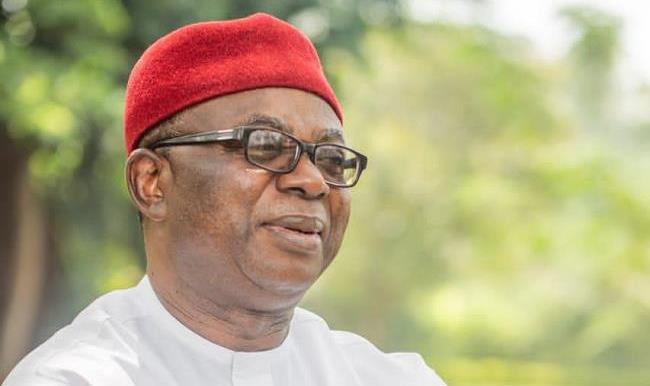
Rep. Sam Onuigbo
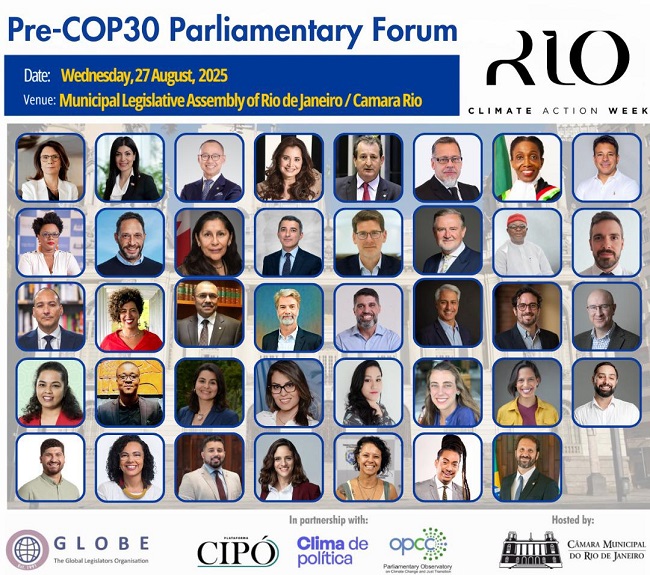
Speaking to journalists in Abuja on the imperatives of the Pre-COP30 Parliamentary Forum in Rio de Janeiro/Camara Rio, Brasil, Onuigbo, who is among the 39 resource persons expected to deliver papers at the conference, noted that the world faces an urgent need for just transitions to NET Zero reduction in carbon emission.
Onuigbo, who sponsored Nigeria’s signature legislation known as the Climate Change Act 2021, explained that the forum in Rio de Janeiro, which kicks off on Wednesday, August 27, 2025, should not be seen as a mere talk shop, stressing that Nigeria’s participation shows the level of interest the world has developed in the country’s strategic leadership.
While noting that Nigeria has continued to be on the frontline in advocating for climate justice, Onuigbo pointed out that the country is leveraging on the provisions of the Climate Change Act to drive its climate sustainability strategies, based on REDD+ and Article 6 of the Paris Agreement, which allows countries to trade emission reductions as “Internationally Transferred Mitigation Outcomes (ITMOs)”.
Sam Onuigbo is among the 39 resource persons expected to deliver papers at the conference
He stated: “REDD+ (Reducing Emissions from Deforestation and Forest Degradation, plus conservation, sustainable management of forests, and enhancement of forest carbon stocks) is anchored in Articles 5 and 6 of the Paris Agreement.
“While Article 5 directly recognises the role of forests in mitigation, Article 6 provides the framework for voluntary cooperation between Parties to achieve their Nationally Determined Contributions (NDCs), including through market and non-market mechanisms.”
Other important provisions of Article 6, he said, include, 6.2, which “Allows countries to trade emission reductions as “Internationally Transferred Mitigation Outcomes (ITMOs),” stressing that verified REDD+ results can be transferred between countries or entities to support NDCs.
“Article 6.4, Establishes a centralised crediting mechanism supervised by the UNFCCC, where REDD+ projects or jurisdictional programmes can generate units for compliance and voluntary carbon markets.
“Article 6.8: Provides for non-market approaches, including capacity building, technology transfer, and finance, which are important for REDD+ readiness and implementation,” he stated, adding that it could be seen that REDD+ serves as both a results-based finance instrument and a potential supply source of high-integrity carbon credits under Article 6.
The former federal lawmaker, who was recognised by the New York-based Business Insider as one of the 30 Top Global Climate Leaders in 2023, praised President Bola Ahmed Tinubu for keeping aloft the torch of Nigeria’s bold contributions to the issue of climate sustainability.
The Deputy Vice-Chancellor (DVC), Administration, Lagos State University (LASU), Prof. Adenike Boyo, on Tuesday, August 26, 2025, urged the Nigerian government to adopt the latest renewable energy technologies, to mitigate climate change.
Boyo made the appeal at the 3rd LASU Sustainable Development Goals (SDGs) International Conference on Renewable Energy Research and Application 2025 at the university’s main campus in Ojo, Lagos.
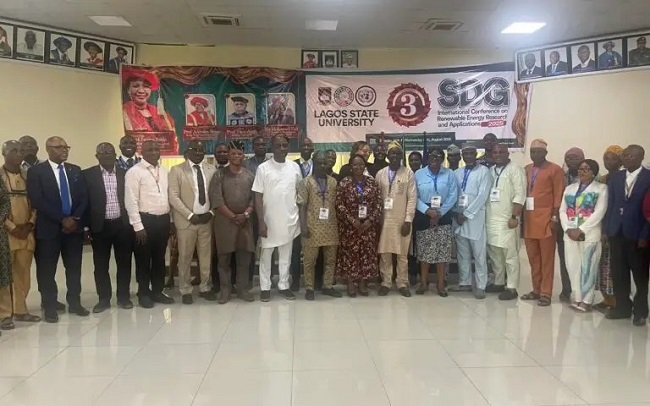
The LASU Deputy Vice Chancellor, Administration, Prof. Adenike Boyo, participants and other principal officials of the university at the 3rd LASU SDG International Conference on Renewable Energy Research and Application 2025
She said that Nigeria had the chance to benefit immensely from adopting cutting-edge renewable energy technologies.
“Nigeria, striving to meet growing energy demands and mitigate climate change, must actively adopt latest advancements in renewable energy technologies.
“These trends offer real solutions for improving electricity access, reliability, environmental health, and economic resilience.
“To lead this transformation, Nigeria must invest in research and development, update regulations, attract investment, and build human and physical capacity.
“Strategic integration of these innovations can transform Nigeria into a clean energy leader in Africa,” Boyo said.
While taking on the theme, she said that the lecture would explore emerging trends in the global renewable energy landscape and their applicability in Nigeria, such as Advanced Solar Photovoltaics.
“Others are Floating Solar Farms, Wind Energy (offshore wind, vertical axis turbines) and Sustainable Biofuels (algae-based, waste-to-energy),” she said.
The DVC noted that these emerging trends and technologies offered solutions to advanced energy storage which could address solar and wind intermittency.
She added that while innovative solar designs reduced land requirements, sustainable bio-fuels from waste could tackle both energy and waste management challenges.
“By adopting these innovations, Nigeria can enhance grid stability, expand energy access to underserved areas, and promote sustainability in a cost-effective manner,” she said.
Boyo noted that one of the challenges Nigeria was facing in adopting emerging trends was technological immaturity and adaptation.
She added that many technologies were still maturing and needed local adaptation.
“There is need for specialised infrastructure and expertise: Nigeria lacks the grid, ports and logistics for large-scale offshore and storage deployment.
“There is a need for an evolvement of existing frameworks and laws to support new energy models,” she said.
The DVC, however, recommended that Nigeria should partner with global firms, offer tax incentives and support.
“Prioritise Research and Development by finding local innovations and adapting global technologies to local needs.
“Create flexible policies that support integration of new technologies,” she recommended.
Earlier in her welcome address, the Vice-Chancellor (VC), LASU, Prof. Ibiyemi Olatunji-Bello, said that the conference was significant for the people and governments of Nigeria.
The Vice-Chancellor, represented by the DVC, Administration, Prof. Boyo, said: “Renewable energy, also called green energy, is energy from renewable, natural resources that are replenished on human scale.
“The most widely used renewable energies are the solar, the energy of the wind, hydropower, the power energy and geothermal power.
“They are natural and self-replenishing and usually have a zero or no carbon footprint.”
She added that as part of the global efforts to limit climate change, most countries had committed to next-level greenhouse gas emissions in practice.
“This means phasing out fossil fuels and raising the global emissions of energy resources.
“This much-needed process, coined as low-carbon substitution, in contrast to other transitional processes, including energy emissions, needs to be accelerated multiple times to successfully mitigate climate change.
“Despite the rich energy resources in Nigeria, many cities still lack access to affordable energy.
“This has contributed to the country’s poor economic and social development,” she said.
Olatunji-Bello added that the purpose of the conference was to bring together researchers, engineers, manufacturers, practitioners and coastal partners all over the world.
“This is to discuss advanced and developing renewable energy research and applications.
“We must support the development of our nation and we must embrace transformation,” she said.
The LASU SDG Director, Prof. Tayo Ajayi, in his address, said that renewable energy was vital to the society because it reduced climate change greenhouse gas emissions.
Ajayi, represented by the Deputy Director, SDG, Dr Teslim Ojutomi, said: “This improves public health by lowering air pollution, enhances energy security by reducing reliance on imported oil, stimulates local economies through job creation in new industries.
“It also provides a sustainable and inexhaustible power source, unlike fossil fuels, which contributes to long-term energy stability and how they are planned for future generations.
“The topic within the scope of this conference includes the following areas, but not limited to renewable energy.
“It includes new trends and technologies for renewable energy research and applications for industries, artificial intelligence and machine learning studies for renewable energy studies and its application, among others,” he said.
A groundbreaking new UK study has revealed that microplastics are present in virtually every type of beverage we consume daily – from coffee and tea to juice, fizzy drinks, and bottled water – underscoring the urgent need for solutions. Researchers from the University of Birmingham tested 155 popular beverages sold across the UK and found synthetic microplastic particles in every single one.
The findings show that hot tea contained the highest levels, averaging 60 particles per litre – more than double the levels in soft drinks. Coffee was also heavily affected, with hot coffee averaging 43 particles per litre and iced coffee 37. Even fruit juices and energy drinks contained measurable amounts of microplastics.
According to the study, hot tea contains the highest levels of microplastics, averaging 60 particles per litre
The researchers warn that, based on typical beverage consumption, women in the UK may ingest around 1.7 microplastic particles per kilo of body weight per day, while men are close behind at 1.6. Heat was identified as a key factor, with hotter drinks consistently leaching more plastics into beverages.
“This is the first time anyone has looked at total beverage intake rather than just water,” said co-author Professor Stuart Harrad. “It’s a step towards understanding the real scale of everyday exposure.”
“Microplastic and toxic chemical contamination of our drinking water and everyday beverages is one of the most alarming health challenges of our time,” said Bengt Rittri, Bluewater founder and CEO. “People should not have to worry that every sip of tea, coffee, or juice is delivering tiny plastic particles or PFAS ‘forever chemicals’ into their bodies.”
In a landmark moment for agricultural reform and environmental justice, the National Department of Agriculture convened a historic Colloquium on Pesticide Policy Framework last week, bringing together government departments, farmer associations, scientists, civil society, industry, labour, farmworkers, and human rights organisations in an unprecedented, multi-sectoral dialogue on pesticide policy reform.
The colloquium marks a serious effort to modernise South Africa’s pesticide governance, especially the Farm Feeds, Fertiliser, and Agrochemical Remedies Act 36 of 1947, signalling a shift from a fragmented and outdated regulatory framework toward a unified, science-based, and socially accountable system.
Anna Shevel, network coordinator of UnPoison
The event sought to reignite national commitment through a One Health approach, integrating animal, human, plant, and environmental health to evaluate pesticide risks in a holistic and interconnected manner, and to finally modernise and implement the 2010 Pesticide Management Policy, which has remained unimplemented 15 years later.
“For the first time in history, civil society was not merely in the room, but at the table,” said Anna Shevel, network coordinator of UnPoison.
Among the civil society, farm worker and human rights organisations present were Women on Farms Project who were well represented in numbers and demanded a voice in the discussions, the South African Human Rights Commission, and other participants from the South African People’s Tribunal on Agrotoxins.
Academia was represented by University of Pretoria’s Plant Sciences Department, while the University of Cape Town’s Divisions of Public Health Medicine and Environmental Health; the Poison Information Centre from the Red Cross Children’s Hospital; and numerous experts, academics, and impacted citizens aligned through the UnPoison network.
Industry and farmers were represented by CropLife, South African Bioproduct Organisation (SABO), and bodies from various agricultural commodity sectors, such as GrainSA, Hortgro, the Citrus Growers Association, alongside critical government partners. Alongside the National and Provincial Departments of Agriculture from a number of provinces, the colloquium was attended by the Departments of Health; Forestry, Fisheries and the Environment; and Employment and Labour, which underscored the urgent need for interdepartmental coordination due to overlapping mandates and legislative gaps.
The colloquium’s closure was marked by a clear, unambiguous set of commitments from the Deputy Director-General of the National Department of Agriculture Dipepeneneng Serage, including:
Public access to the national pesticide registration database within two weeks.
Revival of an interdepartmental government committee to address legislative fragmentation and drive coherent pesticide governance.
Formal adoption of a One Health framework in risk assessment and policy design.
Increased capacity in the agrochemical registration office, including additional technical skills to evaluate biological products.
To ban problematic pesticides that have been banned elsewhere.
Development of a sustainable finance mechanism to resource the registration office.
Greater transparency and stakeholder inclusion, especially involving civil society and farm workers in all future consultations.
For decades, the Department of Agriculture has faced sustained criticism for its lack of responsiveness, bureaucratic inertia, and regulatory capture, but this colloquium signalled a turning tide.
“The transparency, willingness to acknowledge past mistakes and intent to reorganise the need to change how business is done are strongly welcomed and it gives us a sense of hope and optimism that there will be meaningful change,” said Professor Leslie London, Chair of Public Health Medicine in the School of Public Health and Family Medicine at UCT.
Held after long-standing calls for action, the event laid the groundwork for a bold and collaborative path forward, one that values transparency, centres public health and environmental stewardship, and opens regulatory space for safer, sustainable agricultural innovations.
That future, Shevel stressed, includes farmers and farmworkers at the heart of a successful outcome for the future: “The outcomes we are advocating for in this process are not about dismantling agriculture, they’re about future-proofing it. Every stakeholder involved, from farmworkers to regulators to civil society, shares a common goal: to protect the viability of farming while safeguarding health and ecosystems. There is no appetite for a ‘win-lose’ outcome. Our shared commitment is to a win-win-win path forward, where agriculture flourishes, communities are protected, and environmental ecosystems are restored.”
The historic replacement of a “prehistoric” Act written in the 1940s begins with this collective vision and commitment. The Pesticide Policy Framework Colloquium was a turning point, not just in pesticide policy, but in democratic participation and government accountability.
The Africa Climate Week and Africa Climate Summit are set to take place in Addis Ababa, Ethiopia, against the background of escalating climate impacts to which African nations remain the most vulnerable. Meanwhile, global interventions to address the climate crisis continue to fall short of the urgency and scale of the situation.
Observers believe it is a defining moment for African nations as they convene to map out Africa-led climate solutions to address the crisis. This calls for decisive action to tackle the root cause of the crisis – coal, oil and gas- and accelerate the people-centred transition to renewable energy to advance universal energy access and sustainable development.
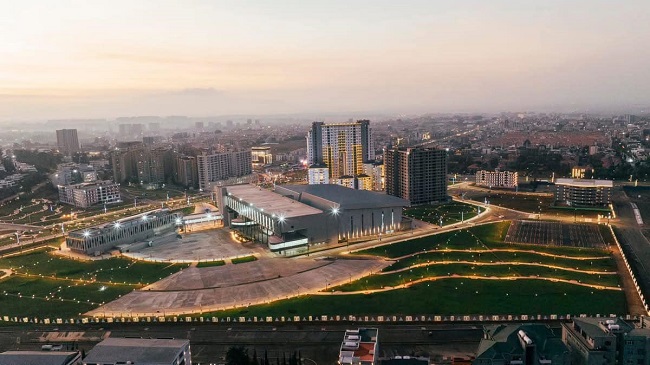
Addis International Convention Centre, Addis Ababa, venue of the second Africa Climate Week of 2025
Ahead of COP30, African nations have the opportunity to set the tone for bold climate action at the global level, by championing a fossil fuel phase-out, rejecting “false solutions”, while advancing concrete, actionable plans for a fair and financed transition.
From September 1 to 6, 2025, Climate Week in Addis Ababa will bring together negotiators with implementers in government and the real economy, along with key financiers including development banks, businesses, civil society, and Indigenous Peoples to help speed up climate implementation.
Organised by UN Climate Change and hosted by the Federal Democratic Republic of Ethiopia, the second Climate Week (CW2) of 2025 will focus on turning pledges into solutions that deliver tangible benefits for people – stronger economic growth, more affordable energy, better health, and rising living standards.
It will highlight how communities and partners are already pioneering scalable solutions – from community recycling projects in Kenya, to green bonds in Morocco, to digital platforms tracking ambition – with sessions structured around implementation challenges identified by countries and regional actors, while also sharing proven solutions so they can be replicated and scaled up.
“Climate Weeks are about connecting the international climate process to people’s real lives and to real economies. They will showcase proven real-world solutions so they can be replicated and scaled up and will help lay a foundation for real progress on finance, adaptation, mitigation and a Just Transition, in Belém and beyond,” said UN Climate Change Deputy Executive Secretary Noura Hamladji.
CW2 builds on the renewed Climate Week model launched earlier this year, designed also to drive efficiencies by clustering mandated events in the formal UNFCCC process on key issues to be progressed in advance of COP30.
The Implementation Forum: A Crucial Platform
The Implementation Forum is at the core of CW2 – a new space to share and develop practical solutions across climate finance, technology, and other key sectors. With a strong focus on investment and collaboration, it will bring together diverse actors through Implementation Labs, dialogues, and roundtables to address real-world challenges.
Key thematic sessions include:
Adaptation Finance
Public–Private Finance Dialogue
Accelerating Agriculture Climate Action
Scaling Forest Climate Action
Strengthening Public–Private Sector Collaboration
Multilevel and Community-Driven Action
The Climate Week has also been structured to reflect and help advance the incoming COP30 Presidency’s six focus areas in its Action Agenda.
A Steppingstone for the Africa Climate Summit and COP30
The Climate Week is global in focus, but its solutions are deeply relevant to Agenda 2063 – Africa’s vision for inclusive growth, sustainability, and resilience. CW2 has been deliberately timed to take place just ahead of the Africa Climate Summit 2 (ACS2), hosted in Addis Ababa from September 8 to 10, 2025.
The outcomes of CW2, particularly from the Implementation Forum, will help inform the Summit, where African leadership will advance work on finance, adaptation, and resilience – shaping Africa’s voice on the road to COP30 and marking a crucial moment for the continent’s climate leadership.