Home Blog Page 200

Nigeria’s NDC 3.0 is blueprint for inclusive, resilient low-carbon development – Experts

A cross section of climate experts and development partners have appraised Nigeria’s Nationally Determined Contributions 3.0 and described it as a step in the right direction. They made the assertion at the National Stakeholders’ NDC 3.0 Validation Workshop organised by the National Council on Climate Change (NCCC) in Abuja to present update of Nigeria’s NDCs in preparation for the National Executive’s approval and eventual submission to the United Nations Framework Convention on Climate Change (UNFCCC). The event was held on August 27, 2025, with stakeholders from across multiple sectors as a hybrid engagement.

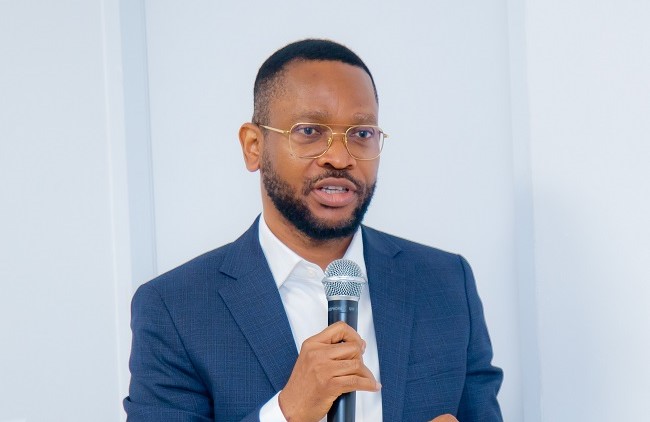
Resident Representative of United Nations Development Programme (UNDP) Nigeria, Mrs. Varsha Redkar-Palepu, who was also at the event, described the NDC 3.0 as sharper in emission reduction target and deeper in integration of critical segments of the society including the youth, women and sub-national voices.
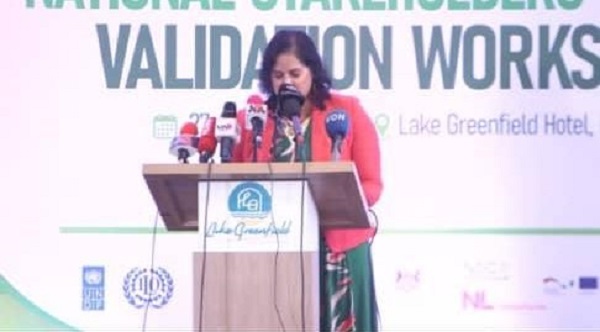
Varsha Redkar-Palepu
Resident Representative of United Nations Development Programme (UNDP) Nigeria, Mrs. Varsha Redkar-Palepu

Redkar-Palepu explained that Nigeria’s journey through NDC 1.0 and 2.0 has laid a strong foundation even as she pointed out that the validation of Nigeria’s NDC 3.0 is a pivotal moment and a milestone that reflects Nigeria’s unwavering commitment to climate action and its leadership in shaping a sustainable future for Africa and the world.

She maintained that Africa, though contributing the least to global emissions, remains disproportionately vulnerable to climate shocks. Yet, it is also a continent of immense potential – rich in natural resources, youthful energy, and innovative spirit. Even with this, she stressed that Nigeria, as the largest economy and most populous nation in Africa, carries a unique responsibility and opportunity to lead by example.

In the same vein, Senior Special Assistant to the President on Climate Finance and Stakeholder Engagement, Ibrahim Abdullahi Shelleng, said that the third version of the NDC is designed to respond to the outcomes of the first Global Stocktake under the Paris Agreement, and builds on lessons learned, identifies where there is need to do more, and sets a clear pathway for stronger mitigation and adaptation action across Nigeria’s economy.

He maintained that, under the Renewed Hope Agenda of President Bola Ahmed Tinubu, Nigeria is committed to inclusive growth, economic transformation, and social development – objectives that align seamlessly with our environmental and climate goals.

“As we unveil and deliberate on Nigeria’s NDC 3.0, it is important to underscore that this document is not just a climate commitment – it is a developmental blueprint. It reflects our national priorities in energy transition, agriculture, waste management, and resilient infrastructure, all of which are central pillars of the Tinubu administration’s policy direction.”

In her opening remarks, Director-General of the National Council on Climate Change (NCCC), Barr. Teni Majekodunmi, called on global partners, particularly developed countries, to honour their commitments under the UN Framework Convention on Climate Change (UNFCCC) and the Paris Agreement, particularly in the areas of technology transfer and support for innovation in developing countries.

Majekodunmi stressed the importance of localizing innovation by building the capacity of Nigerian entrepreneurs, researchers, and start-ups to develop technologies suited to the nation’s climate realities.

At the event, Yakubu Kolo, a conservation expert said that the states hold a central role in both design and implementation and called for access to finance for states.

Kolo, who is Commissioner for Environment and Climate Change, Niger State, acknowledged that the process of developing NDC 3.0 has shown committed efforts to course-correct and be inclusive, participatory, and people-centered.

He noted that Nigeria’s NDC 3.0 must set clear ambition that reflects leadership, embed stronger adaptation strategies, and ensure financing is both practical and accessible to states.

He affirmed that the NDC must be ambitious, inclusive, and credible, and must reflect the important contributions of the subnational as the burden bearer of climate change vulnerabilities.

Attendees included representatives from UNDP, Africa Development Bank (AfDB), United Nations Children’s Fund (UNICEF), Youth Constituency, German Corporation for International Cooperation (GIZ), United Nation Women, Global Disability Green Initiatives (GDGI), International Labour Organisation (ILO), the Foreign, Commonwealth & Development Office (FCDO), as well as NGOs/CSOs.
Africa Climate Summit 2: A defining moment for Africa

Two years after its much-acclaimed inaugural meeting, the Africa Climate Summit (ACS) will convene for its second edition in Addis Ababa from September 8 to 10, 2025. The government of Ethiopia and the African Union will host the event. The summit comes at a critical moment as Africa looks to strengthen its climate leadership ahead of COP30 in Belém, Brazil.

This year’s summit carries greater urgency. Africa remains among the most climate-vulnerable regions, facing an escalating crisis defined by 2024 being the hottest year on record, with 2025 poised to surpass it. ACS2 offers a high-stakes opportunity to shape Africa’s climate agenda before key global events to be held this year.

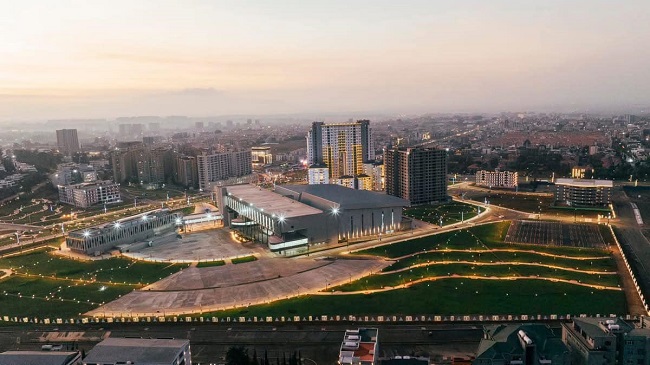
Addis International Convention Centre
Addis International Convention Centre, Addis Ababa, venue of the second Africa Climate Summit of 2025

Resilience and Green Growth

The theme of this year’s summit,  “Accelerating Global Climate Solutions: Financing for Africa’s Resilient and Green Development,” signals Africa’s resolve to reframe the climate narrative. Building on the momentum of ACS1, which presented Africa as a continent of solutions, innovation, and potential, ACS2 seeks to champion homegrown approaches while advancing Africa’s role as a driving force in global climate action.

From the Nairobi Declaration to Addis Ambition

The inaugural summit in Kenya culminated in the Nairobi Declaration, an 11-point call to action that unified Africa’s voice on climate. Over the past two years, countries have worked to turn the declaration into tangible policies and outcomes. But where do they stand? ACS2 will take stock of this progress, consolidate efforts, and spotlight local solutions capable of turning Africa’s climate vulnerabilities into drivers of resilience and growth.

From Nairobi to Addis: ACS2 Takes the Stage

The Second Africa Climate Summit (ACS2), scheduled for September 8-10, 2025, in Addis Ababa, is being billed as Africa’s COP, a moment to shift from declarations to delivery. With more than 45 Heads of State expected, the summit will showcase African-led solutions, from renewable energy expansion to climate-smart agriculture, while pressing on the core issue of finance: how to close the multi-trillion-dollar gap that leaves African countries spending 5% of their GDP on climate impacts they did little to cause.

Building on the 2023 Nairobi Declaration, ACS2 aims to reposition Africa not as a victim of climate change but as a powerhouse of solutions, driving a just energy transition, demanding fair finance, and making the case that investing in Africa is investing in the planet’s future.

GOCOP 2025 annual conference to address Nigeria’s governance realities

0

The Guild of Corporate Online Publishers (GOCOP) has announced that its 2025 annual conference will be held at 10:00 a.m. on Thursday, October 9, 2025, at Radisson Blu Hotel, Ikeja, Lagos.

The conference, which is the ninth edition, is themed: “Reconciling Campaign Promises with Governance Realities: Challenges and Prospects.”

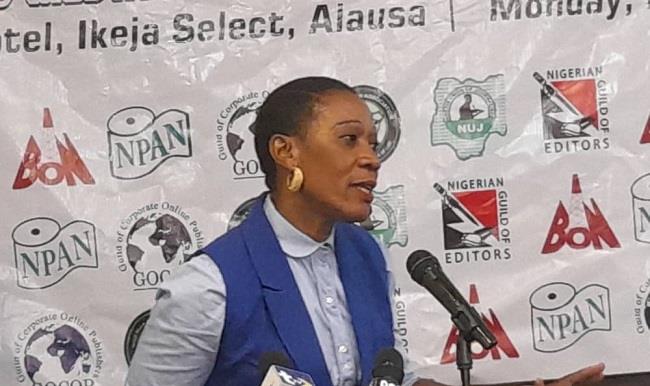
Maureen Chigbo, GOCOP President
Maureen Chigbo, GOCOP President, at Media Roundtable on self-regulation

A press statement by the publicity secretary, Ogbuefi Remmy Nweke, quoted the conference planning committee chairman, Danlami Nmodu, as saying that the event was aimed at generating actionable strategies for bridging the gap between electoral promises and effective governance in Nigeria and Africa.

Nmodu, who doubles as the deputy president of GOCOP, also revealed that the conference would feature a distinguished keynote speaker and panel discussions.

Nweke recalled that past GOCOP conferences had hosted prominent speakers including Bishop Matthew Hassan Kukah, the Bishop of the Catholic Diocese of Sokoto, who delivered the 2019 lecture on “Economy, Security and National Development: The Way Forward”.

In 2021, Mr. Boss Mustapha, then Secretary to the Government of the Federation, keynoted the Conference in his capacity as Chairman of the Presidential Task Force on Covid-19. He spoke on: “Post Covid-19 Pandemic: Recovery and Reconstruction in Nigeria”.

In 2022, Professor Mahmood Yakubu, Chairman, Independent National Electoral Commission (INEC), delivered the keynote titled “2023 Elections: Managing the Process for Credible Outcome.”

The 2023 edition, which held in Abuja, with the theme “Nigeria: Roadmap for Socio-Economic Recovery and Sustainability”, was keynoted by Professor Uche Uwaleke, a Professor of Capital Market.

GOCOP, a professional body comprising 119 member organisations, was founded to uphold the tenets of journalism in the digital age. Its members are seasoned editors and senior journalists who have transitioned from traditional media to online publishing.

The statement noted that “the conference offers unique sponsorship opportunities for brand visibility, media recognition, and networking with high-level journalists, editors, and policy influencers”.

Through a partnership with GOCOP, organisations demonstrate their commitment and promotion to ethical journalism and responsible media, the statement said.

At media parley, Heirs Energies showcases operational milestones, Pan-African growth ambitions

0

Heirs Energies, Nigeria’s leading indigenous integrated energy company, hosted a strategic media parley on Thursday, August 28, 2025, at the Heirs Towers on Victoria Island, Lagos. The interactive session brought together over 50 journalists from top-tier energy and business publications, marking a significant step in the company’s efforts to foster transparency and strengthen industry-media relations.

In his remarks, Sam Nwanze, Heirs Energies’ Executive Director and Chief Financial Officer, who delivered a presentation titled “The Heirs Energies Story: From Vision to Impact”, provided deep insights into the company’s founding vision, operational transformation, and its rapidly expanding role in Nigeria’s energy landscape.

Sam Nwanze
Sam Nwanze, Heirs Energies Executive Director & Chief Financial Officer, addressing journalists during the media parley in Lagos

A key highlight of the session was Heirs Energies’ turnaround of OML 17, a formerly underperforming asset burdened by oil theft and inactivity. According to Nwanze, the company reactivated over 100 dormant wells and achieved a 95–100% terminal delivery rate – all within the first 100 days of taking over the asset.

Heirs Energies also emphasised its strategic pivot toward gas as a cornerstone of Nigeria’s energy future. The company has commissioned the Agbada Non-Associated Gas (NAG) Plant and scaled its gas production to over 100 million standard cubic feet per day (MMscfd), positioning itself as a key supplier in the Eastern domestic gas market.

Osa Igiehon, Heirs Energies’ CEO, in his submission addressed pressing industry challenges, including crude oil theft, infrastructure sabotage, policy uncertainty, and energy security. He highlighted the role of indigenous companies like Heirs Energies in driving sustainable growth in Nigeria’s upstream sector.

“Our strategy is rooted in resilience and transparency,” Igiehon said. “We are building a globally competitive company with Nigerian leadership, for Nigerian and African prosperity. Africapitalism isn’t just a philosophy for us—it’s our business model.”

Beyond operations, the company spotlighted its commitment to social impact and host community development, aligned with its Africapitalist principles.

Key CSR achievements include:

  1. Training over 300 youths through vocational programs
  2. Awarding 280+ scholarships to students from host communities
  3. Providing medical outreach to over 20,000 individuals
  4. Rehabilitating 4,500 sqm of access roads
  5. Empowering 1,000+ entrepreneurs in Rivers State through a partnership with the Tony Elumelu Foundation.

Heirs Energies also revealed plans for continental expansion, with strategic interests in Namibia, Senegal, Angola, and other African energy markets. The company aims to replicate its Brownfield Excellence (BFE) model-leveraging local expertise and operational innovation-to revitalise underperforming assets across Africa.

The media parley underscored Heirs Energies’ ambition to lead not just within Nigeria but across the African energy sector, combining business success with measurable socio-economic impact.

By Ajibola Adedoye

NNPC plans refinery deal to tackle fuel issues

0

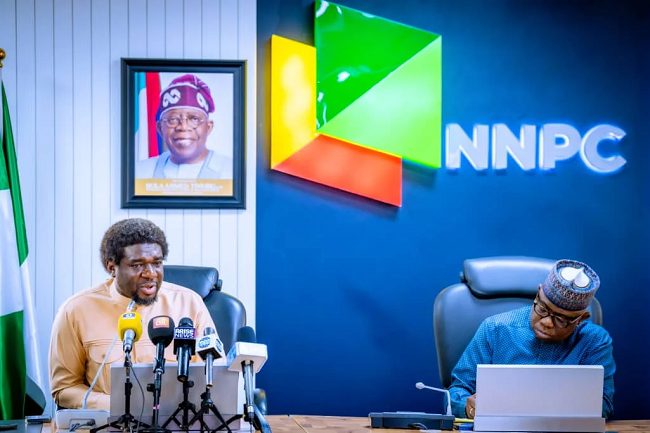
The Group Chief Executive Officer of the Nigerian National Petroleum Company (NNPC) Limited, Mr. Bayo Ojulari, says the company is considering partnering with a professional refinery operator to address Nigeria’s lingering refining challenges.

Ojulari said this on Thursday, August 28, 2025, while receiving members of the National Executive Council (NEC) of the Petroleum and Natural Gas Senior Staff Association of Nigeria (PENGASSAN) at the NNPC Towers in Abuja.

NNPC
Mr. Bayo Ojulari, Group Chief Executive Officer of Nigerian National Petroleum Company Limited (NNPC Ltd.) (right), and Comrade Festus Osifo, President of PENGASSAN (left), during a courtesy visit by the association to the NNPC GCEO, on Thursday

He said NNPC had completed technical assessments on the country’s three refineries and recently concluded a commercial review of the Port Harcourt Refinery, which revealed the need for a more sustainable business model.

“The solution you are proposing is the same one we are working on.

“We have now completed the technical review of the three refineries, and from the commercial review of Port Harcourt, it’s clear that we need to bring in a true professional refinery company to partner with us,” Ojulari stated.

He explained that years of neglect and inadequate maintenance had rendered the refineries commercially unviable, resulting in losses of between N300 million to N500 million monthly.

“We were pumping around 50,000 barrels of crude daily into the refinery, but getting less than 40 per cent output.

“So, rather than continue to incur losses, we halted operations to seek a viable and profitable model,” he added.

Ojulari emphasised that President Bola Tinubu had not exerted any political pressure on NNPC to resume refinery operations prematurely, stressing that all steps taken so far had been focused on ensuring long-term sustainability.

“There was no political pressure to keep running at a loss. We decided to freeze operations and focus on getting it right,” he said.

He also addressed recent protests and calls for his removal, revealing several targets of coordinated harassment.

“There is a formidable plan to remove me, and staff morale has taken a hit. But we are focused on delivering our mandate,” Ojulari stated.

Earlier, PENGASSAN President, Festus Osifo, hailed the current NNPC leadership for improved pipeline functionality and increased oil production since Ojulari’s appointment.

He also expressed the union’s readiness to support NNPC in its drive toward energy stability.

“We are currently producing about 1.8 million barrels per day.

“Our goal is to reach 2.6 million barrels by 2026 by addressing issues like non-producing fields,” Osifo said.

By Joan Nwagwu

Dangote Refinery materially reshaping regional oil flows – MEMAN

0

 Commissioning of the Dangote Petroleum Refinery in Lagos is materially reshaping regional flows but does not eliminate import dependence.

This formed one of the key takeaways by participants at a webinar held on Tuesday, August 26, 2025, courtesy of the Major Energies Marketers Association of Nigeria (MEMAN) and S&P Global Commodity Insights (Platts).

Dangote Refinery gate

Themed: “West Africa Fuels Landscape: Market Fundamentals and Geopolitical Drivers”, the virtual session examined how global geopolitics, changing trade flows and new regional refining capacity are reshaping West Africa’s refined products landscape.

Discussions focused on the impact of the Dangote refinery commissioning, shifting export channels from Europe, the role of Lomé as a flexible trading hub, recent price shocks including a Dangote FCC outage, and methodological innovations to better reflect how material trades in the Gulf of Guinea.

While stating that refinery outages remain major price drivers and that Lomé functions as a growing marginal hub providing flexible small clip supply and supporting price discovery, discussants concluded that policy stability, transparent regulation and investor confidence are critical to attract downstream investment that will strengthen supply resilience and influence domestic prices.

The webinar had opened with a safety briefing from Kingsley Ojimba, MEMAN Jetty Superintendent, covering remote event hygiene and question protocols, including chat and raise hand functions.

    MEMAN Chairman, Mr. Huub Stokman, framed the event as timely following Nigeria’s move to full fuel price deregulation, emphasising that rising local refining capacity changes the supply landscape and that MEMAN would support market transparency, benchmarking and coordinated stakeholder engagement during the transition.

    Gary Clark, Associate Editorial Director for EMEA Clean Refined Products at S&P Global Commodity Insights, speaking on “Current Supply, Demand, and Pricing Dynamics in Europe and West Africa”, discussed gasoline, diesel, and jet fuel markets, and stressed supply resilience in the face of geopolitical disruption, including effects from Russia, Ukraine and tensions in the Middle East. He highlighted weaker European demand fundamentals such as inflation and slower growth.

    Clark noted that Dangote’s ramp up has reshaped flows, retaining much gasoil in West Africa and exporting some jet fuel internationally, which reduces but does not eliminate import dependence. He also noted that outages and maintenance can quickly reintroduce import needs and market volatility.

    Mrs. Ogechi Nkwoji, Head, Economic Intelligence Research and Regulation at MEMAN, speaking on “Demystifying the Lomé Petroleum Market”, presented the ex-Lomé hub as a pragmatic offshore trading solution that evolved from onshore bottlenecks and declining domestic refinery performance.

    She added that large cargoes are discharged into floating storage off Togo and sold in smaller 5 to 20 kiloton parcels to regional buyers, chiefly Nigerian marketers.

    Matthew Tracey-Cook, Senior Price Reporter, EMEA Gasoline & West Africa Refined Products, S&P Global Community Insights, speaking on “Gasoline outlook”, reviewed European gasoline trends, seasonal quality premiums for summer blends and the links between European dynamics and West African markets. He observed that crack spreads have been softer relative to the post COVID and Russia Ukraine period, driven in part by reduced transatlantic arbitrage and lower exports to West Africa following Dangote’s commissioning.

    Tracey-Cook highlighted a sharp rally in gasoline cracks in August after an FCC outage at Dangote, with implied cracks moving from about thirteen dollars per barrel to above seventeen dollars per barrel. This episode underscored how Dangote outages can have outsized impacts on Atlantic basin product balances and prompt market backwardation.

    MEMAN’s CEO and Executive Secretary, Mr. Clement Isong, reaffirmed MEMAN’s commitment to leverage the partnership with S&P Global Commodity Insights for ongoing media education and stakeholder engagement on pricing and product flows.

    The Gambia achieves national consensus on landmark Climate Change Bill, Policy

    0

    Stakeholders from across The Gambia have unanimously validated the nation’s draft National Climate Change Bill and an accompanying National Climate Change Policy, marking a historic milestone in the country’s commitment to building a climate-resilient future.

    The validation occurred following a comprehensive two-day national workshop held from August 18 to 19, 2025, at the Sir Dawda Kairaba Jawara International Conference Centre.

    Gambia
    Participants at the workshop to validate The Gambia’s draft National Climate Change Bill and National Climate Change Policy

    The new integrated framework provides a legal and strategic roadmap to address the nation’s climate vulnerabilities, from sea-level rise to coastal erosion, while charting a path towards a just, green, and blue economy. The Bill establishes a robust legal architecture, while the Policy outlines a clear, five-pillar strategy for implementation.

    In her opening remarks, the Minister of Environment, Climate Change, and Natural Resources (MECCNAR), Ms. Rohey John Manjang, emphasised the framework’s importance.

    “These frameworks are not just documents; they are our national pledge to strengthen resilience and achieve The Gambia’s ambitious climate targets,” she stated, commending the inclusive process and the “crucial role of Natural Eco Capital, the lead consultant, for delivering the drafts despite a very tight deadline.”

    The validation is the culmination of an extensive consultation process involving government ministries, international partners like the World Bank and the International Monetary Fund, and civil society organisations.

    A cornerstone of the new legislation is its focus on decentralised action, ensuring that climate action is community-led and locally relevant.

    Mr. Lamine Jammeh, Director of the Climate Change Secretariat, underscored the principles guiding the framework.

    “A just transition, which places the needs of Gambians at the forefront, is a non-negotiable principle,” he said. “Our participation in carbon markets must safeguard national interests with transparency and equity.”

    The drafting process received financial support from the World Bank-funded West Africa Coastal Areas Management Programme (WACA). Dr. Muhammed L. Sanyang, WACA Project Manager, hailed the workshop as a “significant achievement for climate governance” and reaffirmed the World Bank’s “unwavering commitment” to supporting the implementation of these landmark frameworks.

    Key features of the validated bill include a streamlined governance structure, the creation of a Directorate of Climate Finance, legal safeguards, including a Climate Change Division of the Environmental Tribunal, and a mandate to develop a legal framework for carbon rights to attract responsible investment.

    With the validation complete, the bill will be presented to the Cabinet and the National Assembly for enactment into law.

    By Rantiola Akinola, Natural Eco Capital

    All On chairman urges bold investments to bridge energy gap in Nigeria

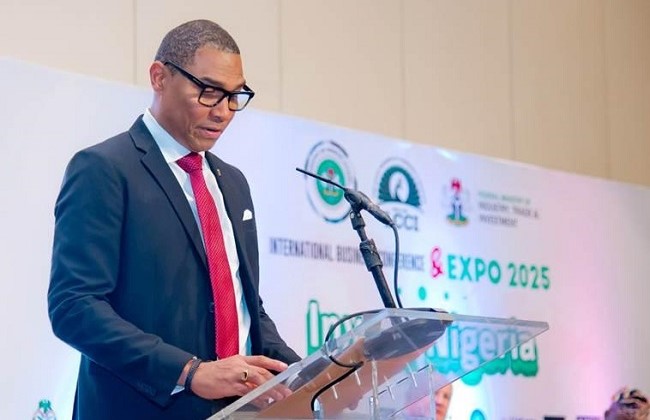
    Nigeria needs bold investments to address the energy deficit that affects millions of households and industries, Chairman of off-grid impact investment company All On, and Managing Director of Shell Nigeria Exploration and Production Company Ltd (SNEPCo), Ronald Adams, said on Wednesday, August 27, 2025, while addressing business leaders at the 2025 International Business Conference & Expo of the Lagos Chamber of Commerce and Industry (LCCI).

    Adams, who assumed the role of All On Board Chairman last month, quoted statistics showing that over 80 million Nigerians lacked access to reliable electricity.

    All On
    Ronald Adams, Board Chairman of All On and Managing Director of Shell Nigeria Exploration and Production Company Ltd (SNEPCo) delivering a speech at the Lagos State Chamber of Commerce and Industry (LCCI), 2025 International Business Conference & Expo in Lagos

    “The consequences of the deficit are far-reaching: stifled productivity, limited access to quality healthcare and education and stunted economic potentials,” he said.

    But Adams was optimistic that, with the right policies and investments, the deficit could translate to a $10–20 billion market opportunity, especially in off-grid energy solutions such as mini-grids, solar home systems and clean cooking technologies.

    He said that All On, which was established by Shell in 2016, had achieved over 50 direct investments, committed over $40 million and supported ventures that have brought clean energy to over 1.2 million Nigerians across 190 underserved communities across the country.

    Adams called for more investments, highlighting the importance of strategic collaborations not just in energy, but across agriculture, digital technology, manufacturing, infrastructure and financial services. He commended efforts to attract foreign investment, including the launch of Investopedia, a digital platform showcasing opportunities across the 36 states.

    He added: “We invite local and international investors to seize the moment and help unlock the full potentials of Nigeria’s renewable energy market. Together, we can build a future that is inclusive, sustainable, and resilient.”

    Initiative launches in Nigeria to tackle growing threat from extreme heat

    TECA Heat Action Wave (THAW), a new initiative to address Nigeria’s escalating extreme heat crisis, was launched on Wednesday, August 27, 2025, by BFA Global, FSD Africa, ClimateWorks Foundation, and the UK’s Foreign, Commonwealth & Development Office (FCDO) Nigeria.

    Together, the coalition has committed $1.1 million to support 12 early-stage ventures developing innovative solutions to protect climate-vulnerable communities from the growing impacts of extreme and chronic heat.

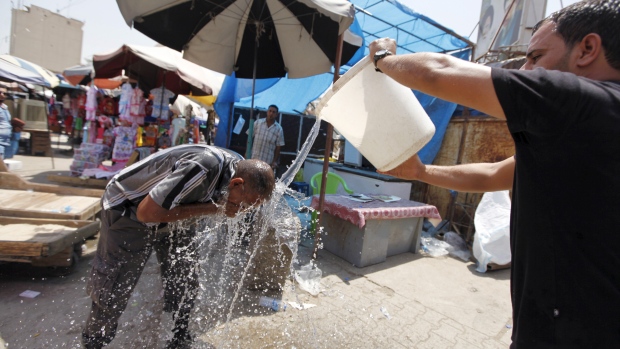
    heat wave
    Above-danger heat stress: A man cools off amid searing heatwave

    Extreme heat events are now at least 10 times more likely in West Africa due to human-caused global warming. In Nigeria, millions of jobs and livelihoods are already at risk, with more than 60% of the population regularly exposed to dangerous heatwaves. Urban settlements like Lagos, Kano, and Abuja now experience heat indices above 50°C during peak months.

    “Extreme heat represents perhaps the most overlooked consequence of climate change affecting Africa today,” said Juliet Munro, Early-Stage Finance Director at FSD Africa. “It’s not only a public health emergency, but a threat to livelihoods, productivity, and long-term economic resilience. Through this initiative, we’re making a strategic investment in African-led innovation, supporting scalable, context-specific solutions that deliver real impact where it’s needed most.”

    THAW will support 12 early-stage ventures developing market-driven early warning tools, innovative financial instruments such as parametric heat insurance, emergency-centric finance tech, and ecosystem enablers and builders – tools and services that help individuals and small businesses operate more safely and efficiently in rising heat, preferably integrating early warning systems or fintech solutions.

    Selected entrepreneurs will receive seed capital, venture-building support, and expert-led sprints on user research, product design, business modeling, and fundraising. Each startup will be matched with an embedded venture builder who will join their team to accelerate execution and strategy. Entrepreneurs will also gain access to a suite of technical specialists, female-focused mentorship, and local consultants to support prototyping and market testing.

    “Addressing the impacts of extreme heat requires bold, market-led innovation, and that’s exactly what this initiative delivers. By supporting local entrepreneurs to develop viable, scalable solutions, we’re strengthening the role of the private sector in driving climate resilience. FCDO is proud to back this partnership, which puts Nigerian-led innovation at the centre of solving one of the region’s most pressing climate adaptation challenges,” said Temi Akinrinade, Private Sector Development Advisor at FCDO Nigeria.

    “Extreme heat is silently eroding lives, productivity, and economic opportunity,” said Tyler Ferdinand, TECA Director at BFA Global. “Through TECA, we’re not only funding ventures, we’re embedding the strategic support, networks, and capital they need to transform survival into resilience.”

    “The world is racing against a closing window of time for investing in the ability of communities to withstand and recover from climate shocks. Adaptation is not only a response, but also a strategy for economic security, market stability, and shared prosperity in a warming world,” said Jessica Brown, Senior Director of Adaptation and Resilience at ClimateWorks Foundation.

    The program will run through mid-2026, culminating in demo days and investor events. High-performing ventures may qualify for reinvestment and tailored follow-on support through 2027.

    Implemented by BFA Global in partnership with FSD Africa, TECA is a venture-building program designed to spark exponential climate action by sourcing and accelerating bold, locally grounded solutions to emerging climate threats. This new heat-focused initiative reinforces TECA’s commitment to inclusive entrepreneurship, gender-intentional design, and transformational funding, positioning Nigeria as a hub for scalable, investable climate innovations.

    Burkina Faso lauded for terminating ‘Target Malaria’ project

    The Coalition for Monitoring Biotechnology Activities (CVAB) welcomed, albeit with relief and satisfaction, the decision of the government of Burkina Faso to end Target Malaria project activities throughout the national territory.

    “This wise, responsible, and historic decision marks an important step in preserving the scientific and health sovereignty of our country, Burkina Faso. It also demonstrates the authorities’ willingness to opt for solutions that respect public health, the environment, and citizens’ choices,” the group stated.

    Malaria
    Malaria is a serious mosquito-borne infectious disease caused by the Plasmodium parasite, primarily transmitted through the bites of infected female Anopheles mosquitoes

    The CVAB reaffirms that malaria is a national tragedy, causing grief to thousands of families each year. It hopes that the Burkinabe government will intensify the development and implementation of safe, inclusive, and proven public policies for the eradication of the disease.

    “Several countries have succeeded in being certified malaria-free thanks to reliable and proven methods. Burkina Faso can also meet this challenge with strategies adapted to its realities.”

    The CVAB expresses its deep gratitude to all those who, directly or indirectly, contributed to ensuring that the voice of civil society was heard in this process.

    Target Malaria is a research consortium led by Imperial College London, which receives core funding from the Bill and Melinda Gates Foundation to apparently eradicate Malaria in Africa. The first phase of its project in Burkina Faso has been a failure, involving the release of GM mosquitoes.

    “We have witnessed strained human capacity on the part of regulatory authorities; a lack of experience, transparency, and compliance with the Convention on Biological Diversity and Cartagena Protocol; and, most disturbing, alleged human rights violations.

    “Free, Prior, Informed Consent interventions by the project included the use of intimidation and fear, driving conflict and dividing communities based on false promises. The limited public participation, dubious tactics, and silencing of communities illustrate its failure to ensure genuine, Free, Prior, and Informed Consent,” submitted CVAB.