The Society for Planet and Prosperity (SPP) in collaboration with the Secondary Education Board (SEB) is set to organise a two-day interactive climate education event for teachers and students from 40 schools across Abuja Municipal Area Council (AMAC).
The trainings, scheduled to take place from March 3 to 4, 2026, will utilise the Climate Education Handbook developed by SPP, with support from the University of Bristol, to equip participating teachers with structured tools to integrate climate literacy into their teachings, while inspiring students to become environmental advocates. It will also focus on strengthening climate-related clubs in the schools to promote sustained student engagement and climate action beyond the classroom.
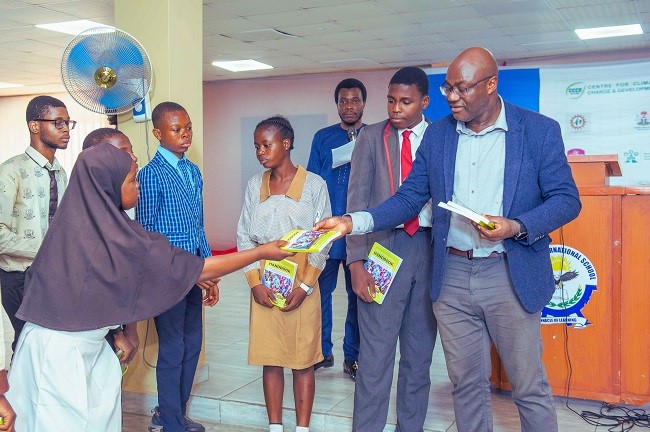
Prof. Chukwumerije Okereke handing the Climate Education Manual to a student
SPP, a not-for-profit organisation at the forefront of climate policy discussions in Nigeria, has identified climate education as a strategic pathway for driving long-term environmental awareness and behavioural change among young people.
Speaking ahead of the event, Mr. Nnaemeka Oruh, Senior Policy Analyst at SPP, emphasised the urgency of early climate engagement.
“As climate change continues to shape the future of our planet, young people are being called to lead the way. We believe that it is important to have these conversations not only in the halls of power, but at the grassroots. Being informed is the first step to developing capacity, and our aim is to take climate knowledge directly into classrooms and empower students to become solution-driven leaders in their communities,” he said.
The Climate Education Manual was developed as a long-term resource for schools aligned with existing curricula, and designed to equip teachers with the tools to confidently deliver lessons on climate science and sustainable living.
By institutionalising climate education through this resource, SPP hopes to foster a generation of environmentally conscious citizens prepared to contribute meaningfully to Nigeria’s climate goals.
By Ugochukwu Uzuegbu, Communication Specialist, SPP
Vice Chancellor of the University of Nigeria, Nsukka (UNN), Prof. Simon Ortuanya, says Nigeria targets $2.5 billion in high-integrity carbon credit investments by 2030, with its carbon market now established.
Ortuanya disclosed this at the Stakeholders` Validation Workshop on Potential and Challenges of Voluntary Carbon Market in Nigeria, on Thursday, February 26, 2026, in Abuja.
The programme was organised by Resources and Environmental Policy Research Centre, Environment for Development (REPRC-EfD) UNN.
Vice Chancellor of the University of Nigeria, Nsukka (UNN), Prof. Simon Ortuanya
Ortuanya noted that carbon markets, especially with Article 6 of the Paris Agreement enabling countries to trade carbon credits, are key to a low-carbon economy.
He explained that carbon markets are grouped into two: Compliance Carbon Markets (CCM) and Voluntary Carbon Markets (VCM).
According to him, while the VCM encompasses all transactions of carbon offsets not purchased under a regulated carbon market, CCM are marketplaces through which regulated entities obtain offsets under regulatory regimes.
“Although the compliance market remains hypothetical in Africa, the VCM has existed for over two decades and has shown remarkable growth since its inception, primarily driven by the private sector.
“Globally, the VCM is valued at 2 billion dollars in 2022. Analysts place Africa’s potential VCM value at up to 1.5 trillion dollars by 2050, provided integrity and equity are safeguarded.
“Meanwhile, with the carbon market now in place, Nigeria is positioning itself to capture a sizeable share of about 2.5 billion dollars in high-integrity carbon credit investment by 2030, aligned with article six,’’ he said.
The vice-chancellor warned that poor implementation could lead to carbon leakage and adverse effects on vulnerable communities, emphasising the need for strong governance systems to prevent negative distributional impacts.
He said stakeholder knowledge and collaboration were critical to addressing uncertainties in the carbon market, describing the workshop as an opportunity to validate findings on Nigeria’s carbon market potential and challenges.
According to him, the forum will examine issues including regulation, measurement, reporting, verification and community participation.
“The engagement will help develop actionable strategies balancing environmental integrity and equitable benefits.”
Ortuanya said UNN, through its research centre, has capacity to provide evidence-based policy guidance, noting that previous engagements on the project were held in January 2025 and July 2025.
The vice-chancellor, who was represented by Prof. Nnaemeka Chukwuone, Director of REPRC-EfD, Nigeria, thanked development partners and stakeholders for supporting the research and contributing expertise.
Chukwuone said that significant progress had been made since the study began over a year ago, culminating in the current validation stage of the research.
“Nigeria lacked a carbon market framework at the inception stage, but now has one,following sustained engagement with stakeholders and support from relevant authorities.
“Efforts are ongoing to strengthen implementation through capacity building, project registration and development of monitoring systems, with over 120 carbon projects already registered as of December 2025.
“Carbon market participation could reduce emissions, generate revenue, empower communities and support poverty reduction, while similar initiatives are gaining traction in countries such as Ghana and Kenya,’’ he said.
Chukwuone noted that investor confidence and interest in carbon market opportunities were now high across the country.
He commended the National Council on Climate Change for facilitating the framework and thanked other stakeholders for their support.
The GROW Project – Construction Waste Remediation and Recycling Vocational Training in Sub-Saharan Africa has officially been launched, bringing together European and African partners to address construction waste challenges while promoting green job creation in Nigeria and Mozambique.
Co-Funded by the European Commission under the Erasmus+ Capacity Building in Vocational Education and Training in Sub Saharan Africa programme, the GROW Project aims to strengthen vocational education systems by equipping young people, construction workers, and educators with green, digital, and entrepreneurial skills for sustainable construction waste management and recycling.
LAWMA, a member of the consortium implementing the GROW Project
The construction sector is one of the largest generators of waste globally, accounting for up to 30 per cent of total solid waste. In many Sub-Saharan African countries, most construction and demolition waste ends up in dumpsites, despite its strong potential for reuse and recycling. GROW seeks to turn this challenge into an opportunity by integrating circular economy principles into vocational training and linking skills development with labour market needs.
Through the project, Vocational Training institutions in Nigeria and Mozambique will modernise curricula, train instructors and managers, and pilot innovative training programmes focused on construction waste reduction, recycling, and sustainable building practices. The project also promotes work-based learning, internships, job fairs, and entrepreneurship to improve employment and self-employment opportunities for young people.
Gender equality and social inclusion are central to GROW’s approach, with a commitment to ensure that at least 30 per cent of beneficiaries are women. By encouraging women’s participation in green construction careers, the project aims to foster more inclusive and resilient local economies.
Speaking on the project, the Apodissi General Manager, Margherita Trestini, added: “The GROW Project provides a unique opportunity to modernise training systems and introduce innovative approaches to Construction and Demolition Waste (CDW) recycling and sustainable building practices. At APODISSI, we are particularly focused on promoting entrepreneurship, inclusion, and employment opportunities, especially for young people and women. By building local capacity and strengthening partnerships between education and industry, this project will contribute significantly to environmental sustainability and economic resilience in Nigeria and Mozambique.”
Trestini further said that APODISSI, with its operational headquarters in Lagos, Nigeria, has extensive knowledge of the CDW ecosystem in Lagos and Windhoek.
“Through the GROW Project, we have a valuable opportunity to expand our engagement into Mozambique, better understand the local market, and establish strong networks within the CDW sector. This collaboration will enable APODISSI to contribute its expertise while building strategic partnerships that support long-term innovation, skills development, and sustainable CDW management solutions in the region,” she added.
GROW is implemented by a consortium of partners from Europe – Mínimos Quadrados – MQ; AREA; MUNDUS; and Africa- Lagos Waste Management Authority – LAWMA; APODISSI; UniZambeze; Instituto Superior Dom Bosco – ISDB, including vocational training institutions, public authorities, universities, and private sector stakeholders. The project aligns with EU Global Gateway priorities, national development strategies in Nigeria and Mozambique, and the African Union’s Agenda 2063.
By strengthening skills, promoting innovation, and fostering cross-border collaboration, the GROW Project is expected to contribute to cleaner cities, reduced environmental impact, and sustainable job creation across Sub-Saharan Africa.
Nigeria is strengthening its transparency framework, reliable sub national data to determine the quality of its national greenhouse gas inventories, adaptation reporting and Biennial Transparency Reports.
Malam Balarabe Lawal, the Minister of Environment, said this at the Peer Learning Workshop for 36 Commissioners for Environment on Sub National Climate Governance Performance rating and ranking in Abuja on Thursday, February 26, 2026.
Lawal, who was represented by Dr Iniobong Abiola-Awe, the Director in the Department of Climate Change in the Ministry, said that Nigeria’s climate response is at a critical stage and states are the engine rooms of implementation.
Malam Balarabe Lawal, the Minister of Environment
“Whether in advancing clean energy adoption, promoting nature-based solutions, strengthening resilience to flooding, or improving waste management systems, tangible progress happens at the state and local levels.
“As a Party to the UN Framework Convention on Climate Change and the Paris Agreement, we have made ambitious commitments under our Nationally Determined Contribution translating those commitments into measurable results requires strong sub national engagement
“This Community of Practice (CoP) is therefore designed to serve as a structured technical platform to bridge policy and practice,” the minister said.
According to him, CoP aims to strengthen coordination between Federal and State climate governance systems, promote peer learning and exchange of best practices, standard due Monitoring Reporting and Verification (MRV) frameworks across states.
Lawal further said that the CoP would also improve readiness for climate finance and carbon market opportunities, and enhance institutional capacity for planning, Implementation, and impact evaluation.
He added that, through this platform, they can harmonise methodologies, align Indicators, and ensure consistency in reporting climate actions nationally and internationally.
“The Department of Climate Change stands ready to provide technical guidance, templates, and coordination mechanisms to support States in this regard.
“Today’s engagement is not a one-off event. It marks the beginning of sustained collaboration, We envision regular technical exchanges, thematic working groups, and shared digital platforms for data and knowledge management.
“If we align our efforts and institutionalise peer learning, we will not only strengthen Nigeria’s national climate architecture but also position our states as credible actors in the global climate arena,” Lawal said.
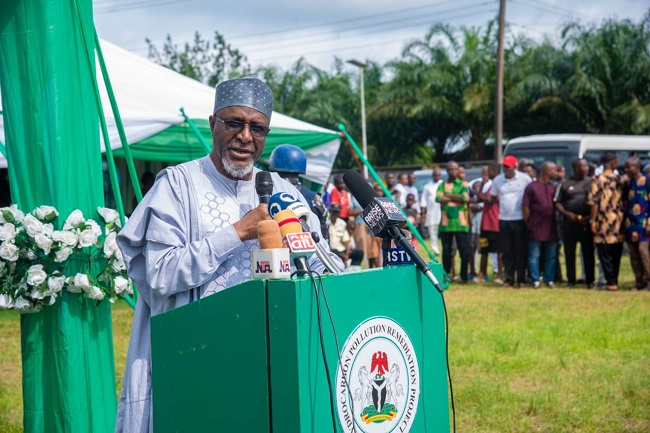
Prof. Chukwumerije Okereke, the President and Chairman Board of Trustee Society for Planet and Prosperity (SPP), said that for a very long time, national policies about climate change have focused on the national level while for a very long time, states were ignored.
“SPP, in collaboration with the Department for Climate Change, Federal Ministry of Environment, came up with a unique initiative to promote climate action at the state level.
“What we did was to start the ranking and rating of climate governance initiatives actions and policy across the 36 states.
“We released the first result two years ago and we released the second result last year and what we found was that there is an incredible array of fascinating climate action happening at almost all of the states of the federation.
“What we are doing today is not only to celebrate that increase in recognition and action, but also to create an environment where all the commissioners will come together and learn from one another,” Okereke said.
He added that the workshop would reveal what each state has been doing to ensure its ranking position because the purpose of the ranking is not just scoring.
“It will also galvanise, increase and facilitate climate action on the sub national level. Because, at the end of the day, these are the people that are actually at the front line of climate vulnerability and climate risks.
“On the other hand, without action on the sub national level, there will be little that Nigeria can do overall to increase or ramp up its climate resilience and mitigation.
“Today is about peer learning, but also it gives the Commissioners the opportunity to look at the ranking methodology and the framework to make their own input.
“So that when we go for the third ranking, everybody can be sure to say that we co-created this ranking methodology and that we own it together as a community.
He said that the states are allowed to tell what climate action they have been doing and to what extent is their state actually attracting climate finance. Because, at the end of the day, without finance, very little or nothing can be done.
“One of the most remarkable things that we have seen between the first and the second ranking is that almost all of the 36 states improved in their climate governance performance,” Okereke said.
Dr Nura Kazaure, Commissioner for Environment and Climate Change, Jigawa State, said: “We are going to ensure we adopt all climate measures in climate governance ranking methodology in order to come with a good template for all states to know, rankings entail.”
The Federal Government has commended the European Union-funded Sustainable Integrated Development Programme for supporting Internally Displaced Persons in Nigeria (SIDPIN).
The Minister of Housing and Urban Development, Ahmed Dangiwa, gave the commendation in a meeting with a delegation from the UN-Habitat in Abuja.
Dangiwa praised the organisation for delivering durable housing solutions, strengthening community integration and improving living conditions for displaced persons and host communities.
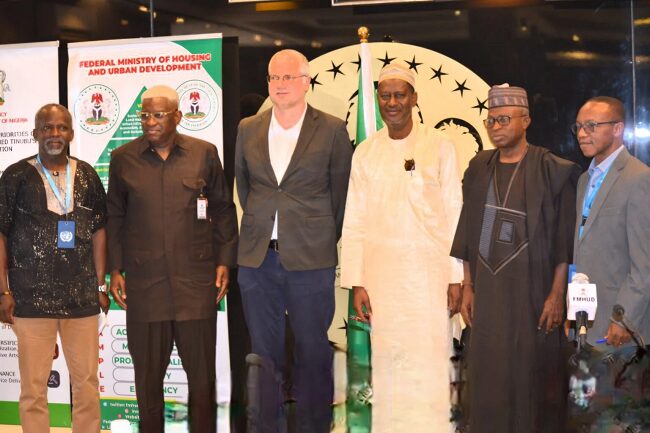
Minister of Housing and Urban Development, Ahmed Dangiwa (in white), with members of the UN-Habitat delegation in Abuja
He also acknowledged the UN-Habitat’s ongoing support through SIDPIN in Adamawa, Kano and Borno states and emphasised their alignment with the ministry’s priority of rebuilding livelihoods and strengthening social cohesion in post-conflict areas.
He added that “the ministry also recognises the programmes’ support in reviewing the National Urban Development Policy.
“This is alongside its contribution to planning reform and the offer of a consultant for the National Land Registration Documentation and Titling Programme (Land4Growth), urban renewal initiatives and slum upgrading programmes.
“These interventions are vital as Nigeria confronts rapid urbanisation that demands coordinated planning, sustainable infrastructure and climate-responsive development.”
Dangiwa highlighted the importance of interventions in sustainable infrastructure, climate resilience and resource management.
He called for coordinated planning and sustainable infrastructure in the face of rapid urbanisation.
He, however, regretted that budgetary constraints were hampering the ministry’s clear policy direction and strong ambitions, slowing the pace and limiting the scale of implementation.
This, the minister said, was particularly in the delivery of climate-responsive housing and urban resilience initiatives.
According to him, the reality compels the ministry to explore innovative financing mechanisms beyond traditional budgetary allocations.
He noted that while the ministry recognises the numerous opportunities presented by its partnership with UN-Habitat, it was also mindful of the challenges involved in meeting its obligations under the existing Memorandum of Understanding (MoU).
Dangiwa listed some of the opportunities to include: facilitating access to international climate finance from global funding institutions and mobilising resources for social housing programmes targeting vulnerable populations.
He said that others included: advancing women-focused housing initiatives, acknowledging that women are disproportionately affected by climate change impacts and conflict-induced displacement.
Earlier, Mr. Mathias Spaliviero, the Head (UN Habitat) West Africa Hub Dakar, Senegal, reaffirmed the agency’s strong institutional partnership with the Federal Government.
Spaliviero noted that collaboration remained a priority, regardless of funding cycles.
He provided updates on ongoing interventions by UN-Habitat, highlighting a major joint programme being implemented in collaboration with International Organisation for Migration and United Nations High Commissioner for Refugees.
He said that the initiative focuses on delivering sustainable, durable solutions for IDPs through structured urban integration strategies in Kano, Yobe, Adamawa, and Benue states.
According to him, the programme adopts a multi-scale planning approach and has recorded encouraging progress, with state governments demonstrating increasing ownership and responsiveness.
Spaliviero extended an invitation to the minister to participate in the upcoming Africa Urban Forum in Nairobi, Kenya, as well as the forthcoming World Urban Forum convened by UN-Habitat.
Protesters on Thursday, February 26, 2026, stormed the Isolo office of the National Agency for Food and Drug Administration and Control (NAFDAC), opposing the enforcement of a ban on sachet and 200ml PET bottled alcoholic beverages.
They urged the agency to adopt stricter access control measures instead of an outright ban, arguing that regulation and public education would better address concerns about underage alcohol consumption.
The demonstrators, conveyed in more than 10 coastal buses and comprising workers of affected manufacturing companies, carried placards with inscriptions such as “Don’t Kill Nigeria’s Economy” and “NAFDAC Is After Our Livelihood.”
Protesters at the NAFDAC office in Lagos
Security operatives were deployed to maintain order as protesters blocked vehicles from accessing the agency’s main entrance during the demonstration, which caused temporary disruption around the premises.
NAFDAC Director-General, Prof. Mojisola Adeyeye, had on Jan. 21 announced the commencement of enforcement on the ban on production and sale of alcoholic drinks in sachets and PET bottles below 200 millilitres.
Adeyeye said the measure was introduced to safeguard public health and protect vulnerable groups, particularly children, adolescents, and young adults, from the harmful effects of alcohol consumption.
The announcement sparked protests in Lagos and Abuja by manufacturers and labour unions opposing the enforcement, arguing that the ban would negatively affect jobs and investments.
Mr. Anthony Michael, an executive member of the Trade Union Congress of Nigeria (TUC), who spoke on behalf of the protesters, said NAFDAC had not provided empirical evidence supporting claims that children had easy access to sachet alcohol.
Michael argued that the agency should have engaged manufacturers and other stakeholders to consider access control measures.
He said such measures could be implemented through mass education campaigns in schools and other public awareness channels, rather than enforcing an outright ban on the products.
“You cannot cut off the head because you have a headache. Tramadol has been banned for years, yet it still finds its way into the country through porous borders,” he said.
He added that manufacturers had invested trillions of naira in the sector, warning that continued enforcement could hurt the economy and render more than five million Nigerians jobless.
Michael urged the Federal Government to convene a broader stakeholders’ meeting involving unions, noting that organised labour was not part of earlier tripartite consultations between NAFDAC and manufacturers.
Meanwhile, the Federal Ministry of Health and Social Welfare told the Federal High Court that NAFDAC was legally empowered to enforce the ban on alcoholic beverages packaged in sachets and 200ml PET bottles.
In a counter-affidavit filed on Feb. 23, 2026, through its counsel, Jumoke Motilayo Falaye, the ministry stated that it neither interferes with nor controls NAFDAC’s enforcement decisions.
The ministry explained that NAFDAC was a statutory agency established under the NAFDAC Act with clearly defined regulatory and enforcement powers over food, drugs, and related products, including alcoholic beverages.
It maintained that it lacked the legal authority to direct or restrain NAFDAC from carrying out its statutory mandate, adding that no further extension of the moratorium on the sachet alcohol ban had been granted.
A Public Health Practitioner and Environmentalist, Dr Akingbehin Akinbodunwa, on Thursday, February 26, 2026, identified air pollution as a major quantifiable threat to life and productivity in the country.
Akinbodunwa, also the National President, Environmental Health and Public Health Practitioners Association of Nigeria (EPHPAN), made the assertion in an interview in Lagos.
He said national analyses showed that air pollution was the third leading risk factor for premature death in Nigeria in 2019; responsible for roughly 198,000 premature deaths that year.
The WHO says that, in one year, 46,750 persons died as a result of outdoor pollution in Nigeria
He added that it caused more deaths than were caused by some familiar infectious diseases, saying that this burden reflects both outdoor (ambient) and household air pollution acting together to harm the citizens.
According to him, clean air as an indispensable prerequisite for a productive healthy nation.
“Air pollution in Nigeria is not an abstract hazard; it is a major, quantifiable threat to life and productivity.
“In major urban areas the situation is even starker. For example, Lagos – our largest city and economic engine – has an estimated 23,900 premature deaths attributable to air pollution in 2019 alone.
“These are not nameless statistics; they are mothers, fathers, workers, students and children lost prematurely because the air around them was toxic.
“When our children breathe clean air, their brains and lungs develop; when our workers breathe clean air, they are healthier and more productive; when our aged individuals breathe clean air, they live longer and healthier lives.
“The data are clear: air pollution shortens lives and undermines the development goals,” Akinbodunwa said.
Akinbodunwa explained that particulate matter with a diameter smaller than 2.5 micrometres (PM2.5) was the pollutant most strongly linked to mortality from heart disease, stroke, chronic lung disease, lung cancer and acute respiratory infections in children.
He said that Nigeria’s population-weighted average particulate pollution had increased over the past two decades – reported increases of about 24 per cent from 1999 to 2021; eroding life expectancy and worsening health across the country.
According to him, in many Nigerian cities and hotspots, short-term PM2.5 readings routinely exceed levels recommended by global health authorities.
“For perspective, the World Health Organisation’s (WHO) updated air quality guidance places the annual safe level for PM2.5 at a very low threshold.
“Compliance with this guidance would protect millions of lives globally.
“The reality is that the vast majority of Nigerians are exposed to PM2.5 levels well above the WHO recommendation.
“Which translates directly into higher risks of cardiovascular and respiratory disease, adverse pregnancy outcomes, and lost childhood development,” he said.
The health environmentalist decried the economic implications of air pollution, saying that it imposes large health-care costs and reduces labour productivity – a double blow to families and to the nation’s development trajectory.
According to him, multiple sources feed Nigeria’s polluted air including vehicular emissions, inefficient combustion of biomass for cooking in households, open waste burning, generator fumes, industrial emissions, brick kilns and agricultural burning.
“Rapid urbanisation and increasing vehicle fleets without commensurate transport planning only magnify exposures; these sectors are where targeted policy and programmatic action will yield measurable health gains.
“Globally, fine particulate pollution (PM2.5) is estimated to contribute millions of deaths annually; nationally, the toll in Nigeria is already tragically high and rising,” Akinbodunwa said.
On remedial approaches to mitigate air pollution and safeguard Nigeria environment, Akinbodunwa recommended surveillance and data-driven action, household energy transition, clean transport and fuels, control of industrial and waste emissions.
Others, he said, were health system readiness and public education, as well as cross-sectoral governance and financing.
He emphasised that safety of the environment/air was a collective responsibility of everyone in the society and should not be left to the government alone.
Director-General of the National Space Research and Development Agency (NASRDA), Dr Matthew Adepoju, has stressed the critical role of space technology in strengthening Nigeria’s national security architecture.
Adepoju made the remarks on Thursday, February 26, 2026, during a courtesy visit to the Minister of Defence, retired Gen. Christopher Musa, in Abuja.
He said Nigeria’s evolving security challenges required sustained investment in advanced technological solutions, as well as stronger inter-agency collaboration.
Director-General of the National Space Research and Development Agency (NASRDA), Dr Matthew Adepoju, with the Minister of Defence, retired Gen. Christopher Musa
According to him, NASRDA remains the only civilian agency in the country statutorily mandated to develop satellites.
The NASRDA boss highlighted some of the agency’s existing capabilities, including Artificial Intelligence-enabled monitoring systems designed to track activities over long distances and function both day and night.
He also disclosed that the agency was working toward deploying four new satellites to boost surveillance and earth observation capacity.
Adepoju said the development would significantly enhance Nigeria’s ability to monitor its borders and respond swiftly to emerging security threats.
Musa, who described the visit as timely and strategic, said the space agency played a vital role in supporting the ministry’s efforts to combat terrorism and strengthen national security operations.
Musa noted that closer collaboration with NASRDA would improve operational efficiency and enhance the effectiveness of defence activities.
He assured the agency of the ministry’s full support in enabling it to achieve its mandate.
Seplat Energy PLC, a Nigerian independent energy company listed on the Nigerian and the London Stock Exchanges, on Thursday, February 26, 2026, announced its audited results for the 12 months ended December 31, 2025.
According to the results, the company reported a strong financial performance for the year ended December 31, 2025, posting a 144.2 per cent surge in revenue to $2.726 billion, up from $1.116 billion in 2024, driven largely by a full year contribution from its offshore assets.
The company also recorded a 137 per cent jump in adjusted EBITDA to $1.275 billion, compared with $539 million in the previous year.
Cash generated from operations rose sharply by 276 per cent to $1.166 billion, underscoring what the company described as the strong cash-generating capacity of its enlarged asset base.
Highlights of the results are presented below.
Chief Executive Officer, Seplat Energy Plc, Roger Brown
Operational highlights
• Group production averaged 131,506 boepd up 148% from 2024 (52,947 boepd) reflecting the first full year of offshore consolidation, and within revised guidance. 4Q 2025 group production of 119,200 boepd, impacted by Yoho shutdown and other planned maintenance activities
• Onshore delivered 14% production growth YoY, supported by completion of the Sapele Gas Plant, and new well inventory.
• ANOH gas plant achieved first gas in January 2026, production is stable at 50-70 MMscfd, with ~60kbbl condensate currently in storage.
• Emissions intensity for Seplat onshore assets: 24.3 kg CO2/boe (2024: 32.3 kg CO2/boe), down 24% YoY.
• Offshore grew 9% YoY on a pro-forma basis, Performance moderated by Yoho platform outage, restart expected in 2Q 2026
• highly successful idle well restoration programme added 48.6 kboepd gross production capacity from 49 wells, exceeding expectations
• EAP IGE was the first major project delivered offshore. Peak gross (EAP + OSO) NGL recovery of ~33 kboepd, achieved in February 2026 (2025 peak gross NGL recovery ~20 kboepd)
• YE 2025 independently audited 2P reserves down c.42 MMboe to 1,001 MMboe (YE 2024: 1,043 MMboe), 67% liquids. Reflects 2025 focus on maintenance and integrity investments
• Group 2P+2C increases by 181 MMBoe to 2,486.6 MMboe (YE 2024: 2,305.4 MMboe), 55% liquids. Positive revisions to offshore oil resources reflects stronger underlying production performance on multiple fields and gas resource upgrade following inclusion of Edop
• Recorded 1 Lost Time Injury (LTI) on our operated assets in 2025. 11.4 million hours without LTI since September (2024: 11.0 million hours)
Financial highlights
• Revenue $2,726 million up 144.2% (FY 2024: $1,116 million), reflecting a full year of contribution from offshore assets
• Unit production operating cost of $15.7/boe down 5% on prior year (Adjusted 2024: $16.5/boe)
• Adjusted EBITDA of $1,275.4 million, up 137% on prior year ($539.0 million)
• Cash generated from operations of $1,165.6 million, up 276% on prior year (2024: $310.0 million)
• Cash capex of $266.8 million (FY 2024: $208.1 million).
• Total completion payments to Exxon Mobil $326.2 million. No MPNU contingent consideration payable to ExxonMobil for 2025
• Balance sheet remains robust, net debt at year end 2025 of $673.3 million down 25% YoY (YE 2024: $897.8 million). Net Debt/EBITDA 0.53x
Dividend
• 4Q 2025 declared dividend of USD 8.3c/shr, up 11% QoQ and 20% YoY, consisting of USD 5.0c/shr base and USD 3.3c/shr special dividend.
• Total dividend declared for 2025 USD 25.0c/shr, equivalent to $150 million and a 52% increase on 2024, reflecting the strength of balance sheet, strong underlying free cash flow generation and continued confidence in our outlook.
2026 Outlook & Guidance
• Production guidance of 135-155 kboepd, mid-point represents a ~10% increase on 2025.
• Crude & Condensate: flat YoY; new well inventory offset by planned downtime for strategic maintenance and integrity activities.
• NGL: +85% YoY, effective 1Q 2026 with EAP complete.
• Gas: +30% YoY, ANOH contribution, YoY growth on Sapele IGP and completion of Oso-BRT phase 1, which is on track for 3Q 2026 and targets a doubling of offshore gas sales to 240 MMScf/d gross.
• Initial capex guidance $360-440 million. Plan includes 17 new wells (15 onshore and 2 offshore; drilling offshore from 3Q).
• Unit production operating costs for the group are expected to be $13.5-14.5/boe. Expect volume led reduction in unit costs.
Commenting on the results, Roger Brown, Chief Executive Officer, said: “In 2025 we clearly illustrated our ability to operate at scale. We benefitted from successful execution of several key offshore activities that kick-started life for Seplat as an offshore operator, while at the same time delivering onshore production performance that was the strongest in recent memory.
“At our CMD in September, we laid out our long-term ambition to ‘Build an African Energy Champion’, with a clear roadmap to grow working interest production to 200 kboepd by 2030. In 2025 we delivered the IGE replacement project offshore and the Sapele Gas plant onshore. In recent weeks we were delighted to achieve first gas at the ANOH Gas Plant and are on track to doubling Joint Venture gas volumes at Oso-BRT to 240 MMscfd in 2H 2026.
“Drilling will be a decisive factor in meeting our long-term growth ambitions and I am pleased to announce that the first Jack-Up drilling rig is contracted, in country and set to arrive at Oso in 3Q to commence a multi-year, multiwell drilling campaign.
“Finally, the cash generative nature of our asset base is clearly evident in our results, and by raising dividends by over 50% to 25 cents per share alongside continued strengthening of our balance sheet and delivery of our work programmes, we are already well positioned to deliver on our planned $1 billion cumulative return of capital to shareholders by 2030. Furthermore, the strength of the enlarged group has reflected in a notable lowering of our cost of debt, providing additional scope for long-term value creation.”
Climate protection and sustainability are losing momentum among companies in Germany, with many citing political uncertainty and weak market incentives as obstacles.
This is according to a report published on Thursday, February 26, 2026, by the Bertelsmann Foundation.
Nearly 60 per cent of more than 800 companies surveyed said sustainability had declined in priority within their organisations, up sharply from 14 per cent a year earlier, the Sustainability Transformation Monitor found.
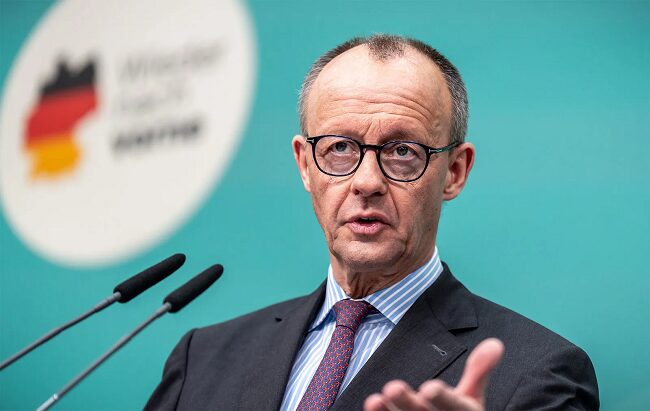
Friedrich Merz, Federal Chancellor of the Federal Republic of Germany
The report was released in cooperation with the Mercator Foundation.
It has 73 per cent of its firms in the real and financial economy continuing to anchor responsibility for sustainability at board or executive level.
The authors said companies view uncertain political frameworks and a lack of market incentives as the main barriers to further progress, representing a rise of 30 percentage points compared to the previous year.
The share of companies planning new sustainability initiatives fell by 7 percentage points.
Without clear and reliable signals from policymakers and markets, the transformation risks entering a phase of stagnation, said Jakob Kunzlmann, a sustainability expert at the Bertelsmann Foundation.
At the same time, the proportion of companies setting their own climate targets rose to 59 per cent from 53 per cent, and among banks to 65 per cent from 46 per cent.
It is an important signal that more companies are monitoring emissions and adhering to climate goals, said Philipp Wesemann of the Mercator Foundation, adding that concrete investment plans and timelines are now crucial.
The German government has committed to achieving climate neutrality by 2045.
The report is intended to provide policymakers and businesses with a data-based foundation for decision-making.