The Nigerian National Petroleum Company Limited (NNPC Ltd.) has described as false and misleading reports suggesting it is selling scrap materials, equipment, or components from its refineries to individuals and private companies.
Mr. Andy Odeh, Chief Corporate Communications Officer, NNPC Ltd., in a statement on Friday, April 24, 2026, said it had not issued any request for bids, tenders, expressions of interest or approvals for the sale of scrap materials and refinery components.
Port Harcourt Refinery
“The Company wishes to categorically state that this information is untrue.
“NNPC Limited has not issued any request for bids, tenders, expressions of interest, or approvals for the sale of scrap materials, refinery components, or any items from the warehouses or inventories of any of its refineries.
“NNPC Limited has also received reports that certain individuals are falsely presenting themselves as representatives or agents of the company, claiming to facilitate the sale of so-called ‘scrap metals’ or refinery equipment.
“These individuals are not authorised by NNPC Limited and are attempting to mislead members of the public,” he said.
Odeh, therefore, advised the public, corporate organisations, and industry stakeholders to disregard any such claims or solicitations and to exercise caution in dealing with anyone making such representations.
He said for the avoidance of doubt, NNPC Limited was not conducting, nor had it authorised, any sale of scrap metals, equipment, or refinery components from any of its facilities.
The NNPC imagemaker said any legitimate disposal of assets by the company would only be conducted through established and transparent processes, publicly communicated through its official channels and in accordance with applicable regulations.
“Members of the public who encounter individuals or entities making such claims are encouraged to report them to the appropriate law enforcement authorities.
“NNPC Limited remains committed to transparency, accountability, and the responsible management of national energy assets,” he said.
Lagos State Government on Friday, April 24, 2026, advised the residents to disregard misinformation surrounding its reintroduction of monthly environmental sanitation scheduled to begin on Saturday.
The state Commissioner for the Environment and Water Resources, Mr. Tokunbo Wahab, said that certain quarters had argued that the sanitation issue was still in court, thereby questioning the state government’s rights to go ahead with the exercise.
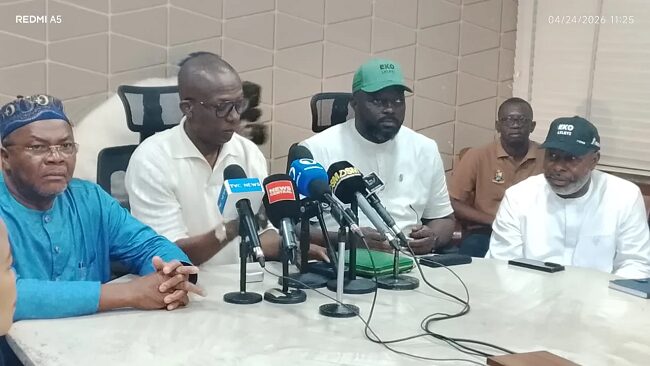
Wahab disclosed at a news conference on Friday in Lagos that the law was on the side of government to proceed with the exercise, and that residents should show commitment to the exercise to improve cleanliness and promote health.
Commissioner for the Environment and Water Resources, Mr. Tokunbo Wahab, addressing a news conference in Lagos
He said the exercise would hold monthly between 6.30 a.m. and 8.30 a.m. during which residents would be expected to clean their surroundings.
Wahab said the initiative was aimed at restoring the culture of environmental cleanliness and responsibility that declined over the years.
“Government cannot do it alone. Residents must take ownership of their environment,” he said.
Wahab noted that key stakeholders, including transport unions, community development associations, market leaders and local government officials, were fully aligned with the programme.
The commissioner emphasised that awareness about the exercise would be continuous, describing it as critical to achieving the desired result.
According to him, environmental sanitation should be seen as a civic responsibility.
“We must prioritise public health and environmental safety,” he said.
Wahab cited global responses to crises such as the COVID-19 pandemic to underscore the importance of collective discipline and action.
He said that exemptions would be granted for essential service providers and emergency responders during the exercise.
The commissioner urged Lagos residents to devote the two-hour period to cleaning their environments.
Mrs. Temitope Dosumu, Head of Geocycle Nigeria at Lafarge Africa Plc., said the firm would support the initiative through waste collection and processing.
Dosumu said that the firm would focus on sorting and managing waste for industrial reuse in line with the company’s zero-waste goal.
Heads of agencies under Lagos State Ministry of the Environment attended the conference along with other critical stakeholders.
Meanwhile, the Chairman, Alimosho Local Government, Mr. Johnson Akinpelu, has urged residents to prepare and actively participate in the reintroduced monthly environmental sanitation exercise.
Akinpelu said in a statement on Friday that it was incumbent on all the residents to understand that a cleaner environment was the foundation for healthy living.
“We must cultivate the habit of keeping our surroundings clean. Littering the streets is a bad practice, and a dirty environment is harmful to our health.
“The reintroduction of the monthly environmental sanitation by the Lagos State Government is a welcome development that we must all support and appreciate,” he said.
According to him, the council will continue to do everything within its power to ensure a cleaner Alimosho.
The chairman called on all residents, community leaders, traders, and stakeholders to take ownership of the initiative and contribute meaningfully to maintaining a safe, hygienic, and sustainable environment for all.
Also, Mrs. Opeyemi Akindele, the Chairman, Mosan Okunola Local Council Development Area (LCDA), said in a statement on Friday that the reintroduction of the exercise would promote a cleaner, safer and healthier environment for all residents.
“We are aligning fully to this initiative to promote a cleaner, safer, and healthier environment for all residents.
“This exercise is not just a routine, it is a civic responsibility. A clean environment reduces health risks, prevents flooding caused by blocked drainage, and enhances the overall wellbeing of our communities.
“Residents of Mosan Okunola are therefore urged to actively participate,” the chairman said.
According to her, the exercise will allow them to clean their homes and immediate surroundings, desilt gutters and drainage channels and dispose waste responsibly through approved channels.
The chairman added that supporting community sanitation efforts would help sustain the vision of a cleaner Lagos and a healthier Mosan Okunola LCDA.
“Let us all come out, take responsibility, and keep our environment safe,” she said.
By Fabian Ekeruche, Olaitan Adekeye and Kazeem Akande
The Human and Environmental Development Agenda (HEDA Resource Centre) has issued an advisory on the 2026 flood outlook, warning farmers and stakeholders of widespread risks across Nigeria.
The Executive Secretary, HEDA Resource Centre, Mr. Sulaimon Arigbabu, disclosed this in an interview on Thursday, April 23, 2026, in Lagos.
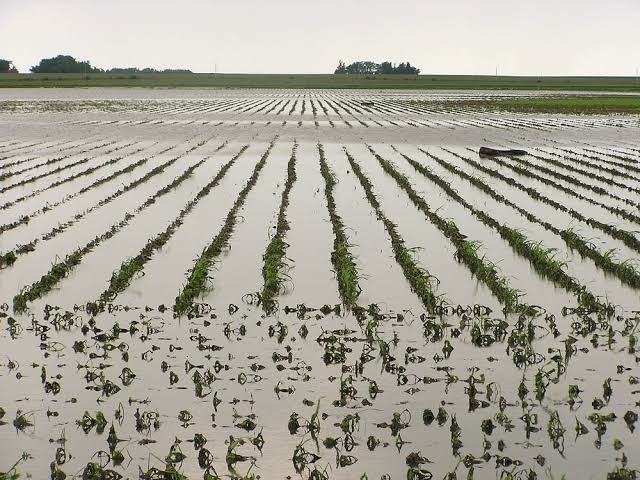
The forecast by the Nigeria Hydrological Services Agency shows 4.2 million hectares of cropland at risk during the flood season.
Flooded farmland
It said 14,158 communities in 34 states and the FCT face high risk during July–September, while 11,575 communities in 31 states risk flooding in October–November.
Arigbabu identified Kogi, Niger, Delta, Anambra, Benue, Kebbi, Rivers, Bayelsa, Adamawa and Cross River states as most vulnerable to sustained flooding.
He said HEDA advisory explained three flood windows: April–June with low to medium risk, July–September peak flooding, and October–November “Black Flood” driven by dam releases.
He warned rice farmers in floodplain states to harvest before October, noting that late-season crops face total loss during peak flooding.
“Maize farmers were urged to plant early to avoid damage during grain-filling, especially in northern and central states.
“Cassava and yam farmers in southern states are cautioned against waterlogging, which could cause root rot and reduced yields.
“Groundnut and cowpea farmers are advised to harvest before late September to avoid flood damage and contamination.
“Fadama farmers are warned to complete vegetable harvests before October to prevent total crop loss in flood-prone areas,” Arigbabu said.
He said livestock farmers face flooding and disease risks, alongside dry-season water shortages in northern regions.
He advised poultry farmers to stockpile feed and strengthen biosecurity to mitigate flood-related disruptions.
Arigbabu urged fish farmers to reinforce ponds, while small ruminant farmers should relocate shelters and store feed early.
The expert called on governments to activate extension services, support farmers, and intensify community sensitisation.
Arigbabu stressed that early preparation and use of the forecast could help reduce losses and protect livelihoods.
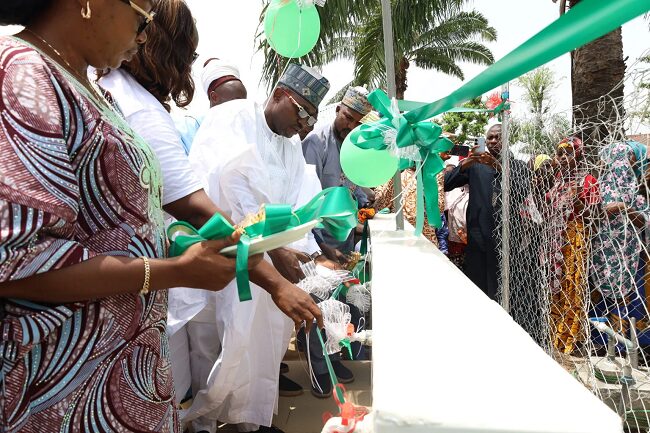
Society for Family Health (SFH), a non-govermental organisation, has enhanced Water, Sanitation and Hygiene (WASH) access in rural communities with the inauguration of two solar-powered boreholes in Toto Local Government Area (LGA) of Nasarawa State.
The project, valued at N10 million, forms part of SFH’s WASH intervention under its WASH for Healthy Lives (W4HL) project in the state.
Chairman of Toto LGA, Mr. Ahmed Baba-Yahaya, who inaugurated the boreholes on Thursday, April 23, 2026, in Toto, appreciated the NGO for the initiative, describing it as a demonstration of SFH’s commitment to addressing water shortages in rural communities in the state.
Chairman of Toto LGA, Mr. Ahmed Baba-Yahaya, who inaugurated the boreholes on Thursday, April 23, 2026, in Toto
He assured that officials of the council would visit the communities regularly to ensure proper use and maintenance of the boreholes.
“Out of the 13 LGAs in Nasarawa State, you considered Toto. My joy knows no bounds.
“We will continue to support the community, that’s for sure. Some of us may just see it as a mere borehole, but the impact it will have on the lives of the people here is massive,” he said.
Baba-Yahaya also pledged that the council would work closely with SFH to promote healthy behavioural change in more communities and support other interventions by the organisation.
The Group Managing Director of SFH, Dr Omokhudu Idogho, represented by the Project Director, Ms. Jane Adizue, commended staff, contractors and residents of the benefiting communities for their contributions to the success of the project.
He explained that the project was conceived in 2021, when SFH sought funding from its donor, Procter and Gamble, to implement WASH interventions.
“We looked at the country to see where we can make interventions and have great impact and Nasarawa State happens to be one of the states chosen. So we are implementing in Nasarawa State and also in Edo State.
“At the beginning, with funding from our donor, what we were just doing was behaviour change communication and it had great impact in the lives of Nasarawa residents.
“So we went back to our donor for more funding to put in place infrastructure that will make practising the healthy habits that we have taught the residents easier and our request was granted,” he said.
Idogho added that SFH would continue to advocate WASH practices among residents of Nasarawa and Nigerians at large to entrench healthy living.
“We have community members going from house to house to tell people to practise adequate hygiene, treat their water before drinking and also maintain sanitation in their environments,” he said.
The intervention selected Buga Sabo and Chiji villages in Toto LGA as beneficiary communities, while Karu, Nasarawa and Obi councils have benefited from one intervention or another by the organisation.
The Lagos State Environmental Protection Agency has stepped up efforts to address the growing challenge of electronic waste (e-waste), particularly from off-grid renewable energy systems.
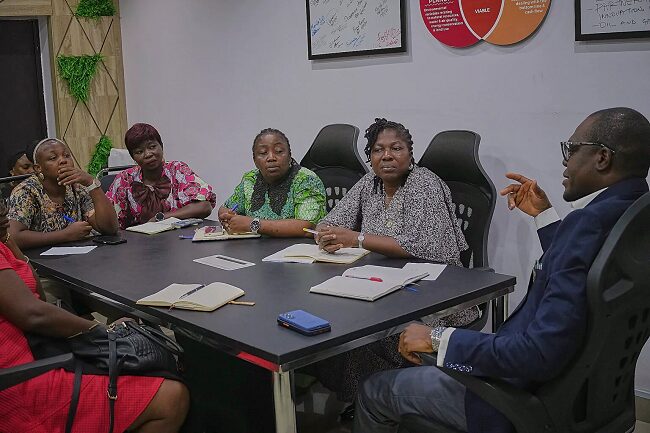
The General Manager, LASEPA, Dr Tunde Ajayi, said this during a strategic meeting with the E-waste Producers Responsibility Organisation of Nigeria (EPRON) and the ministry’s Sustainability Unit.
Ajayi posted it on his verified X handle on Thursday, April 23, 2026, in Lagos.
General Manager, LASEPA, Dr Tunde Ajayi (right)
He said the engagement focused on strengthening data systems, enforcement mechanisms, and capacity building across the e-waste value chain.
According to him, stakeholders agreed that consistent data gathering and sharing are critical to driving investment and informed decision-making in the sector.
He added that monitoring and enforcement must be deliberate and firm, while training for collectors and recyclers should be continuous rather than one-off interventions.
He outlined key resolutions from the meeting, noting that e-waste management would now be integrated into organisational audit reports.
He said such reports must include volumes generated and evidence of disposal through vendors accredited by the LASEPA, backed by certificates of safe disposal.
He disclosed that quarterly volume reports from e-waste collectors would become mandatory for permit renewal.
“Any collector that fails to submit reports will not have permits renewed,” he said.
He added that annual staff training by e-waste collectors had also been made a condition for permit renewal.
Ajayi said EPRON would provide a comprehensive database of electrical and electronic equipment importers, producers, and manufacturers operating in Lagos, including volumes brought into the state.
He further revealed that the state would organise biannual training for e-waste collectors, with the first session scheduled before June and the second in October, possibly to coincide with International E-Waste Day.
According to him, recyclers are also required to submit quarterly reports detailing volumes processed.
He said the government, in collaboration with EPRON, would develop a joint compliance and monitoring checklist to assess collector and recycler performance quarterly.
Ajayi noted that a list of defaulting and non-compliant collectors was being compiled and would form the basis for enforcement actions.
Where I come from – Hawai’i – the reef isn’t just something you look at. It’s part of us. It feeds our families, protects our shores, and lives at the centre of our culture. In our stories, coral is one of our oldest ancestors. It’s a reminder that everything in the ocean, and all of us, are connected.
Right now, that integral connection is under threat.
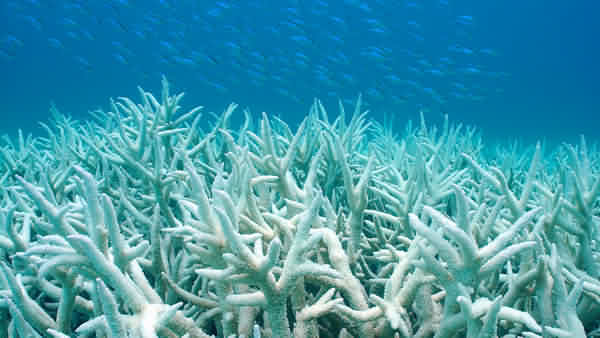
Bleached coral reefs
Our coral reefs are under severe stress. The planet has just experienced the most widespread coral bleaching event ever recorded, lasting 33 months into 2025. Scientists warn that at 1.5C of global warming, up to 90% of coral reefs could be lost. Ninety per cent. And 1.5C is not lingering in the distance – it’s extremely close.
Even if the world somehow hits its climate targets, reefs are still getting pummeled by plastic pollution, coastal development, agricultural runoff and overfishing. They’re so fragile. And when reefs weaken, coastlines get hit harder by storms and rising seas. Homes and jobs become exposed. Cultures and sacred places are put at risk. And the incredible range of underwater life found only in reefs – once it’s gone, it’s gone for good.
But I refuse to let coral reefs be a lost cause.
Read the full op-ed by actor, filmmaker and UNEP Advocate for Life Below Water, Jason Momoa. The op-ed was published in The Guardian on April 17, 2026.
The Lagos State Government, through the Ministry of Physical Planning and Urban Development, on Wednesday, April 22, 2026, received the European Union Delegation on a strategic visit aimed at reinforcing collaboration on sustainable urban growth, land use efficiency, and integrated mobility systems within the state.
The meeting, held at the Alausa Secretariat, centred on Transport Corridor Development, Urban Mobility, and strategies for delivering resilient infrastructure to enhance connectivity. The engagement also emphasised the need for innovative planning frameworks to address rapid urbanisation while ensuring sustainability and economic inclusion.
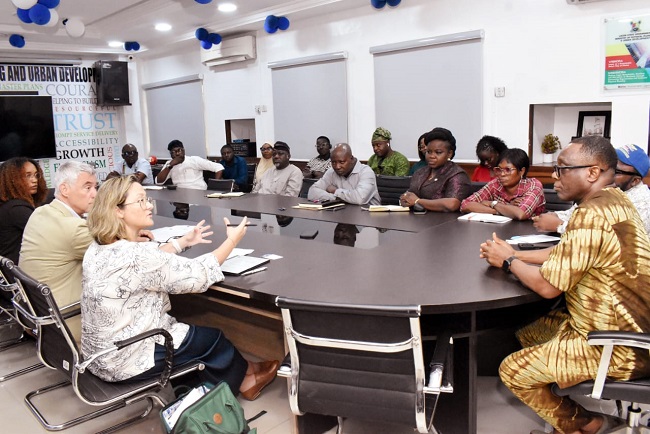
Deliberation at the meeting involving Lagos State Government officials and the European Union Delegation
The Commissioner, Ministry of Physical Planning and Urban Development, Dr. Oluyinka Olumide, called for enhanced technical cooperation, knowledge exchange, and investment-driven initiatives aimed at improving urban resilience and mobility infrastructure.
“You will agree with me that Lagos is a key economic hub in West Africa, and we are confident in our strategic direction towards sustainable physical planning transformation,” he stated.
The Permanent Secretary, Office of Physical Planning, Oluwole Sotire, commended the European Union for its sustained commitment to supporting developmental initiatives across the region. He noted that Lagos, as a rapidly expanding megacity, requires forward-thinking partnerships that will enhance its capacity to deliver efficient land use systems and modern transportation networks.
Sotire emphasised that the State Government remains focused on implementing policies and master plans that promote orderly development, reduce congestion, and improve the overall quality of life for residents. He further stressed that collaboration with international partners such as the EU is critical to achieving globally aligned physical planning standards.
In her remarks, the Team Lead, Celihe Lhoste, stated that the visit underscores the EU’s commitment to fostering sustainable cities through strategic partnerships.
“Lagos represents a dynamic model of urban growth in Africa. Our engagement today reflects the European Union’s readiness to support initiatives that promote efficient land use, climate-resilient infrastructure, and inclusive mobility systems,” she said.
She further noted that the EU is particularly interested in strengthening technical cooperation with Lagos State in areas such as smart physical planning, sustainable transport systems, and institutional capacity development.
Another member of the delegation, Jacques Remy, highlighted the importance of integrated planning in addressing urban challenges, noting: “The future of cities like Lagos depends on coordinated approaches that bring together land use planning, transportation, and environmental considerations. The European Union is committed to supporting frameworks that deliver long-term impact and resilience.”
Also speaking, the Director, Regional and Masterplan Department, Adeshina Shobowale, stated that while Lagos has several strategic development plans in place, there is a need for a unified planning framework.
He called for the adoption of a comprehensive, layered document that integrates all planning components and effectively addresses the State’s evolving urban needs.
The meeting was followed by visits to key landmark project sites, including the Marina Train Station, the Lagos-Calabar Coastal Road, Lekki Free Trade Zone, and the Àlaro City, amongst other strategic locations.
The engagement provided an opportunity for both parties to explore potential areas of partnership, including smart city development, data-driven urban planning, climate-resilient infrastructure, and capacity building for relevant agencies within the State.
Other officials present at the meeting included Kikelomo Asogbon, Director of Town Planning; Hakeem Animashaun, Director, Development Matters; and Mrs. Titilayo Oshodi-Eko, Director, Public Affairs, among others.
The meeting marks another significant step in strengthening international cooperation towards building inclusive, efficient, and future-ready cities, with Lagos State positioned at the forefront of physical planning innovation in Africa.
African climate justice advocates, civil society groups, and policy experts have issued a call to the Co‑Chairs and Board of the Fund for Responding to Loss and Damage (FRLD), urging them to ensure that the new global financing mechanism truly responds to the needs of vulnerable communities already suffering the devastating impacts of climate change.
In a consolidated message delivered ahead of key deliberations on the Fund’s operationalisation, the stakeholders stressed that Africa – despite contributing the least to global greenhouse gas emissions – continues to bear the brunt of climate‑induced disasters. From prolonged droughts in the Horn of Africa to destructive cyclones in Southern Africa and flooding across West and Central Africa, the continent’s losses are mounting, with limited resources to rebuild.
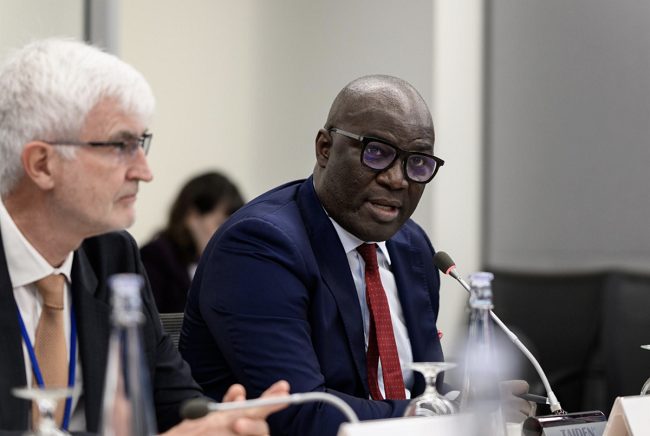
brahima Cheikh Diong, Executive Director of Fund for responding to Loss and Damage (FRLD)
The group emphasised that the FRLD must not become “another inaccessible climate finance instrument” but rather a lifeline for frontline communities. They called for direct, simplified, and predictable access to resources, particularly for least developed countries, smallholder farmers, women, youth, Indigenous Peoples, and local governments.
Demand for Adequate and Grant‑Based Funding
A central theme of the message was the need for adequate, new, and additional finance. African representatives argued that the scale of climate‑related loss and damage far exceeds current pledges, warning that without substantial capitalisation, the Fund risks becoming symbolic rather than transformative.
They insisted that all contributions to the FRLD must be grant‑based, not loans, to avoid deepening debt burdens in already vulnerable economies. Several African countries are currently spending more on debt servicing than on climate adaptation or social services, a trend stakeholders described as “morally indefensible” in the context of climate injustice.
The message also urged the Board to adopt innovative and fair sources of finance, including taxes on fossil fuel profits, aviation, maritime transport, and financial transactions – mechanisms long championed by African negotiators as ways to ensure that major emitters and polluters pay their fair share.
Prioritising Country Ownership and Local Realities
Stakeholders stressed that African countries must have a strong voice in shaping how the Fund operates. They called for country‑driven approaches, where national institutions and local actors play a central role in identifying needs, designing interventions, and managing funds.
They warned against overly complex accreditation processes that have historically locked out African institutions from accessing climate finance. Instead, they proposed fit‑for‑purpose access modalities, including enhanced direct access and community‑based channels.
“Communities on the frontlines know their realities best,” the message noted, urging the Board to ensure that resources flow quickly to those who need them most, without bureaucratic bottlenecks.
Transparency, Accountability, and Safeguards
The African coalition also highlighted the importance of strong transparency and accountability frameworks. They called for clear reporting requirements for contributors and recipients, as well as safeguards to ensure that funded projects do not harm people or ecosystems.
They emphasised that monitoring and evaluation systems must capture not only financial flows but also the real‑world impact on vulnerable populations. This, they argued, is essential for building trust and ensuring that the Fund delivers tangible results.
A Call for Urgency and Justice
Throughout the message, African stakeholders underscored the urgency of operationalising the FRLD. With climate impacts intensifying, they warned that delays in disbursement could cost lives, livelihoods, and cultural heritage.
They framed the Fund as a matter of climate justice, noting that African communities are paying the price for a crisis they did not create. The message urged the Board to act with compassion, fairness, and a deep sense of responsibility to humanity.
“The world is watching,” the stakeholders concluded. “The decisions made today will determine whether the Fund becomes a beacon of hope for vulnerable nations – or another missed opportunity in the global response to climate change.”
As the FRLD Board continues its work, African voices are making it clear that the continent expects a Fund that is accessible, adequately financed, and grounded in justice. Their message sets a firm benchmark for what meaningful loss and damage finance must look like in practice.
Liberia is taking a bold step toward strengthening its agricultural future with the upcoming Seed Sector Investment Roundtable, a high-level platform designed to mobilise financing, partnerships, and innovation for a resilient and competitive seed industry.
Scheduled for April 30, 2026, at the Royal Grand Hotel, Monrovia, the Roundtable brings together government leaders, development partners, financial institutions, private sector actors, and research organisations to accelerate the implementation of Liberia’s National Seed Roadmap and Investment Plan.
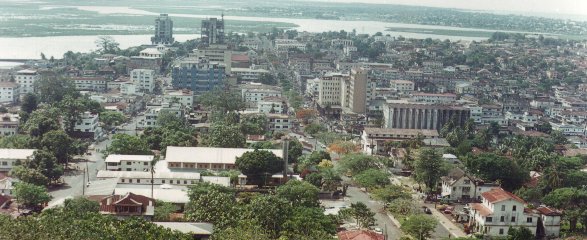
Monrovia, Liberia
A Timely Intervention for Food Security
Across Africa, food systems continue to face mounting pressures from climate change, global conflicts, and economic shocks. Recent disruptions—from the COVID-19 pandemic, the Russia–Ukraine war, to the ongoing Middle East crises – have exposed vulnerabilities in agricultural supply chains, particularly access to quality seeds and inputs.
In response, the African Development Bank launched the African Emergency Food Production Facility (AEFPF), with the Technologies for African Agricultural Transformation (TAAT) playing a central role in delivering solutions at scale.
Through TAAT-led interventions, millions of farmers across the continent have gained access to certified seeds and productivity-enhancing technologies – helping to boost yields, strengthen resilience, and improve livelihoods.
Building on Momentum: The Liberia Seed Roadmap
Liberia’s Seed Roadmap and Investment Plan aligns with the country’s National Agriculture Development Plan (2024–2030) and its broader agricultural transformation agenda.
Developed through a government-led Seed Summit in 2024, the roadmap identifies priority value chains critical to food security and economic growth, including: Rice, Cassava, Maize, Soybean and Aquaculture.
These value chains are central to improving nutrition, strengthening food systems, and supporting industries such as livestock and poultry.
Ambitious Targets for Growth
The roadmap sets out clear production and investment targets:
Rice: Scaling certified seed production to over 6,000 MT by 2030
Cassava: Expanding planting materials to 50 million cuttings
Maize: Increasing production to nearly 190,000 MT
Soybean: Growing a new value chain to support feed and nutrition systems
Aquaculture: Doubling fish production through improved fingerlings
These targets are backed by significant investment needs, creating opportunities for both public and private sector participation.
Strengthening the Seed System
Liberia has already made notable progress through the Operationalisation of the Seed Development and Certification Agency (SDCA), the adoption of ECOWAS-aligned certification systems, the introduction of a national seed quality seal, the registration and training of private seed companies, and the deployment of improved, high-yielding crop varieties.
These efforts are laying the foundation for a transparent, market-driven seed sector capable of meeting national demand and participating in regional trade.
Why the Investment Roundtable Matters
Despite this progress, a major gap remains: coordinated investment. The Seed Sector Investment Roundtable aims to bridge this gap by showcasing investment-ready opportunities, connecting government priorities with private capital, promoting public–private partnerships (PPPs), aligning donor and development finance support and accelerating the commercialisation of seed systems.
The Roundtable will feature diagnostic sessions, investment pitches, deal structuring discussions, and B2B engagements, creating a results-oriented platform for actionable commitments.
Driving Partnerships for Impact
Participants will include Government ministries and national institutions, Development partners such as the World Bank, FAO, IFAD, and the EU, International Financial institutions and commercial banks, private seed companies and agribusinesses, and research organisations and farmer groups.
This diverse coalition reflects a shared commitment to transforming Liberia’s agriculture through collaboration and innovation.
The Roundtable is expected to deliver increased investment in seed systems, expanded access to quality seeds for farmers, stronger public–private partnerships, improved productivity and food security, reduced dependence on food imports, enhanced livelihoods and rural incomes, and a platform for transformation.
The Liberia Seed Sector Investment Roundtable, according to the organisers, represents more than a meeting – it is a strategic turning point.
“By aligning policy, finance, and innovation, Liberia is positioning itself to build a resilient, inclusive, and market-driven agricultural system – one where quality seeds serve as the foundation for food security and economic growth,” they stated.
The International Institute of Tropical Agriculture (IITA), in partnership with the Cross River State Government, has commenced a week-long Training of Trainers (ToT) aimed at strengthening yam seed systems, promoting value addition, and advancing agribusiness development across Cross River State.
The training brings together yam farmers, Local Government Directors of Agriculture, State Agriculture Officers, and Extension Agents in a strategic effort to scale best practices in seed technologies and agronomic management.
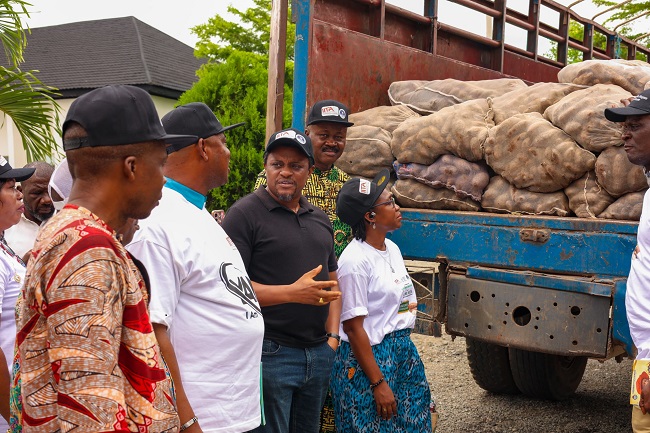
Dr Olugboyega Pelemo with the Cross River State, Commissioner for Agriculture and Irrigation Development, Johnson Andiambey Ebokpo during the handing over of the mini-tubers to be distributed to farmers in the state
Designed as the first phase of a broader capacity development initiative, the programme equips participants with the technical knowledge and tools required to drive productivity and efficiency across the yam value chain. Following this phase, participants will implement a structured step-down training model, transferring knowledge and innovations to farmer groups and communities within their respective localities.
Highlighting the importance of capacity building for scaling impact, Field and Seed Systems Specialist under the IITA Yam Improvement Programme, Dr Olugboyega Pelemo, said: “Technologies like the minisett, vine cutting, SAH and mini tubers that we have developed at IITA will only become visible when it is scaled, and scaling can become impactful when the capacity of key actors are developed. At the end of the innovative technologies for seed yam production training, the beneficiaries will transfer the knowledge to the last mile users in their various communities across Cross River State.”
Yam remains a critical staple crop in Nigeria, contributing significantly to food security, rural livelihoods, and income generation. However, challenges related to seed quality, limited access to improved agronomic practices, and weak market linkages continue to constrain productivity.
Through this initiative, IITA and the Cross River State Government aim to address these gaps by strengthening local capacity, enhancing adoption of improved technologies, and fostering agribusiness opportunities for farmers and stakeholders across the state.
Speaking at the training venue, Commissioner for Agriculture and Irrigation Development, Cross River State, Johnson Andiambey Ebokpo, said: “As part of the agricultural agenda, the government is committed to providing the requisite capacity and resources to support the farmers of Cross River, and this training for yam farmers being facilitated by IITA is the first, as we will be replicating the same initiative across other crops like plantain.”
This collaborative effort underscores a shared commitment to transforming the yam sector through innovation, partnerships, and inclusive knowledge dissemination, ensuring that improved practices reach farmers at scale.
With the IITA Yam Breeding Programme under the leadership of Dr. Asrat Amele, and funded through the RTB Breeding initiatives, the key objective of the one-week training is to scale innovative technological packages otherwise tagged Good Agronomic Practices (GAP) for yam, extend IITA developed yam varieties and to generate Community-based Seed Producers in Cross River State.