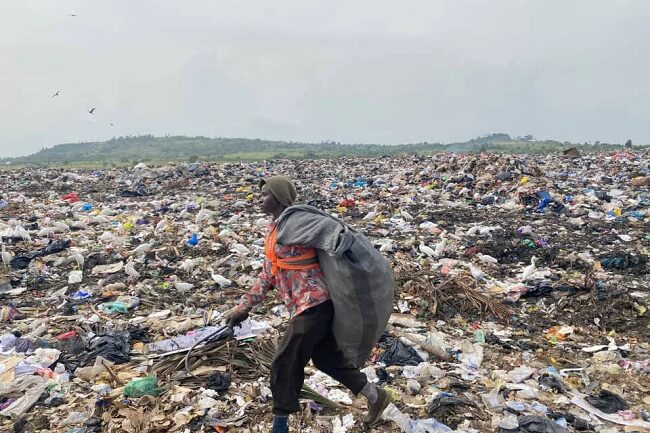
Waste pickers in Lagos have called for formal recognition and inclusion in Nigeria’s circular economy drive.
Mr. Friday Oku, President of the Association of Scraps and Wastepickers of Lagos (ASWOL), made the call on Sunday, March 1, 2026, to commemorate International Waste Pickers’ Day.
The theme for the 2026 International Waste Pickers’ Day is “Zero Waste and Circular Economy Initiative: No Sustainability without Waste Pickers.”
Waste picker
Oku said sustainability was impossible without waste pickers.
According to him, they recover, sort, and return valuable materials to productive use daily.
He said: “Our activities reduce landfill pressure, prevent pollution, conserve resources, and support climate action.”
He added that waste pickers practiced the circular economy long before it became a global concept.
However, he lamented that many waste pickers operated without formal recognition, social protection, or safe working conditions.
Oku urged governments and private sector stakeholders to recognise waste pickers as environmental service providers.
He also called for inclusive waste policies, occupational safety measures, fair compensation, and greater participation in formal waste management systems.
He reiterated that zero waste could not be achieved through policy alone, but through the people driving daily environmental action.
ASWOL is affiliated with the International Alliance of Waste Pickers.
The member representing the South East on the Governing Board of the North East Development Commission (NEDC), Sam Ifeanyi Onuigbo, has reaffirmed his support for President Bola Ahmed Tinubu’s reform agenda, describing the creation and strengthening of regional development commissions as a “historic step toward equitable national growth.”
Speaking during an interactive session, Onuigbo – an experienced legislator and development advocate – outlined the expected benefits of the newly invigorated regional development framework and weighed in on national politics ahead of the 2027 elections.
Onuigbo traced the roots of regional development initiatives to Nigeria’s First Republic, referencing the impactful work of the Eastern Nigeria Development Corporation, which he said played a key role in infrastructural and industrial expansion in the old Eastern Region.
Rep. Sam Onuigbo
He cited landmark projects such as the establishment of the University of Nigeria, Nsukka, and the development of industrial layouts that stimulated economic growth in the early 1960s.
According to him, President Tinubu’s revitalisation of regional commissions reflects an understanding of history and a commitment to correcting long-standing developmental gaps.
“The North East Development Commission is addressing devastations caused by insurgency, particularly the Boko Haram crisis,” Onuigbo explained. “Beyond reconstruction, it is tackling ecological challenges like desertification, climate change impacts, and educational deficits.”
He added that similar commissions across Nigeria’s geopolitical zones – covering the North East, North West, South West, and South East – are expected to drive grassroots development while contributing to overall national progress.
Turning to the evolving political landscape, Onuigbo noted that realignments across the country are being driven by what he described as “verifiable accomplishments” of the Tinubu administration.
He observed that three of the five South East states – Ebonyi, Imo, and Enugu – are currently aligned with the ruling party, the All Progressives Congress (APC), and predicted that more states could follow suit.
“Our people are pragmatic,” he said. “They are seeing federal presence in infrastructure, security appointments, and economic reforms. Realignment is a natural response to visible progress.”
Onuigbo pointed to federal road projects such as the reconstruction of the Enugu–Port Harcourt and Enugu–Onitsha highways, as well as the planned development of an airport in Abia State, as tangible evidence of increased federal attention to the region.
He also highlighted the restoration of previously delisted academic programmes at the Michael Okpara University of Agriculture, Umudike, describing it as a demonstration of the administration’s responsiveness to advocacy efforts.
Onuigbo commended Babagana Umara Zulum for supporting the implementation of the Supreme Court judgment granting financial autonomy to local governments.
He argued that direct allocation of funds to local councils would enhance grassroots development, improve rural infrastructure, and strengthen local security intelligence networks.
“Local government autonomy is critical for market development, rural roads, agriculture, and security at the grassroots,” he said. “When funds are released directly, the impact is immediate and visible.”
He urged other governors to respect and implement the Supreme Court’s ruling, noting that many had themselves benefited from judicial pronouncements validating their mandates.
Defending the administration’s economic policies, Onuigbo described the removal of fuel subsidy as a “bold but necessary decision” that has significantly increased federal and state revenues.
He noted improvements in fiscal allocations to states, declining inflationary pressures, and greater foreign exchange stability as signs of economic recovery.
“Governors are no longer struggling to pay salaries,” he said. “Revenue has multiplied compared to previous years.”
He also referenced major infrastructure initiatives such as the proposed coastal highway and inter-regional road corridors, which he believes will enhance trade connectivity and economic integration.
Onuigbo concluded by emphasising that regional development commissions are not merely political structures but strategic instruments for correcting historical imbalances and fostering inclusive growth.
“We are building from different regions but with a common national focus,” he said. “If we sustain these reforms, future generations will look back and recognize this period as a turning point in Nigeria’s development journey.”
As political alignments continue to shift ahead of 2027, Onuigbo remains confident that visible governance outcomes will shape electoral decisions – particularly in the South East – where he believes growing federal engagement is already influencing public perception.
The Nigerian Content Development and Monitoring Board (NCDMB) has enjoined operators in the midstream segment of the oil and gas industry to comply with the Nigerian Oil and Gas Industry Content Development (NOGICD) Act 2010, or risk attracting sanctions, including project withdrawal, suspension and criminal prosecution.
The Board also reaffirmed that obtaining the Nigerian Content Equipment Certificates (NCEC) attracts zero processing fees, and it had banned the use of middlemen in all its transactions and confirmed that expired or misapplied NCECs will lead to automatic disqualification from tenders.
These positions anchored the NCDMB Sensitisation Workshop for Midstream Companies and Stakeholders, held on Friday, February 27, 2026, in Lagos, as the Board deployed a five-directorate technical team to deepen compliance awareness across Nigeria’s fast-expanding midstream segment.
Dignitaries at the commissioning of the Clinical Skills and Simulation Laboratory at the Bayelsa Medical University
Organised by the Monitoring and Evaluation Directorate and supported by the Project Certification and Authorisation Directorate, Capacity Building Directorate and Planning, Research and Statistics Directorate, the workshop was themed, ‘Compliance with the Provisions of the NOGICD Act 2010: The Path to Industrialisation’.
Opening the workshop, the Acting Director of Monitoring and Evaluation, NCDMB, Mr. Omomehin Ajimijaye, said the decision to host the Lagos leg of the engagement underscored the Board’s commitment to extending Nigerian content enforcement beyond the upstream sector and the Niger Delta region.
“Today’s workshop is one of the key platforms for deepening engagement with the midstream sector. We are not focused only on the upstream sector. We are also doing our best to ensure that our midstream and downstream stakeholders are carried along in the quest for Nigerian content value expansion, and for the economic progress and energy security of our country,” he said.
Conveying the appreciation of the Executive Secretary of NCDMB, Felix Omatsola Ogbe, he thanked participants for honouring the invitation at short notice, describing them as strategic partners in the Board’s national mandate.
Ajimijaye outlined four objectives of the engagement: deepening understanding of the NOGICD Act; clarifying statutory reporting templates; addressing midstream-specific compliance challenges; and strengthening collaboration between the Board and industry players.
“Your feedback is crucial as we move towards our collective goal of raising Nigerian content to 70 per cent. This journey requires partnership and mutual understanding,” Ajimijaye added.
The Director of Capacity Building, Abayomi Bamidele, said, “The Act mandates all operators and contractors to prioritise Nigerian employment and training,” noting that any project or contract valued at $1m and above must submit an Employment and Training Plan for Board approval.
He explained the NCDMB Field Readiness Initiative, designed to bridge workforce gaps created by retirements and emigration of some personnel, and open the oil and gas sector to OND, HND and BSc holders via the NOGIC JQS portal.
Bamidele reiterated that NCEC processing is completely free, middlemen are prohibited, and companies must own, not lease, certified equipment.
Delivering a detailed technical presentation, the Supervisor, Project Certification and Authorisation Directorate, Mr. Elvis Ogede, explained that every operator was statutorily required to submit a Nigerian Content Plan in line with Sections 7 and 8 of the Act.
“With respect to your scope of work, we expect you to set targets. These targets are achievable, not just aspirations – with the capacity that exists in-country,” Ogede said.
He explained that operators must engage the Board at five mandatory points, including Nigerian Content Plan submission; approval of selective or sole-source contracting strategies; review of invitation-to-tender documents; participation in bid openings; and submission of technical and commercial evaluation reports before issuance of the Nigerian Content Compliance Commitment.
Clarifying recent changes, Ogede stressed that the NCCC was not a certificate of past compliance but a binding commitment.
“It is not a certificate that you have complied. It is a commitment – what you are going to do – and you will be monitored against it,” he said.
He also warned that Memoranda of Association could no longer substitute for valid NCEC, that expired NCECs are disqualifying, and that service-specific certification is mandatory.
“Nobody should expect to use a consultancy NCEC for fabrication work and then complain when disqualified,” he added.
The Deputy Manager, Midstream Monitoring Division, Mr. Damola Aderibigbe, outlined the Board’s monitoring framework, which spans performance, compliance and intervention monitoring across upstream, midstream and downstream operations.
“We do not just monitor activities – we measure performance against commitment,” he said.
He listed 14 statutory reports required from companies and warned that late or incomplete submissions remained the most common compliance failures.
Aderibigbe stressed that engineering firms must hold corporate COREN accreditation, not just individual staff certification.
“If you fall short of the law, remediation will be required, suspension may follow, legal action can be taken, and projects can be withdrawn. But the Board is a business enabler – we want compliance, not conflict,” he said.
The Supervisor, Planning, Research and Statistics Directorate, Mr. Emmanuel Paulker, said that the NOGIC JQS portal had registered 406,000 individuals and 11,445 companies, including 115 operators, though much of the midstream sector remains outside the system.
He said 1,603 expatriate quota applications had been processed, with 1,417 approvals, generating 13,833 employment commitments, and warned that companies must obtain NCDMB’s approval before approaching the Federal Ministry of Interior.
“Anything outside that process is a contravention of the law,” Paulker said.
Delivering the vote of thanks, the Supervisor, Midstream Monitoring Division, Engr. Pius Waritimi, reiterated that compliance commitments are binding and encouraged stakeholders to engage the Board early.
“We want everyone here to join the NCCF and the Sectoral Working Groups, where industry concerns can be addressed constructively,” he said.
Meanwhile, a state-of-the-art Clinical Skills and Simulation Laboratory, fully equipped by the NCDMB, was on Friday, February 27, 2026, commissioned at the Bayelsa Medical University (BMU), Yenagoa, with the goal of positioning the institution to align with global best practices in medical education, and “strengthening local capacity in Bayelsa State and Nigeria at large.”
Equipment provided include high-fidelity adult and pediatric patient simulators, laparoscopic training systems, obstetric trainers, advanced life support mannequins, consultation cubicles, and audio-visual learning systems, all of which the university authorities claimed would enable students to “learn, make mistakes, and perfect their life-saving skills in a zero-risk environment before they ever touch a human patient.”
Speaking at the commissioning ceremony at the Clinical Skills Acquisition Centre, BMU Main Campus, the Executive Secretary of the NCDMB, Felix Omatsola Ogbe, said that capacity building is “not just about oil and gas; it is about ecosystems,” and that the industry does not operate in isolation. He listed health care, education, engineering, and logistics, among others, as sectors with linkage to the oil and gas industry.
He noted that “Simulation-based learning is now the global standard in medical education” and that it allows students to acquire hands-on clinical skills, improves decision-making, and builds confidence in a controlled safe environment before engaging the blue patient.
Represented by Mr. Ene Ette, Acting Director, Planning, Research and Statistics (PRS) of the Board, the Executive Secretary commended the Management of BMU and partner organisations for their collaboration, professionalism, and shared vision, pointing out that the upgraded laboratory is a strategic investment in human capacity and capital development and a practical demonstration of how policy can translate into measurable impact.
In his welcome address, the Vice Chancellor of the institution, Professor Dimie Ogoina, noted that the event was not just the commissioning of a building or unveiling of medical equipment, it was about “securing the future of healthcare in Bayelsa State, the Niger Delta, and Nigeria at large.” He said words could not adequately express his profound gratitude to the Management of the NCDMB.
He recalled that when he assumed office as Vice Chancellor in 2025, he shared his vision, encapsulated in what he termed A.S.P.I.R.E. Agenda, to transform Bayelsa Medical University into a globally recognised leader in medical education, research, and innovation, driven by technology and excellence. “Today,” he remarked, “as we look at this world-class facility, we are seeing the ASPIRE Agenda come to life.”
To the Executive Secretary and the entire Management of the NCDMB, he declared: “You have provided us with the very best – from advanced patient simulators and CPR mannequins to essential surgical and diagnostic kits,” noting that by equipping the lab to such a standard, the Board was “directly contributing to the reduction of medical errors, the improvement of patient safety, and the development of indigenous healthcare professionals who will serve our communities and our industries.”
“We are not just training doctors for today, we are nurturing digital-age physicians capable of competing on the global stage,” he emphasised.
Professor Ogoina also appreciated the Bayelsa State Governor, Senator Douye Diri, and the Commissioners for Health and Education, for the unwavering support and for creating an enabling environment that allows partnerships like the one with NCDMB and its partner organisations to thrive.
In a similar vein, the Provost of the College of Medicine, Bayelsa Medical University, Professor Philip Eyimina, expressed profound gratitude to the NCDMB for its foresight and generosity in equipping the University Clinical Skills and Simulation Laboratory, and to the Bayelsa State Government for continued commitment to strengthening healthcare and education in the State.
He pointed out that the newly upgraded laboratory played a significant role in the institution’s recent accreditation verification exercise. According to him, “The presence of a functional, well-equipped Clinical Skills Laboratory strongly affirmed our readiness to deliver high-quality medical education in line with national standards.”
According to him, “In this laboratory, our students will learn essential competencies – history taking, physical examination, suturing, intravenous access, cardiopulmonary resuscitation, obstetric skills, and emergency response – while developing critical thinking, teamwork, and communication skills.”
In a special address, the State Governor, Senator Douye Diri, who is the Visitor to the University, lauded the NCDMB for providing facilities which he described as remarkable. He recalled the aspiration of the Vice Chancellor to make BMU “a leading university in medicine,” noting that “What the NCDMB has done is clearly a demonstration of going with that vision to market this university to the entire world.”
Represented by the State Commissioner for Education, Dr. Gentle Emelah, the Governor declared that the institution has the firm support of the State Government as it strives for high academic standards and global reckoning.
In a goodwill message, the Pro-chancellor of the University, Professor Tarilah Tebepah, said while the Governing Council was considering the vision of BMU becoming globally known as a leader in medical education, producing very sound innovative healthcare professionals, it never lost sight of the fact that a lot of technology, equipment and funding would be required.
He thanked the NCDMB profusely, while pleading that it should continue to identify with the institution as it grapples with resource-related challenges.
The event was concluded with a tour of key units of the state-of-the-art Clinical Skills and Simulation Laboratory, which include a Virtual Reality Station, Paediatric and Airway Management Stations, EGG and Patient Monitoring Station, IV Fluids Administration and Cannulation Station, and a Demonstration Hall.
Ahead of the International Women’s Day on March 8, 2026, and the World Consumer Rights Day on the 15th, the toxics watchdog group, EcoWaste Coalition, has announced its discovery of two more “made in Pakistan” cosmetics with extremely high levels of mercury sold online despite the global ban on the production and trade of cosmetics with mercury, a potent neurotoxin that causes severe damage to the brain, kidneys, lungs, skin, and immune system.
“We urge online shoppers not to add to cart and buy Yaz skin-lightening and skin-renewing facial creams that we have verified to contain horrendous levels of mercury measured at 33,970 and 29, 870 parts per million (ppm), respectively,” said Aileen Lucero, National Coordinator, EcoWaste Coalition. “These imported products, marketed to women to enhance youthful radiance, are a serious threat not only to the health of women but also to their households.”
The EcoWaste Coalition urges the authorities to ban these two facial creams from Pakistan and sold online for violating the global ban on mercury use in cosmetics
“Our latest discoveries mark the over 25 Pakistan-made cosmetics our team has verified as mercury-tainted through X-Ray Fluorescence (XRF) analysis and subsequently publicised and reported to the authorities,” she said.
The continued production and trade of mercury-laced cosmetics in the said South Asian country prompted the EcoWaste Coalition to press the Government of Pakistan to come down hard on violators and prosecute the culprits to the fullest extent of the law. The Competition Commission of Pakistan on October 15, 2025, announced a crackdown on such toxic products.
“We acknowledge and support the Pakistan government’s ongoing drive to weed out the market of mercury-added cosmetics and urge it to apply the country’s Competition Act to penalize violators and deter would-be offenders,” stated Lucero. Pakistan’s competition law prohibits false or deceptive marketing, which can lead to penalties of up to 75 million rupees (over PH15 million) or 10 percent of annual turnover.
The EcoWaste Coalition obtained the Yaz Beauty Cream Double White + Vitamin C and Yaz Gold Beauty Cream Active White + 24K Gold Dust from an online seller for P160 each (the seller also offers a wide variety of other local and imported cosmetics).
The former claims it “removes acne, wrinkles, freckles and other signs of ageing” and promises it can make users look “pretty and young.” The latter is supposed to “lighten, brighten and moisturise (the) skin,” while “it reduces the appearance of fine lines and wrinkles and also helps eliminate skin flakiness and remove dark spots to provide a smooth and even complexion.” Both products are marketed as “3-day solution.” Yaz Beauty Cream, in particular, claims “difference in color from dark brown to pinkish white” in three days.
Like other cosmetics found to be contaminated with mercury, the labels of both products did not specify mercury or other related terms in the listed ingredients, nor did they provide any mercury content warning.
Aside from Yaz Beauty Cream and Yaz Gold Beauty Cream, the EcoWaste Coalition has reported to the Food and Drug Administration (FDA) the following Pakistan-made cosmetics with mercury content: Aima Gold Beauty Cream, AQME Beauty Cream, Aneeza Gold Beauty Cream, Aneeza Saffron Whitening Cream, Armena Gold Beauty Cream, Biocos Beauty Cream, Chandni Whitening Cream, Due Beauty Cream, Faiza Beauty Cream, and Golden Pearl Beauty Cream (old and new packaging).
Also reported were Goree Beauty Cream with Lycopene (solo and 3-in-one kit), Goree Day & Night Beauty Cream, Goree Gold 24K Beauty Cream (solo and 3-in-one kit), Jhalak Beauty Cream, Morning Face Beauty Cream, Parley Beauty Cream, Parley Goldie Advanced Beauty Cream, Parley Herbal Whitening Cream, Pure Pearl Beauty Cream, Safora Beauty Cream, Sandal Beauty Cream, Zartaaj Beauty Cream, Zoya Gold Beauty Cream, and Tibet Snow Cream.
“Many of these tainted products have been flagged by the FDA and are not easy to obtain, but some are advertised and sold with impunity, particularly the three variants of Goree, and Due, Faiza, Golden Pearl, Parley Goldie, Sandal beauty creams,” Lucero said.
“With the steadfast commitment of the Pakistani and Philippine governments, we remain optimistic that the campaign against the unlawful production and trade of cosmetics with mercury additives will reach a successful outcome,” she added. “Moreover, a government-led advocacy to fight colourism and promote acceptance and respect for the skin colour we are born with will be needed to discourage people from using chemical whiteners containing mercury and other hazardous substances.”
The Organisation of the Petroleum Exporting Countries (OPEC) and its allies, a group known as OPEC+, on Sunday, March 1, 2026, decided to ramp up oil output by 206,000 barrels per day (bpd) in April.
The announcement was made after a virtual meeting where member countries, including Saudi Arabia, Russia, Iraq, the United Arab Emirates, Kuwait, Kazakhstan, Algeria, and Oman, reviewed global market conditions and outlook, according to a statement on the OPEC website.
“The eight participating countries decided to resume the unwinding of the 1.65 million barrels per day of additional voluntary adjustments announced in April 2023 and agreed on a production adjustment of 206,000 barrels per day,” the statement said.
OPEC
It added that the global economic outlook is steady, and current market fundamentals are healthy, which was reflected in the low oil inventories.
The 1.65 million bpd in voluntary cuts could be phased back in either partially or fully, depending on evolving market conditions and would be implemented gradually, OPEC said.
It said that eight countries are scheduled to meet on April 5 to make the following decisions.
The April output increase is expected to end the OPEC planned production increases for the first quarter of 2026.
The voluntary production cuts of 1.65 million bpd were first announced in April 2023 and were later extended through the end of 2026.
The OPEC+ announcement was made following U.S. and Israeli strikes on Iran, which raised concerns about supply disruptions in the Middle East, especially around the Strait of Hormuz.
Market analysis expected oil prices to soar on Monday.
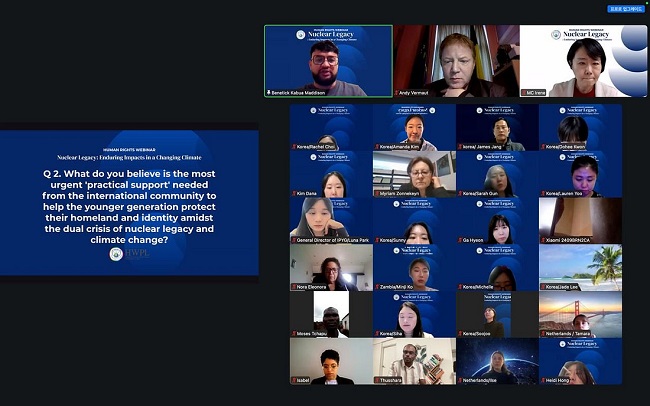
Representatives from every inhabited continent joined forces on Friday, February 27, 2026, in an unprecedented show of solidarity over the escalating crisis in the Marshall Islands, where decades-old nuclear contamination and rising sea levels are converging to create what advocates call a “double tragedy” with potentially global consequences.
The international webinar, held on the eve of Nuclear Victims and Survivors Remembrance Day, brought together lawmakers, judges, climate ambassadors and civil society leaders to demand coordinated international action before radioactive debris from Cold War-era weapons testing re-enters marine ecosystems – a scenario scientists warn is growing increasingly likely as Pacific waters rise.
Participants at the international webinar on Nuclear Victims and Survivors
March 1 marks the anniversary of the 1954 Castle Bravo hydrogen bomb test, the most powerful nuclear device the United States ever detonated, which showered inhabited atolls with radioactive fallout and left a legacy of illness, displacement and environmental destruction that persists more than seven decades later.
A ticking nuclear clock
Between 1946 and 1958, the United States conducted 67 nuclear tests in the Marshall Islands, vaporising entire islands and contaminating vast stretches of land and ocean across the central Pacific.
Today, the most pressing concern centres on the Runit Dome on Enewetak Atoll – a concrete cap built in the late 1970s to contain radioactive soil and debris from the testing programme.
Rising sea levels now threaten to compromise the aging structure, raising urgent fears that plutonium, cesium and other radioactive materials could leach into the surrounding ocean.
The potential breach would not only devastate local communities already grappling with severe climate vulnerabilities but could also contaminate broader Pacific marine ecosystems, transforming what has long been treated as a localised problem into an international environmental emergency.
‘The world can no longer look away’
Benetick Kabua Maddison, executive director of the Marshallese Educational Initiative, framed the crisis in stark terms.
“The world is witnessing a ‘double tragedy’ in real time,” Maddison said.
“The unresolved nuclear contamination in the Marshall Islands, combined with the climate crisis, constitutes a global security concern. This is about our right to a safe future, and the world can no longer look away.”
Maddison said the intercontinental nature of Friday’s gathering was deliberate, intended to demonstrate that the Marshall Islands’ fight is no longer a bilateral dispute between a small Pacific nation and the United States but a matter demanding global engagement.
Legal accountability endures
Justice Thushara Rajasinghe of the High Court of Fiji delivered a pointed legal assessment, arguing that state responsibility for environmental harm does not diminish with time – a principle with direct implications for the United States’ obligations to the Marshall Islands.
Rajasinghe called for the development and implementation of practical legal frameworks to ensure accountability and preventive protection against climate-induced nuclear risks, suggesting that existing international law provides sufficient basis for action if the political will can be marshaled.
Hiroshi Vitus Yamamura, a Marshallese member of Parliament and former minister of public works, praised the resilience of his people while emphasising the urgent need for global technical and legal cooperation to address the long-term health and environmental consequences of the testing era.
European voices join the chorus
The crisis has drawn increasing attention from European climate advocates. EU Climate Pact Ambassadors, Lalit Bhusal of the Netherlands and Andy Vermaut of Belgium, highlighted the critical role of civil society in elevating the Marshall Islands’ plight within the broader global climate justice agenda.
Their participation underscored a growing recognition that the intersection of nuclear contamination and climate change in the Pacific represents a test case for international accountability – one with implications for contaminated sites and climate-vulnerable communities worldwide.
Beyond rhetoric
The dialogue, convened by Heavenly Culture, World Peace, Restoration of Light – an international peace organization founded in 2013 – concluded with a unified call for the international community to move beyond rhetoric and commit to coordinated technical, legal and financial mechanisms to secure contaminated sites before irreversible environmental consequences unfold.
The demands reflect mounting frustration among Marshallese leaders and their international allies that decades of advocacy have produced insufficient action from the United States, which has maintained that a 1986 compact settlement adequately addressed its obligations – a position the Marshall Islands government and independent assessments have repeatedly contested.
For the approximately 42,000 people who call the Marshall Islands home, the convergence of nuclear legacy and climate crisis presents an existential threat.
Their atolls, most barely two metres above sea level, face inundation within decades.
The question now is whether the international attention generated by gatherings like Friday’s webinar can translate into the concrete action needed before the Pacific swallows both the evidence and the people who have borne its consequences for three generations.
Corporate Accountability and Public Participation Africa (CAPPA) has condemned what it described as the opaqueness and significant procedural violations in the Lagos Water Corporation’s (LWC) ongoing procurement process for mini and micro water works under a Build-Finance-Operate-Transfer (BFOT) Public-Private Partnership (PPP) model.
According to reports, the LWC issued a tender in September last year, inviting proposals from private firms for the rehabilitation, upgrade, operation, and maintenance of multiple public water facilities across Lagos, including Lekki and Akilo Waterworks, Victoria Island Annex and Magodo Waterworks, Abesan and Alexander Waterworks, and Apapa Waterworks.
Managing Director of the Lagos Water Corporation (LWC), Muktaar Tijani
However, in a statement endorsed on Sunday, March 1, 2026, by Robert Egbe, the organisation’s Media & Communications Officer, CAPPA alleged that Lagos State’s pattern of deliberate non-disclosure surrounding its supposedly ill-advised plan to privatise public water supply through PPP arrangements not only contravenes mandatory transparency requirements under the state’s own laws but also erodes accountability in the governance of a vital public resource.
The organisation noted that though the Lagos State PPP Disclosure Framework (2024) expressly mandates proactive public disclosure at every stage of PPP projects, the LWC has continued to conduct mini and micro waterworks procurement in secrecy.
According to the organisation, the Framework requires that feasibility studies, Requests for Proposals, bidder lists, evaluation criteria, contract summaries, fiscal risk assessments, and procurement milestones be published proactively on a public portal without waiting for Freedom of Information (FoI) requests. This obligation applies to all PPP projects, including ongoing procurements such as the mini and micro waterworks programme.
CAPPA stressed that these requirements are not discretionary but mandatory, yet, since the procurement commenced last year, none of the required disclosures has been made available to the public.
The statement observed that not only were full RFP details withheld from stakeholders and communities directly affected by the proposed concessions, but also, to date, the identities of bidders, evaluation criteria, procurement timelines, and award decisions remain undisclosed. No documentation of the process has been published on the Lagos PPP disclosure portal managed by the Office of Public-Private Partnerships (OPPP), the statutory body charged with ensuring transparency across all PPP projects, added the statement.
CAPPA further noted that instead of compliance with the Framework’s requirement that information be made easily accessible through official state platforms, the only substantive public information about the procurement so far has emerged through a paywalled foreign industry publication, Global Water Intelligence, which reported that the LWC received 19 proposals by October 2025 and expected to conclude awards by March 2026 for a 10-year deal.
“In February 2026, CAPPA also learned through foreign news that Lagos State has initiated a parallel process to privatise wastewater infrastructure, beginning with wastewater treatment plants, including facilities in Lekki.” The statement described this situation as “deeply troubling and revealing.”
“It is disturbing,” CAPPA said, “that residents of Lagos and affected communities must rely on an expensive foreign subscription journal to learn about decisions concerning their own public water and sanitation systems, while their government and its water agency refuse to disclose the same information domestically.”
CAPPA added that the pattern reflects a broader contradiction in the PPP process.
“The Lagos State Government and certain international organisations actively supporting this approach and governance model continue to disregard disclosure and accountability standards with impunity in Nigeria. These are standards they would never contemplate breaching in their own jurisdictions.”
The organisation emphasised that the secrecy surrounding the mini and micro waterworks PPP is a substantive governance failure with direct implications for affordability, access, and long-term public control of water services.
“Experience across jurisdictions shows that PPP water arrangements frequently result in tariff escalation, reduced public oversight, and long-term fiscal risks, while failing to deliver sustained infrastructure investment. Just as we are already witnessing in Lagos, the ongoing push toward private participation in water and wastewater infrastructure is proceeding through shady processes that limit democratic scrutiny and weaken public accountability,” it added.
In light of these, CAPPA made the following demands:
“The Lagos State Government should immediately suspend the mini and micro waterworks PPP procurement until full compliance with statutory disclosure obligations is achieved, alongside the prompt publication of all outstanding procurement documents, including feasibility studies, RFP documentation, bidder identities and track records, and evaluation criteria.
“There should be an independent review and oversight to safeguard procedural integrity and public interest, as well as genuine public engagement and stakeholder consultation in all decisions concerning water governance and infrastructure management in Lagos State.
“Finally, the state must urgently correct the brazen and ongoing violations of its own transparency framework.
“Transparency obligations in water governance are statutory. The Lagos State Government cannot simultaneously claim adherence to PPP disclosure standards while conducting one of its most consequential water infrastructure procurements in secrecy. Compliance with the law is the minimum condition for legitimate governance of public resources,” CAPPA said.
The organisation also maintained that publicly financed and democratically governed water systems remain the most equitable and accountable model. It therefore called on the Lagos State Government to strengthen public institutions and essential infrastructure by allocating increased public funding, reinvesting sector revenues into system maintenance and expansion, and prioritising universal access over commercialisation.’
CAPPA concluded by urging all residents, civil society actors, labour unions, and concerned stakeholders to pay close attention to the state’s water governance processes and actively defend transparency, accountability, and public interest in decisions affecting the lives of Lagosians.
In response to escalating violent conflict involving Iran and the reported closure of the Strait of Hormuz, climate justice organisation, 350.org, has warned that the crisis exposes the costs of continued reliance on fossil fuels.
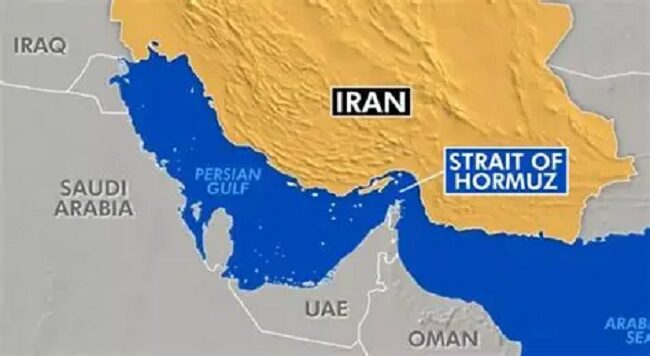
A strait between the Persian Gulf and the Gulf of Oman, the Strait of Hormuz provides the only sea passage from the Persian Gulf to the open ocean and is one of the world’s most strategically important choke points.
Iran holds the world’s third biggest oil reserves while Strait of Hormuz carries one-fifth of the world’s oil and gas supply – making it critical for the global economy and impacting people around the world and their household budgets.
Strait of Hormuz
Olivia Langhoff, Managing Director at 350.org, said: “The new war on Iran and the closure of the Strait of Hormuz lay bare the horrendous costs of a world chained to fossil fuels. When global energy security can be upended by a single flashpoint, it shows how unstable and risky our dependence on oil and gas is.
“Renewable energy provides home-grown power that remains secure and affordable regardless of geopolitical shocks.”
The price of crude oil has already risen 20% this year, and is expected to spike even more now. In 2022, energy and food price shocks triggered by the war in Ukraine pushed over 70 million people into poverty in the space of only three months, according to the United Nations Development Programme.
350.org is calling on governments to accelerate the transition away from fossil fuels and towards renewable energy that strengthens communities, protects the Earth, and reduces exposure to global instability.
“Once again, families will pay the price through fossil fuel-driven inflation: higher fuel costs, rising energy bills, and more expensive groceries as a consequence. All because of a system tied to a volatile, conflict-driven industry.
“Renewable energy offers a world-wide path to real and long-term energy security, one rooted in cooperation, resilience, and justice, rather than instability and violence,” Langhoff added.
A UN Body has approved the first credits to be issued under the UN carbon market established by the Paris Agreement.
The approved activity is a clean‑cooking project in Myanmar, which distributes efficient cookstoves that reduce harmful household air pollution and lessen pressure on local forests.
UN Climate Change Executive Secretary, Simon Stiell, said: “Over two billion people globally are without access to clean cooking, which kills millions every year. Clean cooking protects health, saves forests, cuts emissions and helps empowers women and girls, who are typically hardest hit by household air pollution.
Old woman cooking with traditional stove. Traditional wood‑fired stoves like these are being replaced with cleaner, more efficient models
“The first credits to be issued through the UN carbon market under the Paris Agreement come from a clean‑cooking project, and they show how this mechanism can support solutions that make a big difference in people’s daily lives, as well as channeling finance to where it delivers real-life benefits on the ground.
“The opportunities presented by this UN carbon market across all regions are vast, particularly now that strong environmental safeguards, robust standards, and a clear system for redress are in place to ensure integrity, inclusiveness and efficiency.”
The project is coordinated with authorised participants from the Republic of Korea.
Credits authorised for use in Korea can be transferred to Korean entities for use in the Korean Emissions Trading System, contributing to the Republic of Korea’s Nationally Determined Contribution (NDC). The remainder will be used by Myanmar toward its own NDC.
Article 6.4 Supervisory Body Chair, Mkhuthazi Steleki, said: “This initial issuance reflects the careful application of the rules set by countries under the Paris Agreement. By applying updated values and more conservative calculations, the credited reductions are about 40 percent lower than what older systems would have issued. The result is consistent with environmental integrity requirements and ensures that each credited tonne genuinely represents a tonne reduced and contributes to the goals of the Paris Agreement.”
The project previously received a provisional issuance under the Clean Development Mechanism (CDM). Under the Paris Agreement Crediting Mechanism, updated values and more conservative calculations are applied, recognising earlier investments while ensuring credited reductions reflect the latest available science and information.
These adjustments result in credited reductions that are roughly 40 percent lower than under the CDM, ensuring the issued credits more closely reflect real‑world impact in the current context.
This sets the foundation for the mechanism’s broader role in supporting mitigation activities that deliver tangible community benefits.
Article 6.4 Supervisory Body Vice Chair, Jacqui Ruesga, said: “Starting with a clean‑cooking project is a fitting demonstration of where the demand and impact are what the Paris Agreement Crediting Mechanism can do: support activities that bring clear co-benefits for people, such as better indoor air quality, while reducing emissions.
“Last year we requested the use of an updated methodological approach, which means the credits issued are aligned with the best available information and a careful calculation of the reductions achieved. Our focus is on building confidence in this market from the outset, and this first issuance shows that the system is working as intended.”
This first issuance also responds to strong private‑sector demand for seeing the UN’s Paris‑aligned carbon market shift from design into real‑world operation.
Next steps
Approval remains subject to a 14‑day appeal period during which activity participants, the host country, and stakeholders directly affected by the project may submit an appeal.
Looking ahead, there is a growing pipeline of more than 165 host‑Party‑approved projects transitioning from the Clean Development Mechanism into the new Paris Agreement Crediting Mechanism. These activities span sectors such as waste management, energy, industry, agriculture and more, signaling that a wide range of real‑world climate projects across multiple regions are due to follow.
The Governor of Taraba State, Dr. Agbu Kefas, has officially flagged off the implementation of the Resettlement Action Plan (RAP) and the construction of the Bobboji Storm Water Flood Control Project in Jalingo, alongside the declaration of the Agro-Climatic Resilience in Semi-Arid Landscapes (ACReSAL) Unit into a full-fledged agency.
The programme featured two phases: a field visit to the Bobboji project site for the formal flag-off of the Storm Water Drainage Control Project, followed by a main ceremony at the Jolly Nyame Stadium.
R-L: Governor of Taraba State, Dr. Agbu Kefas; Minister of Environment, Alhaji Balarabe Abbas Lawal; World Bank Task Team Lead, Dr. Joy Iganya; and Commissioner of Environment and Climate Change, Taraba State, Hajiya Aishat A. Barde, at the flag-off of climate-smart agricultural inputs in Jalingo, Taraba State, on February 27, 2026
At the project site, the Commissioner of Environment and Climate Change and Chairperson of the ACReSAL Steering Committee, Hajiya Aishat A. Barde, described the Bobboji Storm Water Project to Gov. Kefas as a strategic intervention aimed at addressing persistent urban flooding, improving environmental sanitation, strengthening climate resilience, and enhancing adaptive capacity and sustainability within the Bobboji axis.
The World Bank Task Team Lead for ACReSAL, Dr. Joy Iganya Agene, stated that the initiative would create employment opportunities, strengthen security conditions, and economically empower communities within the Bobboji corridor. She emphasized that climate-smart investments simultaneously drive environmental resilience and local economic growth.
Speaking during the ceremony, the Minister of Environment, Balarabe Abbas Lawal, commended the Taraba State Government for aligning with national climate and environmental priorities. He noted that the project would significantly reduce flood risks and environmental hazards, while improving public safety and sanitation outcomes.
Governor of Taraba State, Dr. Agbu Kefas, and Minister of Environment, Alhaji Balarabe Abbas Lawal, during the flag-off event for the Implementation of the Resettlement Action Plan (RAP) and Construction of the Bobboji Stormwater Drainage Control Project in Jalingo, Taraba State
At the project site, Governor Kefas formally flagged off the implementation through a practical demonstration, signaling the commencement of construction and restoring hope to residents of the Bobboji neighbourhood.
The intervention is expected to address the recurring annual flooding that has resulted in displacement, as well as the loss of lives and livelihoods.
During the main event, Governor Kefas approved the upgrade of the ACReSAL Unit into the Taraba State Agro-Climatic and Watershed Management Agency (TARAWMA), thereby establishing a permanent institutional framework for watershed restoration, climate adaptation, and sustainable environmental management across the state.
Describing the occasion as a defining moment for Taraba State, the Governor expressed appreciation to the Minister and the World Bank team for their presence and continued support. He assured them of sustained collaboration and reaffirmed his administration’s commitment to strengthening partnerships aimed at reversing environmental degradation and advancing sustainable development.
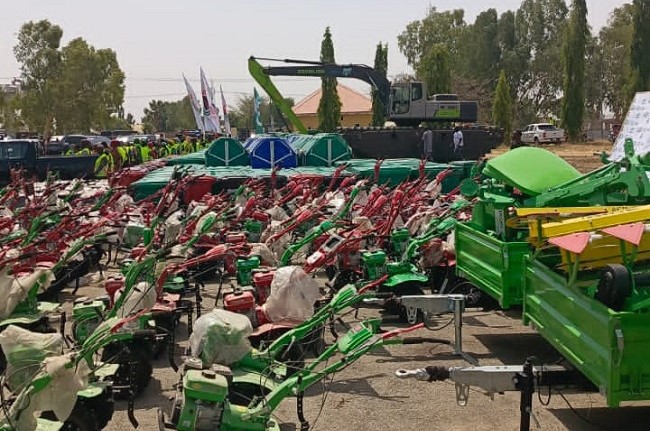
Some of the climate-smart assets displayed for distribution to community interest groups to enhance food security, flood control, and waste management in Taraba State
As part of the rollout, tractors, power tillers, water pumps, clean cooking stoves, and skip bins, were sumbolically distributed to farmers and communities to strengthen mechanised agriculture, improve waste management, and boost food security.
Compensation cheques were also presented to affected landowners under the Resettlement Action Plan (RAP), reaffirming the Governor’s commitment to fairness and responsible development.
Also speaking at the main ceremony, the Minister outlined further collaboration opportunities with Taraba State, including a proposed Rosewood Restoration Plan across Taraba, Cross River, and Benue states; implementation of the National Clean Cooking Policy to reduce deforestation; and support for waste-to-wealth initiatives under the Circular Economy Policy.
He emphasised the urgent need to protect Nigeria’s low forest cover and curb illegal logging, referencing the Federal Government’s ban on wood exports.
The Commissioner of Environment and Climate Change, Hajiya Aishat A. Barde, welcomed the Minister and other dignitaries, and highlighted the vital role of women in climate resilience.
She noted that while women are often among the most vulnerable to climate impacts, Governor Kefas recognises them as powerful agents of resilience.
She commended his appointment of a woman to lead the sector as a demonstration of inclusive and transformative leadership aligned with global best practices, and reaffirmed her commitment to climate justice, women-led solutions, and gender-responsive economic empowerment.
The Taraba ACReSAL Project Coordinator, Dr. Clement Giwa, presented progress on land restoration efforts, showcasing implementation milestones supported by geotechnical evidence and field data.
He disclosed that Taraba State achieved a 68% performance score at the World Bank Mid-Term Review held in Jos, Plateau State, in December 2025, reflecting steady progress under the programme.
The combined initiatives are said to reflect Governor Kefas’ visionary leadership and Taraba State’s firm commitment to climate action, inclusive growth, and sustainable environmental management.