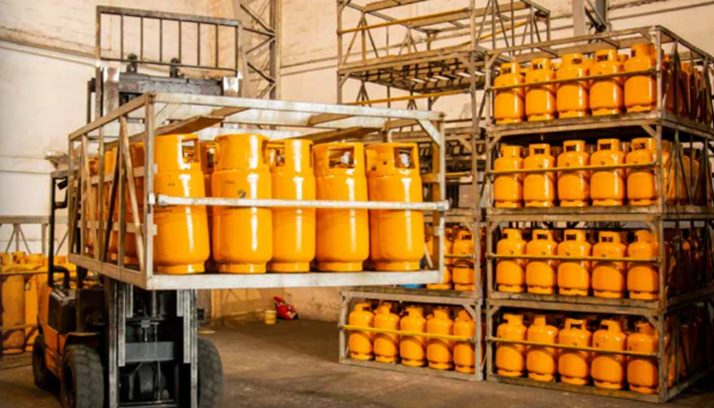
The Nigerian Association of Liquefied Petroleum Gas Marketers (NALPGAM) says the recent rise in Liquefied Petroleum Gas (LPG) prices is driven by supply constraints and global market pressures.
Mr. Edu Inyang, NALPGAM President, who said this in an interview on Sunday, April 5, 2026, in Lagos, attributed the increase to higher depot prices caused by reduced local supply and rising international benchmarks.
He said lower volumes from the Dangote Refinery had impacted domestic supply, making product access more difficult for marketers.
Liquefied petroleum gas (LPG)
“Obtaining the product has become increasingly difficult, with allocations no longer as frequent as before,” he said.
According to him, some off-takers are unable to secure supplies for extended periods, while those with access are responding to prevailing demand conditions.
He added that supplies from the Nigeria LNG Ltd. were also coming at higher costs, further pushing up depot prices nationwide.
Inyang linked the trend to developments in the global energy market, noting that international price movements continued to influence domestic pricing.
“Nigeria is not insulated from global energy shocks. Developments in the international market inevitably affect local LPG prices,” he said.
He said reliance on imported inputs and foreign exchange dynamics also contributed to rising costs.
The NALPGAM president noted that depot operators factor in landing and operational costs, which are reflected in retail prices.
“Private depot operators cannot sell below their landing and operational costs, and this ultimately impacts the final price to consumers,” he said.
He, however, expressed optimism that increased investment in gas infrastructure would improve supply.
“We have experienced similar cycles before. With the right investments, supply will improve and prices will stabilise,” he said.
Inyang called for the development of more gas processing plants and greater private sector participation to boost domestic production.
He added that improved output from existing and upcoming gas projects would help stabilise the market and moderate prices.
Ahead of World Health Day on Tuesday, April 7, 2026, the toxics watchdog group, EcoWaste Coalition, has taken the Government of Pakistan to task for its apparent failure to enforce the global ban on mercury-added cosmetics.
The Minamata Convention on Mercury, ratified by Pakistan and the Philippines in 2020, set a 2020 phase-out deadline for the manufacture, export, and import of mercury-added cosmetics, such as skin lightening products. In 2023, the phase-out deadline was adjusted to 2025 to address evident gaps and loopholes hindering the effective implementation of the ban.
Mercury in cosmetics marketed to lighten the skin tone is said to be highly toxic and can harm users and their families through skin absorption and inhalation of mercury vapours.
The EcoWaste Coalition, which has been exposing dangerous skin lightening products with mercury additives since 2011, deplored the persistent violation of the global ban on mercury-added cosmetics following its detection of outrageous levels of mercury up to 33,970 parts per million (ppm) in 18 out of 20 newly-purchased products labeled as made in Pakistan, including eight products bearing the Pakistan Standards mark.
“The unrelenting manufacture of so-called beauty creams in Pakistan with hidden mercury content is unlawful and unacceptable. Exported with impunity and offered for sale in the marketplace, these highly contaminated products pose a serious threat to the health of women and their families, especially the young children,” said Aileen Lucero, National Coordinator, EcoWaste Coalition.
“We join the over 20 international health and environmental organisations that have earlier called on Pakistan to stop the domestic production and global trade of these dangerous cosmetics with mercury. If not now, when?” added Lucero.
“I am thankful to EcoWaste Coalition for vigilantly watching over women’s health in campaigning tirelessly against mercury-laced cosmetics, particularly skin-whitening products. Mercury is purported to hasten the skin lightening effect of cosmetics by inhibiting the production of melanin– our body’s natural sunscreen,” said feminist Jean Enriquez, Executive Director, Coalition Against Trafficking in Women – Asia Pacific (CATW-AP).
“Manufacturers, importers, distributors, and sellers continue to sell such cosmetics targeting Filipinas and other women who are clueless about the long-term health effects of mercury in their bodies and the ecosystems,” stated Enriquez.
From March 1 to 31 this year, the EcoWaste Coalition, as part of its observance of the National Women’s Month, purchased a total of 20 products manufactured by 14 Pakistan cosmetic companies that claim to lighten the skin tone and remove signs of ageing. Thirteen of these products were purchased from third-party online sellers at Lazada and Shopee, and seven from beauty product stalls operating in Pasay City. Five of the products are marked “export quality.”
Of the 20 products purchased and analysed using a handheld Olympus Vanta M Series X-Ray Fluorescence (XRF) device, 18 contained mercury up to 33,970 ppm, of which 11 had mercury above 20,000 ppm. All the 18 products had mercury way in excess of the 15 ppm limit for waste contaminated with mercury and should be declared hazardous waste. Also, 13 of the mercury-tainted products were manufactured in 2025, two in 2024, and three in 2023, way past the 2020 and 2025 phase-out deadlines.
The discovery of highly contaminated skin lightening products sparked fresh calls for parties to the Minamata Convention on Mercury, such as Pakistan, to firmly enforce the ban on mercury in cosmetics. It also reinforced calls for women to embrace their natural skin colour and to resist colourism and objectification, and for erring companies to be held accountable.
“I call on women to resist the pressures from patriarchal, racist, and capitalist culture, to resist succumbing to the use of cosmetics that belittle us, that reduce our worth to our looks. This women’s month and always, we have to resist by believing and knowing that our worth goes beyond our physical attributes,” said Enriquez.
“As Filipinas, we have to resist messaging by corporations and merchants that our brown colour can be equated to lower status, or to objectification. Buo ang ating pagkatao, tayo ay may talino, galing, lakas, puso at lalim. Hindi hiwalay ang ating katawan sa ating lalim at kaluluwa. We have to value ourselves as persons equal to men, and we have to defy corporate interest to profit from our historical subjugation,” she pointed out. “Make these companies accountable. Uplift all women, regardless of colour.”
The analysed products with the highest concentrations of mercury include: Yaz Beauty Cream Double White + Vitamin C with 33,970 ppm; Arena Gold Beauty Cream, 31,370 ppm; Arena Gold New Fairness Cream for Men, 30,130 ppm; Yaz Gold Beauty Cream Active White + 24K Gold Dust, 29,870 ppm; Goree Day & Night Beauty Cream, 28,640 ppm; Chandni Day & Night Whitening Cream (black packaging), 28,330 ppm; Goree Beauty Cream with Lycopene, 27,600 ppm; Goree Gold 24K Beauty Cream, 25,760 ppm; Zoya Gold Beauty Cream, 22,090 ppm; Aima Gold Beauty Cream, 21,720 ppm; and Face Fresh Beauty Cream, 20,510 ppm.
Also found adulterated with mercury were: Golden Pearl Beauty Cream, 17,580 ppm; Due Beauty Cream, 16,590 ppm; Parley Goldie Advanced Beauty Cream, 15,750 ppm; Sandal Beauty Cream, 13,900 ppm; Super White Anti-Marks Cream, 1,214 ppm; Super White Beauty Cream, 852 ppm; and Tibet Snow, 75 ppm.
Mercury was not detected in the analysed Face Fresh Cleanser Cream and Glow & Clean Beauty Cream.
The Food and Drug Administration (FDA) of the Philippines has already issued public health warnings on the three variants of Goree Beauty Cream, Golden Pearl Beauty Cream, Parley Goldie Advanced Beauty Cream, and Sandal Beauty Cream. It has yet to advise the public on the adverse effects of using the other products with mercury content, as reported by the EcoWaste Coalition to the FDA on April 1, 2026.
The Donald Trump administration on Friday, April 3, 2026, released its fiscal year 2027 budget request to Congress, proposing significant reductions to federal science agencies, including a $1.6 billion cut to the National Oceanic and Atmospheric Administration (NOAA).
While boosting defence spending to $1.5 trillion, the largest such request in decades, reflecting his emphasis on U.S. military investments over domestic programmes, Trump proceeded to initiate cuts to green energy, housing and health programmes, canceling over $15 billion from the Biden-era bipartisan infrastructure law, including funds for renewable energy projects and National Oceanic and Atmospheric Administration (NOAA) grants.
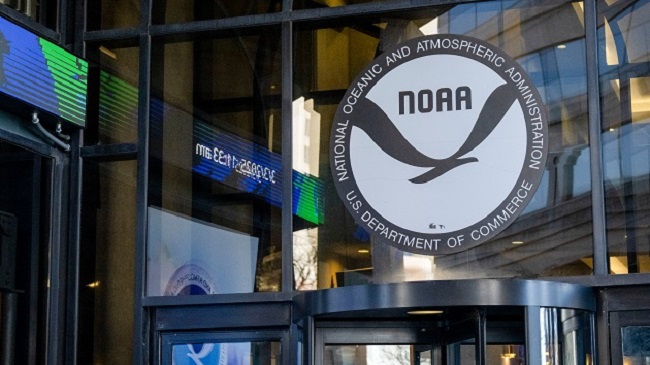
Signage outside the National Oceanic and Atmospheric Administration (NOAA) headquarters in Silver Spring, Maryland, US, on Monday, March 3, 2025. Photo credit: Daniel Heuer/Bloomberg via Getty Images
By implication, the Trump Administration FY2027 Budget Request has slashed NOAA funding by 32%, threatening weather forecasting, fisheries and coastal protection.
White House also proposed a 19% cut in the Department of Agriculture, ending certain university grants, a 13% cut for the Department of Housing and Urban Development, and about a 12% decrease to the Health and Human Services department, including cuts to a low-income heating assistance programme.
Katherine Tsantiris, Ocean Conservancy’s director of government relations, responded: “The proposed cuts to NOAA fly directly in the face of the clear bipartisan support Congress showed earlier this year by protecting funding for this critical agency.
Slashing NOAA’s budget would weaken weather forecasting, disrupt fisheries management and stall ocean research – putting American lives, livelihoods and global scientific leadership at risk. Congress should once again reject these cuts to ensure NOAA has the resources it needs to support our economy, protect our ocean and keep Americans safe.”
The Minister of Finance and Coordinating Minister of the Economy, Mr. Wale Edun, has commended the Nigerian Upstream Petroleum Regulatory Commission (NUPRC) for piloting the petroleum sector to hit a production level of 1.84 million barrels in recent days.
Edun said this when the Commission Chief Executive, NUPRC, Mrs. Oritsemeyiwa Eyesan, visited the headquarters of the Federal Ministry of Finance in Abuja on Thursday, April 2, 2026.
“It is heartening that you can tell us that you are doing 1.84 million barrels per day. That is fantastic news. That is totally in line with the mandate of President Bola Tinubu,” he said.
Minister of Finance and Coordinating Minister of the Economy, Mr. Wale Edun, with Commission Chief Executive, NUPRC, Mrs. Oritsemeyiwa Eyesan
“Clearly, you have started on a very good note. Please keep it up,” Edun told the NUPRC boss.
The finance minister described the war in the Middle East as unfortunate but said President Bola Tinubu had mandated an increased production even before the crisis began.
He therefore called on the NUPRC to push the industry harder to hit 2mbpd.
“I wish you continued success. What matters is not just reaching certain heights but sustaining it. We don’t want any stopping along the way. The trajectory should be maintained and of course the magic figure is 2mbpd,” Edun stated.
Speaking earlier, the Commission Chief Executive of the NUPRC said recent daily crude oil production had hit 1.84 million barrels per day.
“We are doing 1.84 million barrels per day. That is a remarkable feat but I am sure we will do more,” she assured the minister.
The NUPRC chief executive attributed the prior dip in production in February to some unfortunate incidents on some strategic facilities as well as turnaround maintenance.
“But all that has been fixed and we are seeing production ramping up,” Eyesan said.
With regards the 2025 licensing round, Eyesan said the Commission is now in the technical and financial stage.
She expressed optimism over the growth of the petroleum sector in the near future especially because of provisions like the “drill or drop” in the Petroleum Industry Act which empowers the Commission to revoke leases of dormant acreages.
The NUPRC boss revealed that some of the acreages that were put on offer could see production as soon as a year, adding that indigenous companies were showing an impressive capacity.
Eyesan also noted that the Commission had fully complied with the Executive Order 9 of 2026, which directs the immediate suspension of the 30% Frontier Exploration Fund (FEF) deduction from profit oil and gas, alongside other management fees and the direct remittance of same to the Federation Account.
The Hadeja-Jama’are River Basin Development Authority has restarted construction of the Kafin Zaki dam project, in Ningi Local Government Area of Bauchi State abandoned for over 40 years.
The authority’s Managing Director, Rabiu Bichi, dropped the hint during an interview in Kano on Friday, April 3, 2026, shortly after inspecting the project.
Bichi said that the project, initiated under Ibrahim Babangida military regime, was halted shortly after commencement.
Managing Director, Hadeja-Jama’are River Basin Development Authority, Rabiu Bichi
“I just visited the Kafin Zaki dam site signaling government’s renewed commitment to complete the project,” he said.
He said the authority was reviving the project in partnership with the Bauchi State Government.
Bichi said that compensation was paid to affected farmers 40 years ago, but its abandonment led to resettlement issues.
He explained that efforts were underway to relocate residents and provide alternative settlements.
The dam’s completion is expected to boost irrigation, water supply, and agriculture in Bauchi State and beyond.
It is seen as key to unlocking agricultural potential and addressing water management challenges in northeastern Nigeria.
Ghana has moved to boycott the upcoming Africa Energies Summit in London this May, a decision that reflects growing frustration across the African oil and gas industry over discrimination, exclusion and the marginalisation of African voices at events that claim to represent the continent’s energy future.
Energy Chamber Ghana has released a statement calling on Ghanaian energy authorities to reconsider their participation in the summit, expressing deep concerns regarding discriminatory hiring practices and the continued exclusion of African professionals. The move sends a strong signal: Africa’s energy industry must be shaped with African institutions and companies at the center of the conversation.
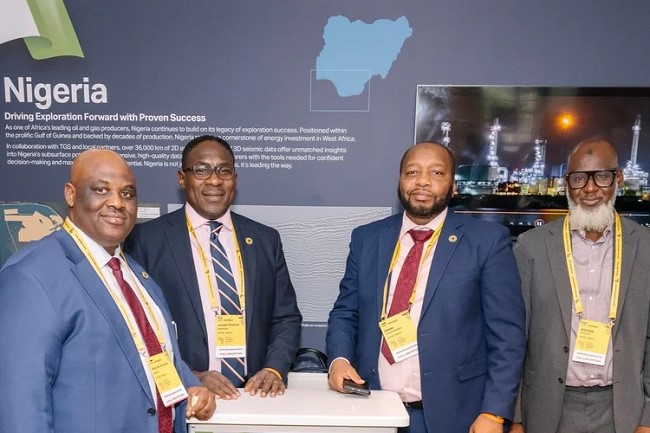
Members of the Nigerian delegate at Africa Energies Summit 2025
The decision to withdraw mirrors similar actions taken by other African industry stakeholders in recent months and reflects a broader shift across the sector, where governments, national oil companies and indigenous firms are increasingly pushing back against platforms that exclude African participation.
Mozambique made the decision to withdraw from the summit in March 2026, while petroleum ministers from the African Petroleum Producers Organisation also moved to boycott the event. Ghana’s boycott is not simply about one event; it is about principle, representation and ensuring that African countries are treated as equal partners in discussions about their own resources.
The announcement by Energy Chamber Ghana follows careful consultation with stakeholders across the country’s petroleum, gas and broader energy ecosystem, with the Chamber calling on Ghanaian institutions, policymakers, engineers, investors and academics to take the approach – at least until corrective action is demonstrated by Frontier Energy Network, the organisers of the summit.
The Chamber highlighted that “Ghana is not a spectator in Africa’s energy story,” and that, “Africa cannot be treated as a marketplace for attendance while Africans are treated as optional participants in execution.”
“Ghana has invested heavily in building engineers, economists, regulators and nnovators who are shaping this continent’s energy trajectory. Platforms that carry Africa’s name must reflect Africa’s people. Until we see transparency and measurable inclusion, it is both reasonable and responsible for stakeholders across our ecosystem to reconsider participation,” Joshua B. Narh, Executive Chairman of the Energy Chamber Ghana, said on LinkedIn.
Ghana’s decision to boycott the event comes at a critical time for the country. With goals to stabilise oil production, monetise gas and shift capital toward infrastructure that anchors long-term industrial growth, the country is promoting African-led investment and development across its market. In 2026, the country is seeing consolidation by IOCs as well as accelerated expansion by indigenous operators.
Around $3.5 billion has been committed to infill drilling and reservoir management to stabilise output, while efforts are underway to unlock new frontiers in the Voltaian Basin. The Jubilee and TEN licenses have been expanded to 2040, while advancements at the Second Gas Processing Plant, the 1.2 GW Thermal Power Plant and downstream LPG are anchoring Ghana’s gas strategy. These projects showcase a market that is moving in the right direction and eager to unlock more value from its resources.
Despite this momentum, the actions of international conference producers to continue excluding African professionals’ risks undermining the very partnerships and growth the industry is trying to build. At a time when African countries are working to attract capital, build local capacity and strengthen regional energy cooperation, industry platforms should be supporting these goals – not creating barriers to participation.
Energy Chamber Ghana highlighted valid concerns surrounding Frontier’s discriminatory approach to hiring Black professionals, emphasising that Africa must not be invited to events to simply attend conversations about itself. According to the Chamber, local content must not be positioned as a conference theme but reflected in practice by conference organisers themselves.
“Africa’s energy sector cannot accept a future where conferences built on African participation exclude African professionals from meaningful roles behind the scenes,” he noted.
Ultimately, Ghana’s call to boycott the Africa Energies Summit is about more than a single summit in London. It reflects a broader industry movement toward African-led development, African-led dialogue and African-led investment strategies. If Africa is to fully develop its oil, gas and energy resources, the continent must not only control its resources, but also its narrative, its platforms and its partnerships.
The Nigerian Content Development and Monitoring Board (NCDMB) has announced that Tony Attah, Managing Director of Renaissance Africa Energy Company Limited, will speak at the next edition of the Nigerian Content Academy Lecture Series.
The lecture will hold virtually on Thursday, April 9, 2026, by 10am, and the renowned industry expert will speak on “Finding Funds for Effective & Efficient Local Content Initiatives – IPPG Perspective.”
Attah, who served previously as the Managing Director of Nigeria LNG Limited and Managing Director of Shell Nigeria Exploration and Production Company (SNEPCo), will bring his wealth of experience to bear on the lecture.
Managing Director and Chief Executive Officer of Renaissance, Tony Attah
The highly anticipated lecture is part of the Academy’s ongoing commitment to advancing discourse, capacity building, and innovation within Nigeria’s local content ecosystem, particularly in the oil and gas and related sectors.
The lecture is designed to engage a broad spectrum of stakeholders, including industry professionals in oil and gas, energy, and manufacturing sectors, policy makers and government officials, finance professionals, local content practitioners and project managers. Likewise, entrepreneurs and investors, academics, researchers, and students interested in local content development, financial institutions and development partners are encouraged to listen to the lecture via the zoom link: https://ncdmb-gov.ng.zoom.
The guest lecturer, a fellow of Nigerian Society of Engineers, is a distinguished industry leader with extensive experience in Nigeria’s oil and gas sector. Known for his strategic insights and leadership in driving indigenous participation. He brings a wealth of knowledge on sustainable funding models and effective execution of local content initiatives.
He has received several prestigious awards, including the Local Content Icon of the year in the 2025 Champions of Nigerian Content Awards, for leading major milestones including the final investment decision for NLNG Train 7 project.
The lecture will be held virtually, allowing participants from across Nigeria and beyond to attend seamlessly. The format of the lecture will include a keynote presentation by Tony Attah, interactive question and answer session, open engagement to foster knowledge sharing and collaboration.
The upcoming edition of the Nigerian Content Lecture is designed to provide practical insights into sourcing and managing funding for local content initiatives, highlight challenges and opportunities within the Nigerian content landscape, promote strategic thinking and innovation among stakeholders, and encourage collaboration between industry players, financiers, and policymakers.
Through this lecture series, the Local Content Academy seeks to strengthen local capacity and deepen indigenous participation in key sectors, bridge knowledge gaps in funding and project execution, build a community of informed and empowered local content practitioners, and support sustainable economic growth through effective local content implementation.
The Academy remains committed to creating platforms that drive meaningful conversations and actionable outcomes for Nigeria’s development.
Notable industry leaders who have spoken at the Nigerian Content Academy Lecture Series include the pioneer Executive Secretary of NCDMB, Ernest Nwapa; former Managing Director, Seplat Energy and Chairman of AA Holdings and Board Member of Nigerian National Petroleum Company Ltd, Austin Avuru, Executive Director at SLB, Mr. Nosa Omorodion, among several leaders.
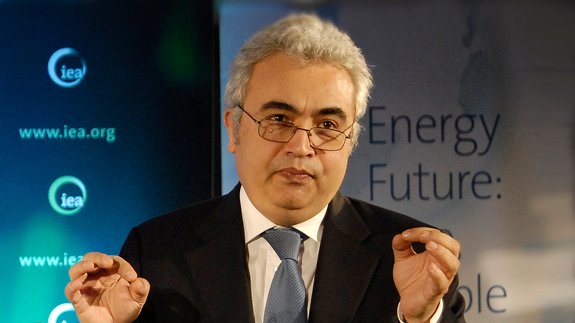
The Heads of the International Energy Agency, International Monetary Fund (IMF), and the World Bank Group have agreed to form a joint coordination group.
The group is aimed at strengthening their response to the energy and economic shocks triggered by the ongoing war in the Middle East.
The institutions made this known in a joint statement issued on Wednesday, April 1, 2026.
Fatih Birol, Executive Director of the International Energy Agency (IEA)
The statement said the conflict had caused significant disruptions to livelihoods across the region and led to one of the largest supply shortages in the history of global energy markets.
It said that the impact of the crisis was “substantial, global, and highly asymmetric”, with energy-importing nations, particularly low-income countries, bearing the brunt.
According to the statement, the effects are already evident in rising prices of oil, gas, and fertilisers, with growing concerns about food inflation.
It said that global supply chains had also been affected, including commodities such as helium, phosphate, and aluminium, as well as tourism due to flight disruptions at major Gulf transport hubs.
It said the resulting market volatility, weakening of currencies in emerging economies, and concerns about inflation expectations raised the prospect of tighter monetary stances and weaker growth.
“At these times of high uncertainty, it is paramount that our institutions join forces to monitor developments, align analysis, and coordinate support to policymakers to navigate this crisis.
“This is especially the case for countries that are most exposed to the downstream impacts from the war and those confronting more limited policy space and higher levels of debt.”
The statement said the coordination group would assess the severity of the crisis across regions.
It said it would do so through coordinated data sharing on energy markets and prices, trade flows, fiscal and balance of payments pressures, inflation trends, export restrictions of key commodities, and supply chain disruptions.
“The group will coordinate a response mechanism that may include: targeted policy advice, assessment of potential financing needs and related provision of financial support, (including through concessional financing).
“It may also include use of risk mitigation tools as appropriate,” it said.
The statement said the group would mobilise other multilateral, regional, and bilateral partners to ensure efficient and coordinated assistance to support countries in need.
It said that the group would work with, and draw on other international organisations’ expertise as needed.
“We are committed to working together to safeguard global economic and financial stability, strengthen energy security, and support affected countries and people on their path to sustained recovery, growth, and job creation through reforms.”
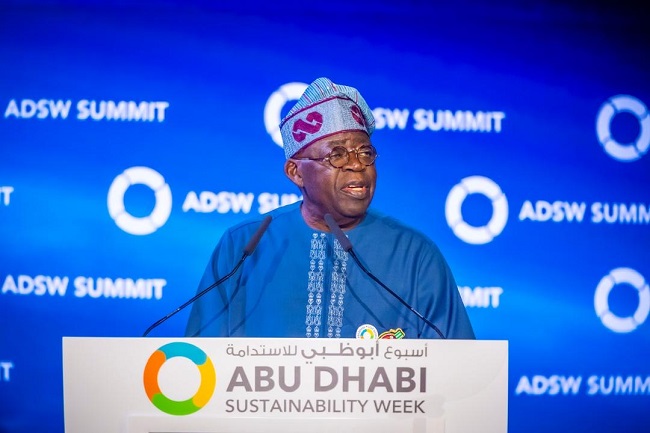
President Bola Tinubu has reassured Nigerians of his administration’s commitment to tackling insecurity and stabilising the economy in his Friday Easter message.
Tinubu rejoiced with Nigerians at home and abroad, noting that Easter ssymbolises sacrifice, resilience, and the triumph of light over darkness.
“I rejoice with Nigerians as we celebrate Easter, which reminds us of the crucifixion and resurrection of Jesus Christ and the redemptive power of salvation.,”
President Bola Tinubu
He said the season rresonated with Nigeria’s current realities, as the nation nnavigated economic strain and persistent security challenges.
“This season speaks to our present situation as we confront economic strain and security challenges with determination and resolve.”
Tinubu commended the armed forces for their sacrifices, noting their efforts in confronting threats to national security across the country.
“Our gallant men and women continue to make sacrifices, leaving their families to defend the nation against evil actors.”
He acknowledged that in spite of ongoing efforts, security challenges persisted, but assured Nigerians of intensified actions to address them.
“Challenges remain, but we are making resources available and forging partnerships to deal decisive blows to terrorists and bandits.”
The president said that his administration was strengthening international cooperation to enhance Nigeria’s capacity to combat insecurity.
“We have sought and are receiving assistance from outside our shores to improve our security operations.”
Tinubu recalled his visit to Plateau on Thursday, April 2, 2026, where he commiserated with victims and reassured them of the government’s commitment to restoring peace.
He said security chiefs had given strong assurances of progress, expressing optimism that ongoing efforts were already yielding results.
“Our security leaders have given strong assurances, and we are beginning to see breakthroughs in our efforts.”
Tinubu urged citizens to support lawful efforts and promote unity, stressing that peace and collective responsibility were vital for national progress.
“No nation can thrive where fear prevails, and no progress can be sustained without peace.”
He called on Nigerians to reject forces that threatened national stability and to act as one another’s keeper.
The president said ongoing economic reforms, though challenging, were necessary to achieve long-term prosperity for the country.
“These reforms are demanding but carefully designed to deliver shared prosperity for all Nigerians.”
Tinubu stressed that meaningful transformation required sacrifice, noting that enduring progress was often achieved in difficult times.
He also urged political actors to adhere to the Electoral Act as the country gradually approaches another electoral cycle.
“The Electoral Act must guide our conduct as political actors, ensuring peace, stability, and credible democratic processes.”
Tinubu emphasised the importance of responsible participation in democracy, noting that progress depended on informed and disciplined civic engagement.
“Democracy flourishes where responsibility, restraint, and informed participation prevail.”
He expressed optimism about the economy, saying that available indicators suggested that the country was on the right path in spite of the prevailing challenges.
The president thanked Nigerians for their support and trust, pledging to continue working toward a safer, stronger, and more prosperous nation.
Tinubu urged Nigerians to remain steadfast and contribute to national development in their various capacities.
“I enjoin you to keep the faith and contribute to the progress of our nation,” Tinubu said.
He wished Christians a joyful Easter celebration and prayed for peace, unity, and prosperity across the country.
The Federal Government and key stakeholders on Thursday, April 2, 2026, in Abuja validated the Nigerian Oil Palm Development Strategy to boost productivity, achieve self-sufficiency and reduce poverty.
The Minister of State for Agriculture and Food Security, Sen. Aliyu Abdullahi, described the policy as a comprehensive roadmap for the growth and development of the oil palm industry.
The validation meeting, themed “Unlocking Nigeria’s Oil Palm Potential: Pathways to Sustainability and Growth,” focused on the implementation of the oil palm value chain strategy.
Sen. Aliyu Abdullahi, Minister of State for Agriculture and Food Security
Abdullahi said the initiative came at a critical time in efforts to reposition Nigeria’s oil palm industry, noting that the crop remains vital to food security, rural development, industrial growth and export diversification.
According to him, the implementation of the strategy is expected to lift about two million Nigerians out of poverty within six years through increased production.
He added that Nigeria aims to capture at least 10 per cent of the global oil palm market.
“This is not merely an agricultural ambition; it is a national economic development agenda,” he said.
The minister stressed that revitalising the sector would reduce import dependence, improve domestic edible oil supply, create jobs, boost smallholder incomes and strengthen agro-industrial development.
“If we get it right, oil palm can support livelihoods, expand industries and increase export earnings,” he said.
Abdullahi noted that the oil palm industry once played a major role in Nigeria’s economy before the rise of petroleum, contributing greatly to livelihoods and national revenue.
“Oil palm is not just a crop; it is an industrial raw material that connects agriculture to manufacturing and supports multiple value chains,” he said.
He, however, observed that Nigeria had not made expected progress in the sector due to low productivity, weak processing systems, limited financing and poor coordination.
“Countries that came after us have moved ahead with speed, structure and strategic investment,” he said.
The minister expressed optimism that Nigeria could reclaim its position in the global market, citing its vast land, favourable climate and strong domestic demand.
Also speaking, the Permanent Secretary in the ministry, Dr Marcus Ogunbiyi, described the strategy as timely and necessary.
Ogunbiyi said the initiative would enhance productivity, promote value addition, create jobs and improve global competitiveness.
He added that the validation process would ensure the strategy is practical, inclusive and responsive to the realities of the sector.