Home Blog Page 199

Ogijo toxic air crisis: Civil society sounds alarm over deadly pollution levels

1

Once celebrated as an industrial hub, Ogijo – a community in Ogun State, Nigeria – is today suffocating under clouds of toxic emissions that threaten both human lives and livelihoods.

The town’s air is thick with soot from smelting plants, its soil laced with industrial waste, and its children are already bearing the scars – testing positive for dangerously high levels of lead in their blood.
Ogijo
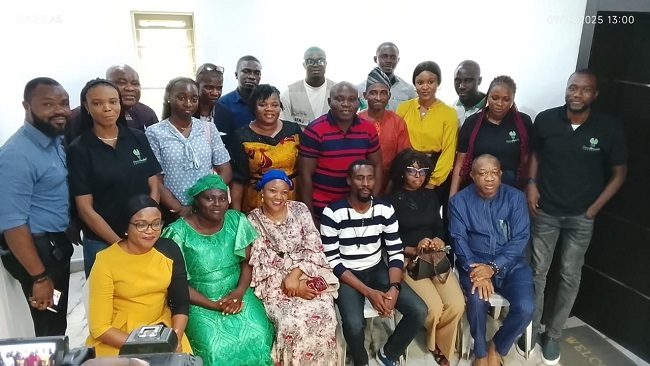
Participants at the stakeholders’ forum in Lagos

These revelations emerged at a high-level stakeholders’ forum convened in Lagos on Friday, September 12, 2025, by Green Knowledge Foundation in partnership with Sustainable Research and Action for Environmental Development (SRADeV Nigeria). The gathering brought together community leaders, health experts, and regulators, all of whom confirmed one grim reality: Ogijo is drowning in poisoned air.

Air quality monitoring in the town recorded particulate matter (PM) concentrations between 500–600 micrograms per cubic meter – 10 times above the World Health Organisation’s safe limits. Experts warned that prolonged exposure at such levels is nothing short of a death sentence, capable of causing respiratory infections, heart disease, strokes, and even cancer.

“This is a public health crisis unfolding in real time,” declared Weyinmi Okotie, Executive Director of Green Knowledge Foundation. “Ogijo is choking under toxic emissions from recycling plants and steel refiners. Families are breathing poisoned air every day, and yet many don’t even know the silent dangers they are exposed to.”

Okotie also raised alarm over the widespread use of slag – the hazardous by-product of smelting plants – as a cheap replacement for gravel in filling potholes and reclaiming land.

“What looks like a solution for bad roads is actually spreading poison,” he warned. “Slag carries heavy metals that seep into soil, into water, and eventually into the food chain.”

For Dr. Leslie Adogame, Executive Director of SRADeV Nigeria, the crisis extends far beyond Ogijo’s borders.

“Air pollution knows no boundaries,” he explained. “Particulate matter and heavy metals released here do not remain in Ogijo. They travel, they settle on farmlands, they enter rivers and streams. What is grown in Ogijo today can end up in Lagos or Abuja tomorrow. This is how a local tragedy becomes a national emergency.”

A recent biomonitoring exercise tested nearly 90 residents – mostly children – and revealed blood lead levels far above safe thresholds. The findings suggest irreversible neurological damage, stunted learning abilities, and shortened lifespans for many young victims.

Investigations also showed that most of Ogijo’s recycling and smelting plants operate with little regard for environmental standards. Workers often toil without protective gear, while toxic waste is dumped openly on lands where children play and farmers cultivate crops.

Civil society groups at the forum denounced this as “regulatory failure” and issued a set of urgent demands to the federal government, including:

  1. Declaration of an Environmental State of Emergency in Ogijo and other industrial hotspots.
  2. Establishment of a nationwide air quality monitoring system, modeled after Lagos State’s real-time AQI framework.
  3. Strict enforcement of industrial emission standards and adoption of cleaner technologies.
  4. Comprehensive health interventions and biomonitoring programs, particularly for children.
  5. Public awareness campaigns to educate communities about the dangers of slag and other industrial waste.

Okotie stressed that Ogijo is a warning sign for the nation. “Without urgent government intervention, more communities will suffer the same fate. Clean air is not a luxury – it is a fundamental human right,” he submitted.

Dr. Adogame delivered an even sharper warning: “If Nigeria does not act now, the costs will not just be measured in hospital bills, but in lost futures. We are breeding a generation poisoned before they even have the chance to live.”

The forum closed on a somber note, with experts warning that Ogijo is only the beginning. Unless Nigeria confronts its industrial recklessness head-on, the toxic air crisis could spread silently, leaving behind communities crippled by illness and children robbed of their future.

By Ajibola Adedoye
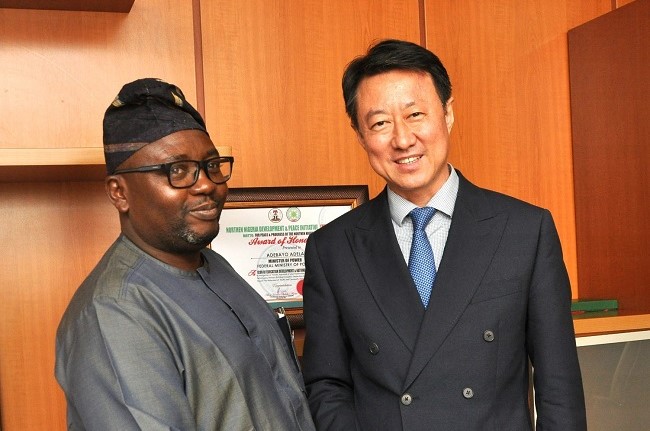
Minister seeks deeper collaboration with China in power infrastructure

0

Minister of Power, Chief Adebayo Adelabu, has called for a deeper strategic partnership between Nigeria and China. The Minister spoke during the week in a meeting with the Chinese Ambassador to Nigeria, Yu Dunhai, emphasising that such collaboration is essential to President Bola Tinubu’s Renewed Hope Agenda and must also advance the local content advocacy of the Federal Government to preserve foreign exchange.

The Minister praised the strong existing bilateral ties, noting that trade volume has reached $20 billion and highlighting crucial Chinese investments in Nigeria’s energy infrastructure.

Adebayo Adelabu
Minister of Power, Chief Adebayo Adelabu (left), with Chinese Ambassador to Nigeria, Yu Dunhai

He specifically pointed to the $1.4 billion Zungeru Hydroelectric Power Plant and a $2.5 billion transmission project for the Eastern and Western super grid, funded through Chinese financial institutions.

Stating that “Nigeria is the biggest economy in Africa and China is the biggest in Asia,” Adelabu proposed that the importance of their relationship warrants more frequent, quarterly meetings to review progress across all segments of the power sector.

While expressing gratitude for China’s support, the Minister also raised two critical issues. First, he urged Chinese companies to help develop local Nigerian capacity by training workers and transferring knowledge. Second, and more pointedly, he called on the Chinese government to take stringent measures to discourage the manufacture of substandard products for export to Nigeria.

Adelabu noted that while China produces high-quality goods, so the proliferation of inferior items tarnishes its reputation and harms Nigerian consumers, insisting that “there must be a minimum standard.”

In his response, Ambassador Yu Dunhai reaffirmed Nigeria’s central importance in China’s foreign policy for Africa and offered the embassy’s full cooperation. He acknowledged the transformative potential of the Renewed Hope Agenda and expressed his understanding of the immense responsibility on the Power Minister, describing electricity as the “blood of industry.”

The Ambassador cited Nigeria’s talented youth and vast market potential as a solid foundation for continued mutual growth and collaboration.

Stakeholders urge young innovators to drive Nigeria’s renewable energy

0

Stakeholders in Nigeria’s energy sector have called on young innovators to accelerate Nigeria’s transition to renewable energy.

The stakeholders made the call at a Green Skills bootcamp on Thursday, September 11, 2025, in Abuja, with a theme, “Spark the Green Economy: Robovolt Brand Reveal and AI-Driven Micro Grid skills”.

Mustapha Abdullahi
Dr Mustapha Abdullahi, Director General, Energy Commission of Nigeria (ECN)

Dr Mustapha Abdullahi, Director General, Energy Commission of Nigeria (ECN), said that Nigeria’s future energy security lied in its natural resources, and also in the ingenuity of its people.

While highlighting the nation’s abundant energy resources including solar, wind, hydro, biomass, lithium, and nuclear, Abdullahi stressed the need to turn them into accessible, reliable, and affordable energy.

According to him, Nigeria is very rich in mineral resources, including lithium in almost every state.

“The government is taking steps to localise and domesticate our technology.

“Very soon, we will stop importing lithium batteries and solar panels because we will be producing them here,” he said.

He said that the Federal Government had signed investment agreements with LONGi, the world’s largest producer of solar components, to establish factories in Nigeria.

According to him, President Bola Tinubu is committed to ensuring that 30 per cent of Nigeria’s energy mix comes from renewable sources such as solar, hydro and wind.

The DG, therefore, urged the youths and others to drive the country’s energy transition through science-backed creativity, policy-driven action and technology-enabled vision.

Dr Abdul-Quayyum Gbadamosi, CEO, Citibim Nigeria Limited, said studies showed that over 90 per cent of businesses in Nigeria rely on diesel or petrol generators for their daily operations.

“Nigeria really struggles with energy access. Generators are very prevalent in our businesses and households.

“Our team has taken the challenge of trying to provide the solution, which is the mobile solar generator we are launching today.

“During the process of innovation, we struggled with access to local skills. So, we asked ourselves, why not develop local skills in AI, geo-intelligence and virtual reality.

“That is why we are organising this bootcamp, to encourage youths that there are a lot of opportunities in sustainability, in the green revolution, energy access and the digital revolution,” he said.

He said that CitiBIM had developed a Sustainability Dashboard to capture and map assets nationwide, requiring data collection, processing, visualisation and geo-intelligence, creating new pathways for youth careers in green technology.

Dr. Oladimeji Olawale, CEO, Sleekabyte Technologies, UK Ltd, said that the RoboVolts project being unveiled targeted to make cheaper, cleaner alternative to diesel and petrol generators.

Olawalesaid that it would cut costs and boost profits for MSMEs.

“It is not just about powering MSMEs. We are also training people to maintain these solutions, equipping them with green skills that create jobs.

“We are integrating AI into our system to help map generator use in communities, giving government data to phase out fossil fuel generators and transition to sustainable alternatives,” he said.

Musaddiq Mustapha, Personal Assistant to President Bola Tinubu on Subnational Infrastructure, said that the unveiling of the mobile affordable solar generator, was a game changer for distributed renewable energy.

Mustapha said that technology alone was not enough, adding that people mattered most.

“The president has made it clear that we must build skills and capacity, training Nigerians in solar installation, battery maintenance, data analysis and green entrepreneurship.

“Every solar unit deployed, every CNG bus converted, every efficient appliance installed is an opportunity to create jobs and lift communities.

“We will build infrastructure that powers growth while protecting the climate; use carbon markets to bring in finance; and train our people for the green economy.

“Nigeria will lead with integrity, evidence, and ambition,” he said.

Other activities included the Robovolt Brand and Product Unveiling, trainings on artificial intelligence, geo-intelligence, virtual reality and sustainable energy solutions.

By Justina Auta

Climate change: APC Group seeks sector-specific climate action

0

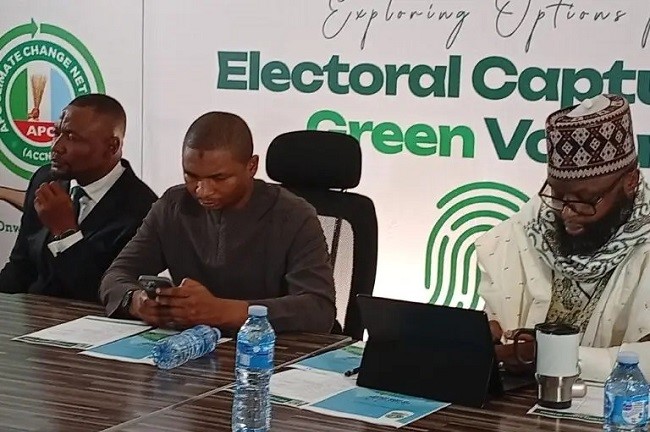
The All Progressives Congress Climate Change Network (ACCN) has called on the ruling party to formulate a clear, concise, sector-specific climate action to strengthen Nigeria’s response to the global climate crisis.

Dr Greg Odogwu, National Coordinator, ACCN, made the call of Friday, September 12, 2025, in Abuja, in his remarks at the inaugural Climate Policy Dialogue organised by the group.

APC
Left: Dr Greg Odogwu, National Coordinator ACCN, Middle: Hamzat Lawal Founder Connected Development, and Keynote Speaker, Dr Muktar Mohammed, at the dialogue in Abuja

The dialogue has as theme “Exploring Options for Electoral Capture of Green Voters”.

The network is a climate arm of the ruling party established within its structure as part of efforts to curb the adverse effects of climate change.

Odogwu said the APC Climate Change Network was birthed out of necessity to guide the party and country towards climate-smart solutions.

According to him, this is the time for clear, concise, sector-specific climate action.

“Let us teach our party members, and indeed the entire citizenry, how to build dams to stop the floods. Let us teach them how to produce our food in a climate-smart way and shese foods in an efficient and renewable manner.

“Let us all adopt the use of clean energy in order to prevent future carbon emission which worsens global warming and climate change.

“Most importantly, let us teach both the young and the unborn citizens how to join us to work towards a net-zero future.”

The coordinator also announced plans to present 95 recommendations to the APC leadership after the roundtable.

“These proposals, referred to as the ’95 Theses’,  will be submitted as part of the party’s ongoing constitutional amendment process.

“At the close of business, we shall give them 95 reasons why they should set up a climate wing, constitutionally speaking,” he said.

Similarly, Dr Murtala Mohammed, an Environmental Expert and Consultant in his keynote called for political commitment to address Climate Change issues in Nigeria.

According to Mohammed, climate change is no longer an abstract discussion but a lived reality in Nigeria.

He therefore urged political leaders to embed climate action into party agendas and governance structures.

“How do we transform climate action from technical conversation into a political opportunity that mobilises millions of Nigerians? That is the question before us.

“Three pathways for Nigeria’s climate response include embedding green growth into political party manifestos and government policies.

“Green growth is growth that responds to climate change and is resilient. Lagos, for instance, has developed a resilience strategy to respond to emerging challenges. We need such strategies across the country.

“Secondly, mobilising young people, women, and local communities into a climate constituency that can drive solutions.

“There should be support for rural farmers and young agripreneurs through climate-smart agriculture. I am 100 per cent against GMOs,” Mohammed said.

The expert added that the third solution was building capacity and credibility for innovative and disruptive policies while fostering partnerships with civil society, the private sector, and international development agencies such as the World Bank, UNEP, and the African Development Bank.

In the same vein, Hamzat Lawal, Founder, Connected Development (CODE) and Chairman, Advisory Board, ACCN, said the platform was timely and would bring about climate action in government.

According to him, the political party has created an enabling environment for elected party officials and this platform can galvanise action from the highest decision making  structure of the party organ.

“This is a time as the country goes into 2027 elections where we have millions of green voters who are particularly affected by climate change like the rural farmers.

“I believe this dialogue will help us shape what will become an agenda for a climate action that will inspire not only Nigeria, but other African countries.”

By Perpetua Onuegbu

Experts urge use of AI to strengthen agriculture, energy resilience in Africa

0

Experts at the second Africa Climate Summit have stressed the need to harness artificial intelligence (AI) to bolster the resilience of Africa’s agriculture and energy sectors.

According to a report by ENA, a partner of TV BRICS, panellists at the summit underscored AI’s potential to improve climate forecasting, enhance resource management, and accelerate the shift towards renewable energy.

Ousmane Ndiaye
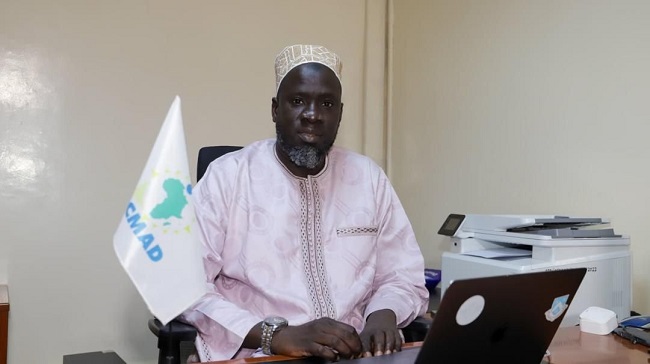
Ousmane Ndiaye, Director General of the African Centre of Meteorological Application for Development (ACMAD)

The experts warned that access to quality data, modern computing capacity, and robust governance frameworks are essential for success.

Ousmane Ndiaye, Director General of the African Centre of Meteorological Application for Development (ACMAD), said AI could transform climate prediction.

Emmanuel Manasseh, Africa Regional Director of the International Telecommunication Union (ITU), highlighted AI’s role in optimising energy use and developing “smart cities” amid rapid urbanisation.

Participants urged policymakers to prioritise investment in AI-driven agricultural projects, including virtual advisory platforms for farmers.

The experts also called for closer cooperation among African nations to share data and best practice, learning from successful models in other countries, to fully realise AI’s potential in addressing climate challenges.

Coca-Cola system invests $1.65m in support of water security

Watersheds critical to water security in Nairobi and surrounding communities are set for restoration thanks to an investment in Kenya of $1.65 million by the Coca-Cola system.

The project in the Upper-Tana and Mid-Galana basins encompasses agroforestry systems designed to benefit the supply of key water reservoirs for Nairobi and rainwater harvesting in groundwater recharge areas for Mzima Springs.

Alfred Olajide
Alfred Olajide, Vice President-Franchise Operations, East and Central Africa at Coca-Cola Central, East and West Africa Limited

In collaboration with The Nature Conservancy (TNC) and local community-based organisations, this initiative aims to replenish water supplies as well as plant thousands of indigenous trees along riparian zones to enhance water quality.

Furthermore, the aim is to contribute to the transformation of degraded farmlands and rangelands through sustainable land management practices, with hundreds of farm ponds installed, and fruit orchards planted to improve food security and offer potential alternative livelihoods for local communities.

The project forms part of the Coca-Cola system’s Africa Water Stewardship Initiative that was announced last year by the Africa Operating Unit of the Coca-Cola organisation and its authorised bottlers, Coca-Cola Beverages Africa (CCBA), Equatorial Coca-Cola Bottling Company (ECCBC) and Coca-Cola Hellenic Bottling Company (HBC). It includes a nearly $25 million investment to help address critical water-related challenges in local communities in 20 African countries by 2030.

The work will be led by the Global Water Challenge (GWC) and implemented by a consortium of partners, including The Nature Conservancy (TNC), the International Union for Conservation of Nature (IUCN) and the World Wildlife Fund (WWF).

“As we face increasing water insecurity worldwide, with demand surpassing supply in many regions including Africa, Coca-Cola is actively working to help accelerate efforts to address water stress, protect local water resources, and build community climate resilience,” said Alfred Olajide, Vice President-Franchise Operations, East and Central Africa at Coca-Cola Central, East and West Africa Limited.

Coca-Cola Beverages Kenya (CCBK) General Manager, James Bowmaker, said: “CCBK, as part of CCBA, has a responsibility to assist those who face water scarcity and to help protect local water resources where we operate, especially in places with the biggest challenges. The Coca-Cola system’s Africa Water Stewardship Initiative aims to help protect and enhance the health of important watersheds and to help improve access to water and sanitation services in local communities.”

Ruth Masha, Kenya Country Director at TNC, added: “We are proud to be one of the implementing partners for this project, aimed at protecting and restoring our watersheds through nature-based solutions and improving water security for millions across the African continent. We are collaborating with local communities and our grassroots partners – the Upper Tana-Nairobi Water Fund Trust, Green Generation Initiative and Jumuiya Water Fund – as we work towards a sustainable future for people and nature in Africa.”

“Recognising that partnerships are critical to support this work, Coca-Cola and its authorised bottlers are collaborating with governments, businesses, and civil society organisations to design and implement strategic interventions,” concluded Olajide.

Civil society pushes back on Nigeria’s climate BOGA entry

0

The second day of ACS2 was animated by numerous side events hosted by governments, intergovernmental bodies, civil society groups, and international initiatives. Among them were two sessions organised by the Nigerian Council for Climate Change, the Government of Kenya, the European Union, and the Beyond Oil and Gas Alliance (BOGA).

The events: African Leadership on an Orderly, Just and Equitable Transition Away from Oil and Gas” and “Partnerships for an Orderly, Just and Equitable Transition Away from Oil and Gas”, were billed as opportunities to showcase leadership on the transition away from fossil fuels.

Mrs. Omotenioye Majekodunmi
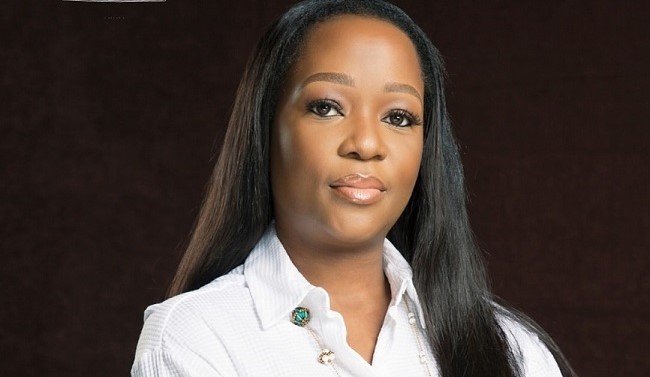
Mrs. Omotenioye Majekodunmi, Director-General of the National Council for Climate Change (NCCC)

These sessions highlighted national and regional strategies for moving away from fossil fuels, with Nigeria and Kenya sharing their domestic efforts. At the same time, the EU and BOGA outlined their support mechanisms for governments navigating the energy transition. Yet what should have been straightforward policy discussions soon revealed deep contradictions at the heart of Nigeria’s climate posture.

Mrs. Omotenioye Majekodunmi, the Director-General of the National Council for Climate Change (NCCC), announced that Nigeria had been accepted into the BOGA Fund. For many in civil society, this announcement was jarring, given Nigeria’s earlier declaration in the year that it intends to restart oil exploration in Ogoniland, a region long devastated by pollution and displacement linked to fossil fuel extraction.

For civil society, the dissonance is glaring: BOGA was established to accelerate a phase-out of oil and gas, yet Nigeria continues to champion a “phase-down” model, signalling no intention to set a Paris Agreement-aligned date for ending fossil fuel operations as required by BOGA. At COP28, Nigerian officials were explicit that a phase-out of fossil fuels “is not in line with Nigeria’s position,” insisting instead on prolonging oil and gas exploitation under the guise of cleaner emissions.

The paradox is plain. How can a country commit to new oil drilling while simultaneously joining a global initiative premised on ending such expansion? Unless there has been a substantive policy shift that has gone unannounced, civil society is left asking whether BOGA is diluting its own principles, or whether the NCCC’s declaration is more symbolic than structural. For communities in the Niger Delta and for global observers, this inconsistency undermines both Nigeria’s credibility and BOGA’s mission.

The Politics of ‘Orderly’ in Transition Language

Equally troubling was the framing of the side events themselves. The inclusion of the word “orderly” in the event titles drew scrutiny from civil society organisations, who have long warned that such language often conceals an agenda of delay. When pressed to clarify, a COP30 presidency representative responded that “language shouldn’t distract us from taking the necessary steps towards the transition.” However, for frontline communities, words are not distractions; they shape priorities, policies, and the flow of finance.

Nnimmo Bassey, Executive Director of Health of Mother Earth Foundation (HOMEF), cautioned: “Formulations are key as they drive both mindset, policies, and investment. Gradualism is virtually the same as permitting convenience to be the rule, just as with voluntary NDCs. Justice isn’t a gradual thing. No gradualism when you are drowning or licked by roaring flames.”

Dr. Mfoniso Xael, Programmes Manager at HOMEF, who posed the question during the session, echoed this concern: “’Orderly’ risks being code for delay. It could mean gradual, cautious, or slow change instead of the urgent phase-out needed. It risks locking in decades more extraction, preserving oil revenues at the expense of frontline communities, and placing control in the hands of fossil fuel producers rather than grassroots actors.”

For civil society, these two developments – Nigeria’s contradictory positioning within BOGA and the careful insertion of “orderly” into transition discourse – are not separate issues but symptoms of the same dynamic: a global energy debate where fossil fuel interests continue to bend language, institutions, and timelines to their advantage. Justice, however, cannot wait. The climate emergency demands clarity, honesty, and above all, urgency. Justice cannot be disguised as gradualism.

By Rex Anighoro

Lagos reduces minimum land size for estate development

0

The Lagos State Government has reduced the minimum land size for estate development from 10,000sqm to 5,000sqm.

This was made known by the Commissioner for Physical Planning and Urban Development, Dr. Oluyinka Olumide, during the maiden Quarterly Media Parley held at the Conference Room of the Ministry in Alausa on Wednesday, September 10, 2025.

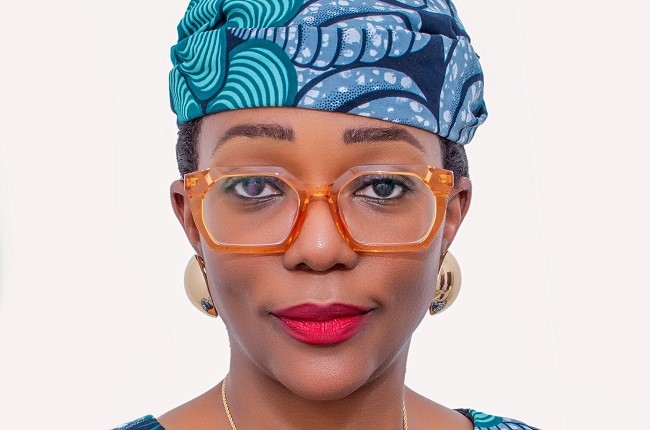
Dr. Oluyinka Olumide
Commissioner for Physical Planning and Urban Development, Dr. Oluyinka Olumide

Olumide said that the lowering of the land-size requirement for estate developments in the state was in line with current realities in Lagos State, where increasing population and urbanisation continued to push the demand for housing and estate developments, in particular.

He said that some of the promoters of the 176 non-complying estates, published in August, had come forward to seek assistance on how to regularise the status of their estates, adding that the Ministry was set to commence enforcement on the non-complying ones.

His words: “Enforcement will commence soon on those in the list of 176 non-complying Estates that have not come forward for regularisation.”

The Commissioner averred that plans were in top gear to extend the regulatory exercise to other parts of the state, including Ikorodu and Ikeja axis, while also revealing the plan of the Ministry to spell out requirements for communities that had been unilaterally converted to estates.

He emphasised the relevance of Operative Development Plans of Lagos State to the development of the State, saying that projects like the Blue and Red Rail Lines, flyovers, and major highways had handshakes with the development plans.

“The State Government has also completed Alimosho Model City Plan, Kosofe Model City Plan, Lagos Island Model City Plan, and Badagry Master Plan. I urge all agencies of government and other stakeholders to abide by the dictates of these plans, which we produced with the involvement of all stakeholders,” he said.

He highlighted the proactive efforts of the Ministry in developing capacity for prescribing the requirements for specialised projects such as Seaport, Airport, and special highways, among others, while noting the success of the Lagos State Physical Planning Permit Agency (LASPPPA) in surpassing expectations in its core area of granting Planning Permits.

He emphasised that the Planning Permit process was straightforward, and applicants could obtain their Approvals within 10 days of making payments as the process is now aided by the creation of more district offices, staff motivation and awareness creation, while government would soon automate the process.

The Commissioner also mentioned the Lagos State Government’s plan for the transformation of informal spaces across the state, stating that the government was actively working to reclaim, redesign, and put to productive use a variety of underutilised and neglected spaces, particularly along power-line and gas-line corridors as well as drainage setbacks.

“Over 3,000 hectares of land has been identified in Lagos for this purpose. Areas often used informally and without proper planning are now being mapped out for structured developments such as parking zones to ease traffic congestion in high-density areas in the state,” he said.

Cholera kills more people for second consecutive year – WHO

0

The World Health Organisation (WHO) has published its global cholera statistics for 2024, showing an increase in both the number of people who fell sick and died from the disease.

Reported cholera cases rose by 5% and deaths by 50% in 2024 compared to 2023, with more than 6000 people dying from a disease that is both preventable and treatable. While these numbers are themselves alarming, they are underestimates of the true burden of cholera.

Sudan
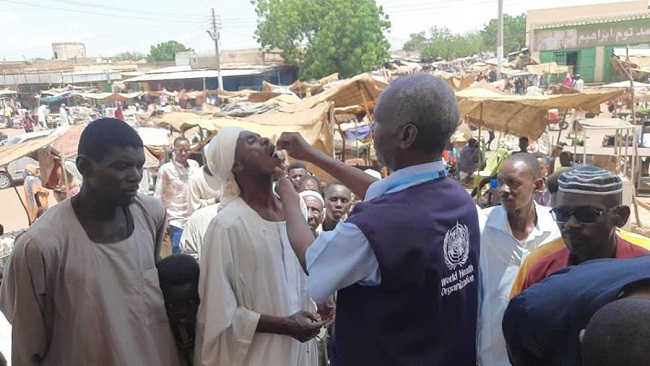
Cholera vaccination in Sudan

Conflict, climate change, population displacement, and long-term deficiencies in water, sanitation, and hygiene infrastructure continue to fuel the rise of cholera, a disease caused by the bacterium, Vibrio cholerae, which spreads rapidly through faeces-contaminated water.

Sixty countries reported cases in 2024, an increase from 45 in 2023. The burden of the disease remained concentrated in Africa, the Middle East, and Asia, which collectively accounted for 98% of all reported cases.

The scope of cholera outbreaks continued to expand in 2024, with 12 countries each reporting more than 10 000 cases, seven of which experiencing large outbreaks for the first time in the year. The resurgence of cholera in Comoros -after more than 15 years without reported outbreaks – underscores the persistent threat of global transmission.

The case fatality ratio for Africa increased from 1.4% in 2023 to 1.9% in 2024, revealing critical gaps in the delivery of life-saving care, and signaling the fragility of many health systems, along with challenges in access to basic health services.

One quarter of deaths occurred in the community, outside of health facilities, highlighting serious gaps in access to treatment and the need to strengthen work with communities.

WHO disclosed that, to combat cholera, governments, donors and communities need to ensure people have access to safe water and hygiene facilities, have accurate information on how to protect themselves, and rapid access to treatment and vaccination when there are outbreaks. Strong surveillance and diagnostics will help guide these responses. Further investment in vaccine production is also needed.

A new, innovative oral cholera vaccine (OCV), Euvichol-S®, was prequalified in early 2024 and entered the global stockpile. Its addition helped to maintain average stockpile levels above the emergency threshold of 5 million doses for the first 6 months of 2025. However, due to the continued high demand for OCV, the temporary change from a two-dose to a single-dose regimen remained in effect throughout 2024 and into 2025.

Requests for 61 million OCV doses were made to the global stockpile in 2024, and a record 40 million were approved for emergency use in reactive, single-dose campaigns in 16 countries. However, supply constraints continued to outstrip demand in 2024, and into 2025.

Preliminary data show that the global cholera crisis continues into 2025, with 31 countries reporting outbreaks since the beginning of the year.

WHO assesses the global risk from cholera as very high, and is responding with urgency to reduce deaths and contain outbreaks in countries around the world. WHO continues to support countries through strengthened public health surveillance, case management, and prevention measures; provision of essential medical supplies; coordination of field deployments with partners; and support for risk communication and community engagement.

Nigeria LNG calls for global action on methane gas mitigation

0

Nigeria Liquefied Natural Gas Limited (NLNG) has urged global co-operation to tackle methane emissions and accelerate climate action.

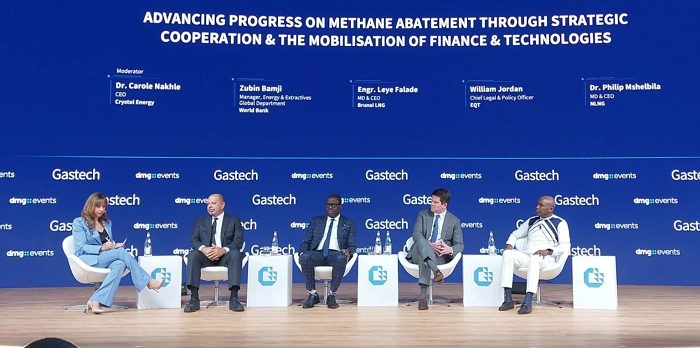
Dr Philip Mshelbila, Managing Director of NLNG, made the call during a panel session at the Gastech Exhibition and Conference in Milan, Italy.

NLNG
Managing Director of NLNG, Dr Philip Mshelbila (5th from left), responding to questions during a panel session at the ongoing Gastech Exhibition and Conference in Milan, Italy

The session was themed, “Advancing Progress on Methane Abatement Through Strategic Cooperation and the Mobilisation of Finance and Technologies.”

Mshelbila stressed that methane reduction must be prioritised due to its high climate potency and short atmospheric lifespan compared to carbon dioxide (CO₂).

He explained that about 40 per cent of methane emissions were natural, while 60 per cent resulted from human activities.

“Of this 60 per cent, agriculture contributes 40 per cent, and waste, 20 per cent.

“Globally, oil and gas account for 21 per cent of total methane emissions from fossil fuels, making the sector a critical focus for intervention,” he said.

He explained that fossil fuel-related emissions arose from coal mining, flaring, venting, fugitive releases, and incomplete combustion – all requiring targeted mitigation strategies.

Mshelbila identified three key pillars for addressing the challenge which included prevention, detection and measurement, and intervention.

He said that prevention involved designing new facilities to minimise leaks and upgrading existing infrastructure, while detection and measurement relied on advanced technologies to track performance.

“If you cannot measure it, you cannot know how well you are performing,” he stated.

Mshelbila noted that methane lingered in the atmosphere for about 12 years, compared to hundreds or thousands for CO₂, yet it was over 80 times more potent, making its reduction a ‘fast-track’ climate solution.

According to him, we need to focus attention on methane mitigation technologies and support small-scale producers and transporters who often lack the capital to invest in advanced systems.

While CO₂ regulations are relatively mature, Mshelbila observed that methane policies remained underdeveloped, particularly in developing nations.

He called for industry-wide collaboration and inclusive frameworks to close this gap.

Highlighting NLNG’s contributions, the NLNG managing director said the company had reduced Nigeria’s gas flaring by more than 40 per cent since its inception 26 years ago.

“Methane is energy. It is good as long as you keep it in-pipe. NLNG was created to monetise associated gas that was previously flared during oil production.

“We have invested in detection, measurement, monitoring, and reporting systems to manage methane emissions,” he said.

Mshelbila further said that the company had joined the Oil and Gas Methane Partnership (OGMP) and was working towards achieving Gold Standard certification.

He announced that the company would soon inaugurate a boil-off gas compressor to reintegrate methane that would otherwise be flared.

Mshelbila emphasised the importance of partnerships, funding access, knowledge-sharing to help smaller operators adopt advanced technologies, citing satellite-based detection as an innovation that could deliver industry-wide benefits.

He added that access to finance and scalable solutions was crucial for independent players to reduce flaring and emissions.

According to him, we need global stakeholders to support methane mitigation through technology, funding, and inclusive policy frameworks,” he said.

By Desmond Ejibas