Home Blog Page 1988

World Leprosy Day: Cleric cautions against stigmatisation

0

The Catholic Bishop of Awka Diocese, Most Rev. Paulinus Ezeokafor, has called for an end to stigmatisation and discrimination against victims of leprosy.
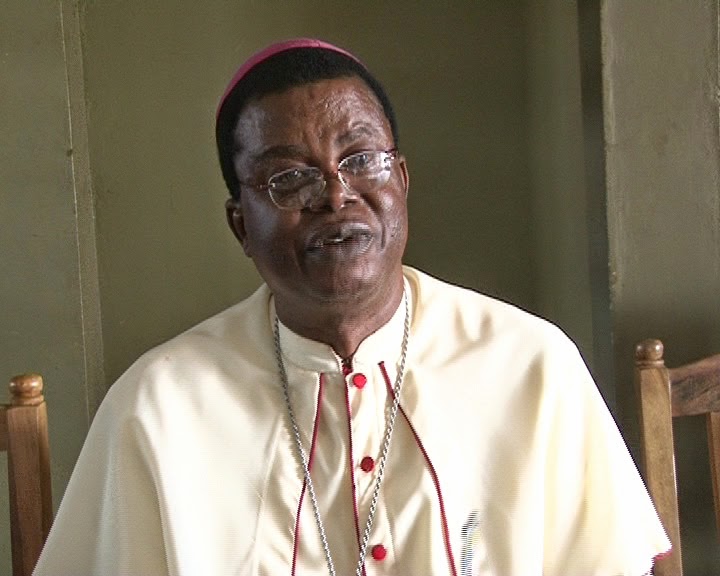
Most Rev. Paulinus Ezeokafor
Catholic Bishop of Awka Diocese, Most Rev. Paulinus Ezeokafor

Ezeokafor made the call while presenting some items to victims of leprosy as part of activities to mark the 2018 World Leprosy Day at the Leprosy Settlement, Oji-River in Enugu State on Sunday, January 28, 2018.

Some of the items donated include bags of rice, mattresses, mats, cartons of noodles, tubers of yam and crutches.

The cleric, who described stigmatisation and discrimination against leprosy victims as “unfortunate” also urged the Enugu State Government to resettle victims cured of the disease with their families.

“It is unfortunate that in spite of recent developments in medicine and health education about leprosy, people still do not understand that they can be cured of the disease permanently and be integrated into the society.

“They see the external signs and think it is not over. Leprosy can be cured and once cured, it is cured.

“This question of their continuous stay here as a result of stigmatisation makes no meaning of life,” the bishop said.

Ezeokafor, who noted that the children of the leprosy victims were free from the disease called for more support to fund their education.

In his remark, Mr Emmanuel Omeke of the Tuberculosis, Buruli Ulcer and Leprosy Unit of General Hospital, Oji-River said the settlement was still faced with challenges of routine drugs.

“It is true that German Leprosy and Tuberculosis Relief Association supply free leprosy drugs, but other routine drugs for treatment of malaria and other ailments are lacking for treatment of the victims,” he said.

Responding, the Chairman of the Leprosy Settlement, Mr Benjamin Udenze, commended the Catholic Bishop for the gesture, noting that the centre currently had over 140 members.

Udenze also commended the bishop for sustaining a scholarship scheme for 22 children of the settlement for15 years.

The chairman said the donations from the cleric as well as from other donors would go a long way to relieve them of their sufferings.

The News Agency of Nigeria (NAN) reports that other donors were Obijackson Foundation, Omex Global, the Anglican Church, Enugu Diocese and other individuals also made separate presentations to the victims.

By Peter Okolie

Researchers develop new way to make computers function like human brain

0

Researchers at the U.S. National Institute of Standards and Technology (NIST) in Colorado have developed a superconducting switch that “learns” like its biological counterpart.

Living-computers
The new computer operates like the human brain

The switch, called a synapse, could connect processors and store memories within future computers operating like the human brain.

According to the study, the NIST switch supplies a missing piece for so-called neuromorphic computers.

Envisioned as a new type of artificial intelligence, such computers could boost perception and decision-making for applications such as self-driving cars and cancer diagnosis.

Biological synapse is a connection or switch between two brain cells.

NIST’s artificial synapse, a squat metallic cylinder 10 micrometers in diameter, is a connecting switch between incoming electrical spikes and the signals being output.

It works in the same way that a human synapse quickly switches between two brain cells.

According to the study, NIST’s synapse would be used in neuromorphic computers made of superconducting components, which can transmit electricity without resistance, and therefore, would be more efficient than other designs based on semiconductors or software.

Data would be transmitted, processed and stored in units of magnetic flux.

“The NIST synapse has lower energy needs than the human synapse, and we don’t know of any other artificial synapse that uses less energy,” NIST physicist Mike Schneider was quoted as saying in a news release.

Compared to a brain cell’s 50 times per second, NIST synapse is capable of firing one billion times per second.

The more firing between cells or processors, the stronger the connection.

Both the real and artificial synapses can thus maintain old circuits and create new ones.

The new synapse would be used to make neuromorphic computers, computers that function like the human brain, a reality.

These conceptual machines are made of superconducting components, which can transmit electricity without resistance, and therefore, would be more efficient than other designs based on semiconductors or software.

Data would be transmitted, processed and stored in units of magnetic flux.

Other superconducting devices mimicking the human brain cells and transmission have been developed in the past, but efficient synapses have been missing.

And NIST’s synapse now could be the crucial invention that would essentially tie them all together.

Crucially, the synapses can also be stacked in three dimensions (3-D) to make large systems that could be used for computing.

NIST researchers created a circuit model to simulate how such a system would operate.

Scientists use microbes to convert human waste into space food

0

Scientists have found a potential food source for astronauts, using microbes to convert human waste into Marmite-like food, local media have reported.

Christopher House
Christopher House

This is contained in their study published in the quarterly scientific journal Life Sciences in Space Research by Professor of Geosciences, Christopher House, and Director of the Penn State Astrobiology Research Centre.

According to British online newspaper, The Independent, researchers at Pennsylvania State University outlined a method to break down solid and liquid waste for producing protein and fat-rich substance from human waste.

“We envisioned and tested the concept of simultaneously treating astronauts’ waste with microbes while producing a biomass that is edible either directly or indirectly, depending on safety concerns,” they said.

“It’s a little strange, but the concept would be a little bit like Marmite or Vegemite, where you’re eating a smear of microbial goo,” the professor added.

Food supply is a major hurdle when planning lengthy space flights.

Recycling waste into nutritious food is one solution to this problem.

According to House and his colleagues, the method involves anaerobic digestion, a process that refers to the breakdown of materials in the absence of oxygen.

It is considered an efficient way of breaking down biodegradable matter.

The researcher said while their method is not ready for application yet, it provides a new model for creating food on board spacecraft.

“Imagine if someone were to fine-tune our system so that you could get 85 per cent of the carbon and nitrogen back from waste into protein without having to use hydroponics or artificial light,” said House.

World Leprosy Day: Global focus on ending transmission among children

0

The World Health Organisation (WHO) says national programmes should boost active case-finding, strengthen surveillance, improve contact-tracing and focus more on early detection of leprosy cases among children to ensure achievement of the global target of zero child infection by 2020.

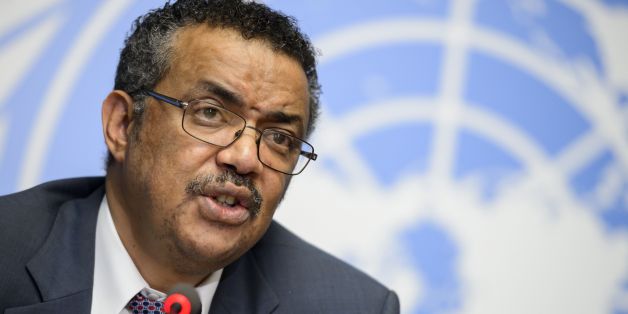
Dr Tedros Adhanom Ghebreyesus
Dr Tedros Adhanom Ghebreyesus, Director-General of the World Health Organisation (WHO). Photo credit: AFP / FABRICE COFFRINI / Getty Images

The call comes as the world observes World Leprosy Day on Sunday, January 28, 2018 to mark the suffering of people affected by this preventable and curable disease that appears to have eluded defeat.

Leprosy was globally declared to have been “eliminated as a public health problem” 18 years ago. However, pockets of endemicity have continued in many countries. India and Brazil report the highest number of cases annually.

Some of the children who have recently been diagnosed already showed signs of disability. This strongly calls for early case detection and surveillance, says the WHO.

Leprosy is caused by infection with the bacillus Mycobacterium leprae, which multiplies very slowly in the human body. The bacterium has a long incubation period (on average five years or longer). The disease affects nerve endings and destroys the body’s ability to feel pain and injury.

Data published by WHO in 2017 show that although the overall number of cases is slowly declining, that of new cases does not align with global efforts and resources deployed to interrupt transmission.

Reports from 145 countries of WHO’s six regions show that, of the total of 216,108 newly diagnosed cases of leprosy during 2016, 18,472 involved children, representing almost 9% of all new cases reported annually.

Leprosy is curable and treatment provided in the early stages averts disability.

Multidrug therapy is made available free of charge through WHO and has been donated to all patients wordwide by Novartis since 2000 (and earlier by The Nippon Foundation since 1995). It provides a simple yet highly effective cure for all types of leprosy.


Discrimination

Despite global efforts to repeal laws that discriminate against those affected by leprosy, adults still face crippling social barriers and children are deprived of education or subject to bullying and rejection due to stigma associated with the disease.

Besides elimination, WHO’s new global strategy focuses on working with governments and partners to end the discrimination and stigma associated with the disease and ensure that all legislation that allows for discrimination on the basis of leprosy is overturned.

Continued discrimination against people affected by leprosy has deterred people from coming forward for diagnosis and treatment and encouraged cases to remain hidden, indirectly contributing to transmission.

Social stigma also facilitates transmission among vulnerable groups, including migrant populations, displaced communities, and the ultra-poor and hard-to-reach populations. Combating stigma and ensuring early diagnosis through active case-finding, which the new strategy emphasises, is critical to making progress.

How Davos 2018 revisited environmental concerns

0

From the pace of climate action to saving the oceans, world leaders had plenty to say about the environment during the World Economic Forum’s Annual Meeting 2018 in Davos. Jahda Swanborough, Lead, Environment Initiatives, World Economic Forum, recalls the key moments from the week-long forum, which held from January 23 to 26, 2018 in Davos-Klosters, Switzerland

Davos 2018
Participants during a session at Davos 2018

The greatest threat to civilisation

As leader of the fastest growing major economy in the world – as well as the world’s largest democracy – Indian Prime Minister Narendra Modi started the week by telling the Davos audience that climate change is the greatest threat to civilisation.

His comments were consistent with the 2018 edition of the Global Risks Report, released the week before Davos – it showed that environmental concerns now dominate the most dangerous risks facing the world. Worse, they are now affecting our health and prosperity.

He was followed on the Davos stage by a week-long call to action by government, business, civil society, and youth leaders.


2018: A year to step up climate action

Risalat Khan, a young climate campaigner, said: “The previous generation of decision-makers have failed us, have failed our generation. I’m not sugar coating this. I think you have already failed us through the inaction from the previous generation. And the next three years, from 2018 to 2020, that’s the time that you have to redeem yourselves.

“That is the message to the previous generation of decision makers.”

Greenpeace’s Jennifer Morgan issued a plea to every leader at Davos to “connect the dots” on climate change and recognize that incremental change will not be enough. Leaders needed to catch up with their citizens, customers, and employees in connecting the dots and increasing the pace and scale of climate action.

Leading the charge in setting new climate commitments, French President Emmanuel Macron announced France would shut down all coal-fired power stations by 2021 and would make climate action one of five pillars in his plans to reform the economy.

Anand Mahindra, Chairman of Mahindra Group, described efforts to address climate change as the century’s biggest business opportunity. For his part, he announced that all Mahindra Group companies would commit to the goals of the Paris Agreement on climate change by setting science-based targets for reducing their greenhouse gas emissions. He called on his peers in business to “step up” and align their business strategies with the Paris Agreement.

The head of global insurance giant AXA told participants that climate change had become a reality for the insurance industry. Thomas Buberl said a global warming scenario of 3-4C degrees would not be insurable. As a consequence he announced that AXA would no longer insure coal projects and was also divesting from coal.


A one-man parade?

Governor of Washington, Jay Inslee, said President Trump was out on his own on climate change. “There is only one man in this parade. And no one has followed him in this regard.” He said that 15 states had joined the United States Climate Alliance, which was committed to the Paris agreement and represented 40% of the US economy.


An ocean of opportunity

To date, the world has relied on the oceans to mitigate climate change. They have absorbed 90% of the excess heat humanity has produced and around 30% of our CO2 emissions. But our oceans are under threat from plastics, over-fishing, global warming, and acidification.

An ambitious new global partnership to save life in the ocean was launched by the United Nations Secretary-General’s Special Envoy for the Ocean, Peter Thomson, and Isabella Lövin, Deputy Prime Minister of Sweden, with funding from Marc Benioff and his wife Lynne Benioff through the Benioff Ocean Initiative.

The Friends of Ocean Action partnership will comprise leaders from science, technology, business and non-governmental groups – around 40 of the world’s most committed and influential ocean activists and thought leaders – who will leverage their collective network to scale and accelerate action to meet Sustainable Development Goal 14, which is on oceans.


A window of opportunity

However, despite the commitments and strong words used throughout the week, there was also strong agreement that the environmental challenges facing humanity and our planet are urgent and cannot be ignored. We have a narrow window of opportunity to reverse course before it is too late and 2018 must be the year leaders step up to meet the challenge.

France to phase out coal-fired power stations

0

France will shut down all coal-fired power stations by 2021, President Emmanuel Macron said in an energetic speech to participants at Davos.

Emmanuel Macron
President Emmanuel Macron says a green strategy could create jobs. Photo credit: REUTERS/Jean-Paul Pelissier

President Macron said he wanted to “make France a model in the fight against climate change,” as one of five pillars in his plans to reform the economy.

“That is a huge advantage in terms of attractiveness and competitiveness. Talent will come where it is good to live. We can create a lot of jobs with such a strategy,” he said.

Across the European Union, the economic tide is already turning against coal power: more than half of the bloc’s 619 coal-powered plants are losing money, according to a report. A combination of rapidly falling prices for renewables and air pollution laws are pushing them out of business.

President Macron also called for the EU, which already opened the world’s first carbon trading market, to “go a little bit further and create a floor price for CO2.” Carbon markets work by providing a financial incentive to pollute less; many experts have called for a minimum price on carbon to boost progress.

Not long returned from a meeting with China’s President Xi Jinping, President Macron acknowledged the Chinese leader’s commitment to the Paris Agreement.

Looking ahead to the gargantuan infrastructure project set to link China with Europe, Macron said:

“The new Silk Road has to be a green road. We cannot have a coal-based route.”

Whether silken or green, it will still be a bumpy road ahead to keep warming within the 2°C
targeted by the Paris agreement.

“On climate change, we’re losing the battle,” Macron said, adding that the world needed concrete action and results by 2020.

NiMet explains causes of harmattan fluctuation

0

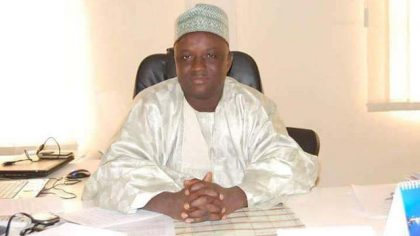
The Director-General, Nigerian Meteorological Agency (NiMet), Prof. Sani Mashi, says the mixture of harmattan and heat conditions presently being experienced in some parts of Nigeria is caused by oscillation of Inter Tropical Divide (ITD).

Sani Marshi
Director-General/Chief Executive Officer of NiMet, Prof. Sani Mashi

Mashi, in an interview with the News Agency of Nigeria (NAN) in Abuja on Sunday, January 28, 2018, explained that ITD is the point where the South-westerly air mass and north-easterly air mass meet.

He further explained that the climate of Nigeria was being controlled by those two major air masses that were moving along opposite directions.

According to him, while the north-easterly travels from Chad, through the Sahara desert into Nigeria through the north eastern direction, south-westerly comes from the ocean through the coastal side.

“Wherever they meet, that point is a divide that is known as Inter Tropical Divide (ITD).

“Already, that oscillation has ceased and it is much towards the southern part of the country meaning that the much of ITD is already in favour of the south-westerly that is coming from the southern part of Nigeria.

“Meaning that the south westerly is pushing the north westerly.

“So, that being the case, it means we are now expecting more moist condition than dry condition in the north central part of Nigeria.

“That is why we are not experiencing much of harmattan in the north central Nigeria and the temperature has started going down already.

“That means a build up to the expectation of rainfall in the northern central Nigeria and that is the situation we have right now,’’ he said.

According to Mashi, the south westerly air mass from the southern part of the country is moist and usually hotter, while the north easterly air is drier and cooler.

He added that while the north easterly air mass brought lower temperature, the south westerly air mass transported hotter and higher temperature into the central region.

“Because of that the higher temperature is leading to more evaporation leading to more chances of condensation and that is why you have such a contradicting situation.

“You have haze and at the same time, the temperatures are higher.

“The expectation is that when you have haze the temperature should be lower because the north easterly is associated with lower temperature.

“South westerly is warmer because it has moisture and it is associated with warm air (ocean current).

“You are expecting that you would have higher heat where you are having because the ITD is oscillating and it is moving from one part of the north central to another.

“That is why we have these two contrasting situations in one location in most of north central Nigeria,’’ Mashi explained.

According to him, the harmattan period is already becoming shorter because the south westerly air mass is already overpowering north easterly air mass over central northern Nigeria.

The implication of this according to him is that we are likely to have early commencement of rain within central northern Nigeria.

By Sumaila Ogbaje

Agency predicts central Nigeria will experience early rains in 2018

0

The Nigerian Meteorological Agency (NiMet) says the mixture of harmattan and heat presently being experienced over the central part of Nigeria can lead to early rainfall in the region in 2018.

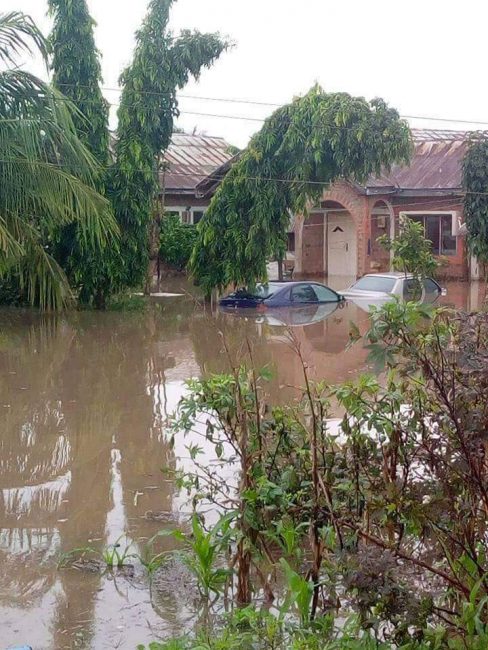
Makurdi flood
Submerged part of BIPC Quarters, Makurdi, Benue State. Rainfall caused widespread flooding in central Nigeria in 2017

Prof. Sani Mashi, the Director-General of NiMet, made this known in an interview with the News Agency of Nigeria (NAN) in Abuja on Sunday, January 28, 2018.

He explained that the oscillation of Inter Tropical Divide (ITD) within the central region resulting from the meeting of south-westerly and north-easterly air masses would lead to early rains.

Mashi explained that ITD is the point where the South-westerly air mass and north-easterly air mass meet.

According to him, wherever the two major air masses meet will have rain.

“The harmattan period is already becoming shorter because the south westerly air mass is already overpowering north easterly air mass over central northern Nigeria.

“So, the implication of this is that we are likely to have early commencement of rain within central northern Nigeria,’’ he said.

The NiMet boss also said that the rainfall around the central states in December was not unusual, explaining that the same concentration of ITD within the region was responsible.

NAN recalls that there was rainfall in mid-December, 2017, a situation that had not occur for some years.

He said that the ITD had been oscillating going up and down within the central part of the country from November to December and even early part of January.

Mashi added that instead of the ITD to be progressing either moving down south or moving completely down north, it had continued to oscillate going up and down within the region.

“The implication of this is that over the central part of northern Nigeria for most part of November and December because of that oscillation, you have two conditions that were interchanging.

“The dry condition that is coming because of the air mass that is coming with the dry air and then the moist air that is coming from the southern region.

“Because of these two conditions you have the heavy air mass that is dry and the heavy air mass that is moist.

“Because of that, condition was created within the central northern Nigeria with condensation which means, moist condition coming to become condensed into cloud leading to the formation of rains.

“Because of that, you have some isolated cases of rainfall events in the central northern part of Nigeria.

“For instance, within Abuja, there was rain towards the third week of December and like I said, those events were recorded mainly within the central northern part of Nigeria and because this oscillation of ITD,’’ he said.

By Sumaila Ogbaje

Early warnings averted massive crops failure in 2017

0

The Nigerian Meteorological Agency (NiMet) said early cessation of rains in parts of Nigeria would have led to massive crops failure if early warnings were not issued to farmers through its 2017 Seasonal Rainfall Prediction (SRP).

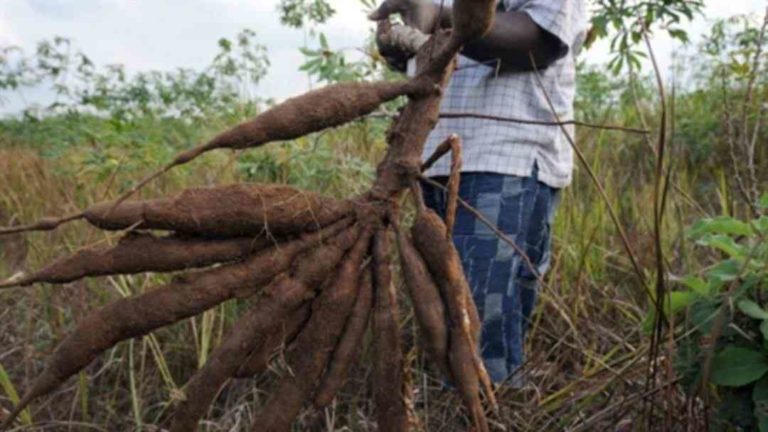
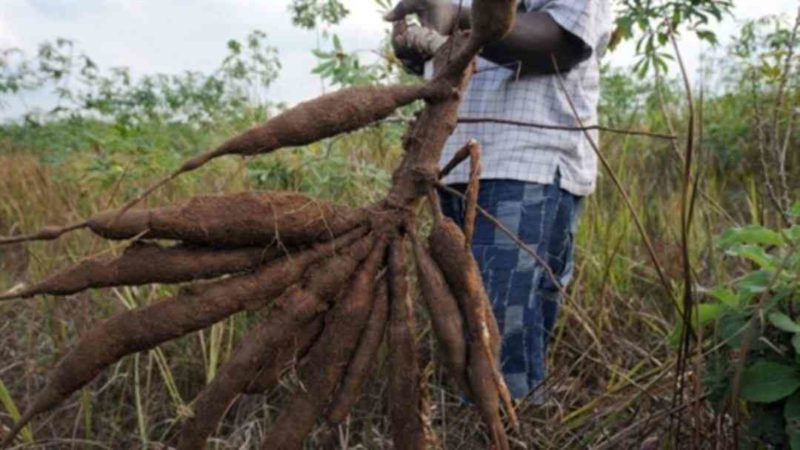
cassava
Cassava farming

Prof. Sani Mashi, the Director-General of NiMet, said this in an interview with the News Agency of Nigeria (NAN) on Sunday, January 28, 2018 in Abuja.

According to him, “farmers have taken that warning seriously which is why we don’t have much reported cases of crop failure”.

“The implication of early cessation is the failure of crops that take longer time to mature.

“But because of the fact that a number of farmers have already been forewarned on the need to avoid going for crops that last longer time to mature, probably they have taken that that warning seriously.

“The cases of reported failure in terms of crop productivity are not so significant within the country.

“But definitely, there are cases of that crop failure, only that it was not significant enough probably because of large harvest or a lot of farmers have gone for early variety of crops species.

“Remember that when we made our predictions we made appeal especially to Agricultural Development Project offices of the various states on the need for them to make adequate publicity and enlightenment to farmers,’’ he said.

Mashi said that the level of accuracy of its 2017 predictions based on the feedback it had received so far was between 75 and 82 per cent.

According to him, the agency is yet to receive adequate feedback on the predictions from across the country to be able to determine a definite level of accuracy.

“The major challenge we have had in evaluating the level of accuracy of our predictions in the 2017 prediction is that we have not gotten the adequate number of feedbacks.

“But from the few feedbacks that we have got, the range of accuracy varies between 75 and 82 per cent.

“If we have received wider coverage in terms of the response, probably we would have got more reliable information.’’

By Sumaila Ogbaje

Nigeria, AfDB train 8,317 farmers, processors on rice value chain

0

The Federal Government says it has so far trained more than  8,000 farmers on rice value chain activities under the Agricultural Transformation Agenda Support Programme (ATASP) Phase 1.

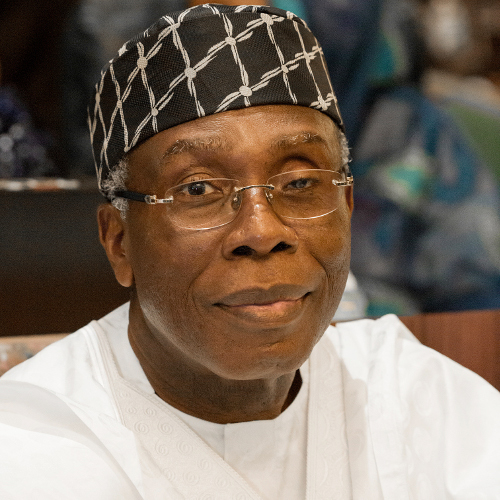
Ogbeh
Minister of Agriculture and Rural Development, Chief Audu Ogbeh

The National Coordinator of ATASP-1, Mr Haruna Akwashiki, said this in an interview the News Agency of Nigeria (NAN) in Abuja on Sunday, January 2018.

He noted that the training was done in collaboration with the African Development Bank (AfDB).

According to him, the training is in line with government’s determination to diversify the economy through agriculture, reduce imports and attain self-sufficiency in rice production.

Akwashiki said that 152, 651 tonnes of grains had been released to the market by farmers who were beneficiaries of the programme.

He explained that ATASP-1 had three major components of infrastructure development, commodity value chain and programme management.

According to him, the programme has also trained 3,931 beneficiaries on cassava and 3,498 beneficiaries on sorghum value chain.

“We have trained 205 youths on seeds production technology because we believe that one of the problems that farmers are facing today is the inability to get improved seeds.

“We are working assiduously on this to make sure that improved seeds are made available to farmers.
“More than 40,000 youths have also been trained in various aspects of agribusiness.

“About 120,000 new jobs have been created along the commodity value chain component,’’ he said.

The National Coordinator said the programme had provided eight clinics, 21 hand pumps, five rural markets, 10 primary schools in seven participating states in its infrastructure development component.

He listed the participating states to include Anambra, Enugu, Kano, Jigawa, Kebbi, Sokoto and Niger.

Akwashiki said that the construction of irrigation scheme and roads in the states would soon commence across the participating states.

NAN recalls that ATASP-1 was established in 2015.

The programme is being funded by the Federal Government and AfDB as its contribution to agricultural development in the country.

Its main objective is to ensure attainment of food and nutrition security, employment generation, wealth creation and import substitution.

NAN also recalls that the Federal Government had announced that the country would achieve self-sufficiency in rice production by 2018.

By Ginika Okoye