The pioneer post graduate students at the Marine and Offshore Engineering Centre of Excellence have commenced studies at Rivers State University, Port Harcourt, involving 18-month academic and field work that will lead to the award of Masters degrees in Marine Engineering (Power Plants), Naval Architecture and Offshore and Subsea Engineering. A Diploma in Marine and Offshore Engineering will also be awarded by the Centre which was established last year by the Shell Petroleum Development Company of Nigeria Limited (SPDC) operated Joint Venture.
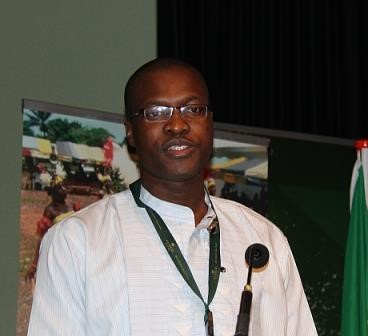
Shell Petroleum Development Company of Nigeria Limited (SPDC) General Manager, External Relations, Igo Weli
“We are pleased that the Centre of Excellence has taken off with students eager to achieve their dreams using hydrodynamic equipment that can simulate offshore/marine situations,” said SPDC’s General Manager External Relations, Igo Weli, as he led a Shell team to witness the historic commencement of classes.
“The Centre of Excellence is another powerful testimony on the educational initiatives of SPDC which began with the Shell scholarship scheme since the 1950s,” he added.
The Centre of Excellence in Marine and Offshore Engineering – said to be the first in Nigeria – offers a programme that covers lectures, practical sessions, term project modules and a six-month internship in the oil and gas industry. The Board of Trustees for the Centre which is chaired by the Vice Chancellor of Rivers State University, Prof. Blessing Didia, also held its inaugural meeting on the day the Shell team visited. Prof. Didia thanked SPDC and her partners for establishing the Centre of Excellence in the university, calling on undergraduate students in Marine Engineering and other Engineering disciplines to study harder as to qualify for enrolment into the programme.
Director of the Centre, Dr. Ibiba Douglas, stated that 10 students were admitted to the programme after a rigorous selection process, and commenced studies in April this year. Speaking at a lecture organised by the centre titled “An enabling business environment – implications for future careers in the oil and gas industry,” Mr. Weli called on youths in the Niger Delta to support the creation of a business environment that will attract investments to the region.
He said: “The way we act, speak and manage conflict will help to create an environment where peace, investments and prosperity will thrive for the benefit of all stakeholders including communities.”
Mr. Weli echoed the same sentiments at a dinner which he later hosted to mark the take-off of the Centre which was attended by several stakeholders including the President of The Ship Owners Association of Nigeria (SOAN) Capt. Greg Ogbeifun, Managing Director of the Naval Ship-Yard Limited Commodore Abolaji Orederu and the Executive Secretary of the Nigerian Content Development and Monitoring Board, Simbi Wabote (represented by Dr. Patrick Obah).
In other support for tertiary education, SPDC JV funds a Centre of Excellence in Geosciences and Petroleum Engineering at University of Benin, and endowed six Professorial Chairs at Obafemi Awolowo University, Ile Ife; University of Nigeria, Nsukka; University of Port Harcourt; Ahmadu Bello University, Zaria; University of Uyo; and the Federal University of Petroleum Resources (FUPRE), Effurun. The Chairs are in Geophysics, Environmental Management and Control, Petroleum Engineering, Mechanical Engineering, as well as Climate Change and Biodiversity Conservation.
The Chair in Light Weight Automobile Engine Development at FUPRE is the most recent endowment and is expected to contribute to the growth of local content in Nigeria’s automobile industry.
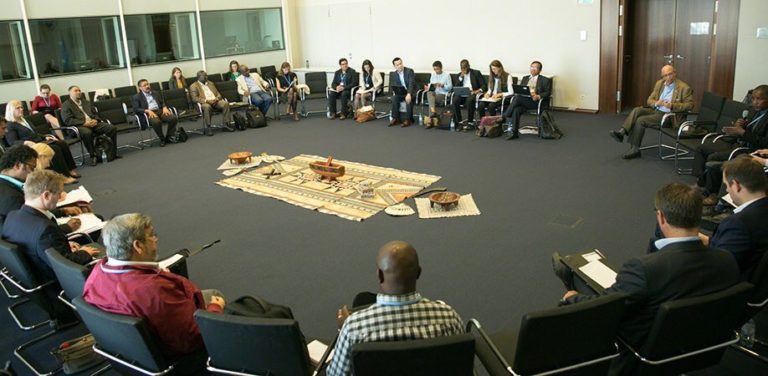
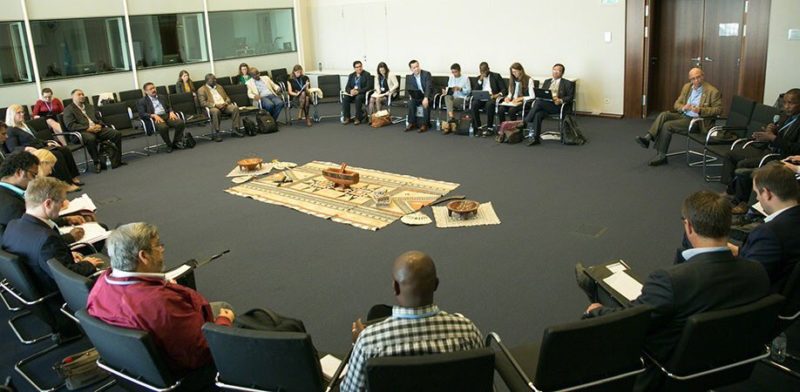
On Sunday, May 6, 2018, parties to the United Nations Framework Convention on Climate Change (UNFCCC) sat with representatives of civil society, cities, businesses and other non-party stakeholders for the Talanoa Dialogue.
A session at the Tolanoa Dialogue in Bonn on Sunday, May 6, 2018
The format of the talanoa, allowing for stories and interventions covering three clear questions – where are we? where do we want to be? how do we get there? – was a welcome and successful departure from the usual formal structure of climate conventions procedures.
Members of the Climate Action Network (CAN) on Monday espressed the fact that the dialogue may have fostered a sense of good intentions in the room, making clear that vulnerability to climate change binds all together and highlighting the urgency of taking more ambitious action.
“This lack of climate action means we are ‘cheating one another and abandoning our children’. People around the world are angry. They want to see more climate action; they want to see it happening faster. That is why they go out on the streets with banners and march. That is why they are taking governments and companies who fail to take action to court,” said Juan Pablo Osornio, Task Force Leader, Greenpeace.
“The Talanoa Dialogue provided the space in which some of that anger can be channelled. It was a forum to ask the hard questions and to have an honest and open conversation, where participants tell it like it is, with respect and without pointing fingers. This should be a model that we should build on in the future,” Osornio adds.
The dialogue lays the groundwork for the political discourse needed for an ambitious outcome at COP24 and allowed non-state actors to show their support for governments to step up their ambition.
Four hundred major companies have already committed to climate action with reference to the Paris Agreement. This growing number of corporations is showing their readiness to support governments making firm commitments to revise and enhance their current nationally determined commitments by 2020.
David Wei, Director, Climate, Business for Social Responsibility: “What parties have from the We Mean Business coalition is a standing offer that we are willing to work with you on concrete ways of doing that. We will work with you to have renewable energy and plans mutually supported by corporate demand for renewable electricity. To have end dates for the sales of internal combustion passenger vehicles and fiscal members reducing the cost of electric vehicles, mutually supported by corporate electrification of vehicle fleets.
“We will work with you to have strong carbon pricing signals, mutually supported by capital investment by business. And we will work with you to have long-term greenhouse gas reduction strategies mutually supported by scenario analysis that is being carried out by companies. We are willing to do this – not just willing, we want to do this together.”
Leaders of cities and regional governments also took part in the Talanoa Dialogue, presenting plans to deliver on the goal of limiting global warming to 1.5 degrees – cities around the world are already working towards carbon neutrality by 2050 and setting targets for climate action in sectors including transport, building, zero waste, energy efficiency and renewables.
Emmanuelle Pinault, Head of City Diplomacy, C40: “We brought a message of hope and collaboration. The transformation that we are working towards is very ambitious, but it is possible. It is achievable thanks to collaboration between national governments and other stakeholders.”
“We are happy to have participated in the Talanoa Dialogue. We think that this global political and diplomatic process should continue beyond COP24 and more importantly be translated into a national political process in every country of the world, to engage stakeholders in the assessment and revision and discussions around the NDC, with the final objective of enhancing ambition by 2020,” he adds.
The Food and Agriculture Organisation (FAO) of UN on Monday, May 7, 2018 called on African governments to reduce importation of food to the continent by implementing food sufficiency measures.
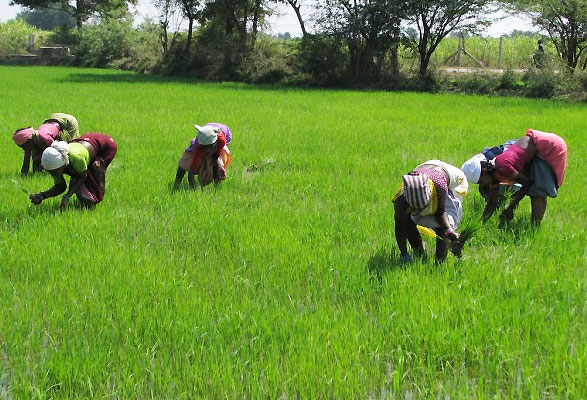
Rice farming in Africa
Tito Arunga, FAO Kenya Agribusiness Officer, said this at a public private partnerships agribusiness meeting for Africa in Nairobi, Kenya.
Arunga said the continent had the potential of producing enough food once efforts aimed at improving income earning opportunities were given emphasis.
He said: “We need to ensure that our food system becomes efficient, resilient and inclusive to produce food in excess for domestic consumption and even for export.”
He added that beside Zambia that had sufficient food after putting measures that led to bumper harvest and developed measures against post-harvest losses, the remaining countries relied on food imports from outside the continent.
The officer noted that the increasing youthful population in the continent called for the adoption of farming techniques that would survive climate change.
“There is need to include women and youths by supporting their endeavours in embracing agriculture so as to replace aging population of farmers in the continent,” he added.
He called on governments to address the root causes of internal and trans-boundary migration, stressing that as youths who formed 60 per cent of population in the continent continued to migrate in search of alternative source of living in disregard of agriculture, food security would be a great danger.
According to Janet Edeme, AU Commission (AUC) Head of Division, Rural Economy, the commission has started holding series of stakeholder meetings to discuss how to better involve the private sector in the implementation of Comprehensive Africa Agriculture Development Programme (CAADP).
Edeme said there was need to support private sector investment to complement public sector efforts in addressing the investment gaps in the agriculture sector.
“It has become clear that AU member states alone are unable to implement their National Agriculture Investment Plans (NAIPs) as the capital investments needed and the technical skills required to drive and transform the agriculture sectors in their countries would require private sector capital and expertise,” she noted.
The AUC official observed that the pan African body is working with member states in reviewing and developing appropriate policies and programmes aimed at helping leverage public sector incentives that catalyze private sector investments with emphasis on women and youths.
“We are continuing in mobilising and strengthening of the organisational capacity of African Domestic Private Sector Apex Bodies engaged in agribusiness,” she added.
Stephanie Gallatova, FAO Agro-Industry and Infrastructure Officer, noted that the public private partnerships for agribusiness development initiatives have the potential to help transform the production-oriented agricultural sector of African countries towards a more market-oriented and modernised agri-food sector.
“This approach could improve farmer-market linkages and employment creation in rural areas and cities,” Gallatova added.
The meeting follows an analysis that was conducted by FAO and AUC of 24 agri-public private partnerships case studies from eight African countries – Ethiopia, Rwanda, Uganda, Kenya, Ghana, Cote d’Ivoire, Zambia and South Africa.
The findings are aimed at informing policy-makers to design and implement effective agri-public private partnerships in the continent.
There were also notable developments in long-term climate change indicators, including carbon dioxide levels and sea ice cover.
April 2018 was marked by a number of high-impact weather events. These continued into early May with violent storms combining dust, high winds, lightning and rain that killed more than 100 people and injured about 300 in the Indian states of Uttar Pradesh and Rajasthan.
Storms are common in the pre-monsoon season in India, and the India Meteorological Department issued regular warnings. But the impact of the May 2 event was exceptional. High temperatures also were conducive to the severity of the dust storm, with intense heating taking place over the plains of northwest India, according to the India Meteorological Department. Parts of Rajasthan witnessed temperatures above 40°C, with maximum temperatures appreciably (3.1°C to 5.0°C) above normal.
Pakistan heatwave
Two meteorological stations in Pakistan reported temperatures of at least 50° Celsius on April 30 at the peak of a heatwave in large parts of the country’s populous Sindh Province.
The persistent heat in the lower half of Pakistan started in March, when 30 sites broke monthly temperature records. Another exceptional hot spell affected the country in mid-April and peaked on April 29 and 30 when many records were set over large parts of Sindh Province, according to the Pakistan Meteorological Department. The PMD site Shaheed Benazirabad (Nawabshah) recorded a new national temperature record for April of 50.2 °C.
The World Meteorological Organisation’s (WMO) official Archive of Weather and Climate Extremes does not validate monthly records. But it is the first time that it has ever received a report of a temperature topping 50°C in April. A temperature of 50.0°C was recorded on the same day at Jacobabad, and five other stations also reported new April records. PMD has forecast above average temperatures for the coming two months and has established a heat wave early warning centre in Karachi, the capital of Sindh and Pakistan’s most populous city.
Global temperatures
The global temperature for April 2018 was well above average. Although not as exceptional as the values for April 2016 and April 2017, it was in line with the upward trend of 0.18°C per decade seen in global temperature data from 1979 onwards, according to the Copernicus Climate Change report. Globally, the 12-month period from May 2017 to April 2018 was 0.47°C warmer than the 1981-2010 average.
It said that April in 2018 was:
close to 0.5°C warmer than the average April from 1981-2010;
the third warmest April on record, though only a little warmer than April 2010;
about 0.2°C cooler than the warmest April (2016).
It was the hottest April on record for a number of countries, including Argentina and Germany. Germany’s average temperature of 12.4°C was 4.0°C above the 1981-2010 baseline, according to the German Weather Service. Other areas of markedly above-average temperature include parts of Mexico and the American Southwest and much of North Africa, China and Mongolia.
Conversely, the month was considerably colder than average over the central USA and much of Canada. A number of other land regions had temperatures that were a little below average.
Heavy precipitation
Extreme and unusual weather impacted many parts of the world, including above-average seasonal rainfall and flooding in the East and Horn of Africa. Flash floods and river flooding has affected hundreds of thousands of people and killed dozens in Ethiopia, Kenya, Somalia, Tanzania and Uganda, according to the UN Office for Humanitarian Affairs.
During a 24-hour period between April 14 and 15, 49.69 inches (1,262 mm) of rain was reported measured at a rain gauge in Kauai, Hawaii. If verified by the US National Climatic Extremes Committee, it would be the heaviest 24-hour rainfall total ever recorded in the USA.
Extreme events are part of the natural variability of the climate, but heatwaves and heavy precipitation, in particular, are expected to increase because of climate change.
Long-term climate change indicators
The average monthly concentration of carbon dioxide in the atmosphere at Mauna Loa Observatory in Hawaii for the first time in recorded history was above 410 parts per million in April, reaching 410.26 ppm, according to preliminary data from the US National Oceanic and Atmospheric Administration. Mauna Loa Observatory is the oldest continuous atmospheric measurement station in the world and is widely regarded as a benchmark site in the World Meteorological Organisation’s Global Atmosphere Watch network.
Spain’s Izaña observing station in Tenerife reported a new record concentration of carbon dioxide of nearly 414 ppm on April 7.
WMO’s Global Atmosphere Watch monitoring stations in the northern hemisphere traditionally report peak concentrations in spring before the growth of vegetation which absorbs CO2. Despite the seasonal fluctuations, the underlying trend in greenhouse gas concentrations remains upward.
Much of the Arctic Ocean and some neighbouring land areas were again substantially warmer than the 1981-2010 average and Arctic sea ice extent was well below average. In particular, ice cover in the Bering Sea was record low at the end of April. Situated at the northern edge of the Pacific Ocean, the Bering Sea connects to the Arctic Ocean through the Bering Strait. “It’s the end of April and basically the Bering Sea is ice-free, when normally there would be more than 500,000 square kilometres of ice,” said the US National Snow and Ice Data Centre. Total ice extent over the Arctic Ocean also remains low and consists of a record-high amount of first-year ice. This means the ice cover is unusually thin and large areas are susceptible to melting out in this coming summer, according to NSIDC.
Greenhouse gas concentrations, ice cover and global temperatures are all indicators of long-term climate change as a result of human activities. WMO’s annual statement on the State of the Climate in 2017 said that global mean temperatures in 2017 were about 1.1 °C above pre-industrial temperatures. The five-year average 2013–2017 global temperature is the highest five-year average on record. The world’s nine warmest years have all occurred since 2005, and the five warmest since 2010.
The Cook Islands has received $3 million to help build the resilience of its residents and protect their livelihoods from disasters and climate change.
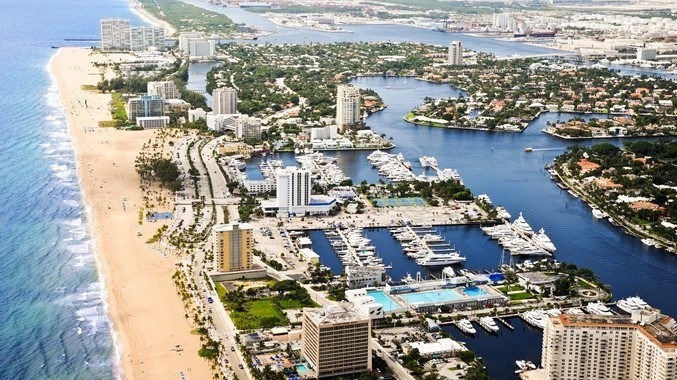
Fort Lauderdale, the Cook Islands
The money, a grant from the Adaptation Fund, will help the Pacific island nation strengthen its disaster risk governance, establish and implement a robust water monitoring, reporting and assessment system and revitalise its agricultural production systems.
The Cook Islands is the first Pacific nation to receive such funds directly. Previously, resources from the Adaptation Fund have been delivered via international organisations such as UN Environment.
Pacific island countries like Cook Islands are among the most vulnerable to climate change, sea-level rise and extreme events. Sea-level rise is expected to worsen floods, lead to storm surges and other hazards that threaten the islands’ infrastructure and facilities that support the livelihood of Cook Islanders and an already fragile subsistence level agricultural sector.
Cook Islands aims to use the funds to strengthen national and local capacity to reduce climate change risks, establish climate resilient water management instruments through an approach that involves communities and to revitalise agricultural production systems. The intention is to support greater food security and protect livelihoods in Pa Enua, particularly islands in the northern group, which comprises seven low-lying, sparsely populated, coral atolls and sand cays.
“We are very pleased with the outcome of our project proposal. The process has not been easy, but is well worth the pursuit. It is the first Adaptation Fund project to be approved under The Ministry of Finance and Economic Management (MFEM) as the Cook Islands National Implementing Entity (NIE) and we are excited to start the implementation,” says Krystina Tatuava, Development Programme Manager, MFEM of the Cook Islands.
The Ministry of Finance and Economic Management of the Cook Islands, the designated National Implementation Entity for the Fund, a requirement to access the Fund’s pioneering Direct Access modality, received accreditation in July 2016. It is among the nine countries that UN Environment’s Asia Pacific Office is supporting to acquire accreditation to the Adaptation Fund. This process includes strengthening institutional and financial management capacities as well as ensuring that the Fund’s fiduciary requirements are met, thus enabling countries to directly much-needed funds for climate adaptation.
“On the challenges due to climate change, Pacific countries need critical support to access finance. But more importantly, they need robust and sound national systems and institutions to help them adapt in a way and at a pace that is manageable, and this is what we have done through our support to these countries. It helps set the foundation for solutions and accessing more funds,” said Isabelle Louis, Deputy Regional Director of UN Environment’s Asia and the Pacific Office.
Established in 2001 at the 7th Conference of Parties to the UNFCCC in Marrakech, Morocco and officially launched in 2007 in Bali, Indonesia, the Adaptation Fund finances concrete climate change adaptation projects and programmes that help vulnerable communities in developing countries. The Fund is operated by the Adaptation Fund Board, with the Global Environment Facility as the Secretariat and the World Bank as the Trustee.
UN Environment’s Asia Pacific Office – with financial support from the Ministry of the Environment of Japan – has supported Bhutan, Cambodia, Maldives, Nepal, Palau, Samoa, Sri Lanka and Tuvalu to develop those countries’ institutional and financial management capacities, and to help them meet the fiduciary requirements necessary for Adaptation Fund accreditation.
The GMO (genetically modified organism) lobby is showing signs of desperation. Once again they are on the offensive with a major public relations push targeting East Africa, particularly Uganda, in an attempt to subvert African policy development towards their own narrow ends. Their immediate goal is to weaken national biosafety laws, thereby removing any barriers to their access to African markets for their contentious high-risk products.
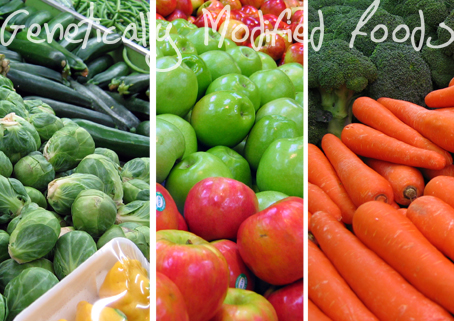
GMOs
Specifically, they want to remove the “strict liability” clauses and thereby avoid any responsibility; avoid having to pay compensation for any damage that they do; avoid labelling so that African people are prohibited from knowing if their food is genetically modified; and avoid any punishment that African laws can impose.
White male European so-called experts are channelling the message of the biotech industry, heavily controlled by US-European seed and chemical giants Monsanto/Bayer, Syngenta and DuPont Pioneer. The message once again is that failure of African farmers to adopt GMO technology is the root cause of hunger and poverty on the continent. It is ironic that GMO foods are banned by law as unsafe in the European home countries of those giving the advice. Meanwhile the African biotech scientists seem more concerned that the strict liability measures will chase away donor funding and investment for their costly and “prestigious” research.
They blame the anti-GMO activists, rather than their own technological failure, for the impasse. They claim that if only the activists would shut up and go away, the industry backed researchers could fix the food insecurity problem once and for all! Once again Africa is being compelled to adopt others’ views, others’ technologies, others’ interests. Have we not seen this before?
They claim to have “sound science” on their side but what kind of science resolutely ignores the evidence? What has actually happened in those African countries where GMOs have been rolled out? Let’s take a look at the facts.
GMOs failed to improve food security in South Africa
So far only three African nations have allowed the cultivation of genetically modified (GM) crops commercially – Burkina Faso, Sudan and South Africa. Only South Africa grows a GM food crop, whereas Burkina Faso has phased out the growing of GM cotton after a monumental disaster for farmers and seed companies.
South Africa is the only country in the world where its main staple crop – maize – is primarily GM, making up around 80% of the maize meal consumed in the country. Considering that one of the key selling points of GM foods is that they will alleviate the perennial problems of hunger and food insecurity in Africa by increasing yields, what has been South Africa’s experience, and what lessons can the rest of the continent learn?
Despite more than a decade of GM maize use, food insecurity is rife with over 46% of South African households experiencing hunger. One in five children in South Africa are stunted, and over 50% of South African women are now overweight or obese. There is growing consensus in the public health sector in SA that the country needs to shift away from focusing on a few industrial crops with high calorie content (e.g. GMO maize) to a diverse range of foods that are nutritious, affordable, and produced in ecologically sustainable and culturally appropriate ways.
Bt cotton abandoned in Burkina Faso
African countries can also learn from the disastrous Bt cotton experience in Burkina Faso. Monsanto’s GM insect-resistant Bt cotton was introduced commercially in Burkina Faso in 2008 and planted on 100,000 hectares of land. But, after just a few years of commercialisation, news began to filter into the international community that the project was a disaster. The GM cotton produced shorter fibre lengths and lower cotton fibre efficiency than conventional varieties. Burkina cotton companies began to lose international markets due to the poor quality, while farmers lost their incomes. As a result, in 2015, some seven years after Bt cotton was first introduced, a national decision was taken to abandon GM cotton and return to conventional cotton. No more GM cotton would be grown in Burkina Faso from 2016. Many expect this signals the end of Bt cotton in West Africa, although Nigerian authorities are still stubbornly pushing the same failed technology.
What is clear is that the collaboration between Monsanto and Burkina Faso resulted in a product with undesirable characteristics that has harmed the cotton sector in the country, with damaging effects on the livelihoods of up to 2 million cotton farmers. Burkinabé cotton companies lost millions of dollars and mounted a legal battle to claim compensation from Monsanto. An important lesson is about the farmers’ lack of choice; the Bt cotton experiment was imposed on them by the dominant national cotton company SOFITEX. In the end, the whole saga has left small-scale farmers poorer, more vulnerable and disempowered.
False promises, misrepresentation and alternative facts
The GMO industry public relations strategy is simple but effective. Just repeat the following mantra: There is a scientific consensus that GMOs are safe. People who resist GMOs are anti-science ideologues.
In his book, “Seeds of Science – Why we got it so wrong about GMOs”, biotech ambassador and professional turncoat, Mark Lynas, attempts to sanitise the biotech spin by mixing it up with climate science. He writes: “I couldn’t deny the scientific consensus on GMOs, while insisting on strict adherence to the one on climate change, and still call myself a science writer.”
Yet the industry myth of scientific consensus on GMO safety has been thoroughly debunked in a statement signed by over 300 scientists, academics and legal experts. The statement concludes “that the scarcity and contradictory nature of the scientific evidence published to date prevents conclusive claims of safety, or of lack of safety, of GMOs. Decisions on the future of our food and agriculture should not be based on misleading and misrepresentative claims by an internal circle of likeminded stakeholders that a ‘scientific consensus’ exists on GMO safety.”
Laughably, Lynas claims that African anti-GMO campaigners are well funded “driving posh cars” whereas they are clearly massively outgunned in a David vs Goliath battle by biotech corporations with stock market values bigger than the GDPs of their target African countries.
The fly-in pundit’s contempt for African people, custom and tradition is unmistakeable. The patronising Mr Lynas showed no interest in Africa until he joined the multi-million-dollar funded Alliance for Science biotech PR machine where he is now a communications and policy lead.
In South Africa and Burkina Faso, the insistence on GMOs has ignored the wider African context, and failed to deliver benefits of food security or economic gain. Despite countless millions of dollars and decades of research, the GMO industry has failed to produce crops that increase yields, resist drought or disease, or effectively add nutrients. Conventional breeding with African farmers on board has generated many hardy, reliable and nutritious food crops, but these are neglected as they do not fit the industry business model. But the wind of change is once again blowing through this continent. Now hosting six of the world’s ten fastest growing economies, Africa is demanding its right to self-determination – to choose its own destiny.
The credible alternative
The UN Food & Agriculture Organisation’s 2018 Scaling Up Agroecology Initiative notes: “High-input, resource-intensive farming systems, which have caused massive deforestation, water scarcities, soil depletion and high levels of greenhouse gas emissions, cannot deliver sustainable food and agricultural production. Needed are Innovative systems that protect and enhance the natural resource base while increasing productivity. Needed is a transformative process towards ‘holistic’ approaches such as agroecology.”
GMOs are the sharp end of the push for corporate control of African food systems, but the evidence is clear. Industrial farming is a dead end. GMOs do not work!
Agroecology is the future of farming. It’s diverse – like nature. It’s productive – doubling yields in just a few years. It’s resilient to climate change, and puts carbon back in the ground. It’s efficient: less inputs, less waste. It’s culturally appropriate: local innovations and solutions.
It’s time we saw the pundits’ words for what they really are – biotech industry propaganda. It’s time to say NO to their failed solutions. It’s time for Africa to shake off the neo-colonial influence and shape her own healthy, resilient and culturally appropriate farming and food systems.
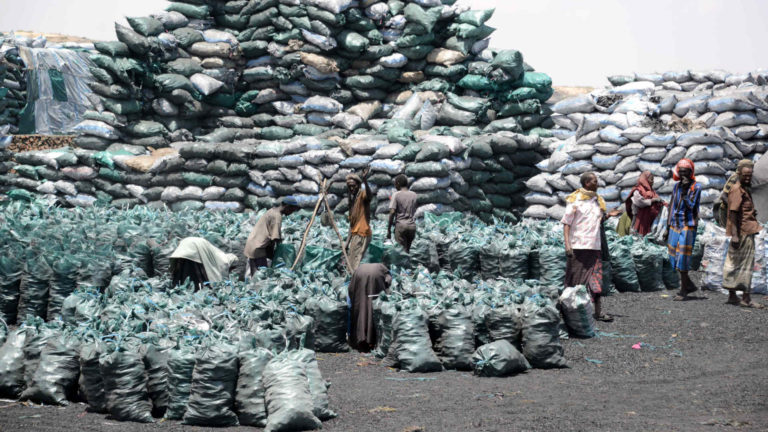
At the opening of a two-day, UN-supported conference on charcoal on Monday, May 7, 2018 in Mogadishu, the Federal Government of Somalia has called for international, African and Gulf States cooperation in halting the illegal export of charcoal from the country. The export of charcoal from Somalia has been banned, both by a 2012 United Nations Security Council resolution and by the Somali Government, due to its destructive effect on the environment and its exacerbation of conflict and humanitarian crises.
Charcoal trade in Somalia
An estimated 8.2 million trees were cut down for charcoal in Somalia between 2011 and 2017, increasing land degradation, food insecurity and vulnerability to flooding and drought. Over 80 percent of charcoal produced in Somalia is exported to Gulf States and neighbouring countries. Illegal trade in charcoal is recognised as a key contributor to insecurity in Somalia, providing a major source of funding for militias, terrorist groups, and other actors linked to conflict, who illegally tax exports.
In his opening address, the Deputy Prime Minister of Somalia, Mahdi Mohamed Guled, reaffirmed the Somali government’s commitment to halting illegal trade of charcoal, and providing alternative livelihood and energy options. He also called for urgent action and support from the international community and countries that are importing charcoal.
“We need a holistic response to address the issues of charcoal in Somalia. Both the demand and supply side have to be tackled – to do this we need cooperation to implement the UN Security Council Resolution and ensure the environmental, economic and human losses that happen because of illegal charcoal trade are curbed,” said the Deputy Prime Minister.
“The environmental destruction brought on by the charcoal trade contributes to drought, flooding, the loss of livelihoods and increase in food insecurity. Together with conflict, this exacerbates the humanitarian situation in Somalia,” said the Deputy Special Representative of the Secretary-General for Somalia, Peter de Clercq. “But due to high levels of poverty in Somalia and lack of opportunities, many are forced to turn to unsustainable and illegal livelihoods, such as charcoal production. The people of this country deserve better”.
Juliette Biao Koudenoukpo, UN Environment Regional Director for Africa, said regional partnership is key to stopping the unsustainable production, use and export of charcoal in Somalia. “UN Environment and its partners are supporting the Government of Somalia to develop sound policy frameworks to support the ban and find alternatives to charcoal,” she said.
Participants at the event, which concludes on Tuesday, are expected to develop a concrete road map for action, including enforceable regional policies, to halt charcoal trade, as well as its unsustainable production and use within Somalia. The high-level summit is supported by the United Nations Development Programme (UNDP), UN Environment, and the Food and Agricultural Organisation of the United Nations (FAO), with funding from Sweden, the European Union and Italy.
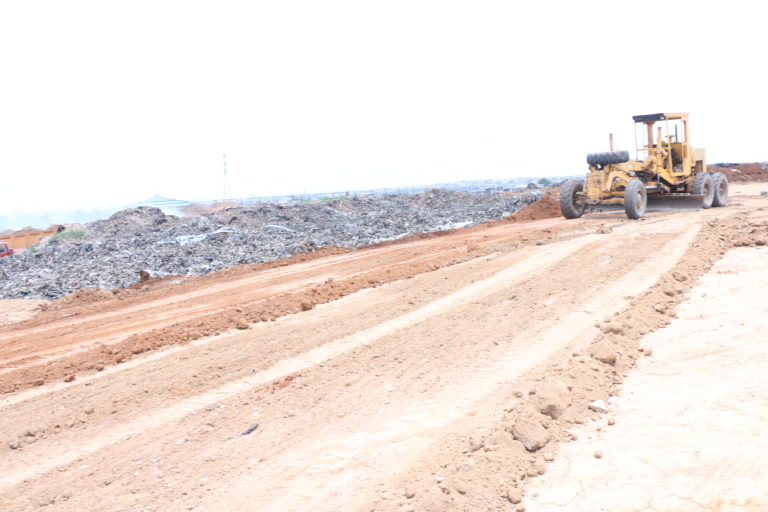
The 47-hectare Olusosun dumpsite in Lagos is undergoing capping to stop emission of poisonous smoke and fire outbreak at the facility, the News Agency of Nigeria (NAN) reports.
Capping at the Olusosun dumpsite in Lagos
NAN correspondent who visited the dumpsite on Monday, May 7, 2018 reports that work is in full gear as earthmoving equipment are seen overlaying with sand while loaders are pouring laterite on the surface.
Speaking on the project, Dr Iyabo Phillips, Director of Environmental Services, Lagos State Ministry of Environment, said that the capping would last for a month.
Phillips said that the site was been covered with 250 truckloads of laterite every day to ensure that the resurfacing area was completed within a month.
She said that drainage had been constructed around the dumpsite for easy access to the dumpsite to prevent erosion.
“We are aware of the impact of the fume on people around, so we had to pull down the fence down in order to control the fume coming out.
“To ensure that lives and properties are protected, all the inhabitants of the area, especially asthmatic patients, have been asked to vacate to enable us quench the fume.
“The volume of the fume has been reduced,” Phillips said.
Mr Segun Adeniji, General Manager, Lagos State Waste Management Authority (LAWMA), said that the capping was undertaken by the state government to drastically reduce fire and smoke from the landfill site.
Adeniji said that government was aware of health hazard of smoke on the people and was making serious effort to stop it immediately.
“We are assuring the people living in this area that within a couple of weeks, this will be a thing of the past.
“The entire plan is total remediation of the place so the state government can turn it to a recreation park for people to relax,” he said.
Essien Nseabia, LAWMA Assistant General Manager, Operations, said there were two types of landfill fire – the surface fire and the deep-seated fire.
Nseabia said that when the surface fire continued for a period of time, it would extend underground.
According to him, landfill fire is fueled by methane gas trapped under the waste as a result of bio-decomposition of waste.
“When methane gas mixes with oxygen, it becomes volatile and burns seriously.
“So in attempts to quench the fire, the first thing you do is try to exclude the oxygen from the burning fume, so as to reduce the flammability power of the methane gas.
“When the wind blows on the dumpsite, there is intrusion and that intrusion takes oxygen into the vent of the waste. So the more oxygen enters the waste, the more the burning capacity of the fire.
“So the first thing to do is what is called capping. Capping is taking laterite to block that vent, by covering the dumpsite.
“Laterite is reddish in colour and that red colour is as a result of iron (II), then that iron in the laterite absorbs oxygen from underneath of the deep-seated fire and get oxidised to iron (II) oxide. So when the laterite forms that, it blocks the oxygen and the fire stops.
“Every day we have estimated 250 trips of laterite, at times we go beyond that, we can go below that depending on the atmosphere,” he said.
NAN recalls that the Olusosun dumpsite in Ojota, Lagos was gutted by fire on March 14.
The African Development Bank (AfDB) has called on various Civil Society Organisations (CSOs) working in the continent to drive every effort towards ensuring African industrialisation.
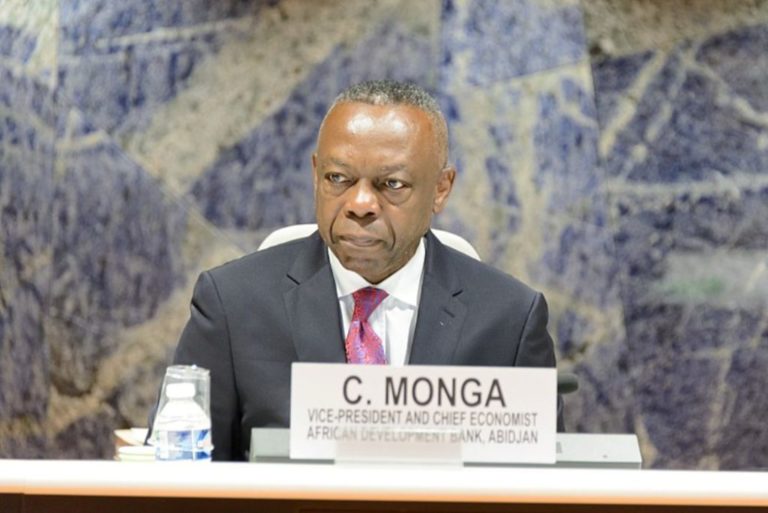
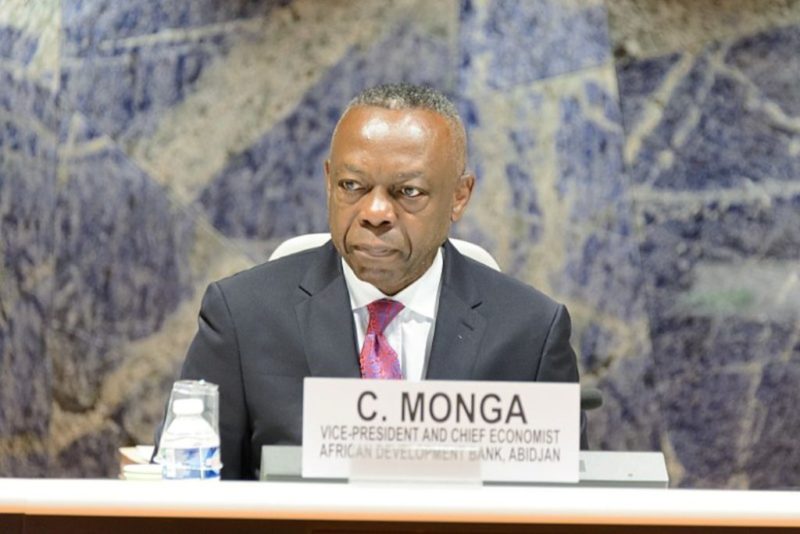
Mr Celestin Monga, Vice President and Chief Economist of the African Development Bank (AfDB)
Mr Celestin Monga, Vice President and Chief Economist of the AfDB, made the call at the opening of the Civil Society Forum on Monday, May 7, 2018 in Abidjan, Côte d’Ivoire.
The Theme of the forum is: “Engaging Civil Society in Accelerating Africa’s Industrialisation’’.
Monga said Africa had many deficiencies that contributed to its inability to develop as a rich continent.
He identified the deficiency of learning and knowledge, leadership, conflict resolution and corruption among others as major problems in the continent.
He challenged the CSOs to show intellectual curiosity in matters concerning the continent to drive its industrialisation.
“Vietnam is presently doing well, if it continues what it is doing right now by the next 10 years, we will all gather to be discussing about its success story.
“You know how the country was destroyed, but it has stood up to go and find out where such has happened and how to solve its problems and that is yielding results.
“There is nothing happening in Africa that has not happened elsewhere and it was resolved, and as such, all CSOs must find a way to save Africa,’’ he said.
He noted that though it was difficult to have excellent leaders, CSOs remained the major source of credible leaders across the world.
“We need leaders that are credible from CSOs to bring good governance in the continent because that is an institution from where great leadership for economic and social development are taken.’’
Monga said that CSOs remained fundamental to the growth and development as well as in solving the Africa problems.
He assured that the bank would continue to work with CSOs to ensure common values for ethics.
The chief economist urged them to go beyond engaging with the bank by relating more with the private sector.
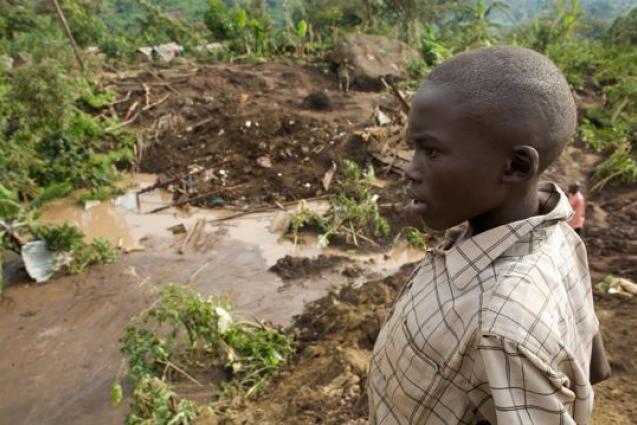
Torrential rains hit Karongi District, Western Rwanda, killing 10 people, a local leader said on Monday, May 7, 2018.
The heavy downpour triggered landslides that killed many
Executive Secretary of Rwankuba sector, Vedaste Kuzabaganwa, told newsmen that the heavy downpour, which started around 8 p.m. on Sunday and stopped around 2 a.m. on Monday, triggered landslides that killed the victims from the sector.
Kuzabaganwa said some residents are missing and the death toll could go up.
Heavy rains have caused a large number of casualties in Rwanda since the beginning of this year.
No fewer than 183 people were killed and 215 others were injured in Rwanda by disasters triggered by heavy rains in the first four months of 2018, according to the Ministry of Disaster Management and Refugees of Rwanda.