The Independent Petroleum Marketers Association of Nigeria (IPMAN), Western Zone, has suspended its strike action following agreements reached with Dangote Group and the National Union of Petroleum and Natural Gas (NUPENG) workers.
The suspension, effective Sept. 9, 2025, was contained in a statement issued by the Western Zone Chairman of IPMAN, Chief Oyewọle Akanni, and made available in Ibadan on Tuesday.
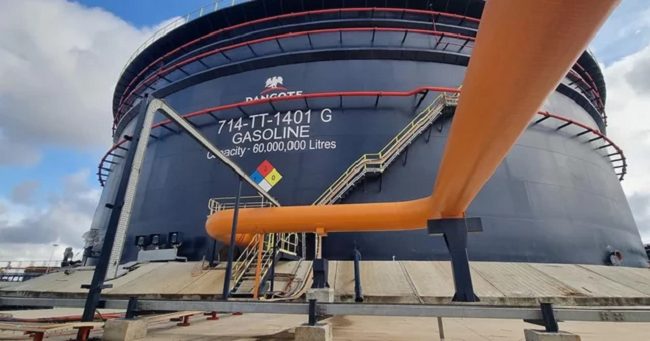
Dangote Refinery
Akanni said the decision followed productive discussions and mutual agreements that addressed issues raised by NUPENG over alleged anti-labour and monopolistic practices by Dangote Groups.
“Following productive discussions and compliance by Dangote Group on agitation by NUPENG, we have decided to call off the strike action effective today, Sept. 9.
“This decision comes after careful consideration and assurances addressing concerns regarding anti-labour and monopolistic ideas by Dangote Group,” he said.
Akanni commended members of IPMAN for their unity and solidarity during the industrial action, noting that their efforts were instrumental in advocating for fair competition in the downstream oil sector.
He urged marketers to resume their daily and operational activities without delay.
The Federal Government has no immediate plans to implement the five per cent fuel surcharge contained in the newly signed Tax Administration Act 2025.
Mr. Wale Edun, the Minister of Finance and Coordinating Minister of the economy, said this at a news conference in Abuja on Tuesday, September 9, 2025.
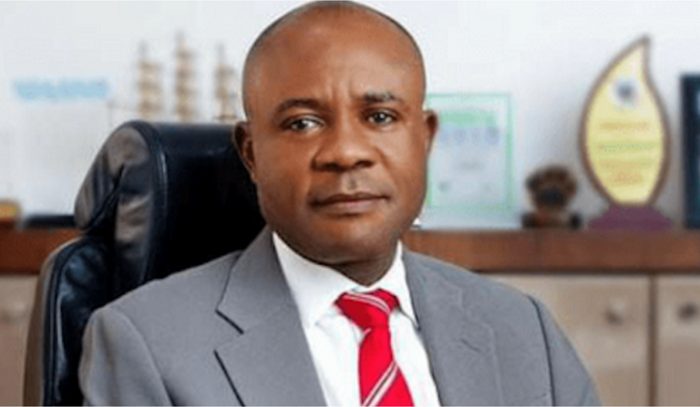
Minister of Finance and Coordinating Minister of Economy, Mr. Wale Edun
He said that the surcharge was a long-standing provision first introduced in 2007 under the Federal Road Maintenance Agency (FERMA) Act, and not a new tax measure created by President Bola Tinubu administration.
According to him, the surcharge’s inclusion in the 2025 Act is part of efforts to consolidate and harmonise existing laws for clarity and ease of compliance.
“It is important to make this distinction, the inclusion of the surcharge in the 2025 Nigeria Tax Administration Act does not mean an automatic introduction of new tax. It doesn’t mean fresh taxation automatically,” the minister said.
Edun said that the new law would not take effect until January 1, 2026, and even then, any implementation of the surcharge would require a formal commencement order by the minister of finance, published in an official gazette.
“There is a whole formal process involved, and as of today, no order has been issued, none is being prepared and there is no plan. There is no immediate plan to implement any surcharge,” he said.
According to him, government’s broader tax reform effort is a long-overdue overhaul of the country’s fragmented tax system.
Edun said that the Tax Administration Act is one of four legislative instruments passed to improve transparency, simplify compliance for individuals and businesses, and modernise revenue collection.
He said that the other laws include the Revenue Service Bill, the Joint Revenue Board Bill, and the overarching Tax Reform Bill.
“This is a transformational legal document.”
Edun said that the process of preparing the reforms followed years of consultation, technical work and collaboration.
The minister said that moving from legislation to implementation would also involve significant preparation, including institutional realignment, capacity building, and public sensitisation.
Edun said that amid heightened public scrutiny and economic pressure on households, the present administration remains committed to macroeconomic stability and private-sector-led growth.
He said that the goal of the tax reforms was not to impose new burdens on Nigerians, but to create a more transparent and effective tax system that curbs leakages, boosts efficiency, and fosters investor confidence.
“This government is fully aware of the economic pressures of the time and will not take decisions that will make things even more burdensome.
“Our priority is to strengthen tax governance, block revenue leakages, and improve efficiency rather than just levy new taxes, charges, and costs,” Edun said.
The minister said that the ongoing macroeconomic reforms has begun to yield results, improving investor sentiment and recent affirmations from development partners and international rating agencies.
He said that there would be the need for proper communication and implementation of the new tax framework in the months ahead.
“As you know with all policies, once the policy is passed into law, the next step is implementation.
“There will be publicity, sensitisation, education and information on the new tax law,” Edun said.
The Enugu State Government has designed and produced an innovative green energy and safe cooking stoves meant to secure Nigeria and Africa from deforestation and ecosystem losses.
The stove, which is known as Enugu Stove, is designed 100 per cent local content and meant to use smokeless and odourless coal briquette to produce heat for cooking.
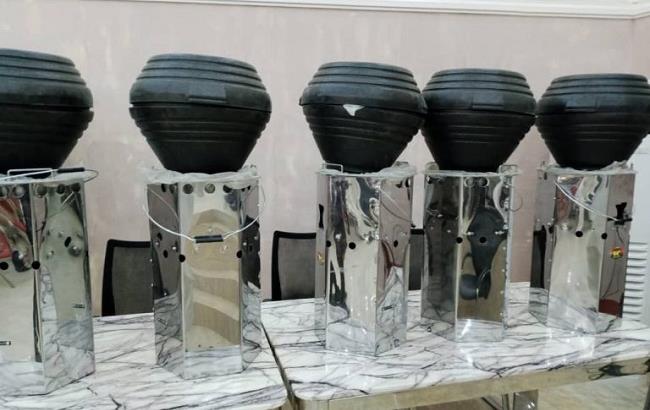
The Save80 Clean Cook Stove and wonder box on display
The state’s Commissioner for Innovation, Science and Technology, Dr Lawrence Eze, disclosed this to newsmen in Enugu, the state capital, on Tuesday, September 9, 2025.
Eze said that the innovative stove, whose design was fabricated by Scientific Equipment Development Institute (SEDI), remained unique due to its human and environmental safety features.
He noted that, with the stove, days of gas explosion and explosion from adulterated kerosene use in kerosene-stoves at homes and eateries are over.
According to him, sometimes if there are fatalities, the degrees of body burns from such explosions are unimaginable; and this is the principal thing the stove is meant to solve.
He explained that the stove has two chambers, adding that the burning chamber is well-insulated from the outer chamber even when the heat and cooking is ongoing.
The commissioner said that on economic benefit, the stove is a one-off (one time) buy and the coal briquette, which would be a recurring buy, is cheap and got from purified and dehydro-carbonised coal that Enugu is blessed with.
“On economic value, it is the most economical source of energy and fuel for cooking. It is cheaper than gas and kerosene; while electricity is a no go area due to its cost for now.
“It is odourless and does not transmit smoke unlike a kerosene stove because it has two components, the inner component and the outer component.
“It is the inner component that retains the heat. It is just like a flask.
“There is a well-insulated vacuum between the inner component (or chamber) and the outer component (or chamber). So the void (well-insulated area) between the two makes it difficult for heat to be transmitted.
“While the coal briquette is heating up and boiling water or items being cooked; you can hug or touch the outer component (chamber) and it is still as cool as possible,” he said.
The commissioner said that the energy produced burns in a gentle manner like one is using an electric stove and “you only notice the boiling and cooked item producing steam”.
He said, “The stove, which is produced in three sizes – student, family and commercial/eatery sizes – is designed not to allow heat losses, which increases the temperature of the immediate environment in the usual cooking kitchen or location.
“God has blessed Enugu State with an enormous and abundant quantity of coal, which is largely untapped.
“Enugu State Government has duly applied to the Federal Government for the coal to be mined.
“This is why His Excellency, Dr Peter Mbah, has set-up the Ministry of Energy and Solid Minerals to see to this and give the state a sustainable energy mix meant to ensure a green environment and ecological protection.”
Eze said that the new ministry would get investors that would mine the coals, while his ministry would get quantities of the coals, at a reasonable cost, to the coal briquette producing factories.
According to him, the four factories, one in each senatorial zone, will refine the raw coal into smokeless and odourless coal briquettes for the stove use and ensure its availability, affordability and accessibility.
“It will definitely stop the radical falling of trees in our communities; environmental hazard of production of charcoal; and protect our vegetation, forest and ecosystem in general,” he added.
The Prime Minister of Ethiopia, Dr Abiy Ahmed, has underscored the need for global partnership to boost investment on African Climate Innovation Compact against climate change.
Ahmed made the call in the early hours of Tuesday, September 9,2025, virtually in his welcome address at the Second Africa Climate Summit (ACS2), holding from Sept. 8 to Sept.10, in Addis Ababa, Ethiopia.
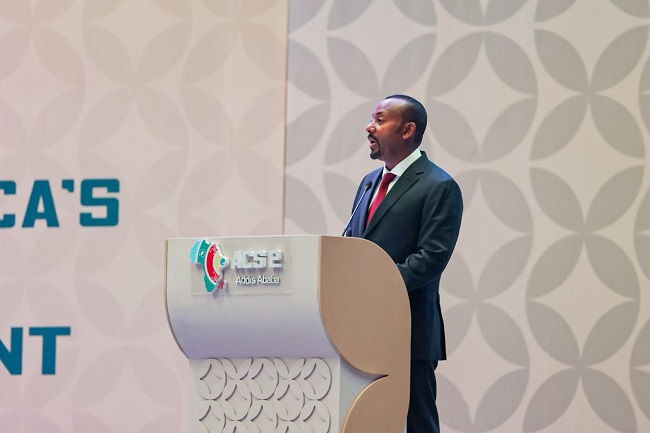
Dr. Abiy Ahmed Ali, Prime Minister of the Federal Democratic Republic of Ethiopia, delivering the inaugural keynote during the official opening of the Second Africa Climate Summit (ACS2) in Addis Ababa. Photo credit: @ACS2ET
The ACS2 convened under the theme: “Accelerating Global Climate Solutions: Financing for Africa’s Resilient and Green Development”, is centred on shaping African decades of investment backed by sound policy and strong partnerships.
According to Ahmed, ACS2 is focused on showcasing Africa climate solutions, to mobilise finance at scale and turn natural endowments, human capital and innovation ecosystems into shared prosperity.
He said, “As we prepare for COP30, Africa must stand not as a bloc of negotiators, but a continent of solutions, fulfilling the vision of Agenda-2063 for prosperous, resilient and innovative future.
“We must make Africa the place where the world sees climate goals achieved where reforestation is not a pilot project but a culture, where climate-smart agriculture feeds millions.
“Where green corridors connect cities and rural areas shared economy of life, to achieve this, our partnerships must evolve we ask our global partners to invest with us because we are visionary.
“Not to fund us because we are impacted, but to turn vision into reality, I propose the launch of an African climate innovation compact.
“A bold, continent-wide partnership uniting our universities, research institutions, start-ups, rural communities and innovators. By 2030, the compact should aim to deliver 1,000 African solutions,’’ he said.
Ahmed attributed Africa’s story at climate summits to lack of finance, lack of technology, lack of time, saying it begins with what we lack, let us begin instead with what we have.
He mentioned that such would help to tackle climate challenges in energy, agriculture, water, transport and resilience, saying Africa would not only meet its needs but bolster exports.
Ahmed also said that to power growth beyond national borders and advance pan-African prosperity, the compact will be funded and owned by Africans in partnership with the world, but never beholden to it.
“We will also claim climate data sovereignty mapping our own forests, measuring our own carbon and pricing our own ecosystems.
“Climate data is not just science it is the new currency of power. It is time to replace climate aid with climate investment.
“The returns will be measured in avoided emissions, millions of jobs, enhanced food security, stabilised regions and a more resilient global climate.
“Africa did not cause this crisis, yet Africa can lead in solving it. We have the solutions to produce green and clean power.
“To restore degraded land, to capture carbon, we know what needs to be done. Now is the time to scale what works,” Ahmed said.
In her remarks, Dr Fitsum Assefa, Ethiopia’s Minister of Planning and Development and National Coordinator of the ACS2, described the summit as a place stakeholders commit to working closely together with speed, at scale and with integrity.
“Together, we defined the planning framework and established national coordination structures fit for a summit of this scale: clear governance, roles and decision lines.
“We convened multi-disciplinary, multi-stakeholder consultations policymakers, youth and community leaders to co-create the concept note and shape the detailed agenda,” she said.
The Lagos State House of Assembly has promised to carry out a thorough investigation of the sums allocated for water projects in Lagos spanning nearly a decade that may not have been used to address the water crisis.
Chair of the House Committee on Environment (Parastatals), Shabi Rasheed Adekola, made the disclosure at a meeting with six civil society groups that had petitioned the House on the planned pilot Public Private Partnership (PPP) proposed by the Lagos Water Corporation (LWC).
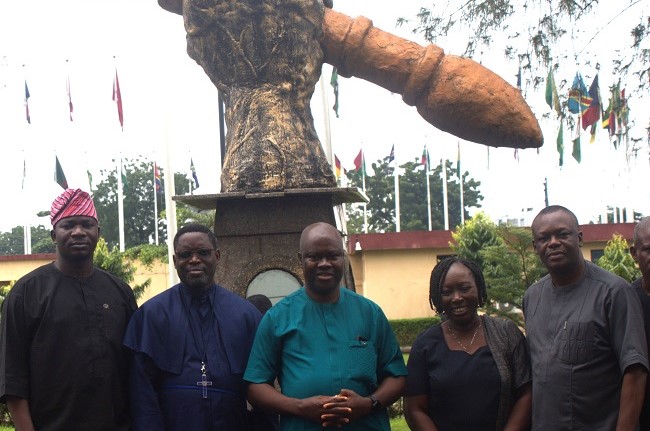
L-R – Joshua Olaniyi of NELCCI, Reverend Kolade Fadahunsi of EWNA/CBA, Barrister Chima Williams of EDEN, Vicky Onyekuru of Child Health Organisation and Philip Jakpor of RDI
The groups – Renevlyn Development Initiative (RDI), Citizens Free Service Forum (CFSF), Environmental Defenders Network (EDEN), Ecumenical Water Network Africa/Blue Communities Africa (EWNA/BCA), Child Health Organisation and the New Life Community Care Initiative (NELCCI) – in a petition dated August 18, 2025, had alleged that budgets for water in Lagos have not been used for the purpose.
Some of the projects the groups want probed are the N4 billion for the Otta-Ikosi waterworks awarded in 2007 but is still not working; N3 billion expended on construction of an Independent Power Plant (IPP) which also included an additional N180 million expended monthly on purchase of fuel; N897 million released by the Lagos State Government for rehabilitation of Iju and Adiyan Waterworks; and N789 million released by the Lagos State Government for rehabilitation of the 48 mini and micro waterworks in Lagos.
Others are N2.7 billion voted by the Lagos State Government and expended on the rehabilitation of Ishasi waterworks supervised by the Governor, N950 million budgeted for purchase of chemical for year 2023; N315 million paid as 50% advanced payment to contractors for the supply of liquid alum in October 2023; N1.2 billion budget for water treatment chemicals in 2024; and N9.5 million for repair of chemical store gate at Iju and Adiyan.
The water justice groups met with members of the Lagos State House of Assembly on Tuesday, September 9, 2025, on the invitation of the House Committee on Environment (Parastatals) and restated their opposition to the pilot PPP in the water sector. They demanded, instead, the recovery of the said sums since, in their view, water services in Lagos remained prostate.
At the meeting, Adekola, who also doubles as representative of Lagos Mainland II Constituency, denied reports that the Lagos State House of Assembly had given approval for the pilot PPP, but maintained that discussions were still on to find a lasting solution to the water crisis and the issue of sustainable funding.
Adekola commended the petitioners for believing in the possible intervention of the House and promised that they would commence investigation on the allegations of misappropriation of funds that were meant for the water projects in the state.
He also said the Committee was open to understanding the concept of the Public-Public Partnership (PuP) that the petitioners recommended as one of the solutions to the water crisis, even as he urged the LWC to commence wide engagement with civil society and other groups on how to address the state’s water crisis.
Representatives of the civil society groups at the meeting were: Philip Jakpor of RDI, Barrister Chima Williams of EDEN, Reverend Kolade Fadahunsi of the EWNA/BCA, Vicky Onyekuru of Child Health Organisation, and representatives of CFSF and NELCCI.
Stakeholders in the environmental sector have lauded the Lagos State Government in its commitment in the management of waste, noting that there is need for orientation and sensitisation for behavioural change among individuals and communities, along with engagement of private sector players as well as professionals in order to bolster the trajectory of waste management in the state.
These were the crux of the discourse during a panel discussion session at the Annual Lecture and Awards of the Property & Environment Writers Association of Nigeria (PEWAN) held in Lagos on Wednesday, September 3, 2025.
L-R: Mr. Ayo Adejumo, Past Chairman of Lagos State Chapter of Nigerian Institute of Town Planners (NITP); Sir Godwin Alenkhe, National President Estate Rent and Commission Agents Association of Nigeria, (ERCAAN); and Victoria Uwadoka, Public Affairs and Sustainability Lead at Nestle Nigeria Plc, with the moderator of the panel, Michael Ohioze Simire, Urban planner and Editor of EnviroNews, at the Annual Lecture and Awards of the Property & Environment Writers Association of Nigeria (PEWAN), in Lagos
The forum had as themes: “The Place of Waste Management in Relation to the Lagos State Government’s THEMES+ Agenda”, with the sub-theme: “Air Quality Management in A Megacity Like Lagos, Challenges and Policy Framework.” The panel discussion session however focused on “Waste Management and Environmental Sustainability in Lagos.”
Urban planner and Editor-in-Chief of EnviroNews, Michael Simire, moderated the panel session which included as panelists: Mr. Ayo Adejumo, Past Chairman of Lagos State Chapter of Nigerian Institute of Town Planners (NITP); Sir Godwin Alenkhe, National President, Estate Rent and Commission Agents Association of Nigeria, (ERCAAN); and Victoria Uwadoka, Public Affairs and Sustainability Lead at Nestle Nigeria Plc.
Kicking of the session, Simire submitted: “Lagos, as Africa’s largest megacity, faces enormous challenges in managing its waste. With a population of over 20 million people generating thousands of tons of waste daily, the question of how we collect, recycle, reuse, and dispose of this waste has become central to the city’s environmental and public health future.
“Yet, within this challenge lies an opportunity – to rethink how we manage resources, to innovate with circular economy models, and to build a cleaner, greener, and more sustainable Lagos for generations to come.”
Facing Adejumo, Simire demanded: “How would you assess the current state of waste management in Lagos? What do you see as the biggest challenges – policy, infrastructure, finance, or public behaviour?”
Noting that Lagos State when compared to other states in the Federation has been doing so much as regards waste management, Adejumo stated that the state government doing all these through the Lagos Waste Management Authority (LAWMA), Lagos Environmental protection Agency (LASEPA) and other Agencies can still do more.
He opined that the biggest challenge of waste management in Lagos is about the people, adding that if there is education and sensitisation there can be the changes required to address the problem of waste management in the state.
According to him, there is the low and the high in all these because when the government puts in place policies, we the human beings would want to make the policies to suit ourselves and that is why there has not been the best of results to show for the policies put in place for waste management.
“So, it is a problem with our people. Once we can re-orientate ourselves then the issues related to the generation of and the management of waste will be effectively addressed,” he added.
Turning to Uwadoka, Simire asked: “What role should government regulation and enforcement play in driving better waste management practices, and how do you think Lagos can balance private sector participation and public interest in waste services?”
While highlighting that awareness is one of the challenges that needs to be balanced vis-a-vis the availability of infrastructure, Uwadoka explained that it is not just the generator of waste but also the people that are responsible for the collection of the waste as well.
“I live in an Estate and I got all my neighbours to start segregating their waste within their home. I have a separate bin for my plastics and a separate bin for bio-waste. At the end when LAWMA comes in they pick up the plastics and bio-waste and put the same in their truck,” she said.
She stated that there is a need to engage with the waste collectors in the form of training and retraining who are very important for the people to be doing the right thing.
She avowed that we also have the right policies and right objectives, but we just need the will to implement it.
“It is a journey. We have built a system that has brought us to where we are, so what the government needs to do is to keep working on the talk and education,” she said.
Speaking on private sector participation and public interest in waste management, Uwadoka disclosed that they now have an alliance of Food and Beverages in the industry that will make them manage the plastics from the factory to the end users.
“We have this alliance that enables us to work together to resolve the challenges that we have in this environment whether in collection, in management, information, education and awareness.
“We want Lagos Waste Management Authority (LAWMA), Lagos Environmental Protection Agency (LASEPA) and the Ministry of Environment and Water Resources to help us to drive the process that we are working on. Only the Food and Beverages Alliance cannot do it,” she stressed.
According to her, there are the communities that have to be reached, “so we have to find a creative way of reaching the communities to create awareness, identify these areas that need interventions, so we need every stakeholder in leveraging the ecosystem that we have both in the private and public sector”.
To Alenkhe, the moderator said: “Many Lagosians still dispose of waste indiscriminately. What innovative strategies can help shift public attitudes and habits? Also, how can communities be more involved in managing their own waste sustainably?”
Reacting, he raised a germane puzzle that the problem of waste management in Lagos is something that the solution is before us.
Alenkhe highlighted that when Lagos was a cleaner Lagos, safety and environmental bins were in place, but today what we have in Lagos is geared towards revenue generation because these agencies have been given some kind of target.
“LAWMA was an agency to which when people dumped their refuse, before you know it, it was taken away. Because it has been turned into a revenue generation thing, it has now become very difficult to control the refuse that people are generating. The reason is that the Public, Private Partnership which could have been the solution is not even helping matters in Lagos State. The politicians are controlling what could have been an efficient Public, Private, Partnership as each day the professionals are taken out of the environmental issues in Lagos State.
“I am a real estate person. The law that established and regulates the industry, that is, Lagos State Real Estate Regulatory Authority (LASRERA) has ignored the input of the real estate person to the effect that we manage houses in Lagos. If the responsibility is given to us as managers of houses in Lagos State, we will monitor and remit what is due to the government and it will work.
“As estate managers and caretakers, it is our responsibility to collect what is accrued as charges to LAWMA, but the law that recognises the regulation of my profession does not give me the authority to now act. So, we as professionals have no other means than to safeguard and to protect the industry as allied with the law that governs finance,” the national president of ERCAAN emphasised.
Closing the session, Simire remarked: “I believe we can all agree on one thing: waste is not just a challenge, but also an opportunity.
“From the contributions of our distinguished panelists, we have learned that effective waste management in Lagos requires more than just infrastructure – it demands strong policies, innovation, community participation, and above all, a change in mindset.
“We have heard about the need for government leadership, private sector innovation, and citizen responsibility. We have also seen that turning waste into wealth through recycling, composting, and energy recovery is not only possible, but necessary for a sustainable future.
“Let us remember that every plastic bottle, every food scrap, every bag of waste improperly disposed of, has consequences – for our health, for our environment, and for the generations to come. But with collective effort, Lagos can transform its waste crisis into a model of environmental sustainability for Africa and beyond.”
Ahead of the UN’s COP30 climate talks scheduled to hold in November, the Global Centre on Adaptation (GCA) has unveiled 20 finalists for the 2025 Local Adaptation Champions Awards. Four winners will be announced in Belem, Brazil, host country of COP30.
Nigeria’s Fairaction Charity Foundation is named among the 20 finalists, who are recognised across four categories (Citizen Science, Health, Nature-based Solutions and Women’s Livelihoods), Fairaction Charity Foundation falls under the Citizen Science category.
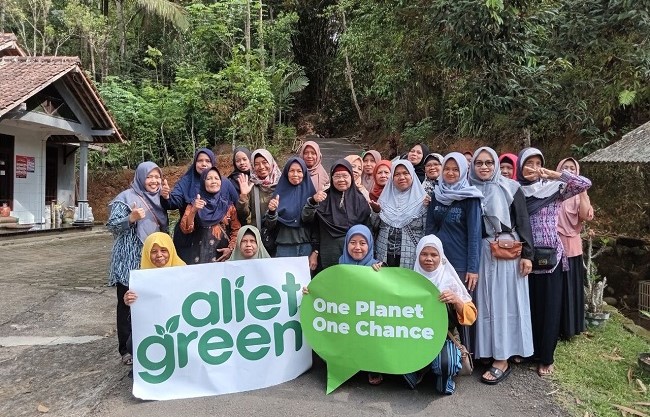
Aliet Green, Indonesia. 2024 Local Adaptation Champions Award Winner
The finalists, who represent innovative and scalable locally led initiatives that address the impacts of climate change, include organisations from the following countries: United States of America, Bangladesh, Benin, Democratic Republic of the Congo, India, Kenya, Laos, Madagascar, Nigeria, Peru and Sierra Leone.
The 20 finalists are:
Citizen Science
EQUINOCT Community Sourced Modelling Solutions – India
Fairaction Charity Foundation – Nigeria
Preserving Legacies – USA / Benin
University of Reading – Madagascar
Water, Environment, Land and Livelihood (WELL) Labs – India
Health
Association of people living with HIV/AIDS (APL+) – Laos
Foundation for Tomorrow (F4T) – Kenya
Humanitarian Action for Africa – Democratic Republic of the Congo
Research Unit in Applied Microbiology and Pharmacology of Natural Substances (URMAPha), University of Abomey-Calavi – Benin
SALCARE – Sierra Leone
Nature-Based Solutions
Nature environment & wildlife society – India
Odisha Paryavaran Sanrakshan Abhiyan Trust – India
Save Mau Forest CBO – Kenya
Uttaran – Bangladesh
Water Fund for Lima and Callao – Aquafondo – Peru
Women’s Livelihoods
AJSA India – India
S M Sehgal Foundation – India
Society for Promotion of Area Resource Centers (SPARC) – India
Solar Freeze Inc. – Kenya
UNDP Bangladesh – Bangladesh
A high-level jury will determine one winner in each award category. Each of the four winners will receive an award of €15,000 and will benefit from sponsorship from the Adaptation Fund, which includes participation in the Fund’s prominent readiness and learning-and-sharing events.
The Enugu State Government has accused the CEO of Sujimoto Luxury Construction Limited, Olasijibomi Ogundele, of defrauding the state of nearly N6 billion, noting that Ogundele vanished into thin air after he was paid the said sum for the construction of 22 Smart Green Schools in different parts of the state.
The government also accused Ogundele of premeditated fraud, explaining that while he presented a bond issued by Jaiz Bank to secure the contract, he used the company’s Zenith Bank account registered with the state’s Ministry of Works and Infrastructure to receive the said payment, making it impossible for the state to hold Jaiz Bank liable.
Gov Peter Ndubuisi Mbah of Enugu State
The clarifications were contained in a statement issued by the Enugu State Commissioner for Information and Communication, Dr. Malachy Agbo, on Tuesday, September 9, 2025.
The statement said, “For the avoidance of doubt, on July 2, 2024, the Enugu State Government awarded a contract in the sum of N11,457,930,950.52 to Sujimoto Luxury Construction Ltd for the construction of 22 Smart Schools (buildings only) in six months starting from the date of the acceptance of the award.
“The Enugu State Government paid the sum of N5,762,565,475.25, representing 50 per cent of the contract sum, in order to fast-track the projects at all the sites.
“Rather than play to the rules of the contract to deliver quality projects for furnishing and equipping ahead of September 2025 school resumption, in line with the priority placed on the Smart Green Schools initiative by the government, Mr. Ogundele resorted to shoddy jobs and the use of inexperienced workers and quack engineers. None of his sites met the structural integrity of the projects as specified in the structural drawing.
“Worse still, he vanished into thin air with the money. All efforts made by the government to get him to a roundtable to discuss the quality and progress of work proved abortive. He equally refused to attend the periodic projects briefing organised by the state government for all contractors or take numerous calls and messages put across to him. In fact, he practically abandoned the sites, leaving the Enugu State Government with no other choice than to petition the Economic and Financial Crimes Commission (EFCC) to recover the funds paid to him.
“A joint team of officers of the Enugu State Ministry of Works and Infrastructure and the EFCC visited the 22 sites to evaluate the progress of work on May 8 and 9, 2025, where it was clearly established that there had been minimal to no significant work done at the said sites one year after the contract award. In some cases, he fraudulently did not do excavation for all the blocks in site.
“It is also on record that he has not shown up at the sites or made himself available to either the state government or the law enforcement agencies even after those site visits.
“It is also pertinent to state that it was discovered in the course of investigation that whereas he presented a bond from Jaiz Bank, he used Sujimoto Luxury Construction Limited’s Zenith Bank account number 1312731196 to receive the said payment and draw down the fund without deploying it to the projects. This clearly shows a premeditated intent to defraud the state ab initio.
“The government has since retaken and handed over the sites to new firms, who has no choice than to start the construction afresh. Tremendous progress has been made to keep the determination of the Mbah Administration to migrate Enugu children to Smart Green Schools by September on track.
“It is equally noteworthy that there were other firms awarded multiple number of Smart Green School projects and they are delivering quality jobs on target.
“Nigerians should therefore disregard his theatrics and crocodile tears, as Enugu State Government is determined to and will surely recover every penny of Ndi Enugu fraudulently obtained by Mr. Olasijibomi Ogundele (Sujimoto).”
The Enugu State Government’s statement was accompanied with pictures of the project sites as abandoned by Sujimoto, which were taken by the joint team of officials of the state and operatives of the EFCC during the May 8 and 9 site visits.
The pictures clearly showed that the project sites were mostly at the levels of foundation and DPC, with a few at the stage of block work.
Governor of Lagos State, Babajide Sanwo-Olu, will join the Minister of Power, Chief Adebayo Adelabu, Minister of Women Affairs, Imaan Sulaiman-Ibrahim, German Ambassador to Nigeria, Birgitt Ory, as keynote speakers and special guests of honour at the 4th International Investment Conference scheduled for September 23–24, 2025, at the Radisson Blu Anchorage Hotel, Lagos.
With Nigeria accelerating its energy transition through groundbreaking initiatives, this year’s theme, “Energy Transition: From Rhetoric to Action in Nigeria,” reflects the urgency to move beyond commitments toward implementation, investment, and measurable results. Organised by the Renewable Energy and Energy Efficiency Associations Alliance (REEEAA) the two-day event is expected to host over 500 key stakeholders, including government officials, financiers, technology providers, innovators, and development partners.
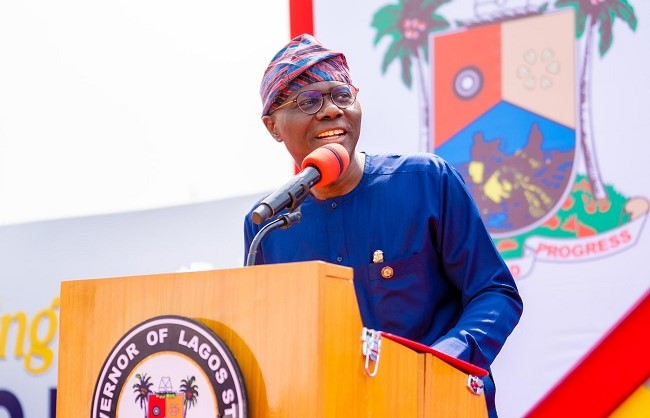
Governor Babajide Sanwo-Olu of Lagos State
The 4th International Investment Conference will bring together an exceptional lineup of leaders whose presence underscores the depth of Nigeria’s energy transition agenda and its international partnerships.
Sanwo-Olu will delve into the role and placement of Lagos as an emerging energy hub. At the federal level, Adelabu will set the tone with a keynote address outlining Nigeria’s long-term strategy for expanding access and modernizing the national energy system. Complementing this, Sulaiman-Ibrahim will spotlight how women’s leadership and inclusion are central to achieving a just and equitable transition.
Institutional insights will be provided by Mrs. Omotenioye Majekodunmi, the newly appointed Director General of the National Council on Climate Change (NCCC), who will present Nigeria’s climate governance priorities and progress under the Energy Transition Plan.
At the state level, Biodun Ogunleye, Lagos State Commissioner for Energy and Mineral Resources, will highlight Lagos’ electricity market reforms and its role as a subnational hub for clean energy. Adding a critical education and workforce dimension, Prof. Abubakar Sani Sambo, Kaduna State’s Commissioner for Education, and incidentally, the Chairman, Board of Trustees of REEEAA, will emphasise how capacity building, research, and skills development are vital to sustaining the transition.
The conference will also be reinforced by strong international participation. Birgitt Ory, German Ambassador to Nigeria, will reflect on Germany’s partnership with Nigeria in renewable energy and climate action, while Mr. Massimo De Luca, Head of Cooperation at the EU Delegation to Nigeria, will outline the European Union’s commitment to financing, cooperation, and sustainable development in support of Nigeria’s clean energy pathway.
The programme is structured to reflect the key pillars of Nigeria’s energy future, with breakout sessions positioned to deliver actionable outcomes:
Policy & Regulation – Fireside chats on fragmented regulations and a unified legal framework, aligning with the Federal Government’s Nigeria Energy Transition Plan (ETP) and state-level electricity reforms.
Finance & Investment – Panels on climate finance, public-private synergy, and B2B matchmaking to connect developers with financiers, banks, DFIs, and venture capital.
Technology & Innovation – Tracks on hydrogen, smart grid modernization, and local manufacturing in line with the Nigeria Electrification Project (NEP) supported by the World Bank, AfDB, and GIZ.
Capacity & Inclusion – Youth innovation forums and women-led panels that reflect the Solar Power Naija program, designed to empower 25 million citizens with off-grid solar while creating jobs for women and young people.
Communication & Engagement – Sessions on the role of media in building public trust and awareness around the clean energy transition.
A key highlight will be the unveiling of the “Inaugural Clean Energy Awards 2025”, designed to honor pioneers, innovators, and changemakers driving Nigeria’s renewable energy and energy efficiency transformation.
Award categories will spotlight groundbreaking innovators, women and youth leaders, community projects, policy champions, and lifetime contributors. Winners, selected by a panel of distinguished judges, will be announced during a dedicated gala ceremony, gaining visibility before ministers, financiers, investors, and international partners.
The conference will also feature an exhibition arena showcasing groundbreaking clean energy initiatives and technologies, including:
E-Mobility solutions and EV charging infrastructure
Battery storage technologies for reliable off-grid and hybrid systems
Cutting-edge clean energy systems for communities and industries
Capacity-building and training concepts preparing Nigeria’s workforce for a renewable future
Another major spotlight will be the fast-emerging e-mobility sector, with partners such as the Electric Mobility Promoters Association of Nigeria (EMPAN) playing a central role in showcasing Nigeria’s transition toward cleaner transport systems and localised innovation.
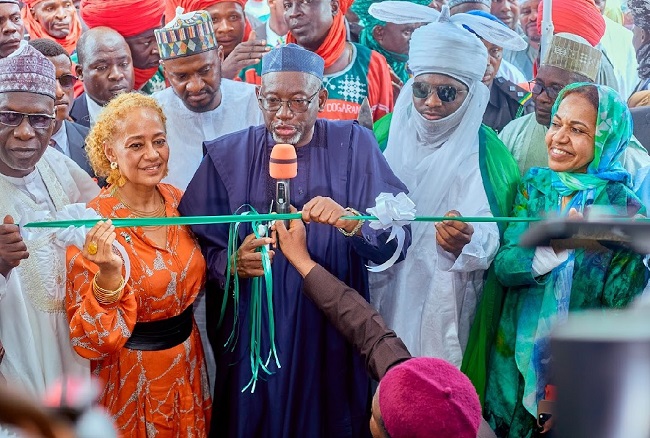
The UK Government has announced a £19 million funding commitment to develop Climate Resilient health and education facilities in Nigeria. The announcement was made at a joint inauguration by the UK Government, Federal Ministry of Health, the Governments of Kano and Jigawa States and UNICEF, of 84 climate-resilient schools and health care facilities under the Climate Resilient Infrastructure for Basic Services (CRIBS) initiative.
CRIBS is a pioneering and innovative new approach to protect essential health and education services from the growing threats of climate change. This was developed through a partnership which included: UK government, Government of Nigeria, State Governments and international and local organisations including: UNICEF, World Bank, WHO, JigSaw, Fab Inc, Crown Agents UK Lafiya Programme and Sextant Foundation.
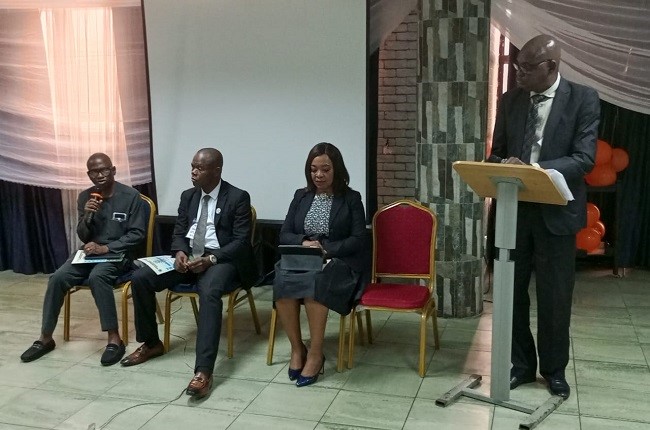
Governor of Jigawa State Mallam Umar Namadi, Head of Development Cooperation, British High Commission Abuja, Cynthia Rowe, His Royal Highness, the Emir of Dutse Alhaji Hamim Sanusi, and the UNICEF Representative in Nigeria, Wafaa Saeed at the commissioning of Chamo PHC CRIBS Project in Jigaw
Nigeria ranks second globally in climate-related risks to children, with millions affected annually by floods, droughts, and extreme heat. In response, the CRIBS approach has been developed to assess and strengthen Health and Education facilities. So far, 84 facilities, 39 primary healthcare centres and 45 schools in Kano and Jigawa, have been renovated through targeted climate adaptation measures.
The inauguration of these facilities marks a significant milestone in demonstrating low cost, scalable, community-owned solutions to climate vulnerability that can be adopted by the Federal and state governments. The events included ribbon-cutting ceremonies, site visits, and media engagements, showcasing how climate-resilient infrastructure can protect essential health and education services which save lives and support children’s education.
Head of Development Cooperation, British High Commission Abuja, Cynthia Rowe, said: “The UK Government is proud to support the Government of Nigeria through this £19 million commitment to the CRIBS programme. This work has been developed through a partnership of organisations and experts including the Federal Government of Nigeria, the UK Government, UNICEF, World Bank, World Health Organisation, Sextant Foundation, JigSaw, Fab Inc, Crown Agent and UK Lafiya Programme. CRIBS demonstrates how climate-resilient infrastructure can improve access to basic services for vulnerable populations. We hope this model inspires broader replication across Nigeria.”
UNICEF Representative in Nigeria, Wafaa Saeed, said: “This initiative is a testament to what strong partnerships can achieve. By investing in climate-smart infrastructure, we are not only protecting services but also empowering communities to safeguard their children’s future. CRIBS is a model for how we can build resilience where it matters most, at the frontline of service delivery.”
The inauguration aligns with national and state priorities in climate action, health, and education, and reflects the UK’s commitment to supporting Nigeria’s efforts to mitigate climate risks and improve service delivery.