Home Blog Page 187

Nigeria LNG calls for global action on methane gas mitigation

0

Nigeria Liquefied Natural Gas Limited (NLNG) has urged global co-operation to tackle methane emissions and accelerate climate action.

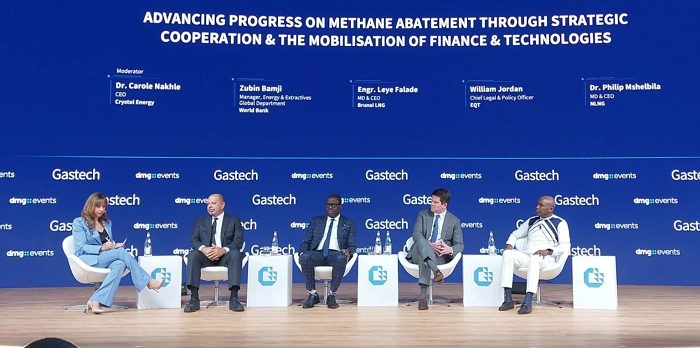
Dr Philip Mshelbila, Managing Director of NLNG, made the call during a panel session at the Gastech Exhibition and Conference in Milan, Italy.
NLNG
Managing Director of NLNG, Dr Philip Mshelbila (5th from left), responding to questions during a panel session at the ongoing Gastech Exhibition and Conference in Milan, Italy

The session was themed, “Advancing Progress on Methane Abatement Through Strategic Cooperation and the Mobilisation of Finance and Technologies.”

Mshelbila stressed that methane reduction must be prioritised due to its high climate potency and short atmospheric lifespan compared to carbon dioxide (CO₂).

He explained that about 40 per cent of methane emissions were natural, while 60 per cent resulted from human activities.

“Of this 60 per cent, agriculture contributes 40 per cent, and waste, 20 per cent.

“Globally, oil and gas account for 21 per cent of total methane emissions from fossil fuels, making the sector a critical focus for intervention,” he said.

He explained that fossil fuel-related emissions arose from coal mining, flaring, venting, fugitive releases, and incomplete combustion – all requiring targeted mitigation strategies.

Mshelbila identified three key pillars for addressing the challenge which included prevention, detection and measurement, and intervention.

He said that prevention involved designing new facilities to minimise leaks and upgrading existing infrastructure, while detection and measurement relied on advanced technologies to track performance.

“If you cannot measure it, you cannot know how well you are performing,” he stated.

Mshelbila noted that methane lingered in the atmosphere for about 12 years, compared to hundreds or thousands for CO₂, yet it was over 80 times more potent, making its reduction a ‘fast-track’ climate solution.

According to him, we need to focus attention on methane mitigation technologies and support small-scale producers and transporters who often lack the capital to invest in advanced systems.

While CO₂ regulations are relatively mature, Mshelbila observed that methane policies remained underdeveloped, particularly in developing nations.

He called for industry-wide collaboration and inclusive frameworks to close this gap.

Highlighting NLNG’s contributions, the NLNG managing director said the company had reduced Nigeria’s gas flaring by more than 40 per cent since its inception 26 years ago.

“Methane is energy. It is good as long as you keep it in-pipe. NLNG was created to monetise associated gas that was previously flared during oil production.

“We have invested in detection, measurement, monitoring, and reporting systems to manage methane emissions,” he said.

Mshelbila further said that the company had joined the Oil and Gas Methane Partnership (OGMP) and was working towards achieving Gold Standard certification.

He announced that the company would soon inaugurate a boil-off gas compressor to reintegrate methane that would otherwise be flared.

Mshelbila emphasised the importance of partnerships, funding access, knowledge-sharing to help smaller operators adopt advanced technologies, citing satellite-based detection as an innovation that could deliver industry-wide benefits.

He added that access to finance and scalable solutions was crucial for independent players to reduce flaring and emissions.

According to him, we need global stakeholders to support methane mitigation through technology, funding, and inclusive policy frameworks,” he said.

By Desmond Ejibas
Osun appoints Director-General and Special Envoy on Climate Change and Renewable Energy 

0

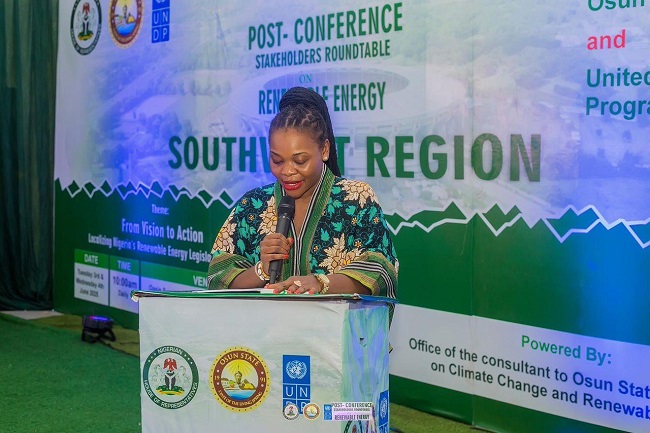
The Osun State Government has approved the elevation of Prof. Chinwe Obuaku-Igwe to the position of Director-General and Special Envoy to the Governor on Climate Change and Renewable Energy.

The government disclosed that the appointment by Senator Ademola Jackson Nurudeen Adeleke, Governor of Osun State, reflects the state’s commitment to consolidating its leadership in climate governance and renewable energy innovation.

Prof. Chinwe Obuaku-Igwe

Prof. Obuaku-Igwe has, over the past years, gone beyond advisory functions to establish a comprehensive climate governance framework in Osun State. 

Under her leadership, the state has reportedly made significant strides, including:

 • Training more than 2,000 youths and women in circular economy and waste-to-wealth initiatives, leading to the creation of over 350 green SMEs.

 • Establishing a recycling hub with FBRA and Waste Swap, processing mega tonnes of recyclables monthly and formalising more than 400 jobs.

 • Implementing the IMOLE Solar Lantern Campaign, which has distributed over 10,000 solar lanterns to rural pupils, improving education outcomes and reducing household energy costs.

 • Introducing an E-Bike Pilot Project that would reduce urban transport emissions while cutting operator fuel costs by 30%.

 • Developing the Osun Climate Action Plan, Climate Smart Investment portfolio, Renewable Energy Policy, and Circular Economy Framework, pioneering sub-national climate policies in South West Nigeria.

 • Representing Osun State at global and national platforms, including COP28 in Azerbaijan and the Citizens Lobby Conference in Washington DC, securing climate-linked investments.

These interventions have positioned Osun State as a pioneer in Nigeria’s green economy, contributing to an increase in sectoral GDP and creating over 2,500 jobs through clean energy, recycling, and sustainable mobility projects.

As Director-General & Special Envoy, Prof. Obuaku-Igwe will operate directly under the Governor, with a mandate to:

 • Drive high-level partnerships with multilateral agencies, investors, and global climate networks.

 • Coordinate the cross-sectoral implementation of Osun’s Climate Action Plan and renewable energy transition.

 • Ensure Osun maintains its role as a national and continental leader in climate-smart governance.

This appointment complements, without conflict, the statutory functions of the Department of Climate Change under the Ministry of Environment, while elevating Osun’s representation in international climate diplomacy.

The Government congratulates Prof. Obuaku-Igwe on the appointment and reaffirms its commitment to deepening Osun’s transition to a resilient, inclusive, and prosperous green economy.

Dangote Refinery launches CNG-powered trucks, reduces pump price

0

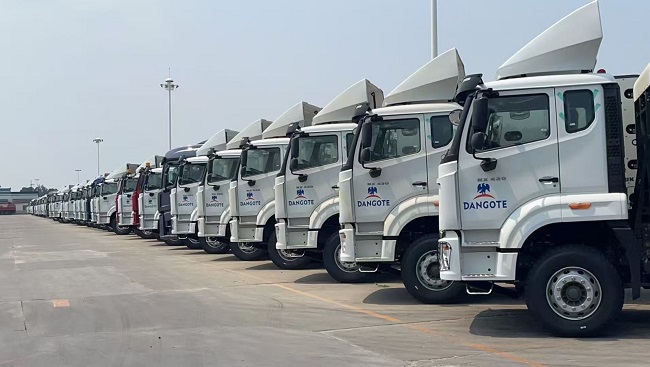
The Dangote Petroleum Refinery is set to begin the rollout of compressed natural gas (CNG)-powered trucks on Monday, September 15, 2025, as part of its logistics-free distribution programme aimed at significantly reducing fuel prices across Nigeria.

In a statement released by the company, the initiative will see the gantry price reduced to N820 per litre, with corresponding lower pump prices in several key states. Lagos and other South-Western states will see fuel retailing at N841 per litre, while Abuja, Rivers, Delta, Edo, and Kwara states will sell at N851 per litre.

Dangote Refinery
Dangote Refinery CNG trucks

The first phase of the deployment will cover the Federal Capital Territory, Lagos, Kwara, Delta, Edo, Rivers and South West states, with nationwide expansion planned as additional trucks are delivered.

This transition to CNG-powered transportation is expected to save the Nigerian economy over N1.8 trillion annually. The move is designed to cut fuel distribution costs, reduce pump prices, and ease inflationary pressures. In particular, the initiative is expected to benefit more than 42 million micro, small and medium enterprises (MSMEs) by lowering energy costs and improving profit margins.

Dangote Group is investing over N720 billion into the programme, which is also anticipated to revitalise dormant filling stations across the country. The project is expected to create numerous direct employment opportunities, including roles for truck drivers, filling station managers, and fuel attendants.

The company has called on stakeholders, including fuel station operators, telecommunications companies, and large-scale fuel consumers to partner with the initiative to ensure its success and maximise its economic impact.

Dangote Refinery dismisses NUPENG allegations, reaffirms commitment to labour rights, economic development

0

Dangote Petroleum Refinery has dismissed recent allegations made by the Nigeria Union of Petroleum and Natural Gas Workers (NUPENG), insisting that claims of anti-labour practices, monopolistic behaviour, and planned fuel price hikes are “entirely unfounded”.

The union’s statement, released on Friday, September 5, 2025, and subsequent media appearances, alleged that Dangote Group was undermining union activities and threatening workers’ welfare through its new deployment of compressed natural gas (CNG) powered trucks.

Dangote Refinery gate

In its official response, Dangote Refinery reiterated its full support for constitutionally protected labour rights, stating that employees are free to affiliate with any recognised trade union.

“Assertions that drivers are compelled to waive union rights are categorically false,” the statement said, adding that the dispute involves NUPENG’s Petrol Tanker Drivers (PTD) unit and does not implicate the refinery in any breach of rights.

Central to NUPENG’s allegations is the roll-out of over 4,000 CNG-powered bulk trucks, which the union claims could displace existing jobs. Dangote Group firmly refuted this, describing the initiative as a cornerstone of Nigeria’s energy transition strategy.

“The deployment of CNG-powered trucks is a strategic initiative designed to support national energy transition goals, not to displace existing jobs,” the company stated.

Each truck will be operated by a six-person team, with drivers receiving salaries significantly above the national minimum wage, plus medical cover, pensions, housing allowances, and long-term access to housing loans. The company aims to have 10,000 such trucks in operation by year-end, potentially creating over 60,000 direct jobs.

Responding to accusations of monopolistic behaviour, Dangote Refinery emphasised its compliance with Nigeria’s deregulated oil sector under the supervision of the Nigerian Midstream and Downstream Petroleum Regulatory Authority (NMDPRA).

The company highlighted that over 30 refinery licences have been issued to private players, with active developments by BUA, Aradel, Walter Smith, and the Edo Refinery. “While we are major industry player, our presence has revitalised the downstream sector, reopened previously dormant petrol stations and restored investor confidence,” the management said.

The statement also drew parallels with the company’s influence in the cement industry, noting that Dangote’s entry helped eliminate Nigeria’s reliance on imports and spurred the rise of other local producers.

Dangote Refinery denied any plans to increase fuel prices. On the contrary, the company claims its operations have stabilised fuel availability and driven down costs. Diesel prices, for instance, have dropped by over 30% in the past year, and petrol prices in Nigeria are now reportedly lower than in oil-rich nations like Saudi Arabia and 40% cheaper than neighbouring West African countries.

The company also pointed to its N720 billion investment in CNG infrastructure as evidence of its commitment to reducing logistics costs and improving nationwide fuel distribution.

Dangote stated it maintains a cordial and cooperative relationship with all recognised trade unions, including NUPENG. It rejected accusations of walking out on recent conciliation efforts, stating that the union had not formally communicated any grievances before going public.

“We acknowledge and appreciate the intervention of the Federal Government, particularly the Ministry of Labour and Employment, and remain fully supportive of ongoing efforts to achieve a lasting resolution. We hold both the Minister, Dr Mohammed Dingyadi (Katuka Sokoto) and Mrs. Nkiruka Onyejeocha, in the highest regards, and reject any suggestion that we have acted in a manner that would undermine their involvement. The Hon. Minister granted Mallam Sayyu Dantata the permit to enable him attend to his medication,” the company said, expressing appreciation for the roles played by the Ministry of Labour and Employment and key ministers involved in mediating the dispute.

Since its commissioning just over a year ago, Dangote Refinery has transformed Nigeria into a net exporter of refined fuels, supplying markets as far as the United States. Its production of key by-products such as polypropylene, LPG, and naphtha is said to be catalysing growth in manufacturing, aviation, and agro-processing sectors.

The company also noted that its domestic LPG supply has led to a noticeable drop in cooking gas prices, promoting cleaner household energy use and reducing dependency on firewood and kerosene.

With over 570,000 direct and indirect jobs created, including through road, power, and water infrastructure projects, Dangote Refinery disclosed that it has positioned itself as a centre for skills development and technology transfer in Nigeria.

Reiterating its commitment to responsible business, Dangote Group dismissed the monopoly allegations as “recycled falsehoods”, urging other private sector players to follow its lead in investing in Nigeria’s economic future.

“At Dangote, we have chosen to invest boldly in Nigeria’s future, and we will continue to do so. It is time others follow suit.”

CISLAC, stakeholders advocate stronger tobacco tax to curb youth addiction

0

The Civil Society Legislative Advocacy Centre (CISLAC) and other stakeholders have called on the Federal Government to strengthen tobacco taxation in Nigeria as a means to protect public health and boost revenue generation.

Executive Director of CISLAC, Auwal Rafsanjani, made the call on Thursday, September 11, 2025, in Abuja at a Validation Workshop on the Tobacco Excise Tax Simulation Report for Nigeria.

Tobacco smoking
Tobacco smoking

Rafsanjani commended research partners from the University of Cape Town and the Tax Justice Network Africa for their support in conducting the study.

He noted that tobacco consumption – particularly among youths and women – h had become a growing public health and social concern in Nigeria.

“The shisha and other tobacco products have become a passion for young people, with severe health consequences including cancer and psychological imbalance.

“In fact, studies show that consumption of tobacco does contribute to cancer and other related health diseases.

“In Nigeria, the health sector is seriously in crisis, to be consuming such a kind of dangerous thing is overstating our health system.

“We don’t have money to treat victims or patients of tobacco in Nigeria,” Rafsanjani said.

The CISLAC boss noted that while Nigeria introduced a tobacco tax regime in 2018, current rates remained among the lowest in West Africa, making the country vulnerable as a dumping ground for tobacco products.

He stressed that raising excise taxes would make tobacco less affordable, discourage use among children and youth, and increase government revenue for development.

He also criticised multinational tobacco firms for exploiting farmers and failing to contribute meaningfully to healthcare.

He, however. urged the government to strike a balance between revenue generation and protecting citizens.

“With the current tax regime expiring in May 2025, this report provides timely evidence to guide policy makers on more effective taxation,” he said.

He said CISLAC would continue to engage government through research, advocacy, and stakeholder consultation to ensure stronger tobacco control policies in Nigeria.

John Thomi, Policy Office, Tax Justice Network Africa (TJNA) called on Nigeria to raise its tobacco taxes above the ECOWAS minimum to protect public health and generate more revenue for essential services.

Thomi wondered  why the country still lagged behind on tobacco taxation in spite of ECOWAS’ harmonisation efforts.

“We owe the people of Nigeria a safe space, a healthy environment, and more resources to fund the health sector and other public activities.

“Kindly consider reviewing your taxes on tobacco products upwards,” Thomi said.

He noted that the ongoing collaboration between TJNA, CISLAC and other stakeholders had produced a simulation model to guide evidence-based tax policy on tobacco.

He said the model would help Nigeria strengthen control of tobacco consumption while boosting government revenue.

He also pledged TJNA’s continued partnership and urged civil society and government to take bold action.

Also speaking at the workshop, representative of the Ministry of Finance, Mrs Sarah Bwala, said Nigeria was undergoing a comprehensive review of the excisable goods with a revised framework expected to come into effect in 2026.

“Our focus  is not only on strengthening revenue generation, but also on protecting public health in line with the global and regional commitments.

“Nigeria is committed to aligning with this standard, considering the fact the country has the lowest excise rate compared to most countries on comparative ground.

“Thus, ensuring that our fiscal policy contributes both to sustainable development and the reduction of tobacco-related health risks,”Bwala said.

UN allocates $5m to Nigeria to minimise impact of floods

UN Emergency Relief Coordinator, Tom Fletcher, says the organisation has allocated $5 million from its Central Emergency Response Fund (CERF) to minimise the impact of expected floods in Nigeria.

The CERF funding, he explained, was ahead of severe floods forecast in the country, and part of a collective initiative, which complemented a $2 million allocation from the Nigeria Humanitarian Fund.

Stéphane Dujarric
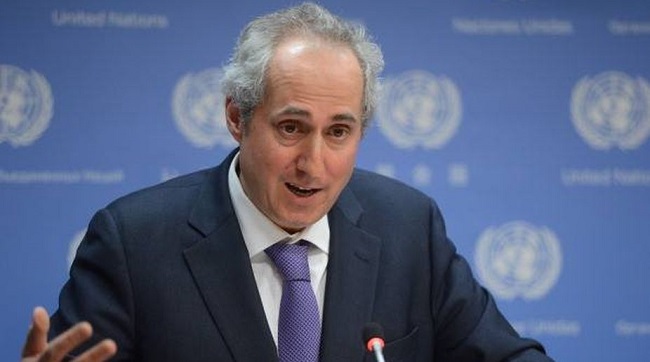
UN Spokesperson, Stéphane Dujarric

UN Spokesperson, Mr. Stephane Dujarric, told journalists on Wednesday, September 10, 2025, in New York that the partners supported by the funds would focus on providing food, cash, and shelter support for some 350,000 people in the north-eastern state of Adamawa.

Similarly, Dujarric said the Office for the Coordination of Humanitarian Affairs had released one million dollars to minimise the impact of expected floods in Burkina Faso, following heavy rains in the country.

“The resources come from the Regional Humanitarian Fund for West and Central Africa, managed by OCHA, and will help two of our local NGO partners provide critical food, shelter, water, sanitation and hygiene assistance to 35,000 people in the regions of Centre-Nord and Sahel ahead of the forecasted floods.”

He added it was the first time that funds were released from one of OCHA’s regional funds as part of anticipatory action efforts.

According to him, it reflects close monitoring and cooperation between the UN, partners and the Burkinabe authorities.

By Cecilia Ologunagba

Lagos vows to protect lagoon against degradation

0

Gov. Babajide Sanwo-Olu of Lagos State on Thursday, September 11, 2025, pledged a firm action to safeguard the state’s lagoon against degradation.

The governor said that the fight to protect the ecosystem and livelihoods “is urgent and non-negotiable”.

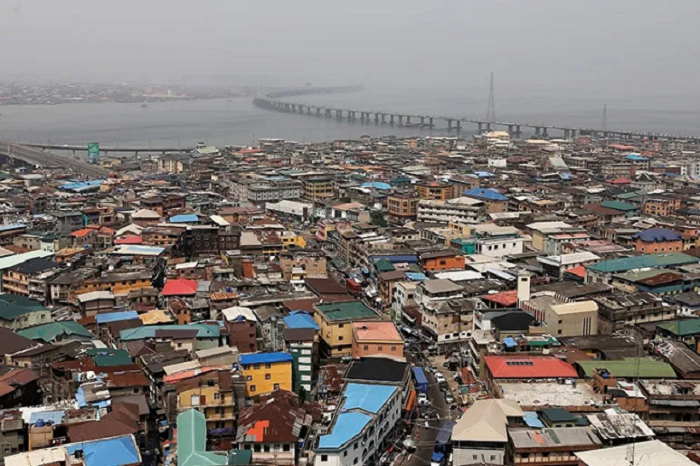
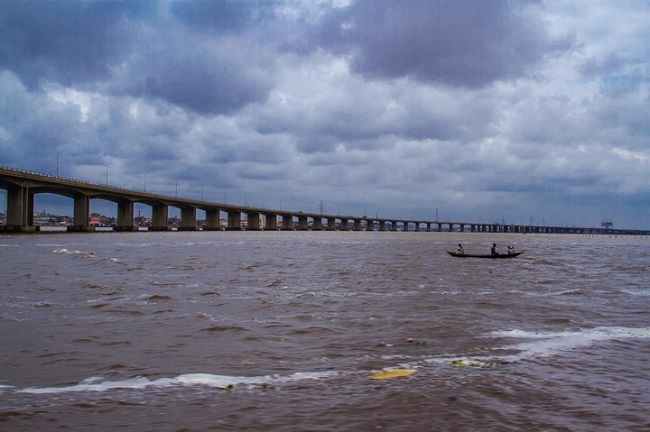
Lagos Lagoon
Lagos Lagoon

Sanwo-Olu gave the assurance at the opening of the maiden Lagos State Waterfront Summit at Eko Hotels and Suites, Victoria Island.

The event had “Pressure on the Lagoon: The Lagos Experience” as uts theme.

According to Sanwo-Olu, Lagos lagoon sustains millions of people and anchors the state’s economy and culture but is under severe threat from illegal dredging, reckless land reclamation and unregulated sand mining.

The governor said that the lagoon was also under threat by abandoned ships, marine pollution and unchecked urbanisation, all worsened by climate change and coastal surges.

The governor noted that during his recent visits to coastal communities such as Ibeshe, Ilashe, Inagbe and Idotun Village, he saw flooding on homes, livelihoods and ancestral lands.

“A recent global report shows that more than 80 per cent of the shoreline of Lagos has been lost in just 50 years.

“If we remain inactive, we risk creating a Lagos where the waterfronts are unliveable and the lagoon no longer usable,” he said.

He said the Lagos State Ministry of Waterfront Infrastructure Development would provide infrastructure and services across the waterfronts, protect the environment and boost coastal tourism to position Lagos as a global destination.

Sanwo-Olu identified opportunities in eco-tourism, blue economy, renewable energy, research and innovation, and public-private partnerships as ways to turn the threats into engines of growth.

“Those who profit from illegal dredging, reckless land reclamation and environmental destruction are jeopardising the future for generations to come, and Lagos will no longer tolerate it,”Sanwo-Olu said.

He said the state government was investing in shoreline protection, preparing a master plan for waterfront development, strengthening regulations, empowering communities, funding research and mainstreaming sustainability into all projects.

“This is not a fight for government alone. We need traditional leaders to protect our heritage and the private sector to lead on sustainable projects.”

Sanwo-Olu added that the government would need regulators with integrity and the civil society to hold it accountable as well as scholars to guide new possibilities.

“If we get this right, the Lagos lagoon will flourish and become a source of pride, prosperity and protection for generations to come,” the governor said.

In a keynote address, a former Commissioner for Environment in the state, Dr Muiz Banire (SAN), described the lagoon as a “true companion” of Lagos that had nurtured families, supported industries and underpinned trade for generations.

“The lagoon is now “crying fiercely for air,” he said.

He identified  unregulated industrial discharges, municipal waste, oil spillages, and  over-exploitation through uncontrolled sand mining and reclamation as threats to the lagoon.

Banire added that weak enforcement of laws, overlapping agency mandates and lack of capacity to monitor environmental impact assessments as threats.

“Failure to act could result in an environmental, economic and social catastrophe, including depleted fish stocks, loss of biodiversity and increased vulnerability to flooding.

“I urge political will, stronger enforcement, inter-agency cooperation and community involvement to restore the lagoon’s resilience,” he said.

The state Commissioner for Waterfront Infrastructure Development, Mr Dayo Bush-Alebioshu, said the lagoon was more than water.

“It is life, culture, economy and identity,” he said.

The commissioner said that the lagoon faced pressure from pollution, unchecked urbanisation, climate change and illegal dredging that weakened the shoreline and depleted fish stocks.

He said the summit was convened to harness knowledge, technology and partnerships to protect the lagoon, revive its potential and position it as a driver of sustainable growth for Lagos.

Bush-Alebioshu urged participants at the event to come up with discussions that would shape future policies and actions to ensure that Lagos lagoon would remain a blessing.

By Aderonke Ojediran

BATN Foundation commits to boosting Nigeria’s cassava production in Osun

0

The British American Tobacco Nigeria (BATN) Foundation, in partnership with Cato Foods & Agroallied Global Concepts and the Osun State Government, has flagged off a transformative enterprise development initiative aimed at boosting cassava production and improving the livelihoods of smallholder farmers in the state.

The Enterprise Development for Smallholder Cassava Farmers project by BATN Foundation is designed to empower farmers by providing access to essential resources, markets, and training.

BATN Foundation
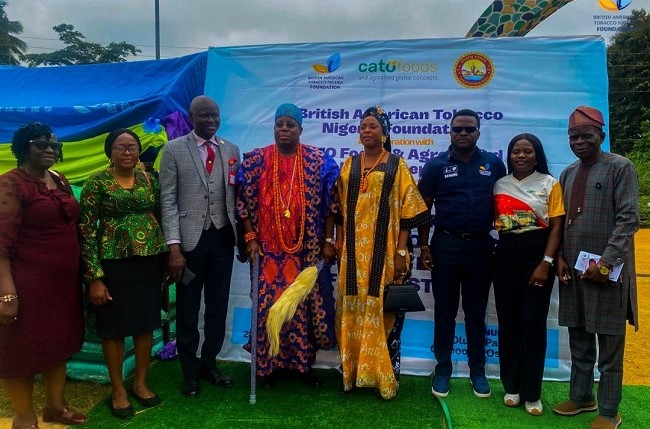
BATN Foundation officials and partners during the flag-off ceremony of the Enterprise Development for Smallholder Cassava Farmers project

During the flag-off ceremony in Osun, it was announced that 100 participating farmers will each cultivate half-hectare using improved and biofortified cassava varieties. These farmers will be organised into Agri-Business Clusters (ABCs) and cooperatives to streamline access to quality inputs, mechanisation, and financial services. This bloc farming model is also expected to enhance their collective marketing power.

The core objectives of the initiative are to increase cassava yield and household income by at least 40% and enhance food security. The project seeks to establish a more efficient and profitable cassava value chain by training farmers in good agronomic practices, climate-smart agriculture, and basic enterprise management. The adoption of eco-efficient tools, such as the AKILIMO cassava tool, will further support these efforts, with a key component being the assurance of sustainable market integration.

Oludare Odusanya, the General Manager of BATNF, emphasised the importance of grassroots empowerment at the event. He stated that the foundation’s interventions are not just for immediate support, but also to build long-term resilience and self-sufficiency for smallholder farmers. Odusanya expressed the belief that, with adequate resources, knowledge, and market access, these farmers can uplift their communities and significantly contribute to Nigeria’s food security.

“Our interventions are designed not only to provide immediate support but also to foster long-term resilience and self-sufficiency among smallholder farmers,” said Odusanya. 

He commended the partnerships with Osun State and other collaborators, highlighting that a collective effort is essential to sustain and expand such impactful initiatives.

The programme’s core mission, according to a statement on Monday, is to shift the mindset of farmers from being mere producers to becoming dynamic agribusiness entrepreneurs. The Managing Partner and Co-Founder of CATO Foods & Agroallied Global Concepts, Pelumi Aribisala, said the initiative was designed to meet the burgeoning industrial demand for cassava while strengthening Nigeria’s food system.

BATNF’s strategic focus remains on elevating the productivity of smallholder farmers while fostering sustainable practices that secure their livelihoods for the long term.

In attendance at the flag-off ceremony were esteemed dignitaries, including the Representative of the Commissioner for Agriculture and Food Systems, Osun State, Oluwakemi Fadare, Olupo of Oluponna, Oba Abdul-Rafiu Oyekanmi Mosobalaje Bamigboye II, CEO, Cato Foods, Atinuke Lebile, General Manager, BATNF, Odusanya Oludare, Project Manager, BATNF, Mr Adetola Oniyelu, and other industry stakeholders.

The ongoing tripartite collaboration exemplifies how collaborative efforts, targeted interventions, and strategic investments can drive agricultural transformation. As the Foundation looks forward to expanding its programmes, the focus remains on nurturing smallholder farmers into catalysts of Nigeria’s sustainable development.

By Ajibola Adedoye

Renaissance, Nigerian Navy plan framework to safeguard oil assets

0

Renaissance Africa Energy Company Limited and the Nigerian Navy have committed to a partnership to strengthen maritime security that would support improved crude oil and gas production across the company’s operational assets in the Niger Delta.

The commitment was the highlight of a high-level meeting held on Monday, September 8, 2025, at the Nigerian Navy Headquarters in Abuja, where senior executives from Renaissance met with naval leadership to discuss joint efforts to protect critical national infrastructure and ensure uninterrupted energy output.

Renaissance
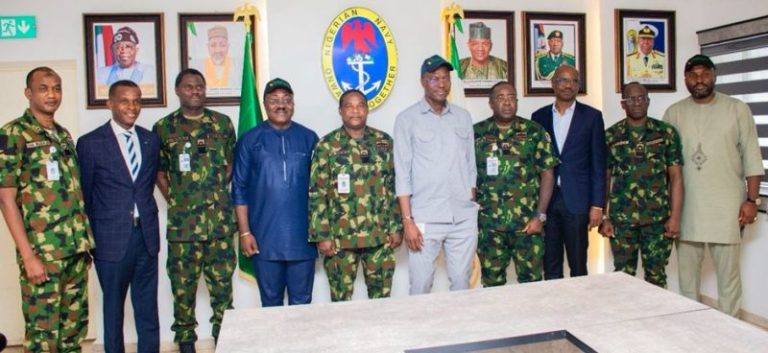
L-R: Director, Naval Intelligence, Commodore U.M. Bugaje; Manager, Business Relations, Relations and Sustainable Development, Renaissance Africa Energy Company Limited, Mr. Enobong Ekanem; Chief of Naval Training, Rear Admiral K.J. Odunbajo; Renaissance Africa’s Chief Production Officer, Mr. Meshach Maichibi; Chief of Policy and Plans, Rear Admiral I.A. Dewu; Renaissance Africa’s General Manager, Relations and Sustainable Development, Dr. Igo Weli; Chief Naval Operations, Rear Admiral P.C. Nwatu; Renaissance Africa’s General Manager Security, Toye Fatoki; Chief of Naval Engineering, Rear Admiral B. Iyalla; and External Security Relations Adviser, Renaissance Africa Energy Company Limited, Ikenna Anosike… at the Nigeria Navy Headquarters, Abuja

“Our vision for Nigeria’s energy security is rooted in collaboration,” said Renaissance’s General Manager for Relations and Sustainable Development, Dr. Igo Weli. “Working closely with the Navy ensures that our operations are protected and our growth trajectory remains stable.”

Weli, accompanied by Renaissance’s Chief Production Officer, Meshach Maichibi, and other senior executives of the company, restated Renaissance’s commitment to partnering with public and private institutions to support the economic growth of Nigeria through improved oil and gas revenue.

Security remains a key concern for operators in the Niger Delta, where infrastructure sabotage and crude oil theft continue to pose risks to production and personnel. Speaking at the meeting, Renaissance’s General Manager for Security, Toye Fatoki, called for enhanced coordination with the Navy to improve surveillance of underwater assets and address maritime threats.

“We are seeing increasingly sophisticated threats to subsea infrastructure and offshore assets,” Fatoki said. “A coordinated response with the Navy is essential, not only to deter criminal activity but to ensure the safe and stable operation of our facilities.”

The Chief of Naval Staff, Vice Admiral Emmanuel Ogalla, represented by the Chief of Policy and Plans, Rear Admiral Ibrahim Dewu, welcomed the partnership initiative and reaffirmed the Navy’s commitment to supporting the oil and gas sector. He commended the rapid production turnaround by the company and emphasised the importance of public and private sectors collaboration in achieving national energy objectives and maintaining maritime stability.

At the end of the meeting, both Renaissance and the Nigerian Navy agreed to establish a joint framework for operational coordination, intelligence sharing, and rapid response mechanisms to safeguard oil and gas infrastructure.

Renaissance acquired Shell’s stake in the Shell Petroleum Development Company earlier this year and has positioned itself as Nigeria’s leading indigenous upstream operators. The engagement with the Navy is part of Renaissance’s wider effort to align with government and security institutions to drive sustainable growth in the oil and gas sector.

GOCOP unveils Aminu Bello Masari as keynote speaker for 2025 conference

0

A former Speaker of the House of Representatives and immediate past Governor of Katsina State, Aminu Bello Masari, will deliver the keynote address at the 2025 Guild of Corporate Online Publishers (GOCOP) Annual Conference.

The confab is scheduled for 10:00 a.m. on Thursday, October 9, 2025, at the Radisson Blu Hotel, Ikeja, Lagos.

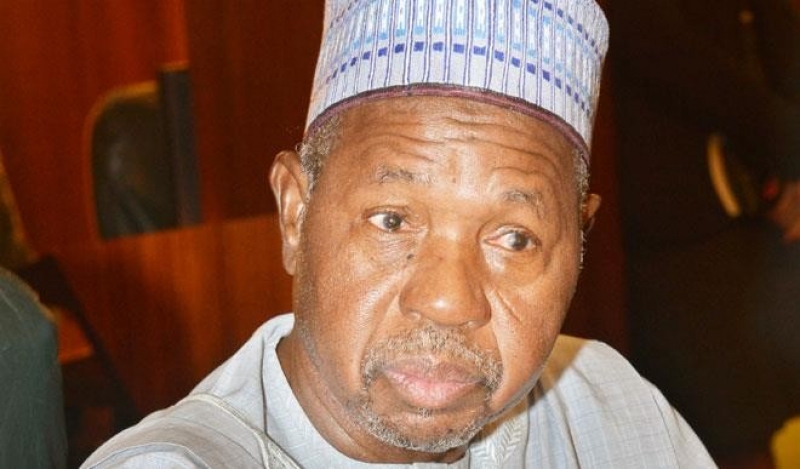
Alhaji Aminu Bello Masari

This ninth edition is themed: “Reconciling Campaign Promises with Governance Realities: Challenges and Prospects.”

Masari confirmed his availability for the role during a courtesy visit by a GOCOP delegation led by the Deputy President and Conference Planning Committee Chair, Danlami Nmodu, which included the Vice President (North), Mr. Tom Chiahemen, in Abuja.

During the visit, the team presented Masari with a copy of the newly published GOCOP book, which he graciously promised to read.

In a press statement, GOCOP’s Publicity Secretary, Ogbuefi Remmy Nweke, said that Masari, who is Chairman of the Tertiary Education Trust Fund (TETFund), had a distinguished record of service.

Profile

Masari was Commissioner for Works, Housing and Transport in Katsina State (1991–1993), Speaker of the House of Representatives (2003–2007), and Governor of Katsina State (2015–2023).

Born in Masari village, Kafur Local Government Area of Katsina State, Masari’s career reflects a lifelong commitment to diligence, honesty, and service.

From his early days in the civil service, rising through the Water Board to senior management, to his training at Middlesex Polytechnic in the UK, he has consistently distinguished himself in public life.

His political journey and leadership earned him national and traditional honours such as the Commander of the Federal Republic (CFR), Dallatun Katsina, and Matawallen Hausa, alongside honorary doctorates and international recognitions including the U.S. Congressional Commendation Award.

As Governor, Masari focused on infrastructure, education, healthcare, and workers’ welfare, transforming Katsina into one of the few Nigerian states without salary arrears.

His leadership attracted accolades, including The Sun Courage in Leadership Award (2016) and the Zik Leadership Prize for Good Governance (2017).

Past Speakers

Past GOCOP conferences had featured eminent speakers such as Bishop Matthew Hassan Kukah, Catholic Bishop of Sokoto Diocese (2019), who spoke on “Economy, Security and National Development: The Way Forward.”

Professor Mahmood Yakubu, INEC Chairman (2022), who delivered the keynote “2023 Elections: Managing the Process for Credible Outcome.”

Professor Uche Uwaleke, Capital Market scholar (2023), who addressed “Nigeria: Roadmap for Socio-Economic Recovery and Sustainability.”

Founded to uphold the tenets of journalism in the digital age, GOCOP is a professional body of 119 member organisations led by seasoned editors and senior journalists who transitioned from traditional media into online publishing.

According to the statement, “the annual conference provides a unique platform for sponsorship opportunities, offering brand visibility, media recognition, and networking with influential journalists, editors, and policy shapers.”

Partnering with GOCOP, it added, was a strong demonstration of commitment to ethical journalism and responsible media.