Nigeria’s updated Nationally Determined Contributions (NDC 3.0) and the Just Transition Guidelines and Action Plan (JT-GAP) mark a pivotal moment for the country’s climate future. As Nigeria strives toward a low-carbon, climate-resilient economy, the youth – who make up more than 60% of the population – are not just beneficiaries but critical drivers of this transformation.
From Climate Awareness to Climate Literacy: The first step for Nigerian youth is to build technical literacy on climate governance. The JT-GAP calls for evidence-based, people-centered transitions anchored in equity and inclusivity. Youth networks should deepen their understanding of Nigeria’s Energy Transition Plan (ETP), the Long-Term Low Emission Development Strategy (LT-LEDS), and the NDC 3.0 framework. Integrating climate education into university curricula, vocational programs, and civic engagement platforms will enable young Nigerians to transition from passive observers to informed advocates and implementers.
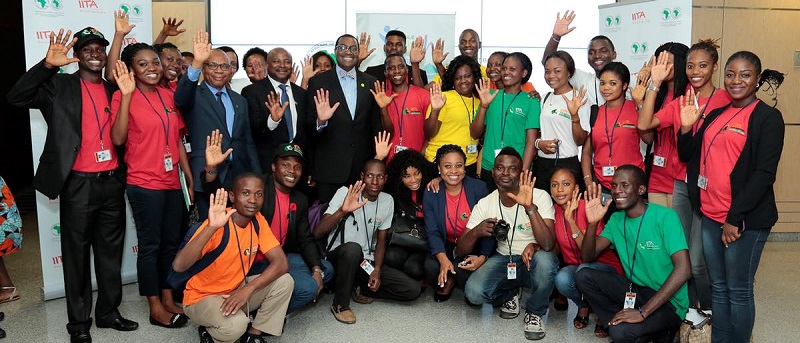
Fille photo: Youth agripreneurs during a visit to Dr Akinwumi Adesina, former President of the African Development Bank (AfDB),
Driving Green Skills and Workforce Development: The JT-GAP highlights reskilling and upskilling as a strategic national priority. Youth-led organisations must collaborate with the private sector and training institutes to create Green Skills Hubs in renewable energy, waste management, climate-smart agriculture, and circular economy practices. This alignment will ensure the NDC’s mitigation targets generate equitable employment opportunities.
Catalysing Local Climate Action: Youth must localize NDC implementation by transforming community-level initiatives into measurable climate actions. Projects such as solar mini-grids, recycling enterprises, and urban tree planting can serve as micro-models for adaptation and mitigation. These grassroots interventions reflect the inclusive governance and social protection priorities outlined in the JT-GAP.
Pushing for Policy Accountability and Open Climate Data: A just transition requires transparency. Youth organisations can partner with the National Council on Climate Change (NCCC) to monitor NDC implementation using open data dashboards and citizen scorecards. Civic-tech tools can track emissions data, financing, and social impacts – turning climate accountability into a youth-powered reality.
Engaging in Climate Finance and Innovation: Nigeria’s transition will demand massive investment mobilized from domestic and international sources. Youth entrepreneurs must therefore venture into green startups – from renewable energy enterprises to climate fintech – that can attract concessional loans, carbon credits, and green bonds. Partnerships with entities such as the Development Bank of Nigeria and the Green Climate Fund will be critical.
Strengthening Social Inclusion and Gender Equity: The NDC 3.0 cannot succeed without ensuring gender-responsive and inclusive action. The JT-GAP stresses that women, youth, and persons with disabilities should be prioritised in planning and leadership. Youth coalitions should mainstream social inclusion to ensure equitable participation and benefits in the green economy.
Building Alliances for Just Transition: Finally, Nigerian youth must embrace coalition-building. Collaboration among youth movements, civil society, academia, and local government will strengthen advocacy and resource sharing. Establishing a National Youth Platform on Just Transition and NDC Implementation could unify youth voices in national and international climate dialogues.
In conclusion, the NDC 3.0 is not just a climate document – it’s a generational roadmap. For Nigerian youth, the task ahead is clear: to transform commitment into capacity, awareness into accountability, and ambition into tangible community impact. By anchoring their efforts on justice, innovation, and inclusion, Nigerian youth can turn the Just Transition vision into a sustainable legacy for generations to come.
By Olumide Idowu, Executive Director, International Climate Change Development Initiative (ICCDI-Africa)
The Nigerian Upstream Petroleum Regulatory Commission (NUPRC) has announced a significant rise in the country’s rig count, increasing from just eight in 2021 to 69.
The commission said this in a statement by its Head, Media and Strategic Communication, Eniola Akinkuotu.
Akinkuotu highlighted some of NUPRC’s high impact achievements, four years since its establishment, adding that the growth is a clear testament to the renewed vigour and investor confidence in Nigeria’s upstream petroleum sector.
He said that in spite of the challenges it inherited from the pre-Petroleum Industry Act (PIA) era, it exceeded revenue targets, recorded 39.98 billion dollars investment, and increased rig count and crude oil production.
“The latest rig count of 69 comprises 40 active rigs, eight on standby, five on warm stack, four on cold stack and 12 on the move.
“This represents a 762.5 per cent increase in barely four years.
“The success aligns with the charge of President Bola Tinubu that Nigeria is ready for business and that the right investment climate prevails now in the Nigeria upstream as daily actioned by the NUPRC.”
He said that NUPRC approved billions of dollars divestments in 2024 from the Nigeria Agip Oil Company to Oando Energy Resources; and Equinor to Chappal Energies.
He said that there was also divestment from Mobil Producing Nigeria Unlimited to Seplat Energies; and Shell Development Company Nigeria Limited to Renaissance Africa Energy.
According to him, the divestment is about investor portfolio re-ordering to focus on deep-offshore development.
He said that to give meaning to the intent of the PIA, 2021, the commission, in consultation with stakeholders, developed 24 forward-thinking regulations, adding that 19 had been gazetted while five await gazetting.
Akinkuotu said that in 2022, 2023 and 2024, NUPRC surpassed its revenue target by 18.3 per cent, 14.65 per cent and 84.2 per cent respectively, in spite of oil production and prices fluctuation, thus contributing to economic growth.
“Between 2024 and 2025, the commission approved 79 Field Development Plans (FDP) (41 in 2024 and 38 Year-to-Date (YTD) 2025 with potential investment of 39.98 billion dollars.
“Crude oil production has increased with current average daily production of 1.65 million barrels per day.
“It is expected to increase further with the Project one million barrels per day initiative, aimed at achieving 2.5 million barrels per day in 2027 compared to NUPRC commencement,” he said.
According to him, prior to NUPRC‘s establishment, the licensing rounds were opaque and beclouded by political influence which made the process lack credibility.
“However, the NUPRC with the support of President Bola Tinubu, transformed the process to be fully digital, enhancing transparency and credibility.
“The commission, in line with the PIA, 2021 and with the support of the President, is implementing the ‘Drill or Drop’ policy which prescribes that unexplored acreages are to be relinquished.
“This policy is designed to ensure optimal use of oil assets and prevent dormant fields from tying up potential reserves.
“It has successfully identified 400 dormant oil fields and has also propelled complacent oil companies to take quick action,” he said.
On Gas Flare Commercialisation, he said that it had completed awards of flare sites to successful bidders under the Nigerian Gas Flare Commercialisation Programme (NGFCP).
He said that the programme was aimed at eliminating gas flaring and attracting 2.5 billion dollars investments.
The NUPRC spokesman said that the Host Community Development Trusts have remitted N122.34 billion, while dollar contributions stand at over $168.91 million.
This, he said, translated to a combined remittance of over N358.67 billion based on the prevalent exchange rate.
“The NUPRC is overseeing at least 536 projects at various stages of completion, including schools, health centers, roads and vocational centres.
“These are being funded by the trust fund while the achievement has curbed crude oil theft,” he said.
As part of its mandate to develop the country’s hydrocarbon, Akinkuotu further said that the commission had recorded 306 development wells drilled and completed between 2022 to date.
He said that the NUPRC also issued Nigeria’s first Petroleum Exploration Licence (PEL) for a large offshore geophysical survey covering 56,000 km² of 3D seismic and gravity data.
He said that in 2021, the average daily crude oil losses stood at 102,900 barrels per day (bpd) or 37.6 million barrels per year.
According to him, due to combined efforts of the General Security Forces and Private Security Contractors (TANTITA), as well as collaborative effort of the commission, this has reduced by 90 per cent to 9,600bpd .
“The Gbenga Komolafe-led NUPRC has continued to show leadership as it championed the establishment of the African Petroleum Regulators Forum (AFRIPERF), facilitating cross-border development and strong voice for Africa in hydrocarbon advocacy globally.”
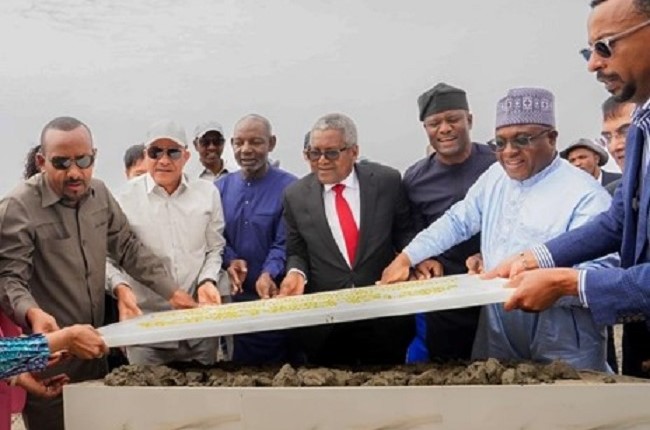
A new chapter in Africa’s industrial story opened on Thursday, October 2, 2025, as Aliko Dangote, President/Chief Executive, Dangote Group, led the groundbreaking of a $2.5 billion fertiliser plant in Gode, Ethiopia.
The project, a partnership between Dangote Group and Ethiopian Investment Holdings (EIH), with a production capacity of three million metric tonnes of urea annually, is expected to become one of the world’s largest fertiliser complexes. Strategically located in Ethiopia’s South-East region, it will leverage the country’s abundant natural gas resources from the Hilal and Calub reserves to boost agricultural productivity, create jobs, and enhance food security across the Horn of Africa.
L-R: Ethiopian Prime Minister, Abiy Ahmed; Ethiopian Deputy Prime Minister, Temesgen Tiruneh; Chairman, MRS Oil Nigeria Plc, Sayyu Dantata; President/Chief Executive, Dangote Industries Limited, Aliko Dangote; Group Managing Director/Chief Executive Officer, Nigerian Exchange Group, Temi Popoola; Group Chairman, NGX Group, Dr Umaru Kwairanga; Chief Executive Officer, Dangote Fertilisers Ltd, Vishwajit Sinha; and Chief Executive Officer, Ethiopia Investment Holdings, Biru Taye, at the foundation-laying ceremony of the $2.5 billion Dangote Gode Fertiliser Plant in Gode, Ethiopia, recently
Speaking at the ceremony, Prime Minister Abiy Ahmed described the fertiliser project as more than just industrial progress, stressing that it symbolises shared responsibility, cooperation, and peace.
PM Abiy said the project reflects Ethiopia’s commitment to harnessing opportunities and elevating its presence on the global stage.
“They embody our shared responsibility to harness opportunities, strengthen cooperation, and promote peace. Hence, I call upon all Ethiopians to continue mobilizing in unity for progress,” Abiy said.
“By doing so, we elevate Ethiopia’s presence on the global stage in a way that honors the true spirit of our Ethiopian identity,” he added.
Dangote commended Ethiopian Prime Minister Abiy Ahmed Ali and his cabinet for reforms and economic liberalisation that have opened key sectors to private investments and positioned Ethiopia as one of Africa’s most attractive destinations for global investors. He lauded the government’s investment in infrastructure, including transport, energy, and the Grand Ethiopian Renaissance Dam, which he described as a foundation for the country’s industrialisation.
“This partnership with Ethiopian Investment Holdings represents a pivotal moment in our shared vision to industrialise Africa and achieve food security across the continent,” Dangote said. “We are committed to bringing our decades of experience in large-scale industrial projects to ensure this venture becomes a cornerstone of Ethiopia’s industrial transformation.”
Dangote disclosed that the Gode project marks just the beginning, with plans to expand into the production of other fertilisers such as ammonium nitrate, ammonium sulphate, NPK, and calcium ammonium nitrate, positioning Ethiopia as a regional hub for fertiliser production. He predicted that, within five years, Ethiopia could become Africa’s leading agricultural nation.
This investment is Dangote Group’s second major project in Ethiopia. Its cement subsidiary has operated a 2.5Mta plant in Mugher for more than a decade, with an additional $400 million committed to doubling its capacity.
Across Africa, Dangote said the Group’s strategy is guided by the belief that “only Africans can develop Africa,” with a focus on manufacturing to reduce dependence on imports. He highlighted the Group’s role in transforming Nigeria into a net exporter of petroleum products, cement and fertiliser, through its refinery, cement plants, and fertiliser expansion, which is set to become the largest in the world at nine million metric tonnes per annum.
“These investments have already changed Nigeria’s story,” Dangote noted. “We’ve moved from being import-dependent to becoming self-sufficient and even exporters of cement, fertiliser, and petroleum products. Our mission is to help other African nations achieve the same transformation. We strive to make African countries become self sufficient in the production of those goods whose necessary raw materials are readily available.
“We have demonstrated that feat in the cement sector where many African countries are now net exporters of cement through our investments. We are ready and happy to work with more African countries to drive their industrialization plans and aspirations.”
He described the Gode project as a “new dawn,” the first time a private African investor is partnering with an African country to build an industrial complex of this scale. “We understand Africa, its challenges, its opportunities, and its potential. And we believe only Africans can truly transform Africa,” he said.
“Our mission at Dangote Group is to lead Africa’s industrial transformation,” he said. “This project marks the first time a private African investor is partnering with an African country to build such an industrial complex.”
He hinted at the establishment of polypropylene bagging plant to boost the industry in Ethiopia.
Dangote expressed gratitude to financial institutions including Afreximbank, Africa Finance Corporation, Access Bank, First Bank, Zenith Bank, and other indigenous banks for supporting the project.
Meanwhile, the President of the Somali Region, Mustafa Omar, described Aliko Dangote as “the anchor investor Ethiopia has been looking for.”
He noted that Dangote is not only a trusted investor but also one who is highly appreciated by both Ethiopians and Africans at large.
The Chairman of the Nigerian Exchange Group (NGX), Dr Umaru Kwairanga, has praised Ethiopia’s leadership for its economic strides and voiced optimism about stronger economic relations between Nigeria and Ethiopia.
Speaking on the new fertiliser complex, Dr Kwairanga described it as a “gigantic project befitting of Aliko Dangote’s vision and execution capacity.”
He noted that the African industrialist had consistently demonstrated a strong commitment to advancing the continent’s self-sufficiency and development.
The event was attended by senior Ethiopian government officials, industry leaders, and financiers.
Across Africa, the Group’s industrial story is expanding. Dangote Cement alone has a total installed capacity of 55 million tonnes per annum across 11 countries. The company also built the world’s largest single-train refinery in Nigeria, with a capacity of 650,000 barrels per day, alongside a one million metric tonne polypropylene plant.
Its fertiliser arm, which started at three million metric tonnes, is being expanded by six million tonnes, a move that will make it the largest fertiliser operation in the world.
In a related development, Dangote Petroleum Refinery has expressed profound appreciation to President Bola Ahmed Tinubu for his timely intervention in averting what it described as “the disruptive actions of PENGASSAN” against the company.
The company in a statement said the President’s leadership, through his ministers and senior government officials, ensured the restoration of order and stability to the energy sector at a critical moment.
“Dangote Refinery is grateful to the President of the Federal Republic of Nigeria, HE Bola Tinubu, GCFR for his intervention, through his Ministers and senior officials, which resulted in the abatement of the disruptive actions of PENGASSAN against the Refinery,” the statement read.
According to the company, among the key government officials who worked “tirelessly” to restore normalcy were Nigeria’s Security Chiefs, led by the National Security Adviser, Mallam Nuhu Ribadu; the Director General of the Department of State Services (DSS), Mr. Adeola Toyin Ajayi; and the Director General of the National Intelligence Agency (NIA), Mr. Mohammed Mohammed.
The company also commended the efforts of other senior government officials who worked “untiringly and determinedly into the wee hours of several nights to avert the declared disruption of Nigeria’s energy sector by anarchists and agents of darkness.” These, it said, included the Honourable Minister of Labour and Employment, Dr. Mohammed Dingyadi; the Honourable Minister of Finance and Coordinating Minister of the Economy, Mr. Wale Edun; the Honourable Minister of Budget and Economic Planning, Senator Abubakar Bagudu; and the Honourable Minister of State for Labour and Employment, Hon. Nkeiruka Onyejeocha.
“We remain very grateful to these officials for their patriotism and national service,” it added.
Dangote Refinery extended heartfelt gratitude to Nigerians for their overwhelming public support during the crisis.
“To Nigerians of all walks of life, we owe you more than a debt of gratitude. Your support for our righteous cause was both humbling and overwhelming. We heard your supportive voices and words of encouragement literally in all the street corners and media channels of Nigeria and were energized and strengthened thereby.
“You gave us hope and reinforced our belief in the Nigerian nation and people as the backbone of our enterprise. Be assured that we would continue to work for and in your interest and persist in always protecting that interest against rent seekers, economic saboteurs and economic squatters,” the company stated.
The Refinery also lauded its workforce for their loyalty and commitment during the industrial tension.
“To our loyal workers, who ensured that our operations were not disrupted even for a second, we thank and appreciate you. The strength of Dangote Group lies in our people and their unalloyed dedication and allegiance to our cause, mission and vision. You proved your allegiance to our cause these several days even in the face of the provocative and inciting comments of and directives from detractors and naysayers who do not wish us and indeed Nigeria well. Be assured that you are treasured and will continue to be handsomely rewarded and remunerated notwithstanding the hypocritical directives and pronouncements of the enemies of Nigeria’s progress and derailers of our economy”.
Reaffirming its position as one of Nigeria’s foremost employers, the refinery noted that the Dangote Group is a model private sector player committed to fair employment practices and national economic development.
“Perhaps, we should mention, at this point that, the Dangote Group, with due modesty, is recognised as one of Nigeria’s model employers of labour and the largest private sector employer in the country as well as the largest contributor to Nigeria’s tax revenues. Our compensation framework is benchmarked against international standards and designed not only to reward performance but also to protect employee welfare, uphold dignity in labour and provide a safe and enabling workplace for our people. Through continuous training, mentorship and professional development, we create visible pathways for growth thereby empowering our employees to advance into leadership roles and to build long-term and fulfilling careers”.
Dangote Refinery also commended the Nigerian judiciary for upholding justice and protecting the rule of law in the face of provocation.
“One institution that we revere and must loudly acknowledge is the Nigerian judiciary. They stood up for the truth and proved themselves as the bastion of hope for all of us. It is unfortunate that the oligarchs publicly displayed their rascality and lawlessness by refusing to accept service of valid court orders that sort to restrain their destructive actions. Regardless, the fact that the judiciary came to society’s rescue at our critical moment of need, notwithstanding the intimidation of the hypocritical and sabotaging oligarchs, stands the judicial institution out as a just arbiter,” the company noted.
The Refinery reiterated its unwavering dedication to national service and industrial growth.
“Finally, and to all our other stakeholders, big and small, we thank you and will continue to always count on your support. We would not relent in serving the Nigerian nation faithfully and diligently through the uninterrupted production of our petroleum products. Our commitment to the Nigerian nation and our pact with its people remain undiluted, undiminished and unalterable notwithstanding the distractions from our detractors and the saboteurs in our midst,” it affirmed.
In continuation of its human capacity building initiatives and provision of thought leadership in the Nigerian oil and gas industry, the Nigerian Content Cevelopment and Monitoring Board (NCDMB) is set to launch Nigerian Content Academy Lecture Series, focussing discourse on strategic areas in the oil and gas industry.
The weekly lecture series is organised by the Nigerian Content Academy, a specialised unit of the NCDMB, and it has already lined up heavy weights in the oil and gas industry and the national economy for the speaking roles.
Dr. Goodluck Ebele Jonathan
Some of the confirmed speakers include former President, Dr. Goodluck Ebele Jonathan; pioneer Executive Secretary of NCDMB, Dr. Ernest Nwapa; Special Adviser on Energy, Mrs. Olu Arowolo Verheijen; Executive Chairman of AA Holdings and former Chief Executive Officer of Seplat Ltd, Mr. Austin Avuru, among other distinguished industry leaders.
According to the Director of the Nigerian Content Academy, Dr. Ama Ikuru, the lecture series will be delivered in 12 sessions, one per week. Each session will provide insights on emerging industry challenges, explore innovative strategies, and chart pathways for sustainable local content development in Nigeria’s oil and gas industry.
He added that the lecture series is designed to “bring together key stakeholders in the oil and gas industry to review progress, reimagine implementation and shape the issues around delivering the Nigerian Content implementation mandate.” He expressed hope that the presentations and discussions would be thought-provoking and impactful to the industry.
Some of the lectures will be delivered virtually, while some will be physical, with each edition expected to convene key stakeholders, including operating companies, NCDMB personnel and industry partners.
According to the programme, Dr. Ernest Nwapa will deliver the first lecture on the topic “Staying the Nigerian Content Course in the Midst of Delivery Challenges”. The lecture will be delivered virtually on Thursday, October 9, 2025. The Chief Operating Officer of Seplat Energy Ltd, Mr. Sam Ezugworie, will take the stage the following week, October 16, speaking on “Managing Non-Technical Risks and Local Content Growth in Oil and Gas Industry”.
Mrs. Verheijen, Special Adviser on Energy to President Bola Tinubu, is scheduled for November 12, and she will speak on “Maximising Nigeria’s Foreign Direct Investments Through Local Content Implementation,” while the former Nigeria’s President, Dr. Goodluck Ebele Jonathan, will be speaking on December 10, 2025 on “Nigerian Oil and Gas Industry Content Development Act, 2010- 15 Years on Achievements and way Forward.”
Similarly, Avuru will speak on “Indigenous Operators as the Pillars for Local Content Growth” on October 29, 2025, while the Executive Secretary of NCDMB, Felix Omatsola Ogbe, will speak on “New Initiatives, New Thinking for Growing Nigerian Content in the Oil and Gas Industry” on December 18, 2025.
As a specialised arm of NCDMB, the Nigerian Content Academy is dedicated to developing human and material resources by providing world class training, fostering entrepreneurship, and equipping Nigerians with critical skills to thrive in the oil and gas sector and beyond.
Its overarching goal is to empower Nigerians to take full advantage of economic opportunities, in the oil and gas industry and it linkage sectors, thereby enhancing national development and deepening the implementation of local content.
Other speakers expected to feature in the lecture series include Mr. Chidi Nkazi, Prof. Mike Onyekwu, Dr. Nosa Omorodion, Barr. Mohammed Umar, Mazi Sam Onyechi, and Prof. Joseph Atubokiki-Ajienka.
“With its carefully selected line up of thought leaders, the Nigerian Content Academy Lecture Series promises to be a premier knowledge sharing platform. It will provide a unique opportunity for stakeholders to speak to key issues, provide solutions, and reaffirm Nigeria’s commitment to advancing local content development as a key driver of national growth,” said the NCDMB in a statement.
Seplat Energy Plc has reaffirmed that domestic gas remains the engine of prosperity for Nigeria and Africa, driving homes, industries, and cleaner transport alternatives.
The company said this on Sunday, October 5, 2025, in Lagos in a statement by its Corporate Communications Manager, Mr. Stanley Okpara.
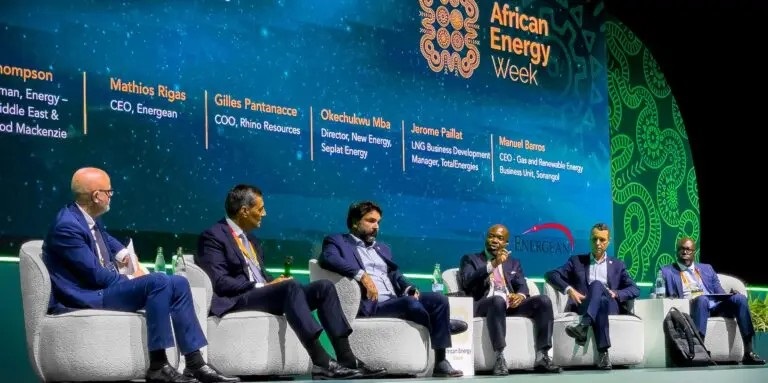
Seplat’s Director of New Energy, Mr. Okechukwu Mba, speaking during a panel session at the 2025 Africa Energy Week in Cape Town, South Africa
It highlighted its continuous investment in gas processing infrastructure for Nigeria’s domestic market.
Seplat said this includes the ANOH Gas Processing Plant, expected to commence operations before the end of the year.
Its Director of New Energy, Mr. Okechukwu Mba, disclosed this during a panel session at the 2025 Africa Energy Week in Cape Town, South Africa.
Mba said addressing bottlenecks in the gas-to-power value chain remained crucial to Nigeria’s energy transformation and sustainable power supply.
He stressed the need for a commercially viable power sector supported by “bankable anchor customers” to serve as a foundation for new gas projects.
Mba explained that resolving power transmission, distribution, and liquidity challenges was essential to unlocking further gas investments.
He noted that Seplat Energy currently supplies gas to five power stations nationwide, underscoring its contribution to Nigeria’s energy stability.
According to him, gas provides reliable and affordable base-load energy vital for national economic growth and industrial expansion.
He added that Seplat was investing in Liquefied Petroleum Gas (LPG) and Compressed Natural Gas (CNG) facilities to deepen access to clean energy.
Mba said Seplat plans to begin LPG supply from its Sapele and ANOH plants before year-end, displacing biomass and improving Nigerians’ living conditions.
He added that the company’s CNG investments aim to serve customers not connected to the existing gas pipeline network.
Mba said Seplat targets increasing its operated gas production to over one billion cubic feet per day by 2030, aided by recent government incentives.
Also speaking, Seplat’s Director of External Affairs and Social Performance, Ms. Chioma Afe, reaffirmed the firm’s strong adherence to Environmental, Social, and Governance (ESG) principles.
Afe, who spoke at a panel session titled “Bureaucracy or Bridge? Tailoring Global ESG Approaches for African Realities”, said ESG models must reflect African conditions.
She urged a shift from “one-size-fits-all” frameworks to locally co-created models that promote sustainable growth and economic empowerment.
According to her, adapting ESG standards to Africa’s unique challenges – such as infrastructure, education, and healthcare – is vital for inclusive development.
Afe said Seplat Energy continually partners with host communities to identify development gaps, prioritise projects, and build strategies for sustainable progress.
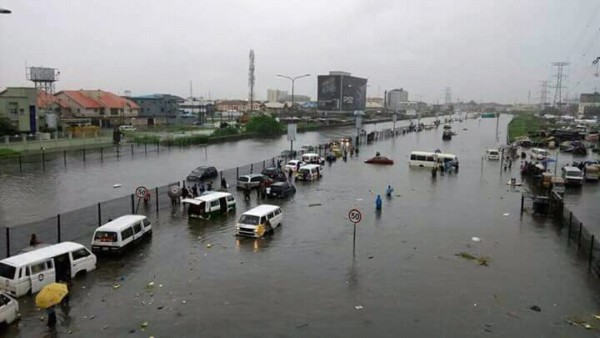
Some residents and environmental experts have raised alarm over persistent flooding along the Lekki–Ajah corridor in Lagos, blaming land reclamation, ocean surge, and unregulated development.
In separate interviews, residents recounted distressing experiences of flash floods disrupting life, damaging property, and causing panic in coastal communities.
Flooded highway in Lekki, Lagos
Mr. Mike Umukoro, a Lekki resident, said rainfall now triggers fear among residents because of the intensity and duration of flash floods.
“Each time it rains, anxiety grips everyone. The roads become impassable, vehicles get trapped, and homes are threatened,” he said.
Similarly, Mrs. Ese Edema, a Lekki Phase 1 resident, described the panic caused by recent heavy rainfall.
“During the last downpour, I couldn’t reach my son’s school. Some parents accessed theirs only around midnight when the flood subsided,” she said.
She added that traffic gridlock from the flood extended to Victoria Island.
Another resident, Mr. Marvel Adeniran, blamed reckless developers for worsening the flooding.
“Land reclamation and unchecked construction are destroying natural drainage paths. Most estates are flooded after every rainfall, making life unbearable,” he said.
Mr. Nicolas Ogbedo, Managing Director of Zvecan Group, warned that continued reclamation for housing projects in coastal zones was unsustainable.
“This practice harms marine resources and increases flooding by blocking natural drainages. Reclaimed lands are unstable and costlier to maintain,” he said.
Ogbedo urged the Lagos State Government to create new inland urban centres to ease pressure on coastal areas and enforce strict environmental compliance.
Mr. Sulaimon Arigbabu, Executive Secretary of the Human and Environmental Development Agenda, said ocean surges were worsened by climate change and uncoordinated coastal interventions.
“In trying to solve one problem, government created another. The Eko Atlantic project protects Victoria Island but worsens erosion toward Lekki and Epe,” he said.
Arigbabu called for the release of the Environmental Impact Assessment report on Eko Atlantic and for nature-based coastal protection strategies.
Mr. Philip Jakpor, Executive Director of Renevlyn Development Initiative, said coastal communities in Lagos were under “assault” from unregulated reclamation and dredging.
“From Ibeju-Lekki to Okun Alfa, these projects disrupt sea ecosystems and heighten vulnerability to ocean incursion. Government must heed scientific warnings,” he said.
In 2024, the Director-General of the Nigerian Conservation Foundation, Dr Joseph Onoja, warned that the Lekki–Epe corridor could be washed away without urgent action.
He said about 128 metres of land were lost to ocean encroachment between 2018 and 2022.
“Our drone images show steady inland ocean advance. If nothing changes, the Lekki–Epe expressway may be submerged within years,” Onoja warned.
He urged immediate government intervention to protect communities and key infrastructure from further destruction.
Responding to growing concerns, the Lagos State Government has suspended all land reclamation activities pending environmental review.
Commissioner for Environment and Water Resources, Mr. Tokunbo Wahab, confirmed the suspension on Sept. 18, citing unauthorised reclamation on wetlands, floodplains, and lagoons.
Affected areas include Parkview, Banana Island, Osborne, Ikoyi, Victoria Island Extension, Lekki, Ajah, Oworonshoki, and parts of Ikorodu.
“Lagos’ low-lying terrain cannot withstand indiscriminate reclamation without grave consequences.
“All ongoing projects, with or without EIA approvals, are suspended pending verification. Defaulters face sanctions, site closure, and possible arrest,” he said.
He added that the ministry would remove illegal fills, reopen blocked waterways, and prosecute environmental offenders.
“Enough is enough. We must act decisively to protect the lives and livelihoods of coastal communities,” Wahab declared.
Experts warned that without urgent, coordinated action, Lagos risks irreversible environmental and humanitarian crises.
They urged the state to restore mangroves, invest in eco-based flood control, enforce EIA laws, and prioritise sustainable coastal planning.
Renaissance Africa Energy Company Limited – a consortium of five energy companies – has announced it is seeking partners to help grow its portfolio and drive oil and gas development in Nigeria.
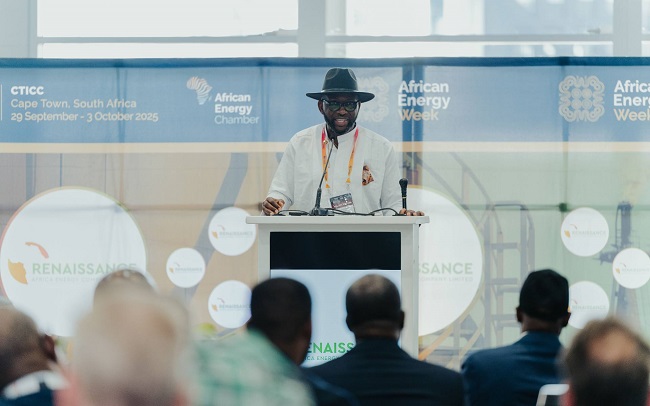
The announcement was made by Tony Attah, Managing Director and CEO of Renaissance Africa Energy, during a briefing at African Energy Week (AEW): Invest in African Energies 2025.
Tony Attah, Managing Director and CEO of Renaissance Africa Energy
“We are born in Nigeria and made for Africa,” Attah stated, adding, “We strive to be Africa’s leading energy company, enabling energy security and industrialisation in a sustainable manner.”
During the presentation, Attah highlighted a strong portfolio of investment opportunities for companies to partner with Renaissance Africa Energy in Nigeria’s oil and gas sector. He noted that extensive infrastructure supports the company’s portfolio of 18 blocks – 15 onshore and 3 offshore – 46 producing fields, 643 active conduits, 29 flow stations and five gas plants.
Meanwhile, Attah also announced Renaissance Africa Energy’s growth ambitions to support its ambitions to become a pan-African oil and gas company. The company has set a target to increase liquid production to 500,000 barrels per day by 2030 and 1 billion cubic feet per day of domestic gas supply.
In March 2025, Renaissance Africa Energy – a consortium comprising ND Western, Aradel Holdings, First Exploration and Petroleum Development Company, Waltersmith Group and Petrolin Group – completed a $1.3 billion acquisition of energy major Shell’s offshore subsidiary the Shell Petroleum Development Company of Nigeria.
The company stated that its vision is to be Africa’s leading energy company, enabling energy security and industrialisation across the continent in a sustainable way.
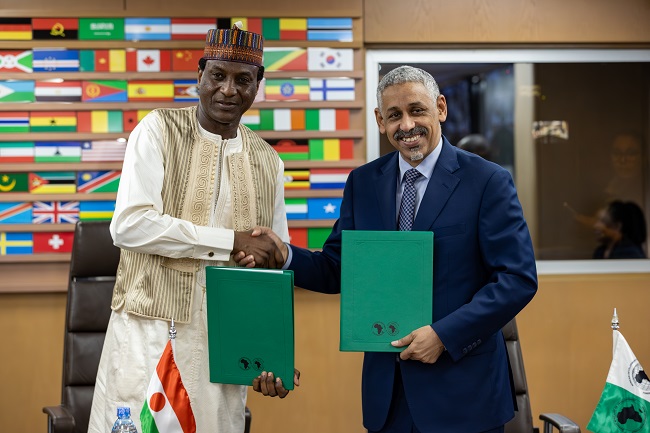
African Development Bank Group President, Sidi Ould Tah, and Niger’s Prime Minister, Ali Mahamane Lamine Zeine, have signed a $144.7 million financing agreement to improve energy access and private sector competitiveness.
The agreement, signed at the institution’s headquarters in Abidjan, provides budgetary support from the African Development Fund, the Bank Group’s concessional financing window. It enables the Nigerien government to implement Phase 1 of the transformative Energy Sector Governance and Competitiveness Support Programme (PAGSEC).
Ali Lamine Mahamane Zeine, Prime Minister of Niger (left), and Sidi Ould Tah, President of the African Development Bank Group, present the documents corresponding to the $144.7 million financing agreement aimed at developing Niger’s energy sector and improving the competitiveness of its private sector
“It is with great pleasure that we have just formalised this agreement, which is very important for Niger,” said the Prime Minister. “The agreement is part of our strong cooperation with the African Development Bank Group.”
The support from the African Development Fund will increase national electricity access from 22.5% to 30% by 2026, while boosting the manufacturing sector’s contribution to GDP from 2.5% to 3.8%. A key component of the project focuses on developing renewable energy capacity, with plans for 240 MW of solar power by 2030, including 50 MW by December 2026.
Prime Minister Zeine, who is also Niger’s Minister of Economy and Finance and serves as Governor of the Bank Group for his country, added: “Our Bank’s support came at an important time, and the process has now led to the establishment of this programme, which aims to support Niger’s economic competitiveness and resilience to multiple shocks through, improved access to energy, promotion of the private sector, consolidation of the fiscal framework, and better consideration of vulnerable groups within public policies.”
Beyond the energy sector, the programme will strengthen public financial management systems while enhancing tax revenue mobilisation and control systems. It will further support the clearance of domestic arrears, enhance public-private partnerships dialogue, and promote the adoption of an industrial and trade policy to bolster Niger’s private sector.
“I can assure you that the African Development Bank Group will remain, as it has always been, a strong supporter of all our regional member states in their pursuit of harmonious development and shared prosperity,” said Dr Ould Tah. “I would like to take this opportunity to congratulate the Bank’s teams for their hard work and also to thank the Board of Directors for its support for our efforts.”
Social inclusion
This high-impact programme prioritises social inclusion, and specialised support for internally displaced persons, women, and young persons. With more than 507,000 internally displaced people due to security challenges in the Sahel region, PAGSEC has outlined a social and economic inclusion programme to cushion vulnerable communities.
It will also establish high-level coordination mechanisms and update national energy policies to create a favourable environment for private-sector participation in mini-grid developments crucial for rural electrification.
With this programme, Niger is set to capitalise on its vast renewable energy potential while building governance systems that support inclusive and sustainable development.
The African Development Bank Group has said that it will continue to support Niger’s transformation through strategic investments that promote economic competitiveness, energy security and good governance.
Africa’s oil and gas sector could be on the brink of a new exploration renaissance, driven by advances in seismic imaging, frontier data sets and faster permitting, industry leaders said at Africa Energy Week (AEW): Invest in African Energies 2025 in Cape Town on Wednesday, October 1.
According to Emmanuelle Garinet, VP of Exploration Africa at TotalEnergies, Africa’s frontier basins hold significant volumes. She pointed to Namibia as an example of how seismic and subsurface data can de-risk projects.
Participants at the panel discussion session during the Africa Energy Week (AEW)
“When we decided to drill the Venus well, it was frontier, but we had a probability of success of more than 50% because of the seismic data and direct hydrocarbon indicators,” she stated.
In the Republic of Congo, TotalEnergies’ exploration permitting process is moving at a markedly faster pace. “We got our permit in less than six months and are preparing for drilling by the end of the year,” Garinet said.
By contrast, South Africa’s permitting system has faced delays due to legal challenges, a problem she described as “unacceptable” given limited budgets for global exploration.
Chevron’s CEO, Gavin Lewis, emphasised the critical role of comprehensive subsurface datasets in Africa.
“Before you can do any AI-driven workflows, you need a dataset that illuminates what the subsurface looks like,” he said. “What Africa has lost is the ability to sponsor multi-client subsurface datasets. The only basin that allows for large, regional high-quality datasets is the Gulf of America, which has allowed that basin to reinvent itself multiple times.”
VP of Exploration for bp, Bryan Ritchie, highlighted survey work in Egypt’s Nile Delta, where the company completed the first deepwater ocean-bottom node seismic survey over the Atoll field and noted that the Egyptian Natural Gas Holding Company plans to expand multi-client data coverage across a larger area of the delta.
“We’re seeing new opportunities for these images,” he said.
Beyond exploration, Woodside Energy’s VP of Exploration, Terry Gebhardt, said geoscience and subsurface data are also key to carbon capture and storage projects, as well as “maximising efficacy and recovery” in existing fields.
The panel discussion, sponsored by EnerGeo Alliance, also underlined the broader scale of investment in Africa’s oil and gas sector.
Nikki Martin, President and CEO of EnerGeo Alliance, said African oil and gas capital expenditure is expected to rise to $54 billion by 2030, following a $6 billion surge in exploration spending in 2024.
Socio-Economic Rights and Accountability Project (SERAP) has urged Nigeria’s 36 state governors and the Minister of the Federal Capital Territory, Mr. Nyesom Wike, to “urgently disclose the spending details of the estimated N14 trillion fuel subsidy savings they collected from Federation Account Allocation Committee (FAAC) allocations, including details and locations of projects executed with the money, and the implementation status and completion reports, if any, on the projects.”
In a statement endorsed by Kolawole Oluwadare, the SERAP Deputy Director, and made available to EnviroNews on Sunday, October 5, 2025, SERAP urged Wike and the governors to “provide details of the plans on how subsequent fuel subsidy savings they expect to collect from FAAC allocations, including details of any planned projects on which the money would be spent.”
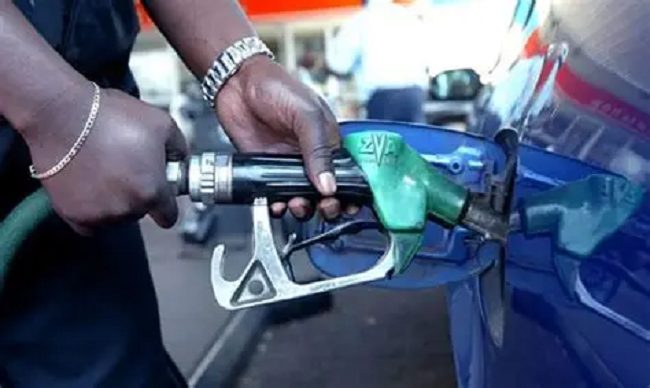
The fuel subsidy in Nigeria has been a contentious issue, with its removal in May 2023 leading to significant economic changes and public debate
SERAP also urged them to “publicly invite the Independent Corrupt Practices and Other Related Offences Commission (ICPC) and Economic and Financial Crimes Commission (EFCC) to track and monitor the spending of the fuel subsidy savings collected by you, to ensure that the money is not diverted into private pockets.”
The 36 governors and the FCT minister have reportedly collected trillions of naira from FAAC allocations as fuel subsidy savings since mid-2023. But the increased allocations have reportedly not translated into improved access to basic public services, such as quality healthcare and education for poor and vulnerable Nigerians.
In the Freedom of Information requests dated October 4, 2025, and signed by Oluwadare, the organisation said: “There is a legitimate public interest for governors and the FCT minister to urgently explain how they have spent the money they have so far collected from the subsidy savings.”
SERAP added, “The savings from the removal of fuel subsidy ought to be spent solely for the benefit of the poor and vulnerable Nigerians who are bearing the brunt of the removal. Transparency in the spending of the money would help to avoid a morally repugnant result of double jeopardy on these Nigerians.”
The FoI requests read in part: “There is a significant risk of mismanagement or diversion of funds linked to the increased FAAC allocations collected by the states and FCT.
“The spending details of the money collected by several states and the FCT from fuel subsidy savings have been mostly shrouded in secrecy.
“Millions of poor and vulnerable Nigerians have not benefited from the trillions of naira collected by the governors and FCT minister from as a result of the subsidy savings. Nigerians continue to face a worsening poverty crisis.
“Several states including your state are also reportedly spending public funds which may include fuel subsidy savings to fund unnecessary travels, buy exotic and bulletproof cars and generally fund the lavish lifestyles of politicians.
“There are continuing reports of widespread poverty, underdevelopment and lack of access to public goods and services in several states.
“Opacity in the spending of fuel subsidy savings collected by you would continue to have negative impacts on the fundamental interests of the citizens and the public interest. Transparency would ensure that public funds are not diverted into private pockets.
“We would be grateful if the recommended measures are taken within 7 days of the receipt and/or publication of this letter. If we have not heard from you by then, SERAP shall consider appropriate legal actions to compel your state and the FCT to comply with our request in the public interest.
“Disclosing the details of the spending of the money collected by your state as fuel savings would allow Nigerians to scrutinise them, and to hold you to account on the spending of public funds.
“The states and FCT may have failed to transparently and accountably manage the allocations collected from the subsidy savings.
“Nigerians have the right to know how their states and FCT are spending the savings from the removal of fuel subsidy as part of their human right to information.
“Combating the corruption epidemic in the spending of the money collected would alleviate poverty, improve access of Nigerians to basic public services, and enhance the ability of your states to effectively and efficiently discharge their responsibilities.
“According to our information, the Federation Account Allocation Committee (FAAC) in 2024 distributed N28.78 trillion from the removal of subsidy on petrol to the three tiers of government, representing a 79 per cent increase from the previous year.
“State governments’ allocations increased by 45.5 per cent to N5.22 trillion. Monthly distributions in 2025 have reportedly exceeded N1.6 trillion.
“However, despite the increased allocations of public funds to your state and the FCT, millions of poor and socially and economically vulnerable Nigerians have not benefited from the savings.
“Many states reportedly owe civil servants’ salaries and pensions. Several states continue to borrow to pay salaries. Millions of Nigerians resident in your state and the FCT continue to be denied access to basic public services.
“Several years of allegations of corruption and mismanagement in the spending of public funds by several states and entrenched impunity of perpetrators have undermined public trust and confidence in governments at all levels.
“Section 15(5) of the Nigerian Constitution 1999 (as amended) requires public institutions to abolish all corrupt practices and abuse of power. Section 16(2) of the Nigerian Constitution further provides that, ‘the material resources of the nation are harnessed and distributed as best as possible to serve the common good.
“Section 13 of the Nigerian Constitution imposes clear responsibility on public institutions including your state to conform to, observe and apply the provisions of Chapter 2 of the constitution.
“Nigeria has made legally binding commitments under the UN Convention against Corruption to ensure accountability in the management of public resources. Articles 5 and 9 of the Convention also impose legal obligations on your state and the FCT to ensure proper management of public affairs and public funds.
“The Nigerian Constitution, Freedom of Information Act, and the country’s anti-corruption and human rights obligations rest on the principle that citizens should have access to information regarding their government’s activities.
“The constitutional principle of democracy also provides a foundation for Nigerians’ right to know the spending details of the money collected from the savings from the removal of fuel subsidy.
“Citizens’ right to know promotes openness, transparency, and accountability that is in turn crucial for the country’s democratic order.
“The effective operation of representative democracy depends on the people being able to scrutinize, discuss and contribute to government decision making, including on the spending of money collected by your state and FCT from the subsidy savings.
“To do this, they need information to enable them to participate more effectively in the management of public funds by their state government.
“The oversight afforded by public access to such details would serve as an important check on the activities of your state and help to prevent abuses of the public trust.
“The Supreme Court in a groundbreaking judgment declared that the Freedom of Information Act ‘is applicable and applies to the public records in the Federation’, including those relating to the spending of the subsidy savings kept by your state.
“With the landmark judgment, the Supreme Court has made clear that state governors can no longer hide under their unfounded claim that the Freedom of Information Act does not apply to them.
“As the Supreme Court has eloquently stated, any freedom of information laws by states is subject to the Freedom of Information Act.
“Any failure to account for the spending of money collected by your state from the subsidy savings will amount to a blatant disregard of the Supreme Court judgment which has effectively ended the claims by governors that the Freedom of Information Act does not apply to how they spend public funds including the subsidy savings.
“The judgment sends a powerful message that state governors can no longer escape accountability for how they spend public funds.
“SERAP urges you to promptly uphold the Supreme Court judgment by urgently accounting for how your state is spending the money it collected from the subsidy savings. The Supreme Court has pointed the way for state governors to show accountability and commitment to transparency in the spending of public funds.
“Similarly, your state has clear legal obligations to provide the information sought as prescribed by provisions of the Nigerian Constitution and the African Charter on Human and Peoples’ Rights (Ratification and. Enforcement) Act.”