Jane Goodall, the famed primatologist, anthropologist and conservationist, has died, according to the institute she founded. She was 91 years old.
Goodall died of natural causes while in California on a speaking tour of the United States, the institute said in a statement on social media on Wednesday, October 1, 2025.
Jane Goodall
The British primatologist’s “discoveries as an ethologist revolutionised science, and she was a tireless advocate for the protection and restoration of our natural world,” according to the institute.
Goodall was only 26 years old when she first entered Tanzania and began her important research on chimpanzees in the wild. Throughout her study of the species, Goodall proved that primates display an array of similar behaviors to humans, such as the ability to develop individual personalities and make and use their own tools.
Among the most surprising discoveries Goodall made was “how like us” the chimpanzees are, she told ABC News in 2020.
“Their behavior, with their gestures, kissing, embracing, holding hands and patting on the back,” she said. “… The fact that they can actually be violent and brutal and have a kind of war, but also loving an altruistic.”
That discovery is considered one of the great achievements of 20th-century scholarship, according to the Jane Goodall Institute.
Goodall’s love of animals began practically at birth, she told ABC News. As a child growing up in London and Bournemouth, she dreamed of traveling to Africa and living among the wildlife. When she was 10, she read the books “Doctor Dolittle” and “Tarzan,” and the inspiration changed the trajectory of her life.
The initial arrival into Gombe National Park proved to be challenging. The terrain was steep and mountainous, the forests were thick, and threats from buffalo and leopards lurked in the wilderness. But her lifelong ambition had finally been realized, and Goodall knew she was where she was meant to be.
“It was what I always dreamed of,” she told ABC News.
Goodall later earned a PhD in ethology, the study of animal behavior, from the University of Cambridge. Her thesis detailed the first five years of study at the Gombe reserve.
In 1977, Goodall founded the Jane Goodall Institute with Genevieve di San Faustino. Headquartered in Washington, D.C. with offices in 25 cities around the world, the organization aims to improve the treatment and understanding of primates through public education and legal representation.
More than 200 government and partner representatives across Africa have reaffirmed their commitment to identifying opportunities to scale up national and regional action on climate.
The Green Climate Fund’s (GCF) Regional Dialogue with Africa convened government focal points (Nationally Designated Authorities), implementing partners (national, regional and international Accredited Entities), civil society, and private sector partners from across the continent.
Participants at the 2025 GCF Africa Regional Dialogue
The overall theme of the Dialogue, held at the United Nations Economic Commission for Africa Conference Centre, in Addis Ababa, Ethiopia, on September 29, 2025, is “Towards a Resilient Africa: Advancing Regional Solutions for Climate Action, Sustainable Growth, and Inclusive Development”.
In the opening, Mr. Seyoum Mekonen, State Minister, Ethiopia’s Ministry of Planning and Development, said the outcome of the recent Africa Climate Summit charted an ambitious path ahead for climate action based on “unity, courage, and decisive action.”
“GCF is one of our most important partners and can be the catalyst for transformation. We look to GCF to live up to its motto of being a unique fund for humanity’s greatest challenge,” State Minister Mekonen said.
GCF’s Director of the Africa Region, Catherine Koffman, emphasised the Dialogue’s strategic importance in her opening speech: “This forum is a unique opportunity for direct and in-depth engagement with our African partners. It is a space for GCF to listen, learn, and respond to their priorities. We aim to support Africa’s self-determined climate leadership and help build vibrant green economies that lift communities out of climate-aggravated poverty.”
Ambassador Seyni Nafo, Co-chair of the GCF Board, provided an overview of his 14-year engagement with GCF in various capacities and highlighted the opportunity for more finance to be channeled through more African entities, including the private sector.
The three-day event aims to understand and respond better to the African region’s priorities, challenges, and needs. Key themes will seek to build on the momentum generated at the Africa Climate Week and the Africa Climate Summit earlier in the month, where leaders called for stronger national and regional leadership on climate action.
GCF’s Africa Strategy (2025–2027) aligns with this vision. The strategy prioritises country ownership, regional investment platforms, and enhanced access to climate finance. With over $7 billion invested in 132 African projects, GCF is scaling up its support through streamlined operations and is moving towards a new regional presence to bring the Fund closer to its partners.
The Dialogue focuses on reforms within GCF, including the Revised Accreditation Framework and the Efficient GCF initiative, which aims to accelerate funding proposal reviews and simplify access. Sessions will also explore how Africa can design its own climate action pathways, with discussions on greening the Africa Free Trade Area and harnessing synergies across infrastructure, transport, and energy sectors among the highlights.
The Dialogue also provides updates on GCF Readiness support for national capacity building on climate action ($252 million provided to Africa so far), environmental and social safeguards, and tools for demonstrating climate impact.
The Executive Director, Global Initiative for Food Security and Ecosystem Preservation (GIFSEP), Dr Michael David, says there is a need for new laws in Nigeria to protect its people and environment.
David spoke on Wednesday, October 1, 2025, in Abuja in commemoration of Nigeria’s 65th Independence Day Celebration.
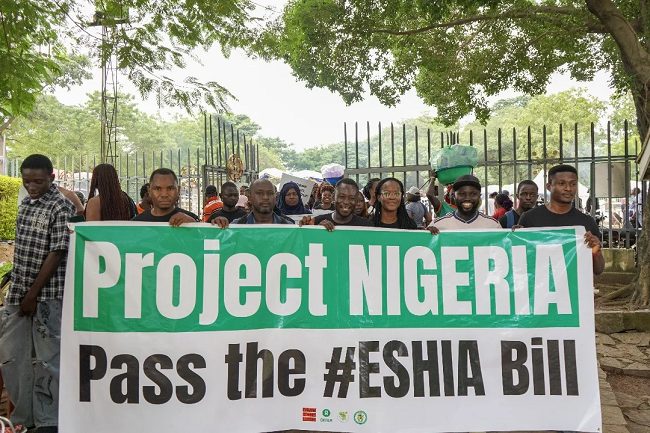
GIFSEP is at the forefront of the campaign to pass the ESHIA (Environmental, Social, and Health Impact Assessment) Bill into law
He said that after 65 years of independence, Nigeria needed a law to match its current realities–robust enough to protect people, ecosystems, and future development.
“At independence in 1960, Nigeria’s environment was relatively intact; vast forest cover, healthy mangrove ecosystems in the Niger-Delta, largely clean rivers, low industrial pollution and fewer people, less urban pressure.
“Over the decades, the country has witnessed massive demographic growth from about 45 million in 1960 to more than 220 million today.
“It has witnessed rapid industrialisation, oil extraction, expansion of cities, and weak regulatory regimes have severely degraded air, water, land and biodiversity.’’
According to David, deforestation has accelerated as Nigeria loses more than 350,000 hectares of forest per year.
“Mangrove zones have been damaged by repeated oil spills since the 1950s; estimates suggest Nigeria has spilled around 13 million barrels of oil in the Niger-Delta, heavily impacting mangrove forests.
“Water pollution has become a grave issue in many mining communities and many urban rivers are contaminated by industrial effluent in levels far above WHO safety limits.
“Air quality has worsened significantly; urban centres often record PM2.5 levels that are many times above safe standards, with Port Harcourt regularly exhibiting hazardous black soot levels linked to illegal refining and gas flaring.”
David said that flooding and extreme weather had become more frequent and destructive.
“The 2022 floods destroyed over 200,000 homes, displaced more than 1.4 million people, and damaged more than 300,000 hectares of farmland.
“Soil fertility in many agricultural areas has dropped; desertification is consuming once productive lands in northern Nigeria.
“Open defecation persists; almost 48 million Nigerians practice it, with serious health and environmental consequences.
“Regulatory tools remain outdated, weak, poorly enforced, and often ill-suited to modern challenges like climate change, health impacts, and social equity.
“This is where the #ESHIA Bill (Environmental, Social, and Health Impact Assessment Bill), which has passed first reading at the House of Representatives, becomes essential.’’
He said that the current Environmental Impact Assessment Act dated from 2004 and lacked sufficient teeth for present scale of development and pollution.
David said that passing the ESHIA Bill would help ensure that new infrastructure, resource extraction, industrial and urban projects were assessed not only for environmental impact, but also for health and social consequences.
“The ESHIA Bill puts the people and the communities first and seeks to embed stronger standards, including free, prior, and informed consent of affected communities.
“Also it would ensure enforceable penalties, restructure oversight agencies to monitor compliance; and integration of disaster risk reduction.
“It would enshrine rights for communities that suffer from pollution, land loss, displacement, as well as provide clearer, enforceable guidelines to prevent future degradation,” he said.
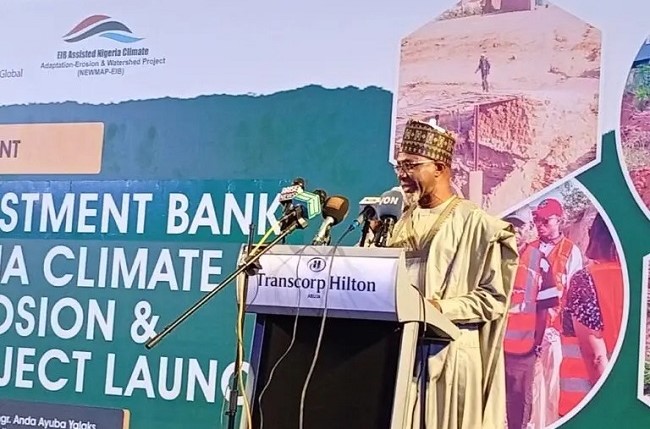
The Federal Government on Tuesday, September 30, 2025, launched the European Investment Bank (EIB) Assisted Nigeria Climate Adaptation – Erosion and Watershed Project (NEWMAP-EIB).
The project is designed to support the country in erosion control, flood management, and watershed restoration.
Malam Balarabe Lawal, Minister of Environment, at the launch of NEWMAP-EIB project
Malam Balarabe Lawal, Minister of Environment, said this at the launch of the project, which he added marks a significant milestone in the nation’s climate resilience project efforts.
The minister said that the federal government would scale up interventions to combat erosion and watershed degradation.
“The project is designed to tackle soil degradation, improve food security, and promote land restoration in line with the Economic Recovery and Growth Plan (ERGP).
“The initiative reaffirms Nigeria’s steadfast commitment to sustainable land and water resources management as well as climate resilience, and community development.
“We will also safeguard lives, protect farmlands, infrastructure, and untimely enhance livelihoods across more communities nationwide.
“In addition, the project will strengthen climate adaptation measures and promote inclusive community participation at every level.
According to the minister, the support of the EIB in climate finance, provides Nigeria with opportunity to strengthen erosion control, flood management, and watershed restoration.
“The federal government with support from the World Bank, initiated the Nigeria Erosion and Watershed Management Project under the International Development Association (IDA), known as NEWMAP-IDA.
“It was launched in 2013 with seven pilot states and subsequently scaled up to 23 states across the country.
“Over its implementation period, NEWMAP-IDA mitigated gully erosion, improved community livelihoods, and strengthened institutional capacity. The project was then formally closed in June 2022.
“To consolidate and scale up the achievements of NEWMAP-IDA, additional financing from the European Investment Bank (EIB) was secured, and a facility of 175 million euros approved by the EIB in 2020, shortly before the closure of NEWMAP-IDA.”
Lawal said that the updated project, now designated as NEWMAP-EIB has successfully undergone all requisite technical and financial stages and is now ready for launch today.
“It will be implemented over a five-year period across 23 states, namely: Abia, Akwa Ibom, Anambra, Borno, Cross River, Delta, Ebonyi, Edo, Enugu, Ekiti, Gombe, Imo, Kaduna, Kano, Katsina, Kogi, Nasarawa, Niger, Ogun, Ondo, Oyo, Plateau, and Sokoto.
“I am pleased to inform you that the federal government has released N750 million as the first tranche of counterpart funding for the project, which is now ready for implementation,” the Minister said.
Also speaking, Mr. Roger Stuart, the Head of the EIB Regional Hub for West and Central Africa, assured the federal government of support of bank to tackle soil degradation in Nigeria by 2030.
Mr. Anda Yalaks, the National Project Coordinator NEWMAP-EIB, said the project seeks to find a lasting solution to the issues of climate and the environment.
Mr. Alkali Bello, the Director, International Economic Relations Department Ministry of Finance, said that the project would reduce the vulnerability of Nigeria in the area of soil erosion.
Mr. George Earhart, a representative from United Nations Office for Project Services (UNOPS), said erosion threatens the livelihoods of the people.
Earhart said the UNOPS would support Nigeria to ensure climate resilience.
Speaking on behalf of the 23 participating states Mr. Manasseh Jatau, the Deputy Governor of Gombe State, assured commitment to mitigation and adaptation initiatives in checking flood and erosion.
The Federal Government on Tuesday, September 30, 2025, brokered a truce between the Petroleum and Natural Gas Senior Staff Association of Nigeria (PENGASSAN) and the management of Dangote Petroleum Refinery.
This was contained in a communiqué issued and signed by the Minister of Labour and Employment, Dr Muhammad Maigari-Dingyadi, at the end of a two-day conciliation meeting and made available to newsmen on Wednesday, October 1, in Abuja.
Dangote Refinery gate
The meeting, which held on Monday and Tuesday, brought together the National Security Adviser, Ministers of Finance, Budget and Economic Planning, and State for Petroleum (Gas), alongside the DSS, NIA, NNPCL, NMDPRA, NUPRC and labour leaders.
It will be recalled that the conciliation was convened after PENGASSAN directed its members to stop gas supply and withdraw services from the refinery.
The union had accused the company of terminating the employment of more than 800 of its members, which triggered the industrial action.
Dangote Refinery, however, explained that the disengagement of workers was due to an ongoing restructuring exercise in the company.
According to the communiqué, the meeting resolved that unionisation is a fundamental right of workers under Nigerian law and must be respected by the company.
It was further agreed that the management of Dangote Group should immediately begin the redeployment of the affected workers into other subsidiaries within the group without any loss of pay.
The meeting also resolved that no worker would be victimised for participating in the dispute between PENGASSAN and the company.
PENGASSAN in turn agreed to commence the process of calling off its strike, while both parties pledged to implement the resolutions in good faith.
In what looks like a bold call to action, Nigeria’s Renaissance Africa Energy Company Limited has urged African nations to take full ownership of the continent’s vast hydrocarbon resources, positioning energy leadership as the key to unlocking industrialisation and sustainable development.
“We are sitting on immense natural wealth, yet we remain dependent. This must change. Renaissance is here to ignite that change, starting from Nigeria and spreading across the continent,” said Dr. Layi Fatona, Chairman of the Board of Directors at Renaissance, on Tuesday, September 30, 2025, during a high-level panel themed Frontier Plays in Mature Basins, at the ongoing Africa Energy Week in Cape Town, South Africa.
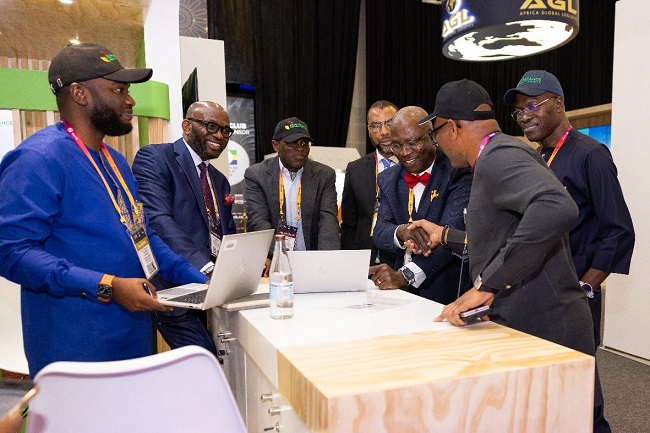
L-R: Business Adviser to the Managing Director & Chief Executive Officer of Renaissance Africa Energy Company Limited, Mr. Chibuzor Chejieh; MD&CEO, Mr. Tony Attah; Chairman of the Board of Directors of Renaissance, Dr. Layi Fatona; Chief Technical Officer, Mr. Abdulrahman Mijinyawa; Executive Vice President (Finance) Segun Banwo; General Manager Relations and Sustainable Development, Igo Weli; and GM Supply Chain, Mr. Greg Akhibi… Nigeria’s Renaissance Africa Energy Company Limited leads several oil and gas companies to Africa Energy Week, ongoing in Cape Town, South Africa
Dr. Fatona said there was a need for deeper strategic thinking and the deployment of cutting-edge technologies to maximise existing assets. “We must move beyond extraction to transformation. Mature basins like the Niger Delta, Sirte, and Lower Congo are not just relics—they are bridges to a cleaner, more secure energy future,” he said.
According to him, the key enabler for enhanced exploration and production in mature basins lies in advanced technologies, particularly improved seismic imaging and rig capabilities to drill high-pressure, high-temperature deep wells.
“Depleted reservoirs in the Niger Delta, Sirte Basin, and Lower Congo Basin can be repurposed for CO₂ storage, thereby supporting decarbonisation and the continent’s energy transition,” he added.
Dr. Fatona lamented Africa’s longstanding inability to harness its abundant natural resources for meaningful development and the benefit of its people. He called on leaders across the continent to deepen strategic approaches and embrace innovative work processes, while deploying advanced technologies to optimise current assets.
“The opportunity is here. The time is now. Let us lead our own energy revolution,” he declared.
Renaissance, formerly The Shell Petroleum Development Company of Nigeria Limited, is a wholly owned subsidiary of Renaissance Africa Energy Holding Company, and operator of Nigeria’s largest upstream joint venture composed of NNPC Limited; TotalEnergies and Agip Energy and Natural Resources.
As Nigeria clocks 65 years of nationhood on October 1, 2025, the Corporate Accountability and Public Participation Africa (CAPPA) has called on the Bola Ahmed Tinubu administration to ensure that the gains of self-rule are felt through programmes and policies that lift citizens out of poverty, hunger, and insecurity.
In a statement to commemorate the day, the organisation said the celebration of Independence Day should go beyond parades and speeches, stressing that it must serve as a moment of sober reflection on how far the country has come, the challenges that persist, and the actions required to ensure that every Nigerian enjoys the true promise of freedom.
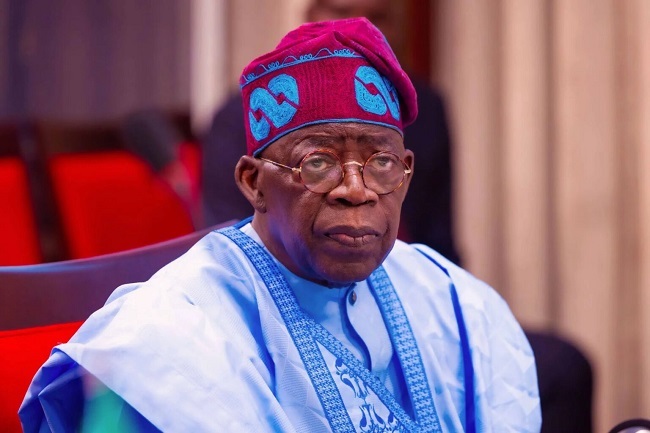
President Bola Tinubu
It argued that independence should not be defined by political sovereignty alone but by social and economic well-being for all citizens. While acknowledging that the Tinubu government has introduced reforms in the past year, which have been applauded locally and internationally, CAPPA maintained that such recovery programmes must be judged not only by their beauty on paper but also by their impact on households across the country.
The group observed that whatever gains have been recorded are being overshadowed by hardship, pointing to high costs of food supplies, soaring rents and electricity tariffs, and healthcare that remains out of reach for many families.
CAPPA’s Executive Director, Akinbode Oluwafemi, said Nigeria’s independence was built on the hope that freedom would guarantee dignity and empower citizens as masters of their own destiny.
“Sixty-five years after the Union Jack was lowered, Nigeria cannot afford reforms that stabilise the books while destabilising households,” he said.
Oluwafemi noted that although Nigerians have often been told the economy is on the path of transformation, the gap between official claims and daily reality remains wide. He argued that the poor cannot spend “economic recovery” in the market, stressing that the true test of policy is whether it improves life for people at the grassroots.
He added that the promise of independence would only be fulfilled when citizens can afford decent meals, live in safe housing within their means, access quality health care and public water services, and send their children to school without fear of exorbitant fees. He urged the government to focus on closing existing gaps through people-centred policies.
The organisation identified several priority areas for action, including food security. With food inflation still high, many households are struggling to eat three meals a day. CAPPA urged the government to invest in local food production by supporting farmers with inputs, storage, and access to markets.
Nigeria has fertile land and abundant labour, it said, but farmers are held back by a lack of infrastructure and the spread of insecurity in food-producing regions. Strengthening agriculture, CAPPA argued, would cut import dependence, lower prices, and make affordable, healthy food more available to Nigerians.
The group, however, stressed that food security is not just about availability but also about quality and health. It pointed out that while hunger is rising, ultra-processed and sugary products are flooding the market, fuelling obesity, diabetes, and other non-communicable diseases. CAPPA noted that without deliberate policies, Nigerians risk being trapped in a cycle where cheap but unhealthy foods dominate diets.
It therefore renewed its call for stronger healthy food policies, including an increase in the current sugar-sweetened beverage tax, clear front-of-pack warning labelling for food products, and salt reduction targets, to ensure that citizens not only eat but eat well.
On the economy, CAPPA warned against piling up debts through excessive borrowing, saying that loans used to service recurrent spending rather than productive investments only deepen hardship. It advised the government to cut down on frivolous expenditures, close leakages, prioritise transparent spending, and channel resources into critical sectors as a way of boosting the economy and improving the lives of ordinary Nigerians.
CAPPA further identified security as a major concern, noting that independence cannot be meaningful if citizens live in fear of violence, kidnapping, or displacement. The group encouraged the government to invest in community policing and modern security infrastructure, and address the root causes of insecurity, such as poverty, unemployment, and inequality.
On education, CAPPA emphasised that the future of Nigeria rests on an educated population. “Rising school fees, underfunded public universities, and poor facilities continue to deny many children and young people the opportunity to learn,” it said.
The organisation encouraged the government to increase budgetary allocations to education, provide incentives for teachers, and ensure that schools at all levels are properly equipped.
CAPPA said that corruption remains one of the greatest obstacles to Nigeria’s development. It called for stronger accountability measures to ensure that public resources are not wasted or diverted into a few private pockets.
“Public office must be treated as a trust. Nigerians deserve leaders who live modestly, account for every naira spent, and put the nation’s welfare above personal gain,” the organisation reflected. It urged the Tinubu administration to use the anniversary as an opportunity to renew its commitment to improving welfare at the grassroots.
CAPPA also called on Nigerians to play their part by holding leaders accountable and participating actively in civic life. It said the spirit of independence was not only about what the government does, but also about how citizens work together to build a better society.
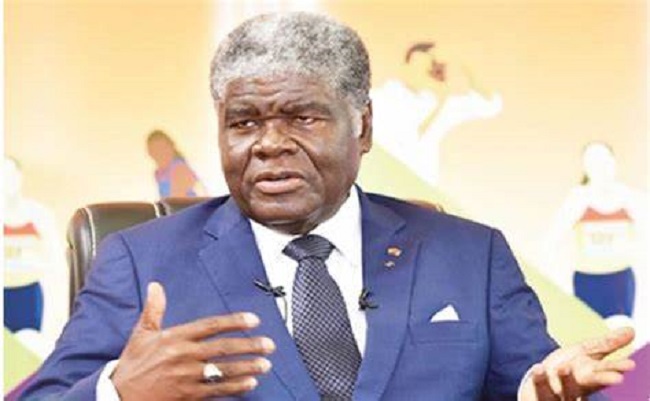
Ivorian Prime Minister, Robert Mambé, and African Development Bank (AfDB) President, Sidi Ould Tah, have urged Africa’s private sector to take a leading role in reshaping the continent’s economy, arguing that global trade disruptions offer a chance to strengthen sovereignty and regional value chains.
The two leaders delivered their remarks on Monday, September 29, 2025, at the opening of the 13th CGECI Academy, the flagship annual forum of Côte d’Ivoire’s employers federation, held under the theme “Economic sovereignty: Time for Action.”
Prime Minister of Cote d’Ivoire, Robert Beugre Mambe
The two-day gathering drew senior government officials, business leaders, and representatives of regional employers’ organizations.
“The time for self-analysis is over; it’s now time for action!” Mambé said.
“We must become aware of our strengths, our weaknesses and our untapped potential, and most importantly, we must establish a synthesis that consolidates our achievements for new prospects that are based on intelligent and dynamic partnerships.”
Mambé stressed that economic sovereignty depends on collective efforts by governments, private investors, young entrepreneurs and consumers.
AfDB President Ould Tah echoed the call, telling participants that Africa must transform global trade turbulence into a “historic opportunity” to process more of its raw materials domestically and build resilient regional markets.
“For Africa, this is not a threat; it is a historic opportunity to establish a stronger, more integrated and more resilient local economy,” he said.
Ould Tah, who took office Sept. 1, outlined a four-pillar strategy for Africa’s development: mobilizing large-scale capital, reforming financial architecture, accelerating job creation, and investing in climate-resilient infrastructure through green industrialisation.
He underscored that governments cannot achieve this transformation alone. “They will also come from the African private sector, which must be central to the strategy,” he said.
The forum comes amid mounting protectionist policies and geopolitical tensions that have put multilateral trade frameworks under strain.
Many African leaders view the moment as critical for boosting intra-African commerce and reducing reliance on external markets.
Ahmed Cissé, president of CGECI, pledged the private sector’s support for continental efforts to restore economic and financial sovereignty through stronger institutional partnerships.
He pointed to the federation’s long-standing collaboration with the AfDB, including the La finance s’engage (Finance Commits) initiative, which has mobilised resources for hundreds of Ivorian start-ups since 2016.
The programme has supported more than 200 young entrepreneurs, nearly one-third of them women.
CGECI represents nearly 80 percent of Côte d’Ivoire’s private sector companies and has positioned itself as a key partner in advancing youth entrepreneurship and innovation on the continent.
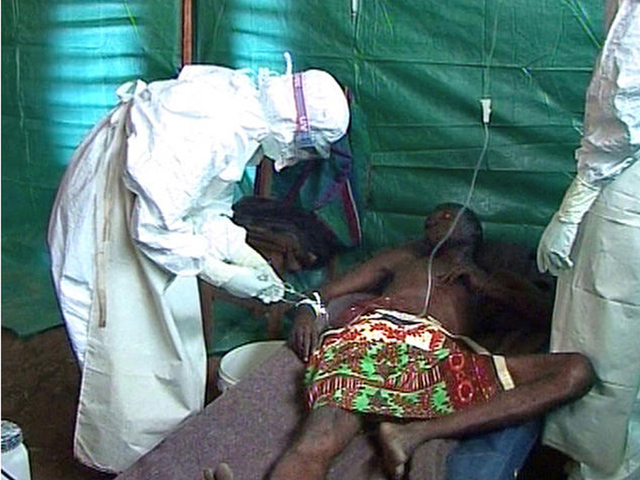
The Ebola virus disease outbreak in Kasai Province continues to show signs of decline, though mortality remains high, according to the latest update from health officials.
Since the last situation report, seven new cases – six confirmed and one probable – have been identified in Bulape Health Zone.
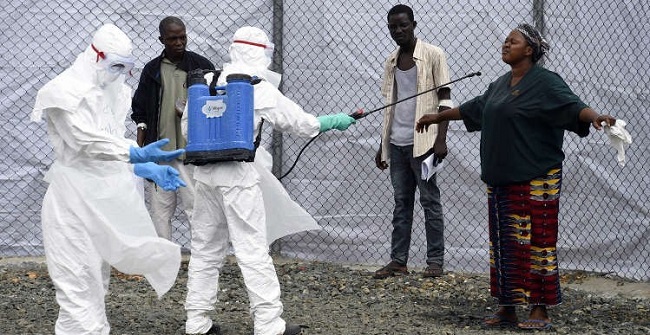
Health workers move to prevent Ebola spread
The cases were detected across three health areas: Bulape (4), Mpianga (2) and Dikolo (1).
During the same period, seven deaths were reported, including three in Dikolo, two in Bulape, one in Mpianga and one in Bulape Communitaire.
As of Sept. 28, health authorities have recorded a cumulative total of 64 cases (53 confirmed, 11 probable), including 42 deaths, giving an overall case fatality ratio (CFR) of 65.6%. Among the confirmed cases are five healthcare workers, three of whom have died.
The outbreak remains confined to six of the 21 health areas in Bulape Zone.
Demographic data show the virus has disproportionately affected women and children.
Women account for nearly 58% of all cases and 57% of deaths. Children under 10 years make up 25% of cases and 31% of deaths, while young adults aged 20–29 years represent another significant share of infections.
While the CFR remains high, there are indications of improvement. Officials reported a decrease in child cases in the past two weeks and a downward trend in mortality as surveillance, early detection and case management improve.
Authorities are continuing to monitor the outbreak closely, with a focus on preventing further spread beyond the affected health areas.
West African energy ministers and project developers opened the African Energy Week (AEW) 2025 conference with a call for an Africa-first approach to gas, underscoring the role of domestic markets in powering sustainable growth.
In a fireside chat sponsored by Kosmos Energy, Senegal’s Minister of Energy, Petroleum and Mines, Birame Soulèye Diop, and Ghana’s Minister of Energy and Green Transition, John Abdulai Jinapor, shared strategies for leveraging natural gas to expand access and lower energy costs.
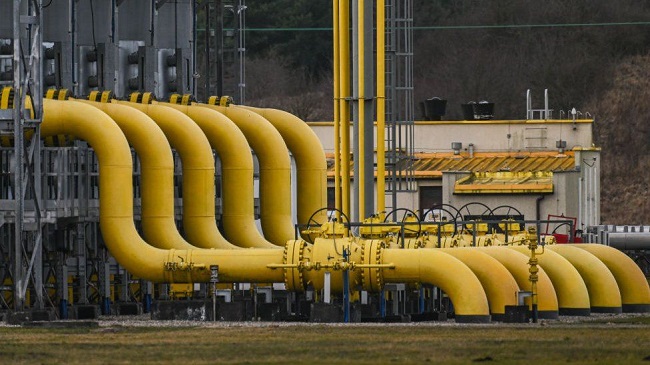
Gas pipelines
“In Senegal, we have a goal to reach universal access to energy by 2029,” Diop said.
“Today, we are a country that exports oil and gas. But the cost to access fuel is still high. We would like to produce more for the country so that we can access resources for electricity. With gas, there are a lot of opportunities.”
Senegal, now an oil and gas producer following the 2024 commissioning of the Sangomar field and the Greater Tortue Ahmeyim (GTA) LNG project, is working to repurpose oil refineries for gas processing.
The GTA, led by BP and Kosmos Energy, began operations with an initial 2.3 million tons per annum (mtpa) capacity, with plans to expand to 5 mtpa. While designed primarily for exports, developers are exploring ways to serve domestic demand.
Kosmos Energy CEO, Andrew Inglis, said the company is prioritising domestic gas supply through projects like Yakaar-Teranga, which targets a final investment decision in 2025.
“Fundamental to the development of Senegal is the use of gas for domestic purposes,” Inglis said. “That is our next agenda: to work with the ministry to expand the scheme to deliver domestic gas.”
Ghana’s Jinapor highlighted his country’s gas-to-power policy, which has made gas the backbone of its energy system.
“Gas is an essential commodity. We have a gas-to-power policy, with gas accounting for 90% of our fuel in Ghana,” he said.
“What we have achieved so far can serve as a model for other economies so that Africa can achieve energy security through gas.”
Kosmos, active in both Senegal and Ghana, has positioned itself as a key partner in advancing regional energy projects.
Inglis said alignment between governments and private investors is vital: “An aligned national agenda is the bedrock of investment. If you are aligned on intent, then delivery is a lot easier.”
The discussion underscored how Africa’s rapidly evolving gas sector can support domestic power generation, reduce energy costs and strengthen energy security, while also reinforcing the continent’s role in global supply.