Home Blog Page 1821

ADB launches ‘Strategy 2030’ in response to Asia-Pacific region’s changing needs

0

The Asian Development Bank’s (ADB) Board of Directors has approved a new long-term corporate strategy, “Strategy 2030”, that sets out the institution’s broad vision and strategic response to the evolving needs of Asia and the Pacific.

Takehiko Nakao
ADB President, Takehiko Nakao

“Asia and the Pacific has made great progress over the last half century in poverty reduction and economic growth, but there are unfinished development agendas,” said ADB President, Mr. Takehiko Nakao. “Under Strategy 2030, we will combine finance, knowledge, and partnerships to sustain our efforts to eradicate extreme poverty and expand our vision towards a prosperous, inclusive, resilient, and sustainable region.”

ADB’s aspirations are aligned with major global commitments such as the Sustainable Development Goals, the Financing for Development agenda, the Paris Agreement on climate change, and the Sendai Framework for Disaster Risk Reduction. Given the size of Asia and the Pacific, achieving such commitments will depend critically on the region’s success.

Strategy 2030, according to the ADB, recognises that the ambitious global development agenda must be tailored to specific local circumstances.  The body says it will strengthen its country-focused approach, promote the use of innovative technologies, and deliver integrated interventions that combine expertise across a range of sectors and themes and through a mix of public and private sector operations.

It further stresses that it will continue to prioritise support for the region’s poorest and most vulnerable countries by applying differentiated approaches to meet the diverse needs of various groups of countries: fragile and conflict-affected situations, small island developing states, low-income and lower middle-income countries, and upper middle-income countries. Across these country groups, ADB discloses that it will also prioritise support for lagging areas and pockets of poverty and fragility.

Infrastructure investments – particularly those that are green, sustainable, inclusive, and resilient – will remain a key priority, says the ADB, adding that it will likewise expand operations in social sectors, such as education, health, and social protection.

The bank points out that it will focus on seven operational priorities: (i) addressing remaining poverty and reducing inequalities; (ii) accelerating progress in gender equality; (iii) tackling climate change, building climate and disaster resilience, and enhancing environmental sustainability; (iv) making cities more livable; (v) promoting rural development and food security; (vi) strengthening governance and institutional capacity; and (vii) fostering regional cooperation and integration.

At least 75% of the number of ADB’s committed operations (on a three-year rolling average, including sovereign and nonsovereign operations) will promote gender equality by 2030, the organisation discloses, pointing out that it will ensure that 75% of the number of its committed operations (on a three-year rolling average, including sovereign and nonsovereign operations) will be supporting climate change mitigation and adaptation by 2030. Climate finance from its own resources will reach $80 billion for the period 2019 to 2030. A new corporate results framework – expected to be ready in mid-2019 – will include more targets for ADB’s other operational priorities.

To support the seven operational priorities under Strategy 2030, ADB says it will expand and diversify its private sector operations to reach one-third of ADB operations in number by 2024.

“We will expand our private sector operations in new and frontier markets, such as fragile and conflict-affected situations and small island developing states. We will also support more public-private partnerships,” said Mr. Nakao.

He adds that ADB’s private sector operations will help improve environmental, social, and governance standards; provide financing that is not available from the market at reasonable terms; improve project design and development outcomes; and mitigate perceived risks. In addition to innovative infrastructure, they will increase support for agribusiness, and support social sectors such as health and education through private ventures, he contends.

ADB further notes that it will continue to be a reliable financier and catalyser of finance. “A key measure of our success will be the volume and quality of additional resources we mobilise on top of our own financing,” Mr. Nakao adds, pointing out that ADB targets a substantial increase in long-term cofinancing by 2030, with every $1 in financing for its private sector operations matched by $2.50 in long-term cofinancing.

The institution will also work closely with its developing member countries to produce the most relevant knowledge products and services, albeit by proactively engaging in research, providing high-quality policy advice, strengthening countries’ institutional capacity, and expanding knowledge partnerships.

Nakao adds: “As it strives to be stronger, better, and faster, ADB will pursue a dramatic modernisation of its business processes by taking advantage of available technology. It will expand its products and instruments, strengthen human resources, and accelerate its digital transformation. ADB is committed to diversity in the workforce, including promoting gender balance and a respectful work environment for all. ADB will institute a ‘One ADB’ approach, bringing together knowledge and expertise across the organisation. It will collaborate with civil society organizations in designing, implementing, and monitoring projects.

“In preparing Strategy 2030, extensive consultations were carried out with a wide and representative group of stakeholders across ADB’s membership, leading development experts, and civil society organisations.

“ADB is committed to achieving a prosperous, inclusive, resilient, and sustainable Asia and the Pacific, while sustaining its efforts to eradicate extreme poverty. Established in 1966, it is owned by 67 members – 48 from the region. In 2017, ADB operations totaled $32.2 billion, including $11.9 billion in cofinancing.”

World Rangers Day: 107 rangers died in line of duty, says conservator-general

0

Conservator-General, National Parks Service (NPS), Alhaji Ibrahim Goni, says 107 rangers lost their lives worldwide in the line of duty between July 31, 2017 and July 31, 2018.

Park Rangers
Park rangers on parade during the 2018 World Rangers Day celebration in Abuja

Goni disclosed this while delivering the speech of the President of the International Rangers Federation (IRF) at the 2018 World International Day or World Rangers Day celebration in Abuja on Tuesday, July 31.

He said that the natural world was under immense pressure through the loss of species, habitat destruction, climate change, and environmental crime issues.

“These challenges need urgent attention and the many solutions to the problems varied and are complex, therefore rangers must play critical frontline role in defending our natural heritage, now and always into the future.’’

The Conservator-General assured that the service was working tirelessly to strengthen and equip its officers for effective park patrols.

He noted that the service had obsolete and low calibre firearms and ammunition and required, as an immediate measure, light arms and ammunition for effective park operations.

“We are working in collaboration with the Nigerian Army, the Directorate of State Services (DSS) and the Nigeria Police Force in fighting insurgency, banditry and cattle rustling in the park.

“This will help reduce the constant conflicts between the park staff and cattle grazers in the park because of the lack of designated cattle routes and functional grazing reserves, which had led to death of many staff and others getting maimed.

“We will rehabilitate access roads to ease park surveillance and anti-poaching patrol to boost wildlife viewing, and enhance park monitoring and evaluation,’’ he said.

Dr Okeyoyin Okedeji, Assistant Conservator-General, Ecological Resource Management of the service, gave a roll call of the fallen heroes.

“We lost 107 rangers worldwide: Africa, 63; Nigeria, three; and a total of 29 officers died in active service since the inception of the National Park,’’ he said.

In his good will message, Dr Rufus Ebegba, Director General, National Biosafety Management Agency (NBMA), congratulated the rangers who risked their lives to protect the environment.

“I give you my gallant salute for preserving and conserving our natural resources.

“I also congratulate the Conservator-General for what he has been doing in reviving the National Park to meet the international standard and wish that rangers are properly kited and well armed for law enforcement.

“Our country is very dangerous when it comes to enforcing the law, people lose their lives trying to protect the law,’’ he said.

Mr Jonah Moses, one of the rangers, thanked the Conservator-General for the training given to the rangers to be able to carry out their jobs effectively.

News Agency of Nigeria (NAN) reports that the Service in conjunction with Health is Wealth for life sustainability in Africa as part of the world rangers celebration, held a Medical Outreach programme on Malaria Testing and Treatment in three Park Headquarters Neighbouring Communities.

The communities are Kuchigoro, Karemajiji and Ruga all in the Federal Capital Territory.

By Ebere Agozie

Government insists on strict implementation of Abuja Master Plan

0

The Minister, Federal Capital Territory (FCT), Malam Muhammad Bello, has insisted on the strict implementation of Abuja Master Plan to avoid congestion being experienced in Lagos.

Abuja
Abuja

Bello said this at the ongoing two-day retreat for members of the Federal Capital Development Authority (FCDA) Board on Tuesday, July 31, 2018 in Abuja.

The minister, who chaired the 7th FCDA Board, warned members against deviating from the original Abuja Master Plan, saying that it would affect development of the city.

He urged them to bring in their wealth of experience to bear on the assignment and to leave indelible footprints.

According to him, there is need to present a reputable capital city for the future generations, built on the legacies of hard work, commitments and dedication to nation-building.

Bello, who was represented by the FCT Permanent Secretary, Mr Christian Ohaa, told the 10-member board that the retreat could not have come at a more auspicious time than now.

“The FCDA is entrusted with the mission of building a world-class city with standard infrastructure on quality service delivery, which no doubt placed huge responsibilities on your shoulders.

“The board is expected to set out broad-based policy guidelines, key performance indicators, technical services, support to actualise the goals of the building a first-class city comparable to the best in the world,’’ he said.

By Kabir Muhammad

World Rangers Day: Threats to Gashaka-Gumti National Park, by conservator

0

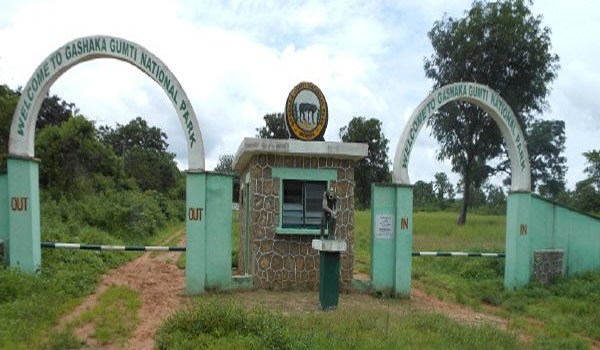
The Park Conservator, Gashaka-Gumti National Park in Taraba State, Mr Yuhanna Saidu, has identified increasing environmental problems and illegal human activities as some of the major threats to the continued survival of the park.

Gashaka-Gumti-National-Park
The Gashaka Gumti National Park

Saidu spoke on Tuesday, July 31, 2018 at an event to commemorate the World Rangers Day in Serti, headquarters of Gashaka Local Government Area of the state.

“Gashaka-Gumti National Park has had its fair share of human pressure on the park resources ranging from activities of poachers, illegal grazing, mining, fishing, farming and logging.

“More disturbing is the current spate of desperation for illegal logging of Rosewood, commonly called Madrid.

“Rosewood is a valuable timber used for many purposes, such as forage for livestock, medicine, dyes for cloths and luxury furniture.

“It is unfortunate that in Nigeria today, Taraba happens to be the last point where Rosewood is found, and logging is intense.

“These activities, if not quickly checked, will result in dire environmental consequences not only within the immediate area, but also the nation at large,” he said.

The News Agency of Nigeria (NAN) reports that the World Rangers Day was first commemorated on July 31, 1992, by the UK based International Rangers Federation (IRF).

It is to commemorate rangers killed or injured in the line of duty and to celebrate the work rangers do in protecting the planet’s natural resources and cultural heritage.

The forum encourages park rangers and park wardens across the world to share their successes and failures.

In his goodwill message at the occasion, the Lamido of Gashaka Emirate, Alhaji Zubairu Hamman-Gabdo, commended the resolve of the Rangers in the protection of the park and its resources.

Hamman-Gabdo also expressed confidence with the theme of this year’s celebration which is: “I stand with World Rangers: Protecting Wildlife and Wild Places.”

“This clarion call must continue to support the work of the rangers and assist in drumming the message of conservation far and wide, so that collectively we can make a difference,” he said.

According to him, the media must also do more in publicising the activities of Gashaka-Gumti National Park, which is the largest in West Africa.

NAN reports that the event attracted the presence of the Commanding Officer of the 20 Model Mechanised Battalion, Serti, Lt Col. Sani Adamu, and officers of other security outfits in the area.

Families of some fallen rangers of the park, who died in the course of duty were also honoured at the occasion.

By Saidu Adamu

Government, Ogun to revive abandoned Ota water scheme

0

The Federal Government and the Ogun government on Tuesday, July 31, 2018 signed a Memorandum of Understanding (MoU) for the continuation and completion of the abandoned Ota Regional Water Supply Project.

Suleiman Adamu
Suleiman Adamu, Minister of Water Resources

The ceremony, which took place at Arobieye- Iju in Ado-Odo/Ota council area of the state, also saw the signing of an agreement for Partnership for Expanded Water Supply, Sanitation and Hygiene (PEWASH).

Minister of Water Resources, Mr Sulaiman Adamu, noted in his address at the event that the water project which commenced in 1988 had suffered delays due to neglect by previous administrations.

He also attributed the delay to lack of approval for right of ways for the water transmission pipeline by the Ogun government.

The minister explained that the Federal Government had spent about N811 million on the project.

He added that the project would have the capacity to deliver about 15 million litres of portable water per day to residents of Ota and Ijoko and environs when completed.

“This MoU, which is in accordance with the spirit of President Muhammadu Buhari’s administration of providing critical infrastructure for the good of Nigerians, will enable the two governments to work together towards speedy execution and completion of the commercially viable project,” he said.

Adamu said that the PEWASH agreement was meant to accelerate access to water supply, sanitation and hygiene in all the rural areas of the state, adding that Ogun was the first state where such agreement was signed.

The minister urged the state government to devote adequate resources to fulfil all its obligations in the MoU for the water project and the PEWASH agreement.

“I wish to assure you that with the signing of these instruments today, we shall commence all activities on our part for faithful execution of activities,” he said.

The state governor, Sen. Ibikunle Amosun, in his address, described the development as a testimony to the commitment of the state government to seek ways of making life more comfortable for the residents of Ogun.

He noted that the water scheme would improve the living standard of the Ota residents and attract more investors into the communities for increased revenue generation.

Amosun explained that the state government had continued to collaborate with development partners such as UNICEF to pool resources to achieve improved water supply and Open Defecation Free (ODF) status in its rural communities.

He urged the residents of Ota and environs to take ownership of the water scheme after rehabilitation and the entire people of the state to embrace the PEWASH programme.

“Let me assure our people of Ogun that even as we approach the expiration of the tenure of our administration, we do not intend to take our foot off the pedal.

“Our people can expect more legacy projects by our administration till the last day, last hour and even last minute of our tenure,” he said.

Mr Sola Lawal, the Board Chairman of the Ogun-Osun River Basin Development Authority (ORBDA), pledged total support for the success of the project.

By Olawale Jokotoye

Agip may grow Niger Delta investments due to improved security

0

The Chief Operating Officer, Upstream, Eni, Nigerian Agip Oil Company (NAOC), Mr Antonio Vella, says the company is considering doubling investments in the Niger Delta region due to improved security.

Antonio Vella
Chief Operating Officer, Upstream, Eni, Nigerian Agip Oil Company (NAOC), Antonio Vella

Vella said this on Tuesday, July 31, 2018 in Abuja in a statement issued by the Spokesman of the Nigerian National Petroleum Corporation (NNPC), Mr Ndu Ughamadu.

According to him, the improved security situation in the Niger Delta has rubbed off positively on the operations of international oil companies operating in the region.

Commending the Federal Government and NNPC, he said the prevailing peace and security in the region had increased investors’ confidence in Nigeria’s petroleum industry.

He said NAOC was considering doubling its investment in the country.

“The steps the Group managing director has taken have greatly improved security in our area of operations.

“That is very important to us as it has given us confidence to come back strongly and raise oil and gas production and that is what we are doing.

“We are increasing our budget in Nigeria because we have confidence in Dr Baru and the entire system,’’ Vella said.

He said that NAOC was redoubling efforts on the ongoing expansion of the Okpai Independent Power and the Zabazaba Projects to achieve early completion because of the improved operating environment.

According to him, the Okpai IPP expansion will be completed by the second quarter of 2019 and will raise the power generating capacity of the plant by more than 50 per cent.

The statement quoted Baru as saying “the management is focused on making the operating environment safe and conducive for more investors to come in’’.

He expressed optimism that the increase in production achieved by Agip would boost the nation’s chances of meeting production and reserve targets.

By Yetunde Bada

Zamfara battles desertification, plants 24,000 trees

0

The Zamfara State Government has planted 24,000 trees in some of its Local Government Areas as part of a campaign against desertification across the state.

Burkina Faso tree planting
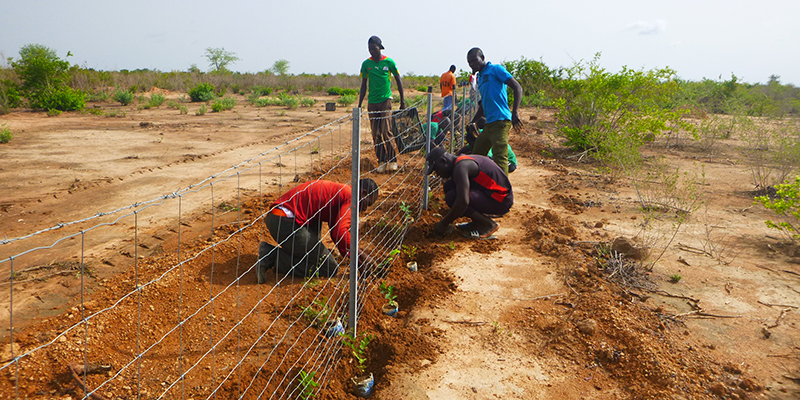
Combating desertification: Planting some 20,000 trees to create living hedges in Burkina Faso

Special Adviser to the State Governor on Directorate of Afforestation, Malam Mansur Khalifa-Kaura, disclosed this on Monday, July 30, 2018 in an interview with the News Agency of Nigeria (NAN) in Gusau.

Khalifa-Kaura said that the campaign was part of the state government`s commitment to fight desert encroachment and other environmental challenges in the state.

“In the first phase, we planted 14,000 trees across the state, 1,000 trees were planted in one-kilometre distance in each of the 14 local government which cost the state government N10 million.

“In the second phase, we planted 10,000 trees in six selected local government areas in the state, in each of the selected LGAs we planted over 1,600 trees in two kilometres distance along the road side”

“This phase also cost the state another N10 million, making a total of N20 million for the whole projects,” he said.

He listed the six selected local government areas to include Bakura, Birnin-Magaji, Talata-Mafara, Shinkafi, Kaura-Namoda and Zurmi.

According to him, apart from combating desertification, the trees would also help in beautifying the environment. The state government, he added, would ensure the trees are protected.

He advised the people against indiscriminate tree falling to stop desertification and erosion challenges.

He, however, appealed to people of the state to assist the state government in the maintenance and protection of the trees.

Researchers link dangerous foodborne pathogen to centipedes

0

A dangerous foodborne parasite typically found in snails and other mollusks was detected in two patients in a Chinese hospital and traced to their consumption of raw wild centipedes, according to a new case report published on Monday, July 30, 2018 by the American Journal of Tropical Medicine and Hygiene.

Centipede
Centipede

Researchers from the Southern Medical University and Zhujiang Hospital in Guangzhou said it’s the first time the Angiostrongylus cantonensis parasite – often called rat lungworm for its preference for the pulmonary arteries of rats – has been detected in centipedes. Centipedes are widely used in traditional Chinese medicine, though usually in a dried or powder form, which does not transmit the parasite.

“We don’t typically hear of people eating raw centipedes, but apparently these two patients believed that raw centipedes would be good for their health,” said Lingli Lu, a co-author of the report who works in the Department of Neurology in Zhujiang Hospital. “Instead it made them sick.”

Mild infections with A. cantonensis may resolve on their own. But the parasite can penetrate the brain and spinal cord, which can lead to meningitis – an infection of the fluid around the brain – and, in rare instances, paralysis and death.

According to the U.S. Centres for Disease Control and Prevention, A. cantonensis is mainly found in China and Southeast Asia, and infections usually have been linked to consumption of raw or undercooked snails. The parasite also has been detected in Africa, the Caribbean, Hawaii, and, more recently, in Louisiana and South Florida. In Louisiana, it has been found in the invasive apple snail, a freshwater snail native to South America that is sometimes consumed as food. In South Florida, the parasite has been found in the invasive giant African land snail.


Why centipedes are sold in agricultural markets
While this is the first time the parasite has been found in centipedes, centipedes themselves are occasionally sold in the Chinese agricultural markets or routinely sold in traditional Chinese medicine pharmacies due to their perceived medicinal properties. Dried or crushed centipedes have been used for centuries in traditional Chinese medicine to treat a variety of ailments, including whooping cough, tetanus and cardiovascular diseases. Also, today, extracts made from the centipede are being assessed for their potential to fight cancer and to serve as a potent pain killer. But rarely are raw wild centipedes consumed to treat ailments. Lingli said the patients that are the focus of her study, a 78-year-old woman and her 46-year-old son, came from the rural countryside where a rumor was circulating that consuming raw centipedes also offered potential health benefits.


The path to diagnosis
According to the report, the woman arrived at the hospital complaining of a headache, drowsiness and cognitive impairment that had lasted for weeks. Subsequent examination and testing indicated symptoms of meningitis. And when tests ruled out viral or bacterial causes, the physicians probed her cerebrospinal fluid for other potential issues and discovered the increased number of eosinophils – a type of white blood cell – and antibodies to A. cantonensis in the cerebrospinal fluid and blood.

The report notes that “further questions about the patient’s history showed that she had eaten centipedes without cooking them on several occasions.”

Meanwhile, a few weeks later, her son came to the hospital complaining of a “mild headache that had lasted for more than 20 days.” He revealed to physicians that he, too, had consumed raw centipedes. Tests of his cerebrospinal fluid and blood detected elevated eosinophil levels and antibodies for the A. cantonensis parasite.

Both mother and son were cured after treatment with a 21-day course of the anti-parasitic drug albendazole and a two-week course of the steroid dexamethasone to address inflammation that arises as the parasites die.


The role of centipedes in rat lungworm transmission
To learn more about the potential of centipedes to serve as hosts for A. cantonensis, the researchers purchased 20 centipedes from the agricultural market where the patients had acquired their centipedes. The immature, or larvae, form of A. cantonensis was detected in seven of them.

The researchers then tested the capacity of centipedes to serve as intermediate hosts for A. cantonensis by infecting 20 centipedes with the parasite. However, the centipedes subsequently died. Lingli said the results could indicate that, while centipedes can be temporary hosts, we can’t be sure they are able to serve as intermediate hosts, a classification that indicates an ability to carry and spread the parasite over a long period of time. Regardless, the researchers concluded that centipedes may still “act as a competent host” for transmitting the parasite to humans.

“This study shows why it’s important to have physician scientists who can both treat patients and identify and investigate unusual cases that may have broader implications for public health,” said ASTMH President Regina Rabinovich, MD. “The researchers not only found the source of infection in the laboratory, they did the work to show the wild centipedes that were in supply at the farmers’ market could have been a viable source of transmission.”

NiMet predicts cloudy skies, thunderstorms, rains for Tuesday

0

The Nigerian Meteorological Agency (NiMet) has predicted cloudy morning for Tuesday, July 31, 2018 over the central states of the country with prospects of morning thunderstorms and rains over Lafia, Ilorin, Bida, Bauchi, Gombe, Minna, Jos and Yola axis.

cloudy weather
cloudy weather

NiMet’s Weather Outlook by its Central Forecast Office in Abuja on Sunday also predicted day and night temperatures in the range of 24 to 33 and 21 to 24 degrees Celsius, respectively.

It added that thunderstorms and rains were likely over most parts of the region during the afternoon and evening period.

The agency predicted that southern states would experience prospects of moderate rains over the inland of the southeast such as Obudu, Ogoja, Ikom, Enugu, Awka, Owerri, Abakaliki and its environs during the morning hours.

It also predicted cloudy conditions over the inland of the southwest with moderate drizzle over Lagos and thunderstorms and moderate rains over the entire inland cities during the afternoon and evening hours.

NiMet further predicted chances of moderate rains over the entire coastal cities in the afternoon and evening hours with day and night temperatures of 26 to 31 and 21 to 25 degrees Celsius, respectively.

According to NiMet, northern states would experience cloudy skies with prospects of thunderstorms over the southern Borno and environs in the morning hours.

“Thunderstorms are expected over Kano, Katsina, Nguru, Yelwa, Dutse, Maiduguri and Potiskum in the afternoon and evening hours with night temperatures of 30 to 34 and 21 to 24 degrees Celsius, respectively.

“Cloudy conditions are expected to prevail over most parts of the country with prospects of thunderstorms and rains over some parts of the country in the next 24 hours,” NiMet predicts.

By Taiye Elebiyo-Edeni

Agricultural Research Council accused of denying Nigerians right to information

0

Media Rights Agenda (MRA) on Monday, July 30, 2018 named the Agricultural Research Council of Nigeria (ARCN) the week’s inductee into the “Freedom of Information (FOI) Hall of Shame” for alegedly violating the provisions of the FOI Act over the past seven years. MRA says ARCN is thus denying Nigerians the right to information in the agricultural development sector.

Prof. Ambrose A.Voh
Prof. Ambrose A. Voh, Acting Executive Secretary of the Agricultural Research Council of Nigeria (ARCN)

The ARCN was established by the Agricultural Research Council of Nigeria Act of 1999 with its functions including preparing annual budgets for agricultural research, training and extension programmes of the institutes under its aegis and receiving grants for allocation to agricultural institutes for the implementation of their annual programmes as well as to universities and other bodies for special research or training projects.

Announcing the induction of the ARCN into the FOI Hall of Shame in a statement in Lagos, MRA’s Programme Officer, Mr. Idowu Adewale, highlighted several failings of the public institution regarding the implementation of the FOI Act which led to its censure by MRA.

He noted that although the ARCN has an active website, it has not taken advantage of this to fulfill its proactive disclosure obligations by publishing on the website the categories of information listed for proactive disclosure under Section 2(3) of the FOI Act.

According to Mr. Adewale, there is no information on ARCN’s website regarding the fund allocations for agricultural research purposes; the receipt or expenditure of public or other funds of the institution; the names, salaries, titles, and dates of employment of employees and officers of the institution; the list of files containing applications for contracts, permits, grants, licenses or agreements, among several other categories of  information, records and documents listed in Section 2 (3) of the FOI Act that must be proactively published by every public institution.

He criticised the ARCN for its lack of responsiveness to requests for information from members of the public citing, in particular, its refusal to respond to an application for information dated August 2, 2016, submitted to it by Public and Private Development Centre (PPDC), a non-governmental organisation based in Abuja, for a list of the contracts awarded by the ARCN in 2015 and its procurement plan for 2016.

Castigating the ARCN for refusing to respond to the application and failing to provide PPDC with the information it requested, Mr. Adewale said: “At a minimum, this information should ordinarily have been published on the institution’s website as part of its proactive disclosure obligations under the Public Procurement Act, 2007 as well as Section 2 of the FOI Act. It was its failure to comply with its proactive disclosure obligations that necessitated the request for information from PPDC, which the ARCN also chose to ignore”.

Mr. Adewale said the Federal Attorney-General’s 2017 Annual Report on the Implementation of the FOI Act submitted to the National Assembly on March 27, 2018 shows that ARCN has failed to submit its annual FOI implementation report for 2017, making it the seventh consecutive year that the institution has failed to comply with its reporting obligation since the Law was enacted.

He described the consistent flouting of Section 29 of the FOI Act by ARCN as an “unjustifiable and unacceptable act of impunity, which should not be allowed to go unsanctioned.”

Citing the “Database of FOI Desk Officers in Public Institutions in Nigeria,” recently released by the Attorney-General of the Federation, Mr. Adewale said “the document is further proof of the ARCN’s determined commitment not to implement or comply with the provisions of the FOI Act” as it shows that the institution has also disregarded the provisions of Section 2(3)(f) of the Act, which requires every public institution to designate an appropriate officer as well as to publish the title and address of such an officer to whom applications for information by members of the public should be sent.

He said: “ARCN’s refusal to designate an FOI Desk Officer as required by Law is also despite repeated reminders and requests from the office of the Attorney-General of the Federation to all public institutions to comply with this provision of the Act and to send details of the person so designated to the Office of the Attorney-General of the Federation for inclusion in the Database.”

According to him, the ARCN is also in breach of Section 13 of the Act, which mandates every public institution to ensure the provision of appropriate training for its officials on the public’s right of access to information and for the effective implementation of the Act.

Mr. Adewale stressed that “the breaches of various provisions of the FOI Act by the ARCN and the persistent disregard by the institution of its duties and obligations under the Law go to show that it is hell-bent on undermining the effectiveness of the Act while its actions are constituting a setback for agricultural development of Nigeria.”

He called on the National Assembly, in exercise of its powers as the ultimate oversight body in the implementation of the Law, to institute measures to ensure that the ARCN and other public institutions which are failing to comply with their obligations under the FOI Act are compelled to fully implement the Law.

Mr. Adewale also urged the Executive Secretary of the ACRN to acquaint the institution’s staff with their duties and obligations under the FOI Act and take urgent steps to implement them, including by using its website to make information available to citizens, especially farmers so that they can harvest vital information that is geared towards agricultural growth and development in Nigeria.

Launched by MRA in July 2017, the “FOI Hall of Shame” highlights public officials and institutions that are undermining the effectiveness of the FOI Act through their actions, inactions, utterances, and decisions.